A newborn is noted to be jaundiced at 3 days of age. Which of the following factors is associated with an increased risk of neurologic damage in a jaundiced newborn?
What is the most common cause of respiratory distress in preterm infants?
In normal delivery, when should breastfeeding be initiated?
Small for date newborns do not include which of the following?
Prevention of hypothermia in the community should focus on what measures?
Retrolental fibroplasia is associated with which of the following?
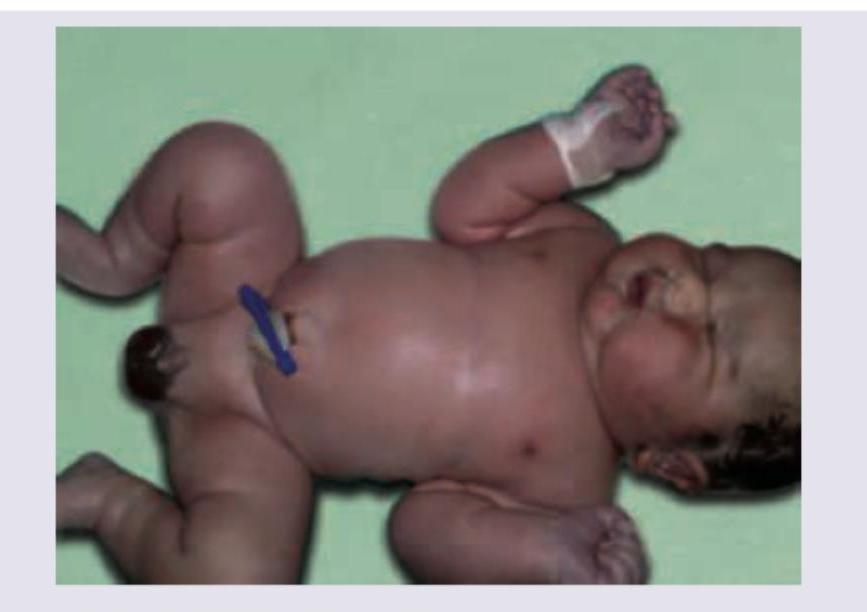
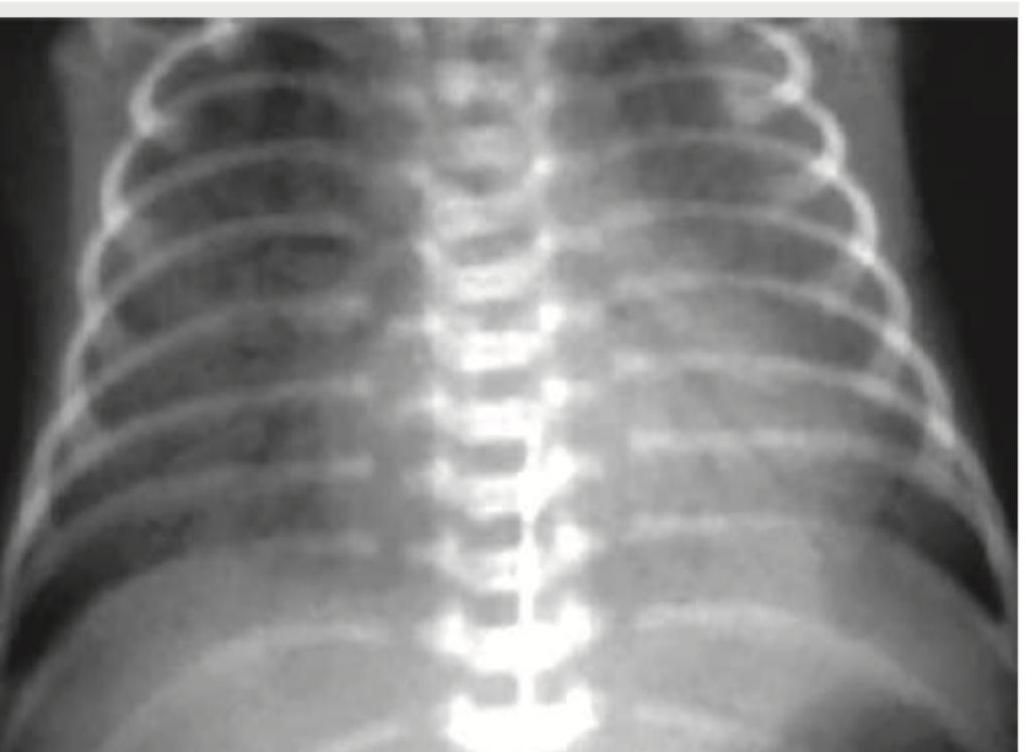
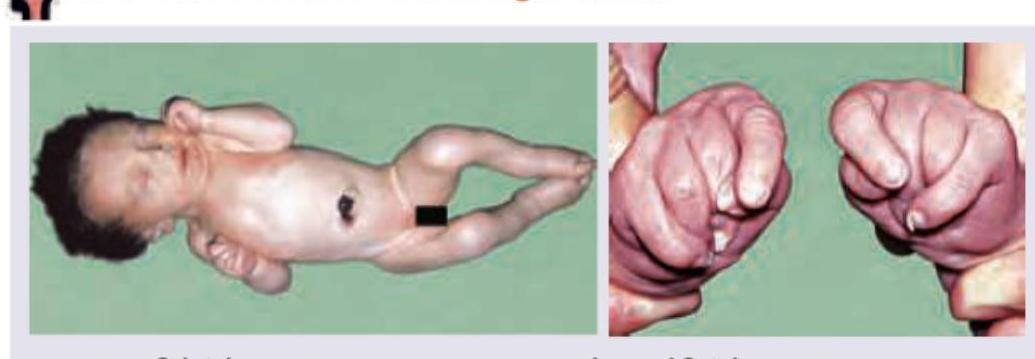
A 21-year-old woman presents to the emergency room in active labor with no prenatal care. Her last menstrual period was approximately 9 months prior. Amniotic membranes were artificially ruptured, yielding no amniotic fluid. She delivers an 1800-g term infant who develops significant respiratory distress immediately at birth. A chest radiograph shows findings consistent with respiratory distress. After stabilization, what is the most appropriate next step for this infant?
A 55-day-old infant born prematurely at 27 weeks of gestation presents with a non-tender, firm swelling that is not hot or red. The swelling does not transilluminate and appears to resolve with pressure but returns when the infant cries or strains. What is the most appropriate course of action?
Which of the following malformations in a newborn is specific for maternal insulin-dependent diabetes mellitus?
Which APGAR score is associated with grimace?
Explanation: ### Explanation The risk of neurologic damage (Kernicterus/Bilirubin Encephalopathy) in a jaundiced newborn is primarily determined by the concentration of **"free" (unbound) unconjugated bilirubin** and its ability to cross the blood-brain barrier (BBB). **Why Neonatal Sepsis is Correct:** Sepsis increases the risk of neurologic damage through two main mechanisms: 1. **BBB Disruption:** Systemic inflammation and infection increase the permeability of the blood-brain barrier, allowing even lower levels of bilirubin to enter the brain tissue. 2. **Acidosis:** Sepsis often leads to metabolic acidosis, which reduces the binding affinity of albumin for bilirubin, thereby increasing the levels of free, neurotoxic bilirubin. **Analysis of Incorrect Options:** * **A. Increased attachment of bilirubin:** This is incorrect. Drugs like **Sulfisoxazole** and Ceftriaxone *compete* with bilirubin for albumin binding sites. This leads to **displacement** of bilirubin (decreased attachment), which *increases* free bilirubin levels and the risk of brain damage. * **B. Hyperalbuminemia:** High albumin levels provide more binding sites for bilirubin, effectively lowering the amount of free bilirubin in the circulation. This is a protective factor, not a risk factor. * **D. Maternal Phenobarbital:** Phenobarbital is a potent inducer of the hepatic enzyme **glucuronyl transferase**. If taken during pregnancy, it can actually decrease neonatal jaundice by accelerating the conjugation and excretion of bilirubin. **High-Yield Clinical Pearls for NEET-PG:** * **The "Free Bilirubin" Theory:** Only unbound, unconjugated bilirubin is lipid-soluble and can cross the BBB. * **Factors increasing Kernicterus risk:** Acidosis, Prematurity, Hypoalbuminemia, Sepsis, and drugs that displace bilirubin (Sulfonamides, Salicylates). * **Target Area:** Bilirubin toxicity characteristically affects the **Basal Ganglia** (specifically the Globus Pallidus) and the Subthalamic nuclei.
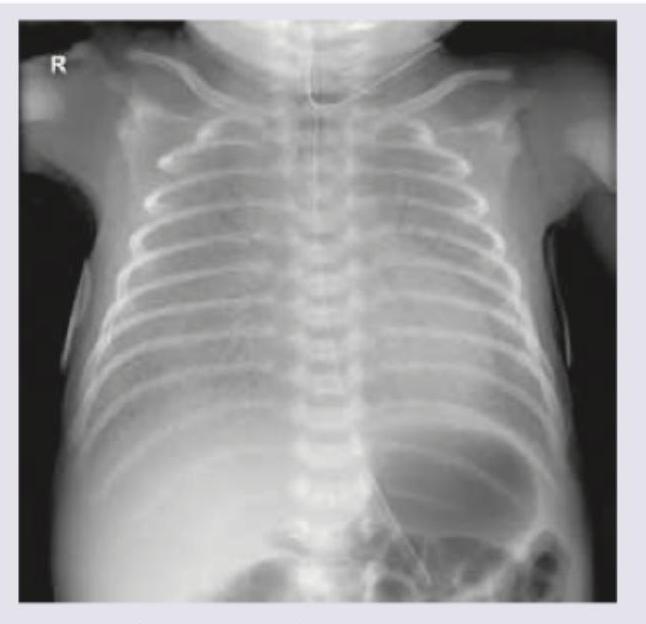
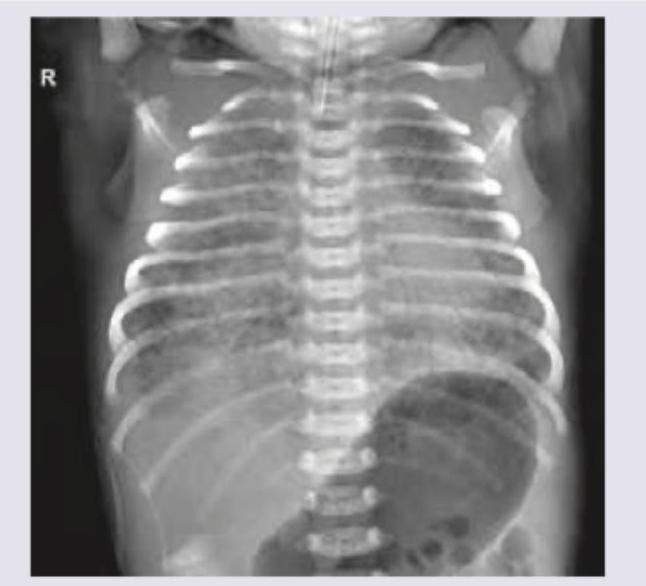
Explanation: **Explanation:** **Hyaline Membrane Disease (HMD)**, also known as **Respiratory Distress Syndrome (RDS)**, is the most common cause of respiratory distress in preterm infants. The underlying pathophysiology is a **deficiency of surfactant**, which is produced by Type II pneumocytes. Surfactant normally reduces surface tension within the alveoli; its absence leads to widespread alveolar collapse (atelectasis), decreased lung compliance, and impaired gas exchange. The risk is inversely proportional to gestational age, primarily affecting infants born before 34 weeks. **Analysis of Incorrect Options:** * **Pneumonia:** While a significant cause of neonatal respiratory distress (especially in cases of prolonged rupture of membranes), it is less common than HMD in the immediate preterm period. * **Low Birth Weight:** This is a physical description/category, not a specific clinical diagnosis or cause of respiratory distress. * **Hydrocephalus:** This is a neurological condition involving excess cerebrospinal fluid. While severe cases can cause secondary respiratory depression via brainstem pressure, it is not a primary cause of respiratory distress. **High-Yield Clinical Pearls for NEET-PG:** * **X-ray Findings:** Characterized by a "Ground Glass Appearance" and "Air Bronchograms." * **L/S Ratio:** A Lecithin/Sphingomyelin ratio of **<2:1** in amniotic fluid indicates lung immaturity. * **Prevention:** Antenatal corticosteroids (e.g., Dexamethasone or Betamethasone) given to the mother 24–48 hours before preterm delivery significantly reduce the incidence of HMD. * **Treatment:** The definitive treatment is exogenous surfactant replacement therapy (e.g., via the INSURE technique).
Explanation: **Explanation:** The initiation of breastfeeding is a critical step in neonatal care. According to the **World Health Organization (WHO)** and **UNICEF (Baby-Friendly Hospital Initiative)** guidelines, breastfeeding should be initiated as soon as possible after birth, ideally **within 30 minutes (1/2 hour)** for a normal vaginal delivery. **Why Option A is Correct:** Early initiation takes advantage of the newborn’s "quiet alert state," which typically occurs in the first hour of life. During this period, the sucking reflex is most intense. Early skin-to-skin contact and suckling stimulate the release of **oxytocin** in the mother (aiding uterine contraction and preventing postpartum hemorrhage) and **prolactin** (promoting milk production). It also ensures the infant receives **colostrum**, which is rich in antibodies and growth factors. **Why Options B, C, and D are Incorrect:** Delaying breastfeeding by 2, 4, or 6 hours increases the risk of neonatal hypoglycemia, hypothermia, and failure to establish successful long-term lactation. Delays also increase the likelihood of the infant being given pre-lacteal feeds (like honey or glucose water), which can introduce infections and interfere with the gut microbiome. **High-Yield Clinical Pearls for NEET-PG:** * **Cesarean Section:** Breastfeeding should be initiated as soon as the mother is conscious and stable, usually within **4 hours**. * **Colostrum:** Produced in the first 2–3 days; it is thick, yellow, and high in Vitamin A, sodium, chloride, and **IgA**. * **Exclusive Breastfeeding:** Recommended for the first **6 months** of life. * **Rooting Reflex:** This is the cue to look for; it is strongest immediately after birth.
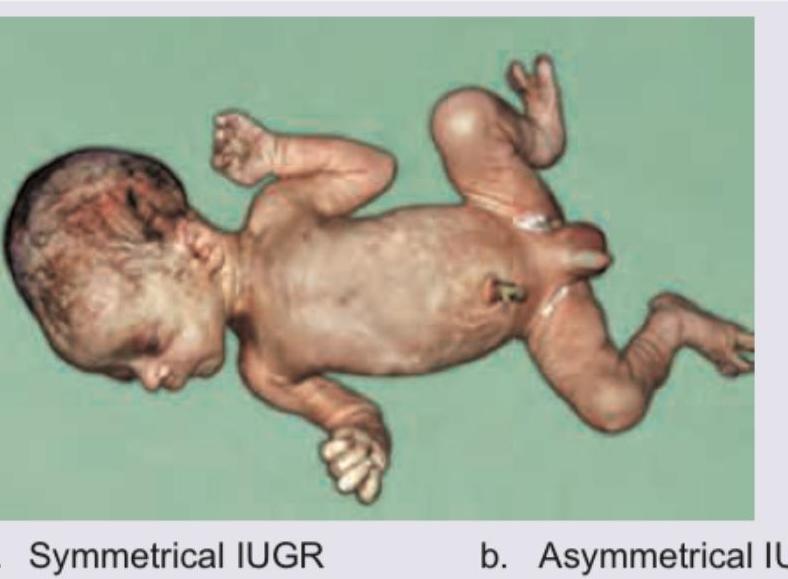
Explanation: ### Explanation The core of this question lies in distinguishing between **Low Birth Weight (LBW)** and **Small for Date (SFD)**. **1. Why "Preterm low birth weight" is the correct answer:** A **Small for Date (SFD)** or Small for Gestational Age (SGA) infant is defined as a neonate whose birth weight is below the **10th percentile** for that specific gestational age. * A **Preterm LBW** infant (born <37 weeks) may have a low birth weight simply because they were born early, but their weight could still be appropriate for their gestational age (AGA). For example, a baby born at 28 weeks weighing 1100g is LBW (<2500g) but is **Appropriate for Date**, not Small for Date. Therefore, "Preterm LBW" is a broad category that does not inherently imply being "Small for Date." **2. Analysis of Incorrect Options:** * **Term low birth weight (Option B):** A baby born at term (≥37 weeks) weighing <2500g is by definition below the 10th percentile for that age, making them SFD. * **Post-term low birth weight (Option C):** A baby born after 42 weeks weighing <2500g is significantly growth-restricted relative to their gestational age, thus fitting the SFD criteria. * **Intrauterine growth restriction (IUGR) (Option D):** IUGR refers to a pathological process where the fetus does not reach its biological growth potential in utero. These infants are the classic clinical representation of being Small for Date. **3. High-Yield Clinical Pearls for NEET-PG:** * **LBW:** Weight <2500g regardless of gestational age. * **VLBW:** <1500g; **ELBW:** <1000g. * **Ponderal Index:** Used to differentiate between Symmetrical and Asymmetrical IUGR. * *Asymmetrical IUGR (Head sparing):* Most common; due to placental insufficiency in the 3rd trimester. * *Symmetrical IUGR:* Due to early insults like chromosomal anomalies or TORCH infections. * **Common Complications of SFD:** Hypoglycemia (low glycogen stores), Hypocalcemia, Polycythemia (due to chronic hypoxia), and Hypothermia.
Explanation: **Explanation:** Neonates, especially preterm and low-birth-weight babies, are highly susceptible to hypothermia due to a large surface-area-to-volume ratio, thin subcutaneous fat, and limited brown adipose tissue for non-shivering thermogenesis. In community settings, preventing the "Warm Chain" from breaking is critical to reducing neonatal morbidity and mortality. **Why 'All of the above' is correct:** The management of neonatal thermoregulation relies on a multi-pronged approach: * **Kangaroo Mother Care (KMC):** This is the gold standard for community-based thermal care. It provides continuous skin-to-skin contact, which transfers maternal body heat to the neonate and stabilizes the infant's temperature, heart rate, and breathing. * **Keeping the room warm:** Environmental temperature control is vital. The delivery room and the postnatal room should be kept at a minimum of **25°C (77°F)** and be free of drafts to prevent heat loss via convection and radiation. * **Ensuring adequate breastfeeding:** Early and frequent breastfeeding provides the necessary calories (energy) for the infant to generate metabolic heat. The "warmth" of the mother during feeding also contributes to thermal stability. **Clinical Pearls for NEET-PG:** * **The Warm Chain:** A set of 10 interlinked procedures carried out at birth and during the following days to minimize heat loss (e.g., immediate drying, skin-to-skin contact, postponing the first bath for at least 24 hours). * **Normal Neonatal Temperature:** 36.5°C to 37.5°C (97.7°F to 99.5°F). * **Cold Stress:** 36.0°C to 36.4°C. * **Moderate Hypothermia:** 32.0°C to 35.9°C. * **Severe Hypothermia:** <32.0°C. * **High-Yield Sign:** The first clinical sign of hypothermia in a neonate is often **poor feeding** or a **cold-to-touch abdomen**.
Explanation: **Explanation:** **Retrolental Fibroplasia**, now more commonly known as **Retinopathy of Prematurity (ROP)**, is a vasoproliferative disorder of the retina occurring in preterm infants. **Why Low Birth Weight is correct:** The primary risk factors for ROP are **prematurity** and **low birth weight (LBW)**. In a developing fetus, retinal vascularization begins at the optic disc at 16 weeks and reaches the nasal periphery by 36 weeks and the temporal periphery by 40 weeks. When an infant is born prematurely or with a low birth weight, the retina is incompletely vascularized. Exposure to high concentrations of supplemental oxygen (hyperoxia) causes vasoconstriction and damage to these immature vessels. This is followed by a compensatory release of Vascular Endothelial Growth Factor (VEGF), leading to abnormal neovascularization, scarring, and potential retinal detachment. **Why other options are incorrect:** * **Prolonged labor:** This is associated with birth asphyxia and caput succedaneum, but it does not directly trigger the pathological angiogenesis seen in ROP. * **Intrauterine infection:** While infections (like TORCH) can cause chorioretinitis, they are not the underlying mechanism for the fibrovascular proliferation characteristic of ROP. * **Meconium aspiration:** This leads to respiratory distress and persistent pulmonary hypertension (PPHN). While these infants may require oxygen, the primary etiology of ROP remains the immaturity of the retinal vessels (LBW/Prematurity). **High-Yield Clinical Pearls for NEET-PG:** * **Screening Criteria (India):** All infants born **<32 weeks** gestation OR **<1500g** birth weight should be screened. * **Screening Timing:** The first screening should be done at **4 weeks** of postnatal age or **31 weeks** of post-menstrual age (whichever is later). * **Zone of Involvement:** Zone 1 (centered on the optic disc) is the most critical area. * **Plus Disease:** Characterized by venous dilation and arterial tortuosity in the posterior pole; it indicates active, severe ROP. * **Treatment:** Laser photocoagulation or Intravitreal Anti-VEGF (e.g., Ranibizumab).
Explanation: **Explanation:** The clinical presentation describes a classic case of **Potter Sequence** (or Potter Syndrome). The key diagnostic clue is the absence of amniotic fluid (**anhydramnios**) upon rupture of membranes. In utero, fetal urine is the primary constituent of amniotic fluid. If there is a renal anomaly (such as bilateral renal agenesis or posterior urethral valves), the lack of urine leads to oligohydramnios/anhydramnios. This lack of fluid results in mechanical compression of the fetus, leading to the characteristic "Potter facies" and, most critically, **pulmonary hypoplasia**. The infant’s immediate respiratory distress and chest radiograph findings are due to underdeveloped lungs, not primary surfactant deficiency. **Why Renal Ultrasound is the correct next step:** Since the respiratory distress is a secondary complication of a suspected renal pathology, a **renal ultrasound** is the gold standard initial investigation to evaluate for bilateral renal agenesis, polycystic kidney disease, or obstructive uropathy. **Analysis of Incorrect Options:** * **A. Cardiac catheterization:** While congenital heart disease can cause respiratory distress, it does not explain the lack of amniotic fluid. * **C. MRI of the brain:** Neurological issues can cause apnea, but they are not associated with anhydramnios or the specific sequence described. * **D. Liver and spleen scan:** Hepatosplenic pathology is not a component of the Potter sequence and does not correlate with the prenatal history provided. **NEET-PG High-Yield Pearls:** * **Potter Sequence Mnemonic (POTTER):** **P**ulmonary hypoplasia, **O**ligohydramnios, **T**wisted face (Potter facies), **T**wisted skin, **E**xtremity defects (clubfoot), **R**enal anomalies. * The most common cause of death in Potter sequence is **pulmonary hypoplasia**, not renal failure. * The most common cause of oligohydramnios leading to Potter sequence in male infants is **Posterior Urethral Valves (PUV)**.
Explanation: ### Explanation The clinical presentation is classic for an **Inguinal Hernia**. In a premature infant, the patent processus vaginalis fails to close, allowing abdominal contents (usually bowel or omentum) to protrude into the inguinal canal. **Why Option A is Correct:** Unlike umbilical hernias, which often resolve spontaneously, **inguinal hernias in infants never resolve on their own** and carry a high risk of incarceration and strangulation, especially in preterm neonates. The standard of care is **surgical repair (inguinal herniotomy)**. Because the infant is currently asymptomatic (non-tender, reducible), an urgent surgical consultation is the most appropriate next step to plan for elective or semi-urgent repair before discharge from the NICU. **Why Other Options are Incorrect:** * **B. Needle aspiration:** This is contraindicated. If the swelling contains a loop of bowel, aspiration would cause perforation and peritonitis. * **C & D. Barium enema/KUB:** These are not indicated for a simple reducible hernia. Imaging is only required if there are signs of intestinal obstruction (vomiting, abdominal distension) or if the diagnosis is clinically ambiguous. **Clinical Pearls for NEET-PG:** * **Incidence:** Inguinal hernias are significantly more common in **preterm infants** (up to 30%) compared to term infants (3-5%). * **Side:** More common on the **right side** (due to later descent of the right testis). * **Physical Exam:** The "Silk Glove Sign" (feeling the layers of the hernia sac rubbing against each other) is a pathognomonic finding. * **Management Rule:** Umbilical hernias are managed conservatively (most close by age 2-4 years); Inguinal hernias are always managed surgically.
Explanation: **Explanation:** In infants of diabetic mothers (IDM), the risk of congenital malformations is 3–4 times higher than in the general population due to pre-gestational hyperglycemia during organogenesis. **1. Why Caudal Regression is the correct answer:** While **Congenital Heart Disease (specifically VSD and ASD)** is the *most common* malformation in IDMs, **Caudal Regression Syndrome** (sacral agenesis with associated lower limb defects, gastrointestinal, and genitourinary anomalies) is the **most specific**. This means that while it is rare, its presence is highly suggestive of maternal diabetes (the relative risk is increased over 200-fold in diabetic pregnancies). **2. Analysis of Incorrect Options:** * **A. Transposition of Great Arteries (TGA):** This is the most common *cyanotic* heart disease in IDMs. However, it is not as pathognomonic (specific) as caudal regression. * **C. Holoprosencephaly:** This is a failure of the prosencephalon to divide. While it can occur in IDMs, it is more commonly associated with chromosomal trisomies (e.g., Patau syndrome). * **D. Meningomyelocele:** Neural tube defects (NTDs) are significantly increased in IDMs, but they are common in the general population (often due to folic acid deficiency), making them less specific than caudal regression. **High-Yield Clinical Pearls for NEET-PG:** * **Most Common Malformation:** Ventricular Septal Defect (VSD). * **Most Specific Malformation:** Caudal Regression Syndrome. * **Most Common Cardiac Abnormality:** Asymmetric Septal Hypertrophy (usually transient). * **Most Common Neonatal Complication:** Hypoglycemia. * **Other specific associations:** Small Left Colon Syndrome and Renal Vein Thrombosis.
Explanation: The **APGAR score** is a rapid clinical assessment tool used at 1 and 5 minutes after birth to evaluate a newborn's transition to extrauterine life. It assesses five parameters: Appearance, Pulse, Grimace, Activity, and Respiration. ### Explanation of the Correct Answer The parameter **"Grimace"** refers to **Reflex Irritability**—the infant’s response to stimulation (such as suctioning the oropharynx or flicking the soles). * **Score 1:** Assigned when the infant shows only a **grimace** (a facial contortion) in response to stimulation. * **Score 2:** Assigned when there is a vigorous response, such as a **cough, sneeze, or active withdrawal/cry**. * **Score 0:** Assigned when there is **no response** to stimulation. ### Explanation of Incorrect Options * **Option A (0):** A score of 0 for reflex irritability indicates "Floppy" or "No response" to stimuli. * **Option C (2):** A score of 2 is reserved for a more robust response than a simple grimace, such as a sneeze, cough, or vigorous cry. * **Option D (3):** This is incorrect because the maximum score for any single APGAR component is 2. The total APGAR score ranges from 0 to 10. ### NEET-PG High-Yield Pearls * **Mnemonic:** **A**ppearance (Color), **P**ulse (Heart Rate), **G**rimace (Reflex Irritability), **A**ctivity (Muscle Tone), **R**espiration. * **Heart Rate (Pulse):** The most important prognostic component. Score 1 is <100 bpm; Score 2 is >100 bpm. * **Color (Appearance):** The most common point lost is for "Acrocyanosis" (blue extremities, pink body), which scores a 1. * **Clinical Significance:** APGAR at 1 minute correlates with the need for immediate resuscitation; APGAR at 5 minutes is a better predictor of long-term neurological outcomes. It is **not** used to decide when to start resuscitation (which must begin before the 1-minute mark if needed).
Neonatal Resuscitation
Practice Questions
Care of the Normal Newborn
Practice Questions
Prematurity and Low Birth Weight
Practice Questions
Respiratory Distress Syndrome
Practice Questions
Neonatal Jaundice
Practice Questions
Neonatal Sepsis
Practice Questions
Necrotizing Enterocolitis
Practice Questions
Intraventricular Hemorrhage
Practice Questions
Persistent Pulmonary Hypertension
Practice Questions
Perinatal Asphyxia
Practice Questions
Neonatal Seizures
Practice Questions
Congenital Anomalies
Practice Questions
Get full access to all questions, explanations, and performance tracking.
Start For Free