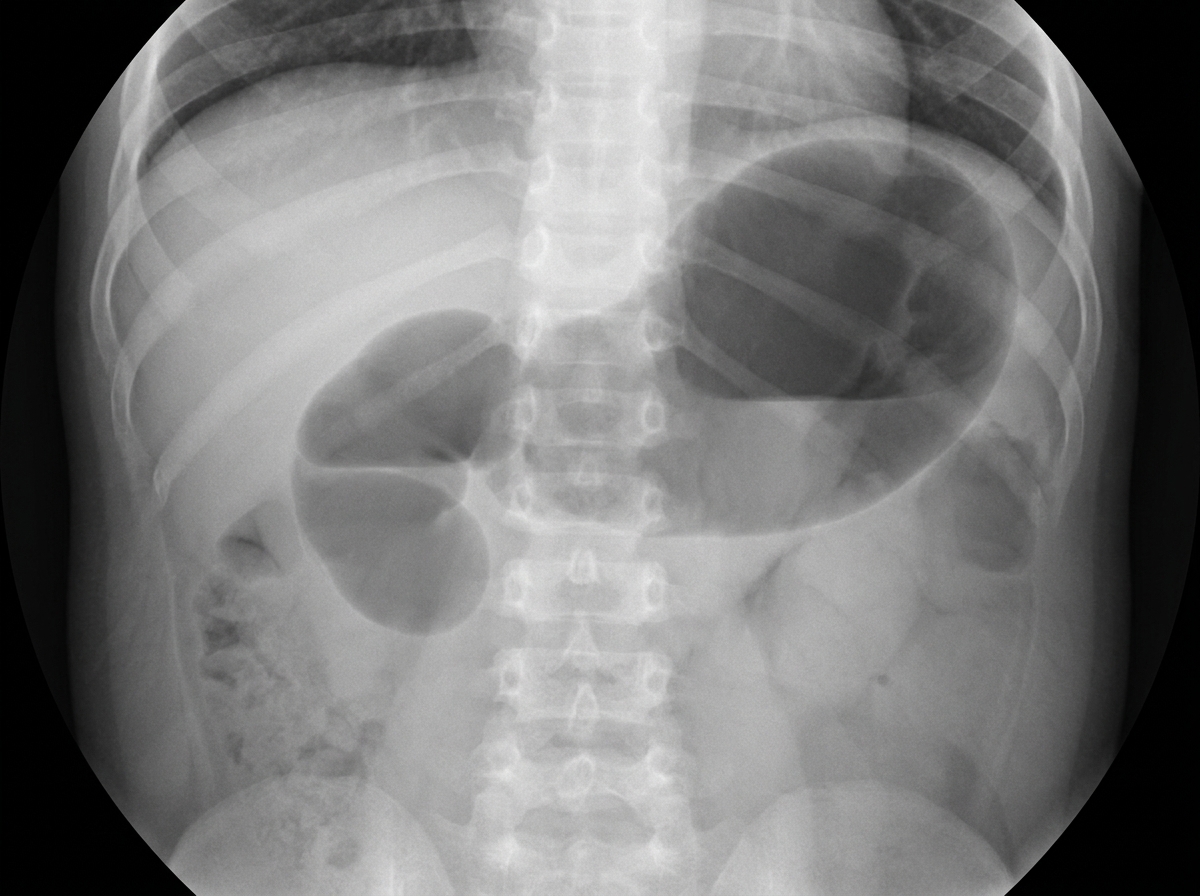
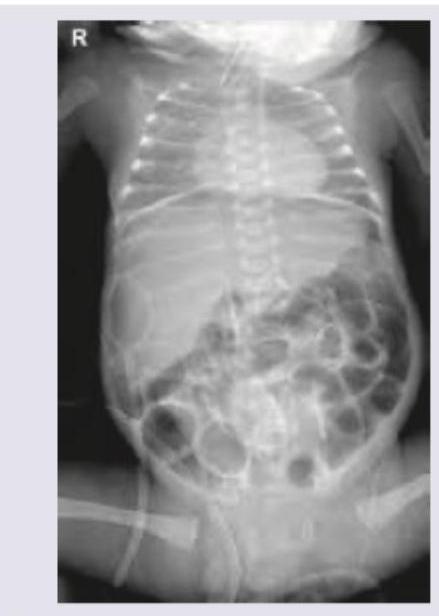
What does a granulomatous appearance of the lung with an air bronchogram in neonates represent?
Neonatal jaundice is caused by all EXCEPT?
Regarding Continuous Positive Airway Pressure (CPAP), all the following statements are true EXCEPT:
By international agreement, what is the definition of low birth weight?
Which of the following features is NOT typically seen in the cold injury of neonates?
Which of the following factors does NOT contribute to hypothermia in preterm babies?
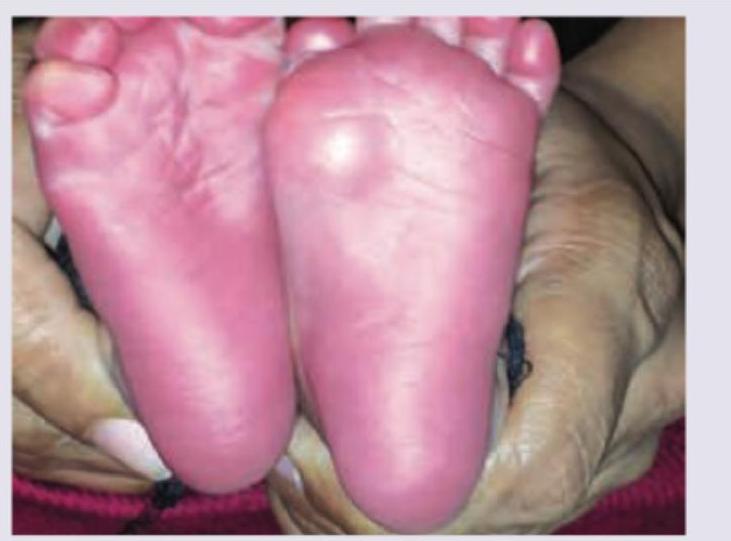
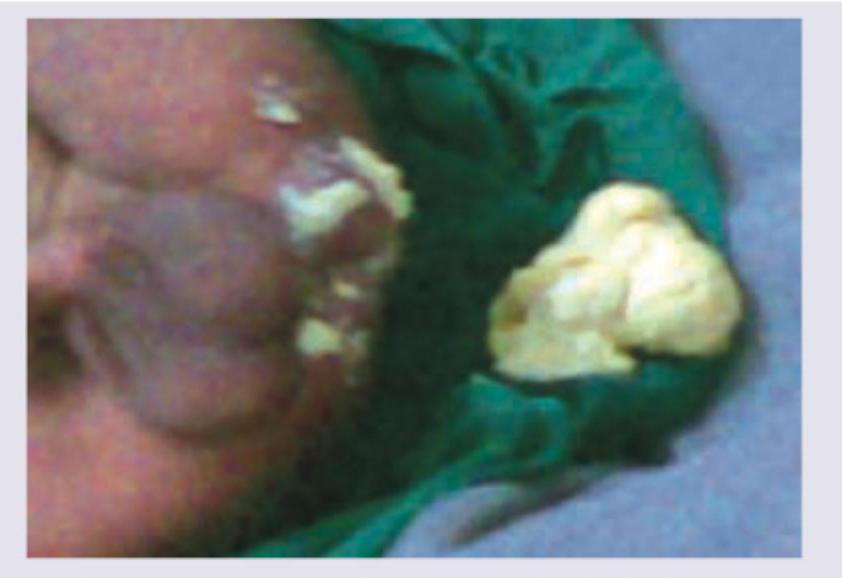
A premature baby of 34 weeks gestation was delivered and subsequently developed bullous lesions on the skin. Radiographic examination revealed periostitis. What is the most appropriate next investigation?
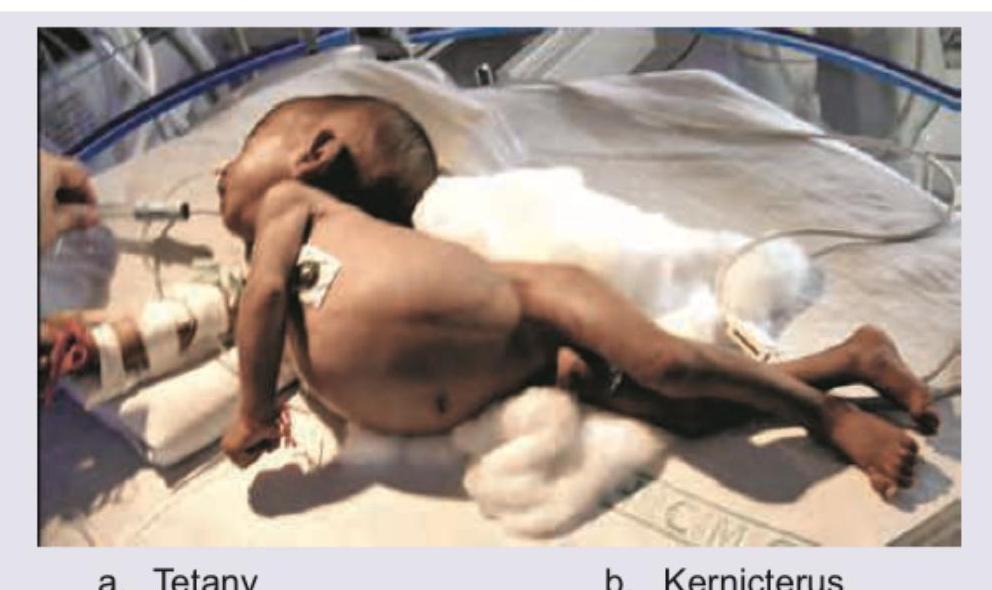
A neonate presents with extensor posture at 8 days of age. What is the most likely diagnosis?
Cord cutting should be delayed in which condition?
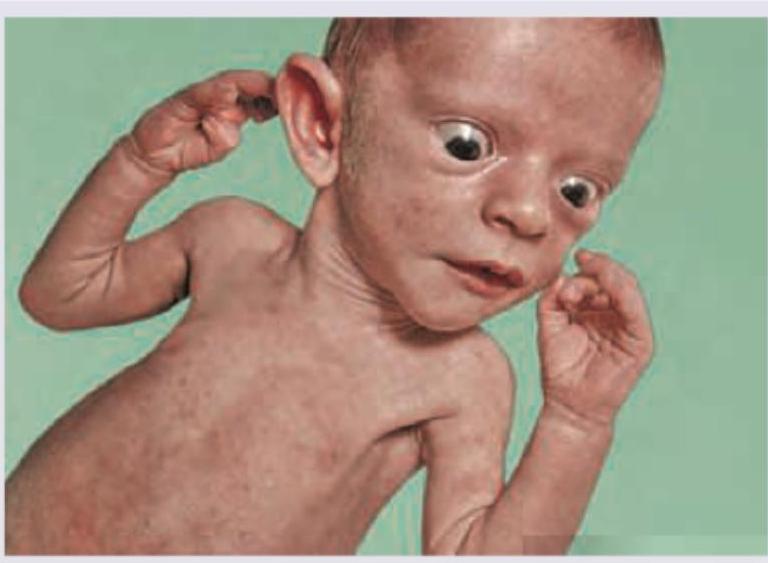
Which of the following is an abnormal finding in a neonate?
Explanation: **Explanation:** **Hyaline Membrane Disease (HMD)**, also known as Respiratory Distress Syndrome (RDS), is primarily caused by a deficiency of pulmonary surfactant in preterm neonates. This deficiency leads to widespread alveolar collapse (atelectasis). On a chest X-ray, the characteristic **"granulomatous" or "ground-glass" appearance** (reticulogranular pattern) represents the contrast between the collapsed alveoli and the surrounding aerated terminal bronchioles. The **air bronchogram** occurs because the larger bronchi remain patent and air-filled against the background of the opacified, collapsed lung parenchyma. **Why other options are incorrect:** * **Aspiration Pneumonia (e.g., Meconium Aspiration):** Typically presents with patchy, asymmetrical opacities and areas of hyperinflation (due to a ball-valve effect), rather than a uniform granular pattern. * **Staph Pneumonia:** Usually presents with focal consolidation, abscesses, or pneumatoceles (thin-walled air cysts), and is rarely seen immediately at birth. * **ARDS:** While it shares radiological similarities with HMD, ARDS in neonates is usually secondary to a systemic insult (like sepsis) and is not the primary diagnosis for the classic "ground-glass" description in newborn respiratory distress. **High-Yield Clinical Pearls for NEET-PG:** * **Risk Factors:** Prematurity (most common), Maternal Diabetes, Cesarean section without labor, and being the second twin. * **L/S Ratio:** A Lecithin/Sphingomyelin ratio of **<2:1** in amniotic fluid indicates lung immaturity. * **Management:** Antenatal corticosteroids (Betamethasone) to the mother and postnatal surfactant replacement therapy for the neonate. * **Bell’s Staging:** Used to grade the severity of HMD based on X-ray findings (Stage I: Fine grains; Stage IV: White-out lungs).
Explanation: **Explanation:** Neonatal jaundice (icterus) is the yellowish discoloration of the skin and sclera caused by the accumulation of **unconjugated bilirubin**. To answer this question, one must distinguish between the *cause* and the *consequence* of the condition. **Why Anemia is the correct answer:** Anemia is a **clinical finding or a consequence** of hemolysis, not a cause of jaundice itself. While conditions like Rh incompatibility or ABO incompatibility cause both hemolysis (leading to jaundice) and anemia, the anemia does not "cause" the jaundice. In fact, if a neonate has severe anemia due to acute blood loss (e.g., subgaleal hemorrhage), they may actually have *less* hemoglobin to break down, potentially resulting in lower bilirubin levels. **Analysis of Incorrect Options:** * **Increased RBC destruction:** This is the primary mechanism for pathological jaundice. Neonates have a higher RBC mass and a shorter RBC lifespan (80 days vs. 120 days), leading to increased bilirubin production. * **Hyperbilirubinemia:** By definition, neonatal jaundice is the clinical manifestation of hyperbilirubinemia (serum bilirubin >5 mg/dL). * **Breast feeding:** Both "Breastfeeding jaundice" (due to inadequate intake/dehydration in the first week) and "Breast milk jaundice" (due to factors like beta-glucuronidase in milk) are well-recognized causes of neonatal unconjugated hyperbilirubinemia. **NEET-PG High-Yield Pearls:** * **Kramer’s Rule:** Used for clinical assessment of jaundice progression (Cephalo-caudal progression). * **Physiological vs. Pathological:** Jaundice appearing within the **first 24 hours** is always pathological. * **Most common cause** of hemolytic jaundice in newborns is ABO incompatibility. * **Kernicterus:** Occurs when unconjugated bilirubin crosses the blood-brain barrier, depositing in the **basal ganglia** (specifically the globus pallidus).
Explanation: **Explanation:** The correct answer is **B** because it is a false statement. In neonatal resuscitation and stabilization, CPAP is typically initiated with an **FiO2 of 21% to 30%** for preterm infants, rather than 50-60%. High concentrations of oxygen are avoided initially to prevent oxidative stress and retinopathy of prematurity (ROP). The FiO2 is subsequently titrated based on pre-ductal oxygen saturation (SpO2) targets. **Analysis of other options:** * **Option A:** Prophylactic CPAP (or early rescue CPAP) is a standard of care for preterm infants showing signs of respiratory distress syndrome (RDS). It prevents alveolar collapse and reduces the need for invasive mechanical ventilation. * **Option C:** Infants born at **<28 weeks gestation** or weighing **<1000g** are at high risk for surfactant deficiency. Current guidelines recommend early CPAP (often in the delivery room) for this specific high-risk group to improve survival without bronchopulmonary dysplasia (BPD). * **Option D:** CPAP works by maintaining a positive end-expiratory pressure (PEEP), which recruits collapsed alveoli, increases functional residual capacity (FRC), and stabilizes the chest wall, thereby improving both **oxygenation and lung compliance**. **High-Yield Clinical Pearls for NEET-PG:** * **Initial CPAP Pressure:** Usually started at **5–6 cm H2O**. * **Surfactant Delivery:** If an infant on CPAP requires an FiO2 >30-40% to maintain target saturations, it is an indication for surfactant replacement (e.g., via the INSURE or LISA technique). * **Contraindications:** CPAP is contraindicated in infants with **Congenital Diaphragmatic Hernia (CDH)**, tracheoesophageal fistula, or choanal atresia.
Explanation: **Explanation:** The World Health Organization (WHO) defines **Low Birth Weight (LBW)** as a birth weight of **less than 2500 grams (up to and including 2499 g)**, regardless of gestational age. This definition is used internationally to monitor neonatal morbidity and mortality, as LBW infants are at a significantly higher risk for complications like hypothermia, hypoglycemia, and sepsis. **Analysis of Options:** * **Option C (Correct):** Less than 2500g is the globally accepted threshold for LBW. * **Option A:** Less than 2000g does not represent a standard WHO classification, though it is often used in specific clinical protocols for NICU admission. * **Option B:** 2800g is within the normal weight range for many populations and is not a clinical cutoff. * **Option D:** 3000g is considered a healthy average birth weight; it is not used to define low birth weight. **High-Yield NEET-PG Clinical Pearls:** 1. **Classification by Weight:** * **Low Birth Weight (LBW):** < 2500 g * **Very Low Birth Weight (VLBW):** < 1500 g * **Extremely Low Birth Weight (ELBW):** < 1000 g 2. **Classification by Gestation:** * **Preterm:** Born before 37 completed weeks. * **Small for Gestational Age (SGA):** Weight below the 10th percentile for that gestational age. 3. **Kangaroo Mother Care (KMC):** This is the gold standard intervention for stable LBW babies to prevent hypothermia and promote breastfeeding. 4. **Macrosomia:** Defined as a birth weight > 4000 g (often associated with maternal diabetes).
Explanation: **Explanation:** The correct answer is **B. Uncontrolled shivering**. **Why it is the correct answer:** Neonates, especially preterm and low-birth-weight infants, have a limited ability to generate heat through shivering due to an immature nervous system and insufficient muscle mass. Instead, they rely on **non-shivering thermogenesis**. This process involves the metabolic breakdown of **brown adipose tissue (BAT)**, which is highly vascular and rich in mitochondria. When exposed to cold, norepinephrine release triggers the oxidation of fatty acids in brown fat to produce heat directly. Therefore, "uncontrolled shivering" is not a typical feature of neonatal cold injury. **Analysis of incorrect options:** * **A. Bradycardia:** Cold stress leads to a decrease in metabolic rate and depression of the sinoatrial node, resulting in a slow heart rate. * **C. Sclerema:** Neonatal cold injury often leads to "Sclerema Neonatorum," characterized by hardening of the subcutaneous fat (due to a higher ratio of saturated to unsaturated fatty acids), making the skin feel woody or doughy. * **D. Metabolic acidosis:** Non-shivering thermogenesis consumes large amounts of oxygen and glucose. If the infant becomes hypoxic, anaerobic metabolism takes over, leading to the accumulation of lactic acid and subsequent metabolic acidosis. **Clinical Pearls for NEET-PG:** * **Neutral Thermal Environment (NTE):** The ambient temperature range where the baby maintains a normal body temperature with minimum metabolic rate and oxygen consumption. * **Brown Fat Locations:** Interscapular region, axillae, neck, and around the kidneys/adrenals. * **Early signs of cold stress:** Lethargy, poor feeding, and cold extremities (acrocyanosis). * **Management:** Rewarming should be gradual (0.5°C per hour) to avoid "rewarming shock" or apnea.
Explanation: **Explanation:** The core concept in neonatal thermoregulation is that newborns, especially preterm infants, are **homeothermic but not thermostable**. They rely primarily on **non-shivering thermogenesis** (metabolism of brown fat) rather than muscular activity to generate heat. **Why "Increased muscular activity" is the correct answer:** Preterm babies have poor muscle tone (hypotonia) and a limited ability to shiver. Unlike adults, who increase muscular activity and shiver to generate heat, preterm infants lack this compensatory mechanism. Therefore, "increased muscular activity" is **not** a factor present in these babies; if it were, it would actually help prevent hypothermia rather than contribute to it. **Analysis of Incorrect Options:** * **Decreased subcutaneous and brown fat:** Subcutaneous fat acts as insulation, while brown fat (located in the interscapular region and around kidneys) is the primary source of heat production. Preterm babies have deficient stores of both, leading to rapid heat loss and poor heat production. * **Large surface area to body weight ratio:** Heat loss is proportional to surface area. Preterm babies have a high surface-area-to-mass ratio, meaning they lose heat to the environment much faster than they can produce it. * **Less oxygen consumption:** Heat production is an aerobic process. Preterm babies often have respiratory distress or immature lungs; inadequate oxygenation limits their ability to metabolize brown fat, thereby contributing to hypothermia. **NEET-PG High-Yield Pearls:** * **Brown Fat:** Appears at 26–30 weeks gestation; hence, very preterm babies are at extreme risk. * **Modes of Heat Loss:** **Radiation** is the most common mode of heat loss in a nursery (loss to cooler solid objects not in contact). * **Kangaroo Mother Care (KMC):** The gold standard for preventing hypothermia in stable low-birth-weight infants. * **Cold Stress:** Can lead to metabolic acidosis, hypoglycemia, and kernicterus (by displacing bilirubin from albumin).
Explanation: The clinical presentation of a premature neonate with **bullous skin lesions** (Pemphigus syphiliticus) and **periostitis** is a classic triad for **Congenital Syphilis**. ### **Explanation of the Correct Answer** * **Congenital Syphilis:** Caused by *Treponema pallidum* crossing the placenta. * **Cutaneous Manifestations:** The characteristic rash involves vesiculobullous lesions, often on the palms and soles, which may desquamate. * **Skeletal Manifestations:** Radiographic signs like **periostitis** (inflammation of the periosteum), Wimberger’s sign (metaphyseal erosions of the medial proximal tibia), and osteochondritis are hallmark features. * **Diagnosis:** The initial screening step is performing non-treponemal tests like **VDRL or RPR** on both the mother and the infant. A positive result in the infant, especially with a titer fourfold higher than the mother’s, strongly supports the diagnosis. ### **Why Other Options are Incorrect** * **B. ELISA for HIV:** While HIV can be vertically transmitted, it typically presents with failure to thrive, lymphadenopathy, and opportunistic infections, not bullous lesions or periostitis. * **C. PCR for TB:** Congenital Tuberculosis usually presents with hepatosplenomegaly, respiratory distress, and fever; it does not cause bullous skin lesions. * **D. Hepatitis B surface antigen:** Neonatal Hep-B is usually asymptomatic at birth and does not present with skeletal or bullous skin involvement. ### **High-Yield Clinical Pearls for NEET-PG** * **Pemphigus Syphiliticus:** The only bullous lesion present at birth that involves the palms and soles. * **Snuffles:** Persistent syphilitic rhinitis (bloody/mucinous discharge) is a common early sign. * **Hutchinson’s Triad (Late Syphilis):** Hutchinson teeth, Interstitial keratitis, and Eighth nerve deafness. * **Treatment of Choice:** Intravenous **Penicillin G** for 10 days.
Explanation: ### Explanation **Correct Answer: C. Malnutrition** In the context of neonatal clinical signs, an **extensor posture** (specifically opisthotonus or generalized rigidity) appearing around the end of the first week of life is a classic, high-yield presentation of **Neonatal Tetanus**. In many older medical curricula and specific exam patterns (like those sometimes referenced in NEET-PG), neonatal tetanus is categorized under the umbrella of "malnutrition" or "poor hygiene/umbilical cord care" in specific community health contexts, or more accurately, it refers to the **nutritional/metabolic failure** associated with the inability to suckle. However, the physiological trigger for the extensor spasm is the tetanospasmin toxin. If "Tetanus" is not an option, "Malnutrition" is historically selected in certain question banks to represent the systemic decline and starvation that occurs when a neonate develops lockjaw (trismus) and can no longer feed. **Why other options are incorrect:** * **A. Cerebral Palsy:** This is a non-progressive motor delay. While it can present with spasticity, it is rarely diagnosed as an acute onset of extensor posturing at exactly 8 days of age. * **B. Hypoxic Ischemic Encephalopathy (HIE):** HIE typically presents within the first **24–48 hours** of birth with seizures or altered consciousness. By day 8, the acute phase has passed. * **C. Infection:** While sepsis can cause irritability, it usually presents with lethargy and hypotonia (floppiness) rather than rigid extensor posturing, which is specific to tetanus or severe kernicterus. **Clinical Pearls for NEET-PG:** * **The "8th Day Disease":** Neonatal tetanus is classically known as the "8th-day disease" because symptoms typically manifest between day 3 and day 14 (average 7–8 days). * **Pathogenesis:** Usually due to the use of unsterile instruments to cut the umbilical cord or applying "ghee"/cow dung to the stump. * **First Sign:** Inability to suckle (trismus), followed by a "risus sardonicus" facial expression and generalized spasms triggered by touch or light.
Explanation: **Explanation:** **Delayed Cord Cutting (DCC)** refers to clamping the umbilical cord at least 30–60 seconds after birth (or until pulsations cease). This practice allows for a "placental transfusion," providing the neonate with approximately 80–100 mL of additional blood, which significantly increases iron stores and hemoglobin levels. **Why Severe Anemia is Correct:** In cases of **Severe Anemia** (often due to maternal iron deficiency), DCC is highly beneficial. The extra blood volume increases the infant’s iron status for up to 6 months of life, reducing the risk of iron-deficiency anemia and improving neurodevelopmental outcomes. **Why the other options are incorrect:** * **Rh Incompatibility:** Traditionally, DCC was avoided to prevent the transfer of maternal antibodies and excess bilirubin, which could worsen jaundice or lead to kernicterus. Immediate clamping is usually preferred here. * **Asphyxia:** Infants with birth asphyxia require immediate resuscitation (the "Golden Minute"). Delaying cord clamping in a non-breathing infant delays life-saving interventions. * **IUGR (Intrauterine Growth Restriction):** While some guidelines suggest DCC is safe, IUGR infants are at a higher risk of polycythemia and hyperviscosity. Therefore, it is not the primary indication compared to anemia. **High-Yield Facts for NEET-PG:** * **WHO Recommendation:** DCC is recommended for all births (term and preterm) who do not require immediate resuscitation. * **Benefits in Preterms:** Reduced risk of Intraventricular Hemorrhage (IVH), Necrotizing Enterocolitis (NEC), and need for blood transfusions. * **Side Effect:** A slight increase in the risk of **neonatal jaundice** requiring phototherapy. * **Positioning:** The infant should be held at or slightly below the level of the introitus/placenta to facilitate gravity-assisted flow.
Explanation: **Explanation:** In neonatology, distinguishing between physiological variations and pathological findings is crucial for NEET-PG. **Why Bacteriuria is the Correct Answer:** Under normal physiological conditions, urine in the bladder is sterile. The presence of bacteria in a properly collected neonatal urine sample (especially via suprapubic aspiration or catheterization) is **always abnormal**. It indicates a Urinary Tract Infection (UTI), which in neonates is often a sign of underlying systemic sepsis or structural renal anomalies (like VUR). Unlike other findings, there is no "physiological bacteriuria." **Analysis of Incorrect Options:** * **Glycosuria:** In neonates, especially preterm infants, the renal threshold for glucose is significantly lower than in adults. Transient glycosuria can occur due to immature proximal tubular function and is often considered a benign, physiological finding unless associated with hyperglycemia. * **WBCs in urine (Pyuria):** While pyuria often accompanies infection, it is not always abnormal in the first few days of life. Normal neonates can have up to 20–25 WBCs/hpf in centrifuged urine due to the stress of delivery or contamination from the prepuce/vulva. * **Hyperbilirubinemia:** Almost 60% of term and 80% of preterm neonates develop **Physiological Jaundice** due to immature hepatic conjugation and increased RBC turnover. Therefore, hyperbilirubinemia is a common "normal" finding unless it exceeds specific hour-specific thresholds on a nomogram. **Clinical Pearls for NEET-PG:** * **Gold Standard for Urine Collection:** Suprapubic aspiration is the most reliable method in neonates; even a single colony of any organism is significant. * **Renal Threshold:** The glucose renal threshold in a term neonate is ~150 mg/dL (compared to 180 mg/dL in adults). * **Brick Red Spots:** Often mistaken for hematuria, "brick red" staining in a neonate's diaper is usually due to **Urate Crystals**, which is a normal finding in the first week of life.
Neonatal Resuscitation
Practice Questions
Care of the Normal Newborn
Practice Questions
Prematurity and Low Birth Weight
Practice Questions
Respiratory Distress Syndrome
Practice Questions
Neonatal Jaundice
Practice Questions
Neonatal Sepsis
Practice Questions
Necrotizing Enterocolitis
Practice Questions
Intraventricular Hemorrhage
Practice Questions
Persistent Pulmonary Hypertension
Practice Questions
Perinatal Asphyxia
Practice Questions
Neonatal Seizures
Practice Questions
Congenital Anomalies
Practice Questions
Get full access to all questions, explanations, and performance tracking.
Start For Free