In a neonate, jaundice appears for the first time in the 2nd week. Which of the following is NOT a cause of this presentation?
What is the most common situation associated with transient tachypnea of the newborn?
What is the recommended room temperature for maintaining warmth for neonates?
Which of the following are contraindications to breast milk feeding?
A newborn has a heart rate of 110, has been crying vigorously, with good muscle tone and active movements. The baby has good respiratory effort and rate. The body of the baby is pink in color but the extremities are blue. What is the APGAR score of the child?
All are true about necrotizing enterocolitis except?
With respect to Facility Based Newborn Care (FBNC), which of the following facilities exists at MCH Level I (SC & PHC) for newborn care?
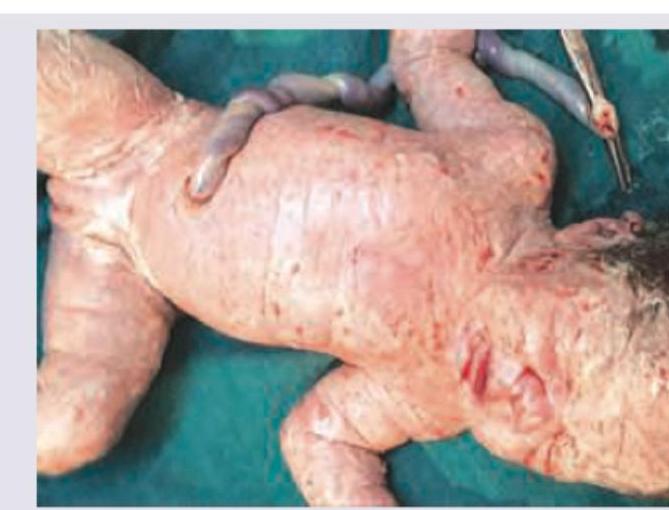
A rash is observed in a neonate admitted to the NICU for 6 days. What is the most likely cause?

Early onset sepsis in a neonate occurs within which timeframe?
What is the best method to monitor the breathing of a non-ventilated preterm baby in an incubator and detect apnea?
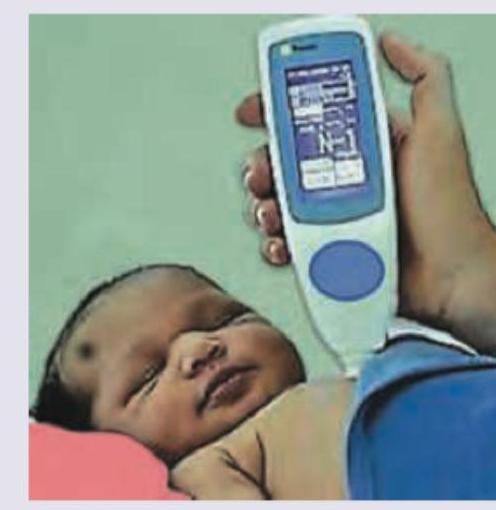
Explanation: ### Explanation The timing of neonatal jaundice is a critical diagnostic clue in Pediatrics. Jaundice appearing for the first time in the **2nd week of life** (late-onset jaundice) suggests causes that are metabolic, obstructive, or related to breast milk. **Why Rh Incompatibility is the Correct Answer:** Rh incompatibility causes **early-onset jaundice**, typically appearing within the **first 24 hours** of life. It is a type of immune-mediated hemolytic disease where maternal antibodies attack fetal RBCs. Because the hemolysis is intense and begins in utero or immediately at birth, the bilirubin levels rise rapidly in the first few days. It does not present for the first time in the 2nd week. **Analysis of Incorrect Options:** * **Galactosemia:** This metabolic disorder typically presents after the infant starts feeding (lactose intake). Conjugated or unconjugated hyperbilirubinemia usually manifests in the late 1st week or 2nd week, often accompanied by hepatomegaly and cataracts. * **Hypothyroidism:** Congenital hypothyroidism is a classic cause of **prolonged unconjugated jaundice**. The jaundice often persists or appears later due to decreased activity of the enzyme glucuronyl transferase. * **Breast Milk Jaundice:** This typically starts after the first week (peaks around day 10–14). It is caused by factors in breast milk (like beta-glucuronidase) that increase the enterohepatic circulation of bilirubin. **NEET-PG High-Yield Pearls:** * **Jaundice in <24 hours:** Always pathological. Common causes: Rh/ABO incompatibility, G6PD deficiency, Spherocytosis. * **Jaundice in 2nd week:** Think of Breast milk jaundice, Hypothyroidism, Galactosemia, Biliary atresia, or Neonatal hepatitis. * **Most common cause of jaundice in the first 24 hours:** ABO incompatibility (though Rh is more severe). * **Prolonged Jaundice:** Defined as jaundice lasting >14 days in term and >21 days in preterm neonates. Always rule out **Biliary Atresia** (conjugated) and **Hypothyroidism** (unconjugated).
Explanation: **Explanation:** **Transient Tachypnea of the Newborn (TTN)**, also known as "Wet Lung Syndrome," is primarily caused by the **delayed clearance of fetal lung fluid** after birth. **Why Elective Cesarean Section is the Correct Answer:** During a normal vaginal delivery, two critical processes occur to clear lung fluid: 1. **Mechanical Squeeze:** The passage through the birth canal physically forces fluid out of the lungs. 2. **Hormonal Shift:** The stress of labor triggers a surge in catecholamines and steroids, which switches the lung epithelium from active fluid secretion to **active sodium and fluid absorption** via epithelial sodium channels (ENaC). In an **elective cesarean section** (especially before the onset of labor), both the mechanical squeeze and the hormonal surge are absent, leading to retained fluid in the alveolar spaces and subsequent respiratory distress. **Analysis of Incorrect Options:** * **Normal Vaginal Delivery (D):** This is the most physiological mode of delivery and is associated with the lowest risk of TTN due to maximal fluid clearance. * **Forceps (A) and Ventouse (B) Deliveries:** While these are instrumental deliveries, they still involve the process of labor and passage through the birth canal, which facilitates fluid clearance more effectively than an elective C-section. **High-Yield Clinical Pearls for NEET-PG:** * **Chest X-ray Findings:** Characterized by prominent perihilar streaking ("sunburst appearance"), fluid in the interlobar fissures, and occasional pleural effusion. * **Clinical Course:** Usually presents within 2 hours of birth; it is self-limiting and typically resolves within 48–72 hours. * **Management:** Primarily supportive (oxygen via hood or nasal cannula); CPAP may be used in severe cases. * **Risk Factors:** Maternal asthma, maternal diabetes, male sex, and macrosomia.
Explanation: ### **Explanation** **Correct Option: C (25°C)** The maintenance of a warm environment is critical for neonatal survival, as newborns are highly susceptible to hypothermia due to their large surface-area-to-volume ratio and limited subcutaneous fat. According to standard neonatal care guidelines (including WHO and NRP), the recommended delivery room and postnatal ward temperature should be maintained between **25°C and 28°C**. This ambient temperature helps minimize heat loss via radiation and convection, ensuring the neonate remains within the "Neutral Thermal Environment" (NTE) where oxygen consumption and metabolic rate are at a minimum. **Analysis of Incorrect Options:** * **Option A (20°C):** This is too cold. Ambient temperatures this low lead to rapid heat loss, triggering non-shivering thermogenesis (brown fat metabolism), which can result in metabolic acidosis, hypoglycemia, and respiratory distress. * **Option B & D (30–34°C):** While these temperatures represent the typical **incubator air temperature** required for a preterm or low-birth-weight baby to maintain a normal body temperature, they are uncomfortably high and impractical for a standard hospital room or delivery suite. **High-Yield Clinical Pearls for NEET-PG:** 1. **The Warm Chain:** A set of 10 interlinked procedures established by the WHO to prevent hypothermia, starting with a warm delivery room (25°C+). 2. **Normal Neonatal Temperature:** 36.5°C to 37.5°C (Axillary). 3. **Hypothermia Classification:** * **Cold Stress (Mild):** 36.0°C to 36.4°C. * **Moderate Hypothermia:** 32.0°C to 35.9°C. * **Severe Hypothermia:** < 32.0°C. 4. **Kangaroo Mother Care (KMC):** The most effective way to manage stable low-birth-weight babies; it requires a room temperature of at least 25°C.
Explanation: **Explanation:** The correct answer is **C. Heavy breast engorgement.** In the context of this specific question, **heavy breast engorgement** is considered a temporary/relative contraindication to direct breastfeeding. When the breasts are severely engorged, the nipple becomes flattened and the areola becomes hard, making it physically difficult for the neonate to latch properly. This can lead to ineffective feeding, nipple trauma, and potential mastitis. Management involves expressing milk (manually or via pump) to soften the breast before the infant attempts to latch. **Analysis of Options:** * **A. Mother is sputum negative:** If a mother with Tuberculosis is sputum-negative (non-infectious), breastfeeding is safe and encouraged. Even in sputum-positive cases, breastfeeding is generally continued while the mother wears a mask and receives ATT. * **B. Bromocriptine therapy:** Bromocriptine is a dopamine agonist that inhibits prolactin secretion. While it suppresses lactation (making breastfeeding difficult), it is not a medical "contraindication" in the sense of being harmful to the baby; rather, it is used to intentionally stop milk production. * **D. Ca Breast:** While a mother with active breast cancer undergoing chemotherapy or radiotherapy cannot breastfeed due to the toxicity of the treatments, the cancer itself is not transmitted via milk. **NEET-PG High-Yield Pearls:** * **Absolute Contraindications (Maternal):** HIV (in developed countries; in India, exclusive breastfeeding is still advised if replacement feeding is not AFASS), HTLV-1/2, active untreated Brucellosis, and substances of abuse. * **Absolute Contraindications (Infant):** Classic Galactosemia (requires lactose-free formula). * **Temporary Contraindications:** Active Herpes Simplex lesions on the breast (can feed from the other breast) and untreated active Tuberculosis (until 2 weeks of ATT). * **Drugs Contraindicated:** Radioactive isotopes, antimetabolites, and certain cytotoxic drugs.
Explanation: ### Explanation The APGAR score is a rapid clinical assessment tool used at 1 and 5 minutes after birth to evaluate a newborn's transition to extrauterine life. It consists of five components, each scored from 0 to 2. **Breakdown of the APGAR score for this infant:** 1. **Heart Rate:** 110 bpm (>100 bpm) = **2 points** 2. **Respiratory Effort:** Crying vigorously/good effort = **2 points** 3. **Muscle Tone:** Active movements/good tone = **2 points** 4. **Reflex Irritability (Grimace):** Crying vigorously (response to stimulation) = **2 points** 5. **Color (Appearance):** Body pink, extremities blue (**Acrocyanosis**) = **1 point** **Total Score: 2 + 2 + 2 + 2 + 1 = 9** #### Why other options are incorrect: * **Option A (7) & B (8):** These scores would imply deficits in more than one category or a zero in one category (e.g., limp muscle tone or slow heart rate), which contradicts the clinical description. * **Option D (10):** This score requires the infant to be "completely pink." Acrocyanosis (blue hands and feet) is a common, physiological finding in the first few hours of life and results in a score of 1 for Appearance. #### NEET-PG High-Yield Pearls: * **Acrocyanosis** is the most common reason why a healthy newborn does not receive a perfect score of 10. * **Sequence of disappearance:** When a newborn's condition deteriorates, the components usually disappear in this order: Color → Respiration → Muscle Tone → Reflex Irritability → Heart Rate. * **Prognostic Value:** The 5-minute APGAR score is a better predictor of neonatal survival and neurological outcome than the 1-minute score. * **Management:** A score of 7–10 is considered "excellent"; 4–6 is "moderately depressed" (may require stimulation/PPV); 0–3 is "severely depressed" (requires immediate resuscitation).
Explanation: **Explanation:** Necrotizing Enterocolitis (NEC) is the most common life-threatening gastrointestinal emergency in the neonatal period. **Why Option A is the "Except" (Correct Answer):** While the statement "Common among preterm infants" is medically **true**, it does not answer the question correctly because the question asks for the "Except" (false statement). However, in the context of standard NEET-PG MCQ patterns, if this is the designated answer, it implies a technicality in the question's phrasing or a focus on the fact that while 90% of cases occur in preterms, it can also occur in term infants with risk factors (e.g., polycythemia, congenital heart disease). *Note: Usually, in NEC questions, the "Except" option is a false statement regarding management or pathogenesis.* **Analysis of Other Options:** * **Option B:** Large multicenter trials have shown that **delaying enteral feeding** or slow advancement of feeds does not significantly reduce the incidence of NEC. Early trophic feeding is generally encouraged. * **Option C:** NEC typically presents after the initiation of enteral feeds. In very low birth weight (VLBW) infants, the peak incidence is usually between **2 to 3 weeks of life**, rather than the first few days. * **Option D:** **Intestinal strictures** are the most common late complication of NEC, occurring in about 10-35% of survivors, most commonly involving the colon. **High-Yield Clinical Pearls for NEET-PG:** * **Pathogenesis:** Ischemia, enteral feeding, and abnormal bacterial colonization (Triad). * **Earliest Sign:** Feeding intolerance and abdominal distension. * **Pathognomonic X-ray finding:** **Pneumatosis intestinalis** (gas in the bowel wall). * **Bell’s Staging:** Used for classification; Stage IIIb indicates bowel perforation (requires surgery). * **Most common site:** Terminal ileum and proximal colon.
Explanation: ### Explanation **Facility-Based Newborn Care (FBNC)** is a tiered system designed to reduce neonatal mortality by providing varying levels of care based on the health facility's infrastructure. **1. Why Option A is Correct:** The **Newborn Care Corner (NBCC)** is a mandatory space within the labor room of **all delivery points**, including Sub-Centers (SC) and Primary Health Centers (PHC) (MCH Level I). Its primary function is to provide essential newborn care at birth, which includes: * Immediate drying and thermal care (under a radiant warmer). * Resuscitation (if required). * Initiation of breastfeeding. * Prevention of infection. **2. Why Other Options are Incorrect:** * **B. Newborn Stabilization Unit (NBSU):** These are located at **Community Health Centers (CHCs)** or First Referral Units (FRUs) (MCH Level II). They are equipped to manage sick newborns for short periods (stabilization) before referral. * **C. Special Newborn Care Unit (SNCU):** These are 12–20 bedded specialized units located at **District Hospitals** or Tertiary Care Centers (MCH Level III). They manage preterm and sick neonates (except those requiring mechanical ventilation). * **D. Nutritional Rehabilitation Centre (NRC):** These units are designed for the management of children with **Severe Acute Malnutrition (SAM)** with medical complications, not specifically for immediate newborn care. **Clinical Pearls for NEET-PG:** * **Hierarchy of Care:** NBCC (Delivery points) → NBSU (CHCs) → SNCU (District Hospitals). * **Kangaroo Mother Care (KMC):** Should be initiated at all levels of FBNC. * **The "Golden Minute":** The first minute of life is critical for establishing breathing; every NBCC must have a bag-and-mask for basic resuscitation. * **Temperature:** The ideal temperature of the labor room should be **25–28°C** to prevent neonatal hypothermia.
Explanation: ***Candida albicans*** - **NICU environment** predisposes neonates to candidal infections due to **antibiotic use**, **invasive procedures**, and **immunocompromised state**. - Presents with **erythematous patches** with **satellite lesions** and **pustules**, commonly affecting diaper area and skin folds. *Measles rash* - Requires **maternal antibodies** to wane (typically after 6 months) and **exposure to measles virus**, unlikely in a 6-day-old neonate. - Presents with **Koplik's spots**, **coryza**, and **generalized maculopapular rash** starting from head, not typical in neonates. *Staphylococcus aureus* - Causes **impetigo** or **bullous lesions** with **honey-crusted** appearance, not the typical rash pattern in NICU settings. - More commonly presents as **localized skin infections** rather than generalized rash in neonates. *Tinea corporis* - **Dermatophyte infections** are rare in neonates due to **immature keratinization** of skin and **protective maternal antibodies**. - Typically presents with **ring-shaped lesions** with **central clearing**, uncommon in 6-day-old neonates.
Explanation: **Explanation:** Neonatal sepsis is clinically categorized based on the timing of onset, which reflects the likely source of infection and the causative pathogens. **1. Why 72 hours is correct:** According to the standard clinical definition (and the one most commonly tested in NEET-PG), **Early-Onset Sepsis (EOS)** occurs within the first **72 hours** of life. The infection is typically acquired **vertically** from the mother’s genitourinary tract before or during delivery. The most common organisms involved are *Group B Streptococcus (GBS)* and *Escherichia coli*. **2. Why other options are incorrect:** * **12 and 24 hours:** While many cases of EOS manifest within the first 24 hours (especially in fulminant cases), these timeframes are too narrow and do not encompass the full clinical definition of the early-onset period. * **48 hours:** Some older classifications used 48 hours; however, current international and national guidelines (including NNF India) recognize 72 hours as the standard cutoff to differentiate EOS from Late-Onset Sepsis (LOS). **3. High-Yield Clinical Pearls for NEET-PG:** * **Late-Onset Sepsis (LOS):** Occurs **after 72 hours** of life. It is usually acquired **horizontally** from the environment or hospital (nosocomial). The most common organism is *Staphylococcus aureus* or *Klebsiella*. * **Risk Factors for EOS:** Prematurity, Prolonged Rupture of Membranes (PROM >18 hours), maternal fever (>38°C), and foul-smelling liquor. * **Gold Standard Diagnosis:** Blood culture remains the definitive diagnostic tool for neonatal sepsis. * **Treatment:** The empirical choice for EOS is typically a combination of **Ampicillin and Gentamicin**.
Explanation: ### Explanation **Correct Answer: D. Impedance Technique** The **Impedance Pneumography (Transthoracic Impedance)** is the gold standard and most commonly used method for monitoring respiration in non-ventilated neonates in the NICU. * **Mechanism:** It utilizes the same ECG electrodes placed on the chest. As the baby breathes, the volume of air in the lungs changes, which alters the electrical resistance (impedance) between the electrodes. The monitor detects these cyclical changes in impedance to calculate the respiratory rate and detect pauses (apnea). It is non-invasive, continuous, and does not require additional sensors. **Why other options are incorrect:** * **A. Infrared thoracic movement study:** While technically possible, it is not a standard clinical practice in NICUs due to high costs and sensitivity to motion artifacts. * **B. Capnography:** This measures end-tidal CO2. While it is the gold standard for **ventilated** patients to confirm ETT placement, it is difficult to use in non-intubated preterm babies as it requires a sampling cannula which can be invasive and uncomfortable for a neonate. * **C. Nasal digital temperature monitoring:** This relies on the temperature difference between inspired and expired air. It is cumbersome, easily displaced, and less reliable than impedance. **Clinical Pearls for NEET-PG:** * **Definition of Apnea of Prematurity (AOP):** Cessation of breathing for **>20 seconds**, OR a shorter pause associated with **bradycardia (<100 bpm) or cyanosis/oxygen desaturation.** * **Limitation of Impedance:** It cannot detect **Obstructive Apnea**. In obstructive apnea, the chest wall still moves (changing impedance), but no airflow occurs. * **Management:** The drug of choice for Apnea of Prematurity is **Caffeine Citrate** (preferred over Theophylline due to a wider therapeutic index and longer half-life).
Neonatal Resuscitation
Practice Questions
Care of the Normal Newborn
Practice Questions
Prematurity and Low Birth Weight
Practice Questions
Respiratory Distress Syndrome
Practice Questions
Neonatal Jaundice
Practice Questions
Neonatal Sepsis
Practice Questions
Necrotizing Enterocolitis
Practice Questions
Intraventricular Hemorrhage
Practice Questions
Persistent Pulmonary Hypertension
Practice Questions
Perinatal Asphyxia
Practice Questions
Neonatal Seizures
Practice Questions
Congenital Anomalies
Practice Questions
Get full access to all questions, explanations, and performance tracking.
Start For Free