Which of the following skin changes in a newborn disappear spontaneously?
IUGR is characterized by all EXCEPT?
All of the following are causes of bronchopulmonary dysplasia except?
A newborn baby presented with profuse bleeding from the umbilical stump after birth. What is the MOST probable diagnosis?
The APGAR scale in infants evaluates which of the following?
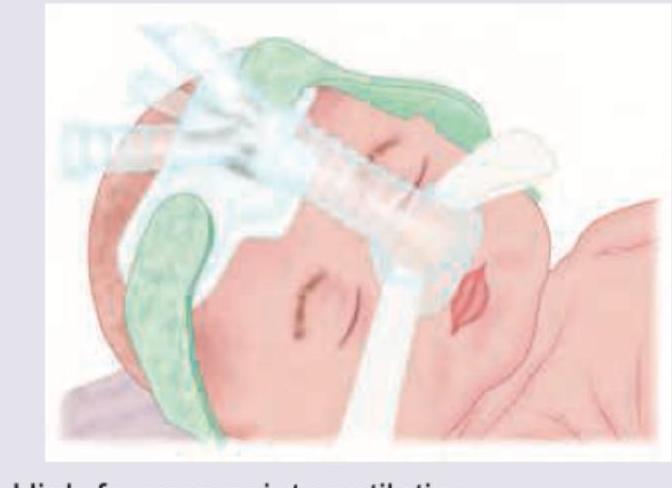
During neonatal resuscitation of a spontaneously breathing preterm baby of 30 weeks gestation with labored breathing, oxygen delivery can be achieved by which of the following methods?
A very preterm baby on 30mL/kg of enteral feeding developed sudden severe abdominal distension with visible bowel loops on day 6 of life. The baby also showed temperature instability and lethargy. X-ray of the abdomen showed portal venous gas. What is the staging of NEC?
A 3-day-old neonate presents with refusal to feed, forceful vomiting, and abdominal distension. Urine Benedict's test is positive. Which of the following reducing substances is likely to be found in the urine?
Which of the following statements regarding late-onset Hemorrhagic Disease of the Newborn (HDN) is not true?
A 4-month-old boy is brought to the clinic. His parents report that the child stopped breathing at home, turned blue around his lips, and felt limp. After vigorous shaking of the infant and several mouth-to-mouth breaths, the boy's color returned to normal, and he resumed breathing. The infant's condition is best described as:
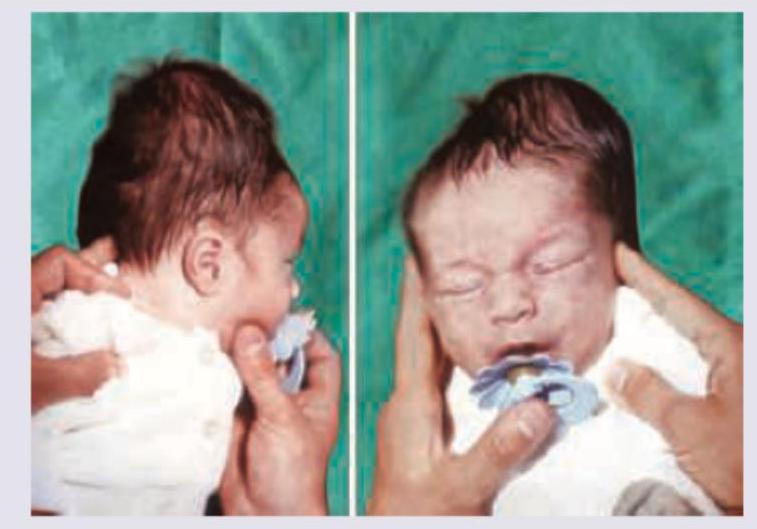
Explanation: **Explanation:** The correct answer is **D (All of the above)** because all three conditions listed are benign, transient cutaneous manifestations commonly seen in neonates that require no medical intervention and resolve spontaneously. **1. Harlequin Skin Change:** This is a transient vascular phenomenon seen in about 10% of healthy newborns, typically between the 2nd and 5th day of life. It is characterized by a sharp midline demarcation where one half of the body appears deep red and the other half pale. It is caused by **immature autonomic vasomotor control** of capillary beds. It usually lasts from seconds to 20 minutes and disappears as the infant moves or cries. **2. Mongolian Spots (Congenital Dermal Melanocytosis):** These are blue-grey pigmented macules typically found over the lumbosacral area. They are caused by the **arrest of melanocytes** in the dermis during fetal migration. They are most common in Asian and African populations and usually fade spontaneously within the first few years of life (mostly by age 2–4). **3. Erythema Toxicum Neonatorum (ETN):** ETN is the most common rash in neonates, appearing as small erythematous macules or papules that may progress to pustules on an erythematous base ("flea-bite" appearance). A key diagnostic feature is the presence of **eosinophils** on a Tzanck smear. It typically appears within 24–48 hours of birth and resolves within 5–7 days. **High-Yield Clinical Pearls for NEET-PG:** * **Milium:** Small white sebaceous cysts on the nose/face; resolve by 1 month. * **Epstein Pearls:** Small white keratin cysts on the hard palate (midline); benign. * **Transient Neonatal Pustular Melanosis (TNPM):** Present at birth; unlike ETN, the smear shows **neutrophils**, and it leaves behind a hyperpigmented collarette of scale. * **Port-wine stain (Nevus Flammeus):** Unlike the options above, this is a vascular malformation that **does not** disappear spontaneously and grows with the child.
Explanation: **Explanation:** Intrauterine Growth Restriction (IUGR) occurs when a fetus does not reach its biological growth potential due to placental, maternal, or fetal factors. **Why Hyaline Membrane Disease (HMD) is the correct answer:** HMD, also known as Respiratory Distress Syndrome (RDS), is primarily a disease of **prematurity** caused by surfactant deficiency. In IUGR, the fetus undergoes chronic intrauterine stress. This stress triggers an increased release of **endogenous maternal and fetal glucocorticoids (cortisol)**, which accelerates fetal lung maturation and surfactant production. Consequently, IUGR infants actually have a **decreased risk** of HMD compared to non-IUGR infants of the same gestational age. **Analysis of Incorrect Options:** * **Polycythemia:** Chronic fetal hypoxia in IUGR stimulates erythropoietin production, leading to an increased red cell mass. * **Meconium Aspiration Syndrome (MAS):** Hypoxia-induced fetal distress causes the passage of meconium in utero and gasping movements, making MAS a common complication. * **Hypocalcemia:** This occurs due to reduced placental transfer of calcium and a transiently blunted parathyroid hormone response post-delivery. **High-Yield Clinical Pearls for NEET-PG:** * **Most common metabolic complication in IUGR:** Hypoglycemia (due to low glycogen stores and impaired gluconeogenesis). * **Ponderal Index:** Used to differentiate between Symmetrical and Asymmetrical IUGR. * **Asymmetrical IUGR:** Most common type; characterized by "Head Sparing" (normal head circumference but low birth weight). * **Other complications:** Hypothermia, Hyperviscosity syndrome, and Pulmonary hemorrhage.
Explanation: **Explanation:** **Bronchopulmonary Dysplasia (BPD)** is a chronic lung disease primarily affecting preterm infants who require prolonged mechanical ventilation and oxygen therapy. **Why Theophylline is the correct answer:** Theophylline (and other methylxanthines like Caffeine) is actually used in the **prevention and management** of apnea of prematurity and to facilitate weaning from mechanical ventilation. By stimulating the respiratory center and improving diaphragmatic contractility, it helps reduce the duration of ventilation, thereby potentially **decreasing** the risk of BPD rather than causing it. **Analysis of Incorrect Options:** * **Oxygen Toxicity (A):** High concentrations of inspired oxygen ($FiO_2$) lead to the production of reactive oxygen species (free radicals). Preterm neonates have immature antioxidant enzyme systems, leading to oxidative stress and alveolar-capillary damage. * **Traumatic Damage (C):** Also known as **Volutrauma** or **Barotrauma**. High tidal volumes and peak inspiratory pressures from mechanical ventilation cause physical shearing of the alveoli and inflammation, a hallmark in BPD pathogenesis. * **Pulmonary Edema (D):** Inflammation and capillary leak lead to interstitial and alveolar edema. This impairs gas exchange and triggers a fibroproliferative response, leading to the characteristic "bubbly" appearance on X-ray. **NEET-PG High-Yield Pearls:** * **Definition:** BPD is defined as the need for supplemental oxygen at **36 weeks post-menstrual age (PMA)** or for more than 28 days of life. * **Radiology:** Classic "sponge-like" or "bubbly" appearance with areas of opacification and lucency. * **Prevention:** Antenatal steroids, early use of surfactant, and "gentle ventilation" (permissive hypercapnia) are key strategies. * **Drug of Choice:** **Caffeine citrate** is preferred over Theophylline due to a wider therapeutic index and longer half-life.
Explanation: **Explanation:** **Factor XIII deficiency** is the correct diagnosis because it is the classic cause of delayed umbilical cord bleeding in a neonate. Factor XIII (Fibrin Stabilizing Factor) is responsible for cross-linking fibrin strands to form a stable, permanent clot. In its absence, a primary clot forms (stopping initial bleeding), but it is unstable and breaks down easily, leading to profuse, delayed bleeding from the umbilical stump (seen in >80% of cases). **Why other options are incorrect:** * **Von Willebrand factor (VWF) deficiency:** This is a disorder of primary hemostasis (platelet adhesion). While it causes mucosal bleeding (epistaxis, menorrhagia), it rarely presents as umbilical stump bleeding in the neonatal period. * **Factor XII deficiency (Hageman factor):** This is unique because it causes a prolonged aPTT in the lab, but clinically, it does **not** cause bleeding. In fact, it is associated with a theoretical increased risk of thrombosis. * **Glanzmann thrombasthenia:** This is a qualitative platelet disorder (deficiency of GpIIb/IIIa). While it can cause neonatal bleeding, it typically presents as purpura, petechiae, or mucosal bleeds rather than isolated, profuse umbilical stump hemorrhage. **Clinical Pearls for NEET-PG:** 1. **The "Screening Paradox":** In Factor XIII deficiency, all routine coagulation profiles (**PT, aPTT, Bleeding Time, and Platelet count) are NORMAL**. 2. **Diagnostic Test:** The **Urea Solubility Test** (clot dissolves in 5M urea or 1% monochloroacetic acid). 3. **Key Associations:** Factor XIII deficiency is also highly associated with an increased risk of **intracranial hemorrhage** and poor wound healing. 4. **Differential for Umbilical Bleeding:** Also consider Vitamin K deficiency (VKDB) and Afibrinogenemia.
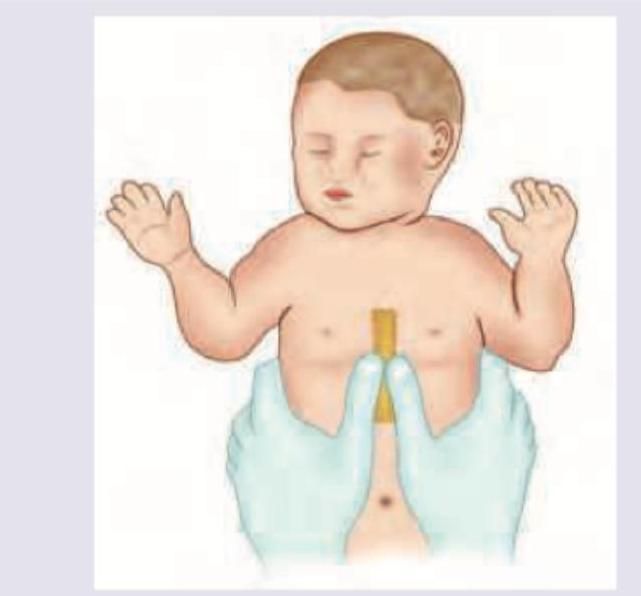
Explanation: The **APGAR score** is a rapid assessment tool used to evaluate the clinical status of a newborn at 1 and 5 minutes after birth. It was developed by Dr. Virginia Apgar to identify infants requiring immediate resuscitation. ### **Explanation of the Correct Answer** The APGAR score evaluates five distinct clinical parameters, which can be remembered using the mnemonic **APGAR**: 1. **A**ppearance (**Body Color**) 2. **P**ulse (**Heart Rate**) 3. **G**rimace (Reflex Irritability) 4. **A**ctivity (Muscle Tone) 5. **R**espiratory (**Respiratory Effort**) Since Heart Rate (A), Respiratory Effort (B), and Body Color (C) are all integral components of this scoring system, **Option D (All of the above)** is the correct answer. ### **Analysis of Options** * **Heart Rate:** The most important prognostic indicator. A rate >100 bpm scores 2, <100 bpm scores 1, and absent scores 0. * **Respiratory Effort:** Evaluates the quality of breathing/crying (not the rate). A vigorous cry scores 2. * **Body Color:** Assesses oxygenation. A completely pink baby scores 2; blue extremities (acrocyanosis) scores 1. ### **Clinical Pearls for NEET-PG** * **Timing:** Routinely performed at **1 and 5 minutes**. If the 5-minute score is <7, it is repeated every 5 minutes up to 20 minutes. * **Scoring:** Total score is **10**. * 7–10: Normal/Excellent. * 4–6: Moderately depressed. * 0–3: Severely depressed (requires immediate resuscitation). * **High-Yield Fact:** The APGAR score is **not** used to decide when to initiate resuscitation; resuscitation must begin immediately if the infant is apneic or gasping, without waiting for the 1-minute score. * **Most common parameter to be lost first:** Color (Appearance). * **Last parameter to be lost:** Heart Rate (Pulse).
Explanation: **Explanation:** The core principle in neonatal resuscitation of preterm infants is the preservation of lung volume and the prevention of alveolar collapse. According to the latest **NRP (Neonatal Resuscitation Program) guidelines**, if a preterm baby is breathing spontaneously but has labored breathing or persistent cyanosis, the initial management of choice is **Continuous Positive Airway Pressure (CPAP)**. **1. Why CPAP using T-piece is correct:** A T-piece resuscitator (like a Neopuff) is the preferred device for delivering CPAP in the delivery room. It provides a consistent, controlled **Positive End-Expiratory Pressure (PEEP)**, which helps maintain Functional Residual Capacity (FRC), keeps the surfactant-deficient preterm alveoli open, and reduces the work of breathing. **2. Why other options are incorrect:** * **Endotracheal Intubation (A):** This is an invasive procedure reserved for babies who fail to respond to CPAP/PPV or require prolonged ventilation. Current trends favor non-invasive respiratory support to prevent Bronchopulmonary Dysplasia (BPD). * **Laryngeal Mask Airway (B):** While useful for rescue ventilation, LMAs are generally not recommended for infants born before **34 weeks gestation** or weighing less than 1500g due to size constraints. * **Self-inflating bag (D):** This device **cannot provide CPAP** or PEEP unless a specific PEEP valve is attached. Even with a valve, it cannot provide PEEP to a spontaneously breathing patient who is not being bagged. **Clinical Pearls for NEET-PG:** * **Golden Hour:** The first 60 minutes of a preterm neonate's life are critical; early CPAP is a key component. * **Target SpO2:** Do not aim for 100% saturation. At 1 minute of life, the target is 60-65%; at 10 minutes, it is 85-95%. * **T-piece Advantage:** Unlike a self-inflating bag, a T-piece can deliver 100% FiO2 and precise inspiratory pressures (PIP).
Explanation: This question tests your knowledge of **Bell’s Staging Criteria for Necrotizing Enterocolitis (NEC)**, a critical topic for NEET-PG. ### **Explanation of the Correct Answer** The correct answer is **Stage IIb (Moderate NEC)**. According to Bell’s criteria, NEC is staged based on systemic, intestinal, and radiological findings: * **Systemic signs:** The baby has temperature instability and lethargy. * **Intestinal signs:** Severe abdominal distension and visible bowel loops indicate significant intestinal involvement. * **Radiological signs:** The presence of **portal venous gas** is the pathognomonic feature that upgrades the diagnosis from Stage IIa to **Stage IIb**. ### **Why Other Options are Incorrect** * **Stage I (Suspected NEC):** Presents with non-specific systemic signs (apnea, bradycardia) and mild gastric residuals. X-ray is usually normal or shows non-specific dilation. * **Stage IIa (Mild NEC):** Characterized by absent bowel sounds and tenderness. The hallmark radiological finding is **pneumatosis intestinalis** (air in the bowel wall), but *not* portal venous gas. * **Stage IIIa (Advanced NEC):** This stage represents "intact bowel" but with severe systemic illness (septic shock, respiratory acidosis, or DIC). Stage IIIb is characterized by **pneumoperitoneum** (perforation). ### **High-Yield Clinical Pearls for NEET-PG** 1. **Pathognomonic X-ray findings:** * Pneumatosis intestinalis = Stage IIa. * Portal venous gas = Stage IIb. * Pneumoperitoneum (Football sign/Rigler sign) = Stage IIIb. 2. **Management:** Stage I and II are managed medically (NPO, antibiotics, TPN). Stage IIIb (perforation) is an absolute indication for surgery. 3. **Risk Factors:** Prematurity and rapid advancement of enteral feeds are the most significant triggers. 4. **Most common site:** Terminal ileum and proximal colon.
Explanation: **Explanation:** The clinical presentation of a 3-day-old neonate with refusal to feed, forceful vomiting, and abdominal distension, combined with a **positive Benedict’s test**, indicates the presence of a **reducing sugar** in the urine. In the context of the NEET-PG exam, while Galactosemia is a common differential for these symptoms, the specific answer choice provided as correct here is **Fructose**. This points towards **Hereditary Fructose Intolerance (HFI)**. HFI is caused by a deficiency of **Aldolase B**. When a neonate is introduced to fructose (often via sucrose-containing formulas or honey), fructose-1-phosphate accumulates, leading to hypoglycemia, vomiting, and proximal renal tubular dysfunction (Fanconi-like syndrome), resulting in fructosuria. **Analysis of Options:** * **Fructose (Correct):** It is a reducing sugar. In HFI, it appears in the urine and reacts with Benedict’s reagent (cupric to cuprous ions). * **Galactose:** While Galactosemia presents similarly (GALT deficiency), it is not the designated answer here. Galactose is also a reducing sugar. * **Glucose:** Glucosuria is seen in Diabetes Mellitus or renal glycosuria, but the systemic symptoms (forceful vomiting/distension) at day 3 are more characteristic of metabolic sugar intolerances. * **Sucrose:** This is a **non-reducing sugar** (due to the 1-2 glycosidic linkage) and will give a **negative** Benedict’s test. **Clinical Pearls for NEET-PG:** 1. **Benedict’s Test:** Detects all reducing sugars (Glucose, Galactose, Fructose, Lactose, Maltose). It does **not** detect Sucrose. 2. **Dipstick Test:** Specific for **Glucose** only (uses glucose oxidase). A "Positive Benedict's + Negative Dipstick" suggests Galactose or Fructose. 3. **Hereditary Fructose Intolerance:** Symptoms appear only after the introduction of fructose/sucrose. 4. **Galactosemia:** Symptoms appear as soon as milk (lactose) feeding begins.
Explanation: **Explanation:** Vitamin K Deficiency Bleeding (VKDB), formerly known as Hemorrhagic Disease of the Newborn (HDN), is classified into three types based on the timing of onset. Understanding these timelines is crucial for NEET-PG. **1. Why Option A is the Correct Answer (The "Not True" Statement):** Late-onset HDN typically occurs between **2 weeks and 6 months** of age (peaking at 2–8 weeks). The period of **2–7 days** defines **Classic HDN**, which is usually seen in breastfed infants who did not receive prophylactic Vitamin K at birth. Therefore, statement A is chronologically incorrect for the "late" form. **2. Analysis of Other Options:** * **Option B (Intracranial Hemorrhage):** This is **true**. Unlike the classic form (which presents with GI or skin bleeds), late HDN is notorious for presenting as life-threatening intracranial hemorrhage (ICH) in 50–80% of cases. * **Option C (Biliary Atresia):** This is **true**. Vitamin K is fat-soluble; any condition causing cholestasis or malabsorption (like biliary atresia, cystic fibrosis, or hepatitis) prevents Vitamin K absorption, predisposing the infant to late HDN. * **Option D (Warfarin Therapy):** This is **true**. Maternal intake of Vitamin K antagonists like Warfarin (or anticonvulsants like Phenytoin) interferes with Vitamin K metabolism in the fetus, leading to deficiency. **Clinical Pearls for NEET-PG:** * **Early HDN:** Occurs within <24 hours (usually due to maternal drugs). * **Classic HDN:** 2–7 days (due to low Vitamin K in breast milk and sterile gut). * **Late HDN:** 2 weeks–6 months (associated with malabsorption or exclusive breastfeeding). * **Prophylaxis:** 1 mg Intramuscular (IM) Vitamin K at birth is the gold standard for prevention.
Explanation: ### Explanation **1. Why the Correct Answer is Right:** The scenario describes an **Apparent Life-Threatening Event (ALTE)**. ALTE is defined as an episode that is frightening to the observer and is characterized by a combination of: * **Apnea** (central or obstructive) * **Color change** (cyanosis, pallor, or plethora) * **Marked change in muscle tone** (limpness or stiffness) * **Choking or gagging** In this case, the infant exhibited apnea, cyanosis (blue lips), and limpness, requiring vigorous stimulation/resuscitation, which fits the classic clinical description of ALTE. **2. Why Incorrect Options are Wrong:** * **Obstructive Apnea:** This refers specifically to a cessation of airflow despite respiratory effort, usually due to upper airway collapse. While it can be a *component* of ALTE, it does not encompass the full systemic presentation (limpness and color change) described. * **Central Apnea:** This is the cessation of both airflow and respiratory effort due to a lack of CNS drive. Like obstructive apnea, it is a potential *cause* or symptom of ALTE but is not the overarching clinical diagnosis for this multi-symptom event. * **Pneumonia:** While a respiratory infection could trigger an episode, there is no mention of fever, cough, tachypnea, or abnormal lung findings to support this specific diagnosis. **3. Clinical Pearls for NEET-PG:** * **BRUE vs. ALTE:** Modern terminology (AAP 2016) has replaced ALTE with **BRUE (Brief Resolved Unexplained Event)** for infants <1 year when the event is <1 minute and has no explained cause after a history and physical. * **Common Causes of ALTE:** Gastroesophageal reflux (most common), seizures, lower respiratory tract infections, and cardiac arrhythmias. * **Management:** Most infants with a significant ALTE require admission for monitoring (cardiorespiratory) and investigation to rule out underlying pathology. * **SIDS:** ALTE is generally **not** considered a direct precursor or a strong predictor for Sudden Infant Death Syndrome (SIDS).
Neonatal Resuscitation
Practice Questions
Care of the Normal Newborn
Practice Questions
Prematurity and Low Birth Weight
Practice Questions
Respiratory Distress Syndrome
Practice Questions
Neonatal Jaundice
Practice Questions
Neonatal Sepsis
Practice Questions
Necrotizing Enterocolitis
Practice Questions
Intraventricular Hemorrhage
Practice Questions
Persistent Pulmonary Hypertension
Practice Questions
Perinatal Asphyxia
Practice Questions
Neonatal Seizures
Practice Questions
Congenital Anomalies
Practice Questions
Get full access to all questions, explanations, and performance tracking.
Start For Free