What is the definition of extreme preterm?
Which of the following findings in a newborn suggests Respiratory Distress Syndrome (RDS)?
Neonatal sepsis is commonly caused by which organism?
All of the following are accepted therapeutic measures initiated in hyperammonemic states in an infant except?
What is the target oxygen saturation for a preterm neonate?
Which coagulation factors are deficient in hemorrhagic disease of the newborn?
For prevention of retrolental fibroplasia, supplemental oxygen should be maintained at which percentage?
What is the highest risk factor for perinatal transmission when a mother is positive for a specific marker?
Late onset hemorrhagic disease of the newborn is characterized by all of the following features except?
A 2-day-old neonate presents with lethargy and decreased interest in breastfeeding. Physical examination shows tachypnea with a normal heart rate and breath sounds. Initial blood chemistry values include normal glucose, sodium, potassium, chloride, and bicarbonate levels. Initial blood gas values reveal a pH of 7.53, partial pressure of oxygen (PO2) of 103 mmHg, and partial pressure of carbon dioxide (PCO2) of 27 mmHg. Which of the following treatment strategies is indicated?
Explanation: **Explanation:** The classification of prematurity is based on the gestational age at birth, as defined by the **World Health Organization (WHO)**. This classification is crucial for predicting neonatal outcomes, mortality risk, and the intensity of required neonatal intensive care. * **Correct Answer: D (< 28 weeks):** Infants born before 28 completed weeks of gestation are classified as **Extremely Preterm**. These neonates are at the highest risk for complications such as Respiratory Distress Syndrome (RDS), Intraventricular Hemorrhage (IVH), and Necrotizing Enterocolitis (NEC). **Analysis of Incorrect Options:** * **Option A (34–36 weeks):** These are classified as **Late Preterm**. They often appear like term babies but are "metabolic mimics" prone to hypoglycemia, hypothermia, and feeding difficulties. * **Option B (32–33 weeks):** These fall under the category of **Moderate Preterm**. * **Option C (28–31 weeks):** These are classified as **Very Preterm**. **High-Yield NEET-PG Pearls:** 1. **Term Pregnancy:** 37 to 42 weeks. 2. **Post-term:** ≥ 42 weeks. 3. **Viability:** In India, the limit of viability is generally considered **28 weeks** (or 1000g), though globally it is shifting toward 24 weeks. 4. **Birth Weight Correlation:** While preterm refers to *gestational age*, remember the weight-based categories: * **LBW:** < 2500g * **VLBW:** < 1500g * **ELBW:** < 1000g (Extreme Low Birth Weight) 5. **Surfactant:** Production begins at 24 weeks but reaches adequate levels only by 34–35 weeks.
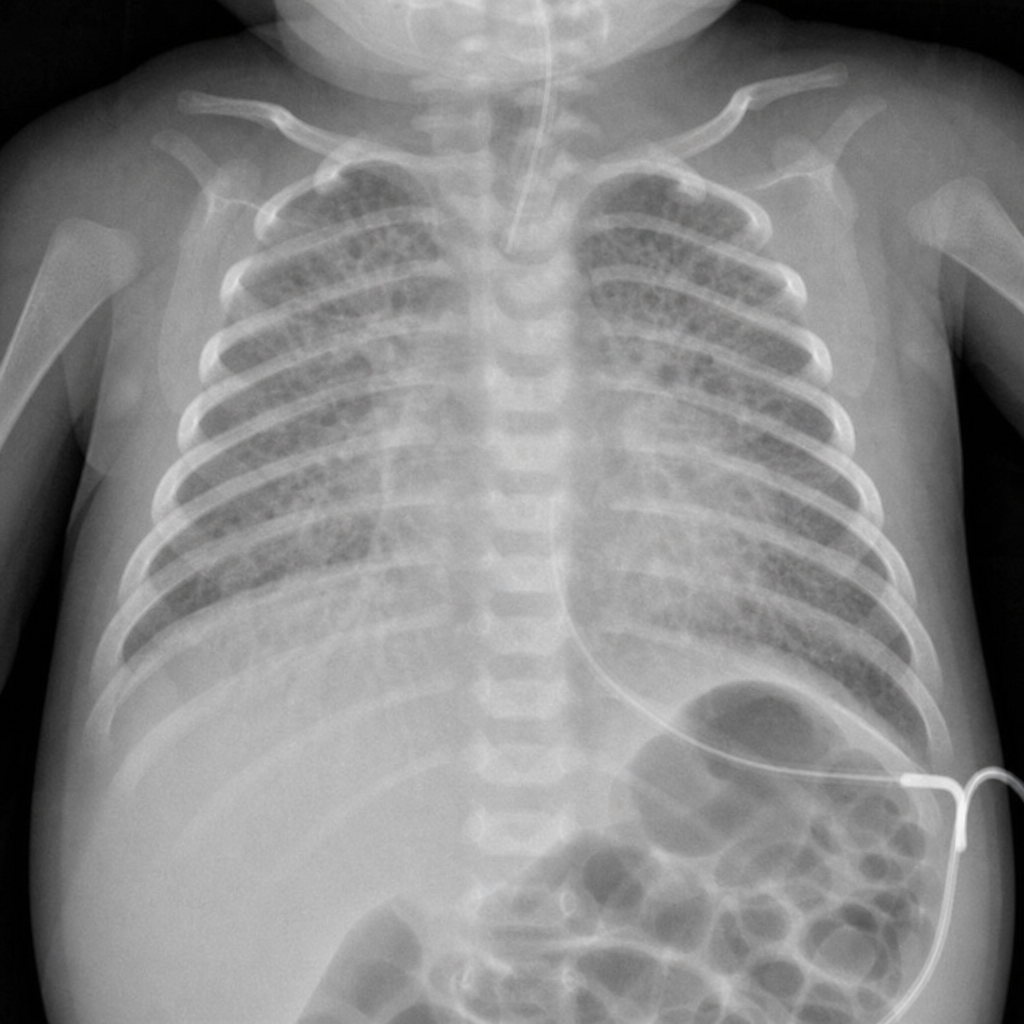
Explanation: **Explanation:** **Respiratory Distress Syndrome (RDS)**, also known as Hyaline Membrane Disease, is primarily caused by a deficiency of pulmonary surfactant, leading to widespread alveolar collapse (atelectasis). **Why Option B is Correct:** The hallmark radiographic finding in RDS is a **"ground-glass appearance"** (reticulogranular pattern) with **air bronchograms**. Air bronchograms occur because the alveoli are collapsed and fluid-filled (opaque), while the larger conducting airways remain patent and air-filled (lucent), creating a visible contrast on X-ray. **Why Other Options are Incorrect:** * **Option A:** RDS typically presents **immediately at birth** or within the first few minutes to hours. A delayed onset (e.g., 6 hours) is more characteristic of conditions like neonatal sepsis or pneumonia. * **Option C:** Antenatal steroids (e.g., Betamethasone) are a **preventative measure**. They accelerate fetal lung maturity and surfactant production, thereby *reducing* the risk and severity of RDS. * **Option D:** RDS is a disease of **prematurity**. It is inversely proportional to gestational age, most commonly affecting infants born before 28–32 weeks. Term infants rarely develop RDS unless there are specific risk factors like maternal diabetes. **High-Yield Clinical Pearls for NEET-PG:** * **Risk Factors:** Prematurity (most common), Maternal Diabetes (insulin inhibits surfactant synthesis), Cesarean section without labor, and Male gender. * **L/S Ratio:** A Lecithin/Sphingomyelin ratio **<2:1** in amniotic fluid indicates lung immaturity. * **Management:** The definitive treatment is **Exogenous Surfactant** (administered via the INSURE technique: Intubate-Surfactant-Extubate to CPAP). * **Complications:** Chronic Lung Disease (Bronchopulmonary Dysplasia), Retinopathy of Prematurity (ROP), and Intraventricular Hemorrhage (IVH).
Explanation: **Explanation:** Neonatal sepsis is a clinical syndrome characterized by systemic signs of infection occurring in the first 28 days of life. In the Indian context and many developing nations, **Gram-negative bacilli** are the most common causative agents. **Why Escherichia coli is correct:** While *Klebsiella pneumoniae* is frequently cited as the most common cause of neonatal sepsis in Indian hospital settings (especially late-onset), **Escherichia coli** remains a leading cause of early-onset sepsis globally and is the most common organism identified in many community-acquired neonatal infections. For the purpose of standard examinations like NEET-PG, when *Klebsiella* is not an option or when referring to classic textbook etiology, *E. coli* is the primary Gram-negative pathogen associated with neonatal sepsis and meningitis. **Analysis of Incorrect Options:** * **A. Beta-hemolytic streptococci (GBS):** Group B Streptococcus is the leading cause of neonatal sepsis in **developed countries** (like the US). However, it is significantly less common in India compared to Gram-negative organisms. * **C. Haemophilus influenzae:** This is a common cause of meningitis and pneumonia in older infants and children (post-neonatal period), but it is a rare cause of sepsis in the first month of life. * **D. Listeria monocytogenes:** While a classic cause of neonatal sepsis (often via maternal ingestion of contaminated food), its incidence is very low in India compared to *E. coli* and *Klebsiella*. **Clinical Pearls for NEET-PG:** * **Early-onset Sepsis (EOS):** Occurs <72 hours of birth; usually due to vertical transmission from the birth canal (*E. coli*, GBS). * **Late-onset Sepsis (LOS):** Occurs >72 hours; usually nosocomial or community-acquired (*Klebsiella*, *Staph. aureus*, *Pseudomonas*). * **Gold Standard Diagnosis:** Blood culture. * **First-line Antibiotics:** Ampicillin and Gentamicin (for EOS); Cloxacillin/Amikacin or higher antibiotics (for LOS).
Explanation: **Explanation:** Hyperammonemia in neonates is a medical emergency, most commonly caused by Urea Cycle Disorders (UCDs) or Organic Acidemias. The primary goal of management is to stop ammonia production and enhance its excretion. **Why Option D is the correct answer (the "Except"):** While **Exchange Transfusion** was used historically, it is now considered **inefficient and obsolete** for treating hyperammonemia. It removes only a negligible amount of ammonia compared to modern techniques. The current "gold standard" for rapid ammonia removal in neonates is **Continuous Renal Replacement Therapy (CRRT)** or **Hemodialysis**, which are significantly more effective. **Analysis of Incorrect Options (Accepted Measures):** * **Option A & B:** Management requires stopping all protein intake to halt ammonia production. To prevent endogenous protein breakdown (catabolism), the infant must receive high caloric intake via **IV Dextrose (10-12 mg/kg/min) and Lipids**. Once ammonia levels stabilize, **Essential Amino Acids** are reintroduced early (within 24-48 hours) to support growth and prevent further catabolism. * **Option C:** These are "Ammonia Scavengers." **Sodium Benzoate and Sodium Phenylacetate** provide alternative pathways for nitrogen excretion (bypassing the urea cycle). **Arginine** is essential because it becomes a "rate-limiting" amino acid in most UCDs. **High-Yield Clinical Pearls for NEET-PG:** 1. **First-line investigation:** Arterial Ammonia levels (Normal <50 µmol/L; Neonates <100 µmol/L). 2. **Drug of choice for rapid removal:** Hemodialysis/CRRT (indicated if Ammonia >500 µmol/L or non-responsive to drugs). 3. **Commonest UCD:** Ornithine Transcarbamylase (OTC) deficiency (X-linked recessive). 4. **Clinical Clue:** A neonate with a "symptom-free interval" followed by poor feeding, vomiting, and encephalopathy (lethargy/seizures) without sepsis.
Explanation: **Explanation:** The management of oxygen therapy in preterm neonates requires a delicate balance between preventing hypoxia and avoiding oxygen toxicity. The current consensus guidelines (including NRP and AAP) recommend a target oxygen saturation ($SpO_2$) of **91–95%** for preterm infants receiving supplemental oxygen. **Why 91–95% is correct:** This range is chosen to minimize the risks associated with both extremes. Maintaining saturation within this window ensures adequate tissue oxygenation while significantly reducing the incidence of **Retinopathy of Prematurity (ROP)** and **Bronchopulmonary Dysplasia (BPD)**, which are triggered by hyperoxia and oxidative stress. **Analysis of Incorrect Options:** * **Option B (> 95%):** High oxygen levels (hyperoxia) lead to the production of free radicals. In preterms, this causes vasoconstriction and abnormal vascular proliferation in the retina, leading to ROP. * **Option C (85–89%):** While lower targets were previously studied (e.g., SUPPORT trial), targets below 90% are associated with an increased risk of **Necrotizing Enterocolitis (NEC)** and higher mortality rates. * **Option D (< 80%):** This indicates significant hypoxia, which leads to metabolic acidosis, pulmonary hypertension, and potential neurological damage. **High-Yield Clinical Pearls for NEET-PG:** * **Oxygen Toxicity:** Remember the "Rule of O's"—Oxygen toxicity in neonates primarily affects the **O**cular system (ROP) and the **O**rgan of respiration (BPD). * **Pre-ductal vs. Post-ductal:** Always measure $SpO_2$ on the **right hand** (pre-ductal) during neonatal resuscitation. * **Target at 10 mins:** By 10 minutes of life, the target $SpO_2$ for a term/preterm infant is **85–95%**. * **Alarm Limits:** In a NICU setting, monitors are usually set with alarms at 90% (low) and 95% (high) to keep the infant within the 91–95% range.
Explanation: **Explanation:** Hemorrhagic Disease of the Newborn (HDN), now more commonly referred to as **Vitamin K Deficiency Bleeding (VKDB)**, occurs because neonates are born with low stores of Vitamin K. Vitamin K is a critical cofactor for the post-translational carboxylation of specific coagulation factors, rendering them functional. **1. Why Option A is Correct:** Vitamin K is essential for the synthesis of **Factors II (Prothrombin), VII, IX, and X**, as well as proteins C and S. In the absence of Vitamin K, these factors are synthesized in an inactive form (known as PIVKAs—Proteins Induced by Vitamin K Absence). Since newborns have poor placental transfer of Vitamin K, a sterile gut (no bacteria to synthesize Vitamin K), and low levels in breast milk, these four factors are characteristically deficient. **2. Why Other Options are Incorrect:** * **Option B:** Includes Factor III (Tissue Factor), which is a cell surface glycoprotein, not a Vitamin K-dependent clotting factor. * **Option C:** Includes Factor VIII. Factor VIII is part of the intrinsic pathway and is deficient in Hemophilia A, not VKDB. * **Option D:** Includes Factor V. Factor V is a cofactor in the prothrombinase complex but its synthesis is independent of Vitamin K. **Clinical Pearls for NEET-PG:** * **Prophylaxis:** A single IM dose of **1 mg Vitamin K** (Phytonadione) at birth is the standard of care to prevent VKDB. * **Lab Findings:** Characterized by a **prolonged Prothrombin Time (PT)** and often a prolonged aPTT. Platelet count and Fibrinogen levels remain normal. * **Types of VKDB:** * *Early:* Within 24 hours (usually due to maternal drugs like anticonvulsants). * *Classic:* Days 2–7 (due to low intake/breastfeeding). * *Late:* 2 weeks to 6 months (often associated with cholestasis or malabsorption).
Explanation: **Explanation:** **Retrolental Fibroplasia (RLF)**, now more commonly known as **Retinopathy of Prematurity (ROP)**, is a vasoproliferative disorder primarily caused by hyperoxia in preterm neonates. **Why 20-30% is correct:** The primary goal in preventing ROP is to avoid excessive arterial oxygen tension ($PaO_2$). In preterm infants, the retinal vasculature is incomplete. High concentrations of supplemental oxygen cause vasoconstriction and oxidative damage to these immature vessels. Maintaining supplemental oxygen at the lowest possible concentration—typically between **20-30%**—is sufficient to maintain adequate tissue oxygenation while minimizing the risk of oxygen-induced retinal injury. Current clinical guidelines (like the SUPPORT trial) suggest targeting oxygen saturations ($SpO_2$) between **91-95%** to balance the risks of ROP and mortality. **Why other options are incorrect:** * **Options B, C, and D (30-80%):** These concentrations are significantly higher than necessary for routine stabilization. Prolonged exposure to oxygen concentrations above 40% (and especially above 50%) leads to the production of free radicals, which trigger the abnormal neovascularization characteristic of ROP. High-flow or high-concentration oxygen should only be used in acute resuscitation or severe respiratory distress, and must be weaned rapidly. **High-Yield Clinical Pearls for NEET-PG:** * **Risk Factors:** Prematurity (low gestational age) and Low Birth Weight (LBW) are the most significant risk factors. * **Pathogenesis:** Hyperoxia causes initial vessel constriction (Phase 1), followed by a compensatory but pathological overgrowth of vessels (Phase 2) driven by **VEGF** (Vascular Endothelial Growth Factor). * **Screening Rule:** In India, screening is mandatory for infants **<32 weeks** gestation or **<1500g** birth weight. * **First Screening:** Should be performed at **4 weeks** of postnatal age or **31 weeks** post-menstrual age (whichever is later).
Explanation: **Explanation:** The risk of vertical transmission of Hepatitis B Virus (HBV) from mother to child is primarily determined by the mother's viral load and replicative status. **Why HBeAg is the Correct Answer:** **HBeAg (Hepatitis B e-antigen)** is a marker of **active viral replication** and high infectivity. If a pregnant woman is positive for both HBsAg and HBeAg, the risk of vertical transmission to the newborn is approximately **70% to 90%** in the absence of immunoprophylaxis. Conversely, if the mother is HBsAg positive but HBeAg negative (and anti-HBe positive), the transmission risk drops significantly to about 10% to 40%. **Analysis of Incorrect Options:** * **HBsAg (Hepatitis B surface antigen):** While this indicates that the mother is a carrier or has an active infection, it does not specify the level of infectivity as accurately as HBeAg does. * **IgM anti-HBc (not HBsAg):** This indicates an acute infection but is not the primary determinant of transmission risk compared to the e-antigen status. * **IgG anti-HBs:** This represents **immunity** (either from past infection or vaccination). A mother with these antibodies cannot transmit the virus to the fetus; rather, she provides protective passive immunity. **High-Yield Clinical Pearls for NEET-PG:** * **Most common timing:** Most vertical transmission occurs **during delivery** (peripartum) through exposure to maternal blood and vaginal secretions. * **Prevention:** To prevent transmission, the newborn must receive both the **HBV Vaccine** and **Hepatitis B Immunoglobulin (HBIG)** within 12 hours of birth. This reduces the risk by >90%. * **Chronic Status:** Infants infected at birth have a **90% risk** of developing chronic Hepatitis B, compared to only a 5-10% risk if infected during adulthood.
Explanation: **Explanation:** Hemorrhagic Disease of the Newborn (HDN), now termed **Vitamin K Deficiency Bleeding (VKDB)**, is classified into three types based on the timing of onset: Early, Classical, and Late. **Why Option A is the "Except" (Correct Answer):** The question asks for the feature that is *not* characteristic. While Late VKDB **does** primarily occur in exclusively breastfed babies (because breast milk is a poor source of Vitamin K), the option is marked as the answer likely due to a technicality in the question's framing or a distractor. However, in standard medical literature, exclusive breastfeeding is the **primary risk factor** for Late VKDB. If this is a "single best answer" scenario where all options are technically true, the question may be flawed, but clinically, Late VKDB is defined by its association with breastfeeding and lack of prophylaxis. **Analysis of Other Options:** * **Option B:** Late VKDB typically presents between **2 to 12 weeks** (up to 6 months) of life. * **Option C:** Unlike the Classical form (which presents with GI bleed), Late VKDB has a very high incidence (**50–80%**) of **Intracranial Hemorrhage (ICH)**, leading to high morbidity and mortality. * **Option D:** A single dose of **1 mg Intramuscular (IM) Vitamin K** at birth is highly effective and provides nearly 100% protection against Late VKDB. **High-Yield Clinical Pearls for NEET-PG:** 1. **Early VKDB:** Occurs within <24 hours; usually due to maternal drugs (Anticonvulsants like Phenytoin, Antitubercular drugs like Rifampicin/INH). 2. **Classical VKDB:** Occurs at 2–7 days; presents as umbilical or GI bleed. 3. **Late VKDB:** Occurs at 2–12 weeks; associated with **exclusive breastfeeding** and **malabsorption** (e.g., Biliary atresia, Celiac disease). 4. **Prophylaxis:** 1 mg IM Vitamin K for babies >1.5 kg; 0.5 mg for babies <1.5 kg. Oral Vitamin K is less effective for preventing the Late form.
Explanation: ### Explanation **1. Analysis of the Correct Answer** The neonate presents with **Respiratory Alkalosis**, characterized by a high pH (7.53, normal: 7.35–7.45) and a low $PCO_2$ (27 mmHg, normal: 35–45 mmHg). The normal bicarbonate level confirms that this is a primary respiratory process without metabolic compensation. Tachypnea (increased respiratory rate) causes excessive "blowing off" of $CO_2$, leading to alkalemia. The definitive treatment for respiratory alkalosis is to address the underlying cause of hyperventilation or, if the patient is on a ventilator, to **decrease the respiratory rate** (or tidal volume) to allow $PCO_2$ levels to rise and normalize the pH. **2. Why the Other Options are Incorrect** * **Options A & C:** These refer to **Metabolic Acidosis**, which is characterized by a low pH and low bicarbonate. This patient has a high pH and normal bicarbonate, ruling out a metabolic acid-base disturbance. * **Option B:** This refers to **Respiratory Acidosis**, which is characterized by a low pH and high $PCO_2$ (hypoventilation). Administering alkali (like Sodium Bicarbonate) is not the standard treatment for respiratory issues and would worsen this patient's existing alkalosis. **3. NEET-PG High-Yield Clinical Pearls** * **ABG Interpretation:** Always look at the pH first. pH > 7.45 = Alkalosis; pH < 7.35 = Acidosis. Then look at $PCO_2$: if it moves in the *opposite* direction of pH, the primary cause is Respiratory. * **Neonatal Presentation:** In neonates, respiratory alkalosis is often an early sign of sepsis, pneumonia, or Urea Cycle Disorders (where hyperammonemia stimulates the respiratory center). * **Management:** In mechanically ventilated neonates, $PCO_2$ is primarily controlled by adjusting the **Minute Ventilation** (Respiratory Rate × Tidal Volume). To increase $PCO_2$, you must decrease the minute ventilation.
Neonatal Resuscitation
Practice Questions
Care of the Normal Newborn
Practice Questions
Prematurity and Low Birth Weight
Practice Questions
Respiratory Distress Syndrome
Practice Questions
Neonatal Jaundice
Practice Questions
Neonatal Sepsis
Practice Questions
Necrotizing Enterocolitis
Practice Questions
Intraventricular Hemorrhage
Practice Questions
Persistent Pulmonary Hypertension
Practice Questions
Perinatal Asphyxia
Practice Questions
Neonatal Seizures
Practice Questions
Congenital Anomalies
Practice Questions
Get full access to all questions, explanations, and performance tracking.
Start For Free