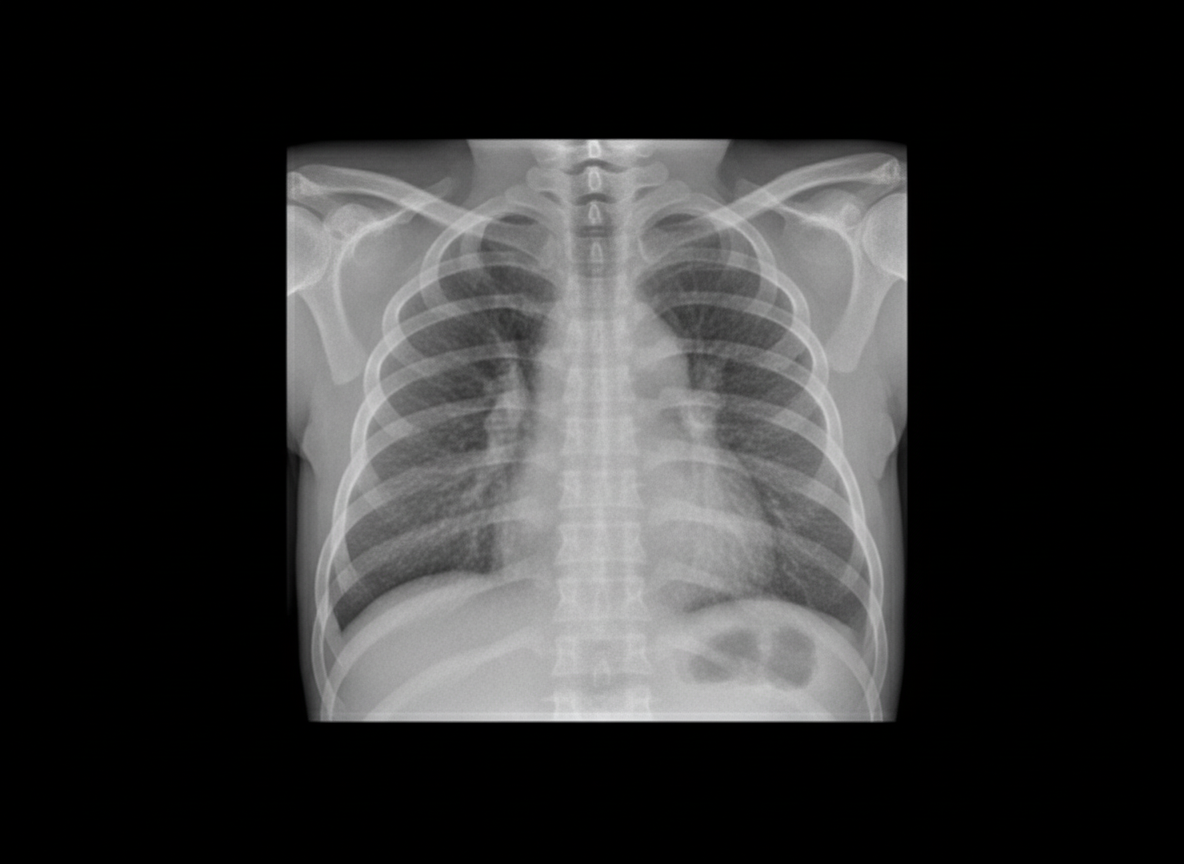
A term baby presents with breathing difficulty. The mother had a normal antenatal period and labor. On examination, the baby is in respiratory distress, with a flat abdomen and no organomegaly. What is the most likely cause?
Which of the following conditions is most likely to lead to transient tachypnea of the newborn?
Intrauterine growth restriction (IUGR) is commonly associated with which of the following infections?
What is the normal respiratory rate in a newborn?
All of the following can occur in a neonate for heat production except?
Which of the following infections can be transmitted through breast milk?
Which drug is used in neonatal resuscitation?
About caput succedaneum, all are true EXCEPT:
A 1.5 kg child born at 32 weeks via LSCS presents with moderate respiratory difficulty. What is the appropriate management?
Which of the following is NOT a feature of neonatal necrotizing enterocolitis?
Explanation: ### Explanation The clinical presentation of a term neonate with respiratory distress and a **scaphoid (flat) abdomen** is the classic hallmark of **Congenital Diaphragmatic Hernia (CDH)**. **1. Why Diaphragmatic Hernia is Correct:** In CDH, there is a defect in the diaphragm (most commonly the left-sided **Bochdalek hernia**). This allows abdominal viscera (stomach, intestines, spleen) to herniate into the thoracic cavity during fetal development. Because the abdominal contents are displaced into the chest, the abdomen appears sunken or "scaphoid" at birth. The presence of these organs in the chest causes pulmonary hypoplasia and secondary pulmonary hypertension, leading to immediate respiratory distress. **2. Why Other Options are Incorrect:** * **Congenital Heart Disease (CHD):** While CHD causes respiratory distress, it does not typically present with a scaphoid abdomen. Dextrocardia might shift heart sounds but wouldn't explain the abdominal findings. * **Respiratory Distress Syndrome (RDS):** This is primarily a disease of **preterm** infants due to surfactant deficiency. While it causes distress, the abdomen would appear normal or slightly distended, not flat. * **Aspiration Pneumonia (e.g., Meconium Aspiration):** This typically occurs in term/post-term babies but is associated with a history of meconium-stained liquor and often results in a **barrel-shaped chest** and a normal or full abdomen due to air trapping. **3. High-Yield Clinical Pearls for NEET-PG:** * **Most common site:** Posterolateral defect on the **Left side** (Bochdalek hernia). * **Triad of CDH:** Respiratory distress, Scaphoid abdomen, and Dextroposition of the heart (heart sounds heard on the right). * **Management Tip:** **Never use bag-and-mask ventilation** in suspected CDH, as it distends the herniated bowel with air, further compressing the lungs. Immediate **endotracheal intubation** is the preferred stabilization method. * **X-ray finding:** Air-filled loops of bowel in the hemithorax.
Explanation: **Explanation:** **Transient Tachypnea of the Newborn (TTN)**, also known as "Wet Lung Disease," is caused by the **delayed clearance of fetal lung fluid** after birth. **1. Why Option C is Correct:** During a spontaneous vaginal delivery, the mechanical "thoracic squeeze" as the fetus passes through the birth canal helps expel approximately one-third of the lung fluid. Additionally, the hormonal surge (catecholamines and steroids) during labor triggers the activation of epithelial sodium channels (ENaC), which shifts the lung from fluid secretion to active absorption. In a **Cesarean Section**, especially one performed without prior labor, both the mechanical squeeze and the hormonal triggers are absent, leading to retained fluid in the alveolar spaces and subsequent respiratory distress. **2. Why Options A and B are Incorrect:** * **Option A & B:** Both spontaneous and forceps-assisted vaginal deliveries involve the passage of the fetus through the birth canal. This provides the necessary mechanical compression and is associated with the physiological stress of labor that promotes fluid resorption. Therefore, these infants are at a significantly lower risk for TTN compared to those delivered via C-section. **3. NEET-PG High-Yield Pearls:** * **Clinical Presentation:** Typically seen in term or near-term infants; presents with tachypnea (RR >60) shortly after birth, usually resolving within 24–72 hours. * **Chest X-ray Findings:** Characterized by **prominent perihilar vascular markings** (sunburst appearance), fluid in the interlobar fissures, and occasionally mild cardiomegaly or pleural effusion. * **Management:** Primarily supportive (oxygen via hood or CPAP); it is a self-limiting condition. * **Risk Factors:** Elective C-section, maternal asthma, maternal diabetes, and precipitous labor.
Explanation: **Explanation:** Intrauterine growth restriction (IUGR) is a common manifestation of **TORCH infections** (Toxoplasmosis, Other [Syphilis, Varicella, Parvovirus B19], Rubella, Cytomegalovirus, and Herpes Simplex). These pathogens cross the placenta and interfere with fetal organogenesis and cellular proliferation, leading to symmetrical growth restriction. * **Rubella (Congenital Rubella Syndrome):** Rubella virus causes chronic mitotic inhibition and vascular endothelial damage. This results in a significant reduction in the total number of fetal cells, leading to severe IUGR, microcephaly, cataracts, and "blueberry muffin" spots. * **Syphilis:** *Treponema pallidum* causes chronic placental inflammation (villitis) and endarteritis. This impairs nutrient transfer and fetal perfusion, frequently resulting in IUGR, hepatosplenomegaly, and skeletal abnormalities (e.g., Wimberger sign). * **Cytomegalovirus (CMV):** As the most common congenital infection, CMV causes direct cytopathic effects on fetal tissues. It is a classic cause of symmetrical IUGR, often accompanied by periventricular calcifications and sensorineural hearing loss. **Clinical Pearls for NEET-PG:** * **Most common cause of IUGR worldwide:** Placental insufficiency (maternal factors). * **Most common infectious cause of IUGR:** Cytomegalovirus (CMV). * **Symmetrical vs. Asymmetrical:** Infections typically cause **Symmetrical IUGR** (early insult affecting both head and body), whereas placental insufficiency usually causes **Asymmetrical IUGR** (late insult with "head-sparing" effect). * **Diagnostic Clue:** If a neonate presents with IUGR and microcephaly, always screen for TORCH titers and perform a cranial ultrasound.
Explanation: **Explanation:** The normal respiratory rate for a healthy term newborn is **40 to 60 breaths per minute**. This higher rate compared to adults is physiological, reflecting the newborn's high metabolic demand and smaller lung compliance. A key characteristic of neonatal respiration is **periodic breathing**, where short pauses (less than 5-10 seconds) occur, followed by rapid breathing; therefore, the rate must be counted for a full minute for accuracy. **Analysis of Options:** * **A (10-20 bpm):** This is the normal respiratory range for **adults**. In a newborn, this would signify severe respiratory depression or apnea. * **B (30-40 bpm):** While this may be seen in older infants, it is considered **bradypnea** in a newborn, potentially indicating maternal sedation or neurological depression. * **D (60-80 bpm):** This range indicates **tachypnea**. Persistent rates >60 bpm are a hallmark of respiratory distress syndrome (RDS), transient tachypnea of the newborn (TTN), or neonatal sepsis. **Clinical Pearls for NEET-PG:** 1. **Tachypnea:** Defined as a respiratory rate **>60 breaths/min**. It is the earliest sign of respiratory distress in a neonate. 2. **Silverman-Anderson Score:** Used to assess the severity of respiratory distress in preterm infants (includes grunting, retractions, and nasal flaring). 3. **Apnea of Prematurity:** Defined as cessation of breathing for **>20 seconds**, or shorter if accompanied by bradycardia or cyanosis. 4. **Initial Breath:** The first breath of a newborn requires high negative intrathoracic pressure (approx. -40 to -70 cm H₂O) to expand the fluid-filled alveoli.
Explanation: In neonates, the mechanism of thermogenesis differs significantly from adults. The correct answer is **Shivering**, as neonates are physiologically incapable of shivering to produce heat. ### **Mechanism of Heat Production in Neonates** The primary method of heat production in a newborn is **Non-Shivering Thermogenesis (NST)**. This process involves the metabolic breakdown of **Brown Adipose Tissue (BAT)**. When a neonate is exposed to cold stress, the sympathetic nervous system releases **Norepinephrine/Adrenaline**, which triggers lipolysis in brown fat, releasing energy as heat. ### **Analysis of Options** * **A. Shivering (Correct):** Unlike adults, neonates have poorly developed muscle mass and a nervous system that cannot coordinate the shivering reflex. Therefore, they cannot use shivering as a heat-generating mechanism. * **B. Breakdown of brown fat:** This is the hallmark of neonatal thermogenesis. Brown fat is highly vascular and rich in mitochondria (containing thermogenin protein), located mainly in the interscapular region, axilla, and around the kidneys/adrenals. * **C. Universal flexion:** This is a **behavioral/positional response** to cold. By maintaining a flexed posture (fetal position), the neonate reduces the surface area exposed to the environment, thereby minimizing heat loss. * **D. Cutaneous vasoconstriction:** This is a **vasomotor response**. The body constricts peripheral blood vessels to shift blood flow from the skin to the core, reducing heat loss via radiation and convection. ### **NEET-PG High-Yield Pearls** * **Brown Fat:** Appears at 26–30 weeks of gestation; hence, preterm babies are at high risk of hypothermia. * **Neutral Thermal Environment (NTE):** The environmental temperature range where oxygen consumption and metabolic rate are minimal while maintaining normal body temperature. * **Cold Stress Sequence:** Cold stress → Increased Norepinephrine → Brown fat metabolism → Increased Oxygen consumption → **Hypoxia and Metabolic Acidosis.**
Explanation: **Explanation:** **Why Cytomegalovirus (CMV) is correct:** Cytomegalovirus is one of the few viruses known to be actively excreted in breast milk. In term infants, transmission via breast milk is common but usually asymptomatic due to the passive transfer of maternal antibodies. However, in **very low birth weight (VLBW) or preterm infants**, acquired CMV through breast milk can lead to a "sepsis-like syndrome," characterized by hepatosplenomegaly, thrombocytopenia, and neutropenia. For this reason, breast milk for preterm babies is often pasteurized or frozen to reduce the viral load. **Why the other options are incorrect:** * **Tuberculosis (A):** TB is not transmitted through breast milk. The primary risk to the neonate is **respiratory droplet** transmission from an infected mother. Breastfeeding is encouraged once the mother is non-infectious, provided the infant receives isoniazid prophylaxis. * **Varicella (C):** Transmission occurs via **respiratory droplets or direct contact** with lesions. If a mother develops varicella 5 days before to 2 days after delivery, the infant requires VZIG, but the milk itself does not carry the virus. * **Rubella (D):** While Rubella virus can occasionally be found in milk, it does not cause disease in the infant via this route. The clinical concern for Rubella is strictly **transplacental** (Congenital Rubella Syndrome). **High-Yield Clinical Pearls for NEET-PG:** * **Absolute Contraindications to Breastfeeding:** HIV (in developed countries), HTLV-1/2, active untreated Galactosemia in the infant, and maternal use of radioactive isotopes or antimetabolites. * **Temporary Contraindications:** Active Herpes simplex lesions on the breast (can feed from the other breast) and untreated Sputum-positive TB (resume after 2 weeks of ATT). * **Hepatitis B:** Breastfeeding is **not** contraindicated if the infant receives the HBV vaccine and HBIG at birth.
Explanation: **Explanation:** Neonatal resuscitation follows a structured algorithm (NRP) where drugs are indicated if the heart rate remains below 60 bpm despite adequate ventilation and chest compressions. 1. **Adrenaline (Epinephrine):** This is the **primary drug** used in neonatal resuscitation. It acts as a potent vasoconstrictor (alpha-adrenergic effect) to increase coronary perfusion pressure and a cardiac stimulant (beta-adrenergic effect) to improve heart rate and contractility. The recommended IV/IO dose is 0.01 to 0.03 mg/kg (1:10,000 concentration). 2. **Sodium Bicarbonate:** While no longer used routinely, it is indicated in cases of **prolonged cardiac arrest** unresponsive to other measures or documented metabolic acidosis. It helps neutralize the acidotic environment that impairs myocardial function. 3. **Naloxone:** This is an opioid antagonist used to reverse **respiratory depression** in a neonate born to a mother who received opioids within 4 hours of delivery. Note: It is only given *after* the airway is stabilized and is contraindicated if the mother is a chronic opioid addict (to avoid withdrawal). **High-Yield Clinical Pearls for NEET-PG:** * **Route of Choice:** Intravenous (IV) or Intraosseous (IO) is preferred. Endotracheal adrenaline is a temporary measure but requires a higher dose (0.05 to 0.1 mg/kg). * **Volume Expanders:** Normal Saline (0.9% NaCl) or O-negative blood (10 ml/kg) are used if there is evidence of hypovolemia or blood loss. * **Atropine:** It is **not** recommended in the standard neonatal resuscitation algorithm. * **Target SpO2:** Remember that pre-ductal SpO2 (right hand) takes up to 10 minutes to reach >90%.
Explanation: ### Explanation **Caput Succedaneum** is a common neonatal scalp condition characterized by edema of the subcutaneous tissue above the periosteum. **Why Option B is the Correct Answer (The "Except"):** Unlike a **Cephalohematoma**, which involves a collection of blood between the periosteum and the skull bone, Caput Succedaneum consists primarily of **serosanguinous fluid and edema**. Because there is no significant breakdown of red blood cells (hemolysis) or large-scale reabsorption of blood, it **does not** typically predispose the neonate to hyperbilirubinemia or prolonged jaundice. In contrast, Cephalohematoma is a well-known risk factor for jaundice. **Analysis of Other Options:** * **Option A:** Caput is clinically described as a **soft, boggy swelling** that is present at birth. It is diffuse and, crucially, **crosses the suture lines**. * **Option C:** Since it is simple edema, it resolves rapidly, usually within **48 to 72 hours** of life, without any specific treatment. * **Option D:** It is caused by pressure on the fetal head during labor. **Vacuum-assisted delivery (Ventouse)** is a major cause, often resulting in a specific type of caput known as a "chignon." **High-Yield Clinical Pearls for NEET-PG:** * **Caput Succedaneum:** Present at birth, crosses sutures, resolves in days, no risk of jaundice. * **Cephalohematoma:** Appears hours after birth, **does not cross sutures** (subperiosteal), takes weeks to resolve, **increases risk of jaundice**. * **Subgaleal Hemorrhage:** Bleeding between the aponeurosis and periosteum; it is a surgical emergency as it can lead to massive blood loss and hypovolemic shock.
Explanation: ### Explanation **Correct Answer: A. CPAP** **Why CPAP is the correct choice:** The infant is a **preterm (32 weeks)** with **low birth weight (1.5 kg)** presenting with **moderate respiratory distress**, most likely due to Respiratory Distress Syndrome (RDS). In modern neonatology, **Nasal CPAP (Continuous Positive Airway Pressure)** is the preferred initial management for preterm infants with respiratory distress who are breathing spontaneously. CPAP provides positive pressure that prevents alveolar collapse (atelectasis) at the end of expiration, improves functional residual capacity (FRC), and reduces the work of breathing, often eliminating the need for invasive ventilation. **Why other options are incorrect:** * **B. Mechanical Ventilation:** This is reserved for infants with severe respiratory distress, apnea, or those who fail CPAP (e.g., persistent hypoxia or respiratory acidosis). It is not the first-line treatment for moderate distress. * **C. Warm Oxygen:** While humidified oxygen is supportive, it does not provide the distending pressure (PEEP) required to keep immature alveoli open in RDS. * **D. Surfactant and Ventilation:** This follows the "InSurE" protocol (Intubate-Surfactant-Extubate to CPAP). However, current guidelines suggest starting with CPAP first; surfactant is indicated only if the infant requires a high fraction of inspired oxygen (FiO₂ >30-40%) while on CPAP. **NEET-PG High-Yield Pearls:** * **Silverman-Anderson Score:** Used to assess the severity of respiratory distress in neonates (Score >7 indicates severe distress). * **Ground Glass Appearance:** The classic X-ray finding in RDS (Hyaline Membrane Disease) along with air bronchograms. * **Antenatal Corticosteroids:** The most effective way to prevent RDS in preterm deliveries (given between 24–34 weeks). * **Target SpO₂:** In preterm neonates, oxygen saturation should generally be maintained between **91–95%** to prevent Retinopathy of Prematurity (ROP) and Bronchopulmonary Dysplasia (BPD).
Explanation: **Explanation:** Necrotizing Enterocolitis (NEC) is the most common gastrointestinal emergency in neonates, particularly in preterm infants. It is characterized by ischemic necrosis of the intestinal mucosa, leading to inflammation and potential perforation. **Why "Increased bowel sounds" is the correct answer:** In NEC, the inflammatory process and intestinal ischemia lead to **ileus** (functional obstruction). As the bowel becomes distended and aperistaltic, bowel sounds become **absent or sluggish (decreased)**. Increased or hyperactive bowel sounds are typically seen in early mechanical obstruction, not in the paralytic state associated with NEC. **Analysis of incorrect options:** * **Abdominal distension:** This is the most common clinical sign of NEC, resulting from gas accumulation in the bowel loops due to ileus and bacterial fermentation. * **Metabolic acidosis:** This is a systemic sign of advanced NEC. It indicates poor tissue perfusion, sepsis, or bowel gangrene, often serving as a marker for clinical deterioration. * **Pneumoperitoneum:** This is a radiographic hallmark of intestinal perforation (Stage IIIb in Bell’s Staging). It appears as "free air under the diaphragm" and is an absolute indication for surgical intervention. **High-Yield Clinical Pearls for NEET-PG:** * **Pneumatosis intestinalis:** The pathognomonic radiographic finding in NEC (gas within the bowel wall). * **Bell’s Staging:** Used to classify the severity of NEC (Stage I: Suspected, Stage II: Definite, Stage III: Advanced). * **Risk Factors:** Prematurity (most significant), formula feeding, and intestinal ischemia. * **Portal Venous Gas:** A sign of severe disease (Stage IIb).
Neonatal Resuscitation
Practice Questions
Care of the Normal Newborn
Practice Questions
Prematurity and Low Birth Weight
Practice Questions
Respiratory Distress Syndrome
Practice Questions
Neonatal Jaundice
Practice Questions
Neonatal Sepsis
Practice Questions
Necrotizing Enterocolitis
Practice Questions
Intraventricular Hemorrhage
Practice Questions
Persistent Pulmonary Hypertension
Practice Questions
Perinatal Asphyxia
Practice Questions
Neonatal Seizures
Practice Questions
Congenital Anomalies
Practice Questions
Get full access to all questions, explanations, and performance tracking.
Start For Free