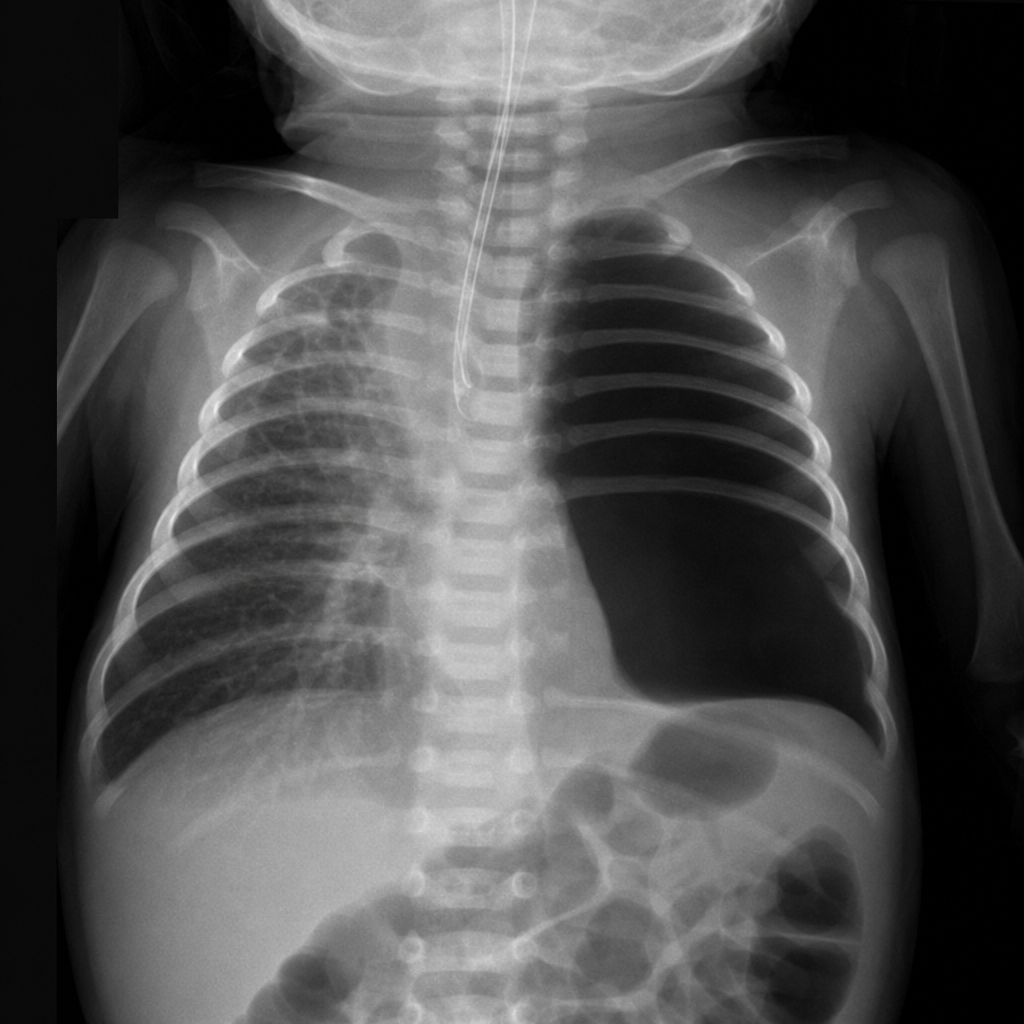
Vesicular transmission of antibody can occur in all of the following, EXCEPT?
Erythema toxicum in a neonate indicates:
What is the most common complication in small for gestational age babies?
Which of the following is FALSE regarding breast milk jaundice?
Which of the following is a manifestation of hypothermia?
Which of the following is a contraindication for bag and mask ventilation?
A neonate presents with vitamin K dependent bleeding. Which of the following drugs, if taken by the mother during the antenatal period, is LEAST likely to cause this condition?
Inveogram is taken after how many hours of birth?
What is the consequence of loss of pulmonary surfactant in a premature infant?
Petechial hemorrhages were noticed on the upper and lower extremities of a 5-day-old infant. Hemorrhagic disease of the neonate was most likely caused by a deficiency of which of the following vitamins?
Explanation: The core concept behind this question is the **transplacental transfer of maternal IgG antibodies**, which occurs via vesicular transport (endocytosis) mediated by neonatal Fc receptors (FcRn) in the syncytiotrophoblast. ### **Explanation of the Correct Answer** **C. Neonatal toxic erythema (Erythema Toxicum Neonatorum):** This is a benign, self-limiting inflammatory skin condition of unknown etiology seen in newborns. It is characterized by eosinophilic infiltration and is **not** mediated by maternal antibodies. Therefore, it does not involve vesicular transmission of antibodies. ### **Explanation of Incorrect Options** The following conditions are all examples of **passive immunity gone wrong**, where maternal IgG antibodies cross the placenta and cause disease in the fetus/neonate: * **A. Rh Incompatibility:** Maternal anti-D IgG antibodies cross the placenta and cause hemolysis of fetal Rh-positive red blood cells (Erythroblastosis Fetalis). * **B. Isoimmune Thrombocytopenia (NAIT):** Maternal IgG antibodies directed against fetal platelet antigens (usually HPA-1a) cross the placenta, leading to fetal platelet destruction. * **D. Neonatal Myasthenia Gravis:** Occurs when maternal IgG antibodies against acetylcholine receptors (AChR) cross the placenta, causing transient muscle weakness in the newborn. ### **High-Yield Clinical Pearls for NEET-PG** * **IgG is the ONLY immunoglobulin** that crosses the placenta. This process begins as early as 13 weeks but peaks during the **third trimester**. * **FcRn Receptor:** The specific receptor responsible for the vesicular transport of IgG across the placental barrier. * **Transient Nature:** Diseases caused by maternal antibody transmission (like neonatal MG or neonatal lupus) are usually **transient** and resolve as the maternal IgG is degraded in the infant’s circulation (half-life ~21-28 days). * **Erythema Toxicum Neonatorum:** Key diagnostic feature on Tzanck smear is the presence of numerous **eosinophils**. It typically spares the palms and soles.
Explanation: **Explanation:** **Erythema Toxicum Neonatorum (ETN)** is a common, benign, self-limiting cutaneous condition seen in approximately 50% of full-term neonates. It typically appears within the first 24–48 hours of life as erythematous macules, papules, or "flea-bite" appearing pustules on an erythematous base. **Why Option D is Correct:** The etiology of ETN is unknown, but it is considered a physiological inflammatory response. It is **not of any clinical significance** because it does not represent an infection or systemic illness. It spares the palms and soles and resolves spontaneously within 5–7 days without treatment. **Why Other Options are Incorrect:** * **Options A & B (Staphylococcal sepsis/Pneumococcemia):** These are serious systemic infections. While sepsis can present with rashes (like petechiae or pustules), ETN is a benign condition in an otherwise healthy-appearing, "well" baby. * **Option C (Drug hypersensitivity):** ETN is not an allergic reaction to medications. It is a transient neonatal phenomenon. **NEET-PG High-Yield Pearls:** * **Microscopic Hallmark:** A Tzanck smear or biopsy of the pustule contents reveals **numerous eosinophils**. This is a classic exam question. * **Timing:** Usually appears at 24–48 hours; rarely present at birth. * **Distribution:** Most common on the trunk and face; characteristically **spares palms and soles** (unlike Congenital Syphilis or Scabies). * **Management:** Reassurance only; no topical or systemic treatment is required.
Explanation: ### Explanation **Small for Gestational Age (SGA)** babies are those whose birth weight is below the 10th percentile for their gestational age. **1. Why Hypoglycemia is the Correct Answer:** Hypoglycemia is the most frequent metabolic complication in SGA infants. The underlying pathophysiology involves: * **Reduced Glycogen Stores:** SGA babies have decreased subcutaneous fat and significantly lower hepatic glycogen stores due to chronic placental insufficiency. * **Hypermetabolism:** They often have a higher metabolic rate relative to their body mass. * **Impaired Gluconeogenesis:** Diminished enzyme activity and limited precursor availability (amino acids/glycerol) hinder the production of new glucose. **2. Analysis of Incorrect Options:** * **Hypocalcemia (B):** While common in infants of diabetic mothers (IDM) and preterm babies, it is less frequent than hypoglycemia in SGA infants. * **Hyaline Membrane Disease (C):** This is a complication of **prematurity**, not growth restriction. In fact, chronic intrauterine stress in SGA babies often triggers endogenous steroid production, which can accelerate lung maturity and actually *decrease* the risk of HMD compared to AGA (Appropriate for Gestational Age) infants of the same gestation. * **Intraventricular Hemorrhage (D):** This is primarily a complication of extreme prematurity due to the fragility of the germinal matrix, not specifically related to being SGA. **3. Clinical Pearls for NEET-PG:** * **Most common cause of SGA:** Constitutional (Normal smallness), followed by intrauterine growth restriction (IUGR). * **Other common SGA complications:** Polycythemia (due to fetal hypoxia and increased erythropoietin), hypothermia (lack of insulating fat), and meconium aspiration syndrome. * **Ponderal Index:** Used to differentiate between Symmetrical and Asymmetrical SGA. * **High-Yield Fact:** While SGA babies are at risk for hypoglycemia, **Large for Gestational Age (LGA)** babies (especially IDMs) are at an even higher risk due to hyperinsulinism.
Explanation: **Explanation:** The distinction between **Breastfeeding Jaundice** and **Breast Milk Jaundice** is a high-yield topic in NEET-PG. The correct answer is **D** because Breast Milk Jaundice typically starts **after the first week of life** (usually peaking between days 10 and 14), whereas jaundice occurring in the first week is typically "Breastfeeding Jaundice" (due to inadequate intake). **Why Option D is False:** Breast milk jaundice is a late-onset unconjugated hyperbilirubinemia. It begins after the 5th to 7th day of life and can persist for 3 to 12 weeks. If jaundice appears within the first 3–5 days, it is likely due to caloric deprivation and increased enterohepatic circulation (Breastfeeding Jaundice). **Analysis of Other Options:** * **Option A (Pregnanediol):** Historically, **3-alpha-20-beta-pregnanediol** found in the breast milk of some mothers was thought to inhibit the enzyme glucuronyl transferase, leading to jaundice. * **Option B (Free Fatty Acids):** High concentrations of non-esterified **free fatty acids** in breast milk can inhibit hepatic bilirubin glucuronidation. * **Option C (Interruption of Conjugation):** The primary mechanism involves substances in the milk (like Beta-glucuronidase) that increase enterohepatic circulation or inhibit the **UGT1A1 enzyme**, causing a temporary interruption in the conjugation process. **NEET-PG High-Yield Pearls:** 1. **Beta-glucuronidase:** This enzyme in breast milk deconjugates bilirubin in the intestine, increasing reabsorption. 2. **Management:** If bilirubin levels are dangerously high, interrupting breastfeeding for 24–48 hours causes a rapid drop in bilirubin, confirming the diagnosis. However, breastfeeding should generally be encouraged and resumed. 3. **Peak:** Breast milk jaundice peaks at 2 weeks and can last up to 3 months, but it is rarely associated with kernicterus.
Explanation: **Explanation:** Neonatal hypothermia (axillary temperature <36.5°C) is a critical condition because neonates, especially preterm infants, have a limited ability to regulate body temperature. **Why Apnea is the Correct Answer:** Hypothermia leads to a significant increase in oxygen consumption and metabolic rate as the infant attempts to generate heat (non-shivering thermogenesis via brown fat). This metabolic stress, combined with the immaturity of the respiratory center, frequently triggers **apnea**, hypoxia, and metabolic acidosis. In clinical practice, unexplained apnea in a neonate is often one of the earliest signs of cold stress. **Analysis of Incorrect Options:** * **Hypoglycemia (Option B):** While hypothermia *causes* hypoglycemia (due to rapid depletion of glycogen stores to produce heat), the question asks for a manifestation. In many standardized exams, if both a respiratory and metabolic sign are present, apnea is prioritized as a direct clinical manifestation, though hypoglycemia is a classic metabolic consequence. * **Hyperglycemia (Option C):** This is incorrect. Hypothermia consumes glucose rapidly, leading to low blood sugar, not high. * **Tachycardia (Option D):** Hypothermia typically causes **bradycardia**. While there may be an initial transient increase in heart rate, sustained cold stress leads to decreased cardiac output and a slow heart rate. **NEET-PG High-Yield Pearls:** * **The "Warm Chain":** A series of 10 steps recommended by WHO to prevent hypothermia at birth. * **Brown Fat Metabolism:** Neonates do not shiver; they produce heat through the oxidation of brown adipose tissue (located in the interscapular area and around kidneys). * **Cold Stress Classification:** * Mild (Cold Stress): 36.0°C to 36.4°C * Moderate: 32.0°C to 35.9°C * Severe: <32.0°C (Associated with sclerema and pulmonary hemorrhage).
Explanation: **Explanation:** **Congenital Diaphragmatic Hernia (CDH)** is a critical contraindication for bag and mask ventilation (BMV). In CDH, abdominal viscera herniate into the thoracic cavity through a defect in the diaphragm (most commonly the left-sided Bochdalek hernia). If BMV is performed, air enters the stomach and intestines, causing them to distend within the chest. This increased intrathoracic pressure further compresses the already hypoplastic lungs and shifts the mediastinum, severely compromising cardiac output and gas exchange. **Management Tip:** Immediate endotracheal intubation is mandatory to provide a secure airway without distending the gut. **Analysis of Incorrect Options:** * **Septicemia (A):** While these neonates may require respiratory support due to apnea or shock, BMV is not contraindicated; it is often a life-saving bridge to mechanical ventilation. * **Tracheoesophageal Fistula (B):** Although BMV can cause gastric distension in TEF, it is **not** an absolute contraindication in an emergency resuscitation scenario, unlike CDH where it causes acute tension-like physiology. * **Meconium Aspiration (C):** Current NRP guidelines suggest that if a baby is non-vigorous, BMV should be initiated if the heart rate is low, regardless of meconium presence (routine tracheal suctioning is no longer recommended). **High-Yield Clinical Pearls for NEET-PG:** * **Classic Triad of CDH:** Scaphoid abdomen, respiratory distress, and shifted heart sounds. * **Radiology:** "Soap bubble" appearance in the hemithorax. * **NRP Rule:** Avoid BMV in CDH and in cases of prolonged fetal bradycardia where thick meconium is present and the airway is obstructed (though CDH remains the most "absolute" contraindication in exams). * **Initial CDH Management:** Intubate, insert a large-bore orogastric tube for decompression, and avoid high-pressure ventilation to prevent pneumothorax.
Explanation: **Explanation:** **Vitamin K Deficiency Bleeding (VKDB)** in neonates can be exacerbated by maternal intake of certain drugs that interfere with Vitamin K metabolism or cross the placenta and inhibit the synthesis of clotting factors (II, VII, IX, and X). **Why Quinine is the Correct Answer:** Quinine is not associated with Vitamin K interference. While it can cause maternal thrombocytopenia, it does not affect the Vitamin K-dependent coagulation pathway in the fetus. Therefore, it is the **least likely** to cause Vitamin K-dependent bleeding compared to the other options. **Analysis of Incorrect Options:** * **Phenytoin & Phenobarbitone (Anticonvulsants):** These are classic causes of "Early VKDB" (occurring within 24 hours of birth). They induce hepatic microsomal enzymes (Cytochrome P450), which accelerate the degradation of Vitamin K in the fetus, leading to a deficiency of functional clotting factors. * **Isoniazid (INH) & Rifampicin (Antitubercular drugs):** Similar to anticonvulsants, these drugs can interfere with Vitamin K metabolism or its transport across the placenta, predisposing the neonate to early-onset bleeding. **High-Yield Clinical Pearls for NEET-PG:** * **Early VKDB (<24 hours):** Usually due to maternal drugs (Anticonvulsants, INH, Warfarin, Rifampicin). * **Classic VKDB (Days 2–7):** Usually due to low Vitamin K content in breast milk and delayed gut colonization. * **Late VKDB (2 weeks–6 months):** Often associated with exclusive breastfeeding or malabsorption (e.g., Biliary atresia). * **Management:** All newborns should receive **1 mg of Vitamin K intramuscularly** at birth as prophylaxis. If the mother is on enzyme-inducing drugs, some protocols suggest giving the mother oral Vitamin K in the last weeks of pregnancy.
Explanation: The **Invertogram** (Wangensteen and Rice technique) is a classic radiological investigation used to determine the level of atresia in neonates with **Anorectal Malformations (ARM)**. ### Why 6 hours is the correct timing: The primary goal of an invertogram is to allow swallowed atmospheric air to travel through the gastrointestinal tract and reach the distal-most end of the rectal pouch. * It takes approximately **6 hours** for air to reach the rectum in a newborn. * Performing the x-ray before 6 hours may lead to a **false-positive diagnosis of high-level atresia**, as the air column may not have had sufficient time to reach the actual end of the pouch. ### Analysis of Incorrect Options: * **A & B (2 and 4 hours):** These are too early. The air column is likely still in the small intestine or proximal colon, leading to an inaccurate measurement of the distance between the pouch and the perineal skin. * **D (8 hours):** While air would certainly have reached the rectum by 8 hours, the standard clinical protocol established by Wangensteen and Rice identifies 6 hours as the optimal minimum window to avoid unnecessary delay in surgical planning. ### High-Yield Clinical Pearls for NEET-PG: * **Positioning:** The infant is held upside down for 3–5 minutes before the X-ray, with a radio-opaque marker (coin) placed on the anal dimple. * **Classification:** It helps differentiate between **High, Intermediate, and Low** anomalies based on the distance of the air bubble from the **PC line** (Pubococcygeal line). * **Modern Alternative:** In many centers, **Prone Cross-table Lateral X-ray** is now preferred over the invertogram to avoid respiratory distress caused by holding the neonate upside down. * **Prerequisite:** Always ensure the baby is at least 6 hours old and clinically stable before performing the procedure.
Explanation: **Explanation:** The core pathophysiology of Respiratory Distress Syndrome (RDS) in premature infants is a deficiency of **pulmonary surfactant**, a phospholipid complex produced by Type II pneumocytes. Surfactant’s primary role is to reduce surface tension at the air-liquid interface of the alveoli. **Why "All of the Above" is Correct:** 1. **Collapse of Alveoli (Option B):** According to the **Law of Laplace** ($P = 2T/r$), as the radius ($r$) of an alveolus decreases, the pressure ($P$) required to keep it open increases. Without surfactant to lower surface tension ($T$), small alveoli collapse at the end of expiration (atelectasis), leading to shunting and hypoxia. 2. **Increased Elastic Recoil (Option C):** Surface tension accounts for nearly 2/3rd of the lung's total elastic recoil. Loss of surfactant increases this inward pulling force, making the lungs "stiff" (decreased compliance). This significantly increases the work of breathing. 3. **Pulmonary Edema (Option A):** High surface tension creates a "suction" effect (negative interstitial pressure) that pulls fluid from the pulmonary capillaries into the alveolar spaces, leading to protein-rich edema and the formation of characteristic hyaline membranes. **High-Yield NEET-PG Pearls:** * **Lecithin/Sphingomyelin (L/S) Ratio:** A ratio **>2:1** in amniotic fluid indicates lung maturity. * **Phosphatidylglycerol (PG):** Its presence is the most reliable marker of lung maturity, especially in diabetic mothers. * **Chest X-ray Findings:** Look for a "Ground Glass Appearance" and "Air Bronchograms." * **Management:** The **INSURE** protocol (Intubation, Surfactant, Extubation to CPAP) is a standard approach. Antenatal corticosteroids (Betamethasone/Dexamethasone) are given to the mother to accelerate surfactant production.
Explanation: ### Explanation **Correct Answer: D. Vitamin K** **Medical Concept:** Hemorrhagic Disease of the Newborn (HDN), now commonly referred to as **Vitamin K Deficiency Bleeding (VKDB)**, occurs because neonates are born with low stores of Vitamin K. This deficiency arises due to poor placental transfer, a sterile gut (lack of Vitamin K-synthesizing flora), and low concentrations in breast milk. Vitamin K is a vital cofactor for the **gamma-carboxylation** of glutamate residues on **Factors II, VII, IX, and X**, as well as proteins C and S. Without this post-translational modification, these factors cannot bind calcium or phospholipid membranes, leading to a functional deficiency and subsequent bleeding (petechiae, GI bleed, or intracranial hemorrhage). **Why Incorrect Options are Wrong:** * **Vitamin B2 (Riboflavin):** Deficiency typically presents with cheilosis, glossitis, and corneal vascularization, not acute neonatal bleeding. * **Vitamin D:** Essential for calcium homeostasis and bone mineralization. Deficiency leads to rickets in children or hypocalcemic seizures in neonates, but not primary coagulation defects. * **Folic Acid:** Necessary for DNA synthesis. Deficiency leads to megaloblastic anemia or neural tube defects (if maternal deficiency occurs during pregnancy), but does not affect the clotting cascade. **NEET-PG High-Yield Pearls:** * **Prophylaxis:** A single IM dose of **1 mg Vitamin K** (Phytonadione) is administered to all newborns at birth to prevent VKDB. * **Classification:** * *Early:* Within 24 hours (usually due to maternal drugs like anticonvulsants). * *Classic:* Days 2–7 (due to low intake/sterile gut). * *Late:* 2 weeks to 6 months (associated with exclusive breastfeeding or malabsorption). * **Lab Findings:** Prolonged **Prothrombin Time (PT)** is the most sensitive indicator; Partial Thromboplastin Time (aPTT) is also prolonged, while bleeding time and platelet count remain normal.
Neonatal Resuscitation
Practice Questions
Care of the Normal Newborn
Practice Questions
Prematurity and Low Birth Weight
Practice Questions
Respiratory Distress Syndrome
Practice Questions
Neonatal Jaundice
Practice Questions
Neonatal Sepsis
Practice Questions
Necrotizing Enterocolitis
Practice Questions
Intraventricular Hemorrhage
Practice Questions
Persistent Pulmonary Hypertension
Practice Questions
Perinatal Asphyxia
Practice Questions
Neonatal Seizures
Practice Questions
Congenital Anomalies
Practice Questions
Get full access to all questions, explanations, and performance tracking.
Start For Free