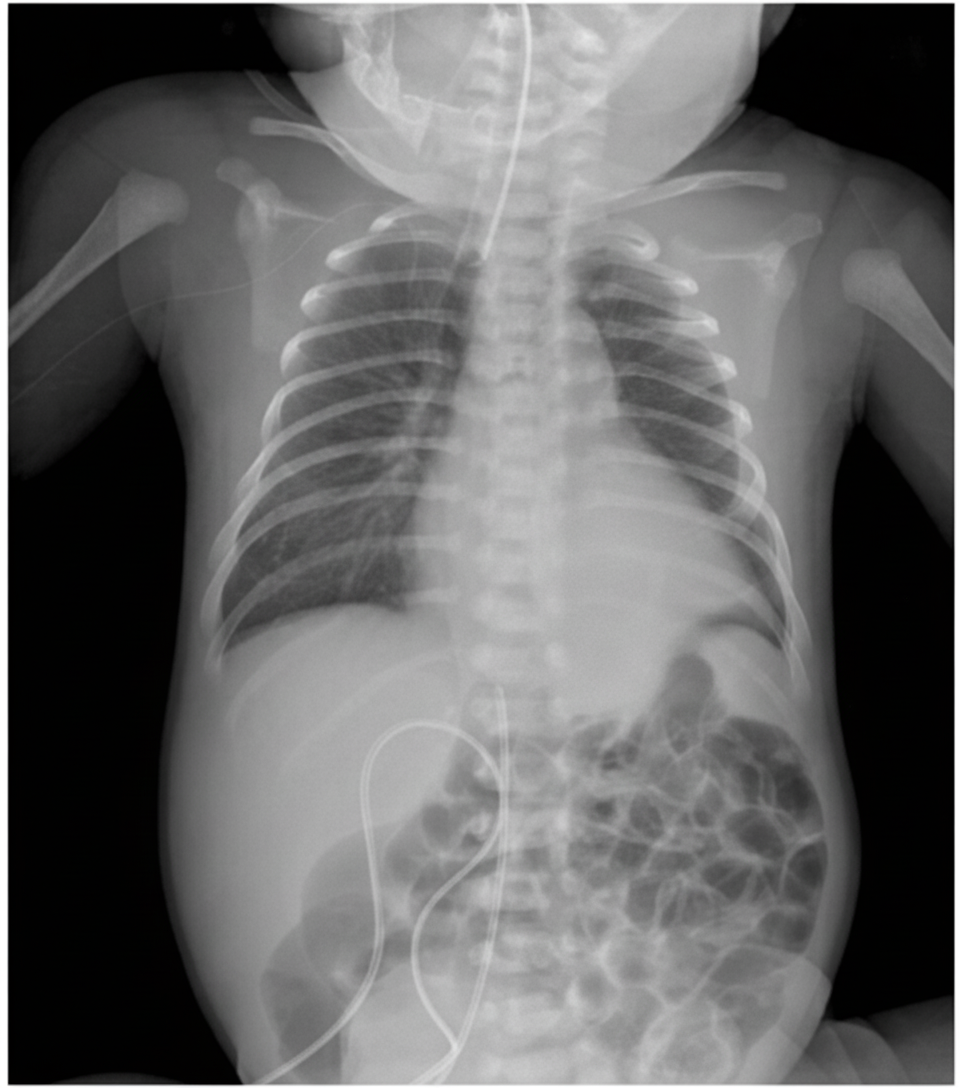
Calculate the Silverman score for a neonate presenting with paradoxical breathing, mild lower chest retraction, marked xiphoid retraction, minimal nasal flare, and an expiratory grunt audible without a stethoscope.
A 7-day-old newborn presented with meningitis. What is the most common cause?
Which of the following is a feature of hemorrhagic disease of the newborn?
Newborn infants are administered vitamin K at birth at a dose of ______?
The risk of intraventricular hemorrhage (IVH) can be reduced by using which of the following?
A fetus born to a mother with a history of fever with rash in the first trimester of pregnancy shows chorioretinitis, cerebral cortical atrophy, cutaneous scarring, and bone leg defects. What is the most probable cause?
What is the weight of a very low birth weight infant?
A neonate presents with mild growth retardation and facial dysmorphology. The mother has a history of substance abuse. What is the most likely cause of this infant's condition?
What is the single most effective step in resuscitation of babies who fail to breathe at birth?
Which of the following is NOT true regarding the indications for exchange transfusion in neonates?
Explanation: The **Silverman-Anderson Score** is a clinical tool used to assess the severity of respiratory distress in neonates. Unlike the Apgar score, a **higher** Silverman score indicates **greater** respiratory distress (0 = normal, 10 = maximum distress). ### **Step-by-Step Calculation** The score evaluates five parameters, each graded from 0 to 2: 1. **Upper Chest (Paradoxical Breathing):** The chest sinks while the abdomen rises ("see-saw" breathing). **Score = 2** 2. **Lower Chest Retraction (Mild):** Visible but not deep indrawing. **Score = 1** 3. **Xiphoid Retraction (Marked):** Deep indrawing of the xiphoid process. **Score = 2** 4. **Nares Dilation (Minimal Nasal Flare):** Slight widening of nostrils. **Score = 1** 5. **Expiratory Grunt (Audible without stethoscope):** Grunting heard by the naked ear. **Score = 2** **Total Score: 2 + 1 + 2 + 1 + 2 = 8.** ### **Analysis of Options** * **Option A (6) & B (7):** These underestimate the severity. Scoring 1 for marked xiphoid retraction or the audible grunt would lead to these incorrect totals. * **Option D (9):** This overestimates the distress. A score of 9 would require "marked" lower chest retractions or "marked" nasal flaring. ### **Clinical Pearls for NEET-PG** * **Interpretation:** * **0:** No respiratory distress. * **1–3:** Mild distress. * **4–6:** Moderate distress. * **>7:** Severe distress (Impending respiratory failure). * **Downe’s Score:** Often confused with Silverman, but it is used for **term** neonates and includes parameters like Cyanosis and Air Entry. Silverman is preferred for **preterm** neonates. * **High-Yield Fact:** The "See-saw" breathing (Score 2) is the most severe form of chest movement, indicating significant recruitment of accessory muscles.
Explanation: **Explanation:** Neonatal meningitis is classified based on the age of onset. In the **early neonatal period (0–7 days)**, the pathogens are typically acquired vertically from the maternal genital tract during birth. **1. Why E. coli is correct:** In the Indian subcontinent, **Gram-negative bacilli**, specifically ***Escherichia coli*** and *Klebsiella pneumoniae*, are the most common causes of neonatal sepsis and meningitis. While *Group B Streptococcus* (GBS) is the leading cause in Western countries, multiple Indian studies (including the National Neonatal Perinatal Database) consistently identify *E. coli* as a predominant pathogen in this age group. **2. Analysis of Incorrect Options:** * **B. Streptococcus pneumoniae:** This is the most common cause of meningitis in children **older than 3 months** and adults. It is rare in the first week of life. * **C. Neisseria meningitidis:** This is a common cause of epidemic meningitis in older children and adolescents. It is not a typical neonatal pathogen. * **D. Staphylococcus aureus:** While a common cause of skin infections and late-onset hospital-acquired sepsis, it is a less frequent cause of primary meningitis in a 7-day-old compared to Gram-negative organisms. **Clinical Pearls for NEET-PG:** * **Global vs. India:** Globally, GBS is #1; in **India**, Gram-negative coliforms (*E. coli/Klebsiella*) are #1. * **Listeria monocytogenes:** Another cause of neonatal meningitis, but much less common in India than in the West. * **Clinical Sign:** A "bulging fontanelle" is a late sign; the earliest signs are often non-specific (lethargy, poor feeding, temperature instability). * **Treatment:** Empiric therapy usually involves a combination of Ampicillin (for *Listeria*/GBS) and an Aminoglycoside or 3rd generation Cephalosporin (for *E. coli*).
Explanation: **Explanation:** **Hemorrhagic Disease of the Newborn (HDN)**, now more commonly referred to as **Vitamin K Deficiency Bleeding (VKDB)**, occurs because neonates have low stores of Vitamin K. This deficiency leads to a decrease in the functional levels of **clotting factors II, VII, IX, and X**, as Vitamin K is a necessary cofactor for the gamma-carboxylation of these factors. 1. **Why Option A is Correct:** The **Prothrombin Time (PT)** measures the extrinsic and common pathways (Factors VII, X, V, II, and I). Since Factor VII has the shortest half-life and is Vitamin K-dependent, PT is the first and most significantly prolonged lab parameter in HDN. Activated Partial Thromboplastin Time (aPTT) is also typically prolonged. 2. **Why Other Options are Incorrect:** * **Options B & C:** Platelet count and Bleeding Time (BT) are measures of **primary hemostasis** (platelet plug formation). In HDN, the defect is in secondary hemostasis (clotting cascade); therefore, platelets and BT remain normal. * **Option D:** Thrombin Time (TT) measures the conversion of fibrinogen to fibrin. This process is not dependent on Vitamin K, so TT remains normal. **High-Yield Clinical Pearls for NEET-PG:** * **Types of VKDB:** * *Early:* Within 24 hours (usually due to maternal drugs like anticonvulsants). * *Classic:* 2–7 days (due to low intake/sterile gut). * *Late:* 2–12 weeks (associated with exclusive breastfeeding or malabsorption). * **Prevention:** A single intramuscular dose of **1 mg Vitamin K** is administered to all newborns at birth. * **Key Lab Finding:** Normal Platelets + Normal BT + **Prolonged PT/aPTT** = Vitamin K Deficiency.
Explanation: **Explanation:** **1. Why Option A is Correct:** Neonates are born with low levels of Vitamin K due to poor placental transfer and a sterile gut (lack of Vitamin K-producing bacteria). This deficiency puts them at risk for **Vitamin K Deficiency Bleeding (VKDB)**, formerly known as Hemorrhagic Disease of the Newborn. The standard recommendation by the American Academy of Pediatrics (AAP) and the World Health Organization (WHO) is a single intramuscular (IM) dose of **0.5 mg to 1 mg of Vitamin K1 (Phytonadione)** administered within the first hour of birth. * **0.5 mg** is typically used for preterm infants (<1500g). * **1.0 mg** is the standard dose for term infants. **2. Why Other Options are Incorrect:** * **Options B & C (IV route):** Intravenous administration is not used for routine prophylaxis. It is reserved for emergency treatment of active bleeding or in cases of severe malabsorption, as it carries a risk of anaphylaxis if infused too rapidly. * **Option D (0.1-0.5 mg):** This dose is sub-therapeutic for term infants and does not provide adequate protection against late-onset VKDB. **3. Clinical Pearls for NEET-PG:** * **Site of Injection:** Anterolateral aspect of the thigh (Vastus lateralis muscle). * **Oral Vitamin K:** While used in some countries, it is less effective than IM for preventing "Late VKDB" (which occurs between 2 weeks to 6 months of age). * **Clotting Factors:** Vitamin K is essential for the γ-carboxylation of Factors **II, VII, IX, and X**, as well as Protein C and S. * **Breastfeeding:** Breast milk is a poor source of Vitamin K; hence, prophylaxis is mandatory for all newborns regardless of feeding method.
Explanation: ### Explanation **Correct Option: A (Vitamin K)** Intraventricular hemorrhage (IVH) in neonates, particularly preterm infants, is often associated with a deficiency in vitamin K-dependent clotting factors (II, VII, IX, and X). Newborns are naturally deficient in Vitamin K due to poor placental transfer and a sterile gut. This deficiency can lead to **Vitamin K Deficiency Bleeding (VKDB)**, which manifests as intracranial or gastrointestinal hemorrhage. Administering Vitamin K (1 mg IM) at birth is a standard preventive measure to stabilize the coagulation cascade and significantly reduce the risk of early and late-onset IVH. **Why other options are incorrect:** * **Vitamin C:** While essential for collagen synthesis and capillary integrity, it has no proven clinical role in preventing neonatal IVH. * **Vitamin E:** Historically, it was thought that Vitamin E (an antioxidant) might protect against germinal matrix hemorrhage by stabilizing cell membranes. However, clinical trials showed no significant benefit, and high doses are associated with an increased risk of sepsis. * **Vitamin A:** Supplementation is primarily used in preterm infants to reduce the incidence of **Bronchopulmonary Dysplasia (BPD)** and promote lung epithelial repair, but it does not influence coagulation or IVH risk. **High-Yield Clinical Pearls for NEET-PG:** * **Standard Dose:** 1 mg IM for infants >1500g; 0.5 mg IM for infants <1500g. * **IVH Timing:** Most IVH occurs within the first 72 hours of life. * **Antenatal Prevention:** Antenatal **Corticosteroids** (Betamethasone/Dexamethasone) are the most effective way to reduce the risk of IVH in preterm infants. * **Diagnosis:** Cranial Ultrasound (USG) through the anterior fontanelle is the investigation of choice for screening IVH.
Explanation: The clinical presentation described is classic for **Congenital Varicella Syndrome (CVS)**. This occurs when a pregnant woman contracts primary varicella-zoster virus (VZV) infection, typically between 8 and 20 weeks of gestation. ### **Why Maternal Varicella is Correct** The hallmark of CVS is the involvement of the skin and nervous system. The virus follows a dermatomal distribution, leading to: * **Cutaneous scarring:** Characterized by "cicatricial" or zigzag skin lesions. * **Limb hypoplasia:** Bone and muscle defects (e.g., rudimentary digits or leg defects). * **Neurological damage:** Cerebral cortical atrophy, microcephaly, and seizures. * **Ocular defects:** Chorioretinitis and cataracts. ### **Why Other Options are Incorrect** * **Maternal Rubella:** Presents with the "Classic Triad" of cataracts, sensorineural hearing loss, and congenital heart disease (PDA/Peripheral Pulmonary Artery Stenosis). It does not cause limb hypoplasia or cicatricial scarring. * **Maternal CMV:** The most common congenital infection. It typically presents with **periventricular calcifications**, microcephaly, and sensorineural hearing loss. * **Maternal Toxoplasma:** Characterized by the "Sabin Triad": **diffuse** intracranial calcifications, hydrocephalus, and chorioretinitis. It does not cause limb defects. ### **NEET-PG High-Yield Pearls** * **Risk Period:** The highest risk for CVS is during the **first 20 weeks** of gestation (peak risk at 13–20 weeks). * **Neonatal Varicella:** If the mother develops a rash 5 days before to 2 days after delivery, the neonate is at risk of severe disseminated varicella and requires **VZIG (Varicella-Zoster Immunoglobulin)**. * **Key Differentiator:** Whenever you see **"limb hypoplasia"** or **"zigzag scarring"** in a TORCH-related question, think Varicella.
Explanation: **Explanation:** The classification of newborns based on birth weight is a high-yield topic in Neonatology. This classification is independent of the gestational age and is used to predict neonatal morbidity and mortality. **1. Why Option B is Correct:** A **Very Low Birth Weight (VLBW)** infant is defined by the World Health Organization (WHO) as a neonate weighing **less than 1500 grams** at birth. These infants require specialized neonatal intensive care (NICU) due to a high risk of complications like Respiratory Distress Syndrome (RDS), Intraventricular Hemorrhage (IVH), and Necrotizing Enterocolitis (NEC). **2. Analysis of Incorrect Options:** * **Option A (1000 gm):** This is the threshold for **Extremely Low Birth Weight (ELBW)**, which is defined as <1000 gm. * **Option C (<2500 gm):** This defines a **Low Birth Weight (LBW)** infant. It is the most common classification encountered in clinical practice. * **Option D (<750 gm):** While these infants are sometimes colloquially called "Micropremies," they fall under the broader category of ELBW (<1000 gm). **3. High-Yield Clinical Pearls for NEET-PG:** * **LBW:** <2500 gm * **VLBW:** <1500 gm * **ELBW:** <1000 gm * **Macrosomia:** >4000 gm (often associated with maternal diabetes). * **Note on Symbols:** Always pay attention to the **"<" (less than)** sign. For example, LBW is strictly *less than* 2500g; a baby weighing exactly 2500g is considered normal birth weight. * **Ponderal Index:** Used to differentiate between symmetrical and asymmetrical IUGR (Formula: Weight in gm / Length in $cm^3 \times 100$).
Explanation: The clinical presentation of growth retardation and facial dysmorphology in a neonate with a maternal history of substance abuse is classic for **Fetal Alcohol Syndrome (FAS)**. ### **Explanation of the Correct Answer** **Alcohol (Option A)** is a potent teratogen. FAS is characterized by a triad of: 1. **Growth Retardation:** Prenatal and/or postnatal growth deficiency. 2. **Facial Dysmorphology:** Specifically smooth philtrum, thin upper lip (vermilion border), and short palpebral fissures. 3. **CNS Involvement:** Microcephaly, intellectual disability, or behavioral issues (ADHD). Alcohol crosses the placenta freely, and the fetus lacks the ADH enzyme to metabolize it, leading to direct cellular toxicity and impaired neuronal migration. ### **Why Other Options are Incorrect** * **Cocaine (Option B):** Associated with placental abruption, prematurity, and neonatal stroke/infarction. It does not typically cause a specific pattern of facial dysmorphism. * **Ethylene Glycol (Option C):** This is an industrial poison (antifreeze). While toxic to the mother (causing metabolic acidosis and renal failure), it is not a recognized cause of a specific neonatal dysmorphic syndrome. * **Heroin (Option D):** Opioid abuse primarily leads to **Neonatal Abstinence Syndrome (NAS)**, characterized by irritability, tremors, high-pitched cry, and diarrhea. It does not cause structural dysmorphism. ### **High-Yield Clinical Pearls for NEET-PG** * **Most common cause** of non-genetic intellectual disability: Fetal Alcohol Syndrome. * **Critical Period:** Facial features are typically affected by alcohol exposure during the **first trimester**. * **Other features of FAS:** Cardiac defects (VSD is most common), "railroad track" ears, and hockey-stick palmar crease. * **Diagnosis:** Requires all three features (Growth retardation, Facial phenotype, and CNS involvement).
Explanation: **Explanation:** The primary goal of neonatal resuscitation is to establish effective lung aeration. In a newborn who fails to breathe or remains gasping after initial steps, **Positive Pressure Ventilation (PPV)** is the single most important and effective step. This is because the fundamental pathophysiology in most neonatal depression is respiratory failure; providing PPV helps clear fetal lung fluid, expand the alveoli, and initiate gas exchange, which subsequently increases the heart rate—the most sensitive indicator of successful resuscitation. **Analysis of Incorrect Options:** * **A. Suction of airways:** Routine suctioning is no longer recommended as it can cause trauma and induced bradycardia via the vagal reflex. It is only indicated if the airway is obstructed by secretions or meconium. * **B. Tactile stimulation:** While flicking the soles or rubbing the back can stimulate a "primary apnea" baby to breathe, it is a part of the "Initial Steps." If the baby does not respond immediately, continuing stimulation wastes "Golden Minute" time that should be used for PPV. * **C. Chest compressions:** These are only indicated if the heart rate remains below 60 bpm *after* at least 30 seconds of effective PPV. Compressions are ineffective if the lungs have not been adequately ventilated first. **Clinical Pearls for NEET-PG:** * **The Golden Minute:** The first 60 seconds of life are dedicated to completing the initial steps and starting PPV if required. * **Indicator of Success:** An increasing **Heart Rate** is the most important sign of effective PPV. * **MR. SOPA:** If the chest is not rising during PPV, use this corrective mnemonic (Mask adjustment, Reposition airway, Suction, Open mouth, Pressure increase, Alternative airway). * **Oxygen Concentration:** For term babies (≥35 weeks), start PPV with 21% oxygen (room air). For preterm babies (<35 weeks), start with 21–30% oxygen.
Explanation: **Explanation:** Exchange transfusion is an emergency procedure used in neonatal jaundice to prevent bilirubin encephalopathy (Kernicterus) by rapidly removing bilirubin and antibody-coated RBCs. **Why Option D is the correct answer:** A total serum bilirubin (TSB) of **10 mg/dL** is generally considered a safe level in most neonates and is **not** an indication for exchange transfusion. For a full-term healthy neonate, the threshold for exchange transfusion typically starts at **20 mg/dL** or higher. Even in preterm or high-risk infants, 10 mg/dL is usually managed with intensive phototherapy rather than an invasive exchange procedure. **Analysis of Incorrect Options (Indications for Exchange):** * **A & B (Cord Blood Parameters):** In cases of Rh isoimmunization, a **cord bilirubin ≥ 5 mg/dL** or a **cord hemoglobin ≤ 10 g/dL** are classic immediate indications for exchange transfusion, as they signify severe hemolysis occurring in utero. * **C (Rate of Rise):** A rapid increase in bilirubin (**> 0.5 mg/dL/hour**) despite intensive phototherapy indicates that hemolysis is outstripping the body's ability to clear bilirubin, necessitating an exchange. **NEET-PG High-Yield Pearls:** * **Double Volume Exchange Transfusion (DVET):** The standard method using 160 ml/kg of blood; it removes 85% of sensitized RBCs and reduces TSB by 50%. * **Most common indication:** Historically Rh isoimmunization; currently, it is more commonly performed for ABO incompatibility or G6PD deficiency. * **Complication:** The most common metabolic complication is **hypocalcemia** (due to citrate anticoagulant in stored blood). * **Decision Tool:** Always refer to the **AAP (American Academy of Pediatrics) nomograms** which factor in gestational age and risk factors.
Neonatal Resuscitation
Practice Questions
Care of the Normal Newborn
Practice Questions
Prematurity and Low Birth Weight
Practice Questions
Respiratory Distress Syndrome
Practice Questions
Neonatal Jaundice
Practice Questions
Neonatal Sepsis
Practice Questions
Necrotizing Enterocolitis
Practice Questions
Intraventricular Hemorrhage
Practice Questions
Persistent Pulmonary Hypertension
Practice Questions
Perinatal Asphyxia
Practice Questions
Neonatal Seizures
Practice Questions
Congenital Anomalies
Practice Questions
Get full access to all questions, explanations, and performance tracking.
Start For Free