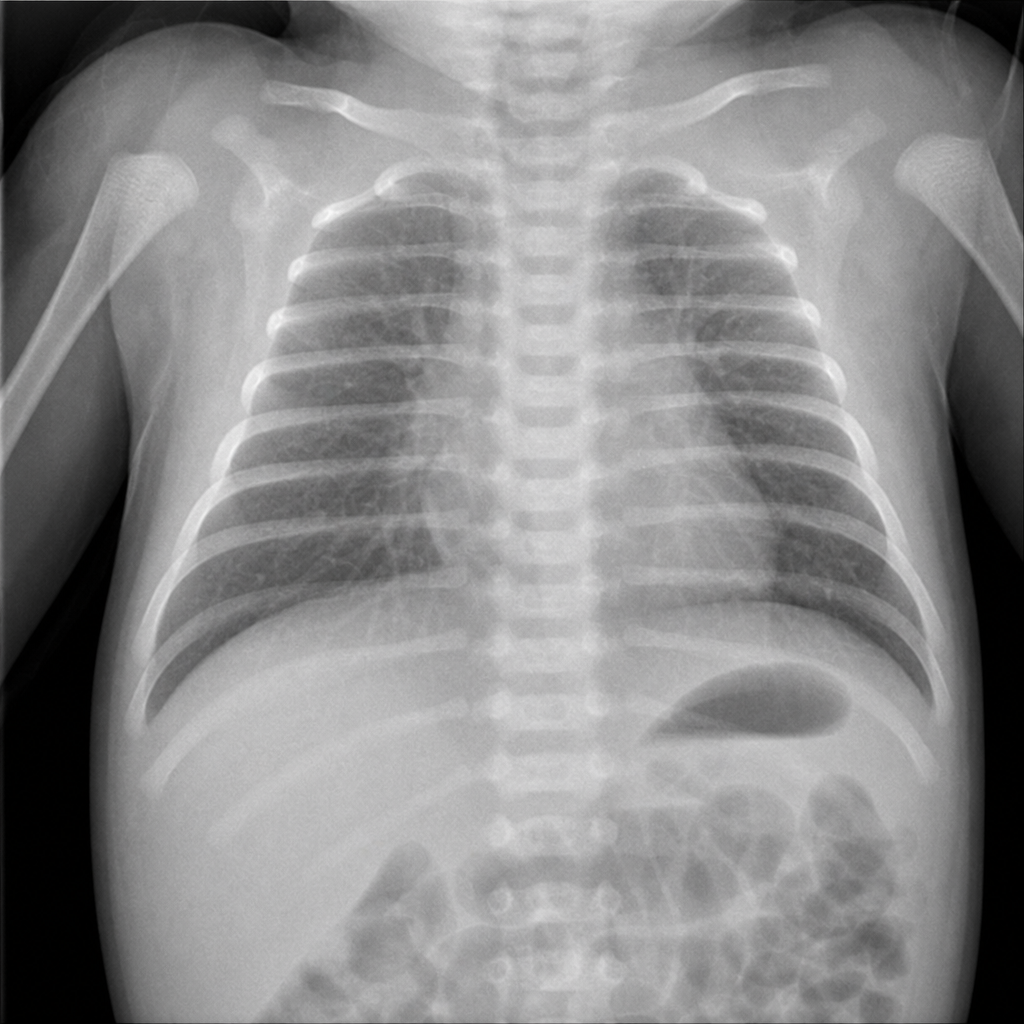
Fetal Hydantoin Syndrome is caused by which of the following medications?
What is the commonest reason for adherent labia minora in a newborn?
What is the most common complication of chickenpox in neonates?
Which of the following is NOT a criterion for hypoxic-ischemic encephalopathy?
Failure to initiate and maintain spontaneous respiration following birth is clinically known as:
Absent Moro's reflex is seen in which of the following conditions?
Which of the following is false regarding erythema toxicum neonatorum?
Which of the following is NOT a cause of neonatal seizures?
A newborn with recurrent vomiting and cyanosis after each feed is likely suffering from which condition?
Extremely low birth weight baby is defined as a baby weighing:
Explanation: **Explanation:** **Fetal Hydantoin Syndrome (FHS)** is a characteristic pattern of mental and physical birth defects caused by the maternal ingestion of **Phenytoin** (a hydantoin-derivative anticonvulsant) during pregnancy. Phenytoin crosses the placenta and is metabolized into oxidative intermediates that can cause cellular damage in the developing fetus. **Why the correct answer is right:** * **Phenytoin (Option A):** Exposure leads to a classic triad of symptoms: **Craniofacial abnormalities** (cleft lip/palate, broad nasal bridge, hypertelorism), **Limb defects** (hypoplasia of nails and distal phalanges), and **Growth deficiency** (microcephaly and developmental delay). **Why the other options are wrong:** * **Alcohol (Option B):** Causes **Fetal Alcohol Syndrome (FAS)**, characterized by a smooth philtrum, thin upper lip, short palpebral fissures, and significant neurodevelopmental deficits. * **Tetracycline (Option C):** Known for causing permanent **discoloration of deciduous teeth** (yellow-brown staining) and enamel hypoplasia if taken after the first trimester. * **Sodium Valproate (Option D):** Causes **Fetal Valproate Syndrome**, most notably associated with **Neural Tube Defects** (like spina bifida) due to interference with folate metabolism, as well as "cupid’s bow" upper lip. **High-Yield Clinical Pearls for NEET-PG:** * **Drug of Choice:** For epilepsy in pregnancy, Levetiracetam or Lamotrigine are generally preferred over Phenytoin or Valproate. * **Vitamin K:** Infants exposed to Phenytoin in utero are at risk of **Neonatal Hemorrhage**; maternal Vitamin K supplementation is often recommended in the last month of pregnancy. * **Key Buzzword:** "Hypoplastic nails" is the most specific clue for Fetal Hydantoin Syndrome in clinical vignettes.
Explanation: **Explanation:** **Correct Answer: D. Agglutination of labia** **Concept:** Labial adhesion (or agglutination) is the most common cause of an "apparent" absence of a vaginal opening in newborns and young infants. It occurs due to the fusion of the delicate edges of the labia minora. The primary underlying mechanism is **low estrogen levels** combined with local irritation or poor hygiene. In newborns, while maternal estrogen initially keeps the tissues moist, as these levels drop in the first few weeks of life, the labial mucosa becomes thin and prone to sticking together (agglutination). **Analysis of Incorrect Options:** * **A. Female Pseudohermaphroditism (Congenital Adrenal Hyperplasia):** This involves virilization (clitoromegaly and fusion of labioscrotal folds) due to excess androgens, not simple adherence of the labia minora. * **B. Testicular Feminization (Androgen Insensitivity Syndrome):** These individuals are genotypically male (46,XY) with a blind-ending vaginal pouch. The external genitalia appear female, but labial adherence is not a characteristic feature of this condition. * **C. Vaginal Atresia:** This is a structural congenital anomaly where the vagina fails to develop properly. While it presents with an absent vaginal opening, it is a much rarer developmental defect compared to the common clinical finding of labial agglutination. **NEET-PG High-Yield Pearls:** * **Peak Incidence:** Most commonly seen between 3 months and 6 years of age (post-maternal estrogen phase). * **Management:** Most cases are asymptomatic and resolve spontaneously with improved hygiene. If symptomatic (e.g., urinary stasis, UTIs), the first-line treatment is **topical estrogen cream** applied twice daily for 2–4 weeks. * **Key Sign:** A thin, translucent "midline raphe" or membrane connecting the labia minora.
Explanation: **Explanation:** Neonatal varicella occurs when a mother develops chickenpox shortly before or after delivery (typically 5 days before to 2 days after). In these cases, the neonate is at high risk because they receive a large viral load without the protection of maternal transplacental antibodies. **1. Why Pneumonia is correct:** In neonates and adults, varicella-zoster virus (VZV) is significantly more virulent than in older children. **Pneumonia** is the most frequent and life-threatening complication of neonatal varicella, occurring in a significant percentage of infected infants. It often presents with respiratory distress and can lead to rapid clinical deterioration. **2. Why the other options are incorrect:** * **Encephalitis:** While a known complication of VZV, it is much rarer than pneumonia in the neonatal period. It more commonly presents as cerebellar ataxia in older children. * **Reye’s Syndrome:** This is a complication associated with aspirin use during a viral infection (like varicella or influenza). It is not a direct primary complication of the virus itself in neonates. * **Hemorrhages:** While "Hemorrhagic Varicella" is a severe form of the disease characterized by skin and visceral bleeding, it is less common than pulmonary involvement. **Clinical Pearls for NEET-PG:** * **Congenital Varicella Syndrome:** Occurs if the mother is infected in the first 20 weeks of pregnancy. Characterized by **cicatricial skin scars**, limb hypoplasia, and chorioretinitis. * **Perinatal Varicella Management:** If maternal onset is within the "5 days before to 2 days after delivery" window, the neonate must receive **Varicella-Zoster Immunoglobulin (VZIG)** immediately. * **Treatment:** Intravenous **Acyclovir** is the drug of choice for symptomatic neonatal varicella.
Explanation: To diagnose **Hypoxic-Ischemic Encephalopathy (HIE)** in a neonate, specific criteria established by the American Academy of Pediatrics (AAP) and ACOG must be met. These criteria identify an acute intrapartum hypoxic event sufficient to cause neurological damage. ### **Explanation of the Correct Option** **C. Normal MRI imaging after 24 hours of life:** This is **NOT** a criterion for HIE. In fact, HIE is characterized by **abnormal** neuroimaging. While an MRI may be normal in the first 24 hours (due to the evolution of injury), characteristic patterns of injury (e.g., involvement of the basal ganglia, thalamus, or watershed areas) typically appear on Diffusion-Weighted Imaging (DWI) between 24–72 hours. A persistently normal MRI would suggest an alternative diagnosis. ### **Analysis of Incorrect Options** * **A. Apgar score < 5 at 5 and 10 minutes:** Low Apgar scores are a core requirement. A score <5 at 5 and 10 minutes indicates significant postnatal depression and correlates with an increased risk of neurological morbidity. * **B. Umbilical arterial acidemia:** A hallmark of HIE is profound metabolic or mixed acidemia (pH < 7.00 or base deficit ≥ 12 mmol/L) in an umbilical artery blood gas sample. * **C. Multisystem involvement:** HIE is a systemic insult. Evidence of injury to other organs (e.g., acute kidney injury, hepatic dysfunction, myocardial irritability, or hematologic abnormalities) supports the diagnosis of a significant hypoxic event. ### **NEET-PG High-Yield Pearls** * **Sarnat Staging:** Used to grade the severity of HIE (Stage I: Hyperalert; Stage II: Seizures/Lethargy; Stage III: Coma/Flaccidity). * **Therapeutic Hypothermia:** The standard of care for moderate-to-severe HIE; it must be initiated within **6 hours** of birth. * **Most Sensitive Imaging:** MRI is the gold standard, with **Diffusion-Weighted Imaging (DWI)** being the most sensitive sequence in the first week of life.
Explanation: ### Explanation **Correct Answer: B. Respiratory distress syndrome (RDS)** The clinical definition of **Respiratory Distress Syndrome (RDS)**, specifically in the context of neonatal resuscitation and initial assessment, refers to the failure to initiate and maintain spontaneous respiration at birth. Pathophysiologically, in neonates (especially preterms), this is primarily due to **surfactant deficiency**, which leads to alveolar collapse, decreased lung compliance, and impaired gas exchange. **Analysis of Options:** * **A. Birth Asphyxia:** While often used interchangeably in common parlance, birth asphyxia is a biochemical definition characterized by profound acidemia (pH < 7.00), hypoxia, and hypercapnia, often leading to multi-organ dysfunction (like HIE). It is the *result* of impaired gas exchange, whereas the clinical failure to breathe is categorized under the syndrome of respiratory distress. * **C. Respiratory Failure:** This is a physiological state where the respiratory system fails in oxygenation or carbon dioxide elimination. It is a consequence of various underlying pathologies (like RDS or pneumonia) rather than the specific clinical term for the failure to initiate breathing at birth. * **D. Pulmonary Edema:** This involves fluid accumulation in the extravascular spaces of the lungs. While it causes respiratory distress, it is a specific pathological finding (often secondary to cardiac issues or fluid overload) rather than a definition for the failure to initiate respiration. **High-Yield Clinical Pearls for NEET-PG:** * **Ground Glass Appearance:** The classic X-ray finding in RDS (Hyaline Membrane Disease) is a diffuse reticulogranular pattern with air bronchograms. * **L/S Ratio:** A Lecithin/Sphingomyelin ratio of **>2:1** in amniotic fluid indicates fetal lung maturity. * **Antenatal Steroids:** Dexamethasone or Betamethasone administered to the mother 24–48 hours before preterm delivery significantly reduces the incidence of RDS. * **Surfactant Replacement:** The "INSURE" technique (Intubate-Surfactant-Extubate to CPAP) is a preferred management strategy.
Explanation: **Explanation:** The **Moro reflex** is a primitive reflex mediated by the brainstem. It appears at birth and typically disappears by 3–6 months of age. An **absent** Moro reflex indicates a severe, generalized depression of the Central Nervous System (CNS). **Why Stage III HIE is correct:** Hypoxic-Ischemic Encephalopathy (HIE) is graded using the **Sarnat and Sarnat staging**. * **Stage I (Mild):** Hyper-alertness, normal or brisk reflexes. * **Stage II (Moderate):** Lethargy, suppressed/weak Moro reflex. * **Stage III (Severe):** Coma, flaccidity, and **complete absence** of primitive reflexes (Moro, sucking, etc.). In this stage, the brainstem function is severely compromised, leading to the total absence of the reflex. **Analysis of Incorrect Options:** * **Neonatal Hypoglycemia:** While severe hypoglycemia can cause lethargy or seizures, it typically presents with a **jittery** or exaggerated Moro reflex rather than a complete absence. * **Erb’s Palsy & Fracture Clavicle:** These conditions cause an **asymmetrical** Moro reflex. The reflex is present on the normal side but absent or restricted on the affected side due to nerve injury (C5-C6) or pain/mechanical restriction. **High-Yield Clinical Pearls for NEET-PG:** * **Asymmetrical Moro:** Think of Brachial plexus injury (Erb’s), fractured clavicle, or fractured humerus. * **Exaggerated Moro:** Seen in Neonatal Abstinence Syndrome (drug withdrawal), Hypocalcemia, and Stage I HIE. * **Persistence beyond 6 months:** Suggests spastic cerebral palsy. * **Components:** The reflex consists of three phases: sudden extension and abduction of arms, followed by flexion and adduction (embrace), and usually ends with crying.
Explanation: **Explanation:** **Erythema Toxicum Neonatorum (ETN)** is a benign, self-limiting cutaneous condition seen in healthy newborns. The correct answer is **Option D** because ETN is a sterile, inflammatory condition that requires **no treatment**. Topical or systemic antibiotics are unnecessary as there is no infectious etiology. **Analysis of Options:** * **Option A (30-50% of newborns):** This is a true statement. ETN is the most common rash in the neonatal period, affecting approximately half of all full-term infants. It is notably less common in preterm infants. * **Option B (Mostly present at birth):** This is **False** (making it a distractor in the context of clinical facts, though the question asks for the "false" statement among the choices). ETN typically appears between **24 to 48 hours of life**. While it can occasionally be present at birth, it is much rarer than *Transient Neonatal Pustular Melanosis (TNPM)*, which is always present at birth. * **Option C (Flea-bitten rash):** This is a classic descriptive term. The rash consists of 1–3 mm firm, pale white-to-yellow papules or pustules on an erythematous base, giving it a "flea-bitten" appearance. **High-Yield NEET-PG Pearls:** 1. **Diagnostic Hallmark:** A Tzanck smear or Wright stain of the pustule contents reveals **numerous eosinophils**. (Contrast with TNPM, which shows neutrophils). 2. **Distribution:** It involves the trunk, face, and extremities but characteristically **spares the palms and soles**. 3. **Management:** Reassurance to parents is the only intervention required; lesions typically resolve spontaneously within 5–7 days.
Explanation: **Explanation:** In neonatology, metabolic disturbances are among the most common causes of seizures. The correct answer is **Hypokalemia (B)** because, while it significantly affects cardiac conduction and muscle strength (causing arrhythmias or paralytic ileus), it is **not** a recognized cause of neonatal seizures. Seizures are primarily triggered by disturbances that alter neuronal membrane stability or energy metabolism in the brain. * **Hypoglycemia (D):** This is a critical and common cause. Glucose is the primary fuel for the neonatal brain; a deficiency leads to ATP depletion, failure of the sodium-potassium pump, and neuronal depolarization. * **Hypomagnesemia (C):** Low magnesium levels often coexist with hypocalcemia. Magnesium is a cofactor for the Na-K-ATPase pump; its deficiency increases neuromuscular excitability, leading to tetany and seizures. * **Pyridoxine (Vitamin B6) Deficiency (A):** This is a rare but classic "must-know" cause for NEET-PG. Pyridoxine is a cofactor for GAD (Glutamic Acid Decarboxylase), which converts Glutamate into GABA (the brain's primary inhibitory neurotransmitter). A deficiency leads to a lack of GABA, causing intractable seizures that only respond to IV Pyridoxine. **High-Yield Clinical Pearls for NEET-PG:** * **Most common cause of neonatal seizures:** Hypoxic-Ischemic Encephalopathy (HIE) (usually occurs within the first 24 hours). * **Most common metabolic cause:** Hypocalcemia (Early onset: <3 days; Late onset: >3 days). * **Drug of Choice:** Phenobarbital remains the first-line anticonvulsant for neonatal seizures. * **Key Distinction:** Hypo**natremia** and Hyper**natremia** cause seizures, but potassium imbalances do not.
Explanation: **Explanation:** The clinical presentation of **recurrent vomiting and cyanosis immediately following feeds** in a newborn is a classic triad for **Tracheoesophageal Fistula (TEF)**, often associated with Esophageal Atresia (EA). 1. **Why Option A is correct:** In the most common type of TEF (Type C: EA with distal fistula), the blind esophageal pouch fills quickly during feeding, leading to immediate regurgitation/vomiting. The **cyanosis** occurs due to aspiration of milk into the lungs or laryngeal spasm (the "3 Cs": Coughing, Choking, and Cyanosis). Additionally, air enters the stomach through the fistula, causing abdominal distension. 2. **Why other options are incorrect:** * **Tetralogy of Fallot (B):** While it causes cyanosis, it is typically associated with "Tet spells" during crying or exertion, not specifically triggered by the act of swallowing or vomiting. * **Congenital Hypertrophic Pyloric Stenosis (C):** This presents with non-bilious, projectile vomiting, but usually appears at **3–6 weeks of age**, not in the immediate neonatal period, and does not typically cause cyanosis. * **ARDS (D):** Acute Respiratory Distress Syndrome (or Neonatal RDS) presents with grunting and tachypnea due to surfactant deficiency, primarily in preterm infants; it is not episodic or feed-induced. **NEET-PG High-Yield Pearls:** * **Most common type:** Type C (85%) – Proximal Esophageal Atresia with Distal TEF. * **Initial Sign:** Excessive salivation/drooling and inability to pass a nasogastric tube (coils in the pouch). * **VACTERL Association:** Always screen for Vertebral, Anal, Cardiac, TEF, Renal, and Limb anomalies. * **X-ray finding:** A "coiled tube" in the neck and air in the stomach (if a distal fistula exists).
Explanation: **Explanation:** In neonatology, birth weight is a critical predictor of neonatal morbidity and mortality. The classification of birth weight is standardized by the WHO and is a high-yield topic for NEET-PG. **1. Why Option D is Correct:** An **Extremely Low Birth Weight (ELBW)** baby is defined as a neonate weighing **less than 1000 grams (< 1 kg)** at birth, regardless of gestational age. These infants are at the highest risk for complications such as Respiratory Distress Syndrome (RDS), Intraventricular Hemorrhage (IVH), and Necrotizing Enterocolitis (NEC). **2. Why Other Options are Incorrect:** * **Option A (< 2.5 kg):** This defines a **Low Birth Weight (LBW)** baby. This is the most common category and includes both preterm babies and small-for-gestational-age (SGA) babies. * **Option B (< 2 kg):** There is no specific WHO nomenclature for < 2 kg; however, in clinical practice, babies < 1.8 kg often require specialized nursery care. * **Option C (< 1.5 kg):** This defines a **Very Low Birth Weight (VLBW)** baby. These infants typically require Intensive Care (NICU) management. **3. High-Yield Clinical Pearls for NEET-PG:** * **Micropremie:** A term often used for babies weighing **< 750g** or born at **< 26 weeks** gestation. * **Incredible LBW:** Occasionally, the term "Incredible" or "Ultra" LBW is used for babies **< 750g**. * **Macrosomia:** Defined as a birth weight **> 4 kg** (regardless of gestational age), commonly seen in infants of diabetic mothers. * **Ponderal Index:** Used to differentiate between symmetrical and asymmetrical IUGR. Formula: $[Weight (g) \times 100] / [Length (cm)]^3$. * **Management Tip:** For ELBW/VLBW babies, the "Golden Hour" management (initial 60 minutes of life) is crucial for improving long-term neurodevelopmental outcomes.
Neonatal Resuscitation
Practice Questions
Care of the Normal Newborn
Practice Questions
Prematurity and Low Birth Weight
Practice Questions
Respiratory Distress Syndrome
Practice Questions
Neonatal Jaundice
Practice Questions
Neonatal Sepsis
Practice Questions
Necrotizing Enterocolitis
Practice Questions
Intraventricular Hemorrhage
Practice Questions
Persistent Pulmonary Hypertension
Practice Questions
Perinatal Asphyxia
Practice Questions
Neonatal Seizures
Practice Questions
Congenital Anomalies
Practice Questions
Get full access to all questions, explanations, and performance tracking.
Start For Free