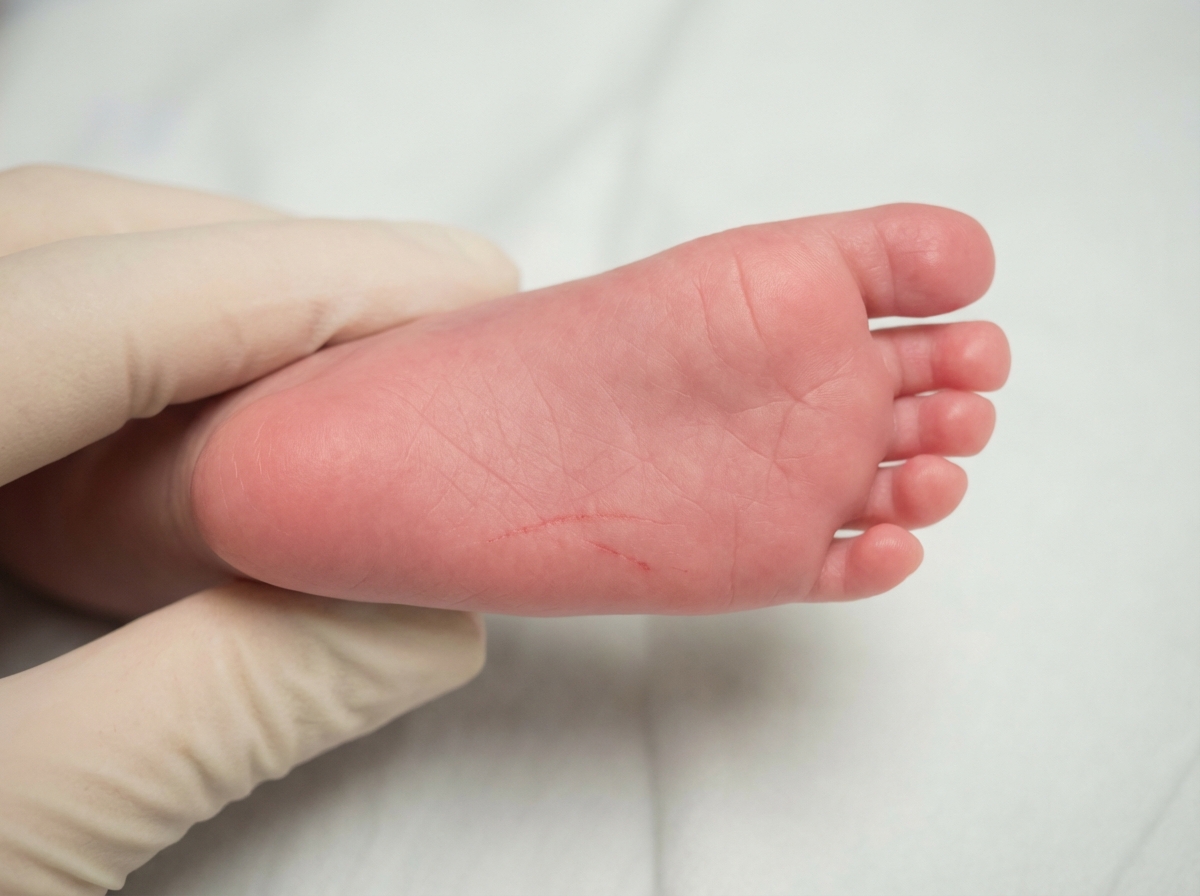
One of the earliest features of neonatal sepsis is:
Which of the following conditions is commonly encountered in a female newborn and requires no therapy?
Which factor is associated with an increased incidence of sudden infant death syndrome?
All of the following statements regarding jaundice in a newborn are true, EXCEPT:
A baby is born at 30 weeks of gestation by cesarean delivery. The neonate develops tachypnea, flaring, and subcostal and intercostal retractions immediately after birth. Chest radiography shows a bilateral, diffuse, ground-glass appearance with an air bronchogram sign present. Surfactant therapy was started within 1 hour of the onset of respiratory distress. This is known as what?
A 4-day-old newborn presents with icterus involving the soles. What is the expected total bilirubin level (mg/dL)?
If a mother is HBsAg positive, what management is recommended for the newborn?
Which of the following conditions does NOT typically cross the placenta?
Which of the following is NOT associated with bronchopulmonary dysplasia?
Which of the following is a criterion for a high-risk infant?
Explanation: ### Explanation Neonatal sepsis is a clinical syndrome characterized by systemic signs of infection and accompanied by bacteremia in the first month of life. **Why Option A is Correct:** The earliest signs of neonatal sepsis are often **subtle, non-specific, and vague**. Neonatologists frequently refer to this as the infant **"not doing well."** An **alteration in established feeding behavior** (refusal to suck, poor feeding, or increased gastric residuals) is typically the first clinical indicator. Other early signs include lethargy, irritability, and temperature instability (hypothermia is more common than fever in preterm neonates). **Why Other Options are Incorrect:** * **B. Shock:** This is a **late and decompensated feature** of septicemia. It indicates multi-organ dysfunction and carries a high mortality rate. * **C. Bleeding:** Manifesting as petechiae, purpura, or GI bleeds, this usually indicates **Disseminated Intravascular Coagulation (DIC)**, a severe complication of advanced sepsis. * **D. Sclerema:** This refers to the hardening of subcutaneous fat. It is a **grave prognostic sign** seen in severely ill, cold, and septic neonates, indicating a near-terminal state. **High-Yield Clinical Pearls for NEET-PG:** * **Gold Standard Diagnosis:** Blood culture (though results take 24–48 hours). * **Hematological Scoring System (Rodwell’s):** Includes parameters like total WBC count, immature-to-total (I:T) neutrophil ratio (>0.2 is significant), and degenerative changes in neutrophils. * **Most Common Organisms:** In India, *Klebsiella pneumoniae* and *Staphylococcus aureus* are common; globally, Group B Streptococcus (GBS) is a major cause of early-onset sepsis. * **First-line Antibiotics:** Usually a combination of Ampicillin and Gentamicin (or Amikacin).
Explanation: **Explanation:** The correct answer is **Mucoid vaginal discharge**. This is a physiological phenomenon in female neonates caused by the **passive placental transfer of maternal estrogen** during pregnancy. 1. **Why it is correct:** High levels of maternal estrogen stimulate the fetal endometrial lining and vaginal mucosa. After birth, the sudden withdrawal of these hormones leads to the shedding of the vaginal epithelium (mucoid discharge) and, in some cases, "pseudomenses" (blood-tinged discharge) [1]. This is a self-limiting, benign condition that typically resolves within the first week of life and requires only parental reassurance [1]. 2. **Why the other options are incorrect:** * **Enlarged clitoris:** This is an abnormal finding (clitoromegaly) and may be a sign of Congenital Adrenal Hyperplasia (CAH) or maternal androgen exposure [3]. It requires a thorough endocrine workup. * **Labial fusion:** While often benign, it is usually an acquired condition due to low estrogen levels or local irritation. If it causes urinary obstruction or recurrent infections, it may require topical estrogen cream or surgical intervention. * **Prolapsed urethra:** This presents as a congested, donut-shaped mass at the urinary meatus [2]. It is a rare clinical emergency that requires medical or surgical management. **High-Yield Clinical Pearls for NEET-PG:** * **Breast engorgement:** Can occur in both male and female neonates due to maternal estrogen; it may be accompanied by "Witch’s milk" secretion. Never squeeze the tissue as it can lead to mastitis. * **Pseudomenses:** If a neonate has bloody vaginal discharge, the most common cause is estrogen withdrawal, not trauma or infection [1]. * **Timeline:** Most hormone-related neonatal changes peak at 3–5 days and resolve by 2 weeks of age [1].
Explanation: **Explanation:** Sudden Infant Death Syndrome (SIDS) is defined as the sudden, unexplained death of an infant under one year of age. The pathophysiology is best explained by the **"Triple Risk Model,"** which suggests SIDS occurs when a vulnerable infant (genetic/biological predisposition) is exposed to an exogenous stressor during a critical developmental period. **Why Maternal Smoking is Correct:** Maternal smoking (both prenatal and postnatal) is one of the most significant modifiable risk factors for SIDS. Prenatal exposure to nicotine impairs the development of the fetal brainstem, specifically the centers responsible for **autonomic arousal and ventilatory responses** to hypoxia and hypercapnia. This means the infant may fail to wake up or change position when oxygen levels drop. **Analysis of Incorrect Options:** * **A. High socioeconomic status:** SIDS is inversely related to socioeconomic status; it is more common in lower-income families due to factors like limited prenatal care and environmental stressors. * **B. Female gender:** SIDS shows a distinct **male predominance** (approximately 60% of cases are male). * **C. Prone sleep positioning:** While prone (stomach) sleeping is a major risk factor, the question asks which factor is *associated* with increased incidence. In recent years, public health campaigns (like "Back to Sleep") have significantly reduced prone sleeping, making **maternal smoking** a leading persistent epidemiological risk factor in many studies. *Note: If both were options, prone sleeping is the #1 modifiable risk, but maternal smoking is a classic, high-yield association frequently tested in this context.* **High-Yield Clinical Pearls for NEET-PG:** * **Peak Age:** 2 to 4 months (rare after 6 months). * **Protective Factors:** Breastfeeding, room-sharing (without bed-sharing), use of a pacifier at naptime/bedtime, and immunization. * **Major Risk Factors:** Prone/side sleeping, soft bedding, overheating, maternal smoking, and prematurity/low birth weight.
Explanation: **Explanation:** The correct answer is **C**, but the question is structured as an "EXCEPT" question where all provided statements are actually medically accurate. In the context of NEET-PG, this type of question tests your ability to identify the most definitive clinical truth among several correct statements. 1. **Why Option C is the focus:** Unconjugated bilirubin is lipid-soluble and can cross the blood-brain barrier. When levels exceed the albumin-binding capacity, it deposits in the basal ganglia and brainstem nuclei, leading to **Kernicterus** (Chronic Bilirubin Encephalopathy). This is the most critical pathological consequence of neonatal jaundice. 2. **Physiological Jaundice (Option A):** This is true. In term neonates, physiological jaundice typically appears after 24 hours, peaks between **3–5 days** (which is "after 48 hours"), and disappears by 7–10 days. 3. **Breast Milk Jaundice (Option B):** This is true. Unlike "breastfeeding jaundice" (which occurs early due to caloric deprivation), **Breast milk jaundice** starts after the first week (peaks around day 10–15) and can persist for several weeks due to factors in milk like beta-glucuronidase. 4. **Option D:** Since A, B, and C are all factually correct statements regarding neonatal jaundice, Option D would technically be the most accurate choice in a standard "All are true" format. **NEET-PG High-Yield Pearls:** * **Pathological Jaundice:** Always suspect if jaundice appears within the **first 24 hours**, bilirubin rises >5mg/dL/day, or direct bilirubin is >2mg/dL. * **Kramer’s Rule:** Used for clinical assessment of jaundice (Face: 5mg/dL; Mid-trunk: 10mg/dL; Soles: 15+ mg/dL). * **Phototherapy:** Converts bilirubin into water-soluble **lumirubin** via structural isomerization. * **Most common cause of Kernicterus:** Rh isoimmunization (historically) and G6PD deficiency.
Explanation: ### Explanation The clinical presentation of a preterm neonate (30 weeks) with immediate respiratory distress and a "ground-glass" appearance on X-ray is classic for **Respiratory Distress Syndrome (RDS)** due to surfactant deficiency. **1. Why "Early Rescue Therapy" is Correct:** Surfactant replacement therapy is categorized based on the timing of administration. **Early rescue therapy** refers to the administration of surfactant within the **first 1–2 hours** of life in infants with established signs of RDS. Clinical trials have shown that early rescue therapy is superior to late rescue, as it significantly reduces the risk of neonatal mortality and chronic lung disease (bronchopulmonary dysplasia). **2. Analysis of Incorrect Options:** * **Prophylactic Therapy:** This involves giving surfactant in the delivery room (within 10–30 minutes of birth) to "at-risk" infants *before* symptoms develop. Current guidelines favor early CPAP over routine prophylaxis. * **Late Rescue Therapy:** This refers to surfactant administration more than **2 hours** after birth (usually between 2–12 hours) once the disease has progressed significantly. It is less effective than early rescue. * **Immediate Therapy:** This is not a standard clinical term used in surfactant protocols; the classification relies on "Prophylactic" vs. "Rescue" (Early/Late). **3. NEET-PG Clinical Pearls:** * **Radiology of RDS:** Look for "Ground-glass opacities," "Air bronchograms," and low lung volumes (bell-shaped thorax). * **L/S Ratio:** A Lecithin/Sphingomyelin ratio **<2:1** in amniotic fluid indicates lung immaturity. * **Administration Technique:** The **INSURE** technique (Intubate-Surfactant-Extubate to CPAP) is a high-yield concept for minimizing mechanical ventilation. * **Most common cause of RDS:** Prematurity (Surfactant is produced by Type II Pneumocytes).
Explanation: ### Explanation The correct answer is **B (15 mg/dL)**. This question tests the clinical assessment of neonatal jaundice using **Kramer’s Rule**, which correlates the cephalocaudal progression of icterus with serum bilirubin levels. #### 1. Why Option B is Correct According to Kramer’s Rule, jaundice in newborns progresses in a head-to-toe direction. When icterus reaches the **palms and soles**, it indicates the highest clinical grade (Zone 5). The estimated serum bilirubin levels for each zone are: * **Zone 1 (Head and neck):** 4–6 mg/dL * **Zone 2 (Upper trunk to umbilicus):** 6–8 mg/dL * **Zone 3 (Lower trunk and thighs):** 8–12 mg/dL * **Zone 4 (Arms and lower legs):** 12–14 mg/dL * **Zone 5 (Palms and soles):** **>15 mg/dL** Since the newborn has icterus involving the soles, the expected bilirubin level is at least 15 mg/dL. #### 2. Why Other Options are Incorrect * **Option D (6 mg/dL):** Corresponds to Zone 1 (Head/Neck). * **Option A (8 mg/dL):** Corresponds to Zone 2 (Upper trunk). * **Option C (12 mg/dL):** Corresponds to Zone 3/4 (Lower trunk/legs). #### 3. Clinical Pearls for NEET-PG * **Visual Limitation:** Clinical estimation is subjective and can be unreliable in dark-skinned infants or under artificial light. Any involvement of the feet (Zone 5) is a "danger sign" requiring immediate laboratory confirmation. * **Physiological vs. Pathological:** Jaundice appearing within the first 24 hours of life is **always pathological**. * **Treatment Threshold:** In a healthy term baby at 4 days (96 hours), a bilirubin of 15 mg/dL usually warrants monitoring or phototherapy depending on risk factors (refer to AAP nomograms). * **Bilirubin Encephalopathy:** High levels (>20–25 mg/dL) risk crossing the blood-brain barrier, leading to Kernicterus.
Explanation: ### Explanation **1. Why Option D is Correct:** The primary goal in a newborn born to an HBsAg-positive mother is to prevent **vertical transmission** (mother-to-child), which carries a 90% risk of progressing to chronic hepatitis B. To achieve maximum protection, the infant requires **Passive-Active Immunoprophylaxis**: * **Active Immunization:** Hepatitis B vaccine (HBV) stimulates the infant's immune system. * **Passive Immunization:** Hepatitis B Immunoglobulin (HBIG) provides immediate, pre-formed antibodies to neutralize the virus before it can establish infection. Administering both within **12–24 hours of birth** at **separate anatomical sites** (e.g., opposite thighs) is 85–95% effective in preventing transmission. **2. Why Other Options are Incorrect:** * **Option A:** Waiting until 6 weeks is too late; the window for post-exposure prophylaxis is immediate. * **Option B:** While the vaccine is necessary, the vaccine alone (without HBIG) is less effective in high-risk infants born to HBsAg-positive mothers. * **Option C:** HBIG alone provides only temporary protection. Active immunization (vaccine) is required for long-term immunity. **3. NEET-PG High-Yield Pearls:** * **Timing:** Ideally, both HBV and HBIG should be given within **12 hours** of birth. * **Site:** Always use separate syringes and separate anterolateral thighs. * **Post-Vaccination Testing:** Test the infant for HBsAg and Anti-HBs at **9–15 months** of age to confirm the success of the prophylaxis. * **Breastfeeding:** Is **not contraindicated** in HBsAg-positive mothers, provided the infant receives the vaccine and HBIG at birth. * **Preterm Infants (<2kg):** The birth dose of the vaccine does not count toward the 3-dose primary series; they require a total of 4 doses.
Explanation: **Explanation:** The correct answer is **Toxic erythema (Erythema Toxicum Neonatorum)**. This is a benign, self-limiting cutaneous condition seen in healthy newborns. It is not a transplacental pathology but rather an inflammatory reaction of the skin that typically appears 24–48 hours after birth. It is characterized by eosinophilic infiltration and does not involve maternal-fetal transmission. **Analysis of Options:** * **Isoimmune hemolytic anemia & Rh-hemolytic anemia:** These conditions occur due to the transplacental passage of maternal **IgG antibodies**. Since IgG is the only immunoglobulin class that can cross the placenta, it targets fetal red blood cell antigens, leading to hemolysis (e.g., Rh or ABO incompatibility). * **Toxoplasmosis:** This is part of the **TORCH** group of infections. *Toxoplasma gondii* is a protozoan that can cross the placental barrier, especially if the mother acquires a primary infection during pregnancy, leading to congenital toxoplasmosis (classic triad: chorioretinitis, hydrocephalus, and intracranial calcifications). **NEET-PG High-Yield Pearls:** * **IgG vs. IgM:** Only IgG crosses the placenta (via neonatal Fc receptors). IgM, IgA, and IgE do not. Therefore, detecting **IgM** in a newborn’s blood indicates an *in utero* infection rather than maternal transfer. * **Erythema Toxicum Neonatorum:** The hallmark finding on a Tzanck smear or skin biopsy is the presence of numerous **eosinophils**. It spares the palms and soles. * **Transient Neonatal Pustular Melanosis:** Often confused with toxic erythema, but it is present at birth and the aspirate shows **neutrophils** instead of eosinophils.
Explanation: **Explanation:** **Bronchopulmonary Dysplasia (BPD)** is a chronic lung disease of infancy characterized by the need for supplemental oxygen for at least 28 days after birth. The correct answer is **Theophylline**, as it is not a causative factor; rather, methylxanthines (like Caffeine or Theophylline) are often used in the *management* of apnea of prematurity and to facilitate weaning from mechanical ventilation. **Why the other options are incorrect:** * **Prematurity (B):** This is the single most significant risk factor. Immature lungs have deficient surfactant and underdeveloped antioxidant enzyme systems, making them highly susceptible to injury. * **Barotrauma (C):** High peak inspiratory pressures during mechanical ventilation cause physical stretching and damage to the fragile alveolar-capillary membrane, triggering an inflammatory cascade that leads to BPD. * **Oxygen Therapy (D):** Prolonged exposure to high concentrations of inspired oxygen (FiO2) leads to the production of free radicals (oxidative stress), which damages lung tissue and inhibits normal alveolarization. **NEET-PG High-Yield Pearls:** * **Definition:** BPD is most commonly defined as the need for supplemental oxygen at **36 weeks post-menstrual age (PMA)** for very preterm infants. * **Pathology:** "New BPD" is characterized by **alveolar simplification** (fewer and larger alveoli) rather than the intense fibrosis seen in the "Old BPD" era. * **Prevention:** Antenatal steroids, early use of CPAP (to avoid intubation), and **Caffeine citrate** (Trial of Caffeine for Apnea of Prematurity - CAP trial) are proven to reduce the incidence of BPD. * **Vitamin A:** Intramuscular Vitamin A supplementation has also been shown to reduce BPD risk in extremely low birth weight (ELBW) infants.
Explanation: In neonatology, a **high-risk infant** is defined as a newborn who has a significantly higher chance of morbidity or mortality due to factors occurring during the prenatal, natal, or postnatal periods. ### **Explanation of the Correct Option** **B. Maternal employment:** According to the standard criteria used in Indian community health and pediatrics (often based on the risk-scoring systems for neonates), **maternal employment** (specifically manual labor or long working hours without adequate rest) is considered a socio-economic risk factor. It is associated with an increased risk of preterm labor and low birth weight (LBW) due to physical stress and lack of prenatal care. In the context of NEET-PG, this is a high-yield point derived from the social determinants of neonatal health. ### **Analysis of Incorrect Options** * **A. Maternal folate deficiency:** While this is a risk factor for Neural Tube Defects (NTDs), it is generally categorized as a nutritional deficiency rather than a primary criterion for labeling an infant as "high-risk" in the immediate neonatal period compared to socio-economic or obstetric complications. * **C. Preeclampsia:** While preeclampsia is a serious maternal complication, the *infant* becomes high-risk specifically if the condition leads to prematurity or IUGR. On its own, in many standardized MCQ formats, it is considered a maternal risk factor rather than a direct neonatal classification criterion unless specified. * **D. Malpresentation:** This is a risk factor for birth trauma or asphyxia, but the standard classification of a "high-risk infant" focuses more on biological (weight/gestation) and socio-environmental factors. ### **High-Yield Clinical Pearls for NEET-PG** * **Major Criteria for High-Risk Infants:** Birth weight <2000g, Gestational age <34 weeks, Apgar score <3 at 5 minutes, and infants born to mothers with no prenatal care. * **Socio-economic factors:** Maternal age (<18 or >35), maternal height (<145 cm), and maternal employment/heavy physical work are frequently tested "social" high-risk markers. * **Rule of Thumb:** Always look for factors that directly correlate with Low Birth Weight (LBW) and Prematurity, the two biggest killers in the neonatal period.
Neonatal Resuscitation
Practice Questions
Care of the Normal Newborn
Practice Questions
Prematurity and Low Birth Weight
Practice Questions
Respiratory Distress Syndrome
Practice Questions
Neonatal Jaundice
Practice Questions
Neonatal Sepsis
Practice Questions
Necrotizing Enterocolitis
Practice Questions
Intraventricular Hemorrhage
Practice Questions
Persistent Pulmonary Hypertension
Practice Questions
Perinatal Asphyxia
Practice Questions
Neonatal Seizures
Practice Questions
Congenital Anomalies
Practice Questions
Get full access to all questions, explanations, and performance tracking.
Start For Free