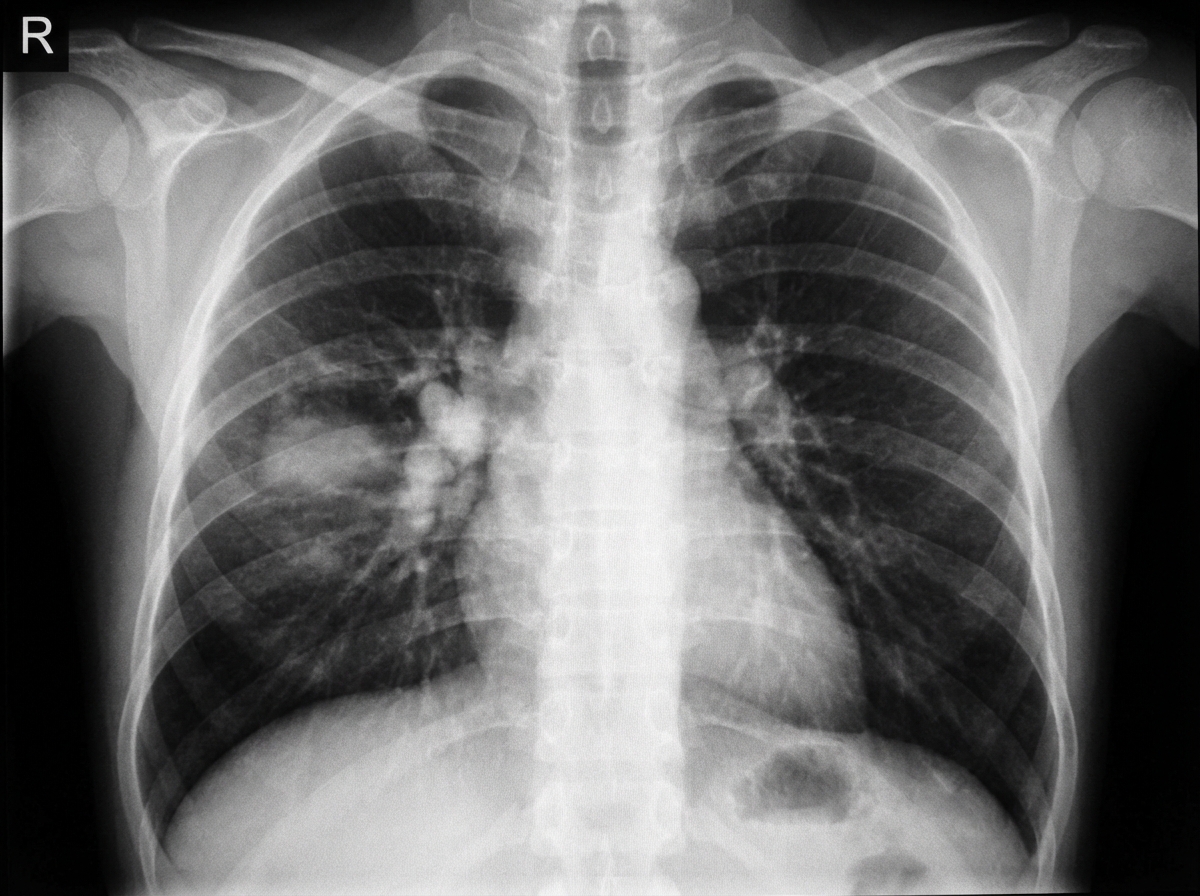
Which of the following statements regarding Chickenpox are correct?
Which of the following is the least common complication of measles?
Which of the following is false regarding measles?
What is true regarding Lymphocytic interstitial pneumonitis (LIP)?
A 5-year-old child has had eight episodes of acute otitis media in 6 months and has difficulty resolving the effusions between infections. What is the most effective management strategy?
A two-year-old unimmunized child presents with fever for 5 days and a rash behind the ear that appeared the day before presentation. The child also has a running nose and congested eyes. What is the most probable diagnosis?
A 4-month-old infant presents with cough and a respiratory rate greater than 60/min, without retractions. What is the appropriate management according to the Integrated Management of Childhood Illness (IMNCI) protocol?
Which of the following findings is LEAST suggestive of poliovirus infection?
Pneumonia is a known complication of which of the following diseases?
Which of the following statements is FALSE about diphtheria?
Explanation: **Explanation:** Chickenpox (Varicella) is caused by the **Varicella-Zoster Virus (VZV)**. While usually a self-limiting disease in healthy children, it can lead to serious complications in adults and immunocompromised individuals. **1. Why Option B is Correct:** **Varicella Pneumonitis** is the most serious complication of chickenpox in adults. It typically develops 1–6 days after the rash appears. While rare in children, it occurs in up to 20% of infected adults (especially pregnant women and smokers), manifesting as cough, dyspnea, and diffuse nodular infiltrates on chest X-ray. **2. Why Other Options are Incorrect:** * **Option A:** If a mother develops chickenpox in **late pregnancy** (specifically 5 days before to 2 days after delivery), the newborn is at risk of **Neonatal Varicella**, which is life-threatening due to a lack of maternal antibodies. However, infection in *early* pregnancy leads to Congenital Varicella Syndrome. * **Option C:** Congenital Varicella Syndrome is actually **rare** (occurring in <2% of infants born to mothers infected between 8–20 weeks gestation). It is characterized by cicatricial skin scars, limb hypoplasia, and microcephaly. * **Option D:** The rash of chickenpox is **centripetal** in distribution. It appears first on the trunk (where it is most dense) and then spreads to the face and extremities. This is a classic differentiator from Smallpox, which is centrifugal (more on limbs). **High-Yield Clinical Pearls for NEET-PG:** * **Rash Morphology:** "Dewdrop on a rose petal" appearance (vesicles on an erythematous base). * **Pleomorphism:** All stages of the rash (papules, vesicles, crusts) are seen simultaneously in the same area. * **Infectivity:** From 1–2 days before the rash appears until all lesions have crusted over. * **Treatment of choice:** Oral Acyclovir (if started within 24 hours of rash) for high-risk patients; IV Acyclovir for complications like pneumonitis or encephalitis.
Explanation: **Explanation:** The correct answer is **D. Subacute sclerosing panencephalitis (SSPE)**. Measles is associated with several complications, ranging from very common to extremely rare. The distinction between these options lies in their **frequency vs. severity**. 1. **Why SSPE is the correct answer:** SSPE is a progressive, fatal neurodegenerative disease caused by a persistent infection with a mutant measles virus. While devastating, it is the **least common** complication, occurring in approximately **1 in 10,000 to 1 in 100,000** cases. It typically manifests 7–10 years after the initial measles infection. 2. **Why other options are incorrect:** * **Diarrhea (Option A):** This is the **most common** complication of measles overall (occurring in ~8% of cases), particularly in malnourished children. * **Otitis Media (Option C):** This is the most common **bacterial** complication of measles. * **Pneumonia (Option B):** This is the most common cause of **measles-related death** in children. It can be caused by the virus itself (Hecht’s giant cell pneumonia) or secondary bacterial infections. **NEET-PG High-Yield Pearls:** * **Most common complication:** Diarrhea. * **Most common cause of death:** Pneumonia. * **Most common CNS complication:** Post-measles encephalitis (1 in 1,000). * **Vitamin A:** Supplementation reduces mortality and the severity of complications (given as two doses 24 hours apart). * **SSPE Diagnosis:** Look for high titers of anti-measles antibodies in the CSF and characteristic **periodic complexes** on EEG.
Explanation: **Explanation:** The correct answer is **D. Nikolsky’s sign**. **Nikolsky’s sign** is a clinical finding where the top layers of the skin slip away from the lower layers when rubbed, indicating a loss of intercellular adhesion (acantholysis). This sign is characteristic of **Pemphigus vulgaris** and **Staphylococcal Scalded Skin Syndrome (SSSS)**. It is **not** a feature of measles, which is a viral exanthematous illness that does not involve bullae or skin sloughing. **Analysis of other options:** * **A. Koplik’s spots:** These are the pathognomonic sign of measles. They are small, bluish-white grains of sand on an erythematous base, typically found on the buccal mucosa opposite the lower second molars during the prodromal phase. * **B. Maculopapular skin rash:** This is the hallmark of the eruptive phase. The rash typically begins behind the ears at the hairline, spreads cranio-caudally (downward), and disappears in the same order, often leaving behind brownish discoloration or fine desquamation. * **C. Fever and malaise:** These are common prodromal symptoms. Measles is characterized by high-grade fever and the "3 Cs": Cough, Coryza, and Conjunctivitis. **High-Yield Clinical Pearls for NEET-PG:** * **Infectivity:** Most infectious during the prodromal period (4 days before to 4 days after the appearance of the rash). * **Vitamin A:** Supplementation is recommended for all children with measles to reduce the risk of complications like blindness and severe pneumonia. * **Subacute Sclerosing Panencephalitis (SSPE):** A rare, delayed, and fatal neurological complication occurring years after the initial infection. * **Modified Measles:** Occurs in partially immune individuals; the incubation period is longer, and symptoms are milder.
Explanation: **Lymphocytic Interstitial Pneumonitis (LIP)** is a benign lymphoproliferative disorder characterized by the infiltration of the pulmonary interstitium and alveoli by lymphocytes and plasma cells. In the pediatric population, it is a hallmark clinical indicator of **HIV/AIDS** (WHO Clinical Stage 3). ### Why Option D is Correct: LIP is a systemic lymphoproliferative process, not just a localized lung disease. It is frequently associated with **generalized lymphadenopathy, hepatosplenomegaly, and parotid gland swelling**. These findings reflect the widespread lymphoid hyperplasia occurring in response to chronic HIV infection or Epstein-Barr Virus (EBV). ### Analysis of Incorrect Options: * **Option A:** While LIP is seen in HIV, it is **not the most common** pulmonary complication. *Pneumocystis jirovecii* pneumonia (PCP) is more common in infants, whereas LIP typically presents in older children (usually >2 years) with vertically acquired HIV. * **Option B:** LIP is **not an infection**; it is a lymphoproliferative response. While its pathogenesis is linked to HIV and EBV, it is not caused by a protozoan. (PCP is caused by a fungus, formerly classified as a protozoan). * **Option C:** The classic X-ray finding for LIP is a **reticulonodular pattern** (ground-glass opacities) with "miliary-like" mottling. A "butterfly" or "bat-wing" perihilar distribution is characteristic of **Pulmonary Edema** or **PCP**. ### NEET-PG High-Yield Pearls: * **Clinical Triad:** HIV-positive child + Progressive dyspnea + Digital clubbing + Salivary gland enlargement = Think **LIP**. * **Diagnosis:** Definitive diagnosis requires lung biopsy, but clinically diagnosed via X-ray (persistent reticulonodular shadows >2 months) unresponsive to antibiotics. * **Management:** Asymptomatic cases are monitored; symptomatic cases (hypoxia) are treated with **Corticosteroids** and ART. * **Prognostic Note:** Children with LIP generally have a **better prognosis** and slower HIV progression compared to those with PCP.
Explanation: **Explanation:** The core issue in this clinical scenario is **Recurrent Acute Otitis Media (RAOM)** with persistent **Otitis Media with Effusion (OME)**. The frequency of infections (8 episodes in 6 months) and the failure to resolve effusions suggest a chronic underlying mechanical or infectious focus. **Why Adenoidectomy is the Correct Answer:** The adenoids play a dual role in the pathogenesis of recurrent ear infections. First, **adenoid hypertrophy** can mechanically obstruct the Eustachian tube orifice, leading to negative middle ear pressure and effusion. Second, and more importantly, the adenoids act as a **bacterial reservoir (biofilm)** for otopathogens like *S. pneumoniae* and *H. influenzae*. Removing the adenoids eliminates this source of infection and improves Eustachian tube function, making it the most effective long-term management strategy for refractory cases. **Analysis of Incorrect Options:** * **Option A:** Treating each infection reactively fails to address the anatomical/pathological predisposition, leading to further recurrence and potential hearing loss. * **Option B:** While ventilating tubes (myringotomy) help drain fluid and equalize pressure, they do not address the source of infection (the adenoids). In children over 4 years with recurrent issues, adenoidectomy is often preferred or combined with tubes. * **Option C:** Prophylactic antibiotics are no longer recommended as a primary strategy due to the high risk of antibiotic resistance and limited long-term efficacy compared to surgical intervention. **Clinical Pearls for NEET-PG:** * **Definition of RAOM:** $\ge$ 3 episodes in 6 months or $\ge$ 4 episodes in 12 months. * **Indications for Adenoidectomy:** Recurrent OM (especially if >4 years old), chronic sinusitis, and obstructive sleep apnea (OSA). * **Most common organism in AOM:** *Streptococcus pneumoniae*. * **First-line Antibiotic:** High-dose Amoxicillin.
Explanation: **Explanation:** The clinical presentation is classic for **Measles (Rubeola)**. The diagnosis is based on the following high-yield features: 1. **Prodromal Phase:** Fever, rhinorrhea (running nose), and conjunctivitis (congested eyes) are the hallmark "3 Cs" (Cough, Coryza, Conjunctivitis). 2. **Rash Progression:** The rash in measles typically appears on the 4th or 5th day of fever. It is a maculopapular rash that characteristically starts **behind the ears** (at the hairline) and spreads cephalocaudally (downward) to the face, trunk, and extremities. 3. **Immunization Status:** Being "unimmunized" is a significant risk factor, as the first dose of the MR/MMR vaccine is typically given at 9 months. **Why other options are incorrect:** * **Rubella (German Measles):** While the rash also spreads downward, the prodrome is much milder (low-grade fever), and the most characteristic finding is **post-auricular/suboccipital lymphadenopathy**, not severe coryza. * **Mumps:** This primarily presents with painful swelling of the **parotid glands**, not a maculopapular rash. * **Chickenpox (Varicella):** The rash is **pleomorphic** (vesicles, pustules, and scabs present simultaneously) and typically starts on the trunk ("centripetal" distribution), appearing in crops. **NEET-PG High-Yield Pearls:** * **Koplik Spots:** Pathognomonic for measles; seen on the buccal mucosa opposite the lower 2nd molar *before* the rash appears. * **Vitamin A:** Supplementation is mandatory in all children with measles to prevent complications like blindness and pneumonia. * **Infectivity:** Most infectious during the prodromal stage (4 days before to 4 days after the appearance of the rash). * **Subacute Sclerosing Panencephalitis (SSPE):** A rare, delayed neurological complication occurring years after the initial infection.
Explanation: ### Explanation This question tests the application of the **IMNCI (Integrated Management of Neonatal and Childhood Illness)** classification for acute respiratory infections. **1. Why Option B is Correct:** According to IMNCI guidelines, a child aged 2 months to 5 years is classified based on clinical signs: * **Pneumonia:** Defined by **Fast Breathing** (RR ≥ 50 in 2–12 months; RR ≥ 40 in 1–5 years) without chest indrawing or danger signs. * In this case, the 4-month-old has a RR of 60/min (Fast Breathing) but **no retractions** (chest indrawing). Therefore, the classification is **Pneumonia**. * **Management:** Treatment involves **oral antibiotics** (Amoxicillin is the first choice) for 5 days, soothing the throat, advising the mother on danger signs, and a follow-up in 2 days. **2. Why Other Options are Incorrect:** * **Option A & D:** These represent the management for **Severe Pneumonia or Very Severe Disease**. This classification requires the presence of **chest indrawing** or **General Danger Signs** (inability to drink/breastfeed, lethargy, convulsions, or persistent vomiting). Since these are absent, parenteral antibiotics and urgent referral are not indicated. * **Option C:** This is the management for **"No Pneumonia" (Cough or Cold)**, where the RR is normal for age. Since this infant has fast breathing, simple home care without antibiotics would be inadequate. **3. Clinical Pearls for NEET-PG:** * **Fast Breathing Cut-offs:** * < 2 months: ≥ 60/min (Classified as "Severe Disease") * 2–12 months: ≥ 50/min * 12 months–5 years: ≥ 40/min * **Note:** In IMNCI, if a child aged **under 2 months** has a RR ≥ 60, it is automatically classified as **Severe Disease**, requiring IM antibiotics and urgent referral. * **First-line antibiotic:** Oral Amoxicillin (40 mg/kg/dose twice daily) is now preferred over Cotrimoxazole in many updated protocols for community-acquired pneumonia.
Explanation: **Explanation:** The correct answer is **C**. Poliovirus typically presents with **ascending** or random asymmetric paralysis, and most importantly, it involves the destruction of anterior horn cells, leading to **loss of deep tendon reflexes (DTRs)**. Sensation remains intact. A "descending" paralysis with preserved reflexes is more characteristic of conditions like Botulism or certain early-stage neuropathies, not Polio. **Analysis of Options:** * **Option A:** Describes **Abortive Poliomyelitis** (Minor Illness). This occurs in about 4–8% of cases, presenting as a non-specific viral syndrome (fever, malaise) that resolves completely within 48–72 hours. * **Option B:** Describes the classic **Biphasic Pattern** (Dromedary hump). The "minor illness" is followed by an asymptomatic period, then the "major illness" (aseptic meningitis and paralytic polio) begins. Paralysis is characteristically **asymmetric, flaccid, and proximal.** * **Option C (Correct):** Polio causes **Lower Motor Neuron (LMN)** lesions; therefore, reflexes must be absent or diminished. The paralysis is typically ascending or focal, not classically descending. * **Option D:** In Polio, the virus is rarely isolated from the **CSF** (less than 10% of cases), even when meningeal signs are prominent. Diagnosis is usually confirmed via stool samples or throat swabs. **NEET-PG High-Yield Pearls:** * **Site of Pathology:** Anterior horn cells of the spinal cord and motor nuclei of the brainstem. * **Most common presentation:** Asymptomatic infection (>90%). * **CSF Findings:** Pleocytosis (initially neutrophils, then lymphocytes) and slightly elevated protein; glucose is normal. * **Post-Polio Syndrome:** Occurs 30–40 years after the initial attack due to the failure of remaining motor neurons.
Explanation: **Explanation:** **Pneumonia** is the most common cause of death associated with **Measles (Rubeola)** in children. The measles virus causes significant immunosuppression and disrupts the respiratory epithelium, predisposing the patient to both primary viral pneumonia (Hecht’s giant cell pneumonia) and secondary bacterial pneumonia (commonly caused by *S. pneumoniae*, *H. influenzae*, or *S. aureus*). **Analysis of Options:** * **A. Measles (Correct):** Pneumonia accounts for nearly 60% of measles-related deaths. It can manifest as an interstitial pneumonitis caused by the virus itself or as a secondary bacterial infection following the prodromal phase. * **B. Chickenpox:** While Varicella pneumonia can occur, it is primarily a complication seen in **adults** or immunocompromised individuals, rather than a hallmark complication in the pediatric population compared to measles. * **C. Infectious Mononucleosis:** Caused by EBV, this typically presents with the triad of fever, pharyngitis, and lymphadenopathy. While upper airway obstruction due to tonsillar hypertrophy is a risk, pneumonia is an extremely rare complication. * **D. Mastoiditis:** This is a complication of Acute Otitis Media (AOM), not a primary disease that leads to pneumonia. **Clinical Pearls for NEET-PG:** * **Hecht’s Giant Cell Pneumonia:** A rare, fatal form of measles pneumonia seen in immunocompromised patients, characterized by Warthin-Finkeldey giant cells. * **Vitamin A:** Supplementation is mandatory in measles management as it reduces the severity of complications, including pneumonia and blindness. * **Most Common Complication of Measles:** Otitis Media. * **Most Common Cause of Death in Measles:** Pneumonia (overall) and Encephalitis (in specific age groups).
Explanation: **Explanation:** **Diphtheria** is an acute infectious disease caused by *Corynebacterium diphtheriae*. Understanding the management of its various forms is crucial for NEET-PG. **Why Option C is the Correct (False) Statement:** Antidiphtheria Serum (ADS) is indicated for respiratory diphtheria to neutralize circulating toxins. However, **ADS is generally not recommended for cutaneous diphtheria.** Cutaneous lesions are usually caused by non-toxigenic strains or produce minimal systemic toxin absorption; therefore, treatment focuses on local wound care and systemic antibiotics (Erythromycin or Penicillin) to eradicate the organism and prevent transmission. The high doses mentioned (20,000–100,000 units) are reserved for severe pharyngeal or laryngeal cases. **Analysis of Other Options:** * **Option A:** The **fauces (tonsillopharyngeal region)** is indeed the most common site for the characteristic greyish-white, leathery pseudomembrane. * **Option B:** Diphtheria is primarily a **toxaemia**. The bacteria remain localized at the site of infection (e.g., throat), but they release a potent exotoxin that enters the bloodstream and causes systemic damage to distant organs. * **Option D:** **Myocarditis** is the most common and serious complication, occurring in about 10–25% of patients, typically during the second week of illness. **High-Yield Clinical Pearls for NEET-PG:** * **Schick Test:** Used to determine immune status (susceptibility) to diphtheria. * **Culture Media:** Loeffler’s serum slope (rapid growth) and Potassium Tellurite agar (black colonies). * **Morphology:** Gram-positive bacilli with "Chinese letter" or cuneiform appearance (due to volutin/metachromatic granules). * **Neurological Complication:** Palatal palsy is the most common early neurological sign.
Vaccine-Preventable Diseases
Practice Questions
Immunization Schedule
Practice Questions
Common Childhood Infections
Practice Questions
Pediatric HIV
Practice Questions
Congenital Infections
Practice Questions
Fever in Infants and Children
Practice Questions
Meningitis and Encephalitis
Practice Questions
Respiratory Tract Infections
Practice Questions
Gastrointestinal Infections
Practice Questions
Parasitic Infections
Practice Questions
Tuberculosis in Children
Practice Questions
Opportunistic Infections
Practice Questions
Get full access to all questions, explanations, and performance tracking.
Start For Free