Which of the following are the features of Rubella? 1. Rashes appear within 24 hours of onset of symptoms 2. Incubation period is 2 – 3 weeks 3. False membrane is formed in throat 4. Post auricular lymph nodes enlarge Select the correct answer using the code given below:
With reference to mumps, consider the following statements: 1. The average age of incidence of mumps is higher than that of measles and chicken pox. 2. The mumps disease tends to be more severe in adults than in children. Which of the statements given above is/are correct?
Which of the following is a contraindication for BCG vaccination in a newborn?
Which one of the following is the recommended site for immunization with hepatitis B vaccine in young children for ensuring reliable absorption?
Which statement about congenital syphilis is FALSE?
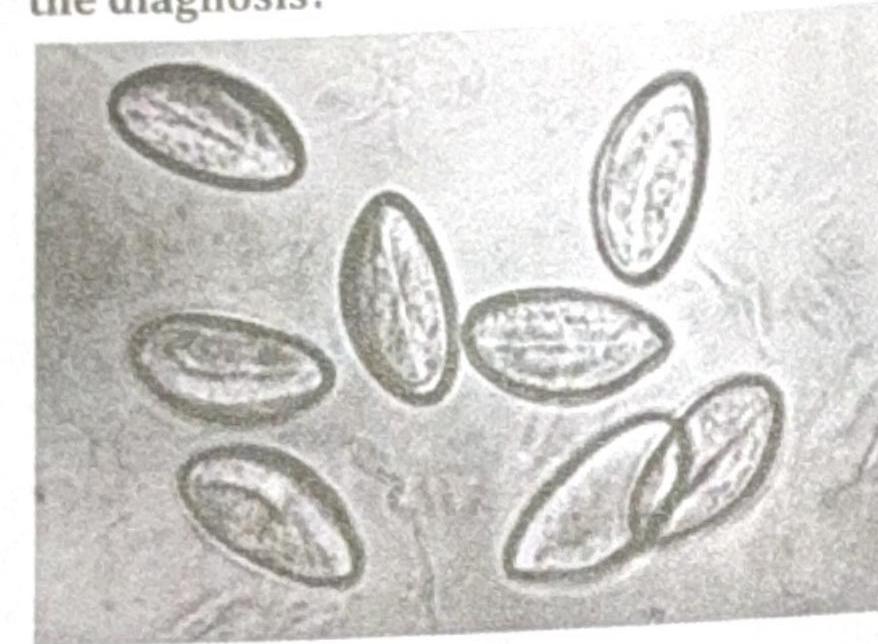
A child presented with perianal itching. The swab specimen is shown in the image. What is the diagnosis?
A 10 week old child comes for vaccination, with previous history of inconsolable cry & fever after getting vaccinated at 6 weeks. What should be done next?
A 10-week-old baby came for vaccination. The baby had a previous history of inconsolable crying and fever (40°C) after vaccination at 6 weeks. What should be given now?
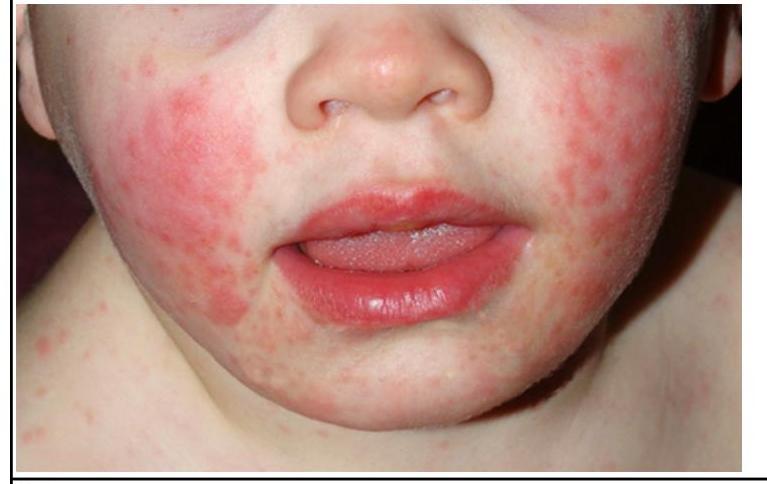
A child presenting with the following appearance is at risk of developing?
A child presents with fever and vesicular lesions on the upper limb and the lower limb. Neck stiffness was present. Similar lesions were present on the palms, soles, and oral cavity. CSF analysis revealed normal glucose levels and elevated lymphocytes and protein. What is the most likely diagnosis?
Explanation: ***Correct: 2 and 4 only*** - **Incubation period of 2-3 weeks** is accurate for rubella (14-21 days) - **Postauricular lymphadenopathy** along with suboccipital and posterior cervical lymph node enlargement are **classic hallmark features** of rubella, often appearing before the rash - These two features correctly identify rubella infection *Incorrect: 1, 2 and 4* - While statements 2 and 4 are correct, **statement 1 is medically inaccurate** - The rubella rash does NOT appear within 24 hours of symptom onset - Rubella typically has a **prodromal period of 1-5 days** with low-grade fever and malaise before the rash appears - The rash spreads from face to trunk within 24 hours, but this is different from appearing within 24 hours of initial symptoms *Incorrect: 2 and 3 only* - While the incubation period (statement 2) is correct, **false membrane formation in the throat** is characteristic of **diphtheria**, not rubella - Rubella does not cause pseudomembranous pharyngitis - This option also omits the classic postauricular lymphadenopathy *Incorrect: 1, 2 and 3* - Statement 1 is inaccurate regarding rash timing - Statement 3 describes diphtheria, not rubella - Only statement 2 (incubation period) is correct in this combination
Explanation: ***Both 1 and 2*** - The **average age of incidence** for **mumps** is typically higher than that of **measles** and **chickenpox** in developed countries, largely due to successful vaccination programs altering transmission patterns. - While mumps is often benign in children, it tends to be **more severe in adults**, with a higher risk of complications such as **orchitis**, **meningitis**, and **pancreatitis**. *2 only* - This option correctly identifies that mumps is generally **more severe in adults**; however, it fails to acknowledge the shift in the average age of incidence. - The statement that the **average age of incidence of mumps is higher** than that of measles and chickenpox is also correct. *Neither 1 nor 2* - This option is incorrect because both statements accurately reflect facts about mumps. - Statement 1 is true as mumps epidemiology has changed over time with vaccination, and Statement 2 is true regarding the increased severity in adults. *1 only* - This option correctly states that the **average age of incidence of mumps is higher** than that of measles and chickenpox but omits the fact that the disease is also **more severe in adults**. - The severity of mumps in adults is a well-documented clinical observation.
Explanation: ***HIV infection-symptomatic*** - **Symptomatic HIV infection** in a newborn is a contraindication for BCG vaccination due to the risk of disseminated BCG disease in immunocompromised individuals. - Live attenuated vaccines like BCG can cause severe, life-threatening infections in individuals with compromised cellular immunity. *Prematurity* - **Prematurity** is generally not an absolute contraindication for BCG vaccination, although vaccination may be deferred until the infant is stable or reaches a certain weight. - The decision to vaccinate a premature infant often depends on the local epidemiology of tuberculosis and the infant's overall health status. *History of Tuberculosis in mother* - A maternal history of tuberculosis is **not a contraindication** for BCG vaccination in a newborn, especially if the newborn has been evaluated and is not actively infected. - Vaccinating infants in contact with TB cases can be an important part of preventing active disease. *Low birth weight* - **Low birth weight** is generally not an absolute contraindication for BCG vaccination, although it might lead to a delayed vaccination schedule. - The vaccine can be safely administered to healthy low birth weight infants, with careful consideration of their overall health.
Explanation: ***Anterolateral aspect of thigh*** - The **anterolateral aspect of the thigh** is the recommended site for intramuscular injections in infants and young children due to the sufficient muscle mass and lower risk of damaging nerves or blood vessels. - This site ensures reliable absorption of the vaccine due to its **large quadriceps femoris muscle**. *Gluteal region* - The **gluteal region** is generally avoided for intramuscular injections in young children due to the risk of injury to the **sciatic nerve**. - While it has significant muscle mass, the proximity of major nerves makes it less safe for routine vaccinations in this age group. *Anterior aspect of thigh* - The **anterior aspect of the thigh** is not specifically recommended; rather, the **anterolateral aspect** is preferred for its greater muscle mass and safety. - While muscles are present, using the exact anterior aspect might be less reliable for consistent absorption compared to the designated anterolateral site. *Deltoid region* - The **deltoid muscle** is generally too small and underdeveloped in young children and infants to safely administer intramuscular injections. - Using the deltoid in this age group increases the risk of injecting into subcutaneous tissue or hitting underlying nerves/blood vessels, leading to poorer absorption and potential injury.
Explanation: ***Long bone radiographs are unnecessary in asymptomatic infants born to adequately treated mothers*** - This statement is **FALSE**. According to standard evaluation protocols for congenital syphilis, **long bone radiographs** are recommended as part of the comprehensive workup even in asymptomatic infants, as they can detect subtle bone abnormalities (metaphyseal lucencies, periostitis) that may not be clinically apparent at birth. - While maternal treatment reduces risk significantly, complete evaluation including skeletal survey helps ensure no subclinical disease is missed and guides appropriate management decisions. - Current guidelines recommend radiographic evaluation in infants requiring evaluation for congenital syphilis to rule out bone involvement. *Hutchinson's triad includes interstitial keratitis, Hutchinson's teeth, and eighth nerve deafness* - This statement is **TRUE**. **Hutchinson's triad** is a classic constellation of late congenital syphilis manifestations comprising **interstitial keratitis** (corneal inflammation), **Hutchinson's teeth** (notched, peg-shaped incisors), and **eighth nerve deafness** (sensorineural hearing loss). - These stigmata typically develop in childhood or adolescence in untreated or inadequately treated cases. *Most infants are asymptomatic at birth* - This statement is **TRUE**. Approximately 60-90% of infants with congenital syphilis are **asymptomatic at birth**, particularly in early congenital syphilis. - Clinical manifestations may develop weeks to months later, making early detection dependent on maternal screening, serologic testing, and comprehensive evaluation. *Treatment of maternal syphilis before 32 weeks gestation prevents most cases* - This statement is **TRUE**. Maternal treatment with appropriate penicillin therapy initiated **before 32 weeks gestation** (or at least 30 days before delivery) is highly effective in preventing congenital syphilis. - Early adequate treatment prevents transplacental transmission and fetal infection, with success rates exceeding 98% when treatment is timely and appropriate.
Explanation: ***Enterobius*** - The image shows **D-shaped** (plano-convex) and **transparent eggs**, which are characteristic of *Enterobius vermicularis* (**pinworm** or **threadworm**). - **Perianal itching**, especially at night, is the hallmark symptom due to the female worm migrating to the perianal region to lay eggs. *Ascaris* - *Ascaris lumbricoides* eggs are typically **round to oval**, with a thick, mamillated (bumpy) outer shell, or smooth in the case of decorticated eggs, which is different from the eggs pictured. - Infection with *Ascaris* can cause pulmonary symptoms (Loeffler's syndrome) and intestinal obstruction, but not typically perianal itching. *Trichiura* - *Trichuris trichiura* (**whipworm**) eggs are distinctly **barrel-shaped** with prominent **polar plugs** at each end, which is not seen in the image. - Whipworm infection is often associated with bloody diarrhea, rectal prolapse, and growth retardation, not primarily perianal itching. *Ancylostoma* - *Ancylostoma duodenale* and *Necator americanus* (hookworms) eggs are typically **oval** with a **thin shell** and segmented embryo (morula stage) within, which lacks the distinct D-shape and transparency of the pictured eggs. - Hookworm infection primarily causes iron-deficiency anemia and can lead to cutaneous larva migrans, not perianal itching as a primary symptom.
Explanation: ***Correct Option: Give DT*** - **Inconsolable crying** (typically defined as crying ≥3 hours) following pertussis-containing vaccine is classified as a **precaution** for subsequent doses per IAP, CDC, and WHO guidelines - When a **precaution** exists, the pertussis component should be **withheld** from future doses - **DT vaccine** (diphtheria-tetanus without pertussis) ensures continued protection against diphtheria and tetanus while avoiding repeat exposure to the pertussis antigen that likely caused the reaction - This represents appropriate **risk-benefit assessment** in immunization practice *Incorrect: Give DPT vaccination* - Continuing DPT after inconsolable crying ignores established AEFI (Adverse Events Following Immunization) guidelines - While fever alone is not a contraindication, **inconsolable crying is a recognized precaution** that warrants modification of the vaccination schedule - Repeating the same vaccine risks recurrence of the adverse event *Incorrect: Defer for 1 month* - Simply deferring without changing the vaccine type doesn't address the underlying issue - The child would still receive the pertussis component later, risking another adverse reaction - Unnecessary delay in protection against diphtheria and tetanus when DT is available *Incorrect: Administer antibiotics* - **Post-vaccination fever and crying** are inflammatory responses to vaccine antigens, not bacterial infections - Antibiotics have no role in managing vaccine-related reactions - This approach doesn't address the need for continued immunization protection
Explanation: ***Give DT only*** - The previous severe adverse reaction (**inconsolable crying** and **fever of 40°C**) is a specific contraindication to the **pertussis component** of the DPT vaccine. - According to **pediatric vaccination guidelines**, severe reactions (fever ≥40°C, inconsolable crying >3 hours) are absolute contraindications to further pertussis-containing vaccines. - The **diphtheria and tetanus toxoids** were not associated with the adverse reaction and should be safely continued. - **DT vaccine (without pertussis)** provides essential protection against diphtheria and tetanus while avoiding the problematic pertussis component. *Don't give DPT* - This option is imprecise because it doesn't specify what should be given instead. - While it correctly identifies that full DPT should be avoided, it fails to address the need for continued protection against diphtheria and tetanus. - The medically appropriate approach is to give **DT vaccine**, not to simply withhold vaccination. *Defer for 1 month* - Deferring vaccination does not address the core issue that the **pertussis component specifically** caused the severe reaction. - This approach would unnecessarily **delay protection** against diphtheria and tetanus, which the baby can safely receive immediately as DT vaccine. - The problem is not timing but the vaccine component itself. *Give DPT* - Administration of the full DPT vaccine is **absolutely contraindicated** given the history of severe adverse reactions (fever ≥40°C and inconsolable crying). - Repeating DPT risks another severe reaction and potential permanent neurological complications. - This would be a dangerous and inappropriate management decision.
Explanation: ***Pure red cell aplasia*** - The image shows a "slapped cheek" rash, which is characteristic of **erythema infectiosum** (fifth disease) caused by **Parvovirus B19**. - Parvovirus B19 has a tropism for **erythroid progenitor cells** in the bone marrow, leading to a temporary cessation of red blood cell production, especially critical in individuals with underlying hemolytic anemias. *Immunodeficiency* - While viral infections can be more severe in immunodeficient individuals, the presented rash is specifically characteristic of **Parvovirus B19 infection**, not a general sign of immunodeficiency. - Immunodeficiency would typically involve recurrent, severe, or unusual infections, which are not directly indicated by the rash alone. *Lymphoproliferative disorder* - Lymphoproliferative disorders involve abnormal proliferation of lymphocytes and typically do not present with a "slapped cheek" rash. - Clinical signs would more likely include **lymphadenopathy**, hepatosplenomegaly, and cytopenias, not the classic facial rash seen here. *Gingivostomatitis* - **Gingivostomatitis** is an inflammation of the gums and oral mucosa, often caused by herpes simplex virus, presenting with **sores and ulcers in the mouth**. - The rash seen in the image is on the **cheeks and body**, not primarily oral, and is a classic presentation of erythema infectiosum.
Explanation: Coxsackie viral meningitis and Hand Foot Mouth disease - The presence of **vesicular lesions** on the palms, soles, and oral cavity, along with fever, is highly characteristic of **Hand Foot Mouth Disease (HFMD)** caused by Coxsackievirus. - The CSF findings of **normal glucose**, **elevated lymphocytes** (pleocytosis), and **elevated protein** are typical for **aseptic meningitis**, which is often caused by enteroviruses like Coxsackievirus [2]. *Bacterial meningitis with sepsis* - **Bacterial meningitis** would typically present with **low CSF glucose**, **high protein**, and a predominance of **neutrophils**, not lymphocytes [2]. - The characteristic vesicular rash of HFMD is not seen in bacterial meningitis. *Tuberculous meningitis* - **Tuberculous meningitis** typically has **very low CSF glucose**, **markedly elevated protein**, and a pleocytosis with a high percentage of lymphocytes. - The vesicular lesions on the palms, soles, and oral cavity are not a feature of tuberculous meningitis. *Herpes simplex gingivostomatitis and meningoencephalitis* - While **Herpes simplex** can cause **vesicular lesions** (gingivostomatitis) and **meningoencephalitis** with similar CSF findings (lymphocytic pleocytosis, elevated protein), the widespread nature of the lesions on the palms and soles is **not characteristic of HSV** [1]. - HSV lesions are typically clustered and localized to specific dermatomes or mucosal surfaces.
Vaccine-Preventable Diseases
Practice Questions
Immunization Schedule
Practice Questions
Common Childhood Infections
Practice Questions
Pediatric HIV
Practice Questions
Congenital Infections
Practice Questions
Fever in Infants and Children
Practice Questions
Meningitis and Encephalitis
Practice Questions
Respiratory Tract Infections
Practice Questions
Gastrointestinal Infections
Practice Questions
Parasitic Infections
Practice Questions
Tuberculosis in Children
Practice Questions
Opportunistic Infections
Practice Questions
Get full access to all questions, explanations, and performance tracking.
Start For Free