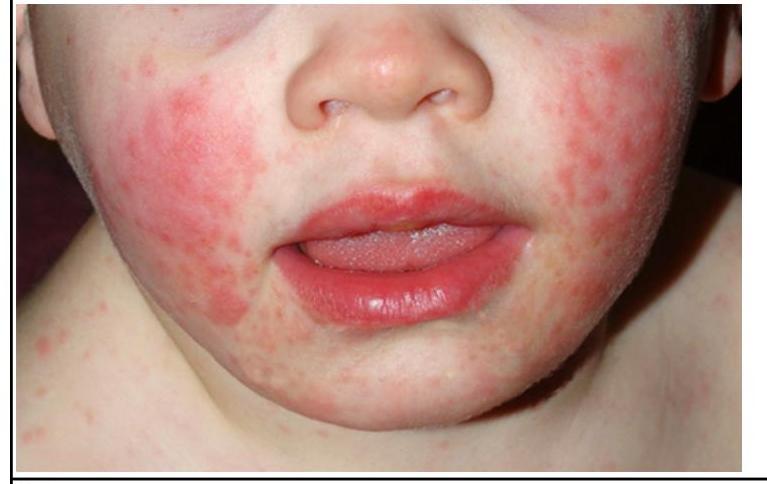
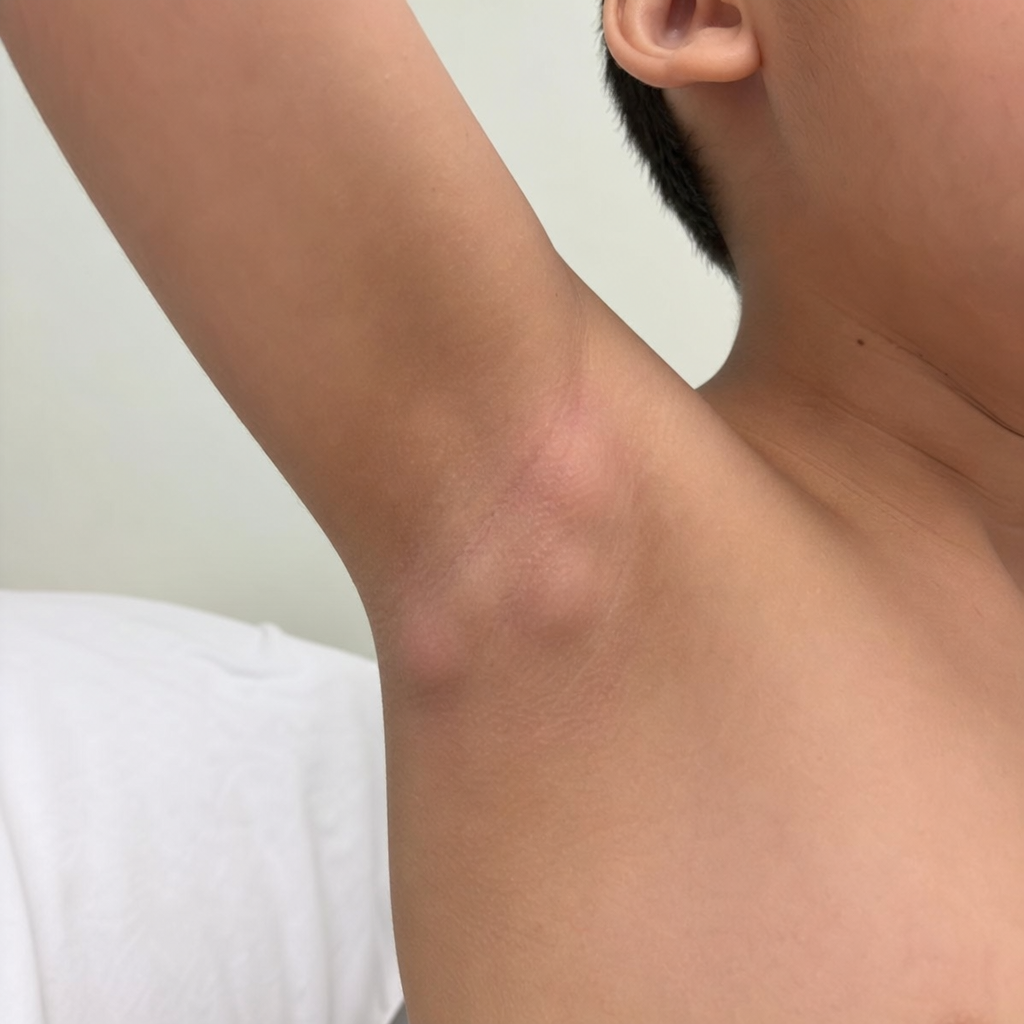
Koplik spots are seen in:
What is the approximate percentage of HIV transmission from an infected mother to her child?
A child with repeated skin infections presents with a liver abscess. What is the most likely causative organism?
What is the term for the characteristic teeth abnormality seen in congenital syphilis?
Which of the following is true regarding ataxia telangiectasia?
A newborn is taken into the ICU following tetanic contractions. All of the following are TRUE about tetanus, EXCEPT:
Congenital rubella causes all EXCEPT:
What is the most common cause of pneumatocele?
Which of the following is NOT a complication of mumps?
A 10-year-old child presents with a 10-day history of continuous fever, accompanied by a soft, enlarged spleen. What is the most likely diagnosis?
Explanation: **Explanation:** **Measles (Rubeola)** is the correct answer. **Koplik spots** are the pathognomonic clinical sign of Measles. They are small, irregular, bluish-white spots on an erythematous base (often described as "grains of salt on a red background") appearing on the buccal mucosa, typically opposite the lower second molars. They appear during the **prodromal stage**, approximately 48 hours before the characteristic maculopapular rash, and disappear as the rash spreads. **Why other options are incorrect:** * **Diphtheria:** Characterized by a thick, gray, adherent **pseudomembrane** on the tonsils or pharynx, which bleeds upon attempt to remove. * **TB (Tuberculosis):** Oral manifestations are rare but may present as chronic, painless ulcers, usually secondary to pulmonary infection. * **Syphilis:** Primary syphilis presents with a painless **chancre**; secondary syphilis may show "mucous patches" (painless, silvery-gray erosions) or "snail-track ulcers." **High-Yield Clinical Pearls for NEET-PG:** * **Pathognomonic sign:** Koplik spots = Measles. * **Sequence:** Fever → 3 C’s (Cough, Coryza, Conjunctivitis) → Koplik spots → Rash (starts behind ears/hairline). * **Vitamin A:** Supplementation is crucial in Measles management to reduce morbidity and mortality (especially ocular complications). * **Complications:** The most common complication is **Otitis Media**; the most common cause of death is **Pneumonia**; the most delayed complication is **SSPE** (Subacute Sclerosing Panencephalitis).
Explanation: **Explanation:** The transmission of HIV from an infected mother to her child is known as **Vertical Transmission** or Mother-to-Child Transmission (MTCT). In the absence of any medical intervention (antiretroviral therapy, elective cesarean section, or avoidance of breastfeeding), the risk of transmission is approximately **20% to 30%**. **Breakdown of Transmission Timing:** * **In-utero (Transplacental):** ~5%–10% * **Intrapartum (During delivery):** ~10%–15% (Most common route) * **Postpartum (Breastfeeding):** ~5%–20% (Cumulative risk) **Analysis of Options:** * **Option A (20% – 30%):** Correct. This represents the standard global average for vertical transmission in non-interventional settings. * **Option B (10% – 20%):** Incorrect. This range is too low for a mother who is breastfeeding without treatment, though it may approximate the risk if breastfeeding is strictly avoided. * **Option C (70% – 80%):** Incorrect. HIV is not transmitted to every fetus; the placental barrier and maternal immune factors provide significant protection. * **Option D (100%):** Incorrect. Transmission is never guaranteed; even without treatment, the majority of infants born to HIV-positive mothers are born HIV-negative. **High-Yield Clinical Pearls for NEET-PG:** 1. **Prevention of Parent-to-Child Transmission (PPTCT):** With effective HAART (Highly Active Antiretroviral Therapy) and a suppressed maternal viral load, the risk can be reduced to **<1%–2%**. 2. **Most Common Route:** The **intrapartum period** (exposure to maternal blood and vaginal secretions) carries the highest risk. 3. **Diagnosis in Infants:** HIV DNA PCR (Nucleic Acid Test) is the gold standard for infants <18 months. Antibody tests (ELISA) are unreliable due to the persistence of maternal IgG antibodies. 4. **Prophylaxis:** In India, the NACP guidelines recommend **Nevirapine** syrup for the infant for at least 6 weeks.
Explanation: **Explanation:** The clinical presentation of a child with **repeated skin infections** followed by a **liver abscess** strongly points toward **Staphylococcus aureus**. **1. Why Staphylococcus aureus is correct:** In the pediatric population, *S. aureus* is the most common cause of liver abscesses, particularly when there is a history of recurrent pyogenic skin infections (like furuncles or impetigo). The organism typically reaches the liver via **hematogenous spread** (bacteremia) from a primary skin focus. This association is also a classic "red flag" for **Chronic Granulomatous Disease (CGD)**, an immunodeficiency where patients are susceptible to catalase-positive organisms like *S. aureus*. **2. Why the other options are incorrect:** * **Streptococcus milleri (Option A):** While part of the *S. anginosus* group known for causing abscesses, these are usually associated with direct extension from intra-abdominal infections (like appendicitis) rather than skin infections. * **Bacteroides fragilis (Option B):** This is an anaerobe typically involved in polymicrobial liver abscesses arising from portal vein drainage (e.g., following bowel perforation or inflammatory bowel disease). * **Streptococcus agalactiae (Option D):** Also known as Group B Streptococcus (GBS), this is a leading cause of neonatal sepsis and meningitis but is not a common cause of liver abscesses in older children with skin infections. **Clinical Pearls for NEET-PG:** * **Most common cause of pyogenic liver abscess (overall):** *E. coli* (adults/portal route); *S. aureus* (children/hematogenous). * **Amoebic Liver Abscess:** Caused by *Entamoeba histolytica*; look for "anchovy sauce" pus and a history of bloody diarrhea. * **CGD Link:** If a child has recurrent *S. aureus* or *Serratia marcescens* abscesses, the screening test of choice is the **Dihydrorhodamine (DHR) 123 assay** or the Nitroblue Tetrazolium (NBT) test.
Explanation: **Explanation:** **Hutchinson's teeth** are a pathognomonic sign of **late congenital syphilis** (appearing after 2 years of age). This abnormality affects the permanent upper central incisors, which appear widely spaced, peg-shaped, and notched at the biting edge. This occurs because *Treponema pallidum* invades the tooth germ during development, leading to hypoplasia of the central enamel lobe. **Analysis of Options:** * **McLeod teeth:** This is a distractor; there is no such recognized dental sign in standard pediatric literature. (Note: McLeod syndrome is a genetic neuroacanthocytosis). * **Koplik spots:** These are small, bluish-white spots on an erythematous base found on the buccal mucosa. They are the pathognomonic prodromal sign of **Measles**, not syphilis. * **Snuffles:** This refers to the persistent, highly infectious mucopurulent or bloody nasal discharge seen in **early congenital syphilis** (appearing before 2 years of age), rather than a dental abnormality. **High-Yield Clinical Pearls for NEET-PG:** * **Hutchinson’s Triad:** A classic triad of late congenital syphilis consisting of: 1. Hutchinson’s teeth 2. Interstitial keratitis (leading to blindness) 3. Sensorineural hearing loss (8th cranial nerve deafness) * **Mulberry Molars:** Another dental sign of congenital syphilis involving the first lower molars, characterized by multiple poorly developed cusps. * **Skeletal Signs:** Look for **Saber shins** (anterior bowing of the tibia) and **Clutton’s joints** (painless knee effusion). * **Treatment:** Penicillin G remains the drug of choice for all stages of syphilis.
Explanation: **Ataxia-Telangiectasia (A-T)** is a complex multisystem neurodegenerative disorder caused by mutations in the **ATM (Ataxia-Telangiectasia Mutated) gene** located on chromosome 11q22.3. ### **Explanation of Options:** * **Correct Answer (B):** A-T is inherited in an **autosomal recessive** pattern. The ATM gene encodes a protein kinase responsible for repairing double-stranded DNA breaks. A deficiency leads to genomic instability, making cells hypersensitive to ionizing radiation. * **Option A (Incorrect):** It is not X-linked. Common X-linked immunodeficiencies include Wiskott-Aldrich Syndrome and Bruton’s Agammaglobulinemia. * **Option C (Incorrect):** A-T is characterized by **humoral and cellular immunodeficiency**. Typically, there are **decreased** levels of IgA, IgE, and IgG subclasses, rather than increased IgM. (Increased IgM is a hallmark of Hyper-IgM Syndrome). ### **High-Yield Clinical Pearls for NEET-PG:** 1. **The Triad:** Progressive cerebellar ataxia (early childhood), oculocutaneous telangiectasia (appearing at 3–6 years), and recurrent sinopulmonary infections. 2. **Diagnostic Marker:** Elevated **Serum Alpha-Fetoprotein (AFP)** levels are found in >95% of patients after age 2 (highly characteristic). 3. **Malignancy Risk:** Patients have a significantly increased risk of developing lymphomas and leukemias due to DNA repair defects. 4. **Radiosensitivity:** Patients are extremely sensitive to X-rays and radiotherapy; these should be avoided to prevent severe tissue damage. 5. **Neuropathology:** Purkinje cell degeneration in the cerebellum is the primary finding.
Explanation: **Explanation:** Tetanus is caused by the neurotoxin produced by *Clostridium tetani*. The correct answer is **Option C** because it is a false statement. In reality, tetanus (especially neonatal tetanus) shows a higher incidence during the **monsoon/rainy season**. This is attributed to increased agricultural activity and the survival of spores in moist, damp soil, which facilitates the contamination of wounds or the umbilical stump. **Analysis of other options:** * **Option A:** *C. tetani* is an obligate anaerobe. Its spores are ubiquitous and found primarily in the **soil** and the **intestinal tracts** of herbivorous animals and humans, making this a true statement. * **Option B:** Infection typically occurs when spores enter the body through **contaminated wounds**, lacerations, or, in neonates, through an unhygienic umbilical cord cut (Neonatal Tetanus). * **Option C (Incorrect/False):** As noted, the peak incidence is during the rainy season, not dry winters. * **Option D:** Tetanus is a non-communicable disease. Since it does not spread from person to person, **herd immunity does not exist** for tetanus. Protection is purely individual, based on active immunization. **Clinical Pearls for NEET-PG:** * **Mechanism:** Tetanospasmin blocks the release of inhibitory neurotransmitters (**GABA and Glycine**) from Renshaw cells in the spinal cord. * **First Sign:** In adults, it is **Trismus** (lockjaw); in neonates, it is the **inability to suck** followed by rigidity and spasms. * **Risus Sardonicus:** Characteristic abnormal sustained spasm of facial muscles. * **Management:** Neutralize toxin with Human Tetanus Immunoglobulin (HTIG) and eradicate bacteria with **Metronidazole** (preferred over Penicillin as Penicillin is a GABA antagonist).
Explanation: **Explanation:** Congenital Rubella Syndrome (CRS) is caused by the transplacental transmission of the Rubella virus, typically during the first trimester. The classic clinical presentation is defined by **Gregg’s Triad**, which includes sensorineural deafness, eye anomalies, and congenital heart disease. **Why Hydrocephalus is the correct answer:** Hydrocephalus is **not** a feature of Congenital Rubella. Instead, the hallmark neurological finding in CRS is **Microcephaly** (small head size due to impaired brain growth). Hydrocephalus is more characteristically associated with **Congenital Toxoplasmosis** (part of the classic triad: hydrocephalus, chorioretinitis, and intracranial calcifications). **Analysis of Incorrect Options:** * **A. Deafness:** Sensorineural hearing loss is the **most common** manifestation of CRS, occurring in about 80% of affected infants. * **B. Cataract:** Ocular defects are common, with "pearlescent" nuclear cataracts and "salt-and-pepper" retinopathy being high-yield findings. * **C. Cardiac defects:** The most characteristic lesion is **Patent Ductus Arteriosus (PDA)**, followed by peripheral pulmonary artery stenosis. **High-Yield Clinical Pearls for NEET-PG:** * **Classic Triad:** Cataract, Deafness, and PDA. * **Skin manifestation:** "Blueberry muffin" rash (due to extramedullary hematopoiesis). * **Radiology:** "Celery stalking" appearance (longitudinal radiolucent striations in the metaphysis of long bones). * **Timing:** Risk is highest (up to 90%) if maternal infection occurs before 11 weeks of gestation. * **Diagnosis:** Detection of Rubella-specific IgM in the newborn or persistence of IgG titers beyond 6–12 months.
Explanation: **Explanation:** **Staphylococcus aureus** is the most common cause of pneumatocele formation. A pneumatocele is a thin-walled, air-filled tension cyst within the lung parenchyma. The underlying mechanism involves the production of **staphylococcal toxins and enzymes** (such as Panton-Valentine Leukocidin) that cause focal necrosis of the bronchial wall. This creates a "check-valve" mechanism where air enters the interstitial space during inspiration but becomes trapped during expiration, leading to the characteristic cystic appearance on a chest X-ray. **Analysis of Incorrect Options:** * **Streptococcus pneumoniae:** While it is the most common cause of community-acquired pneumonia in children, it typically presents with lobar consolidation. It rarely causes cavitation or pneumatoceles. * **Haemophilus influenzae:** This organism usually causes bronchopneumonia or pleural effusions/empyema, but it is not classically associated with the formation of air-filled cysts. * **Serratia marcescens:** This is a gram-negative opportunistic pathogen often seen in Neonatal ICU settings or Chronic Granulomatous Disease (CGD). While it can cause necrotizing pneumonia, it is far less common than *S. aureus*. **High-Yield Clinical Pearls for NEET-PG:** * **Management:** Most pneumatoceles are asymptomatic and **resolve spontaneously** over weeks to months; surgical intervention is rarely required unless they cause tension pneumothorax or become infected. * **Other Causes:** Besides *S. aureus*, pneumatoceles can be seen in *Klebsiella pneumoniae*, *Pneumocystis jirovecii* (especially in HIV patients), and hydrocarbon aspiration. * **Radiology:** They appear as thin-walled, smooth, air-filled cavities that can change in size rapidly.
Explanation: **Explanation:** Mumps is an acute viral illness caused by the **Rubulavirus** (Paramyxoviridae family), primarily characterized by painful swelling of the parotid glands. While the virus is systemic and can affect various glandular and neurological tissues, **Hepatitis (Option D)** is not a recognized or typical complication of mumps. Liver involvement is extremely rare, making it the correct answer for this "except" type question. **Analysis of Complications:** * **Orchitis (Option A):** This is the most common complication in post-pubertal males (occurring in up to 30-40% of cases). It is usually unilateral and can lead to testicular atrophy, though permanent infertility is rare. * **Oophoritis (Option B):** Occurring in about 5-7% of post-pubertal females, it presents with pelvic pain and tenderness but rarely affects fertility. * **Encephalitis (Option C):** Neurological involvement is common. While **aseptic meningitis** is the most frequent neurological complication, true encephalitis (direct brain parenchyma involvement) occurs in about 1 in 1,000 cases and is a significant cause of mumps-related morbidity. **High-Yield Clinical Pearls for NEET-PG:** * **Pancreatitis:** Mumps is a classic viral cause of acute pancreatitis. * **Deafness:** Mumps is a leading cause of **sudden onset sensorineural hearing loss** (usually unilateral) in children. * **Most common complication in children:** Aseptic meningitis. * **Most common complication in post-pubertal males:** Orchitis. * **Incubation Period:** 14–21 days. * **Infectivity:** Patients are most infectious from 2 days before to 5 days after the onset of parotitis.
Explanation: **Explanation:** The clinical presentation of **continuous fever** lasting for more than a week, associated with a **soft, enlarged spleen**, is a classic hallmark of **Enteric Fever** (Typhoid/Paratyphoid). 1. **Why Enteric Fever is correct:** In the first week of Enteric fever, the temperature rises in a "step-ladder" fashion, becoming continuous by the second week. Splenomegaly typically appears at the end of the first week or during the second week. Crucially, the spleen in Enteric fever is **soft and mildly tender**, unlike the firm/hard spleen seen in chronic infections or malignancies. 2. **Why other options are incorrect:** * **Malaria:** Characterized by intermittent fever with chills and rigors (paroxysms), rather than a continuous fever pattern. The spleen in malaria becomes firm over time. * **Hodgkin’s Disease:** Usually presents with painless, rubbery lymphadenopathy. While it can cause fever (Pel-Ebstein type) and splenomegaly, the spleen is typically firm, and the fever is rarely the sole presenting symptom for only 10 days. * **Meningitis:** Presents with acute onset high-grade fever, headache, vomiting, and signs of meningeal irritation (neck stiffness). Splenomegaly is not a standard feature. **NEET-PG High-Yield Pearls:** * **Gold Standard Diagnosis:** Bone marrow culture (most sensitive); Blood culture (positive in 1st week). * **Widal Test:** Significant only after the 2nd week (look for a four-fold rise in titers). * **Relative Bradycardia (Faget’s sign):** Pulse rate is slower than expected for the degree of fever; a key diagnostic clue. * **Rose Spots:** Faint, salmon-colored macules on the trunk (seen in the 2nd week).
Vaccine-Preventable Diseases
Practice Questions
Immunization Schedule
Practice Questions
Common Childhood Infections
Practice Questions
Pediatric HIV
Practice Questions
Congenital Infections
Practice Questions
Fever in Infants and Children
Practice Questions
Meningitis and Encephalitis
Practice Questions
Respiratory Tract Infections
Practice Questions
Gastrointestinal Infections
Practice Questions
Parasitic Infections
Practice Questions
Tuberculosis in Children
Practice Questions
Opportunistic Infections
Practice Questions
Get full access to all questions, explanations, and performance tracking.
Start For Free