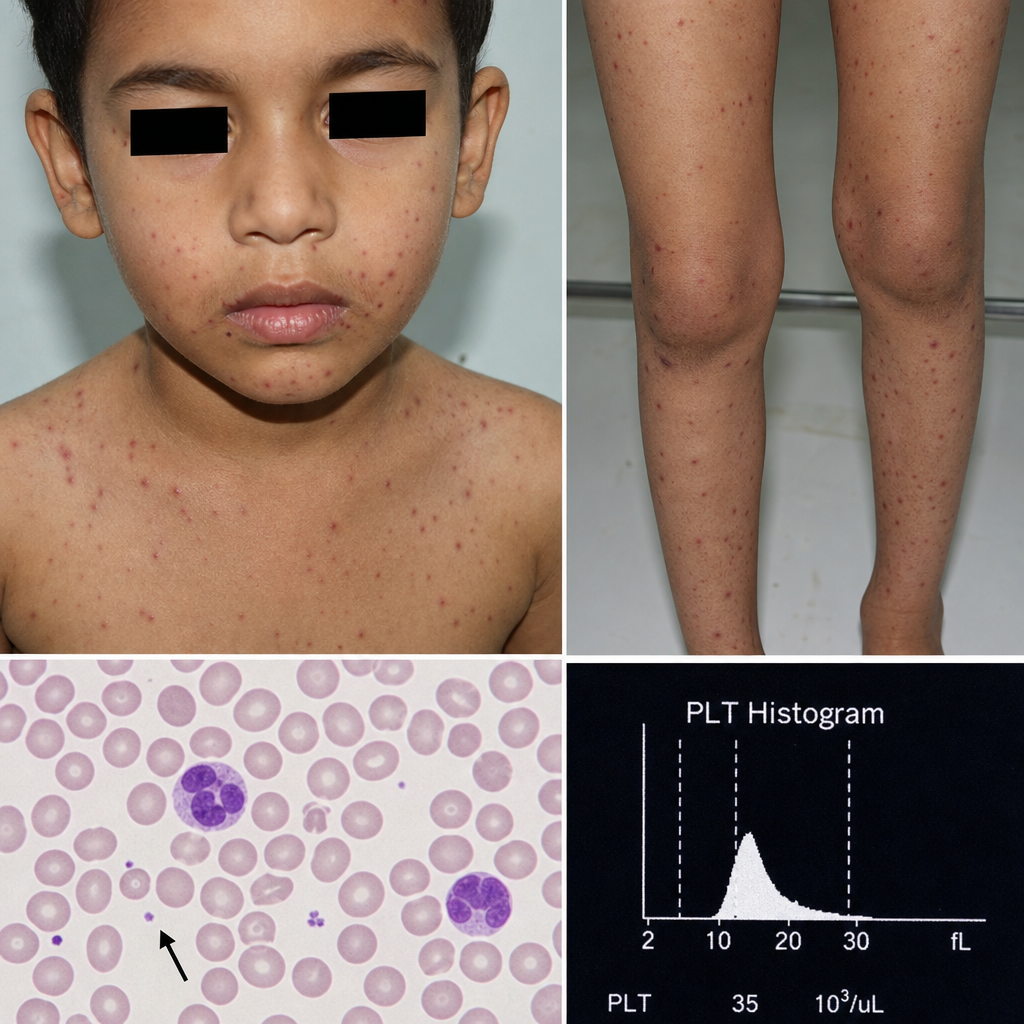
A 3-year-old male presents with a skin rash and epistaxis. He has experienced several severe sinopulmonary infections. A careful history reveals that his maternal uncle died of bleeding complications following an emergency cholecystectomy. What additional findings are likely in this case?
Which of the following is a characteristic of Henoch-Schonlein Purpura?
Abdominal pain in Henoch-Schonlein purpura is most commonly due to which of the following mechanisms?
A child presents with recurrent Staphylococcus infections. Laboratory examination shows very low levels of immunoglobulins (G, A, M, E), and a low quantity of B cells. There is a normal reaction to environmental antigens on the skin. What is the most likely diagnosis?
A 9-month-old child was admitted to ICU with a history of recurrent sinusitis and otitis media by Staphylococcus aureus. Blood test shows decreased serum IgA, IgG, IgM, IgE, and plasma B cells. What is the diagnosis?
Which of the following vaccines is contraindicated in a patient of Severe Combined Immunodeficiency (SCID)?
A 6-month-old infant presents with recurrent infections and failure to thrive. Laboratory investigations reveal a deficiency of adenosine deaminase (ADA). Which of the following immunodeficiency disorders is most likely associated?
A 5-year-old short stature boy presented with fever and weight loss for 6 weeks. He has been admitted previously for 4 episodes of pneumonia in last year. On examination neck lymph nodes were enlarged and reddish macules were noticed on the face and forehead. Lymph node biopsy shows Hodgkin's disease. What is the diagnosis?
A 7-year-old boy presents with palpable non-blanching rash starting 3 days back from the ankles and involves lower limbs and buttocks. He had viral URTI previously. BP is normal and KFT is normal. What is the diagnosis?
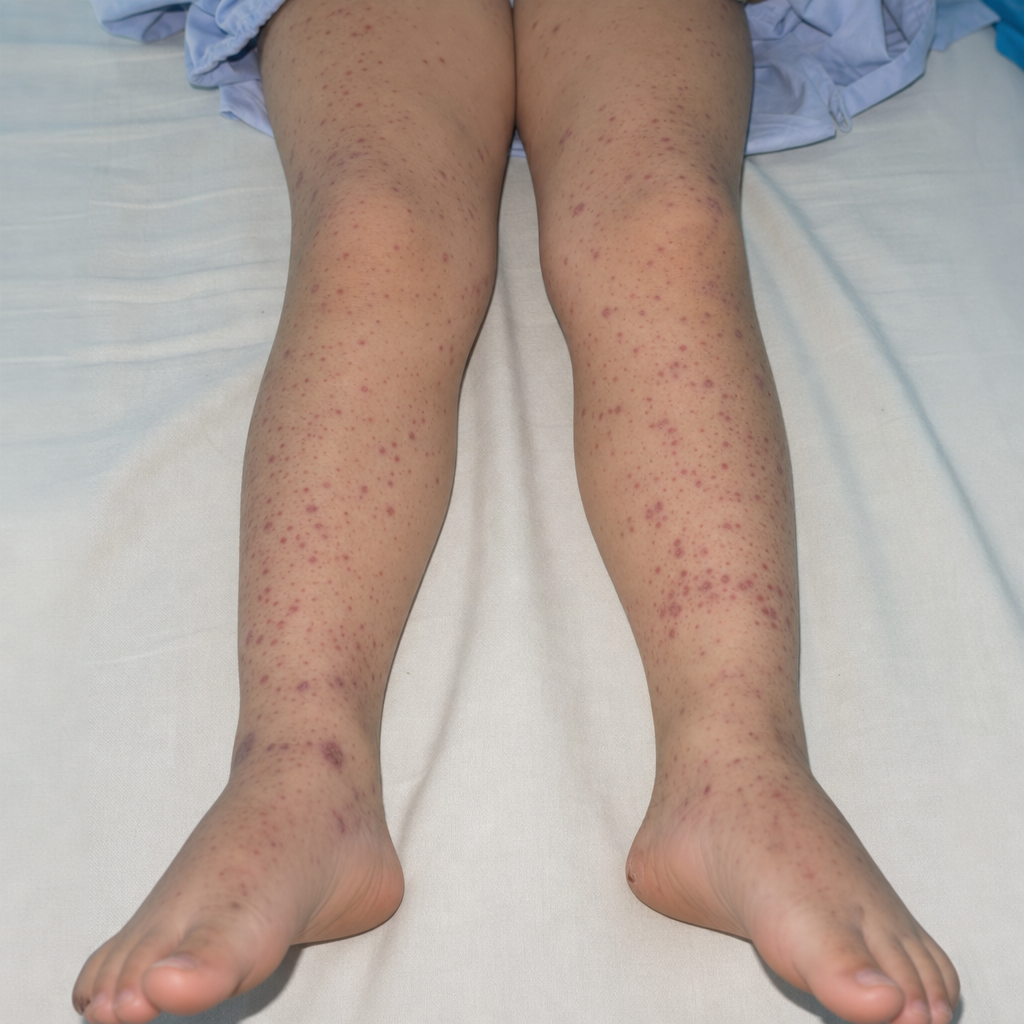
A 6-year-old child with abdominal pain and a rash is shown. Comment on the diagnosis?

Explanation: The clinical presentation of **recurrent sinopulmonary infections, skin rash (eczema), and bleeding (epistaxis)** in a young male, combined with an X-linked family history (maternal uncle), is classic for **Wiskott-Aldrich Syndrome (WAS)**. ### **1. Why Option D is Correct** WAS is caused by a mutation in the *WASP* gene, which leads to defects in the actin cytoskeleton of hematopoietic cells. The hallmark triad is **Immunodeficiency, Eczema, and Thrombocytopenia**. * **Microthrombocytopenia:** Patients have a low platelet count with characteristically **small platelets** (low Mean Platelet Volume). * **Immunoglobulins:** The typical pattern is **low IgM**, normal to high IgG, and **elevated IgA and IgE**. Low IgM levels contribute to the susceptibility to encapsulated organisms (e.g., *S. pneumoniae*). ### **2. Why Other Options are Incorrect** * **Option A:** A CD4/CD8 ratio < 1.5:1 is non-specific and often seen in viral infections or HIV. While T-cell function declines over time in WAS, it is not the diagnostic hallmark. * **Option B:** Cerebellar ataxia is the hallmark of **Ataxia-Telangiectasia**, which also presents with immunodeficiency but features telangiectasias and sensitivity to ionizing radiation, not microthrombocytopenia. * **Option C:** WAS is characterized by **thrombocytopenia** (low count), not thrombocytosis. Furthermore, IgM is typically low, not high. ### **3. NEET-PG High-Yield Pearls** * **Mnemonic (WATER):** **W**iskott-**A**ldrich, **T**hrombocytopenia, **E**czema, **R**ecurrent infections. * **Inheritance:** X-linked Recessive (affects males). * **Platelet Morphology:** It is the **only** condition where small platelets (low MPV) are a primary diagnostic feature. * **Complications:** Increased risk of **autoimmune hemolytic anemia** and **B-cell lymphomas**. * **Definitive Treatment:** Hematopoietic stem cell transplant.
Explanation: **Henoch-Schönlein Purpura (HSP)**, now commonly referred to as **IgA Vasculitis**, is the most common systemic small-vessel vasculitis in children. It is characterized by the deposition of IgA-dominant immune complexes in the walls of small vessels. ### **Explanation of the Correct Answer** **A. Blood in stool:** Gastrointestinal involvement occurs in approximately 50–75% of patients. The vasculitis affects the mesenteric vessels, leading to bowel wall edema and submucosal hemorrhage. This clinically manifests as colicky abdominal pain, vomiting, and **hematochezia (blood in stool)** or melena. A high-yield complication to remember is **intussusception** (typically ileo-ileal), triggered by the submucosal hematoma acting as a lead point. ### **Explanation of Incorrect Options** * **B. Thrombocytopenia:** HSP is a **non-thrombocytopenic purpura**. In fact, the platelet count is typically normal or even elevated (reactive thrombocytosis). This is a crucial diagnostic differentiator from ITP (Immune Thrombocytopenic Purpura). * **C. Intracranial hemorrhage:** While HSP can involve multiple organs, CNS involvement is extremely rare. Intracranial hemorrhage is more characteristic of severe ITP or hemophilia. * **D. Susceptibility to infection:** HSP is an immune-mediated vasculitis, often following an upper respiratory tract infection (like Group A Strep), but the disease itself does not cause immunodeficiency or increased susceptibility to infections. ### **NEET-PG High-Yield Pearls** * **Classic Tetrad:** 1. Palpable purpura (without thrombocytopenia), 2. Arthritis/Arthralgia, 3. Abdominal pain, 4. Renal involvement (IgA nephropathy). * **Distribution:** Purpura are typically found in dependent areas (buttocks and lower extremities). * **Renal Prognosis:** The long-term prognosis of HSP depends entirely on the severity of **renal involvement** (HSP nephritis). * **Diagnosis:** Primarily clinical; however, biopsy shows **leukocytoclastic vasculitis** with IgA deposition on immunofluorescence.
Explanation: ### Explanation **Henoch-Schönlein Purpura (HSP)**, now commonly referred to as **IgA Vasculitis**, is a small-vessel vasculitis characterized by the deposition of IgA-containing immune complexes. **1. Why Option A is Correct:** The hallmark of HSP is systemic inflammation of the small capillaries. In the gastrointestinal tract, this vasculitis leads to **submucosal and mucosal edema and hemorrhage**. This inflammation causes localized ischemia and irritation of the bowel wall, which is the primary and most common mechanism for the colicky abdominal pain experienced by over 75% of patients. **2. Analysis of Incorrect Options:** * **Option B (GI Hemorrhage):** While occult or gross bleeding occurs due to the mucosal damage, it is a *consequence* of the underlying vasculitis rather than the primary mechanism of the pain itself. * **Option C (Intussusception):** This is the most common *surgical complication* of HSP (typically ileo-ileal). While it causes severe pain, it occurs in only about 1–5% of cases. The question asks for the *most common* mechanism, which remains simple mucosal inflammation. * **Option D (Pancreatitis):** This is an extremely rare complication of HSP and is not a standard feature of the disease presentation. **3. NEET-PG High-Yield Pearls:** * **Classic Triad:** Non-thrombocytopenic palpable purpura (buttocks and lower extremities), arthritis/arthralgia, and abdominal pain. * **Renal Involvement:** IgA nephropathy (Berger’s disease) is the most serious long-term complication; monitoring for hematuria/proteinuria is essential. * **Diagnosis:** Primarily clinical. Platelet count will be **normal** (distinguishes it from ITP). * **Management:** Usually supportive. NSAIDs for joint pain; corticosteroids are reserved for severe GI pain or renal involvement.
Explanation: ***Bruton's agammaglobulinemia***- This X-linked disease is caused by a defect in the **Bruton tyrosine kinase (BTK)** gene, which is essential for B-cell maturation.- The deficiency results in a severe block in B-cell development, leading to **near absence of mature B cells** and consequently, extremely **low levels of all immunoglobulin isotypes** (IgG, A, M, E).*DiGeorge syndrome*- Primary feature is **T-cell deficiency** due to failure of the 3rd and 4th pharyngeal pouches, leading to **thymic hypoplasia**; this would typically impair the skin test response. - Although B cell numbers can sometimes be affected, the hallmark is severe T-cell deficiency, and Ig levels are often normal or near-normal, unlike the pan-hypogammaglobulinemia seen here.*Hyper IgM syndrome*- This condition is characterized by a failure in **isotype switching** (often due to defects in **CD40L**), resulting in normal or high levels of **IgM** but very low levels of IgG, IgA, and IgE.- B cells are present in normal counts, distinguishing it from this patient who has very few B cells and very low IgM.*Common variable immunodeficiency*- CVID typically presents later, in adolescence or adulthood, and causes **hypogammaglobulinemia** (low IgG and usually low IgA/IgM).- While B-cell function is impaired, patients usually have **normal B-cell counts**, contrasting with the severe reduction in B cells seen in this child.
Explanation: ***Bruton syndrome***- This diagnosis (X-linked agammaglobulinemia or XLA) is defined by the failure of **B cell maturation** due to a mutation in the **BTK gene**, leading to near-total absence of mature B cells and plasma cells.- The clinical presentation is recurrent infections, often *S. aureus* and encapsulated bacteria, correlated with the drastic reduction of all serum **immunoglobulin levels** (IgA, IgG, IgM, IgE).*Ataxia telangiectasia*- This is an **autosomal recessive** T-cell/B-cell defect associated with defects in **DNA repair** (ATM gene), causing progressive cerebellar ataxia and oculocutaneous telangiectasias.- While associated with immunodeficiency, it typically presents with low **IgA** and **IgE**, not the complete absence of plasma B cells seen here.*Chronic granulomatous disease*- This is a phagocytic disorder due to a defect in the **NADPH oxidase** complex, preventing neutrophils from generating a respiratory burst necessary to kill catalase-positive organisms (like *S. aureus*).- Although the child has *S. aureus* infection, **serum Ig and B cell levels** remain normal, which contradicts the profound pan-hypogammaglobulinemia seen in this scenario.*DiGeorge syndrome*- Caused by defective development of the 3rd and 4th pharyngeal pouches, resulting in **T-cell deficiency** (thymic hypoplasia), **hypocalcemia**, and cardiac defects.- The primary immunodeficiency affects T cells, leading to susceptibility to **viral and fungal infections**; B cell numbers are usually normal, even though antibody production might be secondarily impaired.
Explanation: ***MMR*** - **MMR (Measles, Mumps, Rubella)** is a **live attenuated vaccine**. Live vaccines are absolutely contraindicated in individuals with **Severe Combined Immunodeficiency (SCID)** due to the inability to mount an effective immune response, leading to uncontrolled replication of the vaccinal organism and potentially fatal infection. - SCID causes profound defects in both **T-cell and B-cell immunity**, making the patient susceptible to infections from live vaccines. ***DPT*** - **DPT (Diphtheria, Pertussis, Tetanus)** is an **inactivated (killed) vaccine**; it is safe and typically recommended for SCID patients as it cannot cause the disease. - Only **live vaccines** are contraindicated in SCID, whereas **inactivated or recombinant vaccines** are generally safe. ***Hepatitis B*** - **Hepatitis B vaccine** is a **recombinant vaccine** (inactivated component) and is not contraindicated in patients with SCID. - While the immune response may be suboptimal, the vaccine itself poses no risk of causing the disease. ***IPV*** - **IPV (Inactivated Poliovirus Vaccine)** is a **killed vaccine**. It is safe for SCID patients and must be used instead of the **OPV (Oral Poliovirus Vaccine)**, which is a live vaccine. - Killed vaccines contain non-replicating antigens and thus cannot cause disease, even in highly immunocompromised individuals.
Explanation: ***Severe Combined Immunodeficiency (SCID)*** - **Adenosine deaminase (ADA) deficiency** is a classic autosomal recessive cause of SCID, resulting in accumulation of toxic metabolites like **dATP**. - These toxic metabolites destroy both **T and B lymphocytes**, leading to profound lymphopenia and the severe clinical picture of recurrent infections and **failure to thrive**. *Hypogammaglobulinemia* - This term generally refers to primary **B-cell intrinsic defects** leading to reduced antibody levels (e.g., X-linked agammaglobulinemia or CVID). - While it causes recurrent infections, the underlying genetic defect is specific to B-cell development or function, not **ADA deficiency** affecting both T and B cells profoundly. *DiGeorge Syndrome* - This syndrome is caused by a defect in the 3rd and 4th pharyngeal pouches, often due to **22q11 microdeletion**, resulting in **thymic aplasia** (T-cell deficiency). - Clinical presentation involves the triad of T-cell defect, **cardiac anomalies** (conotruncal defects), and **hypocalcemia** (parathyroid hypoplasia), not ADA deficiency. *Wiskott-Aldrich Syndrome* - This is an X-linked disorder defined by the classic triad of **eczema**, immunodeficiency, and **thrombocytopenia** (small platelets). - The mutation affects the **WASP gene**, leading to defective cytoskeleton function in hematopoietic cells, which is unrelated to ADA enzymatic deficiency.
Explanation: ***Bloom syndrome*** - Bloom syndrome is characterized by **short stature**, a characteristic **photosensitive facial rash** (reddish macules on the face and forehead), and an **increased risk of cancer**, including Hodgkin's lymphoma. - Patients also have a predisposition to **recurrent infections** (like pneumonia), immunoglobulin deficiencies, and **short stature**, all of which fit the clinical picture. *Xeroderma Pigmentosum* - This condition involves extreme **photosensitivity** leading to freckling, solar keratoses, and a very high risk of **skin cancers** (basal cell carcinoma, squamous cell carcinoma, melanoma). - While it involves photosensitivity, it does not typically present with the specific facial rash described, recurrent infections, or Hodgkin's disease in the same manner. *Griscelli syndrome* - Characterized by **partial albinism** (silvery-gray hair and hypopigmented skin), immunodeficiency, and neurological abnormalities. - The facial rash and Hodgkin's disease are not typical features, and the albinism is a key distinguishing sign absent here. *Chediak Higashi syndrome* - This is an autosomal recessive disorder characterized by **partial oculocutaneous albinism**, recurrent pyogenic infections due to defective lysosomal trafficking in phagocytes, and progressive neurological impairment. - While recurrent infections occur, the characteristic facial rash and Hodgkin's lymphoma are not specific to this syndrome, and the albinism is a key differentiating feature.
Explanation: **Henoch-Schönlein purpura** - The classic presentation of a **palpable non-blanching rash** on the lower limbs and buttocks in a child, preceded by a **viral URTI**, is highly characteristic of Henoch-Schönlein purpura (HSP). - Normal blood pressure and kidney function tests show an absence of severe renal involvement, which can be a complication of HSP but is not universally present at onset. *Meningococcemia* - While meningococcemia can cause a **petechial or purpuric rash**, it is typically associated with a rapid onset of severe systemic illness, including **fever**, **meningitis symptoms**, and signs of shock, none of which are described. - The rash in meningococcemia tends to be more widespread and rapidly progressive, often involving the trunk and mucous membranes, with patients appearing critically ill. *Hemolytic uremic syndrome* - This syndrome is characterized by the triad of **hemolytic anemia**, **thrombocytopenia**, and **acute kidney injury**, often preceded by a diarrheal illness (especially E. coli O157:H7). - The patient's normal KFT (kidney function tests) and the absence of a history of severe diarrhea or symptoms of anemia makes HUS unlikely. *Cutis marmorata* - Cutis marmorata is a common, transient **mottled, reticulated vascular pattern on the skin** in response to cold temperatures in infants and young children, predominantly a physiologic response. - It is **blanchable** and has a mesh-like appearance rather than a palpable, non-blanching purpuric rash, and is not associated with previous URTI or vasculitis.
Explanation: ***Henoch Schonlein purpura*** - This diagnosis is strongly suggested by the child's age (6 years old), presentation of abdominal pain, and the characteristic **palpable purpuric rash**, particularly on the lower extremities, as seen in the image. - **Henoch-Schönlein purpura (HSP)**, now known as IgA vasculitis, is a systemic small-vessel vasculitis predominantly affecting children, characterized by the classic triad of palpable purpura, arthritis/arthralgia, and abdominal pain. *Kawasaki* - **Kawasaki disease** primarily affects children under 5 years of age and presents with persistent fever, conjunctivitis, oral mucosal changes (strawberry tongue), cervical lymphadenopathy, and a polymorphous rash. Abdominal pain is less common as a primary feature. - The rash in Kawasaki disease is typically not purpuric but can be maculopapular or scarlatiniform, and does not show the characteristic distribution seen in the image. *Varicella* - **Varicella (chickenpox)** is characterized by a pruritic vesicular rash that progresses from macules to papules to vesicles and then crusts, usually starting on the trunk and spreading centrifugally. This is distinctly different from the purpuric rash shown. - While it can cause abdominal pain, the skin lesions are the key differentiator, and the image does not depict vesicular lesions. *Meningococcemia* - **Meningococcemia** is a severe bacterial infection often presenting with petechial or purpuric rash, fever, and signs of sepsis. However, the rash in meningococcemia rapidly progresses to large ecchymoses and is often associated with signs of critical illness (e.g., hypotension, altered mental status). - While purpura is present, the widespread, relatively uniform appearance of the rash, combined with abdominal pain in a 6-year-old, points away from the fulminant course typical of meningococcemia towards a vasculitis like HSP.
Development of Immune System
Practice Questions
Primary Immunodeficiency Disorders
Practice Questions
Secondary Immunodeficiency Disorders
Practice Questions
Allergic Rhinitis
Practice Questions
Asthma in Children
Practice Questions
Atopic Dermatitis
Practice Questions
Food Allergies
Practice Questions
Drug Allergies
Practice Questions
Anaphylaxis
Practice Questions
Urticaria and Angioedema
Practice Questions
Autoimmune Disorders
Practice Questions
Immunotherapy
Practice Questions
Get full access to all questions, explanations, and performance tracking.
Start For Free