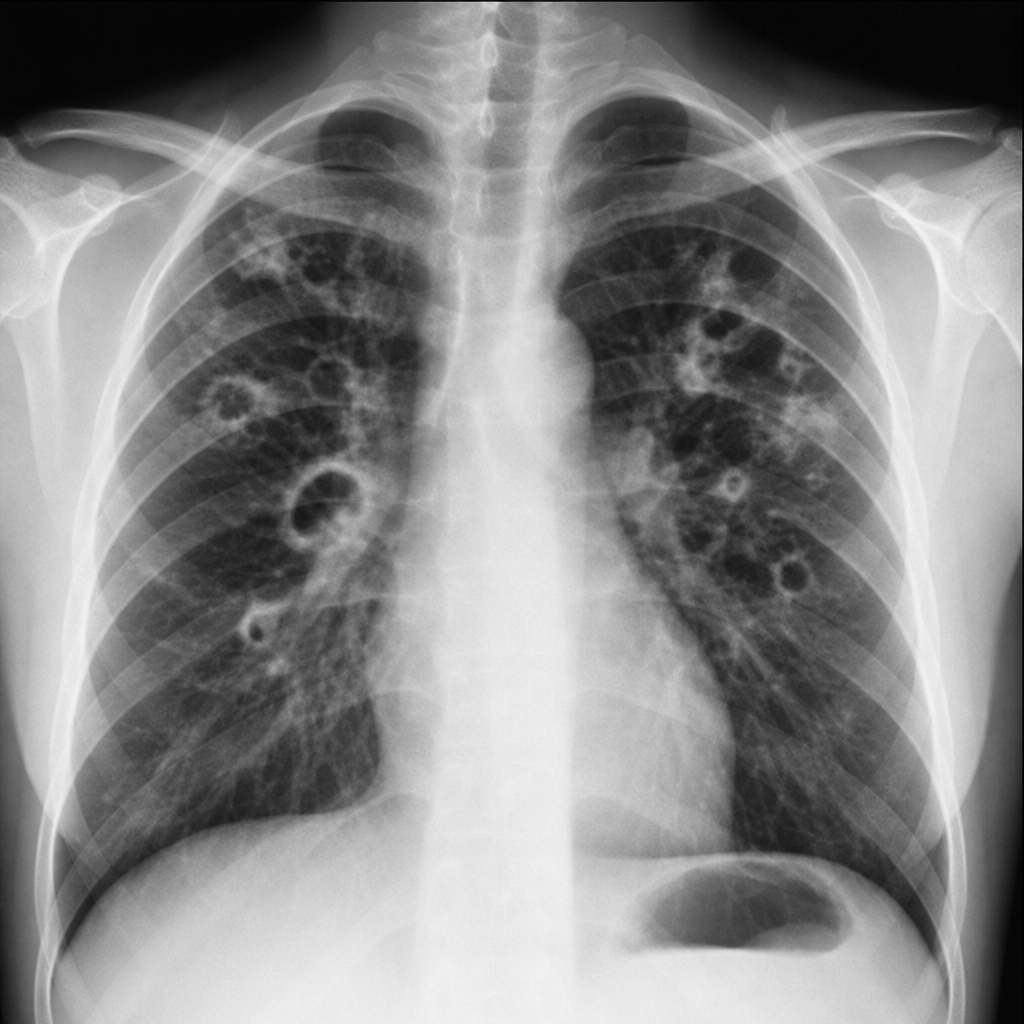
A 5-year-old girl with asthma is brought to the clinic with a history of recurrent wheezing and a recent chest infection. She has a high IgE level. Which test should be considered for diagnosing allergic bronchopulmonary aspergillosis (ABPA)?
A 10-year-old boy presents with recurrent sinopulmonary infections, eczema, and thrombocytopenia. What is the most likely diagnosis?
A child with a history of asthma experiences a severe allergic reaction to a bee sting. Despite treatment with antihistamines, the child develops stridor and hypotension. What is the most appropriate immediate treatment?
A 2-year-old child presents with recurrent infections, failure to thrive, and persistent diarrhea. The family history reveals a sibling who died from a similar illness. What is the most likely diagnosis?
A 2-year-old girl presents with a history of recurrent infections, eczema, and thrombocytopenia. What is the most likely diagnosis?
What should be the correct treatment for a 14-year-old child with newly diagnosed Juvenile Rheumatoid Arthritis?
Breast milk protects from infections as it contains all of the following components except:
Which immunoglobulin provides passive immunity through colostrum and breast milk?
Which statement regarding the administration of vaccines is correct?
Delayed umbilical cord detachment with leukocytosis is seen in?
Explanation: ***Aspergillus-specific IgE test*** - **Aspergillus-specific IgE** (or ImmunoCAP to *Aspergillus fumigatus*) is a **primary diagnostic criterion** for ABPA and is the preferred first-line serological test. - A **positive result** confirms sensitization to *Aspergillus*, a key factor in ABPA diagnosis, and is more specific than total IgE measurement. - This test is **non-invasive, standardized, and quantifiable**, making it ideal for initial diagnostic workup in pediatric patients with suspected ABPA. *Skin prick test* - While a **skin prick test** to *Aspergillus fumigatus* can indicate immediate hypersensitivity and is included in diagnostic criteria, it is **less specific** than Aspergillus-specific IgE testing. - Skin testing requires expertise, can cause patient discomfort (especially in children), and may yield **false positives** in patients with general atopy. - Modern guidelines increasingly favor serological testing over skin prick testing as the initial diagnostic approach. *Sputum culture* - While *Aspergillus* can be cultured from sputum, its isolation alone does not confirm ABPA, as it can be a **saprophyte** in the airways of asthmatic patients. - A positive sputum culture is a supportive finding but lacks the specificity required for definitive ABPA diagnosis. *Bronchoalveolar lavage* - **Bronchoalveolar lavage (BAL)** may show **eosinophilia** and *Aspergillus* hyphae, but it's an **invasive procedure** not typically used as a first-line diagnostic test for ABPA. - BAL is usually reserved for cases where other diagnostic methods are inconclusive or to rule out alternative diagnoses.
Explanation: ***Wiskott-Aldrich syndrome*** - Characterized by the classic triad of **recurrent infections**, **eczema**, and **thrombocytopenia**, as seen in this boy. - This X-linked genetic disorder [1] causes **defective immune response**, leading to susceptibility to infections and the development of eczema. *DiGeorge syndrome* - Typically associated with **thymic aplasia**, leading to **T-cell deficiency**, but does not include thrombocytopenia as a common feature. - Presents with **cardiac abnormalities** and **hypoparathyroidism** [3], which are not mentioned in this scenario. *Chronic granulomatous disease* - Primarily characterized by **recurrent bacterial and fungal infections** due to defective **NADPH oxidase**, but it does not feature eczema or thrombocytopenia. - Patients have **granulomas** and a positive nitroblue tetrazolium test, contrary to the symptoms described here. *Bruton's agammaglobulinemia* - This condition leads to **B-cell deficiency**, resulting in **recurrent bacterial infections** [2][4], but lacks eczema and is not associated with thrombocytopenia. - Affected individuals often have extremely low levels of **immunoglobulins** [2], which are not indicated in this child's symptomatology. **References:** [1] Kumar V, Abbas AK, et al.. Robbins and Cotran Pathologic Basis of Disease. 9th ed. Diseases of the Immune System, pp. 250-251. [2] Kumar V, Abbas AK, et al.. Robbins and Cotran Pathologic Basis of Disease. 9th ed. Diseases of the Immune System, pp. 248-249. [3] Cross SS. Underwood's Pathology: A Clinical Approach. 6th ed. (Basic Pathology) introduces the student to key general principles of pathology, both as a medical science and as a clinical activity with a vital role in patient care. Part 2 (Disease Mechanisms) provides fundamental knowledge about the cellular and molecular processes involved in diseases, providing the rationale for their treatment. Part 3 (Systematic Pathology) deals in detail with specific diseases, with emphasis on the clinically important aspects., pp. 167-168. [4] Cross SS. Underwood's Pathology: A Clinical Approach. 6th ed. (Basic Pathology) introduces the student to key general principles of pathology, both as a medical science and as a clinical activity with a vital role in patient care. Part 2 (Disease Mechanisms) provides fundamental knowledge about the cellular and molecular processes involved in diseases, providing the rationale for their treatment. Part 3 (Systematic Pathology) deals in detail with specific diseases, with emphasis on the clinically important aspects., pp. 166-167.
Explanation: ***Immediate intramuscular epinephrine*** - The presence of **stridor** (indicating upper airway obstruction) and **hypotension** (indicating distributive shock) in the context of an allergic reaction signifies **anaphylaxis**, which is a life-threatening emergency. - **Epinephrine** is the **first-line treatment** for anaphylaxis as it acts on alpha and beta-adrenergic receptors to improve blood pressure, reduce airway edema, and alleviate bronchospasm. *High-flow oxygen and repeat antihistamines* - While **oxygen** may be beneficial as supportive care, it does not address the underlying pathophysiology of anaphylaxis or rapidly resolve the airway obstruction and hypotension. - **Antihistamines** primarily target H1 receptor-mediated symptoms like itching and hives, but they are **insufficient alone** to manage severe anaphylaxis with airway compromise and hemodynamic instability. *Oral corticosteroids and bronchodilators* - **Corticosteroids** have a delayed onset of action and are used as **adjunctive therapy** to prevent protracted or biphasic reactions, not as immediate first-line treatment for acute anaphylaxis. - **Bronchodilators** like albuterol help with bronchospasm in the lower airways but **do not address stridor** (upper airway obstection) or hypotension, which are life-threatening features. *Intravenous fluids and antibiotics* - **Intravenous fluids** are used to manage **hypotension** but are **secondary to epinephrine** in anaphylaxis; they alone cannot reverse the widespread vasodilation and increased vascular permeability caused by anaphylactic mediators. - **Antibiotics** are entirely **inappropriate** for an allergic reaction, as it is not an infectious process.
Explanation: ***Severe Combined Immunodeficiency*** - **Recurrent infections**, **failure to thrive**, and **persistent diarrhea** in a young child, especially with a history of a sibling succumbing to a similar illness, are classic signs of **Severe Combined Immunodeficiency (SCID)**. - SCID results in a profound defect in both **T-cell and B-cell immunity**, leaving the child extremely vulnerable to opportunistic infections and leading to the observed clinical features. *Cystic Fibrosis* - While **failure to thrive** and **persistent diarrhea** (due to pancreatic insufficiency) can occur in cystic fibrosis, recurrent infections primarily involve the **respiratory tract** and are not usually indicative of a global immune deficiency like in SCID. - Absence of key features such as **meconium ileus** at birth, **steatorrhea**, or positive **sweat chloride test** makes this less likely. *Chronic Granulomatous Disease* - Patients with **Chronic Granulomatous Disease (CGD)** suffer from recurrent infections, but these are typically caused by **catalase-positive organisms** and manifest as **abscesses** and **granulomas**. - While it affects immune function, it does not typically present with the same spectrum of severe, persistent infections, failure to thrive, and diarrhea across all immune axes as seen in SCID. *HIV Infection* - Although **recurrent infections**, **failure to thrive**, and **diarrhea** are symptoms of pediatric **HIV infection**, the family history of a sibling dying from a similar illness strongly points towards an inherited genetic disorder like SCID rather than an acquired infection. - HIV typically presents with a more gradual decline in immune function rather than the profound deficiency seen early in life with SCID.
Explanation: ***Wiskott-Aldrich syndrome*** - This syndrome is characterized by the classic triad of **recurrent infections, eczema, and thrombocytopenia** (low platelet count), often with small-sized platelets. - It is an **X-linked recessive disorder** caused by a mutation in the WASP gene, leading to defective immune cell function and platelet abnormalities. *Chediak-Higashi syndrome* - This condition is characterized by **recurrent pyogenic infections, partial albinism, peripheral neuropathy, and giant lysosomes** in phagocytes. - While it involves recurrent infections, the absence of **partial albinism** and presence of thrombocytopenia with eczema make it less likely. *Chronic granulomatous disease* - Patients with this disease suffer from recurrent severe bacterial and fungal infections due to a defect in **phagocyte oxidative burst**, leading to the inability to kill certain microbes. - It is not typically associated with **eczema** or primary **thrombocytopenia**, distinguishing it from the presented case. *Severe combined immunodeficiency* - This is a very severe primary immunodeficiency characterized by significant defects in both **T-cell and B-cell immunity**, leading to opportunistic infections, failure to thrive, and chronic diarrhea. - While it causes recurrent infections, **eczema** and **thrombocytopenia** are not defining features as they are in Wiskott-Aldrich syndrome.
Explanation: ***DMARDs with a short course of steroids*** - For **newly diagnosed rheumatoid arthritis** in children (juvenile idiopathic arthritis), the primary goal is to **control inflammation** and prevent joint damage with **disease-modifying antirheumatic drugs (DMARDs)**. - A **short course of corticosteroids** is often used as a **bridging therapy** to rapidly reduce inflammation while the DMARDs take effect. - This approach ensures **early aggressive treatment** to prevent joint damage while minimizing long-term steroid exposure. *Incorrect: Only NSAIDs* - **NSAIDs** alone provide **symptomatic relief** but do not alter the course of the disease or prevent joint damage in rheumatoid arthritis. - Relying solely on NSAIDs can lead to **progressive joint erosion** and functional impairment. *Incorrect: DMARDs after initial treatment with NSAIDs* - While NSAIDs can be used for initial symptom control, delaying **DMARD initiation** is generally not recommended as it allows for continued joint inflammation and potential damage. - Early and aggressive treatment with DMARDs is crucial for **optimizing long-term outcomes** and preserving joint function. *Incorrect: Monotherapy with TNF inhibitors* - **TNF inhibitors** are potent **biologic DMARDs** and are typically considered for patients who have **failed conventional DMARDs** (e.g., methotrexate). - They are not usually the **first-line monotherapy** for treatment-naive rheumatoid arthritis due to their cost, potential side effects, and the availability of other effective options. *Incorrect: Long-term high-dose corticosteroid therapy* - **Prolonged corticosteroid use** at high doses is associated with significant side effects including growth suppression, osteoporosis, increased infection risk, and cushingoid features. - While steroids are useful as **bridging therapy** for a short duration, long-term high-dose use is avoided in pediatric patients whenever possible.
Explanation: ***PABA (Para-aminobenzoic acid)*** - **PABA is NOT a component of breast milk** and has no role in infection protection. - PABA is a precursor in bacterial folic acid synthesis and is sometimes used in sunscreens, but it is not found in human breast milk. - This is the correct answer as it is the component that does NOT provide infection protection in breast milk. *IgE* - While **IgE** is present in trace amounts in breast milk, it plays a minimal role in infection protection. - IgE is primarily involved in **allergic responses and parasitic immunity**, not bacterial or viral protection. - The dominant protective immunoglobulin is **secretory IgA (sIgA)**, which provides mucosal immunity. *Lactoferrin* - **Lactoferrin** is a major antimicrobial protein in breast milk that binds iron, depriving bacteria of this essential nutrient. - It has direct **bactericidal and bacteriostatic effects** against various pathogens. - Also exhibits immunomodulatory and anti-inflammatory properties. *Bifidus factor* - **Bifidus factor** (human milk oligosaccharides) promotes the growth of beneficial *Bifidobacterium* species in the infant gut. - Creates an **acidic intestinal environment** (pH 5-6) that inhibits colonization by pathogenic bacteria. - Provides prebiotic support for healthy gut microbiome development.
Explanation: ***Immunoglobulin A (IgA)*** - **IgA** is the primary antibody found in **secretions** such as colostrum, breast milk, tears, saliva, and mucus. - It plays a crucial role in providing **passive immunity** to infants by protecting their mucous membranes from pathogens. *Immunoglobulin G (IgG)* - **IgG** is the only antibody that can cross the **placenta**, providing passive immunity to the fetus *in utero*. - While present in breast milk, it is not the *primary* immunoglobulin responsible for passive immunity via colostrum. *Immunoglobulin E (IgE)* - **IgE** is primarily associated with **allergic reactions** and defense against parasites. - It does not play a significant role in providing passive immunity to infants through breast milk. *Immunoglobulin M (IgM)* - **IgM** is the first antibody produced during a primary immune response and is found mainly in the **blood and lymph fluid**. - It does not significantly contribute to passive immunity via colostrum or breast milk.
Explanation: ***Live vaccines should not be administered for 12 weeks if immunoglobulin has been given.*** - **Immunoglobulins** contain **antibodies** that can neutralize the attenuated virus in live vaccines, reducing their effectiveness and preventing a proper immune response. - A waiting period of **at least 3 months (12 weeks)** is recommended after immunoglobulin administration before giving live vaccines to ensure these antibodies have sufficiently cleared (the exact interval varies from 3-11 months depending on the dose and type of immunoglobulin product). - This is a **critical safety guideline** to prevent vaccine failure and is emphasized in vaccination protocols. *Live and killed vaccines can be administered together.* - This statement is **actually correct** - inactivated (killed) vaccines and live vaccines can be co-administered without interference according to CDC, WHO, and IAP guidelines. - However, it is less specific and clinically important compared to the immunoglobulin-live vaccine interaction, which has more significant practical implications for vaccine failure. *Immunoglobulin should not be given for at least 6 weeks when a live vaccine is administered.* - While there can be some interference if immunoglobulin is given shortly after a live vaccine, the **primary clinical concern** is the reverse scenario. - The main precaution is about **delaying live vaccines after immunoglobulin**, not the other way around. - This statement is less emphasized in standard vaccination guidelines. *Two live vaccines can be given together if they are compatible.* - This statement is **also correct** - two live vaccines can be given simultaneously (e.g., MMR and varicella vaccine). - If not given together, they should be separated by at least **4 weeks** to avoid interference. - However, like option 1, this is a general principle and less critical than the immunoglobulin-live vaccine timing, which prevents vaccine failure.
Explanation: ***Leukocyte adhesion deficiency (LAD)*** - **Delayed umbilical cord detachment** (beyond 3 weeks) is a classic hallmark of LAD due to impaired neutrophil migration to the umbilical stump for normal wound healing. - **Marked leukocytosis** with neutrophilia (often >20,000-30,000/μL) is characteristic, as neutrophils cannot extravasate from blood vessels to sites of infection. - Caused by defects in **CD18 integrin molecules** (LAD-1) or other adhesion molecules, preventing neutrophil adherence and migration. *Chronic granulomatous disease* - Patients suffer from recurrent bacterial and fungal infections due to defective **phagocyte oxidative burst** and inability to kill catalase-positive organisms. - Does **not** present with delayed cord detachment; cord separation occurs normally. - Characterized by granuloma formation and infections with specific organisms (Staphylococcus, Aspergillus, Serratia). *Severe combined immunodeficiency (SCID)* - Severe defect in both **T-cell and B-cell immunity** leading to recurrent opportunistic infections, chronic diarrhea, and failure to thrive. - Does **not** present with delayed umbilical cord detachment or characteristic leukocytosis. - Typically presents in early infancy with severe infections. *Chediak-Higashi syndrome* - Rare autosomal recessive disorder with **partial albinism**, recurrent pyogenic infections, and progressive neurological dysfunction. - Features neutropenia or normal neutrophil counts, **not leukocytosis**. - Does **not** have delayed cord detachment as a characteristic feature.
Development of Immune System
Practice Questions
Primary Immunodeficiency Disorders
Practice Questions
Secondary Immunodeficiency Disorders
Practice Questions
Allergic Rhinitis
Practice Questions
Asthma in Children
Practice Questions
Atopic Dermatitis
Practice Questions
Food Allergies
Practice Questions
Drug Allergies
Practice Questions
Anaphylaxis
Practice Questions
Urticaria and Angioedema
Practice Questions
Autoimmune Disorders
Practice Questions
Immunotherapy
Practice Questions
Get full access to all questions, explanations, and performance tracking.
Start For Free