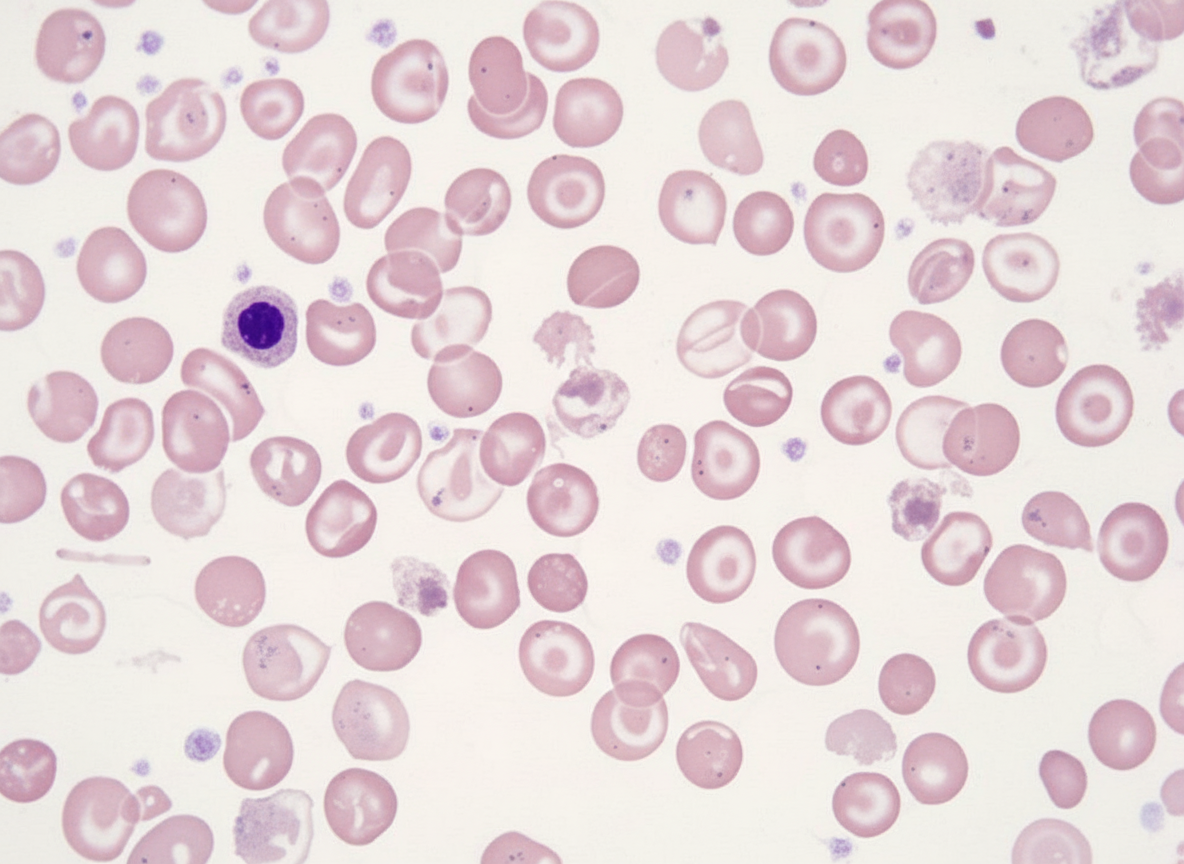
What is the normal mean corpuscular volume (MCV) in a 1-month-old infant?
Which of the following statements is not true regarding hemolytic uremic syndrome?
Which of the following statements about Fanconi's anemia is false?
What is the proper management of a child with an absolute neutrophil count (ANC) of 100/mm3?
Children with Thalassemia and iron overload are at an increased risk for infection with which organism?
A child presented with fever, anemia, lymphadenopathy, and hepatosplenomegaly. Which of the following is LEAST likely to be a cause?
At what week of gestation does fetal erythropoiesis first occur?
A 5-year-old girl presents with a history of progressively increasing pallor since birth and hepatosplenomegaly. Which of the following is the most relevant test for achieving diagnosis?
The likely diagnosis in a child presenting with limb pain and pancytopenia is:
A 4-month-old infant presents with anemia (hemoglobin 9.5 g/dL) and a normal MCV (77 fL). The infant is breastfed, shows normal growth parameters, and appears well. What is the most likely cause of her anemia?
Explanation: **Explanation:** The Mean Corpuscular Volume (MCV) undergoes significant physiological changes during the first few months of life. At birth, neonates are characteristically **macrocytic**, with a normal MCV ranging from **101–125 fL**. This is due to the presence of large, young erythrocytes and high reticulocyte counts required for intrauterine oxygen transport. Following birth, as the infant begins breathing room air, erythropoietin production temporarily decreases, and the large neonatal red cells are replaced by smaller adult-type cells. By **one month of age**, the MCV typically drops into the **80–100 fL** range, which aligns with the standard adult reference range. **Analysis of Options:** * **Option A (76-80 fL):** This is too low for a 1-month-old. MCV reaches its physiological nadir (approx. 70–84 fL) between 6 months and 2 years of age. * **Option C (90-100 fL):** While this falls within the correct range, it is too narrow and excludes the lower limit of normal (80 fL) for this age group. * **Option D (101-125 fL):** This represents the normal MCV for a **term newborn at birth**. By one month, these values would be considered pathologically high. **High-Yield Clinical Pearls for NEET-PG:** 1. **Birth:** MCV is highest (101–125 fL). 2. **1 Month:** MCV stabilizes to adult levels (80–100 fL). 3. **6 Months to 2 Years:** MCV is at its lowest (70–84 fL); this is the period when "Physiological Anemia of Infancy" is most pronounced. 4. **Formula for Lower Limit of MCV (after 1 year):** $70 + \text{age in years}$. (e.g., a 5-year-old’s lower limit is 75 fL).
Explanation: **Explanation:** Hemolytic Uremic Syndrome (HUS) is a classic triad of **Microangiopathic Hemolytic Anemia (MAHA)**, **Thrombocytopenia**, and **Acute Kidney Injury (AKI)**. **Why Option D is the correct answer (False statement):** The hemolysis in HUS is **non-immune** in nature. It is caused by mechanical destruction of RBCs as they pass through fibrin-platelet thrombi in small vessels (fragmentation hemolysis). Therefore, the **Direct Coombs Test (DAT) is characteristically negative**. A positive Coombs test would instead suggest an autoimmune hemolytic anemia (AIHA). **Analysis of Incorrect Options (True statements):** * **Option A:** HUS is a prototype of MAHA. The primary pathology involves endothelial injury leading to microvascular thrombosis. * **Option B:** Consumption of platelets within these microthrombi leads to **thrombocytopenia**. The mechanical shearing of RBCs results in fragmented cells known as **schistocytes** (helmet cells) on the peripheral smear. * **Option C:** The renal microvasculature is the primary target, leading to decreased GFR, hematuria, proteinuria, and often severe **renal insufficiency** requiring dialysis. **Clinical Pearls for NEET-PG:** * **Most common cause:** Shiga toxin-producing *E. coli* (STEC), specifically serotype **O157:H7**. * **Prodrome:** Usually begins with bloody diarrhea (D+ HUS). * **Atypical HUS (D- HUS):** Associated with genetic mutations in the alternative complement pathway (e.g., Factor H deficiency). * **Management:** Primarily supportive (fluid/electrolyte balance, dialysis). **Antibiotics and anti-motility agents are contraindicated** as they may increase toxin release and worsen the condition.
Explanation: **Explanation:** Fanconi’s Anemia (FA) is the most common form of **inherited bone marrow failure syndrome**. **Why Option C is the Correct (False) Statement:** Fanconi’s Anemia is not classified as "Type I A." This is a distractor term. FA is a genetically heterogeneous condition caused by mutations in at least 22 different genes (FANC genes). The most common genetic subtype is **FANCA** (accounting for ~60-70% of cases), but the disease itself is not classified by the Roman numeral "Type I A." **Analysis of Other Options:** * **Option A (True):** Most cases of Fanconi’s Anemia follow an **Autosomal Recessive** inheritance pattern. (Note: FANCB is X-linked and FANCR/RAD51 is Autosomal Dominant, but AR remains the classic rule for exams). * **Option B (True):** **Pancytopenia** is the hallmark hematological feature. It typically manifests between ages 5–10 years, starting with thrombocytopenia or leukopenia before progressing to full aplastic anemia. **High-Yield Clinical Pearls for NEET-PG:** * **Pathogenesis:** Defect in **DNA repair** (specifically interstrand cross-link repair). * **Diagnosis:** The gold standard test is the **Chromosomal Breakage Analysis** using Clastogenic agents like **Diepoxybutane (DEB)** or **Mitomycin C**. * **Physical Findings:** Short stature, **absent/hypoplastic thumbs**, radius malformations, **Café-au-lait spots**, and microcephaly. * **Malignancy Risk:** High risk of developing **AML** and squamous cell carcinomas (head, neck, and anogenital).
Explanation: ### Explanation **1. Why Option A is Correct:** The patient has **severe neutropenia** (defined as ANC < 500/mm³). In pediatrics, severe neutropenia is a medical emergency because the body’s primary defense against bacterial invasion is compromised. Patients with an ANC of 100/mm³ are at extremely high risk for life-threatening sepsis, often from their own endogenous flora (e.g., *Pseudomonas aeruginosa*, *E. coli*). The standard of care is the immediate initiation of **empiric broad-spectrum intravenous antibiotics** (e.g., Ceftazidime, Cefepime, or Piperacillin-Tazobactam) to cover Gram-negative and Gram-positive organisms, even before culture results are available. **2. Why Other Options are Incorrect:** * **Option B:** While physical exams and X-rays are important, "observing closely" is dangerous. Neutropenic patients often fail to mount a typical inflammatory response (like pus formation or lung consolidation), making clinical signs unreliable. Delaying antibiotics increases mortality significantly. * **Option C:** Granulocyte transfusions are rarely used and are reserved for specific cases of documented infection unresponsive to antibiotics; they are never the first-line management. * **Option D:** Iron and B12 treat specific anemias but do not address the acute risk of sepsis associated with severe neutropenia. **3. Clinical Pearls for NEET-PG:** * **ANC Calculation:** Total WBC count × (% Neutrophils + % Bands). * **Neutropenia Grading:** * Mild: 1000–1500/mm³ * Moderate: 500–1000/mm³ * Severe: < 500/mm³ (High risk for infection) * **Febrile Neutropenia:** Defined as a single oral temperature of >38.3°C (101°F) or >38.0°C (100.4°F) for one hour in a patient with ANC < 500/mm³. * **Common Sites:** The mouth (stomatitis), perianal area, and skin are the most common sites of infection in these patients.
Explanation: **Explanation:** The correct answer is **Yersinia enterocolitica**. **Why it is correct:** *Yersinia enterocolitica* is a **siderophilic** (iron-loving) bacterium. In normal physiological conditions, free iron is scarce in the human body because it is tightly bound to proteins like transferrin and ferritin. However, children with Thalassemia major suffer from chronic iron overload due to repeated blood transfusions and increased intestinal absorption. Furthermore, these patients are often treated with **Deferoxamine**, an iron chelator. *Yersinia* can utilize the iron-deferoxamine complex (ferrioxamine) as a growth factor (siderophore) to enhance its own uptake of iron, significantly increasing the risk of systemic infection and sepsis. **Why the other options are incorrect:** * **Campylobacter jejuni, Escherichia coli, and Vibrio cholera:** While these are common causes of gastroenteritis in children, they are not specifically associated with iron overload or the use of iron chelators. They do not possess the same specialized mechanisms to exploit deferoxamine for rapid proliferation. **High-Yield Clinical Pearls for NEET-PG:** * **Siderophilic Organisms:** Apart from *Yersinia*, other organisms associated with iron overload include **Vibrio vulnificus**, **Listeria monocytogenes**, and certain fungi like **Zygomycetes (Mucor)**. * **Clinical Presentation:** *Yersinia* infection in these patients often presents as "Pseudo-appendicitis" (mesenteric adenitis) or enterocolitis. * **Chelation Shift:** Modern oral chelators like **Deferasirox** do not promote *Yersinia* growth to the same extent as the parenteral agent Deferoxamine. * **Screening:** Any Thalassemia patient on Deferoxamine presenting with fever and abdominal pain must be evaluated for Yersiniosis.
Explanation: ### Explanation The clinical presentation of **fever, anemia, lymphadenopathy, and hepatosplenomegaly** suggests an **infiltrative or infectious process** involving the reticuloendothelial system. **Why Aplastic Anemia is the Correct Answer:** Aplastic anemia is characterized by **pancytopenia** due to bone marrow failure. Crucially, it is a "quiet" marrow disease. Because there is no abnormal cellular proliferation or infiltration, **organomegaly (hepatosplenomegaly) and lymphadenopathy are characteristically absent**. If these signs are present, an alternative diagnosis (like leukemia) must be considered. **Analysis of Incorrect Options:** * **Acute Lymphoblastic Leukemia (ALL):** This is the most common childhood malignancy. Malignant lymphoblasts infiltrate the bone marrow (causing anemia/fever) and the lymphoid tissues, leading to prominent lymphadenopathy and hepatosplenomegaly. * **Tuberculosis (TB):** Disseminated or miliary TB in children frequently presents with constitutional symptoms (fever, weight loss), anemia of chronic disease, and generalized lymphadenopathy with hepatosplenomegaly. * **Leishmaniasis (Kala-azar):** This protozoal infection is a classic cause of massive splenomegaly, hepatomegaly, and pancytopenia (including anemia) due to splenic sequestration and marrow infiltration. **Clinical Pearls for NEET-PG:** * **Rule of Thumb:** In a child with pancytopenia, the **presence of splenomegaly** points towards Leukemia or Gaucher’s disease, while its **absence** points towards Aplastic Anemia. * **Aplastic Anemia Triad:** Anemia (pallor), Leukopenia (infections), and Thrombocytopenia (mucosal bleeds/petechiae). * **Kala-azar:** Look for "hyperpigmentation" and "massive splenomegaly" in the clinical vignette.
Explanation: **Explanation:** Fetal erythropoiesis occurs in three distinct chronological stages: the Mesoblastic, Hepatic, and Myeloid phases. Understanding the timeline of these transitions is high-yield for NEET-PG. **1. Why Option A (6 weeks) is correct:** Erythropoiesis begins in the **yolk sac** (Mesoblastic phase) as early as the 3rd week of gestation. However, the **liver** becomes the primary site of hematopoiesis starting around the **6th week** of gestation. In the context of standard pediatric textbooks (like Ghai Pediatrics) and previous NEET-PG patterns, the 6th week is recognized as the significant milestone where definitive erythropoiesis is established and becomes measurable in the fetal circulation. **2. Why the other options are incorrect:** * **Option B (10 weeks):** By this time, the liver is the dominant hematopoietic organ, but it is not the "first" instance of erythropoiesis. * **Option C (12 weeks):** The **spleen** begins its minor role in erythropoiesis around the 12th week (lasting until the 24th week). * **Option D (14 weeks):** This is well into the hepatic phase. The **bone marrow** (Myeloid phase) only begins to take over as the primary site after the 20th–24th week of gestation. **Clinical Pearls for NEET-PG:** * **Yolk Sac:** 3rd to 8th week (Produces Gower-1, Gower-2, and Portland hemoglobins). * **Liver:** 6th week to birth (Peak activity at 3–4 months; produces **HbF**). * **Bone Marrow:** Starts at 20 weeks; becomes the primary site by the 28th week and remains the sole site after birth. * **HbF Structure:** $\alpha_2\gamma_2$ (High oxygen affinity to facilitate transfer from the mother).
Explanation: **Explanation:** The clinical presentation of progressive pallor since birth and hepatosplenomegaly in a 5-year-old child is a classic hallmark of **Thalassemia Major**. In India, this is the most common cause of transfusion-dependent hereditary anemia. **Why Hb Electrophoresis is the Correct Answer:** Hb electrophoresis (or HPLC) is the **gold standard diagnostic test** for hemoglobinopathies like Thalassemia. In Thalassemia Major, it reveals a complete absence or significant reduction of HbA, with a compensatory increase in **HbF** (often >90%) and variable HbA2. This test identifies the specific hemoglobin pattern required to confirm the diagnosis and initiate management. **Analysis of Incorrect Options:** * **Peripheral Smear Examination:** While it shows microcytic hypochromic anemia with target cells and nucleated RBCs, these findings are suggestive but not diagnostic, as they can overlap with Iron Deficiency Anemia. * **Osmotic Fragility Test:** This is the screening test for **Hereditary Spherocytosis**. In Thalassemia, osmotic fragility is actually *decreased* (cells are more resistant to lysis), but it is not a confirmatory test. * **Bone Marrow Examination:** This shows erythroid hyperplasia but is invasive and non-specific. It is rarely required for diagnosing Thalassemia. **High-Yield Clinical Pearls for NEET-PG:** * **Thalassemia Facies:** Result of extramedullary hematopoiesis leading to frontal bossing, malar prominence, and "crew-cut" appearance on X-ray. * **HPLC (High-Performance Liquid Chromatography):** Now preferred over electrophoresis in many centers for its speed and quantification accuracy. * **Mentzer Index:** (MCV/RBC count) <13 suggests Thalassemia trait; >13 suggests Iron Deficiency Anemia.
Explanation: **Explanation:** The clinical combination of **pancytopenia** and **bone/limb pain** in a child is a classic presentation for **Acute Lymphocytic Leukemia (ALL)**. 1. **Why ALL is correct:** ALL is the most common pediatric malignancy. Pancytopenia occurs due to the replacement of normal bone marrow elements by leukemic blasts (myelophthisis), leading to anemia, leukopenia, and thrombocytopenia. The **limb pain** (often severe enough to cause a limp or refusal to walk) is a hallmark feature caused by the expansion of the marrow cavity by leukemic cells or subperiosteal infiltration. 2. **Why other options are incorrect:** * **Aplastic Anemia:** While it presents with pancytopenia, it is characteristically **painless**. There is no infiltration of the bone or periosteum. * **Rheumatic Fever:** Presents with migratory polyarthritis (joint pain), but it does not cause pancytopenia. It is typically associated with leukocytosis and elevated ESR/CRP. * **Rheumatoid Arthritis (JIA):** Causes joint pain and swelling. While chronic disease may cause anemia of chronic inflammation, it does not lead to true pancytopenia. **High-Yield Clinical Pearls for NEET-PG:** * **Most common age:** 2–5 years. * **Bone Pain:** Present in ~25% of cases; often misdiagnosed as "growing pains" or juvenile idiopathic arthritis. * **Radiology:** Look for "Leukemic lines" (transverse metaphyseal radiolucent bands) on X-ray. * **Diagnosis:** Bone marrow aspiration showing **>20% blasts**. * **Prognosis:** ALL has an excellent cure rate (>90% in favorable subtypes). Hyperdiploidy and t(12;21) carry a good prognosis, while the Philadelphia chromosome t(9;22) carries a poor prognosis.
Explanation: **Explanation:** The most likely cause of anemia in this 4-month-old infant is **inadequate dietary iron**. **1. Why Option A is Correct:** Full-term infants are born with iron stores sufficient for the first **4 to 6 months** of life. Breast milk, while highly bioavailable, contains very low concentrations of iron (approx. 0.3–0.5 mg/L). By 4 months of age, these endogenous stores begin to deplete. If there is no exogenous supplementation or introduction of iron-rich complementary foods, the infant develops **Iron Deficiency Anemia (IDA)**. In the early stages of IDA, the MCV may still be within the low-normal range (normocytic) before progressing to classic microcytic hypochromic anemia. **2. Why Other Options are Incorrect:** * **B. Hemolysis:** This would typically present with jaundice, hepatosplenomegaly, or an elevated reticulocyte count, none of which are mentioned. * **C. Late clamping of the umbilical cord:** This actually *increases* neonatal iron stores and protects against anemia in the first 6 months of life. * **D. Iron malabsorption:** This is rare in an otherwise healthy, well-growing infant and is usually associated with conditions like Celiac disease or chronic diarrhea. **Clinical Pearls for NEET-PG:** * **Physiological Anemia of Infancy:** Occurs at **8–12 weeks** (Hb ~11 g/dL) due to a drop in erythropoietin after birth; it is asymptomatic and requires no treatment. * **Preterm Infants:** Deplete iron stores much earlier (**by 2 months**) because most iron transfer occurs during the third trimester. * **MCV Norms:** In infants, the MCV is naturally lower than in adults (Normal at 4 months: 70–85 fL). * **Prophylaxis:** Exclusively breastfed full-term infants should start oral iron supplementation (1 mg/kg/day) at **4 months** of age.
Anemias in Children
Practice Questions
Hemoglobinopathies
Practice Questions
Hemolytic Anemias
Practice Questions
Nutritional Anemias
Practice Questions
Thrombocytopenia
Practice Questions
Bleeding Disorders
Practice Questions
Thrombotic Disorders
Practice Questions
White Blood Cell Disorders
Practice Questions
Bone Marrow Failure Syndromes
Practice Questions
Blood Component Therapy
Practice Questions
Hemophilia and Von Willebrand Disease
Practice Questions
Evaluation of Bleeding Tendencies
Practice Questions
Get full access to all questions, explanations, and performance tracking.
Start For Free