What is the most common inherited form of aplastic anemia?
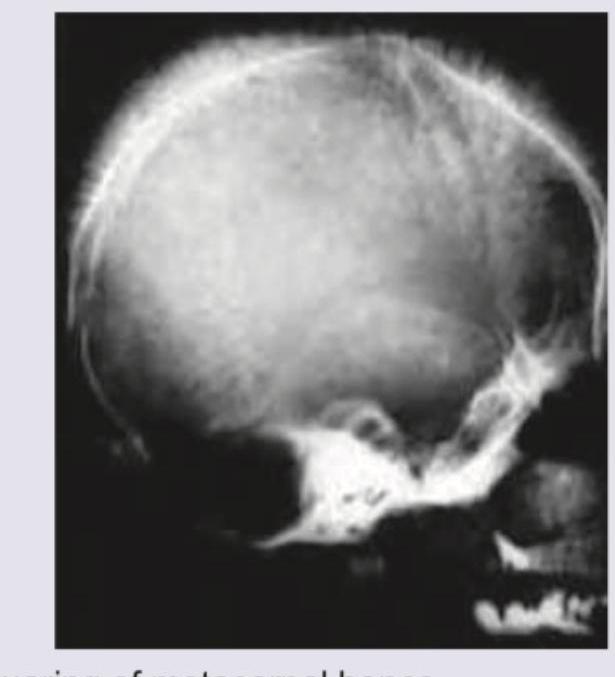
A nine-month-old boy presented with progressive lethargy, irritability, and pallor since 6 months of age. Examination revealed severe pallor. Investigations showed Hb 3.8 mg/dL, MCV 58 fL, MCH 19.4 pg/cell. Blood film shows normal osmotic fragility, target cells, and normoblasts. X-ray skull shows expansion of the erythroid marrow. Which of the following is the most likely diagnosis?
In infants, from which bone is a bone marrow biopsy typically performed?
Thrombocytopenia is not a feature of which of the following conditions?
Small platelets on peripheral smear examination are seen in which of the following conditions?
What is the primary treatment for a neonate diagnosed with Kostmann syndrome presenting with recurrent infections and abscesses?
What are the characteristic laboratory findings in hemophilia A?
What is the drug of choice for neonatal idiopathic thrombocytopenic purpura (ITP)?
A 10-year-old child presents with pallor and a history of blood transfusion 2 months prior. Investigations reveal Hb 4.5 gm/dL, total leukocyte count 60,000/mm³, platelet count 2 lakhs/mm³, CD10 positive, CD19 positive, CD117 positive, VEPO positive, and CD33 negative. What is the most likely diagnosis?
Thrombocytopenia occurs in all of the following conditions except?
Explanation: **Explanation:** **Fanconi Anemia (FA)** is the most common cause of inherited (constitutional) aplastic anemia. It is primarily an autosomal recessive disorder characterized by a defect in **DNA repair** (specifically, the repair of DNA interstrand cross-links). This leads to progressive bone marrow failure, typically manifesting in the first decade of life (median age 7–8 years). **Why the other options are incorrect:** * **Shwachman-Diamond Syndrome:** This is the second most common inherited cause of pancreatic insufficiency (after Cystic Fibrosis). While it involves bone marrow failure, it typically presents first with **neutropenia** and skeletal abnormalities, rather than generalized aplastic anemia. * **Diamond-Blackfan Anemia:** This is a **pure red cell aplasia**, not a generalized aplastic anemia. It presents early in infancy (usually <1 year) with macrocytic anemia and normal leukocyte/platelet counts. * **Dyskeratosis Congenita:** This is a rare telomere biology disorder. While it causes aplastic anemia, it is less common than Fanconi Anemia and is characterized by a classic triad of abnormal skin pigmentation, nail dystrophy, and oral leukoplakia. **High-Yield Clinical Pearls for NEET-PG:** * **Physical Findings in FA:** Short stature, **absent or hypoplastic thumbs/radius**, microcephaly, and café-au-lait spots. * **Gold Standard Diagnosis:** **Chromosomal Breakage Analysis** using Clastogenic agents like Diepoxybutane (DEB) or Mitomycin C. * **Malignancy Risk:** Patients have a significantly increased risk of developing **AML** and squamous cell carcinomas (head, neck, and anogenital). * **Treatment:** Hematopoietic Stem Cell Transplant (HSCT) is the definitive treatment for hematologic manifestations.
Explanation: **Explanation:** The clinical presentation and laboratory findings point towards a severe **Microcytic Hypochromic Anemia**. At 9 months of age, the most common cause of such a profile is **Iron Deficiency Anemia (IDA)**, typically due to nutritional deficiency (delayed weaning or exclusive cow's milk intake). **Why Option A is Correct:** * **Hematological Indices:** Hb 3.8 g/dL (severe anemia), MCV 58 fL (low), and MCH 19.4 pg (low) are classic for microcytic hypochromic anemia. * **Peripheral Smear:** Target cells and normoblasts (nucleated RBCs) are frequently seen in severe IDA as the bone marrow attempts to compensate for hypoxia. * **Radiology:** In chronic, severe anemia, the bone marrow undergoes compensatory hyperplasia. This leads to **expansion of the erythroid marrow**, which can manifest as widening of the diploic space in the skull (though more common in Thalassemia, it occurs in severe IDA as well). * **Osmotic Fragility:** Normal osmotic fragility rules out Hereditary Spherocytosis. **Why Other Options are Incorrect:** * **B. Acute Lymphoblastic Leukemia:** While it causes pallor and lethargy, it typically presents with thrombocytopenia (bleeding), lymphadenopathy, or hepatosplenomegaly, and would show blasts on a blood film rather than microcytosis. * **C. Hemoglobin D disease:** This is usually asymptomatic or causes very mild hemolytic anemia; it would not explain such severe microcytosis and marrow expansion. * **D. Hereditary Spherocytosis:** This is a **normocytic** anemia characterized by **increased** osmotic fragility and the presence of spherocytes, not target cells. **High-Yield Pearls for NEET-PG:** 1. **Mentzer Index (MCV/RBC count):** >13 suggests IDA; <13 suggests Thalassemia trait. 2. **Earliest sign of response to Iron therapy:** Increased reticulocyte count (peaks at 5–7 days). 3. **Skull X-ray:** The "Hair-on-end" appearance is most characteristic of Thalassemia Major but can be seen in any severe chronic hemolytic anemia or severe IDA.
Explanation: **Explanation:** The site for bone marrow aspiration and biopsy varies significantly with age due to the conversion of red (hematopoietic) marrow to yellow (fatty) marrow. **1. Why Tibia is Correct:** In **infants (children <1 year of age)**, the **upper third of the tibia** (anteromedial surface, just below the tibial tuberosity) is the preferred site. This is because the tibia contains active red marrow in infancy and is easily accessible, superficial, and provides a stable surface for the procedure. **2. Analysis of Incorrect Options:** * **Posterior Superior Iliac Spine (PSIS):** This is the **most common overall site** for bone marrow biopsy in adults and children older than 1–2 years. In infants, however, the iliac bone is thin and not yet fully ossified, making it less ideal than the tibia. * **Sternum:** This is a common site in adults but is **strictly contraindicated in children**. The sternal plate in infants is very thin and the underlying mediastinal structures (heart and great vessels) are at high risk of fatal puncture. * **Iliac Crest (Anterior):** While it can be used if the patient cannot be turned prone, it is generally less preferred than the PSIS due to a thicker cortical bone layer. **3. NEET-PG High-Yield Pearls:** * **Preferred site <1 year:** Tibia (Anteromedial aspect). * **Preferred site >1–2 years & Adults:** Posterior Superior Iliac Spine (PSIS). * **Site for Intraosseous (IO) access in emergencies:** Proximal Tibia (same as biopsy site in infants). * **Marrow Conversion:** Red marrow is replaced by yellow marrow in a centripetal direction (from distal limbs toward the axial skeleton) as a child grows.
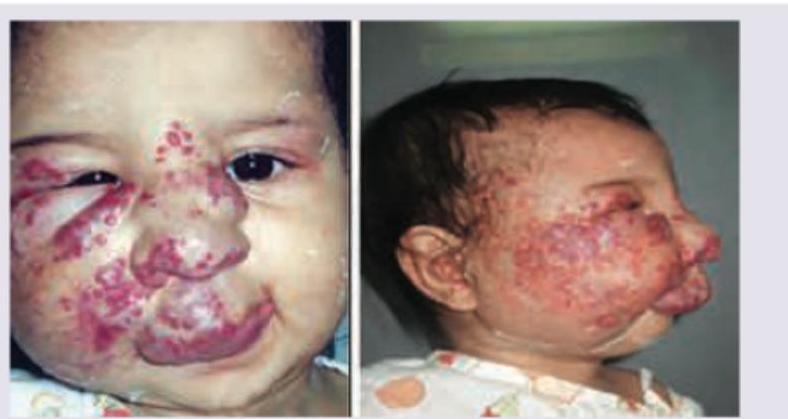
Explanation: **Explanation:** The core concept tested here is the differentiation between **palpable purpura** (vasculitic) and **non-palpable purpura** (thrombocytopenic). **1. Why Henoch-Schonlein Purpura (HSP) is the correct answer:** HSP is an **IgA-mediated small-vessel vasculitis**. The skin lesions (purpura) are caused by inflammation of the blood vessel walls, leading to RBC extravasation into the skin. Crucially, the **platelet count in HSP is normal or even elevated** (as an acute-phase reactant). The hallmark clinical triad includes palpable purpura (usually on lower limbs/buttocks), arthritis, and abdominal pain. **2. Why the other options are incorrect:** * **Cavernous Angioma (Kasabach-Merritt Syndrome):** Large vascular tumors can sequester and destroy platelets (consumptive coagulopathy), leading to profound thrombocytopenia. * **Thrombotic Thrombocytopenic Purpura (TTP):** Characterized by the formation of microthrombi in small vessels. This consumes platelets, leading to severe thrombocytopenia (part of the classic pentad: Microangiopathic hemolytic anemia, Thrombocytopenia, Fever, Renal failure, and Neurological symptoms). * **Disseminated Intravascular Coagulation (DIC):** Involves systemic activation of the coagulation cascade, leading to the widespread consumption of both clotting factors and platelets. **High-Yield Clinical Pearls for NEET-PG:** * **HSP:** Most common vasculitis in children; often follows an Upper Respiratory Tract Infection (URTI). Renal involvement (IgA Nephropathy) determines long-term prognosis. * **Platelet Count:** Always check the platelet count in a child with purpura. If it's normal, think HSP; if low, think ITP, Leukemia, or DIC. * **Kasabach-Merritt Syndrome:** High-yield association between "Giant Hemangioma" and "Thrombocytopenia."
Explanation: **Explanation:** The size of platelets on a peripheral smear is a critical diagnostic clue in pediatric hematology. **1. Why Wiskott-Aldrich Syndrome (WAS) is correct:** WAS is an X-linked recessive disorder caused by mutations in the *WAS* gene, which encodes the Wiskott-Aldrich Syndrome Protein (WASP). This protein is essential for actin cytoskeleton remodeling. Defects lead to the formation of **microthrombocytes** (small platelets) due to abnormal megakaryocyte proplatelet formation and increased splenic clearance. It is classically characterized by the triad of **Thrombocytopenia (with small platelets), Eczema, and Recurrent infections** (due to combined B and T cell deficiency). **2. Why the other options are incorrect:** * **Bernard-Soulier Syndrome (BSS):** Characterized by a deficiency of GP Ib-IX-V complex. It is the classic cause of **Giant Platelets** (often as large as red blood cells) and failure of platelet aggregation with Ristocetin. * **Gray Platelet Syndrome:** A rare alpha-granule deficiency. Platelets appear large, pale, and "ghost-like" (gray) on Wright-Giemsa stain due to the lack of granules. * **Von Willebrand Disease (vWD) Type 2B:** This "gain-of-function" mutation leads to increased binding of vWF to GP Ib, causing spontaneous platelet aggregation and clearance. This typically results in mild **thrombocytopenia with large/giant platelets** (due to increased turnover). **High-Yield Clinical Pearls for NEET-PG:** * **Small Platelets:** Wiskott-Aldrich Syndrome, X-linked Thrombocytopenia (XLT). * **Giant Platelets:** Bernard-Soulier Syndrome, May-Hegglin Anomaly (look for Dohle-like bodies in neutrophils), and ITP (due to young, "stress" platelets). * **WAS Mnemonic:** **W**-**A**-**S** (Small platelets, Aldrich, Sex-linked/X-linked). * **Treatment of choice for WAS:** Hematopoietic stem cell transplant (HSCT).
Explanation: **Explanation:** **Kostmann Syndrome** (Severe Congenital Neutropenia Type 1) is an autosomal recessive disorder characterized by a maturation arrest of neutrophil precursors in the bone marrow at the **promyelocyte/myelocyte stage**. This leads to absolute neutrophil counts (ANC) frequently below 200/mm³, manifesting as life-threatening recurrent bacterial infections and skin abscesses in early infancy. 1. **Why G-CSF is Correct:** The primary treatment is pharmacological doses of **Granulocyte Colony-Stimulating Factor (G-CSF/Filgrastim)**. G-CSF bypasses the maturation arrest, stimulates the production of functional neutrophils, and significantly reduces the frequency of infections. It has transformed Kostmann syndrome from a fatal childhood disease into a manageable chronic condition. 2. **Why Incorrect Options are Wrong:** * **Options A & B:** Antithymocyte globulin (ATG) and Cyclosporine are the mainstays for **Aplastic Anemia**, where the pathology is immune-mediated destruction of stem cells. Kostmann syndrome is a genetic maturation defect, not an autoimmune process; hence, immunosuppression is ineffective. * **Option D:** While GM-CSF (Granulocyte-Macrophage CSF) can increase neutrophil counts, it is less effective than G-CSF and is associated with more systemic side effects (fever, bone pain, and eosinophilia). **Clinical Pearls for NEET-PG:** * **Genetics:** Most common mutation is in the **ELANE gene** (though the classic autosomal recessive Kostmann type specifically involves the **HAX1 gene**). * **Bone Marrow Finding:** Characterized by "maturation arrest" at the promyelocyte stage. * **Malignancy Risk:** Patients have a significantly increased risk of developing **Acute Myeloid Leukemia (AML)** or Myelodysplastic Syndrome (MDS). * **Definitive Cure:** Hematopoietic Stem Cell Transplant (HSCT) is the only curative treatment for those refractory to G-CSF or those developing malignant transformation.
Explanation: **Explanation:** Hemophilia A is an **X-linked recessive** bleeding disorder caused by a deficiency of **Clotting Factor VIII**. **1. Why the Correct Answer is Right:** Factor VIII is a crucial component of the **intrinsic pathway** of the coagulation cascade. The **Activated Partial Thromboplastin Time (aPTT)** is the laboratory screening test used to evaluate the integrity of the intrinsic and common pathways. Therefore, a deficiency in Factor VIII leads to an **isolated prolongation of aPTT**. The Prothrombin Time (PT), Bleeding Time (BT), and Platelet count remain normal. **2. Analysis of Incorrect Options:** * **Option A (PT):** Prothrombin Time measures the **extrinsic pathway** (Factor VII). Since Factor VII levels are normal in Hemophilia A, the PT is unaffected. * **Option C (Inheritance Pattern):** While Hemophilia A *is* inherited in an X-linked recessive pattern, the question specifically asks for **laboratory findings**. Inheritance is a genetic characteristic, not a lab result. * **Option D (30% Factor Level):** Clinical bleeding typically occurs when factor levels are **below 40%**. However, "30%" is not a diagnostic "finding" but rather a threshold for mild disease. Most symptomatic cases (moderate to severe) present with levels <5%. **3. NEET-PG High-Yield Pearls:** * **Mixing Study:** If aPTT is prolonged, a mixing study (adding normal plasma) is done. If the aPTT corrects, it confirms a **factor deficiency**; if it doesn't, it suggests a **factor inhibitor**. * **Gold Standard Diagnosis:** Definitive diagnosis is made via a **specific Factor VIII assay**. * **Treatment:** Recombinant Factor VIII concentrate. **Desmopressin (DDAVP)** can be used in mild cases to release stored Factor VIII from endothelial Weibel-Palade bodies. * **Clinical Presentation:** Characterized by deep tissue bleeding, specifically **hemarthrosis** (bleeding into joints) and muscle hematomas.
Explanation: **Explanation:** Neonatal Idiopathic Thrombocytopenic Purpura (ITP) usually occurs due to the transplacental passage of maternal anti-platelet IgG antibodies (passive immunization). **Why IVIG is the Correct Answer:** Intravenous Immunoglobulin (IVIG) is the **drug of choice** because it rapidly increases the platelet count by blocking the Fc receptors on splenic macrophages, preventing the destruction of antibody-coated platelets. In neonates, IVIG is preferred over steroids due to its faster onset of action and better safety profile, minimizing the risk of systemic side effects associated with corticosteroids in the neonatal period. **Analysis of Incorrect Options:** * **Platelet Transfusion (A):** This is generally **ineffective** because the circulating maternal antibodies will quickly destroy the transfused platelets. It is reserved only for life-threatening emergencies (e.g., intracranial hemorrhage). * **Prednisolone (B) & Dexamethasone (C):** While corticosteroids are first-line treatments for *adult* or *childhood* ITP, they are second-line in neonates. They take longer to act (48–72 hours) and carry risks of growth suppression and metabolic disturbances in newborns. **High-Yield Clinical Pearls for NEET-PG:** * **Definition:** Neonatal ITP occurs in infants born to mothers with active ITP or a history of ITP. * **Nadir:** Platelet counts usually reach their lowest point (nadir) between **day 2 and day 5** of life. * **Management Trigger:** Treatment is typically indicated if the platelet count drops below **20,000–30,000/µL** or if there is active bleeding. * **Prognosis:** The condition is self-limiting and resolves within 1–2 months as maternal antibodies are cleared from the infant's circulation.
Explanation: ### Explanation The diagnosis of **Mixed Phenotypic Acute Leukemia (MPAL)** is based on the presence of markers from two different lineages on the same blast population (biphenotypic) or two distinct blast populations (bilineal). **1. Why Option D is Correct:** The child presents with hyperleukocytosis (TLC 60,000/mm³) and blasts expressing both lymphoid and myeloid markers: * **Lymphoid markers:** CD10 and CD19 are classic B-cell lineage markers. * **Myeloid markers:** CD117 (c-kit) and MPO (Myeloperoxidase, indicated here as VEPO positive) are definitive for myeloid lineage. According to the **WHO criteria**, the expression of strong B-cell markers (CD19) alongside definitive myeloid markers (MPO) confirms MPAL. **2. Why Other Options are Incorrect:** * **Option A (ALL):** While CD10 and CD19 are positive, the presence of MPO (VEPO) and CD117 strictly excludes a pure diagnosis of ALL. * **Option B (AML):** Although CD117 and MPO are present, the strong expression of B-cell markers (CD10, CD19) is not typical for pure AML. * **Option C (Undifferentiated Leukemia):** This diagnosis is reserved for cases where blasts lack any lineage-specific markers (negative for MPO, T-cell, and B-cell markers). **3. NEET-PG High-Yield Pearls:** * **MPO (Myeloperoxidase):** The most specific marker for Myeloid lineage. * **CD19:** The most specific marker for B-cell lineage. * **Cytoplasmic CD3:** The most specific marker for T-cell lineage. * **Prognosis:** MPAL generally carries a poorer prognosis compared to lineage-restricted ALL or AML and often requires intensive "hybrid" chemotherapy protocols followed by Stem Cell Transplant.
Explanation: **Explanation:** The core concept tested here is the distinction between **quantitative** and **qualitative** platelet disorders. **1. Why Henoch-Schönlein Purpura (HSP) is the correct answer:** HSP is a small-vessel **leukocytoclastic vasculitis** mediated by IgA immune complex deposition. The "purpura" seen in HSP is **non-thrombocytopenic**; in fact, the platelet count in HSP is typically **normal or even elevated** (as an acute-phase reactant). The skin lesions occur due to inflammation and leakage of the blood vessels, not due to a deficiency in platelets. **2. Analysis of Incorrect Options:** * **Thrombotic Thrombocytopenic Purpura (TTP):** Characterized by the classic pentad, which includes **consumptive thrombocytopenia** due to the formation of extensive microthrombi in small vessels (ADAMTS13 deficiency). * **Disseminated Intravascular Coagulation (DIC):** Involves widespread activation of the coagulation cascade, leading to the **massive consumption** of both clotting factors and platelets, resulting in profound thrombocytopenia. * **Wiskott-Aldrich Syndrome:** A X-linked recessive immunodeficiency characterized by the triad of eczema, immunodeficiency, and **micro-thrombocytopenia** (small-sized platelets and low counts due to impaired production and increased destruction). **Clinical Pearls for NEET-PG:** * **HSP Tetrad:** Palpable purpura (without thrombocytopenia), arthritis/arthralgia, abdominal pain (intussusception risk), and renal involvement (IgA nephropathy). * **Platelet Size:** Wiskott-Aldrich is unique for **small** platelets, whereas ITP and Bernard-Soulier Syndrome feature **large** (giant) platelets. * **Rule of Thumb:** If a question mentions "Palpable Purpura," always think of Vasculitis (like HSP) rather than simple thrombocytopenia.
Anemias in Children
Practice Questions
Hemoglobinopathies
Practice Questions
Hemolytic Anemias
Practice Questions
Nutritional Anemias
Practice Questions
Thrombocytopenia
Practice Questions
Bleeding Disorders
Practice Questions
Thrombotic Disorders
Practice Questions
White Blood Cell Disorders
Practice Questions
Bone Marrow Failure Syndromes
Practice Questions
Blood Component Therapy
Practice Questions
Hemophilia and Von Willebrand Disease
Practice Questions
Evaluation of Bleeding Tendencies
Practice Questions
Get full access to all questions, explanations, and performance tracking.
Start For Free