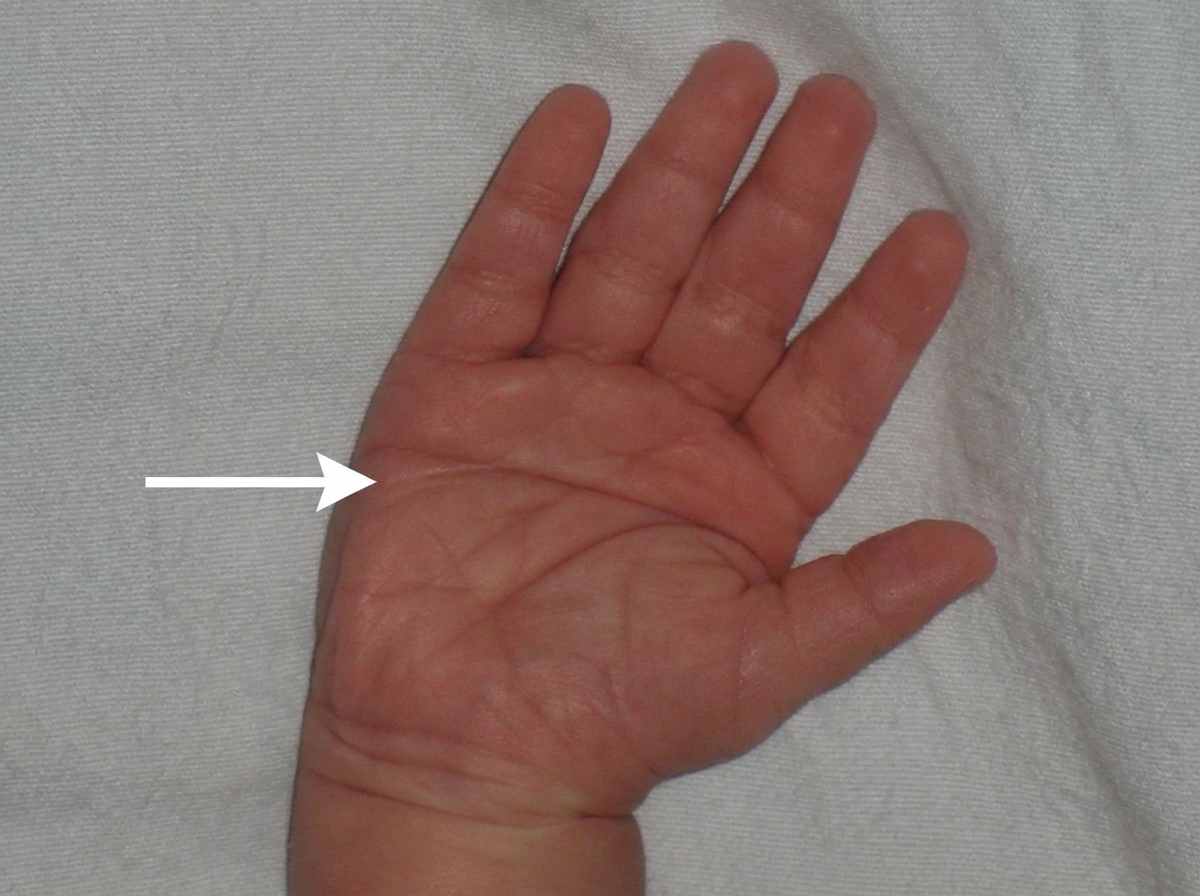
The image shows presence of:

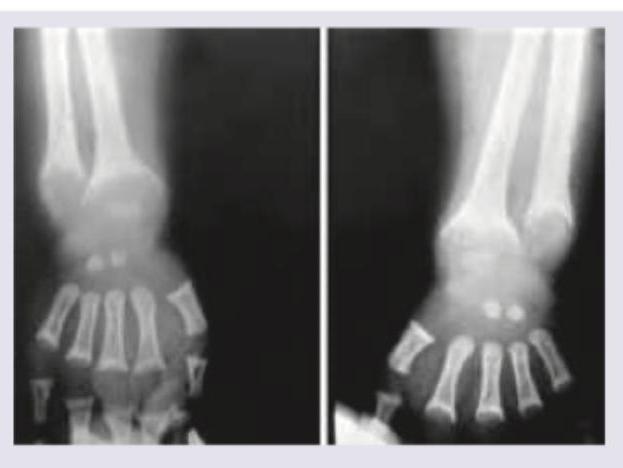
A 5-year-old boy from upper socioeconomic background presents with bowing of legs. On work up serum calcium was $9 \mathrm{mg} \%$ with serum phosphate of $1 \mathrm{mg} \%$ with normal serum alkaline phosphatase (ALP) and normal serum PTH. X-ray wrist joint is given. Comment on the diagnosis:
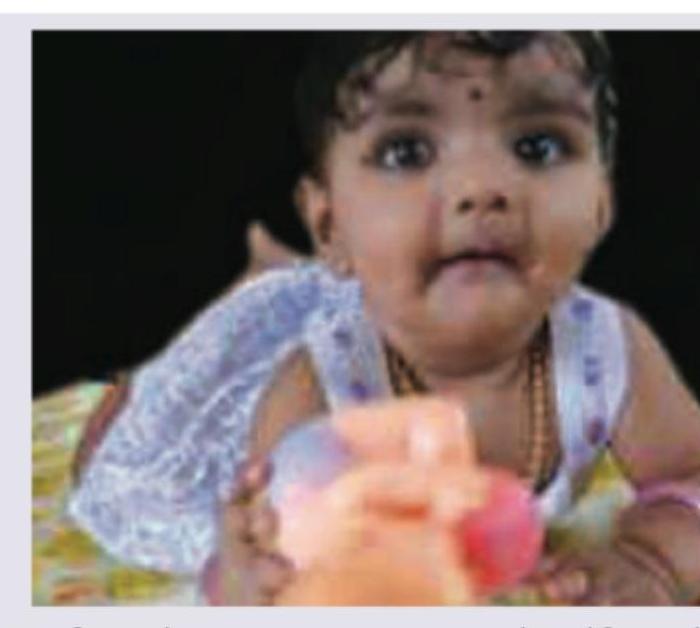
A child can perform this activity by what age?
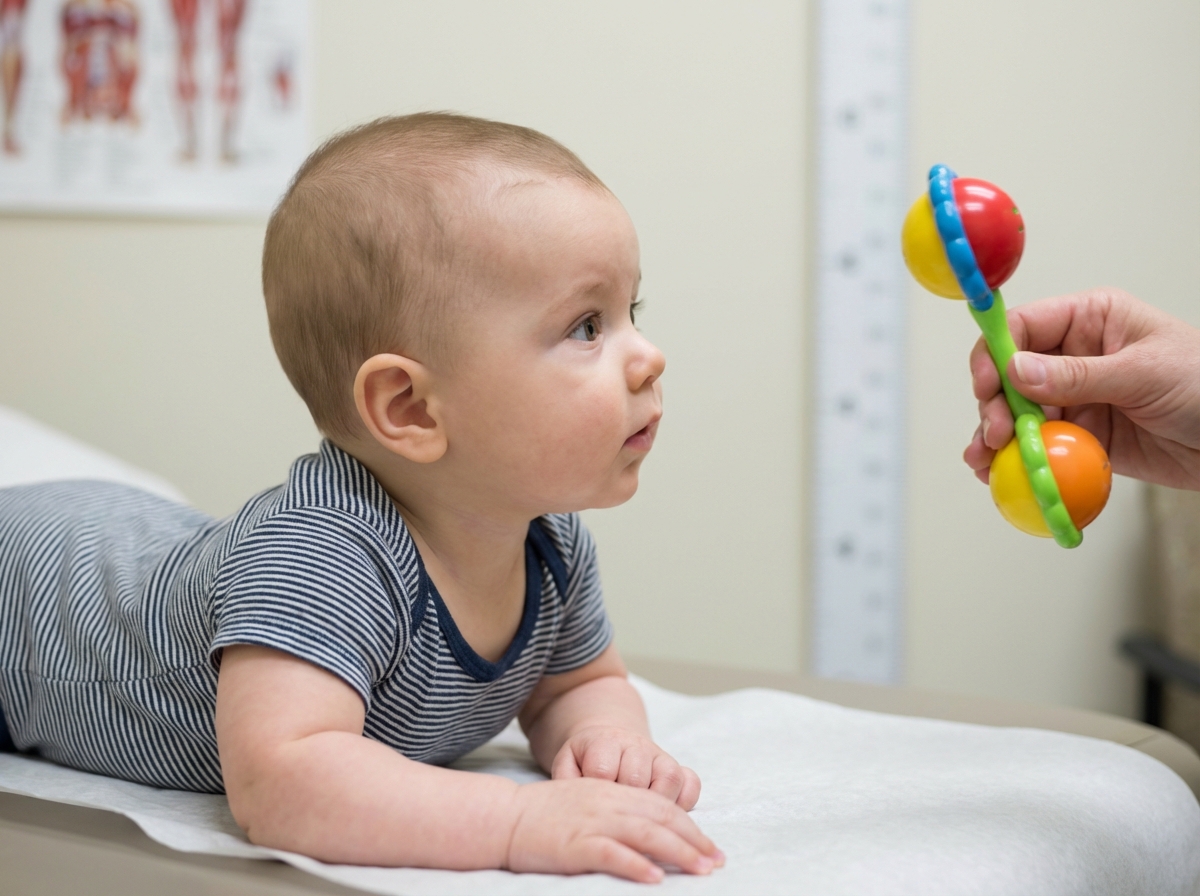
The developmental milestone shown in the image corresponds to which age?
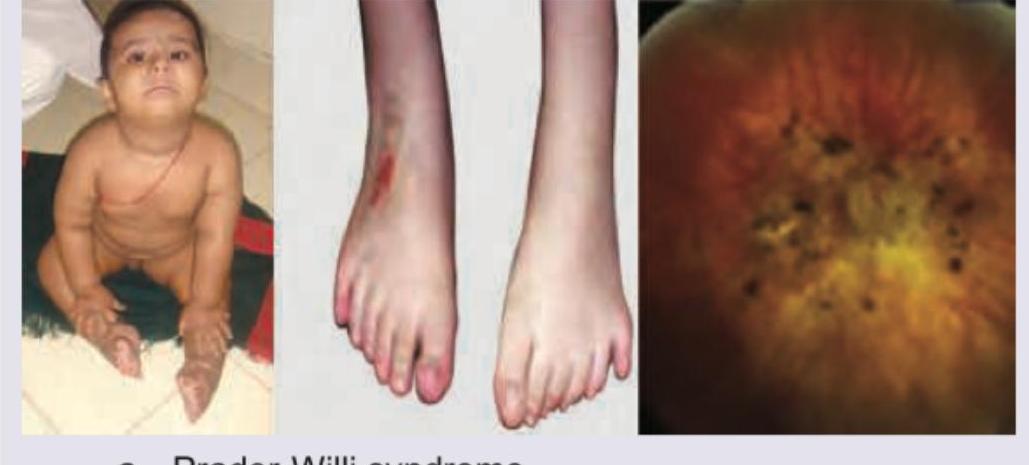
A 5-year-old short stature child is brought for evaluation. Which disease is the most likely diagnosis as depicted by these pictures of the child, foot and retina?
The image shows a child with:
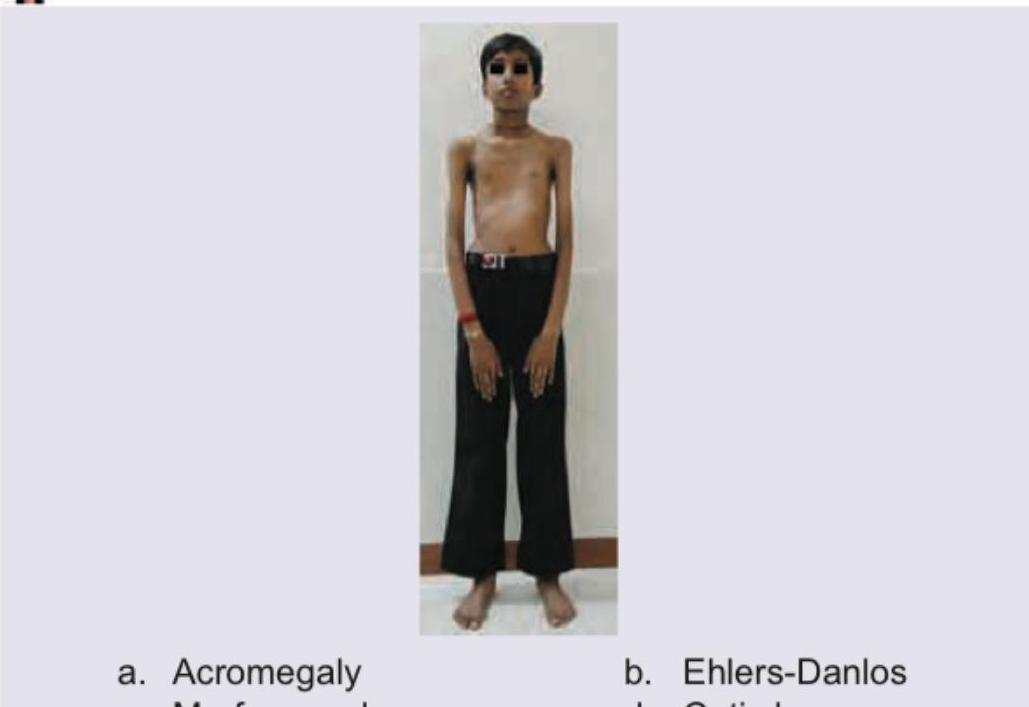
The image shows a child with:
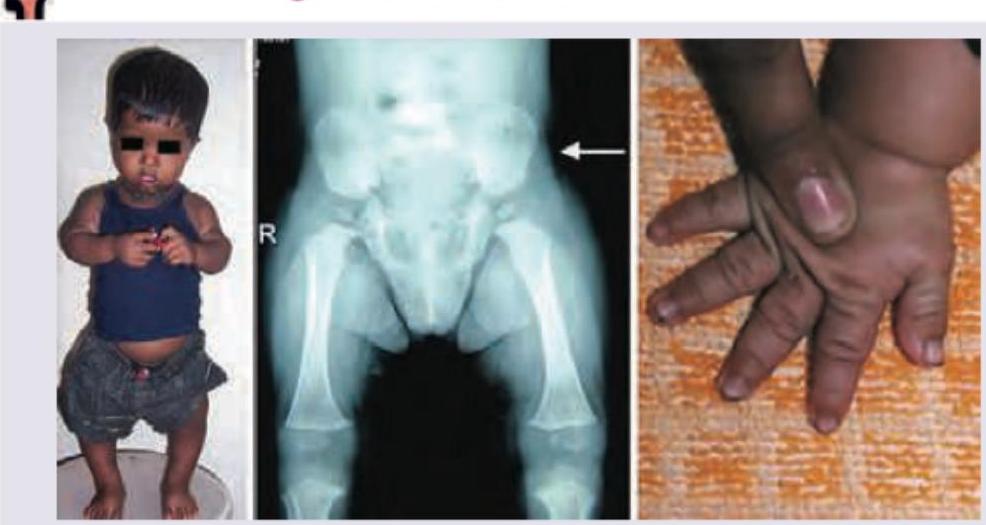
A 3-month-old infant with shortened bowed extremities, macrocephaly. X-ray of lower extremities and Lateral view spine was performed. All are true about the condition except: (Recent NEET Pattern 2016-17)
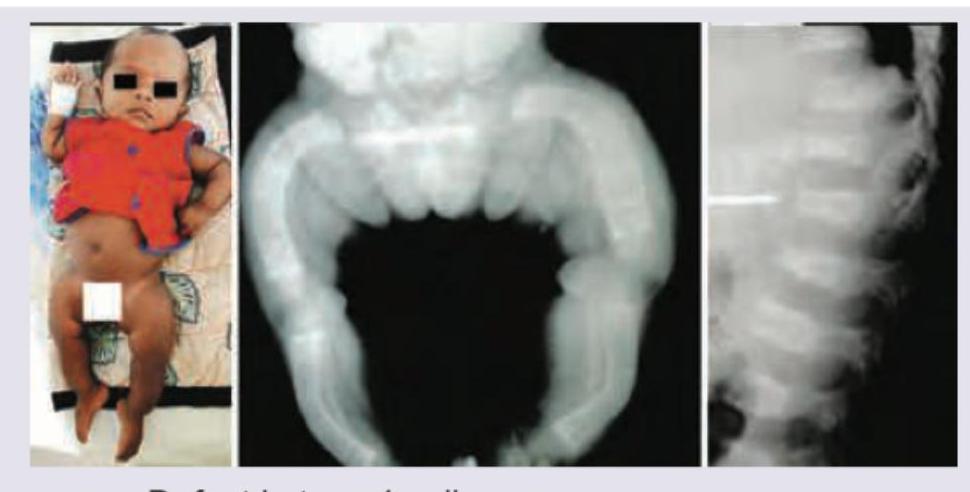
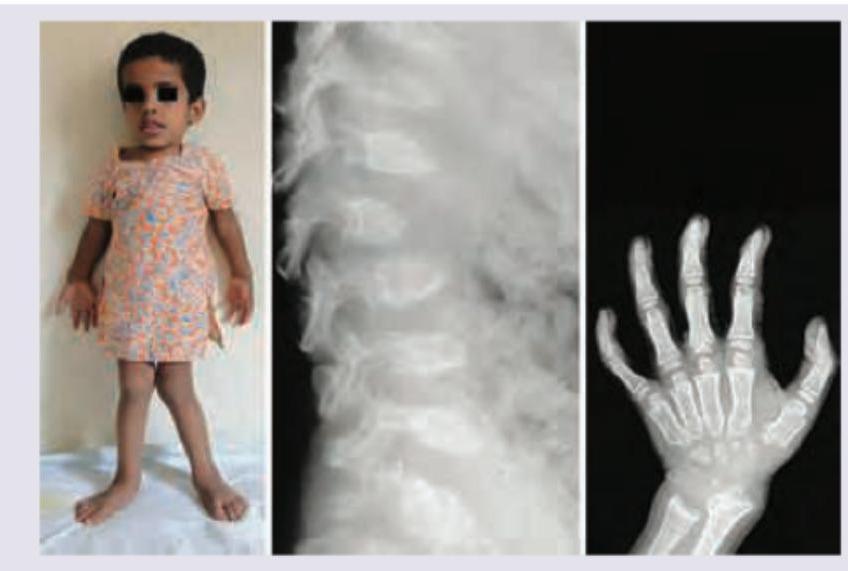
Which of the following is the probable diagnosis in this child with dwarfism, coarse facies. X-ray spine lateral view and X-ray hand is shown?
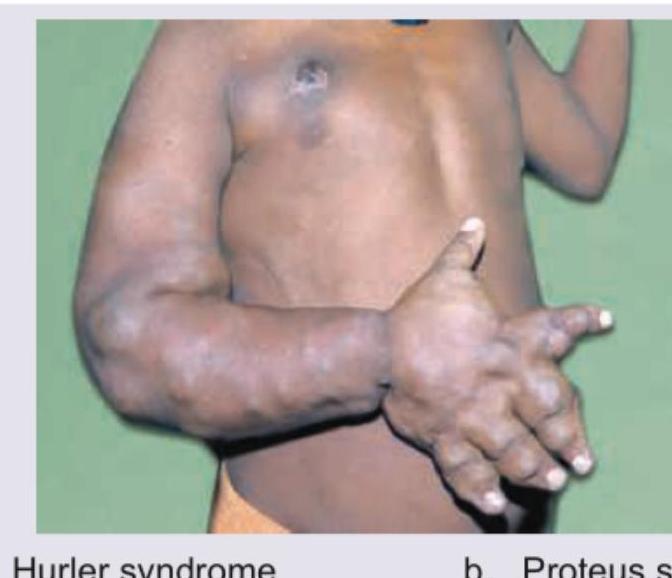
The following child has presented with disfigurement and rapidly progressive overgrowth of some body parts. The clinical diagnosis is?
Explanation: ***Single palmar crease*** - The image clearly shows a **single transverse palmar crease** (simian crease), which is a **dermatoglyphic feature** where the normal two palmar creases are replaced by one continuous crease across the palm. - This finding is present in approximately **50% of individuals with Down syndrome** and is considered a significant clinical marker, though it can also occur in about 5% of the general population. *Macroglossia* - **Macroglossia** (enlarged tongue) is a common feature of **Down syndrome** but involves the oral cavity and tongue size. - The image shows only the **palm of the hand**, making it impossible to assess for macroglossia, which would require visualization of the oral structures. *Brushfield spots* - **Brushfield spots** are white or light-colored spots around the **periphery of the iris** and are characteristic of Down syndrome. - These spots are **ocular findings** that would require examination of the eyes, which are not visible in this palm-focused image. *Umbilical hernia* - **Umbilical hernia** is a protrusion of abdominal contents through the **umbilical ring** and is more common in children with Down syndrome. - This is an **abdominal finding** that would require visualization of the umbilical area, which is not shown in this image of the palm.
Explanation: ***Hypophosphatemic rickets*** - The classic presentation of **bowing of the legs** (rickets) in a child with **isolated low serum phosphate** (1 mg%), normal calcium and PTH, points directly to hypophosphatemic rickets. - The **X-ray of the wrist joint** would likely show characteristic findings of rickets such as **widening and fraying of growth plates**, confirming the diagnosis. *Bartter syndrome* - This is a rare genetic disorder affecting the kidneys, leading to **salt wasting**, **hypokalemic metabolic alkalosis**, and normal to low blood pressure. - It does not primarily cause rickets or the specific electrolyte imbalance seen here (isolated hypophosphatemia). *Chronic renal failure* - While chronic renal failure can lead to renal osteodystrophy (a form of rickets), it would typically involve **elevated PTH**, **hyperphosphatemia (initially)** or varied calcium levels, and often metabolic acidosis. - In this case, PTH is normal and phosphate is low, making chronic renal failure less likely. *Polycystic kidneys* - This is a genetic disorder characterized by the growth of numerous cysts in the kidneys, which can cause kidney dysfunction over time. - However, it does not directly present with isolated **hypophosphatemia** and bone bowing in a 5-year-old without other clear signs of significant renal failure.
Explanation: Here's an explanation based on the image, which depicts a child turning their head to the sound of a rattle, a developmental milestone. ***5–6 months*** - Turning the head towards a sound, especially a rattle held to the side, is a typical **auditory localization** skill developed around 5-6 months of age. - At this age, infants also begin to sit with support and reach for objects, indicating developing **motor and cognitive abilities**. - This represents the infant's ability to integrate auditory input with motor response. *2–3 months* - At this age, infants show **primitive auditory responses** such as startling to loud sounds or briefly stopping activity when hearing a voice. - They cannot yet **localize sound** by turning their head toward the source consistently. *9–10 months* - By this age, infants have already mastered auditory localization and can perform more complex tasks like responding to their name and understanding simple commands. - They demonstrate **advanced social and language skills** beyond simple sound localization. *12–15 months* - At this age, children are typically **walking independently** and using several meaningful words. - Sound localization is a skill already well-established by this developmental stage.
Explanation: ***12 weeks*** - At 12 weeks (3 months), infants typically develop the ability to **hold their head up steadily** when placed on their tummy and can **bear weight on their forearms**, as shown in the image. - They also start to **reach for and bat at objects**, indicating improved hand-eye coordination. *8 weeks* - At 8 weeks (2 months), infants generally have **limited head control** and are usually able to lift their head briefly, but not steadily for extended periods. - They are typically not yet able to **bear significant weight on their forearms** or actively reach for objects with purpose. *16 weeks* - By 16 weeks (4 months), infants have usually achieved excellent **head control** and can often **roll from tummy to back**. - They are also typically able to **grasp objects** and bring them to their mouth, which is more advanced than what is depicted. *20 weeks* - At 20 weeks (5 months), infants are usually able to **roll both ways** (tummy to back and back to tummy) and can often **sit with support**. - They show more complex actions like **passing objects from one hand to another**, which is beyond the developmental stage shown.
Explanation: ***Bardet-Biedl syndrome*** - This rare autosomal recessive ciliopathy is characterized by a **classic pentad**: central obesity, **polydactyly**, **retinal dystrophy** (rod-cone dystrophy), renal abnormalities, and hypogonadism. - The combination of **short stature with obesity**, **polydactyly** (clearly visible in the foot image), and **pigmentary retinopathy** (visible in the retinal image) is **pathognomonic** for Bardet-Biedl syndrome. - This is the **only syndrome among the options** that presents with all three clinical features shown in the images. *Prader-Willi syndrome* - Characterized by **hypotonia** in infancy, **hyperphagia** leading to obesity, short stature, and distinct facial features (almond-shaped eyes, narrow forehead). - Does **not present with polydactyly** or the specific type of **retinal dystrophy** seen in Bardet-Biedl syndrome. - Caused by loss of paternally expressed genes on chromosome 15q11-13. *Alstrom syndrome* - Rare autosomal recessive disorder sharing features like obesity and **cone-rod dystrophy** (retinal degeneration). - Distinguished by early-onset **dilated cardiomyopathy**, **progressive hearing loss**, and **type 2 diabetes**. - **Polydactyly is not a feature** of Alstrom syndrome, making it unlikely given the foot abnormality in the image. *Carpenter syndrome* - Rare form of **acrocephalopolysyndactyly** characterized by **craniosynostosis** (premature fusion of skull sutures), distinctive craniofacial anomalies, **polysyndactyly**, and obesity. - While it includes polydactyly, it is distinguished by severe **skull and facial deformities** (tower-shaped skull, flat nasal bridge). - Does **not typically involve retinopathy**, making it inconsistent with the retinal findings shown.
Explanation: ***Marfan syndrome*** - The child in the image exhibits classic features of **Marfan syndrome**, including a **tall, thin build** and **elongated limbs** (**dolichostenomelia**), particularly noticeable in the long arms and fingers relative to the trunk. - This genetic disorder affects **connective tissue**, leading to characteristic skeletal, cardiovascular, and ocular abnormalities. *Acromegaly* - **Acromegaly** is caused by excessive growth hormone production in adulthood, leading to the **enlargement of hands, feet, and facial features**, not the general tall and slender stature seen here. - It typically presents with **thickening of soft tissues, skin tags, and coarsening of facial features**, which are absent in this child. *Ehlers-Danlos* - **Ehlers-Danlos syndromes** are characterized by **skin hyperextensibility**, **joint hypermobility**, and **tissue fragility**. - While there is some overlap in connective tissue involvement, the predominant features in the image (extreme tall stature, slender build, disproportionately long limbs) are more indicative of Marfan syndrome rather than Ehlers-Danlos, which often involves significant skin and joint laxity. *Cutis laxa* - **Cutis laxa** is a rare connective tissue disorder characterized by **loose, inelastic, and wrinkled skin** that hangs in folds. - This condition does not typically present with the extreme tall stature and arachnodactyly seen in the image.
Explanation: ***Achondroplasia*** - The image shows disproportionate **short stature** with short limbs, a normal-sized trunk, and a relatively large head, which are classic features of achondroplasia. - The radiograph of the hip **(second image from the left)** shows abnormal shape of the pelvis with short iliac bones and decreased interpedicular distance in the lumbar spine, and the hand image displays **trident hand deformity**, all characteristic of achondroplasia due to defective endochondral ossification caused by a mutation in the **FGFR3 gene**. *Osteogenesis imperfecta* - Characterized by **bone fragility** leading to recurrent fractures, **blue sclera**, and **dentinogenesis imperfecta**. - These clinical features are not evident in the provided images; no obvious fractures or blue sclera are shown. *Hypothyroidism* - In children, severe congenital hypothyroidism (cretinism) can cause **growth retardation, intellectual disability, coarse facial features**, and delayed bone maturation. - While it causes short stature, the specific skeletal deformities, and trident hand seen in the images are not typical of hypothyroidism. *Down syndrome* - Characterized by distinct facial features such as **upward slanting palpebral fissures, epicanthic folds, a flattened nasal bridge**, and often intellectual disability, and congenital heart defects. - The child in the image does not display the characteristic facial features or other common physical stigmata of Down syndrome such as brushfield spots or a single palmar crease.
Explanation: ***Defect in type 1 collagen*** - The clinical presentation of **shortened bowed extremities** and **macrocephaly** in a 3-month-old infant with characteristic X-ray findings indicates **achondroplasia**. - Achondroplasia is caused by a **mutation in the FGFR3 gene (fibroblast growth factor receptor 3)**, NOT a defect in type 1 collagen. - **Type 1 collagen defects** cause **osteogenesis imperfecta**, which presents with blue sclera, multiple fractures, and brittle bones - a completely different condition. - **This statement is FALSE** about achondroplasia, making it the correct answer to this "EXCEPT" question. *Type 3 is most common form* - Achondroplasia does not have a widely recognized "type 3" classification in standard medical terminology. - This option is poorly worded and potentially confusing, though vertebral body abnormalities and skeletal changes are characteristic features. *Vertebral compression* - **Platyspondyly** (flattened vertebral bodies) and vertebral compression are **TRUE** radiological findings in achondroplasia. - Lateral spine X-rays typically show shortened vertebral bodies with decreased interpedicular distance in the lumbar spine. *Autosomal recessive with variable expression* - **This statement is also FALSE** about achondroplasia. - Achondroplasia follows an **autosomal dominant** inheritance pattern, though 80% of cases arise from de novo mutations. - This creates potential ambiguity in the question as both this option and Option A are false statements. - However, Option A (collagen defect) is the more fundamentally incorrect statement regarding the basic pathophysiology.
Explanation: ***Morquio disease*** - The combination of **dwarfism**, **coarse facies**, and the characteristic radiographic findings of **platyspondyly** (flattened vertebral bodies) on the spine X-ray and **irregularly shaped epiphyses and carpals** on the hand X-ray strongly indicates **Morquio disease** (Mucopolysaccharidosis Type IV). - Patients typically present with significant skeletal abnormalities, including **kyphoscoliosis**, **knock-knees (genu valgum)**, and a waddling gait, consistent with the child's appearance. *Tay-Sachs disease* - Tay-Sachs disease is a **neurodegenerative disorder** characterized by developmental regression, **hyperacusis**, and a **cherry-red spot on the macula**, rather than skeletal deformities or dwarfism. - It does not typically cause the bone abnormalities seen in the provided X-rays or the coarse facial features and dwarfism. *Von Gierke disease* - Von Gierke disease (Glycogen Storage Disease Type I) is characterized by **hepatomegaly**, **hypoglycemia**, **lactic acidosis**, and typically does not present with dwarfism, coarse facies, or the skeletal radiologic findings demonstrated. - This condition primarily affects **glucose metabolism** and liver function, with no significant impact on bone development. *Hypothyroidism* - While **congenital hypothyroidism** can cause dwarfism and coarse facial features, the specific skeletal abnormalities on the X-rays, such as **platyspondyly** and **epiphyseal dysplasia**, are more characteristic of a mucopolysaccharidosis like Morquio disease. - Hypothyroidism would typically show **delayed bone age** and **epiphyseal dysgenesis**, but not the distinct vertebral and carpal bone changes seen here.
Explanation: ***Proteus syndrome*** - The image depicts a child with **asymmetric overgrowth** and **disfigurement** of body parts, particularly the hand and arm, which are characteristic features of Proteus syndrome. - Proteus syndrome is a rare genetic disorder characterized by **sporadic, postnatal, mosaic overgrowth** of various tissues, including skin, bone, adipose tissue, and blood vessels. *Hurler syndrome* - Hurler syndrome (MPS I) is a **lysosomal storage disorder** characterized by coarse facial features, corneal clouding, hepatosplenomegaly, and skeletal deformities (dysostosis multiplex). - It does not typically present with the extreme, asymmetric overgrowth of limbs seen in the image. *Sotos syndrome* - Sotos syndrome, or **cerebral gigantism**, is characterized by overgrowth starting in childhood, distinctive facial features, and developmental delay. - While it involves overgrowth, it usually presents as generalized overgrowth rather than the highly asymmetric and disfiguring localized overgrowth seen here. *Crouzon syndrome* - Crouzon syndrome is a form of **craniosynostosis**, characterized by premature fusion of the skull sutures, leading to distinctive facial features such as shallow orbits, proptosis, and hypertelorism. - It does not involve the progressive, asymmetric overgrowth of limbs or other body parts as shown in the image.
Normal Growth Parameters
Practice Questions
Developmental Milestones
Practice Questions
Puberty and Adolescent Development
Practice Questions
Growth Disorders
Practice Questions
Failure to Thrive
Practice Questions
Developmental Screening and Assessment
Practice Questions
Developmental Delays
Practice Questions
Growth Charts and Monitoring
Practice Questions
Short Stature
Practice Questions
Tall Stature
Practice Questions
Precocious and Delayed Puberty
Practice Questions
Psychosocial Development
Practice Questions
Get full access to all questions, explanations, and performance tracking.
Start For Free