A child is below the third percentile for height. His growth velocity is normal, but chronologic age is more than skeletal age. What is the most likely diagnosis?
Which of the following is NOT a milestone at 7 months of age?
All of the following are true regarding head circumference (HC) except?
Bottle mouth syndrome is most frequently seen in which teeth?
All of the following are true about development EXCEPT?
Which stage of cognitive development is characterized by concrete thinking?
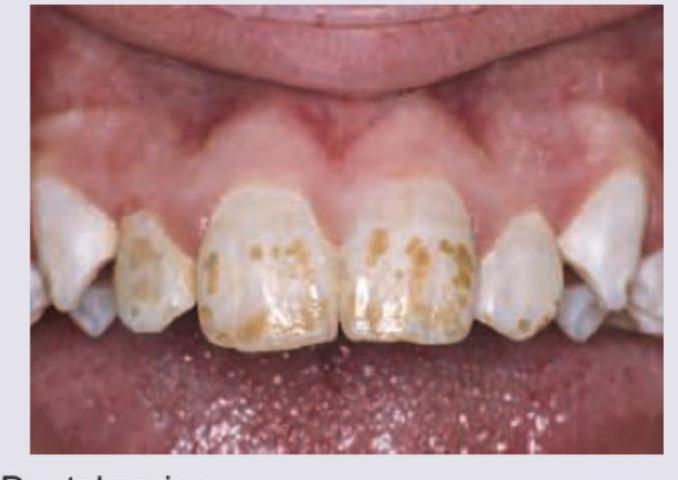
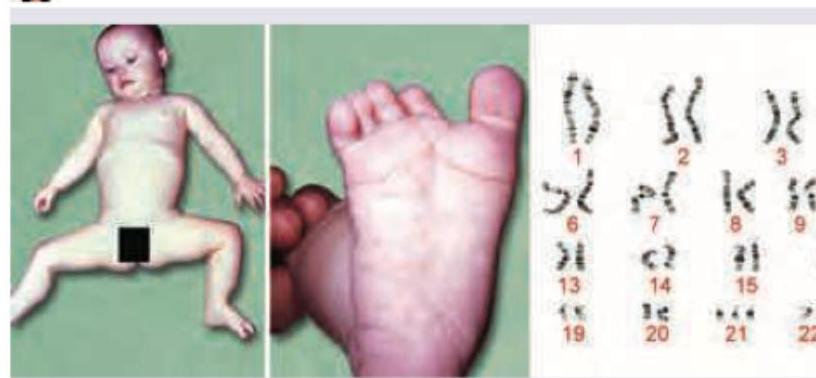
A 1 year 5 month old boy presents with delayed tooth eruption. Which of the following is NOT a potential cause for this condition?
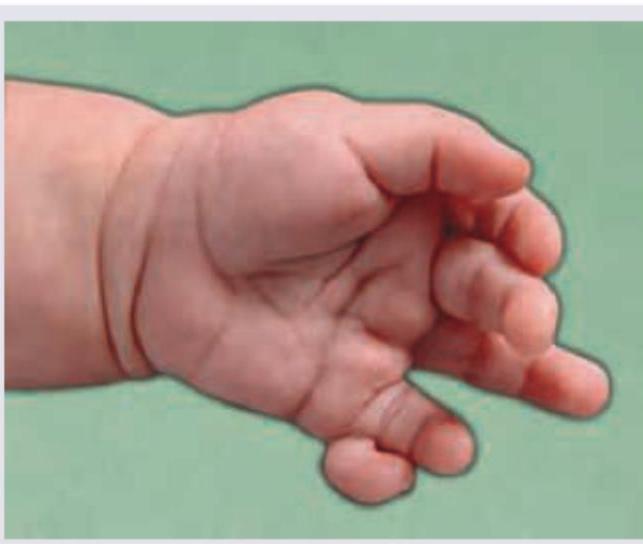
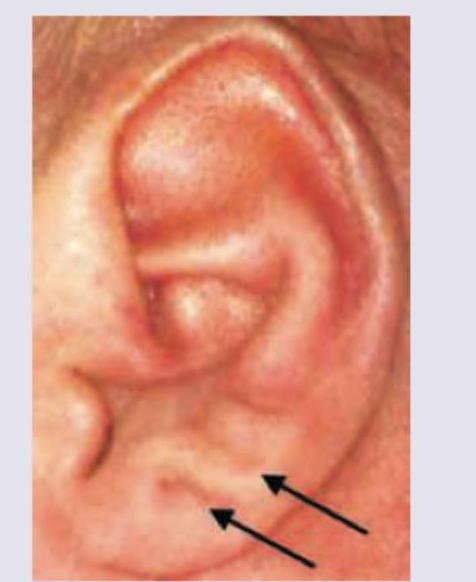
A child presents with macroglossia, omphalocele, and hemihypertrophy of limbs. What is the most probable diagnosis?
Which of the following is typically NOT achieved by a 10-month-old child?
At what age does a newborn's height typically double?
Explanation: ### Explanation The correct diagnosis is **Constitutional Delay of Growth and Puberty (CDGP)**. This condition is characterized by a "late bloomer" pattern. **1. Why Constitutional Delay is correct:** The key diagnostic features provided in the question are: * **Normal Growth Velocity:** The child is growing at a steady rate parallel to the growth curve, though below the 3rd percentile. * **Delayed Bone Age:** Skeletal age (bone age) is less than chronological age. This indicates that the child has significant "growth potential" left, as the epiphyses will fuse later than their peers. * **Final Height:** These children eventually reach a normal adult height consistent with their mid-parental height, albeit after a delayed pubertal spurt. **2. Why other options are incorrect:** * **Genetic Short Stature:** In this condition, the **bone age equals chronological age**. The child is short because their parents are short, but they follow their genetic potential without any delay in maturation. * **Primordial Dwarfism:** This refers to a group of genetic disorders where growth retardation begins in utero (IUGR). Growth velocity is typically abnormal, and there are often associated dysmorphic features. * **Hypopituitarism:** This results in **pathological short stature**. The hallmark is a **decreased growth velocity** (crossing percentiles downwards), which contradicts the "normal growth velocity" mentioned in the stem. **3. NEET-PG Clinical Pearls:** * **CDGP vs. Genetic Short Stature:** If Bone Age < Chronological Age, think CDGP. If Bone Age = Chronological Age, think Genetic Short Stature. * **Growth Velocity:** It is the most sensitive indicator of growth. A normal growth velocity (usually >4-5 cm/year in prepubertal children) generally rules out endocrine deficiencies or systemic chronic diseases. * **Management:** Reassurance is the mainstay. In CDGP, the prognosis for final adult height is excellent.
Explanation: **Explanation:** The correct answer is **A. Building a tower of 2 cubes**, as this is a fine motor milestone typically achieved at **15 months** of age. **1. Why Option A is correct:** Building a tower of cubes requires precise fine motor coordination and depth perception. The progression for cube stacking is a high-yield NEET-PG topic: * **15 months:** 2 cubes * **18 months:** 3 cubes * **2 years (24 months):** 6 cubes * **3 years (36 months):** 9 cubes or a bridge At 7 months, a child’s fine motor skills are limited to transferring objects from one hand to another and using a crude palmar grasp. **2. Why the other options are incorrect:** * **Stranger Anxiety (Social):** This typically begins at **6–7 months**, peaking at 9 months. It indicates the child’s ability to distinguish between familiar and unfamiliar faces. * **Babbling (Language):** Monosyllabic babbling (e.g., "ba," "da," "pa") starts at **6 months**. By 9 months, this progresses to bisyllabic babbling ("dada," "mama"). * **Resistance on toy being pulled (Social/Emotional):** This is a classic **6-month** milestone reflecting the child's developing sense of possessiveness and social interaction. **Clinical Pearls for NEET-PG:** * **7 Months "Rule of Thumb":** The child sits with their own support (pivoting), transfers objects, and starts showing preference for primary caregivers. * **Pincer Grasp:** Immature pincer grasp appears at 9 months; mature pincer grasp at 12 months. * **Mirror Play:** A child smiles at their mirror image at 6 months (social milestone).
Explanation: ### Explanation Head circumference (HC) is a vital anthropometric measurement in pediatrics as it serves as a direct proxy for brain growth. **1. Why Option C is the Correct Answer (The False Statement):** The rate of head growth is most rapid immediately after birth. In a term neonate, the head circumference increases by **2 cm per month** during the first 3 months of life, not 1 cm/month. The growth then slows down to 1 cm/month from 3–6 months and 0.5 cm/month from 6–12 months. **2. Analysis of Other Options:** * **Option A:** The average HC at birth is **33–35 cm**. At this stage, the head circumference is typically 2–3 cm larger than the chest circumference. * **Option B:** Since the skull bones are not yet fused and the brain undergoes massive hyperplasia and hypertrophy in early infancy, HC is the most reliable clinical indicator of **brain development**. * **Option C:** As mentioned, the growth rate from **7–12 months is 0.5 cm/month**. By the end of 1 year, the average HC is approximately **45 cm**. **3. High-Yield Clinical Pearls for NEET-PG:** * **HC vs. Chest Circumference (CC):** At birth, HC > CC. They become equal at **1 year** of age. After 1 year, CC exceeds HC. * **Total Growth in 1st Year:** The HC increases by roughly **12 cm** in the first year (35 cm to 47 cm). * **Adult Size:** By age 2, the brain reaches 80% of its adult size; by age 6, it reaches 90%. * **Microcephaly:** Defined as HC < -3 Standard Deviations (SD) for age and sex. * **Macrocephaly:** Defined as HC > +2 SD for age and sex (commonly seen in hydrocephalus).
Explanation: **Explanation:** **Bottle Mouth Syndrome** (also known as Nursing Bottle Caries or Early Childhood Caries) is a specific pattern of dental decay resulting from prolonged exposure to fermentable carbohydrates, typically when a child falls asleep with a bottle containing milk, juice, or sweetened liquids. **Why Deciduous Maxillary Incisors are the correct answer:** The **maxillary (upper) incisors** are the most frequently and severely affected teeth. When a child sucks on a bottle, the liquid pools around the upper anterior teeth. During sleep, salivary flow decreases, reducing the natural buffering and clearing of sugars. This leads to rapid acid production by *Streptococcus mutans*, causing enamel demineralization. **Why the other options are incorrect:** * **Deciduous Mandibular Incisors:** These are typically **spared** or least affected. This is because they are physically protected by the tongue during sucking and are constantly bathed in saliva from the submandibular and sublingual ducts, which aids in remineralization and acid neutralization. * **Deciduous Molars (Maxillary and Mandibular):** While molars can be involved as the condition progresses, they are not the *most frequent* or initial site of involvement compared to the maxillary incisors. **Clinical Pearls for NEET-PG:** * **Sequence of involvement:** Maxillary incisors → Maxillary first molars → Mandibular first molars. * **Characteristic sparing:** The sparing of mandibular incisors is a hallmark diagnostic feature. * **Microbiology:** *Streptococcus mutans* is the primary causative organism. * **Prevention:** Weaning from the bottle by 12 months of age and avoiding "at-will" nighttime bottle feeding. * **Complication:** If untreated, it can lead to abscesses, premature tooth loss, and malocclusion of permanent teeth.
Explanation: ### Explanation The correct answer is **D**, as the statement is actually **true**, making it a poorly phrased "except" question in traditional MCQ formats. However, in the context of developmental principles, the core concept is the **Direction of Development**. **1. Why Option D is the focus:** Development follows two primary physical axes: * **Cephalocaudal (Head to Toe):** Head control is achieved first, followed by the trunk (sitting), and finally the legs (walking). * **Proximodistal (Central to Peripheral):** Control of the midline (trunk and shoulders) precedes the coordination of distal extremities (hands and fingers). Therefore, "Head and trunk control precede limb control" is a **correct** statement of developmental law. (Note: In some exam versions, this option is swapped with "Limb control precedes head control" to make it the false statement). **2. Analysis of Other Options:** * **Option A:** Development is a **continuous process** starting from conception and continuing until maturity. While the rate may vary (e.g., growth spurts), it never truly stops. * **Option B:** Development is intrinsically linked to the **myelination and maturation** of the nervous system. For example, voluntary sphincter control is impossible until the spinal cord tracts are myelinated. * **Option C:** This is a fundamental rule. **Primitive reflexes must be integrated** (disappear) for voluntary milestones to emerge. For instance, the *Asymmetric Tonic Neck Reflex (ATNR)* must disappear before a child can roll over or bring hands to the midline. **Clinical Pearls for NEET-PG:** * **Order of Development:** Always constant, but the **rate** varies between children. * **Handedness:** Usually determined by **2–3 years**. Early handedness (before 1 year) is pathological and suggests a motor deficit in the opposite limb. * **Social Smile:** The first social milestone (2 months). * **Object Permanence:** Achieved at 9–10 months (Piaget’s Sensorimotor stage).
Explanation: ### Explanation This question tests the knowledge of **Jean Piaget’s Stages of Cognitive Development**, a high-yield topic in Pediatric developmental milestones. **1. Why Option C (5-10 years) is Correct:** The age group of 5–10 years (specifically 7–11 years in Piaget’s original theory) corresponds to the **Concrete Operational Stage**. During this phase, children transition from egocentric thinking to logical, systematic reasoning about **concrete, physical objects**. They develop the concept of **Conservation** (understanding that quantity remains the same despite changes in shape/container) and **Reversibility**. **2. Analysis of Incorrect Options:** * **Option A (0-2 years): Sensorimotor Stage.** The child learns through sensory experiences and motor actions. The hallmark achievement here is **Object Permanence** (realizing objects exist even when out of sight). * **Option B (2-5 years): Pre-operational Stage.** Thinking is dominated by **Egocentrism** (inability to see others' perspectives), **Animism** (giving life to inanimate objects), and **Centration**. Logic is not yet developed. * **Option D (10-15 years): Formal Operational Stage.** This stage (starting around age 11–12) is characterized by **Abstract Thinking**. Adolescents can perform hypothetical-deductive reasoning and think about future possibilities and moral dilemmas. **3. Clinical Pearls for NEET-PG:** * **Object Permanence:** Usually develops by **9 months**. * **Conservation:** The hallmark of the Concrete Operational stage (7–11 years). * **Abstract Thinking:** The hallmark of the Formal Operational stage (12+ years); its absence in late adolescence may indicate developmental delay. * **Stranger Anxiety:** Starts at **6–8 months** (Sensorimotor stage). * **Symbolic Play:** Characteristic of the **Pre-operational stage**.
Explanation: ### Explanation The average age for the eruption of the first primary tooth (usually the lower central incisor) is **6 months**. Delayed dentition is clinically defined as the absence of any teeth by **13 months** of age. **Why Pierre Robin Sequence is the correct answer:** Pierre Robin sequence is a triad of **micrognathia** (small mandible), **glossoptosis** (downward/backward displacement of the tongue), and **cleft palate**. While it involves significant craniofacial anomalies that can cause airway obstruction and feeding difficulties, it is **not** typically associated with delayed tooth eruption. The teeth usually erupt on a normal schedule, though they may be malaligned due to the small jaw size. **Analysis of Incorrect Options:** * **Rickets (Option A):** Nutritional or vitamin D-resistant rickets is one of the most common causes of delayed dentition. It involves impaired mineralization of bone and dental tissues. * **Cleidocranial Dysostosis (Option C):** This is a classic "high-yield" cause. It is characterized by absent/hypoplastic clavicles and delayed closure of fontanelles. It is notorious for delayed eruption of permanent teeth and the presence of **supernumerary teeth**. * **Down Syndrome (Option D):** Chromosomal anomalies, particularly Trisomy 21, frequently present with delayed eruption of both primary and permanent teeth, along with hypodontia (missing teeth) and microdontia. **High-Yield Clinical Pearls for NEET-PG:** * **Most common cause of delayed dentition:** Idiopathic (Familial). * **Endocrine causes:** Hypothyroidism (Cretinism) and Hypopituitarism. * **Genetic syndromes to remember:** Gardner syndrome, Apert syndrome, and Hallermann-Streiff syndrome. * **Rule of thumb for primary teeth:** Age in months minus 6 = Number of teeth (up to 24 months).
Explanation: **Explanation** **Beckwith-Wiedemann Syndrome (BWS)** is the correct diagnosis based on the classic clinical triad of **macroglossia** (large tongue), **omphalocele** (exomphalos), and **gigantism** (macrosomia/hemihypertrophy). It is a multisystem overgrowth disorder caused by epigenetic or genetic alterations on chromosome **11p15.5**, involving genes like *IGF2* and *CDKN1C*. **Why the other options are incorrect:** * **WAGR Syndrome:** This is a microdeletion syndrome (11p13) characterized by **W**ilms tumor, **A**niridia, **G**enitourinary anomalies, and **R**etardation. It does not feature macroglossia or omphalocele. * **Rhabdomyosarcoma:** While this is a common soft tissue sarcoma in children, it presents as a localized mass (often in the head/neck or genitourinary tract) rather than a systemic overgrowth syndrome. * **Parinaud Syndrome:** This is a neurological condition (Dorsal Midbrain Syndrome) characterized by upward gaze palsy, convergence-retraction nystagmus, and pupillary light-near dissociation, usually due to a pineal gland tumor. **High-Yield Clinical Pearls for NEET-PG:** * **Tumor Risk:** Children with BWS have a significantly increased risk of embryonic tumors, most commonly **Wilms tumor** and **Hepatoblastoma**. * **Screening:** Due to the tumor risk, abdominal ultrasound every 3 months (until age 8) and serum alpha-fetoprotein (AFP) monitoring are mandatory. * **Metabolic Complication:** **Neonatal hypoglycemia** is a critical early complication due to pancreatic islet cell hyperplasia (hyperinsulinism). * **Ear Findings:** Look for characteristic **ear lobe creases** or posterior helical pits.
Explanation: To answer this question correctly, one must understand the chronological progression of fine and gross motor milestones in pediatrics. ### **Explanation of the Correct Answer** **Option B (Building a tower of six cubes)** is the correct answer because it is a milestone far beyond the capability of a 10-month-old. * **The Concept:** Building a tower of cubes requires advanced fine motor coordination and precision. A child typically begins to stack **two cubes at 15 months**, **three cubes at 18 months**, and **six cubes at 2 years (24 months)**. At 10 months, a child is more likely to bang two cubes together or release them into a container, but lacks the stability to stack them. ### **Analysis of Incorrect Options** * **Option A (Changing a cube from one hand to another):** This is known as **transference**. It is a milestone typically achieved by **6 months** of age. By 10 months, this skill is well-established. * **Option C (Pulling to stand):** This is a gross motor milestone achieved between **8 to 9 months**. By 10 months, a child can usually pull themselves up to a standing position using furniture and may even begin "cruising" (walking while holding onto furniture). ### **High-Yield Clinical Pearls for NEET-PG** * **Cube Milestones:** * 15 months: 2 cubes * 18 months: 3 cubes * 24 months: 6 cubes * 36 months: 9 cubes or a bridge * **Pincer Grasp:** An important 10-month milestone is the **mature pincer grasp** (using the tips of the thumb and index finger to pick up small objects). * **Social Milestone:** At 10 months, children typically respond to their own name and understand the word "No." * **Rule of Thumb:** Gross motor skills usually develop in a cephalocaudal (head-to-toe) direction, while fine motor skills develop from proximal to distal.
Explanation: **Explanation:** The correct answer is **4 years**. In pediatric growth and development, height (length) follows a predictable pattern. At birth, the average term newborn measures approximately **50 cm**. By the age of 4 years, the average child reaches **100 cm**, effectively doubling their birth length. **Why the other options are incorrect:** * **1 year:** At 12 months, the height increases by 50% (reaching ~75 cm). This is the period of most rapid linear growth, but it is not a doubling. * **2 years:** By age 2, the child is approximately 85–90 cm. A common clinical "rule of thumb" is that a child’s height at age 2 is roughly half of their predicted adult height, but it is not double their birth height. * **3 years:** At age 3, the average height is approximately 95 cm. **High-Yield Clinical Pearls for NEET-PG:** * **Height Tripling:** Height typically triples (reaches 150 cm) by **13 years** of age. * **Growth Velocity:** * 0–12 months: 25 cm/year * 1–2 years: 12 cm/year * 2–3 years: 8 cm/year * 3 years to Puberty: 5–6 cm/year * **Formula for Height (2–12 years):** $\text{Age (years)} \times 6 + 77$ (in cm). * **Mid-Parental Height (MPH):** * **Boys:** $\frac{(\text{Father's height} + \text{Mother's height} + 13)}{2}$ * **Girls:** $\frac{(\text{Father's height} + \text{Mother's height} - 13)}{2}$
Normal Growth Parameters
Practice Questions
Developmental Milestones
Practice Questions
Puberty and Adolescent Development
Practice Questions
Growth Disorders
Practice Questions
Failure to Thrive
Practice Questions
Developmental Screening and Assessment
Practice Questions
Developmental Delays
Practice Questions
Growth Charts and Monitoring
Practice Questions
Short Stature
Practice Questions
Tall Stature
Practice Questions
Precocious and Delayed Puberty
Practice Questions
Psychosocial Development
Practice Questions
Get full access to all questions, explanations, and performance tracking.
Start For Free