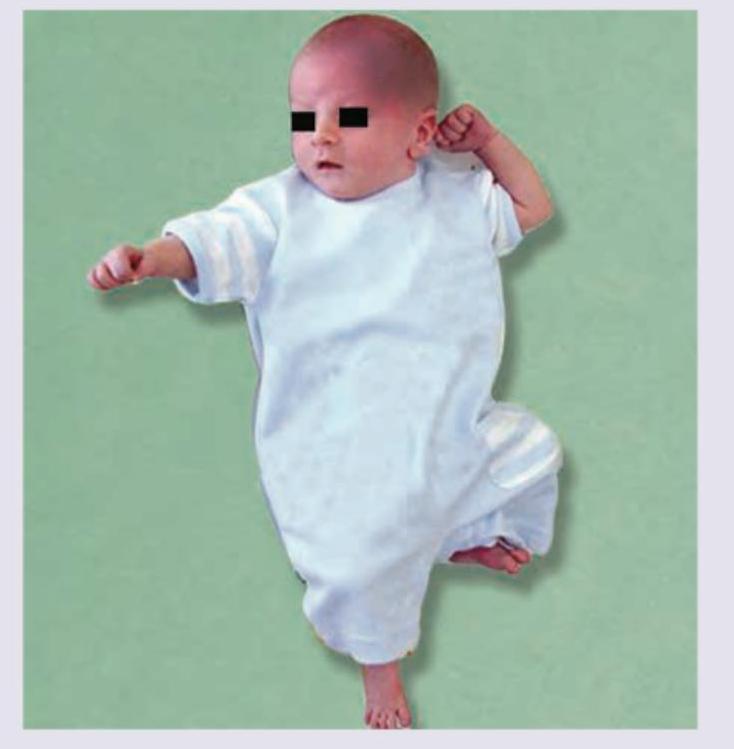
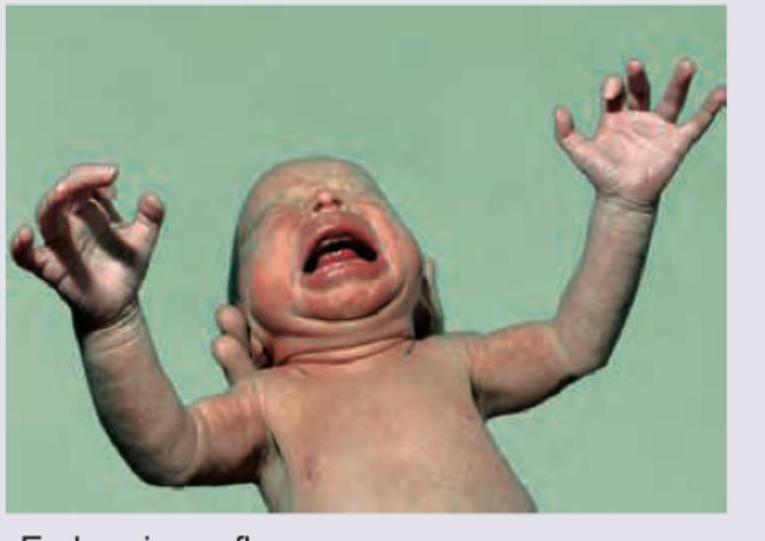
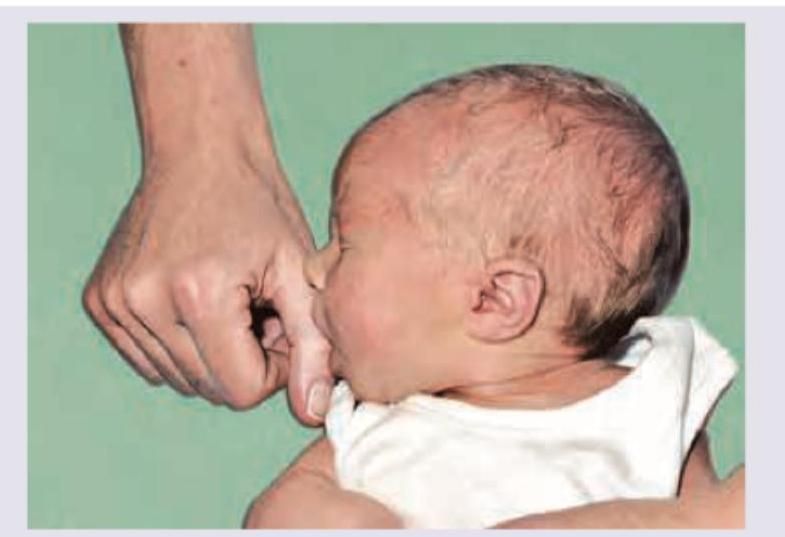
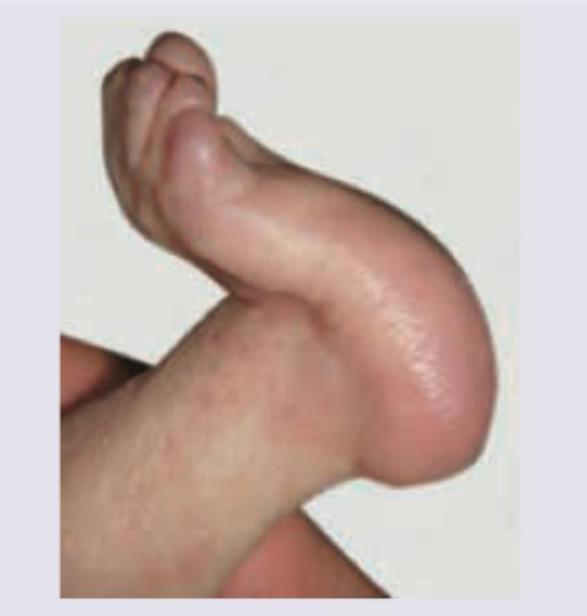
Persistence of the following beyond 6 months of age indicates what?

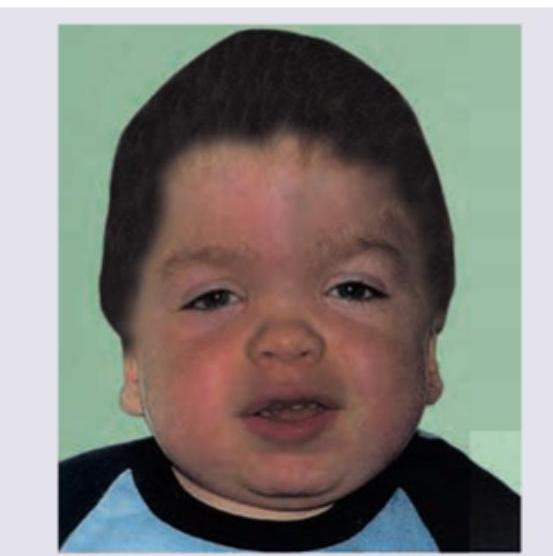
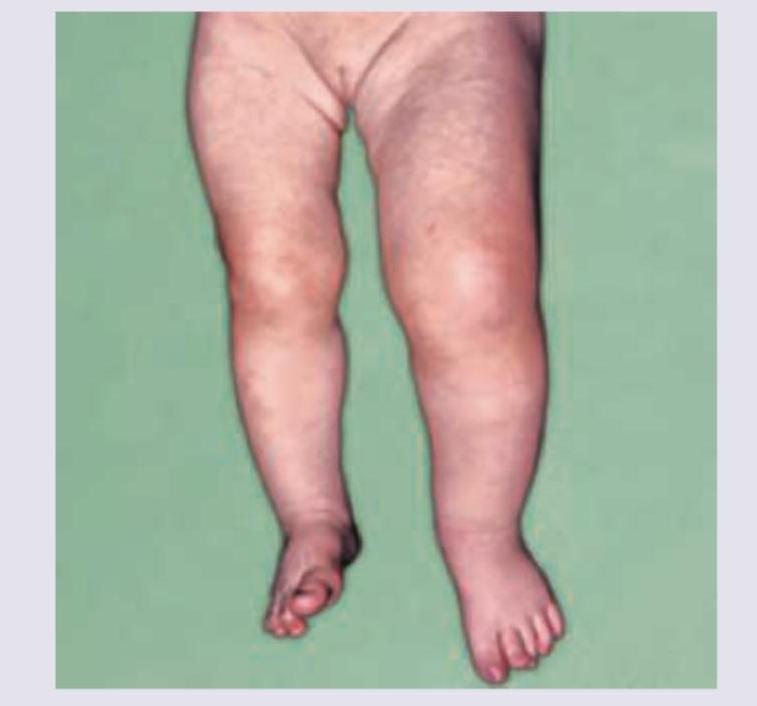
A child presents with short stature. What is a potential underlying cause?
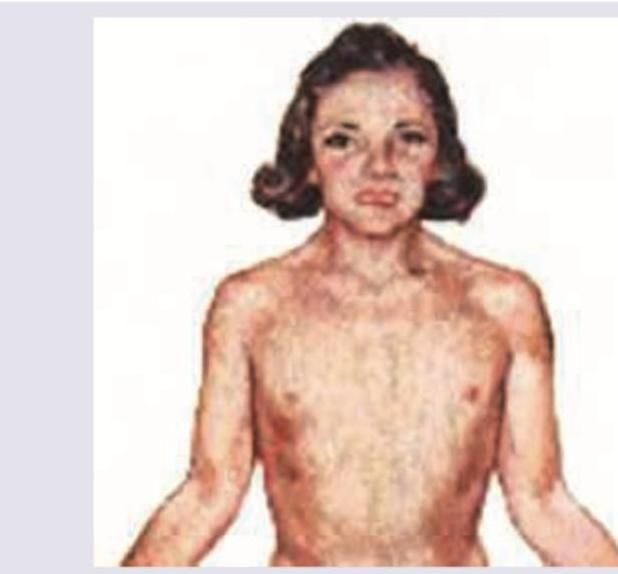
A 4-year-old girl, who was underweight and hypotonic in infancy, is obsessed with food, eats compulsively, and is already grossly overweight. She is argumentative, oppositional, and rigid. She has a narrow face, almond-shaped eyes, and a small mouth. What is her diagnosis?
The period of mixed dentition is typically between which ages?
A normal infant sits briefly leaning forward on her hands, reaches for and grasps a cube, and transfers it from hand to hand. She babbles but cannot wave bye-bye, nor can she grasp objects with the finger and thumb. What is her approximate age?
When does the child first attain the milestone of sitting without support?
A 6-year-old patient presents with a greenish-blue swelling distal to a deciduous second molar. What is the most appropriate management?
What is the most common cause of short stature?
Which of the following statements is true about dentition?
Which of the following is NOT true about Edward syndrome (Trisomy 18)?
Explanation: ***Cerebral damage*** - Persistence of **primitive reflexes** like the **Moro reflex** beyond 6 months indicates abnormal brain development or **cerebral damage**. - Normal **central nervous system maturation** should cause these reflexes to disappear by 4-6 months as **cortical control** develops. *Erb's palsy* - This is a **brachial plexus injury** affecting the upper roots (C5-C6) causing weakness in shoulder and arm muscles. - While it can cause an **absent or asymmetric Moro reflex**, it doesn't cause persistence of primitive reflexes beyond normal timeframe. *Down Syndrome* - Characterized by **hypotonia** and developmental delays, but **primitive reflex persistence** is not a specific diagnostic feature. - These children may have delayed motor milestones but reflex persistence alone doesn't indicate Down Syndrome. *Congenital hemiplegia* - This is a form of **cerebral palsy** affecting one side of the body, causing weakness and spasticity. - While it involves brain damage, **primitive reflex persistence** is not the primary distinguishing feature of hemiplegia.
Explanation: **Explanation:** Short stature is a common clinical presentation in Pediatrics, categorized into normal variants and pathological causes. **Constitutional Delay in Growth and Puberty (CDGP)** is the most common cause of short stature and delayed puberty. It is characterized by a "late bloomer" pattern where the child has a normal growth velocity but a **delayed bone age** compared to chronological age. These children eventually achieve a normal final adult height consistent with their mid-parental height, albeit later than their peers. **Analysis of Options:** * **Option C (Correct):** In CDGP, the hallmark is a delay in skeletal maturation (bone age < chronological age). This allows for a longer duration of growth, leading to a normal final height. * **Option A (Incorrect):** In **Familial Short Stature**, the child’s height is appropriate for their genetic potential. Crucially, the **bone age equals chronological age**, and the growth curve runs parallel to the 3rd percentile. * **Option B (Incorrect):** **Growth Hormone Deficiency** is a pathological cause. It presents with a significantly decreased growth velocity (<4 cm/year) and often features like truncal obesity or a "cherubic" face. * **Option D (Incorrect):** **Achondroplasia** is a form of disproportionate short stature (rhizomelic shortening) caused by a mutation in the *FGFR3* gene. **High-Yield NEET-PG Pearls:** * **Bone Age:** The single most important investigation for evaluating short stature (usually via X-ray of the left hand and wrist). * **CDGP vs. FSS:** In CDGP, Bone Age < Chronological Age. In FSS, Bone Age = Chronological Age. * **Pathological Short Stature:** Suspect if growth velocity is <5th percentile for age or if there is a deviation across two major percentile lines.
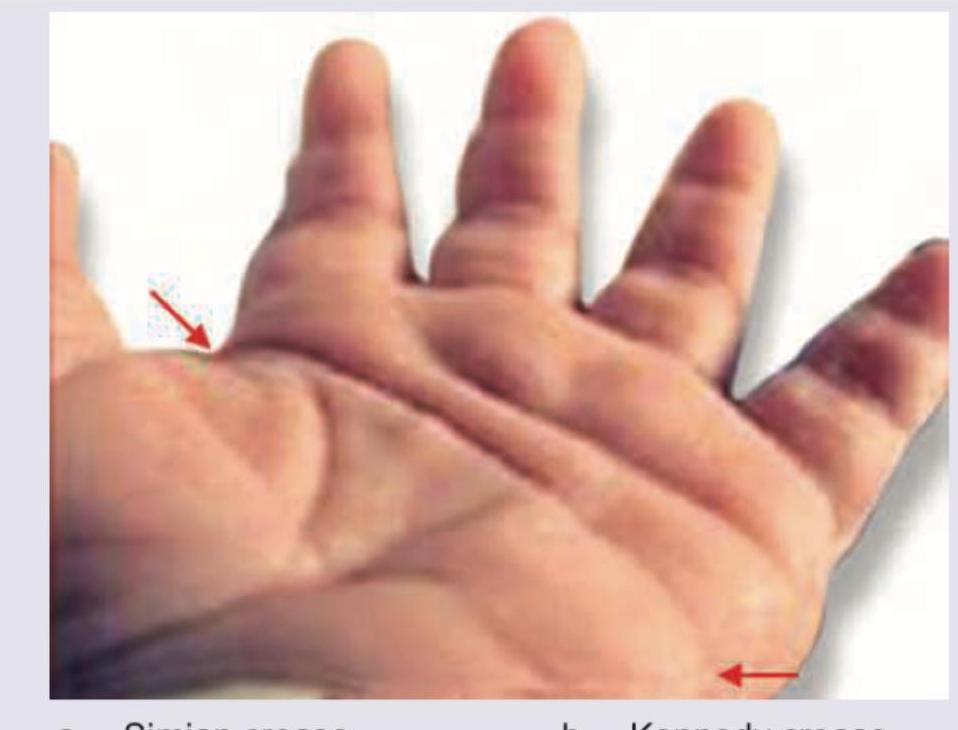
Explanation: **Explanation:** The clinical presentation is a classic description of **Prader-Willi Syndrome (PWS)**. The hallmark of PWS is a "biphasic" clinical course: profound **hypotonia** and feeding difficulties in infancy, followed by the development of **hyperphagia** (insatiable hunger) and morbid obesity starting in early childhood (typically ages 2–4). The characteristic dysmorphic features—**almond-shaped eyes**, narrow forehead (bifrontal diameter), and a small mouth with thin upper lips—combined with behavioral issues like **temper tantrums, rigidity, and skin picking**, point directly to PWS. Genetically, it is caused by the absence of expression of the paternal copy of genes on **chromosome 15q11-q13** (most commonly due to paternal deletion or maternal uniparental disomy). **Why other options are incorrect:** * **Down Syndrome:** Presents with hypotonia and intellectual disability, but features include epicanthal folds, upslanting palpebral fissures, Simian crease, and Brushfield spots. It is not associated with hyperphagia-induced obesity. * **Fragile X Syndrome:** Characterized by a long face, large prominent ears, and macroorchidism (in males). While behavioral issues exist, the "almond-shaped eyes" and early-onset compulsive eating are absent. * **Fetal Alcohol Syndrome:** Features include a smooth philtrum, thin upper lip, and short palpebral fissures. These children are typically small for gestational age and remain underweight (failure to thrive), rather than becoming obese. **High-Yield Clinical Pearls for NEET-PG:** * **Genetics:** Paternal deletion of 15q11-q13 (70%) or Maternal Uniparental Disomy (25%). * **Gold Standard Test:** DNA Methylation analysis. * **Associated Findings:** Hypogonadotropic hypogonadism (small hands/feet and undescended testes) and Type 2 Diabetes Mellitus. * **Management:** Growth hormone therapy is used to improve linear growth and body composition.
Explanation: **Explanation:** The **mixed dentition period** (also known as the "ugly duckling stage") is the phase where both primary (deciduous) and permanent teeth are present in the oral cavity. * **Why Option B is Correct:** This period typically begins at **6 years** of age with the eruption of the first permanent molar or the mandibular central incisor. It concludes around **11–12 years** when the last primary tooth (usually the maxillary second deciduous molar or canine) is exfoliated and replaced by its permanent successor. * **Why Options A, C, and D are Incorrect:** * **Option A (2–9 years):** By age 2–3, a child usually has only a complete set of 20 primary teeth. The mixed phase hasn't fully stabilized or started for many. * **Option C (12–14 years):** This is the **permanent dentition period**. By age 12, most children have lost all primary teeth. * **Option D (16+ years):** This stage involves the eruption of the third molars (wisdom teeth) and is well beyond the mixed dentition phase. **High-Yield Clinical Pearls for NEET-PG:** * **Sequence of Eruption:** The first permanent tooth to erupt is the **1st Molar (6 years)**, often called the "6-year molar." It does not replace any primary tooth. * **Ugly Duckling Stage (Broadbent phenomenon):** A physiological phase seen between 7–11 years characterized by a midline diastema (gap) in the upper incisors, which usually self-corrects as the permanent canines erupt. * **Total Teeth:** Primary dentition consists of **20 teeth** (no premolars), while permanent dentition consists of **32 teeth**. * **Formula for Primary Teeth:** I 2/2, C 1/1, M 2/2 = 10 x 2 = 20.
Explanation: ### Explanation This question tests the integration of gross motor, fine motor, and language milestones to pinpoint a specific developmental age. **1. Why 7 Months is Correct:** The child exhibits several hallmark milestones of a **7-month-old**: * **Gross Motor:** "Sits briefly leaning forward on her hands" describes **tripod sitting**, which typically appears at 6–7 months. * **Fine Motor:** **Transferring objects from hand to hand** is a classic 7-month milestone. Reaching and grasping a cube (palmar grasp) is established by 6 months. * **Language:** **Babbling** (polysyllabic vowels) begins around 6–7 months. * **Negative Markers:** The inability to wave "bye-bye" (9 months) or use a pincer grasp (9–10 months) confirms the child is younger than 9 months. **2. Why Other Options are Incorrect:** * **4 Months:** A 4-month-old has head lag disappearing and can sit with support, but cannot sit in a tripod position or transfer objects. They typically use a primitive squeeze rather than a purposeful reach and grasp. * **10 Months:** By 10 months, a child should have a **mature pincer grasp** (thumb and index finger), can crawl, and can wave "bye-bye." This child lacks these skills. * **12 Months:** A 1-year-old can usually stand independently or walk with one hand held, speaks 1–3 words with meaning, and has a well-developed pincer grasp. **3. High-Yield Clinical Pearls for NEET-PG:** * **Sitting Milestones:** Sits with support (5m) → Tripod sitting (6-7m) → Sits without support (8m). * **Grasp Evolution:** Palmar grasp (6m) → Immature pincer grasp (9m) → Mature pincer grasp (12m). * **Object Permanence:** Develops around 9 months (look for "plays peek-a-boo"). * **Transferring objects** is the "bridge" milestone between the palmar grasp and the pincer grasp.
Explanation: **Explanation:** The attainment of gross motor milestones follows a predictable cephalocaudal (head-to-toe) progression. Sitting is a key developmental marker that evolves in stages based on trunk control and the disappearance of primitive reflexes. * **Correct Answer (C):** A child typically attains the milestone of **sitting without support at 8–9 months**. At this stage, the child has developed sufficient spinal stability and trunk control to sit steadily for prolonged periods without using their hands for balance (freeing them to reach for toys). * **Option A (6 months):** This is the age for **sitting with support**. The child can sit if propped up or by leaning forward on their hands (tripod position). * **Option B (7 months):** This is a transitional phase. While some infants may sit briefly, they often lack the stability to remain upright without occasional use of their arms for balance. * **Option D (12 months):** By 1 year, the child has progressed far beyond sitting; they are typically standing independently and beginning to take their first steps (cruising or walking). **High-Yield Clinical Pearls for NEET-PG:** 1. **Tripod Position:** Occurs at 6 months; the child uses their arms as "props" to stay upright. 2. **Red Flag:** Failure to sit without support by **9 months** is considered a developmental delay requiring evaluation. 3. **Sequence:** Sitting with support (6m) → Sitting without support (8-9m) → Standing with support (9m) → Standing without support (12m). 4. **Parachute Reflex:** This protective reflex appears at 6–9 months and is essential for the child to maintain balance while sitting.
Explanation: ### Explanation The clinical presentation describes an **Eruption Cyst** (also known as an eruption hematoma). This is a soft tissue analogue of a dentigerous cyst that occurs in the gingival mucosa overlying a tooth shortly before its eruption. **1. Why "No treatment, only observation" is correct:** Eruption cysts are benign, fluid-filled sacs that often appear bluish, purple, or greenish-blue due to internal hemorrhage (hematoma) within the follicle. In the vast majority of cases, the cyst **ruptures spontaneously** as the underlying tooth erupts through the gingiva. Therefore, the standard of care is reassurance and observation. **2. Why the other options are incorrect:** * **Surgical excision (A):** This is unnecessary and invasive. Surgery (unroofing the cyst) is only indicated if the cyst is infected, extremely painful, or if it significantly delays tooth eruption, which is rare. * **Bone graft (B):** This is irrelevant as the condition is a soft-tissue phenomenon and does not involve any bony defect or loss. * **Proteolytic solution (D):** There is no clinical indication for injecting enzymes into an eruption cyst; this could lead to infection, tissue necrosis, or damage to the developing permanent tooth bud. **3. Clinical Pearls for NEET-PG:** * **Common Site:** Most frequently seen over deciduous or permanent molars. * **Pathogenesis:** Accumulation of fluid/blood in the dilated follicular space. * **Differential Diagnosis:** If the lesion is firm and pale, it might be a **gingival cyst of the newborn** (Bohn’s nodules or Epstein pearls), which also require no treatment. * **Key Management Rule:** "Wait and watch" is the gold standard for most transient developmental oral lesions in children.
Explanation: **Explanation:** Short stature is defined as a height more than 2 standard deviations (SD) below the mean for age and sex. It is broadly categorized into **Normal Variants** (Non-pathological) and **Pathological** causes. **1. Why Constitutional Delay of Growth and Puberty (CDGP) is correct:** CDGP is the **most common cause** of short stature overall. It is a "late bloomer" phenomenon where the child has a normal growth velocity but a delayed bone age. These children typically have a family history of late puberty, reach a normal final adult height, and do not require hormonal intervention. Along with Familial Short Stature (FSS), it accounts for the vast majority of cases seen in clinical practice. **2. Why the other options are incorrect:** * **Systemic Diseases (B):** While chronic illnesses (like Celiac disease or CKD) are common pathological causes, they are statistically less frequent than normal variants like CDGP. * **Hypothyroidism (C):** This is the most common **endocrine** cause of growth failure, but it is far less common than physiological delays. * **Growth Hormone Deficiency (D):** This is a rare cause of short stature. It is characterized by a significantly decreased growth velocity and "cherubic" facial features, but it represents only a small fraction of cases. **High-Yield Clinical Pearls for NEET-PG:** * **Bone Age:** In CDGP, Bone Age < Chronological Age. In Familial Short Stature, Bone Age = Chronological Age. * **Growth Velocity:** Normal in CDGP and FSS; decreased in Pathological causes (Endocrine/Systemic). * **Most common endocrine cause:** Hypothyroidism. * **Initial Investigation:** Bone age assessment (X-ray of the left hand and wrist). * **Upper Segment:Lower Segment (US:LS) Ratio:** Increased in Achondroplasia and Hypothyroidism (short-limbed dwarfism).
Explanation: This question tests the fundamental knowledge of pediatric dentition, a high-yield topic in NEET-PG. **Explanation of Options:** * **Option A (Hypothyroidism):** Endocrine disorders significantly impact skeletal and dental maturation. Hypothyroidism is the most common endocrine cause of **delayed dentition**. Other causes include Rickets, Hypopituitarism, and genetic syndromes like Down syndrome or Cleidocranial dysplasia. * **Option B (Primary Dentition):** The primary (deciduous) set consists of **20 teeth**: 4 incisors, 2 canines, and 4 molars per jaw. Notably, **premolars are absent** in the primary set; they only appear in the secondary (permanent) dentition, where they replace the primary molars. * **Option C (Third Molar):** The sequence of permanent dentition usually begins with the first molar (6 years) and concludes with the **third molar (wisdom tooth)**, which typically erupts between **17 and 25 years** of age. Since all individual statements are medically accurate, **Option D** is the correct answer. **High-Yield Clinical Pearls for NEET-PG:** * **First tooth to erupt:** Lower central incisor (6–10 months). * **Delayed dentition definition:** No teeth by **13 months** of age. * **Teeth formula:** * Primary: 2102 (Total 20) * Secondary: 2123 (Total 32) * **Calcification:** All deciduous teeth begin to calcify in utero (14–18 weeks). * **Natal teeth:** Teeth present at birth (most commonly mandibular incisors); if they cause sublingual ulceration, it is termed **Riga-Fede disease**.
Explanation: **Explanation:** **Edward Syndrome (Trisomy 18)** is the second most common autosomal trisomy after Down syndrome. The correct answer is **D** because Trisomy 18 is associated with **severe intellectual disability** and profound developmental delay. A normal IQ is never expected in these patients. **Analysis of Options:** * **Option A (VSD):** This is a **true** statement. Congenital heart disease occurs in >90% of cases. While polyvalvular heart disease is highly specific, **Ventricular Septal Defect (VSD)** is the most common overall cardiac lesion. * **Option B (Rockerbottom foot):** This is a **true** and classic morphological finding. It refers to a prominent calcaneus and a convex sole. It is also seen in Patau syndrome (Trisomy 13). * **Option C (Respiratory failure):** This is a **true** statement. Most infants with Edward syndrome die within the first year of life. The leading causes of mortality are **central apnea**, respiratory failure due to chest wall deformities, and heart failure. **High-Yield Clinical Pearls for NEET-PG:** * **Clenched Hand:** A pathognomonic sign where the index finger overlaps the middle finger and the fifth finger overlaps the fourth. * **Micrognathia & Low-set ears:** Common craniofacial features. * **Screening:** Maternal serum markers show **decreased** levels of AFP, hCG, and unconsolidated estriol (uE3). * **Choroid Plexus Cysts:** Often seen on prenatal ultrasound. * **Survival:** 50% of live-born infants do not survive beyond the first week; only 5-10% survive past the first year.
Normal Growth Parameters
Practice Questions
Developmental Milestones
Practice Questions
Puberty and Adolescent Development
Practice Questions
Growth Disorders
Practice Questions
Failure to Thrive
Practice Questions
Developmental Screening and Assessment
Practice Questions
Developmental Delays
Practice Questions
Growth Charts and Monitoring
Practice Questions
Short Stature
Practice Questions
Tall Stature
Practice Questions
Precocious and Delayed Puberty
Practice Questions
Psychosocial Development
Practice Questions
Get full access to all questions, explanations, and performance tracking.
Start For Free