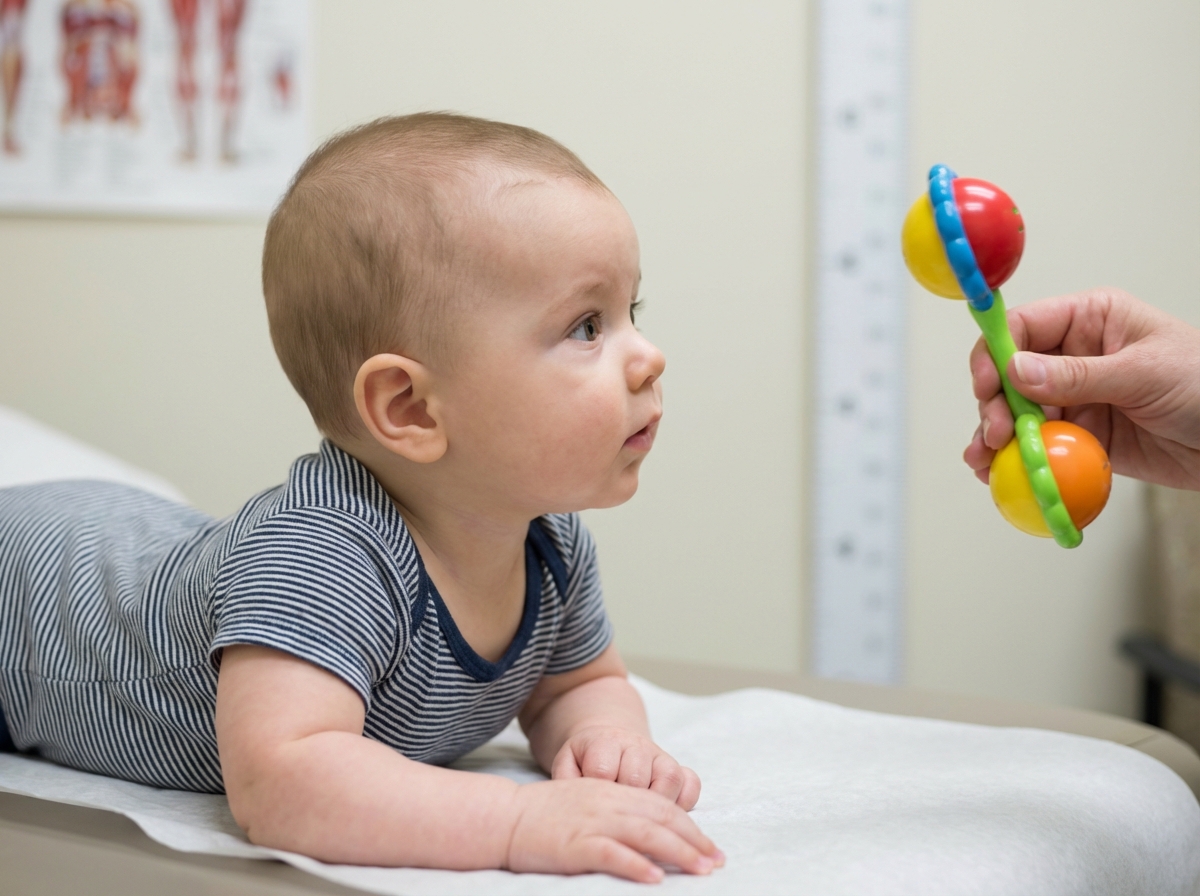
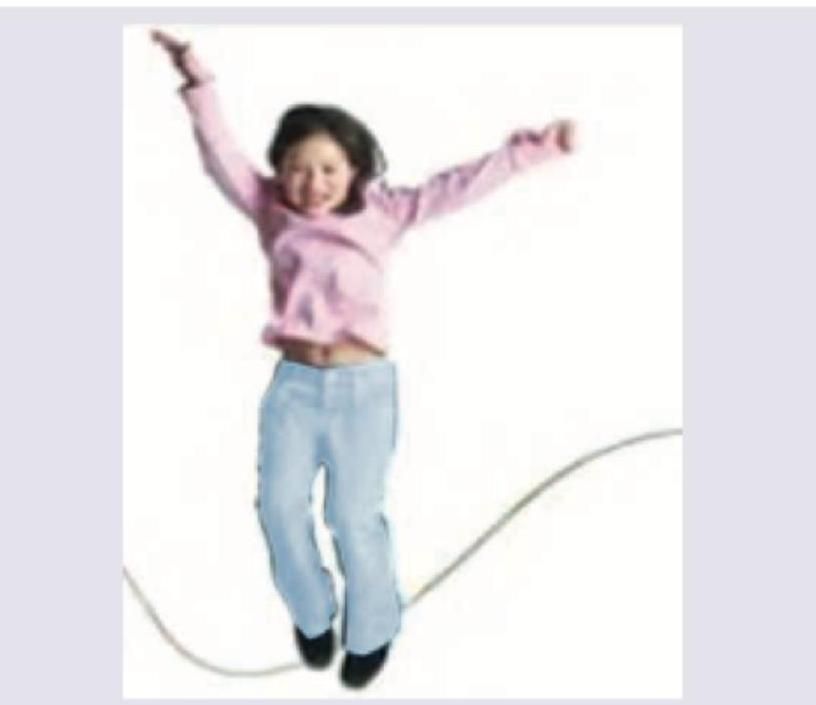
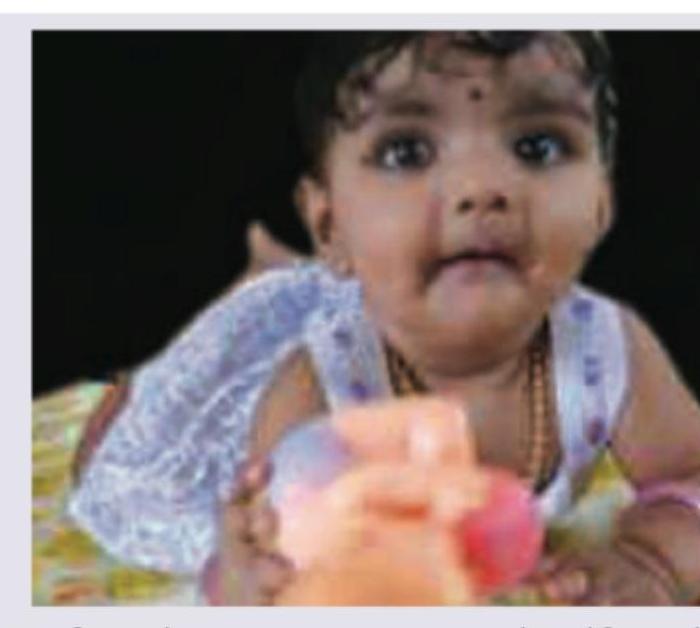
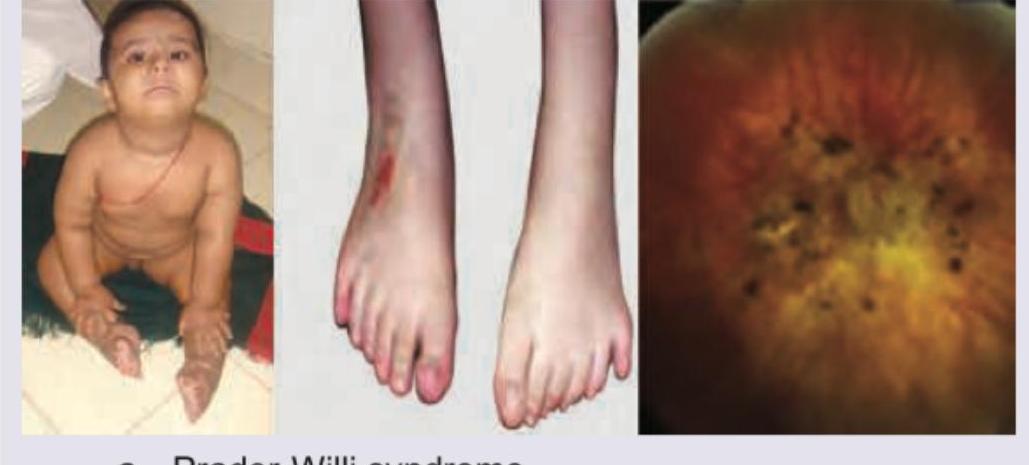
All of the following social milestones develop at the age of 24 months except:
What is the average gain in length for a child over the first 4 years of life?
A child can copy a circle but cannot copy a square. If the development of this child is normal, at what age should he typically be able to perform this skill?
A 5-year-old boy told his mother that he had an accident with his bicycle because he was thinking of taking some money from his mother. This type of reasoning is known as?
Which of the following is not a usual feature of Noonan syndrome?
Triangular facies is indicative of which syndrome?
The most common chromosomal syndrome is
All of the following disorders are associated with a wide anterior fontanelle except?
Fetal alcohol syndrome includes which of the following features?
What is the sequence in which the following developmental milestones are attained?

Explanation: This question tests the chronological acquisition of social and adaptive milestones in early childhood. **Explanation of the Correct Answer:** **Option D (Kisses parents with a pucker)** is the correct answer because it is a milestone typically achieved at **15 months** of age, not 24 months. By 15 months, a child develops the emotional connection and motor control required to initiate a puckered kiss. Since the question asks for the milestone that does *not* develop at 24 months, this earlier milestone is the outlier. **Analysis of Incorrect Options (Milestones at 24 Months):** * **Option A (Handles a spoon well):** By 2 years, fine motor coordination and self-regulation improve significantly, allowing the child to feed themselves with a spoon without frequent spilling. * **Option B (Helps to undress):** At 24 months, children can assist in undressing (e.g., pulling off socks or unzipped jackets). Note: Complete *dressing* (including buttons) occurs later, around 3–4 years. * **Option C (Listens to stories when shown pictures):** This reflects the cognitive and social development at 2 years, where the child’s attention span increases enough to engage with simple picture-book narratives. **High-Yield Clinical Pearls for NEET-PG:** * **Parallel Play:** This is the hallmark social milestone of a **2-year-old** (playing alongside other children but not with them). * **Dry by day:** Most children achieve daytime bladder control by **24 months**. * **The "Three-Year" Rule:** At 3 years, a child can share toys, know their gender, and dress/undress fully (except for back buttons/laces). * **Social Smile:** Occurs at **2 months** (often the first social milestone tested). * **Fear of Strangers:** Peaks at **7–9 months**.
Explanation: **Explanation:** The average length of a healthy term neonate at birth is approximately **50 cm**. Growth in length follows a predictable, decelerating pattern during the first few years of life. To determine the total gain over 4 years, we look at the incremental increases: * **1st Year:** The child grows by **25 cm** (reaching ~75 cm). * **2nd Year:** The child grows by **12.5 cm** (reaching ~87.5 cm). * **3rd & 4th Years:** The child grows by approximately **6.25 cm per year** (reaching ~100 cm). By the age of 4, the child’s total height is approximately 100 cm. Since the starting length was 50 cm, the **total gain is 50 cm** (100 cm - 50 cm = 50 cm). **Analysis of Incorrect Options:** * **Option A (25 cm):** This is the gain during the **first year** of life only. * **Option C (75 cm):** This represents the **total length** at the end of the first year, not the gain over four years. * **Option D (100 cm):** This is the **total height** of the child at 4 years, not the net gain from birth. **High-Yield Clinical Pearls for NEET-PG:** * **Height Doubling:** Height doubles at **4 years** (50 cm to 100 cm). * **Height Tripling:** Height triples at **12-13 years** (50 cm to 150 cm). * **Formula for 2–12 years:** Expected Height (cm) = (Age in years × 6) + 77. * **Measurement:** Use an **infantometer** (recumbent length) for children <2 years and a **stadiometer** (standing height) for children >2 years. Length is typically 1–2 cm greater than height.
Explanation: ### Explanation This question tests your knowledge of **fine motor** and **language/social milestones** in early childhood. **1. Identifying the Child's Developmental Age:** The ability to **copy a circle** is a milestone achieved at **3 years**. The ability to **copy a square** is achieved at **4 years**. Since the child can do the former but not the latter, his developmental age is approximately **3 years**. **2. Why the Correct Answer is Right:** * **Option D (State name and gender):** This is a classic **3-year-old milestone**. At this age, a child can identify their sex, state their full name, and has a vocabulary of about 900 words. They also begin to share toys and can ride a tricycle. **3. Analysis of Incorrect Options:** * **Option A (Tell a story):** This is a **4-year-old milestone**. By age 4, children can narrate simple stories and use sentences of 4-5 words. * **Option B (Skip):** This is a **5-year-old milestone**. Skipping and hopping are advanced gross motor skills achieved as the child approaches school age. * **Option C (Ask the meaning of words):** This is a **5-year-old milestone**. It reflects a more advanced cognitive and linguistic curiosity (the "why" and "what does this mean" phase). --- ### High-Yield Clinical Pearls for NEET-PG: * **Fine Motor "Shapes" Sequence:** * **2 years:** Vertical line * **2.5 years:** Horizontal line * **3 years:** Circle (0) * **4 years:** Square (□) or Cross (+) * **4.5 years:** Rectangle * **5 years:** Triangle (Δ) * **6 years:** Diamond (◊) * **Language Rule of Thumb:** A child’s speech should be 75% intelligible to a stranger at **3 years** and 100% intelligible at **4 years**. * **Social Milestone:** Group play (associative play) typically begins at **3 years**, whereas cooperative play (with rules) begins at **4 years**.
Explanation: **Explanation:** The correct answer is **Magical Thinking**. In the scenario described, the child believes his internal thoughts (wanting to take money) directly caused an external physical event (the bicycle accident). This is a hallmark of **Magical Thinking**, a cognitive feature of the **Pre-operational stage** (2–7 years) of Jean Piaget’s theory of cognitive development. At this stage, children are egocentric and lack an understanding of cause-and-effect, often believing that their thoughts, wishes, or words can influence the physical world. **Analysis of Options:** * **Adaptive reasoning:** This refers to the capacity for logical thought, reflection, and justification in mathematical or problem-solving contexts. It is not a standard developmental term for this age group's cognitive errors. * **Concrete operation (7–11 years):** In this stage, children develop logical thought about physical objects and understand conservation. They move away from magical thinking and realize that thoughts cannot cause physical accidents. * **Abstract reasoning (11+ years):** This occurs during the **Formal Operational stage**. It involves the ability to think about hypothetical situations and complex concepts. A 5-year-old has not yet reached this level of cognitive maturity. **High-Yield Clinical Pearls for NEET-PG:** * **Piaget’s Stages:** 1. **Sensorimotor (0–2 yrs):** Object permanence develops. 2. **Pre-operational (2–7 yrs):** Egocentrism, Animism (giving life to objects), and **Magical Thinking**. 3. **Concrete Operational (7–11 yrs):** Conservation and Reversibility. 4. **Formal Operational (>11 yrs):** Abstract thinking and Hypothesis testing. * **Clinical Relevance:** Understanding magical thinking is vital when explaining illness to a preschooler; they may feel their "bad thoughts" caused their sickness (guilt).
Explanation: **Explanation:** Noonan syndrome is an autosomal dominant multisystem disorder often referred to as the **"Male Turner Syndrome"** because it shares several phenotypic features with Turner syndrome but occurs in both males and females with a normal karyotype (46, XY or 46, XX). **Why Infertility is the correct answer:** Unlike Turner syndrome (where streak ovaries lead to primary infertility), **fertility is typically preserved** in both males and females with Noonan syndrome. While males may have delayed puberty or cryptorchidism (undescended testes) which can occasionally affect sperm count, they are generally not infertile. Females usually have normal ovarian function and timing of puberty. **Analysis of Incorrect Options:** * **Webbed neck (Pterygium colli):** This is a classic hallmark of Noonan syndrome, along with a low posterior hairline and a shield-shaped chest. * **Intellectual disability:** Mild intellectual disability or learning disabilities are seen in approximately 25–35% of cases, making it a recognized feature. * **Short stature:** This is a very common finding (present in ~70–80% of cases). Growth hormone levels are usually normal, but there is often a resistance to growth hormone action. **High-Yield Clinical Pearls for NEET-PG:** * **Genetics:** Most commonly due to a mutation in the **PTPN11 gene** (Chromosome 12), involving the RAS-MAPK pathway ("RASopathy"). * **Cardiac Lesion:** The most common cardiac defect is **Pulmonary Stenosis** (dysplastic valve), followed by Hypertrophic Cardiomyopathy (HCM). *Contrast this with Turner syndrome, where Coarctation of the Aorta is common.* * **Facial Features:** Hypertelorism (wide-set eyes), downward-slanting palpebral fissures, and low-set ears. * **Hematology:** Increased risk of bleeding diathesis and juvenile myelomonocytic leukemia (JMML).
Explanation: **Explanation:** **Russell-Silver Syndrome (RSS)** is the correct answer. It is a genetically heterogeneous condition characterized by intrauterine growth restriction (IUGR) and postnatal growth failure. The hallmark "triangular facies" results from a combination of a broad, prominent forehead (pseudohydrocephalus) and a small, pointed chin (micrognathia). Other key features include limb length asymmetry, clinodactyly (curved 5th finger), and a high risk of fasting hypoglycemia. **Analysis of Incorrect Options:** * **Mobius Syndrome:** Characterized by congenital facial diplegia (CN VII palsy) and abducens nerve (CN VI) palsy, leading to a "mask-like" expressionless face and inability to abduct the eyes. * **Sotos Syndrome:** Also known as "Cerebral Gigantism." It presents with macrosomia and a characteristic facial appearance described as a "long face" with a prominent chin and high forehead (inverted pear shape), which is the opposite of the triangular face seen in RSS. * **Nephrotic Syndrome:** Classically presents with "puffy eyelids" or periorbital edema, particularly in the morning, rather than a specific structural facial shape. **High-Yield Clinical Pearls for NEET-PG:** * **Russell-Silver Syndrome:** Associated with imprinting defects on chromosome 11p15 or maternal uniparental disomy of chromosome 7 (mUPD7). * **Triangular Facies DDx:** Also seen in **Noonan Syndrome** and **Alagille Syndrome** (associated with bile duct paucity and butterfly vertebrae). * **Sotos Syndrome:** Associated with mutations in the *NSD1* gene. * **Williams Syndrome:** Characterized by "Elfin facies," supravalvular aortic stenosis, and a "cocktail party" personality.
Explanation: **Explanation:** **Trisomy 21 (Down Syndrome)** is the correct answer because it is the most common chromosomal disorder and the most frequent genetic cause of intellectual disability worldwide. It occurs in approximately 1 in 700 to 800 live births. The prevalence is highly associated with advanced maternal age, primarily due to meiotic non-disjunction (95% of cases). **Analysis of Incorrect Options:** * **Fragile-X Syndrome:** This is the most common **inherited** cause of intellectual disability. However, it is a single-gene disorder (CGG repeat expansion in the FMR1 gene) rather than a numerical or structural chromosomal syndrome like Trisomy 21. * **Trisomy 18 (Edwards Syndrome):** This is the second most common autosomal trisomy. It is characterized by severe clinical features (clenched fists, rocker-bottom feet) and has a very high mortality rate in the first year of life. * **Trisomy 13 (Patau Syndrome):** This is the third most common autosomal trisomy. It presents with midline defects (holoprosencephaly, cleft lip/palate) and polydactyly, but it is significantly rarer than Trisomy 21. **High-Yield Clinical Pearls for NEET-PG:** * **Most common cause of Trisomy 21:** Maternal Meiotic Non-disjunction (95%). * **Most common cardiac defect:** Atrioventricular Septal Defect (Endocardial Cushion Defect). * **Hematological association:** Increased risk of Acute Megakaryoblastic Leukemia (AMKL/M7) before age 5 and ALL after age 5. * **Screening:** Increased Nuchal Translucency (NT) on ultrasound and decreased PAPP-A in the first trimester.
Explanation: **Explanation:** The **anterior fontanelle** typically closes between 9 to 18 months of age. A wide or delayed closure of the fontanelle occurs when there is an underlying condition affecting bone ossification or increased intracranial pressure. **Why Craniosynostosis is the Correct Answer:** Craniosynostosis is the **premature fusion** of one or more cranial sutures. Because the sutures close earlier than normal, the fontanelles also close prematurely or are abnormally small. This is the opposite of a "wide" fontanelle. **Analysis of Incorrect Options:** * **Achondroplasia:** This is a disorder of cartilage calcification and endochondral bone formation. It leads to delayed ossification of the skull bones, resulting in a persistently wide anterior fontanelle and frontal bossing. * **Hydrocephaly:** Increased intracranial pressure from excess cerebrospinal fluid causes the sutures to splay and the fontanelle to bulge and remain wide as the skull expands to accommodate the volume. * **Trisomy 21 (Down Syndrome):** Children with Down Syndrome frequently exhibit delayed skeletal maturation and hypotonia, which are characteristically associated with a larger anterior fontanelle and the presence of a third fontanelle. **NEET-PG High-Yield Pearls:** * **Third Fontanelle:** Located between the anterior and posterior fontanelles; highly associated with **Trisomy 21**. * **Bulging Fontanelle:** Indicates increased ICP (Meningitis, Hydrocephalus, Vitamin A toxicity). * **Sunken Fontanelle:** A clinical sign of severe **dehydration**. * **Other causes of Wide Fontanelle:** Hypothyroidism (Cretinism), Rickets, Osteogenesis Imperfecta, and Cleidocranial Dysplasia.
Explanation: **Explanation:** Fetal Alcohol Syndrome (FAS) is a permanent developmental disorder caused by maternal alcohol consumption during pregnancy. Alcohol acts as a potent teratogen, crossing the placenta and interfering with cellular proliferation and migration, particularly in the central nervous system and craniofacial structures. **Analysis of Features:** * **Microcephaly (Option A):** Alcohol is neurotoxic. It leads to structural brain abnormalities and impaired brain growth, resulting in a small head circumference (microcephaly) and intellectual disability. * **Deafness (Option B):** While less commonly discussed than facial features, sensorineural and conductive hearing loss are recognized components of the FAS spectrum due to malformations of the inner ear or chronic otitis media secondary to midface hypoplasia. * **Short Palpebral Fissures (Option C):** This is a hallmark diagnostic feature. The classic facial triad includes **short palpebral fissures**, a **smooth philtrum**, and a **thin upper lip (vermilion border)**. Since all three features are documented manifestations of the syndrome, **Option D (All of the above)** is the correct answer. **High-Yield Clinical Pearls for NEET-PG:** * **Growth Retardation:** FAS involves both prenatal and postnatal growth deficiency (weight/height <10th percentile). * **Cardiac Defects:** The most common cardiac association is **Ventricular Septal Defect (VSD)**, followed by ASD. * **Skeletal:** Radioulnar synostosis and hockey-stick palmar creases are sometimes seen. * **Critical Period:** While the first trimester is most critical for structural defects (organogenesis), alcohol consumption in any trimester can cause neurobehavioral damage.
Explanation: ***C - B - D - A*** - This sequence follows the correct **gross motor development** progression: **sitting without support** (6-8 months), **crawling** (8-10 months), **walking with support** (9-12 months), and **walking independently** (12-15 months). - Each milestone builds upon the previous one, following the **cephalocaudal** and **proximodistal** principles of development. *A - B - C - D* - This sequence incorrectly places **walking independently** before **sitting without support**, which violates basic developmental principles. - **Core stability** must be established through sitting before progressing to more complex motor skills like walking. *C - B - A - D* - This sequence incorrectly places **walking independently** before **walking with support**, which is developmentally impossible. - Children must first learn to **cruise** and walk with assistance before achieving independent ambulation. *D - C - B - A* - This sequence is completely reversed, suggesting **walking with support** occurs before **sitting without support**. - It contradicts the fundamental principle that **trunk control** must precede **lower extremity coordination** for locomotion.
Normal Growth Parameters
Practice Questions
Developmental Milestones
Practice Questions
Puberty and Adolescent Development
Practice Questions
Growth Disorders
Practice Questions
Failure to Thrive
Practice Questions
Developmental Screening and Assessment
Practice Questions
Developmental Delays
Practice Questions
Growth Charts and Monitoring
Practice Questions
Short Stature
Practice Questions
Tall Stature
Practice Questions
Precocious and Delayed Puberty
Practice Questions
Psychosocial Development
Practice Questions
Get full access to all questions, explanations, and performance tracking.
Start For Free