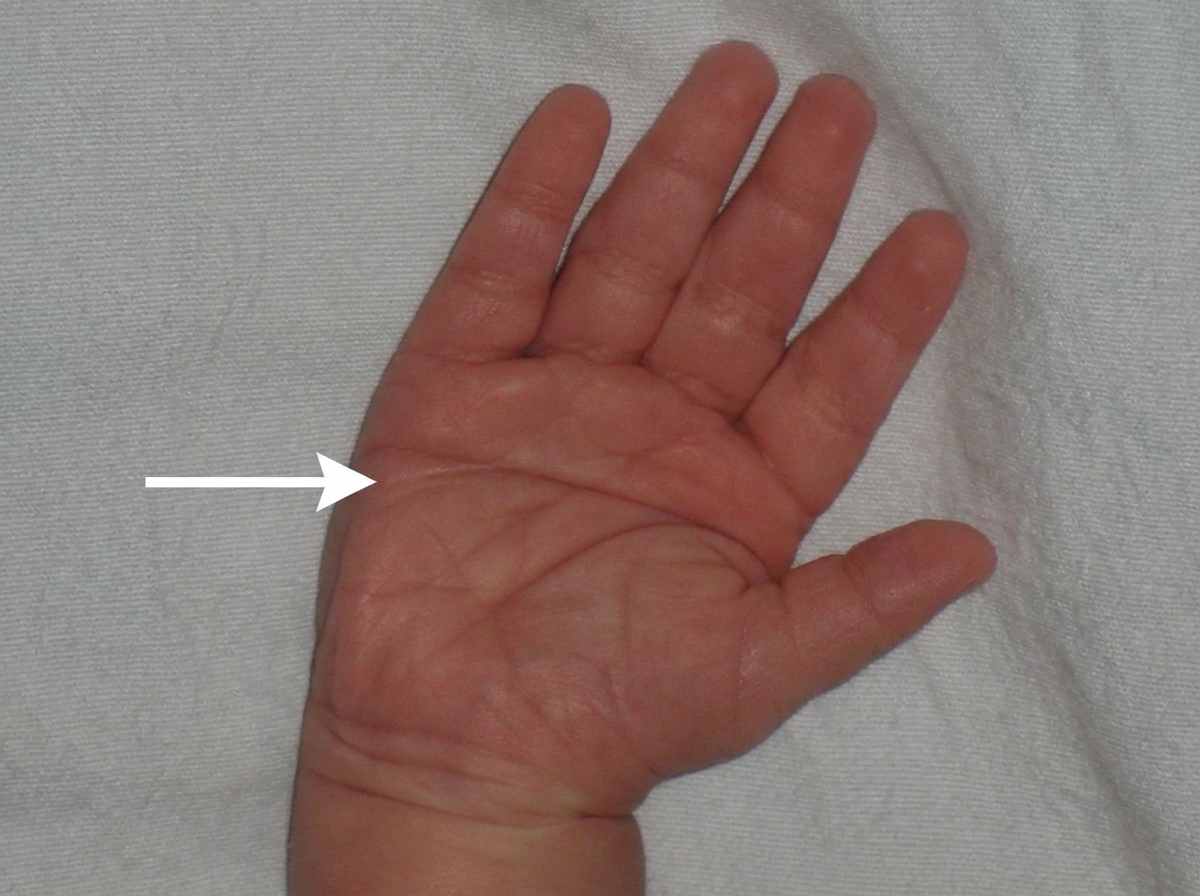
At what age does a child typically achieve neck holding?
Regarding congenital torticollis, all of the following are true EXCEPT:
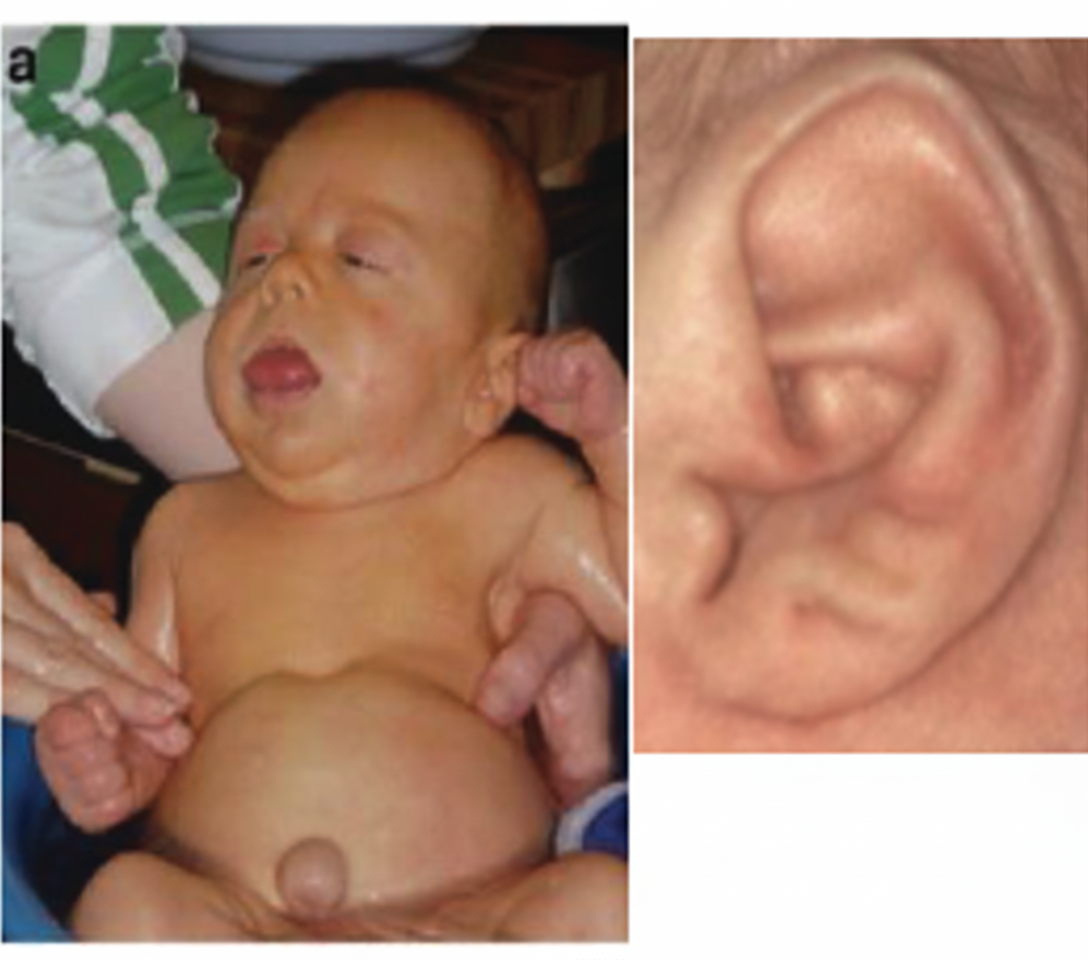
A newborn boy delivered at 38 weeks is small for gestational age. Physical examination shows microcephaly, frontal bossing, long and narrow forehead, hypotelorism, maxillary and mandibular hypoplasia, narrow palpebral fissures, thin elongated philtrum, vermilion border of the upper lip, dental malocclusion, saddle nose, tooth enamel hypoplasia, and uvular hypoplasia. Ocular problems include microphthalmia, corneal clouding, coloboma, nystagmus, strabismus, and ptosis. A systolic murmur is heard on auscultation, and echocardiography shows a membranous ventricular septal defect. Which of the following conditions is most likely to produce these findings?
At what age can a child typically name four colors?
At what age does a child start following moving objects with their eyes?
Which of the following conditions is NOT associated with childhood obesity?
At what age does a child typically recognize their own sex?
During the second year of life, what is the average linear growth of a child?
Social interaction and role-playing typically begin at what age?
How many permanent teeth are typically present in an 8-year-old child?
Explanation: **Explanation:** **Neck holding** is the first major gross motor milestone achieved by an infant. It follows the **cephalocaudal (head-to-toe) principle** of development, where control over the head and neck is established before the trunk and limbs. * **Correct Answer (B - 3 months):** By the age of 3 months, an infant can typically maintain the head in the same plane as the rest of the body when pulled to a sitting position (no head lag) and can lift the head and chest off the bed while in a prone position. This indicates the maturation of the cervical spinal extensors. **Analysis of Incorrect Options:** * **A (2 months):** At this age, the child begins to lift the head intermittently while prone (partial neck holding), but the head still lags significantly when the child is pulled to sit. * **C & D (4-5 months):** These ages are beyond the typical window for initial neck holding. By 4 months, a child should have steady head control and begin to roll from prone to supine. By 5 months, they are preparing for sitting with support. **High-Yield Clinical Pearls for NEET-PG:** 1. **Sequence of Gross Motor Milestones:** * 3 months: Neck holding. * 5 months: Rolling over. * 6 months: Sitting with own support (Tripod position). * 8 months: Sitting without support. * 9 months: Crawling/Creeping/Standing with support. * 12 months: Walking alone. 2. **Red Flag:** Failure to achieve neck holding by **4 months** warrants a developmental evaluation for conditions like cerebral palsy or global developmental delay. 3. **Ventral Suspension:** In this position, a 3-month-old can hold their head above the horizontal plane.
Explanation: **Explanation:** Congenital Muscular Torticollis (CMT) is a common postural deformity characterized by the shortening of the sternocleidomastoid (SCM) muscle, leading to an ipsilateral head tilt and contralateral rotation. **1. Why Option A is the Correct Answer (The "Except"):** While breech presentation and difficult instrumental deliveries (forceps) are significant **risk factors** due to potential birth trauma or intrauterine malpositioning, they are not the "always" cause. Many cases occur following normal vertex deliveries. The exact etiology is often multifactorial, involving intrauterine compartment syndrome or primary venous obstruction within the SCM. In NEET-PG, absolute terms like "always" or "never" often indicate the incorrect statement. **2. Analysis of Other Options:** * **Option B:** Most cases (approx. 90%) resolve spontaneously or with conservative management (stretching exercises and positioning) within the first year of life. * **Option C:** If left untreated, the persistent pressure on one side of the skull while sleeping leads to **plagiocephaly** (flattening of the occiput) and facial asymmetry. * **Option D:** A "pseudotumor" or SCM mass is often palpable within the first 2–4 weeks of life. It is a non-tender, firm olive-shaped fibrotic mass that typically disappears by 6 months. **Clinical Pearls for NEET-PG:** * **Diagnosis:** Primarily clinical; Ultrasound is the imaging modality of choice to confirm SCM thickening. * **Associated Conditions:** Always screen for **Developmental Dysplasia of the Hip (DDH)**, as there is a 10–15% co-occurrence. * **Management:** First-line is physical therapy. Surgery (SCM release) is reserved for refractory cases after 1 year of age.
Explanation: **Explanation:** The clinical presentation described is a classic constellation of features seen in **Fetal Alcohol Syndrome (FAS)**, which occurs due to the teratogenic effects of ethanol on the developing fetus. Ethanol crosses the placenta and disrupts cellular differentiation and proliferation, particularly in the central nervous system and midline facial structures. **1. Why Fetal Alcohol Syndrome is correct:** The "hallmark" triad of FAS includes **Growth Retardation** (SGA), **CNS involvement** (microcephaly, intellectual disability), and **characteristic facial dysmorphism**. The specific features mentioned—short palpebral fissures, thin upper lip (vermilion border), smooth/long philtrum, and maxillary hypoplasia—are pathognomonic. Additionally, FAS is frequently associated with cardiac defects, most commonly **Ventricular Septal Defects (VSD)**, and various ocular anomalies like microphthalmia and strabismus. **2. Why other options are incorrect:** * **Congenital Rubella:** Typically presents with the "Gregg Triad": Cataracts, Sensorineural deafness, and Congenital Heart Disease (usually **PDA** or peripheral pulmonary artery stenosis). It does not cause the specific philtrum and lip changes seen here. * **Maternal Diabetes Mellitus:** Associated with macrosomia (large for gestational age), not SGA. Specific malformations include **Caudal Regression Syndrome** and Hypertrophic Cardiomyopathy. * **Placenta Previa:** Leads to fetal hypoxia or prematurity but is not a teratogen; it does not cause specific midline facial dysmorphism or structural heart defects like VSD. **Clinical Pearls for NEET-PG:** * **Most common preventable cause** of intellectual disability: Fetal Alcohol Syndrome. * **Critical Period:** Facial features are most affected by alcohol exposure during the **1st trimester**. * **Key Facial Findings:** Smooth philtrum, thin upper lip, and short palpebral fissures (The "FAS Facial Phenotype").
Explanation: **Explanation:** The ability to name colors is a significant milestone in a child's **cognitive and language development**. While a child begins to recognize and point to colors earlier, the specific ability to consistently and correctly **name four primary colors** is a milestone typically achieved by **60 months (5 years)** of age. * **Why 60 months is correct:** By age 5, a child’s cognitive processing and vocabulary have matured enough to categorize abstract concepts like colors. According to standard developmental charts (such as Nelson’s Pediatrics and the Indian Academy of Pediatrics), naming four colors is a hallmark of the 5-year-old milestone, alongside the ability to dress/undress without supervision and tell long stories. **Analysis of Incorrect Options:** * **24 months (2 years):** At this stage, language is limited to 2-word phrases ("want milk"). They cannot yet grasp the abstract concept of naming colors. * **36 months (3 years):** A 3-year-old can usually name their own gender and age and may recognize one color, but cannot reliably name four. * **48 months (4 years):** A 4-year-old is beginning to identify colors and can often name 1 or 2, but the benchmark for naming **four** colors is specifically reserved for the 5-year milestone. **High-Yield Clinical Pearls for NEET-PG:** * **Drawing Milestones (The "Rule of Shapes"):** * 3 years: Circle * 4 years: Cross (+) and Square * 5 years: Triangle * 6 years: Diamond * **Language Milestone:** A child can define at least 5 words and use future tense by 5 years. * **Social Milestone:** By 5 years, a child follows rules while playing games (cooperative play).
Explanation: **Explanation:** The development of visual tracking is a key milestone in the fine motor and sensory domain. By **3 months of age**, a child develops the ability to follow a moving object (like a bright toy or the mother's face) through a full **180-degree arc**. This signifies the maturation of binocular vision and the coordination of extraocular muscles. **Analysis of Options:** * **Birth (Option A):** At birth, vision is the least developed sense. A neonate can fixate on objects briefly at a distance of 8–10 inches but lacks the coordination for smooth tracking. * **6-8 weeks (Option B):** At this stage, social smiling begins, and the infant starts to follow objects only up to the midline or slightly past it (90 degrees), but not a full 180-degree range. * **3 months (Option C):** This is the definitive milestone for **binocular vision** and tracking objects across the full 180-degree field. * **5-6 months (Option D):** By this age, the child has moved beyond simple tracking; they develop depth perception (stereopsis) and can reach out to grasp objects with accuracy (eye-hand coordination). **High-Yield Clinical Pearls for NEET-PG:** * **Visual Fixation:** Present at birth. * **Social Smile:** 6–8 weeks (First social milestone). * **Hand Regard:** 3–4 months (Infant studies their own hands). * **Depth Perception:** Begins at 5–6 months. * **Red Flag:** If a child does not fixate or follow by 3 months, it warrants an urgent ophthalmological evaluation to rule out congenital cataracts or retinoblastoma.
Explanation: **Explanation:** The correct answer is **Wilson-Mikity syndrome** because it is a respiratory condition, not an endocrine or genetic obesity syndrome. **1. Why Wilson-Mikity syndrome is the correct answer:** Wilson-Mikity syndrome (also known as pulmonary dysmaturity) is a rare, chronic lung disease affecting **preterm infants**. It is characterized by early-onset cystic changes in the lungs, respiratory distress, and cyanosis. It has no association with metabolic dysfunction or obesity; in fact, affected infants often struggle with poor weight gain due to the increased work of breathing. **2. Analysis of incorrect options (Conditions associated with obesity):** * **Cushing’s Syndrome:** Caused by hypercortisolism, it leads to "centripetal obesity" (buffalo hump, moon facies, and truncal fat) due to the metabolic effects of excess glucocorticoids. * **Froehlich’s Syndrome (Adiposogenital Dystrophy):** This results from hypothalamic lesions (often a craniopharyngioma) affecting the satiety center and gonadotropin release, leading to obesity and hypogonadism. * **Laurence-Moon-Bardet-Biedl Syndrome:** A high-yield autosomal recessive ciliopathy characterized by the pentad of **obesity**, mental retardation, hypogonadism, polydactyly, and retinitis pigmentosa. **Clinical Pearls for NEET-PG:** * **Prader-Willi Syndrome** is the most common genetic cause of obesity (deletion of paternal 15q11-q13). * **Acanthosis Nigricans** is a key clinical marker of insulin resistance in obese children. * Distinguish **Laurence-Moon** (spasticity/ataxia) from **Bardet-Biedl** (polydactyly/renal anomalies), though they are often grouped together in exams.
Explanation: **Explanation:** The development of gender identity is a stepwise process in early childhood. By **3 years of age**, most children can consistently identify themselves as a boy or a girl. This is the age when a child develops a stable internal sense of their own gender, which is a key milestone in psychosocial development. * **Option A (2 years):** At this age, children begin to become aware of the physical differences between sexes and can often point to "boys" or "girls" in pictures, but they do not yet have a firm, internalized recognition of their own gender identity. * **Option B (3 years):** **Correct.** This is the milestone for gender identity. The child can now label themselves correctly. * **Option C & D (4-5 years):** By this stage, children move beyond simple identification to **Gender Stability** (understanding that they will grow up to be a man or woman) and **Gender Constancy** (understanding that gender remains the same despite changes in clothing or hair length). **Clinical Pearls for NEET-PG:** * **Gender Identity:** Established by **3 years**. * **Gender Stability:** Established by **4 years**. * **Gender Constancy:** Established by **5–7 years**. * **Parallel Play:** Also characteristic of a 2-3 year old. * **Group Play:** Typically begins around 3-4 years. * **Hand Preference (Handedness):** Usually becomes stable by **3 years** (though it begins appearing at 18-24 months).
Explanation: **Explanation:** The growth rate of a child is most rapid during infancy and gradually decelerates until the pubertal growth spurt. Understanding these velocity patterns is crucial for identifying growth faltering in clinical practice. **1. Why Option A is Correct:** During the **second year of life** (12–24 months), the average linear growth velocity is approximately **12–15 cm/year**. This follows the dramatic growth of the first year. By the end of the second year, a child typically reaches a height of roughly 87–90 cm. **2. Why Incorrect Options are Wrong:** * **Option B (20–25 cm):** This represents the average growth during the **first year of life**. A term neonate (approx. 50 cm) grows about 25 cm to reach 75 cm by their first birthday. * **Option C & D (30–50 cm):** These values are physiologically impossible for annual linear growth at any stage of human development. Even during the peak of the adolescent growth spurt, velocity rarely exceeds 10–12 cm/year. **High-Yield Clinical Pearls for NEET-PG:** * **Height Doubling:** Height doubles at **4 years** (approx. 100 cm). * **Height Tripling:** Height triples at **13 years** (approx. 150 cm). * **Formula for Height (2–12 years):** $\text{Age (years)} \times 6 + 77$ cm. * **Growth Velocity Post-2 Years:** From age 3 until puberty, the average growth is constant at about **5–6 cm/year**. * **Measurement:** Use an **infantometer** (recumbent length) for children <2 years and a **stadiometer** (standing height) for children >2 years. Length is typically 1 cm greater than height.
Explanation: **Explanation:** The correct answer is **48 months (4 years)**. This milestone marks a significant transition in a child's social development, moving from parallel play to **cooperative play**. **1. Why 48 months is correct:** At 4 years of age, children develop the cognitive and social maturity required for **social interaction and role-playing** (also known as dramatic or imaginative play). They begin to play with other children toward a common goal, assign roles (e.g., "mommy and daddy" or "doctor and patient"), and follow established rules. This is also the age when they can tell stories and have a clear sense of "self" versus "others." **2. Analysis of Incorrect Options:** * **24 months:** At this age, children engage in **parallel play**. They play alongside other children but do not interact or share goals. Their play is primarily exploratory and imitative (e.g., mimicking a parent sweeping). * **36 months:** This is the age of **group play and sharing**. While they begin to interact more, their play is often "associative"—they share toys but lack a formal organization or complex role-playing structure. * **60 months:** By 5 years, social play becomes even more complex, involving competitive games with strict rules and a more sophisticated understanding of reality versus fantasy. **3. NEET-PG High-Yield Clinical Pearls:** * **Parallel Play:** 2 years (Plays near others but not with them). * **Alternative Milestone:** At 4 years, a child can also hop on one foot, climb stairs alternating feet (downstairs), and draw a **square**. * **Language Link:** Social play at 4 years coincides with the ability to use sentences of 4-5 words and tell stories. * **Red Flag:** Lack of social interaction or imaginative play by age 3-4 is a key screening indicator for **Autism Spectrum Disorder (ASD)**.
Explanation: **Explanation:** The eruption of permanent teeth follows a predictable chronological pattern, beginning around age 6. To determine the number of permanent teeth in an 8-year-old, we look at the sequence of eruption: 1. **First Molars (6 years):** 4 teeth (one in each quadrant). 2. **Central Incisors (6–7 years):** 4 teeth. 3. **Lateral Incisors (7–8 years):** 4 teeth. By age 8, a child typically has **12 permanent teeth** (4 molars + 4 central incisors + 4 lateral incisors). The remaining 8 teeth in the mouth at this stage are usually primary (deciduous) canines and molars, which are replaced later. **Analysis of Incorrect Options:** * **A (20):** This is the total number of teeth in a full set of **primary dentition**. A child does not reach 20 permanent teeth until approximately age 11–12. * **B (24):** This number is typically reached around age 12–13, after the eruption of the second molars. * **D (16):** This would correspond to a child aged approximately 9–10 years, following the eruption of the first premolars. **High-Yield Clinical Pearls for NEET-PG:** * **First permanent tooth to erupt:** Mandibular 1st Molar (6 years). * **First deciduous tooth to erupt:** Lower central incisor (6 months). * **Delayed Dentition:** Defined if no teeth have erupted by **13 months** of age (most common cause is Idiopathic; others include Hypothyroidism and Rickets). * **Formula for deciduous teeth:** Age (in months) – 6. * **Sequence of permanent eruption:** M1, I1, I2, P1, P2, C, M2, M3 (Note: Maxillary canine often erupts *after* premolars).
Normal Growth Parameters
Practice Questions
Developmental Milestones
Practice Questions
Puberty and Adolescent Development
Practice Questions
Growth Disorders
Practice Questions
Failure to Thrive
Practice Questions
Developmental Screening and Assessment
Practice Questions
Developmental Delays
Practice Questions
Growth Charts and Monitoring
Practice Questions
Short Stature
Practice Questions
Tall Stature
Practice Questions
Precocious and Delayed Puberty
Practice Questions
Psychosocial Development
Practice Questions
Get full access to all questions, explanations, and performance tracking.
Start For Free