Which of the following conditions is NOT associated with a wide open anterior fontanelle?
Which of the following is NOT a feature of fetal hydantoin syndrome?
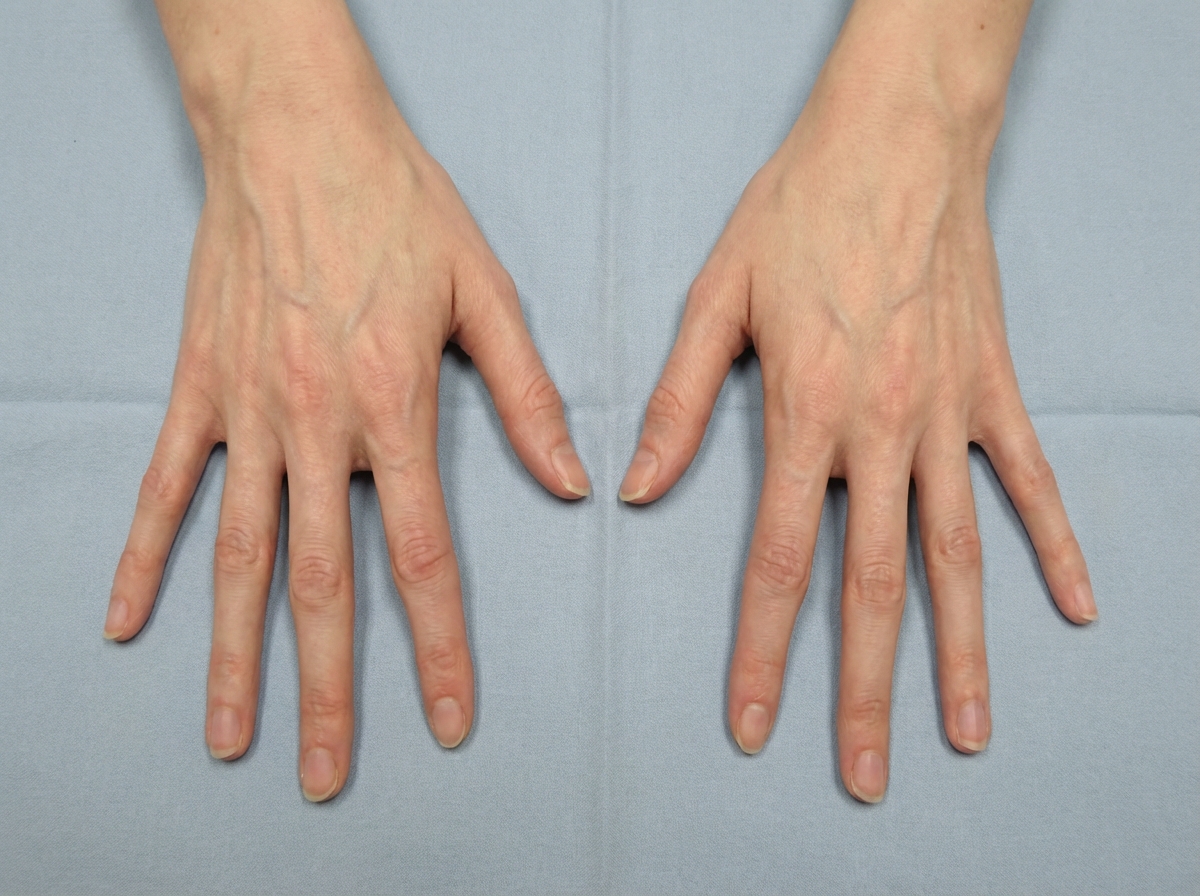
In which week of intra-uterine life do nails form?
A child is able to dress herself, knows her gender, and feeds without spilling. What is her approximate age?
A child presents with micrognathia, retrognathia, and glossoptosis. What is the most probable diagnosis?
To avoid displacement of permanent teeth, by what age should finger sucking habits be terminated?
Green stains which occur frequently in children are due to?
What is the approximate daily requirement of potassium in a child per kilogram of body weight?
Which one of the following does NOT present with a large anterior fontanelle?
Which of the following developmental milestones is typically achieved by an eight-month-old child?
Explanation: **Explanation:** The **anterior fontanelle** typically closes between **9 to 18 months** of age. A "wide open" or delayed closure of the fontanelle occurs when there is a defect in bone ossification or increased intracranial pressure. **Why Craniosynostosis is the Correct Answer:** Craniosynostosis is the **premature fusion** of one or more cranial sutures. Because the bones of the skull join together earlier than normal, the fontanelle closes **early** rather than remaining wide open. This often leads to an abnormally shaped skull (e.g., scaphocephaly, brachycephaly) as the brain continues to grow perpendicular to the fused suture. **Analysis of Incorrect Options:** * **Rickets:** Vitamin D deficiency leads to impaired mineralization of bone (osteoid), resulting in soft skull bones (craniotabes) and delayed closure of fontanelles. * **Cretinism (Congenital Hypothyroidism):** Thyroid hormones are essential for skeletal maturation. Deficiency results in significantly delayed bone age and a persistently large anterior and posterior fontanelle. * **Osteogenesis Imperfecta:** This genetic disorder of collagen synthesis leads to defective bone formation and thinning of the calvarium, which keeps the fontanelles and sutures wide. **NEET-PG High-Yield Pearls:** * **Delayed Closure (>18 months):** Remember the mnemonic **"CHORDS"** — **C**retinism, **H**ydrocephalus, **O**steogenesis imperfecta, **R**ickets, **D**own syndrome, and **S**yphilis. * **Early Closure (<6 months):** Most commonly caused by **Craniosynostosis** or Microcephaly. * **Bulging Fontanelle:** Indicates increased ICP (Meningitis, Hydrocephalus, Vitamin A toxicity). * **Sunken Fontanelle:** A clinical sign of significant **Dehydration**.
Explanation: **Explanation:** **Fetal Hydantoin Syndrome (FHS)** is a constellation of birth defects caused by the teratogenic effects of **Phenytoin** (an antiepileptic drug) when taken during pregnancy. **Why Macrocephaly is the Correct Answer:** Macrocephaly (an abnormally large head) is **not** a feature of FHS. In fact, Phenytoin interferes with brain development and skull growth, leading to the opposite clinical finding: **Microcephaly** (Option C). Therefore, Macrocephaly is the "except" or incorrect feature in this list. **Analysis of Other Options:** * **Digital Hypoplasia (Option A):** This is a hallmark feature of FHS. It typically manifests as hypoplasia (underdevelopment) of the distal phalanges and nails, often referred to as "finger-like thumbs" or nail hypoplasia. * **Microcephaly (Option C):** As mentioned, reduced head circumference is a classic manifestation due to the drug’s effect on the developing central nervous system. * **Cleft Lip/Palate (Option D):** Orofacial clefts are common midline defects associated with phenytoin exposure during the first trimester. **High-Yield Clinical Pearls for NEET-PG:** * **Key Features of FHS:** Remember the mnemonic **"D-I-G-I-T"**: **D**elayed growth, **I**ntellectual disability, **G**enitourinary anomalies, **I**rregular midface (flat nasal bridge, hypertelorism), and **T**apering/hypoplastic digits. * **Mechanism:** Phenytoin is metabolized to epoxide intermediates which cause oxidative stress to the fetus. * **Management:** If a pregnant woman has epilepsy, the goal is to use the lowest effective dose of a single drug (monotherapy). **Levetiracetam** and **Lamotrigine** are generally preferred over Phenytoin or Valproate due to lower teratogenic risk. * **Vitamin K:** Phenytoin can induce fetal Vitamin K deficiency; thus, Vitamin K prophylaxis is essential for the neonate to prevent hemorrhagic disease.
Explanation: **Explanation:** The development of nails is a precise chronological event in embryology. The correct answer is **10-12 weeks** because the primary nail field (the first sign of nail development) appears on the dorsal surface of the digits at approximately **10 weeks** of gestation. By **12 weeks**, the nail bed is well-defined, and the actual nail plate begins to grow from the proximal nail fold. **Analysis of Options:** * **0-6 weeks (Incorrect):** This period is characterized by organogenesis and the initial formation of limb buds. The digits have not yet fully separated, and specialized skin appendages like nails have not begun to form. * **14-18 weeks (Incorrect):** By this stage, the nail plate is already growing and covers a portion of the nail bed. While development continues, the *initiation* occurs much earlier. * **20-24 weeks (Incorrect):** At this point, the nails are well-developed. Fingernails typically reach the fingertips by **32 weeks**, and toenails reach the tips by **36 weeks**. **NEET-PG High-Yield Pearls:** * **Sequence:** Fingernails always develop slightly ahead of toenails. * **Clinical Marker:** The reach of the nail to the fingertip is a clinical sign used to assess fetal maturity. In **preterm** infants, nails often do not reach the fingertips; in **post-term** infants, nails may be long and extend beyond the fingertips. * **Ectodermal Origin:** Nails, like hair and skin, are derived from the **ectoderm**. * **Key Milestone:** While nail formation starts at 10-12 weeks, they are only fully formed and visible to the naked eye at birth.
Explanation: This question tests your knowledge of **Social and Adaptive milestones** in early childhood. The correct answer is **3 years** based on the following developmental markers: ### 1. Why 3 years is correct: * **Dressing:** At 3 years, a child can put on simple clothes (like a t-shirt or shoes) but usually requires help with buttons or laces. * **Gender Identity:** This is a high-yield milestone; children typically recognize and can state their gender by age 3. * **Feeding:** Hand-eye coordination is sufficiently developed by this age to allow the child to use a spoon and fork effectively without significant spilling. * **Other 3-year milestones:** Can ride a tricycle, build a tower of 9-10 blocks, and speak in 3-word sentences. ### 2. Why other options are incorrect: * **2 years:** A 2-year-old can remove simple clothing (undressing) but cannot dress themselves. They are still messy eaters and do not yet have a firm concept of gender identity. * **4 years:** By this age, milestones are more advanced. A 4-year-old can dress and undress independently (including buttons), use scissors to cut paper, and hop on one foot. * **5 years:** A 5-year-old is highly independent, can tie shoelaces, and can dress/undress completely without supervision. ### 3. Clinical Pearls for NEET-PG: * **Feeding:** Uses a cup (12 months), uses a spoon (18 months), feeds without spilling (3 years). * **Dressing:** Undresses (2 years), dresses with help (3 years), dresses independently (4-5 years). * **Social:** Parallel play (2 years), Group/Cooperative play (3 years). * **Memory Trick:** Think of the "Rule of 3s" for a 3-year-old: **3**-word sentences, **3**-wheel tricycle, **3**-block bridge (imitated), and knows **3** components of identity (Name, Age, Gender).
Explanation: **Explanation:** The clinical triad of **micrognathia** (small mandible), **retrognathia** (posteriorly displaced mandible), and **glossoptosis** (posterior displacement of the tongue) is the hallmark of **Pierre Robin Sequence (PRS)**. The underlying pathophysiology involves a primary failure of mandibular growth in utero. This lack of space forces the tongue to remain high in the oral cavity, preventing the palatal shelves from fusing, which frequently results in a **U-shaped cleft palate**. The primary concern in these neonates is upper airway obstruction and feeding difficulties due to the tongue falling backward. **Analysis of Incorrect Options:** * **Russell-Silver Syndrome:** Characterized by intrauterine growth restriction (IUGR), triangular facies, clinodactyly, and limb length asymmetry. While they have a small chin, they do not typically present with the classic triad of glossoptosis and airway obstruction. * **Angelman Syndrome:** A genetic disorder (15q11-q13 deletion) presenting with "Happy Puppet" gait, inappropriate laughter, seizures, and severe intellectual disability. * **Treacher Collins Syndrome:** An autosomal dominant disorder of craniofacial development (1st and 2nd branchial arches). While it features micrognathia, it is distinguished by **malar hypoplasia**, downward-slanting palpebral fissures, and coloboma of the lower eyelids. **High-Yield Pearls for NEET-PG:** * **Sequence vs. Syndrome:** PRS is a "sequence" because one primary defect (mandibular hypoplasia) leads to a cascade of secondary events. * **Positioning:** The initial management for airway obstruction in PRS is **prone positioning**, which allows gravity to pull the tongue forward. * **Associated Conditions:** PRS is often associated with **Stickler Syndrome** (check for myopia and retinal detachment).
Explanation: **Explanation:** The correct answer is **8 years**. **Medical Concept:** Finger or thumb sucking is considered a normal self-soothing reflex in infancy and early childhood. However, persistent sucking exerts mechanical pressure on the alveolar process and the developing dentition. The critical period for permanent dental displacement begins with the eruption of the permanent maxillary incisors. While many pediatricians recommend stopping the habit by age 4–6 to prevent primary tooth misalignment, the **definitive threshold** to avoid permanent skeletal deformities and irreversible displacement of **permanent teeth** is generally cited as **8 years**. If the habit ceases before the permanent teeth are fully established (typically by age 6–8), most malocclusions (like open bite or maxillary protrusion) can undergo spontaneous correction. **Analysis of Options:** * **8 years (Correct):** This is the upper limit. Beyond this age, the risk of permanent "adenoid facies-like" dental changes and the need for orthodontic intervention increases significantly. * **5 years:** While this is the age where social pressure often reduces the habit, it is not the absolute deadline for permanent tooth displacement, as many permanent incisors are just beginning to erupt. * **3 years:** At this age, the habit is still considered developmentally normal and primarily affects the deciduous (milk) teeth. * **2 years:** Sucking at this age is a physiological rooting/sucking reflex and has no long-term impact on permanent dentition. **High-Yield Clinical Pearls for NEET-PG:** * **Dental Effects:** Persistent thumb sucking leads to **anterior open bite**, **maxillary protrusion** (buck teeth), and a **narrow maxillary arch**. * **Management:** Behavioral modification (positive reinforcement) is the first line. If the habit persists beyond age 6, intra-oral appliances (e.g., palatal cribs) may be used. * **Psychological Aspect:** Persistent sucking in older children may be a sign of emotional stress or insecurity.
Explanation: **Explanation:** The correct answer is **D. Chromogenic bacteria**. Extrinsic dental stains in children are frequently caused by the interaction between oral bacteria and the dental pellicle. **Green stains** are specifically attributed to the presence of **chromogenic bacteria** (most commonly *Bacillus pyocaneus* and *Aspergillus* species). These bacteria produce pigments that adhere to the labial surfaces of the maxillary anterior teeth, often associated with poor oral hygiene and the decomposition of hemoglobin into inorganic iron. **Analysis of Incorrect Options:** * **A & B (Enamel and Dentin deficiency):** These represent intrinsic structural defects (e.g., Amelogenesis or Dentinogenesis Imperfecta). While they cause tooth discoloration (yellowish-brown or opalescent), they are not "stains" that occur on the surface and are not typically green. * **C (Materia alba):** This is a soft, whitish-yellow accumulation of bacteria, salivary proteins, and food debris. While it is a precursor to plaque, it lacks the specific pigment-producing properties required to create a distinct green stain. **NEET-PG High-Yield Pearls:** * **Black Stains:** Often associated with **iron supplements** or **actinomyces** species. Interestingly, children with black stains often have a *lower* incidence of dental caries due to the presence of calcium and phosphate in the biofilm. * **Orange/Red Stains:** Typically caused by *Serratia marcescens* and *Flavobacterium lutescens*. * **Management:** Unlike intrinsic stains, extrinsic green stains can usually be removed via professional scaling and polishing. * **Nasmyth’s Membrane:** Green stains often incorporate into this thin enamel cuticle in newly erupted teeth.
Explanation: ### Explanation **Correct Answer: A. 1-2 mEq/Kg** The maintenance requirement for electrolytes in children is determined by their metabolic rate and daily fluid turnover. For a healthy child, the standard daily requirement for **Potassium (K+) is 1–2 mEq/kg/day**, while for **Sodium (Na+), it is 2–3 mEq/kg/day**. These values ensure the maintenance of normal serum concentrations and compensate for obligatory losses through urine, sweat, and stool. **Analysis of Incorrect Options:** * **B (4-7 mEq/Kg):** This range is excessively high for maintenance. Such doses are typically reserved for the acute correction of severe hypokalemia under cardiac monitoring, not as a daily requirement. * **C & D (10-62 mEq/Kg):** These values are physiologically dangerous. Administering potassium at these levels would lead to rapid hyperkalemia, resulting in life-threatening cardiac arrhythmias and cardiac arrest. **Clinical Pearls for NEET-PG:** * **Holliday-Segar Formula:** Used to calculate maintenance fluids. Remember the **100:50:20 rule** for fluid volume (ml/kg) based on weight. * **Potassium Infusion Rule:** When replacing potassium intravenously, the concentration should generally not exceed **40 mEq/L** in peripheral lines, and the rate of infusion should not exceed **0.5 mEq/kg/hour** to avoid cardiotoxicity. * **Renal Function:** Always ensure the child is passing adequate urine ("No K+ until they pee") before adding potassium to maintenance fluids to prevent accidental hyperkalemia.
Explanation: **Explanation:** The size of the anterior fontanelle is a critical clinical marker in pediatric assessment. A **large anterior fontanelle** (normal size is roughly 0.6–3.6 cm) typically results from delayed ossification of the skull bones or increased intracranial pressure. **1. Why Crouzon Syndrome is the Correct Answer:** Crouzon syndrome is a type of **craniosynostosis**, characterized by the **premature fusion** of cranial sutures. Because the sutures close earlier than normal, the fontanelles also close prematurely. Therefore, patients with Crouzon syndrome present with a **small or absent** anterior fontanelle, rather than a large one. **2. Analysis of Incorrect Options (Causes of Large Fontanelle):** * **Hypophosphatasia:** This is a metabolic bone disease where defective mineralization leads to soft skull bones and delayed closure of sutures, resulting in a large fontanelle. * **Achondroplasia:** This is the most common form of skeletal dysplasia. It features impaired endochondral ossification, leading to macrocephaly and a characteristically large anterior fontanelle. * **Congenital Rubella Syndrome (CRS):** Along with microcephaly and cataracts, CRS is a recognized infectious cause of delayed fontanelle closure. **3. High-Yield Clinical Pearls for NEET-PG:** * **Mnemonic for Large Fontanelle:** "CHART" (Cretinism/Hypothyroidism, Hydrocephalus, Achondroplasia, Rickets, Trisomies 13, 18, 21). * **Delayed Closure (>18 months):** Most commonly seen in **Rickets** and **Hypothyroidism**. * **Bulging Fontanelle:** Indicates raised intracranial pressure (Meningitis, Hydrocephalus). * **Sunken Fontanelle:** A classic sign of severe **Dehydration**.
Explanation: **Explanation:** Developmental milestones follow a predictable sequence of maturation in the central nervous system. By **8 months of age**, a child typically achieves the milestone of **sitting stably without support**. While sitting with support begins at 6 months, the trunk control required to sit independently and steadily is a hallmark of the 8-month mark. **Analysis of Options:** * **A. Pincer Grasp:** This is a fine motor milestone. An immature pincer grasp (using the ulnar side of the hand) appears around 9 months, while a **mature pincer grasp** (using the tips of the thumb and index finger) is achieved at **10 months**. * **C. Standing without support:** This is a gross motor milestone typically achieved between **11 to 12 months**. At 8-9 months, a child may stand but only while holding onto furniture (standing with support). * **D. Saying "mama"-"baba":** While an 8-month-old may produce polysyllabic sounds (ba-ba-ba), saying specific words like "mama" or "dada" **non-specifically** occurs at **9 months**, and **specifically** (addressing the correct parent) at **12 months**. **High-Yield Clinical Pearls for NEET-PG:** * **Red Flag:** Failure to sit without support by **9 months** is considered a developmental delay. * **Sequence of Sitting:** 5 months (with support) → 8 months (without support/stably) → 10 months (pivoting while sitting). * **Hand Dominance:** Hand preference before **18 months** is pathological and may indicate early hemiplegia; normal handedness develops by 2–3 years.
Normal Growth Parameters
Practice Questions
Developmental Milestones
Practice Questions
Puberty and Adolescent Development
Practice Questions
Growth Disorders
Practice Questions
Failure to Thrive
Practice Questions
Developmental Screening and Assessment
Practice Questions
Developmental Delays
Practice Questions
Growth Charts and Monitoring
Practice Questions
Short Stature
Practice Questions
Tall Stature
Practice Questions
Precocious and Delayed Puberty
Practice Questions
Psychosocial Development
Practice Questions
Get full access to all questions, explanations, and performance tracking.
Start For Free