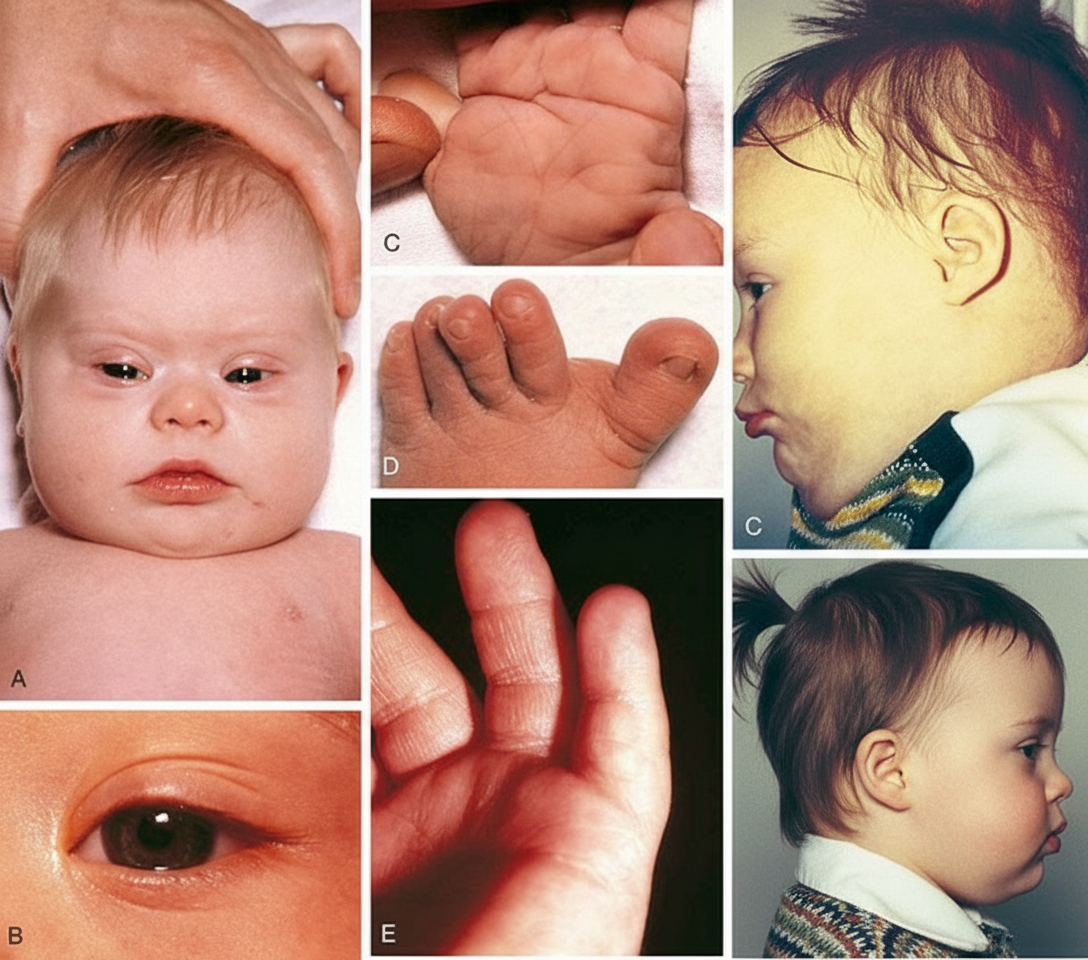
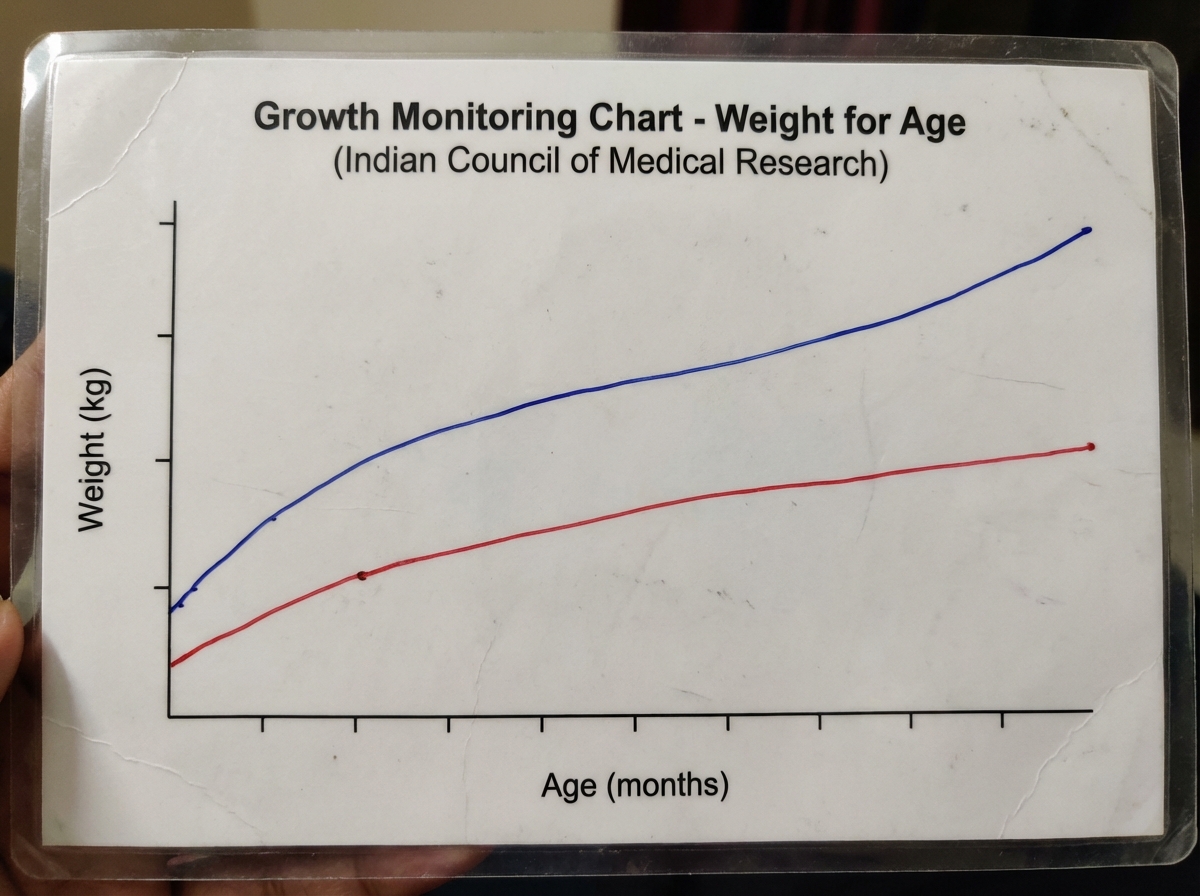
Which statement is a true interpretation of the laws of normal child development?
At what age does the posterior fontanelle typically fuse?
A newborn can lose up to what percentage of birth weight in the first week of life?
Which reflex, once lost, never reappears in a normal infant?
What is the average length of a full-term child at birth?
Which chromosome is involved in Angelman syndrome?
What does the Intelligence Quotient (IQ) of a child represent?
Which of the following can cause failure to thrive?
All of the following are features of Ehlers-Danlos syndrome except?
Trisomy 18 is known as what?
Explanation: This question tests the fundamental principles of pediatric growth and development, which are governed by predictable biological laws. **Explanation of the Correct Answer:** The correct answer is **D (All of the above)** because each statement represents a core tenet of developmental biology: * **Option A (Sequence and Timing):** While the **sequence** of development is universal (e.g., sitting before standing), the **timing** is subject to individual variation. Factors like genetics, nutrition, and environment cause "normal" milestones to fall within a range rather than a fixed date. * **Option B (Cephalocaudal Sequence):** Development proceeds from head to toe. A child first gains head control, then trunk balance (sitting), and finally leg coordination (walking). This is a cardinal law of development. * **Option C (Primitive Reflexes):** The disappearance of primitive reflexes (like the Moro or Palmar grasp) is a prerequisite for the emergence of voluntary motor skills. For example, the Palmar grasp must disappear before a child can develop a voluntary pincer grasp. **High-Yield Clinical Pearls for NEET-PG:** 1. **Proximodistal Law:** Development also proceeds from the center of the body to the periphery (e.g., shoulder control precedes finger dexterity). 2. **General to Specific:** Responses move from generalized total-body movements to refined, localized actions. 3. **Red Flag:** A delay in milestones is significant, but a **regression** (loss of previously attained milestones) is a medical emergency often indicating neurodegenerative disorders. 4. **Dissociation:** This refers to a child being normal in one field (e.g., Gross Motor) but delayed in another (e.g., Language), often seen in specific disabilities.
Explanation: **Explanation:** The fontanelles are membrane-filled spaces located at the junctions of the cranial sutures, allowing for brain growth and molding during childbirth. **1. Why Option A is Correct:** The **posterior fontanelle** (located at the junction of the sagittal and lambdoid sutures) is the first major fontanelle to close. It typically fuses by **2–3 months** of age. In some infants, it may even be clinically closed at birth or shortly thereafter. **2. Analysis of Incorrect Options:** * **Option B (12 months):** While some minor fontanelles (like the sphenoidal) close around 6–12 months, the posterior fontanelle closes much earlier. * **Option C (18–24 months):** This is the typical timeframe for the closure of the **anterior fontanelle**. Delayed closure beyond 24 months is pathological and associated with conditions like rickets or hypothyroidism. * **Option D (36 months):** Closure at this age is significantly delayed and indicates underlying skeletal or developmental disorders. **3. Clinical Pearls for NEET-PG:** * **Anterior Fontanelle (Bregma):** Largest fontanelle; diamond-shaped; closes between **9–18 months** (average 12–15 months). * **Posterior Fontanelle (Lambda):** Triangle-shaped; closes by **2–3 months**. * **Sunken Fontanelle:** A critical clinical sign of **dehydration**. * **Bulging Fontanelle:** Indicates **increased intracranial pressure** (e.g., meningitis, hydrocephalus, or intracranial hemorrhage). * **Delayed Closure:** Seen in Rickets, Cretinism (Hypothyroidism), Down Syndrome, and Hydrocephalus. * **Early Closure (Craniosynostosis):** Premature fusion of sutures leading to abnormal skull shapes (e.g., Scaphocephaly).
Explanation: **Explanation:** The correct answer is **10%**. **Why it is correct:** It is a physiological phenomenon for newborns to lose weight during the first few days of life. This occurs primarily due to the **excretion of excess extravascular fluid** (diuresis), the passage of meconium, and a relatively low caloric intake during the initial phase of breastfeeding. * **Term neonates** typically lose up to **10%** of their birth weight. * **Preterm neonates** may lose even more, typically up to **15%**, due to higher insensible water loss and immature renal function. Most healthy term infants regain their birth weight by **7 to 10 days** of life. **Why other options are incorrect:** * **A (6%):** While some infants may only lose 5-7%, the standard clinical threshold for "normal" physiological weight loss in a term infant is up to 10%. * **C & D (15% and >15%):** A weight loss exceeding 10% in a term neonate is considered **pathological**. It often indicates breastfeeding failure, dehydration, or an underlying systemic illness and requires immediate clinical evaluation. **High-Yield Clinical Pearls for NEET-PG:** 1. **Regaining Weight:** Term infants regain birth weight by **10 days**; Preterm infants by **14 days**. 2. **Weight Doubling:** Birth weight doubles by **5 months**. 3. **Weight Tripling:** Birth weight triples by **1 year**. 4. **Weight Quadrupling:** Birth weight quadruples by **2 years**. 5. **Average Daily Gain:** In the first 3 months, an infant gains approximately **25–30 g/day**.
Explanation: ### Explanation **Moro’s Reflex (Correct Answer):** Moro’s reflex is a primitive, vestibular-driven reflex present at birth. It typically disappears by **3–4 months** of age as the central nervous system matures and the cerebral cortex exerts inhibitory control over the brainstem. In a neurologically healthy individual, once this reflex is integrated (lost), it **never reappears**. Its persistence beyond 6 months or its reappearance is a definitive sign of upper motor neuron (UMN) lesion or cerebral palsy. **Analysis of Incorrect Options:** * **Grasp Reflex (B):** While the palmar grasp disappears by 2–3 months, it can reappear in adults with **frontal lobe lesions** (frontal release sign). * **Snout Reflex (C):** This is a primitive reflex where tapping the lips causes pouting. It is normally suppressed in adults but reappears in **dementia** (e.g., Alzheimer’s) or diffuse brain damage. * **Glabellar Reflex (D):** Also known as the "Myerson sign," repetitive tapping on the forehead normally leads to habituation (blinking stops). Failure to habituate (persistent blinking) is a clinical marker for **Parkinson’s disease**. **High-Yield Clinical Pearls for NEET-PG:** * **Asymmetrical Moro:** Suggests Erb’s palsy, fractured clavicle, or shoulder dislocation. * **Absent Moro at birth:** Suggests significant CNS depression, hypoxia, or lower motor neuron injury. * **Order of disappearance:** Stepping (1-2m) → Rooting (3-4m) → Moro (3-4m) → Palmar Grasp (3m) → Plantar Grasp (9-12m). * **Parachute Reflex:** This is a protective reflex that appears at **6–9 months** and, unlike primitive reflexes, **persists throughout life**.
Explanation: **Explanation:** The average length of a healthy, full-term neonate at birth is approximately **50 cm** (ranging between 48–52 cm). This measurement is a critical baseline for monitoring a child's linear growth and nutritional status. **Why 50 cm is correct:** During the first year of life, linear growth occurs at a rapid pace. A full-term infant typically grows 25 cm in the first year, reaching approximately 75 cm by age one. By age four, the birth length doubles (100 cm). Understanding the 50 cm baseline is essential for calculating these milestones. **Analysis of Incorrect Options:** * **A (30 cm) & B (35 cm):** These lengths are significantly below the normal range for a full-term infant. A length of 35 cm or less is more characteristic of an extremely preterm infant (approx. 24–26 weeks gestation). * **C (40 cm):** This is typical for a preterm infant (approx. 30–32 weeks gestation). A full-term baby measuring 40 cm would be classified as having severe symmetrical intrauterine growth restriction (IUGR). **High-Yield Clinical Pearls for NEET-PG:** * **Growth Velocity:** * 0–3 months: 3.5 cm/month * 3–6 months: 2.0 cm/month * 6–12 months: 1.2 cm/month * **Length Milestones:** * **At Birth:** 50 cm * **1 Year:** 75 cm (1.5x birth length) * **2 Years:** 90 cm * **4 Years:** 100 cm (Double birth length) * **13 Years:** 150 cm (Triple birth length) * **Measurement:** Up to 2 years of age, "length" is measured in a recumbent position using an **infantometer**. After 2 years, "height" is measured standing using a **stadiometer**.
Explanation: **Explanation:** **Angelman Syndrome (AS)** is a neurodevelopmental disorder caused by the loss of function of the **UBE3A gene** located on **Chromosome 15 (15q11-q13)**. This region is subject to **genomic imprinting**, where certain genes are expressed only from one parent. In a normal individual, the maternal allele of UBE3A is active in the brain while the paternal allele is silenced. Angelman syndrome occurs when the **maternal contribution** is lost (via deletion, uniparental disomy, or imprinting defects), leading to a lack of UBE3A protein expression. **Analysis of Incorrect Options:** * **Option A (Chromosome 13):** Associated with **Patau Syndrome** (Trisomy 13) and Wilson’s disease. * **Option C (Chromosome 18):** Associated with **Edwards Syndrome** (Trisomy 18). * **Option D (Chromosome 21):** Associated with **Down Syndrome** (Trisomy 21). **High-Yield Clinical Pearls for NEET-PG:** * **Mnemonic:** **"MAMA"** – **M**aternal **A**ngelman, **M**ental retardation, **A**taxia/Antsy (hyperactivity). * **Clinical Features:** "Happy Puppet" syndrome—characterized by paroxysms of inappropriate laughter, jerky "puppet-like" movements (ataxia), microcephaly, and severe intellectual disability. * **Prader-Willi Syndrome (PWS):** This is the "sister" disorder also involving **Chromosome 15**, but it results from the loss of the **paternal** contribution (Paternal = Prader-Willi). PWS presents with hypotonia, obesity, and hyperphagia. * **Diagnostic Gold Standard:** DNA methylation analysis (detects ~80% of cases).
Explanation: **Explanation:** The Intelligence Quotient (IQ) is a standardized measure used to assess a child's cognitive abilities relative to their peer group. It is mathematically defined by the formula: **IQ = (Mental Age / Chronological Age) × 100** **Why Option B is Correct:** IQ does not measure absolute intelligence in isolation; rather, it evaluates a child’s performance on standardized intellectual tasks (reasoning, problem-solving, verbal skills) compared to the average performance of children of the same **chronological age**. A score of 100 indicates that the child’s mental age is exactly equal to their chronological age. **Why Other Options are Incorrect:** * **Option A:** Creativity involves divergent thinking and originality, which standard IQ tests are not designed to quantify. * **Option C:** While memory is a component of intelligence, IQ is a global assessment of multiple cognitive domains, not just mnemonic efficiency. * **Option D:** Learning ability (aptitude) is the *potential* to acquire skills, whereas IQ measures current intellectual functioning and performance at a specific point in time. **High-Yield Clinical Pearls for NEET-PG:** * **Classification of Intellectual Disability (ID):** Based on IQ scores: * **Mild:** 50–70 (Educable; most common) * **Moderate:** 35–49 (Trainable) * **Severe:** 20–34 * **Profound:** < 20 * **Developmental Quotient (DQ):** Used for infants/young children; calculated as (Developmental Age / Chronological Age) × 100. * **The Flynn Effect:** The observed rise in average IQ scores over generations globally.
Explanation: **Explanation:** **Failure to Thrive (FTT)** is defined as a child’s weight or rate of weight gain being significantly below that of other children of similar age and sex. It is a clinical sign, not a diagnosis, and results from inadequate usable calories to meet metabolic demands. 1. **Malabsorption (Option A):** This is a classic **organic cause** of FTT. Conditions like Celiac disease, Cystic Fibrosis, or chronic diarrhea lead to the inability of the gut to absorb nutrients, resulting in a caloric deficit despite adequate intake. 2. **Child Abuse/Neglect (Option B):** This is a major **non-organic (psychosocial) cause**. Neglect often involves intentional or unintentional caloric deprivation. Emotional deprivation and a stressful environment can also lead to "Psychosocial Dwarfism" through the suppression of the growth hormone axis. 3. **G6PD Deficiency (Option C):** While primarily known for causing hemolytic anemia, chronic or recurrent hemolysis in G6PD deficiency can lead to increased metabolic demands and chronic illness, which are recognized contributors to FTT in pediatric populations. **Why "All of the Above" is correct:** FTT is multifactorial. It encompasses organic (medical diseases), non-organic (environmental/behavioral), and mixed etiologies. All three listed conditions can disrupt the balance of caloric intake, absorption, or utilization. **High-Yield Clinical Pearls for NEET-PG:** * **Most Common Cause:** Inadequate caloric intake (often due to poverty or improper feeding techniques) is the most common cause of FTT worldwide. * **Assessment:** The first parameter to be affected in FTT is **Weight**, followed by **Height/Length**. **Head circumference** is usually spared until malnutrition is severe. * **Wasting vs. Stunting:** Weight-for-height <3rd percentile indicates acute malnutrition (wasting), while Height-for-age <3rd percentile indicates chronic malnutrition (stunting). * **Management:** The primary goal is "catch-up growth," often requiring 1.5 to 2 times the expected caloric intake for the child's age.
Explanation: **Explanation:** **Ehlers-Danlos Syndrome (EDS)** is a heterogeneous group of inherited connective tissue disorders characterized by defects in **collagen synthesis**. The primary clinical triad includes skin hyperextensibility, joint hypermobility, and tissue fragility. **Why "Long Stature" is the correct answer:** Long stature (marfanoid habitus) is a hallmark of **Marfan Syndrome** and **Homocystinuria**, not Ehlers-Danlos Syndrome. While both EDS and Marfan syndrome involve connective tissue defects and joint laxity, EDS patients typically have a normal stature. **Analysis of Incorrect Options:** * **Blue Sclera:** This is a classic feature of EDS (especially the Kyphoscoliotic type) and Osteogenesis Imperfecta. It occurs because the thinning of the collagen in the sclera allows the underlying choroidal veins to show through. * **Subluxation of Lens (Ectopia Lentis):** While more common in Marfan syndrome, lens subluxation can occur in certain types of EDS due to weakness in the ciliary zonules. * **Epicanthal Folds:** These are common dysmorphic facial features associated with several types of EDS, along with a broad nasal bridge. **NEET-PG High-Yield Pearls:** * **Gorlin Sign:** The ability to touch the tip of the nose with the tongue (seen in 50% of EDS patients). * **Beighton Score:** Used to quantify systemic joint hypermobility. * **Vascular EDS (Type IV):** Caused by a mutation in **COL3A1**; it is the most severe form due to the risk of spontaneous arterial or organ rupture. * **Cigarette Paper Scars:** Thin, atrophic scars resulting from poor wound healing in EDS.
Explanation: **Explanation:** **Trisomy 18** is clinically known as **Edward Syndrome**. It is the second most common autosomal trisomy among live births (after Down syndrome). It occurs due to the presence of an extra copy of chromosome 18, usually resulting from maternal meiotic non-disjunction. **Analysis of Options:** * **Edward Syndrome (Correct):** Characterized by severe intellectual disability and multisystem defects. High-yield clinical features include **clenched fists with overlapping fingers**, **rocker-bottom feet**, micrognathia, low-set malformed ears, and prominent occiput. * **Patau Syndrome (Option B):** This is **Trisomy 13**. It is characterized by the "3 Ps": **P**olydactyly, **P**alates (cleft lip/palate), and **P**unch-out scalp defects (Aplasia cutis congenita), along with holoprosencephaly and microphthalmia. * **Cat Eye Syndrome (Option C):** This is a rare condition caused by a partial trisomy or tetrasomy of **chromosome 22**. It is named after the characteristic ocular coloboma which gives the pupil a "cat-like" appearance. * **Down Syndrome (Option D):** This is **Trisomy 21**, the most common chromosomal anomaly. Key features include Brushfield spots, simian crease, and flat facial profile. **NEET-PG High-Yield Pearls:** * **Mnemonic for Edward:** "E" for **E**ighteen and **E**dward. * **Cardiac defect:** Ventricular Septal Defect (VSD) is the most common heart lesion in Edward syndrome. * **Prognosis:** Most affected infants die within the first year of life due to central apnea or heart failure. * **Screening:** On a Quadruple screen, Edward syndrome typically shows **decreased** levels of AFP, uE3, hCG, and Inhibin A (unlike Down syndrome where hCG and Inhibin A are elevated).
Normal Growth Parameters
Practice Questions
Developmental Milestones
Practice Questions
Puberty and Adolescent Development
Practice Questions
Growth Disorders
Practice Questions
Failure to Thrive
Practice Questions
Developmental Screening and Assessment
Practice Questions
Developmental Delays
Practice Questions
Growth Charts and Monitoring
Practice Questions
Short Stature
Practice Questions
Tall Stature
Practice Questions
Precocious and Delayed Puberty
Practice Questions
Psychosocial Development
Practice Questions
Get full access to all questions, explanations, and performance tracking.
Start For Free