What is Edward syndrome?
According to the Hoyme et al classification of hemihyperplasia, what does hemifacial hyperplasia involve?
Laurence-Moon-Biedl syndrome is associated with which of the following?
A 2.5-year-old child wakes up at night, screaming with fear. This is generally a manifestation of which of the following?
A one-year-old male child presents with sparse blond hair, developmental delay, and tremors. What is the most likely diagnosis?
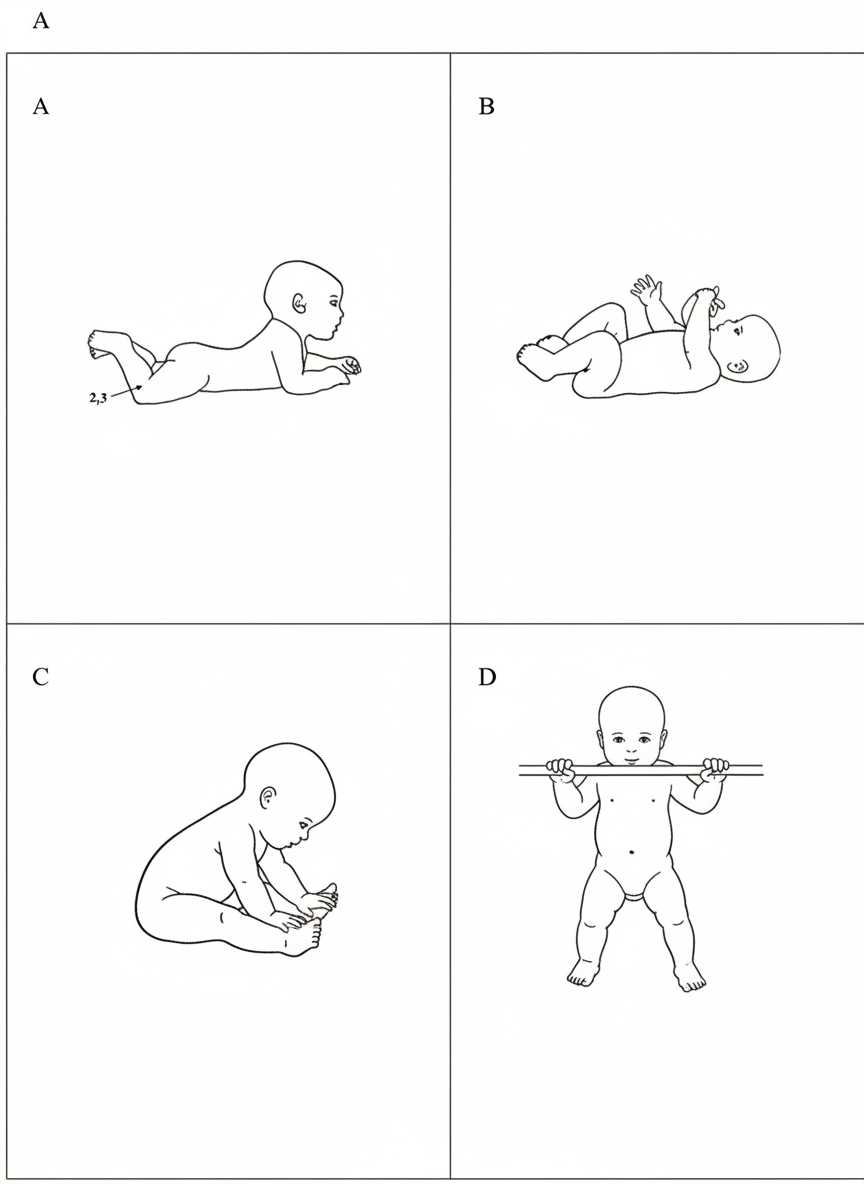
Which developmental milestone is typically attained by 9 months of age?
Which of the following developmental milestones should arouse concern in a parent regarding a child's development?
A 1-week-old black infant presents with a large, fairly well-defined, grey-blue lesion over the buttocks bilaterally. The lesion is not palpable, and it is not warm or tender. The mother denies trauma and reports that the lesion has been present since birth. This otherwise well-appearing infant is growing and developing normally and appears normal upon physical examination. What is the most appropriate course of action in this infant?
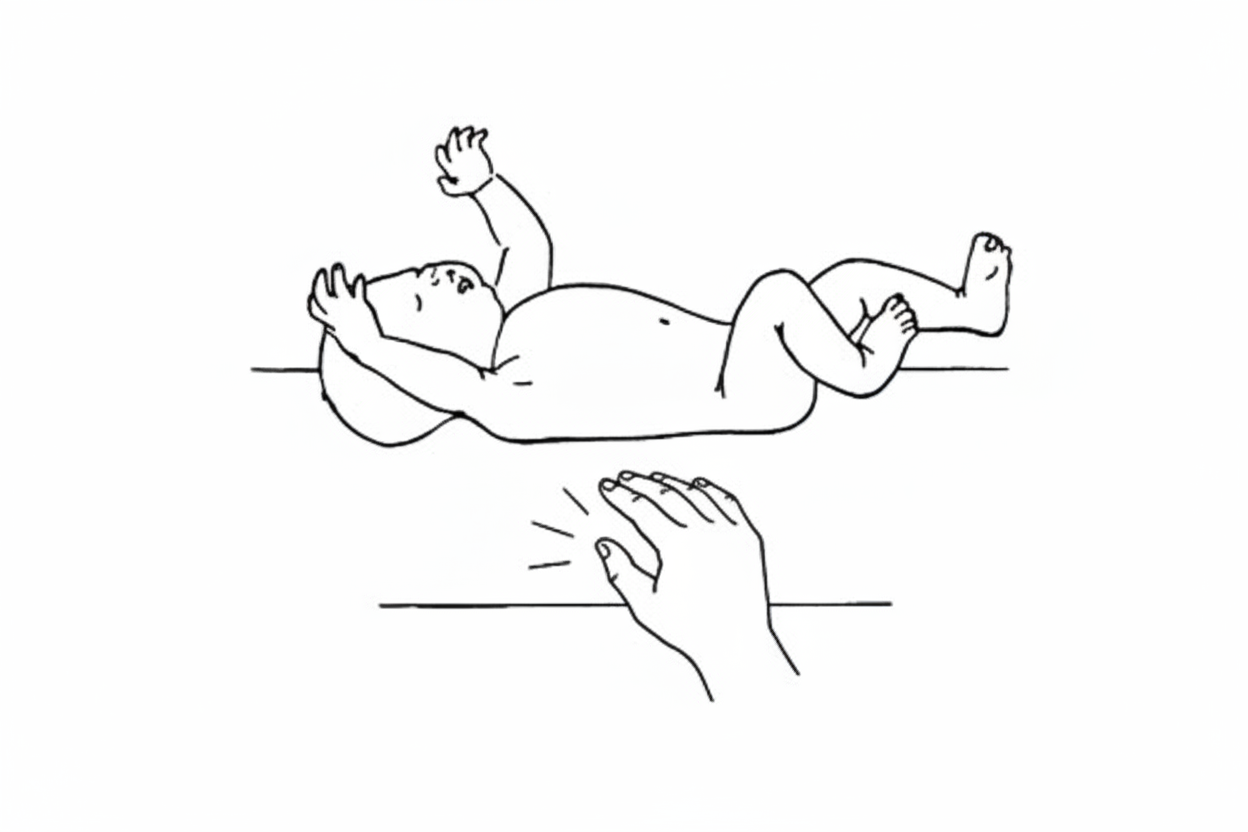
Persistence of which of the following developmental milestones greater than the specified age is indicative of low IQ?
A 1-year-old child presented with involuntary movements which were choreoathetoid in nature, spasticity, dystonias, and intellectual disability. The child's speech was dysarthric, and the mother also reported a history of compulsive biting. The child was normal at birth. Lab findings revealed increased uric acid levels. The enzyme deficient in the condition suspected based on these findings catalyzes which of the following reactions?
Explanation: **Explanation:** **Edward Syndrome** is a chromosomal anomaly characterized by **Trisomy 18** (the presence of an extra copy of chromosome 18). It is the second most common autosomal trisomy among live births after Down syndrome. The condition is characterized by severe intellectual disability and multi-system defects. **Analysis of Options:** * **Option B (Trisomy 18):** This is the correct answer. The extra genetic material interferes with normal development, leading to characteristic features such as microcephaly, prominent occiput, low-set malformed ears, and micrognathia. * **Option A (Trisomy 13):** This is **Patau Syndrome**. It is clinically distinguished by midline defects like cleft lip/palate, holoprosencephaly, polydactyly, and microphthalmia. * **Option C (Trisomy 21):** This is **Down Syndrome**, the most common trisomy. Key features include Brushfield spots, simian crease, and flat facial profile. * **Option D (Trisomy 20):** This is a rare chromosomal abnormality, usually occurring as mosaicism, and is not associated with a named clinical syndrome commonly tested in NEET-PG. **High-Yield Clinical Pearls for NEET-PG:** * **Clenched Hand:** A classic sign where the index finger overlaps the middle finger and the fifth finger overlaps the fourth finger. * **Rocker-bottom feet:** Shared with Patau syndrome, but highly characteristic here. * **Cardiac defects:** Ventricular Septal Defect (VSD) is the most common. * **Prenatal Screening:** Shows low maternal serum AFP, low hCG, and low unconjugated estriol (Triple Test). * **Prognosis:** Extremely poor; most infants do not survive beyond the first year of life.
Explanation: **Explanation:** The classification of **Hemihyperplasia** (formerly known as hemihypertrophy) was refined by **Hoyme et al. (1998)** to standardize the terminology for asymmetric overgrowth. Hemihyperplasia refers to an abnormal proliferation of cells leading to an increase in the size of one or more body parts. 1. **Why Option C is correct:** According to the Hoyme classification, **Hemifacial Hyperplasia** is defined as the asymmetric overgrowth of **one side of the face** only. This includes the facial bones, teeth, and soft tissues, without involvement of the rest of the body. 2. **Why other options are incorrect:** * **Option A (Half the body):** This is termed **Isolated Hemihyperplasia (IH)**. It involves the overgrowth of at least one upper limb and one lower limb (ipsilateral or contralateral) and may include the trunk or face. * **Option B (A single limb):** This is classified as **Segmental Hemihyperplasia**, where the overgrowth is limited to a single limb or a specific segment of the body. **High-Yield Clinical Pearls for NEET-PG:** * **Tumor Risk:** The most critical clinical implication of hemihyperplasia is the increased risk of **embryonal tumors**, specifically **Wilms tumor** (most common), hepatoblastoma, and adrenal cell carcinoma. * **Screening Protocol:** Children with isolated hemihyperplasia require abdominal ultrasound every 3 months until age 7 and serum alpha-fetoprotein (AFP) every 3 months until age 4. * **Syndromic Associations:** Hemihyperplasia is a hallmark feature of **Beckwith-Wiedemann Syndrome (BWS)**, Proteus syndrome, and Klippel-Trenaunay syndrome. * **Differentiation:** Unlike hemiatrophy (where one side is small due to disease), hemihyperplasia represents a primary overgrowth of tissues.
Explanation: **Explanation:** Laurence-Moon-Biedl syndrome (now often categorized under the **Bardet-Biedl Syndrome** spectrum) is a rare autosomal recessive genetic disorder characterized by a classic pentad of clinical features. The correct answer is **"All of the above"** because the syndrome involves multi-system abnormalities arising from primary ciliary dysfunction (ciliopathy). 1. **Retinitis Pigmentosa (Option C):** This is a hallmark feature, typically presenting as progressive rod-cone dystrophy leading to night blindness and eventual loss of central vision. 2. **Polydactyly (Option A):** Post-axial polydactyly (extra digits on the ulnar/fibular side) is a frequent skeletal finding present at birth. 3. **Mental Retardation (Option B):** Cognitive impairment or developmental delay is a core component of the syndrome's diagnostic criteria. **Other key features include:** * **Obesity:** Usually central and early-onset. * **Hypogonadism:** Resulting in delayed puberty or infertility (more common in males). * **Renal Anomalies:** Often the most serious complication, leading to chronic kidney disease. **NEET-PG High-Yield Pearls:** * **Differentiation:** Historically, "Laurence-Moon" was associated with spasticity and "Bardet-Biedl" with polydactyly/obesity. Today, they are largely grouped as **Bardet-Biedl Syndrome (BBS)**. * **Inheritance:** Autosomal Recessive. * **Differential Diagnosis:** Always differentiate from **Prader-Willi Syndrome** (which features obesity and hypogonadism but lacks polydactyly and retinitis pigmentosa). * **Mnemonic (PRBOH):** **P**olydactyly, **R**etinitis pigmentosa, **B**rain (Mental retardation), **O**besity, **H**ypogonadism.
Explanation: **Explanation:** The clinical scenario describes **Night Terrors (Sleep Terrors)**, which are common in toddlers and preschool-aged children. At 2.5 years of age, the most significant developmental milestone influencing behavior and sleep disturbances is **Separation Anxiety**. **1. Why Separation Anxiety is Correct:** Between 18 months and 3 years, children undergo the "rapprochement" phase of development. While they are gaining independence, they remain acutely aware of their dependence on caregivers. Nighttime represents a period of prolonged separation. The fear of being alone or "losing" the parent triggers intense anxiety, which often manifests as night terrors—episodes where the child screams, appears terrified, and is difficult to console because they are not fully awake. **2. Analysis of Incorrect Options:** * **Organic Illness:** While conditions like nocturnal epilepsy or GERD can cause nighttime waking, they usually present with specific physical symptoms (post-ictal state or vomiting) rather than isolated screaming and fear. * **Normal Development Pattern:** While night terrors are "common," they are specifically driven by the developmental stage of separation anxiety. "Normal development" is too broad a term compared to the specific psychological trigger. * **Castration Anxiety:** According to Freudian theory, this occurs during the **Phallic stage (3–6 years)**. A 2.5-year-old is typically in the **Anal stage**, where autonomy vs. shame and separation issues predominate. **High-Yield Clinical Pearls for NEET-PG:** * **Night Terrors vs. Nightmares:** Night terrors occur during **Non-REM (Stage N3)** sleep, usually in the first third of the night. There is **no memory** of the event. Nightmares occur during **REM sleep** (late night) and the child remembers the dream. * **Management:** Reassurance for parents is the mainstay. Avoid waking the child during an episode. * **Peak Age:** Separation anxiety peaks at **10–18 months** but continues to influence sleep patterns until age 3.
Explanation: ### **Explanation** **Correct Answer: B. Phenylketonuria (PKU)** Phenylketonuria is an autosomal recessive disorder caused by a deficiency of the enzyme **phenylalanine hydroxylase (PAH)**, which converts phenylalanine to tyrosine. * **Clinical Presentation:** The accumulation of phenylalanine leads to **developmental delay** and intellectual disability. The deficiency of tyrosine (a precursor to melanin) results in **hypopigmentation**, presenting as **sparse blond hair** and fair skin. * **Neurological symptoms:** Elevated levels of phenylalanine and its metabolites (phenylketones) are neurotoxic, causing **tremors**, seizures, and a characteristic **"mousy" or "musty" odor** in urine. **Why other options are incorrect:** * **A. Albinism:** While it presents with hypopigmentation (white hair/skin), it does not typically cause developmental delay or tremors. It is primarily a defect in melanin synthesis, not amino acid metabolism. * **C. Cerebral Palsy:** This is a non-progressive motor disorder. While it involves developmental delay and abnormal movements, it does not explain the specific combination of blond hair and metabolic disturbances. * **D. Infantile Tremor Syndrome (ITS):** Characterized by tremors, anemia, and regression of milestones in children (often due to Vitamin B12 deficiency). While it features sparse hair, the hair is usually "reddish" (flag sign) rather than blond, and it lacks the specific biochemical profile of PKU. ### **High-Yield NEET-PG Pearls:** * **Guthrie Test:** A bacterial inhibition assay used for neonatal screening of PKU. * **Dietary Management:** Restriction of phenylalanine and supplementation of **Tyrosine** (which becomes an essential amino acid in PKU). * **Maternal PKU:** If a mother with PKU doesn't maintain a strict diet during pregnancy, the fetus may develop microcephaly, IUGR, and congenital heart defects.
Explanation: **Explanation:** Developmental milestones are a high-yield topic for NEET-PG, categorized into gross motor, fine motor, language, and social domains. **Correct Option: C (Stands with support)** By **9 months**, an infant achieves the gross motor milestone of standing with support (cruising). At this age, the child can also sit without support and crawl. This represents the progression of cephalocaudal development where trunk and lower limb stability are maturing. **Analysis of Incorrect Options:** * **A. Knows full name and gender:** This is a cognitive and social milestone typically attained by **3 years (36 months)**. By this age, a child also knows their age and can share toys. * **B. Utters monosyllables:** This is a language milestone achieved earlier, at **6 months** (e.g., "ba," "da," "pa"). By 9 months, the child progresses to **bisyllables** (e.g., "mama," "dada") but without specific meaning. * **C. Builds a tower of two blocks:** This is a fine motor milestone attained at **15 months**. At 9 months, the fine motor focus is on the **immature pincer grasp** (using the palm and fingers to pick up small objects). **Clinical Pearls for NEET-PG:** * **Pincer Grasp:** Immature pincer grasp appears at 9 months; **Mature pincer grasp** (using fingertips) appears at **12 months**. * **Stranger Anxiety:** This social milestone typically peaks at **9 months**. * **Object Permanence:** A key cognitive milestone where the child looks for fallen objects, also develops around **9–10 months**. * **Rule of Thumb:** If a child cannot sit without support by 9 months, it is considered a developmental delay requiring evaluation.
Explanation: **Explanation:** The correct answer is **B. Fisting hand at 5 months.** In pediatric development, "fisting" refers to the tight clenching of the hand with the thumb tucked inside the palm. This is a normal primitive reflex in newborns. However, persistent fisting beyond **3 months of age** is considered a **developmental red flag**. It is often the earliest sign of neuromotor dysfunction, specifically **Spastic Cerebral Palsy**. By 4–5 months, a child should have an open hand most of the time to facilitate reaching and voluntary grasping. **Analysis of Incorrect Options:** * **A. Mouthing objects at 6 months:** This is a normal developmental stage (exploratory behavior). It typically begins around 4 months and peaks at 6–10 months as the child explores the environment using their highly sensitive oral mucosa. * **C. Drooling of saliva at 9 months:** Drooling is normal in infants until approximately 2 years of age. It often increases between 6–12 months due to teething and the lack of mature swallowing coordination for excess saliva. * **D. Casting objects at 1 year:** Casting (deliberately throwing objects to the floor) is a normal milestone that appears around 12 months. It demonstrates the child’s developing fine motor release and an understanding of cause and effect. **High-Yield Clinical Pearls for NEET-PG:** * **Red Flag Milestones:** Persistent fisting (>3 months), failure to smile (2 months), inability to sit without support (9 months), and no clear words (18 months). * **Handedness:** Preference for one hand before **18 months** is pathological and suggests hemiparesis of the opposite limb. * **Primitive Reflexes:** Most disappear by 4–6 months (e.g., Moro, Palmar grasp) to allow for voluntary motor milestones.
Explanation: The clinical presentation describes **Congenital Dermal Melanocytosis** (formerly known as Mongolian spots). This is a common, benign, birth-related skin condition characterized by flat, blue-grey, or slate-colored patches, most frequently found in the lumbosacral region of infants with darker skin pigmentation (African, Asian, or Hispanic descent). ### **Why Option B is Correct** The underlying mechanism is the **failure of melanocytes to migrate** from the neural crest to the epidermis during fetal development, leaving them trapped in the deep dermis. Because the lesion is non-tender, non-palpable, and present since birth in an otherwise healthy infant, it is considered a normal variant. Most of these lesions fade spontaneously during the first few years of life; therefore, the only management required is **reassurance**. ### **Why Other Options are Incorrect** * **Option A:** While these lesions can sometimes be mistaken for bruises, their characteristic color, location, and presence since birth distinguish them from non-accidental trauma (child abuse). * **Option C:** Soft tissue films are used to identify calcifications (e.g., in dermatomyositis or fat necrosis), which are not features of dermal melanocytosis. * **Option D:** Vitamin K is given at birth to prevent Hemorrhagic Disease of the Newborn. It is not a treatment for hyperpigmented skin lesions. ### **NEET-PG High-Yield Pearls** * **Histology:** Spindle-shaped melanocytes located deep in the dermis. * **Tyndall Effect:** The blue color is due to the scattering of shorter wavelengths of light by the dermal melanin. * **Key Differentiator:** Unlike bruises, these lesions do not change color over days and are not tender. * **Association:** Extensive or multiple lesions (beyond the sacral area) may rarely be associated with lysosomal storage diseases like GM1 gangliosidosis.
Explanation: The correct answer is **20 weeks**. ### **Explanation** The milestone in question refers to **Hand Regard**. Hand regard is a normal developmental stage where an infant lies supine and observes their own hands moving in front of their face. * **Appearance:** It typically appears at **12 to 16 weeks** (3–4 months) of age. * **Disappearance:** It normally disappears by **20 weeks** (5 months). The persistence of hand regard beyond **20 weeks** is a significant clinical marker and is strongly associated with **intellectual disability (low IQ)** or severe visual impairment. As a child matures, they transition from simply watching their hands to using them for purposeful reaching and grasping; failure to move past this stage indicates a delay in cortical maturation. ### **Analysis of Options** * **Option B (8 weeks):** At this age, social smile usually appears. No major milestone is expected to disappear at this stage that correlates specifically with IQ. * **Option C (12 weeks):** This is the age when hand regard typically *begins*. Its presence here is a normal developmental finding. * **Option A & D (20 weeks):** This is the upper limit of normal. Persistence beyond this point is pathological. ### **NEET-PG High-Yield Pearls** * **Moro Reflex:** Disappears by 3–4 months; persistence suggests cerebral palsy. * **Asymmetric Tonic Neck Reflex (ATNR):** Disappears by 3–4 months; persistence prevents the child from rolling over. * **Palmar Grasp:** Disappears by 2–3 months (replaced by voluntary grasp). * **Babinski Sign:** May remain positive (extensor) normally up to 2 years of age in children.
Explanation: The clinical presentation of choreoathetosis, spasticity, intellectual disability, and the hallmark sign of **self-mutilation (compulsive biting)**, combined with **hyperuricemia**, points to a diagnosis of **Lesch-Nyhan Syndrome**. ### 1. Why Option A is Correct Lesch-Nyhan Syndrome is an X-linked recessive disorder caused by a deficiency of the enzyme **Hypoxanthine-Guanine Phosphoribosyltransferase (HGPRT)**. This enzyme is crucial for the **Purine Salvage Pathway**, where it recycles free purine bases back into nucleotides. Specifically, HGPRT catalyzes two reactions: * **Guanine + PRPP → GMP** + PPi * **Hypoxanthine + PRPP → IMP** + PPi When HGPRT is deficient, these bases cannot be salvaged and are instead degraded into **uric acid**, leading to severe hyperuricemia and the associated neurological symptoms. ### 2. Why Other Options are Incorrect * **Option B (GMP to guanine):** This is a catabolic reaction mediated by 5'-nucleotidase and purine nucleoside phosphorylase, not HGPRT. * **Option C (Adenine to AMP):** This reaction is part of the salvage pathway but is catalyzed by **Adenine Phosphoribosyltransferase (APRT)**. APRT deficiency leads to 2,8-dihydroxyadenine renal stones, not Lesch-Nyhan syndrome. * **Option D (AMP to adenine):** This is a catabolic step and is not the site of the primary defect in this clinical scenario. ### 3. Clinical Pearls for NEET-PG * **Inheritance:** X-linked recessive (affects males). * **Mnemonic for HGPRT:** **H**yperuricemia, **G**out, **P**issed off (aggression/self-mutilation), **R**etardation (intellectual disability), **T**one (dystonia/spasticity). * **Early Sign:** "Orange sand" crystals (sodium urate) in the diaper of infants. * **Treatment:** Allopurinol or Febuxostat (reduces uric acid but does not improve neurological symptoms).
Normal Growth Parameters
Practice Questions
Developmental Milestones
Practice Questions
Puberty and Adolescent Development
Practice Questions
Growth Disorders
Practice Questions
Failure to Thrive
Practice Questions
Developmental Screening and Assessment
Practice Questions
Developmental Delays
Practice Questions
Growth Charts and Monitoring
Practice Questions
Short Stature
Practice Questions
Tall Stature
Practice Questions
Precocious and Delayed Puberty
Practice Questions
Psychosocial Development
Practice Questions
Get full access to all questions, explanations, and performance tracking.
Start For Free