Tears are produced in the newborn after which period?
Which of the following is true about Down's syndrome?
Atypical Moro's reflex is seen in which of the following conditions?
A child born normal, at 1 year of age, presents with an enlarged tongue, coarse facies, prominent forehead, flat face, depressed nasal bridge, and hepatosplenomegaly. What is the likely diagnosis?
Hypoglycemia in late infancy and childhood is defined as a blood glucose level of less than which of the following values?
Which of the following developmental milestones is NOT typically achieved by a 3-year-old child?
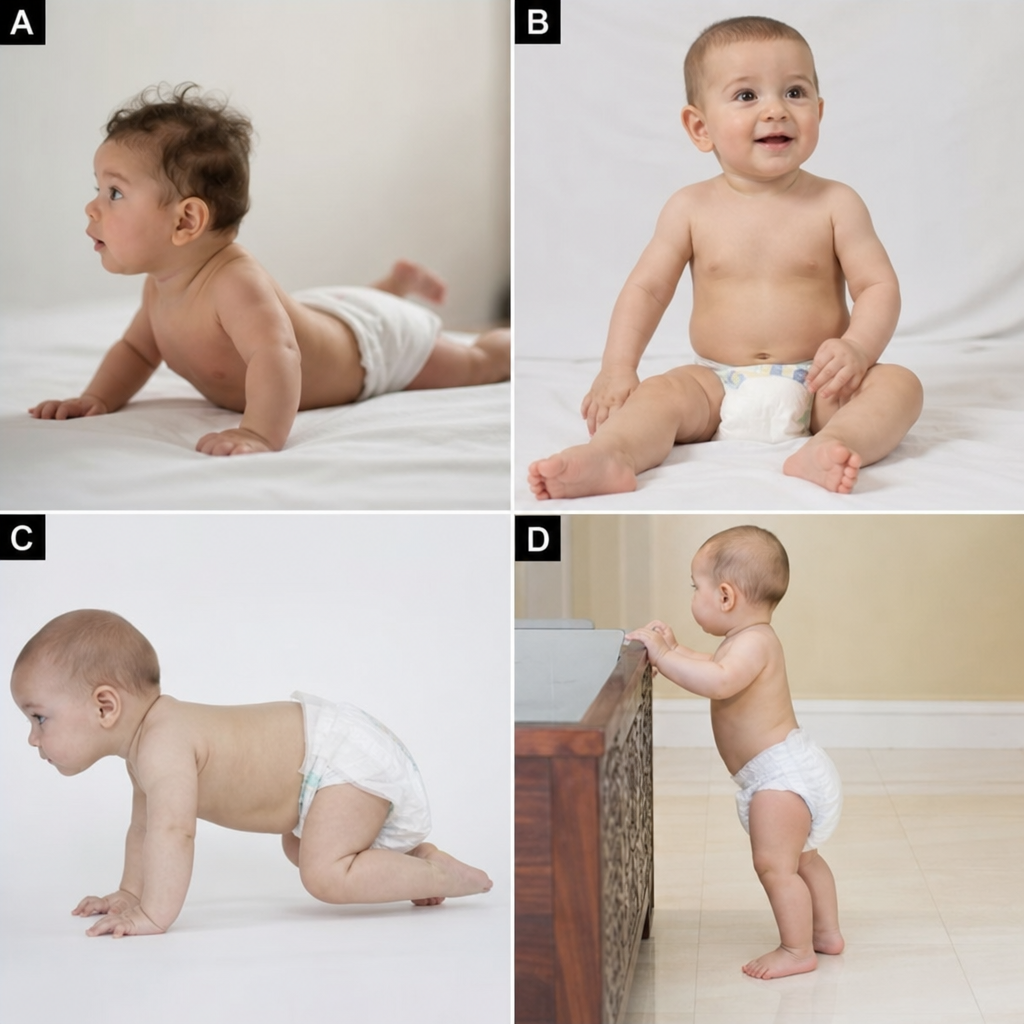
A normal child typically achieves complete neck control by what age?
Bulging anterior fontanel is/are seen in?
Short stature with widely spread nipples and webbing of the neck is seen in which condition?
What is the average gain in height during the first year of life?
Explanation: **Explanation:** The correct answer is **1 week (Option A)**. **Medical Concept:** At birth, the lacrimal glands are anatomically present but are not yet fully functional. While newborns produce enough basal tears to keep the cornea moist, they do not produce "emotional" or reflex tears when crying. The autonomic nervous system stimulation required for active tear production typically matures shortly after birth. In most healthy neonates, visible tears begin to appear during crying between **1 to 4 weeks** of age, with **1 week** being the earliest recognized milestone for this development in standard pediatric literature. **Analysis of Options:** * **Option A (1 week):** This is the clinically accepted earliest timeframe for the onset of tear production during crying. * **Options B, C, and D (2, 3, and 4 weeks):** While some infants may take up to a month to produce tears, these options are considered delayed relative to the initial physiological onset at 1 week. For competitive exams like NEET-PG, the earliest standard milestone is preferred. **High-Yield Clinical Pearls for NEET-PG:** * **Nasolacrimal Duct (NLD) Patency:** The NLD usually becomes patent at birth or shortly after. If it remains blocked, it leads to **Congenital Nasolacrimal Duct Obstruction (Dacryostenosis)**, presenting with persistent watering (epiphora) and matting of eyelashes. * **Management:** 90% of NLD obstructions resolve spontaneously by 1 year. The initial treatment is **Crigler’s massage** (lacrimal sac massage). * **Visual Milestones:** * **Birth:** Fixes on mother's face. * **6–8 weeks:** Social smile. * **3 months:** Binocular vision and ocular tracking (180 degrees).
Explanation: **Explanation:** Down’s Syndrome (Trisomy 21) is the most common chromosomal anomaly. The correct answer is **Simian crease** (a single transverse palmar crease), which is a classic dermatoglyphic finding seen in approximately 45-50% of patients. **Analysis of Options:** * **Simian Crease (Correct):** This is a high-yield physical marker. While not pathognomonic (it can occur in 5-10% of the normal population), it is strongly associated with Trisomy 21 alongside other hand findings like **clinodactyly** (incurving of the 5th finger) and **brachydactyly**. * **Hypotonia:** While generalized hypotonia is a very common feature of Down’s syndrome (especially in the neonatal period), the question structure often seeks the most specific physical sign. However, in many clinical contexts, hypotonia is considered a "soft" sign. * **Lymphedema:** This is a classic feature of **Turner Syndrome (45, XO)**, typically presenting as non-pitting edema of the hands and feet in neonates. It is not a characteristic feature of Down’s syndrome. * **All of the Above:** Since lymphedema is specific to Turner syndrome, this option is incorrect. **NEET-PG High-Yield Pearls:** 1. **Most common cardiac defect:** Endocardial Cushion Defect (AVSD); however, **VSD** is the most common in some global cohorts. 2. **Gastrointestinal:** Duodenal atresia ("Double bubble" sign) and Hirschsprung disease. 3. **Hematology:** Increased risk of **AMKL** (M7 subtype of AML) before age 3 and **ALL** after age 3. 4. **Screening:** First-trimester screening shows **increased nuchal translucency**, low PAPP-A, and high β-hCG. 5. **Brushfield spots:** White/grey spots on the periphery of the iris.
Explanation: The Moro reflex is a primitive reflex present at birth, characterized by a symmetrical abduction and extension of the arms, followed by adduction and flexion (the "embrace"). An **atypical (asymmetrical)** Moro reflex occurs when one arm fails to move in unison with the other, indicating localized trauma or neurological deficit. ### **Explanation of the Correct Answer** **B. Sternomastoid tumor:** This is the correct answer because a sternomastoid tumor (congenital muscular torticollis) causes the infant's head to be tilted toward the affected side and rotated toward the opposite side. Since the Moro reflex is elicited by a sudden change in head position (neck extension), the physical restriction and pain caused by the fibrotic mass in the sternocleidomastoid muscle prevent the symmetrical execution of the reflex, leading to an atypical response. ### **Analysis of Incorrect Options** * **A. Clavicle fracture:** While this causes an asymmetrical Moro reflex, it is typically classified as a **"unilateral"** or **"absent"** reflex on the affected side due to pain, rather than a truly "atypical" mechanical restriction of the neck. * **C. Shoulder dislocation:** Rare in neonates, but like a fracture, it would result in a unilateral absence of movement due to pain and mechanical block. * **D. Brachial plexus injury (Erb’s Palsy):** This is the most common cause of a **unilateral** Moro reflex. The affected arm remains adducted and internally rotated (waiter's tip position), failing to abduct or move during the reflex. ### **High-Yield Clinical Pearls for NEET-PG** * **Appearance/Disappearance:** Moro reflex appears at birth and disappears by **3–4 months** of age. Persistence beyond 6 months suggests cerebral palsy. * **Unilateral Moro:** Think Brachial Plexus Injury (Erb's) or Clavicle Fracture. * **Absent Moro (Bilateral):** Suggests significant CNS depression, hypoxia, or brain damage. * **Exaggerated Moro:** Seen in neonatal abstinence syndrome (drug withdrawal) or hypocalcemia.
Explanation: ### Explanation **Correct Answer: C. Hurler syndrome** **Why it is correct:** Hurler syndrome (Mucopolysaccharidosis Type I-H) is a lysosomal storage disorder caused by a deficiency of the enzyme **$\alpha$-L-iduronidase**, leading to the accumulation of dermatan and heparan sulfate. The clinical presentation typically emerges between 6 months to 2 years of age. The classic triad includes: 1. **Coarse Facies:** Characterized by a prominent forehead (frontal bossing), depressed nasal bridge, and flat face. 2. **Organomegaly:** Significant hepatosplenomegaly due to substrate accumulation. 3. **Macroglossia:** An enlarged tongue is a hallmark finding. Other features include corneal clouding (distinguishing it from Hunter syndrome), dysostosis multiplex, and developmental delay. **Why the other options are incorrect:** * **Hand-Schüller-Christian disease:** A form of Langerhans cell histiocytosis characterized by a triad of exophthalmos, diabetes insipidus, and lytic bone lesions (punched-out skull defects), not coarse facies or macroglossia. * **Fabry disease:** An X-linked deficiency of $\alpha$-galactosidase A. It presents with angiokeratomas, peripheral neuropathy (acroparesthesias), and renal/cardiac failure, but lacks the coarse facial features and hepatosplenomegaly seen here. * **Hypothyroidism:** While it presents with macroglossia and a depressed nasal bridge, it does **not** typically cause significant hepatosplenomegaly or the specific "coarse" skeletal changes (dysostosis multiplex) associated with storage disorders. **High-Yield Clinical Pearls for NEET-PG:** * **Hunter vs. Hurler:** Hunter syndrome (MPS II) is **X-linked recessive** and lacks **corneal clouding** ("The Hunter needs clear eyes to see the target"). * **Enzyme Deficiency:** Hurler = $\alpha$-L-iduronidase; Hunter = Iduronate-2-sulfatase. * **Urine Diagnosis:** Screening shows elevated urinary glycosaminoglycans (GAGs). * **Gargoylism:** The term formerly used to describe the characteristic coarse facial features of MPS.
Explanation: **Explanation:** The definition of hypoglycemia in the pediatric population varies slightly based on age and clinical context. For **late infancy and childhood**, the universally accepted threshold for hypoglycemia is a blood glucose level of **<40 mg/dl**. In older children, the body maintains glucose homeostasis through a balance of insulin, glucagon, cortisol, and growth hormone. When levels drop below 40 mg/dl, the brain (which relies almost exclusively on glucose) is at risk of neuroglycopenic injury, and the sympathetic nervous system triggers compensatory mechanisms (tachycardia, sweating, tremors). **Analysis of Options:** * **Option A (40 mg/dl):** Correct. This is the standard diagnostic cutoff for children beyond the immediate neonatal period. * **Option B (60 mg/dl):** Incorrect. While some clinicians consider levels <60 mg/dl as "low" or a trigger for intervention in diabetic patients, it is not the formal definition for hypoglycemia in general pediatrics. * **Option C & D (10-20 mg/dl):** Incorrect. These levels represent profound, life-threatening hypoglycemia that can lead to immediate seizures, coma, and permanent brain damage. **High-Yield Clinical Pearls for NEET-PG:** * **Neonatal Hypoglycemia:** In the first 24 hours of life, the threshold is often considered **<45 mg/dl**. * **Whipple’s Triad:** Used for diagnosis—1. Symptoms of hypoglycemia, 2. Low plasma glucose, 3. Relief of symptoms after glucose administration. * **Management:** The immediate treatment for symptomatic hypoglycemia is a bolus of **2 ml/kg of 10% Dextrose (D10W)**. * **Common Cause:** In late infancy, the most common cause of "fasting" hypoglycemia is **Ketotic Hypoglycemia**.
Explanation: **Explanation:** The developmental milestones of a 3-year-old child involve significant progress in gross motor, fine motor, and language domains. **Why "Climb stairs running" is the correct answer:** Running upstairs (alternating feet) is a milestone typically achieved by **3 years**, but **running downstairs** or climbing stairs with speed and agility (running) is a more advanced gross motor skill. Specifically, a 3-year-old can go upstairs alternating feet, but usually goes downstairs one step at a time (marking time). "Climbing stairs running" is an advanced coordination skill seen in older children (around 4-5 years). **Analysis of Incorrect Options:** * **A. Eat with a spoon:** This is a fine motor milestone achieved by **18 months to 2 years**. By age 3, a child is proficient at using a spoon and is beginning to use a fork. * **C. Walk properly:** Stable, adult-like gait (walking properly) is established well before age 3. A child typically walks independently by **12-15 months** and has a steady gait by 2 years. * **D. Vocabulary of 20-100 words:** This option is technically "not achieved" in the sense that it is an **underestimate**. A 3-year-old typically has a vocabulary of **approx. 900 words** and speaks in 3-4 word sentences. However, in the context of NEET-PG questions, when a child has *surpassed* a milestone, it is considered "achieved." The gross motor deficit in option B is the more definitive "not yet achieved" developmental marker. **High-Yield Clinical Pearls for NEET-PG:** * **Riding a Tricycle:** The hallmark gross motor milestone for a 3-year-old. * **Copying a Circle:** The hallmark fine motor/adaptive milestone for a 3-year-old (Cross = 4 years, Square = 4.5 years, Triangle = 5 years). * **Age Calculation for Sentences:** A simple rule of thumb is that the number of words in a sentence equals the child's age (e.g., 3 words at 3 years).
Explanation: **Explanation:** Neck control is one of the earliest and most significant gross motor milestones, following a **cephalo-caudal** (head-to-toe) pattern of development. * **Correct Answer (B - 16 weeks):** By 4 months (16 weeks), a normal infant achieves **complete neck control**. When the child is pulled to a sitting position from a supine position, there is no "head lag." Additionally, when held in a prone position, the infant can lift their head and chest off the surface, supporting themselves on their forearms. * **Option A (8 weeks):** At 2 months, a child begins to develop neck muscles and can momentarily hold the head up when prone, but the head still lags significantly when pulled to sit. * **Option D & C (24 and 28 weeks):** These are too late for primary neck control. By 24 weeks (6 months), a child is typically beginning to sit with their own hand support (tripod position), and by 28 weeks (7 months), they can sit without support. **Clinical Pearls for NEET-PG:** 1. **Head Lag:** The persistence of head lag beyond 4–5 months is an early "red flag" for developmental delay or cerebral palsy. 2. **Ventral Suspension:** At birth, the head flops down; at 4 weeks, the infant can lift the head momentarily to the plane of the body; by 12 weeks, the head is held well above the plane of the body. 3. **Sequence:** Neck control (4 months) → Sitting without support (7 months) → Standing without support (10–11 months) → Walking independently (12–13 months).
Explanation: **Explanation:** A bulging anterior fontanel indicates **increased intracranial pressure (ICP)** or a pathological increase in the contents of the cranial vault. 1. **Rickets:** While Rickets is classically associated with a *delayed closure* of the fontanel and a wide fontanel, it can also present with a bulging fontanel due to associated hypocalcemia-induced cerebral edema or increased ICP. 2. **CMV Infection:** Congenital infections (TORCH group), including Cytomegalovirus, cause inflammation of the brain (encephalitis) or obstructive hydrocephalus, both of which lead to increased ICP and a bulging fontanel. 3. **Tetracycline Therapy:** This is a classic pharmacological cause of **Pseudotumor Cerebri** (Idiopathic Intracranial Hypertension) in infants. Tetracyclines interfere with the resorption of cerebrospinal fluid (CSF) at the arachnoid villi, leading to a transient rise in ICP. **Clinical Pearls for NEET-PG:** * **Normal Closure:** The anterior fontanel typically closes between **9 to 18 months** of age. * **Differential Diagnosis of Bulging Fontanel:** * *Infectious:* Meningitis, Encephalitis. * *Structural:* Hydrocephalus, Intracranial hemorrhage, Brain tumors. * *Metabolic/Endocrine:* Vitamin A toxicity (Hypervitaminosis A), Lead poisoning, Hypothyroidism. * *Drugs:* Tetracyclines, Nalidixic acid, Corticosteroid withdrawal. * **Sunken Fontanel:** This is a critical clinical sign of **Dehydration** or malnutrition. * **Delayed Closure:** Seen in Rickets, Hypothyroidism, Down Syndrome, and Cleidocranial Dysostosis.
Explanation: **Explanation:** The clinical triad of **short stature, widely spaced nipples (shield chest), and webbing of the neck (pterygium colli)** is a classic presentation of **Turner’s Syndrome (45, XO)**. This condition occurs due to complete or partial monosomy of the X chromosome in females. The short stature is primarily attributed to the haploinsufficiency of the **SHOX gene**. Other characteristic features include a low posterior hairline, cubitus valgus, and lymphedema of the hands and feet (especially in neonates). **Analysis of Incorrect Options:** * **A. Down’s Syndrome (Trisomy 21):** Characterized by intellectual disability, flat facial profile, epicanthal folds, Simian crease, and hypotonia. While short stature occurs, neck webbing and shield chest are not typical features. * **C. Klinefelter’s Syndrome (47, XXY):** These patients are typically **tall** with eunuchoid body proportions, gynecomastia, and small, firm testes. It does not present with neck webbing or short stature. * **D. Edward’s Syndrome (Trisomy 18):** Presents with severe growth retardation, micrognathia, low-set malformed ears, and characteristic **clenched fists with overlapping fingers** and rocker-bottom feet. **High-Yield Clinical Pearls for NEET-PG:** * **Cardiac Association:** Bicuspid aortic valve (most common) and Coarctation of the aorta. * **Renal Association:** Horseshoe kidney. * **Gonads:** "Streak ovaries" leading to hypergonadotropic hypogonadism and primary amenorrhea. * **Intelligence:** Usually normal, but may have specific deficits in visuospatial processing. * **Noonan Syndrome:** Often called "Male Turner’s" because it shares similar features (webbed neck, short stature) but occurs in both sexes and is associated with **Pulmonary Stenosis** (unlike Turner's, which involves the left side of the heart).
Explanation: **Explanation:** The average length of a healthy term newborn is approximately **50 cm**. Growth in height is most rapid during the first year of life, following a predictable pattern: 1. **0–3 months:** 3.5 cm/month 2. **3–6 months:** 2.0 cm/month 3. **6–12 months:** 1.25 cm/month By the end of the first year, the infant gains a total of approximately **25 cm**, making their total length roughly 75 cm. Therefore, **Option A** is correct. **Analysis of Incorrect Options:** * **Option B (50 cm):** This is the average birth length, not the gain. If an infant gained 50 cm in the first year, they would double their birth length, which actually occurs at **4 years** of age. * **Option C (75 cm):** This represents the *total* average length of a child at 1 year, not the *increase* from birth. * **Option D (100 cm):** This is the average total height of a child at **4 years** of age. **High-Yield Clinical Pearls for NEET-PG:** * **Height Doubling:** Birth length doubles at **4 years** (approx. 100 cm). * **Height Tripling:** Birth length triples at **13 years** (approx. 150 cm). * **Second Year Gain:** The average height gain in the second year is **12 cm**. * **Formula for Height (2–12 years):** (Age in years × 6) + 77 cm. * **Measurement:** Use an **infantometer** for children <2 years (Length) and a **stadiometer** for children >2 years (Height).
Normal Growth Parameters
Practice Questions
Developmental Milestones
Practice Questions
Puberty and Adolescent Development
Practice Questions
Growth Disorders
Practice Questions
Failure to Thrive
Practice Questions
Developmental Screening and Assessment
Practice Questions
Developmental Delays
Practice Questions
Growth Charts and Monitoring
Practice Questions
Short Stature
Practice Questions
Tall Stature
Practice Questions
Precocious and Delayed Puberty
Practice Questions
Psychosocial Development
Practice Questions
Get full access to all questions, explanations, and performance tracking.
Start For Free