Which of the following statements is not true about Turner's syndrome?
The neonatal kidney achieves concentrating ability equivalent to an adult's kidney by which age?
Which muscle is primarily affected in congenital torticollis?
What is true regarding Down syndrome?
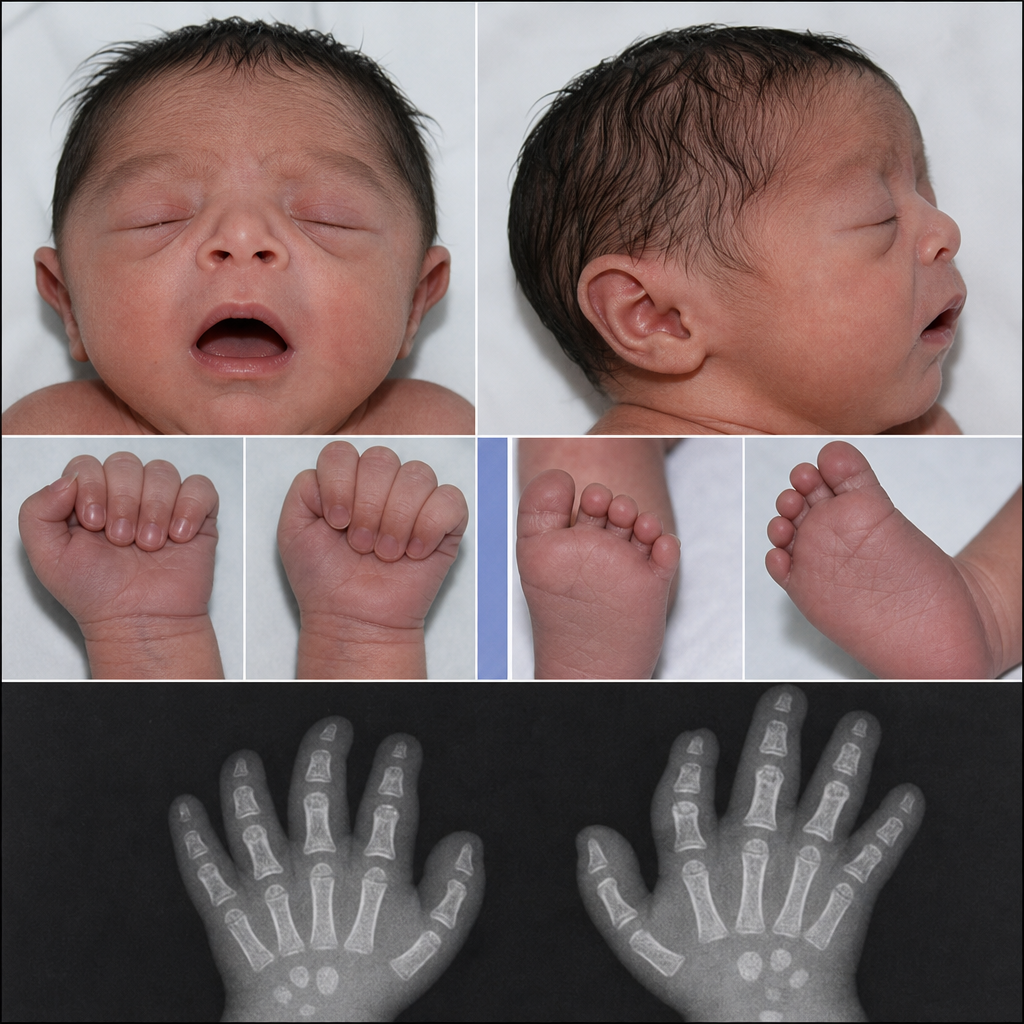
A baby presents with multiple deformities including cleft lip, cleft palate, microcephaly, small eyes, scalp defect, and polydactyly. Which syndrome is this?
A 28-year-old primigravida gave birth to a male child who presented with a midline dimple and a tuft of hair in the lower back. Which vitamin supplementation could have possibly prevented this if it was due to nutritional deficiency in the mother?
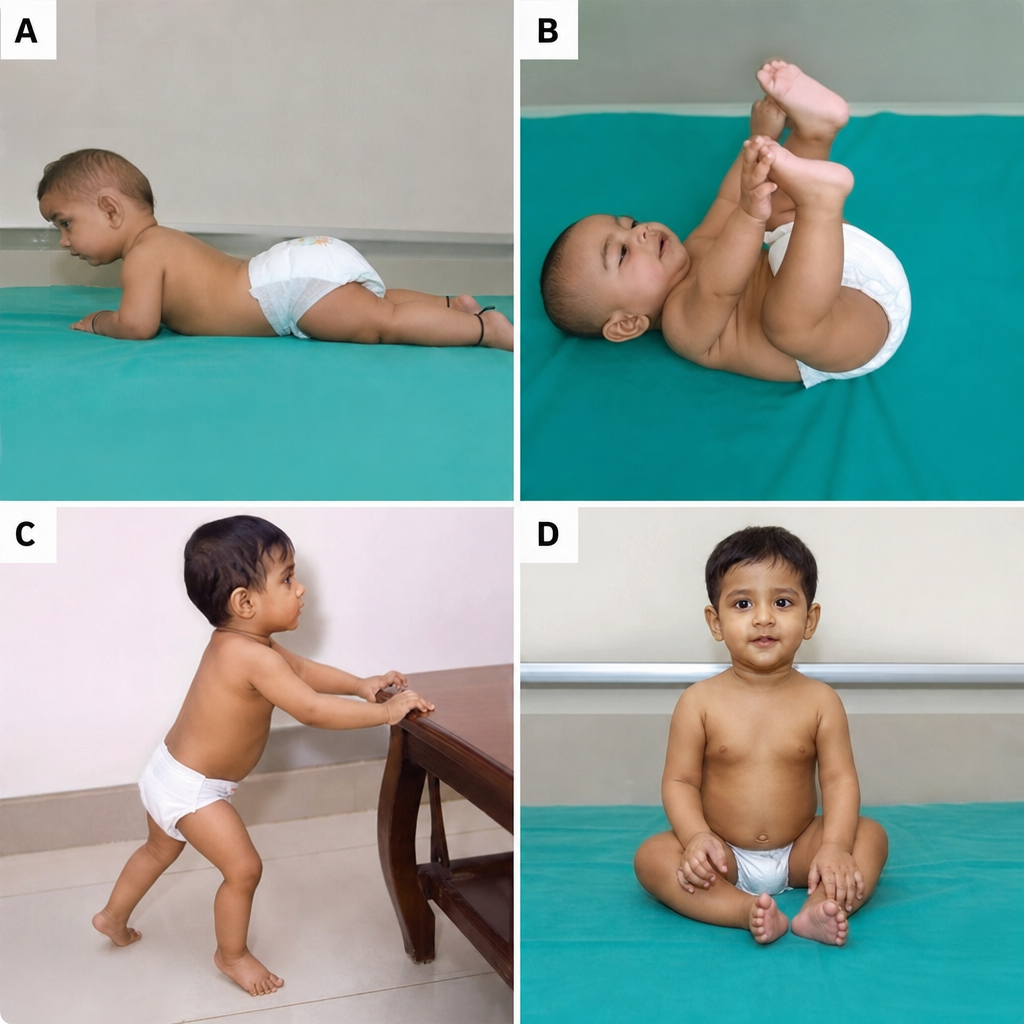
Which of the following developmental milestones is achieved first?
Which of the following developmental milestones is typically achieved at approximately 6 months of age?
A 6-year-old child presents with mild mental retardation, superiority in musical aptitude, and social amiability. The child has a distinctive but subtle physical appearance described as 'elfin appearance'. Which of the following best describes the child's condition?
Which of the following is not a feature of constitutional growth delay?
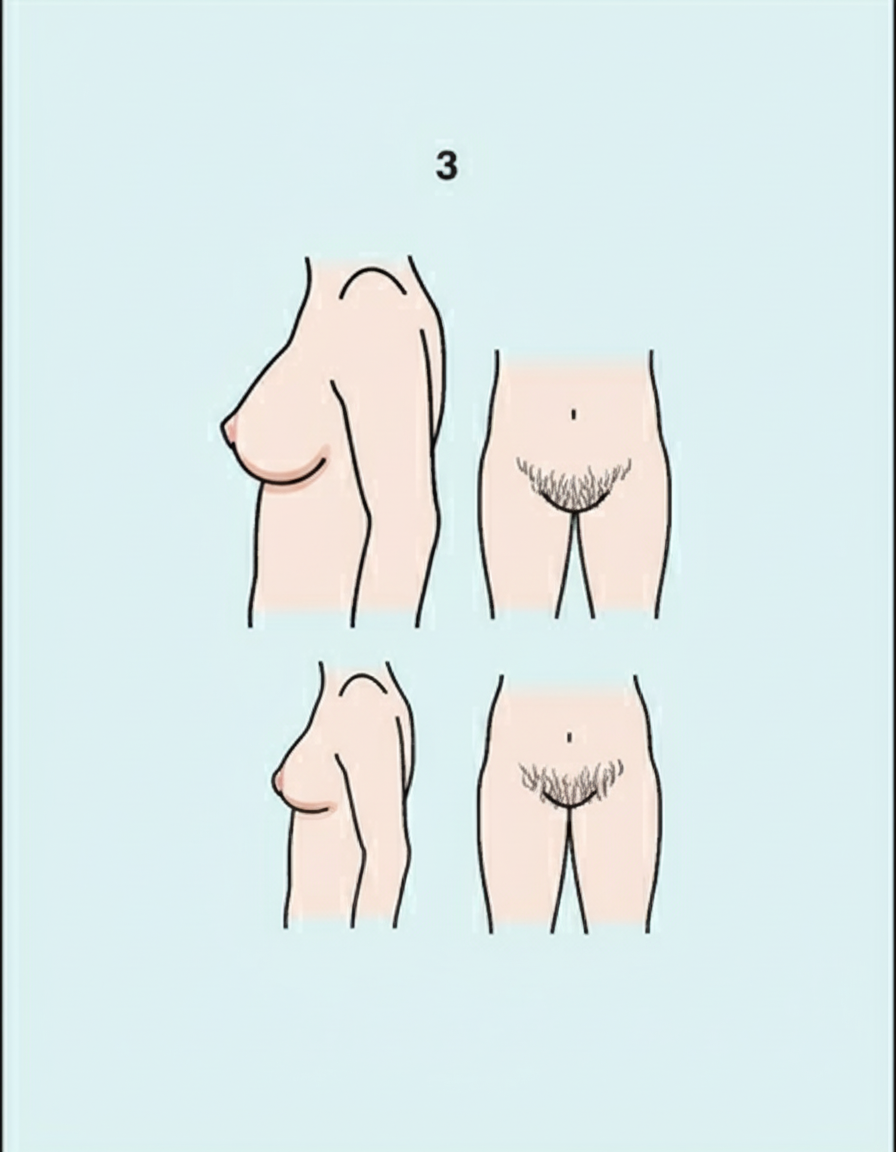
Explanation: **Explanation:** **Turner’s Syndrome (45, XO)** is a chromosomal disorder characterized by the complete or partial absence of one X chromosome in a phenotypic female. **Why "Hermaphroditism" is the correct answer (Not True):** Turner’s syndrome is a condition of **gonadal dysgenesis**, not hermaphroditism. In Turner’s, the ovaries fail to develop properly and are replaced by fibrous tissue (**streak ovaries**). True hermaphroditism (now termed Ovotesticular Disorder of Sexual Development) requires the presence of both ovarian and testicular tissue in the same individual, which is not a feature of Turner’s syndrome. **Analysis of Incorrect Options (True Statements):** * **No Mental Retardation:** Most individuals with Turner’s syndrome have **normal intelligence**. While they may face specific learning disabilities (e.g., visuospatial deficits), global intellectual disability is not a characteristic feature. * **Short Fourth Metacarpal:** Also known as **Archibald’s sign**, this is a classic skeletal finding in Turner’s syndrome. * **Gonadal Dysgenesis:** This is a hallmark of the condition. Accelerated oocyte atresia leads to streak ovaries, resulting in primary amenorrhea and lack of secondary sexual characteristics due to estrogen deficiency. **High-Yield Clinical Pearls for NEET-PG:** * **Most common cause of primary amenorrhea.** * **Cardiac Associations:** Bicuspid aortic valve (most common), Coarctation of the aorta. * **Renal Association:** Horseshoe kidney. * **Physical Signs:** Webbed neck (pterygium colli), low posterior hairline, widely spaced nipples (shield chest), and lymphedema of hands/feet at birth. * **Gold Standard Diagnosis:** Karyotyping.
Explanation: **Explanation:** The renal system undergoes significant maturation during the first year of life. At birth, the neonatal kidney is physiologically immature, characterized by a low Glomerular Filtration Rate (GFR) and a limited ability to concentrate urine. **Why Option A is Correct:** The maximum concentrating capacity of a neonate is approximately **700 mOsm/L**, whereas an adult can concentrate urine up to **1200–1400 mOsm/L**. This limitation is due to shorter Loops of Henle, lower urea concentration in the renal medulla, and a relative insensitivity of the distal tubules to Antidiuretic Hormone (ADH). By **one year of age**, the anatomical and functional maturation of the nephrons allows the infant to achieve adult-level concentrating ability. **Analysis of Incorrect Options:** * **Option B (18 months):** While some complex tubular functions continue to refine, the primary milestone for concentrating ability is reached by 12 months. * **Option C (3 to 6 months):** Although GFR increases rapidly during this period (reaching near-adult levels relative to surface area by 6–12 months), the concentrating mechanism lags behind and is not yet at adult capacity. * **Option D (Just before puberty):** This is far too late; renal function is essentially mature long before middle childhood. **High-Yield Clinical Pearls for NEET-PG:** * **GFR Maturation:** GFR reaches adult levels (adjusted for surface area) by **2 years of age**. * **Acidification:** The ability to acidify urine reaches adult levels by the end of the **first month**. * **Clinical Implication:** Because infants cannot concentrate urine effectively, they are at a significantly higher risk of **hypernatremic dehydration** during episodes of diarrhea or poor fluid intake.
Explanation: **Explanation:** **Congenital Muscular Torticollis (CMT)** is the most common cause of a "twisted neck" in neonates and infants. The correct answer is the **Sternocleidomastoid (SCM)** muscle. 1. **Why Sternocleidomastoid is Correct:** The condition is caused by unilateral fibrosis or shortening of the SCM muscle, often due to intrauterine malpositioning or birth trauma (e.g., breech delivery) leading to a localized hematoma (pseudotumor of infancy). This results in the characteristic clinical posture: the infant’s head is **tilted toward the affected side** and the chin is **rotated toward the opposite side**. 2. **Why Other Options are Incorrect:** * **Trapezius (A):** While the trapezius is also innervated by the Spinal Accessory nerve (CN XI), it is primarily involved in shrugging the shoulders and retracting the scapula; it is not the primary driver of congenital torticollis. * **Rhomboideus Major & Minor (B & C):** These muscles are located in the upper back, connecting the scapula to the spinal column. They function to retract and rotate the scapula and are not involved in the rotational positioning of the neck. **High-Yield Clinical Pearls for NEET-PG:** * **Physical Exam:** Look for a non-tender, olive-shaped mass (fibromatosis colli) within the SCM muscle during the first few weeks of life. * **Associated Conditions:** Always screen for **Developmental Dysplasia of the Hip (DDH)**, as there is a 5–10% co-occurrence rate. * **Treatment:** Initial management is conservative with passive stretching exercises. Refractory cases may require surgical release (tenotomy) after 1 year of age. * **Complication:** If untreated, it can lead to **plagiocephaly** (flattening of the skull) and facial asymmetry.
Explanation: **Explanation:** **Why Option B is Correct:** While Down syndrome is a clinical diagnosis, karyotyping is the gold standard for confirmation. However, in modern clinical practice, if a patient has a classic phenotype and a **Fluorescence In Situ Hybridization (FISH)** or **Quantitative Fluorescent PCR (QF-PCR)** has already confirmed Trisomy 21, a full formal karyotype may not be strictly "needed" for the diagnosis itself. More importantly, from an epidemiological and counseling perspective, if the parents are not planning further children or if the diagnosis is clear via rapid molecular methods, karyotyping is sometimes bypassed in resource-limited settings, though it remains recommended to rule out translocations. **Analysis of Incorrect Options:** * **Option A:** The most significant risk factor is **increased maternal age** (especially >35 years), not paternal age. Maternal age is linked to meiotic non-disjunction. * **Option C:** This is technically incorrect because **more than 95%** (not just 85%) of cases are due to complete Trisomy 21 (47, XX/XY +21). The remaining cases are due to Robertsonian translocation (~4%) and mosaicism (~1%). * **Option D:** While increased nuchal translucency (NT) is a classic **antenatal ultrasound marker** (seen in the first trimester), it is not a "finding" in the postnatal patient. Once the baby is born, the finding is referred to as "redundant nuchal skin folds." **High-Yield Clinical Pearls for NEET-PG:** * **Most common cause:** Meiotic Non-disjunction (95%). * **Most common cardiac defect:** Endocardial Cushion Defect (Atrioventricular Septal Defect). * **Gastrointestinal associations:** Duodenal atresia ("Double bubble" sign) and Hirschsprung disease. * **Hematological risk:** 10–20 fold increased risk of Leukemia (AMKL in children <3 years; ALL in children >3 years). * **Screening:** Triple test (Low AFP, Low Estriol, High hCG) and Quadruple test (adds High Inhibin A).
Explanation: **Explanation:** The clinical presentation described—**microcephaly, cleft lip/palate, microphthalmia (small eyes), polydactyly, and cutis aplasia (scalp defects)**—is the classic "pentad" of **Trisomy 13**, also known as **Patau Syndrome**. **1. Why Trisomy 13 is correct:** Trisomy 13 is characterized by severe midline defects resulting from defective prechordal mesoderm development. The presence of **polydactyly** combined with **midline facial defects** (clefts) and **cutis aplasia** (a punched-out lesion on the scalp) is highly pathognomonic for Patau Syndrome. Other common findings include holoprosencephaly and congenital heart diseases (VSD/PDA). **2. Why other options are incorrect:** * **Trisomy 18 (Edwards Syndrome):** Characterized by "E" features: **E**longated skull (prominent occiput), **E**ars (low set), **E**xhibited clenched fists with overlapping fingers, and rocker-bottom feet. It lacks the midline clefts and polydactyly seen here. * **Trisomy 21 (Down Syndrome):** Presents with hypotonia, flat facial profile, up-slanting palpebral fissures, Simian crease, and Sandal gap. It does not typically present with gross structural malformations like clefts or polydactyly. * **Monosomy 2:** Autosomal monosomies (except Turner syndrome, which is a sex chromosome monosomy) are generally incompatible with life and do not result in a recognized clinical syndrome with these specific features. **NEET-PG High-Yield Pearls:** * **Patau (T13):** Think **P** for **P**olydactyly, **P**alate (cleft), and **P**unched-out scalp lesions. * **Edwards (T18):** Think **E** for **E**ighteen, **E**dwards, and **E**xhibited clenched fingers. * **Cutis Aplasia:** If mentioned in a chromosomal question, immediately look for Trisomy 13. * **Rockbottom feet:** Seen in both Trisomy 13 and 18, but more classically associated with Trisomy 18.
Explanation: ### Explanation **Correct Option: A. Vitamin B9 (Folic Acid)** The clinical presentation of a **midline dimple and a tuft of hair** over the lumbosacral region is a classic sign of **Spina Bifida Occulta**, the mildest form of Neural Tube Defects (NTDs). NTDs occur due to the failure of the neural tube to close during the 3rd and 4th weeks of gestation (primary neurulation). **Folic acid (Vitamin B9)** is essential for DNA synthesis and methylation. Maternal deficiency of folate is a well-established risk factor for NTDs. Supplementation significantly reduces the incidence of these defects by ensuring proper closure of the neural tube. **Why other options are incorrect:** * **Vitamin B6 (Pyridoxine):** Primarily used to manage intractable seizures in neonates (Pyridoxine-dependent epilepsy) or to prevent peripheral neuropathy in patients taking Isoniazid. It is not linked to NTDs. * **Vitamin B12 (Cobalamin):** While B12 deficiency can theoretically affect the folate cycle, it is not the primary vitamin targeted for the prevention of NTDs in standard obstetric protocols. * **Vitamin B3 (Niacin):** Deficiency leads to Pellagra (Dermatitis, Diarrhea, Dementia, Death). It does not play a role in neural tube closure. --- ### High-Yield Clinical Pearls for NEET-PG: * **Timing:** The neural tube closes by **Day 28** of gestation. Therefore, supplementation must begin **pre-conceptionally**. * **Dosage:** * **Low risk:** 400 mcg (0.4 mg) daily. * **High risk** (previous child with NTD or mother on anticonvulsants like Valproate): 4 mg daily. * **Screening:** Elevated **Alpha-fetoprotein (AFP)** in maternal serum or amniotic fluid suggests an open NTD (Note: AFP is normal in Spina Bifida Occulta). * **Lemon Sign & Banana Sign:** Characteristic ultrasound findings in the fetal skull and cerebellum associated with Spina Bifida.
Explanation: To answer this question correctly, one must compare the chronological age at which each milestone typically appears. **1. Why Mirror Play is Correct:** Mirror play is a social milestone that appears at **6 months** of age. At this stage, the infant smiles at their own reflection and enjoys interacting with the "image" in the mirror. Since 6 months is the earliest age among the given options, it is the milestone achieved first. **2. Analysis of Incorrect Options:** * **Crawling (8 months):** This is a gross motor milestone where the infant moves with the abdomen touching the floor (belly crawl). * **Creeping (9 months):** This occurs after crawling; the infant moves on all fours with the abdomen off the floor. * **Pincer Grasp (9–10 months):** This is a fine motor milestone. The **immature** pincer grasp (using the palm and fingers) appears at 9 months, while the **mature** pincer grasp (using the tips of the thumb and index finger) appears at 10 months. **3. High-Yield Clinical Pearls for NEET-PG:** * **Sequence of Locomotion:** Remember the order: Sitting without support (6m) → Crawling (8m) → Creeping (9m) → Standing with support (9m) → Cruising/Walking with furniture (10-11m) → Walking alone (12-15m). * **Social Milestones:** Social smile (2m) → Recognizes mother (3m) → Mirror play (6m) → Stranger anxiety (7-9m) → Bye-bye (9m). * **Red Flag:** If a child does not have a social smile by 3 months or cannot sit without support by 9 months, developmental delay should be suspected.
Explanation: ### Explanation **Correct Answer: A. Sitting with support** At **6 months of age**, an infant typically achieves the milestone of **sitting with support**. This is a critical transition period where the infant develops enough truncal stability and head control to remain upright when propped. By this age, the primitive reflexes (like the Moro and Tonic Neck reflexes) have usually disappeared, allowing for more voluntary motor control. **Analysis of Incorrect Options:** * **B. Standing with support:** This is typically achieved at **9 months**. At this stage, the infant can pull themselves to a standing position using furniture but cannot yet balance independently. * **C. Walking independently:** This is a major milestone usually achieved between **12 to 15 months**. Walking with one hand held (cruising) usually precedes this at 10–11 months. * **D. Saying the first word:** While a 6-month-old begins "monosyllabic babbling" (e.g., *ba, da, pa*), the first meaningful word with intent (e.g., "Mama" or "Dada" specifically) typically appears at **10–12 months**. **High-Yield Clinical Pearls for NEET-PG:** * **Sitting without support:** Occurs at **8 months**. (Remember: 6 months = *with* support; 8 months = *without*). * **Hand-to-hand transfer:** Also occurs at **6 months** (Gross motor and Fine motor milestones often overlap in exams). * **Red Flag:** If an infant cannot sit with support by 9 months, it warrants a developmental evaluation for possible cerebral palsy or global developmental delay. * **Stranger Anxiety:** This social milestone also typically peaks around **6–7 months**.
Explanation: ### Explanation **Correct Option: B. Williams Syndrome** Williams Syndrome (also known as Williams-Beuren Syndrome) is a multisystem genetic disorder caused by a **microdeletion on chromosome 7q11.23**, which includes the **elastin (ELN) gene**. The clinical triad presented in the question is classic: 1. **Elfin Facies:** Characterized by a broad forehead, periorbital puffiness, stellate iris pattern, short upturned nose, long philtrum, and wide mouth with full lips. 2. **Cognitive Profile:** Mild to moderate intellectual disability paired with a unique "cocktail party personality" (extreme friendliness and social amiability) and a remarkable affinity for music and storytelling. 3. **Cardiovascular Association:** The most common cardiac lesion is **Supravalvular Aortic Stenosis (SVAS)** due to elastin deficiency. **Incorrect Options:** * **A. Kanner-Asperger Syndrome:** Kanner syndrome refers to classic Autism, while Asperger syndrome involves social impairment without significant language or cognitive delay. Neither presents with "elfin" facies or the specific social extroversion seen in Williams syndrome. * **C. Renpenning Syndrome:** An X-linked intellectual disability syndrome characterized by microcephaly, lean build, and small testes. It lacks the musical aptitude and facial features of Williams syndrome. * **D. Paington Syndrome:** This is not a standard recognized pediatric growth/developmental syndrome; it is likely a distractor. **High-Yield Clinical Pearls for NEET-PG:** * **Metabolic Abnormality:** Idiopathic **infantile hypercalcemia** is a classic association. * **Diagnosis:** Confirmed via **FISH** (Fluorescence In Situ Hybridization) or chromosomal microarray to detect the 7q11.23 deletion. * **Key Cardiac Lesion:** Supravalvular Aortic Stenosis (SVAS) is the "buzzword" for exams. * **Personality:** Often described as "hypersociability" or "cocktail party" behavior.
Explanation: **Explanation:** **Constitutional Delay of Growth and Puberty (CDGP)** is a common variation of normal growth, often described as being a "late bloomer." The correct answer is **B (Normal bone age)** because, in CDGP, **bone age is characteristically delayed** (Bone Age < Chronological Age). This delay is the hallmark of the condition; it provides the "extra time" for the child to continue growing after their peers have stopped, eventually allowing them to reach their full genetic potential. **Analysis of other options:** * **A. Normal height velocity:** Children with CDGP grow at a rate parallel to the lower growth curves (usually 4–5 cm/year). Their height velocity is normal for their "bone age," even if they are short for their chronological age. * **C. Delayed puberty:** This is a defining feature. The onset of the pubertal growth spurt is late, which often causes a temporary but significant height gap between the patient and their classmates. * **D. Final height normal:** Because the bone age is delayed, the epiphyses close later than average. This allows the child to catch up, typically resulting in a final adult height within the mid-parental target range. **High-Yield Clinical Pearls for NEET-PG:** * **Family History:** Often positive for a "late bloomer" parent (e.g., father grew taller in college or mother had late menarche). * **Differential Diagnosis:** Contrast this with **Familial Short Stature (FSS)**, where bone age is **normal** (BA = CA), puberty is on time, but the final height is short. * **Management:** Reassurance is the mainstay. In severe psychological distress, a short course of low-dose testosterone (in boys) can be used to jumpstart puberty.
Normal Growth Parameters
Practice Questions
Developmental Milestones
Practice Questions
Puberty and Adolescent Development
Practice Questions
Growth Disorders
Practice Questions
Failure to Thrive
Practice Questions
Developmental Screening and Assessment
Practice Questions
Developmental Delays
Practice Questions
Growth Charts and Monitoring
Practice Questions
Short Stature
Practice Questions
Tall Stature
Practice Questions
Precocious and Delayed Puberty
Practice Questions
Psychosocial Development
Practice Questions
Get full access to all questions, explanations, and performance tracking.
Start For Free