All of the following statements are true regarding principles of development except?
Head control/neck holding is possible in an infant by which age?
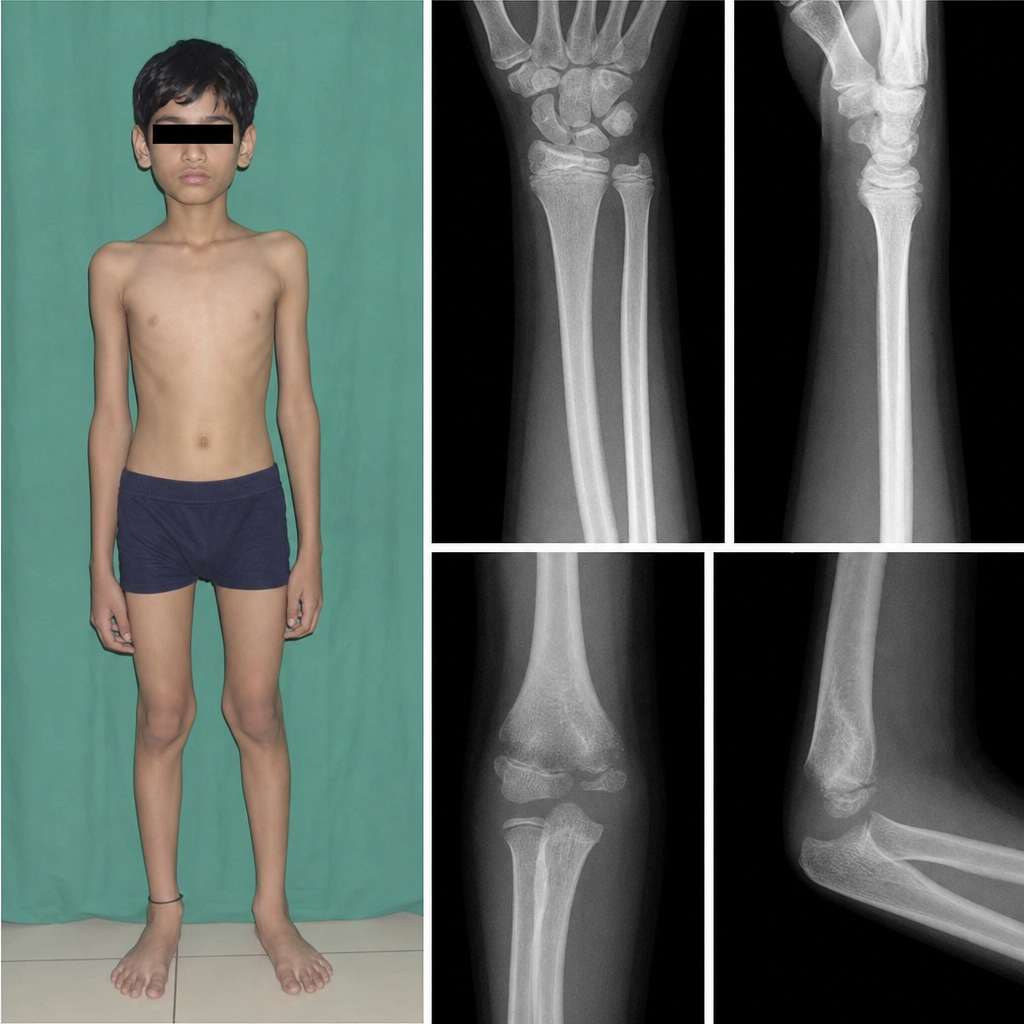
What is the disease this child, who also has hepatosplenomegaly and intellectual disability, is suffering from?

Waterlow classification of malnutrition in children takes into account which of the following parameters?
A child draws a person with 2-4 body parts besides the head at the age of _________
Wide open anterior fontanelle is found in which of the following conditions?
What is the inheritance pattern of dentinogenesis imperfecta?
Which of the following classifications or indices does not include height?
A 14-year-old presents with primary amenorrhea. On examination, she has breast development and normal pubic hair growth. Which of the following best describes the normal sequence of pubertal changes in a female?
Which of the following childhood disorders typically improves with age?
Explanation: ### Explanation The principles of development are fundamental concepts in pediatrics that describe the predictable patterns of maturation in a child. **Why Option D is the Correct Answer (The False Statement):** Development in the extremities follows a **proximodistal** direction, not distal to proximal. This means that control over the midline and proximal joints (shoulders and hips) is achieved before the distal parts (fingers and toes). For example, an infant can swat at an object using the entire arm (shoulder) long before they can perform a fine pincer grasp (fingers). **Analysis of Other Options:** * **A. Development is a continuous process:** Development begins at conception and continues throughout life. While the rate may vary (e.g., rapid in infancy and puberty), it does not stop. * **B. Specific responses replace mass activity:** This is the principle of **differentiation**. A newborn reacts to pain with a generalized whole-body cry and thrashing; an older child can localize the pain and withdraw only the affected limb. * **C. Cephalocaudal direction:** Development proceeds from "head to toe." A child first gains head control, then sits (trunk control), and finally walks (leg control). **NEET-PG High-Yield Clinical Pearls:** 1. **Growth vs. Development:** Growth is a quantitative increase in size (cm, kg); Development is a qualitative increase in capacity and function. 2. **Orderly Sequence:** While the *rate* of development varies between children, the *sequence* is universal (e.g., every child sits before they stand). 3. **Primitive Reflexes:** The disappearance of primitive reflexes (like the Moro or Rooting reflex) is a prerequisite for the development of voluntary motor skills. 4. **Nature vs. Nurture:** Development is influenced by both genetic potential and environmental factors (nutrition, stimulation).
Explanation: ### Explanation **Correct Answer: C. 3 months** **Understanding the Concept:** Gross motor development follows a **cephalocaudal (head-to-toe) progression**. Head control is the first major gross motor milestone achieved. By **3 months** of age, an infant should be able to hold their head steady and upright without support when held in a sitting position. When placed in a prone position, the infant can lift their head and chest off the bed, supporting themselves on their forearms. **Analysis of Options:** * **A. 1 month:** At this age, the neck muscles are weak. When pulled to sit, there is a complete **head lag**. In the prone position, the infant can only momentarily lift the chin off the bed. * **B. 2 months:** The infant begins to develop neck strength. When prone, they can lift the head to roughly 45 degrees, but steady, sustained head control while sitting is not yet fully established. * **D. 6 months:** This is a much later milestone. By 6 months, an infant should have achieved **sitting with support** and be able to roll from supine to prone. Persistent head lag at 6 months is a significant developmental red flag. **NEET-PG High-Yield Pearls:** * **Head Lag:** Disappears by **3–4 months**. If head lag persists beyond 4–6 months, it may indicate cerebral palsy or hypotonia. * **Prone Position Milestones:** * Lifts chin: 1 month * Lifts head and chest: 3 months * **Social Smile:** Usually precedes head control, appearing at **2 months**. * **Hand Regard:** Also appears at **3 months**, where the infant spends time observing their own hands.
Explanation: ***Mucopolysaccharidosis*** - The triad of **coarse facial features**, **hepatosplenomegaly**, and **intellectual disability** is characteristic of mucopolysaccharidosis, particularly **Hurler syndrome** (MPS I). - This lysosomal storage disorder causes accumulation of **glycosaminoglycans**, leading to progressive multisystem involvement including skeletal abnormalities and organomegaly. *Gaucher disease* - **Type 1 Gaucher disease** (most common) typically presents with hepatosplenomegaly but **no CNS involvement** or intellectual disability. - Patients usually have **normal facial features** and lack the coarse facies seen in mucopolysaccharidoses. *Phenylketonuria* - Causes **intellectual disability** and developmental delays but does **not cause hepatosplenomegaly** or organomegaly. - Results from **phenylalanine hydroxylase deficiency**, leading to toxic accumulation of phenylalanine metabolites affecting brain development. *Krabbe's disease* - A **leukodystrophy** that primarily affects white matter, causing severe neurological deterioration and intellectual disability. - Does **not cause hepatosplenomegaly** and presents mainly with progressive neurological symptoms and spasticity.
Explanation: The **Waterlow classification** is a widely used clinical tool to differentiate between acute and chronic malnutrition by assessing two distinct growth parameters. ### 1. Why Option C is Correct Waterlow proposed that malnutrition should be categorized based on its duration and impact on body proportions: * **Weight-for-Height (Wasting):** This measures current nutritional status. A deficit indicates **acute malnutrition**, where a child has lost weight or failed to gain weight recently. * **Height-for-Age (Stunting):** This measures linear growth. A deficit indicates **chronic malnutrition**, reflecting long-term nutritional deficiencies or recurrent infections. By using both, clinicians can identify if a child is currently malnourished (wasted), has been malnourished in the past (stunted), or both (stunted and wasted). ### 2. Why Other Options are Incorrect * **Options A & B:** These are incomplete. While Waterlow uses both parameters, selecting only one fails to capture the full diagnostic utility of the classification (differentiating acute from chronic). * **Option D:** **Weight-for-age** is the basis of the **Gomez classification** and the **IAP (Indian Academy of Pediatrics) classification**. It does not distinguish between wasting and stunting. ### 3. High-Yield Clinical Pearls for NEET-PG * **Gomez Classification:** Uses only Weight-for-Age (Reference: 50th percentile of Harvard standards). * **Wellcome Trust Classification:** Uses Weight-for-Age + presence/absence of **Edema** (to differentiate Kwashiorkor and Marasmus). * **WHO Classification (Z-scores):** Currently the "Gold Standard" for international monitoring, using Standard Deviations (SD) from the mean. * **Stunting** is the best indicator of socioeconomic development and long-term health. * **Wasting** is the best indicator of recent famine or illness.
Explanation: This question tests the knowledge of **Fine Motor and Cognitive Milestones**, specifically the evolution of the "Draw-a-Person" test, which is a quick clinical assessment of a child's mental age and visual-motor integration. ### **Explanation of the Correct Answer** At **48 months (4 years)**, a child typically reaches the milestone of drawing a person with **2 to 4 body parts** (usually the head, legs, and sometimes arms or trunk). This stage follows the "tadpole" drawing phase, where the child begins to represent human figures with basic geometric shapes and extensions. ### **Analysis of Incorrect Options** * **30 months (2.5 years):** At this age, a child can usually imitate a horizontal or vertical stroke but cannot yet represent a human figure. * **36 months (3 years):** A 3-year-old can draw a circle and may draw a person with only **one part** (usually just a circle representing the head) or simply name a scribble as a person. * **60 months (5 years):** By age 5, the drawing becomes more sophisticated. A child can typically draw a person with **6 body parts** (head, trunk, arms, legs, eyes, and nose/mouth) and can also copy a square. ### **High-Yield Clinical Pearls for NEET-PG** * **Goodenough-Harris Draw-a-Person Test:** Used to estimate mental age. A general rule is: **Mental Age = 3 + (Number of body parts / 4)**. * **Sequence of Shapes:** * **2 years:** Vertical line * **2.5 years:** Horizontal line * **3 years:** Circle * **4 years:** Cross and Square * **4.5 years:** Rectangle * **5 years:** Triangle * **6 years:** Diamond * **Handedness:** Usually determined by **2 to 3 years** of age. Persistent use of only one hand before 18 months may indicate hemiplegic cerebral palsy.
Explanation: ### Explanation The **anterior fontanelle (AF)** typically measures 0.6 cm to 3.6 cm at birth and closes between **9 to 18 months** of age. A "wide open" or delayed closure of the fontanelle is a significant clinical marker for various systemic and skeletal disorders. #### Why Option D is Correct **Craniosynostosis** refers to the premature fusion of one or more cranial sutures. While this might seem counterintuitive, if certain sutures (like the sagittal or coronal) fuse prematurely, the brain’s compensatory growth often forces the remaining open sutures and fontanelles to widen or remain patent longer to accommodate increasing intracranial pressure. Specifically, in complex syndromic craniosynostosis (e.g., Apert or Crouzon syndrome), a persistently wide anterior fontanelle is a classic finding. #### Why the Other Options are Incorrect * **A. Rickets:** This is a classic cause of **delayed closure** and a wide AF due to defective mineralization of the bone (osteoid). However, in the context of this specific question, Craniosynostosis is often the preferred "structural" answer in competitive exams. * **B. Cretinism (Congenital Hypothyroidism):** This leads to delayed osseous maturation. It typically presents with a wide AF and a **persistently open posterior fontanelle** (which usually closes by 2 months). * **C. Osteogenesis Imperfecta:** This connective tissue disorder causes "soft" skull bones (caput membranaceum) and multiple wormian bones, leading to a wide AF. #### High-Yield Clinical Pearls for NEET-PG * **Delayed Closure (>18 months):** Remember the mnemonic **"DROOP"** — **D**own syndrome, **R**ickets, **O**steogenesis imperfecta, **O**ther (Achondroplasia, Malnutrition), **P**reterm birth/Hypothyroidism. * **Early Closure (<6 months):** Most commonly caused by **Craniosynostosis** or **Microcephaly**. * **Bulging AF:** Indicates increased intracranial pressure (Meningitis, Hydrocephalus, Vitamin A toxicity). * **Sunken AF:** A critical clinical sign of **Dehydration**. * **Posterior Fontanelle:** Closes by **6–8 weeks** (2 months). Its persistence is a high-yield early sign of Congenital Hypothyroidism.
Explanation: **Explanation:** **Dentinogenesis Imperfecta (DI)** is a hereditary developmental disorder of the dentin that affects both primary and permanent dentitions. 1. **Why Autosomal Dominant is correct:** The inheritance pattern of DI is **Autosomal Dominant**. It is primarily caused by mutations in the **DSPP (Dentin Sialophosphoprotein) gene** located on chromosome 4q21. Because it is dominant, a single copy of the mutated gene from one parent is sufficient to express the phenotype, often showing high penetrance within families. 2. **Why other options are incorrect:** * **Homozygous:** This refers to having two identical alleles for a particular gene. While an individual can be homozygous for a trait, it is a genetic state, not an inheritance pattern. * **Recessive:** In autosomal recessive conditions, two copies of the mutation are required. DI does not follow this pattern; it typically appears in every generation of an affected family. * **X-linked recessive:** This would involve genes on the X chromosome and typically affect males more severely. DI affects both sexes equally, confirming it is autosomal. **High-Yield Clinical Pearls for NEET-PG:** * **Clinical Appearance:** Teeth appear **translucent, opalescent, or "amber-colored."** The enamel is normal but chips away easily because the underlying dentin is soft. * **Radiological Findings:** Characterized by **bulbous crowns**, cervical constriction ("bell-shaped" teeth), and **obliteration of pulp chambers** and root canals. * **Classification (Shields Classification):** * **Type I:** Associated with **Osteogenesis Imperfecta (OI)** (Type IB). * **Type II:** Most common; occurs in isolation without OI. * **Type III (Brandywine type):** Rare; features "shell teeth" with very thin dentin. * **Key Association:** Always look for **Blue Sclera** in the clinical vignette to link DI with Osteogenesis Imperfecta.
Explanation: The **Gomez classification** is the correct answer because it is based solely on **Weight-for-Age**. It was the first classification used to assess protein-energy malnutrition (PEM) and calculates the percentage of expected weight for a child’s chronological age. It does not account for the child's height, which is its primary limitation as it cannot distinguish between acute wasting and chronic stunting. **Analysis of Options:** * **Gomez Classification:** Uses the formula: (Observed Weight / Weight for age of 50th percentile) × 100. Grades are: Normal (>90%), Grade I (75-90%), Grade II (60-74%), and Grade III (<60%). * **Waterlow Classification:** This system uses two indices: **Weight-for-Height** (to identify wasting/acute malnutrition) and **Height-for-Age** (to identify stunting/chronic malnutrition). * **Body Mass Index (BMI):** Calculated as **Weight (kg) / Height (m²)**. It is a standard measure for assessing thinness or obesity in older children and adults. * **Ponderal Index (Rohrer's Index):** Calculated as **Weight (kg) / Height (m³)**. It is specifically used in neonates to assess fetal growth restriction (SGA vs. IUGR) and identifies "asymmetrical" growth retardation. **High-Yield Clinical Pearls for NEET-PG:** * **IAP Classification:** Like Gomez, the Indian Academy of Pediatrics classification also uses only **Weight-for-Age**. * **Wellcome Trust Classification:** Uses Weight-for-Age AND the presence or absence of **edema** to differentiate Marasmus from Kwashiorkor. * **Stunting** (Low Height-for-Age) reflects **chronic** malnutrition; **Wasting** (Low Weight-for-Height) reflects **acute** malnutrition.
Explanation: ### Explanation **1. Understanding the Correct Sequence (Option D)** In females, puberty follows a predictable chronological order driven by the activation of the Hypothalamic-Pituitary-Gonadal (HPG) axis. * **Thelarche (Breast development):** Usually the first sign of puberty (approx. age 9–10), triggered by rising estrogen levels. * **Pubarche (Adrenarche):** The appearance of pubic hair, occurring shortly after thelarche due to adrenal androgens. * **Peak Height Velocity (Growth Spurt):** The maximal rate of linear growth occurs between thelarche and menarche (Tanner stage 2-3). * **Menarche (First menstruation):** The final milestone, occurring roughly 2–2.5 years after thelarche (average age 12.5 years). **2. Analysis of Incorrect Options** * **Option A & B:** These are incorrect because **Thelarche** is almost always the first clinical sign of female puberty. Menarche is a late event, never the second step. * **Option C:** While thelarche is first, the growth spurt (verbal/linear growth) typically peaks *after* the initiation of pubic hair development but *before* the onset of menstruation. **3. Clinical Pearls for NEET-PG** * **Precocious Puberty:** Defined as the onset of secondary sexual characteristics before age 8 in girls and age 9 in boys. * **Delayed Puberty:** Absence of thelarche by age 13 or absence of menarche by age 15 (or 3 years after thelarche). * **The "Rule of 2s":** Menarche usually occurs 2 years after thelarche and signifies that the growth spurt is nearing completion (only ~2-5 cm of growth remains). * **Sequence in Boys:** Testicular enlargement (>4ml) → Pubarche → Growth Spurt → Spermarche. Note that the growth spurt occurs **later** in boys compared to girls.
Explanation: **Explanation:** **Correct Answer: C. Temper tantrum** **Medical Concept:** Temper tantrums are considered a **normal part of behavioral development** in toddlers, typically peaking between **18 months and 3 years** of age. They occur because the child’s cognitive and motor desires exceed their verbal ability to express needs or regulate emotions. As the child matures, their **language skills improve** and their **prefrontal cortex develops**, allowing for better impulse control and emotional regulation. Consequently, temper tantrums typically resolve spontaneously by age 4–5. **Analysis of Incorrect Options:** * **A. Conduct Disorder:** This is a repetitive and persistent pattern of behavior where the basic rights of others or major age-appropriate societal norms are violated. Without intervention, it often persists into adulthood as **Antisocial Personality Disorder**. * **B. Emotional Problems:** Conditions like childhood anxiety or depression often require therapy and do not follow a predictable pattern of "growing out of it"; they may worsen or evolve into adult psychiatric disorders. * **C. Sleep Disorders:** While some (like night terrors) may improve, many childhood sleep disorders (like insomnia or obstructive sleep apnea) require specific medical or behavioral intervention and are not characterized by universal age-related improvement. **High-Yield Clinical Pearls for NEET-PG:** * **Peak Age:** 18 months to 3 years. * **Management:** The "Gold Standard" management for a temper tantrum in progress is **"Planned Ignoring"** (ensuring the child is safe but not reinforcing the behavior with attention). * **Red Flags:** Tantrums persisting beyond age 5, lasting >15 minutes, or occurring >5 times a day may indicate underlying developmental or psychosocial issues. * **Breath-holding spells:** Often associated with tantrums; they are involuntary and also typically resolve by age 5–6.
Normal Growth Parameters
Practice Questions
Developmental Milestones
Practice Questions
Puberty and Adolescent Development
Practice Questions
Growth Disorders
Practice Questions
Failure to Thrive
Practice Questions
Developmental Screening and Assessment
Practice Questions
Developmental Delays
Practice Questions
Growth Charts and Monitoring
Practice Questions
Short Stature
Practice Questions
Tall Stature
Practice Questions
Precocious and Delayed Puberty
Practice Questions
Psychosocial Development
Practice Questions
Get full access to all questions, explanations, and performance tracking.
Start For Free