A 5-year-old has the following anthropometry findings: Weight/age < -3.2 SD, Height/age < -2.5 SD, Weight/height < -1.7 SD. What is the most likely diagnosis?
What is the maintenance fluid requirement in a 6 kg child ?
Organic causes of constipation in infants include all of the following EXCEPT:
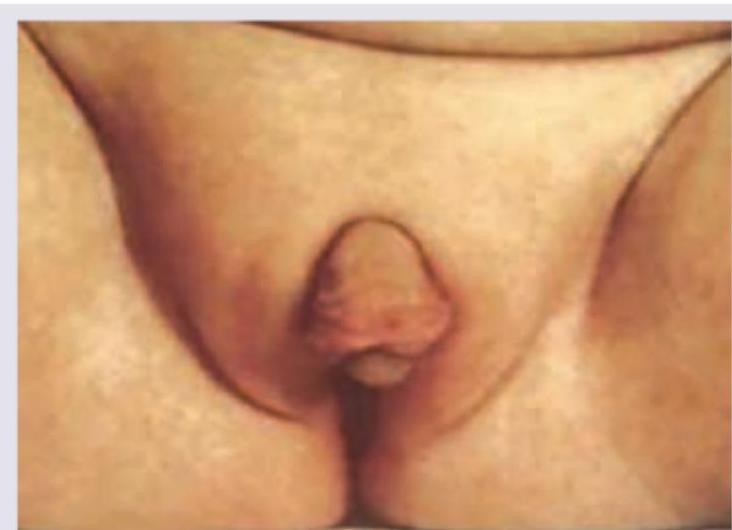
Which is true about an infant with failure to thrive and the following findings?
Which of the following is NOT a feature of HIV infection in childhood -
Most common symptom of HIV infection in infants is:
A child presented at 10 weeks with recurrent episode of pneumonia and failure to thrive. X-ray shows cardiomegaly & pulmonary plethora. What is the diagnosis?
A 1-month old baby present with frequent vomiting and failure to thrive. There are features of moderate dehydration. Blood sodium in 122 mEq/l and potassium is 6.1 mEq/l. The most likely diagnosis is?
Epiphyseal enlargement is seen in which of the following conditions?
At what age can a child typically laugh aloud?
Explanation: ***Severe Acute Malnutrition with stunting*** - This child has **both acute and chronic malnutrition** indicators that must be identified together for accurate diagnosis and management. - **Height-for-age < -2.5 SD** confirms **stunting (chronic malnutrition)**, indicating long-term nutritional deprivation. - **Weight-for-age < -3.2 SD** indicates **severe underweight**, which in the context of stunting reflects the combined impact of both chronic and acute malnutrition. - **Weight-for-height < -1.7 SD** shows mild wasting, indicating an acute component, though not meeting the < -3 SD threshold for SAM by W/H alone. - The combination of severe underweight, stunting, and wasting requires the comprehensive diagnosis of **SAM with stunting** for appropriate clinical management and nutritional rehabilitation. *Severe Acute Malnutrition (without mentioning stunting)* - While this child has severe underweight, diagnosing only SAM **ignores the documented stunting** (H/A < -2.5 SD). - SAM is typically defined by **Weight-for-height < -3 SD**, but this child's W/H is only -1.7 SD, not meeting the strict SAM criteria by this parameter alone. - In pediatric nutrition, when stunting coexists with severe underweight, both components must be identified as they have different management implications. *Moderate acute malnutrition* - Moderate acute malnutrition requires **Weight-for-height between -2 SD and -3 SD** or MUAC between 11.5-12.5 cm. - This child's W/A is **< -3.2 SD** (severe underweight, not moderate), making this diagnosis inadequate. - The presence of stunting and severe underweight indicates a more serious condition than moderate acute malnutrition. *Chronic malnutrition* - While **Height-for-age < -2.5 SD confirms chronic malnutrition (stunting)**, this diagnosis alone doesn't capture the full clinical picture. - The **Weight-for-age < -3.2 SD** indicates severe underweight with an acute wasting component, requiring urgent intervention beyond addressing chronic malnutrition alone. - A diagnosis of only "chronic malnutrition" would underestimate the severity and miss the acute component requiring immediate management.
Explanation: **600 ml/day** - The **Holliday-Segar formula** is used to calculate maintenance fluid requirements. For the first 10 kg of body weight, the requirement is 100 ml/kg/day. - For a 6 kg child, the calculation is 6 kg * 100 ml/kg/day = **600 ml/day**. *240 ml/day* - This value is significantly **lower** than the recommended maintenance fluid for a 6 kg child, which would lead to **dehydration**. - It does not align with the standard Holliday-Segar formula for this weight. *300 ml/day* - This amount is **insufficient** for a 6 kg child's daily maintenance fluid needs and would risk **hypovolemia**. - It represents roughly half of the calculated requirement based on standard pediatric guidelines. *1200 ml/day* - This volume is significantly **higher** than the maintenance fluid requirement for a 6 kg child and could lead to **fluid overload** and hyponatremia. - This calculation might be appropriate for a much heavier child or in situations of increased fluid loss.
Explanation: ***Infantile dyschezia*** - This is a **functional condition** where infants strain and cry before passing a soft stool, due to a lack of coordination between relaxing the pelvic floor and increasing intra-abdominal pressure. It is not an organic cause of constipation. - The stool consistency in infantile dyschezia is typically **soft**, differentiating it from true constipation. *Hirschsprung's disease* - This is an **organic cause of constipation** due to the absence of **ganglion cells** in the distal colon, leading to a functional obstruction. - Infants typically present with **failure to pass meconium** within the first 24-48 hours of life, distended abdomen, and forceful expulsion of stool upon rectal examination. *Cystic fibrosis* - This is an **organic cause of constipation** in infants due to the production of thick, sticky intestinal secretions, often leading to **meconium ileus** at birth. - Constipation can also result from **pancreatic insufficiency**, which impairs fat digestion and absorption, leading to hard, dry stools later in infancy. *Hypothyroidism* - This is an **organic cause of constipation** because thyroid hormones are essential for normal gastrointestinal motility. - Infants with hypothyroidism often present with **decreased bowel movements**, lethargy, poor feeding, and prolonged jaundice.
Explanation: ***Increased urinary sodium*** - This image displays an infant with **ambiguous genitalia**, specifically severe clitoromegaly. This is a classic presentation of **congenital adrenal hyperplasia (CAH)** due to **21-hydroxylase deficiency**. - In salt-wasting CAH, deficient **aldosterone** production leads to **renal sodium loss**, resulting in increased urinary sodium, **hyponatremia**, and **hypotension**, contributing to failure to thrive. *Hypokalemia* - **Hypokalemia** is not typically seen in salt-wasting CAH; rather, **hyperkalemia** is more common due to the lack of aldosterone's mineralocorticoid effect, which normally promotes potassium excretion. - The absence of aldosterone causes sodium to be excreted and potassium to be retained. *Metabolic alkalosis* - **Metabolic alkalosis** is not characteristic of salt-wasting CAH; instead, these infants often develop **metabolic acidosis** due to the loss of sodium bicarbonate and impaired acid excretion. - The primary electrolyte disturbance points towards acidosis, not alkalosis. *Increased cortisol* - In 21-hydroxylase deficiency, the enzyme responsible for converting precursors to **cortisol** and aldosterone is deficient, leading to **decreased cortisol** production. - The adrenal glands instead shunt precursors towards androgen synthesis, causing **adrenal hyperplasia** and the virilization seen in the image.
Explanation: ***Kaposi sarcoma*** - While Kaposi's sarcoma is a common HIV-associated malignancy in adults, it is **very rare in HIV-infected children**. - Its presence in children with HIV usually suggests a **more aggressive and rapidly progressing disease course**, but it is not a typical or common feature. *Failure to thrive* - **Failure to thrive** is a very common manifestation of HIV infection in children, often due to **poor nutrient absorption**, increased metabolic demands, and chronic infections. - It leads to **poor weight gain and growth faltering**, negatively impacting overall development. *Hepatomegaly* - **Hepatomegaly**, or an enlarged liver, is a frequent finding in HIV-infected children due to various causes such as **opportunistic infections**, drug side effects, and direct HIV involvement of the liver. - It can be a clinical sign indicating **inflammation or dysfunction** of the liver. *Lymphoid interstitial pneumonitis* - **Lymphoid interstitial pneumonitis (LIP)** is a prevalent pulmonary complication specific to HIV infection in children, characterized by **lymphocytic infiltration of the alveolar septa and peribronchial spaces**. - It often leads to **chronic cough**, hypoxemia, and is considered an **AIDS-defining condition** in pediatric HIV.
Explanation: ***Failure to thrive*** - **Failure to thrive** is a very common and early symptom of HIV infection in infants, characterized by inadequate weight gain and growth velocity. - Infants with HIV have compromised immune systems, making them susceptible to recurrent infections and chronic inflammation that can lead to growth faltering. *GI infection* - While **gastrointestinal infections** (e.g., chronic diarrhea) are common in infants with AIDS, they are often a *contributing factor* to failure to thrive rather than the single most common *presenting symptom* of AIDS itself. - They can lead to malabsorption and nutrient loss, exacerbating the poor growth associated with HIV. *Lymphadenopathy* - **Generalized lymphadenopathy** is a common sign of HIV infection in infants and children but is often **asymptomatic** and not typically the *MC symptom* that prompts medical attention. - It reflects generalized immune activation but may not be recognized as the primary problem by caregivers. *Persistent cough* - A **persistent cough** can be a symptom of various opportunistic infections in infants with AIDS, such as *Pneumocystis jirovecii* pneumonia (PCP) or recurrent respiratory infections. - While significant, it is a symptom of a specific complication rather than the overarching, most frequently observed sign of untreated HIV.
Explanation: ***VSD*** - **Ventricular septal defect (VSD)** is the most common cause of this presentation in early infancy (symptoms typically appear at **6-10 weeks** of age). - Large VSDs cause significant **left-to-right shunt** leading to pulmonary overcirculation, resulting in **recurrent pneumonia** and **failure to thrive**. - **Cardiomegaly** (due to volume overload of left atrium and ventricle) and **pulmonary plethora** (increased pulmonary vascular markings) on X-ray are classic findings. - The infant may also present with tachypnea, feeding difficulties, and poor weight gain. *TOF* - **Tetralogy of Fallot (TOF)** is a **cyanotic heart defect** with right-to-left shunt, presenting with cyanosis and hypoxic spells, not recurrent pneumonia. - X-ray shows **boot-shaped heart** and **pulmonary oligemia** (decreased pulmonary vascular markings), not pulmonary plethora. - Does not typically cause failure to thrive in the same manner as acyanotic left-to-right shunt lesions. *Patent foramen ovale* - A **patent foramen ovale (PFO)** is a normal variant in infants and typically remains **asymptomatic**. - Does not cause significant hemodynamic shunting in the absence of elevated right atrial pressure. - Does not cause **cardiomegaly**, **pulmonary plethora**, recurrent pneumonia, or failure to thrive. *ASD* - An **atrial septal defect (ASD)** also causes left-to-right shunt with pulmonary plethora, but the shunt develops **gradually** over time. - ASD typically presents **later in childhood or adulthood** with milder symptoms (fatigue, exercise intolerance) due to lower pressure gradient across atria. - **Recurrent pneumonia and failure to thrive at 10 weeks** are uncommon with isolated ASD, as the hemodynamic changes are less pronounced in early infancy compared to VSD. - When symptomatic in infancy, large ASDs present later (around 6 months to 1 year) rather than at 10 weeks.
Explanation: ***21-hydroxylase deficiency*** - This condition presents in infancy with **salt-wasting adrenal crisis** due to impaired cortisol and aldosterone synthesis, leading to **hyponatremia**, **hyperkalemia**, **dehydration**, and **vomiting**. - The deficiency in 21-hydroxylase blocks the synthesis of **aldosterone**, causing sodium loss and potassium retention, consistent with the electrolyte abnormalities. *11β-hydroxylase deficiency* - This deficiency causes an accumulation of **11-deoxycorticosterone (DOC)**, which has mineralocorticoid activity, leading to **hypertension** and **hypokalemia**, rather than hyponatremia and hyperkalemia. - While it can cause virilization, the electrolyte imbalance is distinctly different from the case presented. *Gitelman syndrome* - This is a **renal tubulopathy** characterized by reabsorptive defects in the distal convoluted tubule, leading to **hypokalemia**, **metabolic alkalosis**, **hypomagnesemia**, and **hypocalciuria**. - It would not typically present with severe hyponatremia or hyperkalemia in a neonate with salt wasting. *Bartter syndrome* - This is a **renal tubulopathy** affecting the thick ascending limb of the loop of Henle, resulting in significant salt loss, **hypokalemia**, **metabolic alkalosis**, and **hypercalciuria**. - Like Gitelman syndrome, it is associated with hypokalemia, which contradicts the hyperkalemia seen in the patient.
Explanation: **Explanation:** The correct answer is **Juvenile Rheumatoid Arthritis (JRA)**. **Why JRA is correct:** In JRA (now more commonly termed Juvenile Idiopathic Arthritis), chronic synovial inflammation leads to **increased blood flow (hyperemia)** to the affected joint. This persistent hyperemia stimulates the adjacent growth plates, resulting in **accelerated osseous maturation** and **epiphyseal enlargement**. This is a classic radiological and clinical feature, often manifesting as "ballooning" of the epiphyses, particularly in the knees or wrists. **Why the other options are incorrect:** * **Rickets:** The hallmark of Rickets is **metaphyseal** changes, specifically widening, fraying, and cupping of the metaphysis due to failure of mineralization. While the joint may appear swollen clinically, the primary pathology is at the metaphysis, not the epiphysis. * **Scurvy:** Scurvy is characterized by subperiosteal hemorrhages and specific metaphyseal signs (e.g., Trummerfeld zone, Wimberger’s ring sign, Pelkan spur). It typically causes **epiphyseal atrophy** or "ground-glass" appearance rather than enlargement. * **Spondyloepiphyseal Dysplasia (SED):** This is a genetic bone dysplasia characterized by **small, flattened, or fragmented epiphyses** (epiphyseal dysgenesis), leading to short stature. It does not cause enlargement. **High-Yield Clinical Pearls for NEET-PG:** * **Epiphyseal Enlargement:** Think JRA, Hemophilia (due to repeated hemarthrosis/hyperemia), and Beckwith-Wiedemann Syndrome. * **Epiphyseal Dysgenesis (Stippled Epiphyses):** Think Hypothyroidism (most common), Conradi-Hünermann syndrome, and Warfarin embryopathy. * **Metaphyseal Widening:** Think Rickets, Scurvy, and Achondroplasia. * **Wimberger’s Sign:** In Scurvy, it refers to a thin sclerotic rim around a lucent epiphysis; in Congenital Syphilis, it refers to erosion of the medial proximal tibial metaphysis.
Explanation: **Explanation:** The development of social and vocalization skills follows a predictable chronological sequence in infants. **Laughing aloud** is a key social-vocal milestone that typically emerges at **4 months** of age. At this stage, the infant transitions from simple cooing to more robust vocal expressions of pleasure and begins to show increased social awareness. * **Option A (2 months):** At this age, the infant reaches the milestone of the **social smile** (responding to a face or voice) and begins **cooing** (vowel-like sounds), but they do not yet have the vocal coordination or social maturity to laugh aloud. * **Option B (4 months):** This is the **correct** milestone for laughing aloud. The child also begins to show excitement by waving arms and can turn their head towards a sound source. * **Option C (6 months):** By 6 months, the child progresses to **monosyllabic babbling** (e.g., "ba," "da," "pa") and starts to recognize familiar faces. Laughing aloud is already well-established by this time. * **Option D (9 months):** At 9 months, the child develops **bisyllabic babbling** (e.g., "mama," "dada" – non-specific) and understands the word "No." **High-Yield Clinical Pearls for NEET-PG:** * **Social Smile:** 2 months (Earliest sign of social interaction). * **Laughs Aloud:** 4 months. * **Mirror Recognition:** 6 months (Smiles at mirror image). * **Stranger Anxiety:** 7–9 months. * **Waves Bye-Bye:** 9 months. * **Specific "Mama/Dada":** 12 months. **Mnemonic:** Remember the "Rule of 2s" for early social/vocal milestones: **2 months** (Smile), **4 months** (Laugh), **6 months** (Babble).
Get full access to all questions, explanations, and performance tracking.
Start For Free