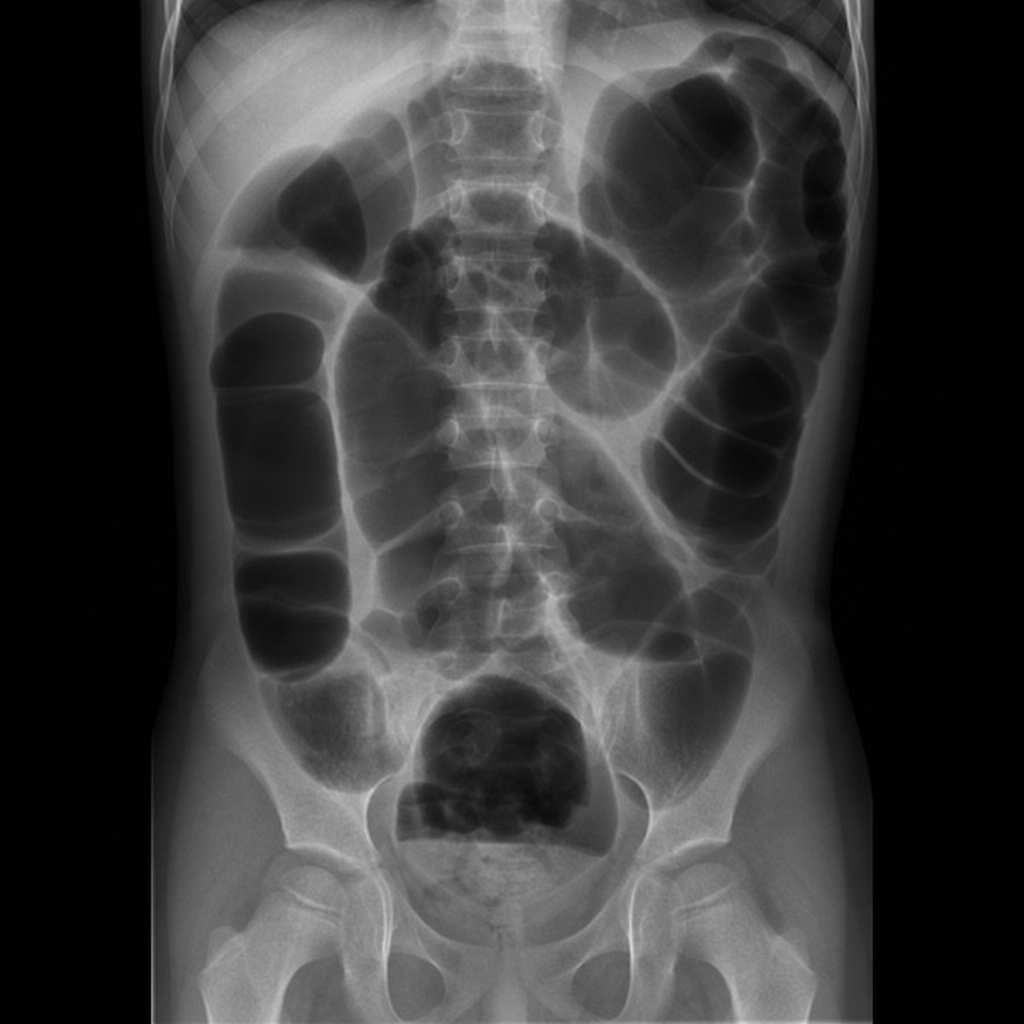
Meconium ileus is a manifestation of -
A coin is lodged in the esophagus of an asymptomatic 3-year-old female child. What is the recommended treatment?
The double bubble sign in children is typically seen in which of the following conditions?
A patient presents with acute abdominal pain, blood and mucus in the stool, and a palpable abdominal mass. What is the most likely diagnosis?
A child is brought with bleeding nostrils. There is a history of viral infection 3 months back and treatment with aspirin. What is the most likely diagnosis?
What is the characteristic liver finding in a child with Reye's syndrome?
Which of the following is true about Extrahepatic biliary atresia?
Pseudopancreatic cyst in a child is commonly due to which of the following?
Parents bring their infant to the clinic, seeking treatment for vomiting and diarrhoea that has lasted for 2 days. On assessment, the nurse in charge detects dry mucous membranes and lethargy. What other findings suggest a fluid volume deficit?
The diagnosis of congenital megacolon is confirmed by:
Explanation: **Explanation:** **Meconium ileus** is the earliest clinical manifestation of **Cystic Fibrosis (Fibrocystic disease of the pancreas)**, occurring in approximately 15–20% of affected neonates. **Why Option C is Correct:** In Cystic Fibrosis, a mutation in the **CFTR gene** leads to defective chloride transport and increased sodium/water reabsorption. This results in abnormally thick, viscid, and inspissated secretions. In the gut, these secretions mix with fetal debris to form "putty-like" meconium that obstructs the terminal ileum. Additionally, pancreatic exocrine insufficiency (due to ductal plugging) leads to a lack of proteases, further increasing the viscosity of the meconium. **Why Other Options are Incorrect:** * **A. Hirschsprung’s Disease:** This is caused by the absence of ganglion cells in the distal colon. While it causes delayed passage of meconium, it presents as a functional distal obstruction (rectosigmoid), not an intraluminal ileal obstruction by inspissated meconium. * **B. Achalasia Cardia:** This is a motility disorder of the esophagus caused by the failure of the Lower Esophageal Sphincter (LES) to relax. It presents with dysphagia in older children/adults, not neonatal intestinal obstruction. * **D. Celiac Disease:** This is an immune-mediated enteropathy triggered by gluten. It typically presents after 6 months of age (when solids are introduced) with malabsorption and failure to thrive. **High-Yield Clinical Pearls for NEET-PG:** * **Neuhauser Sign (Soap-bubble appearance):** Classic X-ray finding in meconium ileus due to air bubbles trapped in the thick meconium. * **Microcolon:** A common finding on contrast enema in meconium ileus due to disuse of the distal colon. * **Association:** Almost 90% of infants with meconium ileus are eventually diagnosed with Cystic Fibrosis. * **Management:** Gastrografin enema is often used for both diagnosis and non-surgical therapeutic decompression.
Explanation: **Explanation:** The management of esophageal foreign bodies depends on the **nature of the object**, the **location**, and the **symptomatology** of the patient. **1. Why Option A is correct:** For a **blunt object** (like a coin) lodged in the esophagus of an **asymptomatic** child, a period of observation for up to **24 hours** is recommended. Many coins pass spontaneously into the stomach during this window. If the coin remains in the esophagus after 24 hours, endoscopic removal is indicated to prevent mucosal ulceration or stricture formation. **2. Why other options are incorrect:** * **Option B:** Immediate removal is reserved for **symptomatic** patients (drooling, respiratory distress), **sharp objects**, **button batteries** (due to risk of corrosive injury), or if the airway is compromised. * **Option C:** Waiting for 48 hours increases the risk of pressure necrosis and esophageal perforation. The standard observation limit for esophageal foreign bodies is 24 hours. * **Option D:** Blindly pushing the object with a Ryle’s tube is contraindicated as it can cause esophageal trauma or lead to accidental aspiration into the airway. **High-Yield Clinical Pearls for NEET-PG:** * **Most common site of lodgment:** Cricopharyngeus muscle (Upper Esophageal Sphincter). * **Radiology:** On X-ray (AP view), a coin in the **esophagus** appears as a full circle ("face-on"), whereas a coin in the **trachea** appears as a thin line (on edge). * **Button Battery:** This is a **surgical emergency** if lodged in the esophagus; it can cause liquefactive necrosis and perforation within 2 hours. * **Post-Stomach:** Once a coin passes the pylorus into the stomach, it usually passes through the entire GI tract spontaneously. Intervention is only needed if it remains in the stomach for >3-4 weeks.
Explanation: **Explanation** The **Double Bubble Sign** is a classic radiological finding representing gaseous distension of the stomach and the proximal duodenum, with an absence of gas distally. It indicates **proximal intestinal obstruction** (specifically duodenal obstruction). **Why Option D is the Correct Answer (in the context of this specific question):** While the double bubble sign is most classically associated with Duodenal Atresia, it can be seen in **Congenital Diaphragmatic Hernia (CDH)**. In CDH, the herniation of abdominal contents into the thoracic cavity can cause severe kinking or malrotation of the stomach and duodenum, leading to an acute functional or mechanical obstruction that manifests as a double bubble on X-ray. *Note: In many standard textbooks, Duodenal Atresia is the primary cause; however, in competitive exams like NEET-PG, if Duodenal Atresia is absent from the options, CDH or Malrotation are the next most likely clinical culprits.* **Analysis of Incorrect Options:** * **A. Ladd’s Bands:** These are fibrous stalks associated with malrotation. While they cause duodenal obstruction, the X-ray usually shows a "partial" double bubble or a "corkscrew appearance" on contrast studies rather than the classic complete double bubble. * **B. Annular Pancreas:** This can cause duodenal obstruction and a double bubble sign; however, it is often considered a subset of extrinsic duodenal compression. In the hierarchy of "most common" or "best fit" for certain MCQ patterns, CDH is frequently tested in the context of neonatal emergencies. * **C. Pancreatic Pseudocyst:** This typically presents as a fluid collection in the lesser sac and may cause gastric outlet obstruction, but it does not produce the classic neonatal double bubble sign. **Clinical Pearls for NEET-PG:** 1. **Duodenal Atresia:** Most common cause of the double bubble sign; strongly associated with **Down Syndrome** (Trisomy 21). 2. **Polyhydramnios:** Often seen prenatally in cases of duodenal obstruction. 3. **Differential for Double Bubble:** Duodenal atresia, Duodenal web, Annular pancreas, Malrotation (Midgut volvulus), and Diaphragmatic hernia. 4. **Triple Bubble Sign:** Associated with **Jejunal Atresia**.
Explanation: ### Explanation **Correct Answer: C. Intussusception** Intussusception is the most common cause of intestinal obstruction in infants (6–18 months). It occurs when a proximal segment of the bowel (intussusceptum) telescopes into an adjacent distal segment (intussuscipiens). The classic clinical triad presented in the question includes: 1. **Acute Abdominal Pain:** Typically colicky, causing the infant to draw their knees to the chest. 2. **Red Currant Jelly Stools:** A mixture of blood and mucus resulting from intestinal ischemia and mucosal sloughing. 3. **Palpable Mass:** A characteristic **sausage-shaped mass**, usually felt in the right upper quadrant or epigastrium, with an associated "empty" right iliac fossa (**Dance’s sign**). --- ### Why the other options are incorrect: * **A. Meckel's Diverticulum:** Typically presents as **painless** lower GI bleeding in a child. While it can act as a lead point for intussusception, the primary presentation of the diverticulum itself does not involve a palpable mass. * **B. Volvulus:** Usually presents in the neonatal period with **bilious vomiting** and sudden abdominal distension. While it is a surgical emergency, it lacks the classic "currant jelly" stool and sausage-shaped mass. * **C. Hypertrophic Pyloric Stenosis:** Presents with **non-bilious, projectile vomiting** in a 3–6 week old infant. The palpable mass is **olive-shaped** and located in the epigastrium, not associated with bloody stools. --- ### NEET-PG High-Yield Pearls: * **Diagnosis:** Ultrasound is the gold standard (look for the **"Target" or "Donut" sign**). * **Treatment:** Non-operative reduction using **Air or Hydrostatic (Barium) enema** is the first-line treatment if there are no signs of perforation or peritonitis. * **Lead Points:** In children >2 years, look for a pathological lead point like Meckel’s diverticulum, polyp, or lymphoma. * **Associated Infection:** Often preceded by a viral URTI (adenovirus), causing Peyer’s patch hypertrophy.
Explanation: **Explanation:** The clinical scenario describes a classic presentation of **Reye’s Syndrome**. The key diagnostic triggers are a **preceding viral illness** (typically Influenza or Varicella) followed by the administration of **Aspirin (salicylates)**. Reye’s Syndrome is characterized by acute non-inflammatory encephalopathy and fatty degeneration of the liver. The underlying pathophysiology involves **mitochondrial dysfunction**, leading to impaired fatty acid oxidation. This results in severe hepatic dysfunction, causing a decrease in the synthesis of clotting factors and subsequent bleeding manifestations, such as epistaxis (bleeding nostrils), hematemesis, or ecchymosis. **Analysis of Incorrect Options:** * **ITP (A):** While ITP presents with mucosal bleeding and often follows a viral infection, it is not specifically associated with aspirin use. The hallmark is isolated thrombocytopenia, whereas Reye’s involves multi-organ (liver/brain) dysfunction. * **Epistaxis (C):** This is a clinical sign (symptom), not a systemic diagnosis. Given the specific history of aspirin and viral illness, a systemic cause must be prioritized. * **DIC (D):** DIC involves widespread activation of coagulation and is usually seen in sepsis or shock. While it causes bleeding, the specific "Aspirin + Viral illness" triad is pathognomonic for Reye’s. **NEET-PG High-Yield Pearls:** * **Liver Biopsy Finding:** Microvesicular steatosis (fatty change) without significant inflammation. * **Biochemical Markers:** Elevated serum ammonia, prolonged Prothrombin Time (PT), and elevated AST/ALT (3x normal). Bilirubin is usually normal or only slightly elevated. * **Electron Microscopy:** Shows "swollen, amoeboid" mitochondria. * **Contraindication:** Aspirin is contraindicated in children with fever/viral illness; **Acetaminophen** is the preferred antipyretic.
Explanation: **Explanation:** **Reye’s Syndrome** is an acute, non-inflammatory encephalopathy associated with fatty degeneration of the liver. It typically occurs in children following a viral prodrome (like Influenza or Varicella) who have been treated with **aspirin (salicylates)**. **Why Microvesicular Steatosis is Correct:** The pathophysiology involves **mitochondrial dysfunction**, leading to the inhibition of fatty acid beta-oxidation. This results in the accumulation of small fat droplets within the cytoplasm of hepatocytes that do not displace the nucleus. This specific histological pattern is known as **microvesicular steatosis**. Unlike many other liver pathologies, there is a characteristic **absence of inflammation** or significant necrosis. **Analysis of Incorrect Options:** * **A. Macrovesicular steatosis:** This is characterized by large fat globules that displace the nucleus to the periphery. It is typically seen in **Alcoholic Liver Disease**, Non-Alcoholic Fatty Liver Disease (NAFLD), and Obesity. * **C. Hepatocellular necrosis:** While severe Reye’s can show some cell death, the hallmark is fatty change without significant necrosis. Massive necrosis is more characteristic of **Paracetamol (Acetaminophen) poisoning** or viral hepatitis. * **D. Noncaseating epithelioid granulomas:** These are characteristic of **Sarcoidosis**, Tuberculosis (though usually caseating), or certain drug reactions, but are not seen in Reye’s syndrome. **NEET-PG High-Yield Pearls:** * **Clinical Triad:** Viral illness + Aspirin use + Persistent vomiting/altered sensorium. * **Biochemical findings:** Elevated serum ammonia (hyperammonemia), prolonged PT/INR, and elevated AST/ALT, but **normal bilirubin** (a key diagnostic clue). * **Electron Microscopy:** Shows "swollen, pleomorphic mitochondria" (Ames' bodies). * **Treatment:** Supportive; focus on managing cerebral edema (Mannitol) and hypoglycemia.
Explanation: **Explanation:** Extrahepatic Biliary Atresia (EHBA) is a progressive, idiopathic fibro-obliterative disease of the extrahepatic biliary tree, leading to bile flow obstruction. It is the most common cause of neonatal cholestasis and the leading indication for pediatric liver transplantation. **Analysis of Options:** * **Acholic Stools (Option A):** Due to the complete anatomical obstruction or obliteration of the bile ducts, bile (bilirubin) cannot reach the small intestine. This results in the characteristic pale, clay-colored, or "acholic" stools. * **Conjugated Hyperbilirubinemia (Option B):** In EHBA, the liver can conjugate bilirubin, but the obstructive pathology prevents its excretion into the gut. This leads to a backup of conjugated bilirubin into the bloodstream (defined as a direct bilirubin >1.0 mg/dL if total bilirubin is <5 mg/dL, or >20% of the total). * **Absence of nuclide in duodenum in HIDA scan (Option C):** The Hepatobiliary Iminodiacetic Acid (HIDA) scan is a functional imaging study. In EHBA, the radiotracer is taken up by the hepatocytes but fails to be excreted into the duodenum even after 24 hours, confirming biliary obstruction. **Conclusion:** Since all three clinical and diagnostic features are hallmarks of the disease, **Option D (All of these)** is correct. **High-Yield Clinical Pearls for NEET-PG:** * **Gold Standard Diagnosis:** Intraoperative Cholangiogram (IOCG). * **Best Initial Screening:** Fractionated bilirubin and Ultrasound (look for the **"Triangular Cord Sign"**). * **Management:** The **Kasai Procedure** (Hepatoportoenterostomy) is the surgery of choice. * **Prognostic Factor:** The Kasai procedure is most successful if performed early, ideally **before 60 days of life**. * **Differential:** Always rule out Choledochal cyst via ultrasound.
Explanation: **Explanation:** **1. Why Traumatic Pancreatitis is Correct:** In the pediatric population, **blunt abdominal trauma** (e.g., bicycle handlebar injuries, motor vehicle accidents, or child abuse) is the most common cause of acute pancreatitis and subsequent pseudocyst formation. A pseudocyst is a collection of pancreatic juice enclosed by a wall of inflammatory/fibrous tissue (lacking an epithelial lining, hence "pseudo"). In children, the pancreas is relatively fixed against the vertebral column, making it susceptible to compression and ductal injury during blunt impact. **2. Analysis of Incorrect Options:** * **Annular Pancreas (A):** This is a congenital anomaly where pancreatic tissue encircles the duodenum. While it can cause duodenal obstruction or chronic pancreatitis, it is a rare cause of pseudocysts compared to trauma. * **Drug-induced Pancreatitis (B):** While certain drugs (e.g., Valproic acid, L-asparaginase, Steroids) cause pancreatitis in children, they rarely lead to the localized ductal disruption required to form a large pseudocyst. * **Choledochal Cyst (D):** This is a congenital dilation of the biliary tree. While it may present with a palpable mass and jaundice, it is anatomically distinct from a pancreatic pseudocyst. **3. NEET-PG High-Yield Pearls:** * **Most common cause of Acute Pancreatitis in children:** Trauma (specifically "Handlebar injury"). * **Definition:** A pseudocyst takes approximately **4–6 weeks** to form following the initial insult. * **Diagnosis:** Ultrasound is the initial screening tool; **CECT** is the gold standard for characterizing the cyst and its relationship to surrounding structures. * **Management:** Many pediatric pseudocysts resolve spontaneously. Intervention (Internal drainage like Cystogastrostomy) is indicated if the cyst is symptomatic, enlarging, or infected.
Explanation: ### **Explanation** The clinical presentation of vomiting, diarrhea, dry mucous membranes, and lethargy in an infant points toward **Dehydration (Isotonic or Hypotonic)**. In infants, the anterior fontanel is a key clinical window for assessing hydration status. **1. Why "A sunken fontanel" is correct:** In infants, the anterior fontanel normally feels flat and firm. When there is a significant fluid volume deficit (Dehydration), the intracranial pressure decreases due to reduced intravascular and interstitial fluid. This causes the fontanel to dip below the level of the skull bones, appearing "sunken." This is a hallmark sign of **moderate to severe dehydration** (typically >5-10% fluid loss). **2. Why the other options are incorrect:** * **B. Decreased pulse rate:** Dehydration typically causes **Tachycardia** (increased heart rate) as a compensatory mechanism to maintain cardiac output despite low stroke volume. Bradycardia is a late, pre-terminal sign of circulatory collapse. * **C. Increased blood pressure:** Fluid volume deficit leads to **Hypotension** (low blood pressure). However, in infants, BP is often maintained until the late stages of shock due to strong compensatory vasoconstriction. * **D. Low urine specific gravity:** In dehydration, the kidneys conserve water, leading to oliguria and **High urine specific gravity** (>1.025) as the urine becomes highly concentrated. **3. NEET-PG High-Yield Pearls:** * **Best indicator of dehydration severity:** Percentage of body weight loss. * **Earliest clinical sign:** Tachycardia and dry mouth. * **WHO Classification:** Focuses on "Some Dehydration" (irritable, sunken eyes, thirsty, skin pinch goes back slowly) vs. "Severe Dehydration" (lethargic/unconscious, unable to drink, skin pinch goes back very slowly >2 seconds). * **Management:** "Some dehydration" is treated with ORS (Plan B); "Severe dehydration" requires IV Ringer’s Lactate (Plan C).
Explanation: **Explanation:** **Congenital Megacolon (Hirschsprung Disease)** is characterized by the absence of ganglion cells in the submucosal (Meissner's) and myenteric (Auerbach's) plexuses, typically starting at the internal anal sphincter and extending proximally. **Why Rectal Biopsy is the Correct Answer:** A **rectal biopsy** is the **gold standard** for diagnosis. It provides definitive histological evidence of the disease. The diagnosis is confirmed by two key findings: 1. **Absence of ganglion cells** in the intestinal wall. 2. **Hypertrophy of nerve fibers** (demonstrated via Acetylcholinesterase staining). A "suction biopsy" is usually preferred in neonates as it is painless and does not require anesthesia. **Analysis of Incorrect Options:** * **A. Clinical features:** While symptoms like delayed passage of meconium (>48 hours), abdominal distension, and "blast sign" on digital rectal exam are highly suggestive, they are not confirmatory. * **B. Barium enema:** This is the initial imaging modality of choice. It shows a **"transition zone"** (the narrow aganglionic segment distal to the dilated normal segment). However, it can be false-negative in neonates (total colonic aganglionosis). * **D. Recto-sigmoidoscopy:** This is generally not used for diagnosis as it cannot visualize the microscopic absence of ganglion cells and carries a risk of perforation in a distended bowel. **NEET-PG High-Yield Pearls:** * **Most common site:** Rectosigmoid region (Short-segment disease). * **Associated Condition:** Down Syndrome (Trisomy 21) is seen in ~10% of cases. * **Anorectal Manometry:** Shows **failure of the Rectoanal Inhibitory Reflex (RAIR)**; it is a sensitive screening tool but not the gold standard. * **Definitive Treatment:** Surgical pull-through procedures (e.g., Duhamel, Soave, or Swenson).
Gastroesophageal Reflux
Practice Questions
Peptic Ulcer Disease
Practice Questions
Inflammatory Bowel Disease
Practice Questions
Celiac Disease
Practice Questions
Malabsorption Syndromes
Practice Questions
Acute and Chronic Diarrhea
Practice Questions
Constipation and Encopresis
Practice Questions
Gastrointestinal Bleeding
Practice Questions
Intestinal Obstruction
Practice Questions
Liver Diseases in Children
Practice Questions
Pancreatic Disorders
Practice Questions
Pediatric Nutritional Support
Practice Questions
Get full access to all questions, explanations, and performance tracking.
Start For Free