In malnourished children, which of the following parameters is NOT a reliable indicator of dehydration?
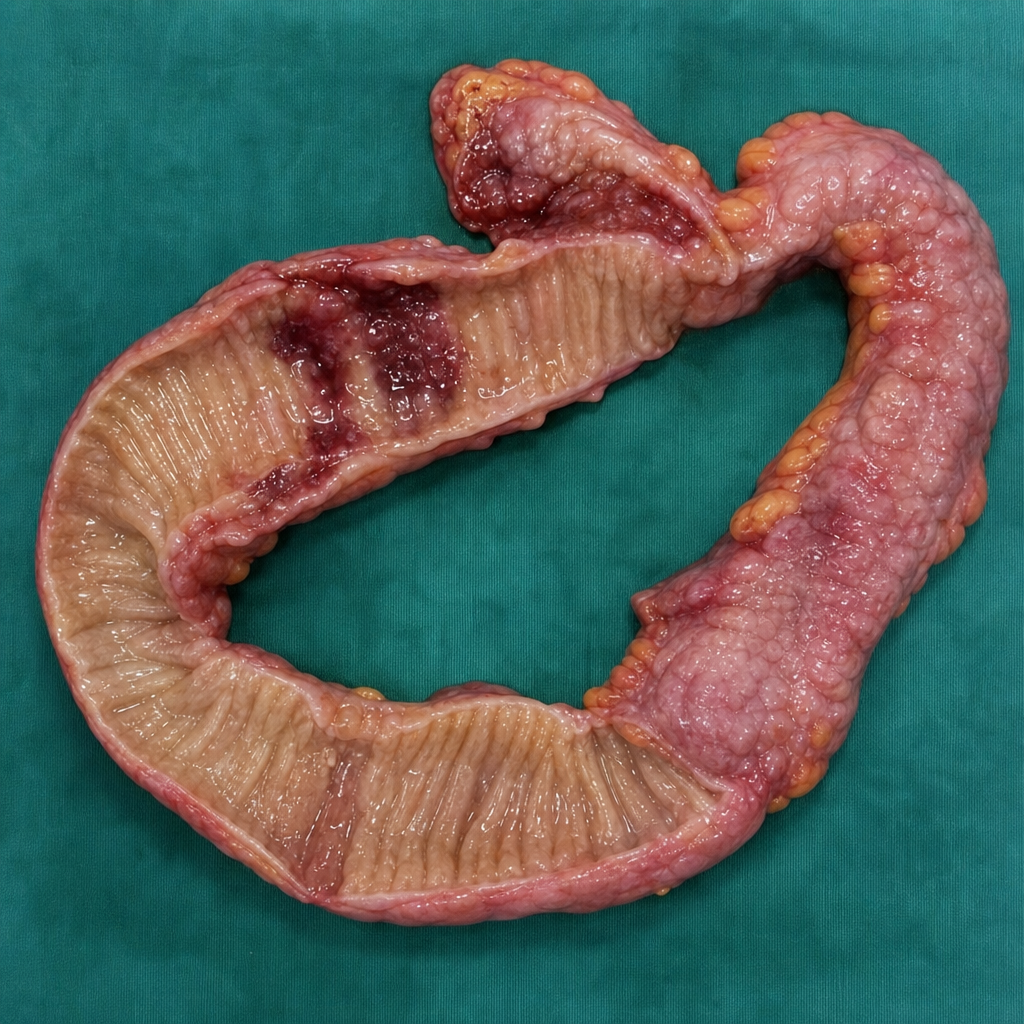
An eight-year-old boy presented with abdominal pain, fever, and bloody diarrhea for 18 months. His height is 100 cm and weight is 14.5 kg. Stool culture was negative for known enteropathogens. Sigmoidoscopy was normal. During the same period, the child had an episode of renal colic and passed urinary gravel. The Mantoux test was 5 x 5 mm. What is the most probable diagnosis?
Which of the following statements is NOT true regarding Hirschsprung disease?
A neurologically impaired 11-month-old baby is admitted with a history of regurgitation, aspiration, and frequent respiratory infections, leading to a provisional diagnosis of GERD. The mother reports episodes of sudden back arching, with head and leg splaying and stiffness, described as opisthotonic posture and spasmodic torsional dystonia, lasting for 2 minutes. Electrolyte and biochemistry panels are normal. Which of the following is the most probable diagnosis?
Red current jelly stools are seen in which condition?
Which of the following is true regarding Hirschsprung's disease?
In an alert child with diarrhea, no thirst, and an estimated fluid deficit of less than 50 ml/kg, which term is used for classification?
Hypochloremia, hypokalemia, and alkalosis are seen in which of the following conditions?
An 8-year-old boy presents with a history of direct abdominal trauma followed by a 24-hour period of fever, mid-epigastric pain radiating to the back, and persistent vomiting. Physical examination reveals abdominal tenderness with decreased bowel sounds, particularly in the mid-epigastric region with guarding. Which of the following tests is most likely to confirm the diagnosis?
A 2-month-old baby presents with a history of jaundice, turmeric-colored urine, and pale stools since birth. Examination reveals a liver span of 10 cm. What is the most specific investigation for establishing the diagnosis?
Explanation: **Explanation:** In children with Severe Acute Malnutrition (SAM), particularly those with marasmus, **Skin Turgor** is an unreliable indicator of dehydration. This is because these children have a significant loss of subcutaneous fat and reduced skin elasticity. Consequently, the skin may remain "tented" or show a slow pinch-back even in the absence of dehydration, leading to a false-positive assessment. Conversely, in children with kwashiorkor, the presence of edema can mask dehydration by making the skin appear tense. **Analysis of Options:** * **Skin Turgor (Correct):** As explained, the loss of subcutaneous tissue in malnutrition makes this physical sign lose its diagnostic specificity. * **Dry Buccal Mucosa:** This remains a relatively more dependable sign, as the hydration of mucous membranes is less affected by the loss of adipose tissue compared to the skin. * **Oliguria:** Reduced urine output remains a physiological hallmark of dehydration across all nutritional states, as the kidneys attempt to conserve water in response to hypovolemia. * **Thirst:** While sometimes difficult to assess in a lethargic or severely ill child, the presence of thirst (drinking eagerly) is still a valid indicator of fluid deficit in malnourished patients. **Clinical Pearls for NEET-PG:** * **The "Gold Standard" for dehydration** in SAM is a history of fluid loss (diarrhea/vomiting) combined with clinical signs of poor perfusion (e.g., weak pulses, cold extremities, or altered sensorium). * **WHO Management:** In malnourished children, dehydration is managed with **ReSoMal** (Rehydration Solution for Malnutrition), which has lower sodium (45 mmol/L) and higher potassium (40 mmol/L) than standard WHO ORS. * **Sunken eyes** are also less reliable in SAM due to the loss of periorbital fat pads.
Explanation: ### Explanation The clinical presentation of chronic bloody diarrhea, abdominal pain, and significant growth failure (Height: 100 cm, Weight: 14.5 kg are well below the 3rd percentile for an 8-year-old) in a child strongly suggests **Inflammatory Bowel Disease (IBD)**. **Why Crohn’s Disease (CD) is the correct answer:** 1. **Growth Failure:** This is a hallmark of pediatric Crohn’s disease, often more pronounced than in Ulcerative Colitis (UC) due to malabsorption and chronic inflammation. 2. **Normal Sigmoidoscopy:** CD is characterized by **"skip lesions"** and can involve any part of the GIT. A normal sigmoidoscopy suggests the rectum is spared (rectal sparing), which is common in CD but excludes UC. 3. **Extraintestinal Manifestations:** The history of renal colic and urinary gravel points to **Calcium Oxalate stones**. In CD, malabsorption of fat in the terminal ileum leads to increased absorption of dietary oxalate (enteric hyperoxaluria), predisposing to urolithiasis. **Why other options are incorrect:** * **Ulcerative Colitis:** Typically involves the rectum (proctitis); therefore, a sigmoidoscopy would not be normal. Growth failure is also less severe compared to CD. * **Intestinal Tuberculosis:** While it mimics CD, the negative Mantoux test (5x5 mm) and the specific association with renal oxalate stones make CD more likely in this clinical vignette. * **Strongyloidosis:** Usually presents with peripheral eosinophilia and "larva currens." While it can cause diarrhea, it does not explain the renal stones or the 18-month chronic inflammatory course with rectal sparing. **High-Yield Clinical Pearls for NEET-PG:** * **Most common site for CD:** Terminal ileum and ileocaecal region. * **Stone Associations:** CD is associated with **Calcium Oxalate** stones (due to ileal disease) and **Gallstones** (due to decreased bile acid resorption). * **Endoscopy:** Look for "cobblestone appearance" and "creeping fat" in CD. * **Biopsy:** Non-caseating granulomas are pathognomonic for CD (present in ~50% of cases).
Explanation: **Explanation:** **Hirschsprung Disease (Congenital Aganglionic Megacolon)** is characterized by the failure of neural crest cells to migrate caudally during embryonic development (weeks 5–12). 1. **Why Option A is the correct answer (Statement is NOT true):** Hirschsprung disease is **not** a simple autosomal dominant condition. While it has a genetic component (most commonly mutations in the **RET proto-oncogene**), its inheritance is complex, often described as **multifactorial** or showing **variable penetrance**. It occurs more frequently in males (4:1 ratio), though females often have longer segments of aganglionosis. 2. **Analysis of other options:** * **Options B & C:** These are **true**. The hallmark of the disease is the absence of ganglion cells in both the **Auerbach (myenteric)** and **Meissner (submucosal)** plexuses. This leads to a lack of relaxation in the affected segment, resulting in functional obstruction. * **Option D:** This is **true**. A **Full-thickness rectal biopsy** (or suction biopsy) is the **gold standard** for diagnosis. Histopathology will show an absence of ganglion cells and the presence of hypertrophied nerve bundles. **High-Yield Clinical Pearls for NEET-PG:** * **Clinical Presentation:** Delayed passage of meconium (>48 hours), abdominal distension, and bilious vomiting. * **Physical Exam:** "Blast sign" or "Squirt sign" (explosive release of stool/gas on digital rectal exam). * **Radiology:** Barium enema shows a "transition zone" between the narrow aganglionic segment and the dilated proximal colon. * **Associations:** Strongly associated with **Down Syndrome** (Trisomy 21). * **Gold Standard Diagnosis:** Rectal Biopsy (showing increased Acetylcholinesterase staining).
Explanation: **Explanation:** **Sandifer Syndrome** is a paroxysmal movement disorder associated with **Gastroesophageal Reflux Disease (GERD)**, most commonly seen in infants and children with neurological impairment (e.g., cerebral palsy). The characteristic presentation involves **spasmodic torsional dystonia** and **opisthotonic posturing** (back arching, head tilting, and limb splaying). These movements are a physiological response to the pain of acid reflux; the child instinctively adopts these postures to clear the esophagus of acid and alleviate discomfort. The episodes are typically post-prandial and are often misdiagnosed as seizures. **Why other options are incorrect:** * **Infantile Spasms (West Syndrome):** Characterized by brief, symmetric axial muscle contractions (jackknife seizures) and a specific EEG pattern called hypsarrhythmia. It is not triggered by feeding or associated with reflux. * **Epilepsy:** While the posturing mimics seizures, the normal biochemistry and the clear association with regurgitation/aspiration point toward a gastrointestinal trigger rather than primary cortical discharge. * **Paroxysmal Dystonia:** This is a broad category of movement disorders. While Sandifer syndrome is a form of dystonia, it is specifically "secondary" to GERD. Given the clinical context of respiratory infections and regurgitation, Sandifer syndrome is the most specific diagnosis. **High-Yield Clinical Pearls for NEET-PG:** * **Triad of Sandifer Syndrome:** GERD, Hiatal hernia (often present), and abnormal posturing. * **Diagnosis:** Primarily clinical; confirmed by pH monitoring (correlating reflux episodes with posturing) or improvement with anti-reflux therapy (PPIs). * **Key Differentiator:** Unlike seizures, Sandifer episodes are associated with feeding and do not have a post-ictal phase.
Explanation: **Explanation:** **Intussusception** is the most common cause of intestinal obstruction in infants (6–18 months). It occurs when a proximal segment of the bowel (intussusceptum) telescopes into a distal segment (intussuscipiens). As the bowel is compressed, lymphatic and venous obstruction leads to significant edema and mucosal ischemia. The sloughing of the intestinal mucosa, mixed with blood and mucus, creates the classic **"Red Currant Jelly" stool**, which is a hallmark clinical sign. **Analysis of Incorrect Options:** * **Intestinal Obstruction:** While intussusception is a form of obstruction, "intestinal obstruction" is a broad category. Simple mechanical obstructions (like adhesions) typically present with constipation/obstipation rather than bloody stools. * **Amebiasis:** This typically presents with chronic diarrhea or "anchovy sauce" stools (in liver abscess) and bloody mucoid stools, but it lacks the acute surgical presentation and specific consistency of currant jelly. * **Volvulus:** Midgut volvulus usually presents with sudden onset bilious vomiting and abdominal distension. While it can cause bowel ischemia and bloody stools in late stages, it is not classically associated with the "red currant jelly" description. **Clinical Pearls for NEET-PG:** * **Classic Triad:** Intermittent colicky abdominal pain, a palpable sausage-shaped mass (usually in the right upper quadrant), and red currant jelly stools (seen in <50% of cases). * **Dance’s Sign:** An empty right iliac fossa on palpation. * **Diagnosis:** Ultrasound is the investigation of choice (**Target or Donut sign**). * **Treatment:** Non-operative reduction using **Air or Hydrostatic enema** is the first-line treatment if there are no signs of perforation or peritonitis.
Explanation: **Explanation:** Hirschsprung’s disease (Congenital Aganglionic Megacolon) is a developmental disorder characterized by the **failure of neural crest cells to migrate** cranio-caudally during the 5th to 12th week of gestation. **Why Option B is correct:** The hallmark of the disease is the **absence of ganglion cells** (Auerbach’s and Meissner’s plexuses) in the distal bowel. This aganglionosis leads to a failure of relaxation in the affected segment, causing a functional intestinal obstruction. **Analysis of incorrect options:** * **Option A:** While most cases are diagnosed in the neonatal period (failure to pass meconium within 48 hours), Hirschsprung’s can occasionally present in **adolescents or adults** who have short-segment involvement and a history of chronic refractory constipation. * **Option C:** The involved (aganglionic) segment is actually **narrowed and contracted**. The **dilated** portion is the proximal, normal colon, which undergoes compensatory hypertrophy as it attempts to push stool past the distal obstruction. **High-Yield Clinical Pearls for NEET-PG:** * **Gold Standard Diagnosis:** Rectal Suction Biopsy (shows absence of ganglion cells and presence of hypertrophied nerve bundles). * **Histochemistry:** Increased **Acetylcholinesterase (AChE)** staining is a classic diagnostic marker. * **Radiology:** Barium enema shows a "transition zone" between the narrow distal segment and the dilated proximal colon. * **Associated Conditions:** Strongly associated with **Down Syndrome** (Trisomy 21) and mutations in the **RET proto-oncogene**. * **Physical Exam:** "Blast sign" or "Squirt sign" (explosive release of stool/gas upon digital rectal examination).
Explanation: **Explanation:** The classification of dehydration in children with diarrhea is a high-yield topic for NEET-PG, primarily based on the **WHO Integrated Management of Neonatal and Childhood Illness (IMNCI)** guidelines. **1. Why "No Dehydration" is correct:** Dehydration is classified based on clinical signs and the percentage of body weight lost (fluid deficit). * **Clinical Signs:** The child is described as **alert** (not lethargic or irritable) and has **no thirst** (drinks normally). These are the hallmark signs of "No Dehydration." * **Fluid Deficit:** In "No Dehydration," the estimated fluid loss is **<50 ml/kg** (or <5% of body weight). Management focuses on Plan A (home-based fluids and continued feeding) to prevent dehydration. **2. Why other options are incorrect:** * **Moderate Dehydration (Some Dehydration):** This is characterized by a fluid deficit of **50–100 ml/kg** (5–10% loss). Clinical signs include irritability/restlessness, sunken eyes, and being **thirsty/drinking eagerly**. * **Severe Dehydration:** This involves a fluid deficit of **>100 ml/kg** (>10% loss). The child is typically **lethargic or unconscious**, unable to drink, and has a very slow skin pinch return (>2 seconds). This requires urgent IV resuscitation (Plan C). **Clinical Pearls for NEET-PG:** * **Best indicator of dehydration:** Acute weight loss (if baseline is known). * **Most sensitive clinical sign:** Prolonged Capillary Refill Time (CRT), abnormal skin turgor, and abnormal breathing patterns. * **Skin Pinch Site:** In children, the skin pinch is performed on the **abdomen** (lateral to the umbilicus). * **Management Summary:** * No Dehydration → Plan A (Home) * Some Dehydration → Plan B (ORS in clinic) * Severe Dehydration → Plan C (IV Fluids)
Explanation: **Explanation:** The classic metabolic derangement in **Congenital Hypertrophic Pyloric Stenosis (CHPS)** is **Hypochloremic, Hypokalemic, Metabolic Alkalosis with Paradoxical Aciduria.** **Why Option A is Correct:** In CHPS, the hypertrophied pylorus causes a gastric outlet obstruction. Persistent non-bilious projectile vomiting leads to: 1. **Hypochloremia & Alkalosis:** Gastric juice is rich in Hydrochloric acid (HCl). Loss of $H^+$ ions causes alkalosis, and loss of $Cl^-$ ions causes hypochloremia. 2. **Hypokalemia:** As the body attempts to conserve volume, the kidneys exchange $Na^+$ for $H^+$ and $K^+$. Furthermore, in an alkalotic state, $K^+$ shifts intracellularly. 3. **Paradoxical Aciduria:** In severe dehydration, the kidney prioritizes sodium reabsorption over pH balance. It exchanges $Na^+$ for $H^+$ (instead of $K^+$ to conserve potassium), leading to acidic urine despite systemic alkalosis. **Why Other Options are Incorrect:** * **Hirschsprung’s Disease:** This is a distal colonic obstruction. It typically presents with failure to pass meconium and abdominal distension, not persistent vomiting of gastric acid. * **Esophageal Atresia:** Presents with drooling and choking upon feeding. Since food never reaches the stomach, there is no significant loss of gastric HCl. * **Jejunal Atresia:** This is a **bilious** vomiting condition (obstruction is distal to the ampulla of Vater). The loss includes alkaline pancreatic and biliary secretions, often leading to metabolic acidosis rather than alkalosis. **High-Yield Clinical Pearls for NEET-PG:** * **Diagnosis:** Ultrasound is the investigation of choice (Pyloric muscle thickness >4mm, length >14mm). * **Clinical Sign:** "Olive-shaped" mass felt in the epigastrium. * **Management:** Never a surgical emergency. **Resuscitate first** with Normal Saline (0.9%) to correct electrolytes, then perform **Ramstedt’s Pyloromyotomy.**
Explanation: ### Explanation **Diagnosis: Acute Traumatic Pancreatitis** The clinical presentation of mid-epigastric pain radiating to the back, persistent vomiting, and guarding following blunt abdominal trauma in a child is classic for **Acute Pancreatitis**. In children, trauma (e.g., bicycle handlebar injuries or direct blows) is a leading cause of pancreatitis. **1. Why Serum Amylase is the Correct Answer:** Serum amylase levels typically rise within 2–12 hours of the pancreatic injury. In the context of the 24-hour window described, elevated amylase (usually >3 times the upper limit of normal) is a highly sensitive marker for confirming pancreatic inflammation. While serum lipase is more specific, serum amylase remains a standard initial diagnostic test in pediatric emergency settings to confirm the diagnosis of pancreatitis. **2. Why the Other Options are Incorrect:** * **B. CBC with differential:** While a high white cell count (leukocytosis) may be present due to inflammation, it is non-specific and cannot confirm a diagnosis of pancreatitis. * **C. Serum Bilirubin:** This assesses liver function and biliary obstruction. While gallstones can cause pancreatitis, in this case, the etiology is clearly traumatic, making bilirubin levels less relevant for the primary diagnosis. * **D. Abdominal Radiograph:** X-rays are generally poor at visualizing the pancreas. They are primarily used to rule out hollow viscus perforation (pneumoperitoneum) or to look for a "sentinel loop" (localized ileus), but they are not diagnostic for pancreatitis. **3. High-Yield Clinical Pearls for NEET-PG:** * **Most Common Cause:** In children, the most common causes of acute pancreatitis are trauma, systemic infections (e.g., Mumps), and drugs (e.g., Valproate, L-asparaginase). * **Handlebar Injury:** Always suspect pancreatic or duodenal injury in a child presenting with epigastric pain after a bicycle accident. * **Enzymes:** Lipase is more specific than amylase and remains elevated longer (7–14 days). * **Imaging:** Contrast-Enhanced CT (CECT) is the gold standard for assessing the severity and complications (like pseudocysts) but is usually performed after initial biochemical confirmation.
Explanation: ### Explanation The clinical presentation of jaundice, dark (turmeric-colored) urine, and pale (acholic) stools in a 2-month-old infant is a classic triad for **Biliary Atresia (BA)**. The enlarged liver (10 cm) further supports a diagnosis of neonatal cholestasis. **1. Why Liver Biopsy is the Correct Answer:** While several tests assist in the workup, **Liver Biopsy** is considered the **most specific non-surgical investigation** (accuracy >90%). It demonstrates characteristic histopathological features such as bile duct proliferation, portal tract edema, and fibrosis. It is the "gold standard" for differentiating Biliary Atresia from other causes of neonatal jaundice, like Neonatal Hepatitis, before proceeding to surgery. **2. Why Other Options are Incorrect:** * **Liver Function Tests (LFTs):** These confirm conjugated hyperbilirubinemia but cannot differentiate between the various causes of cholestasis (e.g., metabolic vs. obstructive). * **Ultrasound Abdomen:** This is often the initial screening tool. While it may show the "Triangular Cord Sign," it lacks the specificity of a biopsy and can often appear normal in early stages. * **Peroperative Cholangiogram (POC):** This is the **overall gold standard** for diagnosis. However, it is an invasive surgical procedure. In the context of "investigations" to establish a diagnosis before committing to major surgery, a liver biopsy is the preferred specific diagnostic step. **Clinical Pearls for NEET-PG:** * **Best Initial Test:** Ultrasound (to rule out choledochal cysts). * **Most Sensitive/Specific Non-invasive Test:** Liver Biopsy. * **Gold Standard:** Peroperative Cholangiogram. * **HIDA Scan:** High negative predictive value; if tracer reaches the intestine, BA is ruled out. * **Management:** The surgery of choice is **Kasai Portoenterostomy**, which is most successful if performed before **60 days of life**.
Gastroesophageal Reflux
Practice Questions
Peptic Ulcer Disease
Practice Questions
Inflammatory Bowel Disease
Practice Questions
Celiac Disease
Practice Questions
Malabsorption Syndromes
Practice Questions
Acute and Chronic Diarrhea
Practice Questions
Constipation and Encopresis
Practice Questions
Gastrointestinal Bleeding
Practice Questions
Intestinal Obstruction
Practice Questions
Liver Diseases in Children
Practice Questions
Pancreatic Disorders
Practice Questions
Pediatric Nutritional Support
Practice Questions
Get full access to all questions, explanations, and performance tracking.
Start For Free