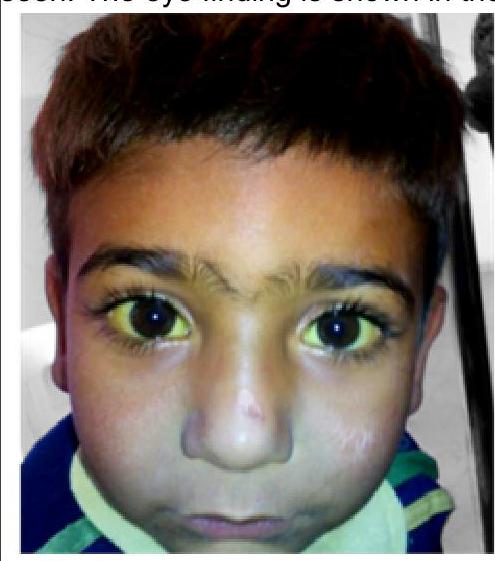
In a child who has diarrhea and vomiting with inadequate water intake, which of the following is seen?
Which of the following statements about the composition of Oral Rehydration Solution (ORS) is FALSE?
Conjugated hyperbilirubinemia in infancy is seen in which of the following conditions?
What is the most common cause of obstructive jaundice in children?
In pyloric stenosis, the following changes are seen:
Congenital hypertrophic pyloric stenosis is classically associated with which of the following electrolyte disturbances?
Which of the following is NOT a feature of Cystic fibrosis?
A 2-year-old boy presents with a history of intermittent colicky abdominal pain, with episodes of sudden onset. During the intervals between episodes, he is completely asymptomatic. On examination, currant jelly stool is noted, and an abdominal mass is palpable. What is the most common location of this abnormality?
Meconium ileus is associated with all of the following except?
What is the recommended initial fluid bolus for an 8-month-old infant weighing 10 kg with severe dehydration?
Explanation: **Explanation:** The core concept here is the pathophysiology of **Hypernatremic (Hypertonic) Dehydration**. **1. Why Option A is Correct:** When a child loses fluid through diarrhea and vomiting but has **inadequate water intake**, the loss of water exceeds the loss of solutes (sodium). This leads to an increase in the osmolality of the Extracellular Fluid (ECF), resulting in **hypernatremia** (Serum $Na^+ > 150$ mEq/L). According to the principles of osmosis, water moves from an area of low solute concentration to high solute concentration. Therefore, water is drawn out of the cells into the ECF to balance the osmolality, resulting in **intracellular dehydration**. **2. Why the other options are incorrect:** * **Option B & C:** Hyponatremia occurs when solute loss exceeds water loss (e.g., secretory diarrhea replaced with plain water). In hyponatremia, water moves *into* the cells, causing cellular edema, not intracellular dehydration. * **Option D:** While hypernatremia is present, the defining feature of hypertonic dehydration is the shift of water out of the cells. While the ECF volume is also depleted, the most significant pathological impact and the reason for the specific clinical signs (like CNS irritability) is the **intracellular** fluid loss. **3. High-Yield Clinical Pearls for NEET-PG:** * **Clinical Presentation:** Unlike isotonic dehydration, these children may not show a classic "sunken fontanelle" or "poor skin turgor" early on because ECF volume is partially maintained by the fluid shift from cells. Instead, look for **doughy skin**, extreme thirst, and **CNS signs** (irritability, seizures). * **Management:** The most critical rule is to **correct sodium slowly** (not more than 0.5 mEq/L/hr or 10–12 mEq/L/day) to prevent **Cerebral Edema**. * **Most common type:** Isotonic dehydration is the most common overall, but hypernatremic dehydration is the most dangerous due to neurological complications.
Explanation: **Explanation:** The question asks to identify the **FALSE** statement regarding the composition of the WHO-recommended **Low Osmolarity Oral Rehydration Solution (ORS)**. **1. Why Option D is the Correct Answer (The False Statement):** The concentration of Potassium (K+) in standard WHO low osmolarity ORS is **20 mmol/L**, not 65 mmol/L. A concentration of 65 mmol/L would be dangerously high (hyperkalemic) and is not physiological for standard rehydration. Potassium is included in ORS primarily to replace losses incurred during diarrhea and to prevent hypokalemia. **2. Analysis of Incorrect Options (True Statements):** * **Option A (NaCl 2.6 grams):** This is the correct weight of Sodium Chloride required per liter of water to provide the necessary sodium ions. * **Option B (KCl 1.5 grams):** This is the correct weight of Potassium Chloride required per liter to achieve the 20 mmol/L concentration. * **Option C (Na+ 75 mmol/L):** In the current "Low Osmolarity" formula, the sodium concentration is 75 mmol/L (reduced from the older 90 mmol/L formula) to reduce the risk of hypernatremia and decrease stool output. **3. High-Yield Clinical Pearls for NEET-PG:** * **Total Osmolarity:** The total osmolarity of WHO Low Osmolarity ORS is **245 mOsm/L**. * **Glucose Concentration:** It contains **75 mmol/L** (13.5 grams) of anhydrous glucose. The 1:1 molar ratio of Sodium to Glucose is critical for the SGLT-1 mediated co-transport of water. * **Citrate:** Trisodium citrate (2.9 g/L or 10 mmol/L) is added to correct metabolic acidosis. * **ORS in Malnutrition:** Standard ORS is not used in severe acute malnutrition (SAM); instead, **ReSoMal** (Rehydration Solution for Malnutrition) is used, which has lower sodium (45 mmol/L) and higher potassium (40 mmol/L).
Explanation: **Explanation:** Conjugated hyperbilirubinemia (cholestasis) in infancy is defined as a direct bilirubin level >1.0 mg/dL if the total bilirubin is <5.0 mg/dL, or >20% of the total bilirubin if it is >5.0 mg/dL. It always signifies a pathological process involving impaired bile flow or excretion. * **Dubin-Johnson Syndrome:** An autosomal recessive disorder caused by a mutation in the **MRP2 gene**, leading to impaired transport of conjugated bilirubin into the bile canaliculi. It typically presents with mild, fluctuating conjugated jaundice. * **Rotor Syndrome:** Similar to Dubin-Johnson but caused by mutations in **OATP1B1 and OATP1B3** transporters. It results in impaired hepatic uptake and storage of bilirubin, leading to conjugated hyperbilirubinemia. * **Neonatal Hepatitis:** This is a broad clinical syndrome (often idiopathic or caused by infections like TORCH) characterized by prolonged conjugated jaundice, hepatomegaly, and inflammatory changes in the liver biopsy (e.g., giant cell transformation). Since all three conditions involve defects in the processing or excretion of bilirubin after it has been conjugated by the liver, **Option D** is the correct answer. **High-Yield Clinical Pearls for NEET-PG:** * **Dubin-Johnson vs. Rotor:** Dubin-Johnson features a **black liver** (due to melanin-like pigment) and normal total urinary coproporphyrin levels (but >80% is isomer I). Rotor syndrome has a **normal-colored liver** and elevated total urinary coproporphyrin. * **Biliary Atresia:** The most common surgical cause of conjugated jaundice in infants. It must be differentiated from neonatal hepatitis using HIDA scan or intraoperative cholangiogram. * **Kasai Procedure:** Best outcomes for Biliary Atresia are achieved if surgery is performed before **60 days of life**.
Explanation: **Explanation:** **Biliary Atresia (Option A)** is the most common cause of obstructive (surgical) jaundice in the neonatal period and early childhood. It is an idiopathic, progressive fibro-inflammatory obliteration of the extrahepatic biliary tree, leading to bile flow obstruction, secondary biliary cirrhosis, and eventually liver failure if not surgically corrected. It typically presents between 2 to 6 weeks of life with persistent conjugated hyperbilirubinemia, acholic (clay-colored) stools, and hepatomegaly. **Why other options are incorrect:** * **Crigler-Najjar syndrome (Option B):** This is a disorder of bilirubin conjugation due to a deficiency of the enzyme UDP-glucuronosyltransferase. It causes **unconjugated** (non-obstructive) hyperbilirubinemia. * **Byler disease (Option C):** Also known as Progressive Familial Intrahepatic Cholestasis (PFIC) Type 1. While it causes cholestasis, it is a functional defect in bile acid transport at the hepatocellular level, not a physical obstruction of the bile ducts. * **Caroli disease (Option D):** This is a rare congenital disorder characterized by multifocal segmental dilatation of the large intrahepatic bile ducts. While it can cause biliary stasis, it is significantly less common than biliary atresia. **High-Yield Clinical Pearls for NEET-PG:** * **Gold Standard Diagnosis:** Intraoperative Cholangiogram (IOCG). * **Initial Screening:** Ultrasound (look for the "Triangular Cord Sign") and HIDA scan (showing no excretion into the bowel). * **Treatment:** The procedure of choice is **Kasai Portoenterostomy**. For best outcomes, it should ideally be performed before **60 days of age**. * **Most common indication** for pediatric liver transplantation is Biliary Atresia.
Explanation: **Explanation:** In **Infantile Hypertrophic Pyloric Stenosis (IHPS)**, the hallmark metabolic derangement is **Hypochloremic, Hypokalemic, Metabolic Alkalosis with Paradoxical Aciduria.** **Why Option A is correct:** 1. **Vomiting:** Persistent non-bilious vomiting leads to a massive loss of gastric juice, which is rich in **Hydrogen (H+)** and **Chloride (Cl-)** ions. 2. **Alkalosis:** The loss of H+ ions directly causes metabolic alkalosis. 3. **Hyponatremia & Hypochloremia:** Gastric secretions also contain Sodium (Na+) and Chloride. Their loss leads to depletion. 4. **Hypokalemia:** This occurs due to two reasons: * Initial loss in vomitus. * **Renal Compensation:** To conserve Na+ and water (due to dehydration), the kidneys activate the Renin-Angiotensin-Aldosterone System (RAAS). Aldosterone causes Na+ reabsorption in exchange for K+ and H+ excretion in the urine, further depleting potassium levels. **Why other options are wrong:** * **B & D (Hyperkalemia/Hyperchloremic Acidosis):** These are opposite to the pathophysiology of IHPS. Hyperchloremic acidosis is typically seen in Renal Tubular Acidosis or severe diarrhea. * **C (Acidosis):** IHPS causes a loss of acid (HCl), not an accumulation; therefore, acidosis is clinically incorrect. **High-Yield Clinical Pearls for NEET-PG:** * **Paradoxical Aciduria:** Despite systemic alkalosis, the urine is acidic. This happens because the kidney prioritizes Na+ conservation over H+ excretion in the distal tubule once K+ stores are depleted. * **Clinical Sign:** "Olive-shaped" mass in the epigastrium and visible gastric peristalsis. * **Investigation of Choice:** Ultrasound (showing pyloric muscle thickness >4mm or length >14mm). * **Management:** IHPS is a **medical emergency** (fluid/electrolyte correction) before it is a surgical one (Ramstedt’s Pyloromyotomy). Never operate until electrolytes are normalized.
Explanation: **Explanation:** The electrolyte disturbance in Congenital Hypertrophic Pyloric Stenosis (CHPS) is a **Hypochloremic, Hypokalemic, Metabolic Alkalosis with Paradoxical Aciduria.** **Pathophysiology:** 1. **Metabolic Alkalosis:** Persistent non-bilious vomiting leads to a massive loss of gastric hydrochloric acid (HCl). The loss of hydrogen ions ($H^+$) directly causes metabolic alkalosis. 2. **Hypochloremia:** Vomiting results in the loss of chloride ($Cl^-$) ions. 3. **Hypokalemia:** This occurs due to two reasons: * Direct loss of potassium ($K^+$) in vomitus. * **Renal Compensation:** To conserve volume (dehydration) and sodium, the kidneys activate the Renin-Angiotensin-Aldosterone System (RAAS). Aldosterone acts on the distal tubule to reabsorb $Na^+$ in exchange for $K^+$ and $H^+$, leading to further potassium depletion. 4. **Paradoxical Aciduria:** In severe stages, the body prioritizes sodium conservation over pH balance. The kidney excretes $H^+$ ions to reabsorb $Na^+$, resulting in acidic urine despite systemic alkalosis. **Analysis of Incorrect Options:** * **A & C (Metabolic Acidosis):** Acidosis occurs in conditions with bicarbonate loss (e.g., diarrhea) or tissue hypoperfusion. CHPS involves acid loss, leading to alkalosis. * **D (Hyperkalemia):** Potassium is lost through both vomiting and renal exchange; therefore, hyperkalemia is never seen in uncomplicated CHPS. **High-Yield Clinical Pearls for NEET-PG:** * **Classic Presentation:** 3–6 week old male infant with projectile, non-bilious vomiting and a palpable "olive-shaped" mass in the epigastrium. * **Diagnosis:** Ultrasound is the investigation of choice (Pyloric muscle thickness >4mm, length >14mm). * **Management:** CHPS is a **medical emergency, not a surgical one.** Electrolytes and dehydration must be corrected (using 0.45% or 0.9% NS with KCl) before performing **Ramstedt’s Pyloromyotomy.**
Explanation: **Explanation:** Cystic Fibrosis (CF) is an autosomal recessive disorder caused by mutations in the **CFTR gene**, leading to thick, viscous secretions in various organ systems. **Why Option C is the Correct Answer:** In Cystic Fibrosis, male infertility is a hallmark feature, occurring in >95% of cases. However, the underlying cause is **Obstructive Azoospermia** (complete absence of sperm in the ejaculate) due to **Congenital Bilateral Absence of the Vas Deferens (CBAVD)**. Spermatogenesis itself is usually normal. **Oligospermia** (low sperm count) is an incorrect description because the defect is structural/obstructive, not a primary production issue. **Analysis of Incorrect Options:** * **A. Delayed passage of Meconium:** This is a classic early sign. Approximately 15-20% of CF neonates present with **Meconium Ileus**, and even without obstruction, delayed passage (>48 hours) is common due to thick intestinal secretions. * **B. Steatorrhea:** Pancreatic insufficiency occurs in ~85% of patients. Thick secretions block pancreatic ducts, leading to a deficiency of digestive enzymes (lipase), resulting in fat malabsorption and foul-smelling, bulky stools (steatorrhea). * **D. Late onset Diabetes:** Known as **Cystic Fibrosis-Related Diabetes (CFRD)**, it typically develops in the second or third decade of life due to progressive fibro-atrophy of the pancreas and destruction of islet cells. **Clinical Pearls for NEET-PG:** * **Gold Standard Diagnosis:** Sweat Chloride Test (>60 mEq/L on two occasions). * **Most Common Mutation:** ΔF508 (Class II defect - protein misfolding). * **Common Infections:** *Staphylococcus aureus* (early childhood) and *Pseudomonas aeruginosa* (most common overall/adults). * **Other Features:** Nasal polyps, rectal prolapse, and Vitamin A, D, E, K deficiency.
Explanation: **Explanation:** The clinical presentation of intermittent colicky pain, a palpable "sausage-shaped" abdominal mass, and "currant jelly" stools (a mixture of mucus and blood) is the classic triad of **Intussusception**. This occurs when a proximal segment of the bowel (intussusceptum) telescopes into a distal segment (intussuscipiens). **Why Ileocolic is correct:** The **ileocolic** type is the most common variety of intussusception, accounting for approximately **80-90% of cases**. The anatomical reason is the significant difference in diameter between the terminal ileum and the cecum, combined with the abundance of lymphoid tissue (Peyer’s patches) in the terminal ileum, which often acts as a lead point following a viral prodrome. **Analysis of Incorrect Options:** * **Jejunoileal & Jejunojejunal:** These are rare in children. They are more commonly associated with specific lead points like Henoch-Schönlein Purpura (HSP) or post-operative complications. * **Ileoileal:** While this is the second most common type, it occurs much less frequently than the ileocolic variety. Small-bowel-to-small-bowel intussusceptions are often transient and may resolve spontaneously. **NEET-PG High-Yield Pearls:** * **Age Group:** Most common cause of intestinal obstruction between 6 months and 2 years of age. * **Lead Point:** In infants, it is usually idiopathic (linked to Peyer’s patch hypertrophy after Adenovirus infection). In children >2 years, look for a pathological lead point like **Meckel’s Diverticulum** (most common), polyp, or lymphoma. * **Diagnosis:** **Ultrasound** is the investigation of choice, showing the **"Target" or "Donut" sign** in transverse view and the "Pseudokidney" sign in longitudinal view. * **Treatment:** Non-operative reduction using **Air or Hydrostatic (Barium/Saline) enema** is the initial treatment of choice if there are no signs of perforation or peritonitis.
Explanation: Meconium ileus is a condition where thick, inspissated meconium causes intestinal obstruction, typically at the level of the terminal ileum. While most commonly associated with **Cystic Fibrosis** (80-90% of cases), it is also linked to several metabolic and functional disorders. **Explanation of the Correct Answer:** **D. Maternal hypertension** is the correct answer because it is **not** a recognized risk factor for meconium ileus. Maternal hypertension is more frequently associated with intrauterine growth restriction (IUGR) or placental insufficiency, but it does not directly affect the viscosity of fetal meconium or intestinal motility in a way that leads to ileus. **Analysis of Incorrect Options:** * **A. Hirschsprung's disease:** Although primarily a cause of delayed meconium passage due to aganglionosis, it can present with a clinical picture similar to meconium ileus (meconium plug syndrome) due to functional obstruction. * **B. Maternal diabetes:** Infants of diabetic mothers (IDM) have an increased risk of **Small Left Colon Syndrome**, a functional obstruction related to meconium plugging, often grouped under the differential diagnosis of meconium ileus. * **C. Hypothyroidism:** Congenital hypothyroidism leads to decreased gut motility (peristalsis), which can result in delayed passage of meconium and inspissation, mimicking or causing meconium ileus. **High-Yield Clinical Pearls for NEET-PG:** * **Gold Standard Diagnosis:** Gastrografin enema (both diagnostic and therapeutic; the hyperosmolar solution draws water into the bowel to soften meconium). * **X-ray Finding:** "Ground glass" or "Soap bubble" appearance (Neuhauser’s sign) due to air mixing with meconium. * **Associated Finding:** Microcolon (due to disuse of the distal colon). * **Most Common Cause:** Cystic Fibrosis (always screen these neonates with a sweat chloride test).
Explanation: **Explanation:** The management of severe dehydration in children follows the **WHO Plan C** protocol. For an infant (under 12 months of age), the total fluid requirement for rehydration is **100 ml/kg**, administered intravenously. **Calculation for this case:** * Weight of the infant: 10 kg * Total fluid volume: 10 kg × 100 ml/kg = **1000 ml** In infants (<1 year), this 100 ml/kg is divided into two phases: 1. **Initial Bolus:** 30 ml/kg over 1 hour. 2. **Subsequent Infusion:** 70 ml/kg over 5 hours. While the initial "bolus" is technically the first 300 ml, the question asks for the total recommended fluid volume for the rehydration process in severe dehydration, which is 1000 ml. **Analysis of Incorrect Options:** * **Option A (100 ml):** This is only 10 ml/kg, which is insufficient for severe dehydration (usually reserved for neonates or cardiac patients). * **Option B (800 ml):** This does not correlate with standard WHO weight-based calculations for severe dehydration. * **Option C (400 ml):** This is 40 ml/kg; while closer to the initial 30 ml/kg bolus, it does not represent the full rehydration volume required. **High-Yield Clinical Pearls for NEET-PG:** * **Fluid of Choice:** Ringer’s Lactate (RL) is preferred. If unavailable, Normal Saline (0.9% NaCl) can be used. * **Age Distinction:** * **<1 year:** 100 ml/kg over **6 hours** (30 ml/kg in 1 hr → 70 ml/kg in 5 hrs). * **1–5 years:** 100 ml/kg over **3 hours** (30 ml/kg in 30 mins → 70 ml/kg in 2.5 hrs). * **Assessment:** Always reassess the child every 15–30 minutes. If the radial pulse is still weak, repeat the initial bolus.
Gastroesophageal Reflux
Practice Questions
Peptic Ulcer Disease
Practice Questions
Inflammatory Bowel Disease
Practice Questions
Celiac Disease
Practice Questions
Malabsorption Syndromes
Practice Questions
Acute and Chronic Diarrhea
Practice Questions
Constipation and Encopresis
Practice Questions
Gastrointestinal Bleeding
Practice Questions
Intestinal Obstruction
Practice Questions
Liver Diseases in Children
Practice Questions
Pancreatic Disorders
Practice Questions
Pediatric Nutritional Support
Practice Questions
Get full access to all questions, explanations, and performance tracking.
Start For Free