What is the most common cause of diarrhea in children?
What is the initial fluid of choice for diarrhea in an infant?
All of the following are acceptable home-available fluids for acute diarrhea except:
An infant presents with 15-20 watery stools for 9 days. Along with Zinc supplementation, what additional management should be provided?
A convulsion during diarrhea is most commonly due to which electrolyte imbalance?
Exocrine pancreatic insufficiency with marrow failure and neutropenia is characteristic of which of the following conditions?
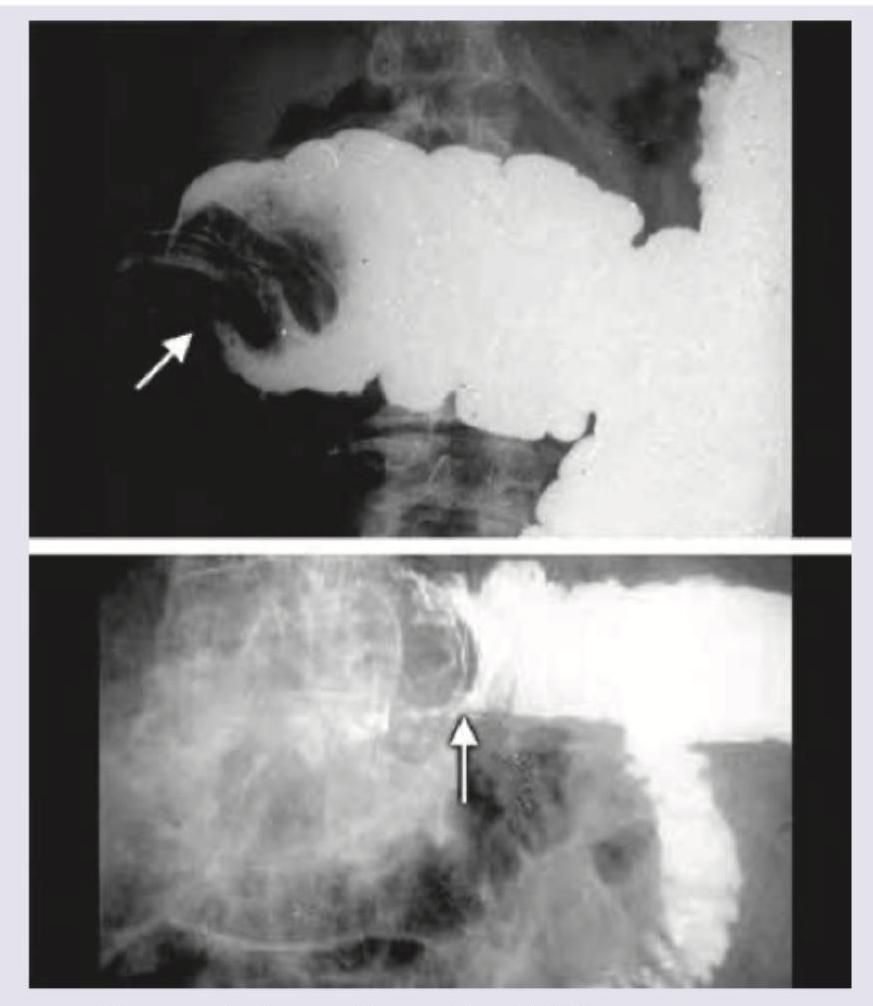
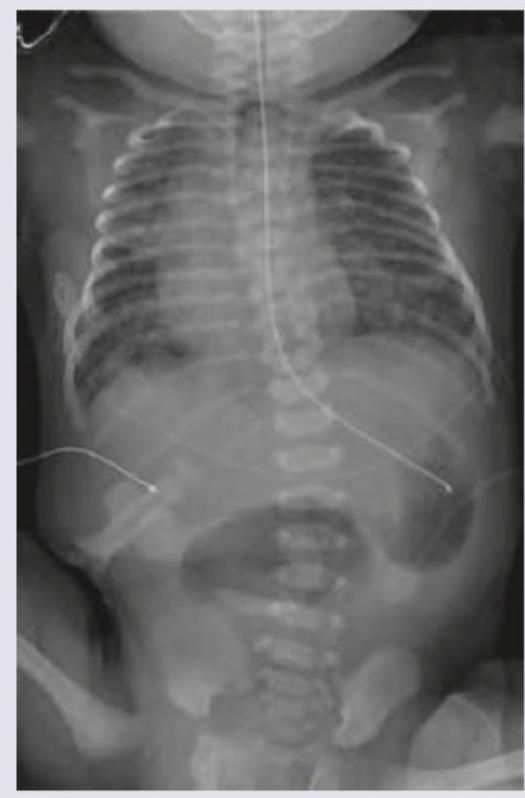
A three-year-old male child presents with a two-year history of constipation and abdominal distension. A plain radiograph of the abdomen reveals fecal matter with distended bowel loops. A subsequent barium enema study shows a transition zone at the recto-sigmoid junction with reversal of the recto-sigmoid ratio. What is the most probable diagnosis?
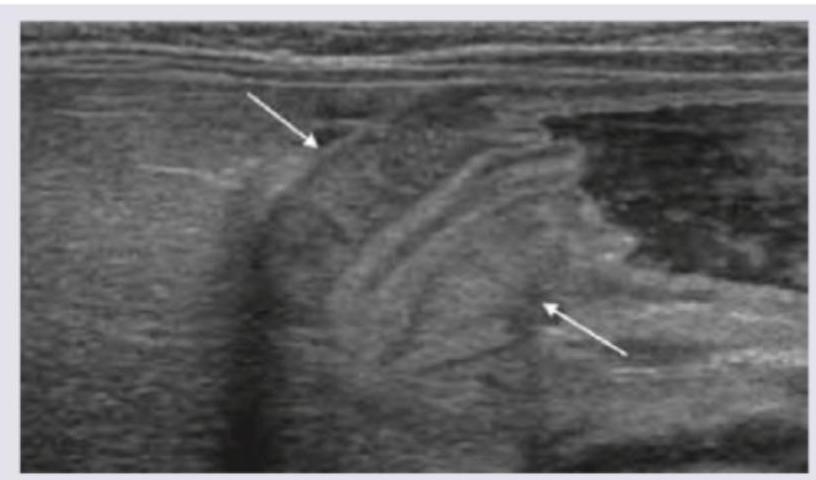
A 14-year-old girl presents with a ten-month history of periumbilical abdominal pain, postprandial pain, fever, and weight loss. She has also experienced episodes of hematochezia. What is the likely diagnosis?
Which of the following conditions is associated with splenomegaly?
What is the WHO ORS composition in mmol for Sodium (Na+)?
Explanation: **Explanation:** **1. Why Rotavirus is the Correct Answer:** Rotavirus is the leading cause of severe, dehydrating diarrhea in infants and young children worldwide. It primarily affects children between **6 months and 2 years** of age. The virus infects the mature enterocytes of the villi in the small intestine, leading to malabsorption and osmotic diarrhea. The introduction of the Rotavirus vaccine (RV1 and RV5) has significantly reduced the burden, but it remains the most frequent etiological agent in pediatric gastroenterology. **2. Why the Other Options are Incorrect:** * **Vibrio cholerae:** While it causes severe "rice-water" stools and rapid dehydration, it occurs more in epidemic settings and is not the most common cause across the general pediatric population. * **E. coli:** Enterotoxigenic E. coli (ETEC) is a common cause of traveler’s diarrhea and pediatric diarrhea in developing countries, but statistically, viral etiologies (specifically Rotavirus) outnumber bacterial causes in children. * **Pneumococcus (*Streptococcus pneumoniae*):** This is a leading cause of pneumonia, meningitis, and otitis media in children, but it is not a primary pathogen for diarrheal diseases. **3. Clinical Pearls for NEET-PG:** * **Mechanism:** Rotavirus produces a viral enterotoxin called **NSP4**, which induces secretory diarrhea by increasing intracellular calcium. * **Seasonality:** In temperate climates, it shows a distinct winter peak ("Winter Diarrhea"). * **Diagnosis:** The gold standard for rapid detection is **ELISA** or Latex Agglutination for rotavirus antigen in stools. * **Management:** The cornerstone of treatment is **ORS (Oral Rehydration Salt)** and **Zinc supplementation** (20 mg/day for 14 days; 10 mg for infants <6 months) to reduce the duration and severity.
Explanation: **Explanation:** The management of diarrhea in infants focuses on preventing and treating dehydration. The **Oral Rehydration Solution (ORS)** is the gold standard and initial fluid of choice because it utilizes the **Sodium-Glucose Co-transport mechanism (SGLT-1)** in the small intestine. Even during diarrhea, this pump remains functional; glucose facilitates the active absorption of sodium, which in turn pulls water into the enterocytes via osmosis. The WHO-standardized reduced osmolarity ORS (245 mOsm/L) is specifically designed to optimize this absorption while minimizing the risk of osmotic diarrhea. **Why other options are incorrect:** * **Salt water (A):** Lacks glucose, which is essential for the co-transport of sodium. It can also lead to hypernatremia if not balanced. * **Sugar water (B):** Lacks electrolytes. High concentrations of sugar can create an osmotic effect in the gut, drawing more water into the lumen and worsening diarrhea. * **Dextrose (D):** Intravenous dextrose (like D5) is used for parenteral nutrition or hypoglycemia but does not address electrolyte deficits and is not the "initial" choice for simple diarrhea unless the patient is in shock or cannot tolerate oral intake. **High-Yield Clinical Pearls for NEET-PG:** * **Reduced Osmolarity ORS:** Sodium (75 mmol/L), Glucose (75 mmol/L), Total Osmolarity (**245 mOsm/L**). * **Zinc Supplementation:** Should be given for 14 days (10mg <6 months; 20mg >6 months) to reduce the duration and severity of diarrhea. * **ReSoMal:** A special ORS formulation with lower sodium (45 mmol/L) and higher potassium (40 mmol/L) used specifically for children with **Severe Acute Malnutrition (SAM)**.
Explanation: **Explanation:** The management of acute diarrhea focuses on preventing dehydration using **Home Available Fluids (HAF)**. The correct answer is **Commercial fruit juices** because they have a high **osmolarity** due to excessive sugar content (fructose/sucrose) and a low sodium concentration. High-sugar fluids exert an osmotic effect in the intestinal lumen, drawing water out of the cells and worsening the diarrhea (osmotic diarrhea). **Analysis of Options:** * **Commercial fruit juices (Correct):** These, along with sweetened carbonated sodas and medicinal teas, are contraindicated because their high carbohydrate-to-sodium ratio can lead to hypernatremic dehydration. * **Salted drinks (Incorrect):** Fluids like salted lassi or lemon water with salt are recommended as they provide necessary electrolytes and facilitate sodium-glucose co-transport for water absorption. * **Salted yogurts (Incorrect):** Curd-based drinks (like buttermilk) are excellent HAFs as they are easily digestible and contain probiotics that may help restore gut flora. * **Vegetable/chicken soup (Incorrect):** These are encouraged because they are rich in minerals and provide a safe source of fluid and salt. **Clinical Pearls for NEET-PG:** * **WHO Plan A:** Used for patients with **no dehydration**. It emphasizes the "Rule of Three": Give extra fluids (HAF), continue feeding, and teach danger signs. * **Ideal HAF:** Should contain complex carbohydrates and some salt. Examples include rice water (kanji), pulse-based drinks, and coconut water. * **Zinc Supplementation:** Essential in all diarrhea cases (20 mg/day for 14 days; 10 mg/day for infants <6 months) to reduce the duration and prevent future episodes.
Explanation: **Explanation:** The core clinical concept here is the management of **Acute Watery Diarrhea (AWD)**. According to WHO and IAP guidelines, the cornerstone of management for AWD is **rehydration and prevention of dehydration** using Oral Rehydration Solution (ORS) and **Zinc supplementation** (20 mg/day for 14 days; 10 mg for infants <6 months). **Why Option A is Correct:** The patient has had watery stools for 9 days, which falls under the definition of **Acute Diarrhea** (duration <14 days). In the absence of signs of systemic infection, severe malnutrition, or blood in stools, the standard protocol is ORS to replace fluid/electrolyte losses and Zinc to reduce the duration and severity. No further interventions are indicated for simple AWD. **Why Other Options are Incorrect:** * **Option B (Low-lactose feed):** Lactose-free diets are only considered in **Persistent Diarrhea** (>14 days) if there are clinical signs of lactose intolerance (e.g., perianal excoriation, acidic stools). They are not indicated in the acute phase. * **Option C (Antibiotics):** Routine use of antibiotics is contraindicated in AWD. They are only indicated for specific conditions like **Cholera** (severe dehydration) or **Shigellosis** (bloody diarrhea/dysentery). * **Option D (Probiotics):** While some studies suggest probiotics may slightly reduce the duration of diarrhea, they are **not** part of the standard WHO/Government of India essential management protocol for diarrhea. **NEET-PG High-Yield Pearls:** * **Definition of Persistent Diarrhea:** Diarrhea lasting $\geq$ 14 days (infectious origin). * **Definition of Chronic Diarrhea:** Diarrhea lasting $>4$ weeks (non-infectious/malabsorptive origin). * **Zinc Dosage:** Reduces the risk of subsequent episodes for 2–3 months. * **ORS Composition (Reduced Osmolarity):** Total osmolarity is **245 mOsm/L** (Sodium: 75 mmol/L, Glucose: 75 mmol/L). This is the current standard to reduce stool output and vomiting.
Explanation: **Explanation:** In the context of pediatric diarrhea, convulsions are most frequently associated with **Hyponatremia (Serum Na+ <135 mEq/L)**. **Why Hyponatremia is the correct answer:** During acute gastroenteritis, children lose both water and electrolytes. Hyponatremia occurs when there is a disproportionate loss of sodium or, more commonly, when losses are replaced with hypotonic fluids (like plain water or diluted formula). The resulting low extracellular osmolality causes a shift of water into the brain cells (cerebral edema), leading to increased intracranial pressure and triggered seizure activity. **Analysis of Incorrect Options:** * **Hypokalemia:** Common in diarrhea (due to stool loss), but typically presents with muscle weakness, paralytic ileus, and ECG changes (U waves), not convulsions. * **Hyperkalemia:** Rare in simple diarrhea unless associated with acute kidney injury (renal failure). It primarily causes life-threatening cardiac arrhythmias. * **Hypernatremia:** While hypernatremic dehydration can cause "doughy skin" and CNS irritability, it is less common than hyponatremia as a cause of seizures during the acute phase of diarrhea. However, seizures are a major risk during the *correction* of hypernatremia if done too rapidly. **High-Yield Clinical Pearls for NEET-PG:** * **Most common electrolyte abnormality in diarrhea:** Hyponatremia. * **Most common cause of death in diarrhea:** Dehydration. * **Management:** For hyponatremic seizures, the treatment of choice is **3% Hypertonic Saline**. * **Caution:** Rapid correction of chronic hyponatremia can lead to **Central Pontine Myelinolysis (Osmotic Demyelination Syndrome)**.
Explanation: **Explanation:** **Shwachman-Diamond Syndrome (SDS)** is the correct answer as it is the second most common cause of inherited exocrine pancreatic insufficiency (after Cystic Fibrosis) and is characterized by the classic triad of **exocrine pancreatic dysfunction, hematologic abnormalities (most commonly neutropenia), and skeletal dysplasia.** * **Pathophysiology:** SDS is an autosomal recessive disorder (mutations in the *SBDS* gene) leading to ribosome biogenesis defects. The pancreas undergoes fatty infiltration (lipomatosis) rather than the fibrocystic changes seen in Cystic Fibrosis. * **Clinical Presentation:** Patients present in early infancy with steatorrhea and failure to thrive. Hematologically, intermittent or persistent neutropenia is most common, but complete bone marrow failure (pancytopenia) can occur, with a high risk of transformation to Myelodysplastic Syndrome (MDS) or AML. **Why other options are incorrect:** * **Fanconi Anemia:** The most common inherited bone marrow failure syndrome. It presents with pancytopenia and physical anomalies (thumb/radial defects, café-au-lait spots), but **not** pancreatic insufficiency. * **Diamond-Blackfan Syndrome:** A congenital **pure red cell aplasia**. It presents with macrocytic anemia and craniofacial/thumb anomalies, but pancreatic function is normal. * **Dyskeratosis Congenita:** Characterized by the triad of abnormal skin pigmentation, nail dystrophy, and oral leukoplakia. While it involves bone marrow failure, it does not involve the exocrine pancreas. **High-Yield Clinical Pearls for NEET-PG:** * **Differentiating SDS from Cystic Fibrosis:** SDS has a **normal sweat chloride test** and shows fatty replacement of the pancreas on imaging. * **Lab Findings:** Low serum trypsinogen and fecal elastase-1 levels. * **Skeletal feature:** Metaphyseal chondrodysplasia (especially at the hips/knees).
Explanation: ### Explanation **Correct Answer: C. Hirschsprung's Disease** **Pathophysiology & Clinical Presentation:** Hirschsprung’s disease (HD) is caused by the **failure of neural crest cells to migrate** cranio-caudally during the 5th to 12th week of gestation. This results in an **aganglionic segment** (missing Meissner and Auerbach plexuses) starting from the internal anal sphincter and extending proximally. The affected segment remains in a state of tonic contraction, causing a functional obstruction. The proximal normal colon dilates due to fecal backup, leading to the classic "megacolon." **Radiological Findings:** The **Barium Enema** is the gold standard for identifying the anatomy. Key findings include: 1. **Transition Zone:** The point where the narrow aganglionic segment meets the dilated proximal ganglionic segment. 2. **Reversal of Rectosigmoid Ratio:** Normally, the rectum is wider than the sigmoid colon (Ratio >1). In HD, the rectum is narrow and the sigmoid is dilated, reversing this ratio (<1). --- **Why Other Options are Incorrect:** * **A. Anal Atresia:** This is a congenital anorectal malformation usually diagnosed at birth due to the absence of a normal anal opening and failure to pass meconium within 24–48 hours. * **B. Malrotation of the Gut:** Typically presents in the neonatal period with **bilious vomiting** and acute midgut volvulus. Barium studies would show the "corkscrew sign" or the DJ flexure on the right side, not a transition zone in the rectum. * **D. Congenital Megacolon:** While this is a descriptive term often used synonymously with Hirschsprung’s, "Hirschsprung's Disease" is the specific clinical diagnosis required in medical examinations. In some contexts, "Idiopathic Megacolon" refers to chronic constipation without aganglionosis. --- **High-Yield Clinical Pearls for NEET-PG:** * **Gold Standard Diagnosis:** Full-thickness rectal suction biopsy (shows absence of ganglion cells and hypertrophied nerve bundles). * **Histochemistry:** Increased **Acetylcholinesterase (AChE)** staining is a diagnostic marker. * **Associated Condition:** Strongly associated with **Down Syndrome** (Trisomy 21). * **Initial Sign:** Failure to pass meconium within the first 48 hours of life. * **Physical Exam:** "Blast sign" or "Squirt sign" (explosive release of gas/stool upon digital rectal examination).
Explanation: **Explanation:** The clinical presentation of chronic abdominal pain, weight loss, fever, and hematochezia in an adolescent is a classic triad for **Inflammatory Bowel Disease (IBD)**, specifically **Crohn’s Disease**. **Why Crohn’s Disease is correct:** Crohn’s disease is a chronic transmural inflammatory condition that can affect any part of the GI tract (from mouth to anus). In children and adolescents, it frequently involves the terminal ileum and cecum, leading to **periumbilical or right lower quadrant pain**. The presence of systemic symptoms like **fever** and **weight loss** (due to malabsorption and cytokine-mediated anorexia) along with **hematochezia** (bloody stools) strongly points toward an inflammatory etiology rather than a functional disorder. **Why the other options are incorrect:** * **Chronic appendicitis:** While it causes recurrent pain, it typically does not present with significant weight loss, high-grade fever, or hematochezia. * **Chronic pancreatitis:** This usually presents with epigastric pain radiating to the back and steatorrhea (fatty stools) rather than hematochezia. * **Bulimia:** While associated with weight fluctuations, it does not cause fever or lower GI bleeding. **NEET-PG High-Yield Pearls:** * **Skip Lesions:** Crohn’s is characterized by discontinuous inflammation (skip lesions), whereas Ulcerative Colitis is continuous. * **Transmural Inflammation:** Leads to complications like fistulas, strictures, and perianal tags (common in Crohn's). * **Histology:** Non-caseating granulomas are pathognomonic (seen in ~50% of cases). * **Most common site:** Terminal ileum. * **String Sign of Kantor:** A classic radiological finding on barium swallow representing terminal ileal strictures.
Explanation: In the context of Lysosomal Storage Disorders (LSDs), the presence or absence of **organomegaly** (specifically splenomegaly) is a critical clinical differentiator for NEET-PG. ### **Why Krabbe’s Disease is the Correct Answer (The Exception)** **Krabbe’s disease** (Globoid cell leukodystrophy) is primarily a **demyelinating disorder** caused by a deficiency of the enzyme *galactocerebrosidase*. Unlike many other LSDs, the toxic metabolite (psychosine) accumulates almost exclusively in the nervous system, leading to the destruction of oligodendrocytes. Therefore, Krabbe’s disease is characterized by **pure neurological regression** (irritability, seizures, spasticity) and **characteristically lacks hepatosplenomegaly**. In the context of this specific question format, it is identified as the condition *not* associated with splenomegaly. ### **Analysis of Incorrect Options** * **Gaucher’s Disease (Option D):** This is the most common LSD. It is characterized by massive splenomegaly, hepatomegaly, and bone involvement (Erlenmeyer flask deformity) due to glucocerebroside accumulation in macrophages. * **Niemann-Pick Disease (Option A):** Type A and B are characterized by significant hepatosplenomegaly due to sphingomyelin accumulation. Type A also presents with a cherry-red spot on the macula. * **GM2 Gangliosidosis (Option C):** This includes **Tay-Sachs disease**. While Tay-Sachs typically lacks organomegaly, other forms of GM2 gangliosidosis (like Sandhoff disease) present with prominent hepatosplenomegaly. ### **NEET-PG High-Yield Pearls** * **No Splenomegaly:** Remember the mnemonic **"TK"** — **T**ay-Sachs and **K**rabbe’s generally do **not** have hepatosplenomegaly. * **Cherry-Red Spot + Splenomegaly:** Think Niemann-Pick Disease. * **Cherry-Red Spot + NO Splenomegaly:** Think Tay-Sachs Disease. * **Krabbe’s Hallmark:** Presence of **Globoid cells** (multinucleated macrophages) on brain biopsy and optic atrophy.
Explanation: The WHO recommended **Low Osmolarity ORS** is a cornerstone of pediatric gastroenterology and a high-yield topic for NEET-PG. The transition from the older "Standard ORS" to the current "Low Osmolarity" version was designed to reduce the risk of hypernatremia and decrease the need for unscheduled IV fluids. ### **Explanation of the Correct Answer** **D. Sodium (Na+) - 75 mmol/L:** The current WHO Low Osmolarity ORS contains **75 mmol/L** of Sodium. This concentration is optimal for the sodium-glucose cotransport mechanism in the small intestine, ensuring effective water absorption while maintaining a lower total osmolarity (245 mOsm/L) to prevent osmotic diarrhea. ### **Analysis of Incorrect Options** * **A. Glucose - 111 mmol/L:** This was the concentration in the **older Standard ORS**. The current Low Osmolarity ORS contains **75 mmol/L** of Glucose. A 1:1 molar ratio of Sodium to Glucose is maintained for optimal absorption. * **B. Potassium (K+) - 20 mmol/L:** While this value is **correct** for the concentration of Potassium in ORS, the question specifically asks for the composition of **Sodium (Na+)**. * **C. Chloride (Cl-) - 65 mmol/L:** This is the correct concentration for Chloride in the current formula, but it does not answer the question regarding Sodium. ### **High-Yield Clinical Pearls for NEET-PG** * **Total Osmolarity:** 245 mOsm/L (Previous was 311 mOsm/L). * **Trisodium Citrate:** 10 mmol/L (Used as a buffering agent to correct acidosis; it also increases the shelf life of ORS). * **ReSoMal:** Used specifically for children with **Severe Acute Malnutrition (SAM)**. It has lower Sodium (45 mmol/L) and higher Potassium (40 mmol/L). * **Zinc Supplementation:** Always given alongside ORS in diarrhea (20 mg/day for 10–14 days; 10 mg/day for infants <6 months) to reduce the duration and recurrence of episodes.
Gastroesophageal Reflux
Practice Questions
Peptic Ulcer Disease
Practice Questions
Inflammatory Bowel Disease
Practice Questions
Celiac Disease
Practice Questions
Malabsorption Syndromes
Practice Questions
Acute and Chronic Diarrhea
Practice Questions
Constipation and Encopresis
Practice Questions
Gastrointestinal Bleeding
Practice Questions
Intestinal Obstruction
Practice Questions
Liver Diseases in Children
Practice Questions
Pancreatic Disorders
Practice Questions
Pediatric Nutritional Support
Practice Questions
Get full access to all questions, explanations, and performance tracking.
Start For Free