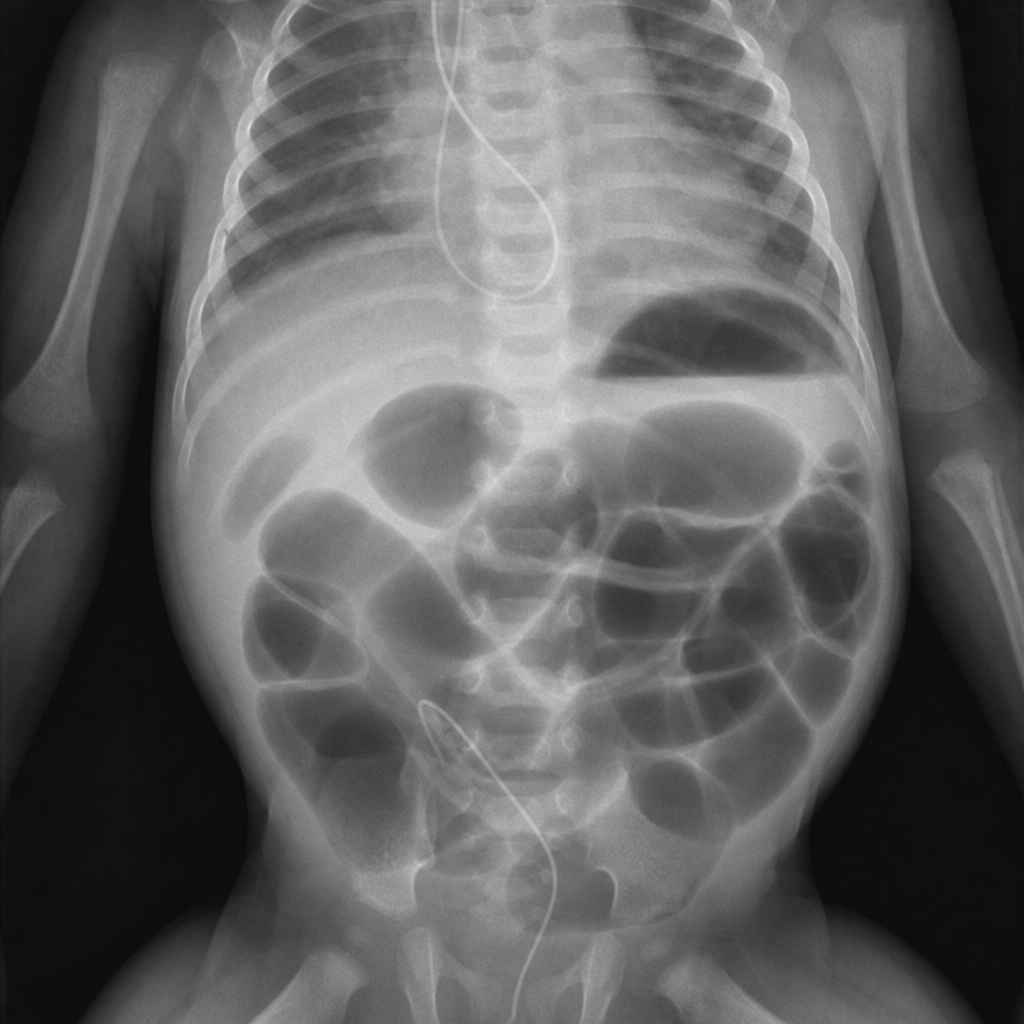
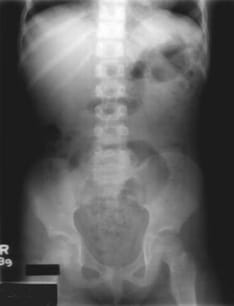
A 12-month-old male child suddenly draws up his legs and screams with pain, which is repeated periodically throughout the night, interspersed with periods of quiet sleep. When seen after 12 hours, the child looks pale, has vomited, and passed thin, blood-stained stool. There is a mass around the umbilicus. What is the most likely diagnosis?
Which of the following is NOT seen in pyloric stenosis?
What is the most common cause of acute intestinal obstruction in neonates presenting with small bowel obstruction?
What is the concentration of potassium in Oral Rehydration Solution (ORS)?
Convulsions in a child with dehydration and vomiting can only be due to:
Fecal soiling in children is most commonly due to?
A 5-month-old child presents with hepatomegaly, ketosis, hyperuricemia, and malaise. What is the most likely diagnosis?
A newborn presenting with intestinal obstruction and constipation showed, on abdominal X ray, multiple air fluid levels. Which of the following is NOT a likely diagnosis?
Which degree of dehydration is suggested by the presence of thirst in a child with diarrhea?
A 3-day-old child vomits everything he feeds, has a distended abdomen & diarrhea. The urine is positive for Benedict's test for reducing substances. What is the substance in the urine?
Explanation: **Explanation:** The clinical presentation is a classic textbook description of **Intussusception**, the most common cause of intestinal obstruction in infants (6–18 months). **1. Why Intussusception is correct:** * **Paroxysmal Colicky Pain:** The sudden drawing up of legs and screaming, followed by periods of quiet sleep (lethargy), represents the telescoping of one segment of the bowel into another. Peristaltic waves cause intense pain, which subsides when the wave passes. * **Red Currant Jelly Stool:** The "thin, blood-stained stool" is a late sign caused by venous congestion and mucosal sloughing mixed with mucus. * **Physical Findings:** A palpable "sausage-shaped" mass (often in the right upper quadrant or umbilical area) and an "empty right iliac fossa" (**Dance’s sign**) are characteristic. **2. Why other options are incorrect:** * **Appendicitis:** Rare in infants. It typically presents with constant pain, high fever, and localized tenderness in the right iliac fossa, rather than episodic screaming and bloody stools. * **Gastroenteritis:** Presents with watery diarrhea and fever. While it can cause vomiting, it does not present with a palpable abdominal mass or the episodic "pain-free" intervals seen here. * **Roundworm Obstruction:** Usually occurs in older children in endemic areas. While it can cause a mass (bolus of worms), it rarely presents with the classic triad of colicky pain, vomiting, and red currant jelly stools. **Clinical Pearls for NEET-PG:** * **Classic Triad:** Intermittent abdominal pain, vomiting, and red currant jelly stools (present in <50% of cases). * **Diagnosis:** **Ultrasound** is the gold standard investigation, showing the **"Target sign"** or **"Donut sign"** in transverse view and the **"Pseudokidney sign"** in longitudinal view. * **Treatment:** Non-operative reduction using **Air or Hydrostatic (Barium/Saline) enema** is the initial treatment of choice if there are no signs of perforation or peritonitis.
Explanation: **Explanation:** Infantile Hypertrophic Pyloric Stenosis (IHPS) is characterized by hypertrophy of the pyloric sphincter, leading to a functional gastric outlet obstruction. 1. **Why Bilious Vomiting is NOT seen:** The obstruction in IHPS occurs at the **pylorus**, which is proximal to the Ampulla of Vater (where bile enters the duodenum). Therefore, the vomitus contains gastric contents only and is **non-bilious**. Bilious vomiting always indicates an obstruction distal to the second part of the duodenum (e.g., malrotation or duodenal atresia). 2. **Analysis of Incorrect Options:** * **Projectile Vomiting:** This is the hallmark clinical feature. As the stomach attempts to force contents through the narrowed pyloric canal, the resulting pressure leads to forceful, "projectile" vomiting, usually occurring after feeds. * **Metabolic Alkalosis:** Persistent vomiting leads to the loss of gastric hydrochloric acid (HCl). The loss of H+ ions results in **hypochloremic, hypokalemic metabolic alkalosis**. * **Paradoxical Aciduria:** In an attempt to conserve sodium and volume, the kidneys eventually exchange H+ ions for Na+ in the distal tubule (due to profound depletion of K+ and Cl-). This results in acidic urine despite systemic alkalosis, a classic finding in late-stage IHPS. **High-Yield Clinical Pearls for NEET-PG:** * **Age of presentation:** Typically 3–6 weeks of life. * **Physical Exam:** A palpable, **olive-sized mass** in the epigastrium and visible gastric peristalsis. * **Diagnosis:** Ultrasound is the investigation of choice (Pyloric muscle thickness >4mm or length >14mm). * **Barium Swallow Sign:** "String sign" or "Beak sign." * **Management:** Initial priority is correction of dehydration and electrolyte imbalance, followed by **Ramstedt’s Pyloromyotomy**.
Explanation: **Explanation:** **Duodenal atresia** is the most common cause of congenital small bowel obstruction in neonates. It results from a failure of recanalization of the duodenum during the 8th to 10th week of gestation. Clinically, it presents shortly after birth with **bilious vomiting** (as most obstructions are post-ampullary) and a scaphoid abdomen. The classic radiographic finding is the **"Double Bubble" sign**, representing air in the stomach and the proximal duodenum. **Analysis of Incorrect Options:** * **Jejunal atresia:** While a common cause of neonatal obstruction, it is less frequent than duodenal atresia. It is typically caused by a vascular accident in utero (ischemic necrosis) rather than a recanalization failure. * **Malrotation with midgut volvulus:** This is a surgical emergency that can cause obstruction, but it is less common than atresias. It typically presents with sudden onset bilious vomiting in a previously healthy neonate. * **Acute intussusception:** This is the most common cause of intestinal obstruction in **infants (6 months to 2 years)**, not neonates. It presents with the classic triad of colicky pain, a sausage-shaped mass, and "red currant jelly" stools. **High-Yield Clinical Pearls for NEET-PG:** * **Association:** Approximately 30% of infants with duodenal atresia have **Down Syndrome (Trisomy 21)**. * **Antenatal finding:** Maternal **polyhydramnios** is frequently noted due to the fetus's inability to swallow and absorb amniotic fluid. * **Management:** Initial stabilization with an orogastric tube for decompression, followed by surgical repair (**Duodenoduodenostomy** or Kimura’s procedure).
Explanation: **Explanation:** The correct answer is **20 mEq/L**. This concentration is standardized by the WHO for the Low Osmolarity ORS formula to effectively replace fecal losses of potassium during diarrhea, preventing hypokalemia without causing hyperkalemia. **Why 20 mEq/L is Correct:** Potassium chloride (1.5 g/L) is added to ORS to provide exactly 20 mEq/L of potassium. During acute diarrhea, the body loses significant amounts of potassium. Maintaining this specific concentration ensures the restoration of intracellular and extracellular potassium levels, which is vital for cardiac and muscular function. **Analysis of Incorrect Options:** * **30 mEq/L (Option A):** This is the concentration of **Bicarbonate/Citrate** in the older WHO ORS formulation (Standard ORS), not potassium. * **90 mEq/L (Option C):** This was the **Sodium** concentration in the older "Standard" WHO ORS. It was reduced in the newer formula to prevent hypernatremia. * **60 mEq/L (Option D):** This is the **Sodium** concentration used in "ReSoMal" (Rehydration Solution for Malnutrition), specifically designed for children with severe acute malnutrition (SAM). **High-Yield Clinical Pearls for NEET-PG:** * **Low Osmolarity ORS (Current WHO Standard):** Total Osmolarity is **245 mOsm/L**. * **Composition Breakdown:** Sodium (75), Chloride (65), Glucose (75), Potassium (20), and Citrate (10) — all in mmol/L or mEq/L. * **Glucose:Sodium Ratio:** Always **1:1** to optimize the SGLT-1 receptor-mediated co-transport of water and electrolytes. * **Zinc Supplementation:** Always pair ORS with Zinc (20 mg/day for 14 days; 10 mg for infants <6 months) to reduce the duration and recurrence of diarrhea.
Explanation: **Explanation:** In a child presenting with dehydration and vomiting, electrolyte imbalances are common. The occurrence of **convulsions** is most characteristically associated with **Hyponatremia (Decreased serum sodium)**. **1. Why Hyponatremia is the correct answer:** Sodium is the primary extracellular osmolite. When serum sodium levels drop rapidly (often due to loss of sodium in vomitus/diarrhea or replacement with hypotonic fluids), an osmotic gradient is created. Water moves from the extracellular space into the brain cells (intracellular space) to equalize osmolality, leading to **cerebral edema**. This increased intracranial pressure and neuronal swelling trigger seizures. **2. Why the other options are incorrect:** * **Decreased serum magnesium (Hypomagnesemia):** While it can cause seizures, it is rarely the primary consequence of simple dehydration and vomiting; it is more common in malabsorption syndromes or specific renal losses. * **Decreased serum potassium (Hypokalemia):** This is very common in vomiting/dehydration, but it typically manifests as **muscle weakness, paralytic ileus, and ECG changes** (U waves), not convulsions. * **Decreased serum chloride (Hypochloremia):** This leads to metabolic alkalosis (contraction alkalosis), which may cause tetany due to decreased ionized calcium, but it is not a direct cause of seizures. **Clinical Pearls for NEET-PG:** * **Hyponatremic Dehydration:** Defined as Serum $Na^+ < 130$ mEq/L. It is the most dangerous form of dehydration because of the risk of seizures. * **Hypernatremic Dehydration:** Can also cause seizures, but these occur due to **cerebral shrinkage** and subarachnoid hemorrhage rather than edema. * **Management Tip:** Rapid correction of chronic hyponatremia can lead to **Central Pontine Myelinolysis**, whereas rapid correction of hypernatremia can lead to **Cerebral Edema**.
Explanation: ### Explanation **Correct Answer: B. Chronic constipation** **Mechanism of Fecal Soiling (Encopresis):** The most common cause of fecal soiling in children is **functional chronic constipation** (accounting for >90% of cases). When a child chronically withholds stool, the rectum becomes distended, leading to a "megarectum." Over time, the rectal wall loses its sensitivity and contractile strength. Eventually, liquid or semi-formed stool from higher up in the colon leaks around the hard, impacted fecal mass and escapes through the anal sphincter involuntarily. This is known as **overflow incontinence** or encopresis. **Why other options are incorrect:** * **A. Hirschsprung's Disease:** While this involves severe constipation, fecal soiling is **extremely rare** in Hirschsprung’s. This is because the aganglionic segment (usually the distal rectum) remains tonically contracted, preventing the passage of even liquid stool. The absence of soiling is a key clinical feature used to differentiate Hirschsprung’s from functional constipation. * **C. Rectal Atresia:** This is a structural congenital anomaly presenting in the neonatal period with intestinal obstruction. It does not typically present as chronic soiling in an older child. **Clinical Pearls for NEET-PG:** * **Functional Constipation:** Usually starts after 2 years of age (often during toilet training); fecal soiling is common; dilated rectum filled with stool on PR exam. * **Hirschsprung’s Disease:** Usually presents in the neonatal period (delayed passage of meconium >48 hours); empty rectum on PR exam; "blast sign" (explosive release of gas/stool) upon finger withdrawal. * **Gold Standard Diagnosis for Hirschsprung’s:** Rectal suction biopsy (showing absence of ganglion cells and hypertrophied nerve bundles).
Explanation: ### Explanation The clinical presentation of **hepatomegaly, ketosis, hyperuricemia, and malaise** in an infant is a classic triad for **Glycogen Storage Disease (GSD) Type I (von Gierke disease)**. *Note: There appears to be a discrepancy in the provided key. While the prompt marks Mucopolysaccharidosis as correct, the clinical features described (specifically ketosis and hyperuricemia) are pathognomonic for GSD Type I.* #### 1. Why Glycogen Storage Disease (GSD) is the clinical fit: In GSD Type I, a deficiency in **Glucose-6-Phosphatase** prevents the liver from converting glycogen and gluconeogenic precursors into free glucose. This leads to: * **Hepatomegaly:** Due to massive accumulation of glycogen in the liver. * **Ketosis:** The body shifts to fat metabolism (beta-oxidation) because it cannot maintain blood glucose levels. * **Hyperuricemia:** Increased G-6-P shunts into the Pentose Phosphate Pathway, leading to increased purine synthesis and lactic acid competing with urate for renal excretion. * **Hypoglycemia:** Often presents as malaise, seizures, or irritability. #### 2. Why other options are incorrect: * **Mucopolysaccharidosis (MPS):** While MPS causes hepatosplenomegaly, it typically presents with coarse facial features, skeletal deformities (dysostosis multiplex), and corneal clouding. It does **not** cause ketosis or hyperuricemia. * **Diabetes Mellitus:** While it causes ketosis (DKA), it does not typically present with hepatomegaly and hyperuricemia in a 5-month-old infant. * **Urea Cycle Defects:** These typically present with **hyperammonemia** and respiratory alkalosis. Ketosis is usually absent; in fact, many urea cycle defects present with low or normal ketones. #### 3. NEET-PG High-Yield Pearls: * **GSD Type I (von Gierke):** Look for "Doll-like facies," lactic acidosis, hyperlipidemia (xanthomas), and hyperuricemia. * **GSD Type II (Pompe):** Characterized by **cardiomegaly** and "floppy baby" (hypotonia); glucose levels are usually normal. * **GSD Type III (Cori):** Similar to Type I but with normal lactate levels and milder symptoms. * **Management of GSD I:** Frequent feeds and uncooked cornstarch to maintain euglycemia.
Explanation: **Explanation:** The presence of **multiple air-fluid levels** on an abdominal X-ray indicates a **low intestinal obstruction** (distal to the duodenum). In such cases, air and fluid accumulate in multiple dilated loops of the small and/or large bowel. **1. Why Pyloric Obstruction is the correct answer:** Congenital Hypertrophic Pyloric Stenosis (CHPS) or pyloric atresia causes a **high gastric outlet obstruction**. Since the blockage is at the level of the stomach, air cannot pass into the distal intestines. An X-ray typically shows a single large gastric air bubble with a "gasless abdomen" distally. Therefore, multiple air-fluid levels are never seen in pyloric obstruction. **2. Analysis of Incorrect Options:** * **Duodenal Atresia:** While classically associated with the "double bubble" sign, if there is a partial obstruction or distal communication, some air can pass, though it typically shows limited fluid levels. However, in the context of this question, it is a more distal site than the pylorus. * **Ileal Atresia:** This is a classic cause of low intestinal obstruction. It presents with numerous dilated loops of small bowel and multiple air-fluid levels on an erect film. * **Ladd’s Bands:** Associated with malrotation, these bands can compress the duodenum or lead to midgut volvulus. This results in varying degrees of intestinal obstruction and can certainly present with multiple air-fluid levels if the obstruction is mid-jejunal or ileal. **Clinical Pearls for NEET-PG:** * **Double Bubble Sign:** Duodenal Atresia (associated with Down Syndrome). * **Triple Bubble Sign:** Jejunal Atresia. * **Ground Glass Appearance/Neuhauser Sign:** Meconium Ileus (Cystic Fibrosis). * **Egg-on-string Appearance:** Transposition of Great Arteries (Radiology overlap). * **Step-ladder pattern:** Characteristic of mechanical small bowel obstruction on X-ray.
Explanation: **Explanation:** In pediatric gastroenterology, the clinical assessment of dehydration is based on the WHO classification, which categorizes dehydration into No, Some (Mild-Moderate), and Severe. **Why Mild is the correct answer:** Thirst is one of the earliest compensatory mechanisms of the body to fluid loss. According to the WHO and IAP guidelines, a child who is **"thirsty and drinks eagerly"** is classified as having **Some (Mild to Moderate) Dehydration**. In the context of this specific question, thirst is the hallmark sign that distinguishes a child who has already begun to lose significant body water from one with "No Dehydration." It indicates a fluid deficit of approximately 5% of body weight. **Why the other options are incorrect:** * **Moderate:** While thirst is present in moderate dehydration, standard clinical classifications (like the one used in this question) often group mild and moderate together as "Some Dehydration," where thirst is the primary subjective indicator. * **Severe:** In severe dehydration (fluid loss >10%), the child is often too lethargic, unconscious, or weak to drink. The inability to drink, despite the body's need, is a red flag for severe dehydration. * **None:** A child with "No Dehydration" typically drinks normally and does not show signs of excessive thirst. **NEET-PG High-Yield Pearls:** * **Best indicator of dehydration:** Percentage of weight loss (if pre-illness weight is known). * **Earliest clinical sign:** Tachycardia. * **Most sensitive clinical sign:** Prolonged Capillary Refill Time (CRT >2 seconds). * **WHO Classification:** * *No Dehydration:* <5% loss; alert, drinks normally. * *Some Dehydration:* 5-10% loss; thirsty, restless, sunken eyes. * *Severe Dehydration:* >10% loss; lethargic, unable to drink, skin pinch goes back very slowly (>2 seconds).
Explanation: ### Explanation The clinical presentation of a 3-day-old neonate with vomiting, abdominal distension, and diarrhea shortly after starting milk feeds, coupled with a positive Benedict’s test for reducing substances in the urine, is a classic description of **Classic Galactosemia** (deficiency of Galactose-1-phosphate uridyltransferase or GALT). **Why Galactose is the correct answer:** In Galactosemia, the body cannot metabolize galactose (a component of lactose found in breast milk and cow's milk). Galactose and its metabolites accumulate in the blood and are excreted in the urine. Since galactose is a **reducing sugar**, it reacts positively with Benedict’s reagent. The onset is typically within the first few days of life as soon as milk feeds begin. **Analysis of Incorrect Options:** * **A. Sucrose:** It is a **non-reducing sugar** and would yield a negative Benedict’s test. Furthermore, sucrose is not a primary component of early neonatal milk feeds. * **B. Glucose:** While glucose is a reducing sugar, isolated glucosuria in a 3-day-old with these systemic symptoms is less likely than Galactosemia. Glucosuria is usually associated with Diabetes Mellitus or renal tubular defects. * **D. Fructose:** Fructose is a reducing sugar (Hereditary Fructose Intolerance), but symptoms only appear when fructose or sucrose is introduced into the diet (e.g., fruit juices or honey), which typically occurs much later than 3 days of age. **NEET-PG High-Yield Pearls:** * **Screening:** Benedict’s test is a non-specific screening tool for reducing substances (Galactose, Glucose, Fructose, Lactose). A **Glucose Oxidase dipstick** test will be **negative** in Galactosemia because it only detects glucose. * **Complications:** If untreated, look for **Oil-drop cataracts**, hepatosplenomegaly, jaundice, and a high risk of **E. coli sepsis**. * **Management:** Immediate withdrawal of milk and initiation of a **soy-based (lactose-free)** formula.
Gastroesophageal Reflux
Practice Questions
Peptic Ulcer Disease
Practice Questions
Inflammatory Bowel Disease
Practice Questions
Celiac Disease
Practice Questions
Malabsorption Syndromes
Practice Questions
Acute and Chronic Diarrhea
Practice Questions
Constipation and Encopresis
Practice Questions
Gastrointestinal Bleeding
Practice Questions
Intestinal Obstruction
Practice Questions
Liver Diseases in Children
Practice Questions
Pancreatic Disorders
Practice Questions
Pediatric Nutritional Support
Practice Questions
Get full access to all questions, explanations, and performance tracking.
Start For Free