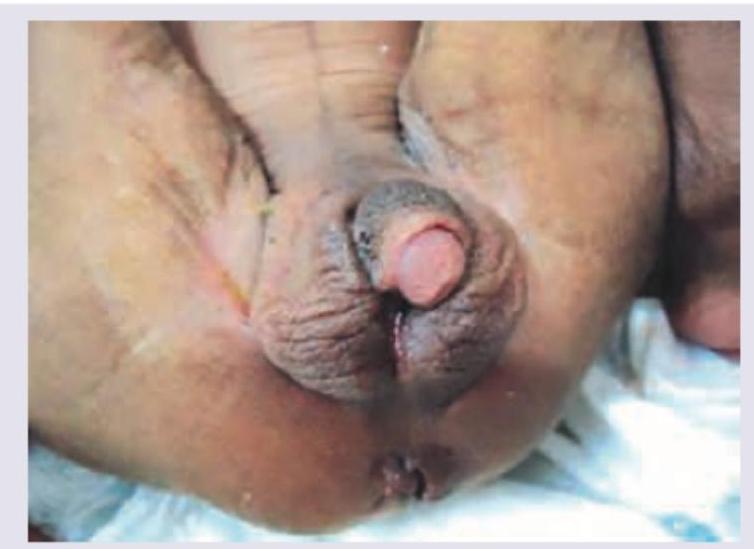
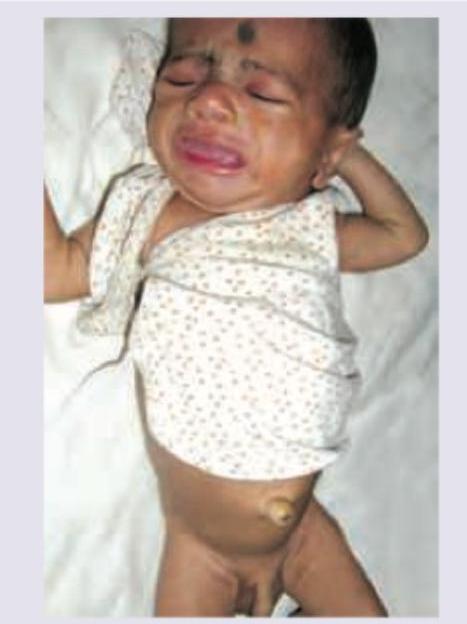
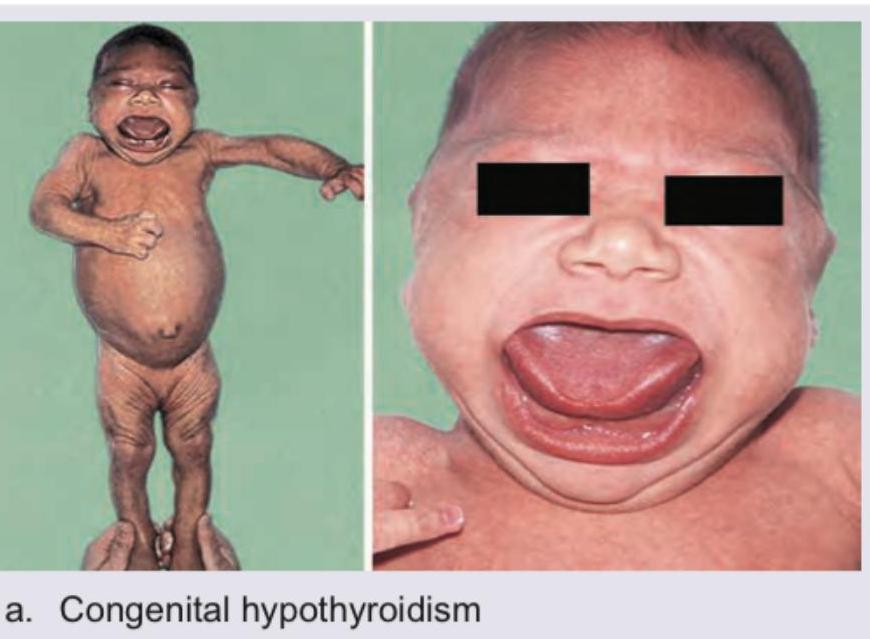
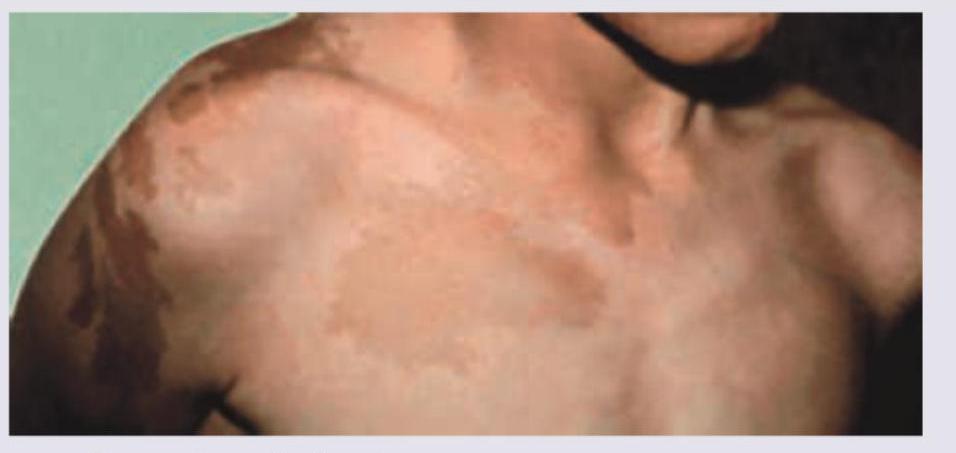
A five-year-old boy presents with coarse facial features, mental retardation, and dysostosis multiplex. Corneal clouding is absent. What is the diagnosis?
Which of the following is NOT true about Turner syndrome?
What is the most common cause of precocious puberty?
A female neonate with DiGeorge syndrome develops severe muscle cramps and convulsions soon after birth. Which of the following is the cause of convulsions in this neonate?
In children with type 1 diabetes mellitus, when is ophthalmologic evaluation indicated?
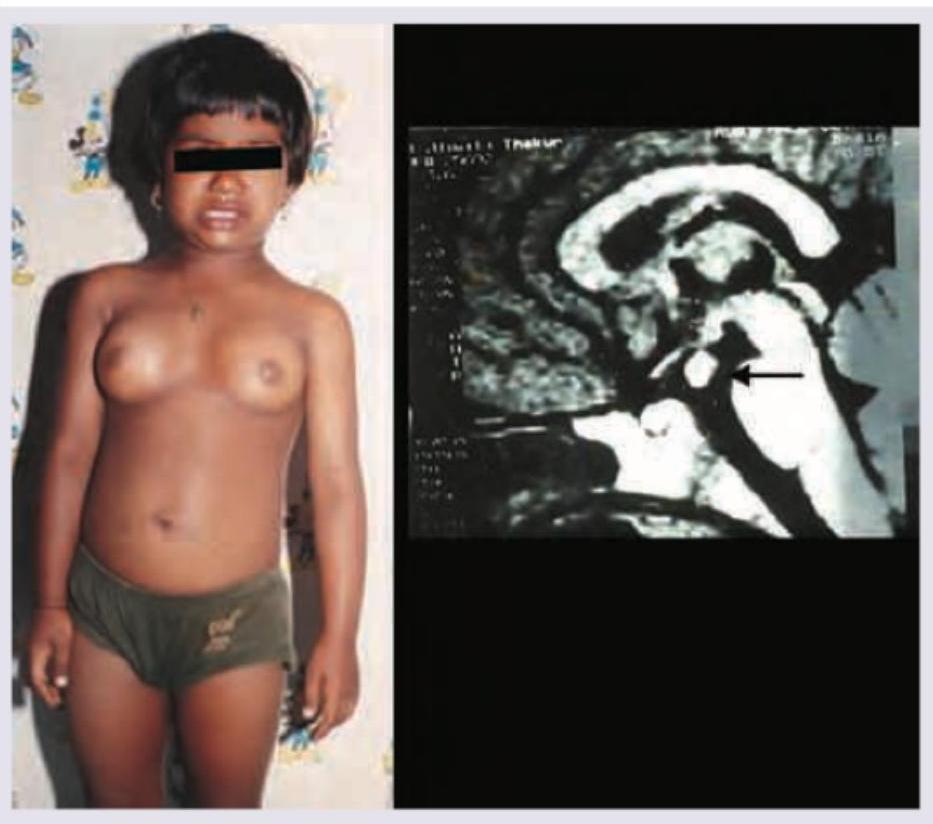
A 9-year-old female child presents with a history of headache and visual disturbances. What is the most likely diagnosis?

Which disease affects only the formation and eruption of teeth but does not cause hypoplasia?
A 2-year-old intellectually disabled child has blue eyes, blonde hair, and fair skin, along with a peculiar body odor. What is the diagnosis?
In children, which is the most commonly recognized form of familial hyperlipidemia?
A 14-year-old boy presents with a 3-month history of increasing weakness, easy fatigability, and weight loss. He also reports recent onset of nausea, vomiting, and abdominal pain. His blood pressure is markedly decreased, and he has increased pigmentation of his skin creases. What is the most likely diagnosis?
Explanation: **Explanation:** The clinical presentation of coarse facial features, intellectual disability (mental retardation), and **dysostosis multiplex** (a constellation of skeletal abnormalities) is characteristic of **Mucopolysaccharidoses (MPS)**. **Why Hunter Disease (MPS II) is correct:** The defining clinical feature in this question is the **absence of corneal clouding**. While both Hurler (MPS I) and Hunter (MPS II) syndromes present with similar systemic features, Hunter syndrome is unique because it lacks corneal clouding. Furthermore, Hunter syndrome is the only MPS that follows an **X-linked recessive** inheritance pattern (all others are autosomal recessive). It is caused by a deficiency of the enzyme **Iduronate-2-sulfatase**. **Why the other options are incorrect:** * **Hurler Disease (MPS I-H):** This is the most severe form of MPS. While it presents with coarse features and dysostosis multiplex, **corneal clouding is a hallmark feature** and is usually present early in life. * **MPS Type IV (Morquio Syndrome):** Patients with Morquio syndrome have severe skeletal dysplasia and ligamentous laxity, but they typically have **normal intelligence** and do not have the "coarse" facial features seen in MPS I or II. * **Gaucher’s Disease:** This is a lipid storage disorder. While it involves hepatosplenomegaly and bone involvement (Erlenmeyer flask deformity), it does not present with coarse facies, dysostosis multiplex, or the specific mucopolysaccharide accumulation patterns. **High-Yield Clinical Pearls for NEET-PG:** 1. **Mnemonic:** "The **Hunter** needs clear eyes to aim at the **X**" (Hunter = No corneal clouding + X-linked recessive). 2. **Enzyme Deficiency:** Hunter = Iduronate-2-sulfatase; Hurler = Alpha-L-iduronidase. 3. **Dermal Sign:** "Pebbling" of the skin (scapular region) is a pathognomonic skin finding in Hunter syndrome.
Explanation: **Explanation:** **1. Why Option C is the correct answer (The "False" statement):** In Turner syndrome (45, XO), the **Intelligence Quotient (IQ) is typically within the normal range**. While patients may exhibit specific neurocognitive deficits—such as difficulties with visuospatial processing, non-verbal memory, and mathematics—their verbal intelligence and overall cognitive function are generally preserved. Therefore, labeling them as having "subnormal intelligence" or intellectual disability is clinically incorrect. **2. Analysis of Incorrect Options (True statements):** * **Option A:** If a Turner patient has mosaicism involving a Y chromosome (e.g., 45,X/46,XY), there is a significant risk (approx. 15-30%) of developing **gonadoblastoma**. In such cases, prophylactic gonadectomy is indicated. * **Option B:** Due to accelerated oocyte atresia, the ovaries are replaced by fibrous tissue, resulting in **bilateral streak gonads**. This leads to primary amenorrhea and lack of secondary sexual characteristics. * **Option D:** Because the streak gonads fail to produce estrogen and inhibin, there is a lack of negative feedback on the pituitary. This results in **Hypergonadotropic Hypogonadism**, characterized by elevated FSH and LH levels. **Clinical Pearls for NEET-PG:** * **Most common cardiac defect:** Bicuspid aortic valve (most common overall); Coarctation of aorta (classic association). * **Renal anomaly:** Horseshoe kidney. * **Dermatological sign:** Lymphedema of hands and feet at birth; webbed neck (cystic hygroma remnant). * **Short Stature:** Most consistent clinical finding; managed with recombinant Growth Hormone (GH). * **Karyotype:** 45, XO is the most common, but mosaicism (45,X/46,XX) is frequent.
Explanation: **Explanation:** Precocious puberty is defined as the onset of secondary sexual characteristics before the age of 8 in girls and 9 in boys. It is broadly classified into **Central (GnRH-dependent)** and **Peripheral (GnRH-independent)** types. **Why Constitutional is correct:** The most common cause of precocious puberty overall is **Central Precocious Puberty (CPP)**. Within this category, the vast majority of cases (especially in girls, up to 90%) are **Idiopathic or Constitutional**. This represents an early but otherwise normal activation of the Hypothalamic-Pituitary-Gonadal (HPG) axis. While CNS tumors are a common cause of CPP in boys, the sheer frequency of idiopathic cases in girls makes "Constitutional" the most common cause overall. **Analysis of Incorrect Options:** * **McCune-Albright Syndrome:** This is a cause of *Peripheral* precocious puberty characterized by the triad of polyostotic fibrous dysplasia, café-au-lait spots, and autonomous endocrine overactivity. It is rare. * **Polycystic Ovary Syndrome (PCOS):** While PCOS involves hormonal imbalances (hyperandrogenism), it typically presents in late adolescence or adulthood with menstrual irregularities and hirsutism, not as a primary cause of precocious puberty. * **Kallmann Syndrome:** This is a cause of **Delayed Puberty** (hypogonadotropic hypogonadism) associated with anosmia, the exact opposite of precocious puberty. **High-Yield Clinical Pearls for NEET-PG:** * **Gold Standard Investigation:** The GnRH stimulation test (CPP shows a pubertal LH response). * **Bone Age:** Characteristically advanced in all forms of true precocious puberty. * **Treatment of Choice (CPP):** Long-acting GnRH analogues (e.g., Leuprolide) to desensitize the pituitary and prevent premature epiphyseal fusion. * **Gender Difference:** CPP is more common in girls (usually idiopathic); in boys, CPP is more likely to have an underlying organic CNS lesion (e.g., hypothalamic hamartoma).
Explanation: **Explanation:** The correct answer is **Hypocalcemia**. **1. Why Hypocalcemia is the cause:** DiGeorge Syndrome (22q11.2 deletion syndrome) is characterized by the embryological failure of the **3rd and 4th pharyngeal pouches** to develop. This leads to **thymic hypoplasia** (causing T-cell deficiency) and **parathyroid hypoplasia**. The absence or underdevelopment of the parathyroid glands results in a deficiency of Parathyroid Hormone (PTH), leading to **hypocalcemia** and hyperphosphatemia. In neonates, severe hypocalcemia increases neuromuscular excitability, manifesting as tetany, muscle cramps, and seizures (convulsions). **2. Why the other options are incorrect:** * **Acute hemorrhagic adrenalitis (Waterhouse-Friderichsen syndrome):** This is typically associated with meningococcemia and leads to adrenal insufficiency, not a primary feature of DiGeorge syndrome. * **Hypoglycemia:** While common in neonates (especially infants of diabetic mothers or those with IUGR), it is not a direct pathological consequence of the pharyngeal pouch defects seen in DiGeorge syndrome. * **Hypokalemia:** This refers to low potassium levels. While it can cause muscle weakness, it does not typically cause the acute convulsions seen in the neonatal presentation of DiGeorge syndrome, which is classically driven by the calcium-PTH axis. **Clinical Pearls for NEET-PG:** * **CATCH-22 Mnemonic:** **C**ardiac defects (Truncus arteriosus/TOF), **A**bnormal facies, **T**hymic hypoplasia, **C**left palate, **H**ypocalcemia (due to hypoparathyroidism), and **22**q11 deletion. * **Chest X-ray:** Look for the **absence of a thymic shadow** (also seen in SCID). * **Most common cardiac defect:** Interrupted aortic arch (Type B) or Truncus Arteriosus.
Explanation: **Explanation:** In Type 1 Diabetes Mellitus (T1DM), diabetic retinopathy is a microvascular complication that rarely develops before the onset of puberty or within the first few years of the disease. According to the International Society for Pediatric and Adolescent Diabetes (ISPAD) and American Diabetes Association (ADA) guidelines, screening for retinopathy should begin **5 years after the initial diagnosis**, provided the child is at least 11 years old or has reached puberty. **Why Option D is Correct:** The "5-year rule" is based on the pathophysiology of T1DM; it takes several years of chronic hyperglycemia to cause detectable structural damage to the retinal capillaries. Screening earlier is generally not cost-effective as the prevalence of vision-threatening retinopathy is extremely low in the first few years post-diagnosis. **Why Other Options are Incorrect:** * **Option A:** Unlike Type 2 Diabetes (where the date of onset is often unknown and complications may already be present), the onset of T1DM is acute. Retinopathy is virtually never present at diagnosis. * **Options B & C:** One or two years is insufficient time for the metabolic insult of hyperglycemia to manifest as clinically significant microvascular disease in pediatric patients. **High-Yield Clinical Pearls for NEET-PG:** * **Screening Frequency:** Once screening begins, it should be performed **annually** (or every 2 years if glycemic control is excellent and previous exams were normal). * **The Puberty Factor:** Puberty accelerates the development of microvascular complications. If a child is diagnosed at age 5, screening starts at age 11 (puberty) or after 5 years of duration, whichever is later. * **Nephropathy Screening:** Similar to retinopathy, screening for microalbuminuria (spot ACR) should also start 5 years after diagnosis. * **Celiac & Thyroid Screening:** Unlike retinopathy, screening for autoimmune conditions (TSH and Anti-TTG) should be done **at the time of diagnosis**.
Explanation: ***Craniopharyngioma*** - Most common **suprasellar tumor** in children, presenting with the classic triad of **raised intracranial pressure** (headache), **visual field defects** (bitemporal hemianopia), and **endocrine dysfunction**. - Characteristic imaging shows a **suprasellar cystic and solid mass** with **calcifications** in 90% of childhood cases, distinguishing it from other sellar region tumors. *Pituitary macroadenoma* - Extremely rare in **pediatric population**, typically occurs in adults over 40 years of age. - Usually presents with **hormonal hypersecretion syndromes** (prolactinoma, growth hormone excess) rather than mass effect symptoms in children. *Hypothalamic hamartoma* - Primarily causes **gelastic seizures** (laughing spells) and **precocious puberty**, not typically headache and visual disturbances. - Appears as a **non-enhancing isodense mass** attached to the hypothalamus without calcifications or cystic components. *Optic glioma* - More commonly presents with **unilateral visual loss** and **proptosis** rather than bitemporal visual field defects. - Associated with **neurofibromatosis type 1** and appears as **fusiform enlargement** of the optic nerve without suprasellar calcifications.
Explanation: **Explanation:** The correct answer is **Hyperthyroidism**. In pediatric endocrinology, thyroid hormones play a crucial role in the timing of skeletal and dental maturation. Hyperthyroidism (accelerated metabolism) leads to **premature eruption** of teeth and early loss of deciduous teeth. Because the dental enamel and dentin are already formed or follow a normal mineralization process, the disease affects the **timing and sequence** of eruption rather than the structural integrity of the tooth. Therefore, it does not cause enamel hypoplasia. **Analysis of Incorrect Options:** * **Hypoparathyroidism:** Low parathyroid hormone leads to hypocalcemia during the developmental stage of teeth. This results in structural defects, specifically **enamel hypoplasia** and delayed eruption. * **Rickets:** Vitamin D deficiency leads to impaired mineralization of bone and teeth. It is a classic cause of **enamel hypoplasia**, delayed eruption, and defects in dentin formation. * **Syphilis (Congenital):** This infection directly affects the tooth germ during morphodifferentiation. It causes significant structural deformities known as **Hutchinson’s incisors** (notched, peg-shaped) and **Mulberry molars**. **High-Yield Clinical Pearls for NEET-PG:** * **Hypothyroidism (Cretinism):** Characterized by **delayed eruption** and a thick, protruding tongue (macroglossia). * **Hypophosphatasia:** A rare metabolic bone disease where the hallmark is the **premature loss of deciduous teeth** (especially incisors) due to cementum defects. * **Enamel Hypoplasia:** Occurs only if the systemic insult (like Rickets or Hypocalcemia) happens during the **formative (calcification) stage** of the teeth. Once the crown is formed, these conditions no longer cause hypoplasia.
Explanation: **Explanation:** The clinical presentation of intellectual disability, hypopigmentation (blue eyes, blonde hair, fair skin), and a characteristic body odor is a classic description of **Phenylketonuria (PKU)**. **1. Why Phenylketonuria (PKU) is correct:** PKU is an autosomal recessive disorder caused by a deficiency of the enzyme **phenylalanine hydroxylase (PAH)**, which converts phenylalanine to tyrosine. * **Hypopigmentation:** Tyrosine is a precursor for melanin. Low tyrosine levels lead to decreased melanin production, resulting in fair skin, blonde hair, and blue eyes. * **Odor:** Accumulation of phenylalanine leads to the formation of phenylacetic acid, which is excreted in sweat and urine, causing a characteristic **"mousy" or "musty" odor**. * **Neurological symptoms:** High levels of phenylalanine are neurotoxic, leading to intellectual disability and seizures if untreated. **2. Why other options are incorrect:** * **Maple Syrup Urine Disease (MSUD):** Caused by a deficiency in branched-chain alpha-keto acid dehydrogenase. It presents with a **"burnt sugar" or "maple syrup"** odor and severe neonatal ketoacidosis, not hypopigmentation. * **Isovaleric Acidemia:** Characterized by a distinct **"sweaty feet"** odor due to the accumulation of isovaleric acid. * **Canavan Disease:** A leukodystrophy presenting with macrocephaly, hypotonia, and developmental delay, but it lacks the specific pigmentary changes and mousy odor of PKU. **High-Yield Clinical Pearls for NEET-PG:** * **Diagnosis:** Guthrie Test (bacterial inhibition assay) is used for screening; Tandem Mass Spectrometry (TMS) is the gold standard. * **Management:** Dietary restriction of phenylalanine and supplementation of Tyrosine (which becomes an **essential amino acid** in PKU patients). * **Maternal PKU:** If a mother with PKU doesn't maintain a strict diet during pregnancy, the fetus may develop microcephaly, IUGR, and congenital heart defects (e.g., Fallot's Tetralogy).
Explanation: **Explanation:** **Familial Combined Hyperlipidemia (FCHL)** is the most common genetic dyslipidemia, affecting approximately 1 in 100 individuals. In the pediatric population, it is the most frequently recognized form of familial hyperlipidemia. 1. **Why Option D is Correct:** FCHL is characterized by elevated levels of **VLDL and LDL**, leading to a simultaneous increase in both triglycerides and cholesterol. The underlying pathophysiology involves the overproduction of **Apolipoprotein B-100**. It is clinically significant because it is highly atherogenic and often presents in childhood with a strong family history of premature coronary artery disease (CAD). 2. **Why Other Options are Incorrect:** * **Hypercholesterolemia (Option B):** While Familial Hypercholesterolemia (Type IIa) is well-known due to its severity and risk of early MI, its prevalence (1 in 250–500) is lower than that of FCHL. * **Hypertriglyceridemia (Option A):** Isolated familial hypertriglyceridemia is less common in children and often remains asymptomatic until adulthood. * **Hyperchylomicronemia (Option C):** This is a rare autosomal recessive disorder (Type I) characterized by a deficiency in Lipoprotein Lipase (LPL). While it presents in infancy with eruptive xanthomas or pancreatitis, it is much rarer than FCHL. **High-Yield Pearls for NEET-PG:** * **Most common cause of pediatric dyslipidemia:** Obesity/Metabolic Syndrome (Secondary); **FCHL** (Primary/Genetic). * **Apo B-100:** The hallmark marker for FCHL. * **Clinical Presentation:** Unlike Familial Hypercholesterolemia, FCHL rarely presents with xanthomas in childhood; diagnosis usually relies on lipid profiles and family history. * **Screening:** Universal lipid screening is recommended by the AAP between ages 9–11 years.
Explanation: **Explanation:** The clinical presentation of weakness, weight loss, hypotension, and gastrointestinal symptoms (nausea/vomiting), combined with **hyperpigmentation**, is classic for **Addison disease** (Primary Adrenocortical Insufficiency). 1. **Why Addison Disease is correct:** In primary adrenal insufficiency, the adrenal cortex fails to produce cortisol and aldosterone. The lack of cortisol triggers a compensatory increase in **ACTH** (Adrenocorticotropic Hormone) from the pituitary. ACTH is derived from Pro-opiomelanocortin (POMC), which also produces **Melanocyte-Stimulating Hormone (MSH)**. High levels of these precursors lead to the characteristic hyperpigmentation of skin creases, scars, and buccal mucosa. The lack of aldosterone leads to salt wasting, dehydration, and marked hypotension. 2. **Why other options are incorrect:** * **Cushing syndrome:** Characterized by cortisol *excess*, leading to hypertension, weight *gain* (central obesity), and striae, rather than hypotension and weight loss. * **Secondary hyperaldosteronism:** Usually presents with hypertension and edema (due to RAAS activation), not hypotension or hyperpigmentation. * **Osteitis fibrosa cystica:** A bone manifestation of hyperparathyroidism; it presents with bone pain and fractures, not adrenal symptoms. **High-Yield Clinical Pearls for NEET-PG:** * **Most common cause:** Autoimmune adrenalitis (Western world) vs. Tuberculosis (Developing countries/India). * **Electrolyte Triad:** Hyponatremia, Hyperkalemia, and Metabolic Acidosis. * **Diagnosis:** Best initial test is the **ACTH Stimulation Test** (Cosyntropin test). A failure of cortisol to rise confirms the diagnosis. * **Management:** Lifelong replacement of glucocorticoids (Hydrocortisone) and mineralocorticoids (Fludrocortisone). In "Adrenal Crisis," the priority is IV fluids and IV Hydrocortisone.
Disorders of Growth
Practice Questions
Thyroid Disorders
Practice Questions
Disorders of Puberty
Practice Questions
Adrenal Disorders
Practice Questions
Diabetes Mellitus in Children
Practice Questions
Disorders of Calcium and Phosphate Metabolism
Practice Questions
Disorders of Sexual Development
Practice Questions
Hypoglycemia
Practice Questions
Obesity and Metabolic Syndrome
Practice Questions
Pituitary Disorders
Practice Questions
Multiple Endocrine Neoplasia Syndromes
Practice Questions
Endocrine Emergencies
Practice Questions
Get full access to all questions, explanations, and performance tracking.
Start For Free