Which of the following is the least common cause of ambiguous genitalia in a female child
A GSP4 woman comes for routine sonography for the first time. She has four daughters and expresses a desire for a boy this time, asking for sex determination. To abide by ethical guidelines, what should you do?
What should be done next in an 18-year-old girl with primary amenorrhea, a karyotype of 45,X0, and an infantile uterus on ultrasound?
Which of the following conditions is least likely to present with ambiguous genitalia?
Congenital adrenal hyperplasia most commonly presents as
A 10 day old male pseudohermaphrodite child with 46 XY karyotype presents with BP of 110/80 mmHg. Most likely enzyme deficiency is:
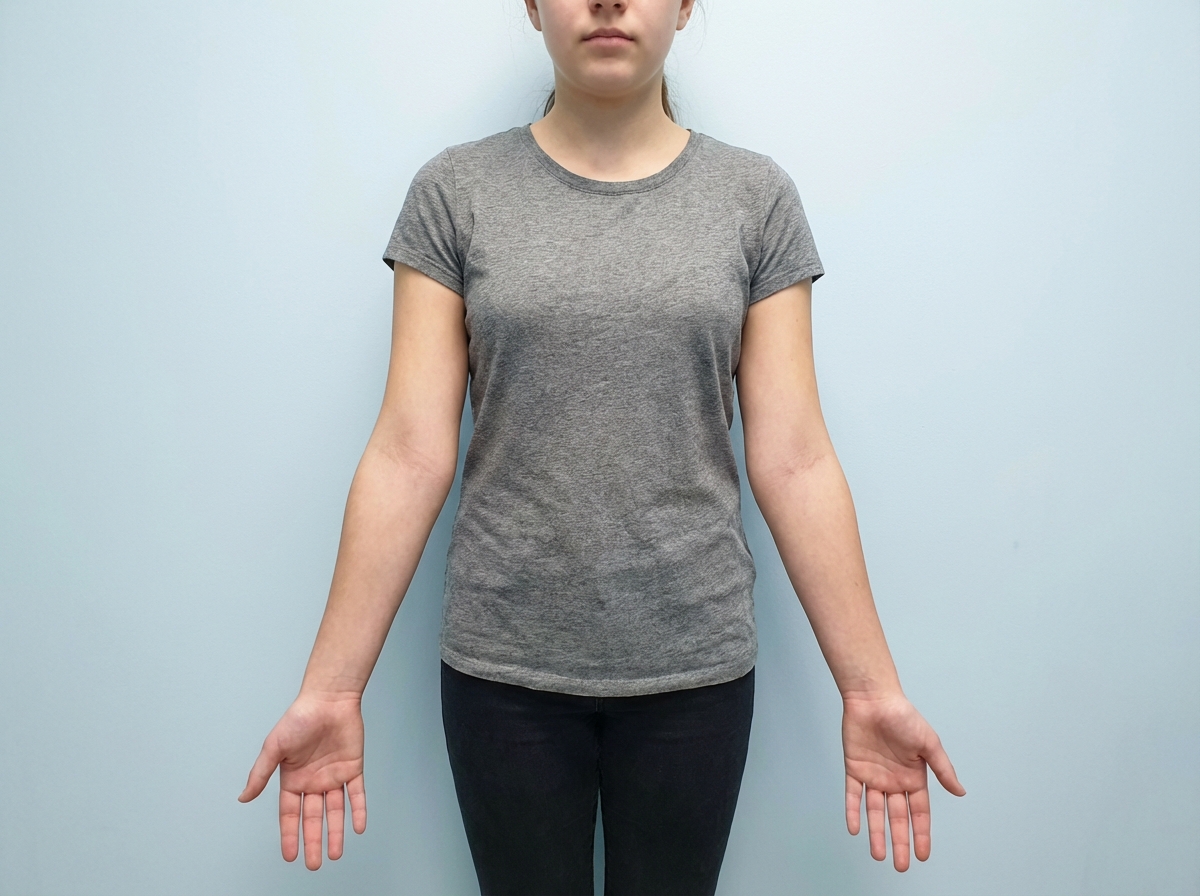
A teenage girl presents with a history of amenorrhea. Local examination is shown in the image. What karyotype analysis would you consider for further evaluation?
A 16-year-old girl comes to you with primary amenorrhea; on evaluation there is absent breast development, she has a normal stature, her FSH and LH levels are found to be high and she has a karyotype of 46XX. What is the probable diagnosis?
An eight-year-old girl presented by her mother with sexual precocity. She may have the following disorder:
In Precocious puberty, the age limit for girls is?
Explanation: ***Fetal placental aromatase deficiency*** - This condition is exceedingly rare and is considered one of the **least common genetic causes** of ambiguous genitalia in a female. - Deficiency of **aromatase** in the placenta prevents the conversion of androgens to estrogens, leading to **masculinization of a female fetus**, but this pathway is only a minor contributor to fetal androgenization. *WNT-4 gene mutation* - **WNT-4** is crucial for **female sexual differentiation** and acts as an anti-testis factor. - Mutations can lead to **Müllerian aplasia** and variable degrees of virilization in genetic females, making it a recognized, though not the most common, cause of ambiguous genitalia. *Congenital adrenal hyperplasia* - This is the **most common cause** of ambiguous genitalia in a female, primarily due to **21-hydroxylase deficiency**. - Excess adrenal androgens lead to **virilization** of the external genitalia in genetic females. *Maternal androgen exposure* - Virilization can occur from **maternal sources** such as androgen-secreting tumors, exogenous androgen use, or aromatase inhibitors during pregnancy. - This is an **uncommon but recognized cause**, more frequent than aromatase deficiency but far less common than CAH. *Fetal placental steroid sulfatase deficiency* - This deficiency typically results in **low maternal estrogen levels** and can cause **placental insufficiency** and abnormalities in labor, but it does **not directly cause ambiguous genitalia** in a female fetus. - While it affects steroid metabolism, it does not lead to the accumulation of androgens necessary for virilization of female external genitalia.
Explanation: ***Check routine ANC and sex for developmental abnormalities and do not reveal gender to the patient*** - It is **illegal** and **unethical** to reveal the sex of the fetus in many countries, including India, to prevent **sex-selective abortions**. - The primary purpose of a routine antenatal ultrasound is to assess fetal **health** and **developmental abnormalities**, not to determine sex for parental preference. *Check routine ANC and sex for developmental abnormalities and do reveal gender to the patient* - Revealing the gender to the patient directly facilitates **sex-selective abortion**, which is medically unethical and illegal due to the potential for harm to the fetus and society. - This practice would violate the **Pre-Conception and Pre-Natal Diagnostic Techniques (PCPNDT) Act** in India, which prohibits gender determination. *Do reveal gender if a girl* - Revealing the gender, regardless of whether it is a boy or a girl, can lead to **gender-biased selective abortions**, particularly in cultures with a strong preference for male offspring. - This action undermines the ethical principles of **non-maleficence** and **justice** by potentially facilitating harm based on gender preference. *Check only routine ANC, do not check sex* - While the primary focus is routine antenatal care, avoiding the assessment of fetal sex entirely could lead to **missing potential developmental abnormalities** that might be identifiable through observation of external genitalia. - A thorough ultrasound examination routinely includes a visual check of fetal anatomy, which can incidentally reveal gender, but this information should not be shared with the parents for selection purposes.
Explanation: ***Hormone therapy to induce puberty*** - The patient has **Turner syndrome (45,X0)**, which causes **gonadal dysgenesis** and thus a lack of **estrogen** and **progesterone** production, leading to primary amenorrhea and an infantile uterus. - **Hormone replacement therapy** with estrogen and progestin is essential to induce secondary sexual characteristics, promote uterine development, and achieve cyclical bleeding, which mimics puberty. *Vaginoplasty* - **Vaginoplasty** is a surgical procedure to create or lengthen the vagina, typically considered for conditions like **Mayer-Rokitansky-Küster-Hauser syndrome** where the vagina is absent or underdeveloped but ovaries are functional. - This patient has an infantile uterus, not vaginal agenesis as the primary issue, and the underlying problem is **hormonal deficiency**, not a structural one that would be addressed by vaginoplasty first. *Clitoroplasty* - **Clitoroplasty** is a surgical procedure to reduce the size of an enlarged clitoris, usually performed in cases of **ambiguous genitalia** or **congenital adrenal hyperplasia**. - There is no indication of clitoromegaly or ambiguous genitalia in this patient's presentation; her primary issue is the absence of puberty. *B/L gonadectomy* - **Bilateral gonadectomy** is indicated in patients with **Y chromosome material** and **gonadal dysgenesis** (e.g., Swyer syndrome or mixed gonadal dysgenesis) due to the high risk of **gonadoblastoma**. - While this patient has **gonadal dysgenesis** associated with **Turner syndrome**, she lacks a **Y chromosome**, meaning the risk of malignant transformation in her streak gonads is low, and therefore prophylactic gonadectomy is not typically performed.
Explanation: ***Super female (47 XXX)*** - Individuals with **47,XXX syndrome**, often called "triple X syndrome," typically have a **normal female phenotype** and are not usually born with ambiguous genitalia. - While they may have some developmental differences or fertility issues, their external genitalia are typically **unambiguously female**. *Gonadal dysgenesis* - This condition involves **abnormal development of the gonads**, leading to a spectrum of presentations that can include **ambiguous genitalia**. - Incomplete differentiation of the testes or ovaries can result in external genitalia that are neither definitively male nor female. *Hermaphroditism* - **True hermaphroditism** (now referred to as **ovotesticular disorder of sex development**) is characterized by the presence of **both ovarian and testicular tissue** in the same individual. - This condition almost always results in **ambiguous external genitalia** because the sex hormone production is mixed. *Gonadal agenesis* - **Gonadal agenesis** refers to the **complete absence of gonads**, which can lead to ambiguous genitalia, particularly if gonadal development failed before external genitalia differentiation. - Without the hormones produced by the gonads (e.g., androgens from testes), the development of male external genitalia is impaired, leading to **under-masculinization** or ambiguous features.
Explanation: ***46,XX DSD with virilization*** (formerly female pseudohermaphroditism) - This is the **most common presentation** of congenital adrenal hyperplasia (CAH), particularly due to **21-hydroxylase deficiency**, which accounts for >90% of CAH cases. - Affects genetically female (46,XX) individuals with excess **androgens** produced by hyperplastic adrenal glands leading to **virilization** of external genitalia. - Clinical features include **clitoromegaly, labioscrotal fusion**, and varying degrees of masculinization, while **internal female organs (uterus, ovaries, fallopian tubes) remain normal**. - This is the classic presentation that brings CAH to clinical attention in newborn screening programs. *46,XY DSD* (formerly 46,XY intersex) - This terminology refers to conditions where genetically male individuals (46,XY) have atypical genital development. - Common causes include **androgen insensitivity syndrome** or disorders of testosterone synthesis (5α-reductase deficiency, 17β-hydroxysteroid dehydrogenase deficiency). - CAH in 46,XY individuals typically presents with **isosexual precocious pseudopuberty** (early virilization) in simple virilizing forms or **salt-wasting adrenal crisis** in severe forms, not undervirilization. *Ovotesticular DSD* (formerly true hermaphroditism) - Very rare condition where an individual has **both ovarian and testicular tissue**, either as separate gonads or combined as ovotestes. - Often involves complex chromosomal patterns including **46,XX/46,XY mosaicism** or 46,XX with SRY translocation. - Not related to CAH pathophysiology, which involves enzymatic defects in steroidogenesis. *46,XY DSD with undervirilization* (formerly male pseudohermaphroditism) - Occurs when 46,XY individuals have **undervirilized or ambiguous external genitalia** due to impaired androgen synthesis or action. - Causes include disorders of testicular development, androgen biosynthesis defects, or **androgen insensitivity**. - While CAH can affect males, it causes **excess androgens** leading to precocious puberty, not undervirilization.
Explanation: ***17-hydroxylase*** - Deficiency of **17α-hydroxylase** leads to impaired synthesis of androgens and estrogens, resulting in **male pseudohermaphroditism** (46 XY DSD) [1]. - The block in cortisol and sex steroid synthesis shunts precursors toward mineralocorticoid production (e.g., **corticosterone, deoxycorticosterone**), causing **hypertension** and **hypokalemia** [1]. *3-beta hydroxysteroid dehydrogenase* - This deficiency affects the synthesis of all three classes of adrenal steroids (glucocorticoids, mineralocorticoids, and androgens). - It would typically lead to **salt wasting**, **hypotension**, and severe **masculinization in females** or **pseudohermaphroditism in males**, but without hypertension. *11-hydroxylase* - Deficiency of **11β-hydroxylase** leads to accumulation of **11-deoxycorticosterone** (DOC) and **11-deoxycortisol**, which have mineralocorticoid activity. - This causes **hypertension** and **virilization** (overproduction of weak androgens), but it does not cause male pseudohermaphroditism. *21-hydroxylase* - This is the most common form of **congenital adrenal hyperplasia** (CAH) and results in impaired synthesis of cortisol and aldosterone, leading to an accumulation of androgen precursors. - Clinical features include **virilization in females**, **salt wasting** (due to aldosterone deficiency), and **hypotension** rather than hypertension in the severe forms, and no DSD in males.
Explanation: ***45 XO*** - The image shows a **webbed neck** and **short stature** (suggested by the overall body proportions typically associated with Ullrich-Turner Syndrome), alongside primary amenorrhea, which are classic features of **Turner Syndrome**. - **Turner Syndrome** is a chromosomal disorder characterized by the absence of all or part of one X chromosome in females, resulting in a **45, XO karyotype**. *46 XY* - This karyotype indicates a **phenotypic male** with normal male chromosomal constitution. - Individuals with this karyotype would not typically present with **primary amenorrhea** as they do not have a uterus. *46 XX* - This is the **normal female karyotype**, and while a female with this karyotype could experience amenorrhea (e.g., due to Asherman's syndrome or PCOS), the physical features associated with the image (like webbed neck) are not consistent. - This option does not explain the **physical stigmata** often seen in genetic causes of primary amenorrhea, such as in Turner syndrome. *47 XXY* - This karyotype is characteristic of **Klinefelter Syndrome**, which affects males and is associated with hypogonadism and gynecomastia. - It would not be found in a female patient presenting with **amenorrhea** and the physical features shown in the image. *47 XXX* - This karyotype represents **Triple X Syndrome** (Trisomy X), which affects females and typically presents with **normal female appearance** and often normal fertility. - While some individuals may have menstrual irregularities, the **distinctive physical features** shown in the image (webbed neck, short stature) are not characteristic of Triple X syndrome, which usually lacks specific dysmorphic features.
Explanation: ***Gonadal dysgenesis*** - **Primary amenorrhea** with **absent breast development** and **high FSH/LH** (hypergonadotropic hypogonadism) in a **46,XX individual** with **normal stature** points to **46,XX gonadal dysgenesis** (pure gonadal dysgenesis). - In this condition, the gonads fail to develop properly despite a normal female karyotype, leading to non-functional streak ovaries that fail to produce estrogen, hence the lack of secondary sexual characteristics and elevated gonadotropins due to lack of negative feedback. - Unlike Turner syndrome, patients have normal stature and a normal 46,XX karyotype. *Testicular feminizing syndrome* - Individuals with **complete androgen insensitivity syndrome (CAIS)**, formerly called testicular feminizing syndrome, have a **46,XY karyotype** and develop external female characteristics due to complete androgen resistance. - They present with **primary amenorrhea** but typically have **well-developed breasts** (from peripheral aromatization of testosterone to estrogen) and a blind-ending vagina, which contradicts the absent breast development in this case. *Turner syndrome* - Characterized by a **45,X karyotype** (or variants with mosaicism) and typically presents with **short stature**, primary amenorrhea, and gonadal dysgenesis. - While it causes **primary amenorrhea** and **absent breast development** with high FSH/LH, the **normal stature** and **46,XX karyotype** in this patient rule out Turner syndrome. *Kallmann syndrome* - This condition is characterized by **hypogonadotropic hypogonadism** associated with **anosmia or hyposmia** due to defective GnRH secretion. - Patients present with **low FSH and LH levels**, which contradicts the **high gonadotropin levels** seen in this case.
Explanation: ***McCune Albright syndrome*** - This syndrome is characterized by a triad of **fibrous dysplasia**, **café-au-lait spots**, and **precocious puberty**, which fits the clinical picture of an 8-year-old girl with sexual precocity. - The precocious puberty in McCune-Albright syndrome is typically **gonadotropin-independent**, meaning it originates from the ovaries due to overactivity rather than pituitary stimulation. *Addison's disease* - Addison's disease involves **adrenal insufficiency**, leading to symptoms like fatigue, weight loss, and hyperpigmentation, but it typically does not cause sexual precocity. - It would be associated with low **cortisol** and high **ACTH** levels, which are not indicative of premature sexual development. *Neuroblastoma* - **Neuroblastoma** is a childhood cancer that can cause symptoms due to catecholamine secretion or mass effect, but it does not directly cause sexual precocity. - While it can be associated with paraneoplastic syndromes, precocious puberty is not a typical manifestation. *Hyperthyroidism* - **Hyperthyroidism** in children can present with symptoms like weight loss, tachycardia, and goiter, but it is not a direct cause of sexual precocity. - While thyroid hormones influence growth and development, they do not typically trigger premature pubertal changes.
Explanation: ***8 years*** - Precocious puberty is defined clinically by the development of secondary sexual characteristics in girls before the age of **8 years old**. - This age cut-off is based on population studies and clinical consensus to identify children needing further evaluation for underlying causes. *10 years* - This age is generally considered within the **normal range** for the onset of puberty, not precocious. - Pubertal development typically begins between ages 8 and 13 in girls. *9 years* - While close to the precocious threshold, **9 years** is still considered within the typical window for the onset of puberty. - The established clinical definition for precocious puberty in girls is explicitly _before_ the age of 8. *11 years* - This age is well within the **normal range** for pubertal onset and progression in girls. - Development of secondary sexual characteristics at this age would not be considered precocious.
Get full access to all questions, explanations, and performance tracking.
Start For Free