Modafinil is approved by FDA for treatment of all except:
Narcolepsy is associated with?
A 9-year-old child is restless. He is hyperactive, and his teacher complains that he does not listen to the teachings, disturbs other students, and shows less interest in playing. The likely diagnosis is?
A 7-year-old girl is reported by the parents as waking up in the night screaming, and she sits up in bed frightened. She does not respond to questions and after 2 or 3 minutes she goes back to sleep. She has no memory of these events the following morning. Which of the following is the most likely diagnosis?
A child presents with complaints of bed wetting. What is the first line of treatment?
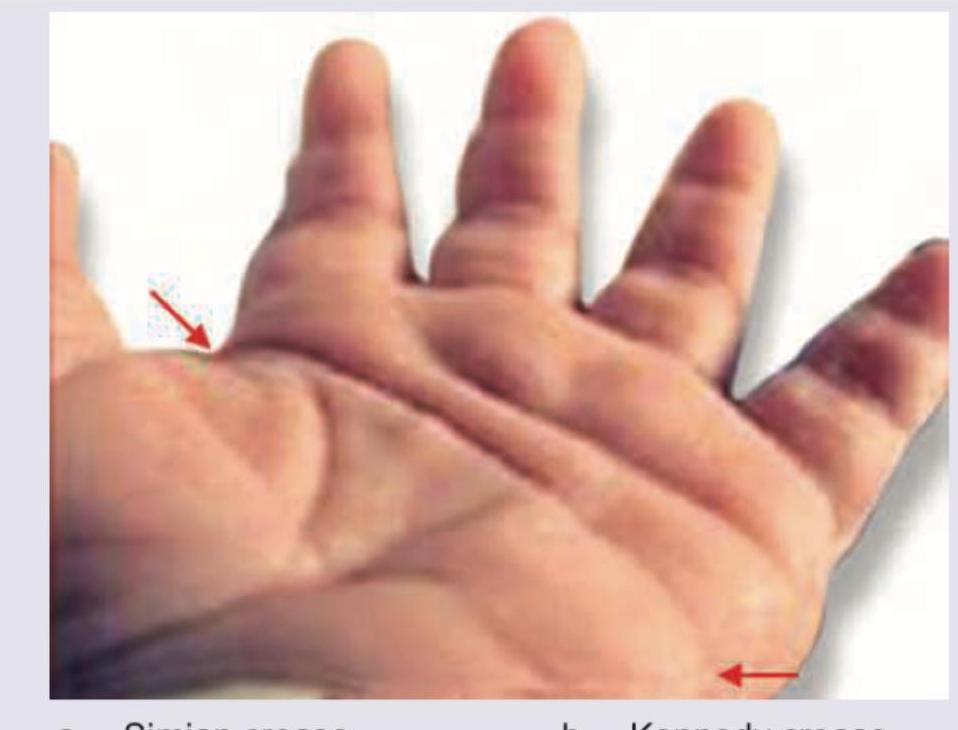
During evaluation of a child with Down syndrome, the following finding is noted. Identify?
Amount of ORS to be given in the first 4 hours to a child with some dehydration is
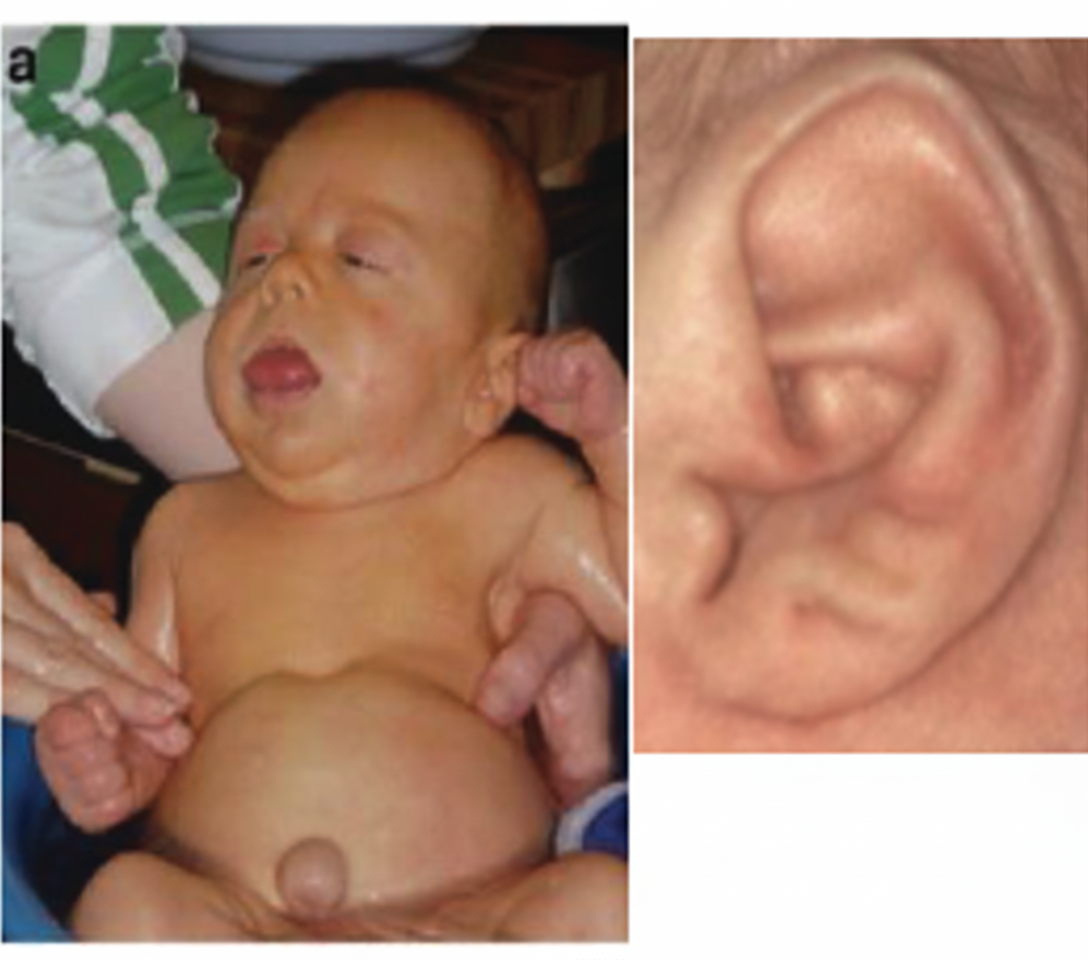
Ear lobe creases in a child are commonly associated with which disorder that also presents with macroglossia and macrosomia?
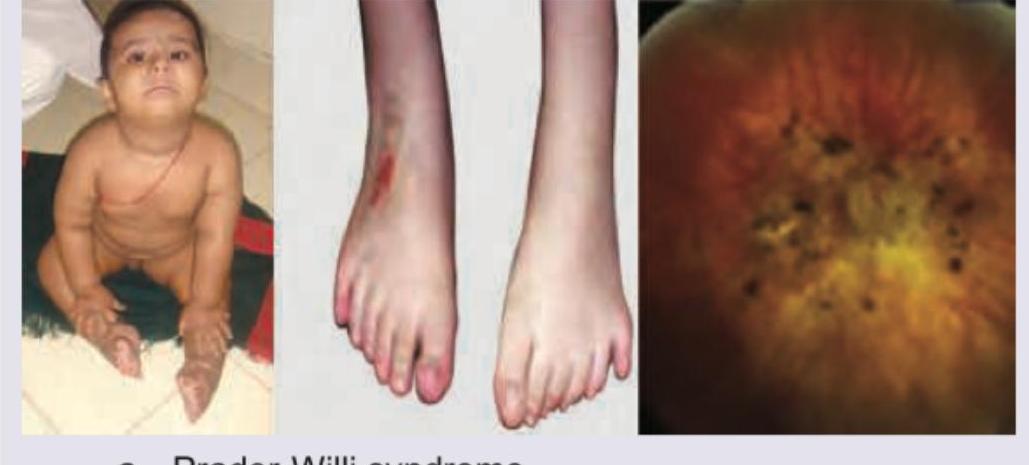
A 5-year-old short stature child is brought for evaluation. Which disease is the most likely diagnosis as depicted by these pictures of the child, foot and retina?
A sick intubated neonate is having bilateral jerk of both right and left upper limbs with some occasional twitching of neck as well. Likely type of seizures:
Explanation: ***Lethargy in depression*** - Modafinil is **not FDA-approved** for treating lethargy or fatigue specifically in the context of depression. Its primary indications are for disorders of excessive daytime sleepiness. - While it may be used off-label in some cases for depression-related fatigue, it lacks formal FDA approval and specific efficacy data for this indication. *Narcolepsy* - Modafinil is **FDA-approved** as a wakefulness-promoting agent for the treatment of excessive daytime sleepiness associated with **narcolepsy**. - It helps reduce the frequency and severity of sleep attacks by promoting wakefulness through effects on **dopamine**, **norepinephrine**, and **histamine** systems in the brain. *Shift work sleep disorder (SWSD)* - Modafinil is **FDA-approved** to improve wakefulness in patients with excessive sleepiness associated with **shift work sleep disorder**. - It helps individuals working non-traditional hours (night shifts, rotating shifts) maintain alertness during their work periods. *Obstructive sleep apnea syndrome (OSAS)* - Modafinil is **FDA-approved** as an **adjunctive treatment** for residual excessive daytime sleepiness in patients with **obstructive sleep apnea/hypopnea syndrome (OSAHS)** who are receiving adequate treatment with CPAP. - It addresses persistent sleepiness that remains even after appropriate primary airway management.
Explanation: ***Hypnagogic hallucination*** - **Hypnagogic hallucinations** are vivid, dream-like perceptual experiences occurring at **sleep onset** and are one of the **classic tetrad features** of narcolepsy. - They occur in **30-60% of narcolepsy patients** and result from the intrusion of **REM sleep phenomena** into the transition from wakefulness to sleep. - These hallucinations reflect the **REM sleep dysregulation** that is central to narcolepsy pathophysiology. - Other tetrad features include **excessive daytime sleepiness, cataplexy, and sleep paralysis**. *Late age of onset* - Narcolepsy typically has an **early age of onset**, most commonly between **10-25 years** (adolescence and young adulthood). - Peak onset is around **15 years of age**. - Late-onset narcolepsy is uncommon and may suggest secondary causes. *Normal sleep architecture* - Narcolepsy is characterized by **disrupted sleep architecture**, not normal architecture. - Key abnormalities include **sleep-onset REM periods (SOREMPs)**, where patients enter REM sleep within **15 minutes** of sleep onset, bypassing normal NREM stages. - Nocturnal sleep is **fragmented** with frequent awakenings. *Decreased NREM sleep* - While narcolepsy involves **REM sleep dysregulation** with premature REM entry, characterizing it simply as "decreased NREM sleep" is not the standard clinical description. - The primary pathology is **abnormal REM sleep timing and distribution**, including SOREMPs during daytime naps and nighttime sleep. - The focus is on **REM sleep intrusion** rather than NREM reduction per se.
Explanation: ***Attention Deficit Hyperactivity Disorder (ADHD)*** - The symptoms described, such as **restlessness**, **hyperactivity**, **difficulty listening**, and **disturbing others**, are classic indicators of **Attention Deficit Hyperactivity Disorder** in a child. - ADHD is characterized by a persistent pattern of inattention and/or hyperactivity-impulsivity that interferes with functioning or development. - The decreased interest in playing may reflect difficulty with **structured play activities** or **peer interactions** rather than lack of interest in play itself, which can occur in ADHD due to impulsivity and inattention affecting social relationships. *Cerebral palsy* - **Cerebral palsy** is a group of permanent movement disorders that appear in early childhood and primarily affect **muscle coordination and motor control**. - It does not explain the behavioral and attentional issues described in the case, and the focus here is on behavioral problems rather than motor dysfunction. *Delirium* - **Delirium** is an acute, fluctuating disturbance in attention and cognition, often caused by an underlying medical condition, substance intoxication, or withdrawal. - It typically has an **abrupt onset** and waxing-waning course with altered consciousness, which is not consistent with the chronic, stable presentation in this child. *Mania* - **Mania** is a state of elevated, expansive, or irritable mood and increased goal-directed activity or energy, typically seen in **bipolar disorder**. - While it can involve **hyperactivity** and distractibility, mania would present with **elevated/irritable mood**, **decreased need for sleep**, **pressured speech**, and **grandiosity**, which are not described here. The symptom complex is more consistent with the developmental disorder of ADHD.
Explanation: ***Sleep terrors*** - **Sleep terrors** are characterized by abrupt awakenings, intense fear and screaming, autonomic arousal, and unresponsiveness, typically occurring during **NREM sleep** in the first third of the night. - The child will have **no memory** of the event the next morning, which is a key diagnostic feature, and they often return to sleep quickly afterward. *Nightmare* - **Nightmares** occur during **REM sleep**, usually in the latter half of the night, and the individual can often recall vivid and frightening details upon waking. - Unlike sleep terrors, individuals experiencing nightmares are typically **responsive to comfort** and fully alert after waking. *Narcolepsy* - **Narcolepsy** is a chronic neurological condition characterized by overwhelming daytime sleepiness and irresistible urges to sleep, often accompanied by **cataplexy**. - It does not involve nocturnal screaming episodes or unresponsiveness followed by a quick return to sleep with no memory. *Nocturnal seizures* - **Nocturnal seizures** can cause nocturnal awakenings with confusion or unusual behaviors, but they often involve **stereotyped movements**, sometimes with motor manifestations or post-ictal confusion that lasts longer than a few minutes. - While there might be no memory of the event, the screaming and frightened demeanor without typical seizure activity make sleep terrors a more likely diagnosis.
Explanation: ***Bed alarm technique*** - The **bed alarm technique** is considered the most effective first-line treatment for **nocturnal enuresis** in children. - It works through **classical conditioning**, training the child to wake up in response to bladder fullness. *Motivational therapy* - **Motivational therapy** can be a useful adjunct to other treatments, but it is not typically the sole **first-line therapy** due to varying effectiveness. - It focuses on building the child's confidence and encouraging dryness but does not directly address the physiological aspects of bedwetting. *Oxybutynin* - **Oxybutynin** is an anticholinergic medication that can reduce bladder contractions and increase bladder capacity. - It is usually reserved for cases where **bedwetting alarms** and **desmopressin** have been ineffective, or when there is an identifiable **overactive bladder component**. *Desmopressin* - **Desmopressin** is an antidiuretic hormone analogue that reduces urine production during the night. - While effective, it is often considered a **second-line treatment** after behavioral interventions like the bed alarm, or when rapid but temporary improvement is desired.
Explanation: ***Simian crease*** - The image displays a **single palmar crease** (also known as a simian crease or transverse palmar crease), which is a common physical finding in individuals with **Down syndrome (Trisomy 21)**. - This crease runs straight across the palm, often replacing the usual two major palmar creases. *Kennedy crease* - This is **not a recognized medical term** for a palmar crease or any specific dermatological finding. - The feature shown in the image is a clearly defined, single transverse palmar crease. *Sydney line* - A **Sydney line** is another type of palmar crease abnormality where the proximal transverse crease extends across the entire palm, reaching the ulnar edge. - While it is a variation of palmar creases, the crease in the image appears as a single, bold transverse crease, more consistent with a **simian crease**. *Sandal gap* - A **sandal gap** refers to a wide space between the first and second toes, sometimes seen in newborns, including those with Down syndrome. - This finding relates to the **foot**, not the hand, and is not depicted in the provided image.
Explanation: ***75 ml/kg body wt.*** - For a child with **some dehydration**, the World Health Organization (WHO) and UNICEF recommend administering **75 mL/kg body weight** of ORS over the first 4 hours as part of Plan B. - This volume is calculated to replenish lost fluids and electrolytes, addressing the estimated fluid deficit in **some dehydration**. *50 ml/kg body wt.* - A dose of **50 mL/kg** is generally insufficient for effective rehydration in a child presenting with **some dehydration**. - This amount might be used in milder cases or for maintenance, but not for initial rehydration in the **first 4 hours** with signs of dehydration. *100 ml/kg body wt.* - Administering **100 mL/kg** body weight is typically used for **severe dehydration** (Plan C) when given as **intravenous fluids**. - For **some dehydration** treated with ORS, the recommended dose is 75 mL/kg, not 100 mL/kg. This higher amount could lead to fluid overload if given orally in the first 4 hours. *200 ml/kg body wt.* - A dose of **200 mL/kg** body weight is excessive and potentially dangerous for a child with **some dehydration**. - Such a large volume could lead to **fluid overload**, electrolyte imbalances, and other complications, especially in young children.
Explanation: ***Beckwith-Wiedemann syndrome*** - **Beckwith-Wiedemann syndrome** is characterized by conditions such as **macrosomia** (large body size), **macroglossia** (enlarged tongue), **visceromegaly**, and **ear lobe creases** or pits. - It is an overgrowth disorder often associated with an increased risk of certain childhood cancers like **Wilms tumor** and hepatoblastoma. *Down syndrome* - **Down syndrome** (Trisomy 21) presents with distinct facial features like a **flat nasal bridge**, **epicanthal folds**, and a single palmar crease, but **ear lobe creases** are not a primary characteristic. - While **macroglossia** can be seen, **macrosomia** is generally not a feature; instead, individuals with Down syndrome often have growth delays. *Turner syndrome* - **Turner syndrome** (XO karyotype) is characterized by features such as **short stature**, a **webbed neck**, shield chest, and **low-set ears**, but not typically ear lobe creases or macroglossia. - Affected individuals are phenotypically female and experience **gonadal dysgenesis**. *Noonan syndrome* - **Noonan syndrome** shares some features with Turner syndrome, including **short stature**, **webbed neck**, and **pectus excavatum**, but also presents with distinct cardiac defects. - While it can involve various facial dysmorphia, **ear lobe creases**, **macroglossia**, and **macrosomia** are not typically defining characteristics.
Explanation: ***Bardet-Biedl syndrome*** - This rare autosomal recessive ciliopathy is characterized by a **classic pentad**: central obesity, **polydactyly**, **retinal dystrophy** (rod-cone dystrophy), renal abnormalities, and hypogonadism. - The combination of **short stature with obesity**, **polydactyly** (clearly visible in the foot image), and **pigmentary retinopathy** (visible in the retinal image) is **pathognomonic** for Bardet-Biedl syndrome. - This is the **only syndrome among the options** that presents with all three clinical features shown in the images. *Prader-Willi syndrome* - Characterized by **hypotonia** in infancy, **hyperphagia** leading to obesity, short stature, and distinct facial features (almond-shaped eyes, narrow forehead). - Does **not present with polydactyly** or the specific type of **retinal dystrophy** seen in Bardet-Biedl syndrome. - Caused by loss of paternally expressed genes on chromosome 15q11-13. *Alstrom syndrome* - Rare autosomal recessive disorder sharing features like obesity and **cone-rod dystrophy** (retinal degeneration). - Distinguished by early-onset **dilated cardiomyopathy**, **progressive hearing loss**, and **type 2 diabetes**. - **Polydactyly is not a feature** of Alstrom syndrome, making it unlikely given the foot abnormality in the image. *Carpenter syndrome* - Rare form of **acrocephalopolysyndactyly** characterized by **craniosynostosis** (premature fusion of skull sutures), distinctive craniofacial anomalies, **polysyndactyly**, and obesity. - While it includes polydactyly, it is distinguished by severe **skull and facial deformities** (tower-shaped skull, flat nasal bridge). - Does **not typically involve retinopathy**, making it inconsistent with the retinal findings shown.
Explanation: ***Multifocal clonic*** - This description fits **multifocal clonic seizures**, characterized by **migratory clonic activity** observed in different body parts at varying times, sometimes simultaneously. - The **bilateral jerk** of upper limbs and occasional neck twitching point to this pattern, as the involvement is not uniform or generalized, but rather appears in multiple, distinct locations. *Multifocal tonic clonic* - This option incorrectly combines multifocal activity with a **tonic component**, which is described as stiffening or sustained contraction, not just jerking. - While activity may be multifocal, the specific description of "jerk" primarily suggests a **clonic nature**, without a clear tonic phase. *Focal tonic* - **Focal tonic seizures** involve sustained **stiffening or contraction** of muscles in a specific, localized area of the body, which is not described. - The term "jerk" indicates a **clonic movement**, and the involvement of multiple areas (bilateral upper limbs, neck) rules out a single focal onset. *Focal clonic* - **Focal clonic seizures** are characterized by rhythmic jerking movements limited to a **single, localized part** of the body without spreading to other areas. - The presence of jerking in **both upper limbs** and occasional neck twitching indicates activity in multiple sites, not restricted to a single focal area.
Get full access to all questions, explanations, and performance tracking.
Start For Free