What is the most common cause of head banging in children?
Which of the following statements is true regarding dyslexia?
A 6-year-old child has a history of birth asphyxia, communicates poorly, exhibits slow mental and physical growth, has difficulty interacting with others, shows limited interests, and becomes agitated when disturbed. What is the most likely diagnosis?
A 15-year-old male child with a mental age of 12 years has an IQ of?
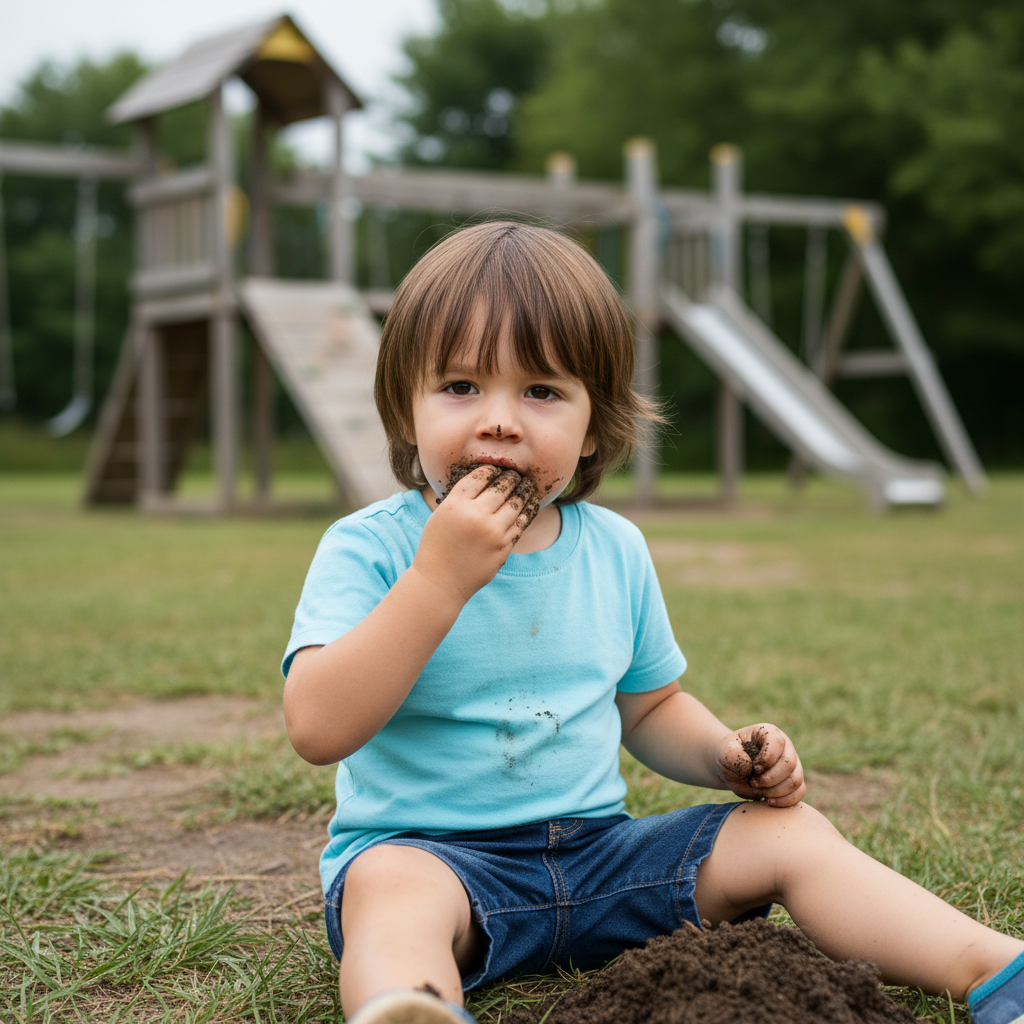
What abnormality does this child have?
The MCHAT is used as a screening tool for which condition?
Which of the following childhood disorders typically improves with increasing age?
A 3-year-old child presents with diurnal enuresis and soiling of clothes. What is the required treatment?
What is the recommended treatment for breath-holding spells in a child?
A 5-year-old girl is referred for evaluation of bed-wetting. The mother states that her daughter has never fully gained control of her bladder. It took her an extended period of time to grow out of diapers, and the girl has finally stopped having "accidents" during the day. However, she continues to wet her bed at night. The patient has developed normally in all other aspects and will be starting kindergarten in three months. Both her mother and father are extremely frustrated and have been losing sleep, as the girl wakes up at night 4 to 5 times per week. Physical examination is unremarkable. Which of the following will most likely be the result of further investigation?
Explanation: **Explanation:** **Head banging** is a rhythmic motor behavior (stereotypy) characterized by the child hitting their head against a solid object, such as a crib or wall. **Why Mental Retardation is the correct answer:** While head banging can occur in typically developing children (affecting 5–15% of the population, usually between 6 months and 3 years of age) as a self-soothing mechanism or a way to release tension, it is significantly more prevalent, persistent, and severe in children with **Mental Retardation (Intellectual Disability)** and **Autism Spectrum Disorder (ASD)**. In these populations, it often serves as a form of self-stimulatory behavior (stimming) or a maladaptive response to sensory overload or frustration. It is considered the most common pathological association for persistent head banging. **Analysis of Incorrect Options:** * **A & D (Raised ICT and Meningeal Irritation):** These are acute neurological emergencies. While they cause significant distress and irritability, they typically present with a bulging fontanelle, vomiting, or neck stiffness rather than rhythmic, repetitive head banging. * **C (Headache):** Although a child might rub their head or cry due to a headache, rhythmic head banging is not a standard clinical sign of cephalalgia in pediatric patients. **High-Yield Clinical Pearls for NEET-PG:** * **Age of onset:** Usually begins around 6–9 months of age. * **Gender:** More common in boys (3:1 ratio). * **Prognosis:** In normal children, it is usually benign and resolves spontaneously by age 3–4. * **Management:** For typical children, parental reassurance and safety padding are sufficient. For children with Intellectual Disability, behavioral therapy is the mainstay of treatment.
Explanation: **Explanation:** **Dyslexia**, or Specific Learning Disorder with impairment in reading, is a neurobiological condition characterized by difficulties with accurate and/or fluent word recognition and poor spelling and decoding abilities. 1. **Why Option A is correct:** Dyslexia is the **most common learning disability**, accounting for approximately **80% of all learning disorders**. It affects about 5–17% of school-aged children. The underlying deficit is typically in the **phonological component of language**, making it difficult for the child to connect speech sounds to letters and words. 2. **Why other options are incorrect:** * **Option B:** Reading in dyslexia is typically **slow, effortful, and dysfluent**. Children often struggle with "decoding" (sounding out words), leading to poor reading comprehension. * **Option C:** While early signs (like delayed speech) may exist, dyslexia is most frequently identified during the **early elementary school years (1st–3rd grade)** when the academic demand for reading and writing increases. It is rarely diagnosed in preschool as formal reading instruction has not yet begun. * **Option D:** Poor attention span is the hallmark of **ADHD**, not dyslexia. While ADHD and dyslexia are frequently comorbid (30-40% overlap), they are distinct disorders. Dyslexia is specifically a language-processing disorder. **High-Yield Clinical Pearls for NEET-PG:** * **Core Deficit:** Phonological processing (difficulty manipulating sounds). * **Brain Areas:** Functional MRI shows under-activation in the **left temporoparietal** and **occipitotemporal** regions. * **Management:** Multisensory, structured phonics-based instruction (e.g., Orton-Gillingham approach). * **Associated Sign:** "Reversal of letters" (e.g., b vs. d) is common but not the primary diagnostic feature.
Explanation: **Explanation:** The clinical presentation highlights a triad of impairments characteristic of **Autistic Disorder (Autism Spectrum Disorder)**: impaired social interaction, communication deficits, and restricted/repetitive patterns of behavior. 1. **Why Autistic Disorder is correct:** The child exhibits "difficulty interacting with others" (social deficit), "communicates poorly" (language/communication deficit), and has "limited interests" and agitation when disturbed (resistance to change/restricted interests). While birth asphyxia is a non-specific risk factor, the behavioral symptoms are classic for Autism. Slow mental and physical growth can be associated with comorbid intellectual disability, which occurs in a significant percentage of autistic children. 2. **Why other options are incorrect:** * **Hyperkinetic child syndrome / ADHD:** These are characterized primarily by inattention, impulsivity, and excessive motor activity. While these children may have social friction, they do not typically show the profound deficits in social communication or the restricted, repetitive behaviors seen in Autism. * **Schizophrenia:** Childhood-onset schizophrenia is rare at age 6. It is characterized by hallucinations, delusions, and thought disorders, rather than the developmental social-communication deficits described. **Clinical Pearls for NEET-PG:** * **M-CHAT (Modified Checklist for Autism in Toddlers):** The most common screening tool used between 16–30 months. * **Early Signs:** Lack of social smile, failure to respond to name by 12 months, and poor eye contact. * **Prognosis:** The best predictors of long-term outcome are the child's **IQ** and **communicative language development** by age 5. * **Management:** Primarily behavioral therapy (Applied Behavior Analysis - ABA). Pharmacotherapy (e.g., Risperidone) is used only for associated aggression or irritability.
Explanation: ### Explanation The Intelligence Quotient (IQ) is a standardized measure used to assess a child's cognitive abilities relative to their age. The calculation is based on the formula developed by William Stern: **IQ = (Mental Age / Chronological Age) × 100** In this clinical scenario: * **Mental Age (MA):** 12 years * **Chronological Age (CA):** 15 years * **Calculation:** (12 / 15) × 100 = 0.8 × 100 = **80** An IQ of 80 falls into the **"Low Average"** or **"Dull Normal"** category (typically 80–89). #### Analysis of Incorrect Options: * **Option A (50):** Represents "Moderate Intellectual Disability" (IQ 35–49). This would require a mental age of 7.5 years for a 15-year-old. * **Option B (60):** Represents "Mild Intellectual Disability" (IQ 50–69). This would require a mental age of 9 years. * **Option C (70):** This is the traditional cutoff for Intellectual Disability. A 15-year-old with a mental age of 10.5 would have an IQ of 70. #### High-Yield Clinical Pearls for NEET-PG: 1. **Classification of Intellectual Disability (ID) based on IQ:** * **Mild:** 50–70 (Educable; most common type, ~85%) * **Moderate:** 35–49 (Trainable; can perform supervised tasks) * **Severe:** 20–34 (Basic self-care skills can be taught) * **Profound:** < 20 (Requires total supervision) 2. **Diagnosis of ID:** Requires both an IQ below 70 **and** significant deficits in adaptive functioning (e.g., communication, social skills) manifesting before age 18. 3. **Most Common Genetic Cause of ID:** Down Syndrome. 4. **Most Common Inherited Cause of ID:** Fragile X Syndrome.
Explanation: ***Pica*** - Characterized by the persistent eating of **non-nutritive substances** for at least **1 month** in children older than **2 years**. - Common substances include **paint chips**, **starch**, **dirt**, or **paper**, and may be associated with **iron deficiency** or **lead poisoning**. *Bruxism* - Refers to **teeth grinding** or **jaw clenching**, typically occurring during sleep or periods of stress. - Does not involve eating non-food items and is primarily a **motor habit** affecting dental structures. *Thumb sucking* - A normal **self-soothing behavior** in infants and young children, usually involving sucking the thumb or fingers. - Does not involve ingestion of non-nutritive substances and is considered developmentally appropriate before age **4-5 years**. *Breath holding spell* - Involves **apneic episodes** triggered by frustration, pain, or emotional distress, leading to **cyanosis** or pallor. - Characterized by temporary cessation of breathing, not ingestion of inappropriate materials.
Explanation: **Explanation:** The **M-CHAT (Modified Checklist for Autism in Toddlers)** is a validated developmental screening tool specifically designed to identify children between **16 and 30 months** of age who may be at risk for **Autism Spectrum Disorder (ASD)**. It consists of a parent-reported questionnaire that assesses social communication skills and repetitive behaviors. A positive screen on the M-CHAT is not a diagnosis but indicates the need for a comprehensive diagnostic evaluation by a specialist. **Analysis of Options:** * **Option A (Autism):** Correct. The M-CHAT is the gold standard screening tool for ASD in early childhood. * **Option B (Hypothyroidism):** Incorrect. Congenital hypothyroidism is screened via **Newborn Screening (NBS)** using TSH or T4 levels, usually within the first 48–72 hours of life. * **Option C (ADHD):** Incorrect. ADHD is typically screened using the **Vanderbilt Assessment Scales** or Conners Rating Scales, usually in school-aged children (older than 4–6 years). * **Option D (Partial hearing defect):** Incorrect. Hearing is screened in neonates using **OAE (Otoacoustic Emissions)** or **BERA (Brainstem Evoked Response Audiometry)**. **High-Yield Clinical Pearls for NEET-PG:** * **Age Group:** M-CHAT is used for toddlers aged **16–30 months**. * **Red Flags for Autism:** No babbling/pointing by 12 months, no single words by 16 months, no 2-word phrases by 24 months, or any loss of language/social skills at any age. * **Other Tools:** **ISAA** (Indian Scale for Assessment of Autism) and **CARS** (Childhood Autism Rating Scale) are used for the *assessment/diagnosis* of severity, whereas M-CHAT is for *screening*.
Explanation: ### Explanation **Correct Option: C. Temper tantrum** Temper tantrums are a normal part of behavioral development in toddlers, typically peaking between **18 months and 3 years** of age. They occur because young children have limited verbal skills to express frustration and a developing sense of autonomy. As the child’s **language skills improve** and they develop better **emotional self-regulation** and coping mechanisms, the frequency and intensity of tantrums naturally decrease. By age 4 to 5, most children outgrow this phase, making it a disorder that typically improves with increasing age. **Analysis of Incorrect Options:** * **A. Conduct disorder:** This is characterized by a repetitive pattern of violating the basic rights of others and societal norms. If left untreated, it often persists into adulthood, frequently evolving into **Antisocial Personality Disorder**. * **B. Emotional problems:** Conditions like anxiety or childhood depression do not inherently resolve with age. Without intervention, they often follow a chronic or relapsing course into adolescence and adulthood. * **C. Sleep disorders:** While some issues like night terrors may be outgrown, many childhood sleep disorders (like insomnia or sleep apnea) require specific medical or behavioral intervention and do not simply disappear with age. **High-Yield Clinical Pearls for NEET-PG:** * **Peak Age:** Temper tantrums are most common between **1.5 to 3 years**. * **Management:** The "Gold Standard" management for a temper tantrum is **"Planned Ignoring"** (extinction), provided the child is in a safe environment. * **Breath-holding spells:** Often associated with tantrums; they are paroxysmal events that are usually benign and also improve with age (typically disappearing by age 5). * **Red Flag:** If tantrums persist beyond age 5, occur more than 5 times a day, or involve self-harm, consider underlying developmental or psychiatric issues.
Explanation: **Explanation:** The clinical presentation of a 3-year-old with diurnal (daytime) enuresis and soiling (encopresis) is most commonly related to **functional voiding dysfunction** or a lack of established toilet training, rather than structural abnormalities. **Why Behavior Modification is Correct:** At age 3, many children are still in the process of achieving full bladder and bowel control. **Behavior modification** is the first-line management. This includes timed voiding (scheduled bathroom trips every 2 hours), positive reinforcement (reward systems), avoiding constipation (which often triggers both enuresis and soiling), and ensuring proper posture on the toilet. Since there are no signs of organic disease in the vignette, conservative behavioral therapy is the standard of care. **Why Other Options are Incorrect:** * **Urethroplasty:** This is a surgical procedure used to treat urethral strictures or hypospadias. It is not indicated for functional enuresis. * **Catheterization:** Indwelling catheters are used for acute urinary retention or neurogenic bladders. It does not treat the underlying cause of enuresis and increases the risk of UTIs. * **Circumcision:** While sometimes performed for recurrent balanitis or phimosis, it has no therapeutic role in treating enuresis or fecal soiling. **NEET-PG High-Yield Pearls:** * **Definitions:** Enuresis is defined as involuntary voiding in children old enough to have control (typically **>5 years** for nocturnal). * **Primary vs. Secondary:** Primary enuresis means the child was never dry; Secondary means they were dry for at least 6 months before restarting. * **Rule Out Constipation:** Chronic constipation is the most common cause of both daytime wetting and encopresis (overflow incontinence). * **Pharmacotherapy:** If behavior therapy fails in older children (>5-6 years), **Desmopressin** (for nocturnal enuresis) or **Oxybutynin** (for overactive bladder) may be used.
Explanation: **Explanation:** The correct answer is **None of the above** because the standard of care for breath-holding spells (BHS) involves a specific diagnostic workup and targeted intervention that is not captured in the provided options. **1. Why "None of the Above" is correct:** While BHS are benign, the most critical step in management is **screening for and treating Iron Deficiency Anemia (IDA)**. Clinical studies have shown a strong association between IDA and the frequency/severity of BHS. Iron supplementation often reduces or eliminates the spells, even in children who are not overtly anemic but have low ferritin levels. Therefore, the "recommended treatment" must include iron therapy. **2. Why other options are incorrect:** * **Option A:** While reassurance is part of management, it is insufficient on its own. One must first rule out underlying triggers (like IDA) and serious mimics (like long QT syndrome). * **Option B:** Oxygen therapy is ineffective. BHS are involuntary and usually end with a gasp or brief loss of consciousness that restores normal breathing. By the time oxygen is applied, the spell is typically over. * **Option C:** Ignoring the child is inappropriate. While parents should avoid reinforcing the behavior (e.g., giving in to tantrums that trigger spells), the child should be placed in a **lateral recovery position** during the episode to prevent aspiration and ensure a clear airway. **NEET-PG High-Yield Pearls:** * **Age Group:** Typically occurs between **6 months and 2 years**; usually disappears by age 5. * **Types:** **Cyanotic** (most common, triggered by anger/frustration) and **Pallid** (triggered by sudden pain/fright, associated with bradycardia). * **ECG:** Always consider an ECG to rule out **Long QT Syndrome**, especially if there is a family history of sudden death or if spells occur without a clear provocative trigger. * **Prognosis:** Excellent; no long-term neurological sequelae or increased risk of epilepsy.
Explanation: **Explanation:** The clinical presentation describes **Primary Monosymptomatic Nocturnal Enuresis (PMNE)**. This is defined as involuntary voiding of urine during sleep in a child aged $\geq$ 5 years who has never achieved a period of nighttime dryness for at least 6 consecutive months. 1. **Why "Normal" is correct:** In the majority of cases (up to 80%), PMNE is a **physiologic variant** rather than a pathologic condition. The physical examination is typically unremarkable, and further investigations (like urinalysis or ultrasound) usually yield **normal** results. The underlying causes are often a combination of nocturnal polyuria (low ADH secretion at night), reduced bladder capacity, or a high arousal threshold (difficulty waking up to a full bladder). There is also a strong genetic component; if both parents were enuretic, the child has a 77% risk. 2. **Why other options are incorrect:** * **Large capacity bladder:** Children with nocturnal enuresis actually tend to have a **small** functional bladder capacity or bladder overactivity, not a large one. * **Learning disability:** While enuresis can cause psychological stress, there is no direct correlation between primary enuresis and learning disabilities in a child with otherwise normal development. * **Urinary tract infection (UTI):** While UTI can cause secondary enuresis (bed-wetting after a period of dryness), it is usually accompanied by daytime symptoms like urgency, frequency, or dysuria. In an asymptomatic child with primary enuresis, a UTI is unlikely. **High-Yield Clinical Pearls for NEET-PG:** * **Age Threshold:** Enuresis is only diagnosed after age **5 years** (developmental age). * **Management:** * **First-line:** Behavioral modifications (fluid restriction, bladder training) and **Enuresis Alarms** (highest long-term success rate). * **Pharmacotherapy:** **Desmopressin (DDAVP)** is the drug of choice for rapid relief (e.g., for camps), but has high relapse rates. **Imipramine** is a second-line option but has a risk of cardiotoxicity. * **Spontaneous Resolution:** Occurs at a rate of 15% per year.
Normal Development and Variations
Practice Questions
Developmental Delay and Intellectual Disability
Practice Questions
Autism Spectrum Disorders
Practice Questions
Attention Deficit Hyperactivity Disorder
Practice Questions
Learning Disabilities
Practice Questions
Language and Speech Disorders
Practice Questions
Motor Disorders
Practice Questions
Behavioral Problems in Young Children
Practice Questions
Sleep Disorders
Practice Questions
Mood and Anxiety Disorders
Practice Questions
Psychosomatic Disorders
Practice Questions
Developmental Surveillance and Screening
Practice Questions
Get full access to all questions, explanations, and performance tracking.
Start For Free