What is the most common cause of congenital heart defects?
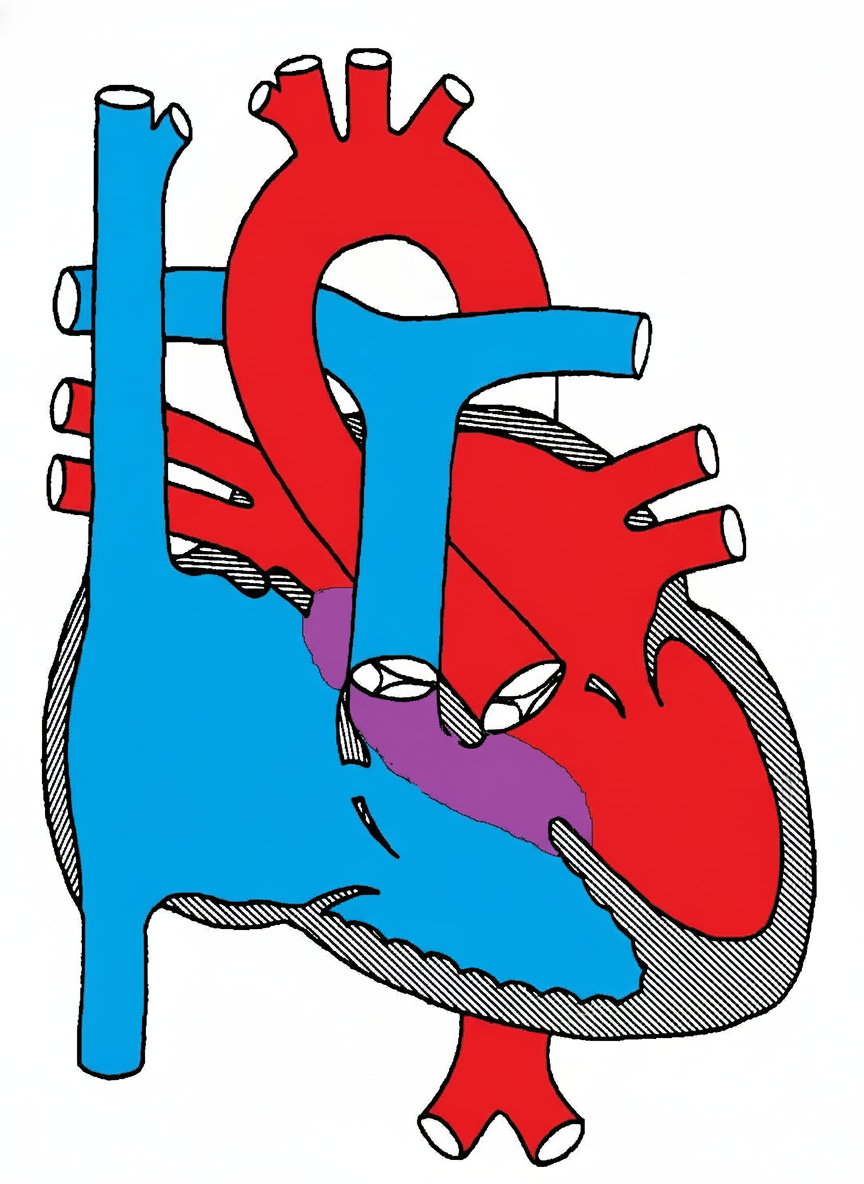
Which of the following statements about total anomalous pulmonary venous connection is FALSE?
A newborn baby is readmitted to the hospital with hypoxia and upon testing is found to have pulmonary stenosis, dextraposition of the aorta, interventricular septal defect, and hypertrophy of the right ventricle. Which of the following is best described by these symptoms?
A patient with a ventricular septal defect (VSD) develops pulmonary hypertension. Which of the following findings will be present?
A 4-month-old infant with Tetralogy of Fallot presents with fever and loose stools. Which of the following is compatible with the diagnosis of Tetralogy spells?
Squatting attacks and polycythemia are features of?
What vascular anomaly is most associated with severe tracheobronchial anomalies?
A Carey Coomb's murmur heard in a child with multiple joint pains is suggestive of?
What is the most common cause of death in patients with patent ductus arteriosus (PDA)?
Strawberry tongue is a clinical sign seen in which of the following conditions?
Explanation: **Explanation:** Congenital Heart Defects (CHDs) occur due to abnormal cardiac development during organogenesis, which primarily takes place between the **3rd and 8th weeks** of gestation. **Why Option A is correct:** Environmental factors, specifically maternal viral infections during the first trimester, are well-established teratogenic causes of CHDs. The most classic example is **Rubella (German Measles)**. If a mother is infected with the Rubella virus during early pregnancy, it can lead to **Congenital Rubella Syndrome (CRS)**, which frequently manifests as Patent Ductus Arteriosus (PDA) and peripheral pulmonary artery stenosis. Other viruses, such as Coxsackie B, have also been implicated. **Why other options are incorrect:** * **Option B:** Maternal bacterial infections (like Urinary Tract Infections or Streptococcal infections) are generally not associated with structural cardiac malformations, though they may pose other risks like preterm labor or neonatal sepsis. * **Option C:** While NSAIDs are contraindicated in the **third trimester** because they cause premature closure of the Ductus Arteriosus, they are not the "most common" cause of structural heart defects in the first trimester compared to viral etiologies. **High-Yield Clinical Pearls for NEET-PG:** * **Most common overall cause of CHD:** Multifactorial inheritance (combination of genetic and environmental factors). * **Most common chromosomal cause:** Down Syndrome (Trisomy 21), specifically associated with Endocardial Cushion Defects (AVSD). * **Maternal Diabetes:** Associated with Transposition of the Great Arteries (TGA) and Hypertrophic Cardiomyopathy. * **Lithium intake:** Associated with Ebstein’s Anomaly. * **Alcohol (Fetal Alcohol Syndrome):** Most commonly associated with VSD.
Explanation: **Total Anomalous Pulmonary Venous Connection (TAPVC)** is a cyanotic congenital heart disease where all four pulmonary veins fail to connect to the left atrium, instead draining into the right atrium or systemic venous circulation. ### **Explanation of Options:** * **Option A (True):** In TAPVC, the pulmonary veins typically join to form a **common pulmonary venous trunk** (confluence) behind the left atrium. This trunk then drains into the systemic venous system (e.g., via the vertical vein in the supracardiac type). * **Option B (True):** TAPVC is an "obligatory shunt" condition. For survival, an **Atrial Septal Defect (ASD)** or a patent foramen ovale must be present to allow blood to reach the left side of the heart. While it is almost universally present for survival, it is considered an **associated compensatory defect** rather than an intrinsic part of the anomalous connection itself. * **Option C (True):** The **Supracardiac type** (Type I) is the most common. It creates a characteristic "Figure-of-8" or **"Snowman" appearance** on a chest X-ray. This is formed by the dilated vertical vein (left), superior vena cava (right), and the innominate vein (top), sitting above the normal heart shadow. Since all statements (A, B, and C) are medically accurate, **Option D** is the correct choice. ### **High-Yield Clinical Pearls for NEET-PG:** * **Classification (Darling’s):** * **Type I (Supracardiac):** Most common; Snowman sign. * **Type II (Cardiac):** Drains into Coronary Sinus. * **Type III (Infracardiac):** Drains into Portal vein; **most likely to be obstructed**, presenting with early, severe cyanosis and pulmonary edema. * **Clinical Sign:** A quadruple rhythm (fixed split S2 + S3 + S4) is often heard. * **ECG:** Shows Right Axis Deviation (RAD) and Right Ventricular Hypertrophy (RVH).
Explanation: **Explanation:** The clinical presentation described is the classic anatomical quartet of **Tetralogy of Fallot (TOF)**, which is the most common cyanotic congenital heart disease (CHD) presenting after the neonatal period. **1. Why Tetralogy of Fallot is Correct:** TOF is defined by four specific structural defects resulting from the anterior and cephalad deviation of the infundibular (outflow tract) septum: * **Pulmonary Stenosis:** Usually infundibular, determining the degree of cyanosis. * **Right Ventricular Hypertrophy (RVH):** A result of the heart pumping against high pressure (pulmonary obstruction). * **Overriding Aorta (Dextraposition):** The aorta sits over the ventricular septal defect. * **Ventricular Septal Defect (VSD):** Typically a large, non-restrictive malalignment defect. **2. Why Other Options are Incorrect:** * **ASD:** An acyanotic CHD involving a hole in the interatrial septum; it does not feature ventricular hypertrophy or aortic malposition. * **PDA:** An acyanotic CHD characterized by a persistent connection between the aorta and pulmonary artery, typically presenting with a continuous "machinery" murmur. * **Aortic Stenosis:** An obstructive lesion of the left heart; while it causes left ventricular hypertrophy, it does not involve VSDs or pulmonary stenosis. **3. NEET-PG High-Yield Pearls:** * **X-ray Finding:** "Boot-shaped heart" (*Coeur en sabot*) due to an upturned apex (RVH) and concave pulmonary segment. * **Clinical Feature:** **"Tet Spells"** (hypercyanotic episodes) occur during crying or feeding. Management involves the **knee-chest position** to increase systemic vascular resistance. * **Murmur:** The murmur in TOF is due to **pulmonary stenosis** (ejection systolic), not the VSD. * **ECG:** Shows Right Axis Deviation and RVH.
Explanation: ### **Explanation** The correct answer is **B. Initial resolution of symptoms.** #### **The Underlying Concept** In a large Ventricular Septal Defect (VSD), there is a significant left-to-right shunt, leading to pulmonary over-circulation and congestive heart failure (CHF) in infancy. As pulmonary vascular resistance (PVR) begins to rise (the precursor to Eisenmenger syndrome), the pressure gradient between the left and right ventricles decreases. This results in a **reduction in the volume of the left-to-right shunt**. Consequently, the lungs become less congested, and the infant’s symptoms of CHF (like tachypnea and poor feeding) paradoxically improve. This is often referred to as a "honeymoon period" before the eventual reversal of the shunt (right-to-left). #### **Analysis of Incorrect Options** * **A. Ejection systolic murmur in the pulmonary area:** While pulmonary hypertension can cause a murmur due to a dilated pulmonary artery, the hallmark of VSD is a **pansystolic murmur**. As pulmonary hypertension worsens, this pansystolic murmur actually **decreases in intensity** or disappears because the pressure gradient across the defect diminishes. * **C. Clubbing:** This occurs only after the shunt reverses (**Eisenmenger syndrome**), leading to systemic cyanosis. The question asks for findings when pulmonary hypertension *develops*, not necessarily the end-stage reversal. * **D. Palpable A2:** In pulmonary hypertension, it is the **P2 (pulmonary component of the second heart sound)** that becomes loud and palpable in the left second intercostal space, not the A2 (aortic component). #### **NEET-PG High-Yield Pearls** * **Eisenmenger Syndrome:** Defined as the reversal of a long-standing left-to-right shunt to a right-to-left shunt due to irreversible pulmonary hypertension. * **Physical Signs of Pulmonary HTN:** Loud P2 (most common sign), palpable P2, Graham-Steell murmur (early diastolic murmur of pulmonary regurgitation), and a narrow split S2. * **VSD Murmur:** The smaller the VSD, the louder the murmur (Maladie de Roger). A disappearing murmur in a patient with known VSD is a red flag for developing pulmonary hypertension.
Explanation: ### Explanation **Correct Option: B. Inability to hear a murmur** In Tetralogy of Fallot (TOF), the characteristic systolic murmur is **not** due to the Ventricular Septal Defect (VSD)—which is large and non-restrictive—but due to turbulent flow across the **Right Ventricular Outflow Tract (RVOT) obstruction**. During a **Tetralogy Spell (Hypercyanotic Spell)**, there is a sudden increase in RVOT spasm or a decrease in systemic vascular resistance (SVR). This leads to a massive right-to-left shunt through the VSD, bypassing the lungs. Because very little blood is now crossing the stenosed RVOT, the **ejection systolic murmur disappears or becomes significantly softer**. This is a hallmark clinical sign of a severe spell. --- ### Why the other options are incorrect: * **A. Oxygen saturation < 70%:** While cyanosis is a feature, a baseline saturation < 70% is common in many cyanotic heart diseases. The *disappearance of the murmur* is a more specific diagnostic clinical finding for the "spell" event itself. * **C & D. Hepatomegaly and S3 gallop:** These are classic signs of **Congestive Heart Failure (CHF)**. TOF is a "dry" heart condition; because the VSD is non-restrictive and there is pulmonary stenosis, the left heart is not volume-overloaded. Therefore, infants with TOF do not typically develop heart failure unless there is an associated complication (like severe anemia or systemic-to-pulmonary shunts). --- ### High-Yield Clinical Pearls for NEET-PG: * **Components of TOF:** (1) VSD, (2) Overriding of aorta, (3) RVOT obstruction (Infundibular stenosis), (4) RV hypertrophy. * **Management of Spell:** 1. **Knee-chest position** (increases SVR). 2. **Morphine** (calms child, reduces tachypnea). 3. **Oxygen** (vasodilator). 4. **Beta-blockers (Propranolol)**: Drug of choice for prevention; relaxes infundibular spasm. 5. **IV Fluids**: To maintain preload. * **X-ray finding:** Coeur-en-sabot (Boot-shaped heart) due to an upturned apex (RVH) and narrow pulmonary waist.
Explanation: **Explanation:** The presence of **squatting attacks** and **polycythemia** is a hallmark of **Cyanotic Heart Disease (CHD)**, specifically those with decreased pulmonary blood flow like **Tetralogy of Fallot (TOF)**. 1. **Why Cyanotic Heart Disease is correct:** * **Squatting Attacks:** In TOF, squatting increases systemic vascular resistance (SVR) by kinking the femoral arteries. This increase in SVR reduces the right-to-left shunt across the VSD, forcing more blood into the pulmonary artery, thereby improving oxygenation. * **Polycythemia:** Chronic hypoxemia triggers the kidneys to release erythropoietin, stimulating the bone marrow to produce more red blood cells. This compensatory erythrocytosis (polycythemia) increases the oxygen-carrying capacity but also increases blood viscosity. 2. **Why other options are incorrect:** * **Acyanotic Heart Disease:** These conditions (e.g., VSD, ASD, PDA) involve left-to-right shunts. Patients are not typically hypoxic at rest and do not require squatting to improve oxygenation. * **Eisenmenger Syndrome:** While this involves cyanosis due to a reversed shunt, squatting is not a characteristic clinical feature. These patients have fixed pulmonary hypertension, and squatting does not significantly alleviate their pathophysiology. * **Lutembacher Syndrome:** This is a specific combination of an **Atrial Septal Defect (ASD)** and **Mitral Stenosis**. It is primarily an acyanotic condition unless complications arise. **High-Yield Clinical Pearls for NEET-PG:** * **Boot-shaped heart** (Coeur en sabot) on X-ray is classic for TOF. * **Hypercyanotic spells (Tet spells)** are managed by the knee-chest position, oxygen, morphine, and beta-blockers (Propranolol). * **Complications of Polycythemia:** Increased risk of cerebral venous thrombosis and brain abscesses in children with CHD. * **Clubbing** is another common feature of chronic cyanotic heart disease.
Explanation: **Explanation:** The correct answer is **Pulmonary Artery Sling (Option C)**. This anomaly occurs when the left pulmonary artery (LPA) originates from the right pulmonary artery instead of the main pulmonary trunk. To reach the left lung, the LPA courses between the trachea and the esophagus, forming a "sling" around the right mainstem bronchus and distal trachea. **Why it is the correct answer:** Unlike other vascular rings, a pulmonary artery sling is uniquely associated with **"Ring-Sling Complex."** In approximately 50% of cases, it is associated with intrinsic tracheobronchial abnormalities, most notably **complete tracheal rings** (O-shaped rings instead of C-shaped), leading to long-segment tracheal stenosis. This makes it the vascular anomaly with the highest morbidity regarding the airway. **Why other options are incorrect:** * **Double Aortic Arch (Option B):** While this is the most common cause of a symptomatic vascular ring and causes significant extrinsic compression of both the trachea and esophagus, it is generally *not* associated with intrinsic tracheobronchial cartilage anomalies. * **Right Aortic Arch with Left Subclavian (Option A):** This often forms a ring via a left-sided ligamentum arteriosum. While it causes compression, it lacks the embryological association with primary airway malformations seen in pulmonary artery slings. **High-Yield Clinical Pearls for NEET-PG:** * **Barium Swallow Finding:** Pulmonary artery sling is the *only* vascular anomaly that causes an **anterior indentation** on the esophagus (as it passes between the trachea and esophagus). * **Clinical Presentation:** Presents with "stridor since birth," wheezing, and respiratory distress that does not improve with neck extension. * **Imaging:** Echocardiography is the initial screening tool, but CT/MRI is the gold standard for visualizing the airway-vessel relationship.
Explanation: ### Explanation **Correct Answer: C. Rheumatic Fever** The **Carey Coombs murmur** is a classic clinical sign of **acute rheumatic carditis**. It is a short, mid-diastolic murmur heard best at the apex. * **Mechanism:** It occurs due to active inflammation of the mitral valve leaflets (valvulitis). The edema and thickening of the leaflets cause a functional narrowing of the mitral orifice, leading to increased turbulence as blood flows from the left atrium to the left ventricle during the rapid filling phase. * **Clinical Context:** In this question, the presence of "multiple joint pains" (migratory polyarthritis) combined with this murmur strongly points toward **Acute Rheumatic Fever (ARF)**, satisfying the Jones Criteria. **Why other options are incorrect:** * **A. Infective Endocarditis:** Typically presents with a new-onset *regurgitant* murmur (e.g., Mitral or Aortic Regurgitation) and peripheral stigmata like Osler nodes or Janeway lesions, rather than a transient mid-diastolic murmur. * **B. Rheumatoid Arthritis:** While it causes joint pain, it rarely involves the endocardium in a way that produces a Carey Coombs murmur. Joint involvement in RA is typically small-joint, symmetrical, and chronic. * **D. Libman-Sacks Endocarditis:** This is associated with **Systemic Lupus Erythematosus (SLE)**. It involves sterile vegetations on both sides of the valves, usually leading to regurgitation rather than the specific mid-diastolic flow murmur described. **High-Yield Clinical Pearls for NEET-PG:** * **Carey Coombs vs. Mitral Stenosis:** Unlike the murmur of organic Mitral Stenosis, the Carey Coombs murmur is **transient**, lacks an opening snap, and lacks presystolic accentuation. * **Jones Criteria:** Remember that Carditis and Polyarthritis are "Major" criteria for ARF. * **Most common valve involved in ARF:** Mitral valve (followed by the Aortic valve). * **Auscultation Tip:** The murmur is soft and low-pitched; it is best heard with the bell of the stethoscope in the left lateral decubitus position.
Explanation: ### Explanation **1. Why Cardiac Failure is the Correct Answer:** In Patent Ductus Arteriosus (PDA), blood shunts from the high-pressure aorta to the low-pressure pulmonary artery (Left-to-Right shunt). This leads to **volume overload** of the left atrium and left ventricle. Over time, the chronic volume overload results in left-sided heart failure. In infants with large PDAs, this can manifest early as congestive heart failure (CHF). If left untreated, the increased pulmonary blood flow leads to pulmonary hypertension and eventually **Eisenmenger syndrome** (Right-to-Left shunt), but the primary cause of mortality remains complications arising from cardiac failure. **2. Why the Other Options are Incorrect:** * **B. Respiratory Failure:** While PDA can cause pulmonary congestion and increase the risk of pneumonia (due to "wet lungs"), primary respiratory failure is a consequence of the underlying cardiac dysfunction rather than the direct cause of death. * **C. Infective Endocarditis:** Patients with PDA are at an increased risk of **Infective Endarteritis** (usually occurring at the pulmonary end of the ductus). While a serious complication, it has become a less common cause of death due to modern antibiotic therapy and early surgical/device closure. * **D. Embolization:** This is more commonly associated with atrial fibrillation, prosthetic valves, or vegetations in endocarditis. It is not a standard primary cause of death in isolated PDA. **3. High-Yield Clinical Pearls for NEET-PG:** * **Murmur:** Continuous "machinery" murmur, loudest at the left infraclavicular area. * **Pulse:** Bounding pulses with a wide pulse pressure (due to diastolic "run-off" into the pulmonary artery). * **Drug of Choice:** **Indomethacin** or **Ibuprofen** (NSAIDs) are used to close a PDA in preterm neonates by inhibiting prostaglandins. * **Prostaglandin E1:** Used to keep the ductus *open* in ductal-dependent cyanotic heart diseases. * **Association:** PDA is strongly associated with **Congenital Rubella Syndrome** and prematurity.
Explanation: **Explanation:** **Strawberry tongue** is a classic clinical sign characterized by a bright red, swollen tongue with prominent, enlarged fungiform papillae. It is a hallmark feature of **Kawasaki Disease (KD)**, a medium-vessel vasculitis that primarily affects children under five years of age. In KD, the strawberry tongue is part of the "Oropharyngeal changes" diagnostic criteria, which also includes cracked, erythematous lips and diffuse pharyngeal injection. **Analysis of Options:** * **Kawasaki Disease (Correct):** It presents with the "CRASH and Burn" mnemonic (Conjunctivitis, Rash, Adenopathy, Strawberry tongue/lips, Hand/foot edema, and high-grade Fever). * **Wegener Granulomatosis (Granulomatosis with Polyangiitis):** Typically presents with a "Strawberry Gingivitis" (friable, granular gums), not a strawberry tongue. It primarily affects the upper/lower respiratory tract and kidneys. * **Phenytoin Toxicity:** Classically associated with **Gingival Hyperplasia** (overgrowth of gums), not lingual changes. * **Polyarteritis Nodosa (PAN):** A systemic vasculitis that affects medium-sized arteries but lacks the specific mucocutaneous features (like strawberry tongue) seen in KD. **Clinical Pearls for NEET-PG:** 1. **Differential Diagnosis for Strawberry Tongue:** Besides Kawasaki Disease, it is also seen in **Scarlet Fever** (caused by Group A Streptococcus) and **Toxic Shock Syndrome**. 2. **White vs. Red Strawberry Tongue:** In Scarlet Fever, it starts as a "White Strawberry Tongue" (white coat with red papillae) and progresses to "Red Strawberry Tongue" by day 4-5. 3. **KD Complication:** The most dreaded complication is **Coronary Artery Aneurysms**. Treatment involves IVIG and high-dose Aspirin.
Congenital Heart Diseases: Cyanotic
Practice Questions
Congenital Heart Diseases: Acyanotic
Practice Questions
Rheumatic Heart Disease
Practice Questions
Kawasaki Disease
Practice Questions
Infective Endocarditis
Practice Questions
Myocarditis and Cardiomyopathies
Practice Questions
Arrhythmias in Children
Practice Questions
Heart Failure in Children
Practice Questions
Pulmonary Hypertension
Practice Questions
Systemic Hypertension
Practice Questions
Dyslipidemia in Children
Practice Questions
Cardiac Evaluation and Diagnostics
Practice Questions
Get full access to all questions, explanations, and performance tracking.
Start For Free