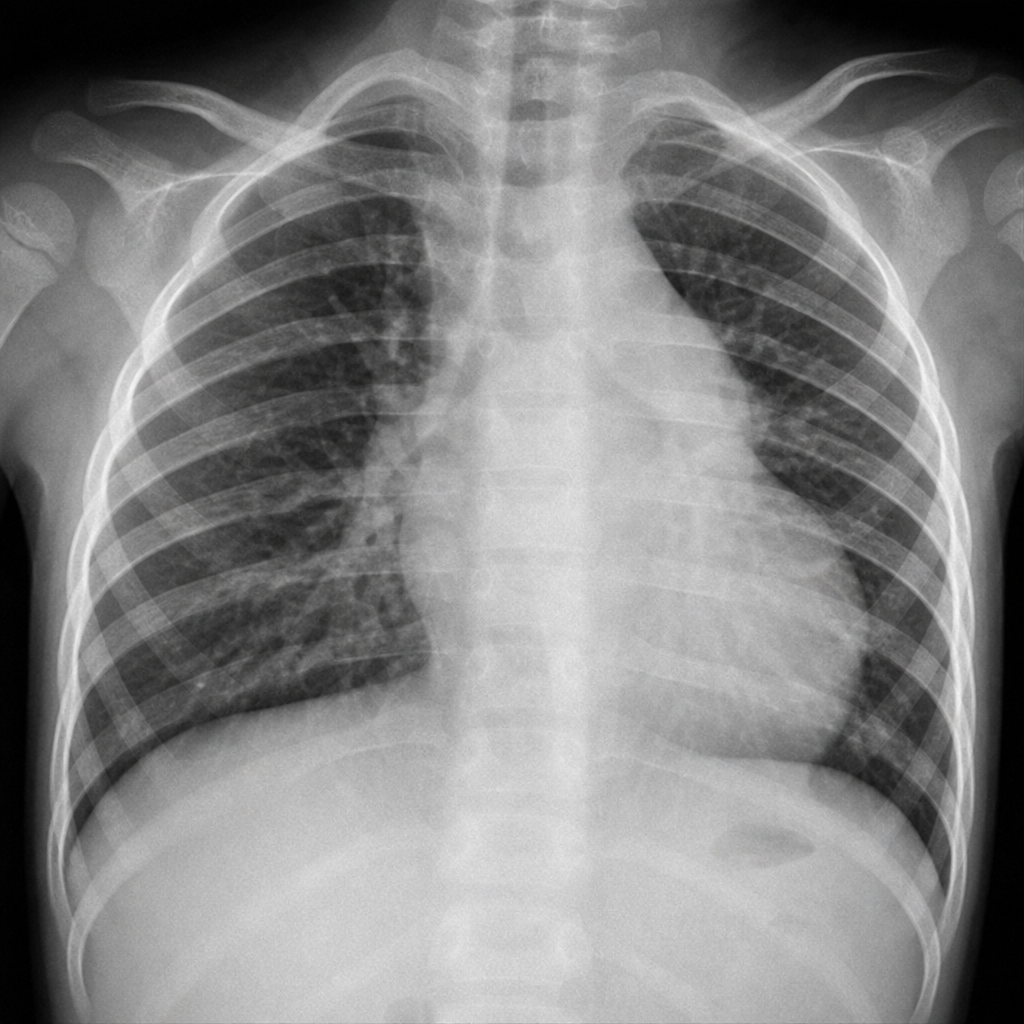
What is the most common vasculitis seen in children?
Congenital heart disease is most likely in the newborn of mothers suffering from all except:
A severely ill 3-year-old child presents with fever, enlarged cervical lymph nodes, and a desquamating rash involving the palms, soles, and mouth. What complication should be monitored for in this child?
Peripheral pulmonic stenosis is associated with which of the following conditions?
NADA's criteria are used for the assessment of a child?
Holt-Oram syndrome is characterized by which of the following congenital heart defects?
Noonan syndrome is characterized by all of the following EXCEPT:
What is the initial surgical treatment for Tetralogy of Fallot (TOF)?
Which of the following is NOT a feature of Holt-Oram Syndrome?
A 9-year-old girl is diagnosed with acute rheumatic fever. Instead of recovering as expected, her condition worsens and she dies. Which of the following is the most likely cause of death?
Explanation: **Explanation:** The correct answer is **Kawasaki Disease (KD)**. While historically Henoch-Schönlein Purpura (HSP) was frequently cited as the most common, modern epidemiological data and global trends identify Kawasaki Disease as the most common primary vasculitis in children, particularly in those under 5 years of age. **Why Kawasaki Disease is correct:** Kawasaki Disease is an acute, self-limiting, medium-vessel vasculitis. It is the leading cause of acquired heart disease in children in developed nations. Its clinical significance lies in its predilection for the coronary arteries, leading to aneurysms if untreated. **Analysis of Incorrect Options:** * **Henoch-Schönlein Purpura (HSP):** Now commonly referred to as **IgA Vasculitis**, it is a small-vessel vasculitis. While it is extremely common and often the most frequent cause of *non-thrombocytopenic purpura*, current pediatric literature (including Nelson’s Textbook of Pediatrics) frequently ranks KD as the most common systemic vasculitis overall. * **Wegener’s Granulomatosis (Granulomatosis with Polyangiitis):** This is a small-vessel, ANCA-associated vasculitis that is rare in the pediatric population, typically presenting in older adolescents or adults. * **Polyarteritis Nodosa (PAN):** This is a medium-vessel vasculitis that is rare in children. It is distinguished from KD by the absence of the "mucocutaneous lymph node syndrome" features. **NEET-PG High-Yield Pearls:** * **Diagnostic Criteria for KD:** Fever for ≥5 days plus 4 out of 5 features: (1) Conjunctival injection, (2) Rash, (3) Edema/erythema of hands/feet, (4) Strawberry tongue/fissured lips, (5) Cervical lymphadenopathy. * **Treatment:** High-dose IVIG (2g/kg) and Aspirin. IVIG is most effective when given within the first 10 days to prevent coronary artery aneurysms. * **Most common cause of death in KD:** Myocardial Infarction due to coronary artery occlusion.
Explanation: **Explanation:** The correct answer is **Rheumatoid Arthritis (B)** because it is not significantly associated with an increased risk of structural congenital heart disease (CHD) in the offspring. While RA is an autoimmune condition, it lacks the specific transplacental antibody-mediated effects or metabolic teratogenicity seen in the other options. **Analysis of Options:** * **Systemic Lupus Erythematosus (SLE):** Mothers with SLE (specifically those with anti-Ro/SSA and anti-La/SSB antibodies) are at a high risk of having infants with **Neonatal Lupus**. The most serious manifestation is **Congenital Complete Heart Block**, which is a permanent conduction defect caused by inflammatory damage to the fetal AV node. * **Diabetes in Pregnancy:** Pre-gestational diabetes is a potent teratogen. It is associated with a 3–5 fold increase in CHD. The most common defect is a **Ventricular Septal Defect (VSD)**, but the most specific (highly characteristic) defect is **Transposition of the Great Arteries (TGA)**. Additionally, these infants may develop Transient Hypertrophic Subaortic Stenosis. * **Congenital Heart Disease of the Mother:** Genetic predisposition plays a major role. If a mother has a CHD, the risk of recurrence in the offspring is approximately 2–10% (significantly higher than the general population risk of ~0.8%). **High-Yield Clinical Pearls for NEET-PG:** * **Most common CHD in offspring of diabetic mothers:** VSD. * **Most specific CHD in offspring of diabetic mothers:** TGA. * **Lithium intake** during pregnancy is associated with **Ebstein’s Anomaly**. * **Congenital Rubella Syndrome** is most commonly associated with **Patent Ductus Arteriosus (PDA)** and Peripheral Pulmonic Stenosis.
Explanation: ### Explanation **Diagnosis: Kawasaki Disease (KD)** The clinical presentation of fever, cervical lymphadenopathy, desquamating rash (palms/soles), and oral mucosal changes (strawberry tongue/cracked lips) in a young child is a classic description of **Kawasaki Disease**, an acute multisystemic vasculitis of medium-sized vessels. **Why Coronary Artery Aneurysm is Correct:** The most significant and life-threatening complication of Kawasaki Disease is the development of **coronary artery aneurysms (CAA)**, which occurs in approximately 20–25% of untreated cases. These aneurysms can lead to myocardial infarction, thrombosis, or sudden death. Early administration of Intravenous Immunoglobulin (IVIG) and Aspirin significantly reduces this risk to <5%. **Why Other Options are Incorrect:** * **Abdominal aortic aneurysm:** These are typically associated with atherosclerosis or connective tissue disorders (like Marfan syndrome) in adults, not pediatric vasculitis. * **Aneurysm of the aortic root:** While aortic root dilation can rarely occur in KD, it is much more characteristic of **Marfan Syndrome** or Syphilitic aortitis. * **Berry aneurysm:** These occur in the Circle of Willis and are associated with **Autosomal Dominant Polycystic Kidney Disease (ADPKD)** and Ehlers-Danlos syndrome, leading to subarachnoid hemorrhage. **High-Yield Clinical Pearls for NEET-PG:** * **Diagnostic Criteria (CRASH and Burn):** **C**onjunctivitis (non-purulent), **R**ash (polymorphous), **A**denopathy (cervical, >1.5cm), **S**trawberry tongue/lips, **H**ands/feet (edema/desquamation), and **Burn** (Fever >5 days). * **Investigation of Choice:** 2D-Echocardiography (at diagnosis, 2 weeks, and 6–8 weeks). * **Treatment:** High-dose Aspirin (anti-inflammatory) + IVIG. Note: Kawasaki is the only pediatric condition where Aspirin is used despite the risk of Reye’s syndrome. * **Incomplete Kawasaki:** Suspect in infants with prolonged fever and fewer than 4 criteria.
Explanation: **Explanation:** **Williams Syndrome** (7q11.23 microdeletion) is a multisystem disorder characterized by elastin arteriopathy. The most common cardiovascular manifestation is **Supravalvular Aortic Stenosis (SVAS)**. However, because the elastin defect affects the entire arterial tree, **Peripheral Pulmonic Stenosis (PPS)**—narrowing of the peripheral pulmonary artery branches—is the second most common cardiac finding, occurring in approximately 35–40% of patients. **Analysis of Options:** * **Williams Syndrome (Correct):** The combination of SVAS and PPS is a classic diagnostic hallmark. These patients often present with "elfin" facies, hypercalcemia, and a "cocktail party" personality. * **Subaortic Stenosis:** This is typically an anatomical obstruction (like a subaortic membrane) below the valve, not associated with the generalized arteriopathy seen in Williams syndrome. * **Takayasu’s Arteritis:** This is a large-vessel vasculitis. While it can cause stenosis of the aorta and its primary branches (like the subclavian), it does not typically present with congenital peripheral pulmonic stenosis. * **Coarctation of the Aorta:** While Williams syndrome can occasionally feature coarctation, PPS is a much more specific and frequent association with the syndrome’s underlying pathology. **High-Yield Clinical Pearls for NEET-PG:** * **Alagille Syndrome:** Another high-yield association for **Peripheral Pulmonic Stenosis** (along with cholestasis and butterfly vertebrae). * **Noonan Syndrome:** Most commonly associated with **Valvular Pulmonic Stenosis** and Hypertrophic Cardiomyopathy (HCM). * **Congenital Rubella Syndrome:** Classically associated with **PDA** and **Peripheral Pulmonic Stenosis**. * **Williams Syndrome Triad:** SVAS + Elfin Facies + Idiopathic Infantile Hypercalcemia.
Explanation: **Explanation:** **Nada’s Criteria** is a clinical scoring system used to screen for the **presence of heart disease** in children. It was developed to help clinicians differentiate between innocent murmurs and those requiring further cardiac evaluation (like echocardiography). The criteria are divided into **Major** and **Minor** categories: * **Major Criteria:** Systolic murmur (Grade III or higher), Diastolic murmur, Cyanosis, and Congestive Heart Failure (CHF). * **Minor Criteria:** Systolic murmur (Grade II or less), Abnormal S2, Abnormal ECG, Abnormal Chest X-ray (cardiomegaly or increased pulmonary vascularity), and Abnormal Blood Pressure. **Diagnosis:** Heart disease is suspected if there is **1 Major** or **2 Minor** criteria present. **Why other options are incorrect:** * **Degree of dehydration:** Assessed using the WHO classification (No, Some, or Severe dehydration) based on signs like skin pinch, lethargy, and thirst. * **Degree of malnutrition:** Assessed using the **IAP Classification** (weight-for-age) or **Gomez Classification**. * **Degree of mental retardation:** Assessed using IQ scores (e.g., Stanford-Binet or Wechsler scales) and the **Vineland Social Maturity Scale (VSMS)**. **High-Yield Clinical Pearls for NEET-PG:** * **Jones Criteria:** Used for the diagnosis of Acute Rheumatic Fever. * **Duke Criteria:** Used for the diagnosis of Infective Endocarditis. * **Ross Classification:** Used to grade the severity of Heart Failure in infants. * **Modified Centor Criteria:** Used for Streptococcal pharyngitis.
Explanation: **Explanation:** **Holt-Oram Syndrome**, also known as **Heart-Hand Syndrome**, is an autosomal dominant condition caused by a mutation in the **TBX5 gene** on chromosome 12. This gene is critical for the developmental patterning of both the upper limbs and the cardiac septa. 1. **Why ASD is Correct:** The most characteristic cardiac manifestation of Holt-Oram syndrome is an **Atrial Septal Defect (ASD)**, specifically of the **ostium secundum** type (seen in ~60% of cases). The TBX5 protein is essential for the formation of the interatrial septum; its deficiency leads to septation failure. 2. **Why other options are incorrect:** * **VSD:** While Ventricular Septal Defects can occur in Holt-Oram syndrome, they are less common than ASDs. * **TGA and TAPVC:** These are complex cyanotic congenital heart diseases involving conotruncal or venous anomalies. They are not classically associated with the TBX5 mutation or the clinical spectrum of Holt-Oram syndrome. **Clinical Pearls for NEET-PG:** * **The "Hand" Component:** Patients always present with upper limb deformities. The most common is a **triphalangeal thumb** or an absent/hypoplastic thumb. Radial ray defects (hypoplasia of the radius) are also hallmark features. * **Symmetry:** Limb involvement is often bilateral but can be asymmetrical (the left side is typically more severely affected). * **Conduction Defects:** Beyond structural defects, these patients are prone to **cardiac conduction blocks** (e.g., first-degree AV block or sick sinus syndrome). * **Mnemonic:** Remember **"H"** for **H**olt-Oram, **H**eart (ASD), and **H**and (Thumb/Radial defects).
Explanation: **Explanation:** Noonan syndrome is an autosomal dominant multisystem disorder, often referred to as the "Male Turner Syndrome" (though it affects both sexes), caused by mutations in the RAS-MAPK pathway (most commonly the **PTPN11 gene**). **Why Coarctation of Aorta is the correct answer:** Coarctation of the aorta is classically associated with **Turner Syndrome (45, XO)**, occurring in about 15-20% of those cases. In contrast, Noonan syndrome primarily affects the **right side** of the heart. While left-sided lesions can occur, coarctation is not a characteristic feature of Noonan syndrome. **Analysis of other options:** * **Dysplastic Pulmonary Stenosis (Option B):** This is the **most common** cardiac defect in Noonan syndrome (approx. 50-60%). Unlike isolated PS, the valve in Noonan is typically dysplastic/thickened rather than just fused. * **Hypertrophic Cardiomyopathy (Option A):** This is the second most common cardiac manifestation (approx. 20%). It is often asymmetrical and can be present at birth or develop in infancy. * **Pectus Excavatum (Option C):** Skeletal deformities are hallmark features. Patients typically present with pectus carinatum superiorly and pectus excavatum inferiorly. **High-Yield Clinical Pearls for NEET-PG:** * **Genetics:** PTPN11 mutation (50%); part of the "RASopathies." * **Karyotype:** Normal (46, XY or 46, XX), unlike Turner syndrome. * **Facial Features:** Low-set ears, hypertelorism, downward-slanting palpebral fissures, and webbed neck. * **Hematology:** Factor XI deficiency and bleeding diathesis are common. * **Mnemonic:** "Right for Noonan, Left for Turner" (Right-sided heart defects in Noonan; Left-sided in Turner).
Explanation: **Explanation:** Tetralogy of Fallot (TOF) is a cyanotic congenital heart disease characterized by pulmonary stenosis, right ventricular hypertrophy, overriding of the aorta, and a VSD. The definitive treatment is total surgical correction; however, in neonates with severe cyanosis, hypercyanotic spells, or hypoplastic pulmonary arteries, an **initial palliative procedure** is required to increase pulmonary blood flow. **1. Why Modified Blalock-Taussig (mBT) Shunt is correct:** The mBT shunt is the preferred initial palliative surgery. It involves creating a connection between the **subclavian artery and the ipsilateral pulmonary artery** using a synthetic GORE-TEX graft. This mimics a Patent Ductus Arteriosus (PDA), ensuring adequate blood reaches the lungs for oxygenation, allowing the pulmonary arteries to grow before definitive repair. **2. Why other options are incorrect:** * **Fontan Procedure:** Used for "single ventricle" physiology (e.g., Tricuspid Atresia). It redirects systemic venous return directly to the pulmonary arteries, bypassing the right ventricle. * **Glenn Shunt:** A bidirectional superior vena cava-to-pulmonary artery anastomosis. It is a second-stage procedure for single ventricle physiology, not TOF. * **Rastelli Operation:** Used for TOF with Pulmonary Atresia or Transposition of Great Arteries (TGA) with VSD/PS. It involves using a valved conduit to connect the RV to the pulmonary artery. **High-Yield Clinical Pearls for NEET-PG:** * **Classic BT Shunt:** Direct anastomosis of the subclavian artery to the pulmonary artery (rarely done now due to limb ischemia). * **Boot-shaped heart (Coeur en sabot):** Classic X-ray finding in TOF due to RV hypertrophy and an upturned apex. * **Most important prognostic factor:** The severity of Right Ventricular Outflow Tract (RVOT) obstruction. * **Drug of choice for Tet Spells:** Morphine (reduces infundibular spasm) and IV Beta-blockers (Propranolol).
Explanation: **Explanation:** **Holt-Oram Syndrome (HOS)**, also known as **Heart-Hand Syndrome**, is a classic multisystem disorder characterized by upper limb deformities and congenital heart defects. 1. **Why Thrombocytopenia is the correct answer:** Thrombocytopenia is **not** a feature of Holt-Oram Syndrome. It is, however, the hallmark of **TAR Syndrome (Thrombocytopenia-Absent Radius)**. While both syndromes involve radial limb defects, they are distinct clinical entities. In TAR syndrome, the thumb is typically **present**, whereas in Holt-Oram, thumb anomalies (triphalangeal or absent thumb) are common. 2. **Analysis of Incorrect Options:** * **Absent Radius (Option A):** Limb involvement is a core feature of HOS. It ranges from a triphalangeal thumb to a completely absent radius or phocomelia. The defects are often bilateral and asymmetric, typically affecting the left side more severely. * **Atrial Septal Defect (Option B):** ASD (specifically the *ostium secundum* type) is the most common cardiac manifestation of HOS, followed by Ventricular Septal Defects (VSD) and conduction blocks. * **Autosomal Dominant (Option D):** HOS is inherited in an autosomal dominant pattern, caused by mutations in the **TBX5 gene** on chromosome 12. **High-Yield Clinical Pearls for NEET-PG:** * **Gene:** TBX5 (Think: **T**humbs and **B**eats on chromosome **5**-like region/12). * **Classic Triad:** Radial ray defects + Congenital Heart Disease (ASD/VSD) + Cardiac conduction disturbances. * **Differentiating Point:** In **HOS**, the thumb is **absent/hypoplastic**. In **TAR syndrome**, the thumb is **present** but the radius is absent. * **Mnemonic:** "Holt-Oram = Heart & Hand."
Explanation: **Explanation:** In the setting of **Acute Rheumatic Fever (ARF)**, the heart is the only organ where involvement leads to significant mortality during the acute phase. While ARF is characterized by pancarditis (involving the endocardium, myocardium, and pericardium), **Myocarditis** is the most common cause of death. **1. Why Myocarditis is correct:** During the acute stage of ARF, severe inflammation of the myocardium leads to cardiac dilatation and impaired contractility. This results in **acute congestive heart failure (CHF)**, which is the primary driver of mortality. Histologically, this is marked by the presence of **Aschoff bodies**, which are pathognomonic for rheumatic carditis. **2. Why other options are incorrect:** * **Central Nervous System (CNS) involvement:** Sydenham’s chorea is a major Jones criterion but is typically self-limiting and never fatal. * **Endocarditis:** While valvulitis (mitral/aortic regurgitation) occurs acutely, "Endocarditis" in a chronic sense leads to long-term morbidity (Rheumatic Heart Disease). Acute death is due to the muscle failure (myocarditis) rather than the valve inflammation itself. * **Streptococcal sepsis:** ARF is a non-suppurative, immune-mediated sequela that occurs *after* the streptococcal pharyngeal infection has cleared. The patient is not septic during the rheumatic flare. **Clinical Pearls for NEET-PG:** * **Most common cause of death in ARF:** Myocarditis. * **Most common cause of death in Chronic RHD:** Heart failure secondary to valvular lesions (Mitral Stenosis). * **Pathognomonic lesion:** Aschoff bodies (contain Anitschkow cells/Caterpillar cells). * **Most common valve involved:** Mitral valve (Regurgitation in acute phase, Stenosis in chronic phase).
Congenital Heart Diseases: Cyanotic
Practice Questions
Congenital Heart Diseases: Acyanotic
Practice Questions
Rheumatic Heart Disease
Practice Questions
Kawasaki Disease
Practice Questions
Infective Endocarditis
Practice Questions
Myocarditis and Cardiomyopathies
Practice Questions
Arrhythmias in Children
Practice Questions
Heart Failure in Children
Practice Questions
Pulmonary Hypertension
Practice Questions
Systemic Hypertension
Practice Questions
Dyslipidemia in Children
Practice Questions
Cardiac Evaluation and Diagnostics
Practice Questions
Get full access to all questions, explanations, and performance tracking.
Start For Free