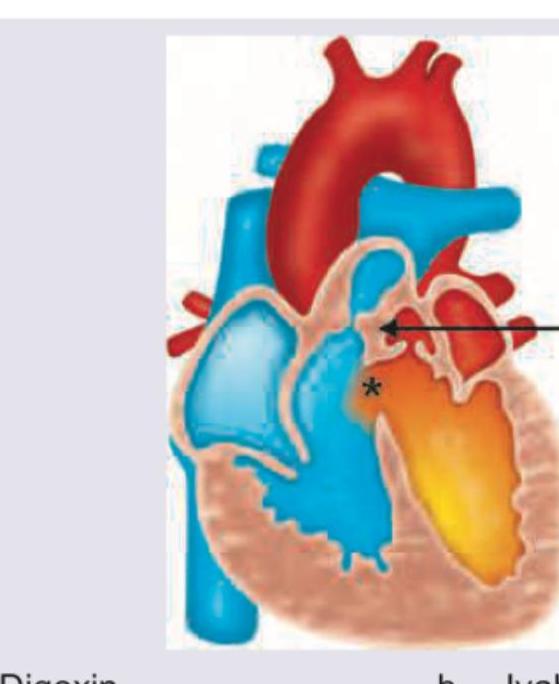
A 2-week-old neonate presents with central cyanosis, a grade II murmur, a single S2, and plethoric lungs. What is the most likely diagnosis?
What is the characteristic auscultatory finding of a patent ductus arteriosus (PDA) murmur?
Which of the following statements regarding patent ductus arteriosus (PDA) is incorrect?
Subaortic stenosis is not associated with which of the following conditions?
Pharmacological closure of patent ductus arteriosus in a premature infant is by administration of ______________?
Coarctation of aorta is most commonly associated with which cardiac anomaly?
What is true about Transposition of the Great Arteries (TGA)?
A neonate born with congenital rubella syndrome is diagnosed with patent ductus arteriosus (PDA). What is the most common cause of death in this condition?
A pressure difference of 5 mm Hg between the two upper limbs occurs in which congenital heart disease?
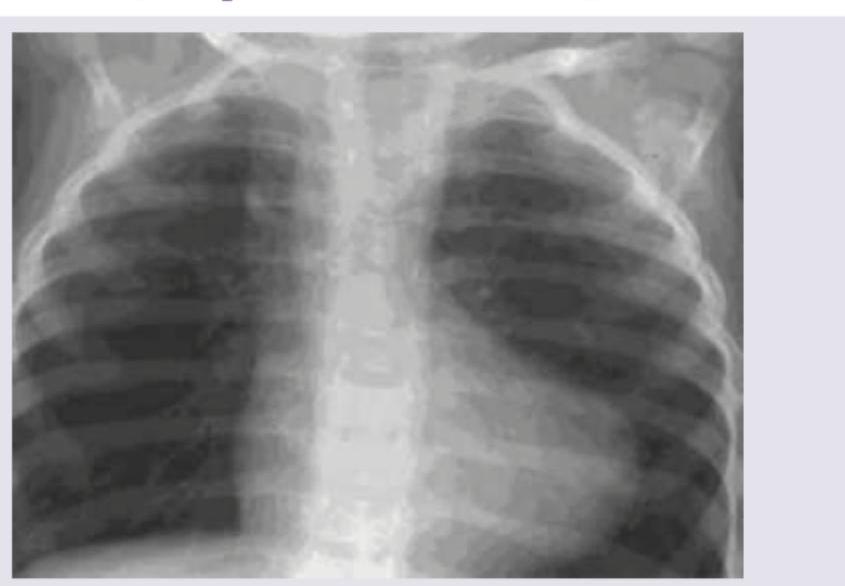
A chest X-ray showing globular cardiomegaly with oligemic lung fields in a child is suggestive of which condition?
Explanation: ### Explanation The correct diagnosis is **Transposition of the Great Arteries (TGA)**. **1. Why TGA is the correct answer:** TGA is the most common cause of cyanotic congenital heart disease (CCHD) presenting in the first two weeks of life. * **Cyanosis:** Due to parallel circulation where deoxygenated blood returns to the body. * **Single S2:** Because the aorta is anterior and the pulmonary artery is posterior, the closure of the aortic valve (A2) masks the pulmonary valve (P2). * **Plethoric Lungs:** Unlike many other cyanotic conditions, TGA (without pulmonary stenosis) features **increased pulmonary blood flow**, leading to pulmonary plethora on X-ray. * **Murmur:** Often absent or soft (Grade II) unless there is an associated VSD. **2. Why other options are incorrect:** * **TAPVC:** While it presents with plethoric lungs and cyanosis, it typically features a "Snowman" or "Figure-of-8" appearance on X-ray (in the supracardiac type) and usually presents slightly later or with more severe respiratory distress if obstructed. * **Tetralogy of Fallot (TOF):** Characterized by **oligemic lungs** (decreased blood flow) and a loud ejection systolic murmur due to right ventricular outflow tract obstruction. It rarely presents with severe cyanosis in the first two weeks. * **Pulmonary Atresia:** Presents with severe cyanosis and **oligemic lungs** due to the lack of blood flow to the pulmonary circuit. **3. High-Yield Clinical Pearls for NEET-PG:** * **X-ray finding in TGA:** "Egg-on-a-string" appearance (narrow mediastinum due to stress-induced thymic atrophy and malposed vessels). * **Management:** Immediate administration of **Prostaglandin E1 (Alprostadil)** to keep the ductus arteriosus open; definitive treatment is the **Arterial Switch Operation (Jatene procedure)**. * **Hyperoxic Test:** Used to differentiate cardiac cyanosis (minimal rise in $PaO_2$) from respiratory causes.
Explanation: **Explanation:** The characteristic murmur of Patent Ductus Arteriosus (PDA) is a **continuous "machinery" murmur**. However, its presentation varies significantly based on the size of the shunt and pulmonary vascular resistance. **Why Option C is correct:** In many clinical scenarios, especially in neonates or those with large shunts, the murmur is classically described as a **harsh systolic murmur** loudest at the **left 2nd intercostal space** (upper left sternal border). While the murmur is continuous, its peak intensity occurs in late systole, often making the systolic component the most prominent and "harsh" feature heard during examination. **Analysis of Incorrect Options:** * **Option A:** While a thrill may be present in large PDAs, it is not the defining "characteristic" auscultatory finding. * **Option B:** While the location (left infraclavicular) is correct for a PDA, the description of a "harsh systolic murmur" (Option C) is a more frequent textbook and exam-style description for the specific quality of the sound in the acute or neonatal phase. * **Option C vs D:** While a PDA murmur is continuous, it typically peaks **just before or at S2**, then wanes during diastole. However, in the context of standard NEET-PG questions, the "harsh" quality and specific "2nd ICS" location are high-yield identifiers. **Clinical Pearls for NEET-PG:** * **Gibson’s Murmur:** The classic name for the continuous machinery murmur of PDA. * **Wide Pulse Pressure:** PDA leads to a "runoff" of blood from the aorta to the pulmonary artery, causing low diastolic pressure and bounding pulses (Water-hammer pulse). * **Differential Cyanosis:** If Eisenmenger syndrome develops, cyanosis is seen in the lower limbs but not the upper limbs (pink hands, blue toes). * **Management:** **Indomethacin or Ibuprofen** (NSAIDs) are used to close a PDA in preemies; **Prostaglandin E1** is used to keep it open in ductal-dependent lesions.
Explanation: **Explanation** The correct answer is **C**, as the statement is factually incorrect. In Patent Ductus Arteriosus (PDA), the risk of **Infective Endocarditis (IE)** is generally associated with the presence of high-velocity turbulent flow. While small PDAs do create significant turbulence, the overall incidence of IE in the modern era is low across all sizes. Crucially, larger PDAs with significant shunting are more likely to lead to heart failure and structural changes, but the frequency of endocarditis does not inversely correlate with size in a way that makes it "more frequent" in small PDAs compared to others. **Analysis of Options:** * **Option A (Correct):** In term infants, the ductus usually closes functionally within 24–48 hours and anatomically by 2–3 weeks. Spontaneous closure can occur, though it is less common after the first few months of life. * **Option B (Correct):** Large PDAs allow high-pressure systemic blood to flow into the pulmonary artery. Over time, this increased flow and pressure lead to irreversible **Pulmonary Hypertension** and eventually **Eisenmenger Syndrome** (reversal of shunt). * **Option D (Correct):** Large left-to-right shunts cause pulmonary congestion, which predisposes infants to recurrent lower respiratory tract infections and congestive heart failure (CHF) due to volume overload of the left atrium and ventricle. **High-Yield Clinical Pearls for NEET-PG:** * **Murmur:** Classic "Gibson’s Murmur" (Continuous machinery-type murmur), loudest at the left infraclavicular area. * **Pulse:** Bounding peripheral pulses with a wide pulse pressure (due to diastolic "run-off" into the pulmonary circulation). * **Treatment:** **Indomethacin or Ibuprofen** (NSAIDs) are used to close a PDA in preterms by inhibiting prostaglandins. **Prostaglandin E1 (Alprostadil)** is used to keep it open in duct-dependent cyanotic heart diseases. * **Association:** Congenital Rubella Syndrome is strongly associated with PDA.
Explanation: **Explanation:** Subaortic stenosis (SAS) is a form of left ventricular outflow tract obstruction caused by a fibrous membrane or muscular band below the aortic valve. The key to this question lies in distinguishing between **associated congenital anomalies** (conditions that occur alongside SAS) and **acquired complications** resulting from SAS. **Why Aortic Regurgitation (B) is the correct answer:** Aortic Regurgitation (AR) is not a condition *associated* with the development of subaortic stenosis; rather, it is a frequent **complication** of it. The high-velocity jet of blood passing through the subaortic narrowing causes chronic mechanical trauma to the aortic valve leaflets, leading to thickening and subsequent regurgitation. In the context of "associated conditions" (congenital malformations present at birth), AR is excluded. **Analysis of Incorrect Options:** * **A, C, and D (VSD, PDA, and Coarctation of Aorta):** These are well-documented **associated congenital heart defects**. Subaortic stenosis rarely occurs in isolation. It is frequently part of a spectrum of left-sided obstructive lesions (Shone’s complex) or occurs in conjunction with shunts like VSD (especially the malalignment type) and PDA. **NEET-PG Clinical Pearls:** * **Shone’s Complex:** A high-yield syndrome consisting of four obstructive lesions: Supramitral ring, parachute mitral valve, subaortic stenosis, and coarctation of the aorta. * **Dynamic Nature:** Unlike valvular stenosis, subaortic stenosis is often progressive. * **Murmur:** It presents as a harsh systolic ejection murmur, similar to aortic stenosis, but often lacks the "systolic ejection click" because the valve leaflets themselves are initially mobile. * **Management:** Surgical resection of the membrane is required if the pressure gradient is significant (>30-50 mmHg) to prevent the progression of Aortic Regurgitation.
Explanation: **Explanation:** The closure of the **Patent Ductus Arteriosus (PDA)** is mediated by the inhibition of **Prostaglandin E2 (PGE2)**, which is responsible for keeping the ductus open in utero. In premature infants, if the ductus fails to close spontaneously, pharmacological intervention is required. **Why Ibuprofen is correct:** Ibuprofen is a non-selective **Cyclooxygenase (COX) inhibitor**. By inhibiting the COX enzyme, it reduces the synthesis of prostaglandins, leading to the constriction and eventual closure of the ductus. While **Indomethacin** was traditionally the first-line agent, **Ibuprofen** is now often preferred because it has a similar efficacy rate but a lower risk of renal side effects and necrotizing enterocolitis (NEC). **Why other options are incorrect:** * **Aspirin:** Although it is a COX inhibitor, it is not used in neonates due to the risk of antiplatelet effects and the potential association with Reye’s syndrome. * **Estrogen:** This hormone has no role in ductal closure; it is primarily involved in reproductive development. * **Prednisolone:** Corticosteroids do not directly inhibit prostaglandin synthesis in the manner required to close a PDA. **High-Yield Clinical Pearls for NEET-PG:** * **First-line drugs:** Ibuprofen (IV/Oral), Indomethacin, and recently, **Paracetamol** (Acetaminophen) is emerging as an effective alternative with fewer side effects. * **Contraindications:** Pharmacological closure is contraindicated if there is active bleeding (IVH), significant thrombocytopenia, or necrotizing enterocolitis. * **Ductal Patency:** If a cyanotic heart disease is present (e.g., Transposition of Great Arteries), we keep the ductus *open* using **Alprostadil (PGE1 infusion)**. * **Murmur:** PDA is characterized by a **"machinery-like" continuous murmur** best heard at the left infraclavicular area.
Explanation: **Explanation:** **1. Why Bicuspid Aortic Valve (BAV) is the correct answer:** Coarctation of the aorta (CoA) is a localized narrowing of the aortic lumen, typically occurring near the insertion of the ductus arteriosus. The most common associated congenital cardiac anomaly is a **Bicuspid Aortic Valve (BAV)**, which is present in **50% to 85%** of patients with CoA. This association is so strong that any patient diagnosed with CoA must be screened for BAV via echocardiography. Both conditions are thought to arise from related developmental defects in the migration of neural crest cells or altered hemodynamics during fetal life. **2. Why the other options are incorrect:** * **Ventricular Septal Defect (VSD):** While VSD is a common association (especially in the infantile/pre-ductal type), it occurs in roughly 25-30% of cases, making it less frequent than BAV. * **Patent Ductus Arteriosus (PDA):** PDA is frequently seen in symptomatic neonates with "pre-ductal" coarctation to maintain systemic circulation, but it is considered a compensatory or associated feature rather than the most common structural anomaly. * **Atrial Septal Defect (ASD):** ASD can occur with CoA but is significantly less common than BAV or VSD. **3. High-Yield Clinical Pearls for NEET-PG:** * **Turner Syndrome:** Approximately 15-20% of females with Turner Syndrome (45,XO) have CoA. * **Clinical Sign:** "Radio-femoral delay" and blood pressure discrepancy between upper and lower limbs. * **Chest X-ray:** Look for the **"3" sign** (indentation of the aorta) and **rib notching** (due to collateral circulation through intercostal arteries; usually involves 3rd to 8th ribs). * **Non-Cardiac Association:** **Berry Aneurysms** in the Circle of Willis (risk of subarachnoid hemorrhage).
Explanation: **Explanation:** Transposition of the Great Arteries (TGA) is the most common cyanotic congenital heart disease presenting in the neonatal period. It occurs due to the failure of the spiral partitioning of the truncus arteriosus, resulting in "ventriculoarterial discordance." * **Option A is correct:** TGA is a **cyanotic heart disease** (one of the 5 T’s). Because the aorta arises from the right ventricle and the pulmonary artery from the left ventricle, the systemic and pulmonary circulations run in **parallel** rather than in series. This results in deoxygenated blood being pumped back to the body, causing early and severe cyanosis. * **Option B is correct:** Anatomically, the hallmark of TGA is that the **aorta is positioned anteriorly and to the right** of the pulmonary artery (D-TGA). * **Option C is correct:** Survival in TGA depends on mixing between the two circuits. While a Patent Foramen Ovale (PFO) or PDA is usually present, a **Ventricular Septal Defect (VSD)** is associated in approximately 35-45% of cases, often providing better mixing of blood. **High-Yield Clinical Pearls for NEET-PG:** * **Chest X-ray Finding:** "Egg-on-a-string" appearance (due to a narrow mediastinum caused by the stress-induced thymic atrophy and the hyperinflated lungs). * **Auscultation:** Often presents with a **single S2** (as the anterior aorta obscures the pulmonary valve closure). * **Management:** Immediate stabilization requires **Prostoglandin E1 (Alprostadil)** to keep the ductus arteriosus open. The definitive surgical treatment of choice is the **Arterial Switch Operation (Jatene Procedure)**, ideally performed within the first 2 weeks of life.
Explanation: **Explanation:** **1. Why Cardiac Failure is the Correct Answer:** In Patent Ductus Arteriosus (PDA), there is a persistent communication between the aorta and the pulmonary artery. Due to higher systemic pressure, blood shunts from **left to right**, leading to significant pulmonary over-circulation and volume overload of the left atrium and left ventricle. In neonates, especially those with large defects or associated congenital rubella syndrome, the heart is unable to compensate for this increased volume, leading to **congestive cardiac failure (CCF)**. This remains the most common cause of mortality in symptomatic PDA patients. **2. Why Other Options are Incorrect:** * **B. Respiratory Failure:** While PDA can cause pulmonary congestion and tachypnea, primary respiratory failure is usually a secondary consequence of cardiac failure rather than the direct cause of death. * **C. Infective Endocarditis:** Although PDA increases the risk of endarteritis (usually at the pulmonary end of the ductus), it is a late complication and rarely the primary cause of death in the neonatal period. * **D. Embolization:** This is more commonly associated with atrial fibrillation or valvular vegetations. In PDA, the shunt is typically left-to-right, making systemic embolization unlikely unless there is a reversal of shunt (Eisenmenger syndrome). **3. High-Yield Clinical Pearls for NEET-PG:** * **Classic Murmur:** Continuous "machinery" murmur, loudest at the left infraclavicular area. * **Pulse:** "Water-hammer" or bounding pulses due to wide pulse pressure. * **Drug of Choice:** **Indomethacin** or **Ibuprofen** (NSAIDs) are used to close a PDA in preterm neonates by inhibiting prostaglandins. * **Prostaglandin E1:** Used to keep the ductus *open* in ductal-dependent cyanotic heart diseases. * **Association:** PDA is the most common cardiac defect associated with **Congenital Rubella Syndrome**.
Explanation: **Explanation:** The correct answer is **Supravalvular aortic stenosis (SVAS)**. **Why it is correct:** In SVAS, there is a narrowing of the ascending aorta just above the coronary ostia. The pressure difference between the two upper limbs (specifically, a higher blood pressure in the right arm compared to the left) is due to the **Coanda Effect**. The high-velocity jet of blood passing through the stenotic area is directed preferentially toward the **innominate (brachiocephalic) artery**. This leads to higher systolic pressure in the right subclavian and right carotid arteries. A pressure gradient of $\geq$ 5-10 mmHg between the arms is a classic clinical sign of SVAS. **Why the other options are incorrect:** * **Tetralogy of Fallot (TOF):** Characterized by a right-to-left shunt and decreased pulmonary blood flow. It does not typically cause a blood pressure discrepancy between the upper limbs unless there has been a previous Blalock-Taussig shunt surgery. * **Transposition of the Great Arteries (TGA):** Presents with cyanosis due to parallel circulations. While differential cyanosis can occur if a PDA is present, it does not typically cause a 5 mmHg pressure gradient between the two upper limbs. * **HOCM:** This is a dynamic subvalvular obstruction. While it causes a "jerky" pulse, the obstruction occurs within the ventricle and affects systemic output uniformly, not creating a limb-to-limb gradient. **High-Yield Pearls for NEET-PG:** * **Williams Syndrome:** SVAS is frequently associated with Williams Syndrome (deletion on chromosome 7q11), characterized by "elfin facies," intellectual disability, and **idiopathic infantile hypercalcemia**. * **Coarctation of the Aorta:** This is the most common cause of BP discrepancy between **upper and lower limbs** (radio-femoral delay). * **Differential Cyanosis:** Seen in PDA with reversal of shunt (Eisenmenger syndrome)—pink upper body, cyanotic lower body.
Explanation: ### Explanation **Ebstein’s Anomaly (Correct Answer)** Ebstein’s anomaly is characterized by the downward displacement of the tricuspid valve leaflets into the right ventricle, leading to "atrialization" of the ventricle. This results in a massive right atrium, which produces a **globular or "box-shaped" heart** on a chest X-ray. Because the right ventricle is small and the tricuspid regurgitation is often severe, pulmonary blood flow is significantly reduced, leading to **oligemic lung fields** (decreased vascular markings). **Analysis of Incorrect Options:** * **Tetralogy of Fallot (TOF):** Classically shows a **"boot-shaped" heart** (*coeur en sabot*). While it features oligemic lung fields, the heart size is usually normal or only mildly enlarged because the right ventricle is hypertrophied but not dilated. * **TAPVC:** In the supracardiac type, the X-ray shows a **"snowman" or "figure-of-8" appearance** due to a dilated persistent left vertical vein and SVC. Lung fields in TAPVC are typically **plethoric** (increased blood flow), not oligemic. * **PDA:** This is an acyanotic heart disease with a left-to-right shunt. It presents with **cardiomegaly and pulmonary plethora** (increased vascularity) due to increased volume returning to the left heart and lungs. **NEET-PG High-Yield Pearls:** * **Ebstein’s Anomaly:** Strongly associated with maternal **Lithium** intake during pregnancy. * **ECG Findings:** Characterized by "Himalayan" P-waves (tall, peaked) and right bundle branch block (RBBB). * **Arrhythmias:** Frequently associated with **Wolff-Parkinson-White (WPW) syndrome**. * **Auscultation:** Often features a "multi-click" or quadruple rhythm due to the abnormal tricuspid valve.
Congenital Heart Diseases: Cyanotic
Practice Questions
Congenital Heart Diseases: Acyanotic
Practice Questions
Rheumatic Heart Disease
Practice Questions
Kawasaki Disease
Practice Questions
Infective Endocarditis
Practice Questions
Myocarditis and Cardiomyopathies
Practice Questions
Arrhythmias in Children
Practice Questions
Heart Failure in Children
Practice Questions
Pulmonary Hypertension
Practice Questions
Systemic Hypertension
Practice Questions
Dyslipidemia in Children
Practice Questions
Cardiac Evaluation and Diagnostics
Practice Questions
Get full access to all questions, explanations, and performance tracking.
Start For Free