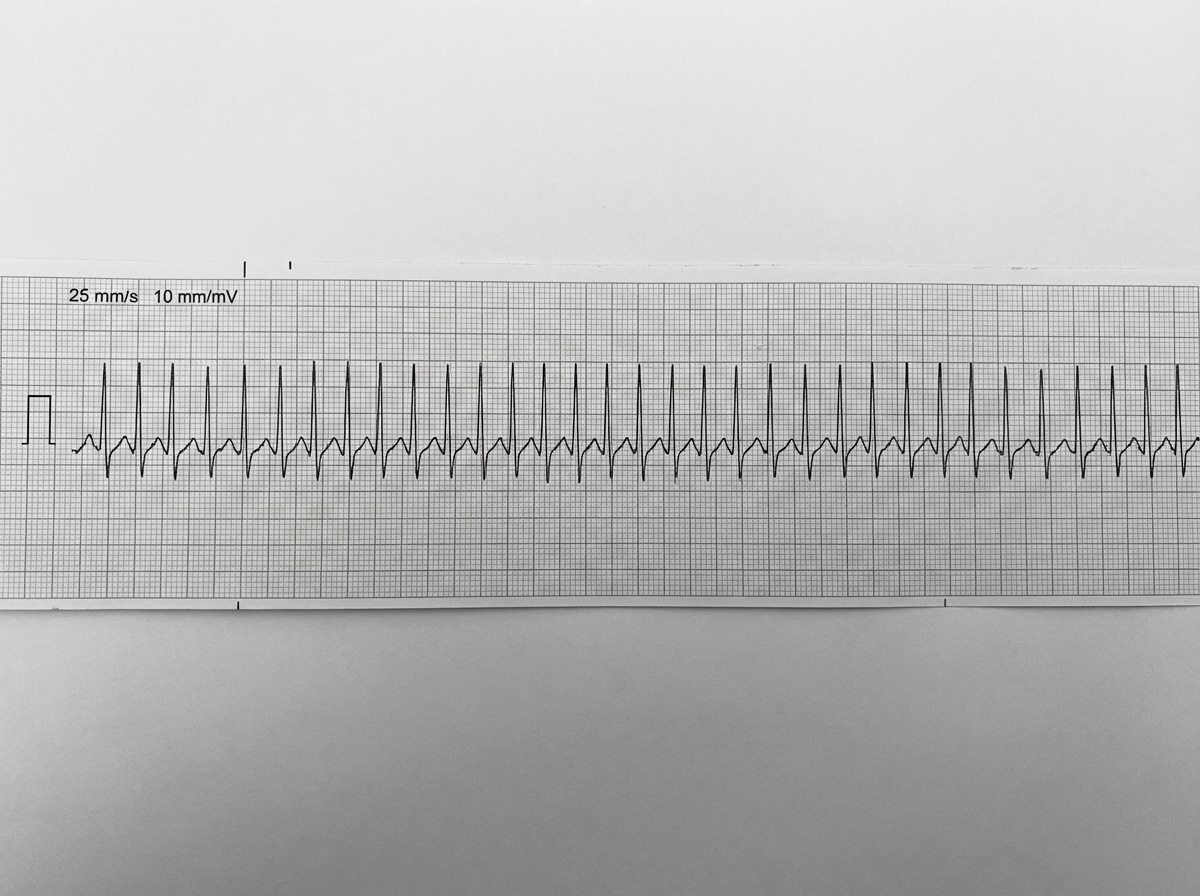
Which of the following is a manifestation of Tetralogy of Fallot?
In a 12-year-old boy, which of the following is the best statement regarding aortic valve stenosis?
In which of the following conditions is a 'Coeur-en-Sabot' (boot-shaped) heart seen?
Atrial Septal Defect (ASD) is commonly seen in which of the following conditions?
Turner syndrome is associated with which of the following?
In a 5-year-old child, instead of the physiological splitting of the second heart sound (S2) which is expected only during inspiration, a wide and fixed split of S2 is heard during both inspiration and expiration. A wide fixed split of the second heart sound can be seen in all of the following EXCEPT?
Cyanosis not improving with 100% oxygen is characteristic of which condition?
Which NSAID is most commonly used in Rheumatic fever?
Which congenital heart disease is associated with pre-excitation?
A newborn presents with cyanosis in the first week of life. The mother has a history of Diabetes. Chest X-ray findings and further investigations suggest that the symptoms are due to inappropriate circulation of oxygenated and deoxygenated blood between the body and the lungs. Survival in the neonatal period in such cases is facilitated by the foramen ovale and the ductus arteriosus, which permit some mixing of oxygenated and deoxygenated blood. What is the most likely diagnosis and the corresponding cardiac defect?
Explanation: **Explanation:** Tetralogy of Fallot (TOF) is the most common cyanotic congenital heart disease. It is characterized by a classic tetrad of anatomical defects resulting from the anterior and cephalad deviation of the infundibular (conal) septum. **1. Why "Ventricular Septal Defect" is correct:** The four components of TOF are: * **Large, malaligned Ventricular Septal Defect (VSD):** This allows for the shunting of blood between ventricles. * **Right Ventricular Outflow Tract Obstruction (RVOTO):** Usually infundibular stenosis. * **Overriding of the Aorta:** The aorta sits over the VSD, receiving blood from both ventricles. * **Right Ventricular Hypertrophy (RVH):** A secondary result of the right ventricle pumping against high resistance. **2. Why other options are incorrect:** * **Left Axis Deviation (LAD):** In TOF, the dominant pathology involves the right side of the heart. Therefore, the ECG typically shows **Right Axis Deviation (RAD)** due to RVH. LAD is a classic finding in Tricuspid Atresia or AV Canal defects, not TOF. * **Left Ventricular Hypertrophy (LVH):** TOF is a right-sided pressure overload condition. The left ventricle is usually normal or even small due to reduced pulmonary venous return. **Right Ventricular Hypertrophy** is the hallmark finding. **Clinical Pearls for NEET-PG:** * **X-ray finding:** "Boot-shaped heart" (Coeur en sabot) due to an upturned apex (RVH) and a concave pulmonary segment. * **Murmur:** The murmur in TOF is due to **pulmonary stenosis**, not the VSD (which is typically large and non-restrictive). * **Management:** "Tet spells" are managed with the knee-chest position (increases systemic vascular resistance) and oxygen. * **Most common associated anomaly:** Right-sided aortic arch (seen in ~25% of cases).
Explanation: **Explanation:** **1. Why Option A is Correct:** Aortic Stenosis (AS) is a progressive condition where the left ventricular outflow tract is obstructed. In children and adolescents, the primary concern during high-intensity exercise is the inability of the heart to increase cardiac output across a fixed, narrow orifice. This leads to a sudden drop in coronary perfusion and potential life-threatening ventricular arrhythmias or syncope. According to the American Heart Association (AHA) and Bethesda guidelines, patients with moderate to severe AS must be restricted from competitive sports to prevent **Sudden Cardiac Death (SCD)**. **2. Why the other options are Incorrect:** * **Option B:** While guidelines for Infective Endocarditis (IE) prophylaxis have become more stringent, patients with prosthetic valves or prior IE require it. However, more importantly, the statement "does not need" is generally considered incorrect in the context of valvular heart disease management in exams; traditionally, any structural heart disease (except isolated secundum ASD) was considered a risk for IE. * **Option C:** AS causes pressure overload of the **Left Ventricle**. Therefore, the ECG would demonstrate **Left Ventricular Hypertrophy (LVH)** with a strain pattern, not Right Ventricular Hypertrophy. * **Option D:** In a 12-year-old, AS is almost always **congenital** (usually a Bicuspid Aortic Valve). Calcification is a degenerative process typically seen in elderly patients or those with long-standing bicuspid valves (usually >40 years of age). **Clinical Pearls for NEET-PG:** * **Classic Triad of AS:** Dyspnea, Angina, and Syncope (SAD). * **Physical Sign:** Pulsus Parvus et Tardus (slow-rising, low-volume pulse) and a mid-systolic ejection murmur radiating to the carotids. * **Most Common Cause:** Congenital Bicuspid Aortic Valve is the most common cause of AS in children/young adults. * **Indication for Intervention:** A peak systolic gradient >50-60 mmHg on echocardiography or the presence of symptoms.
Explanation: **Explanation:** The **'Coeur-en-Sabot'** (French for "heart in a clog") or **boot-shaped heart** is a classic radiological finding in **Tetralogy of Fallot (TOF)**. This characteristic shape occurs due to two primary anatomical changes: 1. **Right Ventricular Hypertrophy (RVH):** The pressure overload from pulmonary stenosis causes the right ventricle to thicken and enlarge, which **lifts the cardiac apex** upward and outward. 2. **Pulmonary Hypoplasia:** The narrow pulmonary infundibulum and small main pulmonary artery create a **concave pulmonary bay** (a "scooped out" appearance of the left heart border). **Analysis of Incorrect Options:** * **Tricuspid Atresia:** Characterized by a "wall-to-wall" heart or a horizontal lower border, but more importantly, it shows **Left Axis Deviation** on ECG (unlike TOF which shows Right Axis Deviation). * **Ventricular Septal Defect (VSD):** Small VSDs show a normal heart size, while large VSDs lead to **cardiomegaly** with increased pulmonary vascular markings (plethora), not a boot shape. * **Transposition of Great Arteries (TGA):** Classically presents with an **"Egg-on-a-string"** appearance due to a narrow mediastinum (stress-induced thymic atrophy) and a globular heart. **High-Yield Clinical Pearls for NEET-PG:** * **X-ray Findings in Cyanotic Heart Disease:** * **TOF:** Boot-shaped heart + Oligemic lung fields. * **TGA:** Egg-on-a-string appearance. * **TAPVC:** Snowman sign or Figure-of-8 appearance. * **Ebstein’s Anomaly:** Box-shaped heart (massive right atrium). * **TOF Components:** VSD, Overriding of Aorta, Right Ventricular Outflow Tract Obstruction (RVOTO), and RVH. * **Most common** cyanotic heart disease after infancy is TOF.
Explanation: **Explanation:** **Correct Answer: A. Turner Syndrome** Turner Syndrome (45, XO) is classically associated with left-sided obstructive cardiac lesions. While **Bicuspid Aortic Valve (BAV)** is the most common overall anomaly (30-50%), followed by **Coarctation of the Aorta**, **Atrial Septal Defect (ASD)** is also a frequently associated finding. In the context of this specific question, Turner syndrome is the most recognized association among the choices provided for secundum-type ASDs. **Analysis of Incorrect Options:** * **B. Ellis-van Creveld Syndrome:** This is a rare skeletal dysplasia (Chondroectodermal dysplasia). Its hallmark cardiac association is a **Single Atrium** (Common Atrium), rather than a simple ASD. * **C. Down Syndrome:** The most characteristic cardiac lesion in Trisomy 21 is an **Atrioventricular Septal Defect (AVSD)** or Endocardial Cushion Defect (40%). While secundum ASDs can occur, AVSD is the pathognomonic association. * **D. Holt-Oram Syndrome:** This "Heart-Hand Syndrome" is characterized by radial ray defects and cardiac anomalies. While ASD is the most common lesion here, the question asks where it is "commonly seen" among the listed syndromes; historically, in many Indian medical entrance exams, Turner syndrome is prioritized as a high-yield association for ASD when listed alongside these specific options. **High-Yield Clinical Pearls for NEET-PG:** * **Most common ASD:** Ostium secundum (located at the Fossa Ovalis). * **Auscultation:** Wide, fixed split S2 and a mid-systolic flow murmur at the pulmonary area. * **Lutembacher Syndrome:** Combination of ASD and acquired Mitral Stenosis. * **Noonan Syndrome:** Often confused with Turner; its primary cardiac association is **Pulmonary Stenosis**.
Explanation: **Explanation:** **Turner Syndrome (45, XO)** is a common chromosomal abnormality in females characterized by short stature, webbed neck, and gonadal dysgenesis. **1. Why Coarctation of the Aorta is Correct:** Approximately 25–30% of patients with Turner syndrome have congenital heart defects. The most classic and frequently tested association is **Coarctation of the Aorta (pre-ductal)**, occurring in about 10–15% of cases. The underlying mechanism is related to lymphatic obstruction during fetal development, which alters hemodynamics and leads to narrowing of the aortic arch. Additionally, **Bicuspid Aortic Valve (BAV)** is the single most common cardiac anomaly (up to 30%) in these patients. **2. Analysis of Incorrect Options:** * **B. Aortic Dissection:** While patients with Turner syndrome are at a significantly increased risk for aortic dissection (due to hypertension and BAV), it is a *complication* or a late sequela rather than the primary congenital association. * **C. Aortic Regurgitation:** This may occur secondary to a Bicuspid Aortic Valve or aortic root dilation, but it is not the primary diagnostic association for the syndrome. * **D. Pulmonic Stenosis:** This is classically associated with **Noonan Syndrome** (often called "Male Turner" due to similar phenotypic features) rather than Turner syndrome. **High-Yield Clinical Pearls for NEET-PG:** * **Most common cardiac anomaly:** Bicuspid Aortic Valve (BAV). * **Most classic/specific association:** Coarctation of the Aorta. * **Karyotype:** 45, XO is the most common; however, mosaicism (45,X/46,XX) can occur. * **Differentiating Noonan vs. Turner:** Noonan syndrome affects both sexes, features **Pulmonic Stenosis**, and usually has a normal karyotype. * **Screening:** All girls diagnosed with Turner syndrome must undergo an initial **Echocardiogram or Cardiac MRI** to screen for aortic root dilation.
Explanation: **Explanation** The second heart sound (S2) consists of two components: Aortic (A2) and Pulmonary (P2). Normally, S2 splits only during inspiration because increased venous return to the right heart delays pulmonary valve closure. A **wide and fixed split** occurs when the interval between A2 and P2 is prolonged and does not change with respiration. **Why Ventricular Septal Defect (VSD) is the Correct Answer:** In a typical VSD, the split is **wide but mobile** (not fixed). The increased volume in the right ventricle delays P2 (wide split), but because the shunt is pressure-dependent, respiratory variations still affect venous return, allowing the split to change with the respiratory cycle. Therefore, VSD does not cause a fixed split. **Analysis of Other Options:** * **Atrial Septal Defect (ASD):** The classic cause of a wide fixed split. The constant shunt from left to right atrium equalizes the respiratory pressure changes between the two sides, maintaining a constant stroke volume in the right ventricle regardless of the respiratory phase. * **Right Bundle Branch Block (RBBB):** Causes a wide split due to delayed electrical activation of the right ventricle, leading to a late P2. While often slightly mobile, it is a classic differential for wide splitting. * **Total Anomalous Pulmonary Venous Connection (TAPVC):** Similar to ASD, there is a massive volume overload of the right heart and a large "functional" atrial shunt, leading to a wide fixed split of S2. **NEET-PG High-Yield Pearls:** * **Wide Fixed Split:** ASD (Pathognomonic), TAPVC, Right Heart Failure. * **Wide Mobile Split:** VSD, Pulmonary Stenosis, RBBB. * **Paradoxical (Reversed) Split:** (P2 before A2) Seen in Severe Aortic Stenosis, Left Bundle Branch Block (LBBB). * **Single S2:** Tetralogy of Fallot, Tricuspid Atresia, Eisenmenger Syndrome.
Explanation: ### Explanation The failure of cyanosis to improve with 100% oxygen is the hallmark of a **Right-to-Left (R-L) Shunt**, typically evaluated using the **Hyperoxic Test**. **Why Tetralogy of Fallot (TOF) is correct:** In TOF, there is a large ventricular septal defect (VSD) and right ventricular outflow tract obstruction (pulmonary stenosis). This causes deoxygenated blood from the right ventricle to bypass the lungs entirely and shunt directly into the aorta (R-L shunt). Because this blood never reaches the alveoli, increasing the fraction of inspired oxygen ($FiO_2$) to 100% cannot oxygenate it. Consequently, the arterial partial pressure of oxygen ($PaO_2$) remains low (typically <150 mmHg), and cyanosis persists. **Why other options are incorrect:** * **Cardiac Asthma & Bronchial Asthma:** These are primarily airway/ventilation issues. While they cause hypoxia due to ventilation-perfusion (V/Q) mismatch, providing 100% oxygen usually significantly improves oxygen saturation. * **Interstitial Lung Disease (ILD):** This involves a diffusion defect. While oxygen transfer is impaired, increasing the oxygen gradient by giving 100% $O_2$ typically overcomes the diffusion barrier and improves cyanosis. **NEET-PG High-Yield Pearls:** * **Hyperoxic Test:** Used to differentiate cardiac cyanosis (R-L shunt) from pulmonary cyanosis. If $PaO_2$ rises >250 mmHg after 100% $O_2$, the cause is likely pulmonary. If $PaO_2$ stays <150 mmHg, it suggests Cyanotic Congenital Heart Disease (CCHD). * **TOF Components:** Pulmonary stenosis, Overriding of aorta, VSD, and Right Ventricular Hypertrophy. * **X-ray Finding:** "Boot-shaped heart" (Coeur en sabot) due to an upturned apex from RVH and a small pulmonary artery segment.
Explanation: **Explanation:** **Aspirin (Acetylsalicylic acid)** remains the drug of choice for the management of arthritis and carditis without cardiomegaly or heart failure in Acute Rheumatic Fever (ARF). The underlying medical concept is its potent anti-inflammatory action, which provides dramatic relief of joint pain and swelling, typically within 24–48 hours. In ARF, Aspirin is used at anti-inflammatory doses (75–100 mg/kg/day in children) rather than standard analgesic doses. **Analysis of Incorrect Options:** * **Indomethacin:** While a potent NSAID, it is primarily used in pediatrics for the closure of Patent Ductus Arteriosus (PDA) and is not the first-line agent for ARF. * **Phenylbutazone:** This drug is rarely used in modern practice due to its severe side effect profile, including bone marrow suppression (aplastic anemia). * **Rofecoxib:** This is a selective COX-2 inhibitor. These are generally avoided in children and have been associated with increased cardiovascular risks in adults. **High-Yield Clinical Pearls for NEET-PG:** * **Therapeutic Response:** If a patient with suspected Rheumatic arthritis does not respond to Aspirin within 48–72 hours, the diagnosis of ARF should be reconsidered. * **Steroids vs. NSAIDs:** Corticosteroids (Prednisolone) are indicated only when there is **severe carditis** (manifesting as cardiomegaly, CHF, or 3rd-degree heart block). * **Monitoring:** Long-term high-dose Aspirin requires monitoring for **salicylism** (tinnitus, hyperventilation) and awareness of **Reye’s Syndrome** if the child contracts Influenza or Varicella.
Explanation: **Explanation:** **Ebstein’s Anomaly** is the correct answer because it has a unique anatomical and physiological association with **Wolff-Parkinson-White (WPW) Syndrome**. In Ebstein’s anomaly, there is a failure of delamination of the tricuspid valve leaflets, leading to their downward displacement into the right ventricle ("atrialization" of the RV). This structural abnormality is frequently accompanied by **accessory atrioventricular pathways** (bundles of Kent), particularly on the right side of the heart. Approximately 10–25% of patients with Ebstein’s anomaly exhibit pre-excitation on ECG (short PR interval and Delta waves), making them prone to supraventricular tachycardias. **Analysis of Incorrect Options:** * **Atrial Septal Defect (ASD):** While ASD is the most common CHD associated with Ebstein’s anomaly, an isolated ASD typically presents with a Right Bundle Branch Block (RBBB) pattern, not pre-excitation. * **Bicuspid Aortic Valve:** This is the most common congenital heart anomaly overall. It is associated with aortic stenosis, regurgitation, and Turner syndrome, but not with accessory conduction pathways. * **Patent Ductus Arteriosus (PDA):** This is an extracardiac shunt between the aorta and pulmonary artery. It causes a continuous machinery murmur but does not involve the cardiac conduction system. **High-Yield Clinical Pearls for NEET-PG:** * **ECG Findings in Ebstein’s:** Giant "Himalayan" P-waves (right atrial enlargement), RBBB, and pre-excitation (WPW). * **Auscultation:** Characterized by a "split" S1 (loud tricuspid closure or "sail sound") and a quadruple gallop rhythm. * **Maternal Link:** Classically associated with maternal **Lithium** intake during the first trimester. * **X-ray:** Shows a massive, "box-shaped" heart due to severe right atrial enlargement.
Explanation: **Explanation:** **Diagnosis and Embryology:** The clinical presentation of early-onset cyanosis in a newborn of a diabetic mother is a classic "red flag" for **Transposition of the Great Arteries (TGA)**. In TGA, the aorta arises from the right ventricle and the pulmonary artery from the left ventricle, creating two independent, parallel circuits. Survival is impossible unless there is a shunt (ASD, VSD, or PDA) to allow mixing of blood. Embryologically, TGA occurs due to the **failure of the conotruncal (aorticopulmonary) septum to spiral**. Instead of the normal 180-degree spiral, the septum grows **straight** down, leading to the malposition of the great vessels. **Analysis of Options:** * **Option A:** While TGA is correct, **abnormal cardiac looping** leads to L-TGA (congenitally corrected TGA) or dextrocardia, not the cyanotic D-TGA described here. * **Option B:** PAPVC involves some pulmonary veins draining into the right atrium; it typically presents later in life and is not primarily caused by looping defects. * **Option C:** VSD is an acyanotic heart disease (left-to-right shunt) and does not explain the "parallel circulation" or immediate neonatal cyanosis described. * **Option D (Correct):** Correctly identifies TGA and its embryological basis (straight conotruncal septum). **NEET-PG High-Yield Pearls:** * **Most common** cyanotic heart disease presenting in the **first 24 hours** of life. * **Chest X-ray:** Classic **"Egg-on-a-string"** appearance (due to a narrow mediastinum). * **Association:** Strongly linked to **Maternal Diabetes** (Pre-gestational). * **Management:** Immediate administration of **Prostaglandin E1 (PGE1)** to keep the ductus arteriosus open; definitive treatment is the **Arterial Switch Operation (Jatene procedure)**.
Congenital Heart Diseases: Cyanotic
Practice Questions
Congenital Heart Diseases: Acyanotic
Practice Questions
Rheumatic Heart Disease
Practice Questions
Kawasaki Disease
Practice Questions
Infective Endocarditis
Practice Questions
Myocarditis and Cardiomyopathies
Practice Questions
Arrhythmias in Children
Practice Questions
Heart Failure in Children
Practice Questions
Pulmonary Hypertension
Practice Questions
Systemic Hypertension
Practice Questions
Dyslipidemia in Children
Practice Questions
Cardiac Evaluation and Diagnostics
Practice Questions
Get full access to all questions, explanations, and performance tracking.
Start For Free