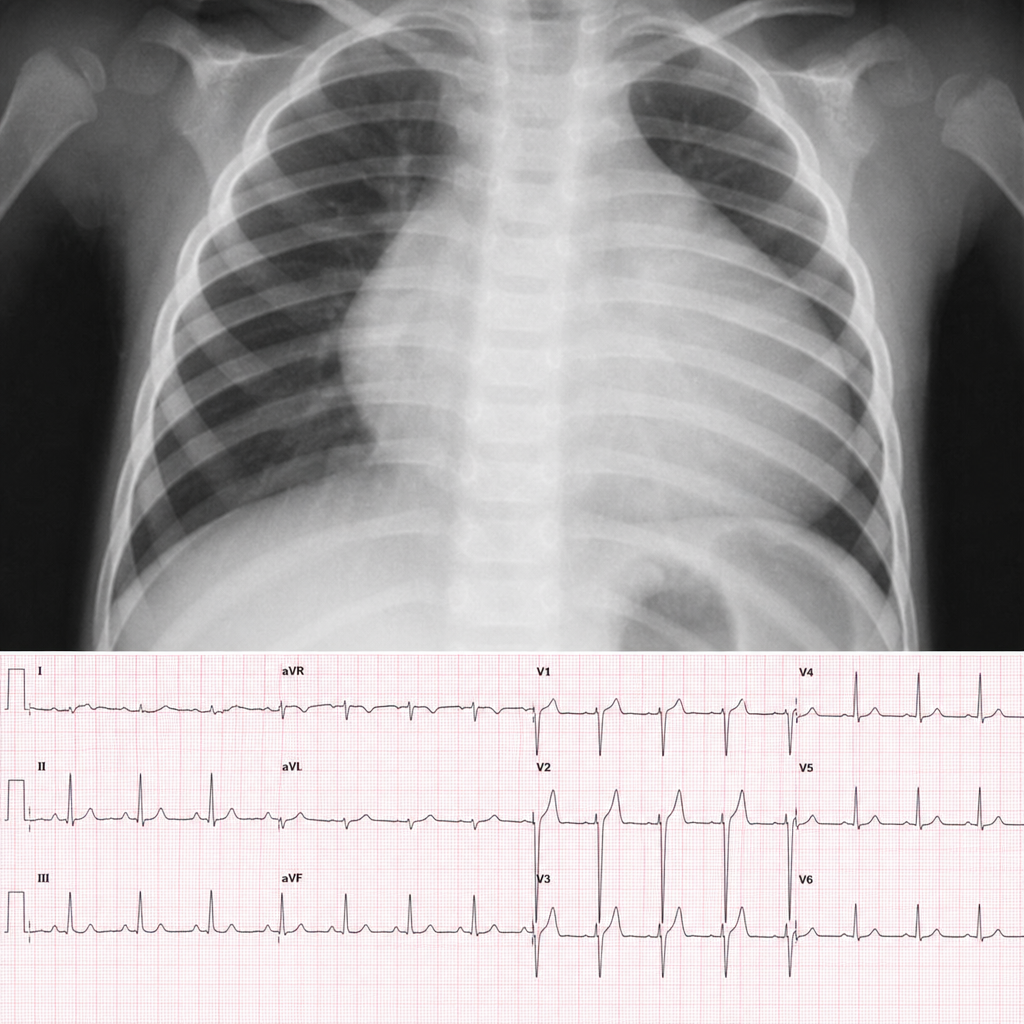
Cyanosis is NOT present in which of the following conditions?
Which of the following statements is NOT true regarding the Modified Jones criteria?
What is the most common microorganism found in pediatric subacute infective endocarditis?
A newborn male, normal at birth, started developing cyanosis. On auscultation, a continuous murmur was audible. The child was put on supplemental oxygen but no improvement was noted; rather, the oxygen saturation of the neonate kept falling further. The pediatrician on call made a provisional diagnosis of a duct-dependent lesion. What is the next line of management?
Essential criteria for Tetralogy of Fallot includes all, EXCEPT:
Cyanosis is seen in which of the following conditions?
What is the most common congenital heart disease associated with Edward's syndrome?
An infant presents with a double aortic arch. What is the likely diagnosis?
An 8-year-old boy is evaluated for fatigue. Auscultation reveals a holosystolic murmur best heard at the lower sternal border. Echocardiography reveals apical displacement of the tricuspid valve leaflets, decreased right ventricular volume and atrialisation of the right ventricle. Moderate to severe tricuspid regurgitation is present. This patient's condition is believed to be a teratogenic effect of a drug taken during pregnancy. Which one of the following could not have been a side effect of that drug on the biological mother?
A 25-day-old neonate presented with cyanosis, sweating, and difficulty in feeding. There is a history of the mother taking some drug in the first trimester for her bipolar disease. On examination, a holosystolic murmur is heard parasternally in the left 4th intercostal space, which increased on inspiration. S3 and S4 heart sounds are present. Which embryological remnant is associated with this condition?
Explanation: **Explanation:** The core concept in pediatric cardiology is distinguishing between cyanotic and acyanotic heart diseases. **Coarctation of the Aorta (CoA)** is classified as an **acyanotic** obstructive heart defect. It involves a localized narrowing of the aorta, typically near the ductus arteriosus. While it causes a pressure gradient (higher BP in upper limbs, lower in lower limbs), it does not involve a right-to-left shunt of deoxygenated blood into the systemic circulation; therefore, central cyanosis is absent. **Analysis of Incorrect Options:** * **TGA:** A classic cyanotic heart disease ("Cyanotic 5 Ts"). It involves parallel circulations where deoxygenated blood is pumped directly back to the body, causing profound early cyanosis. * **PDA with Pulmonary Hypertension:** While a simple PDA is acyanotic (left-to-right shunt), severe pulmonary hypertension can reverse the shunt (right-to-left), leading to **differential cyanosis** (cyanosis in the lower limbs but not the upper limbs). This is known as Eisenmenger syndrome. * **Ebstein’s Anomaly:** This involves the downward displacement of the tricuspid valve. It often presents with an atrial septal defect (ASD) and massive right-sided heart failure, leading to a right-to-left shunt and cyanosis. **NEET-PG High-Yield Pearls:** * **CoA Hallmark:** "Radio-femoral delay" and rib notching (3rd–8th ribs) on X-ray. * **Differential Cyanosis:** Pathognomonic for PDA with reversal of shunt (Eisenmenger’s). * **Reverse Differential Cyanosis:** Seen in TGA with PDA and Pre-ductal CoA. * **Ebstein’s Anomaly:** Associated with maternal **Lithium** intake and "Box-shaped" heart on X-ray.
Explanation: The **Modified Jones Criteria (2015 Revision)** stratifies patients into "Low-risk" and "Moderate-to-High risk" populations to improve diagnostic sensitivity in endemic areas. ### **Explanation of the Correct Option** **Option B is the correct answer (the false statement)** because the threshold for a high-risk population is a prevalence of All-age Rheumatic Heart Disease (RHD) **> 1 per 1,000 per year**, not 2 per 1,000. Alternatively, an incidence of Acute Rheumatic Fever (ARF) **≥ 2 per 100,000** school-aged children per year also classifies a population as high-risk. ### **Analysis of Other Options** * **Option A:** This is a **true** statement. The incidence threshold for high-risk classification is indeed ≥ 2 per 100,000 school-going children. * **Option C:** This is **true**. In high-risk populations, the minor criteria are expanded to include **monoarthralgia** (instead of just polyarthralgia) to ensure cases aren't missed. * **Option D:** This is **true**. A prolonged PR interval (adjusted for age) serves as a minor criterion in both risk groups, provided carditis is not already a major criterion. ### **High-Yield Clinical Pearls for NEET-PG** * **Major Criteria (High-Risk):** Carditis (Clinical or Subclinical), Polyarthritis OR **Monoarthritis** OR **Polyarthralgia**, Sydenham’s Chorea, Erythema Marginatum, and Subcutaneous Nodules. * **Minor Criteria (High-Risk):** Monoarthralgia, Fever (**≥ 38°C**), Elevated ESR (**≥ 30 mm/hr**) or CRP, and Prolonged PR interval. * **Subclinical Carditis:** Echocardiographic evidence of valvulitis (Doppler) is now considered a **Major Criterion** even if a murmur is absent. * **Diagnosis:** Requires evidence of preceding Group A Streptococcal infection PLUS 2 Major OR 1 Major + 2 Minor criteria.
Explanation: **Explanation:** Infective Endocarditis (IE) in children is categorized based on the clinical course and the virulence of the causative organism. **Why Strep viridans is correct:** * **Streptococcus viridans** (alpha-hemolytic streptococci) is the most common cause of **subacute** infective endocarditis in children, particularly those with underlying congenital heart disease (CHD) or rheumatic heart disease. * These organisms are low-virulence commensals of the oral cavity. They typically enter the bloodstream following dental procedures or minor oral trauma, leading to a gradual, indolent infection on previously damaged endocardium or prosthetic valves. **Analysis of Incorrect Options:** * **A. Staph aureus:** This is the most common cause of **acute** infective endocarditis. It is highly virulent, can affect healthy valves, and is the leading cause of IE in patients with central venous catheters or those undergoing cardiac surgery. * **C. E. coli:** Gram-negative bacilli like E. coli are rare causes of IE, occasionally seen in neonates or immunocompromised patients, but they are never the "most common" in the pediatric population. * **D. Pneumococci:** *Streptococcus pneumoniae* is an uncommon cause of IE in the post-antibiotic era. When it occurs, it usually presents as an acute, fulminant infection rather than a subacute one. **High-Yield Clinical Pearls for NEET-PG:** * **Most common underlying condition for pediatric IE:** Ventricular Septal Defect (VSD), followed by Tetralogy of Fallot (TOF). * **Culture-negative IE:** Most commonly due to prior antibiotic use or fastidious organisms like the **HACEK** group (*Haemophilus, Aggregatibacter, Cardiobacterium, Eikenella, Kingella*). * **Duke’s Criteria:** The gold standard for diagnosis (requires 2 major, 1 major + 3 minor, or 5 minor criteria). * **Prophylaxis:** Indicated for high-risk cardiac conditions only during dental procedures involving gingival manipulation.
Explanation: **Explanation:** The clinical presentation describes a **Cyanotic Congenital Heart Disease (CCHD)** with a **duct-dependent lesion**. In such neonates, systemic or pulmonary circulation depends on the patency of the **Ductus Arteriosus (DA)**. When the DA begins to close naturally after birth, the infant develops worsening cyanosis and hypoxia that does not improve with supplemental oxygen (negative Hyperoxic Test). **1. Why PGE1 is correct:** **Prostaglandin E1 (Alprostadil)** is a potent vasodilator that maintains the patency of the Ductus Arteriosus. In duct-dependent lesions (e.g., Transposition of Great Arteries, Pulmonary Atresia, or Hypoplastic Left Heart Syndrome), PGE1 is the **immediate life-saving medical intervention** to ensure adequate mixing of blood or pulmonary blood flow until surgical intervention can be performed. **2. Why other options are incorrect:** * **Option A (Prostaglandin Inhibitor):** Drugs like Indomethacin or Ibuprofen are used to *close* a Patent Ductus Arteriosus (PDA). In this case, closing the duct would be fatal. * **Option B (PGG2):** This is an intermediate in the arachidonic acid cascade and has no clinical role in maintaining ductal patency. * **Option D (Immediate OR):** While surgery is the definitive treatment, the neonate must first be stabilized medically with PGE1 to improve oxygenation and acid-base status before undergoing anesthesia and surgery. **Clinical Pearls for NEET-PG:** * **Hyperoxic Test:** If $PaO_2$ fails to rise above 100 mmHg after 100% $O_2$ inhalation, suspect a cyanotic heart defect rather than lung disease. * **Side effects of PGE1:** The most common and high-yield side effect to remember is **Apnea**; hence, the clinician must be prepared for intubation. * **Duct-dependent Systemic Circulation:** Includes Coarctation of Aorta and Hypoplastic Left Heart Syndrome (presents with shock/weak pulses). * **Duct-dependent Pulmonary Circulation:** Includes Pulmonary Atresia and severe Tetralogy of Fallot (presents with severe cyanosis).
Explanation: ### Explanation Tetralogy of Fallot (TOF) is the most common cyanotic congenital heart disease. It is characterized by a specific constellation of four anatomical defects resulting from the **anterior and cephalad deviation of the infundibular (conal) septum**. **1. Why "Valvular Stenosis" is the correct answer:** While pulmonary stenosis is a hallmark of TOF, the primary and essential obstruction is **Infundibular (Subvalvular) Stenosis**. While valvular stenosis can coexist, it is not a mandatory component of the "tetrad." The deviation of the outlet septum specifically narrows the subpulmonary region (infundibulum). **2. Analysis of Incorrect Options (The Classic Tetrad):** * **Infundibular Stenosis (Option B):** This is the primary "essential" defect. The degree of this obstruction determines the severity of cyanosis and the direction of the shunt. * **Overriding of Aorta (Option C):** Due to the malaligned septum, the aorta is displaced to the right, "straddling" the ventricular septal defect and receiving blood from both ventricles. * **Right Ventricular Hypertrophy (Option D):** This is a secondary (acquired) change. The right ventricle must pump against high systemic resistance due to the VSD and the narrowed pulmonary outflow, leading to compensatory thickening. * **Ventricular Septal Defect (VSD):** (Implicit) A large, non-restrictive malalignment VSD is the fourth essential component. **Clinical Pearls for NEET-PG:** * **X-ray finding:** "Coeur-en-sabot" (Boot-shaped heart) due to an upturned apex (RVH) and a concave pulmonary segment. * **Cyanotic Spells (Tet Spells):** Managed by the **Knee-chest position**, which increases systemic vascular resistance (SVR) to decrease the right-to-left shunt. * **Murmur:** The murmur in TOF is due to **pulmonary stenosis**, not the VSD. A softer murmur during a "spell" indicates worsening obstruction. * **Most common associated anomaly:** Right-sided aortic arch (seen in ~25% of cases).
Explanation: **Explanation:** Congenital Heart Diseases (CHDs) are broadly classified into **Acyanotic** (left-to-right shunts) and **Cyanotic** (right-to-left shunts). **Why TAPVC is the Correct Answer:** Total Anomalous Pulmonary Venous Connection (TAPVC) is a **cyanotic congenital heart disease**. In this condition, all four pulmonary veins fail to drain into the left atrium; instead, they drain into the right atrium (directly or via systemic veins). This results in a complete mixing of oxygenated and deoxygenated blood in the right atrium. For survival, an interatrial communication (ASD or Patent Foramen Ovale) must exist to allow blood to reach the left side of the heart. Because the systemic output consists of this mixed blood, the patient presents with clinical cyanosis. **Why the Other Options are Incorrect:** * **Ventricular Septal Defect (VSD):** This is the most common acyanotic CHD. It involves a left-to-right shunt where oxygenated blood from the left ventricle moves to the right ventricle. Cyanosis only occurs if Eisenmenger syndrome develops (reversal of shunt due to pulmonary hypertension). * **Patent Ductus Arteriosus (PDA):** This is an acyanotic CHD where blood shunts from the high-pressure aorta to the lower-pressure pulmonary artery. Like VSD, it does not cause cyanosis unless pulmonary vascular obstructive disease develops. **NEET-PG High-Yield Pearls:** * **Radiology of TAPVC:** The supracardiac type often shows a classic **"Snowman sign"** or **"Figure of 8"** appearance on a chest X-ray. * **The 5 T’s of Cyanotic CHD:** Remember the mnemonic: **T**etralogy of Fallot (most common), **T**ransposition of Great Arteries, **T**ricuspid Atresia, **T**APVC, and **T**runcus Arteriosus. * **TAPVC Emergency:** The "obstructed" type of TAPVC (usually infracardiac) presents as a neonatal surgical emergency with severe respiratory distress and early cyanosis.
Explanation: **Explanation:** **Edward’s Syndrome (Trisomy 18)** is the second most common autosomal trisomy after Down syndrome. Congenital Heart Disease (CHD) is present in over 90% of these patients and is a major contributor to high neonatal mortality. **Why Ventricular Septal Defect (VSD) is correct:** **Ventricular Septal Defect (VSD)** is the most common cardiac anomaly associated with Edward’s syndrome. It typically presents as a large perimembranous or muscular defect. While multiple defects often coexist in these patients, VSD remains the most frequent finding in clinical and pathological studies. **Analysis of Incorrect Options:** * **A. Atrial Septal Defect (ASD):** While ASDs (specifically ostium secundum) are common in Trisomy 18, they occur less frequently than VSDs. * **C. Patent Ductus Arteriosus (PDA):** PDA is frequently seen in Edward’s syndrome, often in combination with VSD or ASD, but it is not the primary or most common lesion. * **D. Tetralogy of Fallot (TOF):** TOF is more classically associated with **DiGeorge Syndrome** (22q11 deletion) and Down syndrome, though it can occasionally occur in Trisomy 18. **High-Yield Clinical Pearls for NEET-PG:** * **Trisomy 18 (Edward’s) Mnemonic:** Remember **"E"** for **E**ighteen and **E**dward’s. * **Key Features:** Clenched fists with overlapping fingers (2nd and 5th digits over 3rd and 4th), Rocker-bottom feet, Micrognathia, and low-set malformed ears. * **Comparison:** * **Down Syndrome (Trisomy 21):** Most common CHD is **Atrioventricular Septal Defect (AVSD)** / Endocardial Cushion Defect. * **Patau Syndrome (Trisomy 13):** Most common CHD is **VSD** (similar to Edward's), but often associated with Dextrocardia. * **Turner Syndrome:** Most common is **Bicuspid Aortic Valve** (overall) and **Coarctation of Aorta**.
Explanation: **Explanation:** The correct answer is **D. All of the above**. (Note: While the provided key marks Option A, in medical literature and competitive exams, CATCH 22, DiGeorge Syndrome, and Velo-cardio-facial syndrome are considered part of the same clinical spectrum caused by a **22q11.2 deletion**). **1. Why "All of the Above" is the most accurate clinical choice:** The question refers to the **22q11.2 deletion syndrome**. The acronym **CATCH 22** stands for **C**ardiac defects, **A**bnormal facies, **T**hymic hypoplasia, **C**left palate, and **H**ypocalcemia. * **Double Aortic Arch** is a type of vascular ring. While the most common cardiac defects in this syndrome are Conotruncal anomalies (Tetralogy of Fallot, Truncus Arteriosus, and Interrupted Aortic Arch), **vascular rings** like a double aortic arch or right-sided aortic arch are strongly associated with this microdeletion. * **DiGeorge Syndrome** and **Velo-cardio-facial syndrome (Shprintzen syndrome)** are specific phenotypic expressions of the same 22q11.2 genetic defect. **2. Analysis of Options:** * **Option A (CATCH 22):** The umbrella term for the clinical features associated with the deletion. * **Option B & C:** These represent the specific syndromes within the 22q11.2 spectrum. DiGeorge focuses more on immunodeficiency and hypocalcemia, while Velo-cardio-facial syndrome focuses on palatal and facial features. Both frequently feature the mentioned cardiac/great vessel anomalies. **3. NEET-PG High-Yield Pearls:** * **Most common cardiac defect in DiGeorge:** Interrupted Aortic Arch (Type B). * **Most common overall defect in 22q11.2:** Tetralogy of Fallot. * **Clinical Presentation of Double Aortic Arch:** Often presents with "Stridor" (expiratory/biphasic) and dysphagia due to compression of the trachea and esophagus. * **Gold Standard Diagnosis:** FISH (Fluorescence In Situ Hybridization) for 22q11.2 deletion.
Explanation: ### Explanation **Diagnosis and Drug Association** The clinical presentation (apical displacement of tricuspid leaflets, atrialization of the right ventricle, and holosystolic murmur of tricuspid regurgitation) is pathognomonic for **Ebstein’s Anomaly**. This congenital heart defect is a well-known teratogenic effect of **Lithium** exposure during the first trimester of pregnancy. **Why SIADH is the Correct Answer** Lithium does **not** cause SIADH. In fact, it causes the exact opposite: **Nephrogenic Diabetes Insipidus (NDI)**. Lithium accumulates in the renal collecting duct cells via epithelial sodium channels (ENaC) and interferes with the action of ADH (Vasopressin), leading to polyuria and polydipsia. SIADH is characterized by excessive ADH activity, which is inconsistent with Lithium's pharmacology. **Analysis of Incorrect Options (Side Effects of Lithium)** * **Hypothyroidism (A):** Lithium inhibits the release of thyroid hormones and is a common cause of drug-induced hypothyroidism and goiter. * **Acneiform eruptions (C):** Cutaneous side effects are common with Lithium, including the exacerbation of psoriasis and the development of acne or follicular eruptions. * **Leukocytosis (D):** Lithium induces a "pseudo-leukocytosis" by stimulating granulopoiesis (increasing the white blood cell count), which is usually benign. **Clinical Pearls for NEET-PG** * **Ebstein’s Anomaly:** Look for "Box-shaped heart" on X-ray and "WPW Syndrome" on ECG (associated in 20% of cases). * **Lithium Monitoring:** It has a narrow therapeutic index (0.6–1.2 mEq/L). Toxicity is precipitated by NSAIDs, Thiazides, and ACE inhibitors (which decrease Lithium clearance). * **L-Prevalence:** Remember the "L"s for Lithium: **L**eukocytosis, **L**ow Thyroid, **L**ithium Teratogenicity (Ebstein's), and **L**ots of urine (NDI).
Explanation: **Explanation:** The clinical presentation of cyanosis, feeding difficulties, and a holosystolic murmur that increases with inspiration (Carvallo’s sign) in a neonate whose mother took medication for bipolar disorder (Lithium) points to **Ebstein’s Anomaly**. Lithium exposure in the first trimester is a classic risk factor for this condition. **1. Why Primitive Atrium is Correct:** Ebstein’s anomaly is characterized by the "atrialization" of the right ventricle due to the downward displacement of the tricuspid valve leaflets. Embryologically, the **primitive atrium** gives rise to the rough (trabeculated) portions of both the right and left atria. Since Ebstein’s involves a massive enlargement of the right atrium (incorporating part of the ventricle), the primitive atrium is the embryological structure most directly associated with the pathology of the enlarged chamber. **2. Why Other Options are Incorrect:** * **Truncus Arteriosus:** Gives rise to the ascending aorta and pulmonary trunk. Defects here lead to Persistent Truncus Arteriosus or Transposition of Great Arteries. * **Bulbus Cordis:** Forms the smooth parts (outflow tracts) of the left and right ventricles (conus arteriosus and aortic vestibule). * **Primitive Ventricle:** Gives rise to the trabeculated parts of the left and right ventricles. **High-Yield Clinical Pearls for NEET-PG:** * **Ebstein’s Anomaly:** Look for "Box-shaped" heart on X-ray and "maternal Lithium use." * **ECG Findings:** Giant P-waves (Himalayan P-waves), RBBB, and often associated with Wolff-Parkinson-White (WPW) syndrome. * **Murmur:** The holosystolic murmur of Tricuspid Regurgitation increases with inspiration (distinguishing it from Mitral Regurgitation).
Congenital Heart Diseases: Cyanotic
Practice Questions
Congenital Heart Diseases: Acyanotic
Practice Questions
Rheumatic Heart Disease
Practice Questions
Kawasaki Disease
Practice Questions
Infective Endocarditis
Practice Questions
Myocarditis and Cardiomyopathies
Practice Questions
Arrhythmias in Children
Practice Questions
Heart Failure in Children
Practice Questions
Pulmonary Hypertension
Practice Questions
Systemic Hypertension
Practice Questions
Dyslipidemia in Children
Practice Questions
Cardiac Evaluation and Diagnostics
Practice Questions
Get full access to all questions, explanations, and performance tracking.
Start For Free