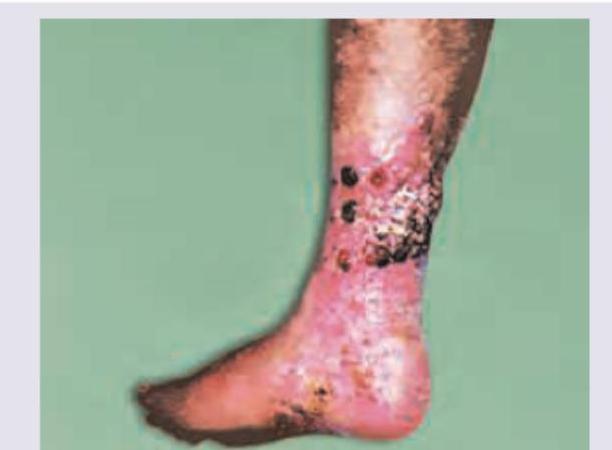
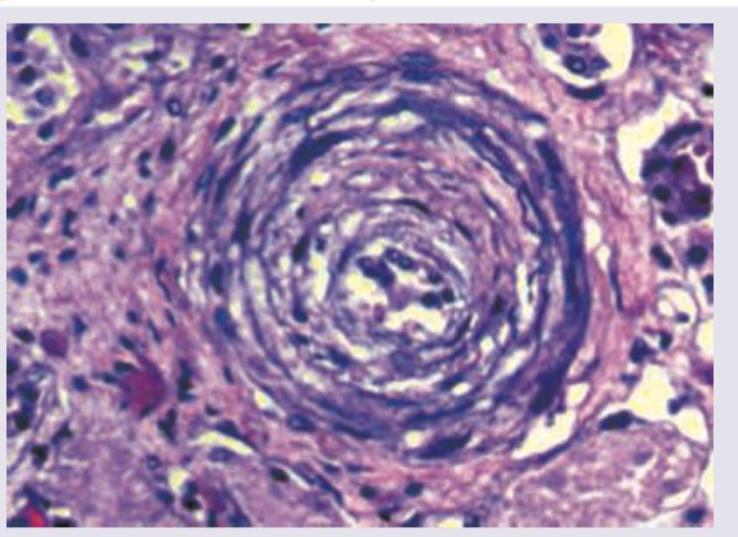
All of the following are true about aortic aneurysms except?
In polyarteritis nodosa, lesions are seen in all except?
Which of the following is NOT included in Virchow's triad?
Which of the following is NOT a characteristic of granulomatosis with polyangiitis (Wegener's granulomatosis)?
Hyperplastic arteriolitis with necrotizing arteriolitis is seen in which condition?
Aortic arch syndrome is due to which condition?
What is true about glomangioma?
Foam cells in atherosclerosis contain lipid in the form of?
What is the most common source of pulmonary embolism?
What is the most common cause of aortic aneurysm?
Explanation: ### Explanation **1. Why Option A is the Correct Answer (The Exception):** Aneurysms are classified based on their macroscopic shape into **Saccular** and **Fusiform** [1]. * **Saccular aneurysms** are spherical out-pouchings that involve only a **portion (segment)** of the vessel wall, appearing like a "sac" [1]. * **Fusiform aneurysms** involve the **entire circumference** of the vessel, resulting in a symmetrical, spindle-shaped dilation [1]. Therefore, the statement that saccular aneurysms involve the entire circumference is morphologically incorrect. **2. Analysis of Other Options:** * **Option B (True aneurysms):** By definition, a true aneurysm involves an intact but attenuated arterial wall where all three layers (**Intima, Media, and Adventitia**) are present [1]. Examples include atherosclerotic and congenital (berry) aneurysms [2]. * **Option C (Atherosclerosis):** This is the **most common cause** of aortic aneurysms, particularly abdominal aortic aneurysms (AAA). Atherosclerosis causes intimal thickening, which impairs oxygen diffusion to the media, leading to secondary atrophy and weakening of the vessel wall. * **Option D (False aneurysms):** Also known as **pseudoaneurysms**, these occur when a wall defect leads to an extravascular hematoma that communicates with the intravascular space [1]. Crucially, they are **not** bounded by the three layers of the vessel wall; instead, they are contained by perivascular connective tissue or a fibrous sac [1]. **3. NEET-PG High-Yield Pearls:** * **Most common site of Aortic Aneurysm:** Abdominal Aorta (specifically between the renal arteries and the iliac bifurcation). * **Syphilitic (Luetic) Aneurysms:** Characteristically involve the **Ascending Aorta** and show a "Tree-bark" appearance due to scarring [3]. * **Cystic Medial Necrosis:** The hallmark of aneurysms associated with **Marfan Syndrome** [4]. * **Mycotic Aneurysm:** An aneurysm resulting from a bacterial infection of the arterial wall (often from infective endocarditis) [2]. **References:** [1] Kumar V, Abbas AK, et al.. Robbins and Cotran Pathologic Basis of Disease. 9th ed. Diseases of Infancy and Childhood, pp. 509-510. [2] Kumar V, Abbas AK, et al.. Robbins and Cotran Pathologic Basis of Disease. 9th ed. The Central Nervous System, p. 1272. [3] Cross SS. Underwood's Pathology: A Clinical Approach. 6th ed. Common Clinical Problems From Cardiovascular Disease, pp. 273-274. [4] Cross SS. Underwood's Pathology: A Clinical Approach. 6th ed. Common Clinical Problems From Cardiovascular Disease, pp. 272-273.
Explanation: **Explanation:** **Polyarteritis Nodosa (PAN)** is a systemic necrotizing vasculitis that typically affects small- to medium-sized muscular arteries [1]. The hallmark of PAN is that it involves multiple organs but **characteristically spares the pulmonary circulation.** 1. **Why Lung is the correct answer:** PAN involves the systemic circulation but does not affect the pulmonary arteries. Therefore, pulmonary involvement and bronchial artery lesions are absent. If a patient presents with systemic vasculitis and lung involvement (like granulomas or hemorrhage), clinicians should look toward other diagnoses like Granulomatosis with Polyangiitis (GPA) or Eosinophilic Granulomatosis with Polyangiitis (EGPA) [1]. 2. **Why other options are incorrect:** * **Liver & Pancreas:** PAN frequently involves the mesenteric and visceral arteries. The gastrointestinal tract and liver are involved in approximately 70% of cases, often leading to abdominal pain or infarcts. * **Heart:** Coronary artery involvement is common in PAN and can lead to myocardial ischemia or heart failure. * **Kidney (Most Common):** Though not an option here, the renal artery is the most frequently involved vessel, typically causing hypertension rather than glomerulonephritis (as PAN spares the capillaries). **High-Yield Clinical Pearls for NEET-PG:** * **Association:** Strongly associated with **Hepatitis B surface antigen (HBsAg)** in about 30% of cases. * **Morphology:** Characterized by **"segmental"** transmural inflammation with **fibrinoid necrosis** [1]. * **Angiography:** Shows a **"string of pearls"** appearance due to coexisting aneurysms and fibrosis [1]. * **Key Exclusion:** PAN is **ANCA-negative** and does not affect capillaries or venules (distinguishing it from Microscopic Polyangiitis). **References:** [1] Kumar V, Abbas AK, et al.. Robbins and Cotran Pathologic Basis of Disease. 9th ed. Diseases of Infancy and Childhood, pp. 517-518.
Explanation: ### Explanation **Virchow’s Triad** describes the three primary categories of factors thought to contribute to **thrombogenesis** (the formation of a thrombus). [1] **Why Option C is the correct answer:** The question asks which factor is **NOT** included in the triad. While **Hypercoagulability** is indeed a component of the triad, the phrasing of the options in this specific question format identifies **"Risk of intravascular thrombus" (Option A)** as the *outcome* or the result of the triad, rather than a constituent part. However, based on the provided key where **Hypercoagulability** is marked, it is important to clarify: In standard pathology (Robbins), the triad consists of **Endothelial Injury, Stasis/Turbulence, and Hypercoagulability**. [1] If the question implies which of these is the *result* rather than a *cause*, Option A is technically the outlier. If the question is a "except" type where all are parts of the triad, this may be a distractor-based recall question. **Analysis of the Triad Components:** 1. **Endothelial Injury (Option B):** The most important factor. [1] Damage to the vessel wall exposes subendothelial collagen and tissue factor, triggering platelet adhesion and the coagulation cascade. [2] 2. **Venous Stasis / Abnormal Blood Flow (Option D):** Stasis (in veins) or turbulence (in arteries) prevents the dilution of clotting factors and allows platelets to come into contact with the endothelium. [1] 3. **Hypercoagulability (Option C):** Also known as thrombophilia, this refers to any alteration of the coagulation pathways (e.g., Factor V Leiden, Protein C/S deficiency) that predisposes to thrombosis. [1] **High-Yield NEET-PG Pearls:** * **Most common inherited cause of hypercoagulability:** Factor V Leiden mutation (resistance to activated Protein C). [1] * **Most common site of thrombus formation:** Deep veins of the lower limbs (DVT). * **Lines of Zahn:** Microscopic laminations (pale platelet/fibrin layers vs. dark RBC layers) that signify a thrombus formed in **flowing blood**, helping distinguish a pre-mortem thrombus from a post-mortem clot. * **Trousseau Sign:** Migratory thrombophlebitis associated with visceral malignancies (especially pancreatic cancer). [3] **References:** [1] Kumar V, Abbas AK, et al.. Robbins and Cotran Pathologic Basis of Disease. 9th ed. Hemodynamic Disorders, Thromboembolic Disease, and Shock, pp. 132-134. [2] Cross SS. Underwood's Pathology: A Clinical Approach. 6th ed. (Basic Pathology) introduces the student to key general principles of pathology, both as a medical science and as a clinical activity with a vital role in patient care. Part 2 (Disease Mechanisms) provides fundamental knowledge about the cellular and molecular processes involved in diseases, providing the rationale for their treatment. Part 3 (Systematic Pathology) deals in detail with specific diseases, with emphasis on the clinically important aspects., pp. 142-143. [3] Kumar V, Abbas AK, et al.. Robbins and Cotran Pathologic Basis of Disease. 9th ed. Diseases of Infancy and Childhood, pp. 522-523.
Explanation: **Explanation:** **Granulomatosis with Polyangiitis (GPA)**, formerly known as Wegener’s granulomatosis, is a systemic necrotizing vasculitis that primarily affects **small-sized vessels** (capillaries, venules, arterioles, and small arteries) [1]. 1. **Why Option D is correct:** GPA does **not** involve large vessels. Large-vessel vasculitis is characteristic of Takayasu arteritis and Giant Cell (Temporal) arteritis. GPA is classified under small-vessel vasculitis, typically presenting with a "triad" of upper respiratory tract involvement, lower respiratory tract involvement, and renal disease [2]. 2. **Why other options are incorrect:** * **Option A (Granuloma):** GPA is characterized by the presence of necrotizing granulomas within the vessel wall or in the surrounding extravascular tissue (e.g., in the lungs) [1]. * **Option B (Glomerulonephritis):** Renal involvement typically manifests as a focal necrotizing, often crescentic, **pauci-immune glomerulonephritis** [1], [2]. * **Option C (c-ANCA):** GPA is strongly associated with **c-ANCA** (cytoplasmic antineutrophil cytoplasmic antibodies), which are directed against **Proteinase-3 (PR3)** [1]. This is a highly specific marker for the disease. **High-Yield Clinical Pearls for NEET-PG:** * **Classic Triad:** Sinusitis/Nasopharyngeal ulcers (saddle-nose deformity), Lung nodules/cavitation, and Hematuria (Renal failure). * **ANCA Profile:** c-ANCA (PR3-ANCA) is positive in >90% of active systemic cases [1]. * **Histology:** Look for the "geographic necrosis" and palisading granulomas. * **Treatment:** Cyclophosphamide and corticosteroids are the traditional mainstays of therapy. **References:** [1] Kumar V, Abbas AK, et al.. Robbins and Cotran Pathologic Basis of Disease. 9th ed. Diseases of Infancy and Childhood, pp. 518-520. [2] Cross SS. Underwood's Pathology: A Clinical Approach. 6th ed. Common Clinical Problems From Diseases Of The Urinary And Male Genital Tracts, pp. 536-537.
Explanation: **Explanation:** The correct answer is **Malignant Hypertension**. This condition is characterized by a sudden, severe elevation in blood pressure (typically >200/120 mmHg), leading to acute vascular injury [1], [3]. **Pathogenesis and Morphology:** 1. **Hyperplastic Arteriolitis:** In response to severe hypertension, smooth muscle cells proliferate, and the basement membrane duplicates. This creates a concentric, laminated thickening of the arterial wall known as **"onion-skinning,"** [1] which progressively narrows the lumen [3]. 2. **Necrotizing Arteriolitis:** The extreme pressure causes direct endothelial damage, allowing plasma proteins (including fibrin) to leak into the vessel wall [1]. This results in **fibrinoid necrosis** and focal inflammation, often visible as smudgy, eosinophilic deposits [2], [3]. **Why other options are incorrect:** * **Benign Hypertension:** Characterized by **Hyaline Arteriolosclerosis**, where chronic, mild pressure elevation causes plasma protein leakage, resulting in a homogenous, pink, glassy thickening of the wall without necrosis or "onion-skinning." * **Buerger’s Disease (Thromboangiitis Obliterans):** An inflammatory, thrombotic disease of small and medium-sized arteries (strongly linked to smoking). It features segmental vasculitis and "microabscesses" within thrombi, not hypertensive remodeling. * **Diabetes:** Primarily associated with **Hyaline Arteriolosclerosis** (similar to benign hypertension) due to non-enzymatic glycosylation of proteins, and Monckeberg medial calcific sclerosis. **NEET-PG High-Yield Pearls:** * **Onion-skinning** = Hyperplastic arteriolitis = Malignant Hypertension [1]. * **Flea-bitten kidney:** Gross appearance in malignant hypertension due to pinpoint petechial hemorrhages from ruptured arterioles. * **Fibrinoid necrosis** is the hallmark of necrotizing arteriolitis and is also seen in various systemic vasculitides (e.g., Polyarteritis Nodosa) [3]. **References:** [1] Kumar V, Abbas AK, et al.. Robbins and Cotran Pathologic Basis of Disease. 9th ed. The Kidney, pp. 943-945. [2] Cross SS. Underwood's Pathology: A Clinical Approach. 6th ed. Common Clinical Problems From Cardiovascular Disease, pp. 276-277. [3] Kumar V, Abbas AK, et al.. Robbins and Cotran Pathologic Basis of Disease. 9th ed. Diseases of Infancy and Childhood, pp. 498-499.
Explanation: **Explanation:** **Takayasu Arteritis (Correct Answer):** Takayasu arteritis is a chronic, granulomatous large-vessel vasculitis that primarily involves the **aortic arch** and its major branches [1, 2]. It leads to transmural fibrous thickening of the aortic wall, resulting in luminal narrowing, stenosis, or aneurysmal dilation. Because it frequently causes a marked weakening or absence of upper extremity pulses, it is clinically known as **"Pulseless Disease."** The term **"Aortic Arch Syndrome"** refers to the constellation of symptoms (claudication, visual disturbances, and syncope) resulting from ischemia to the head and upper limbs due to this involvement. **Why other options are incorrect:** * **Polyarteritis Nodosa (PAN):** A necrotizing vasculitis of **medium-sized** muscular arteries [3]. It typically involves renal and visceral vessels but characteristically **spares the lungs** and does not involve the aortic arch. * **Temporal Arteritis (Giant Cell Arteritis):** While also a large-vessel granulomatous vasculitis, it most commonly affects the **extracranial branches of the carotid artery** (e.g., temporal, ophthalmic) [1]. While it can involve the aorta, it is not the classic cause of "Aortic Arch Syndrome." * **Buerger Disease (Thromboangiitis Obliterans):** A segmental, thrombosing vasculitis of **small and medium-sized** arteries, primarily in the extremities (radial/tibial). It is strongly associated with heavy tobacco use and does not affect the aorta. **High-Yield Clinical Pearls for NEET-PG:** * **Demographics:** Classically affects young females (<40 years), often of Asian descent [1]. * **Histology:** Granulomatous inflammation of the media with extensive "tree-bark" intimal wrinkling. * **Diagnosis:** Elevated ESR and angiography (showing "string of pearls" or stenosis). * **Key Distinction:** Takayasu and Giant Cell Arteritis look histologically identical; they are distinguished primarily by the **age of the patient** (<40 vs. >50 years) [1]. **References:** [1] Kumar V, Abbas AK, et al.. Robbins and Cotran Pathologic Basis of Disease. 9th ed. Diseases of Infancy and Childhood, pp. 515-517. [2] Cross SS. Underwood's Pathology: A Clinical Approach. 6th ed. Common Clinical Problems From Osteoarticular And Connective Tissue Disease, pp. 688-689. [3] Kumar V, Abbas AK, et al.. Robbins and Cotran Pathologic Basis of Disease. 9th ed. Diseases of Infancy and Childhood, pp. 517-518.
Explanation: **Explanation:** **Glomus tumors** are benign, highly vascularized tumors arising from the modified smooth muscle cells of the **glomus body**, a specialized arteriovenous anastomosis involved in thermoregulation. **Why Option B is correct:** While the classic "glomus tumor" is famously subungual, the specific variant known as **Glomangioma** (which has a prominent vascular component resembling a cavernous hemangioma) is more frequently found in the **distal extremities (hands and feet)** but is less strictly localized to the subungual region compared to the solid glomus tumor. **Analysis of Incorrect Options:** * **Option A:** The **solid glomus tumor** is the classic subungual lesion (under the fingernail). Glomangiomas are more likely to be found in the deep dermis or subcutaneous tissue of the extremities. * **Option C:** While glomangiomas contain large vascular channels, **thrombosis** is not a characteristic or defining pathological feature of this tumor (unlike cavernous hemangiomas where it is common). * **Option D:** The **solid glomus tumor** is the most common histological variant (75%), followed by glomangioma (20%) and glomangiomyoma (5%). **High-Yield Clinical Pearls for NEET-PG:** * **Classic Triad:** Paroxysmal pain, localized tenderness, and sensitivity to cold (especially in subungual types). * **Histology:** Nests of uniform, round "glomus cells" with "punched-out" nuclei surrounding thin-walled vascular spaces. * **IHC Marker:** They are positive for **Alpha-Smooth Muscle Actin (α-SMA)** because they originate from modified smooth muscle cells. * **Hildreth’s Sign:** Disappearance of pain upon inflation of a blood pressure cuff (positive in glomus tumors).
Explanation: ### Explanation **Core Concept: The Pathogenesis of Foam Cells** The hallmark of early atherosclerosis is the formation of **foam cells** within the arterial intima. The process begins when circulating **LDL (Low-Density Lipoprotein)** enters the subendothelial space and becomes trapped [1]. In this environment, LDL undergoes modification, primarily **oxidation** by free radicals released by endothelial cells or macrophages [1]. Macrophages possess **Scavenger Receptors (SR-A and CD36)** that specifically recognize and internalize **Oxidized LDL (ox-LDL)**. Unlike the regulated LDL-receptor pathway, scavenger receptors are not downregulated by high intracellular cholesterol levels [2]. This leads to the uncontrolled accumulation of lipids, giving the macrophage a foamy, vacuolated appearance—hence the term "foam cell." **Analysis of Options:** * **A. Oxidized LDL (Correct):** This is the specific modified form of lipid that triggers macrophage uptake via scavenger receptors, leading to fatty streak formation [1]. * **B. Reduced LDL:** Reduction is the opposite of oxidation. Native or reduced LDL is not recognized by scavenger receptors and does not lead to foam cell formation. * **C & D. Oxidized/Reduced VLDL:** While VLDL (Very Low-Density Lipoprotein) carries triglycerides, it is not the primary lipid component involved in the classic "Response to Injury" hypothesis of atherosclerosis. **High-Yield Clinical Pearls for NEET-PG:** * **Fatty Streaks:** The earliest visible lesion of atherosclerosis, composed entirely of foam cells. * **Scavenger Receptors:** Key receptors involved are **SR-A** and **CD36**. * **Key Cytokines:** Macrophages in the plaque release **IL-1 and TNF**, which increase leukocyte adhesion, further propagating the inflammatory cycle. * **Location:** Atherosclerosis most commonly affects the **Abdominal Aorta** (most common site), followed by Coronary arteries. **References:** [1] Kumar V, Abbas AK, et al.. Robbins and Cotran Pathologic Basis of Disease. 9th ed. Diseases of Infancy and Childhood, pp. 503-504. [2] Kumar V, Abbas AK, et al.. Robbins and Cotran Pathologic Basis of Disease. 9th ed. Genetic Disorders, pp. 156-157.
Explanation: **Explanation:** **Correct Answer: C. Large veins of the leg** Pulmonary Embolism (PE) is most commonly caused by a **Deep Vein Thrombosis (DVT)**. Approximately **95%** of all pulmonary emboli originate from the deep large veins of the lower extremities, specifically those located above the knee (popliteal, femoral, and iliac veins) [1]. Thrombi formed in these large-caliber vessels are more likely to detach and travel through the inferior vena cava, right heart, and into the pulmonary arterial circulation [4]. **Analysis of Incorrect Options:** * **A. Amniotic fluid embolism:** This is a rare, catastrophic obstetric complication. While it is a type of embolism, it is not the "most common" source of PE [2]. * **B. Renal artery embolism:** Emboli in the renal artery typically originate from the heart (e.g., atrial fibrillation) and result in renal infarction, not pulmonary embolism [5]. For an embolus to reach the lungs, it must originate in the venous system. * **D. Cardiothoracic surgery:** While surgery is a major risk factor for developing DVT (due to stasis and hypercoagulability), the surgery itself is not the "source." The source remains the peripheral venous thrombus that forms post-operatively [2]. **High-Yield Clinical Pearls for NEET-PG:** * **Virchow’s Triad:** The three factors contributing to thrombosis are endothelial injury, stasis, and hypercoagulability. * **Saddle Embolus:** A large embolus that straddles the bifurcation of the main pulmonary artery, often leading to sudden death. * **Gold Standard Investigation:** CT Pulmonary Angiography (CTPA) is the investigation of choice for PE [3]. * **ECG Finding:** The classic (though infrequent) pattern is **S1Q3T3** (deep S wave in lead I, Q wave in lead III, and inverted T wave in lead III). **References:** [1] Cross SS. Underwood's Pathology: A Clinical Approach. 6th ed. (Basic Pathology) introduces the student to key general principles of pathology, both as a medical science and as a clinical activity with a vital role in patient care. Part 2 (Disease Mechanisms) provides fundamental knowledge about the cellular and molecular processes involved in diseases, providing the rationale for their treatment. Part 3 (Systematic Pathology) deals in detail with specific diseases, with emphasis on the clinically important aspects., pp. 143-144. [2] Kumar V, Abbas AK, et al.. Robbins and Cotran Pathologic Basis of Disease. 9th ed. The Lung, p. 705. [3] Kumar V, Abbas AK, et al.. Robbins and Cotran Pathologic Basis of Disease. 9th ed. The Lung, pp. 705-706. [4] Cross SS. Underwood's Pathology: A Clinical Approach. 6th ed. (Basic Pathology) introduces the student to key general principles of pathology, both as a medical science and as a clinical activity with a vital role in patient care. Part 2 (Disease Mechanisms) provides fundamental knowledge about the cellular and molecular processes involved in diseases, providing the rationale for their treatment. Part 3 (Systematic Pathology) deals in detail with specific diseases, with emphasis on the clinically important aspects., pp. 144-145. [5] Cross SS. Underwood's Pathology: A Clinical Approach. 6th ed. (Basic Pathology) introduces the student to key general principles of pathology, both as a medical science and as a clinical activity with a vital role in patient care. Part 2 (Disease Mechanisms) provides fundamental knowledge about the cellular and molecular processes involved in diseases, providing the rationale for their treatment. Part 3 (Systematic Pathology) deals in detail with specific diseases, with emphasis on the clinically important aspects., pp. 145-146.
Explanation: **Atherosclerosis** is the most common cause of aortic aneurysms, particularly **Abdominal Aortic Aneurysms (AAA)** [4]. The underlying mechanism involves the formation of atherosclerotic plaques in the tunica intima, which impairs the diffusion of nutrients and oxygen to the underlying tunica media. This leads to cystic medial necrosis, thinning of the vessel wall [3], and loss of elastic fibers. The weakened wall eventually succumbs to intraluminal pressure, resulting in a permanent, abnormal dilation [4]. **Analysis of Incorrect Options:** * **Syphilis (Tertiary):** Classically causes **obliterative endarteritis** of the vasa vasorum, leading to ischemia of the medial layer. It primarily affects the **ascending aorta** (Thoracic Aortic Aneurysm) [2], but its incidence has significantly declined with antibiotics. * **Trauma:** Can cause "pseudoaneurysms" or localized dissections (commonly at the aortic isthmus), but it is a rare cause of true aneurysmal dilation compared to chronic degenerative diseases [4]. * **Congenital:** Conditions like Marfan Syndrome or Ehlers-Danlos Syndrome lead to "cystic medial degeneration." While high-yield for exams, they represent a small fraction of total cases compared to the widespread prevalence of atherosclerosis [2]. **High-Yield Clinical Pearls for NEET-PG:** * **Most common site for AAA:** Below the renal arteries and above the iliac bifurcation [4]. * **Most common risk factor:** Smoking (more significant than hypertension for AAA) [4]. * **Morphology:** Most atherosclerotic aneurysms are **fusiform** (circumferential dilation). * **Classic Triad of Rupture:** Sudden severe abdominal/back pain, hypotension, and a pulsatile abdominal mass [1]. **References:** [1] Cross SS. Underwood's Pathology: A Clinical Approach. 6th ed. Common Clinical Problems From Cardiovascular Disease, pp. 271-272. [2] Kumar V, Abbas AK, et al.. Robbins and Cotran Pathologic Basis of Disease. 9th ed. Diseases of Infancy and Childhood, pp. 511-512. [3] Cross SS. Underwood's Pathology: A Clinical Approach. 6th ed. Common Clinical Problems From Cardiovascular Disease, pp. 267-268. [4] Kumar V, Abbas AK, et al.. Robbins and Cotran Pathologic Basis of Disease. 9th ed. Diseases of Infancy and Childhood, pp. 510-511.
Atherosclerosis
Practice Questions
Hypertensive Vascular Disease
Practice Questions
Aneurysms and Dissection
Practice Questions
Vasculitis
Practice Questions
Venous Disease and Thrombosis
Practice Questions
Vascular Tumors
Practice Questions
Varicose Veins and Lymphatics
Practice Questions
Pathology of Vascular Interventions
Practice Questions
Vascular Diseases in Specific Organs
Practice Questions
Congenital Vascular Anomalies
Practice Questions
Get full access to all questions, explanations, and performance tracking.
Start For Free