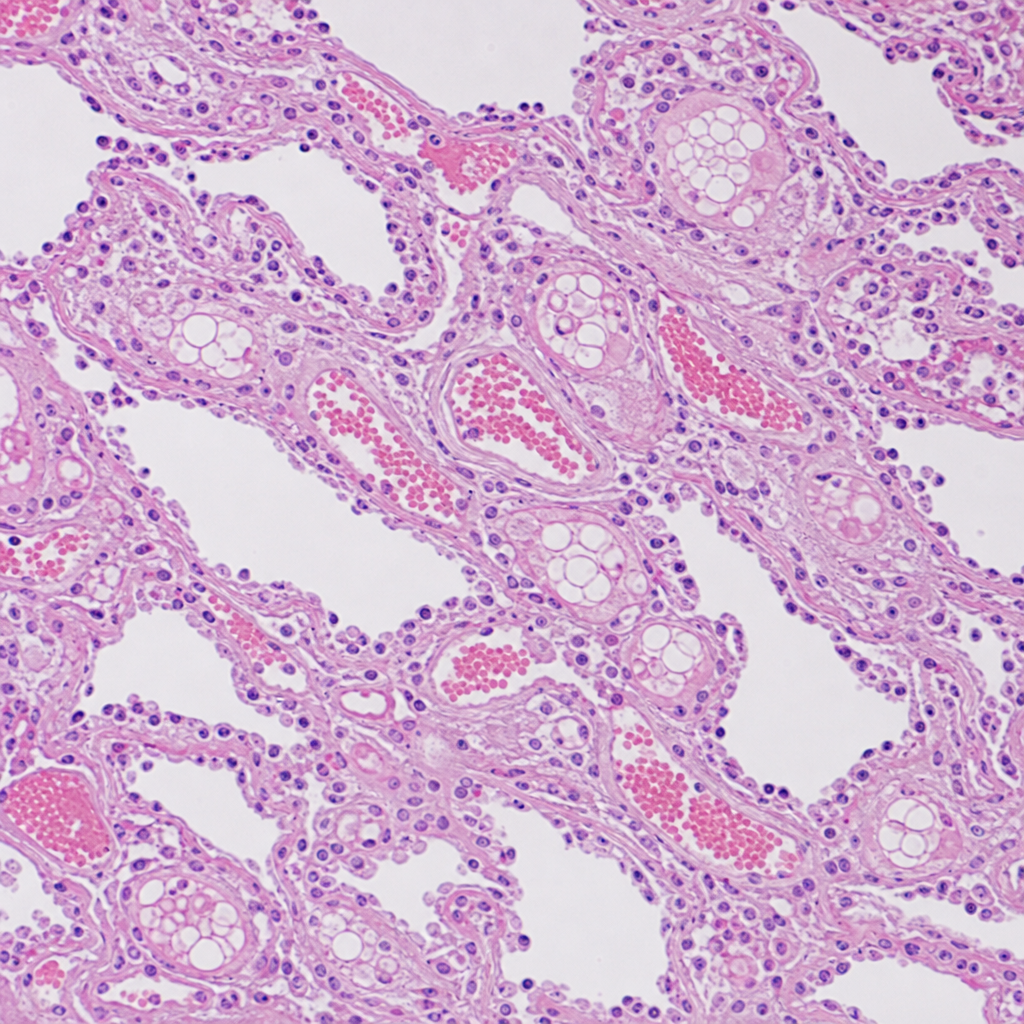
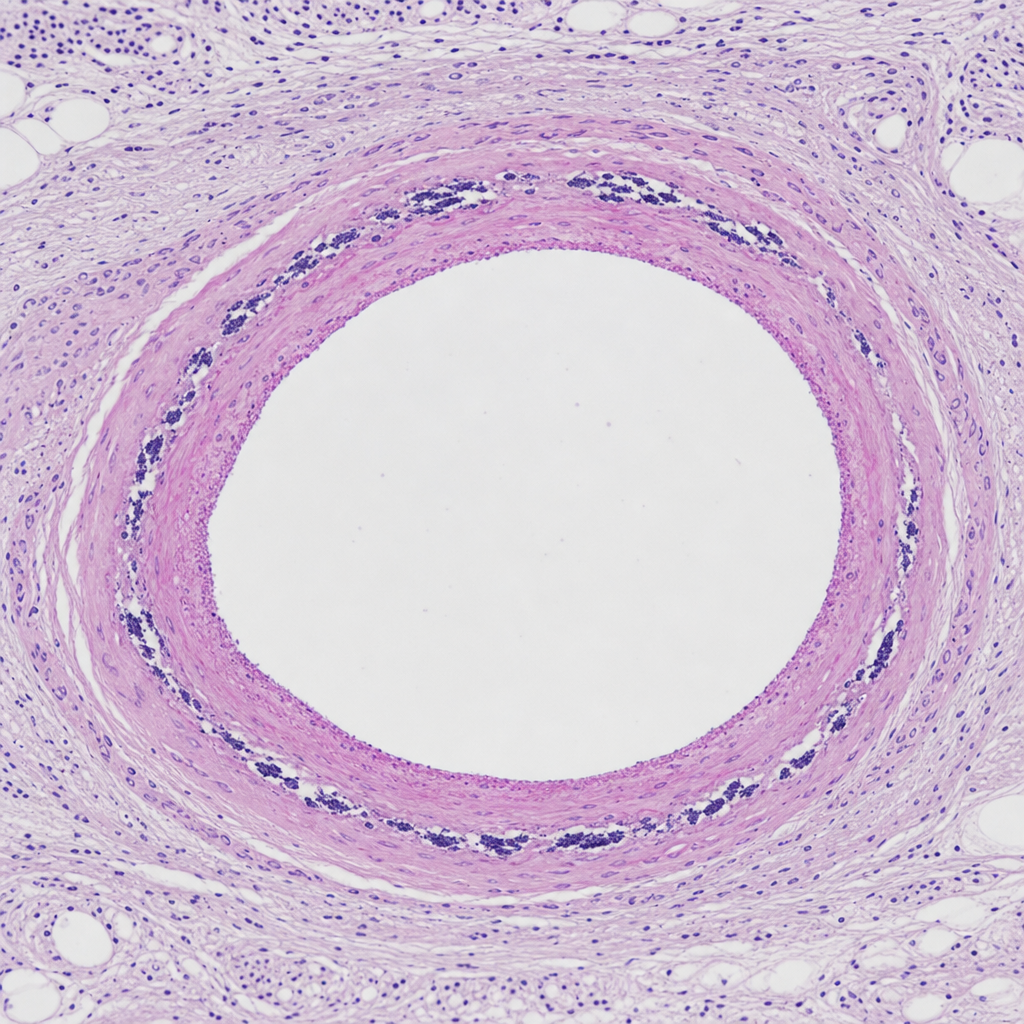
Kaposi's sarcoma is a tumor of which system?
A 55-year-old woman presents with several weeks of fever, abdominal pain, weight loss, and fatigue. Three days prior to assessment, she developed a left foot drop. Her blood pressure is 160/90 mm Hg and pulse is 80/min. Physical examination confirms left peroneal nerve damage and a bilateral sensory neuropathy in both legs. There are no skin rashes. Laboratory evaluation reveals an ESR of 105 mm/h, WBC of 14,000/mL, and negative serologic tests for antineutrophil cytoplasmic antibody (ANCA) and ANA. The eosinophil count is normal, and urinalysis is negative for casts, protein, and red cells. A clinical diagnosis of polyarteritis nodosa is made. Which of the following is the most likely mechanism for renal injury in this condition?
von Willebrand factor (vWF) is used as a marker for which of the following conditions?
A 12-year-old boy develops cardiac symptoms attributed to rheumatic fever following a streptococcal throat infection. Years later, at age 34, he is admitted with pulmonary edema. Examination reveals a diastolic murmur at the apex, and mitral stenosis is diagnosed. Before surgical evaluation, which of the following findings can be attributed to mitral stenosis?
Pale infarcts are seen at all of the following sites except?
What is true about the basic structure of an atherosclerotic plaque?
All of the following are risk factors for atherosclerosis except?
Onion skin thickening of the arteriolar wall is seen in which of the following conditions?
Hyperplastic arteriolitis with necrotizing arteriolitis is seen in?
Which of the following conditions does NOT present with granulomatous vasculitis?
Explanation: **Explanation:** **Kaposi’s Sarcoma (KS)** is a low-grade vascular neoplasm caused by **Human Herpesvirus-8 (HHV-8)** [3], [4], also known as Kaposi Sarcoma-associated Herpesvirus (KSHV). 1. **Why Blood Vessels is correct:** KS is a tumor of **endothelial cell origin** [1]. The neoplastic cells (spindle cells) express markers characteristic of both vascular and lymphatic endothelial cells [2] (e.g., CD31, CD34, and podoplanin). Histologically, it is characterized by the proliferation of spindle-shaped cells and the formation of slit-like vascular spaces filled with red blood cells [1]. 2. **Why other options are incorrect:** * **Reticuloendothelial system:** While KS is common in immunocompromised patients (like those with HIV/AIDS), it originates from the endothelium of the vasculature, not from the phagocytic cells (macrophages/monocytes) of the reticuloendothelial system. * **Striated/Smooth muscles:** Tumors of muscle origin are called Rhabdomyosarcomas (striated) or Leiomyosarcomas (smooth). While KS contains spindle cells that may mimic muscle fibers, they lack myogenic markers like desmin or actin. **High-Yield Clinical Pearls for NEET-PG:** * **Four Clinical Variants:** Classic (European), Endemic (African), Iatrogenic (Transplant-associated), and AIDS-associated (Epidemic) [3]. * **Histology Hallmark:** "Slit-like spaces" containing extravasated RBCs and **Hyaline droplets** (representing degenerated RBCs) [1]. * **Diagnostic Marker:** Nuclear staining for **HHV-8 (LANA-1)** is the most specific diagnostic test. * **Association:** It is the most common neoplasm associated with AIDS [3]. **References:** [1] Kumar V, Abbas AK, et al.. Robbins and Cotran Pathologic Basis of Disease. 9th ed. Diseases of Infancy and Childhood, pp. 526-527. [2] Kumar V, Abbas AK, et al.. Robbins and Cotran Pathologic Basis of Disease. 9th ed. Diseases of Infancy and Childhood, pp. 527-528. [3] Kumar V, Abbas AK, et al.. Robbins and Cotran Pathologic Basis of Disease. 9th ed. Diseases of the Immune System, pp. 261-262. [4] Cross SS. Underwood's Pathology: A Clinical Approach. 6th ed. (Basic Pathology) introduces the student to key general principles of pathology, both as a medical science and as a clinical activity with a vital role in patient care. Part 2 (Disease Mechanisms) provides fundamental knowledge about the cellular and molecular processes involved in diseases, providing the rationale for their treatment. Part 3 (Systematic Pathology) deals in detail with specific diseases, with emphasis on the clinically important aspects., pp. 219-220.
Explanation: **Explanation:** **Polyarteritis Nodosa (PAN)** is a systemic necrotizing vasculitis that typically affects small-to-medium-sized muscular arteries. The hallmark of PAN is that it **spares the smallest vessels** (capillaries, venules, and arterioles). 1. **Why Option D is Correct:** In PAN, renal involvement is common and is the leading cause of death. However, because PAN does not affect capillaries, it **does not cause glomerulonephritis**. Instead, the renal injury results from **necrotizing vasculitis of the renal arteries** (interlobar and arcuate arteries). This leads to vessel narrowing, thrombosis, and ischemia [1]. The "string of pearls" appearance on angiography is due to microaneurysms forming at sites of transmural necrosis [1]. 2. **Why Other Options are Incorrect:** * **Options A & B:** Nephrotic syndrome and diffuse glomerulonephritis involve the glomerular capillaries. Since PAN spares capillaries, these are not features of the disease. If glomerulonephritis were present, the diagnosis would shift toward Microscopic Polyangiitis (MPA). * **Option C:** Granuloma formation is a characteristic of Granulomatosis with Polyangiitis (Wegener's) or Eosinophilic Granulomatosis with Polyangiitis (Churg-Strauss), not PAN [3]. **NEET-PG High-Yield Pearls:** * **ANCA Status:** PAN is characteristically **ANCA-negative** [2]. * **Associations:** Strongly associated with **Hepatitis B surface antigen (HBsAg)** in ~30% of cases [2]. * **Clinical Sign:** "Mononeuritis multiplex" (e.g., foot drop) is a classic presentation. * **Pathology:** Shows **fibrinoid necrosis**; lesions of different stages (acute and healing) coexist in the same vessel [1]. * **Key Exclusion:** PAN **never** involves the pulmonary arteries (unlike other vasculitides). **References:** [1] Kumar V, Abbas AK, et al.. Robbins and Cotran Pathologic Basis of Disease. 9th ed. Diseases of Infancy and Childhood, pp. 517-518. [2] Cross SS. Underwood's Pathology: A Clinical Approach. 6th ed. Common Clinical Problems From Osteoarticular And Connective Tissue Disease, pp. 687-688. [3] Kumar V, Abbas AK, et al.. Robbins and Cotran Pathologic Basis of Disease. 9th ed. Diseases of Infancy and Childhood, pp. 519-520.
Explanation: **Explanation:** **1. Why Angiosarcoma is correct:** von Willebrand factor (vWF), also known as **Factor VIII-related antigen**, is synthesized by endothelial cells and megakaryocytes. In pathology, it serves as a specific **immunohistochemical (IHC) marker** for tumors of vascular endothelial origin. **Angiosarcoma** is a highly malignant neoplasm of endothelial cells; therefore, its cells express vWF, helping pathologists confirm the vascular nature of the tumor, especially in poorly differentiated cases where vessel formation is not obvious [1]. **2. Why other options are incorrect:** * **Polycythemia Vera:** This is a myeloproliferative neoplasm characterized by the overproduction of red blood cells due to a mutation in the *JAK2* gene. It is diagnosed via hemoglobin levels, bone marrow biopsy, and genetic testing, not endothelial markers. * **Leukemia:** These are malignancies of hematopoietic stem cells (white blood cells). They express markers like CD34, CD33, or TdT, depending on the lineage, but do not express vWF as they are not derived from endothelial cells. **3. High-Yield Clinical Pearls for NEET-PG:** * **Other Endothelial Markers:** Besides vWF, other highly specific markers for vascular tumors (like Angiosarcoma and Kaposi Sarcoma) include **CD31** (most specific) and **CD34** [1]. * **Weibel-Palade Bodies:** These are the storage organelles for vWF found within endothelial cells. On electron microscopy, they are a classic diagnostic feature of vascular tumors. * **Angiosarcoma Associations:** Look for a history of chronic lymphedema (Stewart-Treves Syndrome), prior radiation therapy, or exposure to vinyl chloride/thorotrast (liver angiosarcoma). **References:** [1] Kumar V, Abbas AK, et al.. Robbins and Cotran Pathologic Basis of Disease. 9th ed. Diseases of Infancy and Childhood, pp. 527-528.
Explanation: ### Explanation **Correct Answer: B. Indentation of the middle third of the esophagus by an enlarged left atrium** **Mechanism:** In mitral stenosis (MS), the narrowed valve orifice obstructs blood flow from the left atrium (LA) to the left ventricle (LV). This leads to a chronic pressure and volume overload in the **left atrium**, resulting in significant **LA enlargement (dilatation)** [1]. Anatomically, the left atrium lies directly anterior to the esophagus. On a lateral chest X-ray or barium swallow study, an enlarged LA characteristically displaces and indents the middle third of the esophagus posteriorly. This is a classic radiological sign of MS. **Analysis of Incorrect Options:** * **A. Large left ventricle:** In pure mitral stenosis, the LV is "protected" from volume overload. Because less blood passes through the stenotic valve, the LV is typically **normal or small** in size. LV enlargement would suggest mitral regurgitation or aortic valve disease. * **C. Notching of the ribs:** This is a classic sign of **Coarctation of the Aorta**, caused by the development of collateral circulation through the intercostal arteries. * **D. Bounding, full pulse:** Also known as a "water-hammer" pulse, this is characteristic of **Aortic Regurgitation** [2]. In MS, the pulse is typically low-volume (pulsus parvus) due to reduced stroke volume. **NEET-PG High-Yield Pearls:** * **Most common cause of MS:** Rheumatic Heart Disease (99% of cases). * **Earliest sign of LA enlargement on CXR:** Straightening of the left cardiac border. * **Advanced CXR signs:** "Double atrial shadow" (right border) and elevation of the left mainstem bronchus (widening of the carinal angle). * **Ortner’s Syndrome:** Hoarseness of voice due to compression of the left recurrent laryngeal nerve by a massively enlarged LA. * **Auscultation:** Loud S1, Opening Snap (OS), and a mid-diastolic rumbling murmur. **References:** [1] Cross SS. Underwood's Pathology: A Clinical Approach. 6th ed. Common Clinical Problems From Cardiovascular Disease, pp. 293-294. [2] Cross SS. Underwood's Pathology: A Clinical Approach. 6th ed. Common Clinical Problems From Cardiovascular Disease, pp. 292-293.
Explanation: **Explanation:** The classification of infarcts into **Pale (White)** or **Red (Hemorrhagic)** is determined by the tissue density and the nature of its blood supply [1]. **1. Why Lung is the Correct Answer:** Pale infarcts occur in **solid organs** with **end-arterial circulation** (single blood supply) [1]. The **Lung**, however, is a loose, spongy tissue with a **dual blood supply** (Pulmonary and Bronchial arteries) [2]. When an obstruction occurs, blood from the secondary patent supply seeps into the necrotic area, making the infarct **Red (Hemorrhagic)** [1], [2]. Therefore, the lung is a classic site for red infarcts, not pale ones. **2. Analysis of Incorrect Options:** * **Heart (A):** The heart is a solid organ with functional end-arteries. Myocardial infarction typically results in a pale (anemic) infarct [1]. * **Spleen (B):** The spleen has a dense parenchyma and a single arterial supply (Splenic artery). Obstruction leads to a characteristic wedge-shaped pale infarct [1], [3]. * **Kidney (C):** Like the spleen, the kidney is a solid organ with end-arterial branches (Interlobar/Arcuate arteries). Renal infarcts are classically pale and wedge-shaped [1], [3]. **3. High-Yield Clinical Pearls for NEET-PG:** * **Pale Infarcts:** Seen in solid organs with end-arteries (Heart, Spleen, Kidney) [1]. * **Red Infarcts:** Seen in: 1. **Dual blood supply** (Lung, Liver, Small Intestine) [2]. 2. **Loose tissues** (Lung) [1]. 3. **Venous occlusions** (e.g., Ovarian torsion, Testicular torsion). 4. **Reperfusion injury** (e.g., after angioplasty) [1]. * **Morphology:** Most infarcts are wedge-shaped, with the apex pointing toward the site of occlusion [1], [3]. * **Histology:** The hallmark of most infarcts is **Coagulative Necrosis** (Exception: Brain, which shows Liquefactive Necrosis) [3]. **References:** [1] Kumar V, Abbas AK, et al.. Robbins and Cotran Pathologic Basis of Disease. 9th ed. Hemodynamic Disorders, Thromboembolic Disease, and Shock, p. 140. [2] Kumar V, Abbas AK, et al.. Robbins and Cotran Pathologic Basis of Disease. 9th ed. Hemodynamic Disorders, Thromboembolic Disease, and Shock, pp. 137-138. [3] Cross SS. Underwood's Pathology: A Clinical Approach. 6th ed. (Basic Pathology) introduces the student to key general principles of pathology, both as a medical science and as a clinical activity with a vital role in patient care. Part 2 (Disease Mechanisms) provides fundamental knowledge about the cellular and molecular processes involved in diseases, providing the rationale for their treatment. Part 3 (Systematic Pathology) deals in detail with specific diseases, with emphasis on the clinically important aspects., pp. 148-149.
Explanation: **Explanation:** Atherosclerosis is a chronic inflammatory response of the arterial wall to endothelial injury. An atherosclerotic plaque (atheroma) is an intimal-based lesion composed of two main components: a superficial **fibrous cap** and a deep **necrotic core** [1]. 1. **Why Option C is Correct:** The **fibrous cap** is the defining structural feature that covers the lesion. It is composed of smooth muscle cells (SMCs), macrophages, foam cells, lymphocytes, and a dense extracellular matrix (collagen and elastin) [2]. It separates the highly thrombogenic necrotic core from the circulating blood. 2. **Why Option B is Incorrect:** Atherosclerosis is primarily a disease of the **tunica intima** [2]. While smooth muscle cells migrate from the media into the intima to form the plaque, the structural lesion itself is located within the intimal layer. 3. **Why Option D is Incorrect:** The **necrotic core** (the "gruel") contains lipid (mainly cholesterol and cholesterol esters), debris from dead cells, foam cells, and fibrin [1]. Collagen, elastin, and proteoglycans are structural components found in the **fibrous cap**, not the necrotic core [2]. **High-Yield NEET-PG Pearls:** * **Vulnerable vs. Stable Plaque:** A "vulnerable" plaque (prone to rupture) has a **thin fibrous cap**, a large lipid core, and increased inflammation. A "stable" plaque has a **thick, densely collagenous cap** [1]. * **Earliest Lesion:** The "fatty streak" is the precursor to atherosclerosis, seen even in infants [2]. * **Most Common Site:** Abdominal aorta > Coronary arteries > Popliteal arteries > Internal carotid arteries > Circle of Willis. * **Key Growth Factor:** PDGF (Platelet-Derived Growth Factor) released by activated platelets and macrophages stimulates SMC migration and proliferation. **References:** [1] Kumar V, Abbas AK, et al.. Robbins and Cotran Pathologic Basis of Disease. 9th ed. Diseases of Infancy and Childhood, pp. 499-507. [2] Cross SS. Underwood's Pathology: A Clinical Approach. 6th ed. Common Clinical Problems From Cardiovascular Disease, pp. 268-270.
Explanation: **Explanation:** Atherosclerosis is a chronic inflammatory response of the arterial wall to endothelial injury. Risk factors are categorized into **Major (Non-modifiable and Modifiable)** and **Emerging/Minor** factors. **Why "Decreased fibrinogen levels" is the correct answer:** Fibrinogen is an acute-phase reactant and a key component of the coagulation cascade. **Increased** (not decreased) fibrinogen levels are associated with an increased risk of atherosclerosis. High fibrinogen levels promote a pro-thrombotic state, increase blood viscosity, and contribute to the formation of the atherosclerotic plaque's fibrous cap. Therefore, decreased levels are actually protective or neutral, rather than a risk factor. **Analysis of Incorrect Options:** * **Increased waist-hip ratio:** This is a marker of central (android) obesity. Visceral fat is metabolically active and associated with insulin resistance, systemic inflammation, and pro-atherogenic lipid profiles [2]. * **Hyperhomocysteinemia:** Elevated homocysteine levels (often due to Vitamin B12/Folate deficiency) cause endothelial dysfunction through the production of reactive oxygen species, directly contributing to atherogenesis [1]. * **Decreased HDL levels:** HDL (High-Density Lipoprotein) is "good cholesterol" because it facilitates reverse cholesterol transport from the periphery to the liver. Low levels (<40 mg/dL) remove this protective mechanism, significantly increasing cardiovascular risk [1]. **High-Yield Clinical Pearls for NEET-PG:** * **Most important independent risk factor:** Hypercholesterolemia (specifically high LDL) [1]. * **Strongest predictor of MI:** High LDL-to-HDL ratio. * **Emerging Risk Factors:** Elevated C-Reactive Protein (CRP), Lipoprotein(a), and Chlamydia pneumoniae infections [2]. * **Morphology:** The earliest lesion is the **Fatty Streak** (seen even in infants); the hallmark lesion is the **Atheromatous Plaque** [3]. **References:** [1] Kumar V, Abbas AK, et al.. Robbins and Cotran Pathologic Basis of Disease. 9th ed. Diseases of Infancy and Childhood, pp. 500-504. [2] Cross SS. Underwood's Pathology: A Clinical Approach. 6th ed. Common Clinical Problems From Cardiovascular Disease, pp. 270-271. [3] Cross SS. Underwood's Pathology: A Clinical Approach. 6th ed. Common Clinical Problems From Cardiovascular Disease, pp. 268-270.
Explanation: **Hyperplastic Arteriosclerosis** is the correct answer. This condition is the hallmark of **malignant hypertension** (diastolic BP >120 mmHg) [2]. The "onion skin" appearance is caused by the concentric, laminated thickening of the arteriolar wall due to the proliferation of smooth muscle cells and the reduplication of the basement membrane [1], [2]. This is often accompanied by fibrinoid necrosis (necrotizing arteriolitis), particularly in the kidneys, leading to a "flea-bitten kidney" appearance [1]. **Analysis of Incorrect Options:** * **A. Atherosclerosis:** Affects large and medium-sized elastic and muscular arteries (e.g., aorta, coronary arteries). It is characterized by intimal plaques (atheromas) containing a lipid core and a fibrous cap, not concentric arteriolar thickening [2]. * **B. Monckeberg Medial Calcific Sclerosis:** Characterized by ring-like calcifications within the media of medium-sized muscular arteries (e.g., radial or tibial arteries). It does not narrow the lumen and is usually clinically insignificant. * **C. Hyaline Arteriosclerosis:** Seen in **benign hypertension** and diabetes mellitus [2], [3]. It involves the leakage of plasma proteins across injured endothelium, appearing as pink, homogenous hyaline thickening of the wall with luminal narrowing, rather than laminated layers [3]. **High-Yield Pearls for NEET-PG:** * **Onion-skinning** is also seen in **Ewing’s Sarcoma** (periosteal reaction) and **Primary Sclerosing Cholangitis** (periductal fibrosis). * **Hyaline vs. Hyperplastic:** Hyaline = Benign HTN/Diabetes; Hyperplastic = Malignant HTN [2]. * **Flea-bitten kidney:** Gross appearance in malignant hypertension due to petechial hemorrhages on the cortical surface. **References:** [1] Kumar V, Abbas AK, et al.. Robbins and Cotran Pathologic Basis of Disease. 9th ed. The Kidney, p. 945. [2] Kumar V, Abbas AK, et al.. Robbins and Cotran Pathologic Basis of Disease. 9th ed. Diseases of Infancy and Childhood, pp. 498-499. [3] Kumar V, Abbas AK, et al.. Robbins and Cotran Pathologic Basis of Disease. 9th ed. The Kidney, pp. 943-945.
Explanation: **Explanation:** The hallmark of **Malignant Hypertension** (defined by a rapid rise in blood pressure, typically >200/120 mmHg) is severe, acute vascular injury [2]. This manifests histologically as two distinct patterns: 1. **Hyperplastic Arteriolitis:** Characterized by "onion-skin" thickening of the arteriolar walls due to concentric laminations of smooth muscle cells and basement membrane [1], [3]. 2. **Necrotizing Arteriolitis:** In cases of extreme pressure, fibrinoid necrosis occurs, where the vessel wall undergoes smudgy, eosinophilic change with focal rupture and hemorrhage [1], [3]. **Analysis of Options:** * **Wegener’s Granulomatosis (GPA):** This is a small-vessel vasculitis characterized by a triad of necrotizing granulomas of the respiratory tract, necrotizing vasculitis, and glomerulonephritis. It is associated with c-ANCA, not hypertensive changes. * **Buerger’s Disease (Thromboangiitis Obliterans):** This is a segmental, thrombosing, acute and chronic inflammation of medium and small-sized arteries (typically in smokers). It features "microabscesses" within the thrombus rather than onion-skinning. * **Benign Hypertension:** This leads to **Hyaline Arteriolosclerosis**, characterized by homogeneous, pink, hyaline thickening of the arteriolar walls due to plasma protein leakage and increased matrix synthesis [3]. It lacks the proliferative "onion-skin" or necrotizing features. **High-Yield Pearls for NEET-PG:** * **Onion-skinning** is most commonly seen in the renal arterioles in malignant hypertension [1]. * **Fibrinoid necrosis** in malignant hypertension is often referred to as "flea-bitten kidney" due to petechial hemorrhages on the cortical surface. * **Hyaline arteriolosclerosis** is also a classic feature of Diabetic Microangiopathy [3]. **References:** [1] Kumar V, Abbas AK, et al.. Robbins and Cotran Pathologic Basis of Disease. 9th ed. The Kidney, p. 945. [2] Cross SS. Underwood's Pathology: A Clinical Approach. 6th ed. Common Clinical Problems From Cardiovascular Disease, pp. 276-277. [3] Kumar V, Abbas AK, et al.. Robbins and Cotran Pathologic Basis of Disease. 9th ed. Diseases of Infancy and Childhood, pp. 498-499.
Explanation: ### Explanation The key to answering this question lies in distinguishing between **necrotizing vasculitis with granulomas** and **necrotizing vasculitis without granulomas**. **Why Microscopic Polyangiitis (MPA) is the correct answer:** Microscopic polyangiitis is a systemic necrotizing vasculitis that affects small vessels (capillaries, venules, and arterioles). While it shares many clinical features with Wegener’s granulomatosis (GPA), it is histologically characterized by **pauci-immune necrotizing vasculitis without any evidence of granulomatous inflammation** [1]. This absence of granulomas is the primary pathological feature that differentiates MPA from GPA [1]. **Analysis of Incorrect Options:** * **Polyarteritis nodosa (PAN):** Classically described as a necrotizing inflammation of medium-sized arteries [3]. While it does not typically show "classic" giant cell granulomas, it is often grouped with conditions that can show complex inflammatory infiltrates; however, in the context of this specific comparison, MPA is the most definitive "non-granulomatous" small-vessel vasculitis. (Note: PAN is also uniquely associated with Hepatitis B). * **Wegener’s granulomatosis (GPA):** Characterized by a "triad" of acute necrotizing granulomas of the respiratory tract, necrotizing vasculitis, and renal disease (crescentic glomerulonephritis) [2]. Granulomas are a hallmark [2]. * **Churg-Strauss syndrome (EGPA):** Characterized by eosinophil-rich granulomatous inflammation involving the respiratory tract and necrotizing vasculitis of small to medium vessels, typically associated with asthma [2]. **High-Yield Clinical Pearls for NEET-PG:** * **ANCA Status:** MPA and GPA are both ANCA-associated. MPA is typically **p-ANCA (anti-MPO)** positive, whereas GPA is typically **c-ANCA (anti-PR3)** positive [2]. * **The "No" Rule for MPA:** No granulomas, no upper respiratory involvement (usually), and no asthma. * **Vessel Size:** Both MPA and GPA affect small vessels, while PAN affects medium-sized vessels and **spares the capillaries** (hence, no pulmonary involvement in PAN) [1], [3]. **References:** [1] Kumar V, Abbas AK, et al.. Robbins and Cotran Pathologic Basis of Disease. 9th ed. Diseases of Infancy and Childhood, pp. 518-519. [2] Kumar V, Abbas AK, et al.. Robbins and Cotran Pathologic Basis of Disease. 9th ed. Diseases of Infancy and Childhood, pp. 519-520. [3] Kumar V, Abbas AK, et al.. Robbins and Cotran Pathologic Basis of Disease. 9th ed. Diseases of Infancy and Childhood, pp. 517-518.
Explanation: **Explanation:** **ANCA (Anti-Neutrophil Cytoplasmic Antibodies)** are autoantibodies directed against enzymes found in the primary granules of neutrophils and lysosomes of monocytes. They are the hallmark of **ANCA-associated vasculitides (AAV)**, which are characterized by "pauci-immune" (minimal immune complex deposition) inflammation of small vessels [2] [4]. 1. **Why Bacterial Vasculitis is the correct answer:** Bacterial vasculitis is caused by direct microbial invasion of the vessel wall (e.g., *Neisseria meningitidis* or septic emboli) [1]. It is an **infectious pathology**, not an autoimmune one. Therefore, it does not involve the production of ANCA. 2. **Analysis of Incorrect Options:** * **Wegener’s Granulomatosis (Granulomatosis with Polyangiitis - GPA):** Strongly associated with **c-ANCA** (PR3-ANCA) in >90% of active cases [3]. It typically involves the triad of upper/lower respiratory tract and kidneys. * **Churg-Strauss Syndrome (Eosinophilic Granulomatosis with Polyangiitis - EGPA):** Associated with **p-ANCA** (MPO-ANCA) in about 40-50% of cases. It is characterized by asthma, eosinophilia, and granulomas. * **Microscopic Polyangiitis (MPA):** Strongly associated with **p-ANCA** (MPO-ANCA) in ~70-80% of cases. Unlike GPA, it lacks granulomatous inflammation [4]. **NEET-PG High-Yield Pearls:** * **c-ANCA (Cytoplasmic):** Target antigen is **Proteinase-3 (PR3)**. Most specific for GPA [3]. * **p-ANCA (Perinuclear):** Target antigen is **Myeloperoxidase (MPO)**. Seen in MPA, EGPA, and Primary Sclerosing Cholangitis. * **Pauci-immune Glomerulonephritis:** If a biopsy shows crescentic GN with no Ig/Complement deposits, always check ANCA levels [4]. **References:** [1] Kumar V, Abbas AK, et al.. Robbins and Cotran Pathologic Basis of Disease. 9th ed. Diseases of Infancy and Childhood, pp. 513-514. [2] Kumar V, Abbas AK, et al.. Robbins and Cotran Pathologic Basis of Disease. 9th ed. Diseases of Infancy and Childhood, pp. 514-515. [3] Kumar V, Abbas AK, et al.. Robbins and Cotran Pathologic Basis of Disease. 9th ed. Diseases of Infancy and Childhood, pp. 519-520. [4] Kumar V, Abbas AK, et al.. Robbins and Cotran Pathologic Basis of Disease. 9th ed. Diseases of Infancy and Childhood, pp. 518-519.
Explanation: **Explanation:** **1. Why the correct answer is right:** Venous thrombosis, specifically Deep Vein Thrombosis (DVT), occurs most frequently in the **veins of the lower extremity**. This is primarily due to the principles of **Virchow’s Triad**: endothelial injury, hypercoagulability, and stasis. The lower limbs are particularly susceptible to **venous stasis** because blood must travel against gravity [1]. Factors such as prolonged immobilization (post-surgery or long-haul flights), pregnancy, and congestive heart failure lead to blood pooling in the deep veins of the legs, triggering the coagulation cascade. **2. Why the other options are incorrect:** * **Veins of the upper extremity:** While these can develop thrombosis (e.g., Paget-Schroetter syndrome or due to central venous catheters), they account for only about 5-10% of all DVT cases. * **Dural sinus:** Dural venous sinus thrombosis is a rare but serious form of stroke. It is typically associated with specific risk factors like prothrombotic states or local infections (e.g., mastoiditis) rather than general stasis. * **Popliteal vein:** While the popliteal vein is a common site *within* the lower extremity, the question asks for the most common general site/region. Furthermore, the **deep veins of the calf** (soleal and gastrocnemius veins) are technically the most frequent starting points for thrombi, which then propagate proximally to the popliteal and femoral veins. **3. NEET-PG High-Yield Pearls:** * **Most common source of Pulmonary Embolism (PE):** Deep veins of the lower limb above the knee (e.g., Femoral and Popliteal veins). * **Homan’s Sign:** Pain in the calf on dorsiflexion of the foot; it is a classic but non-specific clinical sign for DVT. * **Trousseau Sign of Malignancy:** Migratory thrombophlebitis often associated with visceral cancers (especially pancreatic adenocarcinoma). * **Lines of Zahn:** Microscopic laminations (pale platelet/fibrin layers vs. dark RBC layers) that distinguish a thrombus formed in flowing blood from a post-mortem clot. **References:** [1] Cross SS. Underwood's Pathology: A Clinical Approach. 6th ed. (Basic Pathology) introduces the student to key general principles of pathology, both as a medical science and as a clinical activity with a vital role in patient care. Part 2 (Disease Mechanisms) provides fundamental knowledge about the cellular and molecular processes involved in diseases, providing the rationale for their treatment. Part 3 (Systematic Pathology) deals in detail with specific diseases, with emphasis on the clinically important aspects., pp. 143-144.
Explanation: **Explanation:** **Endarteritis obliterans** is a hallmark pathological feature of **Tertiary Syphilis**, including Neurosyphilis and Cardiovascular syphilis [1]. It is characterized by the concentric proliferation of the tunica intima and fibrosis of the adventitia in small arteries (vasa vasorum) [1]. This leads to luminal narrowing and eventual occlusion, resulting in ischemic necrosis of the tissues supplied by these vessels. In neurosyphilis, this process affects the small meningovascular arteries, leading to strokes and parenchymal damage [1]. **Analysis of Options:** * **Neurosyphilis (Correct):** Syphilis is the classic cause of endarteritis obliterans. In the aorta, it involves the vasa vasorum, leading to "tree-barking" of the intima and aortic aneurysms [1]. In the CNS, it causes meningovascular syphilis [1]. * **Marfan’s Syndrome:** This is a connective tissue disorder characterized by **Cystic Medial Necrosis** (fragmentation of elastic fibers) of the aorta, leading to aortic dissection, not endarteritis. * **Turner’s Syndrome:** This is associated with **Coarctation of the aorta** (pre-ductal) and bicuspid aortic valves, but not obliterative endarteritis. * **Ankylosing Spondylitis:** While it can cause aortitis and aortic regurgitation, the primary pathology is inflammation of the aortic root and valve rings, distinct from the specific obliterative small-vessel changes seen in syphilis. **High-Yield Clinical Pearls for NEET-PG:** * **Heubner’s Arteritis:** A specific form of endarteritis obliterans involving the small/medium arteries of the brain in neurosyphilis. * **Tree-bark appearance:** Gross appearance of the syphilitic aorta due to intimal scarring following vasa vasorum occlusion [1]. * **Other associations:** Endarteritis obliterans can also be seen in the base of chronic peptic ulcers and in the blood vessels of the placenta (Hofbauer cells). **References:** [1] Kumar V, Abbas AK, et al.. Robbins and Cotran Pathologic Basis of Disease. 9th ed. Infectious Diseases, pp. 386-389.
Explanation: Vasculitides are classified based on the size of the predominant vessel involved [4]. **Churg-Strauss Syndrome** (now known as Eosinophilic Granulomatosis with Polyangiitis or EGPA) is the correct answer because it is a **small vessel vasculitis** [5]. It typically affects capillaries, venules, and arterioles and is characterized by the triad of asthma, peripheral eosinophilia, and necrotizing vasculitis with extravascular granulomas. It is frequently associated with **p-ANCA (anti-MPO)**. **Analysis of Incorrect Options:** * **Takayasu Arteritis (Option A):** This is a **large vessel vasculitis**. It primarily affects the aorta and its major branches. It is often called "Pulseless disease" and typically affects young Asian females. * **Kawasaki Disease (Option B):** This is a **medium vessel vasculitis**. It is a leading cause of acquired heart disease in children, characterized by "strawberry tongue," desquamating rash, and a high risk of coronary artery aneurysms. * **Polyarteritis Nodosa (Option C):** This is a classic **medium vessel vasculitis** [3]. It involves necrotizing inflammation of medium-sized muscular arteries. Notably, PAN is **not** associated with ANCA but is strongly linked to **Hepatitis B** infection. **High-Yield Clinical Pearls for NEET-PG:** * **Small Vessel Vasculitis Classification:** Divided into **ANCA-associated** (GPA/Wegener’s, MPA, and EGPA/Churg-Strauss) and **Immune Complex-mediated** (Henoch-Schönlein Purpura, Cryoglobulinemic vasculitis) [1], [4]. * **EGPA Hallmark:** Look for a history of refractory asthma or allergic rhinitis in the clinical vignette. * **Vessel Size Rule:** If the question mentions "palpable purpura," think small vessel; if it mentions "claudication" or "absent pulses," think large vessel [2]. **References:** [1] Kumar V, Abbas AK, et al.. Robbins and Cotran Pathologic Basis of Disease. 9th ed. Diseases of Infancy and Childhood, pp. 519-520. [2] Cross SS. Underwood's Pathology: A Clinical Approach. 6th ed. Common Clinical Problems From Cardiovascular Disease, pp. 279-280. [3] Cross SS. Underwood's Pathology: A Clinical Approach. 6th ed. Common Clinical Problems From Cardiovascular Disease, pp. 278-279. [4] Kumar V, Abbas AK, et al.. Robbins and Cotran Pathologic Basis of Disease. 9th ed. Diseases of Infancy and Childhood, pp. 514-515. [5] Cross SS. Underwood's Pathology: A Clinical Approach. 6th ed. Common Clinical Problems From Diseases Of The Urinary And Male Genital Tracts, pp. 536-537.
Explanation: **Explanation:** Aortic dissection is a life-threatening condition characterized by the longitudinal cleavage of the aortic wall. The fundamental pathology involves a tear in the **tunica intima**, which allows pressurized blood to surge into the **tunica media** [1]. **Why Media is correct:** The blood creates a "false lumen" within the laminar planes of the media [2]. This usually occurs between the inner two-thirds and the outer one-third of the muscular layer [1]. The underlying trigger is often **cystic medial degeneration** (fragmentation of elastic tissue), which weakens the media and allows the blood to track through it, potentially leading to rupture or vessel occlusion [1]. **Analysis of Incorrect Options:** * **Intima:** While the process typically *starts* with an intimal tear, the blood does not stay within the intima; it passes through it to dissect the layer below [1]. * **Adventitia:** If blood reaches the adventitia, it usually results in an external rupture (hemopericardium or hemothorax), which is a terminal complication rather than the site of the dissection itself [1], [2]. * **Any of the above:** Dissection is specifically defined by the separation of the medial layers. **Clinical Pearls for NEET-PG:** * **Risk Factors:** Hypertension (most common) and connective tissue disorders like **Marfan Syndrome** (associated with *FBN1* mutation). * **Classification:** * **Stanford Type A:** Involves the ascending aorta (Surgical emergency). * **Stanford Type B:** Involves only the descending aorta (Medical management). * **Classic Presentation:** Sudden onset "tearing" or "ripping" chest pain radiating to the back. * **Chest X-ray:** Shows a **widened mediastinum**. **References:** [1] Cross SS. Underwood's Pathology: A Clinical Approach. 6th ed. Common Clinical Problems From Cardiovascular Disease, pp. 272-273. [2] Kumar V, Abbas AK, et al.. Robbins and Cotran Pathologic Basis of Disease. 9th ed. Diseases of Infancy and Childhood, pp. 512-513.
Explanation: **Explanation:** **Hypersensitivity Angiitis** (also known as Leukocytoclastic Vasculitis) is a form of small-vessel vasculitis characterized by the inflammation of arterioles, capillaries, and venules [1]. The hallmark histological finding is the fragmentation of neutrophil nuclei (**leukocytoclasis**) within the vessel walls [1], [4]. **Why Henoch-Schönlein Purpura (HSP) is correct:** HSP is the classic example of hypersensitivity angiitis. It is an IgA-mediated systemic small-vessel vasculitis that typically follows an upper respiratory tract infection. It presents with the clinical triad of **palpable purpura** (usually on lower extremities), arthralgia, and abdominal pain. The underlying mechanism is a Type III hypersensitivity reaction where IgA immune complexes deposit in vessel walls, triggering a leukocytoclastic response [2], [5]. **Analysis of Incorrect Options:** * **Polyarteritis Nodosa (PAN):** This is a **medium-vessel** vasculitis [3]. It is characterized by necrotizing inflammation and "string of pearls" appearance on imaging. It characteristically spares the lungs and is not classified as hypersensitivity angiitis. * **Systemic Lupus Erythematosus (SLE):** While SLE can cause various types of vasculitis due to immune complex deposition, it is a multisystem autoimmune disease [5]. HSP is a more specific and primary representative of the hypersensitivity angiitis category in standardized exams. * **Buerger’s Disease (Thromboangiitis Obliterans):** This is a segmental, thrombosing inflammation of medium and small-sized **arteries** (not just microvessels), strongly associated with heavy tobacco use. It does not show the classic leukocytoclastic features of hypersensitivity angiitis. **High-Yield Pearls for NEET-PG:** * **Microscopic Polyangiitis (MPA)** is another major cause of hypersensitivity angiitis but is differentiated from HSP by the presence of **p-ANCA** and lack of IgA deposits [4]. * **HSP Key Association:** It is the most common vasculitis in children. * **Renal involvement:** In HSP, renal biopsy shows IgA nephropathy (Berger’s disease-like features). **References:** [1] Cross SS. Underwood's Pathology: A Clinical Approach. 6th ed. Common Clinical Problems From Cardiovascular Disease, pp. 278-280. [2] Kumar V, Abbas AK, et al.. Robbins and Cotran Pathologic Basis of Disease. 9th ed. Diseases of the Immune System, pp. 214-215. [3] Cross SS. Underwood's Pathology: A Clinical Approach. 6th ed. Common Clinical Problems From Cardiovascular Disease, pp. 278-279. [4] Kumar V, Abbas AK, et al.. Robbins and Cotran Pathologic Basis of Disease. 9th ed. Diseases of Infancy and Childhood, pp. 518-519. [5] Kumar V, Abbas AK, et al.. Robbins and Cotran Pathologic Basis of Disease. 9th ed. Diseases of Infancy and Childhood, pp. 514-515.
Explanation: **Explanation:** The pathogenesis of atherosclerosis is best described by the **"Response to Injury" hypothesis** [5]. The process begins with chronic endothelial injury, which increases vascular permeability and allows **Low-Density Lipoprotein (LDL)** to accumulate within the tunica intima [1]. **Why Oxidized LDL is correct:** Native LDL itself is not highly atherogenic. However, once trapped in the intima, LDL undergoes oxidation by free radicals generated by endothelial cells or macrophages [1]. **Oxidized LDL (ox-LDL)** is the key pathological driver because: 1. It is chemotactic for monocytes. 2. It is ingested by macrophages via **scavenger receptors** (CD36 and SR-A). Unlike the regulated LDL receptor, scavenger receptors do not downregulate, leading to the massive accumulation of cholesterol and the formation of **Foam Cells**, the hallmark of the fatty streak [3]. 3. It is cytotoxic to endothelial cells and smooth muscle cells. **Analysis of Incorrect Options:** * **HDL (High-Density Lipoprotein):** Known as "good cholesterol," it facilitates reverse cholesterol transport (moving cholesterol from tissues back to the liver) and is actually protective against atherosclerosis [2], [5]. * **VLDL (Very-Low-Density Lipoprotein):** While VLDL remnants can contribute to plaque, they are not the primary characteristic lipoprotein involved in the initiation of the fatty streak compared to ox-LDL. * **Glycerides (Triglycerides):** While elevated triglycerides are a risk factor, they are not the specific lipoprotein species that accumulates within macrophages to form foam cells. **NEET-PG High-Yield Pearls:** * **First visible lesion:** Fatty streak (can be seen in aortas of children <10 years) [4]. * **Most common site:** Lower abdominal aorta > Coronary arteries > Popliteal arteries > Internal carotid. * **Key Cell Types:** Macrophages and Smooth Muscle Cells (SMCs). SMCs migrate from the media to the intima and produce extracellular matrix, converting a fatty streak into a **fibrofatty plaque** [3]. **References:** [1] Kumar V, Abbas AK, et al.. Robbins and Cotran Pathologic Basis of Disease. 9th ed. Diseases of Infancy and Childhood, pp. 503-504. [2] Kumar V, Abbas AK, et al.. Robbins and Cotran Pathologic Basis of Disease. 9th ed. Diseases of Infancy and Childhood, pp. 500-501. [3] Kumar V, Abbas AK, et al.. Robbins and Cotran Pathologic Basis of Disease. 9th ed. Diseases of Infancy and Childhood, pp. 505-506. [4] Kumar V, Abbas AK, et al.. Robbins and Cotran Pathologic Basis of Disease. 9th ed. Diseases of Infancy and Childhood, pp. 504-505. [5] Cross SS. Underwood's Pathology: A Clinical Approach. 6th ed. Common Clinical Problems From Cardiovascular Disease, pp. 270-271.
Explanation: **Explanation:** **Hyperplastic Arteriosclerosis** is the correct answer. This condition is the hallmark of **malignant hypertension** (diastolic BP >120 mmHg) [2]. The "onion skin" appearance results from the concentric, laminated thickening of the arteriolar wall due to the proliferation of smooth muscle cells and the reduplication of the basement membrane [1], [2]. This is a physiological response to severe, acute pressure elevation, often leading to luminal narrowing and distal ischemia [1]. **Analysis of Incorrect Options:** * **A. Atherosclerosis:** Affects large and medium-sized elastic and muscular arteries (e.g., aorta, coronary arteries). It is characterized by intimal plaques (atheromas) containing lipids, inflammatory cells, and smooth muscle cells, not concentric arteriolar thickening. * **B. Median Calcific Sclerosis (Mönckeberg Sclerosis):** Characterized by ring-like calcifications within the **tunica media** of medium-sized muscular arteries. It does not narrow the lumen and is typically clinically silent. * **C. Hyaline Arteriosclerosis:** Seen in **benign hypertension** and diabetes mellitus . It involves the leakage of plasma proteins across injured endothelium, appearing as a homogenous, pink, glassy (hyaline) thickening of the wall, rather than laminated layers . **High-Yield Clinical Pearls for NEET-PG:** * **Malignant Hypertension Triad:** Onion-skinning (Hyperplastic arteriosclerosis), **Fibrinoid necrosis** of the vessel wall, and "flea-bitten" kidney (petechial hemorrhages) [1]. * **Hyaline vs. Hyperplastic:** Remember "Hyaline = Benign/Chronic" and "Hyperplastic = Malignant/Acute." * **Common Site:** These changes are most frequently observed in the renal arterioles, leading to nephrosclerosis [1], [2]. **References:** [1] Kumar V, Abbas AK, et al.. Robbins and Cotran Pathologic Basis of Disease. 9th ed. The Kidney, pp. 943-945. [2] Kumar V, Abbas AK, et al.. Robbins and Cotran Pathologic Basis of Disease. 9th ed. Diseases of Infancy and Childhood, pp. 498-499.
Explanation: **Explanation:** Atherosclerosis is a chronic inflammatory disease of the large and medium-sized muscular and elastic arteries [4]. The distribution of atherosclerotic lesions is not uniform; it preferentially involves areas of **turbulent blood flow**, such as branch points and ostia. **Why the Abdominal Aorta is Correct:** The **infrarenal abdominal aorta** is the most common and most severely affected site for atherosclerosis. This is due to the high degree of turbulence and decreased wall shear stress at the aortic bifurcation. In the descending order of frequency, the involvement is: 1. **Abdominal aorta** 2. Coronary arteries 3. Popliteal arteries 4. Internal carotid arteries 5. Circle of Willis **Analysis of Incorrect Options:** * **Thoracic Aorta (B):** While the aorta is a major site, the thoracic segment is significantly less affected than the abdominal segment [3]. Syphilitic aneurysms, however, preferentially involve the thoracic aorta. * **Coronary Arteries (D):** These are the second most common site [1]. While clinically more "famous" due to Myocardial Infarction, they are statistically less frequently involved than the abdominal aorta. * **Popliteal Artery (A):** This is the third most common site. It is a frequent cause of peripheral vascular disease (claudication) but follows the aorta and coronaries in prevalence [1]. **High-Yield Clinical Pearls for NEET-PG:** * **Most common site for Aneurysm:** Abdominal Aorta (usually secondary to atherosclerosis) [2]. * **Most common site for Dissection:** Ascending Aorta (usually secondary to hypertension). * **Vasa Vasorum:** The abdominal aorta lacks vasa vasorum in its media compared to the thoracic aorta, making it more susceptible to ischemic weakening and plaque formation. * **Order of involvement (Mnemonic: "A C P I"):** **A**bdominal Aorta > **C**oronary > **P**opliteal > **I**nternal Carotid. **References:** [1] Kumar V, Abbas AK, et al.. Robbins and Cotran Pathologic Basis of Disease. 9th ed. Diseases of Infancy and Childhood, pp. 507-508. [2] Cross SS. Underwood's Pathology: A Clinical Approach. 6th ed. Common Clinical Problems From Cardiovascular Disease, pp. 271-272. [3] Kumar V, Abbas AK, et al.. Robbins and Cotran Pathologic Basis of Disease. 9th ed. Diseases of Infancy and Childhood, pp. 511-512. [4] Kumar V, Abbas AK, et al.. Robbins and Cotran Pathologic Basis of Disease. 9th ed. Diseases of Infancy and Childhood, pp. 491-492.
Explanation: ### Explanation The correct answer is **A. Fatty streaks**. **Why Fatty Streaks are the earliest change:** Atherosclerosis is a chronic inflammatory response of the arterial wall to endothelial injury. The earliest visible lesion is the **fatty streak**. These begin as minute yellow, flat spots that coalesce into elongated streaks (1 cm or longer) [1]. Microscopically, they are composed of lipid-filled foamy macrophages (**foam cells**) in the tunica intima [1], [2]. Crucially, fatty streaks are **reversible** and can be found in the aortas of infants and almost all children over age 10, regardless of geography or diet [1], [2]. **Analysis of Incorrect Options:** * **B. Fibrofatty plaque (Atheromatous plaque):** This is the fundamental lesion of *advanced* atherosclerosis [1]. It consists of a necrotic lipid core covered by a firm, white fibrous cap [1]. It develops much later than fatty streaks [2]. * **C. Calcification:** This is a **complicated lesion** of atherosclerosis. It occurs in advanced, long-standing plaques, making the vessel wall brittle (dystrophic calcification). * **D. Gelatinous lesions:** These are small, greyish elevations of the intima. While some consider them early precursors, they are not the classic "earliest" lesion taught in standard pathology (Robbins) and are less common than fatty streaks. **High-Yield NEET-PG Pearls:** * **Sequence of progression:** Fatty streak → Fibrofatty plaque → Complicated lesion (calcification/ulceration/thrombosis). * **Location:** Fatty streaks occur in the same anatomical sites as plaques (e.g., abdominal aorta, coronary arteries) but do not necessarily progress to plaques in all individuals [1], [2]. * **Key Cell Type:** The **Foam cell** (macrophage that has ingested oxidized LDL via scavenger receptors) is the hallmark of the fatty streak [2]. * **Response to Injury Hypothesis:** Endothelial dysfunction is the very first *molecular* event, but the fatty streak is the first *pathological/morphological* change. **References:** [1] Cross SS. Underwood's Pathology: A Clinical Approach. 6th ed. Common Clinical Problems From Cardiovascular Disease, pp. 268-270. [2] Kumar V, Abbas AK, et al.. Robbins and Cotran Pathologic Basis of Disease. 9th ed. Diseases of Infancy and Childhood, pp. 504-506.
Explanation: **Explanation:** **Atherosclerosis** is the most common cause of both abdominal and thoracic aortic aneurysms. In the thoracic aorta, it typically involves the descending portion. The underlying mechanism involves the formation of atherosclerotic plaques, which cause chronic inflammation and thickening of the intima. This impairs the diffusion of oxygen and nutrients to the underlying tunica media, leading to **ischemic atrophy** of the smooth muscle cells and loss of elastic tissue. Consequently, the vessel wall weakens and dilates under arterial pressure. **Analysis of Incorrect Options:** * **B. Tuberculosis:** While TB can cause "Rasmussen’s aneurysms" (involving pulmonary arteries) or infected (mycotic) aneurysms via direct extension from lymph nodes [1], it is a rare cause of generalized aortic aneurysms. * **C. Cystic Degeneration (Cystic Medial Necrosis):** This is the most common cause of aneurysms involving the **ascending aorta**, specifically in younger patients or those with connective tissue disorders like Marfan syndrome [1]. However, statistically, atherosclerosis remains more common for the thoracic aorta as a whole. * **D. Syphilis:** Historically a major cause of "tree-barking" aneurysms in the ascending aorta (due to endarteritis obliterans of the vasa vorum), its incidence has drastically declined with the advent of antibiotics. **High-Yield Clinical Pearls for NEET-PG:** * **Most common site for Aortic Aneurysm:** Abdominal Aorta (infra-renal) [1]. * **Most common cause of Abdominal Aortic Aneurysm (AAA):** Atherosclerosis [1]. * **Most common cause of Ascending Aortic Aneurysm:** Hypertension or Cystic Medial Necrosis (Marfan’s) [1]. * **Syphilitic Aneurysms:** Classically involve the **ascending aorta** and can lead to aortic regurgitation [1]. **References:** [1] Kumar V, Abbas AK, et al.. Robbins and Cotran Pathologic Basis of Disease. 9th ed. Diseases of Infancy and Childhood, pp. 510-512.
Explanation: **Explanation:** Atherosclerosis is a chronic inflammatory response of the arterial wall to endothelial injury [1]. Risk factors are categorized into constitutional (non-modifiable) and acquired (modifiable). **Why "Decreased fibrinogen levels" is the correct answer:** Fibrinogen is an acute-phase reactant and a key component of the coagulation cascade. **Increased** (not decreased) levels of fibrinogen are associated with a pro-thrombotic state and increased blood viscosity, which promotes plaque formation and thrombosis. Therefore, decreased fibrinogen levels are actually protective or neutral, rather than a risk factor for atherosclerosis. **Analysis of Incorrect Options:** * **Increased waist-hip ratio:** This is a marker of central (visceral) obesity. It is a core component of Metabolic Syndrome and is strongly associated with insulin resistance, dyslipidemia, and systemic inflammation, all of which accelerate atherosclerosis [2]. * **Hyperhomocysteinemia:** High serum homocysteine levels cause endothelial dysfunction through the production of reactive oxygen species [1]. It is an independent risk factor for coronary artery disease and peripheral vascular disease. * **Decreased HDL levels:** HDL (High-Density Lipoprotein) is "good cholesterol" because it facilitates reverse cholesterol transport from the periphery to the liver [1]. Low levels of HDL (<40 mg/dL) remove this protective mechanism, increasing the risk of plaque accumulation [1]. **NEET-PG High-Yield Pearls:** * **Major Modifiable Risk Factors:** Hyperlipidemia (High LDL), Hypertension, Cigarette smoking, and Diabetes Mellitus [1]. * **Emerging Risk Factors:** C-Reactive Protein (CRP) – a strong predictor of MI; Lipoprotein(a) – an altered form of LDL; and Chlamydia pneumoniae infections [1, 2]. * **Morphology:** The "Fatty Streak" is the earliest lesion of atherosclerosis, seen even in children, while the "Atheromatous Plaque" is the characteristic advanced lesion. **References:** [1] Kumar V, Abbas AK, et al.. Robbins and Cotran Pathologic Basis of Disease. 9th ed. Diseases of Infancy and Childhood, pp. 500-504. [2] Cross SS. Underwood's Pathology: A Clinical Approach. 6th ed. Common Clinical Problems From Cardiovascular Disease, pp. 270-271.
Explanation: **Explanation:** The patient presents with chronic, non-tender, unilateral arm swelling following a mastectomy and axillary lymph node dissection. This is a classic presentation of **secondary lymphedema** [1]. **1. Why Lymphedema is correct:** Lymphedema occurs due to the obstruction or disruption of lymphatic vessels. In breast cancer surgery, the removal of axillary lymph nodes (lymphadenectomy) and subsequent scarring (or radiation) impairs the drainage of interstitial fluid from the arm [1], [2]. This leads to the accumulation of protein-rich fluid in the subcutaneous tissue. Over time, this causes interstitial fibrosis, giving the limb a characteristic "doughy" or firm consistency (non-pitting edema in later stages) [1]. **2. Why the other options are incorrect:** * **Cellulitis:** This is an acute bacterial infection. It would present with systemic symptoms (fever), localized warmth, erythema (redness), and significant tenderness, which are absent here. * **Congestive Heart Failure (CHF):** CHF causes systemic venous congestion, leading to bilateral, dependent edema (usually in the legs), not isolated unilateral arm swelling [1]. * **Decreased Plasma Oncotic Pressure:** Seen in conditions like nephrotic syndrome or liver failure (hypoalbuminemia). This results in generalized, bilateral edema (anasarca), not localized swelling following surgery [1]. **3. NEET-PG High-Yield Pearls:** * **Most common cause of lymphedema worldwide:** Filariasis (infection by *Wuchereria bancrofti*) [1], [2]. * **Most common cause of lymphedema in developed countries:** Malignancy or its treatment (surgery/radiation) [1]. * **Stewart-Treves Syndrome:** A high-yield complication where long-standing chronic lymphedema (post-mastectomy) leads to the development of **Angiosarcoma**. * **Clinical Sign:** *Stemmer’s Sign* (inability to pinch the skin on the dorsal surface of the base of the second toe/finger) is diagnostic for lymphedema. **References:** [1] Kumar V, Abbas AK, et al.. Robbins and Cotran Pathologic Basis of Disease. 9th ed. Hemodynamic Disorders, Thromboembolic Disease, and Shock, pp. 124-126. [2] Cross SS. Underwood's Pathology: A Clinical Approach. 6th ed. (Basic Pathology) introduces the student to key general principles of pathology, both as a medical science and as a clinical activity with a vital role in patient care. Part 2 (Disease Mechanisms) provides fundamental knowledge about the cellular and molecular processes involved in diseases, providing the rationale for their treatment. Part 3 (Systematic Pathology) deals in detail with specific diseases, with emphasis on the clinically important aspects., pp. 125-126.
Explanation: ### Explanation **Cystic Medial Necrosis (CMN)** is a pathological process characterized by the accumulation of basophilic ground substance (mucoid material) in the media of the aorta, leading to the fragmentation of elastic fibers and loss of smooth muscle cells. This weakens the aortic wall, predisposes it to **aneurysmal dilatation**, and is a major risk factor for **aortic dissection**. **Why Marfan Syndrome is Correct:** Marfan syndrome is an autosomal dominant disorder caused by a mutation in the **FBN1 gene**, which encodes **Fibrillin-1** [1]. Fibrillin-1 is essential for the structural integrity of elastic fibers and regulates TGF-β signaling [1]. Defective fibrillin leads to weakened connective tissue and is the classic clinical association with cystic medial necrosis, typically manifesting as **ascending aortic aneurysms** and dissections [2]. **Analysis of Incorrect Options:** * **Syphilitic Aneurysm:** Associated with **obliterative endarteritis** of the vasa vasorum. This leads to ischemic injury of the media (tree-barking appearance), not primary cystic medial degeneration. * **Takayasu Arteritis:** A large-vessel vasculitis characterized by **granulomatous inflammation** of the aortic arch and its branches, leading to stenosis or "pulseless disease." * **Atherosclerosis:** Primarily involves the **intima** with the formation of fibrofatty plaques [3]. While it can cause abdominal aortic aneurysms (AAA) by thinning the underlying media, the primary pathology is not CMN [3]. **NEET-PG High-Yield Pearls:** * **Most common site for CMN:** Ascending Aorta. * **Histology:** "Cyst-like" spaces filled with glycosaminoglycans (stained with **Alcian Blue** or **Movat’s Pentachrome**). Note: These are not true epithelial-lined cysts. * **Other associations:** Ehlers-Danlos syndrome, Loeys-Dietz syndrome, and chronic hypertension [2]. * **Clinical Triad of Marfan:** Skeletal (arachnodactyly), Ocular (ectopia lentis), and Cardiovascular (aortic root dilatation). **References:** [1] Kumar V, Abbas AK, et al.. Robbins and Cotran Pathologic Basis of Disease. 9th ed. Genetic Disorders, pp. 153-154. [2] Kumar V, Abbas AK, et al.. Robbins and Cotran Pathologic Basis of Disease. 9th ed. Diseases of Infancy and Childhood, pp. 511-512. [3] Kumar V, Abbas AK, et al.. Robbins and Cotran Pathologic Basis of Disease. 9th ed. Diseases of Infancy and Childhood, pp. 510-511.
Explanation: **Explanation:** The core concept here is the **anatomical pathway of venous circulation**. In a patient with a septic abortion, bacteria enter the pelvic venous plexus, traveling through the internal iliac veins to the inferior vena cava (IVC) and into the **right side of the heart**. 1. **Why Option A is correct:** The tricuspid valve is located between the right atrium and the right ventricle. Vegetations (infected thrombi) on this valve, when dislodged, follow the flow of blood from the right ventricle into the **pulmonary artery** [1], [2]. These septic emboli lodge in the pulmonary arterial tree, leading to **septic pulmonary infarcts** or abscesses [5]. 2. **Why Options B, C, and D are incorrect:** These options represent **systemic arterial embolization**. For an embolus to reach the liver (via hepatic artery), spleen, or brain, it must originate from the **left side of the heart** (mitral or aortic valves) [3] or pass through a right-to-left shunt (paradoxical embolism) [2]. Since the vegetation is on the tricuspid valve (right heart), it is filtered by the pulmonary capillary bed before it can reach the systemic circulation [2]. **High-Yield NEET-PG Pearls:** * **Right-sided Endocarditis:** Most commonly involves the tricuspid valve. It is classically associated with **IV drug users (IVDU)** (most common organism: *S. aureus*) and pelvic infections/septic abortions. * **Septic Abortion:** Usually involves *Staphylococcus aureus*, Gram-negative bacilli, or *Clostridium perfringens*. * **Complication:** The most common complication of right-sided infective endocarditis is **pulmonary embolism/abscess**, whereas left-sided endocarditis leads to systemic infarcts (brain, spleen, kidneys) [4]. **References:** [1] Cross SS. Underwood's Pathology: A Clinical Approach. 6th ed. (Basic Pathology) introduces the student to key general principles of pathology, both as a medical science and as a clinical activity with a vital role in patient care. Part 2 (Disease Mechanisms) provides fundamental knowledge about the cellular and molecular processes involved in diseases, providing the rationale for their treatment. Part 3 (Systematic Pathology) deals in detail with specific diseases, with emphasis on the clinically important aspects., pp. 144-145. [2] Kumar V, Abbas AK, et al.. Robbins and Cotran Pathologic Basis of Disease. 9th ed. Hemodynamic Disorders, Thromboembolic Disease, and Shock, pp. 137-138. [3] Cross SS. Underwood's Pathology: A Clinical Approach. 6th ed. (Basic Pathology) introduces the student to key general principles of pathology, both as a medical science and as a clinical activity with a vital role in patient care. Part 2 (Disease Mechanisms) provides fundamental knowledge about the cellular and molecular processes involved in diseases, providing the rationale for their treatment. Part 3 (Systematic Pathology) deals in detail with specific diseases, with emphasis on the clinically important aspects., pp. 145-146. [4] Kumar V, Abbas AK, et al.. Robbins and Cotran Pathologic Basis of Disease. 9th ed. Hemodynamic Disorders, Thromboembolic Disease, and Shock, pp. 136-137. [5] Cross SS. Underwood's Pathology: A Clinical Approach. 6th ed. Common Clinical Problems From Respiratory Tract Disease, pp. 323-324.
Explanation: **Explanation:** The central event in the pathogenesis of atherosclerosis is the accumulation of cholesterol within macrophages, turning them into **foam cells**. **1. Why the correct answer is right:** Normal (native) LDL is not readily taken up by macrophages in large quantities because the native LDL receptor (LDLR) is tightly regulated by intracellular cholesterol levels (down-regulation) [1]. However, when LDL enters the subendothelial space, it undergoes **oxidation** by reactive oxygen species (ROS) or enzymes like lipoxygenase [2]. **Oxidized LDL (ox-LDL)** is recognized by **Scavenger Receptors (SR-A and CD36)** on macrophages. Unlike native LDL receptors, these scavenger receptors are **not down-regulated** by high intracellular cholesterol. This allows macrophages to ingest unlimited amounts of oxidized lipids, leading to the formation of foam cells and the progression of the fatty streak. **2. Why the incorrect options are wrong:** * **Presence of LDL receptors on macrophages:** While macrophages do possess native LDL receptors, these are physiologically regulated [1]. If intracellular cholesterol is high, these receptors are internalized/decreased, preventing the massive accumulation required to form a "foam cell." Therefore, native LDL receptors are not the primary drivers of lipid overload in atherosclerosis. **3. High-Yield NEET-PG Pearls:** * **Scavenger Receptors:** Specifically **SR-A** and **CD36** are the key mediators of ox-LDL uptake. * **Fatty Streak:** The earliest visible lesion of atherosclerosis, composed entirely of foam cells; it is reversible and can be seen even in infants [2]. * **Modified LDL:** Besides oxidation, glycation of LDL (common in Diabetes Mellitus) also increases its uptake via scavenger pathways, explaining the accelerated atherosclerosis in diabetics [2]. * **Key Cytokines:** Macrophages in the plaque release IL-1 and TNF, which increase leukocyte adhesion and further lipid recruitment [3]. **References:** [1] Kumar V, Abbas AK, et al.. Robbins and Cotran Pathologic Basis of Disease. 9th ed. Genetic Disorders, pp. 156-157. [2] Kumar V, Abbas AK, et al.. Robbins and Cotran Pathologic Basis of Disease. 9th ed. Diseases of Infancy and Childhood, pp. 503-504. [3] Kumar V, Abbas AK, et al.. Robbins and Cotran Pathologic Basis of Disease. 9th ed. Diseases of Infancy and Childhood, pp. 502-503.
Explanation: ### Explanation **Correct Answer: C. 60% or more of the pulmonary artery is obstructed with emboli** **Underlying Medical Concept:** The physiological impact of a Pulmonary Embolism (PE) depends on the size of the embolus and the pre-existing cardiopulmonary status of the patient [1], [3]. Sudden death, acute right-sided heart failure (acute cor pulmonale), or cardiovascular collapse occurs when there is a massive mechanical obstruction of the pulmonary arterial tree [3]. Specifically, when **60% or more of the pulmonary circulation is obstructed**, the right ventricle cannot pump blood against the high resistance, leading to acute right ventricular failure, decreased left ventricular filling, and cardiogenic shock. **Analysis of Incorrect Options:** * **A. Small pulmonary embolism:** These are often clinically silent or cause minor symptoms like transient chest pain [1]. They do not cause immediate hemodynamic collapse because the remaining pulmonary vasculature can compensate for the obstruction. * **B. Massive pulmonary embolism:** While "massive PE" is clinically associated with hypotension and shock, it is a descriptive clinical term. Option C provides the specific **pathophysiological threshold** (60% obstruction) required to cause the fatal events mentioned in the question, making it the more precise academic answer for NEET-PG. * **D. End artery obliteration:** This typically leads to pulmonary infarction (usually peripheral and wedge-shaped) rather than sudden systemic cardiovascular collapse [4]. **High-Yield Clinical Pearls for NEET-PG:** * **Source:** >95% of pulmonary emboli arise from **Deep Vein Thrombosis (DVT)** of the lower limbs (above the knee) [2]. * **Saddle Embolus:** A large embolus that straddles the bifurcation of the main pulmonary artery; it is a classic cause of sudden death. * **Reflex Effects:** Death in PE is not just due to mechanical obstruction but also due to pulmonary secondary vasoconstriction triggered by the release of mediators like thromboxane A2. * **Morphology:** Look for **Lines of Zahn** (alternating pale layers of platelets/fibrin and dark layers of RBCs) to distinguish a pre-mortem thrombus from a post-mortem clot. **References:** [1] Cross SS. Underwood's Pathology: A Clinical Approach. 6th ed. (Basic Pathology) introduces the student to key general principles of pathology, both as a medical science and as a clinical activity with a vital role in patient care. Part 2 (Disease Mechanisms) provides fundamental knowledge about the cellular and molecular processes involved in diseases, providing the rationale for their treatment. Part 3 (Systematic Pathology) deals in detail with specific diseases, with emphasis on the clinically important aspects., pp. 144-145. [2] Cross SS. Underwood's Pathology: A Clinical Approach. 6th ed. (Basic Pathology) introduces the student to key general principles of pathology, both as a medical science and as a clinical activity with a vital role in patient care. Part 2 (Disease Mechanisms) provides fundamental knowledge about the cellular and molecular processes involved in diseases, providing the rationale for their treatment. Part 3 (Systematic Pathology) deals in detail with specific diseases, with emphasis on the clinically important aspects., pp. 143-144. [3] Kumar V, Abbas AK, et al.. Robbins and Cotran Pathologic Basis of Disease. 9th ed. The Lung, p. 705. [4] Kumar V, Abbas AK, et al.. Robbins and Cotran Pathologic Basis of Disease. 9th ed. Hemodynamic Disorders, Thromboembolic Disease, and Shock, pp. 137-138.
Explanation: ### Explanation **Correct Option: D. Temporal arteritis (Giant Cell Arteritis)** **Why it is correct:** Temporal arteritis (GCA) is the most common systemic vasculitis in elderly patients (typically >50 years) [4]. The classic clinical triad includes **fever, headache, and visual disturbances** (like diplopia or amaurosis fugax) [2]. Histopathologically, it is characterized by **panarteritis**—inflammatory infiltrates involving all three layers of the arterial wall (intima, media, and adventitia) [4]. It frequently involves the branches of the carotid artery, particularly the temporal artery [3]. **Why other options are incorrect:** * **A. Nonspecific arteritis:** This is a general term and not a specific clinical diagnosis. It lacks the characteristic clinical-pathological correlation seen in GCA. * **B. Polyarteritis nodosa (PAN):** While PAN also shows panarteritis, it typically affects medium-sized vessels of the visceral organs (kidneys, heart, GI tract) and **spares the lungs** [5]. It is classically associated with Hepatitis B and presents with hypertension or abdominal pain, not typically isolated headache/diplopia in the elderly. * **C. Wegener's granulomatosis (GPA):** This involves the triad of upper respiratory tract, lower respiratory tract (lungs), and kidneys (GN). It is characterized by c-ANCA positivity and necrotizing granulomas, which are not the primary features described here. **High-Yield Clinical Pearls for NEET-PG:** * **Gold Standard Diagnosis:** Temporal artery biopsy (look for fragmented internal elastic lamina and giant cells) [1]. * **Key Lab Finding:** Markedly elevated **ESR** (often >100 mm/hr) [2]. * **Associated Condition:** Strongly associated with **Polymyalgia Rheumatica** (proximal muscle pain and stiffness). * **Treatment:** Immediate high-dose corticosteroids to prevent permanent blindness [3]. * **Skip Lesions:** Biopsy must be long (2–3 cm) because the inflammation is segmental. **References:** [1] Kumar V, Abbas AK, et al.. Robbins and Cotran Pathologic Basis of Disease. 9th ed. Diseases of Infancy and Childhood, pp. 516-517. [2] Cross SS. Underwood's Pathology: A Clinical Approach. 6th ed. Common Clinical Problems From Osteoarticular And Connective Tissue Disease, pp. 686-687. [3] Cross SS. Underwood's Pathology: A Clinical Approach. 6th ed. Common Clinical Problems From Osteoarticular And Connective Tissue Disease, pp. 688-689. [4] Kumar V, Abbas AK, et al.. Robbins and Cotran Pathologic Basis of Disease. 9th ed. Diseases of Infancy and Childhood, pp. 515-516. [5] Cross SS. Underwood's Pathology: A Clinical Approach. 6th ed. Common Clinical Problems From Osteoarticular And Connective Tissue Disease, pp. 687-688.
Explanation: ### Explanation **Diagnosis: Giant Cell (Temporal) Arteritis (GCA)** The clinical presentation—an elderly patient with new-onset headaches, a prominent/tender temporal artery, a significantly elevated ESR (100 mm/hr), and biopsy findings of granulomatous inflammation—is classic for **Giant Cell Arteritis** [1]. **1. Why "Blindness" is the correct answer:** The most feared complication of GCA is sudden, permanent visual loss [2]. This occurs due to **ophthalmic artery involvement**, leading to **Anterior Ischemic Optic Neuropathy (AION)** [1]. Because the inflammation is segmental (skip lesions), it can lead to rapid arterial occlusion. Prompt treatment with high-dose corticosteroids is mandatory to prevent this irreversible complication. **2. Why the other options are incorrect:** * **B. Gangrene of the toes:** This is characteristic of **Thromboangiitis obliterans (Buerger’s disease)**, which affects small-to-medium vessels in young smokers, or severe atherosclerosis. * **C. Hemoptysis:** This suggests pulmonary involvement, typical of **Granulomatosis with Polyangiitis (Wegener’s)** or Goodpasture syndrome. GCA typically spares the lungs. * **D. Malignant hypertension:** This is associated with **Polyarteritis Nodosa (PAN)** due to renal artery involvement and "flea-bitten" kidney, or systemic sclerosis. GCA does not typically cause renovascular hypertension. **3. High-Yield Clinical Pearls for NEET-PG:** * **Demographics:** Almost exclusively occurs in patients **>50 years** of age [1]. * **Association:** Strongly associated with **Polymyalgia Rheumatica (PMR)** (proximal muscle pain and stiffness). * **Pathology:** Granulomatous inflammation of the **tunica media** with fragmentation of the **internal elastic lamina**. * **Diagnosis:** Temporal artery biopsy is the gold standard, but because of **"skip lesions,"** a long segment of the artery must be sampled. * **Treatment:** Do not wait for biopsy results; start **Corticosteroids** immediately if GCA is suspected to prevent blindness. **References:** [1] Cross SS. Underwood's Pathology: A Clinical Approach. 6th ed. Common Clinical Problems From Osteoarticular And Connective Tissue Disease, pp. 688-689. [2] Cross SS. Underwood's Pathology: A Clinical Approach. 6th ed. Common Clinical Problems From Cardiovascular Disease, p. 266.
Explanation: **Explanation:** **Caisson’s disease** (also known as decompression sickness or "the bends") is a specialized form of **gas embolism**. It occurs in individuals exposed to sudden changes in atmospheric pressure, such as deep-sea divers or underwater construction workers [1]. 1. **Why Option C is Correct:** When a person is under high pressure (deep underwater), atmospheric gases (primarily **Nitrogen**) are forced into solution in the blood and tissues. If decompression occurs too rapidly, the nitrogen cannot be exhaled fast enough and comes out of solution, forming **gas bubbles** in the blood and tissues [1]. These bubbles act as emboli, obstructing distal vasculature and causing ischemia. 2. **Why Other Options are Incorrect:** * **Amniotic fluid embolism:** Caused by the entry of amniotic fluid/fetal debris into maternal circulation during labor; characterized by DIC and shock, not pressure changes [2]. * **Hypercoagulability:** Refers to a prothrombotic state (Virchow’s triad) leading to solid thrombus formation, not gas bubbles. * **Tumor embolism:** Occurs when fragments of a malignant tumor enter the circulation; a mechanism for metastasis. **High-Yield Clinical Pearls for NEET-PG:** * **Acute form:** Presents as "the bends" (joint/muscle pain) and "the chokes" (respiratory distress/pulmonary edema) [2]. * **Chronic form:** Known as **Caisson disease**, characterized by **ischemic necrosis** of the skeletal system, most commonly affecting the heads of the femur, tibia, and humerus [2]. * **Treatment:** Immediate placement in a **hyperbaric chamber** to force the gas bubbles back into solution [2]. **References:** [1] Cross SS. Underwood's Pathology: A Clinical Approach. 6th ed. Common Clinical Problems From Respiratory Tract Disease, pp. 323-324. [2] Kumar V, Abbas AK, et al.. Robbins and Cotran Pathologic Basis of Disease. 9th ed. Hemodynamic Disorders, Thromboembolic Disease, and Shock, pp. 138-140.
Explanation: **Explanation:** **1. Why Deep Vein Thrombosis (DVT) is correct:** Pulmonary Embolism (PE) is almost always a secondary complication of venous thromboembolism. In over **95% of cases**, the emboli originate from thrombi within the **deep veins of the lower extremities** [1], specifically those above the knee (popliteal, femoral, and iliac veins). These large-caliber veins allow for the formation of significant thrombi that can easily detach and travel through the inferior vena cava, right heart, and into the pulmonary arterial vasculature [3]. **2. Analysis of Incorrect Options:** * **Progesterone pills (A):** While oral contraceptives (especially those containing estrogen) increase the risk of hypercoagulability (Virchow’s Triad), they are a *risk factor* for DVT, not the direct cause of the embolism itself [2]. * **Septicemia (C):** Septicemia can lead to Disseminated Intravascular Coagulation (DIC) or septic emboli (often from endocarditis), but it is not the "most common" cause of standard thrombotic PE. * **Idiopathic (D):** While some cases occur without an identifiable provocative factor (unprovoked DVT/PE), the vast majority have a clear anatomical source in the deep venous system [3]. **3. High-Yield Clinical Pearls for NEET-PG:** * **Most common site:** Deep veins of the leg (above the knee). Thrombi in superficial veins (e.g., saphenous) rarely embolize [1]. * **Saddle Embolus:** A large embolus that straddles the bifurcation of the main pulmonary artery, often leading to sudden death. * **Consequences:** Most PEs (60-80%) are clinically silent. Pulmonary infarction is rare because the lung has a **dual blood supply** (Pulmonary and Bronchial arteries) [2]. * **Virchow’s Triad:** Stasis, Endothelial Injury, and Hypercoagulability are the three primary factors leading to DVT [2]. **References:** [1] Cross SS. Underwood's Pathology: A Clinical Approach. 6th ed. (Basic Pathology) introduces the student to key general principles of pathology, both as a medical science and as a clinical activity with a vital role in patient care. Part 2 (Disease Mechanisms) provides fundamental knowledge about the cellular and molecular processes involved in diseases, providing the rationale for their treatment. Part 3 (Systematic Pathology) deals in detail with specific diseases, with emphasis on the clinically important aspects., pp. 143-144. [2] Kumar V, Abbas AK, et al.. Robbins and Cotran Pathologic Basis of Disease. 9th ed. The Lung, pp. 705-706. [3] Cross SS. Underwood's Pathology: A Clinical Approach. 6th ed. (Basic Pathology) introduces the student to key general principles of pathology, both as a medical science and as a clinical activity with a vital role in patient care. Part 2 (Disease Mechanisms) provides fundamental knowledge about the cellular and molecular processes involved in diseases, providing the rationale for their treatment. Part 3 (Systematic Pathology) deals in detail with specific diseases, with emphasis on the clinically important aspects., pp. 144-145.
Explanation: **Polyarteritis Nodosa (PAN)** is the correct diagnosis because it classically involves **necrotizing inflammation of small-to-medium-sized muscular arteries** [1]. A hallmark of PAN is its tendency to affect the **renal and visceral vessels** (especially the mesenteric arteries), while characteristically **sparing the pulmonary circulation**. The clinical presentation of abdominal pain and bowel infarction in an elderly patient, combined with systemic symptoms like fever [2], is highly suggestive of mesenteric ischemia secondary to PAN. **Analysis of Incorrect Options:** * **Churg-Strauss Syndrome (EGPA):** While it involves small-vessel vasculitis, it is strongly associated with **asthma, peripheral eosinophilia, and pulmonary involvement**, none of which are present here. * **Cryoglobulinemic Vasculitis:** This typically affects **small vessels** (capillaries, venules) rather than muscular arteries and usually presents with the triad of purpura, arthralgia, and weakness, often linked to Hepatitis C. * **Temporal Arteritis (Giant Cell Arteritis):** This affects **large arteries** (e.g., carotid branches) [3]. While it occurs in the elderly, it presents with headaches, jaw claudication, or visual loss, not bowel infarction [3]. **High-Yield Clinical Pearls for NEET-PG:** * **Morphology:** PAN shows **transmural inflammation** with **fibrinoid necrosis** [1]. A key feature is the "string of pearls" appearance on angiography due to microaneurysms. * **Association:** Approximately 30% of PAN cases are associated with **Chronic Hepatitis B (HBsAg)** [2]. * **P-ANCA/C-ANCA:** PAN is typically **ANCA-negative**, distinguishing it from microscopic polyangiitis. * **Age/Gender:** Most common in middle-aged to elderly men. **References:** [1] Kumar V, Abbas AK, et al.. Robbins and Cotran Pathologic Basis of Disease. 9th ed. Diseases of Infancy and Childhood, pp. 517-518. [2] Cross SS. Underwood's Pathology: A Clinical Approach. 6th ed. Common Clinical Problems From Osteoarticular And Connective Tissue Disease, pp. 687-688. [3] Cross SS. Underwood's Pathology: A Clinical Approach. 6th ed. Common Clinical Problems From Osteoarticular And Connective Tissue Disease, pp. 686-687.
Explanation: **Explanation:** **Hypersensitivity Vasculitis** (also known as Leukocytoclastic Vasculitis) [3] is a small-vessel vasculitis typically triggered by an immune response to drugs, infections, or systemic diseases [4]. 1. **Why Postcapillary Venules are Correct:** The hallmark of hypersensitivity vasculitis is the involvement of the **postcapillary venules** [1]. This occurs because these vessels have a relatively slow blood flow and high permeability, making them the primary site for the deposition of circulating immune complexes (Type III Hypersensitivity) [4]. This deposition triggers a neutrophilic infiltration, leading to "leukocytoclasis" (nuclear debris from dying neutrophils) and fibrinoid necrosis of the vessel wall [1][3]. 2. **Why Other Options are Incorrect:** * **Capillaries and Arterioles:** While these are "small vessels," they are less commonly the primary site of inflammation in classic hypersensitivity vasculitis compared to the postcapillary venules [1]. * **Medium-sized Arteries:** These are involved in conditions like **Polyarteritis Nodosa (PAN)** or **Kawasaki Disease** [2]. Hypersensitivity vasculitis is strictly a small-vessel vasculitis and does not affect muscular arteries [1]. **High-Yield NEET-PG Pearls:** * **Clinical Presentation:** Characteristically presents as **palpable purpura**, usually on the lower extremities [3]. * **Histopathology:** Look for **leukocytoclasis** (nuclear dust) and **fibrinoid necrosis** [1][3]. * **Common Triggers:** Penicillin, sulfonamides, phenytoin, and streptococcal infections [3]. * **Classification:** It belongs to the group of "Immune Complex-Mediated Small Vessel Vasculitis," which also includes Henoch-Schönlein Purpura (IgA vasculitis) [4]. **References:** [1] Kumar V, Abbas AK, et al.. Robbins and Cotran Pathologic Basis of Disease. 9th ed. Diseases of Infancy and Childhood, pp. 518-519. [2] Cross SS. Underwood's Pathology: A Clinical Approach. 6th ed. Common Clinical Problems From Cardiovascular Disease, pp. 278-279. [3] Cross SS. Underwood's Pathology: A Clinical Approach. 6th ed. Common Clinical Problems From Cardiovascular Disease, pp. 279-280. [4] Kumar V, Abbas AK, et al.. Robbins and Cotran Pathologic Basis of Disease. 9th ed. Diseases of the Immune System, pp. 214-215.
Explanation: ### **Explanation** The patient is presenting with a classic case of **Malignant Hypertension** (Accelerated Hypertension), characterized by a sudden, severe elevation in blood pressure (250/125 mm Hg) and evidence of acute target organ damage, specifically **acute kidney injury** (creatinine rising from 1.7 to 3.8 mg/dL) [2]. **1. Why Necrotizing Arteriolitis is Correct:** In malignant hypertension, the extreme pressure causes direct physical injury to the endothelium [3]. This leads to two characteristic vascular lesions: * **Fibrinoid Necrosis (Necrotizing Arteriolitis):** Plasma proteins leak into the vessel wall, and the wall undergoes necrosis, appearing eosinophilic and "smudgy" on H&E stain [1]. This is often accompanied by a neutrophilic infiltrate. * **Hyperplastic Arteriolosclerosis:** A compensatory proliferation of smooth muscle cells and basement membrane material, creating an **"onion-skin"** appearance [1], [3]. These changes lead to luminal narrowing and ischemia, explaining the rapid decline in renal function [1]. **2. Why the Other Options are Incorrect:** * **Fibromuscular Dysplasia (A):** A non-inflammatory disease typically seen in young women, causing "string of beads" stenosis of the renal artery. It causes secondary hypertension but not acute necrotizing lesions. * **Granulomatous Arteritis (B):** Characteristic of Giant Cell Arteritis or Takayasu Arteritis. These involve large vessels and present with systemic inflammatory symptoms (fever, weight loss), not sudden malignant hypertension. * **Renal Arterial Stenosis (C):** Usually caused by atherosclerosis (in older men) or fibromuscular dysplasia. While it causes hypertension, the primary pathology is in the main renal artery, not the intrarenal arterioles. **3. NEET-PG High-Yield Pearls:** * **Benign Hypertension:** Associated with **Hyaline Arteriolosclerosis** (pink, glassy thickening due to protein leakage) [3]. * **Malignant Hypertension:** Associated with **Hyperplastic Arteriolosclerosis** (onion-skinning) and **Necrotizing Arteriolitis** (fibrinoid necrosis) [2]. * **Gross Appearance:** The kidney in malignant hypertension often shows "flea-bitten" appearances (pinpoint petechial hemorrhages on the cortical surface). **References:** [1] Kumar V, Abbas AK, et al.. Robbins and Cotran Pathologic Basis of Disease. 9th ed. The Kidney, p. 945. [2] Cross SS. Underwood's Pathology: A Clinical Approach. 6th ed. Common Clinical Problems From Cardiovascular Disease, pp. 276-277. [3] Kumar V, Abbas AK, et al.. Robbins and Cotran Pathologic Basis of Disease. 9th ed. Diseases of Infancy and Childhood, pp. 498-499.
Explanation: ### Explanation **Neointimal hyperplasia** is the universal response of a vessel to injury (such as vascular grafting, stenting, or balloon angioplasty) [1]. The correct answer is **Smooth Muscle Cells (SMCs)** because the process is driven by the migration and proliferation of these cells [1]. #### Why Smooth Muscle Cells are Correct: When a vessel wall is injured, the overlying endothelium is disrupted [1]. This triggers a healing response where **SMCs migrate from the media into the intima** [1]. Once in the intima, these cells undergo a phenotype switch from "contractile" to "synthetic" [1]. They proliferate and deposit extensive extracellular matrix (ECM). This accumulation of SMCs and ECM thickens the intima, narrowing the lumen and eventually leading to graft failure or restenosis [1]. #### Why Other Options are Incorrect: * **Endothelial cells:** While endothelial dysfunction triggers the process, these cells do not hypertrophy or proliferate to form the bulk of the neointima [2]. In fact, a lack of a functional endothelial layer promotes SMC proliferation [1]. * **Collagen fibers:** Collagen is a component of the extracellular matrix secreted by the synthetic SMCs [1]. While collagen increases in the neointima, it is a *product* of cellular activity, not a cell type undergoing hypertrophy. * **Elastic fibers:** These are structural proteins of the internal and external elastic laminae [3]. They do not drive the hyperplastic process; rather, the internal elastic lamina is often breached during the migration of SMCs. #### NEET-PG High-Yield Pearls: * **Key Mediator:** Platelet-Derived Growth Factor (PDGF) is the primary cytokine stimulating SMC migration and proliferation [1]. * **Morphological Difference:** Unlike the media, the neointimal SMCs are **non-contractile** and have a high capacity for protein synthesis [1]. * **Clinical Context:** This is the primary reason for **"In-stent restenosis"** and the failure of Coronary Artery Bypass Grafts (CABG). Drug-eluting stents (DES) use agents like Sirolimus or Paclitaxel specifically to inhibit this SMC proliferation. **References:** [1] Kumar V, Abbas AK, et al.. Robbins and Cotran Pathologic Basis of Disease. 9th ed. Diseases of Infancy and Childhood, pp. 494-495. [2] Kumar V, Abbas AK, et al.. Robbins and Cotran Pathologic Basis of Disease. 9th ed. Diseases of Infancy and Childhood, pp. 493-494. [3] Kumar V, Abbas AK, et al.. Robbins and Cotran Pathologic Basis of Disease. 9th ed. Diseases of Infancy and Childhood, pp. 491-492.
Explanation: **Explanation:** **Paradoxical Embolism** refers to a systemic arterial embolus that originates in the venous circulation. Under normal physiological conditions, a venous thrombus (e.g., from a DVT) would travel to the lungs, causing a pulmonary embolism. However, in a paradoxical embolism, the embolus bypasses the pulmonary circulation through a **right-to-left shunt** in the **Heart** [1]. 1. **Why Heart is Correct:** The heart is the anatomical site where the "paradox" occurs. For a venous clot to enter the systemic arterial circulation, there must be a communication between the right and left sides of the heart [1]. The most common underlying defects are a **Patent Foramen Ovale (PFO)** or an **Atrial Septal Defect (ASD)**. When right-sided pressure exceeds left-sided pressure (e.g., during a Valsalva maneuver or coughing), the clot crosses the septum and enters the left ventricle, from where it is pumped into the systemic arteries. 2. **Why Other Options are Incorrect:** * **Lung:** This is the standard destination for venous emboli (Pulmonary Embolism), not a paradoxical one. * **Brain & Liver:** These are common *target organs* where a paradoxical embolus may eventually lodge (causing a stroke or infarct), but they are not the site/organ where the paradoxical shunting occurs [2]. **High-Yield Clinical Pearls for NEET-PG:** * **Most common cause:** Deep Vein Thrombosis (DVT) of the lower limbs. * **Most common cardiac defect:** Patent Foramen Ovale (PFO). * **Classic Presentation:** A patient with signs of DVT who suddenly develops an ischemic stroke (Cryptogenic stroke) [3]. * **Diagnosis:** Confirmed via **Bubble Contrast Echocardiography** (Agitated saline test). **References:** [1] Cross SS. Underwood's Pathology: A Clinical Approach. 6th ed. (Basic Pathology) introduces the student to key general principles of pathology, both as a medical science and as a clinical activity with a vital role in patient care. Part 2 (Disease Mechanisms) provides fundamental knowledge about the cellular and molecular processes involved in diseases, providing the rationale for their treatment. Part 3 (Systematic Pathology) deals in detail with specific diseases, with emphasis on the clinically important aspects., pp. 144-145. [2] Kumar V, Abbas AK, et al.. Robbins and Cotran Pathologic Basis of Disease. 9th ed. Hemodynamic Disorders, Thromboembolic Disease, and Shock, pp. 136-137. [3] Kumar V, Abbas AK, et al.. Robbins and Cotran Pathologic Basis of Disease. 9th ed. The Central Nervous System, pp. 1266-1268.
Explanation: **Explanation:** **Takayasu Arteritis** is the correct answer because it is a chronic granulomatous vasculitis that primarily affects the **aorta and its major branches** [1]. While it classically involves the aortic arch (leading to its nickname "Pulseless Disease"), it frequently involves the **abdominal aorta** and renal arteries. When the disease manifests with narrowing of the abdominal aorta, it is specifically referred to as **"Abdominal Arteritis"** or "Middle Aortic Syndrome." **Analysis of Incorrect Options:** * **Giant Cell Arteritis (GCA):** While also a large-vessel vasculitis, GCA predominantly involves the extracranial branches of the **carotid artery** (e.g., temporal artery) [3]. It rarely presents as primary abdominal involvement. * **Kawasaki Disease:** This is a medium-vessel vasculitis seen in children [3]. Its most critical clinical feature is the involvement of **coronary arteries**, not the abdominal aorta. * **Polyarteritis Nodosa (PAN):** This is a systemic necrotizing vasculitis of medium and small arteries [2]. While it commonly affects renal and visceral (mesenteric) vessels, it characteristically **spares the aorta** and is not classified as an "arteritis" of the main abdominal trunk [4]. **High-Yield Clinical Pearls for NEET-PG:** * **Demographics:** Most common in females <40 years old (Asian descent) [1]. * **Clinical Sign:** Discrepancy in blood pressure between upper limbs or absent peripheral pulses. * **Histology:** Granulomatous inflammation of the media leading to intimal fibrosis and "tree-barking" appearance of the intima. * **Gold Standard Diagnosis:** CT Angiography or MRA showing luminal narrowing or aneurysms. **References:** [1] Kumar V, Abbas AK, et al.. Robbins and Cotran Pathologic Basis of Disease. 9th ed. Diseases of Infancy and Childhood, pp. 516-517. [2] Kumar V, Abbas AK, et al.. Robbins and Cotran Pathologic Basis of Disease. 9th ed. Diseases of Infancy and Childhood, pp. 517-518. [3] Kumar V, Abbas AK, et al.. Robbins and Cotran Pathologic Basis of Disease. 9th ed. Diseases of Infancy and Childhood, pp. 515-516. [4] Cross SS. Underwood's Pathology: A Clinical Approach. 6th ed. Common Clinical Problems From Osteoarticular And Connective Tissue Disease, pp. 687-688.
Explanation: **Explanation:** **c-ANCA (cytoplasmic Antineutrophil Cytoplasmic Antibody)** is a specific serological marker primarily directed against the enzyme **Proteinase-3 (PR3)** found in the granules of neutrophils. 1. **Why Option A is Correct:** **Wegener’s Granulomatosis** (now termed Granulomatosis with Polyangiitis or GPA) shows a very high sensitivity (over 90% in active systemic disease) and specificity for **c-ANCA/anti-PR3** [1]. The disease is characterized by a "triad" of necrotizing granulomas of the respiratory tract, necrotizing vasculitis of small-to-medium vessels, and renal involvement (crescentic glomerulonephritis). [1], [2] 2. **Why Other Options are Incorrect:** * **Microscopic Polyangiitis (MPA):** This is primarily associated with **p-ANCA** (perinuclear ANCA), which targets the enzyme **Myeloperoxidase (MPO)**. Unlike GPA, it lacks granulomatous inflammation [3]. * **Churg-Strauss Syndrome (EGPA):** This is also associated with **p-ANCA/anti-MPO** (in about 50% of cases). It is clinically distinguished by peripheral eosinophilia and asthma. * **Polyarteritis Nodosa (PAN):** Classic PAN is **ANCA-negative**. It is a systemic vasculitis of medium-sized arteries often associated with **Hepatitis B** infection. **High-Yield Clinical Pearls for NEET-PG:** * **c-ANCA (PR3-ANCA):** Cytoplasmic staining; diagnostic for **GPA**. * **p-ANCA (MPO-ANCA):** Perinuclear staining; associated with **MPA, EGPA,** and **Primary Sclerosing Cholangitis (PSC)**. * **Monitoring:** ANCA titers in GPA often correlate with disease activity; a rise in titers may predict a relapse [1]. * **Drug-induced ANCA:** Certain drugs like Propylthiouracil and Hydralazine can induce p-ANCA positivity. **References:** [1] Kumar V, Abbas AK, et al.. Robbins and Cotran Pathologic Basis of Disease. 9th ed. Diseases of Infancy and Childhood, pp. 519-520. [2] Kumar V, Abbas AK, et al.. Robbins and Cotran Pathologic Basis of Disease. 9th ed. The Kidney, pp. 917-918. [3] Kumar V, Abbas AK, et al.. Robbins and Cotran Pathologic Basis of Disease. 9th ed. Diseases of Infancy and Childhood, pp. 518-519.
Explanation: **Explanation:** The question describes a **Red (Hemorrhagic) Infarct**. The key features provided—wedge-shaped, firm, base on the surface, and extensive hemorrhage—are classic morphological hallmarks of an infarction in organs with a dual blood supply or loose tissue architecture [1]. **1. Why Option C is Correct:** The **Lung** has a dual blood supply (Pulmonary and Bronchial arteries). When a pulmonary artery branch is obstructed by a thromboembolism, the loose alveolar tissue allows blood from the bronchial circulation to seep into the necrotic area, resulting in a **red, hemorrhagic infarct** [1]. These are typically wedge-shaped with the base at the pleura [2]. **2. Analysis of Incorrect Options:** * **Option A (Liver):** The liver has a dual blood supply (Portal vein and Hepatic artery) and is highly resistant to infarction. "Nutmeg liver" (chronic passive congestion) is more common than focal wedge-shaped infarcts. * **Option B (Heart):** The heart is a solid organ with end-arterial circulation. Myocardial infarctions are typically **White (Anemic) Infarcts** because the tissue is dense and lacks a secondary blood supply to bleed into the necrotic zone [1]. * **Option C (Kidney):** Like the heart, the kidney is a solid organ with end-arteries [1]. A septic embolus would likely lead to **abscess formation** rather than a simple red infarct. Kidney infarcts are classically white and wedge-shaped [2]. **3. NEET-PG High-Yield Pearls:** * **White (Anemic) Infarcts:** Occur in solid organs with end-arterial circulation (Heart, Spleen, Kidney) [1]. * **Red (Hemorrhagic) Infarcts:** Occur in: 1. Loose tissues (Lungs). 2. Organs with dual circulation (Lung, Small Intestine) [1]. 3. Tissues previously congested by sluggish venous outflow. 4. When flow is re-established to a site of previous arterial occlusion (Reperfusion injury). * **Shape:** Infarcts are wedge-shaped because the occluded vessel is at the apex and the area of supply expands toward the periphery (base at the organ surface) [1], [2]. **References:** [1] Kumar V, Abbas AK, et al.. Robbins and Cotran Pathologic Basis of Disease. 9th ed. Hemodynamic Disorders, Thromboembolic Disease, and Shock, pp. 137-140. [2] Cross SS. Underwood's Pathology: A Clinical Approach. 6th ed. (Basic Pathology) introduces the student to key general principles of pathology, both as a medical science and as a clinical activity with a vital role in patient care. Part 2 (Disease Mechanisms) provides fundamental knowledge about the cellular and molecular processes involved in diseases, providing the rationale for their treatment. Part 3 (Systematic Pathology) deals in detail with specific diseases, with emphasis on the clinically important aspects., pp. 148-149.
Explanation: ### Explanation **1. Why Option C is Correct:** The hallmark of early atherosclerosis is the formation of **foam cells** [1]. While normal LDL is cleared by regulated LDL receptors, macrophages cannot take up native LDL in large enough quantities to become foam cells because the LDL receptor is down-regulated when intracellular cholesterol levels rise [1]. However, when LDL enters the subendothelial space, it undergoes **oxidation** (modified LDL) by free radicals [1]. This oxidized LDL (ox-LDL) is recognized by **Scavenger Receptors (SR-A and CD36)** on macrophages [1]. Unlike the LDL receptor, scavenger receptors are **not down-regulated** by high cholesterol levels. This allows the uncontrolled influx of lipids, leading to the transformation of macrophages into lipid-laden foam cells [1]. **2. Why Other Options are Incorrect:** * **Option A:** While macrophages do have LDL receptors, they are subject to feedback inhibition. They do not lead to the massive accumulation of lipids required for plaque formation. * **Option B:** Endothelial LDL receptors are involved in the transport of LDL into the vessel wall (transcytosis), but they are not the mechanism by which macrophages accumulate lipids. * **Option D:** Since only the scavenger receptor pathway (triggered by oxidation) leads to foam cell formation, "All of the above" is incorrect. **3. High-Yield Clinical Pearls for NEET-PG:** * **Key Receptors:** Scavenger Receptor A (SR-A) and CD36 are the most important for foam cell formation. * **Initial Step:** The "fatty streak" is the earliest lesion of atherosclerosis, composed entirely of foam cells [2]. * **Vulnerable Site:** Atherosclerosis most commonly involves the **abdominal aorta** (followed by coronary arteries). * **Key Cytokines:** Oxidized LDL is cytotoxic and chemotactic, stimulating the release of MCP-1 (Monocyte Chemoattractant Protein-1) [2]. **References:** [1] Kumar V, Abbas AK, et al.. Robbins and Cotran Pathologic Basis of Disease. 9th ed. Diseases of Infancy and Childhood, pp. 503-504. [2] Kumar V, Abbas AK, et al.. Robbins and Cotran Pathologic Basis of Disease. 9th ed. Diseases of Infancy and Childhood, pp. 505-506.
Explanation: **Explanation:** **1. Why "Thrombosis of leg veins" is correct:** Pulmonary Embolism (PE) is most commonly a complication of **Deep Vein Thrombosis (DVT)**. Approximately **90-95%** of all pulmonary emboli originate from the deep veins of the lower extremities [1], specifically those above the knee (iliofemoral veins). Thrombi formed in these large-caliber veins easily detach and travel through the inferior vena cava (IVC), right heart, and into the pulmonary arterial circulation. **2. Why the other options are incorrect:** * **Thrombosis of prostatic veins:** While pelvic venous plexuses (prostatic in males, uterine/ovarian in females) can be a source of PE, they account for a much smaller percentage of cases compared to leg veins. * **IVC thrombosis:** This is a relatively rare condition compared to DVT. While a thrombus in the IVC can embolize to the lungs, it is usually an extension of a lower limb thrombus rather than the primary most common site. * **Thrombosis of internal pudendal artery:** This is an **arterial** vessel. Arterial thrombi lead to localized ischemia or systemic embolism (e.g., stroke) if they originate in the heart, but they cannot cause pulmonary embolism because they do not flow into the venous return to the lungs. **3. High-Yield Clinical Pearls for NEET-PG:** * **Most common site:** Proximal deep veins (Popliteal, Femoral, and Iliac veins). * **Virchow’s Triad:** The three factors contributing to DVT are endothelial injury, stasis, and hypercoagulability. * **Saddle Embolus:** A large embolus that straddles the bifurcation of the main pulmonary artery, often causing sudden death. * **Gold Standard Investigation:** CT Pulmonary Angiography (CTPA) [2]. * **ECG Finding:** The classic (though not most common) sign is the **S1Q3T3** pattern. The most common ECG finding is sinus tachycardia. **References:** [1] Cross SS. Underwood's Pathology: A Clinical Approach. 6th ed. (Basic Pathology) introduces the student to key general principles of pathology, both as a medical science and as a clinical activity with a vital role in patient care. Part 2 (Disease Mechanisms) provides fundamental knowledge about the cellular and molecular processes involved in diseases, providing the rationale for their treatment. Part 3 (Systematic Pathology) deals in detail with specific diseases, with emphasis on the clinically important aspects., pp. 143-144. [2] Kumar V, Abbas AK, et al.. Robbins and Cotran Pathologic Basis of Disease. 9th ed. The Lung, pp. 705-706.
Explanation: **Explanation:** The hemodynamic consequences of a pulmonary embolism (PE) depend primarily on the size of the embolus and the pre-existing cardiopulmonary status of the patient [1]. **Why Option C is Correct:** Sudden death, acute right-sided heart failure (cor pulmonale), or cardiovascular collapse occurs when there is a massive mechanical obstruction of the pulmonary arterial tree. Specifically, when **60% or more of the pulmonary circulation is obstructed**, the right ventricle is unable to overcome the sudden, massive increase in pulmonary vascular resistance [1]. This leads to acute right ventricular failure, decreased left ventricular filling (due to interventricular septum shift and reduced venous return), and subsequent cardiogenic shock or electromechanical dissociation. **Analysis of Incorrect Options:** * **Small pulmonary embolism (A):** These are often clinically silent or cause minor symptoms like transient chest pain [3]. They are frequently organized and incorporated into the vessel wall. * **Massive pulmonary embolism (B):** While "massive PE" is a clinical term for this scenario, Option C provides the specific **pathophysiological threshold** (60% obstruction) required for the described catastrophic events, making it the more precise academic answer for NEET-PG. * **End artery obliteration (D):** This typically leads to pulmonary infarction (usually hemorrhagic) rather than immediate cardiovascular collapse, as it affects the distal periphery rather than the main pulmonary trunk [2]. **High-Yield Clinical Pearls for NEET-PG:** * **Source:** >95% of pulmonary emboli originate from **Deep Vein Thrombosis (DVT)** of the lower limbs (above the knee). * **Saddle Embus:** A large embolus that straddles the bifurcation of the main pulmonary artery; it is a classic cause of sudden death. * **Reflex Effects:** Besides mechanical obstruction, reflex vasoconstriction (via thromboxane A2 and serotonin release) further exacerbates pulmonary hypertension. * **Morphology:** Look for **Lines of Zahn** (alternating layers of platelets/fibrin and RBCs) to distinguish a pre-mortem thrombus from a post-mortem clot. **References:** [1] Kumar V, Abbas AK, et al.. Robbins and Cotran Pathologic Basis of Disease. 9th ed. The Lung, pp. 705-706. [2] Kumar V, Abbas AK, et al.. Robbins and Cotran Pathologic Basis of Disease. 9th ed. Hemodynamic Disorders, Thromboembolic Disease, and Shock, pp. 137-138. [3] Cross SS. Underwood's Pathology: A Clinical Approach. 6th ed. (Basic Pathology) introduces the student to key general principles of pathology, both as a medical science and as a clinical activity with a vital role in patient care. Part 2 (Disease Mechanisms) provides fundamental knowledge about the cellular and molecular processes involved in diseases, providing the rationale for their treatment. Part 3 (Systematic Pathology) deals in detail with specific diseases, with emphasis on the clinically important aspects., pp. 144-145.
Explanation: **Microscopic Polyangiitis (MPA)** is a systemic necrotizing vasculitis that primarily affects small vessels (capillaries, venules, and arterioles) [1]. ### **Explanation of the Correct Option** **Option D is the correct answer** because it is a **false statement**. MPA is a classic cause of **Pulmonary-Renal Syndrome**. It frequently presents with necrotizing glomerulonephritis (causing hematuria and renal failure) and pulmonary capillaritis (leading to alveolar hemorrhage/hemoptysis) [1]. In fact, MPA is one of the most common causes of this syndrome alongside Goodpasture syndrome and GPA [2]. ### **Analysis of Incorrect Options** * **Option A:** MPA involves small vessels (capillaries, venules) but can also involve small to medium-sized arteries. Unlike Polyarteritis Nodosa (PAN), it specifically involves the microvasculature [1]. * **Option B:** Approximately **75-80%** of patients are ANCA positive. Specifically, it is associated with **p-ANCA (MPO-ANCA)** in the majority of cases, unlike Granulomatosis with Polyangiitis (GPA), which is linked to c-ANCA [2]. * **Option C:** Skin involvement is very common (up to 70% of cases). The most frequent manifestation is **palpable purpura**, but ulcers and bullous lesions can also occur due to underlying leukocytoclastic vasculitis [1]. ### **High-Yield Clinical Pearls for NEET-PG** * **Pauci-immune:** MPA is characterized by a "pauci-immune" status, meaning there is little to no immunoglobulin or complement deposition on immunofluorescence (distinguishing it from IgA vasculitis or SLE) [1]. * **No Granulomas:** Unlike GPA (Wegener's) or EGPA (Churg-Strauss), MPA **lacks** granulomatous inflammation [1]. * **Comparison with PAN:** MPA involves the post-capillary venules and causes glomerulonephritis; Polyarteritis Nodosa (PAN) spares the capillaries/venules and does **not** cause glomerulonephritis [1]. * **Drug-Induced MPA:** Can be triggered by drugs like Propylthiouracil, Hydralazine, and Allopurinol. **References:** [1] Kumar V, Abbas AK, et al.. Robbins and Cotran Pathologic Basis of Disease. 9th ed. Diseases of Infancy and Childhood, pp. 518-519. [2] Kumar V, Abbas AK, et al.. Robbins and Cotran Pathologic Basis of Disease. 9th ed. The Kidney, pp. 917-918.
Explanation: **Explanation:** **A. Hypertension (Correct):** Hypertension is the single most important risk factor and the most common cause of aortic dissection (dissecting hematoma) [1]. It is found in more than 70-80% of cases. Chronic high blood pressure leads to **hyaline arteriolosclerosis** of the *vasa vasorum* [4], which reduces blood supply to the outer media. This results in **cystic medial degeneration** (loss of smooth muscle cells and elastic tissue) [2], weakening the aortic wall and predisposing it to an intimal tear. **B. Diabetes Mellitus:** While DM is a major risk factor for atherosclerosis and peripheral vascular disease, it is not the primary driver of aortic dissection. In fact, some studies paradoxically suggest a lower incidence of dissection in diabetics due to advanced glycation end-products cross-linking the collagen, though this is not a clinical rule. **C. Trauma:** While blunt chest trauma or iatrogenic injury (e.g., cardiac catheterization) can cause aortic tears, they represent a very small percentage of total cases compared to the systemic influence of hypertension. **D. Marfan Syndrome:** This is the most common *genetic* or *connective tissue* cause, especially in younger patients (under 40) [1]. However, in the general population, hypertension remains far more common numerically. **High-Yield Pearls for NEET-PG:** * **Most common site:** Ascending aorta (within 10 cm of the aortic valve). * **Classification:** **Stanford Type A** (involves ascending aorta; surgical emergency) and **Stanford Type B** (distal to left subclavian; usually managed medically) [3]. * **Classic Presentation:** Sudden onset "tearing" or "ripping" chest pain radiating to the back. * **Key Histology:** Cystic Medial Necrosis (fragmentation of elastic fibers and accumulation of proteoglycan-rich extracellular matrix) [2]. **References:** [1] Kumar V, Abbas AK, et al.. Robbins and Cotran Pathologic Basis of Disease. 9th ed. Diseases of Infancy and Childhood, pp. 511-512. [2] Cross SS. Underwood's Pathology: A Clinical Approach. 6th ed. Common Clinical Problems From Cardiovascular Disease, pp. 272-273. [3] Kumar V, Abbas AK, et al.. Robbins and Cotran Pathologic Basis of Disease. 9th ed. Diseases of Infancy and Childhood, pp. 512-513. [4] Kumar V, Abbas AK, et al.. Robbins and Cotran Pathologic Basis of Disease. 9th ed. Diseases of Infancy and Childhood, pp. 498-499.
Explanation: **Explanation:** **Polyarteritis Nodosa (PAN)** is a systemic necrotizing vasculitis that typically affects small- to medium-sized muscular arteries. 1. **Why Option A is Correct:** The hallmark histopathological finding in PAN is **segmental necrotizing inflammation** [1]. During the acute phase, there is transmural inflammation with **fibrinoid necrosis** of the vessel wall [1]. This leads to weakening of the arterial wall, resulting in aneurysmal dilations (the "nodosa" appearance) or thrombotic occlusion. A key diagnostic feature is the presence of lesions at **different stages of development** (acute, healing, and healed) within the same or different vessels [1]. 2. **Why Other Options are Incorrect:** * **Option B (Atrophy):** While chronic ischemia distal to an affected vessel may lead to organ atrophy (e.g., renal cortical atrophy), it is a secondary consequence and not the primary biopsy finding of the vasculitis itself [1]. * **Option C (Granulomatous lesion):** PAN is specifically a **non-granulomatous** vasculitis [2]. Granulomas are characteristic of other vasculitides like Wegener’s Granulomatosis (GPA), Churg-Strauss (EGPA), or Giant Cell Arteritis [3]. * **Option D (Ring lesion):** This is not a recognized pathological term for PAN. It may be confused with "ring-enhancing lesions" seen on neuroimaging in conditions like neurocysticercosis or toxoplasmosis. **High-Yield Clinical Pearls for NEET-PG:** * **Association:** Strongly associated with **Hepatitis B virus (HBV)** infection (approx. 30% of cases). * **Sparing:** PAN characteristically **spares the pulmonary circulation** (no involvement of lung capillaries). * **Imaging:** Angiography often shows a **"string of pearls"** appearance due to multiple small aneurysms. * **ANCA Status:** PAN is typically **ANCA-negative** (unlike microscopic polyangiitis) [2]. * **Common Presentation:** Hypertension (renal artery involvement), abdominal pain (mesenteric ischemia), and mononeuritis multiplex. **References:** [1] Kumar V, Abbas AK, et al.. Robbins and Cotran Pathologic Basis of Disease. 9th ed. Diseases of Infancy and Childhood, pp. 517-518. [2] Kumar V, Abbas AK, et al.. Robbins and Cotran Pathologic Basis of Disease. 9th ed. Diseases of Infancy and Childhood, pp. 518-519. [3] Kumar V, Abbas AK, et al.. Robbins and Cotran Pathologic Basis of Disease. 9th ed. Diseases of Infancy and Childhood, pp. 519-520.
Explanation: ### Explanation The core of this question lies in distinguishing between vasculitides based on their histopathological patterns. **Why Polyarteritis Nodosa (PAN) is the Correct Answer:** Polyarteritis Nodosa (PAN) is a systemic necrotizing vasculitis of small-to-medium-sized arteries. Its hallmark is **fibrinoid necrosis** of the vessel wall [4]. Crucially, PAN is **not** associated with granuloma formation [4]. It typically presents with "segmental" involvement, where lesions of different stages (acute inflammation vs. fibrous scarring) coexist, leading to the characteristic "beads-on-a-string" appearance on angiography [3], [4]. **Analysis of Incorrect Options:** * **Wegener’s Granulomatosis (Granulomatosis with Polyangiitis):** As the name implies, it is characterized by a triad of necrotizing granulomas of the respiratory tract, necrotizing vasculitis, and glomerulonephritis [2]. It is strongly associated with **c-ANCA (PR3-ANCA)** [2]. * **Takayasu Arteritis:** Known as "pulseless disease," this is a large-vessel vasculitis involving the aorta and its branches. Histology shows **granulomatous inflammation** of the media, leading to scarring and narrowing of the lumen [1]. * **Giant Cell Arteritis (Temporal Arteritis):** The most common systemic vasculitis in adults over 50. It involves large-to-medium arteries (especially the temporal artery) and features **granulomatous inflammation** with multinucleated giant cells and fragmentation of the internal elastic lamina [1]. **High-Yield Clinical Pearls for NEET-PG:** * **PAN Association:** Strongly associated with **Hepatitis B surface antigen (HBsAg)** in ~30% of cases [3]. * **ANCA Status:** PAN is typically **ANCA-negative**, distinguishing it from Microscopic Polyangiitis. * **Sparing:** PAN characteristically **spares the pulmonary circulation**. * **Rule of Thumb:** If the vasculitis involves the "Giant Cells" or has "Granulomatosis" in its name, it is granulomatous. PAN and Kawasaki disease are the major non-granulomatous medium-vessel vasculitides [4]. **References:** [1] Kumar V, Abbas AK, et al.. Robbins and Cotran Pathologic Basis of Disease. 9th ed. Diseases of Infancy and Childhood, pp. 516-517. [2] Kumar V, Abbas AK, et al.. Robbins and Cotran Pathologic Basis of Disease. 9th ed. Diseases of Infancy and Childhood, pp. 519-520. [3] Cross SS. Underwood's Pathology: A Clinical Approach. 6th ed. Common Clinical Problems From Osteoarticular And Connective Tissue Disease, pp. 687-688. [4] Kumar V, Abbas AK, et al.. Robbins and Cotran Pathologic Basis of Disease. 9th ed. Diseases of Infancy and Childhood, pp. 517-518.
Explanation: **Explanation:** **Malignant hypertension** (hypertensive emergency) is characterized by a sudden, severe rise in blood pressure (typically >200/120 mmHg). This acute pressure surge causes direct physical injury to the endothelium, leading to the leakage of plasma proteins into the vessel wall and subsequent platelet activation. **Why Fibrinoid Necrosis is Correct:** The hallmark lesion of malignant hypertension is **hyperplastic arteriolitis** and **fibrinoid necrosis** [1]. Fibrinoid necrosis occurs when plasma proteins (including fibrin) leak into the damaged vascular media, appearing as intense eosinophilic (pink), smudgy deposits on H&E stain [2]. This is often accompanied by "onion-skinning" (concentric laminar thickening of the smooth muscle cells and basement membrane) [1]. **Analysis of Incorrect Options:** * **A. Hyaline arteriosclerosis:** This is the hallmark of **benign/chronic hypertension** and diabetes mellitus [3]. It involves the slow, homogeneous pink thickening of arteriolar walls due to chronic protein leakage and matrix synthesis. * **C. Medial wall hyperplasia:** While smooth muscle cells do proliferate (onion-skinning), "fibrinoid necrosis" is the more specific and diagnostic pathologic feature of the *malignant* phase [2]. * **D. Micro-aneurysm:** Specifically **Charcot-Bouchard aneurysms**, these are complications of chronic hypertension found in the small penetrating arteries of the brain (e.g., basal ganglia), but they are not the defining pathologic feature of the malignant hypertensive process itself. **NEET-PG High-Yield Pearls:** * **Onion-skinning:** Refers to the concentric proliferation of smooth muscle cells in hyperplastic arteriolitis [1]. * **Necrotizing arteriolitis:** Another term used when fibrinoid necrosis is accompanied by inflammatory infiltrates in the vessel wall [2]. * **Target Organs:** Malignant hypertension typically presents with papilledema, encephalopathy, and acute renal failure (flea-bitten kidney due to petechial hemorrhages). **References:** [1] Kumar V, Abbas AK, et al.. Robbins and Cotran Pathologic Basis of Disease. 9th ed. The Kidney, p. 945. [2] Kumar V, Abbas AK, et al.. Robbins and Cotran Pathologic Basis of Disease. 9th ed. Diseases of Infancy and Childhood, pp. 498-499. [3] Kumar V, Abbas AK, et al.. Robbins and Cotran Pathologic Basis of Disease. 9th ed. The Kidney, pp. 943-945.
Explanation: **Explanation:** In **malignant hypertension** (typically defined as blood pressure >200/120 mmHg), the rapid and severe rise in pressure causes acute vascular injury [2]. The hallmark pathological finding is **necrotizing arteriolitis** [1]. 1. **Why Option B is Correct:** The extreme pressure causes direct damage to the endothelium, leading to the leakage of plasma proteins into the vessel wall and subsequent death of smooth muscle cells (necrosis) [3]. This is characterized by **fibrinoid necrosis** (pink, granular appearance) and an inflammatory response [2]. This is often accompanied by **hyperplastic arteriolitis**, where smooth muscle cells proliferate in a concentric "onion-skin" pattern to reinforce the wall [1]. 2. **Why Other Options are Incorrect:** * **Option A (Hyalinized arterioles):** This is the hallmark of **benign hypertension** and diabetes mellitus [4]. It involves the leakage of plasma components and increased matrix synthesis, resulting in homogenous, pink thickening of the wall (hyaline arteriolosclerosis) rather than acute necrosis [4]. * **Option C (Calcification):** While calcification can occur in chronic atherosclerosis (intimal) or Monckeberg medial sclerosis, it is not a characteristic acute feature of malignant hypertension. **NEET-PG High-Yield Pearls:** * **Malignant Hypertension Triad:** Severe hypertension, papilledema, and encephalopathy/renal failure [2]. * **Kidney Appearance:** In malignant hypertension, the kidney shows "flea-bitten" appearances due to pinpoint petechial hemorrhages on the cortical surface. * **Microscopy Key:** Look for "Fibrinoid necrosis" and "Onion-skinning" (hyperplastic arteriolitis) in the arterioles [1]. * **Benign vs. Malignant:** Benign = Hyaline arteriolosclerosis; Malignant = Hyperplastic/Necrotizing arteriolitis [4]. **References:** [1] Kumar V, Abbas AK, et al.. Robbins and Cotran Pathologic Basis of Disease. 9th ed. The Kidney, p. 945. [2] Cross SS. Underwood's Pathology: A Clinical Approach. 6th ed. Common Clinical Problems From Cardiovascular Disease, pp. 276-277. [3] Cross SS. Underwood's Pathology: A Clinical Approach. 6th ed. Common Clinical Problems From Cardiovascular Disease, pp. 277-278. [4] Cross SS. Underwood's Pathology: A Clinical Approach. 6th ed. Common Clinical Problems From Diseases Of The Urinary And Male Genital Tracts, pp. 541-542.
Explanation: **Explanation:** The classification of vasculitis is a high-yield topic for NEET-PG, primarily categorized by the size of the vessels involved and the underlying histopathological pattern (granulomatous vs. non-granulomatous). **1. Why Polyarteritis nodosa (PAN) is the correct answer:** PAN is a systemic necrotizing vasculitis of medium-sized and small arteries [2]. Its hallmark histopathological feature is **fibrinoid necrosis** of the vessel wall [5]. Crucially, PAN is **non-granulomatous** and is not associated with ANCA (Antineutrophil Cytoplasmic Antibodies) [2]. It typically involves the renal and visceral arteries but characteristically **spares the pulmonary circulation**. **2. Why the other options are incorrect:** * **Takayasu arteritis:** A large-vessel vasculitis that is histologically characterized by **granulomatous inflammation** [4] of the aortic arch and its branches, leading to "pulseless disease." * **Wegener’s granulomatosis (Granulomatosis with polyangiitis):** As the name implies, it is defined by a triad of necrotizing **granulomas** (respiratory tract), necrotizing vasculitis, and crescentic glomerulonephritis [3]. It is c-ANCA positive. * **Churg-Strauss disease (Eosinophilic granulomatosis with polyangiitis):** This involves small-vessel necrotizing vasculitis with **extravascular granulomas**, peripheral eosinophilia, and asthma. **Clinical Pearls for NEET-PG:** * **PAN Association:** Strongly associated with **Hepatitis B surface antigen (HBsAg)** in ~30% of cases [2]. * **Microscopic Polyangiitis (MPA):** Often confused with PAN, but MPA involves capillaries (venules), is p-ANCA positive, and **involves the lungs** [1]. * **"Rosary Sign":** On angiography, PAN shows multiple aneurysms and constrictions, resembling a string of beads [5]. **References:** [1] Kumar V, Abbas AK, et al.. Robbins and Cotran Pathologic Basis of Disease. 9th ed. Diseases of Infancy and Childhood, pp. 518-519. [2] Cross SS. Underwood's Pathology: A Clinical Approach. 6th ed. Common Clinical Problems From Osteoarticular And Connective Tissue Disease, pp. 687-688. [3] Kumar V, Abbas AK, et al.. Robbins and Cotran Pathologic Basis of Disease. 9th ed. Diseases of Infancy and Childhood, pp. 519-520. [4] Kumar V, Abbas AK, et al.. Robbins and Cotran Pathologic Basis of Disease. 9th ed. Diseases of Infancy and Childhood, pp. 516-517. [5] Kumar V, Abbas AK, et al.. Robbins and Cotran Pathologic Basis of Disease. 9th ed. Diseases of Infancy and Childhood, pp. 517-518.
Explanation: The classification of vasculitis is primarily based on the size of the vessels involved [2], as defined by the **Chapel Hill Consensus Conference**. **1. Why Option A is correct:** **Classical Polyarteritis Nodosa (PAN)** is the prototype of **medium-vessel vasculitis** [3]. It involves necrotizing inflammation of medium-sized or small arteries, typically sparing the smallest vessels like capillaries, venules, and arterioles. A key diagnostic feature of PAN is that it is **not associated with ANCA** and characteristically spares the lungs. **2. Why other options are incorrect:** * **Granulomatosis with polyangiitis (GPA/Wegener’s):** This is a small-vessel vasculitis characterized by a triad of necrotizing granulomas of the respiratory tract [1], necrotizing vasculitis, and focal necrotizing glomerulonephritis [2]. It is strongly associated with **c-ANCA (PR3-ANCA)** [1]. * **Henoch-Schönlein Purpura (IgA Vasculitis):** This is the most common small-vessel vasculitis in children. It is an **immune-complex mediated** disease [3] characterized by IgA deposition in the vessel walls, typically presenting with the tetrad of palpable purpura, arthralgia, abdominal pain, and renal disease. * **Eosinophilic granulomatosis with polyangiitis (EGPA/Churg-Strauss):** This is a small-vessel vasculitis associated with asthma, peripheral blood eosinophilia, and extravascular granulomas. It is associated with **p-ANCA (MPO-ANCA)**. **High-Yield Clinical Pearls for NEET-PG:** * **Large Vessel:** Giant Cell (Temporal) Arteritis, Takayasu Arteritis. * **Medium Vessel:** PAN [3], Kawasaki Disease (associated with coronary artery aneurysms in children). * **Small Vessel (ANCA-associated):** GPA [2], EGPA, Microscopic Polyangiitis (MPA) [2]. * **Small Vessel (Immune-complex):** HSP, Cryoglobulinemic vasculitis, Goodpasture syndrome. * **PAN Fact:** Strongly associated with **Hepatitis B** (30% of cases) and shows a "string of pearls" appearance on angiography. **References:** [1] Kumar V, Abbas AK, et al.. Robbins and Cotran Pathologic Basis of Disease. 9th ed. Diseases of Infancy and Childhood, pp. 518-520. [2] Cross SS. Underwood's Pathology: A Clinical Approach. 6th ed. Common Clinical Problems From Diseases Of The Urinary And Male Genital Tracts, pp. 536-537. [3] Cross SS. Underwood's Pathology: A Clinical Approach. 6th ed. Common Clinical Problems From Cardiovascular Disease, pp. 278-279.
Explanation: In malignant hypertension (systolic >200 mmHg, diastolic >120 mmHg), the rapid and severe rise in blood pressure leads to characteristic vascular changes. [1] **Why Hyperplastic Arteriolosclerosis is the Correct Answer:** The hallmark finding is **Hyperplastic Arteriolosclerosis**, often described as **"onion-skinning."** [1], [2] This occurs because the severe pressure causes smooth muscle cells to proliferate and the basement membrane to reduplicate in a concentric fashion. [2] This is a physiological attempt by the vessel wall to thicken and withstand the extreme luminal pressure. **Explanation of Incorrect Options:** * **A. Fibrinoid Necrosis:** While frequently seen in malignant hypertension (especially in the kidney as "necrotizing arteriolitis"), it is a sign of acute vascular injury where plasma proteins like fibrin leak into the vessel wall. [1], [2] While characteristic, "onion-skinning" is the classic morphological hallmark taught in systemic pathology. * **C. Hyalinization (Hyaline Arteriolosclerosis):** This is the hallmark of **benign hypertension** and diabetes mellitus. [4] It involves the leakage of plasma components across the endothelium, resulting in a pink, amorphous, homogeneous thickening of the wall with luminal narrowing. [4] It represents chronic, low-grade injury rather than the acute, proliferative response seen in malignant crises. **High-Yield Clinical Pearls for NEET-PG:** * **Onion-skinning:** Concentric laminations of smooth muscle cells and basement membrane. [2] * **Flea-bitten Kidney:** Malignant hypertension causes pinpoint petechial hemorrhages on the cortical surface due to the rupture of arterioles or capillaries. * **Key Association:** Malignant hypertension is often associated with papilledema, encephalopathy, and acute renal failure. [1], [3] **References:** [1] Kumar V, Abbas AK, et al.. Robbins and Cotran Pathologic Basis of Disease. 9th ed. The Kidney, p. 945. [2] Kumar V, Abbas AK, et al.. Robbins and Cotran Pathologic Basis of Disease. 9th ed. Diseases of Infancy and Childhood, pp. 498-499. [3] Cross SS. Underwood's Pathology: A Clinical Approach. 6th ed. Common Clinical Problems From Cardiovascular Disease, pp. 276-277. [4] Kumar V, Abbas AK, et al.. Robbins and Cotran Pathologic Basis of Disease. 9th ed. The Kidney, pp. 943-945.
Explanation: **Explanation:** The correct answer is **Mycotic aneurysm**. While the term "mycotic" implies a fungal origin, it refers to any aneurysm resulting from an infection of the arterial wall (most commonly bacterial, such as *Staphylococcus* or *Salmonella*). In cases of infective endocarditis, septic emboli frequently lodge in the vasa vasorum of the **ascending aorta**, making it a classic and common site for these weakened, infectious dilatations [1]. **Analysis of Options:** * **A. Syphilitic Aneurysm:** While tertiary syphilis classically involves the ascending aorta (causing "tree-barking" due to endarteritis obliterans of the vasa vasorum), it has become exceedingly rare in the post-antibiotic era. In contemporary pathology, mycotic involvement is statistically more frequently cited in this specific location in clinical vignettes. * **B. Atherosclerotic Aneurysm:** This is the most common type of aneurysm overall, but its primary site is the **abdominal aorta** (infra-renal), not the ascending aorta [1]. Atherosclerosis rarely involves the ascending aorta due to its unique hemodynamic properties and relative lack of vasa vasorum susceptibility compared to the abdominal segment. **High-Yield Pearls for NEET-PG:** * **Abdominal Aortic Aneurysm (AAA):** Most common site is **infra-renal**; primary cause is **atherosclerosis** [1]. * **Thoracic Aortic Aneurysm:** Most common cause is **hypertension**; also associated with Marfan syndrome [1]. * **Syphilitic (Luetic) Aneurysm:** Characterized by "tree-bark" appearance and can lead to aortic regurgitation due to root dilatation [1]. * **Mycotic Aneurysm:** Often a complication of **Infective Endocarditis**; the ascending aorta is a high-yield site for board exams [1]. **References:** [1] Kumar V, Abbas AK, et al.. Robbins and Cotran Pathologic Basis of Disease. 9th ed. Diseases of Infancy and Childhood, pp. 510-511.
Explanation: **Explanation:** **1. Why Dystrophic Calcification is Correct:** Dystrophic calcification occurs in **damaged, dying, or necrotic tissues** despite **normal serum calcium levels** and normal calcium metabolism. In this case, the patient had severe atherosclerosis. Atherosclerotic plaques often undergo central necrosis; as the cells die, calcium salts (hydroxyapatite) deposit in the necrotic core and the fibrous cap [3]. This is a hallmark of advanced "complicated" atherosclerosis and is also seen in damaged heart valves (e.g., calcific aortic stenosis) and areas of liquefactive or caseous necrosis. **2. Why the Other Options are Incorrect:** * **Metastatic Calcification (Option D):** This occurs in **normal tissues** due to **hypercalcemia** (elevated serum calcium) [1], [2]. Causes include hyperparathyroidism, vitamin D toxicity, or bone resorption from malignancy [2]. It typically affects interstitial tissues of the gastric mucosa, kidneys, and lungs [1]. * **Hyperplastic/Hypertrophic Calcification (Options B & C):** These are not standard pathological terms used to describe calcification. Hyperplasia and hypertrophy refer to cellular adaptations (increase in cell number or size), not the deposition of minerals in tissues. **3. NEET-PG High-Yield Pearls:** * **Serum Calcium:** In Dystrophic calcification, serum calcium is **Normal**. In Metastatic calcification, it is **Elevated** [2]. * **Morphology:** On H&E stain, calcification appears as **basophilic (blue/purple)**, amorphous, granular clumps. * **Psammoma Bodies:** These are laminated, concentric circles of dystrophic calcification seen in specific tumors (Papillary thyroid carcinoma, Serous cystadenocarcinoma of the ovary, Meningioma, and Mesothelioma) [2]. * **Initiation:** Dystrophic calcification starts in the mitochondria of dying cells or via membrane-bound vesicles. **References:** [1] Kumar V, Abbas AK, et al.. Robbins and Cotran Pathologic Basis of Disease. 9th ed. Cellular Responses to Stress and Toxic Insults: Adaptation, Injury, and Death, pp. 76-77. [2] Cross SS. Underwood's Pathology: A Clinical Approach. 6th ed. (Basic Pathology) introduces the student to key general principles of pathology, both as a medical science and as a clinical activity with a vital role in patient care. Part 2 (Disease Mechanisms) provides fundamental knowledge about the cellular and molecular processes involved in diseases, providing the rationale for their treatment. Part 3 (Systematic Pathology) deals in detail with specific diseases, with emphasis on the clinically important aspects., pp. 134-135. [3] Kumar V, Abbas AK, et al.. Robbins and Cotran Pathologic Basis of Disease. 9th ed. Diseases of Infancy and Childhood, pp. 506-507.
Explanation: **Explanation:** **Polyarteritis Nodosa (PAN)** is a systemic necrotizing vasculitis that typically affects **small-to-medium-sized muscular arteries**. 1. **Why Option C is Correct:** The hallmark of PAN is segmental, transmural inflammation. During the healing phase, fibroblast proliferation leads to the formation of firm, inflammatory nodules along the course of the arteries [1]. When these occur in the subcutaneous vessels, they are **clinically palpable**, giving the disease its name ("nodosa") [1]. 2. **Why Other Options are Incorrect:** * **Option A:** "Lamina dura" refers to the alveolar bone surrounding teeth; it is unrelated to PAN. PAN involves the **internal elastic lamina** of blood vessels, which undergoes fragmentation. * **Option B:** While PAN does cause microaneurysms, they occur in **medium-sized vessels** (e.g., renal or mesenteric arteries), not large blood vessels (which are affected by Takayasu or Giant Cell Arteritis). * **Option D:** While PAN shows a "rosary sign" or "string of beads" appearance on angiography, the option "Chain of beads" is often a distractor. More importantly, in the context of this specific question, the clinical palpability of nodules is a more definitive pathological descriptor of the disease's physical manifestation. **High-Yield Clinical Pearls for NEET-PG:** * **Association:** Strongly associated with **Hepatitis B surface antigen (HBsAg)** in 30% of cases. * **Sparing:** PAN characteristically **spares the pulmonary circulation** (unlike GPA or Churg-Strauss). * **Pathology:** Shows **fibrinoid necrosis** [1] and "pauci-immune" status (ANCA is typically negative). * **Angiography:** Classic "string of beads" appearance due to alternating segments of aneurysmal dilation and stenosis [1]. **References:** [1] Kumar V, Abbas AK, et al.. Robbins and Cotran Pathologic Basis of Disease. 9th ed. Diseases of Infancy and Childhood, pp. 517-518.
Explanation: **Explanation:** **Mural thrombi** are defined as thrombi that occur in the heart chambers or in the lumen of the aorta [1]. They are typically non-occlusive, meaning they adhere to the wall of a large cavity without completely blocking the flow of blood. 1. **Why Option A is Correct:** Mural thrombi develop in the **heart chambers** due to abnormal myocardial contraction (e.g., post-myocardial infarction, arrhythmias like atrial fibrillation, or dilated cardiomyopathy) or endocardial injury [1]. In the heart, they are most commonly found in the left ventricle (post-MI) or the left atrium (secondary to mitral valve stenosis) [2]. 2. **Why Other Options are Incorrect:** * **Option B (Valve cusp):** Thrombi on heart valves are specifically termed **vegetations** (seen in Infective Endocarditis or Non-Bacterial Thrombotic Endocarditis) [2]. * **Option C (Vein):** Thrombi in veins are called **Phlebothrombosis** or Venous Thrombi. These are typically occlusive and characterized by a high content of red blood cells ("red thrombi"). * **Option D (Arteries):** While mural thrombi can occur in the **Aorta**, thrombi in smaller arteries are generally occlusive and are simply referred to as arterial thrombi. **High-Yield Clinical Pearls for NEET-PG:** * **Lines of Zahn:** These are characteristic gross and microscopic laminations (pale platelet/fibrin layers alternating with darker RBC layers) found in thrombi formed in flowing blood (Heart/Arteries). Their presence signifies the thrombus formed **ante-mortem**. * **Virchow’s Triad:** The three primary factors leading to thrombosis are endothelial injury, stasis/turbulent blood flow, and hypercoagulability [1]. * **Fate of Thrombi:** Propagation, Embolization (most dangerous), Dissolution, or Organization and Recanalization [3]. Mural thrombi in the heart are a major source of systemic emboli (e.g., causing stroke) [1]. **References:** [1] Kumar V, Abbas AK, et al.. Robbins and Cotran Pathologic Basis of Disease. 9th ed. Hemodynamic Disorders, Thromboembolic Disease, and Shock, pp. 136-137. [2] Cross SS. Underwood's Pathology: A Clinical Approach. 6th ed. (Basic Pathology) introduces the student to key general principles of pathology, both as a medical science and as a clinical activity with a vital role in patient care. Part 2 (Disease Mechanisms) provides fundamental knowledge about the cellular and molecular processes involved in diseases, providing the rationale for their treatment. Part 3 (Systematic Pathology) deals in detail with specific diseases, with emphasis on the clinically important aspects., pp. 145-146. [3] Kumar V, Abbas AK, et al.. Robbins and Cotran Pathologic Basis of Disease. 9th ed. Hemodynamic Disorders, Thromboembolic Disease, and Shock, pp. 135-136.
Explanation: **Explanation:** The clinical presentation of severe headaches and visual disturbances in a middle-aged patient is highly suggestive of **Malignant Hypertension** (systolic >200 mmHg, diastolic >120 mmHg) [2]. **1. Why Hyperplastic Arteriolosclerosis is correct:** Hyperplastic arteriolosclerosis is the characteristic vascular lesion of malignant hypertension [1]. Pathologically, it manifests as **concentric, laminated thickening of the arteriolar walls** (the "onion-skin" appearance) due to the proliferation of smooth muscle cells and basement membrane reduplication [1]. In the kidneys, this is often accompanied by fibrinoid necrosis (necrotizing arteriolitis) [1]. These changes lead to luminal narrowing and end-organ ischemia, manifesting clinically as hypertensive encephalopathy (headaches) and retinopathy (visual problems) [2]. **2. Why the other options are incorrect:** * **Medial Calcific Sclerosis (Mönckeberg):** Characterized by calcium deposits in the media of medium-sized muscular arteries. It does not narrow the lumen and is usually an incidental finding in elderly patients, not associated with acute symptoms. * **Hyaline Arteriolosclerosis:** Associated with benign hypertension and diabetes mellitus. It involves leakage of plasma proteins across the endothelium, appearing as pink, homogenous thickening. While common, it does not typically cause the acute, severe symptoms described. * **Thromboangiitis Obliterans (Buerger Disease):** A segmental, thrombosing inflammation of small/medium arteries, primarily in heavy smokers. It presents with claudication, Raynaud phenomenon, or gangrene of the extremities, not hypertensive symptoms. **Clinical Pearls for NEET-PG:** * **Onion-skinning:** Pathognomonic for Hyperplastic arteriolosclerosis [1]. * **Flea-bitten Kidney:** Gross appearance in malignant hypertension due to pinpoint hemorrhages from ruptured arterioles. * **Hyaline vs. Hyperplastic:** Remember, "Hyaline is Benign, Hyperplastic is Malignant." **References:** [1] Kumar V, Abbas AK, et al.. Robbins and Cotran Pathologic Basis of Disease. 9th ed. The Kidney, p. 945. [2] Cross SS. Underwood's Pathology: A Clinical Approach. 6th ed. Common Clinical Problems From Cardiovascular Disease, pp. 276-277.
Explanation: **Explanation:** **Temporal Arteritis**, also known as **Giant Cell Arteritis (GCA)**, is the most common form of systemic vasculitis in adults over the age of 50 [1]. 1. **Why Option A is correct:** Temporal arteritis and Giant Cell Arteritis are synonymous terms [2]. The disease is characterized by chronic, patchy, granulomatous inflammation that primarily affects large to medium-sized arteries, particularly the branches of the carotid artery (e.g., temporal, ophthalmic, and vertebral arteries) [1]. 2. **Why Option B is incorrect:** While GCA *is* a granulomatous vasculitis, in the context of this specific question format, "Giant cell arteritis" is the definitive name of the condition itself, making it the most specific answer. 3. **Why Option C is incorrect:** Necrotizing vasculitis is the hallmark of Polyarteritis Nodosa (PAN) [1]. While GCA involves focal necrosis of the internal elastic lamina, it is classified as granulomatous rather than primarily necrotizing. 4. **Why Option D is incorrect:** Leukocytoclastic vasculitis (hypersensitivity vasculitis) involves small vessels (capillaries/venules) and is characterized by nuclear debris (karyorrhexis) from neutrophils, typically seen in Henoch-Schönlein purpura. **High-Yield Clinical Pearls for NEET-PG:** * **Demographics:** Females > Males; age > 50 years [1]. * **Clinical Triad:** New-onset headache, jaw claudication, and scalp tenderness [1]. * **Ocular Emergency:** Sudden blindness due to ophthalmic artery involvement (requires immediate high-dose corticosteroids) [1]. * **Diagnosis:** Elevated ESR/CRP; Gold standard is **Temporal Artery Biopsy** (showing fragmented internal elastic lamina and giant cells) [2]. * **Association:** Strongly associated with **Polymyalgia Rheumatica** (proximal muscle pain/stiffness) [1]. **References:** [1] Cross SS. Underwood's Pathology: A Clinical Approach. 6th ed. Common Clinical Problems From Osteoarticular And Connective Tissue Disease, pp. 686-689. [2] Kumar V, Abbas AK, et al.. Robbins and Cotran Pathologic Basis of Disease. 9th ed. Diseases of Infancy and Childhood, pp. 516-517.
Explanation: **Explanation:** Venous thrombosis, specifically Deep Vein Thrombosis (DVT), most frequently originates in the small, deep veins of the calf. In venous thromboses, approximately 95% occur in the leg veins [1]. Among these, the **soleal veins** (also known as soleal sinuses) are the most common site of origin. **Why the Soleal Vein is Correct:** The soleal veins are thin-walled, valveless venous sinuses located within the soleus muscle. They act as a reservoir for blood. During periods of immobility (stasis), blood pools in these sinuses. Because they lack valves and rely entirely on the "calf muscle pump" for drainage, they are highly susceptible to the first limb of Virchow’s Triad: **stasis**. Most thrombi begin here and may either resolve spontaneously or propagate proximally. **Analysis of Incorrect Options:** * **Popliteal and Femoral Veins (A & C):** While these are common sites for *clinically significant* DVT and carry a higher risk of pulmonary embolism (PE), they are usually sites of secondary propagation rather than the primary site of origin. Thrombi in these larger vessels are more dangerous but less frequent as a starting point. * **Internal Iliac Vein (D):** Thrombosis here is typically associated with pelvic surgery, pregnancy, or pelvic malignancies. It is much less common than calf vein thrombosis. **High-Yield Pearls for NEET-PG:** * **Virchow’s Triad:** Stasis, Endothelial Injury, and Hypercoagulability. * **Most common complication:** Pulmonary Embolism (usually from proximal veins like the femoral or iliac). * **Homan’s Sign:** Calf pain on dorsiflexion of the foot (low sensitivity/specificity but frequently asked). * **Investigation of choice:** Duplex Ultrasonography. * **Phlegmasia Cerulea Dolens:** A limb-threatening emergency due to massive iliofemoral thrombosis. **References:** [1] Cross SS. Underwood's Pathology: A Clinical Approach. 6th ed. (Basic Pathology) introduces the student to key general principles of pathology, both as a medical science and as a clinical activity with a vital role in patient care. Part 2 (Disease Mechanisms) provides fundamental knowledge about the cellular and molecular processes involved in diseases, providing the rationale for their treatment. Part 3 (Systematic Pathology) deals in detail with specific diseases, with emphasis on the clinically important aspects., pp. 143-144.
Explanation: **Explanation:** **1. Why Option A is Correct:** Atherosclerosis is currently defined as a **chronic inflammatory response** of the arterial wall to endothelial injury [1]. It is not merely a passive accumulation of lipids. The process involves a complex interplay between modified LDL, monocyte-derived macrophages, T-lymphocytes, and smooth muscle cells. Cytokines (like IL-1 and TNF) and growth factors drive the progression from a fatty streak to a complex fibrofatty plaque [1]. **2. Why Other Options are Incorrect:** * **Option B:** Atherosclerosis frequently leads to severe **vessel wall complications**, including thinning of the media, which results in **aneurysmal dilation**, plaque rupture, intra-plaque hemorrhage, and mural thrombosis [2]. * **Option C:** In the aorta, the **abdominal aorta is more severely affected** than the thoracic aorta. This is why abdominal aortic aneurysms (AAA) are more common than thoracic ones. The general order of involvement is: Abdominal aorta > Coronary arteries > Popliteal arteries > Internal carotid arteries > Circle of Willis. * **Option D:** Vulnerable or advanced plaques characteristically demonstrate **neovascularization** (vasa vasorum proliferation) [2]. These fragile new vessels are prone to rupture, leading to intra-plaque hemorrhage, which can acutely increase plaque size and trigger clinical events. **Clinical Pearls for NEET-PG:** * **Earliest Lesion:** Fatty streaks (can be seen in infants) [2]. * **Key Initiating Event:** Endothelial injury/dysfunction [1]. * **Hallmark Cell:** The **Foam Cell** (macrophages or smooth muscle cells that have ingested oxidized LDL). * **Major Risk Factors:** Hyperlipidemia (LDL is pro-atherogenic; HDL is protective), Hypertension, Smoking, and Diabetes Mellitus [1]. * **C-Reactive Protein (CRP):** A strong independent marker used to predict the risk of myocardial infarction. **References:** [1] Kumar V, Abbas AK, et al.. Robbins and Cotran Pathologic Basis of Disease. 9th ed. Diseases of Infancy and Childhood, pp. 502-506. [2] Cross SS. Underwood's Pathology: A Clinical Approach. 6th ed. Common Clinical Problems From Cardiovascular Disease, pp. 268-270.
Explanation: **Explanation:** **1. Why the Ascending Aorta is Correct:** Syphilitic (Luetic) aneurysms are a manifestation of tertiary syphilis [1]. The underlying pathology is **obliterative endarteritis** of the **vasa vasorum** [1],[2]. The vasa vasorum are the small blood vessels that supply the tunica media of large arteries [1]. Because the **ascending aorta** and the **arch** have the most abundant supply of vasa vasorum, they are the primary targets [1],[2]. The resulting ischemia leads to the destruction of smooth muscle and elastic tissue in the media, which is replaced by fibrous scars [2]. This weakening causes the vessel to dilate, leading to an aneurysm [2]. A classic gross finding is the **"tree-bark" appearance** of the intima due to overlying scarring. **2. Why Other Options are Incorrect:** * **Arch of the aorta:** While the arch is frequently involved, the **ascending aorta** is the most common and earliest site of involvement in syphilis [1]. * **Descending and Abdominal Aorta:** These segments are much less commonly affected by syphilis. In contrast, **Atherosclerotic aneurysms** most commonly involve the **abdominal aorta** (specifically infra-renal), while **Hypertension** is the most common cause of aneurysms in the descending thoracic aorta [3]. **3. NEET-PG High-Yield Pearls:** * **Triad of Cardiovascular Syphilis:** Aortitis, Aortic Regurgitation (due to ring dilation), and Coronary Ostial Stenosis [1]. * **Microscopy:** Look for "plasma cell-rich" infiltrate around the vasa vasorum [1]. * **Complication:** Aortic regurgitation occurs because the dilation of the ascending aorta stretches the aortic valve ring, preventing the cusps from meeting (commissural widening) [2]. * **Contrast with Atherosclerosis:** Syphilis affects the **Media** (via vasa vasorum), whereas Atherosclerosis starts in the **Intima** [3]. **References:** [1] Kumar V, Abbas AK, et al.. Robbins and Cotran Pathologic Basis of Disease. 9th ed. Infectious Diseases, pp. 388-389. [2] Cross SS. Underwood's Pathology: A Clinical Approach. 6th ed. Common Clinical Problems From Cardiovascular Disease, pp. 273-274. [3] Kumar V, Abbas AK, et al.. Robbins and Cotran Pathologic Basis of Disease. 9th ed. Diseases of Infancy and Childhood, pp. 510-511.
Explanation: **Explanation:** **Hyaline arteriosclerosis** is the hallmark histological finding in **benign hypertension** and diabetes mellitus [1]. It occurs due to the chronic, "gentle" leakage of plasma proteins across injured endothelial cells into the vessel wall, combined with increased smooth muscle cell matrix synthesis. On microscopy, this appears as a **homogeneous, pink, glassy (hyaline) thickening** of the arteriolar walls with narrowing of the lumen [2]. This process leads to downstream ischemia, classically seen as *benign nephrosclerosis* in the kidneys [1]. **Analysis of Incorrect Options:** * **A & B (Proliferative endarteritis & Necrotizing arteriolitis):** These are features of **Malignant Hypertension** (hypertensive emergency) [2,4]. Proliferative endarteritis shows "onion-skin" concentric laminations, while necrotizing arteriolitis involves fibrinoid necrosis and inflammation of the vessel wall [3]. * **D (Cystic medial necrosis):** This refers to the degeneration of aortic media (loss of smooth muscle and elastic fibers with mucoid accumulation). It is classically associated with **Marfan Syndrome** and aortic dissections, not systemic hypertension. **NEET-PG High-Yield Pearls:** * **Benign Hypertension:** Hyaline arteriosclerosis (Protein leakage) [1]. * **Malignant Hypertension:** Hyperplastic arteriosclerosis (Onion-skinning) + Fibrinoid necrosis [3]. * **Monckeberg Medial Sclerosis:** Calcification of the media in medium-sized muscular arteries; notably, it does **not** narrow the lumen and is usually an incidental finding in the elderly. * **Key Site:** The kidney is the most common organ to show these changes, leading to a "finely granular" surface in benign hypertension [1]. **References:** [1] Kumar V, Abbas AK, et al.. Robbins and Cotran Pathologic Basis of Disease. 9th ed. The Kidney, pp. 943-945. [2] Kumar V, Abbas AK, et al.. Robbins and Cotran Pathologic Basis of Disease. 9th ed. Diseases of Infancy and Childhood, pp. 498-499. [3] Kumar V, Abbas AK, et al.. Robbins and Cotran Pathologic Basis of Disease. 9th ed. The Kidney, p. 945.
Explanation: ### Explanation **1. Why "Oxidation of lipids within LDL particles" is correct:** The pathogenesis of atherosclerosis begins with the accumulation of LDL in the arterial intima [1]. These LDL particles undergo modification, primarily through **oxidation** by reactive oxygen species (ROS) produced by endothelial cells or macrophages [1]. While normal LDL is internalized via regulated LDL receptors [2], **oxidized LDL (ox-LDL)** is recognized by **Scavenger Receptors (SR-A and CD36)** on macrophages. Unlike the physiological LDL receptor, scavenger receptors are **not downregulated** by high intracellular cholesterol levels [2]. This leads to the uncontrolled uptake of lipids, transforming macrophages into lipid-laden **foam cells**, which are the hallmark of the fatty streak [1]. **2. Why the other options are incorrect:** * **Option A:** While macrophages do have native LDL receptors, these are tightly regulated by feedback inhibition [2]. Once the cell has enough cholesterol, these receptors are internalized, preventing the massive accumulation required to form a foam cell. * **Option B:** Endothelial LDL receptors facilitate the transport of LDL into the vessel wall (transcytosis) but do not directly cause the pathological "uptake" by monocytes that leads to plaque formation [1]. * **Option D:** Since Options A and B describe physiological processes rather than the pathological trigger for foam cell formation, "All of the above" is incorrect. **3. NEET-PG High-Yield Pearls:** * **Scavenger Receptors (SR-A, CD36):** These are the key receptors for ox-LDL uptake. They lack a negative feedback mechanism [2]. * **Fatty Streak:** The earliest lesion of atherosclerosis; it is reversible and composed primarily of foam cells [3]. * **Response-to-Injury Hypothesis:** Atherosclerosis is currently viewed as a chronic inflammatory response of the arterial wall to endothelial injury [1]. * **MCP-1 (Monocyte Chemoattractant Protein-1):** Oxidized LDL stimulates the release of MCP-1, which recruits more monocytes to the intima [3]. **References:** [1] Kumar V, Abbas AK, et al.. Robbins and Cotran Pathologic Basis of Disease. 9th ed. Diseases of Infancy and Childhood, pp. 503-504. [2] Kumar V, Abbas AK, et al.. Robbins and Cotran Pathologic Basis of Disease. 9th ed. Genetic Disorders, pp. 156-157. [3] Kumar V, Abbas AK, et al.. Robbins and Cotran Pathologic Basis of Disease. 9th ed. Diseases of Infancy and Childhood, pp. 505-506.
Explanation: **Explanation:** **Buerger’s Disease (Thromboangiitis Obliterans)** is the correct answer because it is a unique segmental, inflammatory, and thrombosing disease of small and medium-sized arteries [1]. The hallmark of Buerger’s disease is **panarteritis** (inflammation involving all layers of the vessel wall) with a distinct feature: the **internal elastic lamina remains preserved**. Unlike other vasculitides, the inflammatory process often extends to involve adjacent veins and nerves, and the thrombus typically contains microabscesses [1]. **Why other options are incorrect:** * **Takayasu Arteritis:** This is a large-vessel vasculitis (Granulomatous) that typically causes massive intimal thickening and **destruction/fragmentation of the internal elastic lamina**, leading to "pulseless disease" [2]. * **Raynaud’s Disease:** This is a functional vasospastic disorder, not an inflammatory vasculitis. There is no panarteritis or structural damage to the vessel wall in primary Raynaud’s. * **Churg-Strauss Syndrome (EGPA):** This is a small-vessel necrotizing vasculitis associated with asthma and eosinophilia. It typically involves **fibrinoid necrosis**, which destroys the vessel wall architecture, including the elastic lamina. **High-Yield Clinical Pearls for NEET-PG:** * **Patient Profile:** Almost exclusively occurs in **heavy smokers**, usually males <45 years [1]. * **Triad:** Distal ischemia (claudication), Raynaud’s phenomenon, and Migratory superficial thrombophlebitis. * **Angiographic finding:** "Corkscrew" appearance of collateral vessels. * **Treatment:** Absolute smoking cessation is the only way to halt disease progression [1]. **References:** [1] Cross SS. Underwood's Pathology: A Clinical Approach. 6th ed. Common Clinical Problems From Cardiovascular Disease, pp. 280-281. [2] Kumar V, Abbas AK, et al.. Robbins and Cotran Pathologic Basis of Disease. 9th ed. Diseases of Infancy and Childhood, pp. 516-517.
Explanation: **Explanation:** **1. Why Mesoderm is Correct:** A Glomus tumor (glomangioma) is a benign, highly painful vascular neoplasm. It arises from the **modified smooth muscle cells** of the **glomus body**. The glomus body is a specialized arteriovenous anastomosis involved in thermoregulation. Since all vascular components—including endothelial cells, pericytes, and smooth muscle cells—are derived from the **mesoderm**, the glomus tumor is mesodermal in origin. **2. Why Other Options are Incorrect:** * **Ectoderm:** This layer gives rise to the epidermis and its appendages. While glomus tumors are often found under the nail bed (subungual), they arise from the deeper vascular structures, not the epithelial surface. * **Endoderm:** This layer primarily forms the epithelial lining of the gastrointestinal and respiratory tracts. It does not contribute to vascular or muscular tissues. * **Neuroectoderm:** This gives rise to the nervous system and melanocytes. Although glomus tumors are exquisitely painful (leading some to mistakenly associate them with nerves), the pain is due to the rich innervation of the glomus body, not because the tumor cells themselves are neural in origin. **3. High-Yield Clinical Pearls for NEET-PG:** * **Classic Triad:** Paroxysmal pain, pinpoint tenderness, and sensitivity to cold. * **Most Common Site:** Subungual (under the fingernails), appearing as a small, blue-red nodule. * **Histology:** Nests of uniform, round "glomus cells" surrounding thin-walled vascular spaces. * **IHC Marker:** Positive for **Alpha-Smooth Muscle Actin (α-SMA)**, confirming its smooth muscle origin. * **Treatment:** Simple surgical excision is curative.
Explanation: ### Explanation The core concept in this question is differentiating vasculitides based on their histopathological patterns. Vasculitis is broadly categorized into those that exhibit **granulomatous inflammation** and those that do not. **Why Polyarteritis nodosa (PAN) is the correct answer:** Classic PAN is a systemic necrotizing vasculitis of small- or medium-sized muscular arteries. Its hallmark histopathology is **fibrinoid necrosis** and a transmural inflammatory infiltrate consisting of neutrophils and mononuclear cells [2]. Crucially, **PAN does not involve granuloma formation.** It is also characterized by "segmental" involvement, where lesions of different stages (acute and healing) coexist in the same vessel, often leading to aneurysmal nodules [2]. **Why the other options are incorrect:** * **Wegener’s Granulomatosis (Granulomatosis with Polyangiitis):** As the name implies, it is defined by a triad of acute necrotizing granulomas of the respiratory tract, necrotizing vasculitis, and renal disease (crescentic glomerulonephritis). * **Takayasu Arteritis:** Known as "pulseless disease," this large-vessel vasculitis shows transmural mononuclear inflammation and **granulomatous inflammation** with giant cells in the aortic arch and its branches. * **Giant Cell Arteritis (Temporal Arteritis):** This is the most common vasculitis in older adults. It specifically involves **granulomatous inflammation** within the inner media, often centered around a fragmented internal elastic lamina. **High-Yield Clinical Pearls for NEET-PG:** 1. **PAN & Hepatitis B:** Approximately 30% of PAN cases are associated with chronic Hepatitis B surface antigen (HBsAg) positivity [3]. 2. **ANCA Status:** PAN is typically **ANCA-negative**, whereas Wegener’s is strongly associated with **c-ANCA (PR3)**. 3. **Sparing of Lungs:** Unlike Wegener’s or Churg-Strauss, classic PAN **spares the pulmonary arteries** and the venous system. 4. **Microscopic Polyangiitis (MPA):** Often confused with PAN, MPA involves smaller vessels (capillaries/venules) and is associated with **p-ANCA (MPO)** [1]. **References:** [1] Kumar V, Abbas AK, et al.. Robbins and Cotran Pathologic Basis of Disease. 9th ed. Diseases of Infancy and Childhood, pp. 518-519. [2] Kumar V, Abbas AK, et al.. Robbins and Cotran Pathologic Basis of Disease. 9th ed. Diseases of Infancy and Childhood, pp. 517-518. [3] Cross SS. Underwood's Pathology: A Clinical Approach. 6th ed. Common Clinical Problems From Osteoarticular And Connective Tissue Disease, pp. 687-688.
Explanation: **Explanation:** **Leutic aneurysms** (syphilitic aneurysms) are a complication of tertiary syphilis. The underlying pathophysiology involves **obliterative endarteritis** of the **vasa vasorum** [1]. This leads to ischemic injury of the tunica media (mesoatortitis), resulting in the loss of elastic tissue and subsequent aneurysmal dilatation [1]. **Why the Abdominal Aorta is the Correct Answer:** The distribution of leutic aneurysms is directly proportional to the density of the vasa vasorum. The **ascending aorta and arch of the aorta** have the highest concentration of vasa vasorum, making them the most common sites. As we move distally, the density of these vessels decreases significantly. The **abdominal aorta** has the fewest vasa vasora; therefore, it is rarely involved in syphilis. Instead, the abdominal aorta is the most common site for **atherosclerotic aneurysms**. **Analysis of Incorrect Options:** * **A & B (Ascending Aorta & Arch):** These are the most frequent sites (approx. 80%) for syphilitic involvement due to the rich vascular supply to the media [1]. * **C (Descending Thoracic Aorta):** While less common than the arch, it is still a recognized site for leutic aneurysms as it contains more vasa vasorum than the abdominal segment. **High-Yield Clinical Pearls for NEET-PG:** * **Gross Appearance:** The damaged intima heals with scarring, leading to a characteristic **"Tree-bark appearance."** * **Complication:** Dilation of the ascending aorta often stretches the aortic valve ring, leading to **Aortic Regurgitation** and "Cor Bovinum" (massive heart). * **Microscopy:** Plasma cell-rich infiltrate around the vasa vasorum [1]. * **Key Distinction:** Syphilis = Thoracic Aorta; Atherosclerosis = Abdominal Aorta. **References:** [1] Kumar V, Abbas AK, et al.. Robbins and Cotran Pathologic Basis of Disease. 9th ed. Infectious Diseases, pp. 388-389.
Explanation: **Explanation:** **Takayasu Arteritis (Pulseless Disease)** is a chronic, granulomatous large-vessel vasculitis that primarily involves the **aorta and its major branches** [1][2]. **1. Why the Subclavian Artery is Correct:** The **subclavian artery** is the most frequently involved branch in Takayasu arteritis. The disease causes transmural inflammation leading to eccentric thickening of the vessel wall and luminal narrowing (stenosis). This leads to the classic clinical presentation of **diminished or absent peripheral pulses** in the upper extremities and a significant blood pressure discrepancy between the arms. **2. Analysis of Incorrect Options:** * **Dorsalis pedis artery:** This is a small-to-medium vessel. Involvement of distal lower limb arteries is more characteristic of *Buerger’s disease (Thromboangiitis obliterans)*, typically seen in young smokers. * **Celiac and Superior mesenteric arteries:** While these abdominal branches of the aorta can be involved in Takayasu arteritis, they are affected much less frequently than the arch vessels (subclavian and carotid). Isolated involvement of these vessels is more common in *Polyarteritis Nodosa (PAN)*. **3. NEET-PG High-Yield Pearls:** * **Demographics:** Classically affects young Asian females (<40 years) [1]. * **Histopathology:** Granulomatous inflammation of the media with extensive "tree-barking" (intimal wrinkling) of the aorta. * **Clinical Sign:** "Pulseless disease" with cold, numb fingers and claudication [2]. * **Diagnosis:** Elevated ESR/CRP; Gold standard is **MRA or CT Angiography** showing vessel wall thickening and stenosis. * **Ocular Findings:** May show Takayasu retinopathy (arteriovenous anastomoses around the optic disc). **References:** [1] Kumar V, Abbas AK, et al.. Robbins and Cotran Pathologic Basis of Disease. 9th ed. Diseases of Infancy and Childhood, pp. 516-517. [2] Cross SS. Underwood's Pathology: A Clinical Approach. 6th ed. Common Clinical Problems From Osteoarticular And Connective Tissue Disease, pp. 688-689.
Explanation: **Explanation:** Fat Embolism Syndrome (FES) typically occurs 24–72 hours after trauma [1]. The correct answer is **D (All)** because each option represents a core component of its pathophysiology and clinical presentation. 1. **Closed fractures of femur (B):** This is the most common trigger. Long bone fractures (femur, tibia) and pelvic fractures release marrow fat into the circulation [1]. While open fractures can cause it, closed fractures are more classically associated with increased intramedullary pressure that forces fat into ruptured sinusoids. 2. **Aggregation of chylomicrons (C):** This refers to the **Biochemical Theory** of FES. Beyond mechanical obstruction by marrow fat, systemic stress causes the release of free fatty acids (FFAs). These FFAs act as toxins to pneumocytes and also cause the coalescence of circulating chylomicrons into larger fat globules, which then embolize [1]. 3. **Petechial hemorrhages (A):** This is a hallmark clinical sign (seen in 20-50% of cases). It occurs due to fat globules causing micro-vascular occlusion and subsequent rupture of small capillaries. These are typically found in a "vest-like" distribution (conjunctiva, neck, and axilla). **High-Yield Clinical Pearls for NEET-PG:** * **Classic Triad:** Hypoxemia (Respiratory distress), Neurological abnormalities (Confusion/Coma), and Petechial rash. * **Diagnosis:** Primarily clinical (Gurd’s Criteria). * **Histology:** Fat emboli can be demonstrated in the lungs or brain using **Sudan Black** or **Oil Red O** stains (requires frozen sections as routine processing dissolves fat). * **Snowstorm Appearance:** Characteristic finding on Chest X-ray due to diffuse pulmonary infiltrates. **References:** [1] Cross SS. Underwood's Pathology: A Clinical Approach. 6th ed. (Basic Pathology) introduces the student to key general principles of pathology, both as a medical science and as a clinical activity with a vital role in patient care. Part 2 (Disease Mechanisms) provides fundamental knowledge about the cellular and molecular processes involved in diseases, providing the rationale for their treatment. Part 3 (Systematic Pathology) deals in detail with specific diseases, with emphasis on the clinically important aspects., pp. 146-147.
Explanation: **Explanation:** **Hyperplastic arteriolosclerosis** [1], [2] is the correct answer. This condition is a hallmark of **malignant hypertension** (diastolic BP >120 mmHg) [1]. The characteristic "onion skin" appearance results from the concentric, laminated thickening of the arteriolar wall due to the proliferation of smooth muscle cells and the reduplication of the basement membrane [1], [2]. This is a physiological response to severe, acute pressure elevation to prevent vessel rupture. In some cases, it may be accompanied by fibrinoid necrosis (necrotizing arteriolitis), particularly in the kidneys [1], [2]. **Analysis of Incorrect Options:** * **A. Atherosclerosis:** Affects large and medium-sized elastic and muscular arteries (e.g., aorta, coronary arteries). It is characterized by intimal plaques (atheromas) containing a lipid core and fibrous cap, not concentric arteriolar thickening [2], [3]. * **B. Median calcific sclerosis (Mönckeberg):** Characterized by ring-like calcifications within the media of medium-sized muscular arteries. It does not narrow the lumen and is typically asymptomatic, lacking the "onion skin" morphology. * **C. Hyaline arteriolosclerosis:** Associated with benign hypertension and diabetes mellitus [2], . It shows homogenous, pink, hyaline thickening of the wall due to plasma protein leakage and increased matrix synthesis . It lacks the cellular concentric laminations seen in the hyperplastic variety [2]. **NEET-PG High-Yield Pearls:** * **Onion skinning** is also seen in **Ewing’s Sarcoma** (periosteal reaction) and **Primary Sclerosing Cholangitis** (periductal fibrosis). * **Hyaline arteriolosclerosis** is the classic renal finding in **Benign Nephrosclerosis**, whereas **Hyperplastic arteriolosclerosis** is seen in **Malignant Nephrosclerosis** [1]. * The "onion skin" layers in vessels consist specifically of **proliferated smooth muscle cells** [1], [2]. **References:** [1] Kumar V, Abbas AK, et al.. Robbins and Cotran Pathologic Basis of Disease. 9th ed. The Kidney, pp. 943-945. [2] Kumar V, Abbas AK, et al.. Robbins and Cotran Pathologic Basis of Disease. 9th ed. Diseases of Infancy and Childhood, pp. 498-499. [3] Kumar V, Abbas AK, et al.. Robbins and Cotran Pathologic Basis of Disease. 9th ed. Diseases of Infancy and Childhood, pp. 491-492.
Explanation: **Explanation:** **Calcific Aortic Stenosis** is the most common cause of aortic stenosis in the elderly [1]. The underlying mechanism is **dystrophic calcification**, where calcium salts deposit in injured or aging tissues despite normal serum calcium levels [2]. Chronic "wear and tear" leads to valvular injury, lipid accumulation, and inflammation, eventually resulting in the formation of calcified nodules at the base of the cusps [3]. These nodules prevent the valve from opening fully, leading to stenosis. **Analysis of Options:** * **Aortic Stenosis (Correct):** Senile calcific aortic stenosis is the prototypical example of dystrophic calcification [1]. It typically presents in the 7th–9th decades of life [1]. * **Aortic Regurgitation:** While severe calcification can occasionally prevent complete closure, aortic regurgitation is more commonly associated with annular dilation or cusp destruction (e.g., endocarditis, syphilis) rather than primary calcification [4]. * **Marfan’s Syndrome:** This is a connective tissue disorder caused by *FBN1* mutations. It leads to **cystic medial necrosis** and aortic root dilation, causing aortic regurgitation, not calcific stenosis. * **Hurler’s Syndrome:** This is a mucopolysaccharidosis characterized by the accumulation of dermatan and heparan sulfate. While it can cause valvular thickening due to metabolite deposition, it is not a primary cause of valvular calcification. **High-Yield Pearls for NEET-PG:** * **Dystrophic Calcification:** Occurs in necrotic/damaged tissue with **normal** serum calcium (e.g., Atherosclerosis, Monckeberg sclerosis, Psammoma bodies). * **Metastatic Calcification:** Occurs in normal tissue due to **hypercalcemia** (e.g., Hyperparathyroidism, Vitamin D toxicity). * **Bicuspid Aortic Valve:** A congenital anomaly that accelerates calcification, often leading to symptomatic aortic stenosis 10–20 years earlier than in tricuspid valves [1]. **References:** [1] Kumar V, Abbas AK, et al.. Robbins and Cotran Pathologic Basis of Disease. 9th ed. The Heart, pp. 562-563. [2] Kumar V, Abbas AK, et al.. Robbins and Cotran Pathologic Basis of Disease. 9th ed. The Heart, p. 572. [3] Kumar V, Abbas AK, et al.. Robbins and Cotran Pathologic Basis of Disease. 9th ed. The Heart, pp. 563-564. [4] Kumar V, Abbas AK, et al.. Robbins and Cotran Pathologic Basis of Disease. 9th ed. The Heart, p. 562.
Explanation: **Explanation:** Venous thrombosis (Phlebothrombosis) most commonly occurs in the **veins of the lower extremity**, specifically the deep veins of the leg (Deep Vein Thrombosis - DVT) [1]. This is primarily due to the physiological effects of gravity and the dependency of the lower limbs, which promote **venous stasis**—a key component of Virchow’s Triad (Stasis, Hypercoagulability, and Endothelial Injury). * **Why Option B is correct:** Approximately 90% of all clinical venous thrombi occur in the lower extremities [1]. The calf veins (soleal plexus) are the most frequent initial site of thrombus formation due to sluggish blood flow during periods of immobilization. * **Why Option A is incorrect:** Upper extremity thrombosis is much less common and usually associated with specific triggers like central venous catheters, strenuous overhead activity (Paget-Schroetter syndrome), or malignancy. * **Why Option C is incorrect:** Dural sinus thrombosis is a rare form of venous thrombosis typically associated with hypercoagulable states (e.g., pregnancy, oral contraceptives) or local infections (sinusitis). * **Why Option D is incorrect:** While the popliteal vein is a frequent site for DVT, "Veins of the lower extremity" is a more comprehensive and accurate category. In the hierarchy of frequency, the **superficial and deep veins of the leg** (collectively) are the most common sites [1]. **High-Yield NEET-PG Pearls:** * **Virchow’s Triad:** Stasis is the most important factor in venous thrombosis, whereas endothelial injury is the most important factor in arterial thrombosis. * **Homan’s Sign:** Pain in the calf on dorsiflexion of the foot (classic but non-specific sign of DVT). * **Trousseau Sign:** Migratory thrombophlebitis associated with visceral malignancies (especially pancreatic cancer). * **Most common complication:** Pulmonary Embolism (PE), usually originating from proximal deep veins (popliteal, femoral, or iliac) rather than distal calf veins. **References:** [1] Cross SS. Underwood's Pathology: A Clinical Approach. 6th ed. (Basic Pathology) introduces the student to key general principles of pathology, both as a medical science and as a clinical activity with a vital role in patient care. Part 2 (Disease Mechanisms) provides fundamental knowledge about the cellular and molecular processes involved in diseases, providing the rationale for their treatment. Part 3 (Systematic Pathology) deals in detail with specific diseases, with emphasis on the clinically important aspects., pp. 143-144.
Explanation: **Explanation:** **Cystic Medial Necrosis (CMN)** is a pathological process characterized by the fragmentation of elastic fibers and the accumulation of mucoid material (glycosaminoglycans) within the tunica media of large arteries. This weakens the vessel wall, leading to aortic root dilatation, aneurysm formation, and a high risk of aortic dissection. **Why Marfan Syndrome is Correct:** Marfan syndrome is an autosomal dominant disorder caused by a mutation in the **FBN1 gene**, which encodes **Fibrillin-1** [1]. Fibrillin-1 is essential for the structural integrity of elastic fibers and regulates TGF-β signaling [1]. Defective fibrillin leads to weakened elastic tissue in the aortic media, making CMN a hallmark histological finding in these patients. **Analysis of Incorrect Options:** * **Syphilitic Aneurysm:** Primarily involves **obliterative endarteritis** of the vasa vasorum, leading to ischemic injury of the media (predominantly in the ascending aorta), resulting in a "tree-bark" appearance. * **Takayasu Arteritis:** A granulomatous large-vessel vasculitis that causes transmural fibrous thickening of the aortic arch and its branches, leading to "pulseless disease." * **Atherosclerosis:** Primarily affects the **tunica intima** through lipid accumulation and plaque formation. While it can cause abdominal aortic aneurysms (AAA) by thinning the underlying media, it does not manifest as cystic medial necrosis [2]. **High-Yield Pearls for NEET-PG:** * **Histology of CMN:** Look for "lacunae" or "cysts" filled with basophilic ground substance (Movat pentachrome stain is often used). * **Ehlers-Danlos Syndrome (Vascular type):** Another genetic cause of CMN due to Type III Collagen defects [3]. * **Most common site for Marfan-related aneurysm:** Ascending Aorta (Aortic Root) [2]. * **Most common cause of death in Marfan Syndrome:** Aortic dissection/rupture. **References:** [1] Kumar V, Abbas AK, et al.. Robbins and Cotran Pathologic Basis of Disease. 9th ed. Genetic Disorders, pp. 153-154. [2] Kumar V, Abbas AK, et al.. Robbins and Cotran Pathologic Basis of Disease. 9th ed. Diseases of Infancy and Childhood, pp. 511-512. [3] Kumar V, Abbas AK, et al.. Robbins and Cotran Pathologic Basis of Disease. 9th ed. Genetic Disorders, pp. 154-155.
Explanation: **Explanation:** The correct answer is **Wegener granulomatosis** (now known as Granulomatosis with Polyangiitis or GPA). While most vasculitides are classified based on the size of the arteries involved, GPA is unique because it involves a necrotizing granulomatous inflammation that can affect **both arteries and veins** (venulitis) [1]. This involvement of the venous system is a classic pathological feature that distinguishes it from many other systemic vasculitides. **Analysis of Options:** * **Wegener Granulomatosis (GPA):** Characterized by the "Triad" of necrotizing granulomas of the respiratory tract, necrotizing vasculitis of small to medium-sized vessels (arteries and veins), and focal necrotizing glomerulonephritis [1]. * **Polyarteritis Nodosa (PAN):** A systemic vasculitis of medium and small-sized **arteries** only. A key diagnostic feature of PAN is that it characteristically **spares the pulmonary circulation and the venous system.** * **Behcet’s Disease:** While Behcet’s is famous for causing "vasculo-Behcet" (affecting both arteries and veins, often leading to venous thrombosis), it was not the intended answer in the context of classic granulomatous vasculitis pathology for this specific question format. However, in clinical practice, Behcet's is a major differential for multi-vessel involvement. * **Kawasaki Disease:** An acute, febrile, self-limiting stomatitides of childhood that predominantly affects **medium-sized arteries**, specifically the coronary arteries. **NEET-PG High-Yield Pearls:** * **GPA Marker:** c-ANCA (anti-PR3) is highly specific [1]. * **PAN Association:** Strongly associated with Hepatitis B surface antigen (HBsAg). * **Microscopic Polyangiitis (MPA):** Similar to GPA but lacks granulomas and is associated with p-ANCA [2]. * **Rule of Thumb:** If a question mentions "sparing of the lungs," think Polyarteritis Nodosa. If it mentions "upper/lower respiratory tract + kidney," think Wegener's. **References:** [1] Kumar V, Abbas AK, et al.. Robbins and Cotran Pathologic Basis of Disease. 9th ed. Diseases of Infancy and Childhood, pp. 519-520. [2] Kumar V, Abbas AK, et al.. Robbins and Cotran Pathologic Basis of Disease. 9th ed. Diseases of Infancy and Childhood, pp. 518-519.
Explanation: **Explanation:** **Polyarteritis Nodosa (PAN)** is a systemic necrotizing vasculitis that typically affects small-to-medium-sized muscular arteries [1]. The hallmark pathological finding on biopsy is **segmental necrotizing inflammation** [1]. 1. **Why Necrotizing Arteritis is Correct:** In the acute phase, PAN is characterized by **fibrinoid necrosis** of the arterial wall [1]. This leads to the destruction of the internal elastic lamina and infiltration by neutrophils and mononuclear cells. Because the lesions are segmental (affecting only portions of the vessel length), they often result in aneurysmal nodules, giving the disease its name [1]. 2. **Why Incorrect Options are Wrong:** * **Atrophy:** While chronic ischemia from PAN can lead to secondary muscle atrophy, it is a non-specific finding and not the diagnostic pathological feature of the vasculitis itself [1]. * **Granulomatous lesions:** PAN is specifically a **non-granulomatous** vasculitis. The presence of granulomas would instead point toward Wegener’s Granulomatosis (GPA) [2] or Churg-Strauss Syndrome (EGPA). * **Ring lesions:** This is not a recognized pathological term for PAN. It may be confused with "ring fibers" in certain myopathies or "ring-enhancing lesions" in neuroimaging, neither of which are relevant here. **High-Yield Clinical Pearls for NEET-PG:** * **Hepatitis B Association:** Approximately 30% of PAN cases are associated with Chronic Hepatitis B (HBsAg positive). * **ANCA Status:** PAN is typically **ANCA-negative** (unlike microscopic polyangiitis). * **Organ Sparing:** PAN characteristically **spares the pulmonary circulation** (no lung involvement) [2]. * **Angiography:** Often shows "string of pearls" appearance due to multiple small aneurysms. * **Renal Involvement:** Presents as renal artery vasculitis leading to hypertension, but **not** glomerulonephritis [2]. **References:** [1] Kumar V, Abbas AK, et al.. Robbins and Cotran Pathologic Basis of Disease. 9th ed. Diseases of Infancy and Childhood, pp. 517-518. [2] Kumar V, Abbas AK, et al.. Robbins and Cotran Pathologic Basis of Disease. 9th ed. Diseases of Infancy and Childhood, pp. 519-520.
Explanation: **Explanation:** **Aortic dissection** occurs when a tear in the tunica intima allows blood to surge into the tunica media, creating a false lumen [2]. **Why Hypertension is the Correct Answer:** Hypertension is the **most common predisposing factor**, present in 70-80% of cases [1]. Chronic high blood pressure causes **hyaline arteriolosclerosis** of the vasa vasorum. This reduces blood supply to the outer media, leading to ischemia and **cystic medial degeneration** (loss of smooth muscle cells and elastic tissue) [2]. This structural weakening makes the aorta susceptible to intimal tearing under hemodynamic stress. **Analysis of Incorrect Options:** * **B. Diabetes Mellitus:** While a risk factor for atherosclerosis, DM is actually associated with a *lower* risk of aortic dissection, possibly due to glycation-induced cross-linking of the aortic wall which may stiffen and stabilize it. * **C. Trauma:** Deceleration injuries (e.g., motor vehicle accidents) can cause aortic rupture (usually at the isthmus), but they are a rare cause of classic longitudinal dissection compared to systemic hypertension. * **D. Marfan Syndrome:** This is the most common cause in **younger patients** (under 40) due to a mutation in the Fibrillin-1 gene [1]. However, in the general population across all age groups, hypertension remains the overall leading cause. **High-Yield Clinical Pearls for NEET-PG:** * **Classic Presentation:** Sudden onset "tearing" or "ripping" chest pain radiating to the back (interscapular area). * **Classification:** **Stanford Type A** involves the ascending aorta (requires surgery); **Stanford Type B** involves only the descending aorta (managed medically) [3]. * **Radiology:** Gold standard is CT Angiography; look for the "intimal flap" [2]. * **Most common site of tear:** Usually within 10 cm of the aortic valve. **References:** [1] Kumar V, Abbas AK, et al.. Robbins and Cotran Pathologic Basis of Disease. 9th ed. Diseases of Infancy and Childhood, pp. 511-512. [2] Cross SS. Underwood's Pathology: A Clinical Approach. 6th ed. Common Clinical Problems From Cardiovascular Disease, pp. 272-273. [3] Kumar V, Abbas AK, et al.. Robbins and Cotran Pathologic Basis of Disease. 9th ed. Diseases of Infancy and Childhood, pp. 512-513.
Explanation: **Explanation:** The formation of **foam cells** is a hallmark of early atherosclerosis (fatty streaks). The process begins when circulating LDL-cholesterol enters the arterial intima and undergoes modification, primarily **oxidation** by free radicals produced by endothelial cells or macrophages [1]. 1. **Mechanism of Correct Answer (D):** Normal LDL is recognized by the LDL receptor (LDLR), which is regulated by intracellular cholesterol levels. However, **Oxidized LDL (ox-LDL)** is recognized by **Scavenger Receptors (SR-A and CD36)** on macrophages [1]. Unlike the LDLR, these scavenger receptors are *not* downregulated by high intracellular cholesterol. Consequently, macrophages ingest unlimited amounts of ox-LDL, becoming lipid-laden "foam cells" [1], [2]. Ox-LDL is also chemotactic for monocytes and inhibits the motility of macrophages, trapping them within the vessel wall. **Analysis of Incorrect Options:** * **A. C-reactive protein (CRP):** An acute-phase reactant and a marker of systemic inflammation. While it predicts cardiovascular risk, it does not directly transform macrophages into foam cells. * **B. Homocysteine:** High levels (hyperhomocysteinemia) cause endothelial dysfunction and oxidative stress [1], contributing to atherosclerosis, but it is not the primary constituent of foam cells. * **C. Lp(a):** An altered form of LDL that contains Apolipoprotein(a). While it is pro-thrombotic and pro-atherogenic, it is not the specific trigger for the macrophage-to-foam cell transformation compared to ox-LDL. **NEET-PG High-Yield Pearls:** * **Fatty Streaks:** The earliest visible lesion of atherosclerosis; they are present in the aortas of most children older than 1 year [2], [3]. * **Scavenger Receptors:** Specifically **SR-A** and **CD36** are the key mediators of foam cell formation. * **Location:** Atherosclerosis most commonly affects the **abdominal aorta** > coronary arteries > popliteal arteries > internal carotid arteries. **References:** [1] Kumar V, Abbas AK, et al.. Robbins and Cotran Pathologic Basis of Disease. 9th ed. Diseases of Infancy and Childhood, pp. 502-503. [2] Kumar V, Abbas AK, et al.. Robbins and Cotran Pathologic Basis of Disease. 9th ed. Diseases of Infancy and Childhood, pp. 505-506. [3] Kumar V, Abbas AK, et al.. Robbins and Cotran Pathologic Basis of Disease. 9th ed. Diseases of Infancy and Childhood, pp. 504-505.
Explanation: ### Explanation The correct answer is **A. Cholesterol crystals**. **Underlying Concept:** An atheromatous plaque (atheroma) consists of a raised lesion with a soft, yellow, grumous core of lipid covered by a firm, white fibrous cap [4]. The necrotic core contains high concentrations of oxidized lipids and cholesterol [2]. During the routine histological preparation of tissue (fixation in formalin and embedding in paraffin), the alcohol and xylene used in the processing steps dissolve the lipid components. Consequently, the cholesterol that was present in the core is washed away, leaving behind empty, needle-shaped, **"cleft-like" spaces** (also known as cholesterol clefts) within the plaque [1]. **Analysis of Incorrect Options:** * **B. Smooth Muscle Cells:** While SMCs are a major component of the plaque (migrating from the media to the intima to produce extracellular matrix), they appear as spindle-shaped cells with eosinophilic cytoplasm and distinct nuclei, not as empty clefts. * **C. Fibrous Tissue:** This forms the "fibrous cap" of the plaque, composed primarily of collagen and elastin. On H&E stain, it appears as dense, pink (eosinophilic) wavy fibers, rather than empty spaces. **NEET-PG High-Yield Pearls:** * **Components of an Atheroma:** 1. Cells (SMCs, macrophages, T-cells); 2. ECM (collagen, elastic fibers); 3. Lipid (intracellular and extracellular). * **Vulnerable vs.- Stable Plaque:** A vulnerable plaque (prone to rupture) has a **thin fibrous cap** and a **large lipid/necrotic core** with numerous inflammatory cells [3]. * **Complications:** The "clefts" are a hallmark of advanced lesions. If the plaque ruptures, these crystals can embolize distally, leading to "Cholesterol Embolization Syndrome," characterized by livedo reticularis and acute kidney injury. **References:** [1] Kumar V, Abbas AK, et al.. Robbins and Cotran Pathologic Basis of Disease. 9th ed. Cellular Responses to Stress and Toxic Insults: Adaptation, Injury, and Death, pp. 73-74. [2] Kumar V, Abbas AK, et al.. Robbins and Cotran Pathologic Basis of Disease. 9th ed. Diseases of Infancy and Childhood, pp. 506-507. [3] Cross SS. Underwood's Pathology: A Clinical Approach. 6th ed. Common Clinical Problems From Cardiovascular Disease, pp. 271-272. [4] Kumar V, Abbas AK, et al.. Robbins and Cotran Pathologic Basis of Disease. 9th ed. Diseases of Infancy and Childhood, pp. 499-500.
Explanation: ### Explanation **Malignant Hypertension** is a medical emergency characterized by a sudden, severe rise in blood pressure (typically >200/120 mmHg). The rapid onset prevents the vessels from adapting gradually, leading to acute structural damage. [1] **Why Hyaline Arteriolosclerosis is the correct answer:** Hyaline arteriolosclerosis is the hallmark of **benign (chronic) hypertension** and diabetes mellitus. [2], [3] It occurs due to a slow, chronic leakage of plasma proteins across the endothelium and increased matrix synthesis, resulting in pink, homogeneous thickening of arteriolar walls. It is a chronic, degenerative process, not an acute manifestation of malignant hypertension. [3] **Analysis of Incorrect Options:** * **Hyperplastic arteriolosclerosis:** This is the classic finding in malignant hypertension. The rapid pressure rise causes smooth muscle cells to proliferate and basement membranes to duplicate, creating a concentric, laminated **"onion-skin"** appearance. [1], [2] * **Fibrinoid necrosis:** In extreme pressure spikes, the vessel wall undergoes actual necrosis. [2] Plasma proteins (including fibrin) leak into the damaged wall, appearing as bright pink, granular material under a microscope. [1] * **Necrotizing glomerulonephritis:** When malignant hypertension affects the kidneys (malignant nephrosclerosis), it causes fibrinoid necrosis of the afferent arterioles and glomerular capillaries, often accompanied by microthrombi. [1] **High-Yield Clinical Pearls for NEET-PG:** * **Onion-skinning:** Pathognomonic for Hyperplastic Arteriolosclerosis (Malignant HTN). [1] * **Flea-bitten kidney:** Gross appearance in malignant hypertension due to pinpoint petechial hemorrhages on the cortical surface. * **Key distinction:** Benign HTN = Hyaline (Protein leak); Malignant HTN = Hyperplastic (Cell proliferation) + Fibrinoid Necrosis. [2] **References:** [1] Kumar V, Abbas AK, et al.. Robbins and Cotran Pathologic Basis of Disease. 9th ed. The Kidney, p. 945. [2] Kumar V, Abbas AK, et al.. Robbins and Cotran Pathologic Basis of Disease. 9th ed. Diseases of Infancy and Childhood, pp. 498-499. [3] Cross SS. Underwood's Pathology: A Clinical Approach. 6th ed. Common Clinical Problems From Diseases Of The Urinary And Male Genital Tracts, pp. 541-542.
Explanation: **Explanation:** Thrombosis occurs due to the **Virchow’s Triad**: endothelial injury, stasis/turbulent blood flow, and hypercoagulability [1]. The key to answering this question lies in distinguishing between factors that cause **venous** versus **arterial** thrombosis. **1. Why Homocysteinemia is correct:** Hyperhomocysteinemia is a potent risk factor for **arterial thrombosis** (and atherosclerosis) [3]. High levels of homocysteine cause direct **endothelial cell injury**, promote inflammation, and increase the production of reactive oxygen species [3]. Since arterial thrombi are primarily triggered by endothelial damage (unlike venous thrombi, which are triggered by stasis), homocysteinemia is the most relevant predisposing factor among the choices [1]. **2. Why the other options are incorrect:** * **Options A, B, and C (Antithrombin III, Protein S, and Protein C deficiencies):** These are classic **inherited hypercoagulable states (Thrombophilias)**. These deficiencies primarily impair the inactivation of clotting factors (like Va and VIIIa) in the venous system where blood flow is slow [4]. Therefore, they are strongly associated with **Venous Thromboembolism (VTE)**, such as Deep Vein Thrombosis (DVT) and Pulmonary Embolism, rather than arterial thrombosis [4]. **High-Yield Clinical Pearls for NEET-PG:** * **Arterial Thrombi:** Usually occur at sites of endothelial injury (e.g., atherosclerosis) [2]. They are "pale" or "white thrombi" (rich in platelets) [1]. * **Venous Thrombi:** Usually occur at sites of stasis. They are "red thrombi" (rich in RBCs). * **Homocysteine metabolism:** Deficiency of Vitamin B12, B6, or Folic acid can lead to acquired hyperhomocysteinemia. * **Most common inherited cause of hypercoagulability:** Factor V Leiden mutation (resistance to Protein C) [4]. **References:** [1] Kumar V, Abbas AK, et al.. Robbins and Cotran Pathologic Basis of Disease. 9th ed. Hemodynamic Disorders, Thromboembolic Disease, and Shock, pp. 132-133. [2] Cross SS. Underwood's Pathology: A Clinical Approach. 6th ed. (Basic Pathology) introduces the student to key general principles of pathology, both as a medical science and as a clinical activity with a vital role in patient care. Part 2 (Disease Mechanisms) provides fundamental knowledge about the cellular and molecular processes involved in diseases, providing the rationale for their treatment. Part 3 (Systematic Pathology) deals in detail with specific diseases, with emphasis on the clinically important aspects., pp. 142-143. [3] Kumar V, Abbas AK, et al.. Robbins and Cotran Pathologic Basis of Disease. 9th ed. Diseases of Infancy and Childhood, pp. 502-503. [4] Kumar V, Abbas AK, et al.. Robbins and Cotran Pathologic Basis of Disease. 9th ed. Hemodynamic Disorders, Thromboembolic Disease, and Shock, pp. 133-134.
Explanation: This question tests your understanding of **Virchow’s Triad** (Endothelial injury, Stasis, and Hypercoagulability) [1] and the specific clinical conditions that trigger these mechanisms. ### **Explanation** **Hypomagnesemia (Correct Answer):** Magnesium deficiency is not a recognized risk factor for thrombosis. In fact, it is **Hyperhomocysteinemia** or deficiencies in natural anticoagulants (Protein C, S, or Antithrombin III) that are classic triggers [2]. While electrolyte imbalances affect cardiac rhythm and neuromuscular stability, they do not directly activate the coagulation cascade or inhibit fibrinolysis. **Why the other options are wrong (Pro-thrombotic states):** * **Paroxysmal Nocturnal Hemoglobinuria (PNH):** This is a high-yield cause of **venous thrombosis** (often in unusual sites like hepatic or mesenteric veins). The lack of CD55/CD59 on platelets leads to their chronic activation and the release of procoagulant microvesicles. * **Homocystinuria:** Elevated homocysteine levels cause direct **endothelial cell injury**, promote platelet aggregation, and inhibit Protein C activation [2], leading to both arterial and venous thrombosis. * **Behcet’s Syndrome:** This is a systemic vasculitis. The underlying **vessel wall inflammation** (endothelial dysfunction) significantly increases the risk of venous thromboembolism (VTE) and arterial aneurysms [1]. ### **High-Yield Clinical Pearls for NEET-PG** * **PNH Triad:** Hemolytic anemia, Pancytopenia, and **Thrombosis** (the leading cause of death in PNH). * **Trousseau Sign:** Migratory thrombophlebitis associated with visceral malignancies (especially pancreatic cancer). * **Factor V Leiden:** The most common inherited cause of hypercoagulability in Caucasians (resistance to activated Protein C) [2]. * **Antiphospholipid Antibody Syndrome (APS):** Characterized by recurrent fetal loss and "paradoxical" prolonged aPTT in vitro, despite being a pro-thrombotic state in vivo. **References:** [1] Kumar V, Abbas AK, et al.. Robbins and Cotran Pathologic Basis of Disease. 9th ed. Hemodynamic Disorders, Thromboembolic Disease, and Shock, pp. 132-133. [2] Kumar V, Abbas AK, et al.. Robbins and Cotran Pathologic Basis of Disease. 9th ed. Hemodynamic Disorders, Thromboembolic Disease, and Shock, pp. 133-134.
Explanation: **Explanation:** **Polyarteritis Nodosa (PAN)** is a systemic necrotizing vasculitis that typically affects small- to medium-sized muscular arteries. The hallmark of PAN is its **sparing of the pulmonary circulation**. 1. **Why Pulmonary Artery is the correct answer:** The defining characteristic of PAN is that it involves the systemic circulation but characteristically **spares the pulmonary arteries**. While the bronchial arteries (which are part of the systemic circulation) can be involved, the pulmonary arteries themselves are never affected. If a patient presents with systemic vasculitis involving the lungs, clinicians should instead suspect Granulomatosis with Polyangiitis (GPA) or Eosinophilic Granulomatosis with Polyangiitis (EGPA) [1]. 2. **Analysis of Incorrect Options:** * **Renal Artery:** This is the **most commonly involved** vessel in PAN (approx. 85% of cases). It often leads to renal secondary hypertension and microaneurysms, though it characteristically spares the glomeruli. * **Cerebral Artery:** PAN can involve any systemic medium-sized artery, including those supplying the brain, leading to strokes or encephalopathy. * **Bronchial Artery:** Although located in the lung, these are branches of the systemic circulation (descending aorta). Therefore, they **can** be involved in PAN, unlike the pulmonary arteries. **High-Yield Clinical Pearls for NEET-PG:** * **Association:** Strongly associated with **Hepatitis B surface antigen (HBsAg)** in about 30% of cases [2]. * **Morphology:** Shows **segmental, transmural necrotizing inflammation** with "fibrinoid necrosis" [3]. * **Key Feature:** Lesions of **different stages** (acute and healing) coexist in the same vessel, giving a "rosary sign" or "string of pearls" appearance on angiography [3]. * **ANCA Status:** PAN is typically **ANCA-negative**, distinguishing it from Microscopic Polyangiitis. **References:** [1] Kumar V, Abbas AK, et al.. Robbins and Cotran Pathologic Basis of Disease. 9th ed. Diseases of Infancy and Childhood, pp. 519-520. [2] Cross SS. Underwood's Pathology: A Clinical Approach. 6th ed. Common Clinical Problems From Osteoarticular And Connective Tissue Disease, pp. 687-688. [3] Kumar V, Abbas AK, et al.. Robbins and Cotran Pathologic Basis of Disease. 9th ed. Diseases of Infancy and Childhood, pp. 517-518.
Explanation: **Explanation:** **Kasabach-Merritt Syndrome (KMS)**, also known as Hemangioma-thrombocytopenia syndrome, is a life-threatening condition characterized by the association of a rapidly growing vascular tumor with **consumptive coagulopathy**. **Why Option A is correct:** The underlying pathology involves a **giant hemangioma** (most commonly a *tufted angioma* or *kaposiform hemangioendothelioma*). The complex, irregular architecture of the vascular channels within these large tumors causes blood stasis and platelet activation. This leads to massive **platelet sequestration** and consumption of clotting factors within the lesion, resulting in severe thrombocytopenia, microangiopathic hemolytic anemia, and disseminated intravascular coagulation (DIC). **Why the other options are incorrect:** * **Option B:** Large aortic aneurysms are associated with stasis and mural thrombi, but they do not typically cause the profound consumptive thrombocytopenia seen in KMS. * **Option C:** Giant thrombocytes (platelets) are characteristic of Bernard-Soulier Syndrome, a qualitative platelet disorder, not a vascular entrapment syndrome. * **Option D:** While Arteriovenous malformations (AVMs) involve abnormal vessels, they generally lack the specific proliferative endothelium required to trap and destroy platelets in the manner diagnostic of KMS. **High-Yield Clinical Pearls for NEET-PG:** * **Classic Triad:** Giant vascular tumor + Thrombocytopenia + Consumptive coagulopathy. * **Common Sites:** Skin and soft tissues (most common), but can involve the liver or spleen. * **Laboratory Findings:** Low platelet count, decreased fibrinogen, and elevated D-dimers (indicative of DIC). * **Management:** Often requires systemic corticosteroids, vincristine, or sirolimus; surgery is rarely feasible due to the risk of massive hemorrhage.
Explanation: **Explanation:** **Hyaline arteriosclerosis** is the hallmark histological finding in **benign hypertension** and diabetes mellitus [1]. It occurs due to the leakage of plasma proteins across injured endothelial cells into the vessel wall and increased synthesis of extracellular matrix by smooth muscle cells. Microscopically, this appears as a pink, homogeneous, "glassy" thickening of the arteriolar walls with narrowing of the lumen, leading to downstream ischemia (e.g., benign nephrosclerosis) [1]. **Analysis of Incorrect Options:** * **A & B: Proliferative endarteritis (Onion-skinning) and Necrotizing arteriolitis** are characteristic of **Malignant Hypertension** (hypertensive emergency) [2]. Proliferative endarteritis shows concentric laminations of smooth muscle cells, while necrotizing arteriolitis involves fibrinoid necrosis and inflammation of the vessel wall [2]. * **D: Cystic medial necrosis** refers to the degeneration of aortic media (loss of smooth muscle and elastic tissue with mucoid accumulation). It is classically associated with **Marfan Syndrome** and aortic dissections, not benign hypertension. **NEET-PG High-Yield Pearls:** * **Benign Hypertension:** Hyaline arteriosclerosis (Kidney finding: Benign nephrosclerosis/leathery granular surface) [3]. * **Malignant Hypertension:** Hyperplastic arteriosclerosis + Fibrinoid necrosis (Kidney finding: Flea-bitten kidney) [2]. * **Monckeberg Medial Calcific Sclerosis:** Calcification of the media in medium-sized muscular arteries; does **not** narrow the lumen and is clinically insignificant. * **Key Differentiator:** Benign HTN causes *atrophy* over time; Malignant HTN causes *acute necrosis* [1]. **References:** [1] Kumar V, Abbas AK, et al.. Robbins and Cotran Pathologic Basis of Disease. 9th ed. The Kidney, pp. 943-945. [2] Kumar V, Abbas AK, et al.. Robbins and Cotran Pathologic Basis of Disease. 9th ed. Diseases of Infancy and Childhood, pp. 498-499. [3] Cross SS. Underwood's Pathology: A Clinical Approach. 6th ed. Common Clinical Problems From Diseases Of The Urinary And Male Genital Tracts, pp. 541-542.
Explanation: **Explanation:** Arteriolosclerosis refers to the thickening and narrowing of small arteries and arterioles. The two distinct patterns—**Hyaline** and **Hyperplastic**—are differentiated by their morphology and clinical associations [1]. **Why Malignant Hypertension is the correct answer:** Malignant hypertension (severe, rapid rise in BP) is associated with **Hyperplastic arteriolosclerosis**, not hyaline [1], [5]. Under extreme pressure, smooth muscle cells proliferate and basement membranes duplicate, creating a characteristic **"onion-skin"** appearance [5]. This can lead to fibrinoid necrosis and necrotizing arteriolitis, particularly in the kidneys [2], [5]. **Why the other options are incorrect:** * **Diabetes Mellitus:** Hyperglycemia causes non-enzymatic glycosylation of proteins, leading to plasma protein leakage into the vessel wall [1]. This results in the classic pink, amorphous "hyaline" thickening. * **Aging:** In elderly individuals, even without hypertension, normotensive physiological stress over time leads to mild hyaline changes in the arterioles [3], [4]. * **Benign Hypertension:** Chronic, moderate elevation in blood pressure causes hemodynamic stress that pushes plasma proteins into the arteriolar walls and stimulates smooth muscle matrix synthesis, resulting in hyaline thickening [4]. **High-Yield Clinical Pearls for NEET-PG:** * **Hyaline Arteriolosclerosis:** Associated with "Benign" conditions (Benign HTN, Diabetes, Aging). Morphologically shows homogenous pink thickening. * **Hyperplastic Arteriolosclerosis:** Associated with "Malignant" HTN (BP >200/120 mmHg). Morphologically shows "Onion-skinning." * **Key Organ:** Both types are most commonly and severely seen in the **kidneys**, where hyaline change leads to *Benign Nephrosclerosis* (shrunken, granular kidneys) [4]. * **Fibrinoid Necrosis:** This is a hallmark of malignant hypertension/vasculitis, often superimposed on hyperplastic changes [5]. **References:** [1] Kumar V, Abbas AK, et al.. Robbins and Cotran Pathologic Basis of Disease. 9th ed. Diseases of Infancy and Childhood, pp. 498-499. [2] Cross SS. Underwood's Pathology: A Clinical Approach. 6th ed. Common Clinical Problems From Cardiovascular Disease, pp. 276-277. [3] Cross SS. Underwood's Pathology: A Clinical Approach. 6th ed. Common Clinical Problems From Diseases Of The Urinary And Male Genital Tracts, pp. 541-542. [4] Kumar V, Abbas AK, et al.. Robbins and Cotran Pathologic Basis of Disease. 9th ed. The Kidney, pp. 943-945. [5] Kumar V, Abbas AK, et al.. Robbins and Cotran Pathologic Basis of Disease. 9th ed. The Kidney, p. 945.
Explanation: **Explanation:** **Atherosclerosis** is the most common cause of aortic aneurysms, particularly **Abdominal Aortic Aneurysms (AAA)** [1]. The underlying mechanism involves the formation of atherosclerotic plaques in the intima, which impairs the diffusion of nutrients and oxygen to the underlying tunica media [1]. This leads to media ischemia, atrophy, and loss of elastic fibers, resulting in a weakened vessel wall that dilates under arterial pressure. **Evaluation of Options:** * **Syphilis (Option B):** Historically significant but now rare. Tertiary syphilis causes *obliterative endarteritis* of the vasa vanorum, leading to ischemia of the media. It characteristically involves the **ascending aorta** (Thoracic Aortic Aneurysm), often presenting with a "tree-bark" appearance. * **Trauma (Option C):** Usually results in "pseudoaneurysms" or aortic dissection rather than true aneurysms [1]. The most common site for traumatic aortic injury is the **aortic isthmus**. * **Congenital (Option D):** Conditions like Marfan Syndrome or Ehlers-Danlos lead to **cystic medial necrosis** [2]. While important in younger patients, they are statistically less common than atherosclerosis in the general population. **NEET-PG High-Yield Pearls:** 1. **Location:** The most common site for an atherosclerotic aneurysm is the **infrarenal abdominal aorta** [1]. 2. **Risk Factors:** Smoking is the strongest risk factor for AAA (more so than hypertension or diabetes) [1]. 3. **Triad of Rupture:** Hypotension, pulsatile abdominal mass, and acute flank/back pain. 4. **Morphology:** Atherosclerotic aneurysms are typically **fusiform**, whereas syphilitic/mycotic aneurysms are often saccular. **References:** [1] Kumar V, Abbas AK, et al.. Robbins and Cotran Pathologic Basis of Disease. 9th ed. Diseases of Infancy and Childhood, pp. 510-511. [2] Kumar V, Abbas AK, et al.. Robbins and Cotran Pathologic Basis of Disease. 9th ed. Diseases of Infancy and Childhood, pp. 511-512.
Explanation: **Epithelioid Hemangioendothelioma (EHE)** is a unique vascular neoplasm characterized by clinical behavior that falls between benign hemangiomas and highly aggressive angiosarcomas (intermediate grade). ### **Explanation of the Correct Option** **D. It expresses Factor VIII antigen:** As a tumor of vascular endothelial origin, EHE cells express classic endothelial markers. These include **Factor VIII-related antigen (von Willebrand factor)**, **CD31**, and **CD34** [1]. A characteristic histological feature is the presence of intracytoplasmic lumina (vacuoles) containing red blood cells, which mimic primitive vascular channels. ### **Why Other Options are Incorrect** * **A. Rare vascular tumor of infants:** This is incorrect. EHE typically occurs in **adults** (mean age 40–50 years). The most common vascular tumor of infancy is the *Infantile Hemangioma*. * **B. It is usually solitary:** EHE is frequently **multicentric**, often involving multiple sites within a single organ (like the liver or lung) or appearing in multiple organs simultaneously. * **C. Underlying cirrhosis is common:** Unlike hepatocellular carcinoma, EHE of the liver typically arises in **non-cirrhotic** livers. There is no established association between cirrhosis and EHE. ### **High-Yield Clinical Pearls for NEET-PG** * **Classic Morphology:** "Epithelioid" appearance (rounded/polygonal cells) arranged in cords or nests within a **myxoid or hyaline stroma**. * **Cytogenetics:** The most characteristic translocation is **t(1;3)(p36;q25)**, resulting in the **WWTR1-CAMTA1** fusion gene. * **Radiology:** In the liver, it often presents as peripheral subcapsular nodules that may cause "capsular retraction." * **Lung Involvement:** Historically referred to as *Intravascular Bronchioloalveolar Tumor (IVBAT)*. **References:** [1] Kumar V, Abbas AK, et al.. Robbins and Cotran Pathologic Basis of Disease. 9th ed. Diseases of Infancy and Childhood, pp. 527-528.
Explanation: **Hyperplastic arteriolosclerosis** is the correct answer [1]. This condition is a hallmark of **malignant hypertension** (diastolic BP >120 mmHg) [2]. The characteristic "onion skin" appearance results from the concentric, laminated thickening of the arteriolar wall due to the proliferation of smooth muscle cells and the reduplication of the basement membrane [1], [2]. This is a physiological response to severe, acute pressure elevation, often accompanied by fibrinoid necrosis (necrotizing arteriolitis), particularly in the kidneys [1]. **Analysis of Incorrect Options:** * **A. Atherosclerosis:** Affects large and medium-sized elastic and muscular arteries (e.g., aorta, coronary arteries) [1]. It is characterized by intimal plaques (atheromas) containing lipids and fibrous tissue, not concentric arteriolar thickening. * **B. Monckeberg Medial Calcific Sclerosis:** Characterized by ring-like calcifications within the media of medium-sized muscular arteries. It does not narrow the lumen and is typically an incidental finding in elderly patients. * **C. Hyaline Arteriolosclerosis:** Seen in benign hypertension and diabetes mellitus [3]. It features a homogeneous, pink, "glassy" thickening of the wall due to plasma protein leakage and increased matrix synthesis [3]. It lacks the laminated, cellular "onion skin" pattern [1]. **High-Yield Clinical Pearls for NEET-PG:** * **Onion-skinning** is also seen in **Wilson’s Disease** (Kayser-Fleischer ring appearance), **Primary Sclerosing Cholangitis** (periductal fibrosis), and **Ewing Sarcoma** (periosteal reaction). * In the kidney, hyperplastic arteriolosclerosis leads to a **"flea-bitten" appearance** due to pinpoint petechial hemorrhages on the cortical surface. * **Hyaline vs. Hyperplastic:** Remember, "Hyaline" is for *Benign* HTN/Diabetes, while "Hyperplastic" is for *Malignant* HTN. **References:** [1] Kumar V, Abbas AK, et al.. Robbins and Cotran Pathologic Basis of Disease. 9th ed. Diseases of Infancy and Childhood, pp. 498-499. [2] Kumar V, Abbas AK, et al.. Robbins and Cotran Pathologic Basis of Disease. 9th ed. The Kidney, p. 945. [3] Kumar V, Abbas AK, et al.. Robbins and Cotran Pathologic Basis of Disease. 9th ed. The Kidney, pp. 943-945.
Explanation: **Explanation:** Atherosclerosis is a chronic inflammatory disease of the **large and medium-sized muscular arteries** (e.g., coronary, carotid, and iliac arteries) and large elastic arteries (e.g., aorta). The fundamental lesion is the **atheromatous plaque** (fibrofatty plaque), which consists of a necrotic core of cholesterol and a fibrous cap [1]. As these plaques enlarge, they protrude into the vessel lumen, causing mechanical obstruction and reducing blood flow (ischemia) to the myocardium [2]. **Analysis of Options:** * **Option B (Correct):** Atherosclerosis is strictly a disease of the **arterial system**. The physical presence of the plaque reduces the cross-sectional area of the artery, impeding flow [2]. * **Option A:** Atherosclerosis does not occur in veins because they lack the high-pressure environment and specific endothelial characteristics required for plaque formation. * **Option C:** While blood clots (thrombi) are a complication of atherosclerosis, they form **intravascularly** (inside the vessel) following plaque rupture, not outside the vessel wall [1]. * **Option D:** Atherosclerosis causes **remodeling and hardening** (loss of elasticity) of the vessel wall. These vessels become rigid and narrow rather than dilating to compensate for flow. **NEET-PG Clinical Pearls:** * **Most common site:** Abdominal aorta > Coronary arteries > Popliteal arteries > Internal carotid arteries. * **Key Cell Type:** The **Smooth Muscle Cell (SMC)** is responsible for synthesizing the collagen that forms the fibrous cap [3]. * **Critical Stenosis:** Clinical symptoms of chronic ischemia (like stable angina) typically appear when the lumen is occluded by **>70%** [4]. * **Complications:** The "vulnerable plaque" (thin fibrous cap, large lipid core) is most prone to rupture, leading to acute myocardial infarction [4]. **References:** [1] Kumar V, Abbas AK, et al.. Robbins and Cotran Pathologic Basis of Disease. 9th ed. Diseases of Infancy and Childhood, pp. 499-500. [2] Kumar V, Abbas AK, et al.. Robbins and Cotran Pathologic Basis of Disease. 9th ed. Diseases of Infancy and Childhood, pp. 506-507. [3] Cross SS. Underwood's Pathology: A Clinical Approach. 6th ed. Common Clinical Problems From Cardiovascular Disease, pp. 268-270. [4] Cross SS. Underwood's Pathology: A Clinical Approach. 6th ed. Common Clinical Problems From Cardiovascular Disease, pp. 271-272.
Explanation: **Explanation:** **Thromboangiitis obliterans (Buerger’s Disease)** is a non-atherosclerotic, segmental, inflammatory vasculitis that primarily affects small and medium-sized arteries and veins in the extremities [1]. While the strongest risk factor is heavy tobacco use, genetic predisposition plays a significant role. Studies have consistently shown a strong association with **HLA-B5** (and its subtype HLA-B51) in several populations, particularly in Middle Eastern and Asian cohorts. This genetic link suggests an immune-mediated pathogenesis triggered by tobacco components. **Analysis of Options:** * **HLA-B5 (Correct):** Specifically associated with Buerger’s disease and Behçet’s disease. * **HLA-DR4:** Associated with Rheumatoid Arthritis, Giant Cell Arteritis, and Pemphigus Vulgaris. * **HLA-DR2:** Associated with Multiple Sclerosis, Systemic Lupus Erythematosus (SLE), and Goodpasture Syndrome. * **HLA-B27:** Associated with Seronegative Spondyloarthropathies (the "PAIR" acronym: Psoriatic arthritis, Ankylosing spondylitis, Inflammatory bowel disease-associated arthritis, and Reactive arthritis) [2]. **Clinical Pearls for NEET-PG:** * **Classic Triad:** Claudication (instep), Raynaud phenomenon, and Migratory superficial thrombophlebitis. * **Pathology:** Characterized by "microabscesses" within the thrombus (neutrophils surrounded by granulomatous inflammation) [1]. * **Angiography:** Shows a characteristic "corkscrew" appearance of collateral vessels. * **Treatment:** Absolute smoking cessation is the only definitive way to halt disease progression [1]. Unlike other vasculitides, it does not respond well to steroids [1]. **References:** [1] Cross SS. Underwood's Pathology: A Clinical Approach. 6th ed. Common Clinical Problems From Cardiovascular Disease, pp. 280-281. [2] Cross SS. Underwood's Pathology: A Clinical Approach. 6th ed. (Basic Pathology) introduces the student to key general principles of pathology, both as a medical science and as a clinical activity with a vital role in patient care. Part 2 (Disease Mechanisms) provides fundamental knowledge about the cellular and molecular processes involved in diseases, providing the rationale for their treatment. Part 3 (Systematic Pathology) deals in detail with specific diseases, with emphasis on the clinically important aspects., pp. 49-50.
Explanation: ### Explanation **Churg-Strauss Syndrome (Eosinophilic Granulomatosis with Polyangiitis - EGPA)** is a small-vessel necrotizing vasculitis classically characterized by a triad of asthma, eosinophilia, and systemic vasculitis [1]. **1. Why "Intravascular granulomas" is the correct (False) statement:** In EGPA, the hallmark histological finding is **extravascular (perivascular) granulomas**, often described as "allergic granulomas" [1]. These are typically found in the interstitium of the lungs or skin, rather than inside the vessel lumen. This distinguishes it from other granulomatous conditions where granulomas may be more closely associated with the vessel wall. **2. Analysis of Incorrect Options:** * **A. Asthma:** This is the most common initial presentation (prodromal phase) and is a mandatory diagnostic criterion [1]. It often precedes the vasculitic phase by years. * **B. Multisystem involvement:** As a systemic vasculitis, it affects multiple organs, most commonly the lungs, skin (purpura), nerves (mononeuritis multiplex), and heart (the leading cause of mortality in EGPA). * **D. Peripheral eosinophilia:** A hallmark laboratory finding, usually defined as an absolute eosinophil count >1,000/µL or >10% of the total white cell count. **High-Yield Clinical Pearls for NEET-PG:** * **ANCA Status:** Only about 40–50% of patients are **p-ANCA (MPO-ANCA) positive**. The ANCA-negative cases are more likely to have cardiac involvement. * **Key Histology:** Look for necrotizing vasculitis + Eosinophilic infiltrates + Extravascular granulomas. * **Differential:** Unlike Wegener’s (GPA), EGPA is associated with **asthma** and **eosinophilia**, and it lacks the extensive necrotizing "geographic" granulomas seen in GPA. * **Most common cause of death:** Myocarditis/Myocardial infarction. **References:** [1] Cross SS. Underwood's Pathology: A Clinical Approach. 6th ed. Common Clinical Problems From Respiratory Tract Disease, pp. 322-323.
Explanation: ### Explanation **Correct Option: A. Temporal arteritis (Giant Cell Arteritis)** The biopsy findings described—**fragmentation of the internal elastic lamina**, **lymphocytic infiltration**, and **multinucleated giant cells**—are the classic histopathological hallmarks of Temporal Arteritis [1]. This is a large-vessel vasculitis that predominantly affects the branches of the carotid artery (especially the temporal artery) in elderly patients (usually >50 years) [1]. The inflammation is granulomatous in nature, leading to the destruction of the elastic tissue [1]. **Why other options are incorrect:** * **B. Takayasu disease:** While it also shows granulomatous inflammation and giant cells, it typically affects the **aorta and its major branches** in **young females** (<40 years) [1]. It is often called "pulseless disease." * **C. Polyarteritis nodosa (PAN):** This is a medium-vessel vasculitis characterized by **fibrinoid necrosis** [3] and a "rosary sign" (microaneurysms). It specifically **spares the lungs** and does not typically show giant cells or elastic lamina fragmentation as a primary feature [3]. * **D. Kawasaki disease:** This affects children (usually <5 years). The pathology involves transmural inflammation but is most famous for causing **coronary artery aneurysms**, not the specific granulomatous elastic destruction seen here. **High-Yield Clinical Pearls for NEET-PG:** * **Clinical Triad:** Jaw claudication, headache, and visual disturbances (risk of permanent blindness due to ophthalmic artery involvement) [2], [1]. * **Association:** Strongly associated with **Polymyalgia Rheumatica** (proximal muscle pain/stiffness) [1]. * **Diagnosis:** Elevated ESR (>50 or 100 mm/hr) is a key screening tool. Biopsy must be long (2-3 cm) because the lesions are **"skip lesions"** (segmental involvement). * **Treatment:** Immediate high-dose corticosteroids to prevent blindness; do not wait for biopsy results. **References:** [1] Kumar V, Abbas AK, et al.. Robbins and Cotran Pathologic Basis of Disease. 9th ed. Diseases of Infancy and Childhood, pp. 515-517. [2] Cross SS. Underwood's Pathology: A Clinical Approach. 6th ed. Common Clinical Problems From Osteoarticular And Connective Tissue Disease, pp. 688-689. [3] Kumar V, Abbas AK, et al.. Robbins and Cotran Pathologic Basis of Disease. 9th ed. Diseases of Infancy and Childhood, pp. 517-518.
Explanation: **Explanation:** **Glomus tumor** (glomangioma) is a benign, exquisitely painful tumor arising from the **glomus body**, a specialized arteriovenous anastomosis involved in thermoregulation. 1. **Why Option A is correct:** The glomus body consists of an afferent arteriole, a venous channel, and a connective tissue capsule. The tumor originates from **modified smooth muscle cells** (glomus cells) located in the wall of the Sucquet-Hoyer canal (the specialized AV shunt). Histologically, these cells appear as small, uniform, round-to-oval cells with "punched-out" nuclei and scant cytoplasm, often arranged in nests around thin-walled vascular spaces. 2. **Why incorrect options are wrong:** * **B. Modified skeletal muscle cells:** Glomus tumors are vascular in origin; skeletal muscle is not a component of the thermoregulatory glomus body. * **C. Merkel discs:** These are mechanoreceptors in the skin [1]. While both are located in the dermis, Merkel cells are neuroendocrine in nature, not myogenic. * **D. Melanocytes:** These are pigment-producing cells. While subungual melanoma is a differential for a nail bed lesion, it does not share the same cellular origin as a glomus tumor. **High-Yield Clinical Pearls for NEET-PG:** * **Classic Triad:** Paroxysmal pain, pinpoint tenderness, and hypersensitivity to cold. * **Most Common Site:** The **subungual region** (under the fingernails). * **Appearance:** Small, firm, red-blue nodules. * **Immunohistochemistry (IHC):** Positive for **SMA (Smooth Muscle Actin)** and Vimentin; negative for S100 and cytokeratin. * **Treatment:** Simple surgical excision is curative. **References:** [1] Kumar V, Abbas AK, et al.. Robbins and Cotran Pathologic Basis of Disease. 9th ed. The Skin, pp. 1144-1146.
Explanation: **Explanation:** The "onion skin" appearance is the hallmark histological feature of **Hyperplastic Arteriolosclerosis**, which occurs as a response to severe, sudden elevations in blood pressure, characteristic of **Malignant Hypertension** (typically >200/120 mmHg) [1], [2]. **1. Why Malignant Hypertension is Correct:** In malignant hypertension, the extreme pressure causes endothelial injury and platelet activation. This triggers the proliferation of smooth muscle cells and the concentric layering of basement membrane material [2]. Histologically, this appears as **concentric, laminated thickening of the arteriolar wall** with luminal narrowing, resembling the layers of an onion [1], [2]. This is often accompanied by **fibrinoid necrosis** (necrotizing arteriolitis), particularly in the kidneys [1]. **2. Why Other Options are Incorrect:** * **Benign Hypertension:** This is associated with **Hyaline Arteriolosclerosis** [2]. It features a homogenous, pink, glassy thickening of the arteriolar walls due to plasma protein leakage and increased matrix synthesis, rather than cellular proliferation. * **Peripheral Vascular Disease (PVD):** This is primarily caused by **Atherosclerosis** (intimal plaques in large/medium arteries) or Monckeberg medial calcific sclerosis, not the specific hyperplastic changes seen in small arterioles. **3. NEET-PG High-Yield Pearls:** * **Hyaline Arteriolosclerosis:** Seen in benign hypertension and **Diabetes Mellitus** [2]. * **Fibrinoid Necrosis:** A key feature of malignant hypertension (necrotizing arteriolitis) and vasculitides [1]. * **Target Organ:** The "onion skin" lesion is most commonly identified in the **renal arterioles**, leading to "flea-bitten kidney" (pinpoint petechial hemorrhages) [1]. * **Mnemonic:** **H**yperplastic = **H**igh pressure (Malignant); **H**yaline = **H**igh sugar (Diabetes) or Benign. **References:** [1] Kumar V, Abbas AK, et al.. Robbins and Cotran Pathologic Basis of Disease. 9th ed. The Kidney, p. 945. [2] Kumar V, Abbas AK, et al.. Robbins and Cotran Pathologic Basis of Disease. 9th ed. Diseases of Infancy and Childhood, pp. 498-499.
Explanation: **Explanation:** **Caisson’s disease** (also known as decompression sickness or "the bends") is a specialized form of **gas embolism**. It occurs when individuals (like deep-sea divers or underwater construction workers) are exposed to high atmospheric pressure, causing increased amounts of nitrogen to dissolve in the blood and tissues [2]. If decompression occurs too rapidly, the nitrogen comes out of solution and forms gas bubbles within the vasculature and tissues, leading to ischemia and pain. **Analysis of Options:** * **Option A (Correct):** Caisson’s disease is the chronic form of decompression sickness characterized by the "classic triad" of aseptic necrosis of the femoral/humeral heads, lung involvement (chokes), and bone pain (bends) [1]. * **Option B (Incorrect):** Fat embolism typically occurs after fractures of long bones (e.g., femur) or severe soft tissue trauma, where marrow fat enters the circulation. * **Option C (Incorrect):** Amniotic fluid embolism is a catastrophic obstetric complication caused by the entry of amniotic fluid into the maternal circulation during labor. * **Option D (Incorrect):** Tumor embolism occurs when fragments of a malignant tumor break off and enter the bloodstream, potentially leading to metastasis. **Clinical Pearls for NEET-PG:** * **The Bends:** Rapid formation of gas bubbles in skeletal muscles and joints causing intense pain. * **The Chokes:** Bubbles in the pulmonary vasculature leading to edema, hemorrhage, and respiratory distress [1]. * **Chronic Form:** Ischemic necrosis of the femoral head, tibia, and humerus is the most common manifestation of persistent Caisson’s disease [1]. * **Treatment:** Recompression in a hyperbaric chamber to force the gas back into solution [1]. **References:** [1] Kumar V, Abbas AK, et al.. Robbins and Cotran Pathologic Basis of Disease. 9th ed. Hemodynamic Disorders, Thromboembolic Disease, and Shock, pp. 138-140. [2] Cross SS. Underwood's Pathology: A Clinical Approach. 6th ed. Common Clinical Problems From Respiratory Tract Disease, pp. 323-324.
Explanation: **Explanation:** The question refers specifically to **Berry (Saccular) Aneurysms**, which are the most common type of intracranial aneurysm [1]. These occur due to a congenital thinness of the tunica media, typically at the branching points of the Circle of Willis [1]. **1. Why Option C is Correct:** The **Anterior Communicating Artery (ACoA)** is the single most common site for Berry aneurysms, accounting for approximately **30–35%** of all cases [1]. These aneurysms are clinically significant because their rupture leads to subarachnoid hemorrhage (SAH), often presenting as the "worst headache of life" [2]. **2. Analysis of Incorrect Options:** * **Internal Carotid Artery (ICA):** The junction of the ICA and the Posterior Communicating Artery is the *second* most common site (approx. 30–35%) [1]. * **Middle Cerebral Artery (MCA):** This is the third most common site (approx. 20%) [1]. While common, it is statistically less frequent than the ACoA. * **Vertebrobasilar System:** This posterior circulation site accounts for only about 10% of Berry aneurysms [1]. **3. NEET-PG High-Yield Pearls:** * **Most common cause of SAH:** Trauma (overall); Ruptured Berry aneurysm (non-traumatic/spontaneous) [2]. * **Associated Conditions:** Autosomal Dominant Polycystic Kidney Disease (ADPKD), Ehlers-Danlos Syndrome, and Coarctation of the Aorta [1], [2]. * **Risk Factors:** Smoking and Hypertension are the most important modifiable risk factors for formation and rupture [1], [2]. * **Clinical Sign:** Aneurysms at the ICA-Posterior Communicating junction can cause **3rd Cranial Nerve Palsy** (pupil-involving) due to compression. **References:** [1] Kumar V, Abbas AK, et al.. Robbins and Cotran Pathologic Basis of Disease. 9th ed. The Central Nervous System, p. 1272. [2] Cross SS. Underwood's Pathology: A Clinical Approach. 6th ed. Common Clinical Manifestations Of Central And Peripheral Nervous System Disease, pp. 705-706.
Explanation: **Explanation:** The correct answer is **Both of them (C)** because "Haemangioma" and "Angioma" are often used interchangeably in medical literature to describe benign tumors or malformations composed of blood vessels [1]. 1. **Haemangioma:** This is the specific clinical and pathological term for a benign proliferation of blood vessels [1]. Depending on the size of the vascular channels, they are classified as **Capillary Haemangiomas** (composed of small, thin-walled microscopic vessels) or **Cavernous Haemangiomas** (composed of large, dilated vascular spaces). 2. **Angioma:** This is a broader, generic suffix-based term used to denote any tumor composed of vessels (blood or lymph). In common practice, when referring to blood vessels specifically, "Angioma" (e.g., Cherry Angioma, Senile Angioma) serves as a synonym for Haemangioma [1]. **Why other options are incorrect:** * **Options A and B** are individually correct but incomplete, as both terms describe the lesion mentioned in the stem. Therefore, "Both of them" is the most accurate choice for a competitive exam format. **High-Yield Clinical Pearls for NEET-PG:** * **Capillary Haemangioma:** The most common type; often occurs in the skin, subcutaneous tissues, and mucous membranes [1]. "Strawberry Hemangiomas" of infancy are a classic example, which typically regress spontaneously. * **Cavernous Haemangioma:** Frequently involves deep visceral organs, most commonly the **Liver**. Unlike capillary types, these do not spontaneously regress. * **Von Hippel-Lindau (VHL) Disease:** Associated with cavernous hemangiomas in the cerebellum, retina, and brainstem. * **Kasabach-Merritt Syndrome:** A rare complication where a large hemangioma leads to platelet sequestration and consumptive coagulopathy. **References:** [1] Kumar V, Abbas AK, et al.. Robbins and Cotran Pathologic Basis of Disease. 9th ed. Diseases of Infancy and Childhood, pp. 481-482.
Explanation: The classification of vasculitis is primarily based on the size of the vessels involved, as defined by the **Chapel Hill Consensus Conference (CHCC)** [4]. ### **Why Polyarteritis Nodosa (PAN) is the Correct Answer** **Polyarteritis nodosa (PAN)** is classified as a **medium-vessel vasculitis** [3]. It typically affects medium-sized muscular arteries (e.g., renal, mesenteric, or coronary arteries) and is characterized by segmental, necrotizing inflammation [1]. A key diagnostic feature of PAN is that it **spares the smallest vessels** (capillaries, venules, and arterioles) and is **not** associated with ANCA [3]. ### **Analysis of Incorrect Options (Small Vessel Vasculitides)** These options are incorrect because they primarily involve intraparenchymal capillaries, venules, and arterioles: * **Wegener’s Granulomatosis (Granulomatosis with Polyangiitis):** A small-vessel vasculitis characterized by a triad of upper/lower respiratory tract involvement and glomerulonephritis [4]. It is strongly associated with **c-ANCA (PR3-ANCA)**. * **Microscopic Polyangiitis (MPA):** A small-vessel vasculitis similar to PAN but involving capillaries (causing pulmonary hemorrhage and glomerulonephritis) [2]. It is associated with **p-ANCA (MPO-ANCA)**. * **Henoch-Schönlein Purpura (IgA Vasculitis):** The most common small-vessel vasculitis in children, characterized by IgA immune complex deposition. It presents with the classic tetrad of palpable purpura, arthralgia, abdominal pain, and renal disease. ### **High-Yield NEET-PG Pearls** * **PAN Association:** Strongly associated with **Hepatitis B surface antigen (HBsAg)** in 30% of cases. * **Imaging in PAN:** "String of pearls" appearance on angiography due to aneurysmal dilations [1]. * **ANCA Status:** PAN is **ANCA-negative**, whereas most other small-vessel vasculitides (except HSP) are ANCA-positive [3]. * **Large Vessel Vasculitis:** Includes Giant Cell (Temporal) Arteritis and Takayasu Arteritis. **References:** [1] Kumar V, Abbas AK, et al.. Robbins and Cotran Pathologic Basis of Disease. 9th ed. Diseases of Infancy and Childhood, pp. 517-518. [2] Kumar V, Abbas AK, et al.. Robbins and Cotran Pathologic Basis of Disease. 9th ed. Diseases of Infancy and Childhood, pp. 518-519. [3] Cross SS. Underwood's Pathology: A Clinical Approach. 6th ed. Common Clinical Problems From Cardiovascular Disease, pp. 278-279. [4] Cross SS. Underwood's Pathology: A Clinical Approach. 6th ed. Common Clinical Problems From Diseases Of The Urinary And Male Genital Tracts, pp. 536-537.
Explanation: ### Explanation **Correct Answer: C. Fat Embolism** The clinical presentation of a young patient with **long bone fractures** (femoral shafts) who develops acute respiratory distress (shortness of breath, cyanosis) within a short window (typically 12–72 hours) is classic for **Fat Embolism Syndrome (FES)** [1]. **Pathogenesis:** 1. **Mechanical Obstruction:** Trauma to bone marrow or adipose tissue releases fat globules into the circulation, which obstruct pulmonary and systemic microvasculature [1]. 2. **Biochemical Injury:** Free fatty acids (FFAs) released from the fat globules cause direct toxic injury to endothelial cells, leading to capillary leak, ARDS, and potential shock [1]. --- ### Why the other options are incorrect: * **A. Acute Myocardial Infarction:** Highly unlikely in a 22-year-old without significant risk factors. While trauma can cause stress, the mechanism here is clearly embolic following orthopedic injury. * **B. Deep Venous Thrombosis (DVT):** While DVT leads to Pulmonary Embolism (PE), it typically takes **days to weeks** to develop post-immobilization [2]. A 6-hour window is too short for a thrombus to form and embolize. * **D. Paradoxical Embolism:** This occurs when a venous embolus enters the systemic circulation via a right-to-left shunt (e.g., Patent Foramen Ovale) [3]. While fat emboli can reach the brain this way, the primary cause of the respiratory distress in this context is the fat embolism itself. --- ### High-Yield Clinical Pearls for NEET-PG: * **Classic Triad of FES:** 1. Respiratory distress (Dyspnea/Hypoxemia), 2. Neurological symptoms (Confusion/Seizures), 3. **Petechial rash** (typically on the conjunctiva, neck, axilla). * **Diagnosis:** Primarily clinical (Gurd’s Criteria). * **Histopathology:** Fat globules can be visualized in the lungs or brain using **Sudan Black** or **Oil Red O** stains (requires frozen sections as routine processing dissolves fat). * **Key Association:** Most common after fractures of the **femur, tibia, and pelvis** [1]. **References:** [1] Cross SS. Underwood's Pathology: A Clinical Approach. 6th ed. (Basic Pathology) introduces the student to key general principles of pathology, both as a medical science and as a clinical activity with a vital role in patient care. Part 2 (Disease Mechanisms) provides fundamental knowledge about the cellular and molecular processes involved in diseases, providing the rationale for their treatment. Part 3 (Systematic Pathology) deals in detail with specific diseases, with emphasis on the clinically important aspects., pp. 146-147. [2] Kumar V, Abbas AK, et al.. Robbins and Cotran Pathologic Basis of Disease. 9th ed. The Lung, p. 705. [3] Cross SS. Underwood's Pathology: A Clinical Approach. 6th ed. (Basic Pathology) introduces the student to key general principles of pathology, both as a medical science and as a clinical activity with a vital role in patient care. Part 2 (Disease Mechanisms) provides fundamental knowledge about the cellular and molecular processes involved in diseases, providing the rationale for their treatment. Part 3 (Systematic Pathology) deals in detail with specific diseases, with emphasis on the clinically important aspects., pp. 144-145.
Explanation: **Explanation:** Polyarteritis Nodosa (PAN) is a systemic necrotizing vasculitis of small- or medium-sized muscular arteries [1]. **Why Option D is the Correct (False) Statement:** The hallmark of PAN is that it **characteristically spares the pulmonary circulation** (bronchial and pulmonary arteries). The most commonly involved vessel is the **renal artery** (leading to hypertension and renal failure, but notably without glomerulonephritis), followed by the coronary, hepatic, and mesenteric arteries. **Analysis of Other Options:** * **Option A (Associated with Hairy Cell Leukemia):** While PAN is classically associated with **Hepatitis B (30% of cases)** [1], it also has a well-documented clinical association with **Hairy Cell Leukemia**. * **Option B (ANCA negative):** PAN is a "pauci-immune" vasculitis but is typically **ANCA-negative** [1]. This distinguishes it from "Microscopic Polyangiitis" (MPA), which is P-ANCA positive. * **Option C (Granulomas are not seen):** PAN is characterized by **transmural necrotizing inflammation** with fibrinoid necrosis [2]. Unlike Wegener’s (GPA) or Churg-Strauss (EGPA), PAN **does not** feature granulomatous inflammation. **High-Yield Clinical Pearls for NEET-PG:** * **Rosary Bead Sign:** Angiography shows "string of pearls" appearance due to aneurysmal dilations at points of transmural necrosis [2]. * **Age of Lesions:** A key histological feature is that lesions of **different stages** (acute, healing, and healed) coexist in the same or different vessels [2]. * **Clinical Presentation:** Presents with "mononeuritis multiplex" (wrist/foot drop), abdominal pain (melena), and livedo reticularis. * **Rule of Spares:** PAN spares the **Pulmonary** arteries and the **Glomerulus**. **References:** [1] Cross SS. Underwood's Pathology: A Clinical Approach. 6th ed. Common Clinical Problems From Osteoarticular And Connective Tissue Disease, pp. 687-688. [2] Kumar V, Abbas AK, et al.. Robbins and Cotran Pathologic Basis of Disease. 9th ed. Diseases of Infancy and Childhood, pp. 517-518.
Explanation: **Explanation:** The correct answer is **Vasoconstriction**. This is the fundamental first step of **Primary Hemostasis** [1]. **1. Why Vasoconstriction is correct:** Immediately following vascular injury, the smooth muscles in the vessel wall undergo **reflex neurogenic vasoconstriction** [1]. This is further augmented by the local release of **Endothelin**, a potent vasoconstrictor secreted by damaged endothelial cells. The primary purpose of this immediate response is to reduce blood flow to the injured area, thereby minimizing blood loss and allowing pro-coagulant factors and platelets to accumulate at the site. **2. Why the other options are incorrect:** * **Platelet Adhesion (B):** This is the *second* step. Once the vessel constricts, subendothelial collagen is exposed [2]. Platelets bind to this collagen via **von Willebrand Factor (vWF)** and the **GpIb** receptor [3]. * **Platelet Aggregation (C):** This occurs *after* adhesion and activation. Platelets bind to each other using **Fibrinogen** as a bridge between **GpIIb/IIIa** receptors to form the primary platelet plug [3]. * **Vasodilation (D):** This is characteristic of the later stages of acute inflammation (mediated by histamine/nitric oxide) but is the opposite of what occurs during the immediate response to acute vascular trauma [4]. **Clinical Pearls for NEET-PG:** * **Sequence of Hemostasis:** 1. Transient Vasoconstriction $\rightarrow$ 2. Platelet Adhesion $\rightarrow$ 3. Platelet Activation/Degranulation $\rightarrow$ 4. Platelet Aggregation (Primary Plug) [1]. * **Endothelin** is the most potent endogenous vasoconstrictor involved in this stage. * **Bernard-Soulier Syndrome** is a defect in Platelet Adhesion (GpIb deficiency) [3]. * **Glanzmann Thrombasthenia** is a defect in Platelet Aggregation (GpIIb/IIIa deficiency) [3]. **References:** [1] Kumar V, Abbas AK, et al.. Robbins and Cotran Pathologic Basis of Disease. 9th ed. Hemodynamic Disorders, Thromboembolic Disease, and Shock, pp. 126-128. [2] Cross SS. Underwood's Pathology: A Clinical Approach. 6th ed. Common Clinical Problems From Blood And Bone Marrow Disease, pp. 581-582. [3] Kumar V, Abbas AK, et al.. Robbins and Cotran Pathologic Basis of Disease. 9th ed. Hemodynamic Disorders, Thromboembolic Disease, and Shock, p. 128. [4] Kumar V, Abbas AK, et al.. Robbins and Cotran Pathologic Basis of Disease. 9th ed. Inflammation and Repair, pp. 84-85.
Explanation: **Explanation:** Thrombosis occurs due to the disruption of Virchow’s Triad: endothelial injury, stasis (or turbulence) of blood flow, and hypercoagulability [3]. **Why Veins are the most common site:** The correct answer is **Veins (Option B)**. Venous thrombosis (Phlebothrombosis) is significantly more common than arterial thrombosis because the venous system is a low-pressure, low-flow circuit [2]. This environment inherently favors **stasis**, allowing activated coagulation factors to accumulate and preventing their dilution by fresh blood. Most venous thrombi occur in the superficial or deep veins of the lower extremities [1]. **Analysis of Incorrect Options:** * **Arteries (Option A):** While common, arterial thrombi usually require a pre-existing trigger like **atherosclerosis** or endothelial injury [4]. The high-pressure, high-velocity flow in arteries naturally protects against the stasis required for thrombus formation compared to veins [3]. * **Capillaries (Option C):** Thrombosis here is rare and typically associated with microangiopathic hemolytic anemias or Disseminated Intravascular Coagulation (DIC), rather than primary stasis or injury. * **Heart (Option D):** Thrombi in the heart (mural thrombi) usually occur only following specific insults like myocardial infarction (endocardial injury) or atrial fibrillation (stasis in the appendages) [5]. **NEET-PG High-Yield Pearls:** * **Lines of Zahn:** These are characteristic laminations (pale platelet/fibrin layers vs. dark red cell layers) found in thrombi formed in **flowing blood** (Arteries/Heart). They are absent in post-mortem clots. * **Most common site for DVT:** Deep veins of the leg (specifically the calf veins, though proximal veins like the popliteal/femoral are more likely to embolize) [1]. * **Trousseau Sign:** Migratory thrombophlebitis associated with visceral malignancies (e.g., pancreatic cancer). * **Fate of Thrombus:** Propagation, Embolization (most common clinical concern), Dissolution, or Organization/Recanalization. **References:** [1] Cross SS. Underwood's Pathology: A Clinical Approach. 6th ed. (Basic Pathology) introduces the student to key general principles of pathology, both as a medical science and as a clinical activity with a vital role in patient care. Part 2 (Disease Mechanisms) provides fundamental knowledge about the cellular and molecular processes involved in diseases, providing the rationale for their treatment. Part 3 (Systematic Pathology) deals in detail with specific diseases, with emphasis on the clinically important aspects., pp. 143-144. [2] Cross SS. Underwood's Pathology: A Clinical Approach. 6th ed. (Basic Pathology) introduces the student to key general principles of pathology, both as a medical science and as a clinical activity with a vital role in patient care. Part 2 (Disease Mechanisms) provides fundamental knowledge about the cellular and molecular processes involved in diseases, providing the rationale for their treatment. Part 3 (Systematic Pathology) deals in detail with specific diseases, with emphasis on the clinically important aspects., pp. 141-142. [3] Kumar V, Abbas AK, et al.. Robbins and Cotran Pathologic Basis of Disease. 9th ed. Hemodynamic Disorders, Thromboembolic Disease, and Shock, pp. 132-133. [4] Cross SS. Underwood's Pathology: A Clinical Approach. 6th ed. (Basic Pathology) introduces the student to key general principles of pathology, both as a medical science and as a clinical activity with a vital role in patient care. Part 2 (Disease Mechanisms) provides fundamental knowledge about the cellular and molecular processes involved in diseases, providing the rationale for their treatment. Part 3 (Systematic Pathology) deals in detail with specific diseases, with emphasis on the clinically important aspects., pp. 142-143. [5] Kumar V, Abbas AK, et al.. Robbins and Cotran Pathologic Basis of Disease. 9th ed. Hemodynamic Disorders, Thromboembolic Disease, and Shock, pp. 136-137.
Explanation: **Explanation:** The **Virchow Triad** describes the three broad categories of factors that contribute to the formation of a thrombus (thrombogenesis) [1], [2]. **1. Why Pulmonary Embolism is the correct answer:** Pulmonary embolism (PE) is a **consequence** or a clinical complication of venous thrombosis, not a component of the triad itself [3]. While the triad explains the pathophysiology of how a clot forms (usually in the deep veins of the legs), a pulmonary embolism occurs when that clot dislodges and travels to the lungs [4]. **2. Analysis of Incorrect Options (Components of the Triad):** * **Endothelial Injury (A):** This is the most important factor [2]. Damage to the vessel wall (via trauma, inflammation, or hypertension) exposes subendothelial collagen and tissue factor, triggering platelet adhesion and the coagulation cascade [1]. * **Abnormal Blood Flow (B):** This includes both **stasis** (common in veins) and **turbulence** (common in arteries) [2]. These disruptions prevent the dilution of clotting factors and allow platelets to come into contact with the endothelium [1]. * **Hypercoagulability (C):** Also known as thrombophilia, this refers to an alteration in blood constituents (e.g., Factor V Leiden mutation, Protein C/S deficiency, or malignancy) that predisposes the patient to thrombosis [1]. **Clinical Pearls for NEET-PG:** * **Primary (Genetic) Hypercoagulability:** Factor V Leiden mutation is the most common cause. * **Secondary (Acquired) Hypercoagulability:** Pregnancy, oral contraceptives, malignancy, and prolonged immobilization are high-yield examples. * **Lines of Zahn:** These are microscopic laminations found in thrombi formed in flowing blood, helping to distinguish a pre-mortem clot from a post-mortem "currant jelly" clot. **References:** [1] Cross SS. Underwood's Pathology: A Clinical Approach. 6th ed. (Basic Pathology) introduces the student to key general principles of pathology, both as a medical science and as a clinical activity with a vital role in patient care. Part 2 (Disease Mechanisms) provides fundamental knowledge about the cellular and molecular processes involved in diseases, providing the rationale for their treatment. Part 3 (Systematic Pathology) deals in detail with specific diseases, with emphasis on the clinically important aspects., pp. 142-143. [2] Kumar V, Abbas AK, et al.. Robbins and Cotran Pathologic Basis of Disease. 9th ed. Hemodynamic Disorders, Thromboembolic Disease, and Shock, pp. 132-133. [3] Cross SS. Underwood's Pathology: A Clinical Approach. 6th ed. (Basic Pathology) introduces the student to key general principles of pathology, both as a medical science and as a clinical activity with a vital role in patient care. Part 2 (Disease Mechanisms) provides fundamental knowledge about the cellular and molecular processes involved in diseases, providing the rationale for their treatment. Part 3 (Systematic Pathology) deals in detail with specific diseases, with emphasis on the clinically important aspects., pp. 144-145. [4] Kumar V, Abbas AK, et al.. Robbins and Cotran Pathologic Basis of Disease. 9th ed. The Lung, pp. 705-706.
Explanation: **Explanation** The correct answer is **C (All cases of pulmonary embolism lead to infarction)** because this statement is factually incorrect. Pulmonary infarction is actually a rare consequence of pulmonary embolism (PE), occurring in only about **10% of cases**. **Why Option C is the correct "Except" choice:** The lung has a **dual blood supply** (Pulmonary arteries and Bronchial arteries). Even if a pulmonary artery branch is obstructed by an embolus, the intact bronchial circulation usually provides sufficient oxygenated blood to the lung parenchyma to prevent tissue death (infarction) [1]. Infarction typically only occurs if there is pre-existing cardiovascular compromise (e.g., congestive heart failure) that impairs the bronchial circulation [1]. **Analysis of other options:** * **Option A:** True. Approximately **60-80%** of pulmonary emboli are clinically silent because they are small and eventually undergo organization or fibrinolysis [2]. * **Option B:** True. Over **95%** of pulmonary emboli originate from **Deep Vein Thrombosis (DVT)** in the lower extremities, specifically from veins above the knee (popliteal, femoral, and iliac veins) [3]. * **Option C:** True. When infarction does occur (usually in medium-sized vessels), it is characteristically **hemorrhagic** and wedge-shaped. This is due to the dual blood supply leaking blood into the necrotic area. **NEET-PG High-Yield Pearls:** * **Saddle Embolus:** A large embolus that straddles the bifurcation of the main pulmonary artery; it causes sudden death due to electromechanical dissociation. * **Hampton’s Hump:** A wedge-shaped opacity on chest X-ray indicative of pulmonary infarction. * **Lines of Zahn:** Microscopic laminations (pale platelet/fibrin layers vs. dark RBC layers) that prove a thrombus formed in flowing blood (pre-mortem) rather than post-mortem. **References:** [1] Kumar V, Abbas AK, et al.. Robbins and Cotran Pathologic Basis of Disease. 9th ed. Hemodynamic Disorders, Thromboembolic Disease, and Shock, pp. 137-138. [2] Cross SS. Underwood's Pathology: A Clinical Approach. 6th ed. (Basic Pathology) introduces the student to key general principles of pathology, both as a medical science and as a clinical activity with a vital role in patient care. Part 2 (Disease Mechanisms) provides fundamental knowledge about the cellular and molecular processes involved in diseases, providing the rationale for their treatment. Part 3 (Systematic Pathology) deals in detail with specific diseases, with emphasis on the clinically important aspects., pp. 144-145. [3] Cross SS. Underwood's Pathology: A Clinical Approach. 6th ed. (Basic Pathology) introduces the student to key general principles of pathology, both as a medical science and as a clinical activity with a vital role in patient care. Part 2 (Disease Mechanisms) provides fundamental knowledge about the cellular and molecular processes involved in diseases, providing the rationale for their treatment. Part 3 (Systematic Pathology) deals in detail with specific diseases, with emphasis on the clinically important aspects., pp. 143-144.
Explanation: **Explanation:** A **Glomus tumor (Glomangioma)** is a benign, exquisitely painful tumor arising from the modified smooth muscle cells of the **glomus body** [1]. The glomus body is a specialized arteriovenous anastomosis involved in thermoregulation. 1. **Why Option A is Correct:** Glomus tumors have a predilection for areas rich in glomus bodies. The most characteristic location is the **subungual region** (under the fingernails). They typically present as a small, firm, red-blue translucent nodule under the nail bed. 2. **Why Options B, C, and D are Incorrect:** * **Option B:** While they occur in the distal extremities, the term "hands and feet" is too broad; they are specifically localized to the **digits** (fingertips/subungual). * **Option C:** Unlike hemangiomas, thrombosis is not a characteristic feature of glomus tumors. * **Option D:** The most common histological variant is the **Solid Glomus Tumor** (composed mainly of glomus cells with scant vessels). A "Glomangioma" is actually a specific subtype characterized by a prominent vascular component, but it is not the most common overall. **High-Yield Clinical Pearls for NEET-PG:** * **Classic Triad:** Paroxysmal pain, pinpoint tenderness, and sensitivity to cold. * **Hildreth’s Test:** Relief of pain upon application of a tourniquet (highly suggestive). * **Histology:** Nests of uniform, round "glomus cells" surrounding vascular spaces [1]. Cells are positive for **Alpha-Smooth Muscle Actin (α-SMA)**. * **Treatment:** Simple surgical excision is curative. **References:** [1] Kumar V, Abbas AK, et al.. Robbins and Cotran Pathologic Basis of Disease. 9th ed. Diseases of Infancy and Childhood, pp. 523-524.
Explanation: **Explanation:** Atherosclerosis is a chronic inflammatory response of the arterial wall to endothelial injury [3]. Risk factors are categorized into **Constitutional** (non-modifiable) and **Modifiable** (major or minor) [1]. **Why Option C is the correct answer:** Fibrinogen is an acute-phase reactant and a key component of the coagulation cascade. **Increased (not decreased)** levels of fibrinogen are associated with an increased risk of atherosclerosis. High fibrinogen levels promote a pro-thrombotic state, increase blood viscosity, and contribute to the formation of the fibrous cap in atherosclerotic plaques. Therefore, decreased fibrinogen levels are actually protective rather than a risk factor. **Analysis of Incorrect Options:** * **A. Increased waist-hip ratio:** This is a marker of central (android) obesity. Visceral fat is metabolically active and associated with insulin resistance and systemic inflammation, both of which accelerate atherogenesis [3]. * **B. Hyperhomocysteinemia:** Elevated serum homocysteine levels cause endothelial dysfunction through the production of reactive oxygen species [4]. It is a well-recognized "non-traditional" risk factor. * **D. Decreased HDL levels:** HDL (High-Density Lipoprotein) is "good cholesterol" because it facilitates reverse cholesterol transport from the periphery to the liver [1], [3]. Low levels of HDL (<40 mg/dL) remove this protective mechanism, increasing risk [1]. **High-Yield Clinical Pearls for NEET-PG:** * **Most important independent risk factor:** Family history (Constitutional) or Hyperlipidemia (Modifiable) [1]. * **Major Modifiable Risk Factors:** Hypertension, Diabetes Mellitus, Smoking, and Hyperlipidemia [1]. * **C-Reactive Protein (CRP):** A strong independent predictor of MI and stroke; it measures the systemic inflammation underlying plaque stability [2]. * **Chlamydia pneumoniae:** The most common infectious agent linked to atherosclerotic plaques [3]. **References:** [1] Kumar V, Abbas AK, et al.. Robbins and Cotran Pathologic Basis of Disease. 9th ed. Diseases of Infancy and Childhood, pp. 500-501. [2] Kumar V, Abbas AK, et al.. Robbins and Cotran Pathologic Basis of Disease. 9th ed. Diseases of Infancy and Childhood, pp. 501-502. [3] Cross SS. Underwood's Pathology: A Clinical Approach. 6th ed. Common Clinical Problems From Cardiovascular Disease, pp. 270-271. [4] Kumar V, Abbas AK, et al.. Robbins and Cotran Pathologic Basis of Disease. 9th ed. Diseases of Infancy and Childhood, pp. 503-504.
Explanation: **Explanation:** The initiation of atherosclerosis is best explained by the **"Response to Injury" hypothesis** [1]. The process begins with **chronic endothelial cell injury**, which is the critical first step [1]. **Why Endothelium is correct:** The endothelium acts as a semi-permeable barrier and a thrombo-resistant surface. When injured (by triggers like hypertension, hyperlipidemia, or smoking), it becomes dysfunctional [1]. This leads to increased permeability, leukocyte adhesion (via VCAM-1), and the migration of monocytes into the subendothelial space. These monocytes transform into macrophages, engulf oxidized LDL, and become **foam cells**, forming the initial "fatty streak" [3]. Subsequent release of growth factors (like PDGF) by activated platelets and macrophages then stimulates smooth muscle cell migration and collagen deposition, leading to a fibrofatty plaque [3]. **Why other options are incorrect:** * **Media:** This layer consists primarily of smooth muscle cells [4]. While smooth muscle proliferation is essential for plaque *progression* and stabilization, it is a secondary response to the initial endothelial insult [1]. * **Smooth Muscle:** These cells migrate from the media to the intima in response to cytokines [2]. They are responsible for secreting the extracellular matrix (fibrous cap), but they do not initiate the process. * **Adventitia:** This is the outermost layer containing vasa vorum and nerves [4]. While it may play a role in late-stage inflammation (outside-in signaling), it is not the site of initiation. **High-Yield Facts for NEET-PG:** * **Earliest visible lesion:** Fatty streak (can be seen in children) [3]. * **Most common site:** Abdominal aorta > Coronary arteries > Popliteal arteries > Internal carotid. * **Key Growth Factor:** PDGF (Platelet-Derived Growth Factor) is primarily responsible for smooth muscle cell migration [3]. * **Vulnerable Plaque:** Characterized by a thin fibrous cap, large lipid core, and increased inflammatory cells. **References:** [1] Kumar V, Abbas AK, et al.. Robbins and Cotran Pathologic Basis of Disease. 9th ed. Diseases of Infancy and Childhood, pp. 502-503. [2] Kumar V, Abbas AK, et al.. Robbins and Cotran Pathologic Basis of Disease. 9th ed. Diseases of Infancy and Childhood, pp. 494-495. [3] Kumar V, Abbas AK, et al.. Robbins and Cotran Pathologic Basis of Disease. 9th ed. Diseases of Infancy and Childhood, pp. 505-506. [4] Kumar V, Abbas AK, et al.. Robbins and Cotran Pathologic Basis of Disease. 9th ed. Diseases of Infancy and Childhood, pp. 491-492.
Explanation: **Explanation:** **Lymphangiosarcoma** is a rare, highly aggressive malignant tumor of the lymphatic endothelium [2]. The correct answer is **Chronic lymphedema** because the primary risk factor for this malignancy is long-standing lymphatic stasis [1]. 1. **Why Chronic Lymphedema is Correct:** Prolonged lymphedema (usually lasting 10 years or more) leads to localized immune deficiency and chronic tissue hypoxia, which can trigger malignant transformation of lymphatic endothelial cells [1]. The most classic presentation is **Stewart-Treves Syndrome**, where lymphangiosarcoma develops in the ipsilateral arm of a patient who underwent radical mastectomy with axillary lymph node dissection for breast cancer [1]. 2. **Why Other Options are Incorrect:** * **Lymphangiomas:** These are benign malformations of lymphatic vessels (e.g., cystic hygroma). While they are vascular lesions, they do not typically undergo malignant transformation into angiosarcomas. * **Lymphomas:** These are malignancies of the lymphoid cells (B-cells/T-cells), not the vascular endothelium. There is no direct causal link between lymphoma and the development of lymphangiosarcoma. * **Serous cavity tumors:** These usually refer to mesotheliomas or metastatic carcinomas. They involve the lining of body cavities, not the lymphatic vessels of the extremities. **High-Yield Clinical Pearls for NEET-PG:** * **Stewart-Treves Syndrome:** Lymphangiosarcoma + Post-mastectomy lymphedema [1]. * **Clinical Appearance:** Presents as multiple blue-red nodules or skin plaques on a chronically swollen limb [2]. * **Other Risk Factors:** Chronic lymphedema due to filariasis (Elephantiasis), congenital lymphedema (Milroy disease), or chronic venous stasis [1]. * **Marker:** Like other vascular tumors, it is often positive for **CD31** and **von Willebrand factor** [2]. **References:** [1] Cross SS. Underwood's Pathology: A Clinical Approach. 6th ed. (Basic Pathology) introduces the student to key general principles of pathology, both as a medical science and as a clinical activity with a vital role in patient care. Part 2 (Disease Mechanisms) provides fundamental knowledge about the cellular and molecular processes involved in diseases, providing the rationale for their treatment. Part 3 (Systematic Pathology) deals in detail with specific diseases, with emphasis on the clinically important aspects., pp. 125-126. [2] Kumar V, Abbas AK, et al.. Robbins and Cotran Pathologic Basis of Disease. 9th ed. Diseases of Infancy and Childhood, pp. 527-528.
Explanation: ### Explanation **Correct Answer: A. Central hemangioma** **Mechanism and Pathophysiology:** A **Central Hemangioma** is an intraosseous vascular malformation, most commonly occurring in the mandible. The characteristic "pumping action" is a pathognomonic clinical sign. Because these lesions are often high-flow vascular channels or arteriovenous malformations (AVMs) confined within the rigid bony medullary space, the arterial pressure is transmitted directly to the surrounding structures. When a syringe is used for aspiration or when pressure is applied to a tooth involved in the lesion, the plunger or the tooth may spontaneously move back (rebound) due to the high intralesional fluid pressure [1]. This is referred to as a **positive aspiration/pumping test.** **Analysis of Incorrect Options:** * **B. Peripheral Hemangioma:** These occur in soft tissues (like the tongue or buccal mucosa). Since they are not confined within a rigid bony cavity, they present with blanching upon pressure rather than a rebound pumping action [1]. * **C. Central Giant Cell Granuloma (CGCG):** While this is an intraosseous lesion that can cause bone expansion, it is a solid, non-vascular proliferation of giant cells [2]. It does not contain high-pressure blood flow and will not exhibit a pumping sensation. **NEET-PG High-Yield Pearls:** * **Radiographic Appearance:** Central hemangiomas often show a **"soap bubble"** or **"honeycomb"** appearance. They may also show a **"sunburst"** periosteal reaction. * **Clinical Warning:** Never perform a routine biopsy or extraction on a suspected central hemangioma without prior aspiration. It can lead to **uncontrollable, fatal hemorrhage.** * **Bruit/Thrill:** Auscultation over the bone in central hemangiomas may reveal a rhythmic sound (bruit) due to high-velocity blood flow. **References:** [1] Kumar V, Abbas AK, et al.. Robbins and Cotran Pathologic Basis of Disease. 9th ed. Diseases of Infancy and Childhood, pp. 523-525. [2] Kumar V, Abbas AK, et al.. Robbins and Cotran Pathologic Basis of Disease. 9th ed. Bones, Joints, and Soft Tissue Tumors, p. 1206.
Explanation: **Explanation:** **Mönckenberg’s Sclerosis** (also known as Medial Calcific Sclerosis) is characterized by dystrophic calcification within the **tunica media** of medium and small-sized muscular arteries. 1. **Why Option B is Correct:** The hallmark of this condition is the deposition of calcium salts in the internal elastic lamina and the muscular media. This leads to the formation of "pipe-stem" calcifications. Crucially, this process does not involve the vessel lumen; therefore, the blood flow remains patent and the condition is typically asymptomatic. 2. **Why Other Options are Incorrect:** * **Option A (Intima):** This layer is involved in **Atherosclerosis**, where fibro-fatty plaques narrow the lumen [1]. In Mönckenberg’s, the intima remains unaffected. * **Option C (Adventitia):** This is the outermost connective tissue layer. While it provides structural support, it is not the primary site of calcification in this pathology. * **Option D (All layers):** This would describe a transmural process, such as certain types of vasculitis (e.g., Polyarteritis Nodosa), rather than the localized medial calcification seen here. **High-Yield Clinical Pearls for NEET-PG:** * **Demographics:** Most commonly seen in individuals over age 50 and patients with **Diabetes Mellitus** or **Chronic Kidney Disease**. * **Radiology:** It is often an incidental finding on X-rays, appearing as "railroad track" or "ring-like" calcifications in the extremities (e.g., femoral, tibial, or radial arteries). * **Clinical Significance:** Because it does not narrow the lumen, it does not cause ischemia. However, it makes the arteries non-compressible, which can lead to **falsely elevated Blood Pressure** readings or an abnormally high Ankle-Brachial Index (ABI). **References:** [1] Cross SS. Underwood's Pathology: A Clinical Approach. 6th ed. Common Clinical Problems From Cardiovascular Disease, pp. 268-270.
Explanation: **Explanation:** The correct answer is **Kawasaki Disease**. Vasculitides are often classified by the size of the vessels involved and the typical age group affected. **1. Why Kawasaki Disease is the correct answer:** Kawasaki disease (Mucocutaneous Lymph Node Syndrome) is an acute, febrile, medium-vessel vasculitis that occurs almost exclusively in **infants and young children** (80% of cases are <5 years old) [1]. It is the leading cause of acquired heart disease in children in developed countries. While it can rarely occur in adults, it is classically considered a pediatric diagnosis. **2. Analysis of Incorrect Options:** * **Henoch-Schönlein Purpura (HSP):** While HSP is the most common vasculitis in children, it is frequently seen in adults (though often with a more severe clinical course, including renal involvement). * **Temporal Arteritis (Giant Cell Arteritis):** This is the most common vasculitis in **adults** over the age of 50 [1]. It is almost never seen in young patients [2], [3]. * **Polyarteritis Nodosa (PAN):** This medium-vessel vasculitis typically affects **middle-aged or older adults** and is frequently associated with Hepatitis B infection [4]. **High-Yield Clinical Pearls for NEET-PG:** * **Kawasaki Disease "CRASH" Mnemonic:** **C**onjunctivitis (non-exudative), **R**ash (polymorphous), **A**denopathy (cervical), **S**trawberry tongue, **H**ands/feet (edema/desquamation). * **Complication:** Coronary artery aneurysms are the most feared complication; treatment involves IVIG and high-dose Aspirin. * **HSP Hallmark:** IgA immune complex deposition in the skin, joints, GI tract, and kidneys. * **PAN Hallmark:** Transmural inflammation with **fibrinoid necrosis** [2]; characteristically spares the lungs. **References:** [1] Kumar V, Abbas AK, et al.. Robbins and Cotran Pathologic Basis of Disease. 9th ed. Diseases of Infancy and Childhood, pp. 515-516. [2] Kumar V, Abbas AK, et al.. Robbins and Cotran Pathologic Basis of Disease. 9th ed. Diseases of Infancy and Childhood, pp. 516-517. [3] Cross SS. Underwood's Pathology: A Clinical Approach. 6th ed. Common Clinical Problems From Osteoarticular And Connective Tissue Disease, pp. 688-689. [4] Cross SS. Underwood's Pathology: A Clinical Approach. 6th ed. Common Clinical Problems From Osteoarticular And Connective Tissue Disease, pp. 687-688.
Explanation: **Explanation:** **1. Why Syphilitic Aneurysm is correct:** Syphilitic (Luetic) aneurysms are a late manifestation of tertiary syphilis. The pathology involves **obliterative endarteritis** of the **vasa vasorum** of the aorta [1]. This leads to ischemic injury of the tunica media, causing destruction of elastic tissue and fibrosis (scarring) [1]. Because the **ascending aorta** has the most abundant network of vasa vasorum, it is the most frequently involved site [1]. The resulting weakening leads to a "tree-bark" appearance of the intima and aneurysmal dilation. **2. Why other options are incorrect:** * **Atherosclerotic Aneurysm:** This is the most common type of aortic aneurysm overall, but it characteristically involves the **abdominal aorta** (specifically between the renal arteries and the bifurcation) [2]. It rarely involves the ascending aorta. * **Mycotic Aneurysm:** These are caused by the seeding of an arterial wall by organisms (often *Salmonella* or *Staphylococci*) during septicemia or infective endocarditis [2]. While they can occur anywhere, they do not have a predilection for the ascending aorta specifically. **3. High-Yield Clinical Pearls for NEET-PG:** * **Tree-barking:** A classic gross finding in syphilitic aortitis due to patchy subintimal fibrosis. * **Complications:** Syphilitic aneurysms often lead to **Aortic Regurgitation** (due to dilation of the aortic root/ring) and narrowing of coronary ostia [1]. * **Most common site overall:** Abdominal Aorta (Atherosclerotic) [2]. * **Most common site for Syphilis:** Ascending Aorta/Aortic Arch [1]. * **Stanford Classification:** Type A dissections involve the ascending aorta and are surgical emergencies. **References:** [1] Kumar V, Abbas AK, et al.. Robbins and Cotran Pathologic Basis of Disease. 9th ed. Infectious Diseases, pp. 388-389. [2] Kumar V, Abbas AK, et al.. Robbins and Cotran Pathologic Basis of Disease. 9th ed. Diseases of Infancy and Childhood, pp. 510-511.
Explanation: **Explanation:** **Kaposi Sarcoma (KS)** is a low-grade malignant neoplasm derived from **vascular endothelial cells** (specifically blood and lymphatic vessels) [1],[2]. It is caused by **Human Herpesvirus 8 (HHV-8)**, also known as Kaposi Sarcoma-associated Herpesvirus (KSHV) [3]. The virus induces the proliferation of spindle-shaped endothelial cells, which form slit-like vascular spaces filled with red blood cells—a hallmark histological feature [1]. **Why other options are incorrect:** * **Muscle tissue:** While KS can involve the skin and viscera, it does not originate from myocytes (smooth or skeletal muscle). Tumors of muscle origin include leiomyomas or rhabdomyosarcomas. * **Connective tissue:** Although KS occurs within the dermal connective tissue layer, its cellular origin is strictly endothelial (vascular), not fibroblastic or collagenous [2]. **High-Yield Clinical Pearls for NEET-PG:** * **Histology:** Look for "spindle cells" and "slit-like spaces" containing extravasated RBCs and hemosiderin pigment [1]. * **Four Clinical Variants:** 1. **Classic (European):** Older Mediterranean men; non-AIDS related [1]. 2. **Endemic (African):** Aggressive; often involves lymph nodes in children. 3. **Iatrogenic:** Associated with immunosuppression (e.g., transplant recipients). 4. **AIDS-associated (Epidemic):** Most common HIV-associated malignancy; defines AIDS [3]. * **Marker:** **CD31** and **podoplanin** (lymphatic marker) are often positive. * **Gross Appearance:** Presents as purple, pink, or red macules, plaques, or nodules [1]. **References:** [1] Kumar V, Abbas AK, et al.. Robbins and Cotran Pathologic Basis of Disease. 9th ed. Diseases of Infancy and Childhood, pp. 526-527. [2] Kumar V, Abbas AK, et al.. Robbins and Cotran Pathologic Basis of Disease. 9th ed. Diseases of Infancy and Childhood, pp. 523-524. [3] Kumar V, Abbas AK, et al.. Robbins and Cotran Pathologic Basis of Disease. 9th ed. Diseases of the Immune System, pp. 261-262.
Explanation: **Explanation:** **Hyaline Arteriosclerosis** is the hallmark histological feature of **benign hypertension** and diabetes mellitus [1]. It occurs due to the leakage of plasma proteins across injured endothelial cells into the vessel wall and increased smooth muscle cell matrix synthesis [2]. On microscopy, this appears as a **homogeneous, pink, glassy thickening** of the arteriolar walls with luminal narrowing [1]. This chronic process leads to downstream ischemia, classically seen as *benign nephrosclerosis* in the kidneys [3]. **Analysis of Incorrect Options:** * **A. Proliferating endarteritis:** This refers to the "onion-skin" concentric laminations of smooth muscle cells and basement membrane [2]. It is characteristic of **malignant hypertension**, not benign. * **B. Necrotising arteriolitis:** This involves fibrinoid necrosis and inflammation of the vessel wall. It is a feature of **malignant hypertension** (hypertensive crisis) and certain vasculitides [2]. * **C. Cystic medial necrosis:** This involves the accumulation of mucoid material and fragmentation of elastic fibers in the tunica media of large arteries. It is classically associated with **Marfan Syndrome** and aortic dissections, rather than systemic hypertension. **NEET-PG High-Yield Pearls:** * **Hyaline Arteriosclerosis:** Seen in Benign Hypertension + Diabetes Mellitus [1]. * **Hyperplastic Arteriosclerosis (Onion-skinning):** Seen in Malignant Hypertension (Diastolic BP >120 mmHg) [2]. * **Monckeberg Medial Calcific Sclerosis:** Calcification of the media in medium-sized muscular arteries; does **not** narrow the lumen (clinically insignificant). * **Key Kidney Finding:** Benign hypertension causes "Leather-grain kidneys" (symmetrical contraction with fine granularity) [1]. **References:** [1] Kumar V, Abbas AK, et al.. Robbins and Cotran Pathologic Basis of Disease. 9th ed. The Kidney, pp. 943-945. [2] Kumar V, Abbas AK, et al.. Robbins and Cotran Pathologic Basis of Disease. 9th ed. Diseases of Infancy and Childhood, pp. 498-499. [3] Cross SS. Underwood's Pathology: A Clinical Approach. 6th ed. Common Clinical Problems From Diseases Of The Urinary And Male Genital Tracts, pp. 541-542.
Explanation: ### Explanation **Correct Answer: A. Paradoxical embolus** A **paradoxical embolus** occurs when a venous thrombus (typically originating in the deep veins of the lower limbs) bypasses the pulmonary circulation and enters the systemic arterial circulation [1]. This is made possible by an **arteriovenous communication** or a right-to-left shunt, most commonly a **Patent Foramen Ovale (PFO)** or an Atrial Septal Defect (ASD) [1]. Under conditions where right-sided heart pressure exceeds left-sided pressure (e.g., pulmonary hypertension or Valsalva maneuver), the embolus crosses into the left heart, potentially causing a systemic infarction, such as an ischemic stroke. **Analysis of Incorrect Options:** * **B. Retrograde embolus:** This occurs when an embolus travels **against the direction of blood flow**, usually due to gravity or increased pressure in large veins (e.g., a renal tumor fragment moving down into the iliac veins). * **C. Saddle embolus:** This refers to a large pulmonary embolus that lodges at the **bifurcation of the main pulmonary artery**, straddling the left and right pulmonary arteries [2]. It often leads to sudden death due to acute right heart failure. * **D. Atheroembolus:** Also known as a cholesterol embolus, this occurs when a piece of an **atherosclerotic plaque** breaks off from a large artery (like the aorta) and obstructs smaller distal vessels. **NEET-PG High-Yield Pearls:** * The most common site of origin for a paradoxical embolus is **Deep Vein Thrombosis (DVT)**. * The most common cardiac defect associated with paradoxical embolism is **Patent Foramen Ovale (PFO)**. * **Clinical Scenario:** A patient with signs of DVT who suddenly develops a stroke or acute limb ischemia should immediately raise suspicion for a paradoxical embolus. **References:** [1] Cross SS. Underwood's Pathology: A Clinical Approach. 6th ed. (Basic Pathology) introduces the student to key general principles of pathology, both as a medical science and as a clinical activity with a vital role in patient care. Part 2 (Disease Mechanisms) provides fundamental knowledge about the cellular and molecular processes involved in diseases, providing the rationale for their treatment. Part 3 (Systematic Pathology) deals in detail with specific diseases, with emphasis on the clinically important aspects., pp. 144-145. [2] Cross SS. Underwood's Pathology: A Clinical Approach. 6th ed. (Basic Pathology) introduces the student to key general principles of pathology, both as a medical science and as a clinical activity with a vital role in patient care. Part 2 (Disease Mechanisms) provides fundamental knowledge about the cellular and molecular processes involved in diseases, providing the rationale for their treatment. Part 3 (Systematic Pathology) deals in detail with specific diseases, with emphasis on the clinically important aspects., pp. 145-146.
Explanation: ### Explanation The description provided is a classic presentation of a **Red (Hemorrhagic) Infarct** [1]. **1. Why the Correct Answer is Right:** Infarcts are classified based on their color and the presence of infection. A **Red Infarct** occurs in tissues with a **dual blood supply** (like the lung) or loose textures that allow blood to collect in the infarcted area [1]. * **Pathophysiology:** In the lung, when a pulmonary artery is occluded by a thromboembolism, the bronchial artery continues to pump blood into the necrotic area [1], [2]. Because the tissue is loose, this blood extravasates, giving the wedge-shaped lesion its characteristic red, hemorrhagic appearance [1]. * **Morphology:** The "base on the surface" indicates the subpleural location typical of pulmonary infarcts [1], [3]. **2. Why the Other Options are Wrong:** * **B. Heart (Coronary Thrombosis):** The heart is a solid organ with end-arterial circulation. Infarction here leads to a **White (Anemic) Infarct**, which appears pale and well-circumscribed, not hemorrhagic [1]. * **C. Liver (Hypovolemic Shock):** Shock typically causes "nutmeg liver" (centrilobular necrosis) due to passive congestion or systemic hypoperfusion, rather than a focal, wedge-shaped hemorrhagic infarct. * **D. Kidney (Septic Embolus):** While the kidney shows wedge-shaped infarcts [3], they are typically **White Infarcts** (solid organ) [1]. A septic embolus would likely lead to abscess formation rather than a simple hemorrhagic infarct. **3. NEET-PG High-Yield Pearls:** * **Red Infarcts (Hemorrhagic):** Occur in lungs, GI tract, brain (reperfused), and tissues with venous occlusion (e.g., testicular torsion) [1]. * **White Infarcts (Anemic):** Occur in solid organs with single-arterial supply (Heart, Spleen, Kidney) [1]. * **Shape:** Most infarcts are wedge-shaped, with the apex pointing toward the occluded vessel and the base at the organ periphery [1], [3]. * **Histology:** The hallmark of all infarcts (except the brain) is **Ischemic Coagulative Necrosis**. **References:** [1] Kumar V, Abbas AK, et al.. Robbins and Cotran Pathologic Basis of Disease. 9th ed. Hemodynamic Disorders, Thromboembolic Disease, and Shock, p. 140. [2] Kumar V, Abbas AK, et al.. Robbins and Cotran Pathologic Basis of Disease. 9th ed. Hemodynamic Disorders, Thromboembolic Disease, and Shock, pp. 137-138. [3] Cross SS. Underwood's Pathology: A Clinical Approach. 6th ed. (Basic Pathology) introduces the student to key general principles of pathology, both as a medical science and as a clinical activity with a vital role in patient care. Part 2 (Disease Mechanisms) provides fundamental knowledge about the cellular and molecular processes involved in diseases, providing the rationale for their treatment. Part 3 (Systematic Pathology) deals in detail with specific diseases, with emphasis on the clinically important aspects., pp. 148-149.
Explanation: **Explanation:** The formation of a thrombus is governed by **Virchow’s Triad**: endothelial injury, stasis (or turbulence) of blood flow, and hypercoagulability [2]. **Why Veins are the most common site:** Venous thrombosis (Phlebothrombosis) is significantly more common than arterial thrombosis primarily due to **stasis**. Blood flow in the venous system is under low pressure and moves at a slower velocity compared to the arterial system. This sluggish flow allows activated coagulation factors to accumulate and prevents their dilution by fresh blood, creating an environment highly conducive to clot formation. The most frequent site within the venous system is the **deep veins of the lower limbs** (e.g., calf veins) [1]. **Analysis of Incorrect Options:** * **Artery:** While arterial thrombosis is clinically significant (leading to Myocardial Infarction or Stroke), it is less common than venous thrombosis. It usually occurs at sites of **endothelial injury** caused by atherosclerosis or turbulence [2]. * **Heart:** Thrombi can form in the heart chambers (mural thrombi) due to endocardial injury (post-MI) or atrial fibrillation (stasis) [3], but this occurs much less frequently than peripheral venous involvement. * **Capillary:** Thrombosis in capillaries is rare and typically associated with microangiopathic hemolytic anemias or Disseminated Intravascular Coagulation (DIC), rather than primary stasis or injury. **High-Yield NEET-PG Pearls:** * **Lines of Zahn:** These are characteristic laminations (pale platelet/fibrin layers alternating with darker red cell layers) found in thrombi formed in **flowing blood** (Heart/Arteries). They help distinguish a pre-mortem thrombus from a post-mortem clot. * **Fate of Thrombus:** The most common clinical complication of Deep Vein Thrombosis (DVT) is **Pulmonary Embolism**. * **Trousseau Sign:** Migratory thrombophlebitis associated with visceral malignancies (especially pancreatic cancer). **References:** [1] Cross SS. Underwood's Pathology: A Clinical Approach. 6th ed. (Basic Pathology) introduces the student to key general principles of pathology, both as a medical science and as a clinical activity with a vital role in patient care. Part 2 (Disease Mechanisms) provides fundamental knowledge about the cellular and molecular processes involved in diseases, providing the rationale for their treatment. Part 3 (Systematic Pathology) deals in detail with specific diseases, with emphasis on the clinically important aspects., pp. 143-144. [2] Kumar V, Abbas AK, et al.. Robbins and Cotran Pathologic Basis of Disease. 9th ed. Hemodynamic Disorders, Thromboembolic Disease, and Shock, pp. 132-133. [3] Kumar V, Abbas AK, et al.. Robbins and Cotran Pathologic Basis of Disease. 9th ed. Hemodynamic Disorders, Thromboembolic Disease, and Shock, pp. 136-137.
Explanation: Atherosclerosis is a chronic inflammatory response of the arterial wall to endothelial injury. While multiple risk factors contribute to its development, they are categorized into non-modifiable (age, gender, genetics) and modifiable factors. **Why Cigarette Smoking is the Correct Answer:** In the context of NEET-PG and standard pathology (Robbins), **Cigarette Smoking** is considered the most potent and clinically significant modifiable risk factor, particularly for the development of atherosclerosis in the coronary arteries and the abdominal aorta. It acts by inducing endothelial dysfunction [1], increasing oxidative stress (free radical production), and promoting a pro-thrombotic state. In many epidemiological studies, it is cited as the single most preventable cause of atherosclerotic cardiovascular disease. **Analysis of Incorrect Options:** * **Hyperlipidemia (specifically Hypercholesterolemia):** This is a major risk factor and is often considered the *sufficient* factor to induce lesions even in the absence of others [1]. However, in terms of overall modifiable impact on public health and synergy with other factors, smoking often takes precedence in clinical questioning. * **Hypertension:** This is a major risk factor that primarily increases the risk of Left Ventricular Hypertrophy and Stroke. While it accelerates atherosclerosis, it is statistically less potent than smoking or hyperlipidemia for coronary artery disease. * **Diabetes mellitus:** DM induces hypercholesterolemia and significantly increases the risk of atherosclerosis (making it equivalent to a "cardiovascular risk equivalent") [1], but it is often categorized as a metabolic contributor rather than the primary modifiable behavioral factor. **High-Yield Clinical Pearls for NEET-PG:** * **Most common site for atherosclerosis:** Abdominal aorta > Coronary artery > Popliteal artery > Internal carotid artery. * **Earliest lesion:** Fatty streaks (can be seen in infants). * **Characteristic Cell:** The "Foam Cell" (macrophages that have ingested oxidized LDL). * **Protective Factor:** High levels of HDL ("Good cholesterol") are inversely related to risk [1]. **References:** [1] Kumar V, Abbas AK, et al.. Robbins and Cotran Pathologic Basis of Disease. 9th ed. Diseases of Infancy and Childhood, pp. 500-504.
Explanation: **Explanation:** **Hypersensitivity Vasculitis** (also known as Leukocytoclastic Vasculitis) is a Type III hypersensitivity reaction characterized by the deposition of immune complexes in vessel walls [1]. **Why Post-capillary Venules are the correct answer:** The primary site of involvement in hypersensitivity vasculitis is the **post-capillary venules** [1]. This is due to the unique hemodynamics of these vessels: they have the lowest flow rates and relatively high permeability, which facilitates the settling and deposition of circulating antigen-antibody complexes. Once deposited, these complexes activate the complement system, leading to neutrophil recruitment, fibrinoid necrosis, and the characteristic "nuclear dust" (leukocytoclasis) seen on histology [2]. **Analysis of Incorrect Options:** * **Capillaries (A):** While some small-vessel vasculitides (like GPA) can involve capillaries, hypersensitivity vasculitis specifically targets the venular side of the microcirculation. * **Arterioles (B):** Arterioles are more commonly involved in systemic hypertension (hyaline arteriolosclerosis) or Polyarteritis Nodosa, rather than pure hypersensitivity reactions. * **Medium-sized arteries (D):** These are the hallmark of **Polyarteritis Nodosa (PAN)** and **Kawasaki disease**. Hypersensitivity vasculitis is strictly a small-vessel vasculitis. **High-Yield NEET-PG Pearls:** * **Clinical Presentation:** Typically presents as **palpable purpura**, most commonly on the lower extremities [2]. * **Histology:** Look for **Fibrinoid necrosis** and **Leukocytoclasis** (fragmented neutrophil nuclei) [1]. * **Common Triggers:** Drugs (Penicillin, Sulfa drugs), infections, or systemic diseases (SLE) [2]. * **Classification:** It is the most common form of vasculitis limited to the skin [2]. **References:** [1] Kumar V, Abbas AK, et al.. Robbins and Cotran Pathologic Basis of Disease. 9th ed. Diseases of Infancy and Childhood, pp. 518-519. [2] Cross SS. Underwood's Pathology: A Clinical Approach. 6th ed. Common Clinical Problems From Cardiovascular Disease, pp. 279-280.
Explanation: **Explanation:** **Hyperplastic Arteriolosclerosis** is the characteristic vascular lesion of **malignant hypertension** (systolic >200 mmHg, diastolic >120 mmHg) [4]. It is histologically defined by "onion-skin" thickening of the arteriolar walls due to concentric laminations of smooth muscle cells and basement membrane duplication, often accompanied by fibrinoid necrosis (necrotizing arteriolitis) [1], [3]. **Why the Heart is the Correct Answer:** While malignant hypertension causes significant damage to the heart (leading to Left Ventricular Hypertrophy and heart failure), the **hyperplastic vascular changes are notably absent in the heart.** The intramyocardial arterioles do not exhibit hyperplastic arteriolosclerosis; instead, the heart primarily manifests the effects of pressure overload rather than these specific small-vessel morphological changes [2]. **Analysis of Other Options:** * **Kidney:** This is the most common site [3]. It leads to "flea-bitten kidney" due to petechial hemorrhages and can cause acute renal failure. * **Peripancreatic and Pericardial Fat:** These are classic systemic sites where hyperplastic arteriolosclerosis is frequently identified during histopathological examination in cases of malignant hypertension. **NEET-PG High-Yield Pearls:** 1. **Hyaline Arteriolosclerosis:** Associated with benign hypertension and diabetes mellitus; characterized by pink, amorphous thickening. 2. **Hyperplastic Arteriolosclerosis:** Associated with malignant hypertension; characterized by "onion-skinning" [4]. 3. **Fibridoid Necrosis:** When hyperplastic changes are accompanied by vessel wall death, it is termed necrotizing arteriolitis, commonly seen in the afferent arterioles of the kidney [3]. 4. **Key Sites:** Kidney > Peripancreatic fat > Pericardial fat > Gallbladder. The **Heart and Brain** are generally spared from these specific hyperplastic changes. **References:** [1] Cross SS. Underwood's Pathology: A Clinical Approach. 6th ed. Common Clinical Problems From Cardiovascular Disease, pp. 276-277. [2] Kumar V, Abbas AK, et al.. Robbins and Cotran Pathologic Basis of Disease. 9th ed. The Heart, pp. 560-562. [3] Kumar V, Abbas AK, et al.. Robbins and Cotran Pathologic Basis of Disease. 9th ed. The Kidney, pp. 943-945. [4] Kumar V, Abbas AK, et al.. Robbins and Cotran Pathologic Basis of Disease. 9th ed. Diseases of Infancy and Childhood, pp. 498-499.
Explanation: ### Explanation The correct answer is **Fat Embolism (Option A)**. **Why it is correct:** The clinical hallmark for fat embolism is a **long bone fracture** (like the femur) [1]. When a bone is fractured, the fatty marrow is released into the ruptured marrow sinusoids and travels to the lungs [1]. While the patient is in her third trimester (a risk for amniotic fluid embolism), the **femur fracture** is the most specific and classic trigger provided in the clinical vignette. Fat Embolism Syndrome typically presents with a triad of dyspnea (breathlessness), neurological symptoms, and a petechial rash. **Why the other options are incorrect:** * **B. Air Embolism:** Usually occurs due to obstetric procedures, chest wall injuries, or improper decompression (caisson disease) [2]. It requires a significant volume of air (typically >100ml) to be clinically symptomatic. * **C. Amniotic Fluid Embolism:** While the patient is pregnant, this is a rare, catastrophic complication of labor or the immediate postpartum period caused by the entry of amniotic fluid into maternal circulation [2]. It presents with sudden severe shock, DIC, and seizures, rather than being linked to a fracture. * **D. Cholesterol Embolism:** This occurs due to the erosion of atheromatous plaques, usually following invasive vascular procedures (like angiography) in elderly patients with atherosclerosis. It typically affects the kidneys or skin ("blue toe syndrome"). **NEET-PG High-Yield Pearls:** * **Classic Triad:** Dyspnea, Petechiae (often on the conjunctiva/axilla), and Mental confusion. * **Stain of choice:** **Sudan Black** or **Oil Red O** on frozen sections (fat is washed away in routine paraffin processing). * **Mechanical vs. Biochemical Theory:** Mechanical obstruction by fat globules is followed by biochemical injury where free fatty acids cause endothelial damage and ARDS. **References:** [1] Cross SS. Underwood's Pathology: A Clinical Approach. 6th ed. (Basic Pathology) introduces the student to key general principles of pathology, both as a medical science and as a clinical activity with a vital role in patient care. Part 2 (Disease Mechanisms) provides fundamental knowledge about the cellular and molecular processes involved in diseases, providing the rationale for their treatment. Part 3 (Systematic Pathology) deals in detail with specific diseases, with emphasis on the clinically important aspects., pp. 146-147. [2] Cross SS. Underwood's Pathology: A Clinical Approach. 6th ed. Common Clinical Problems From Respiratory Tract Disease, pp. 323-324.
Explanation: **Explanation:** The question focuses on the hallmark pathological changes associated with **Malignant (Accelerated) Hypertension**. **1. Why Fibrinoid Necrosis is Correct:** In malignant hypertension (systolic >200 mmHg, diastolic >120 mmHg), the sudden, severe rise in blood pressure causes acute hemodynamic injury to the endothelial cells. This leads to the leakage of plasma proteins (including fibrin) into the vessel wall [2]. The accumulation of these proteins, combined with the death of smooth muscle cells, creates a bright pink, smudgy appearance under H&E staining known as **fibrinoid necrosis** [1]. This is typically seen in the arterioles of the kidneys. **2. Why the other options are incorrect:** * **Atherosclerosis:** This affects **large and medium-sized elastic and muscular arteries** (e.g., aorta, coronary arteries). While hypertension is a risk factor, atherosclerosis is a chronic inflammatory process involving lipid deposition, not a direct acute hypertensive change. * **Hyaline Arteriosclerosis:** This is the hallmark of **Benign Hypertension** and diabetes mellitus [3]. It involves the leakage of plasma components across the endothelium, resulting in a homogenous, pink thickening of the arteriolar wall, but without the acute cell death (necrosis) seen in malignant cases [1]. * **Multiple Small Aneurysms:** Specifically known as **Charcot-Bouchard aneurysms**, these occur in the small penetrating arteries of the brain (e.g., lenticulostriate arteries) due to chronic hypertension. While important, they are a complication rather than the primary vascular wall change. **High-Yield Clinical Pearls for NEET-PG:** * **Malignant Hypertension:** Look for "Fibrinoid necrosis" and **"Onion-skinning"** (Hyperplastic arteriolitis) [1]. * **Benign Hypertension:** Look for "Hyaline arteriosclerosis" [1]. * **Kidney Findings:** Malignant hypertension leads to **"Flea-bitten kidney"** (pinpoint hemorrhages), whereas benign hypertension leads to "Benign Nephrosclerosis" (granular surface). * **Key Site:** The afferent arterioles of the kidney are the most characteristic site for these changes [1]. **References:** [1] Kumar V, Abbas AK, et al.. Robbins and Cotran Pathologic Basis of Disease. 9th ed. The Kidney, pp. 943-945. [2] Cross SS. Underwood's Pathology: A Clinical Approach. 6th ed. Common Clinical Problems From Cardiovascular Disease, pp. 277-278. [3] Cross SS. Underwood's Pathology: A Clinical Approach. 6th ed. Common Clinical Problems From Diseases Of The Urinary And Male Genital Tracts, pp. 541-542.
Explanation: **Explanation:** **Hyperplastic arteriolitis** is the characteristic vascular lesion of **Malignant Hypertension** (typically defined as BP >200/120 mmHg) [1], [2]. 1. **Why Malignant Hypertension is Correct:** In response to severe, acute elevations in blood pressure, arterioles undergo a protective thickening. This manifests histologically as **"onion-skinning"**—concentric, laminated thickening of the arteriolar wall due to the proliferation of smooth muscle cells and increased basement membrane material [1], [2]. This is often accompanied by **fibrinoid necrosis** (necrotizing arteriolitis), particularly in the kidneys, leading to luminal narrowing and distal ischemia [1], [2]. 2. **Why the Other Options are Incorrect:** * **Benign Hypertension:** Characterized by **Hyaline arteriolitis**, where plasma proteins leak across injured endothelium, appearing as homogenous, pink, glassy thickening [2]. It does not show the cellular proliferation seen in the hyperplastic variety. * **Diabetes Mellitus:** Also primarily associated with **Hyaline arteriolitis** (due to non-enzymatic glycosylation of proteins) and diffuse thickening of the capillary basement membrane (microangiopathy) [2]. * **Buerger’s Disease (Thromboangiitis obliterans):** This is a segmental, thrombosing, acute, and chronic inflammation of medium and small-sized arteries, typically in heavy smokers. It does not feature the concentric hyperplasia of malignant hypertension. **High-Yield Clinical Pearls for NEET-PG:** * **Hyaline Arteriolitis:** Seen in Benign Hypertension, Diabetes, and Old Age [2]. * **Hyperplastic Arteriolitis:** "Onion-skin" appearance; hallmark of Malignant Hypertension and Scleroderma systemic crisis [1]. * **Fibrinoid Necrosis:** When seen alongside hyperplastic changes in the kidney, it is termed "necrotizing arteriolitis" and is associated with the "flea-bitten kidney" appearance [2]. **References:** [1] Kumar V, Abbas AK, et al.. Robbins and Cotran Pathologic Basis of Disease. 9th ed. The Kidney, p. 945. [2] Kumar V, Abbas AK, et al.. Robbins and Cotran Pathologic Basis of Disease. 9th ed. Diseases of Infancy and Childhood, pp. 498-499.
Explanation: **Explanation:** A **Saddle Embolus** refers to a large blood clot that lodges at the **bifurcation of the main pulmonary artery**, extending into both the right and left pulmonary arteries [1]. **Why Pulmonary Arteries is Correct:** The term "saddle" describes the shape of the thrombus as it straddles the bifurcation [2]. This massive pulmonary embolism (PE) causes sudden death by obstructing more than 60% of the pulmonary circulation. This leads to **acute right heart failure (Cor Pulmonale)** and a sudden drop in cardiac output (obstructive shock), as blood cannot reach the left side of the heart for systemic distribution [1]. **Why Other Options are Incorrect:** * **Coronary Arteries:** Blockage here causes Myocardial Infarction. While fatal, these are small-caliber vessels where a large "saddle" thrombus cannot physically lodge. * **Cerebral Arteries:** Blockage leads to Ischemic Stroke. These emboli are typically small (e.g., from the carotid or heart valves) and cannot bridge a major bifurcation in the manner of a saddle embolus [2]. * **Renal Arteries:** Emboli here cause renal infarction, which typically presents with flank pain and hematuria rather than sudden death. **High-Yield Clinical Pearls for NEET-PG:** * **Origin:** >95% of pulmonary emboli originate from **Deep Vein Thrombosis (DVT)** of the lower limbs (proximal veins like popliteal, femoral, or iliac) [2]. * **Pathophysiology:** Sudden death in saddle embolus is due to **Electromechanical Dissociation (EMD)** or Pulseless Electrical Activity (PEA). * **Lines of Zahn:** These are characteristic laminations (pale platelet/fibrin layers alternating with red cell layers) found in thrombi formed in flowing blood, helping to distinguish a pre-mortem clot from a post-mortem "currant jelly" clot. **References:** [1] Cross SS. Underwood's Pathology: A Clinical Approach. 6th ed. (Basic Pathology) introduces the student to key general principles of pathology, both as a medical science and as a clinical activity with a vital role in patient care. Part 2 (Disease Mechanisms) provides fundamental knowledge about the cellular and molecular processes involved in diseases, providing the rationale for their treatment. Part 3 (Systematic Pathology) deals in detail with specific diseases, with emphasis on the clinically important aspects., pp. 144-145. [2] Kumar V, Abbas AK, et al.. Robbins and Cotran Pathologic Basis of Disease. 9th ed. Hemodynamic Disorders, Thromboembolic Disease, and Shock, pp. 137-138.
Explanation: **Explanation:** **1. Why the Correct Answer is Right:** Pulmonary Embolism (PE) is most commonly a complication of **Deep Vein Thrombosis (DVT)** [5]. In approximately **90-95% of cases**, the emboli originate from the **large deep veins of the lower limbs**, specifically those above the knee (popliteal, femoral, and iliac veins) [1]. Thrombi formed in these large-caliber vessels are prone to fragmentation and travel through the inferior vena cava, right heart, and into the pulmonary arterial circulation [4]. **2. Why Incorrect Options are Wrong:** * **Amniotic fluid embolism:** This is a rare, catastrophic obstetric complication [5]. While it is a type of embolism, it is not the *most common* source. * **Renal artery embolism:** Emboli in the renal artery typically originate from the left heart (e.g., atrial fibrillation or endocarditis) and cause renal infarction; they do not travel to the lungs. * **Cardiothoracic surgery:** While surgery is a major risk factor for developing DVT (due to stasis and hypercoagulability) [3], the surgery itself is a *predisposing factor*, not the *source* of the embolus. **3. High-Yield Clinical Pearls for NEET-PG:** * **Most common site of DVT:** Calf veins (but these are less likely to embolize to the lungs compared to proximal/thigh veins). * **Virchow’s Triad:** Endothelial injury, Stasis, and Hypercoagulability (the basis of thrombus formation). * **Saddle Embolus:** A large embolus that straddles the bifurcation of the main pulmonary artery, often causing sudden death. * **Gold Standard Investigation:** CT Pulmonary Angiography (CTPA) [2]. * **ECG Finding:** S1Q3T3 pattern (specific but not sensitive). **References:** [1] Cross SS. Underwood's Pathology: A Clinical Approach. 6th ed. (Basic Pathology) introduces the student to key general principles of pathology, both as a medical science and as a clinical activity with a vital role in patient care. Part 2 (Disease Mechanisms) provides fundamental knowledge about the cellular and molecular processes involved in diseases, providing the rationale for their treatment. Part 3 (Systematic Pathology) deals in detail with specific diseases, with emphasis on the clinically important aspects., pp. 143-144. [2] Kumar V, Abbas AK, et al.. Robbins and Cotran Pathologic Basis of Disease. 9th ed. The Lung, pp. 705-706. [3] Kumar V, Abbas AK, et al.. Robbins and Cotran Pathologic Basis of Disease. 9th ed. The Lung, p. 705. [4] Cross SS. Underwood's Pathology: A Clinical Approach. 6th ed. (Basic Pathology) introduces the student to key general principles of pathology, both as a medical science and as a clinical activity with a vital role in patient care. Part 2 (Disease Mechanisms) provides fundamental knowledge about the cellular and molecular processes involved in diseases, providing the rationale for their treatment. Part 3 (Systematic Pathology) deals in detail with specific diseases, with emphasis on the clinically important aspects., pp. 144-145. [5] Cross SS. Underwood's Pathology: A Clinical Approach. 6th ed. Common Clinical Problems From Respiratory Tract Disease, pp. 323-324.
Explanation: **Explanation:** Cutaneous vasculitis, specifically **Cutaneous Small Vessel Vasculitis (CSVV)** or leukocytoclastic vasculitis, primarily affects the **post-capillary venules** [1][3]. **Why Post-capillary Venules?** The underlying mechanism is typically a **Type III Hypersensitivity reaction**. Circulating antigen-antibody (immune) complexes deposit in the vessel walls [2]. Post-capillary venules are the preferred site for this deposition because: 1. **Low Flow/Pressure:** Blood flow is slowest here, allowing complexes to settle. 2. **Endothelial Gaps:** These vessels have thinner walls and more "leaky" junctions compared to arterioles, facilitating the migration of inflammatory cells (neutrophils) and the extravasation of red blood cells (leading to palpable purpura). **Analysis of Incorrect Options:** * **Arteries (A):** Involved in large-vessel (e.g., Giant Cell Arteritis) or medium-vessel vasculitis (e.g., Polyarteritis Nodosa) [1]. These are located deeper in the dermis or subcutis and are not the primary site for common cutaneous eruptions. * **Arterioles (B):** While they can be involved in systemic vasculitides, they have a thicker muscular coat and higher intraluminal pressure, making them less susceptible to immune complex deposition than venules. * **Capillaries (C):** Although capillaries can be involved, the classic histopathological hallmark of leukocytoclastic vasculitis is centered on the post-capillary venules of the superficial dermis [1]. **NEET-PG High-Yield Pearls:** * **Clinical Hallmark:** The classic presentation is **palpable purpura**, usually on dependent areas like the lower legs [3]. * **Histopathology:** Look for **Leukocytoclasis** (nuclear dust from neutrophils), fibrinoid necrosis of the vessel wall, and RBC extravasation [1][3]. * **Most Common Cause:** Often idiopathic, but frequently triggered by drugs (NSAIDs, Penicillin) or infections (Hepatitis B/C) [3]. * **Henoch-Schönlein Purpura (HSP):** A specific type of small vessel vasculitis characterized by **IgA** immune complex deposition. **References:** [1] Kumar V, Abbas AK, et al.. Robbins and Cotran Pathologic Basis of Disease. 9th ed. Diseases of Infancy and Childhood, pp. 518-519. [2] Cross SS. Underwood's Pathology: A Clinical Approach. 6th ed. Common Clinical Problems From Cardiovascular Disease, pp. 278-279. [3] Cross SS. Underwood's Pathology: A Clinical Approach. 6th ed. Common Clinical Problems From Cardiovascular Disease, pp. 279-280.
Explanation: This question tests the ability to stratify risk factors for thrombosis according to **Virchow’s Triad**. Acquired (secondary) risk factors for thrombosis are categorized into **High Risk** and **Lower Risk** based on their clinical potency [2]. ### **Explanation of the Correct Answer** **B. Oral contraceptive use:** While estrogen in OCPs increases the hepatic synthesis of coagulation factors (II, VII, IX, X) and decreases antithrombin III, it is classified as a **Lower Risk** (or minor) condition for thrombosis compared to the other options [1]. Other lower-risk conditions include pregnancy, obesity, and prolonged immobilization (e.g., long-distance flights). ### **Analysis of Incorrect Options (High-Risk Conditions)** * **A. Heparin-induced thrombocytopenia (HIT):** This is a **High-Risk** prothrombotic state. It involves the formation of antibodies against the Heparin-PF4 complex, leading to massive platelet activation and consumption, paradoxically causing widespread venous and arterial thrombosis despite a low platelet count. * **C. Antiphospholipid antibody syndrome (APS):** This is a **High-Risk** autoimmune condition. Antibodies (like Lupus Anticoagulant) interfere with phospholipids, causing recurrent vascular thrombosis and pregnancy losses. * **D. Myocardial infarction:** This is a **High-Risk** condition for mural thrombi. The combination of endocardial injury and dyskinetic/akinetic wall motion (stasis) creates a highly thrombogenic environment. ### **High-Yield NEET-PG Pearls** * **High-Risk Acquired Factors:** Prolonged bed rest, MI, Tissue injury (surgery/fracture), Cancer, HIT, and APS. * **Genetic (Primary) Risk Factors:** Factor V Leiden mutation (most common), Prothrombin G20210A mutation, and Antithrombin III deficiency [2]. * **The "Triad":** Remember that **Endothelial Injury** is the most important factor for arterial thrombosis, while **Stasis** is the primary driver for venous thrombosis. **References:** [1] Kumar V, Abbas AK, et al.. Robbins and Cotran Pathologic Basis of Disease. 9th ed. Infectious Diseases, pp. 428-430. [2] Kumar V, Abbas AK, et al.. Robbins and Cotran Pathologic Basis of Disease. 9th ed. Hemodynamic Disorders, Thromboembolic Disease, and Shock, pp. 133-134.
Explanation: **Explanation:** **Correct Answer: D. Atherosclerosis** Ischemic Heart Disease (IHD) is a condition characterized by an imbalance between myocardial oxygen supply and demand [3]. The most common underlying cause (in >90% of cases) is **Atherosclerosis** of the epicardial coronary arteries [1]. This chronic inflammatory process leads to the formation of atheromatous plaques, which cause luminal narrowing (stable angina) or acute plaque rupture with thrombosis (Acute Coronary Syndromes/Myocardial Infarction) [2], [4]. **Why the other options are incorrect:** * **A. Abdominal Aortic Aneurysm (AAA):** While AAA shares the same risk factor (atherosclerosis), it is a structural dilation of the aorta [1]. It does not directly cause IHD, though patients with AAA often have concurrent coronary artery disease. * **B. Rheumatic Fever:** This is an autoimmune sequela of Group A Streptococcal infection. It primarily causes **valvular heart disease** (most commonly Mitral Stenosis) rather than ischemic disease of the myocardium. * **C. Varicose Veins:** These are dilated, tortuous superficial veins, usually in the lower limbs, caused by venous hypertension and valvular incompetence. They have no pathophysiological link to coronary artery ischemia. **High-Yield Clinical Pearls for NEET-PG:** * **Critical Stenosis:** IHD symptoms typically manifest when there is >70% reduction in the cross-sectional area of a coronary artery. * **Most Common Site:** The **Left Anterior Descending (LAD)** artery is the most common site of clinically significant atherosclerosis ("The Widow Maker"). * **Risk Factors:** Modifiable risk factors like hyperlipidemia, hypertension, and smoking are the primary drivers of the "Response to Injury" hypothesis of atherosclerosis. **References:** [1] Kumar V, Abbas AK, et al.. Robbins and Cotran Pathologic Basis of Disease. 9th ed. Diseases of Infancy and Childhood, pp. 507-508. [2] Kumar V, Abbas AK, et al.. Robbins and Cotran Pathologic Basis of Disease. 9th ed. Diseases of Infancy and Childhood, pp. 499-500. [3] Kumar V, Abbas AK, et al.. Robbins and Cotran Pathologic Basis of Disease. 9th ed. The Heart, p. 558. [4] Cross SS. Underwood's Pathology: A Clinical Approach. 6th ed. Common Clinical Problems From Cardiovascular Disease, pp. 271-272.
Explanation: **Explanation:** Atherosclerosis is a disease of high-pressure systems. The primary driver for the development of atheromatous plaques is **endothelial injury** caused by hemodynamic stress (hypertension) and biochemical factors [1]. **Why Pulmonary Arterial Trunk is correct:** The pulmonary circulation is a **low-pressure system** (normal systolic pressure ~25 mmHg). Because the shear stress on the endothelium is significantly lower than in the systemic circulation, the pulmonary trunk is generally protected from atherosclerosis. It only develops significant lesions in the setting of **Pulmonary Hypertension**, where pressures rise enough to cause endothelial damage [2]. **Analysis of Incorrect Options:** * **A. Aortic Bifurcation:** This is one of the **most common** sites. Atherosclerosis preferentially involves areas of turbulent flow and "branch points." The bifurcation of the abdominal aorta is a classic site for severe plaque formation [1]. * **C. Common Carotid Artery:** Specifically the carotid bifurcation, this is a high-frequency site for plaque development, often leading to transient ischemic attacks (TIAs) or strokes. * **D. Middle Cerebral Artery:** While smaller than the aorta, the Circle of Willis and its major branches (like the MCA) are frequent sites for atherosclerosis, particularly in patients with chronic hypertension or diabetes. **High-Yield Facts for NEET-PG:** * **Order of Frequency of Atherosclerosis:** Abdominal Aorta > Coronary Arteries > Popliteal Arteries > Internal Carotid Arteries > Circle of Willis. * **Vessels Spared:** Atherosclerosis typically **spares** the upper extremity arteries, mesenteric arteries (except at their ostia), and the pulmonary trunk (unless hypertensive). * **Key Risk Factor:** Hyperlipidemia (specifically high LDL) is the most significant independent risk factor for initiating the "Response to Injury" hypothesis of atherosclerosis [1]. **References:** [1] Kumar V, Abbas AK, et al.. Robbins and Cotran Pathologic Basis of Disease. 9th ed. Diseases of Infancy and Childhood, pp. 499-506. [2] Cross SS. Underwood's Pathology: A Clinical Approach. 6th ed. (Basic Pathology) introduces the student to key general principles of pathology, both as a medical science and as a clinical activity with a vital role in patient care. Part 2 (Disease Mechanisms) provides fundamental knowledge about the cellular and molecular processes involved in diseases, providing the rationale for their treatment. Part 3 (Systematic Pathology) deals in detail with specific diseases, with emphasis on the clinically important aspects., pp. 144-145.
Explanation: **Explanation:** **Hyaline arteriolosclerosis** is a characteristic vascular lesion characterized by homogeneous, pink, hyaline thickening of the arteriolar walls with associated luminal narrowing [1], [3]. **1. Why Benign Hypertension is correct:** In **benign hypertension**, the chronic hemodynamic stress causes plasma components to leak across the vascular endothelium (**extravasation**) [1], [3]. This, combined with increased smooth muscle cell matrix synthesis, results in the deposition of hyaline material. This process is a hallmark of long-standing, non-accelerated (benign) systemic hypertension [2]. **2. Analysis of other options:** * **Chronic Hypertension:** While hyaline changes occur in chronic cases [1], "Benign Hypertension" is the more specific pathological term used in standard textbooks (like Robbins) to differentiate it from the "Hyperplastic" changes seen in malignant hypertension [2], [3]. * **Diabetic Nephropathy:** While hyaline arteriolosclerosis is a classic finding in diabetes (due to non-enzymatic glycosylation of proteins), it typically affects **both afferent and efferent arterioles** [3]. However, in the context of standard pathology questions, it is most classically linked to benign hypertension as the primary etiology. * **Analgesic Nephropathy:** This condition primarily involves **renal papillary necrosis** and chronic interstitial nephritis, not primary hyaline vascular changes. **3. NEET-PG High-Yield Pearls:** * **Hyaline Arteriolosclerosis:** Seen in Benign Hypertension and Diabetes Mellitus [3]. * **Hyperplastic Arteriolosclerosis:** Seen in **Malignant Hypertension** (BP >200/120 mmHg) [3], [4]. It shows a characteristic **"onion-skin"** appearance due to concentric laminated thickening of the wall [4]. * **Monckeberg Medial Sclerosis:** Calcification of the media of medium-sized muscular arteries; does *not* narrow the lumen (clinically insignificant). * **Key Histology:** Hyaline change appears as "smudgy" eosinophilic material on H&E stain. **References:** [1] Kumar V, Abbas AK, et al.. Robbins and Cotran Pathologic Basis of Disease. 9th ed. The Kidney, pp. 943-945. [2] Cross SS. Underwood's Pathology: A Clinical Approach. 6th ed. Common Clinical Problems From Diseases Of The Urinary And Male Genital Tracts, pp. 541-542. [3] Kumar V, Abbas AK, et al.. Robbins and Cotran Pathologic Basis of Disease. 9th ed. Diseases of Infancy and Childhood, pp. 498-499. [4] Kumar V, Abbas AK, et al.. Robbins and Cotran Pathologic Basis of Disease. 9th ed. The Kidney, p. 945.
Explanation: **Explanation:** **Hyperplastic arteriolosclerosis** is the hallmark vascular lesion of **malignant hypertension** (systolic >200 mmHg, diastolic >120 mmHg) [4]. It is characterized by "onion-skin" concentric laminations of smooth muscle cells and basement membrane thickening, leading to luminal narrowing [1]. **Why Heart is the Correct Answer:** While malignant hypertension causes significant damage to the heart (resulting in Left Ventricular Hypertrophy and potential heart failure), the characteristic **hyperplastic arteriolosclerosis is notably absent in the heart.** The intramyocardial arterioles do not typically show these changes; instead, the heart suffers from the systemic hemodynamic effects of the pressure overload rather than the specific morphological arteriolar lesion [3]. **Analysis of Incorrect Options:** * **Kidney:** This is the most common site [2]. It leads to "flea-bitten kidney" due to petechial hemorrhages and can progress to necrotizing arteriolitis (fibrinoid necrosis) [1]. * **Peripancreatic and Pericardial Fat:** These are classic locations where hyperplastic changes are frequently identified during histopathological examination in cases of systemic malignant hypertension. Other common sites include the gallbladder and intestines. **NEET-PG High-Yield Pearls:** 1. **Two types of Arteriolosclerosis:** * **Hyaline:** Seen in benign hypertension and Diabetes Mellitus (due to plasma protein leakage). * **Hyperplastic:** Seen in malignant hypertension (onion-skin appearance) [1]. 2. **Fibrinoid Necrosis:** If the hypertension is severe enough, hyperplastic changes are accompanied by necrotizing arteriolitis, especially in the renal arterioles [1]. 3. **Flea-bitten Kidney:** Gross appearance in malignant hypertension due to rupture of arterioles/capillaries. (Differential: PSGN, Infective Endocarditis). **References:** [1] Kumar V, Abbas AK, et al.. Robbins and Cotran Pathologic Basis of Disease. 9th ed. The Kidney, p. 945. [2] Cross SS. Underwood's Pathology: A Clinical Approach. 6th ed. Common Clinical Problems From Cardiovascular Disease, pp. 276-277. [3] Cross SS. Underwood's Pathology: A Clinical Approach. 6th ed. Common Clinical Problems From Cardiovascular Disease, pp. 277-278. [4] Kumar V, Abbas AK, et al.. Robbins and Cotran Pathologic Basis of Disease. 9th ed. Diseases of Infancy and Childhood, pp. 495-496.
Explanation: ### Explanation **Correct Answer: B. Fatty streak** **Why it is correct:** The **fatty streak** is the earliest visible lesion of atherosclerosis [1]. It begins as a collection of lipid-laden macrophages (foam cells) in the tunica intima [1]. These lesions are clinically insignificant on their own and do not cause flow obstruction [2]. Crucially, fatty streaks can be found in the aortas of infants and are present in virtually all individuals by age 10, regardless of geography or diet [1]. While they are the precursors to more advanced lesions, not all fatty streaks are destined to progress into fibrous plaques [2]. **Why other options are incorrect:** * **A. Atheroma:** This refers to a mature, fibrofatty plaque. It is a later stage characterized by a necrotic core of lipids (cholesterol crystals) covered by a fibrous cap [2]. * **C. Fibrous plaque:** This is an advanced lesion. It represents a fatty streak that has undergone progressive lipid accumulation and smooth muscle cell proliferation, leading to the deposition of collagen and extracellular matrix [1]. This stage can cause narrowing of the vascular lumen. **High-Yield Clinical Pearls for NEET-PG:** * **Sequence of progression:** Fatty streak → Intermediate lesion → Atheroma → Fibroatheroma → Complicated lesion (rupture/erosion) [1]. * **Location:** Atherosclerosis most commonly affects elastic arteries (aorta, carotid) and large/medium-sized muscular arteries (coronary, popliteal). The **abdominal aorta** is the most common site, typically involving the posterior wall around ostia of major branches [1]. * **Key Cell Type:** The **macrophage** is the primary cell responsible for scavenging oxidized LDL to become a foam cell [1]. * **Response to Injury Hypothesis:** This is the most widely accepted theory, stating that atherosclerosis is a chronic inflammatory response of the arterial wall to endothelial injury [1]. **References:** [1] Kumar V, Abbas AK, et al.. Robbins and Cotran Pathologic Basis of Disease. 9th ed. Diseases of Infancy and Childhood, pp. 502-506. [2] Cross SS. Underwood's Pathology: A Clinical Approach. 6th ed. Common Clinical Problems From Cardiovascular Disease, pp. 268-270.
Explanation: **Explanation:** The core concept in this question is the classification of vasculitis based on histopathological findings. **Microscopic Polyangiitis (MPA)** is characterized by **necrotizing vasculitis** of small vessels without the presence of granulomas [1]. It is a "pauci-immune" vasculitis, meaning there are little to no immunoglobulin deposits, and it is strongly associated with **p-ANCA (MPO-ANCA)** [1]. **Why the other options are incorrect:** * **Wegener’s Granulomatosis (Granulomatosis with Polyangiitis):** As the name implies, it is defined by a triad of necrotizing granulomas of the respiratory tract, necrotizing vasculitis, and glomerulonephritis [2]. It is associated with **c-ANCA (PR3-ANCA)** [2]. * **Takayasu’s Arteritis:** This is a large-vessel vasculitis (Pulseless disease) characterized histologically by **granulomatous inflammation** of the aortic arch and its branches, leading to transmural scarring and narrowing [3]. * **Buerger’s Disease (Thromboangiitis Obliterans):** This is a segmental, thrombosing vasculitis seen in heavy smokers. A hallmark feature is the **"microabscess"** within the thrombus, which is often surrounded by **granulomatous inflammation**. **High-Yield NEET-PG Pearls:** 1. **ANCA Association:** MPA and Churg-Strauss are p-ANCA positive; GPA (Wegener's) is c-ANCA positive. 2. **Granulomatous Vasculitides:** Include Giant Cell (Temporal) Arteritis, Takayasu’s Arteritis, GPA, and Churg-Strauss Syndrome [3]. 3. **Key Distinction:** Unlike GPA, Microscopic Polyangiitis **never** involves granulomatous inflammation and rarely involves the upper respiratory tract (no nasopharyngeal involvement) [1]. **References:** [1] Kumar V, Abbas AK, et al.. Robbins and Cotran Pathologic Basis of Disease. 9th ed. Diseases of Infancy and Childhood, pp. 518-519. [2] Kumar V, Abbas AK, et al.. Robbins and Cotran Pathologic Basis of Disease. 9th ed. Diseases of Infancy and Childhood, pp. 519-520. [3] Kumar V, Abbas AK, et al.. Robbins and Cotran Pathologic Basis of Disease. 9th ed. Diseases of Infancy and Childhood, pp. 516-517.
Explanation: **Explanation:** The hallmark of **Benign Hypertension** is **Hyaline Arteriolosclerosis** [1]. This condition occurs due to chronic, low-grade hemodynamic stress, which causes plasma proteins to leak across injured endothelial cells into the vessel wall [2]. This leads to increased matrix synthesis by smooth muscle cells, resulting in a characteristic **pink, homogeneous, hyaline thickening** of the arteriolar walls with luminal narrowing [1], [2]. **Analysis of Options:** * **Option A (Correct):** In benign hypertension, the chronic pressure leads to **intimal thickening** and **hyalinization** of the media [1]. This reflects the gradual adaptation of small-to-medium vessels to elevated pressure. * **Option B (Incorrect):** **Fibrinoid necrosis** is the hallmark of **Malignant Hypertension** [2], [3]. It involves acute vessel wall destruction with fibrin deposition, often accompanied by "onion-skin" (hyperplastic) arteriolosclerosis [2], [3]. * **Option C (Incorrect):** While endothelial dysfunction occurs, the "loss" of cells is not the defining histological feature; rather, it is the thickening and hyalinization of the wall. * **Option D (Incorrect):** Formation of new vessels (angiogenesis) is typical of chronic ischemia or neoplastic processes, not the primary pathology of hypertensive small vessel disease. **NEET-PG High-Yield Pearls:** * **Hyaline Arteriolosclerosis:** Associated with benign hypertension and **Diabetes Mellitus** (due to non-enzymatic glycosylation of proteins) [2]. * **Hyperplastic Arteriolosclerosis:** Associated with malignant hypertension (Diastolic BP >120 mmHg); characterized by smooth muscle cell proliferation (onion-skinning) [2], [3]. * **Common Site:** These changes are most prominently seen in the **kidneys**, leading to **Benign Nephrosclerosis**, where the cortical surface appears finely granular (leather-grain appearance) [1], [4]. **References:** [1] Kumar V, Abbas AK, et al.. Robbins and Cotran Pathologic Basis of Disease. 9th ed. The Kidney, pp. 943-945. [2] Kumar V, Abbas AK, et al.. Robbins and Cotran Pathologic Basis of Disease. 9th ed. Diseases of Infancy and Childhood, pp. 498-499. [3] Kumar V, Abbas AK, et al.. Robbins and Cotran Pathologic Basis of Disease. 9th ed. The Kidney, p. 945. [4] Cross SS. Underwood's Pathology: A Clinical Approach. 6th ed. Common Clinical Problems From Diseases Of The Urinary And Male Genital Tracts, pp. 541-542.
Explanation: **Explanation:** **Hypersensitivity Vasculitis** (also known as Leukocytoclastic Vasculitis or Cutaneous Small Vessel Vasculitis) [2] is an immune-mediated inflammation of the small blood vessels [1]. 1. **Why Postcapillary Venules are correct:** The pathogenesis involves a **Type III Hypersensitivity reaction**, where circulating antigen-antibody (immune) complexes deposit in the vessel walls. This deposition occurs preferentially in the **postcapillary venules** [2] because these vessels have lower flow rates and increased permeability, making them the primary site for immune complex entrapment and subsequent complement activation. Histologically, this manifests as "leukocytoclasis" (nuclear debris from neutrophils). 2. **Why other options are incorrect:** * **Capillaries and Arterioles:** While these are "small vessels," they are less commonly the primary site of involvement compared to the postcapillary venules in this specific clinical entity. * **Medium-sized vessels:** These are affected in conditions like **Polyarteritis Nodosa (PAN)** or **Kawasaki disease**. Hypersensitivity vasculitis is strictly a "small vessel vasculitis" and does not involve muscular arteries. **High-Yield NEET-PG Pearls:** * **Clinical Presentation:** Typically presents as **palpable purpura**, most commonly on the lower extremities (dependent areas) [1]. * **Triggers:** Often induced by drugs (penicillin, sulfonamides), infections, or systemic diseases [1]. * **Histology:** Look for "nuclear dust" (leukocytoclasis), fibrinoid necrosis, and neutrophilic infiltration of the vessel wall [1]. * **Classification:** It is categorized under **Immune Complex Small Vessel Vasculitis** in the Chapel Hill Consensus Conference nomenclature. **References:** [1] Cross SS. Underwood's Pathology: A Clinical Approach. 6th ed. Common Clinical Problems From Cardiovascular Disease, pp. 278-280. [2] Kumar V, Abbas AK, et al.. Robbins and Cotran Pathologic Basis of Disease. 9th ed. Diseases of Infancy and Childhood, pp. 518-519.
Explanation: ### Explanation The correct answer is **Wegener’s granulomatosis** (now known as Granulomatosis with Polyangiitis or GPA). **1. Why Wegener’s Granulomatosis is Correct:** GPA is a small-vessel vasculitis characterized by a classic clinical triad: **upper/lower respiratory tract involvement** (cough, hemoptysis, sinusitis) and **renal involvement** (pauci-immune necrotizing glomerulonephritis) [1]. The hallmark laboratory finding is the presence of **c-ANCA** (cytoplasmic antineutrophil cytoplasmic antibodies), which target **Proteinase-3 (PR3)** [1]. The combination of hemoptysis (lung) and hematuria (kidney) with elevated c-ANCA is pathognomonic for this condition [1]. **2. Why the Other Options are Incorrect:** * **A. Goodpasture’s syndrome:** While it also presents with a "pulmonary-renal syndrome" (hemoptysis and glomerulonephritis), it is mediated by **anti-GBM antibodies** (Type II hypersensitivity), not ANCA [3]. It lacks upper respiratory involvement [2]. * **B. Classic polyarteritis nodosa (PAN):** This is a medium-vessel vasculitis. Crucially, PAN **spares the lungs** and is typically ANCA-negative [1]. It is strongly associated with Hepatitis B. * **C. Kawasaki’s syndrome:** This primarily affects children and involves medium-sized vessels (especially coronary arteries). Clinical features include "strawberry tongue," hand/foot edema, and fever, rather than glomerulonephritis or c-ANCA. **3. NEET-PG High-Yield Pearls:** * **The "C" Rule for Wegener's:** **C**-shaped distribution (Nasopharynx, Lungs, Kidneys), **c**-ANCA positive, and treated with **C**yclophosphamide. * **Microscopic Polyangiitis (MPA):** Similar to GPA but lacks granulomas and is typically **p-ANCA** (MPO) positive [4]. * **Histopathology:** GPA shows necrotizing granulomas and "geographic" necrosis. * **Churg-Strauss (EGPA):** Look for asthma, eosinophilia, and p-ANCA [2]. **References:** [1] Kumar V, Abbas AK, et al.. Robbins and Cotran Pathologic Basis of Disease. 9th ed. Diseases of Infancy and Childhood, pp. 519-520. [2] Cross SS. Underwood's Pathology: A Clinical Approach. 6th ed. Common Clinical Problems From Respiratory Tract Disease, pp. 322-323. [3] Cross SS. Underwood's Pathology: A Clinical Approach. 6th ed. Common Clinical Problems From Diseases Of The Urinary And Male Genital Tracts, pp. 537-538. [4] Cross SS. Underwood's Pathology: A Clinical Approach. 6th ed. Common Clinical Problems From Diseases Of The Urinary And Male Genital Tracts, pp. 536-537.
Explanation: **Explanation:** **Correct Answer: D. Marfan syndrome** **Mechanism:** A **dissecting hematoma** (commonly known as aortic dissection) occurs when blood enters the media of the aortic wall through an intimal tear, creating a false lumen [2][3]. The most common underlying predisposing factor is **cystic medial necrosis** (degeneration of the tunica media) [2]. Marfan syndrome is an autosomal dominant disorder caused by a mutation in the **FBN1 gene**, which encodes **fibrillin-1**. This defect leads to weakened elastic fibers and excessive TGF-β signaling, resulting in structural weakness of the aortic root and media, making these patients highly susceptible to aortic dissection and aneurysms [1]. **Analysis of Incorrect Options:** * **A. Turner’s Syndrome:** While Turner’s syndrome is associated with cardiovascular issues like **coarctation of the aorta** and bicuspid aortic valve (which can increase dissection risk), Marfan syndrome is the classic, more direct association with cystic medial necrosis and dissecting hematoma in medical examinations. * **B. Klinefelter’s Syndrome (47, XXY):** This is characterized by testicular dysgenesis and infertility. It has no significant association with aortic wall pathology or dissecting hematomas. * **C. Down Syndrome (Trisomy 21):** The primary cardiac associations are **Endocardial Cushion Defects** (ASD/VSD). It does not predispose patients to aortic dissection. **NEET-PG High-Yield Pearls:** * **Most common cause of Aortic Dissection:** Hypertension (causes hyaline arteriolosclerosis of vasa vorum). * **Most common inherited cause:** Marfan syndrome [1]. * **Histology:** Look for "Cystic Medial Necrosis" (fragmentation of elastic tissue and accumulation of proteoglycans) [2]. * **Clinical Sign:** Sudden onset "tearing" chest pain radiating to the back [4]. * **Classification:** **Stanford Type A** involves the ascending aorta (surgical emergency); **Type B** involves only the descending aorta (medical management). **References:** [1] Kumar V, Abbas AK, et al.. Robbins and Cotran Pathologic Basis of Disease. 9th ed. Diseases of Infancy and Childhood, pp. 511-512. [2] Cross SS. Underwood's Pathology: A Clinical Approach. 6th ed. Common Clinical Problems From Cardiovascular Disease, pp. 272-273. [3] Kumar V, Abbas AK, et al.. Robbins and Cotran Pathologic Basis of Disease. 9th ed. Diseases of Infancy and Childhood, pp. 512-513. [4] Cross SS. Underwood's Pathology: A Clinical Approach. 6th ed. Common Clinical Problems From Cardiovascular Disease, p. 266.
Explanation: The clinical presentation of chronic sinusitis, nasopharyngeal ulcerations, and biopsy findings of necrotizing granulomatous vasculitis with giant cells [1] is classic for **Granulomatosis with Polyangiitis (GPA)**, formerly known as **Wegener’s granulomatosis**. **1. Why the Correct Answer is Right:** GPA is a small-vessel vasculitis characterized by a "triad" of involvement: upper respiratory tract, lower respiratory tract (lungs), and kidneys (glomerulonephritis) [1]. The hallmark laboratory marker for GPA is **Antineutrophil Cytoplasmic Antibodies (ANCA)**. Specifically, GPA is most strongly associated with **c-ANCA (cytoplasmic pattern)**, which targets the enzyme **Proteinase-3 (PR3)** [1]. In active systemic GPA, c-ANCA has a sensitivity of over 90%. **2. Why the Incorrect Options are Wrong:** * **Antigliadin antibodies (A):** These are associated with **Celiac disease**, an autoimmune-mediated enteropathy triggered by gluten. * **Antinucleolar antibodies (B):** These are a subtype of Antinuclear Antibodies (ANA) seen in systemic sclerosis (**Scleroderma**), particularly the diffuse form. * **Antimitochondrial antibodies (D):** This is the highly specific hallmark for **Primary Biliary Cholangitis (PBC)**. **3. NEET-PG High-Yield Pearls:** * **GPA Triad:** Nasopharynx (saddle nose deformity), Lungs (hemoptysis/cavitation), and Kidney (RPGN/Crescentic GN) [1]. * **Microscopic Polyangiitis (MPA) vs. GPA:** MPA lacks granulomas and is associated with **p-ANCA (anti-MPO)**. * **Churg-Strauss (EGPA):** Characterized by asthma, eosinophilia, and p-ANCA. * **Treatment:** The standard induction therapy for GPA involves **Cyclophosphamide** or Rituximab combined with corticosteroids. **References:** [1] Kumar V, Abbas AK, et al.. Robbins and Cotran Pathologic Basis of Disease. 9th ed. Diseases of Infancy and Childhood, pp. 519-520.
Explanation: ### Explanation **1. Why the Left Anterior Descending (LAD) artery is correct:** Atherosclerosis is a chronic inflammatory process that preferentially affects large and medium-sized elastic and muscular arteries [1]. In the human body, the **abdominal aorta** is the most common site overall. However, within the **coronary circulation**, the **Left Anterior Descending (LAD) artery** is the most frequent site of significant atherosclerotic plaque formation. This is primarily due to hemodynamic factors; the LAD experiences high wall stress and turbulent flow, particularly at its proximal portion and bifurcation points, which predisposes the endothelium to injury and lipid deposition. **2. Analysis of Incorrect Options:** * **Right Coronary Artery (RCA):** While the RCA is a very common site for atherosclerosis, it ranks second in frequency behind the LAD. * **Left Circumflex (LCX) artery:** The LCX is the third most common site among the major coronary vessels. * **Diagonal branch of LAD:** While branches can be involved, the primary atherosclerotic burden and clinical significance are almost always higher in the main trunk of the LAD. **3. NEET-PG High-Yield Pearls:** * **Order of Frequency (Coronary Arteries):** LAD > RCA > LCX. * **Order of Frequency (General Body):** Abdominal Aorta > Coronary Arteries > Popliteal Arteries > Internal Carotid > Circle of Willis. * **Clinical Correlation:** Because the LAD supplies the apex, the anterior wall of the left ventricle, and the anterior two-thirds of the interventricular septum, it is often referred to as the **"Widow Maker"** artery when acutely occluded [1]. * **Vulnerable Plaque:** Remember that thin-cap fibroatheromas (TCFAs) are the most likely to rupture and cause acute coronary syndromes [2]. ### References **References:** [1] Kumar V, Abbas AK, et al.. Robbins and Cotran Pathologic Basis of Disease. 9th ed. Diseases of Infancy and Childhood, pp. 507-508. [2] Cross SS. Underwood's Pathology: A Clinical Approach. 6th ed. Common Clinical Problems From Cardiovascular Disease, pp. 268-270.
Explanation: **Explanation:** **Correct Answer: C. Promoting endothelial dysfunction** Smoking is a major risk factor for atherosclerosis [1]. The primary mechanism involves the induction of **oxidative stress** via reactive oxygen species (ROS) present in cigarette smoke. These free radicals reduce the bioavailability of **Nitric Oxide (NO)**, a potent vasodilator and antithrombotic molecule. This leads to **endothelial dysfunction**, characterized by increased vascular permeability, enhanced leukocyte adhesion (via VCAM-1), and a pro-thrombotic state [1]. This dysfunction is the "initiating hit" in the Response-to-Injury hypothesis of atherosclerosis [1]. **Why other options are incorrect:** * **A & B (Retention of sodium / Increased aldosterone):** While chronic smoking can influence the Renin-Angiotensin-Aldosterone System (RAAS) over time, these are indirect effects related to secondary hypertension rather than the primary mechanism of direct vascular wall injury. * **D (Increasing plasma catecholamines):** Smoking does trigger a sympathetic surge (increasing heart rate and blood pressure), but this hemodynamic stress is secondary to the direct biochemical damage caused to the endothelium by toxins like nicotine and acrolein. **High-Yield Clinical Pearls for NEET-PG:** * **Atherosclerosis Hallmark:** The earliest visible lesion is the **Fatty Streak**, but the functional precursor is always **Endothelial Dysfunction** [1]. * **Synergistic Risk:** Smoking combined with hypertension or hyperlipidemia increases the risk of Ischemic Heart Disease (IHD) multiplicatively, not just additively. * **Buerger Disease (Thromboangiitis Obliterans):** A high-yield vasculitis exclusively linked to heavy smoking; the primary treatment is absolute smoking cessation. * **Key Mediator:** Decreased **eNOS (endothelial Nitric Oxide Synthase)** activity is a specific biochemical marker of smoking-induced damage. **References:** [1] Kumar V, Abbas AK, et al.. Robbins and Cotran Pathologic Basis of Disease. 9th ed. Diseases of Infancy and Childhood, pp. 502-503.
Explanation: **Explanation:** The correct answer is **Malignant Hypertension**. **Pathophysiology:** Malignant hypertension (typically defined as BP >200/120 mmHg) causes acute, severe hemodynamic stress on small arteries and arterioles [1]. This leads to two characteristic histopathological patterns: 1. **Hyperplastic Arteriolitis:** To withstand high pressure, smooth muscle cells proliferate and the basement membrane duplicates, creating a concentric, laminated appearance known as **"onion-skinning"** [1][3]. 2. **Necrotizing Arteriolitis:** Rapidly rising pressure causes endothelial damage and plasma protein leakage into the vessel wall, leading to **fibrinoid necrosis** [2][3]. This is often seen in the kidneys and is associated with a "flea-bitten" appearance due to petechial hemorrhages. **Why other options are incorrect:** * **Wegener’s Granulomatosis (GPA):** Characterized by a triad of necrotizing granulomas (respiratory tract), small-vessel vasculitis, and glomerulonephritis. It is associated with c-ANCA, not hypertensive remodeling. * **Benign Hypertension:** This typically presents with **Hyaline Arteriolosclerosis**, characterized by pink, homogenous thickening of arteriolar walls due to protein leakage (common in diabetes and chronic mild hypertension) [3]. * **Buerger’s Disease (Thromboangiitis Obliterans):** A segmental, thrombosing vasculitis of small/medium arteries in smokers, characterized by "microabscesses" within the thrombus. **NEET-PG High-Yield Pearls:** * **Hyaline Arteriolosclerosis** = Benign Hypertension & Diabetes Mellitus. * **Hyperplastic Arteriolosclerosis ("Onion-skin")** = Malignant Hypertension. * **Fibrinoid Necrosis** = Malignant Hypertension, Polyarteritis Nodosa (PAN), and Rheumatic nodules. * **Flea-bitten Kidney:** Seen in Malignant Hypertension, Infective Endocarditis, and PSGN. **References:** [1] Kumar V, Abbas AK, et al.. Robbins and Cotran Pathologic Basis of Disease. 9th ed. The Kidney, p. 945. [2] Cross SS. Underwood's Pathology: A Clinical Approach. 6th ed. Common Clinical Problems From Cardiovascular Disease, pp. 276-277. [3] Kumar V, Abbas AK, et al.. Robbins and Cotran Pathologic Basis of Disease. 9th ed. Diseases of Infancy and Childhood, pp. 498-499.
Explanation: ### Explanation In vascular pathology, the response of blood vessels to hypertension depends on the severity and duration of the pressure elevation. **Why Hyaline Arteriolosclerosis is the Correct Answer:** Hyaline arteriolosclerosis is a feature of **benign hypertension** and diabetes mellitus [2], [3]. It occurs due to chronic, low-grade hemodynamic stress which causes plasma protein leakage across injured endothelium and increased smooth muscle cell matrix synthesis. This results in a pink, amorphous, homogeneous thickening of the arteriolar walls with luminal narrowing. It is a chronic, "wear-and-tear" process, not an acute manifestation of malignant hypertension. **Analysis of Incorrect Options:** * **Hyperplastic arteriolosclerosis:** This is the hallmark of **malignant hypertension** [1]. Rapidly rising pressure causes smooth muscle cells to proliferate and basement membranes to duplicate, creating a concentric, laminated **"onion-skin"** appearance [1], [3]. * **Fibrinoid necrosis:** In malignant hypertension (hypertensive emergency), the sudden, severe rise in pressure (usually >200/120 mmHg) causes acute endothelial damage [3]. This leads to the deposition of fibrin and plasma proteins within the vessel wall, appearing as bright pink, granular material under the microscope [1]. * **Necrotizing glomerulonephritis:** The combination of fibrinoid necrosis and hyperplastic changes in the afferent arterioles and glomerular capillaries leads to focal necrosis and "flea-bitten" hemorrhages on the kidney surface. **NEET-PG High-Yield Pearls:** 1. **Onion-skinning:** Pathognomonic for Hyperplastic arteriolosclerosis (Malignant HTN) [1]. 2. **Flea-bitten Kidney:** Seen in Malignant HTN, Infective Endocarditis, and PSGN. 3. **Hyaline Arteriolosclerosis:** Associated with **Benign HTN** and **Diabetes Mellitus** (due to non-enzymatic glycosylation) [3]. 4. **Malignant HTN Clinical Triad:** Severe HTN, papilledema, and encephalopathy/renal failure. **References:** [1] Kumar V, Abbas AK, et al.. Robbins and Cotran Pathologic Basis of Disease. 9th ed. The Kidney, p. 945. [2] Kumar V, Abbas AK, et al.. Robbins and Cotran Pathologic Basis of Disease. 9th ed. The Kidney, pp. 943-945. [3] Kumar V, Abbas AK, et al.. Robbins and Cotran Pathologic Basis of Disease. 9th ed. Diseases of Infancy and Childhood, pp. 498-499.
Explanation: **Explanation:** **Hyaline arteriosclerosis** is the hallmark histological finding in **benign hypertension** and diabetes mellitus [1]. It occurs due to the leakage of plasma proteins across injured endothelial cells into the vessel wall and increased synthesis of extracellular matrix by smooth muscle cells [2]. Microscopically, this appears as a **homogeneous, pink, glassy thickening** of the arteriolar walls with luminal narrowing [1][2]. This change is most commonly seen in the kidneys (benign nephrosclerosis), leading to chronic ischemia and cortical scarring [1][3]. **Analysis of Incorrect Options:** * **A & B (Proliferative endarteritis & Necrotizing arteriolitis):** These are characteristic features of **Malignant Hypertension** (accelerated phase) [2]. Proliferative endarteritis shows an "onion-skin" appearance due to concentric laminations of smooth muscle cells, while necrotizing arteriolitis involves fibrinoid necrosis and inflammation of the vessel wall [2][4]. * **D (Cystic medial necrosis):** This refers to the degeneration of aortic media (loss of smooth muscle and elastic tissue with mucoid accumulation). It is classically associated with **Marfan Syndrome** and predisposes patients to aortic dissections, rather than being a primary feature of systemic hypertension. **NEET-PG High-Yield Pearls:** * **Benign Hypertension:** Hyaline arteriosclerosis (Pink/Glassy) [1]. * **Malignant Hypertension:** Hyperplastic arteriosclerosis (Onion-skinning) + Fibrinoid necrosis [2]. * **Monckeberg Medial Sclerosis:** Calcification of the media of medium-sized muscular arteries; does *not* narrow the lumen and is usually clinically insignificant. * **Key Site:** The kidney is the most common organ to show changes of hyaline arteriosclerosis in hypertensive patients [3]. **References:** [1] Kumar V, Abbas AK, et al.. Robbins and Cotran Pathologic Basis of Disease. 9th ed. The Kidney, pp. 943-945. [2] Kumar V, Abbas AK, et al.. Robbins and Cotran Pathologic Basis of Disease. 9th ed. Diseases of Infancy and Childhood, pp. 498-499. [3] Cross SS. Underwood's Pathology: A Clinical Approach. 6th ed. Common Clinical Problems From Diseases Of The Urinary And Male Genital Tracts, pp. 541-542. [4] Cross SS. Underwood's Pathology: A Clinical Approach. 6th ed. Common Clinical Problems From Cardiovascular Disease, pp. 276-277.
Explanation: **Explanation:** **Cystic Medial Necrosis (CMN)** is a pathological process characterized by the accumulation of basophilic ground substance (mucoid material) in the tunica media, leading to the fragmentation of elastic fibers and the loss of smooth muscle cells. This weakens the aortic wall, making it highly susceptible to **aneurysmal dilatation** and **aortic dissection**. [2] **1. Why Marfan Syndrome is Correct:** Marfan syndrome is an autosomal dominant disorder caused by a mutation in the **FBN1 gene**, which encodes **Fibrillin-1**. Fibrillin-1 is essential for the structural integrity of elastic fibers and the regulation of TGF-̧̢ signaling. [1] Defective fibrillin leads to weakened elastic tissue, making CMN a hallmark histological finding in these patients, typically manifesting as ascending aortic aneurysms. [2] **2. Why Other Options are Incorrect:** * **Syphilitic Aneurysm:** Primarily involves **obliterative endarteritis** of the vasa vasorum, leading to ischemia of the media and a "tree-bark" appearance of the intima. * **Takayasu Arteritis:** A large-vessel vasculitis characterized by **granulomatous inflammation** of the aortic arch and its branches, leading to stenosis (Pulseless disease). * **Atherosclerosis:** Primarily affects the **tunica intima** through lipid accumulation and plaque formation. While it can cause abdominal aortic aneurysms (AAA) by thinning the underlying media, it does not classically present with CMN. **High-Yield Pearls for NEET-PG:** * **Most common cause of CMN:** Hypertension (due to chronic hemodynamic stress). [2] * **Genetic associations:** Marfan syndrome (FBN1), Ehlers-Danlos syndrome (Type IV), and Loeys-Dietz syndrome. [2] * **Histology:** CMN is neither "cystic" nor "necrotic"; the term is a misnomer for mucoid degeneration and elastic fiber fragmentation (best seen with **Verhoeff-Van Gieson stain**). **References:** [1] Kumar V, Abbas AK, et al.. Robbins and Cotran Pathologic Basis of Disease. 9th ed. Genetic Disorders, pp. 153-154. [2] Kumar V, Abbas AK, et al.. Robbins and Cotran Pathologic Basis of Disease. 9th ed. Diseases of Infancy and Childhood, pp. 511-512.
Explanation: **Explanation:** The primary mechanism of peripheral edema in Congestive Cardiac Failure (CCF) is an **increase in capillary hydrostatic pressure** [1]. In CCF, the heart’s pumping capacity is impaired, leading to venous congestion [1]. This "back-up" of blood increases the pressure within the systemic venous system, which is transmitted to the capillaries [1]. According to Starling’s Law, elevated hydrostatic pressure forces fluid out of the vascular compartment into the interstitial space, resulting in dependent edema (typically in the ankles and pretibial region). **Analysis of Options:** * **Option A (Increased sympathetic tone):** While CCF triggers sympathetic activation to maintain cardiac output, this leads to vasoconstriction and tachycardia rather than being the direct cause of fluid extravasation. * **Option B (Atrial natriuretic peptide):** ANP is released in response to atrial stretch. It actually promotes diuresis and vasodilation to *reduce* fluid volume; thus, it opposes edema formation. * **Option D (Pulmonary hypertension):** This primarily leads to right-sided heart failure. While it can eventually cause peripheral edema via systemic venous congestion, the *proximate* physiological mechanism remains increased hydrostatic pressure. **High-Yield Clinical Pearls for NEET-PG:** * **Secondary Hyperaldosteronism:** In CCF, decreased cardiac output reduces renal perfusion, activating the **Renin-Angiotensin-Aldosterone System (RAAS)**. This leads to salt and water retention, further increasing hydrostatic pressure and worsening edema [1]. * **Edema Types:** Edema in CCF is **pitting** in nature. * **Nutmeg Liver:** Chronic passive congestion of the liver due to right-sided heart failure leads to a characteristic "nutmeg" appearance (centrilobular necrosis). * **Starling Forces:** Remember that edema is caused by: ↑ Hydrostatic pressure, ↓ Plasma oncotic pressure (e.g., Nephrotic syndrome), ↑ Capillary permeability (e.g., Inflammation), or Lymphatic obstruction [1]. **References:** [1] Kumar V, Abbas AK, et al.. Robbins and Cotran Pathologic Basis of Disease. 9th ed. Hemodynamic Disorders, Thromboembolic Disease, and Shock, pp. 124-126.
Explanation: **Explanation:** **Virchow’s Triad** describes the three primary categories of factors that contribute to **thrombogenesis** (the formation of a thrombus) [1]. According to this principle, the integrity of the vascular system depends on a balance between these three components: 1. **Endothelial Injury (Option A):** This is the most important factor [1]. Damage to the vessel wall exposes subendothelial collagen and tissue factor, triggering platelet adhesion and the coagulation cascade [2]. 2. **Alterations in Normal Blood Flow (Option C):** This includes **stasis** (slow flow, common in veins) or **turbulence** (disrupted flow, common in arteries) [1]. Both prevent the dilution of clotting factors and promote endothelial activation [3]. 3. **Hypercoagulability:** An alteration in blood constituents (e.g., Factor V Leiden, malignancy) that increases the tendency of blood to clot [3]. **Why "Intimal Tear" is the Correct Answer:** While an **intimal tear** (Option D) can *cause* endothelial injury, it is a specific pathological event (often associated with aortic dissection) rather than a primary category of Virchow’s Triad. **Thrombus formation** (Option B) is the *result* of the triad, not a component of the triad itself. However, in the context of standard medical examinations, "Intimal tear" is considered the "odd one out" as it is a subset of injury, whereas the triad refers to the broad physiological categories. **High-Yield Clinical Pearls for NEET-PG:** * **Most common cause of arterial thrombi:** Endothelial injury (e.g., atherosclerosis). * **Most common cause of venous thrombi (Phlebothrombosis):** Stasis and Hypercoagulability. * **Lines of Zahn:** Microscopic laminations (pale platelet/fibrin layers vs. dark RBC layers) that signify a thrombus formed in flowing blood, helping distinguish a pre-mortem thrombus from a post-mortem clot. * **Trousseau Sign:** Migratory thrombophlebitis associated with visceral malignancies (e.g., pancreatic cancer), illustrating the "Hypercoagulability" arm of the triad. **References:** [1] Kumar V, Abbas AK, et al.. Robbins and Cotran Pathologic Basis of Disease. 9th ed. Hemodynamic Disorders, Thromboembolic Disease, and Shock, pp. 132-133. [2] Cross SS. Underwood's Pathology: A Clinical Approach. 6th ed. (Basic Pathology) introduces the student to key general principles of pathology, both as a medical science and as a clinical activity with a vital role in patient care. Part 2 (Disease Mechanisms) provides fundamental knowledge about the cellular and molecular processes involved in diseases, providing the rationale for their treatment. Part 3 (Systematic Pathology) deals in detail with specific diseases, with emphasis on the clinically important aspects., pp. 142-143. [3] Kumar V, Abbas AK, et al.. Robbins and Cotran Pathologic Basis of Disease. 9th ed. Hemodynamic Disorders, Thromboembolic Disease, and Shock, pp. 136-137.
Explanation: **Explanation:** The transition from reversible to irreversible cell injury in myocardial infarction (MI) is a critical time-dependent process. **Why 20 minutes is correct:** When coronary blood flow is obstructed, myocardial cells immediately switch to anaerobic metabolism. However, they can only tolerate severe ischemia for a limited window. **Irreversible injury (necrosis)** typically begins after **20 to 40 minutes** of persistent ischemia [1]. During this period, the sarcolemmal membrane is breached, and intracellular enzymes (like Troponins and CK-MB) begin to leak into the interstitium. This 20-minute mark represents the "point of no return" where cell death (coagulative necrosis) becomes inevitable. **Analysis of Incorrect Options:** * **A. A few seconds:** Within 0–2 minutes, ATP levels drop and contractility ceases (functional failure), but these changes are entirely **reversible** if perfusion is restored [1]. * **B. 10 minutes:** At this stage, the myocardium remains in a state of reversible injury. While ultrastructural changes like mitochondrial swelling occur, the cells are still viable [1]. * **D. 40 minutes:** While necrosis continues to progress at 40 minutes, the *initial* onset of irreversible damage is established by the 20-minute threshold [1]. **High-Yield Clinical Pearls for NEET-PG:** * **First 0–2 minutes:** Loss of contractility (Reversible) [1]. * **20–40 minutes:** Irreversible injury/Necrosis begins [1]. * **2–4 hours:** First time CK-MB/Troponins can be detected in blood. * **4–12 hours:** Earliest light microscopic change (Wavy fibers) [1]. * **Gross Change:** The first visible gross change is **mottling**, seen between 12–24 hours (Triphenyl Tetrazolium Chloride/TTC stain can detect it earlier as a "pale area") [1]. **References:** [1] Kumar V, Abbas AK, et al.. Robbins and Cotran Pathologic Basis of Disease. 9th ed. The Heart, pp. 548-556.
Explanation: **Explanation:** **Caisson’s disease** is a chronic form of **gas embolism** (specifically decompression sickness) [1]. It occurs in individuals who experience sudden atmospheric pressure changes, such as deep-sea divers or underwater construction workers (caisson workers) [1], [2]. **Mechanism:** When a person breathes air at high pressure, increased amounts of gases (primarily **nitrogen**) dissolve in the blood and tissues. If decompression occurs too rapidly, the nitrogen comes out of solution and forms bubbles in the blood and tissues [2]. In the chronic form (Caisson’s disease), persistent gas emboli lead to ischemic necrosis, particularly in the skeletal system (femur, tibia, and humerus) [1]. **Analysis of Options:** * **A. Gas Embolism (Correct):** Caisson’s disease is the classic chronic manifestation of nitrogen gas emboli [1]. * **B. Amniotic Fluid Embolism:** This is caused by the entry of amniotic fluid into the maternal circulation during labor; it is characterized by sudden dyspnea, DIC, and shock, not nitrogen bubbles [1]. * **C. Tumor Embolism:** This occurs when fragments of a tumor enter the vasculature and travel to distant sites (e.g., Renal Cell Carcinoma spreading via the renal vein). * **D. Air Embolism:** While gas and air are related, "Air Embolism" typically refers to the entry of atmospheric air into the circulation due to trauma, surgery (e.g., neurosurgery in sitting position), or obstetric procedures. Caisson’s specifically involves dissolved nitrogen gas [2]. **High-Yield Facts for NEET-PG:** * **Acute form:** Known as **"The Bends"** (joint/muscle pain) and **"The Chokes"** (respiratory distress/pulmonary edema) [1], [2]. * **Chronic form (Caisson’s):** Characterized by **multifocal ischemic necrosis** of bones [1]. * **Treatment:** Hyperbaric oxygen chambers (to force gas back into solution) [1]. * **Minimum air volume:** Approximately 100ml of air is typically required to cause a clinically significant/fatal air embolism in humans. **References:** [1] Kumar V, Abbas AK, et al.. Robbins and Cotran Pathologic Basis of Disease. 9th ed. Hemodynamic Disorders, Thromboembolic Disease, and Shock, pp. 138-140. [2] Cross SS. Underwood's Pathology: A Clinical Approach. 6th ed. Common Clinical Problems From Respiratory Tract Disease, pp. 323-324.
Explanation: **Explanation:** Thrombomodulin is a critical surface protein expressed by vascular endothelial cells. Its primary function is to bind thrombin, converting it from a procoagulant enzyme into an anticoagulant activator of **Protein C**. While thrombomodulin is expressed by almost all vascular beds in the body to maintain blood fluidity, the **cerebral microcirculation** is a notable exception. 1. **Why Cerebral Microcirculation is Correct:** Studies have shown that endothelial cells in the small vessels and capillaries of the brain (microcirculation) lack or express extremely low levels of thrombomodulin. This deficiency is thought to be a protective evolutionary trade-off related to the **Blood-Brain Barrier (BBB)**. Because the brain is highly susceptible to hemorrhage, a lower local anticoagulant potential may help prevent catastrophic bleeding, though it conversely increases the risk of microvascular thrombosis. 2. **Why Other Options are Incorrect:** * **Hepatic, Cutaneous, and Renal circulations:** These vascular beds consist of "typical" endothelial cells that express high levels of thrombomodulin to prevent intravascular coagulation. In the kidneys, thrombomodulin is also vital for cytoprotection against inflammatory glomerular injury. **High-Yield Clinical Pearls for NEET-PG:** * **Mechanism:** Thrombin + Thrombomodulin complex → Activates Protein C → Inactivates Factors **Va and VIIIa**. * **Marker:** Soluble thrombomodulin in the plasma is often used as a clinical biomarker for **endothelial cell damage**. * **Association:** Loss of thrombomodulin expression is seen in certain inflammatory states and is a factor in the pathogenesis of **DIC (Disseminated Intravascular Coagulation)**.
Explanation: ### Explanation The core concept in this question is differentiating vasculitides based on their histopathological patterns—specifically, identifying which involve **granulomatous inflammation** versus **necrotizing inflammation**. **Why Polyarteritis nodosa (Classic PAN) is the correct answer:** Classic PAN is a systemic necrotizing vasculitis of small-to-medium-sized muscular arteries. Its hallmark histopathology is **segmental fibrinoid necrosis** with a dense infiltrate of neutrophils and eosinophils [1]. Crucially, PAN is **not** associated with granuloma formation or ANCA. It typically involves the renal and visceral arteries but characteristically spares the pulmonary circulation [1]. **Why the other options are incorrect:** * **Wegener’s Granulomatosis (Granulomatosis with Polyangiitis):** As the name implies, it is defined by a triad of necrotizing granulomas of the respiratory tract, necrotizing vasculitis, and glomerulonephritis. It is strongly associated with **c-ANCA (PR3-ANCA)**. * **Takayasu Arteritis:** Known as "pulseless disease," this is a **granulomatous inflammation** of the aortic arch and its major branches. It leads to transmural scarring and thickening of the vessel wall. * **Giant Cell Arteritis (GCA):** The most common systemic vasculitis in adults, GCA involves **granulomatous inflammation** of medium-to-large arteries (especially the temporal artery). Histology shows fragmented internal elastic lamina and multinucleated giant cells. **High-Yield Clinical Pearls for NEET-PG:** * **PAN & Hepatitis B:** Approximately 30% of PAN cases are associated with chronic Hepatitis B surface antigen (HBsAg) positivity [2]. * **"Rosary Sign":** On angiography, PAN shows a "string of pearls" appearance due to aneurysmal dilations [1]. * **The "Big Three" Granulomatous Vasculitides:** Always remember GCA, Takayasu, and Wegener’s (GPA) as the primary granulomatous types. * **Churg-Strauss (EGPA):** Also features granulomas but is distinguished by prominent eosinophilia and asthma. **References:** [1] Kumar V, Abbas AK, et al.. Robbins and Cotran Pathologic Basis of Disease. 9th ed. Diseases of Infancy and Childhood, pp. 517-519. [2] Cross SS. Underwood's Pathology: A Clinical Approach. 6th ed. Common Clinical Problems From Osteoarticular And Connective Tissue Disease, pp. 687-688.
Explanation: **Explanation:** **Hypersensitivity Vasculitis** (also known as Leukocytoclastic Vasculitis) is a Type III hypersensitivity reaction characterized by the deposition of immune complexes in vessel walls, leading to complement activation and neutrophil recruitment [1]. 1. **Why Postcapillary Venules are the correct answer:** The **postcapillary venule** is the primary site of involvement because it is the segment of the microvasculature where blood flow is slowest and where the expression of adhesion molecules (like E-selectin) is highest [2]. These physiological conditions favor the deposition of circulating immune complexes and the subsequent transmigration of neutrophils, which release lysosomal enzymes causing fibrinoid necrosis of the vessel wall [1]. 2. **Why other options are incorrect:** * **Arterioles & Capillaries:** While some systemic vasculitides (like Polyarteritis Nodosa or Microscopic Polyangiitis) involve these vessels, Hypersensitivity Vasculitis is specifically a "small vessel vasculitis" that predominantly targets the venular side of the capillary bed [2]. * **Veins:** Large veins are rarely the primary site of inflammatory vasculitis; they lack the specific hemodynamic and molecular environment required for immune complex deposition seen in this condition. **High-Yield Clinical Pearls for NEET-PG:** * **Clinical Presentation:** Typically presents as **palpable purpura**, most commonly on the lower extremities (dependent areas) [1]. * **Histopathology:** Characterized by **"Leukocytoclasis"**—the presence of nuclear debris (nuclear dust) from infiltrating neutrophils—and **fibrinoid necrosis** [2]. * **Common Triggers:** Often induced by drugs (e.g., Penicillin, NSAIDs) or infections (e.g., Streptococcal) [1]. * **Key Association:** It is the pathological hallmark of Henoch-Schönlein Purpura (HSP). **References:** [1] Cross SS. Underwood's Pathology: A Clinical Approach. 6th ed. Common Clinical Problems From Cardiovascular Disease, pp. 279-280. [2] Kumar V, Abbas AK, et al.. Robbins and Cotran Pathologic Basis of Disease. 9th ed. Diseases of Infancy and Childhood, pp. 518-519.
Explanation: ### Explanation **Correct Answer: C. Left anterior descending artery (LAD)** Atherosclerosis is a chronic inflammatory process characterized by the formation of fibrofatty plaques in the intima of large and medium-sized arteries [2]. In the coronary circulation, the distribution of these plaques is not random; they tend to occur at sites of **turbulent blood flow** and **hemodynamic stress**, such as bifurcations and curvatures. The **Left Anterior Descending (LAD) artery** is the most common site for atherosclerosis because it experiences high mechanical stress and supplies a large portion of the left ventricular myocardium [1]. Due to its clinical significance in causing massive myocardial infarctions, it is often referred to as the **"Widow Maker"** artery. **Analysis of Incorrect Options:** * **A. Right Coronary Artery (RCA):** This is the second most common site for atherosclerosis [1]. It typically supplies the right ventricle and the inferior wall of the left ventricle. * **B. Left Circumflex Artery (LCX):** This is the third most common site [1]. It supplies the lateral wall of the left ventricle. * **D. Right Marginal Artery:** This is a smaller branch of the RCA. While it can develop atherosclerosis, it is far less common than the major epicardial vessels (LAD > RCA > LCX) [1]. **High-Yield Clinical Pearls for NEET-PG:** * **Order of Frequency:** The standard hierarchy for coronary involvement is **LAD > RCA > LCX** [1]. * **Vessel Hierarchy:** In the entire body, the most common site for atherosclerosis is the **Abdominal Aorta**, followed by Coronary arteries, Popliteal arteries, and Internal Carotid arteries. * **Sparing:** The internal mammary (thoracic) arteries and upper extremity arteries are generally spared from atherosclerosis. * **Morphology:** The earliest lesion of atherosclerosis is the **fatty streak**, which can be seen even in children. **References:** [1] Kumar V, Abbas AK, et al.. Robbins and Cotran Pathologic Basis of Disease. 9th ed. The Heart, pp. 550-552. [2] Kumar V, Abbas AK, et al.. Robbins and Cotran Pathologic Basis of Disease. 9th ed. Diseases of Infancy and Childhood, pp. 506-507.
Explanation: **Explanation:** **Vascular endothelial cells** are the correct answer because **Weibel-Palade bodies** are the characteristic storage organelles found exclusively in the cytoplasm of these cells [2]. They are rod-shaped, membrane-bound structures that play a critical role in hemostasis and inflammation. They primarily store and release two key molecules: 1. **von Willebrand Factor (vWF):** Essential for platelet adhesion to the subendothelium [1]. 2. **P-selectin:** A cell adhesion molecule that mediates the rolling of leukocytes during the inflammatory response [2]. **Analysis of Incorrect Options:** * **Warthin-Finkeldey cells:** These are multinucleated giant cells with eosinophilic nuclear and cytoplasmic inclusions, classically seen in the lymphoid tissue of patients with **Measles**. * **Leydig cells:** Found in the interstitium of the testes, these cells produce testosterone. Their characteristic histological feature is the **Reinke crystal** (rod-shaped cytoplasmic inclusions). * **Dendritic cells:** These are professional antigen-presenting cells. While they have specialized structures, they do not contain Weibel-Palade bodies. (Note: Birbeck granules are specific to Langerhans cells, a type of dendritic cell). **High-Yield Clinical Pearls for NEET-PG:** * **Marker Identification:** Weibel-Palade bodies are the ultrastructural hallmark of endothelial cells [2]. In immunohistochemistry, **CD31** and **vWF (Factor VIII-related antigen)** are used as markers for vascular tumors (e.g., Angiosarcoma). * **Location:** They are most abundant in the endothelial cells of the aorta and smaller arteries but are also present in capillaries and endocardium. * **Deficiency:** A deficiency in the contents of these bodies (vWF) leads to **von Willebrand Disease**, the most common inherited bleeding disorder [1]. **References:** [1] Cross SS. Underwood's Pathology: A Clinical Approach. 6th ed. Common Clinical Problems From Blood And Bone Marrow Disease, pp. 581-582. [2] Kumar V, Abbas AK, et al.. Robbins and Cotran Pathologic Basis of Disease. 9th ed. Migration in the tissues toward a chemotactic stimulus, pp. 86-87.
Explanation: **Explanation:** Air embolism occurs when gas bubbles enter the vascular system, potentially obstructing blood flow and causing distal ischemia. The clinical impact depends on the volume of air and the specific organ involved. **Why Liver is the correct answer:** The **liver** is the least commonly affected organ because it possesses a **dual blood supply** (the portal vein and the hepatic artery) and a highly efficient **sinusoidal filtration system**. The hepatic sinusoids act as a vast capillary bed that can trap and dissipate small amounts of air without causing significant ischemic damage or clinical symptoms. Furthermore, the liver is not a "terminal" organ in the context of systemic arterial air distribution as frequently as the brain or heart. **Analysis of Incorrect Options:** * **Brain (D):** Highly susceptible. Even minute amounts of air in the cerebral arterial circulation can lead to focal neurological deficits, seizures, or stroke (Cerebral Air Embolism) [1]. * **Heart (C):** Highly susceptible. Air in the coronary arteries causes acute myocardial infarction. Additionally, a large bolus of air in the right ventricle can create an "air lock," obstructing outflow to the lungs and causing sudden cardiac arrest. * **Kidney (B):** Frequently affected in systemic arterial embolism. The renal arteries are direct branches of the aorta, making the kidneys a common target for embolic phenomena, leading to renal infarction. **NEET-PG High-Yield Pearls:** * **Lethal Dose:** Approximately 100 ml of air is required to cause death in an adult. * **Positioning:** To manage venous air embolism, place the patient in the **Durant’s position** (Left lateral decubitus and Trendelenburg) to trap air in the right ventricular apex. * **Caisson Disease:** A chronic form of gas embolism characterized by ischemic necrosis (frequently in the femoral head, tibia, and humerus) [2]. * **Classic Triad:** Hypoxemia, neurological abnormalities, and petechial rash (more specific to fat embolism, but often compared). **References:** [1] Cross SS. Underwood's Pathology: A Clinical Approach. 6th ed. Common Clinical Problems From Respiratory Tract Disease, pp. 323-324. [2] Kumar V, Abbas AK, et al.. Robbins and Cotran Pathologic Basis of Disease. 9th ed. Hemodynamic Disorders, Thromboembolic Disease, and Shock, pp. 138-140.
Explanation: **Explanation:** In **benign hypertension**, the kidney undergoes characteristic structural changes known as **Benign Nephrosclerosis** [1]. The hallmark pathological finding is **Hyaline Arteriosclerosis** [2]. **1. Why Hyaline Arteriosclerosis is correct:** Chronic hemodynamic stress (high blood pressure) causes plasma proteins to leak across the injured vascular endothelium into the vessel wall. This is accompanied by increased smooth muscle cell matrix synthesis [1]. Microscopically, this appears as a **homogeneous, pink, glassy (hyaline) thickening** of the walls of arterioles, leading to luminal narrowing and downstream ischemic atrophy [1], [2]. **2. Analysis of Incorrect Options:** * **A. Fibrinoid Necrosis:** This is the hallmark of **Malignant Hypertension** (Accelerated Hypertension). It involves acute vascular injury with the deposition of fibrin-like material and inflammation within the vessel wall, often associated with "onion-skin" hyperplastic arteriolosclerosis [2]. * **B. Microaneurysm:** While associated with hypertension, Charcot-Bouchard microaneurysms are typically found in the **brain** (basal ganglia), not the kidney. In the kidney, hypertension usually causes narrowing, not aneurysmal dilation. * **C. Thinning of walls:** Hypertension leads to **thickening** of the vessel walls (hypertrophy and hyalinization) to withstand pressure, not thinning [1]. **3. NEET-PG High-Yield Pearls:** * **Gross Appearance:** The kidney in benign hypertension shows a **"Grainy Leather"** appearance (symmetrical contraction with fine surface granularity) [1]. * **Malignant Hypertension:** Look for **"Flea-bitten kidney"** (pinpoint petechial hemorrhages) and **Hyperplastic Arteriolosclerosis** (onion-skinning) [2]. * **Key Distinction:** Benign = Hyaline Arteriosclerosis; Malignant = Fibrinoid Necrosis + Hyperplastic Arteriosclerosis [2]. **References:** [1] Kumar V, Abbas AK, et al.. Robbins and Cotran Pathologic Basis of Disease. 9th ed. The Kidney, pp. 943-945. [2] Kumar V, Abbas AK, et al.. Robbins and Cotran Pathologic Basis of Disease. 9th ed. Diseases of Infancy and Childhood, pp. 498-499.
Explanation: The **ascending aorta** is the classic and most common site for **Syphilitic (Luetic) aneurysms** [1]. This occurs during the tertiary stage of syphilis due to *Treponema pallidum* invading the **vasa vorum** of the aortic arch [1]. This leads to obliterative endarteritis, resulting in ischemia of the tunica media, loss of elastic fibers, and subsequent weakening of the vessel wall. Grossly, this presents as a **"tree-bark" appearance** of the intimal surface. **Analysis of Options:** * **Atherosclerotic Aneurysms:** These are the most common type of aortic aneurysms overall, but they characteristically involve the **abdominal aorta** (specifically the infrarenal segment) [2]. Atherosclerosis rarely involves the ascending aorta primarily. * **Mycotic Aneurysms:** These are caused by bacterial or fungal infections of the arterial wall (often secondary to infective endocarditis) [2]. While they can occur anywhere, they most commonly affect the **femoral artery, cerebral arteries (causing subarachnoid hemorrhage), or the abdominal aorta**, rather than specifically targeting the ascending segment. **High-Yield Clinical Pearls for NEET-PG:** * **Tree-barking:** A pathognomonic gross finding in syphilitic aortitis due to scarring. * **Complications:** Syphilitic aneurysms often lead to **aortic regurgitation** (due to dilation of the aortic ring) and narrowing of the coronary ostia [1], leading to angina [3]. * **DeBakey Classification:** Remember that Type I and II aortic dissections involve the ascending aorta, but these are distinct from the chronic aneurysmal changes seen in syphilis. * **Most common site for any aneurysm:** Abdominal Aorta (Atherosclerotic) [2]. **References:** [1] Kumar V, Abbas AK, et al.. Robbins and Cotran Pathologic Basis of Disease. 9th ed. Infectious Diseases, pp. 388-389. [2] Kumar V, Abbas AK, et al.. Robbins and Cotran Pathologic Basis of Disease. 9th ed. Diseases of Infancy and Childhood, pp. 510-511. [3] Kumar V, Abbas AK, et al.. Robbins and Cotran Pathologic Basis of Disease. 9th ed. Diseases of Infancy and Childhood, pp. 511-512.
Explanation: **Explanation:** The hallmark vascular change in **benign hypertension** is **Hyaline Arteriosclerosis** [1]. This occurs due to two primary mechanisms: the leakage of plasma proteins across injured endothelial cells into the vessel wall and increased synthesis of extracellular matrix by smooth muscle cells in response to chronic hemodynamic stress [2]. On histology, this appears as a homogenous, pink, "glassy" thickening of the arteriolar walls with narrowing of the lumen, leading to downstream ischemia (e.g., benign nephrosclerosis) [1], [3]. **Analysis of Incorrect Options:** * **Atherosclerosis:** This involves large and medium-sized elastic and muscular arteries (like the aorta or coronary arteries) and is characterized by intimal plaques (atheromas), not the generalized arteriolar thickening seen in hypertension. * **Fatty infiltration of intima:** This is an early stage of atherosclerosis (fatty streaks) rather than a primary hypertensive change. * **Fibrinoid necrosis:** This is the characteristic lesion of **malignant hypertension** (accelerated phase) [2], [4]. It involves acute vessel wall damage with fibrin deposition and "smudgy" eosinophilic appearance, often accompanied by "onion-skin" hyperplastic arteriolitis [4]. **High-Yield NEET-PG Pearls:** * **Benign Hypertension:** Hyaline Arteriosclerosis (Commonest in kidneys; also seen in elderly and diabetics) [1]. * **Malignant Hypertension:** Fibrinoid Necrosis + Hyperplastic Arteriolitis (Onion-skinning) [4]. * **Key Site:** The afferent arterioles of the kidney are most frequently involved in hypertensive changes [4]. * **Consequence:** Hyaline change in the kidneys leads to **Benign Nephrosclerosis**, characterized by symmetrically shrunken kidneys with a finely granular "grain-leather" surface [1]. **References:** [1] Kumar V, Abbas AK, et al.. Robbins and Cotran Pathologic Basis of Disease. 9th ed. The Kidney, pp. 943-945. [2] Kumar V, Abbas AK, et al.. Robbins and Cotran Pathologic Basis of Disease. 9th ed. Diseases of Infancy and Childhood, pp. 498-499. [3] Cross SS. Underwood's Pathology: A Clinical Approach. 6th ed. Common Clinical Problems From Diseases Of The Urinary And Male Genital Tracts, pp. 541-542. [4] Kumar V, Abbas AK, et al.. Robbins and Cotran Pathologic Basis of Disease. 9th ed. The Kidney, p. 945.
Explanation: The question describes the pathogenesis of **Atherosclerosis**, a chronic inflammatory response of the arterial wall to endothelial injury. **1. Why Intimal Thickening is Correct:** The "Response to Injury" hypothesis states that atherosclerosis begins with **endothelial dysfunction** (not necessarily disruption) [4]. This dysfunction leads to increased permeability, leukocyte adhesion, and the accumulation of oxidized LDL in the intima [2]. The hallmark **initial pathologic change** in the vessel wall is the migration of smooth muscle cells from the media into the intima, where they proliferate and deposit extracellular matrix [1]. This process, known as **intimal thickening**, is the stereotypical response of the arterial wall to any insult and represents the precursor to a mature fibrofatty plaque [1], [3]. **2. Why Incorrect Options are Wrong:** * **A. Endothelial cell disruption:** While endothelial *dysfunction* (biochemical/functional change) is the trigger, physical *disruption* (denudation) is generally not seen in the early stages of atherosclerosis [4]. The endothelium remains structurally intact but "leaky." * **C. Lymphocytic infiltrates:** While T-cells are present in atherosclerotic lesions, they are part of the chronic inflammatory progression rather than the initial structural change. The primary early cellular event involves macrophages and smooth muscle cells [2]. * **D. Platelet aggregation:** This is typically a late-stage complication occurring after plaque rupture or erosion, leading to acute thrombosis. It is not the initial pathologic change of narrowing. **Clinical Pearls for NEET-PG:** * **Earliest visible lesion:** Fatty streak (macrophage foam cells in the intima) [2]. * **Most common site:** Abdominal aorta > Coronary arteries > Popliteal arteries > Internal carotid. * **Key Cytokines:** PDGF (Platelet-derived growth factor) and TGF-α are responsible for smooth muscle cell migration and intimal thickening [1]. * **Branch points:** Atherosclerosis preferentially occurs at branch points and ostia due to **disturbed/turbulent blood flow**, which induces pro-inflammatory gene expression in endothelial cells [4]. **References:** [1] Kumar V, Abbas AK, et al.. Robbins and Cotran Pathologic Basis of Disease. 9th ed. Diseases of Infancy and Childhood, pp. 494-495. [2] Kumar V, Abbas AK, et al.. Robbins and Cotran Pathologic Basis of Disease. 9th ed. Diseases of Infancy and Childhood, pp. 505-506. [3] Kumar V, Abbas AK, et al.. Robbins and Cotran Pathologic Basis of Disease. 9th ed. Diseases of Infancy and Childhood, pp. 504-505. [4] Kumar V, Abbas AK, et al.. Robbins and Cotran Pathologic Basis of Disease. 9th ed. Diseases of Infancy and Childhood, pp. 502-503.
Explanation: **Explanation:** The description provided—a **focal, wedge-shaped, firm, and red (hemorrhagic) lesion** with its base on the organ surface—is the classic gross appearance of a **Red Infarct (Hemorrhagic Infarct)** [1]. **1. Why Option B is correct:** Red infarcts typically occur in organs with a **dual blood supply** or loose tissue architecture [1]. The lung receives blood from both the pulmonary and bronchial arteries [2]. When a pulmonary thromboembolism occurs, the tissue undergoes necrosis, but the bronchial circulation continues to pump blood into the necrotic area, leading to extensive hemorrhage. The "wedge shape" is characteristic of an infarct where the apex points toward the occluded vessel and the base is at the pleural surface [1], [3]. **2. Why the other options are incorrect:** * **A. Heart:** Myocardial infarction results in a **White (Anemic) Infarct** because the heart has a single (end-arterial) blood supply and dense tissue that prevents blood from seeping into the necrotic zone [1]. * **C. Liver:** The liver has a dual supply (portal vein and hepatic artery) and is resistant to infarction. Hypovolemic shock typically causes "centrilobular necrosis" (Nutmeg liver appearance), not a focal wedge-shaped infarct. * **D. Kidney:** Like the heart, the kidney is a solid organ with end-arterial circulation, resulting in a **White Infarct** [1]. A septic embolus would likely lead to abscess formation. **NEET-PG High-Yield Pearls:** * **White Infarcts (Anemic):** Occur in solid organs with single blood supply (Heart, Spleen, Kidney) [1]. * **Red Infarcts (Hemorrhagic):** Occur in organs with dual supply (Lung, Small Intestine), loose tissues, or following venous occlusion (Torsion/Ovary) and reperfusion [1]. * **Shape:** Infarcts are wedge-shaped because of the branching pattern of the vasculature [3]. * **Microscopy:** The hallmark of all infarcts (except the brain) is **Coagulative Necrosis**. Brain infarction results in Liquefactive Necrosis. **References:** [1] Kumar V, Abbas AK, et al.. Robbins and Cotran Pathologic Basis of Disease. 9th ed. Hemodynamic Disorders, Thromboembolic Disease, and Shock, p. 140. [2] Kumar V, Abbas AK, et al.. Robbins and Cotran Pathologic Basis of Disease. 9th ed. Hemodynamic Disorders, Thromboembolic Disease, and Shock, pp. 137-138. [3] Cross SS. Underwood's Pathology: A Clinical Approach. 6th ed. (Basic Pathology) introduces the student to key general principles of pathology, both as a medical science and as a clinical activity with a vital role in patient care. Part 2 (Disease Mechanisms) provides fundamental knowledge about the cellular and molecular processes involved in diseases, providing the rationale for their treatment. Part 3 (Systematic Pathology) deals in detail with specific diseases, with emphasis on the clinically important aspects., pp. 148-149.
Explanation: **Explanation:** The hallmark of **Malignant Hypertension** (systolic >200 mmHg, diastolic >120 mmHg) is severe, acute vascular injury [2]. This manifests histologically as two distinct patterns: 1. **Hyperplastic Arteriolitis:** Characterized by "onion-skin" thickening of the vessel wall due to concentric proliferation of smooth muscle cells and duplicated basement membranes [1]. This is a physiological response to contain high intraluminal pressure. 2. **Necrotizing Arteriolitis:** Occurs when the extreme pressure causes fibrinoid necrosis (deposition of plasma proteins/fibrin) and inflammation within the vessel wall, often seen in the kidneys [2]. **Why other options are incorrect:** * **Buerger’s Disease (Thromboangiitis obliterans):** This is a segmental, thrombosing vasculitis of small/medium arteries (typically in smokers). It features microabscesses within thrombi, not hyperplastic changes. * **Benign Hypertension:** This is associated with **Hyaline Arteriolosclerosis**, where chronic, low-grade pressure causes plasma protein leakage, resulting in a homogenous, pink, glassy thickening of the wall without the "onion-skin" appearance [2]. * **Diabetes:** Primarily causes hyaline arteriolosclerosis (similar to benign hypertension) and non-enzymatic glycosylation of the basement membrane [2]. **High-Yield Clinical Pearls for NEET-PG:** * **Onion-skinning** = Malignant Hypertension [1]. * **Hyaline change** = Benign Hypertension or Diabetes [2]. * **Flea-bitten kidney:** Gross appearance in malignant hypertension due to petechial hemorrhages from necrotizing arteriolitis [1]. * **Mönckeberg Medial Sclerosis:** Calcification of the tunica media in elderly patients; it does *not* narrow the lumen. **References:** [1] Kumar V, Abbas AK, et al.. Robbins and Cotran Pathologic Basis of Disease. 9th ed. The Kidney, p. 945. [2] Kumar V, Abbas AK, et al.. Robbins and Cotran Pathologic Basis of Disease. 9th ed. Diseases of Infancy and Childhood, pp. 498-499.
Explanation: **Explanation:** **Atherosclerosis** is the most common cause of aortic aneurysms, particularly **Abdominal Aortic Aneurysms (AAA)** [2]. The underlying mechanism involves the formation of atherosclerotic plaques in the tunica intima, which impairs the diffusion of nutrients and oxygen to the underlying tunica media [2]. This leads to cystic medial necrosis, thinning of the vessel wall, and loss of elastic fibers. Consequently, the weakened wall cannot withstand arterial pressure, leading to permanent abnormal dilation [3]. **Analysis of Incorrect Options:** * **Syphilis (Option A):** Historically significant, tertiary syphilis causes *obliterative endarteritis* of the vasa vasorum [4]. This leads to ischemia of the media, primarily affecting the **ascending aorta** (Thoracic Aortic Aneurysm), but it is now rare due to antibiotics [4]. * **Marfan’s Syndrome (Option B):** A genetic disorder affecting Fibrillin-1, leading to cystic medial degeneration. While it is a classic cause of aortic root dilation and dissection in younger patients, it is statistically less common than atherosclerosis [1]. * **Congenital (Option D):** Congenital defects (like those associated with Bicuspid Aortic Valve) can predispose to aneurysms, but they represent a small fraction of total cases. **High-Yield Clinical Pearls for NEET-PG:** * **Location:** The most common site for an atherosclerotic aneurysm is the **infrarenal abdominal aorta** (between the renal arteries and the bifurcation) [2]. * **Risk Factors:** Smoking is the strongest risk factor for AAA (more than hypertension or diabetes) [2]. * **Triad of Rupture:** Sudden onset back/abdominal pain, hypotension, and a pulsatile abdominal mass [3]. * **Morphology:** Most atherosclerotic aneurysms are **fusiform** (circumferential dilation). **References:** [1] Kumar V, Abbas AK, et al.. Robbins and Cotran Pathologic Basis of Disease. 9th ed. Diseases of Infancy and Childhood, pp. 511-512. [2] Kumar V, Abbas AK, et al.. Robbins and Cotran Pathologic Basis of Disease. 9th ed. Diseases of Infancy and Childhood, pp. 510-511. [3] Cross SS. Underwood's Pathology: A Clinical Approach. 6th ed. Common Clinical Problems From Cardiovascular Disease, pp. 271-272. [4] Cross SS. Underwood's Pathology: A Clinical Approach. 6th ed. Common Clinical Problems From Cardiovascular Disease, pp. 273-274.
Explanation: **Explanation:** The nature of an infarct (pale vs. hemorrhagic) is primarily determined by the tissue's vascular supply and density. **Why Brain is the Correct Answer:** The brain is unique because it can exhibit both types of infarcts depending on the mechanism of injury. 1. **Pale (Anemic) Infarcts:** These typically occur due to **thrombotic arterial occlusion** [1]. Since the brain tissue is relatively solid (until liquefactive necrosis sets in), the lack of blood flow results in a pale area of necrosis. 2. **Hemorrhagic (Red) Infarcts:** These occur in the brain following **embolic occlusion** [1]. When an embolus lodges and then fragments or undergoes lysis (reperfusion), blood flows into the previously ischemic, necrotic tissue [1]. Because the brain has a loose texture, blood easily extravasates, turning a pale infarct into a hemorrhagic one. **Analysis of Incorrect Options:** * **Liver:** The liver has a **dual blood supply** (Portal vein and Hepatic artery). While this makes it resistant to infarction, when they do occur, they are typically **hemorrhagic**. * **Heart:** The heart is a solid organ with end-arterial circulation. Myocardial infarctions are almost exclusively **pale**. * **Kidney:** Like the heart, the kidney is a solid organ with a single arterial supply. Renal infarcts are the classic example of **pale, wedge-shaped infarcts**. **High-Yield NEET-PG Pearls:** * **Pale Infarcts:** Occur in solid organs with single venous drainage (Heart, Spleen, Kidney). * **Hemorrhagic Infarcts:** Occur in tissues with dual circulation (Lung, Liver), loose tissues (Bowel, Testis), or following reperfusion [1]. * **Liquefactive Necrosis:** The brain is the only organ where ischemic injury leads to liquefactive necrosis rather than coagulative necrosis [1]. **References:** [1] Kumar V, Abbas AK, et al.. Robbins and Cotran Pathologic Basis of Disease. 9th ed. The Central Nervous System, pp. 1266-1269.
Explanation: **Explanation:** Atherogenesis is a chronic inflammatory response of the arterial wall to endothelial injury [4]. The "Response to Injury" hypothesis outlines the specific cellular players involved in this process. **Why Neutrophils are the correct answer:** While neutrophils are the hallmark of *acute* inflammation [1], they do not play a primary or structural role in the initiation and progression of the atherosclerotic plaque. Atherosclerosis is characterized by chronic inflammation and fibroproliferative changes, where macrophages and lymphocytes dominate rather than polymorphonuclear leukocytes (neutrophils) [3]. **Analysis of incorrect options:** * **Monocytes (Option C):** These are the most critical cells in early atherogenesis. They migrate into the subendothelial space, differentiate into **macrophages**, and ingest oxidized LDL to become **foam cells**, forming the "fatty streak" [2]. * **Smooth Muscle Cells (Option D):** In response to growth factors (like PDGF), SMCs migrate from the media to the intima. They proliferate and synthesize extracellular matrix (collagen), which stabilizes the plaque by forming the **fibrous cap** [2]. * **Platelets (Option B):** Platelets adhere to injured endothelium or exposed collagen. They release growth factors (PDGF, TGF-β) that trigger smooth muscle cell migration and proliferation [4]. **NEET-PG High-Yield Pearls:** * **Initial event:** Endothelial injury/dysfunction [4]. * **Earliest visible lesion:** Fatty streak (can be seen in infants) [2]. * **Key Growth Factor:** **PDGF** (Platelet-Derived Growth Factor) is primarily responsible for smooth muscle cell migration. * **Major Cytokine:** **IFN-gamma** (secreted by T-cells) inhibits collagen synthesis, potentially leading to unstable plaques. * **Location:** Most common site is the **Abdominal Aorta**, followed by Coronary arteries [2]. **References:** [1] Kumar V, Abbas AK, et al.. Robbins and Cotran Pathologic Basis of Disease. 9th ed. Inflammation and Repair, p. 89. [2] Kumar V, Abbas AK, et al.. Robbins and Cotran Pathologic Basis of Disease. 9th ed. Diseases of Infancy and Childhood, pp. 505-506. [3] Cross SS. Underwood's Pathology: A Clinical Approach. 6th ed. (Basic Pathology) introduces the student to key general principles of pathology, both as a medical science and as a clinical activity with a vital role in patient care. Part 2 (Disease Mechanisms) provides fundamental knowledge about the cellular and molecular processes involved in diseases, providing the rationale for their treatment. Part 3 (Systematic Pathology) deals in detail with specific diseases, with emphasis on the clinically important aspects., pp. 200-202. [4] Kumar V, Abbas AK, et al.. Robbins and Cotran Pathologic Basis of Disease. 9th ed. Diseases of Infancy and Childhood, pp. 502-503.
Explanation: **Explanation:** Systemic arterial emboli refer to emboli traveling within the arterial circulation, 80% of which originate from **intracardiac mural thrombi** [2]. **Why Left Atrium is the correct answer:** While both the left atrium and ventricle are major sources, the **left atrium** (specifically the left atrial appendage) is the most frequent site of thrombus formation leading to systemic embolization [1]. This is primarily due to the high prevalence of **Atrial Fibrillation (AF)** and mitral valve disease, which cause blood stasis and subsequent thrombus formation [3]. In the context of NEET-PG, unless a specific condition like a recent Myocardial Infarction (MI) is mentioned, the left atrium remains the statistically dominant source. **Analysis of Incorrect Options:** * **Cardiac Valve (A):** While vegetations from Infective Endocarditis can embolize, they represent a smaller percentage of total systemic emboli compared to mural thrombi. * **Left Ventricle (C):** This is the second most common site. Thrombi here usually follow a recent MI (due to dyskinetic wall motion) or dilated cardiomyopathy [2]. However, AF-related atrial thrombi are more frequent in the general population. * **Thoracic Aorta (D):** Ulcerated atherosclerotic plaques in the aorta can lead to cholesterol emboli, but this is significantly less common than cardiac sources. **High-Yield Clinical Pearls for NEET-PG:** * **Most common site of lodgment:** The **Lower Extremities** (75%), followed by the brain (via carotid arteries) [1]. * **Paradoxical Embolism:** An embolus originating in the venous circulation that enters the systemic arterial circulation via a Right-to-Left shunt (e.g., Patent Foramen Ovale or ASD). * **Virchow’s Triad:** Stasis, endothelial injury, and hypercoagulability are the prerequisites for any thrombus formation [2]. **References:** [1] Cross SS. Underwood's Pathology: A Clinical Approach. 6th ed. (Basic Pathology) introduces the student to key general principles of pathology, both as a medical science and as a clinical activity with a vital role in patient care. Part 2 (Disease Mechanisms) provides fundamental knowledge about the cellular and molecular processes involved in diseases, providing the rationale for their treatment. Part 3 (Systematic Pathology) deals in detail with specific diseases, with emphasis on the clinically important aspects., pp. 145-146. [2] Kumar V, Abbas AK, et al.. Robbins and Cotran Pathologic Basis of Disease. 9th ed. Hemodynamic Disorders, Thromboembolic Disease, and Shock, pp. 136-137. [3] Kumar V, Abbas AK, et al.. Robbins and Cotran Pathologic Basis of Disease. 9th ed. The Central Nervous System, pp. 1266-1268.
Explanation: **Polyarteritis Nodosa (PAN)** is a systemic necrotizing vasculitis that primarily affects small-to-medium-sized muscular arteries. The hallmark of PAN is segmental, transmural inflammation that leads to fibrinoid necrosis and weakening of the arterial wall [1]. This process results in luminal narrowing, thrombosis, and ischemia of the supplied tissues [1]. Because PAN frequently involves the distal arteries of the extremities (like the digital arteries) while **sparing the capillaries and venules**, it commonly presents with **digital gangrene**, skin ulcers, and livedo reticularis. **Why other options are incorrect:** * **Takayasu Arteritis:** A large-vessel vasculitis (Granulomatous) primarily affecting the aorta and its main branches. It typically presents with "pulseless disease," limb claudication, or renovascular hypertension, rather than distal digital gangrene. * **Kawasaki Disease:** A medium-vessel vasculitis seen in children. While it involves coronary arteries (leading to aneurysms), its peripheral manifestations are usually erythema and desquamation of the hands and feet, not frank gangrene. * **Wegener’s Granulomatosis (GPA):** A small-vessel vasculitis characterized by the triad of upper respiratory tract, lower respiratory tract, and renal involvement (pauci-immune glomerulonephritis) [3]. While skin lesions occur, digital gangrene is far more characteristic of PAN. **High-Yield Clinical Pearls for NEET-PG:** * **Association:** PAN is strongly associated with **Hepatitis B surface antigen (HBsAg)** in about 30% of cases [2]. * **Key Feature:** PAN characteristically **spares the lungs** (pulmonary arteries are not involved). * **Imaging:** Angiography often shows a **"string of pearls"** appearance due to multiple aneurysms and constrictions [1]. * **Marker:** PAN is typically **ANCA-negative**, distinguishing it from Microscopic Polyangiitis (MPA) [2]. **References:** [1] Kumar V, Abbas AK, et al.. Robbins and Cotran Pathologic Basis of Disease. 9th ed. Diseases of Infancy and Childhood, pp. 517-518. [2] Cross SS. Underwood's Pathology: A Clinical Approach. 6th ed. Common Clinical Problems From Osteoarticular And Connective Tissue Disease, pp. 687-688. [3] Kumar V, Abbas AK, et al.. Robbins and Cotran Pathologic Basis of Disease. 9th ed. Diseases of Infancy and Childhood, pp. 519-520.
Explanation: **Explanation:** **Correct Answer: A. Gas embolism** **Caisson’s disease** (also known as decompression sickness) is a chronic form of gas embolism [1], [2]. It occurs in individuals exposed to sudden changes in atmospheric pressure, such as deep-sea divers or underwater construction workers. * **Mechanism:** When a person breathes air at high pressure (deep underwater), increased amounts of nitrogen gas dissolve in the blood and tissues [2]. If the person ascends (decompresses) too rapidly, the nitrogen cannot stay dissolved and forms **gas bubbles** in the blood and tissues [1]. * **Clinical Features:** These bubbles cause "the bends" (joint/muscle pain) and "the chokes" (respiratory distress) [1]. The chronic form, Caisson’s disease, is characterized by **ischemic necrosis** of bones (femur, tibia, and humerus) [1]. **Why other options are incorrect:** * **B. Fat Embolism:** This typically occurs after fractures of long bones or severe soft tissue trauma, where marrow fat globules enter the circulation. It is characterized by the triad of respiratory distress, neurological symptoms, and petechial rashes. * **C. Amniotic Fluid Embolism:** A catastrophic obstetric complication where amniotic fluid enters maternal circulation via placental tears, leading to DIC and shock [1]. * **D. Tumor Embolism:** Occurs when fragments of a malignant tumor enter the vasculature, often leading to distant metastasis. **High-Yield Clinical Pearls for NEET-PG:** * **Acute form:** Decompression sickness (Bends and Chokes). * **Chronic form:** Caisson’s disease (characterized by multifocal **Avascular Necrosis** of bone) [1]. * **Treatment:** Hyperbaric oxygen chambers (to force gas back into solution) [1]. * **Minimum air volume:** Approximately 100ml of air is required to cause a clinically significant/fatal air embolism in humans. **References:** [1] Kumar V, Abbas AK, et al.. Robbins and Cotran Pathologic Basis of Disease. 9th ed. Hemodynamic Disorders, Thromboembolic Disease, and Shock, pp. 138-140. [2] Cross SS. Underwood's Pathology: A Clinical Approach. 6th ed. Common Clinical Problems From Respiratory Tract Disease, pp. 323-324.
Explanation: Atherosclerosis is a **chronic inflammatory response** of the arterial wall to endothelial injury. The hallmark of this process is the **atheromatous plaque** (fibrofatty plaque), which consists of a necrotic core and a protective fibrous cap [1]. **Why Neutrophils are the correct answer:** Neutrophils are the hallmark of *acute* inflammation. Atherosclerosis is a chronic, progressive process mediated primarily by macrophages (derived from monocytes) and T-lymphocytes [2]. While neutrophils may be found in the vicinity of a plaque rupture or an acute thrombotic event, they are **not** a structural component of the stable atheromatous plaque itself. **Analysis of Incorrect Options:** * **Cholesterol crystals:** These are a classic feature of the necrotic core. When lipid-laden foam cells die, they release crystalline cholesterol, which appears as "cholesterol clefts" in histological sections [1]. * **Smooth muscle fibers:** These cells migrate from the media to the intima in response to PDGF (Platelet-Derived Growth Factor). They are responsible for synthesizing the collagen that forms the **fibrous cap** [1]. * **Monocytes:** These are the precursors to **foam cells**. Monocytes adhere to the endothelium, migrate into the intima, and transform into macrophages that ingest oxidized LDL [2]. **High-Yield Pearls for NEET-PG:** * **Earliest Lesion:** The "Fatty Streak" (seen even in children). * **Key Cell Type:** The **Macrophage** is the dominant inflammatory cell [2]. * **Vessel Involvement:** Most common in the **Abdominal Aorta**, followed by Coronary arteries, Popliteal arteries, and Internal Carotids. * **Major Complication:** Plaque rupture leading to thrombosis, which is the most common cause of Myocardial Infarction [1]. **References:** [1] Kumar V, Abbas AK, et al.. Robbins and Cotran Pathologic Basis of Disease. 9th ed. Diseases of Infancy and Childhood, pp. 499-507. [2] Cross SS. Underwood's Pathology: A Clinical Approach. 6th ed. Common Clinical Problems From Cardiovascular Disease, pp. 268-270.
Explanation: **Explanation:** **1. Why Weibel-Palade Bodies (WPB) is correct:** Weibel-Palade bodies are the hallmark ultrastructural feature of endothelial cells [1]. They are membrane-bound, rod-shaped secretory organelles. Their primary function is to store two critical proteins: * **von Willebrand Factor (vWF):** Essential for platelet adhesion during primary hemostasis. * **P-selectin:** An adhesion molecule that mediates the rolling of leukocytes during the inflammatory response [2]. The presence of vWF within these bodies makes it a reliable immunohistochemical marker (Factor VIII-related antigen) for identifying tumors of vascular origin (e.g., angiosarcoma). **2. Why other options are incorrect:** * **Gamna-Gandy Bodies:** These are small, firm, brown-to-yellow nodules found in the **spleen**. They represent areas of organized hemorrhage containing deposits of iron (hemosiderin) and calcium on fibrous tissue. They are typically seen in conditions causing congestive splenomegaly, such as portal hypertension or sickle cell anemia. * **Option C and D:** These are incorrect because the two structures are anatomically and functionally distinct; one is a normal cellular organelle (WPB), while the other is a pathological finding (Gamna-Gandy). **High-Yield Clinical Pearls for NEET-PG:** * **WPB Location:** Predominantly found in arterial endothelial cells rather than veins [1]. * **Markers for Endothelium:** CD31 (PECAM-1), CD34, and vWF (Factor VIII-related antigen). * **Desmin vs. Vimentin:** Endothelial cells express **Vimentin** (mesenchymal origin), whereas smooth muscle cells in the vessel wall express Desmin. * **Gamna-Gandy Bodies Mnemonic:** Think "Spleen and Iron" (Siderofibrotic nodules). **References:** [1] Kumar V, Abbas AK, et al.. Robbins and Cotran Pathologic Basis of Disease. 9th ed. Diseases of Infancy and Childhood, pp. 493-494. [2] Kumar V, Abbas AK, et al.. Robbins and Cotran Pathologic Basis of Disease. 9th ed. Migration in the tissues toward a chemotactic stimulus, pp. 86-87.
Explanation: ### Explanation The pathogenesis of atherosclerosis is best described by the **"Response to Injury" hypothesis**. [1] **Why Endothelium is Correct:** The initiating event in atherogenesis is **chronic endothelial cell injury**. [1] This injury can be caused by hyperlipidemia, hypertension, smoking, or toxins. Once the endothelium is damaged, it becomes dysfunctional, leading to increased permeability, leukocyte adhesion (monocytes and T-cells), and platelet aggregation. [1] This dysfunction triggers a cascade of events: the migration of smooth muscle cells from the media to the intima and the recruitment of macrophages. These cells then release growth factors (like PDGF and TGF-β) that stimulate **fibroblasts** and smooth muscle cells to synthesize collagen, eventually forming the **fibrous cap** of the plaque. **Why the Other Options are Incorrect:** * **Fibroblasts:** These are effector cells that respond to signals; they are not the primary site of initial injury. They contribute to the plaque by secreting collagen in response to cytokines released after endothelial damage. * **Macrophages:** These are recruited to the site *after* endothelial injury. They engulf oxidized LDL to become **foam cells**, but they are a consequence of the process, not the initial target of injury. * **Smooth Muscle Cells (SMCs):** While SMC proliferation is a hallmark of plaque progression, their migration and phenotypic switch are secondary to the signals initiated by the injured endothelium. **High-Yield NEET-PG Pearls:** * **Earliest visible lesion:** Fatty streak (can be seen in children). * **Most common site:** Abdominal aorta > Coronary arteries > Popliteal arteries > Internal carotid. * **Key Growth Factor:** **PDGF** (Platelet-Derived Growth Factor) is primarily responsible for the migration of smooth muscle cells. * **Major Risk Factor:** Hypercholesterolemia (specifically high LDL) is the most significant modifiable risk factor. [1] **References:** [1] Kumar V, Abbas AK, et al.. Robbins and Cotran Pathologic Basis of Disease. 9th ed. Diseases of Infancy and Childhood, pp. 502-503.
Explanation: Infarction is categorized into two types based on the color of the lesion: **White (Anemic)** and **Red (Hemorrhagic)** [1]. **Why Septicemia is the correct answer:** Septicemia refers to the presence of pathogenic bacteria or their toxins in the blood. While it can lead to **septic infarcts** (where an infarct becomes an abscess), septicemia itself is a systemic inflammatory state and not a primary mechanism for hemorrhagic infarction. Hemorrhagic infarcts require a specific vascular setup where blood can pool or re-enter a necrotic area, which is not the pathophysiology of septicemia. **Analysis of other options (Causes of Hemorrhagic Infarcts):** * **Venous Thrombosis (Option A):** This is a classic cause. When the venous drainage of an organ (e.g., testis or ovary) is blocked, blood cannot exit, leading to intense congestion and subsequent hemorrhage into the necrotic tissue [1]. * **Embolism (Option D):** Emboli typically cause hemorrhagic infarcts in organs with **dual blood supply** (like the lungs) or **loose tissues** [1], [2]. When an embolus blocks one artery, the secondary supply continues to pump blood into the necrotic area, causing it to turn red. * **Thrombosis (Option B):** While arterial thrombosis often causes white infarcts in solid organs, it causes hemorrhagic infarcts in tissues that are loose or have undergone **reperfusion** (where blood flow is restored to a previously ischemic/thrombosed area) [1]. **NEET-PG High-Yield Pearls:** 1. **Red (Hemorrhagic) Infarcts** occur in: * Loose tissues (Lungs) * Tissues with dual circulation (Lungs, Small Intestine) * Tissues previously congested by venous outflow obstruction [1] * When flow is restored to a site of previous arterial occlusion (Reperfusion injury) [1]. 2. **White (Anemic) Infarcts** occur in solid organs with end-arterial circulation (Heart, Spleen, Kidney) [1]. 3. **Mnemonic:** "Red is Loose/Dual, White is Solid." **References:** [1] Kumar V, Abbas AK, et al.. Robbins and Cotran Pathologic Basis of Disease. 9th ed. Hemodynamic Disorders, Thromboembolic Disease, and Shock, p. 140. [2] Kumar V, Abbas AK, et al.. Robbins and Cotran Pathologic Basis of Disease. 9th ed. Hemodynamic Disorders, Thromboembolic Disease, and Shock, pp. 137-138.
Explanation: Atherosclerosis is a chronic inflammatory response of the arterial wall to endothelial injury [1]. Understanding the biochemical mediators that promote or inhibit this process is crucial for NEET-PG. **Why Alpha 2-macroglobulin is the correct answer:** Alpha 2-macroglobulin (α2-M) is a large plasma glycoprotein that acts primarily as a **protease inhibitor**. In the context of vascular pathology, it is generally considered **protective** rather than predisposing. It helps regulate the degradation of the extracellular matrix and inhibits various inflammatory cytokines. Unlike pro-atherogenic factors, it does not promote lipid deposition or endothelial dysfunction. **Analysis of Incorrect Options:** * **Apolipoprotein E (ApoE) deficiency:** ApoE is essential for the clearance of chylomicrons and VLDL remnants by the liver. Deficiency leads to severe hypercholesterolemia and premature atherosclerosis [1]. In research, "ApoE knockout mice" are the standard model used to study atherosclerotic plaque formation [1]. * **Oxidized LDL:** This is the "hallmark" of atherogenesis. When LDL enters the subendothelial space, it becomes oxidized. Oxidized LDL is chemotactic for monocytes, inhibits macrophage mobility (trapping them in the wall), and is readily taken up by **Scavenger Receptors (SR-A/CD36)** to form **foam cells**. **High-Yield Clinical Pearls for NEET-PG:** * **Most common site:** Abdominal aorta > Coronary arteries > Popliteal arteries > Internal carotid. * **Key Cell Types:** The **Smooth Muscle Cell (SMC)** is responsible for synthesizing the collagen that forms the fibrous cap, stabilizing the plaque [1]. * **Protective Factor:** High-Density Lipoprotein (HDL) promotes "reverse cholesterol transport," moving cholesterol from the periphery back to the liver [1]. **References:** [1] Kumar V, Abbas AK, et al.. Robbins and Cotran Pathologic Basis of Disease. 9th ed. Diseases of Infancy and Childhood, pp. 499-504.
Explanation: **Explanation:** **Virchow’s Triad** describes the three broad categories of factors that contribute to the formation of a thrombus (thrombogenesis) [2], [3]. These include: 1. **Endothelial Injury:** The most important factor (e.g., trauma, surgery, or hypertension) [2]. 2. **Stasis or Turbulent Blood Flow:** Disruption of normal laminar flow (e.g., immobilization or atrial fibrillation) [2]. 3. **Hypercoagulability:** Alterations in the coagulation pathways (e.g., genetic mutations like Factor V Leiden or acquired states) [1]. **Why Option D is Correct:** * **Hypercoagulability (A):** This is one of the three primary pillars of Virchow’s triad [2]. * **Disseminated Malignancy (B):** This is a classic clinical example of an acquired **hypercoagulable state**. Tumors release procoagulant factors (e.g., mucin), leading to conditions like **Trousseau syndrome** (migratory thrombophlebitis) [4]. * **Deep Vein Thrombosis (C):** DVT is the clinical **pathological outcome** of Virchow’s triad. The triad explains the pathophysiology behind why a DVT forms, particularly in immobilized or postoperative patients [1], [4]. Since the triad encompasses the mechanism (Hypercoagulability), a major risk factor (Malignancy), and the resulting clinical condition (DVT), "All of the above" is the most appropriate answer. **High-Yield Clinical Pearls for NEET-PG:** * **Most common inherited cause of hypercoagulability:** Factor V Leiden mutation (resistance to activated Protein C) [1]. * **Trousseau Sign of Malignancy:** Migratory thrombophlebitis often associated with visceral cancers (especially pancreatic adenocarcinoma) [4]. * **Lines of Zahn:** Microscopic laminations (pale platelet/fibrin layers vs. dark RBC layers) that signify a thrombus formed in flowing blood, distinguishing it from a post-mortem clot. **References:** [1] Kumar V, Abbas AK, et al.. Robbins and Cotran Pathologic Basis of Disease. 9th ed. Hemodynamic Disorders, Thromboembolic Disease, and Shock, pp. 133-134. [2] Kumar V, Abbas AK, et al.. Robbins and Cotran Pathologic Basis of Disease. 9th ed. Hemodynamic Disorders, Thromboembolic Disease, and Shock, pp. 132-133. [3] Cross SS. Underwood's Pathology: A Clinical Approach. 6th ed. (Basic Pathology) introduces the student to key general principles of pathology, both as a medical science and as a clinical activity with a vital role in patient care. Part 2 (Disease Mechanisms) provides fundamental knowledge about the cellular and molecular processes involved in diseases, providing the rationale for their treatment. Part 3 (Systematic Pathology) deals in detail with specific diseases, with emphasis on the clinically important aspects., pp. 142-143. [4] Kumar V, Abbas AK, et al.. Robbins and Cotran Pathologic Basis of Disease. 9th ed. Diseases of Infancy and Childhood, pp. 522-523.
Explanation: ### Explanation **Correct Option: B. Reaction to endothelial injury** The most widely accepted theory for the pathogenesis of atherosclerosis is the **"Response-to-Injury Hypothesis,"** originally proposed by Russell Ross [1]. This theory views atherosclerosis as a chronic inflammatory and healing response of the arterial wall to endothelial injury. The process follows a specific sequence: 1. **Endothelial Dysfunction:** Chronic injury (due to hemodynamic stress, toxins, or lipids) leads to increased permeability and leukocyte adhesion [1]. 2. **Lipid Accumulation:** LDL enters the intima and becomes oxidized [5]. 3. **Monocyte Adhesion:** Monocytes migrate into the intima, becoming macrophages that engulf lipids to form **foam cells** [1], [5]. 4. **Smooth Muscle Proliferation:** Activated macrophages and platelets release cytokines (like PDGF and TGF-β), triggering smooth muscle cell migration from the media to the intima and subsequent collagen deposition [2], [5]. **Why other options are incorrect:** * **A. Lipid infiltration of intima:** While lipid accumulation is a crucial step (Virchow’s Insudation Theory), it is considered a *consequence* or a component of the process rather than the overarching unifying theory. * **C & D. Smoking and Hyperlipidemia:** These are major **risk factors** that contribute to endothelial injury, but they are not the "theory" of pathogenesis itself [1]. **High-Yield Clinical Pearls for NEET-PG:** * **Earliest visible lesion:** The **Fatty Streak** (can be seen in children <10 years) [4], [5]. * **Key Cytokine:** **PDGF** (Platelet-Derived Growth Factor) is primarily responsible for smooth muscle cell migration and proliferation [2]. * **Hallmark of Vulnerable Plaque:** A thin fibrous cap with a large lipid core and high macrophage content [3]. * **Most common site:** Lower abdominal aorta > Coronary arteries > Popliteal arteries > Internal carotid [4], [5]. **References:** [1] Kumar V, Abbas AK, et al.. Robbins and Cotran Pathologic Basis of Disease. 9th ed. Diseases of Infancy and Childhood, pp. 502-503. [2] Kumar V, Abbas AK, et al.. Robbins and Cotran Pathologic Basis of Disease. 9th ed. Diseases of Infancy and Childhood, pp. 494-495. [3] Kumar V, Abbas AK, et al.. Robbins and Cotran Pathologic Basis of Disease. 9th ed. Diseases of Infancy and Childhood, pp. 499-500. [4] Kumar V, Abbas AK, et al.. Robbins and Cotran Pathologic Basis of Disease. 9th ed. Diseases of Infancy and Childhood, pp. 504-505. [5] Kumar V, Abbas AK, et al.. Robbins and Cotran Pathologic Basis of Disease. 9th ed. Diseases of Infancy and Childhood, pp. 505-506.
Explanation: **Explanation:** **Virchow’s Triad** describes the three broad categories of factors that contribute to the formation of a thrombus (thrombogenesis) [2]. The correct answer is **Hypercoagulability** because it is one of the three primary components of the triad. The three components of Virchow’s Triad [2] are: 1. **Endothelial Injury:** Damage to the vessel wall (e.g., trauma, hypertension) [2]. 2. **Stasis or Turbulence of Blood Flow:** Disruption of normal laminar flow (e.g., immobilization, atrial fibrillation) [2]. 3. **Hypercoagulability:** An alteration in blood constituents leading to a prothrombotic state (e.g., Factor V Leiden, malignancy, oral contraceptives) [1], [3]. **Analysis of Options:** * **Option A (Correct):** Hypercoagulability is a direct constituent of the triad [2]. * **Option B (Incorrect):** Disseminated malignancy is a *cause* or clinical condition that leads to hypercoagulability (Trousseau sign), but it is not a component of the triad itself [4]. * **Option C (Incorrect):** Deep Vein Thrombosis (DVT) is the *clinical consequence* or result of the factors in Virchow’s triad, not a component of the triad. * **Option D (Incorrect):** Since B and C are clinical associations/outcomes rather than the fundamental components, "All of the above" is incorrect. **High-Yield Clinical Pearls for NEET-PG:** * **Endothelial injury** is the most important factor for thrombus formation in the **arteries** and the heart [2]. * **Stasis** is the most significant factor in **venous** thrombus formation. * **Lines of Zahn** are characteristic morphological features of thrombi formed in flowing blood, helping to distinguish a pre-mortem thrombus from a post-mortem clot. * **Trousseau Sign of Malignancy:** Migratory thrombophlebitis associated with visceral cancers (especially pancreatic cancer) due to hypercoagulability [4]. **References:** [1] Kumar V, Abbas AK, et al.. Robbins and Cotran Pathologic Basis of Disease. 9th ed. Hemodynamic Disorders, Thromboembolic Disease, and Shock, pp. 133-134. [2] Kumar V, Abbas AK, et al.. Robbins and Cotran Pathologic Basis of Disease. 9th ed. Hemodynamic Disorders, Thromboembolic Disease, and Shock, pp. 132-133. [3] Cross SS. Underwood's Pathology: A Clinical Approach. 6th ed. (Basic Pathology) introduces the student to key general principles of pathology, both as a medical science and as a clinical activity with a vital role in patient care. Part 2 (Disease Mechanisms) provides fundamental knowledge about the cellular and molecular processes involved in diseases, providing the rationale for their treatment. Part 3 (Systematic Pathology) deals in detail with specific diseases, with emphasis on the clinically important aspects., pp. 142-143. [4] Kumar V, Abbas AK, et al.. Robbins and Cotran Pathologic Basis of Disease. 9th ed. Diseases of Infancy and Childhood, pp. 522-523.
Explanation: **Explanation:** The correct answer is **D (Churg-Strauss syndrome and Wegener granulomatosis)** because both belong to the category of **Small Vessel Vasculitides** associated with Antineutrophil Cytoplasmic Antibodies (ANCA) [3]. 1. **Wegener Granulomatosis (Granulomatosis with Polyangiitis - GPA):** Characterized by a triad of necrotizing granulomas of the respiratory tract, necrotizing vasculitis, and focal necrotizing glomerulonephritis. It is strongly associated with **c-ANCA (PR3-ANCA)** [1]. 2. **Churg-Strauss syndrome (Eosinophilic Granulomatosis with Polyangiitis - EGPA):** Characterized by asthma, peripheral eosinophilia, and necrotizing vasculitis. It is primarily associated with **p-ANCA (MPO-ANCA)**. **Why other options are incorrect:** * **Option A & C:** While both are ANCA-positive, selecting either individually is incomplete as both are correct. * **Option B (Polyarteritis nodosa - PAN):** PAN is a **medium-vessel vasculitis**. A classic high-yield distinction is that **classic PAN is ANCA-negative** and is frequently associated with Hepatitis B surface antigen (HBsAg). **High-Yield Clinical Pearls for NEET-PG:** * **c-ANCA (Cytoplasmic):** Targets Proteinase 3 (PR3). Mnemonic: **C**-ANCA for **W**egener’s (The 'C' looks like a 'W' rotated) [1]. * **p-ANCA (Perinuclear):** Targets Myeloperoxidase (MPO). Associated with **EGPA** and **Microscopic Polyangiitis (MPA)**. * **Microscopic Polyangiitis (MPA):** Unlike Wegener’s, MPA lacks granulomatous inflammation [2] and is p-ANCA positive. * **Pauci-immune Glomerulonephritis:** This is the characteristic renal finding in all three ANCA-associated vasculitides (GPA, EGPA, and MPA) [2]. **References:** [1] Kumar V, Abbas AK, et al.. Robbins and Cotran Pathologic Basis of Disease. 9th ed. Diseases of Infancy and Childhood, pp. 519-520. [2] Kumar V, Abbas AK, et al.. Robbins and Cotran Pathologic Basis of Disease. 9th ed. Diseases of Infancy and Childhood, pp. 518-519. [3] Kumar V, Abbas AK, et al.. Robbins and Cotran Pathologic Basis of Disease. 9th ed. Diseases of Infancy and Childhood, pp. 514-515.
Explanation: **Explanation:** **Trousseau’s syndrome**, also known as **migratory thrombophlebitis**, is a paraneoplastic syndrome characterized by recurrent episodes of venous thrombosis in different and changing locations [1]. **1. Why Liposarcoma is the correct answer:** The underlying mechanism of Trousseau’s syndrome involves the release of **procoagulants** (like tissue factor) and **mucins** by malignant cells, which activate the coagulation cascade [1]. This phenomenon is classically associated with **adenocarcinomas** (mucin-secreting tumors) [1]. **Liposarcoma** is a mesenchymal tumor (sarcoma) of adipose tissue; it does not secrete mucin and is not typically associated with this paraneoplastic manifestation [2]. **2. Why the other options are incorrect:** * **Carcinoma of the Pancreas:** This is the most classic association. Pancreatic adenocarcinoma (especially of the body and tail) frequently presents with migratory thrombophlebitis due to high mucin production. * **Carcinoma of the Lung:** Adenocarcinomas of the lung are well-documented triggers for hypercoagulable states and Trousseau’s syndrome. * **Carcinoma of the Stomach:** As a mucin-secreting adenocarcinoma, gastric cancer is a frequent cause of paraneoplastic venous thromboembolism. **NEET-PG High-Yield Pearls:** * **Key Association:** Trousseau’s syndrome = Visceral Malignancy + Migratory Thrombophlebitis [1]. * **Most Common Site:** Tail and body of the pancreas (often a presenting sign before the tumor is diagnosed). * **Pathophysiology:** Mucin-induced platelet aggregation and activation of Factor X by cysteine proteases. * **Treatment Note:** Heparin (LMWH) is generally preferred over warfarin for managing cancer-associated thrombosis. **References:** [1] Kumar V, Abbas AK, et al.. Robbins and Cotran Pathologic Basis of Disease. 9th ed. Diseases of Infancy and Childhood, pp. 522-523. [2] Kumar V, Abbas AK, et al.. Robbins and Cotran Pathologic Basis of Disease. 9th ed. Bones, Joints, and Soft Tissue Tumors, p. 1222.
Explanation: **Explanation:** **Correct Answer: D. Endarteritis of the vasa vasorum** Syphilitic (luetic) aneurysms are a classic manifestation of tertiary syphilis, primarily affecting the **ascending aorta** [1]. The underlying mechanism is an immune-mediated inflammatory response to *Treponema pallidum*. The spirochetes trigger **obliterative endarteritis** of the vasa vasorum (the small vessels supplying the aortic wall) [1]. This leads to ischemic injury and narrowing of the vessel lumen, resulting in the destruction of the tunica media (elastic tissue and smooth muscle). The weakened aortic wall then dilates under pressure, forming an aneurysm. **Analysis of Incorrect Options:** * **A. Cystic medial sclerosis:** This involves the accumulation of mucoid material and fragmentation of elastic fibers. It is the hallmark of **Marfan Syndrome** and is not the primary mechanism in syphilis. * **B. Fatty streaks:** These are the earliest visible lesions of **atherosclerosis**, consisting of lipid-laden foam cells. While syphilis can exacerbate atherosclerosis, fatty streaks do not define the syphilitic process. * **C. Circumferential calcification:** While the ascending aorta may show calcification in syphilis, it is a secondary feature. "Eggshell calcification" is more characteristic of silicosis (lymph nodes), and circumferential calcification is not the primary pathological process of the aneurysm formation. **High-Yield Clinical Pearls for NEET-PG:** * **"Tree-bark" Appearance:** The scarring and contraction of the tunica media result in a wrinkled intimal surface, a pathognomonic gross finding. * **Location:** Syphilis typically involves the **ascending aorta** and arch, whereas atherosclerotic aneurysms usually involve the **abdominal aorta** [1]. * **Complication:** Aortic root dilatation often leads to **Aortic Regurgitation** and subsequent left ventricular hypertrophy (Cor bovinum). **References:** [1] Kumar V, Abbas AK, et al.. Robbins and Cotran Pathologic Basis of Disease. 9th ed. Infectious Diseases, pp. 388-389.
Explanation: **Explanation:** The correct answer is **Microscopic Polyangiitis (MPA)**. **1. Why Microscopic Polyangiitis is correct:** MPA is a necrotizing small-vessel vasculitis involving capillaries, venules, and arterioles [1]. It is strongly associated with **p-ANCA (perinuclear Anti-Neutrophil Cytoplasmic Antibody)**, which targets the enzyme **Myeloperoxidase (MPO)**. Unlike Granulomatosis with Polyangiitis (GPA), MPA is characterized by a lack of granulomatous inflammation and "pauci-immune" glomerulonephritis [1], [2]. **2. Why the other options are incorrect:** * **Temporal (Giant Cell) Arteritis:** A large-vessel vasculitis affecting the branches of the carotid artery. Diagnosis is via ESR and temporal artery biopsy; it is not associated with ANCA. * **Takayasu Arteritis:** Also a large-vessel vasculitis ("pulseless disease") primarily affecting the aorta and its branches in young females. It is not ANCA-associated. * **Polyarteritis Nodosa (PAN):** A medium-vessel vasculitis. Crucially, **PAN is ANCA-negative**. It is classically associated with Hepatitis B surface antigen (HBsAg) and shows a "string of pearls" appearance on angiography. **3. NEET-PG High-Yield Pearls:** * **ANCA Patterns:** * **p-ANCA (MPO-ANCA):** Microscopic Polyangiitis, Churg-Strauss Syndrome (EGPA), and Primary Sclerosing Cholangitis. * **c-ANCA (PR3-ANCA):** Granulomatosis with Polyangiitis (Wegener’s) [3]. * **Key Distinction:** MPA involves the lungs (hemoptysis) and kidneys (hematuria) but, unlike Wegener’s, it **spares the nasopharynx** and lacks granulomas [1]. * **Pauci-immune:** This term refers to the absence or scarcity of immunoglobulin/complement deposits on immunofluorescence in the glomeruli [1]. **References:** [1] Kumar V, Abbas AK, et al.. Robbins and Cotran Pathologic Basis of Disease. 9th ed. Diseases of Infancy and Childhood, pp. 518-520. [2] Cross SS. Underwood's Pathology: A Clinical Approach. 6th ed. Common Clinical Problems From Diseases Of The Urinary And Male Genital Tracts, pp. 536-537. [3] Kumar V, Abbas AK, et al.. Robbins and Cotran Pathologic Basis of Disease. 9th ed. Diseases of Infancy and Childhood, pp. 519-520.
Explanation: **Explanation:** **1. Why Hyperplastic Arteriosclerosis is Correct:** Malignant hypertension (typically defined as BP >200/120 mmHg) causes acute, severe hemodynamic stress on vessel walls [1]. This triggers a characteristic response known as **Hyperplastic Arteriosclerosis**. Pathologically, this is characterized by concentric, laminated thickening of the arteriolar walls due to the proliferation of smooth muscle cells and basement membrane duplication [2]. This appearance is classically described as **"Onion-skinning."** [1] In severe cases, it is often accompanied by **fibrinoid necrosis** (necrotizing arteriolitis), particularly in the kidneys [4]. **2. Why the Other Options are Incorrect:** * **Cystic Medial Necrosis:** This involves the accumulation of mucoid material and fragmentation of elastic fibers in the tunica media of large arteries (like the aorta). It is classically associated with **Marfan Syndrome** and aortic dissections, not hypertension-induced arteriolar changes. * **Benign Nephrosclerosis:** This is the clinical consequence of long-standing, well-controlled (benign) hypertension, leading to chronic ischemic changes in the kidney [3]. * **Hyaline Arteriosclerosis:** This is seen in **benign hypertension** and **Diabetes Mellitus** [5]. It involves the leakage of plasma proteins across the endothelium, resulting in a homogenous, pink, glassy (hyaline) thickening of the wall with luminal narrowing. **3. NEET-PG High-Yield Pearls:** * **Onion-skinning:** Pathognomonic for malignant hypertension (Hyperplastic type) [2]. * **Fibrinoid Necrosis:** Occurs when the sudden rise in BP causes acute vessel wall damage, allowing fibrin to leak into the media [4]. * **"Flea-bitten Kidney":** The gross appearance of the kidney in malignant hypertension due to pinpoint petechial hemorrhages on the cortical surface. * **Key distinction:** Hyaline = Benign/Diabetes; Hyperplastic = Malignant. **References:** [1] Kumar V, Abbas AK, et al.. Robbins and Cotran Pathologic Basis of Disease. 9th ed. The Kidney, p. 945. [2] Kumar V, Abbas AK, et al.. Robbins and Cotran Pathologic Basis of Disease. 9th ed. Diseases of Infancy and Childhood, pp. 498-499. [3] Cross SS. Underwood's Pathology: A Clinical Approach. 6th ed. Common Clinical Problems From Diseases Of The Urinary And Male Genital Tracts, pp. 541-542. [4] Cross SS. Underwood's Pathology: A Clinical Approach. 6th ed. Common Clinical Problems From Cardiovascular Disease, pp. 276-277. [5] Kumar V, Abbas AK, et al.. Robbins and Cotran Pathologic Basis of Disease. 9th ed. The Kidney, pp. 943-945.
Explanation: **Explanation:** **Takayasu Arteritis (TA)**, also known as "Pulseless Disease," is a chronic granulomatous large-vessel vasculitis that primarily involves the **aorta and its major branches** [1]. 1. **Why Renal Artery is Correct:** While the aortic arch is the most frequent site of involvement, among the specific visceral branches, the **renal artery** is the most commonly affected (involved in approximately 30-75% of cases). This often leads to renovascular hypertension, a classic clinical presentation in young females. In the context of this question, it is the most frequent site among the options provided. 2. **Analysis of Incorrect Options:** * **Coeliac axis:** Although it can be involved as a branch of the abdominal aorta, it is affected significantly less frequently than the renal arteries. * **Coronary arteries:** Involvement of the coronary ostia occurs in about 10-25% of patients due to extension of aortic root inflammation, but it is not the most common site. * **Radial artery:** TA typically affects large elastic arteries. The radial artery is a medium-sized muscular artery and is rarely the primary site of involvement; the "pulseless" nature of the disease is usually due to proximal stenosis in the subclavian or axillary arteries. **High-Yield Clinical Pearls for NEET-PG:** * **Demographics:** Most common in females <40 years of age (Asian descent) [1]. * **Pathology:** Characterized by transmural fibrous thickening of the aortic arch and "tree-barking" of the intima. * **Clinical Sign:** Discrepancy in blood pressure between arms and weak/absent upper limb pulses. * **Diagnosis:** Elevated ESR and angiography (showing "string of pearls" or tapered stenoses). * **Key Association:** Often associated with HLA-B52. **References:** [1] Kumar V, Abbas AK, et al.. Robbins and Cotran Pathologic Basis of Disease. 9th ed. Diseases of Infancy and Childhood, pp. 516-517.
Explanation: **Explanation:** Kaposi Sarcoma (KS) is a low-grade vascular neoplasm caused by **Human Herpesvirus-8 (HHV-8)** [2]. The correct answer is **Lower limbs** because of the characteristic presentation of the most common variant, **Classic (European) Kaposi Sarcoma**. 1. **Why Lower Limbs?** Classic KS typically presents in elderly men of Mediterranean or Eastern European descent. It manifests as multiple red-purple skin plaques or nodules, primarily localized to the **distal lower extremities** (feet and legs) [1]. The predilection for the lower limbs is attributed to venous stasis and gravity-dependent vascular pressure, which may promote the proliferation of spindle cells and extravasation of red blood cells. 2. **Analysis of Incorrect Options:** * **Upper limbs & Trunk:** While KS can involve these areas, especially in the **AIDS-associated (Epidemic)** variant where lesions are more widely disseminated and aggressive, they are not the primary or most common initial site [2]. * **Head and Neck:** Involvement of the face or oral mucosa (especially the hard palate) is a hallmark of advanced AIDS-associated KS, but it is statistically less common as the primary site compared to the lower limbs in the general presentation of the disease. **High-Yield Clinical Pearls for NEET-PG:** * **Histology:** Look for "slit-like vascular spaces" containing RBCs, spindle-shaped cells, and hyaline droplets [1]. * **Variants:** There are four types: Classic (indolent, lower limbs), Endemic (African/lymphadenopathic), Transplant-associated (immunosuppression), and Epidemic (AIDS-defining illness). * **Marker:** HHV-8 (LANA-1) is the definitive diagnostic marker via immunohistochemistry [2]. * **Morphology:** Lesions progress through three stages: **Patch → Plaque → Nodule.** [1] **References:** [1] Kumar V, Abbas AK, et al.. Robbins and Cotran Pathologic Basis of Disease. 9th ed. Diseases of Infancy and Childhood, pp. 526-527. [2] Kumar V, Abbas AK, et al.. Robbins and Cotran Pathologic Basis of Disease. 9th ed. Diseases of the Immune System, pp. 261-262.
Explanation: ### Explanation **Core Concept:** Berry (saccular) aneurysms are thin-walled protrusions typically found at the arterial bifurcations of the **Circle of Willis** [1]. The fundamental pathogenesis involves a **congenital deficiency of the tunica media (muscle layer)** at these branch points [1]. Under the stress of normal or elevated blood pressure, the lack of muscular support causes the vessel wall to bulge, consisting only of thickened intima and adventitia [1]. **Analysis of Options:** * **Option B (Correct):** The absence of smooth muscle in the media is the primary structural defect [1]. This creates a "weak spot" that eventually herniates. * **Option A:** While the **internal elastic lamina** is often fragmented or absent within the sac of an established aneurysm, the initiating developmental defect is in the media [1]. * **Option C:** Deposition of mucoid material (cystic medial degeneration) is the hallmark of **Marfan Syndrome** and typically leads to aortic aneurysms or dissections, not Berry aneurysms. * **Option D:** Berry aneurysms are non-inflammatory [1]. Inflammation is characteristic of **vasculitis** or **mycotic aneurysms** (caused by infection) [2]. **High-Yield Clinical Pearls for NEET-PG:** * **Most Common Site:** Junction of the **Anterior Communicating Artery (ACom)** and Anterior Cerebral Artery [1]. * **Clinical Presentation:** Rupture leads to **Subarachnoid Hemorrhage (SAH)**, described as the "worst headache of life" (thunderclap headache) [1]. * **Associated Conditions:** Strongly associated with **Autosomal Domainant Polycystic Kidney Disease (ADPKD)**, Ehlers-Danlos Syndrome, and Coarctation of the Aorta. * **Risk Factors:** Cigarette smoking and Hypertension significantly increase the risk of rupture [1]. **References:** [1] Kumar V, Abbas AK, et al.. Robbins and Cotran Pathologic Basis of Disease. 9th ed. The Central Nervous System, pp. 1272-1273. [2] Kumar V, Abbas AK, et al.. Robbins and Cotran Pathologic Basis of Disease. 9th ed. Diseases of Infancy and Childhood, pp. 510-511.
Explanation: **Explanation:** **Deep vein thrombosis (DVT)** is the most common cause of pulmonary thromboembolism (PTE), accounting for over **95% of cases** [1]. The underlying mechanism involves the formation of a thrombus in the deep veins of the lower extremities—most commonly the **proximal veins** (popliteal, femoral, and iliac veins). These thrombi dislodge, travel through the right side of the heart, and lodge in the pulmonary arterial circulation [3]. **Analysis of Options:** * **Option A (DIC):** While DIC involves widespread microvascular thrombosis, it typically presents with consumption coagulopathy and bleeding rather than large-scale embolic events like PTE. * **Option B (Coagulation disorders):** Inherited or acquired hypercoagulable states (e.g., Factor V Leiden, Protein C/S deficiency) are significant *risk factors* for PTE, but they act by predisposing the patient to DVT first [4]. * **Option D (Venous hypertension):** This is a clinical feature of chronic venous insufficiency or heart failure. While it can lead to stasis (a component of Virchow’s Triad), it is a physiological state rather than the direct embolic source. **High-Yield Clinical Pearls for NEET-PG:** * **Virchow’s Triad:** The three factors predisposing to thrombus formation are endothelial injury, stasis, and hypercoagulability [4]. * **Saddle Embolus:** A large embolus that straddles the bifurcation of the main pulmonary artery, often causing sudden death. * **Lungs' Dual Circulation:** Most PTEs are clinically silent because the lungs have a dual blood supply (pulmonary and bronchial arteries) [3]. * **Gold Standard Investigation:** CT Pulmonary Angiography (CTPA) is the investigation of choice for PTE [2]. **References:** [1] Cross SS. Underwood's Pathology: A Clinical Approach. 6th ed. (Basic Pathology) introduces the student to key general principles of pathology, both as a medical science and as a clinical activity with a vital role in patient care. Part 2 (Disease Mechanisms) provides fundamental knowledge about the cellular and molecular processes involved in diseases, providing the rationale for their treatment. Part 3 (Systematic Pathology) deals in detail with specific diseases, with emphasis on the clinically important aspects., pp. 143-144. [2] Kumar V, Abbas AK, et al.. Robbins and Cotran Pathologic Basis of Disease. 9th ed. The Lung, pp. 705-706. [3] Cross SS. Underwood's Pathology: A Clinical Approach. 6th ed. (Basic Pathology) introduces the student to key general principles of pathology, both as a medical science and as a clinical activity with a vital role in patient care. Part 2 (Disease Mechanisms) provides fundamental knowledge about the cellular and molecular processes involved in diseases, providing the rationale for their treatment. Part 3 (Systematic Pathology) deals in detail with specific diseases, with emphasis on the clinically important aspects., pp. 144-145. [4] Kumar V, Abbas AK, et al.. Robbins and Cotran Pathologic Basis of Disease. 9th ed. Hemodynamic Disorders, Thromboembolic Disease, and Shock, pp. 136-137.
Explanation: **Explanation:** **Takayasu Arteritis** is a chronic granulomatous vasculitis that primarily affects **medium to large-sized arteries**. It is classically known as "Pulseless Disease" because it has a strong predilection for the **aortic arch and its major branches** (brachiocephalic, carotid, and subclavian arteries) [2]. The inflammatory process leads to transmural scarring, thickening of the vessel wall, and significant luminal narrowing, which results in diminished peripheral pulses and blood pressure discrepancies between limbs. **Analysis of Options:** * **Option A (Incorrect):** Small arterioles are involved in small-vessel vasculitides like Microscopic Polyangiitis or Granulomatosis with Polyangiitis (GPA), not Takayasu. * **Option C (Incorrect):** While the lower body can be affected, the femoral and popliteal arteries are more classically associated with **Buerger’s disease** (Thromboangiitis obliterans) or peripheral arterial disease. * **Option D (Incorrect):** Although the abdominal aorta can be involved in Takayasu arteritis, it is not the *defining* or most characteristic site compared to the aortic arch branches. **High-Yield NEET-PG Pearls:** * **Demographics:** Most common in females under the age of 40 (often of Asian descent). * **Histopathology:** Granulomatous inflammation of the media with mononuclear infiltrates and giant cells (virtually indistinguishable from Giant Cell Arteritis/Temporal Arteritis, but differentiated by age: <40 for Takayasu, >50 for GCA) [1]. * **Clinical Presentation:** Weak/absent upper extremity pulses, ocular disturbances, and "reverse coarctation" (lower BP in arms than legs). * **Diagnosis:** Gold standard is **Arteriography** showing "string of pearls" or tapered narrowing. **References:** [1] Kumar V, Abbas AK, et al.. Robbins and Cotran Pathologic Basis of Disease. 9th ed. Diseases of Infancy and Childhood, pp. 516-517. [2] Cross SS. Underwood's Pathology: A Clinical Approach. 6th ed. Common Clinical Problems From Osteoarticular And Connective Tissue Disease, pp. 688-689.
Explanation: In **Malignant Hypertension** (typically defined as BP >200/120 mmHg), the rapid and severe rise in blood pressure leads to acute vascular injury. The hallmark pathological finding is **Fibrinoid Necrosis** (also known as **Necrotizing Arteriolitis**) [2]. 1. **Why Option A is correct:** * **Necrotizing Arteriolitis:** The sudden pressure spike causes plasma proteins to leak into the vessel wall and death of smooth muscle cells, appearing as bright pink, granular material (fibrinoid necrosis) [1]. This is often accompanied by "onion-skinning" (hyperplastic arteriolosclerosis) [1]. * **Atherosclerosis:** While necrotizing arteriolitis is the acute change, patients with malignant hypertension almost always have underlying chronic hypertension, which accelerates **atherosclerosis** in larger and medium-sized arteries. 2. **Why other options are incorrect:** * **Hyaline Arteriolosclerosis (Options C & D):** This is the hallmark of **Benign Hypertension** or diabetes [4]. It involves the leakage of plasma components into vessel walls over a long period, resulting in a homogenous, pink, thickened basement membrane. In malignant hypertension, the process is too rapid for hyalinization; instead, it progresses directly to necrosis. * **Atherosclerosis alone (Option B):** This is a chronic inflammatory process of the tunica intima and does not account for the acute, life-threatening arteriolar changes seen in a hypertensive crisis [3]. **High-Yield Clinical Pearls for NEET-PG:** * **Kidney Appearance:** In malignant hypertension, the kidney shows "flea-bitten" appearances due to pinpoint petechial hemorrhages on the cortical surface. * **Hyperplastic Arteriolosclerosis:** Characterized by concentric, laminated thickening of arteriole walls (onion-skin appearance) due to proliferation of smooth muscle cells [1]. * **Clinical Triad:** Severe hypertension, papilledema, and encephalopathy/renal failure [2]. **References:** [1] Kumar V, Abbas AK, et al.. Robbins and Cotran Pathologic Basis of Disease. 9th ed. The Kidney, p. 945. [2] Cross SS. Underwood's Pathology: A Clinical Approach. 6th ed. Common Clinical Problems From Cardiovascular Disease, pp. 276-277. [3] Cross SS. Underwood's Pathology: A Clinical Approach. 6th ed. Common Clinical Problems From Cardiovascular Disease, pp. 277-278. [4] Kumar V, Abbas AK, et al.. Robbins and Cotran Pathologic Basis of Disease. 9th ed. The Kidney, pp. 943-945.
Explanation: **Explanation:** The distribution of pulmonary emboli (PE) is primarily determined by the regional blood flow patterns within the lungs. **1. Why Left Upper Lobe is Correct:** In the context of standard medical examinations like NEET-PG, the **Left Upper Lobe** is frequently cited as the most common site for the lodgement of a pulmonary embolus. This is attributed to the anatomical orientation of the pulmonary arteries. The right pulmonary artery follows a more horizontal course, whereas the left pulmonary artery has a more vertical and direct upward trajectory. This hemodynamic pathway facilitates the preferential shunting of embolic material toward the left upper lobe. **2. Analysis of Incorrect Options:** * **Right Lower Lobe (A) & Left Lower Lobe (C):** While the lower lobes generally receive more blood flow in an upright position (due to gravity), they are statistically less common sites for the initial lodgement of an embolus compared to the upper lobes in clinical pathology studies [1]. However, it is important to note that lower lobes are more frequently involved in *pulmonary infarction* if an embolus occurs there [2]. * **Right Upper Lobe (B):** The right pulmonary artery's branching pattern makes it slightly less susceptible to the direct "straight-line" flow that an embolus often follows into the left upper vasculature. **3. High-Yield Clinical Pearls for NEET-PG:** * **Source:** Over 95% of pulmonary emboli originate from **Deep Vein Thrombosis (DVT)** of the lower extremities (specifically proximal veins like the popliteal, femoral, or iliac veins) [1]. * **Saddle Embolus:** A large embolus that straddles the bifurcation of the main pulmonary artery, often leading to sudden death. * **Hampton’s Hump:** A wedge-shaped opacity on a chest X-ray indicating pulmonary infarction (usually in the lower lobes) [2]. * **Gold Standard Investigation:** CT Pulmonary Angiography (CTPA) [2]. * **ECG Finding:** The most common finding is sinus tachycardia; the classic **S1Q3T3** pattern is specific but seen in less than 20% of cases. **References:** [1] Kumar V, Abbas AK, et al.. Robbins and Cotran Pathologic Basis of Disease. 9th ed. The Lung, p. 705. [2] Kumar V, Abbas AK, et al.. Robbins and Cotran Pathologic Basis of Disease. 9th ed. The Lung, pp. 705-706.
Explanation: ### Explanation The clinical and pathological findings described are classic for **Tertiary Syphilis (Cardiovascular Syphilis)**. **Why Option A is Correct:** The patient presents with **obliterative endarteritis** of the vasa vasorum [1], which is the hallmark of syphilitic aortitis. The vasa vasorum (vessels of the vessels) supply the outer media of the aorta. Inflammation and narrowing of these vessels lead to ischemic injury of the aortic media, causing loss of elastic fibers and smooth muscle [1]. This weakening results in aneurysmal dilation of the aortic root and arch. The resulting scarring and contraction of the intima create the characteristic **"tree-bark" appearance**. Furthermore, the patient’s dementia and gait ataxia suggest **Neurosyphilis** (General Paresis and Tabes Dorsalis), which often coexists with cardiovascular involvement in late-stage syphilis [1], [2]. Diagnosis is confirmed by antibodies against *Treponema pallidum*. **Why Other Options are Incorrect:** * **Option B (dsDNA):** This is highly specific for Systemic Lupus Erythematosus (SLE). While SLE can cause vasculitis, it does not typically cause "tree-bark" aortitis or obliterative endarteritis of the vasa vasorum. * **Option C (Ketonuria):** This indicates Diabetic Ketoacidosis. While diabetes causes macrovascular disease (atherosclerosis) and microangiopathy, it does not present with these specific aortic findings. * **Option D (P-ANCA):** This is associated with Microscopic Polyangiitis or Churg-Strauss syndrome, which affect small vessels, not the elastic fibers of the large aorta. **Clinical Pearls for NEET-PG:** * **Syphilitic Aortitis:** Primarily involves the **ascending aorta** (unlike atherosclerosis, which favors the abdominal aorta) [1]. * **Complications:** Aortic regurgitation (due to ring dilation), coronary ostial stenosis, and thoracic aortic aneurysm [1]. * **Pathogenesis:** "Vasa vasorum of the vasa vasorum" involvement leads to medial necrosis. * **Neurosyphilis Triad:** Argyll Robertson pupil ("Prostitute's pupil"), Tabes Dorsalis (ataxia), and General Paresis (dementia) [2]. **References:** [1] Kumar V, Abbas AK, et al.. Robbins and Cotran Pathologic Basis of Disease. 9th ed. Infectious Diseases, pp. 386-389. [2] Kumar V, Abbas AK, et al.. Robbins and Cotran Pathologic Basis of Disease. 9th ed. The Central Nervous System, pp. 1276-1277.
Explanation: **Explanation:** Infarcts are classified into two types based on their color and the amount of hemorrhage: **Red (Hemorrhagic)** and **White (Anemic)** [1]. **Why Lung is the Correct Answer:** Red infarcts occur in tissues with a **dual blood supply** or loose textures that allow blood to collect in the infarcted area [1]. The lung has a dual blood supply from the **Pulmonary arteries** and **Bronchial arteries** [2]. When a pulmonary artery branch is obstructed, the bronchial arteries continue to pump blood into the necrotic area, but the damaged capillaries cannot contain it, leading to extensive hemorrhage [1]. This results in a firm, red-colored wedge-shaped infarct. **Analysis of Incorrect Options:** * **Kidney (Option B):** This is a classic example of a **White (Anemic) Infarct**. It occurs in solid organs with **end-artery circulation**, where the density of the tissue limits the amount of hemorrhage into the area of ischemic necrosis [1]. * **Liver (Option A):** While the liver has a dual blood supply (Portal vein and Hepatic artery), true infarction is **rare** due to this protective mechanism. When it does occur, it is usually pale or variegated, but it is not the classic textbook example of a red infarct compared to the lung. * **Brain (Option C):** Brain infarcts typically undergo **liquefactive necrosis**. While they can sometimes be hemorrhagic (especially after an embolic stroke with reperfusion), the primary classification for **References:** [1] Kumar V, Abbas AK, et al.. Robbins and Cotran Pathologic Basis of Disease. 9th ed. Hemodynamic Disorders, Thromboembolic Disease, and Shock, p. 140. [2] Kumar V, Abbas AK, et al.. Robbins and Cotran Pathologic Basis of Disease. 9th ed. Hemodynamic Disorders, Thromboembolic Disease, and Shock, pp. 137-138.
Explanation: **Explanation:** **Core Concept:** Aortic dissection is defined as the separation of the layers of the aortic wall by blood. The fundamental pathology involves an **intimal tear** that allows blood to track into the **tunica media** [1]. Once inside the media, the blood creates a "false lumen" by cleaving the laminar planes of the elastic and muscular tissue [2]. Therefore, the layer through which the blood actually travels and dissects is the **Media**. **Analysis of Options:** * **B. Media (Correct):** The dissection occurs specifically within the outer third of the media [2]. The presence of blood in this layer creates the characteristic false lumen [1]. * **A. Intima (Incorrect):** While an intimal tear is the most common *entry point* (trigger), the blood does not "enter through" the intima in the sense of the dissection's location; the intima is the layer that is breached to reach the media. * **C. Adventitia (Incorrect):** If blood reaches the adventitia, it usually results in an external rupture (hemopericardium or hemothorax), which is often fatal [1], [2]. The adventitia acts as the outer boundary, not the site of dissection. * **D. Any of the above (Incorrect):** Dissection is anatomically specific to the medial layer. **High-Yield Clinical Pearls for NEET-PG:** * **Risk Factors:** Hypertension (most common) and connective tissue disorders like **Marfan Syndrome** (associated with cystic medial necrosis) [1]. * **Classification:** * **Stanford Type A:** Involves ascending aorta (Surgical emergency). * **Stanford Type B:** Involves descending aorta only (Medical management). * **Classic Presentation:** Sudden onset "tearing" or "ripping" chest pain radiating to the back. * **Radiology:** Gold standard is CT Angiography showing an **intimal flap** [1]. **References:** [1] Cross SS. Underwood's Pathology: A Clinical Approach. 6th ed. Common Clinical Problems From Cardiovascular Disease, pp. 272-273. [2] Kumar V, Abbas AK, et al.. Robbins and Cotran Pathologic Basis of Disease. 9th ed. Diseases of Infancy and Childhood, pp. 512-513.
Explanation: **Explanation:** **1. Why Hemangiopericytoma is correct:** Hemangiopericytoma is a rare vascular neoplasm classically described as arising from the **Zimmermann’s pericytes**, which are contractile cells wrapped around capillaries and post-capillary venules. Histologically, it is characterized by a "staghorn" or "antler-like" branching vascular pattern. While modern pathology often reclassifies many of these as Solitary Fibrous Tumors (SFT) based on *NAB2-STAT6* fusion, the classic association with **pericyte proliferation** remains a high-yield fact for competitive exams. **2. Analysis of Incorrect Options:** * **Kaposi Sarcoma:** This is a spindle-cell tumor caused by **HHV-8** [1]. It originates from **endothelial cells** (lymphatic or blood vessel), not pericytes [1]. It presents with slit-like vascular spaces containing extravasated RBCs. * **Glomus Tumor:** This arises from the **glomus body**, a specialized arteriovenous anastomosis involved in thermoregulation. While glomus cells are modified smooth muscle cells similar to pericytes, they form distinct nests around vessels rather than the classic pericyte formation seen in hemangiopericytoma. * **Myopericytoma:** This is a distinct entity where tumor cells show a circumferential, perivascular growth pattern with **myoid (smooth muscle) differentiation**. While related, "pericyte formation" as a classic descriptor is traditionally linked to Hemangiopericytoma in standard pathology curricula. **3. High-Yield Clinical Pearls for NEET-PG:** * **Staghorn/Antler vasculature:** Pathognomonic histological feature of Hemangiopericytoma/SFT. * **Silver Stain (Reticulin):** Used to highlight the basement membrane, showing that tumor cells are located outside the vascular endothelium. * **Glomus Tumor Triad:** Severe pain, localized tenderness, and sensitivity to cold (typically subungual/under the fingernail). * **Kaposi Sarcoma Marker:** CD34 and HHV-8 (LANA-1) positivity [1]. **References:** [1] Kumar V, Abbas AK, et al.. Robbins and Cotran Pathologic Basis of Disease. 9th ed. Diseases of Infancy and Childhood, pp. 526-527.
Explanation: **Explanation:** Fibromuscular dysplasia (FMD) is a non-atherosclerotic, non-inflammatory vascular disease characterized by abnormal cell growth in the arterial walls. **1. Why Option C is the correct (False) statement:** FMD is significantly more common in **young to middle-aged females** (typically aged 20–50 years), with a female-to-male ratio of approximately 9:1 [1]. The statement that it is most common in young males is incorrect, making it the right choice for this question. **2. Analysis of other options:** * **Option A (Medial fibroplasia):** This is the most common histological subtype (accounting for ~80-90% of cases). It involves replacement of smooth muscle with collagen in the tunica media, leading to alternating areas of stenosis and aneurysmal dilation. * **Option B (Medium-sized vessels):** FMD primarily involves medium-sized muscular arteries. The **renal arteries** (60-75%) are most commonly affected, followed by the internal carotid and vertebral arteries. * **Option D ('String of beads'):** This is the classic angiographic hallmark of the medial fibroplasia subtype. The "beads" represent aneurysmal dilations that are wider than the normal proximal arterial segment. **High-Yield NEET-PG Pearls:** * **Clinical Presentation:** Most commonly presents as **secondary hypertension** (due to renal artery stenosis) in a young female. * **Bruit:** A systolic-diastolic bruit may be heard over the flank (renal) or neck (carotid). * **Complications:** Can lead to dissections, aneurysms, or ischemic stroke [2]. * **Diagnosis:** CTA or MRA are initial tests, but **Digital Subtraction Angiography (DSA)** remains the gold standard. **References:** [1] Kumar V, Abbas AK, et al.. Robbins and Cotran Pathologic Basis of Disease. 9th ed. Diseases of Infancy and Childhood, pp. 493-494. [2] Kumar V, Abbas AK, et al.. Robbins and Cotran Pathologic Basis of Disease. 9th ed. Diseases of Infancy and Childhood, pp. 510-511.
Explanation: **Explanation:** The susceptibility of an organ to infarction following an arterial thromboembolism depends primarily on its **vascular anatomy and blood supply**. **1. Why Liver is the Correct Answer:** The liver is remarkably resistant to infarction because it possesses a **dual blood supply**. It receives oxygenated blood from the **hepatic artery** (approx. 25%) and nutrient-rich blood from the **portal vein** (approx. 75%). If the hepatic artery is obstructed by an embolus, the portal vein continues to provide sufficient oxygenation to maintain parenchymal viability. Consequently, hepatic infarction is rare and usually only occurs if both systems are compromised (e.g., in severe systemic hypotension or transplant rejection). **2. Analysis of Incorrect Options:** * **Kidney (B):** The kidney is highly susceptible to infarction because it has **"end-arterial" circulation**. The renal arteries branch into segmental and interlobular arteries with no significant anastomoses. Obstruction leads to characteristic wedge-shaped pale infarcts. * **Heart (C):** The coronary arteries are functional end-arteries. Although some collateral circulation exists, acute thromboembolic occlusion typically leads to myocardial infarction. * **Brain (D):** The brain is extremely sensitive to hypoxia [2]. While the Circle of Willis provides some collateralization, the distal cerebral arteries are end-arteries [2]. Obstruction leads to liquefactive necrosis. **High-Yield NEET-PG Pearls:** * **Dual Supply Organs:** Liver (Hepatic artery/Portal vein) and Lungs (Bronchial/Pulmonary arteries) are resistant to infarction [1]. * **End-Artery Organs:** Spleen and Kidney (most common sites for pale/white infarcts). * **Morphology:** Most arterial occlusions in solid organs cause **White (Pale) Infarcts**, whereas venous occlusions or tissues with dual/loose supply (like lungs or GI tract) result in **Red (Hemorrhagic) Infarcts** [1]. **References:** [1] Kumar V, Abbas AK, et al.. Robbins and Cotran Pathologic Basis of Disease. 9th ed. Hemodynamic Disorders, Thromboembolic Disease, and Shock, pp. 137-138. [2] Kumar V, Abbas AK, et al.. Robbins and Cotran Pathologic Basis of Disease. 9th ed. The Central Nervous System, pp. 1266-1268.
Explanation: **Explanation:** **1. Why Atherosclerosis is Correct:** Atherosclerosis is the **most common cause** of abdominal aortic aneurysms (AAA), particularly in elderly patients [1][3]. The pathogenesis involves the formation of atherosclerotic plaques in the intima, which impairs the diffusion of nutrients and oxygen to the underlying media [1]. This leads to **cystic medial degeneration**, ischemia, and weakening of the aortic wall. Under high arterial pressure, the weakened wall dilates, forming a true aneurysm (usually fusiform). AAAs are typically located **infra-renally** (below the origin of renal arteries) [3]. **2. Why Other Options are Incorrect:** * **Trauma (A):** While trauma can cause "pseudoaneurysms" (pulsatile hematomas), it is a rare cause of true aortic aneurysms and usually presents acutely following deceleration injuries (e.g., RTA) [3]. * **Syphilis (C):** Tertiary syphilis causes *obliterative endarteritis* of the vasa vasorum. Since the abdominal aorta lacks vasa vasorum in its distal portion, syphilis characteristically involves the **ascending (thoracic) aorta**, not the abdominal aorta [2]. * **Congenital (D):** Congenital weaknesses (e.g., Berry aneurysms in the Circle of Willis) or connective tissue disorders like Marfan syndrome can cause aneurysms, but these typically present in younger patients and often involve the thoracic segment [2][3]. **3. High-Yield Clinical Pearls for NEET-PG:** * **Most common site of AAA:** Infra-renal aorta (above the bifurcation) [3]. * **Most common site of Syphilitic Aneurysm:** Ascending aorta (Tree-bark appearance) [2]. * **Risk Factors:** Smoking is the strongest risk factor for AAA (more than hypertension) [3]. * **Triad of Ruptured AAA:** Sudden severe abdominal/back pain, hypotension, and a pulsatile abdominal mass [1]. * **Screening:** Ultrasound is the investigation of choice for screening; CT angiography is used for surgical planning. **References:** [1] Cross SS. Underwood's Pathology: A Clinical Approach. 6th ed. Common Clinical Problems From Cardiovascular Disease, pp. 271-272. [2] Cross SS. Underwood's Pathology: A Clinical Approach. 6th ed. Common Clinical Problems From Cardiovascular Disease, pp. 267-268. [3] Kumar V, Abbas AK, et al.. Robbins and Cotran Pathologic Basis of Disease. 9th ed. Diseases of Infancy and Childhood, pp. 510-511.
Explanation: **Explanation:** The correct diagnosis is **Nonspecific aortitis (Takayasu Arteritis)**. In the context of the NEET-PG exam, "Nonspecific aortitis" is often used synonymously with Takayasu Arteritis in the Indian subcontinent. **1. Why Nonspecific Aortitis is correct:** The clinical presentation of a **young female** (typically <40 years) with an **aortic arch aneurysm** is classic for Takayasu Arteritis (Pulseless disease). Histologically, it is a panarteritis (involving all three layers) characterized by mononuclear infiltrates and **giant cells** in the media, leading to elastic fiber destruction, fibrosis, and subsequent aneurysmal dilation or stenosis [1]. **2. Why other options are incorrect:** * **Tubercular aortitis:** While it can cause giant cells (Langhans type), it usually presents with caseating granulomas and typically results from direct extension from adjacent lymph nodes rather than a primary arch aneurysm in a young female. * **Wegener’s granulomatosis (GPA):** This primarily affects small to medium-sized vessels (respiratory tract and kidneys). While it is a granulomatous disease, it rarely presents as a primary aortic arch aneurysm. * **Giant cell arteritis (Temporal Arteritis):** Although histologically similar to Takayasu, it almost exclusively affects patients **older than 50 years** and typically involves the branches of the carotid artery (e.g., temporal artery) rather than the aortic arch in a 21-year-old [1], [2]. **Clinical Pearls for NEET-PG:** * **Takayasu Arteritis:** Most common cause of renovascular hypertension in young females in India. * **Gold Standard Diagnosis:** Angiography (shows "string of pearls" appearance or narrowing). * **Histology Keyword:** "Panarteritis" with medial scarring and giant cells. * **Differential:** Always use **age** to distinguish between Giant Cell Arteritis (>50) and Takayasu (<40) [1]. **References:** [1] Kumar V, Abbas AK, et al.. Robbins and Cotran Pathologic Basis of Disease. 9th ed. Diseases of Infancy and Childhood, pp. 515-517. [2] Kumar V, Abbas AK, et al.. Robbins and Cotran Pathologic Basis of Disease. 9th ed. Diseases of Infancy and Childhood, pp. 515-516.
Explanation: **Explanation:** The clinical scenario describes a lesion in the **intima** of a coronary vessel in an older male who died suddenly, which is classic for **Atherosclerosis** [4]. Atherosclerosis is a chronic inflammatory response of the arterial wall to endothelial injury, primarily affecting large and medium-sized muscular arteries like coronaries [3]. **Why Hypercholesterolemia is correct:** Hypercholesterolemia (specifically elevated LDL) is a **major constitutional/modifiable risk factor** for atherosclerosis [1]. High levels of LDL lead to its accumulation in the subendothelial space, where it undergoes oxidation [3]. Oxidized LDL is chemotactic to monocytes and toxic to endothelial cells, leading to the formation of "foam cells" and the eventual development of an atherosclerotic plaque [2]. Rupture of such a plaque in the coronary artery is the most common cause of sudden cardiac death [4]. **Why other options are incorrect:** * **A. Congenital vascular muscle weakness:** This is the underlying cause of **Berry Aneurysms** (typically in the Circle of Willis), not intimal atherosclerosis. * **B. Cystic medial necrosis:** This involves the fragmentation of elastic fibers in the **tunica media**. It is the classic precursor to **Aortic Dissection** and is frequently associated with Marfan Syndrome. * **C. Syphilis:** Tertiary syphilis causes **obliterative endarteritis** of the vasa vasorum, leading to ischemic injury of the aortic media. This results in **Aortic Aneurysms** (specifically the "tree-bark" appearance of the ascending aorta), not coronary atherosclerosis. **High-Yield Pearls for NEET-PG:** * **Response to Injury Hypothesis:** The current mainstay theory for atherosclerosis pathogenesis [3]. * **Order of involvement:** Abdominal aorta > Coronary arteries > Popliteal arteries > Internal carotid arteries > Circle of Willis. * **Major Risk Factors:** Hyperlipidemia, Hypertension, Smoking, and Diabetes Mellitus [1]. * **First visible lesion:** Fatty streaks (can be seen in children <10 years). **References:** [1] Kumar V, Abbas AK, et al.. Robbins and Cotran Pathologic Basis of Disease. 9th ed. Diseases of Infancy and Childhood, pp. 500-501. [2] Kumar V, Abbas AK, et al.. Robbins and Cotran Pathologic Basis of Disease. 9th ed. Diseases of Infancy and Childhood, pp. 503-504. [3] Kumar V, Abbas AK, et al.. Robbins and Cotran Pathologic Basis of Disease. 9th ed. Diseases of Infancy and Childhood, pp. 502-503. [4] Kumar V, Abbas AK, et al.. Robbins and Cotran Pathologic Basis of Disease. 9th ed. Diseases of Infancy and Childhood, pp. 499-500.
Explanation: **Explanation:** **Correct Answer: C. Large veins of the leg** Pulmonary Embolism (PE) is a common and potentially fatal condition where an embolus obstructs the pulmonary arterial tree. In over **95% of cases**, the source is a **Deep Vein Thrombosis (DVT)** originating from the large, deep veins of the lower limbs, specifically those above the knee (e.g., popliteal, femoral, and iliac veins) [4]. Thrombi in these large-caliber vessels are more likely to propagate, fragment, and travel through the right side of the heart into the pulmonary circulation [1]. **Analysis of Incorrect Options:** * **A. Amniotic fluid embolism:** This is a rare, catastrophic complication of labor [4]. While it is a type of embolism, it is not the *most common* source of PE. * **B. Renal artery embolism:** Emboli in the renal artery typically originate from the heart (e.g., atrial fibrillation or endocarditis) and travel downstream to cause renal infarction; they do not travel to the lungs. * **D. Cardiothoracic surgery:** While surgery is a major risk factor for developing DVT (due to stasis and hypercoagulability), the surgery itself is a *predisposing factor*, not the anatomical *source* of the embolus [2]. **High-Yield NEET-PG Pearls:** * **Virchow’s Triad:** The three factors contributing to thrombosis are endothelial injury, stasis, and hypercoagulability. * **Saddle Embolus:** A large embolus that straddles the bifurcation of the main pulmonary artery, often causing sudden death. * **Gold Standard Investigation:** CT Pulmonary Angiography (CTPA) is the investigation of choice for PE [3]. * **Clinical Sign:** Homan’s sign (calf pain on dorsiflexion) is classically associated with DVT but has low sensitivity and specificity. **References:** [1] Cross SS. Underwood's Pathology: A Clinical Approach. 6th ed. (Basic Pathology) introduces the student to key general principles of pathology, both as a medical science and as a clinical activity with a vital role in patient care. Part 2 (Disease Mechanisms) provides fundamental knowledge about the cellular and molecular processes involved in diseases, providing the rationale for their treatment. Part 3 (Systematic Pathology) deals in detail with specific diseases, with emphasis on the clinically important aspects., pp. 143-144. [2] Kumar V, Abbas AK, et al.. Robbins and Cotran Pathologic Basis of Disease. 9th ed. The Lung, p. 705. [3] Kumar V, Abbas AK, et al.. Robbins and Cotran Pathologic Basis of Disease. 9th ed. The Lung, pp. 705-706. [4] Cross SS. Underwood's Pathology: A Clinical Approach. 6th ed. Common Clinical Problems From Respiratory Tract Disease, pp. 323-324.
Explanation: **Explanation:** **Buerger’s Disease (Thromboangiitis Obliterans)** is a non-atherosclerotic, segmental, inflammatory vasculitis that predominantly affects small and medium-sized arteries and veins of the extremities [1]. It is classically seen in young male smokers [1]. **Why Option D is Correct:** The hallmark histologic feature of Buerger’s disease is a **highly cellular, inflammatory intraluminal thrombus**. This thrombus often contains small foci of neutrophils surrounded by granulomatous inflammation, known as **microabscesses**. Unlike many other vasculitides, the internal elastic lamina remains intact, and the inflammation involves the entire neurovascular bundle (artery, vein, and nerve) [1]. **Analysis of Incorrect Options:** * **A. Granulomatous inflammation with giant cells:** This is characteristic of Large Vessel Vasculitis, specifically **Giant Cell (Temporal) Arteritis** [2] or **Takayasu Arteritis** [2]. * **B. Fibrinoid necrosis:** This is the pathological hallmark of **Polyarteritis Nodosa (PAN)** [3] and microscopic polyangiitis [4]. Buerger’s disease is unique because it typically lacks fibrinoid necrosis. * **C. Focal aneurysmal dilation:** This "string of pearls" appearance is classically associated with **Polyarteritis Nodosa (PAN)** due to transmural inflammation weakening the vessel wall [3]. **High-Yield Clinical Pearls for NEET-PG:** * **Triad:** Distal ischemia (claudication/gangrene), Raynaud’s phenomenon, and Migratory superficial thrombophlebitis. * **Angiographic finding:** "Corkscrew" appearance of collateral vessels. * **Treatment:** Absolute smoking cessation is the only effective strategy to prevent amputation [1]. * **Key distinction:** It is a "vasculitis" that behaves like an "occlusive disease" because the primary event is thrombosis rather than wall necrosis. **References:** [1] Cross SS. Underwood's Pathology: A Clinical Approach. 6th ed. Common Clinical Problems From Cardiovascular Disease, pp. 280-281. [2] Kumar V, Abbas AK, et al.. Robbins and Cotran Pathologic Basis of Disease. 9th ed. Diseases of Infancy and Childhood, pp. 516-517. [3] Kumar V, Abbas AK, et al.. Robbins and Cotran Pathologic Basis of Disease. 9th ed. Diseases of Infancy and Childhood, pp. 517-518. [4] Kumar V, Abbas AK, et al.. Robbins and Cotran Pathologic Basis of Disease. 9th ed. Diseases of Infancy and Childhood, pp. 518-519.
Explanation: **Explanation:** The classification of vasculitis is primarily based on the size of the blood vessels involved (Large, Medium, or Small). **Correct Option: C. Classic Polyarteritis Nodosa (PAN)** Classic PAN is the prototypical **medium-sized vessel vasculitis**. It typically involves renal and visceral arteries but characteristically **spares the pulmonary circulation**. Pathologically, it is characterized by transmural necrotizing inflammation and "fibrinoid necrosis," leading to aneurysmal nodules (the "rosary sign" on angiography) [1]. It is strongly associated with **Hepatitis B surface antigen (HBsAg)** in about 30% of cases [2]. **Incorrect Options:** * **A & D (Temporal Arteritis & Takayasu Arteritis):** These are **Large Vessel Vasculitides**. Temporal (Giant Cell) arteritis typically affects the branches of the carotid artery in patients >50 years, while Takayasu ("Pulseless disease") affects the aortic arch and its branches in younger females. * **B (Wegener’s Granulomatosis/GPA):** This is a **Small Vessel Vasculitis**. It belongs to the ANCA-associated group (specifically c-ANCA/PR3-ANCA) and typically involves the triad of the upper respiratory tract, lower respiratory tract, and kidneys [3]. **High-Yield Clinical Pearls for NEET-PG:** * **Medium Vessel Vasculitis:** Includes Polyarteritis Nodosa and Kawasaki Disease (common in children, involves coronary arteries). * **PAN Hallmark:** All stages of inflammation (acute to healed) coexist in the same vessel [1]. * **Key Exclusion:** If a question mentions "small vessel involvement" (capillaries/venules) or "glomerulonephritis," it is **Microscopic Polyangiitis**, not Classic PAN [4]. * **P-ANCA vs. C-ANCA:** PAN is generally ANCA-negative; Wegener’s is C-ANCA positive; Microscopic Polyangiitis and Churg-Strauss are P-ANCA positive [3], [4]. **References:** [1] Kumar V, Abbas AK, et al.. Robbins and Cotran Pathologic Basis of Disease. 9th ed. Diseases of Infancy and Childhood, pp. 517-518. [2] Cross SS. Underwood's Pathology: A Clinical Approach. 6th ed. Common Clinical Problems From Osteoarticular And Connective Tissue Disease, pp. 687-688. [3] Kumar V, Abbas AK, et al.. Robbins and Cotran Pathologic Basis of Disease. 9th ed. Diseases of Infancy and Childhood, pp. 519-520. [4] Kumar V, Abbas AK, et al.. Robbins and Cotran Pathologic Basis of Disease. 9th ed. Diseases of Infancy and Childhood, pp. 518-519.
Explanation: **Explanation:** The correct answer is **Lung (Option A)**. This question tests your understanding of the circulatory pathway of systemic emboli. **1. Why the Lung is the correct answer:** The mitral valve is located on the **left side** of the heart (between the left atrium and left ventricle). When vegetations (seen in Infective Endocarditis or NBTE) break off from the mitral valve, they enter the systemic circulation via the aorta [1], [4]. These emboli travel through the arterial tree to various organs. For an embolus to reach the lungs, it must originate from the **right side** of the heart (Tricuspid or Pulmonary valves) or from the venous system (DVT) [2]. Therefore, mitral valve emboli do not reach the lungs unless there is a rare "paradoxical embolism" (via an ASD or VSD) [2], [4]. **2. Why the other options are incorrect:** * **Brain (Option D):** This is the most common site for systemic embolization [1], [3]. Emboli travel up the carotid arteries, often leading to embolic strokes or mycotic aneurysms. * **Spleen (Option C) and Liver (Option B):** Both are major branches of the abdominal aorta (via the celiac trunk). The spleen is particularly prone to infarction because it has a "terminal" arterial supply [3]. **NEET-PG High-Yield Pearls:** * **Systemic Emboli Source:** 80% arise from intracardiac mural thrombi (mostly left ventricular infarcts or left atrial dilation) [4]. * **Most Common Site of Systemic Embolism:** Lower extremities (75%), followed by the Brain (10%) [1], [4]. * **Right-sided Endocarditis:** Most common in IV drug abusers, typically involving the **Tricuspid valve**, and frequently leads to **septic pulmonary infarcts**. * **Libman-Sacks Endocarditis:** Characterized by small, sterile vegetations on *both* sides of the valve leaflets, associated with SLE. **References:** [1] Cross SS. Underwood's Pathology: A Clinical Approach. 6th ed. (Basic Pathology) introduces the student to key general principles of pathology, both as a medical science and as a clinical activity with a vital role in patient care. Part 2 (Disease Mechanisms) provides fundamental knowledge about the cellular and molecular processes involved in diseases, providing the rationale for their treatment. Part 3 (Systematic Pathology) deals in detail with specific diseases, with emphasis on the clinically important aspects., pp. 145-146. [2] Cross SS. Underwood's Pathology: A Clinical Approach. 6th ed. (Basic Pathology) introduces the student to key general principles of pathology, both as a medical science and as a clinical activity with a vital role in patient care. Part 2 (Disease Mechanisms) provides fundamental knowledge about the cellular and molecular processes involved in diseases, providing the rationale for their treatment. Part 3 (Systematic Pathology) deals in detail with specific diseases, with emphasis on the clinically important aspects., pp. 144-145. [3] Kumar V, Abbas AK, et al.. Robbins and Cotran Pathologic Basis of Disease. 9th ed. Hemodynamic Disorders, Thromboembolic Disease, and Shock, pp. 136-137. [4] Kumar V, Abbas AK, et al.. Robbins and Cotran Pathologic Basis of Disease. 9th ed. Hemodynamic Disorders, Thromboembolic Disease, and Shock, pp. 137-138.
Explanation: **Explanation:** The hallmark vascular change in systemic hypertension is **Hyaline Arteriosclerosis**. This process primarily affects small arteries and arterioles [1][3]. **1. Why Hyaline Arteriosclerosis is correct:** In chronic hypertension, the increased hemodynamic pressure causes plasma proteins to leak across the injured endothelial cells into the vessel wall (extravasation). This is followed by increased smooth muscle cell matrix synthesis. Microscopically, this appears as a **homogeneous, pink, glassy (hyaline) thickening** of the arteriolar wall with associated luminal narrowing [1][2]. This change is most characteristically seen in the kidneys (benign nephrosclerosis) [1][4]. **2. Why other options are incorrect:** * **Atherosclerosis:** While hypertension is a major *risk factor* for atherosclerosis, it is not the primary pathological change of the vessel wall itself. Atherosclerosis affects large and medium-sized elastic and muscular arteries (like the aorta and coronaries), whereas hypertension specifically targets small arterioles [3]. * **Multiple small aneurysms:** While hypertension can lead to Charcot-Bouchard aneurysms in the brain, these are complications or secondary effects rather than the fundamental structural change occurring across the systemic vasculature. * **All of the above:** This is incorrect because hyaline arteriosclerosis is the specific, defining morphological change of hypertensive small vessel disease. **High-Yield NEET-PG Pearls:** * **Hyaline Arteriosclerosis:** Associated with **Benign Hypertension** and Diabetes Mellitus [2]. * **Hyperplastic Arteriosclerosis:** Associated with **Malignant Hypertension** (BP >200/120 mmHg). It shows an **"onion-skin"** appearance due to concentric laminated thickening of the wall [2]. * **Monckeberg Medial Sclerosis:** Involves calcification of the media of medium-sized arteries; it does *not* narrow the lumen and is unrelated to hypertension. **References:** [1] Kumar V, Abbas AK, et al.. Robbins and Cotran Pathologic Basis of Disease. 9th ed. The Kidney, pp. 943-945. [2] Kumar V, Abbas AK, et al.. Robbins and Cotran Pathologic Basis of Disease. 9th ed. Diseases of Infancy and Childhood, pp. 498-499. [3] Kumar V, Abbas AK, et al.. Robbins and Cotran Pathologic Basis of Disease. 9th ed. Diseases of Infancy and Childhood, pp. 491-492. [4] Cross SS. Underwood's Pathology: A Clinical Approach. 6th ed. Common Clinical Problems From Diseases Of The Urinary And Male Genital Tracts, pp. 541-542.
Explanation: ### Explanation **1. Why Option C is Correct:** An atherosclerotic plaque is an intimal-based lesion that protrudes into the vascular lumen [1]. Structurally, it consists of a superficial **fibrous cap** and a deep **necrotic core** [2]. Because the plaque bulges into the lumen of the artery, the surface facing the blood flow (the fibrous cap) adopts a **convex** shape. This cap is composed of smooth muscle cells, macrophages, foam cells, lymphocytes, and dense collagenous extracellular matrix [2]. **2. Why the Other Options are Incorrect:** * **Option A:** The fibrous cap is the "roof" of the plaque that bulges into the lumen; therefore, it is **convex**, not concave. * **Option B:** The **tunica media** is the middle layer of the vessel wall located *beneath* the plaque [2]. While it may undergo pressure atrophy or thinning due to the overlying plaque, it does not form the convex protrusion into the lumen. * **Option D:** The **necrotic core** (the "gruel") contains cholesterol crystals, cell debris, foam cells, and calcium [1]. Collagen, elastin, and proteoglycans are primarily components of the **fibrous cap**, which provides structural stability to the plaque [2]. **3. NEET-PG High-Yield Pearls:** * **Vulnerable vs. Stable Plaque:** A "vulnerable" plaque (prone to rupture) has a **thin fibrous cap**, a large lipid core, and increased inflammatory cells. A "stable" plaque has a thick, densely collagenous cap [2]. * **Most Common Sites:** In descending order of frequency: Abdominal aorta > Coronary arteries > Popliteal arteries > Internal carotid arteries > Circle of Willis. * **Key Growth Factor:** **PDGF** (Platelet-Derived Growth Factor), released by activated macrophages and platelets, is the primary mediator for smooth muscle cell migration from the media to the intima. **References:** [1] Kumar V, Abbas AK, et al.. Robbins and Cotran Pathologic Basis of Disease. 9th ed. Diseases of Infancy and Childhood, pp. 499-507. [2] Cross SS. Underwood's Pathology: A Clinical Approach. 6th ed. Common Clinical Problems From Cardiovascular Disease, pp. 268-270.
Explanation: **Explanation:** An aneurysm is defined as a localized permanent dilation of a blood vessel [1]. To answer this question, we must distinguish between the morphological and structural classifications of aneurysms. **Why Option B is the Correct Answer (The False Statement):** Aneurysms are morphologically classified into two types: 1. **Saccular Aneurysms:** These are spherical out-pouchings that involve only a **portion/segment** of the vessel wall [1]. They often contain thrombi. 2. **Fusiform Aneurysms:** These involve the **entire circumference** of the vessel, resulting in a symmetrical, spindle-shaped dilation [1]. Therefore, stating that a saccular aneurysm involves the whole circumference is factually incorrect. **Analysis of Other Options:** * **Option A (True):** A **False aneurysm (Pseudoaneurysm)** is a breach in the vascular wall leading to an extravascular hematoma that freely communicates with the intravascular space [1]. It is contained by adventitia or perivascular connective tissue, not all three layers. * **Option C (True):** A **True aneurysm** involves an intact but attenuated arterial wall or thinned ventricular wall of the heart [1]. All three layers (intima, media, and adventitia) are present. * **Option D (True):** **Atherosclerosis** is the most common cause of Abdominal Aortic Aneurysms (AAA), typically occurring below the renal arteries [3]. **High-Yield Clinical Pearls for NEET-PG:** * **Commonest Site:** Abdominal Aorta (specifically infra-renal) [3]. * **Syphilitic Aneurysms:** Classically involve the **Ascending Aorta** (Tree-bark appearance due to endarteritis obliterans of vasa vasorum) [4]. * **Berry Aneurysm:** A type of saccular aneurysm occurring at the Circle of Willis [2]; the most common cause of subarachnoid hemorrhage. * **Mycotic Aneurysm:** Caused by the weakening of the wall due to a secondary bacterial infection (often from infective endocarditis) [3]. **References:** [1] Kumar V, Abbas AK, et al.. Robbins and Cotran Pathologic Basis of Disease. 9th ed. Diseases of Infancy and Childhood, pp. 509-510. [2] Kumar V, Abbas AK, et al.. Robbins and Cotran Pathologic Basis of Disease. 9th ed. The Central Nervous System, p. 1272. [3] Kumar V, Abbas AK, et al.. Robbins and Cotran Pathologic Basis of Disease. 9th ed. Diseases of Infancy and Childhood, pp. 510-511. [4] Cross SS. Underwood's Pathology: A Clinical Approach. 6th ed. Common Clinical Problems From Cardiovascular Disease, pp. 273-274.
Explanation: **Explanation:** Atherosclerosis is a chronic inflammatory disease of the large and medium-sized muscular and elastic arteries [1]. The distribution of atheromatous plaques is not uniform throughout the vascular system; it follows a specific hierarchy based on hemodynamic stress and vessel size. **Why Heart is Correct:** The **coronary arteries** (supplying the heart) are among the most common and earliest sites for the development of clinically significant atherosclerosis [1]. While the **abdominal aorta** is statistically the most common site for plaque formation overall, among the organ systems listed, the heart is the primary target. The high-pressure environment and turbulent flow at arterial branch points in the coronary circulation make them highly susceptible to endothelial injury and subsequent plaque formation [2]. **Analysis of Incorrect Options:** * **Kidney (Renal Arteries):** While renal artery stenosis due to atherosclerosis is common in older adults, it typically occurs later in the disease progression compared to coronary involvement [1]. * **Liver & Spleen:** These organs are rarely the primary site of symptomatic atheromatous changes. The hepatic and splenic arteries are less frequently involved than the coronary, carotid, or iliac vessels. **NEET-PG High-Yield Pearls:** * **Order of Frequency of Atherosclerosis:** Abdominal Aorta > Coronary Arteries > Popliteal Arteries > Internal Carotid Arteries > Circle of Willis. * **Earliest Lesion:** The "Fatty Streak" is the earliest precursor, which can be seen even in children [3]. * **Key Risk Factor:** Hyperlipidemia (specifically high LDL) is the most significant modifiable risk factor. * **Complications:** The most common cause of death related to atherosclerosis is Myocardial Infarction (Heart) [1]. **References:** [1] Kumar V, Abbas AK, et al.. Robbins and Cotran Pathologic Basis of Disease. 9th ed. Diseases of Infancy and Childhood, pp. 506-508. [2] Kumar V, Abbas AK, et al.. Robbins and Cotran Pathologic Basis of Disease. 9th ed. Diseases of Infancy and Childhood, pp. 502-503. [3] Cross SS. Underwood's Pathology: A Clinical Approach. 6th ed. Common Clinical Problems From Cardiovascular Disease, pp. 268-270.
Explanation: **Explanation:** **Lymphangiosarcoma** is a rare, highly aggressive malignant tumor of the vascular endothelium, most commonly occurring as a complication of chronic lymphedema (classically post-mastectomy, known as **Stewart-Treves Syndrome**). **1. Why Skin Biopsy is Correct:** The definitive diagnosis of any malignancy, including lymphangiosarcoma, relies on **histopathological examination** [1]. A skin biopsy allows for the visualization of characteristic features such as irregular, anastomosing vascular channels lined by atypical, pleomorphic endothelial cells showing hyperchromasia and frequent mitoses [2]. Immunohistochemistry (IHC) markers like **CD31** and **Podoplanin (D2-40)** are often used on the biopsy specimen to confirm the lymphatic origin of the tumor [2]. **2. Why Other Options are Incorrect:** * **Lymphangiography:** This is a radiographic study of the lymphatic vessels using contrast. While it can show structural abnormalities or blockages in the lymphatic system, it cannot differentiate between benign changes and malignant cells. * **Ultrasonography:** This is a non-invasive imaging tool used to assess soft tissue masses or fluid collections. It can suggest the presence of a lesion but lacks the cellular resolution required for a definitive cancer diagnosis. * **Lymphoscintigraphy:** This is a nuclear medicine study used to evaluate the functional flow of lymph. It is the gold standard for diagnosing lymphedema but cannot confirm a diagnosis of sarcoma. **High-Yield Clinical Pearls for NEET-PG:** * **Stewart-Treves Syndrome:** Lymphangiosarcoma arising in a limb with chronic lymphedema (usually 10+ years) following radical mastectomy and axillary lymph node dissection. * **Clinical Presentation:** Presents as persistent purple-red nodules or bruising-like patches on a chronically swollen limb [2]. * **Key IHC Marker:** **CD31** is the most sensitive and specific marker for endothelial differentiation [2]. **References:** [1] Kumar V, Abbas AK, et al.. Robbins and Cotran Pathologic Basis of Disease. 9th ed. Neoplasia, pp. 340-341. [2] Kumar V, Abbas AK, et al.. Robbins and Cotran Pathologic Basis of Disease. 9th ed. Diseases of Infancy and Childhood, pp. 527-528.
Explanation: **Explanation:** The formation of a thrombus is governed by **Virchow’s Triad**, which consists of endothelial injury, stasis (or turbulence) of blood flow, and hypercoagulability [1]. Stasis is a major contributor to thrombosis because it prevents the dilution of activated clotting factors by fresh blood flow and retards the inflow of clotting factor inhibitors [1]. * **Venous Circulation (Option B):** This is the most classic example of stasis-induced thrombosis. Unlike the high-pressure arterial system, the venous system is a low-pressure circuit where blood flow is naturally slower [1]. Immobilization or heart failure further promotes stasis, leading to Deep Vein Thrombosis (DVT) [1]. * **Sickle Cell Anemia (Option A):** In this condition, deoxygenated hemoglobin (HbS) polymerizes, causing red blood cells to become sickle-shaped. these rigid cells increase blood viscosity and adhere to the endothelium, causing "microvascular stasis" (vaso-occlusion), which triggers thrombosis. * **Polycythemia (Option C):** An absolute increase in red blood cell mass significantly increases **blood viscosity**. According to Poiseuille’s Law, increased viscosity leads to decreased flow velocity (stasis), thereby increasing the risk of both arterial and venous thrombosis [2]. **Clinical Pearls for NEET-PG:** * **Virchow’s Triad:** Endothelial injury is the most important factor for arterial thrombosis, while **stasis** is the most important factor for venous thrombosis [1]. * **Lines of Zahn:** These are laminations found in thrombi formed in flowing blood (heart/arteries), helping to distinguish a pre-mortem thrombus from a post-mortem "currant jelly" clot. * **Hyperviscosity Syndromes:** Conditions like Polycythemia Vera, Multiple Myeloma (paraproteinemia), and Leukemia (leukostasis) all promote thrombosis via stasis [2]. **References:** [1] Kumar V, Abbas AK, et al.. Robbins and Cotran Pathologic Basis of Disease. 9th ed. Hemodynamic Disorders, Thromboembolic Disease, and Shock, pp. 132-134. [2] Cross SS. Underwood's Pathology: A Clinical Approach. 6th ed. (Basic Pathology) introduces the student to key general principles of pathology, both as a medical science and as a clinical activity with a vital role in patient care. Part 2 (Disease Mechanisms) provides fundamental knowledge about the cellular and molecular processes involved in diseases, providing the rationale for their treatment. Part 3 (Systematic Pathology) deals in detail with specific diseases, with emphasis on the clinically important aspects., pp. 141-142.
Explanation: **Explanation:** The correct answer is **D. Pulmonary artery trunk.** Atherosclerosis is a disease of high-pressure systemic arteries. The fundamental requirement for the development of an atheroma is **hemodynamic stress** (high pressure) and endothelial injury [1]. Under normal physiological conditions, the pulmonary circulation is a **low-pressure system** (mean pressure ~15 mmHg). Therefore, despite the presence of systemic risk factors like hypercholesterolemia and diabetes, the pulmonary artery is protected from atherosclerosis. *Note:* Significant pulmonary atherosclerosis only occurs in the setting of **Pulmonary Hypertension**, where pressures become high enough to damage the arterial intima. **Analysis of Incorrect Options:** * **A. Left main coronary artery:** Coronary arteries are among the most common sites for atherosclerosis due to high pressure and turbulent flow. * **B. Aortic bifurcation:** This is the **most common site** for atherosclerosis [2]. The bifurcation creates significant turbulence, which promotes endothelial dysfunction and plaque formation. * **C. Circle of Willis:** Major cerebral arteries are frequently involved, leading to ischemic strokes or berry aneurysms [2]. **NEET-PG High-Yield Pearls:** 1. **Order of frequency of involvement:** Abdominal aorta (most common) > Coronary arteries > Popliteal arteries > Internal carotid arteries > Circle of Willis. [2] 2. **Vessels spared:** Atherosclerosis typically spares the upper extremity arteries, mesenteric arteries (except at their ostia), and the pulmonary trunk (unless hypertensive). 3. **Key Risk Factor:** Hypercholesterolemia (specifically high LDL) is the most significant independent risk factor for initiating the "Response to Injury" hypothesis of atherosclerosis [1]. **References:** [1] Kumar V, Abbas AK, et al.. Robbins and Cotran Pathologic Basis of Disease. 9th ed. Diseases of Infancy and Childhood, pp. 500-503. [2] Cross SS. Underwood's Pathology: A Clinical Approach. 6th ed. Common Clinical Problems From Cardiovascular Disease, pp. 271-272.
Explanation: **Explanation:** **Hypersensitivity Vasculitis** (also known as Leukocytoclastic Vasculitis or Cutaneous Small Vessel Vasculitis) [3] is a Type III hypersensitivity reaction characterized by the deposition of immune complexes in vessel walls [2]. **1. Why Post-capillary Venules are the Correct Answer:** The primary site of involvement in hypersensitivity vasculitis is the **post-capillary venules** [1]. This occurs because these vessels have relatively low flow rates and high permeability, making them the ideal site for the deposition of circulating antigen-antibody complexes. Once deposited, these complexes activate the complement system, leading to the recruitment of neutrophils [2]. The subsequent release of lysosomal enzymes causes fibrinoid necrosis and the characteristic "nuclear dust" (leukocytoclasis) seen on histology [1], [3]. **2. Analysis of Incorrect Options:** * **Arterioles & Capillaries:** While these small vessels can occasionally be involved in systemic vasculitides (like microscopic polyangiitis), they are not the *most common* or primary site for hypersensitivity vasculitis [1]. * **Medium-sized Arteries:** These are the hallmark of diseases like Polyarteritis Nodosa (PAN) and Kawasaki disease. Hypersensitivity vasculitis is strictly a "small vessel vasculitis" [3]. **3. NEET-PG High-Yield Pearls:** * **Clinical Presentation:** Typically presents as **palpable purpura** [3], most commonly on the lower extremities. * **Histopathology:** Look for **fibrinoid necrosis** and **leukocytoclasis** (fragmented neutrophil nuclei) [1], [3]. * **Common Triggers:** Often induced by drugs (penicillin, sulfonamides) [3] or infections (streptococcal). * **Key Distinction:** Unlike Wegener’s or Churg-Strauss, hypersensitivity vasculitis is usually **ANCA-negative**. **References:** [1] Kumar V, Abbas AK, et al.. Robbins and Cotran Pathologic Basis of Disease. 9th ed. Diseases of Infancy and Childhood, pp. 518-519. [2] Cross SS. Underwood's Pathology: A Clinical Approach. 6th ed. Common Clinical Problems From Cardiovascular Disease, pp. 278-279. [3] Cross SS. Underwood's Pathology: A Clinical Approach. 6th ed. Common Clinical Problems From Cardiovascular Disease, pp. 279-280.
Explanation: **Explanation:** **Takayasu’s Arteritis (Correct Answer):** Takayasu’s arteritis is a chronic, granulomatous large-vessel vasculitis that primarily involves the **aorta and its major branches** [2]. The inflammation leads to transmural scarring, intimal thickening, and severe narrowing (stenosis) of the arterial lumina. When the subclavian arteries are involved, it results in markedly diminished or absent peripheral pulses in the upper extremities, earning it the classic moniker **"Pulseless Disease."** It typically affects young females (under age 40) and often presents with a significant blood pressure discrepancy between the arms [1]. **Why the other options are incorrect:** * **Microscopic Polyangiitis (MPA):** A small-vessel vasculitis associated with p-ANCA. It primarily affects capillaries, venules, and arterioles (e.g., necrotizing glomerulonephritis), not the large arteries responsible for peripheral pulses. * **Giant Cell Arteritis (GCA):** While also a large-vessel granulomatous vasculitis, it most commonly involves the **extracranial branches of the carotid artery** (e.g., temporal artery). While it is related to Takayasu’s, it occurs in patients >50 years and rarely causes the generalized "pulseless" phenomenon of the upper limbs [1], [2]. * **Polyarteritis Nodosa (PAN):** A medium-vessel vasculitis characterized by necrotizing inflammation and "string of pearls" aneurysms. It typically affects renal and visceral arteries but spares the lungs and does not cause large-vessel occlusion. **High-Yield NEET-PG Pearls:** * **Demographics:** "Young Asian Female" is the classic patient profile. * **Histopathology:** Granulomatous inflammation of the media with elastic lamina fragmentation. * **Diagnosis:** Elevated ESR and angiography (showing "tapering" or "tree-barking" of the aorta). * **Clinical Sign:** Bruits over the carotid or subclavian arteries and coldness/claudication of extremities. **References:** [1] Kumar V, Abbas AK, et al.. Robbins and Cotran Pathologic Basis of Disease. 9th ed. Diseases of Infancy and Childhood, pp. 516-517. [2] Cross SS. Underwood's Pathology: A Clinical Approach. 6th ed. Common Clinical Problems From Osteoarticular And Connective Tissue Disease, pp. 688-689.
Explanation: **Explanation:** **Wegener’s Granulomatosis (Granulomatosis with Polyangiitis - GPA)** is the classic condition associated with **c-ANCA** (cytoplasmic Antineutrophil Cytoplasmic Antibody) [1]. The target antigen for c-ANCA is **Proteinase-3 (PR3)** [1]. GPA is characterized by a triad of necrotizing granulomas in the respiratory tract, necrotizing vasculitis of small-to-medium vessels, and focal necrotizing glomerulonephritis (often crescentic) [1]. **Analysis of Incorrect Options:** * **Polyarteritis Nodosa (PAN):** This is a medium-vessel vasculitis typically associated with **Hepatitis B** infection. Crucially, PAN is **ANCA-negative**. It involves transmural inflammation with fibrinoid necrosis but spares the pulmonary arteries. * **Churg-Strauss Syndrome (Eosinophilic Granulomatosis with Polyangiitis - EGPA):** This condition is primarily associated with **p-ANCA** (perinuclear ANCA), which targets **Myeloperoxidase (MPO)**. It is characterized by asthma, peripheral eosinophilia, and extravascular granulomas. * **Behcet’s Syndrome:** This is a multi-system inflammatory disorder presenting with the triad of oral ulcers, genital ulcers, and uveitis. It is associated with the **HLA-B51** allele and is not linked to ANCA. **High-Yield Pearls for NEET-PG:** * **c-ANCA (PR3-ANCA):** Highly specific for Wegener’s Granulomatosis (GPA) [1]. * **p-ANCA (MPO-ANCA):** Seen in Microscopic Polyangiitis (MPA), Churg-Strauss (EGPA), and Primary Sclerosing Cholangitis (PSC). * **Pauci-immune Glomerulonephritis:** A hallmark of ANCA-associated vasculitides (GPA, MPA, EGPA), meaning there is little to no antibody deposition on immunofluorescence [2][3]. * **Wegener's Triad:** Upper Respiratory Tract + Lower Respiratory Tract + Kidneys [1]. **References:** [1] Kumar V, Abbas AK, et al.. Robbins and Cotran Pathologic Basis of Disease. 9th ed. Diseases of Infancy and Childhood, pp. 519-520. [2] Kumar V, Abbas AK, et al.. Robbins and Cotran Pathologic Basis of Disease. 9th ed. The Kidney, pp. 917-918. [3] Kumar V, Abbas AK, et al.. Robbins and Cotran Pathologic Basis of Disease. 9th ed. Diseases of Infancy and Childhood, pp. 518-519.
Explanation: **Explanation:** **Hyaline arteriosclerosis** is a characteristic vascular lesion primarily associated with **benign hypertension** and diabetes mellitus [1], [3]. 1. **Why Benign Hypertension is Correct:** In benign hypertension, chronic hemodynamic stress causes plasma proteins to leak across the injured endothelium into the vessel wall (**extravasation**). This is followed by increased synthesis of smooth muscle cell matrix [3]. Microscopically, this appears as **homogeneous, pink, hyaline thickening** of the arteriolar walls with luminal narrowing [1]. This process leads to downstream ischemia, classically seen as *benign nephrosclerosis* in the kidneys [2]. 2. **Why Other Options are Incorrect:** * **Malignant Hypertension:** This is associated with **Hyperplastic arteriosclerosis**, characterized by "onion-skin" concentric laminations of smooth muscle cells and basement membrane, often accompanied by **fibrinoid necrosis** (necrotizing arteriolitis) [3], [4]. * **Renal Artery Stenosis:** This is a pre-renal cause of hypertension usually caused by atherosclerosis or fibromuscular dysplasia, rather than a systemic small-vessel change like hyaline arteriosclerosis. * **Ischemic Cardiomyopathy:** This is a consequence of atherosclerosis in large/medium-sized coronary arteries, not a primary pathology of the arterioles. **High-Yield Clinical Pearls for NEET-PG:** * **Hyaline vs. Hyperplastic:** Remember "Benign = Pink/Hyaline" and "Malignant = Onion-skin/Hyperplastic." * **Diabetes Connection:** Hyaline arteriosclerosis is more severe in diabetic patients, even without hypertension, due to non-enzymatic glycosylation of proteins [3]. * **Organ Impact:** It is the hallmark of **Benign Nephrosclerosis**, leading to granular, shrunken kidneys [1]. **References:** [1] Kumar V, Abbas AK, et al.. Robbins and Cotran Pathologic Basis of Disease. 9th ed. The Kidney, pp. 943-945. [2] Cross SS. Underwood's Pathology: A Clinical Approach. 6th ed. Common Clinical Problems From Diseases Of The Urinary And Male Genital Tracts, pp. 541-542. [3] Kumar V, Abbas AK, et al.. Robbins and Cotran Pathologic Basis of Disease. 9th ed. Diseases of Infancy and Childhood, pp. 498-499. [4] Kumar V, Abbas AK, et al.. Robbins and Cotran Pathologic Basis of Disease. 9th ed. The Kidney, p. 945.
Explanation: **Explanation:** **Correct Option: C. Large veins of the leg** Pulmonary Embolism (PE) most commonly arises from **Deep Vein Thrombosis (DVT)** [1]. Specifically, **90-95%** of all pulmonary emboli originate from the **large, deep veins of the lower limbs** above the knee (proximal DVT) [1]. These include the popliteal, femoral, and iliac veins. Due to their large caliber, thrombi formed here are more likely to dislodge and travel through the inferior vena cava, right heart, and into the pulmonary arterial circulation. **Analysis of Incorrect Options:** * **A. Amniotic fluid embolism:** This is a rare, catastrophic obstetric complication. While it is a type of embolism, it is not the *most common* source of PE in the general population [2]. * **B. Calf vein thrombi:** While DVT frequently begins in the calf (distal) veins, these thrombi are smaller and often undergo spontaneous resolution [1]. They are significantly less likely to embolize to the lungs compared to proximal (large vein) thrombi. * **D. Cardiothoracic surgery:** Surgery is a major *risk factor* (Virchow’s Triad: stasis and hypercoagulability) for developing a DVT, but the surgery itself is not the "source" of the embolus [2, 5]. **High-Yield Clinical Pearls for NEET-PG:** * **Most common site of origin:** Proximal deep veins (Popliteal > Femoral > Iliac) [1]. * **Virchow’s Triad:** Endothelial injury, Stasis, and Hypercoagulability are the prerequisites for thrombus formation [3]. * **Saddle Embolus:** A large embolus that straddles the bifurcation of the main pulmonary artery, often causing sudden death. * **Gold Standard Investigation:** CT Pulmonary Angiography (CTPA) [2]. * **Echocardiography finding:** McConnell’s sign (RV dysfunction with apical sparing) is suggestive of PE. **References:** [1] Cross SS. Underwood's Pathology: A Clinical Approach. 6th ed. (Basic Pathology) introduces the student to key general principles of pathology, both as a medical science and as a clinical activity with a vital role in patient care. Part 2 (Disease Mechanisms) provides fundamental knowledge about the cellular and molecular processes involved in diseases, providing the rationale for their treatment. Part 3 (Systematic Pathology) deals in detail with specific diseases, with emphasis on the clinically important aspects., pp. 143-145. [2] Kumar V, Abbas AK, et al.. Robbins and Cotran Pathologic Basis of Disease. 9th ed. The Lung, pp. 705-706. [3] Kumar V, Abbas AK, et al.. Robbins and Cotran Pathologic Basis of Disease. 9th ed. Hemodynamic Disorders, Thromboembolic Disease, and Shock, pp. 136-137.
Explanation: ### Explanation **Why Oxidized LDL is correct:** The pathogenesis of atherosclerosis begins with endothelial injury, which allows circulating **Low-Density Lipoprotein (LDL)** to enter the tunica intima. Once trapped in the subendothelial space, LDL undergoes modification, primarily via **oxidation** by reactive oxygen species (ROS) released by local macrophages and endothelial cells [1]. Unlike native LDL, **Oxidized LDL (ox-LDL)** is recognized by **Scavenger Receptors (SR-A and CD36)** on macrophages. Crucially, these scavenger receptors are not regulated by intracellular cholesterol levels (unlike the LDL receptor), leading to the uncontrolled uptake of lipids. This massive accumulation of cholesterol esters within the cytoplasm gives the macrophages a "foamy" appearance, creating the **foam cells** that form the hallmark of the fatty streak [2]. **Why the other options are incorrect:** * **Reduced LDL:** Reduction is the chemical opposite of oxidation. In the pro-inflammatory microenvironment of an atherosclerotic plaque, the process is oxidative, not reductive. * **Oxidized/Reduced VLDL:** While Very Low-Density Lipoprotein (VLDL) carries triglycerides, it is not the primary lipoprotein involved in foam cell formation. LDL is the major carrier of cholesterol to peripheral tissues and is the specific substrate for the oxidation-scavenger pathway in atherosclerosis. **High-Yield Clinical Pearls for NEET-PG:** * **Fatty Streaks:** These are the earliest visible lesions of atherosclerosis and are composed entirely of foam cells [2]. They can be seen in the aortas of infants. * **Scavenger Receptors:** Remember **CD36** and **SR-A**; they are the key receptors responsible for the "non-stop" ingestion of ox-LDL. * **Location:** Atherosclerosis primarily affects large elastic arteries (aorta) and medium-sized muscular arteries (coronary, carotid). * **Key Cytokine:** Macrophages in the plaque release **PDGF** (Platelet-Derived Growth Factor), which stimulates smooth muscle cell migration from the media to the intima. **References:** [1] Kumar V, Abbas AK, et al.. Robbins and Cotran Pathologic Basis of Disease. 9th ed. Diseases of Infancy and Childhood, pp. 503-504. [2] Kumar V, Abbas AK, et al.. Robbins and Cotran Pathologic Basis of Disease. 9th ed. Diseases of Infancy and Childhood, pp. 505-506.
Explanation: **Explanation:** Atherosclerosis is a chronic inflammatory process characterized by the formation of fibrofatty plaques in the intima of large and medium-sized arteries [1]. The distribution of these lesions is not random; they tend to occur at sites of **turbulent blood flow**, such as branch points and ostia. **Why LAD is the Correct Answer:** The **Left Anterior Descending (LAD) artery** is the most common site of clinically significant atherosclerosis. Due to its anatomical position and the high hemodynamic stress it endures during the cardiac cycle, it is the most frequent vessel to develop stenotic plaques. In the hierarchy of atherosclerotic involvement in the body, the **Abdominal Aorta** is the most common site overall, followed by the **Coronary Arteries** [1]. Within the coronary circulation, the order of frequency is: **LAD > RCA > LCX.** **Analysis of Incorrect Options:** * **B. Right Coronary Artery (RCA):** While a very common site for plaque formation (the second most common), it statistically lags behind the LAD. * **C. Left Circumflex artery (LCX):** This is the third most common coronary artery involved. * **D. Diagonal branch of LAD:** These are smaller branches. While they can be involved, the primary trunk of the LAD is the predominant site. **NEET-PG High-Yield Pearls:** 1. **Order of involvement (General):** Abdominal aorta > Coronary arteries > Popliteal arteries > Internal carotid arteries > Circle of Willis [1]. 2. **The "Widow Maker":** The LAD is often referred to as the "widow maker" because total occlusion leads to massive anterior wall myocardial infarction. 3. **Vessel Sparing:** The internal mammary (thoracic) arteries and upper extremity arteries are generally spared from atherosclerosis. 4. **Earliest Lesion:** The "Fatty Streak" is the earliest visible lesion of atherosclerosis, seen even in children. **References:** [1] Kumar V, Abbas AK, et al.. Robbins and Cotran Pathologic Basis of Disease. 9th ed. Diseases of Infancy and Childhood, pp. 507-508.
Explanation: **Explanation:** The correct answer is **A. Carotid body tumor**. **Understanding the Concept:** The **Carotid Body Tumor** (also known as a Chemodectoma or Paraganglioma) arises from the extra-adrenal neuroendocrine cells located at the bifurcation of the common carotid artery [1]. These tumors are histologically characterized by clusters of **Glomus cells** (Type I chief cells), which contain neurosecretory granules [1]. These clusters are separated by a vascular stroma and are classically described as **"Zellballen"** (cell balls) patterns. **Why other options are incorrect:** * **B & C (Thyroid/Liver Carcinoma):** These are epithelial malignancies [3]. Thyroid carcinomas (like Papillary or Follicular) and Liver carcinomas (HCC) have distinct cellular origins (follicular cells and hepatocytes, respectively) and do not contain glomus cells [2]. * **D (Glomus Tumor):** This is a common distractor. A **Glomus Tumor** (Glomangioma) arises from the **glomus body** (a specialized arteriovenous anastomosis involved in thermoregulation), typically found under the fingernails. While the names are similar, the cells in a Glomus Tumor are modified smooth muscle cells, whereas the cells in a Carotid Body Tumor are neuroendocrine paraganglionic cells. **High-Yield Clinical Pearls for NEET-PG:** * **Zellballen Pattern:** The pathognomonic histological arrangement seen in Paragangliomas/Carotid body tumors. * **Lyre Sign:** On angiography, the splaying of the internal and external carotid arteries by the tumor mass. * **Fontaine’s Sign:** The tumor is vertically fixed but horizontally mobile (due to its attachment to the carotid bifurcation). * **Stains:** Glomus cells (Type I) are positive for **Chromogranin** and **Synaptophysin**, while the surrounding Sustentacular cells (Type II) are positive for **S-100**. **References:** [1] Kumar V, Abbas AK, et al.. Robbins and Cotran Pathologic Basis of Disease. 9th ed. Head and Neck, pp. 748-749. [2] Cross SS. Underwood's Pathology: A Clinical Approach. 6th ed. Common Clinical Problems From Liver And Biliary System Disease, pp. 430-431. [3] Cross SS. Underwood's Pathology: A Clinical Approach. 6th ed. Common Clinical Problems From Liver And Biliary System Disease, pp. 428-429.
Explanation: **Explanation:** **Migratory Thrombophlebitis (Trousseau Syndrome)** is a paraneoplastic syndrome characterized by recurrent episodes of venous thrombosis that appear in different locations over time (migratory) [1]. It is caused by the release of procoagulants (like mucin and tissue factor) from malignant cells, which trigger the extrinsic coagulation pathway [1]. **Why Carcinoma of Breast is the correct answer:** While breast cancer is associated with a general hypercoagulable state, it is **not** classically associated with Migratory Thrombophlebitis. Trousseau syndrome is most strongly linked to **mucin-secreting adenocarcinomas**, particularly those involving the gastrointestinal and respiratory tracts. **Analysis of Incorrect Options:** * **Carcinoma of Pancreas:** This is the most common association. Pancreatic cancer (especially of the body and tail) frequently secretes procoagulant mucins that lead to systemic activation of the clotting cascade. * **Carcinoma of Lung:** Adenocarcinomas of the lung are well-documented causes of Trousseau syndrome due to their mucin-producing nature. * **Carcinoma of Prostate:** Advanced prostate cancer is a known trigger for migratory thrombophlebitis, often presenting with complex coagulopathies. **NEET-PG High-Yield Pearls:** * **Trousseau Sign of Malignancy:** Do not confuse this with the "Trousseau sign of latent tetany" (carpopedal spasm during BP cuff inflation in hypocalcemia). * **Pathogenesis:** Tumor cells secrete **mucin**, which interacts with L-selectin and P-selectin, leading to the formation of microthrombi. * **Clinical Significance:** The appearance of migratory thrombophlebitis can often precede the clinical diagnosis of an occult visceral malignancy by months or years [1]. * **Most Common Site:** Pancreas (classic association). **References:** [1] Kumar V, Abbas AK, et al.. Robbins and Cotran Pathologic Basis of Disease. 9th ed. Diseases of Infancy and Childhood, pp. 522-523.
Explanation: ### Explanation The key to understanding the accumulation of LDL in macrophages lies in the **Scavenger Receptor Pathway**. **1. Why "Oxidation of lipids within LDL" is correct:** Normal LDL is typically cleared by the liver via regulated LDL receptors. However, in the arterial intima, LDL becomes trapped and undergoes modification, primarily **oxidation** (ox-LDL) by free radicals [1]. Macrophages possess **Scavenger Receptors (SR-A and CD36)** that specifically recognize and bind to these modified/oxidized LDL particles. Unlike the physiological LDL receptor, scavenger receptors are **not down-regulated** by high intracellular cholesterol levels. This leads to the uncontrolled, massive uptake of lipids, eventually transforming the macrophage into a **foam cell**, the hallmark of the fatty streak [2]. **2. Why the other options are incorrect:** * **Option A:** While macrophages do have native LDL receptors, these are tightly regulated. Once the cell has enough cholesterol, these receptors are internalized (down-regulated), preventing the massive accumulation required to form foam cells. * **Option B:** While the endothelium plays a role in the initial recruitment of monocytes (via adhesion molecules like VCAM-1), the actual "increase" or accumulation of LDL *within* the macrophage is a result of the scavenger pathway, not endothelial receptors [3]. **3. NEET-PG High-Yield Pearls:** * **Foam Cells:** These are the earliest visible lesions of atherosclerosis (Fatty Streaks) [2]. * **Scavenger Receptors:** Specifically **SR-A** and **CD36** are the most important for foam cell formation. * **Key Step:** The oxidation of LDL is the critical "pro-inflammatory" step that triggers the recruitment of more monocytes and the release of cytokines [1]. * **Location:** Atherosclerosis primarily affects large elastic arteries (aorta) and medium-sized muscular arteries (coronary, carotid) [3]. **References:** [1] Kumar V, Abbas AK, et al.. Robbins and Cotran Pathologic Basis of Disease. 9th ed. Diseases of Infancy and Childhood, pp. 503-504. [2] Kumar V, Abbas AK, et al.. Robbins and Cotran Pathologic Basis of Disease. 9th ed. Diseases of Infancy and Childhood, pp. 505-506. [3] Kumar V, Abbas AK, et al.. Robbins and Cotran Pathologic Basis of Disease. 9th ed. Diseases of Infancy and Childhood, pp. 502-503.
Explanation: ### Explanation **Correct Answer: A. Giant Cell Arteritis (GCA)** The histopathological description is classic for **Giant Cell (Temporal) Arteritis**. The key diagnostic features provided are: 1. **Fragmentation of the Internal Elastic Lamina:** This is a hallmark of the disease, caused by T-cell mediated injury [1]. 2. **Granulomatous Inflammation:** Characterized by lymphocyte infiltration and **multinucleated giant cells** (found in ~75% of cases) [1]. 3. **Demographics:** It predominantly affects **elderly patients** (>50 years) [1]. **Why other options are incorrect:** * **B. Takayasu Arteritis:** While histologically identical to GCA (granulomatous inflammation), it typically affects **young females (<40 years)** and involves the aortic arch and its major branches ("Pulseless disease") [1]. * **C. Polyarteritis Nodosa (PAN):** This is a necrotizing vasculitis of medium-sized vessels [3]. Histology shows **fibrinoid necrosis** and a pleomorphic infiltrate (neutrophils/eosinophils), but *not* giant cells [3][4]. It characteristically spares the lungs. * **D. Kawasaki Disease:** This affects **children** and presents with "strawberry tongue" and coronary artery aneurysms. Histology shows transmural inflammation but lacks granulomas or giant cells. **High-Yield Clinical Pearls for NEET-PG:** * **Location:** Most commonly involves the **Temporal Artery** [2]. * **Clinical Presentation:** Jaw claudication, scalp tenderness, and unilateral headache [1][2]. * **Complication:** Sudden **blindness** (ophthalmic artery involvement) is a medical emergency [2]. * **Association:** Strongly associated with **Polymyalgia Rheumatica** (proximal muscle pain/stiffness) [1]. * **Diagnosis:** Elevated ESR/CRP; Temporal artery biopsy is the gold standard (requires a long segment due to **"skip lesions"**). **References:** [1] Kumar V, Abbas AK, et al.. Robbins and Cotran Pathologic Basis of Disease. 9th ed. Diseases of Infancy and Childhood, pp. 516-517. [2] Cross SS. Underwood's Pathology: A Clinical Approach. 6th ed. Common Clinical Problems From Osteoarticular And Connective Tissue Disease, pp. 688-689. [3] Kumar V, Abbas AK, et al.. Robbins and Cotran Pathologic Basis of Disease. 9th ed. Diseases of Infancy and Childhood, pp. 517-518. [4] Cross SS. Underwood's Pathology: A Clinical Approach. 6th ed. Common Clinical Problems From Osteoarticular And Connective Tissue Disease, pp. 687-688.
Explanation: ### Explanation The development of an atherosclerotic plaque begins with the accumulation of **Low-Density Lipoprotein (LDL)** in the arterial intima [1]. However, native LDL is not readily taken up by macrophages in large enough quantities to form foam cells. **1. Why Option C is Correct:** The critical step is the **oxidation of LDL** by reactive oxygen species (ROS) produced by endothelial cells or macrophages [1]. Oxidized LDL (ox-LDL) is recognized by **Scavenger Receptors (SR-A and CD36)** on macrophages. Unlike the tightly regulated native LDL receptor, scavenger receptors are **not downregulated** by high intracellular cholesterol levels [2]. This allows macrophages to ingest unlimited amounts of oxidized lipids, transforming them into lipid-laden **foam cells**, the hallmark of the fatty streak. **2. Why Other Options are Incorrect:** * **Option A:** While macrophages do have native LDL receptors, these are regulated by a negative feedback loop [2]. Once the cell has enough cholesterol, the receptors are internalized, preventing the massive accumulation required for atherosclerosis. * **Option B:** LDL receptors on the endothelium facilitate the transport of LDL into the subendothelial space, but they do not explain the specific accumulation within macrophages. * **Option D:** Since the mechanism specifically requires the modification (oxidation) of LDL to bypass cellular regulatory systems, "All of the above" is incorrect. **High-Yield NEET-PG Pearls:** * **Key Receptors:** Scavenger Receptor A (SR-A) and CD36 are the primary mediators of foam cell formation. * **Fatty Streaks:** These are the earliest visible lesions of atherosclerosis and can be seen in the aortas of children as young as 1 year old. * **Location:** Atherosclerosis most commonly affects the **Abdominal Aorta** (most common site), followed by Coronary arteries, Popliteal arteries, and Internal Carotids. **References:** [1] Kumar V, Abbas AK, et al.. Robbins and Cotran Pathologic Basis of Disease. 9th ed. Diseases of Infancy and Childhood, pp. 502-504. [2] Kumar V, Abbas AK, et al.. Robbins and Cotran Pathologic Basis of Disease. 9th ed. Genetic Disorders, pp. 156-157.
Explanation: **Explanation:** **Berry (Saccular) aneurysms** are the most common cause of non-traumatic subarachnoid hemorrhage [1]. The correct answer is **Option B** because it is a false statement: Berry aneurysms are significantly more common in the **anterior circulation (approx. 90%)** than the posterior circulation [2]. 1. **Why Option B is the correct answer (False statement):** The most frequent site for Berry aneurysms is the **Anterior Communicating Artery (ACoA)** junction (30-35%), followed by the Internal Carotid Artery and Middle Cerebral Artery. Only about 10% occur in the posterior circulation (e.g., Basilar artery tip) [2]. 2. **Why Option A is true:** Rupture of these aneurysms releases blood directly into the subarachnoid space, leading to a classic "thunderclap headache" (worst headache of life) [1]. 3. **Why Option C is true:** They are considered developmental anomalies caused by a **congenital deficiency of the tunica media** (muscle layer) at arterial bifurcations. They are not present at birth but develop over time due to hemodynamic stress. 4. **Why Option D is true:** As stated above, the vast majority (90%) occur in the anterior part of the Circle of Willis [2]. **High-Yield Clinical Pearls for NEET-PG:** * **Associated Conditions:** Autosomal Dominant Polycystic Kidney Disease (ADPKD), Ehlers-Danlos Syndrome, and Coarctation of the aorta [1]. * **Risk Factors:** Hypertension and smoking significantly increase the risk of rupture [1]. * **Morphology:** They are thin-walled outpocketings lacking a media and internal elastic lamina [2]. * **Diagnosis:** CT scan is the initial investigation; Digital Subtraction Angiography (DSA) is the gold standard. **References:** [1] Cross SS. Underwood's Pathology: A Clinical Approach. 6th ed. Common Clinical Manifestations Of Central And Peripheral Nervous System Disease, pp. 705-706. [2] Kumar V, Abbas AK, et al.. Robbins and Cotran Pathologic Basis of Disease. 9th ed. The Central Nervous System, p. 1272.
Explanation: ### Explanation **Correct Answer: C. Focal granulomatous inflammation** The clinical presentation of a 75-year-old woman with facial pain (jaw claudication), headache, and visual symptoms is classic for **Giant Cell (Temporal) Arteritis (GCA)** [1][2]. GCA is the most common systemic vasculitis in adults over age 50. The hallmark pathological finding in GCA is **granulomatous inflammation** of the media, characterized by an infiltrate of lymphocytes, macrophages, and multinucleated giant cells [1][2]. A critical diagnostic feature is that the inflammation is **focal (segmental)**, meaning it does not involve the entire length of the vessel [1]. This leads to "skip lesions," which is why a long segment of the temporal artery must be biopsied to avoid a false-negative result. **Analysis of Incorrect Options:** * **A. Atherosclerotic plaque:** While common in the elderly, atherosclerosis typically affects large elastic and medium-sized muscular arteries (like coronaries) and is characterized by intimal lipid accumulation, not primary granulomatous inflammation of the media. * **B. Fibridoid necrosis:** This is the characteristic finding in **Polyarteritis Nodosa (PAN)** or small-vessel vasculitides (like GPA). GCA is a large-vessel vasculitis and rarely shows fibrinoid necrosis [3]. * **D. Fungal hyphae:** While angioinvasive fungi (like *Mucor*) can cause vessel destruction, they typically present in immunocompromised patients with acute, necrotic facial lesions, not the chronic, systemic symptoms of GCA. **High-Yield Clinical Pearls for NEET-PG:** * **Demographics:** Almost exclusively occurs in patients >50 years; strongly associated with **Polymyalgia Rheumatica (PMR)** [1][2]. * **Lab Marker:** Markedly elevated **ESR** (often >100 mm/hr) and CRP [2]. * **Complication:** The most feared complication is **permanent blindness** due to ophthalmic artery involvement [3]. * **Treatment:** Immediate high-dose **corticosteroids** should be started even before biopsy results are available if clinical suspicion is high. **References:** [1] Kumar V, Abbas AK, et al.. Robbins and Cotran Pathologic Basis of Disease. 9th ed. Diseases of Infancy and Childhood, pp. 516-517. [2] Cross SS. Underwood's Pathology: A Clinical Approach. 6th ed. Common Clinical Problems From Osteoarticular And Connective Tissue Disease, pp. 686-687. [3] Cross SS. Underwood's Pathology: A Clinical Approach. 6th ed. Common Clinical Problems From Osteoarticular And Connective Tissue Disease, pp. 688-689.
Explanation: **Explanation:** **Kawasaki Disease (Mucocutaneous Lymph Node Syndrome)** is the correct answer because it is a medium-vessel vasculitis that specifically targets the **coronary arteries** in infants and young children (typically <5 years old). The underlying pathology involves transmural inflammation leading to weakening of the arterial wall, which results in **coronary artery aneurysms**. These aneurysms can undergo thrombosis or rupture, leading to acute myocardial infarction (MI)—the leading cause of acquired heart disease in children in developed nations. **Analysis of Incorrect Options:** * **Takayasu Arteritis:** Known as "pulseless disease," it is a large-vessel vasculitis affecting the aorta and its main branches [3]. It typically presents in young females (not children) with diminished peripheral pulses. * **Polyarteritis Nodosa (PAN):** A medium-vessel vasculitis associated with Hepatitis B [1]. While it causes "string of pearls" aneurysms in renal and visceral vessels, it characteristically **spares the pulmonary and coronary arteries** in the pediatric population. * **Microscopic Polyangiitis:** A small-vessel vasculitis (p-ANCA positive) that primarily affects the kidneys (glomerulonephritis) and lungs (hemoptysis) [2], rather than causing coronary aneurysms. **High-Yield Clinical Pearls for NEET-PG:** * **Clinical Diagnosis (CRASH and Burn):** **C**onjunctivitis (non-purulent), **R**ash (polymorphous), **A**denopathy (cervical), **S**trawberry tongue (oral mucositis), **H**ands/Feet (edema/desquamation), and **Burn** (high fever >5 days). * **Treatment:** High-dose Aspirin and IVIG (Intravenous Immunoglobulin) are used to prevent coronary aneurysm formation. * **Pathology:** Healed lesions may show obstructive intimal thickening, further increasing MI risk. **References:** [1] Kumar V, Abbas AK, et al.. Robbins and Cotran Pathologic Basis of Disease. 9th ed. Diseases of Infancy and Childhood, pp. 517-518. [2] Kumar V, Abbas AK, et al.. Robbins and Cotran Pathologic Basis of Disease. 9th ed. Diseases of Infancy and Childhood, pp. 518-519. [3] Kumar V, Abbas AK, et al.. Robbins and Cotran Pathologic Basis of Disease. 9th ed. Diseases of Infancy and Childhood, pp. 516-517.
Explanation: **Explanation:** The correct answer is **None of the above** because the question asks for the most common site, and while syphilis affects the thoracic aorta, it specifically targets the **arch of the aorta** most frequently, followed by the ascending aorta. **1. Underlying Medical Concept:** Syphilitic (luetic) aneurysm is a complication of tertiary syphilis. The pathophysiology involves **obliterative endarteritis** of the **vasa vasorum** [1]. This leads to ischemic injury of the aortic media (mesoaortitis), resulting in the destruction of elastic tissue and smooth muscle. The weakened wall undergoes aneurysmal dilation. Because the vasa vasorum are most abundant in the thoracic aorta, this is the primary site of involvement [1]. **2. Analysis of Options:** * **Ascending Aorta (A):** While frequently involved and a classic site for syphilitic aortitis leading to aortic regurgitation, the **arch** is statistically the most common site for the actual aneurysm formation. * **Descending Aorta (B):** This is less commonly involved compared to the proximal thoracic segments. * **Abdominal Aorta (C):** This is the most common site for **Atherosclerotic aneurysms**, not syphilitic ones. Syphilis rarely involves the aorta below the diaphragm because the abdominal aorta has fewer vasa vasorum. **3. NEET-PG High-Yield Pearls:** * **Gross Appearance:** "Tree-bark" appearance of the intima due to patchy subintimal fibrosis. * **Key Complication:** Aortic root dilation leading to **Aortic Regurgitation** (proximal involvement). * **Microscopy:** Plasma cell-rich infiltrate around the vasa vasorum [1]. * **Comparison:** Atherosclerotic aneurysms are typically **Abdominal (infra-renal)**; Syphilitic aneurysms are typically **Thoracic (Arch > Ascending)**. **References:** [1] Kumar V, Abbas AK, et al.. Robbins and Cotran Pathologic Basis of Disease. 9th ed. Infectious Diseases, pp. 388-389.
Explanation: **Explanation:** A **mycotic aneurysm** refers to an aneurysm caused by an infection that weakens the arterial wall [1]. Despite the name (coined by William Osler due to the "mushroom-like" appearance of the vegetations), it is most commonly caused by **bacteria** (e.g., *Staphylococcus, Streptococcus, Salmonella*) rather than fungi [2]. The infection can reach the vessel wall through two primary routes, making **Option D** the correct answer: 1. **Intravascular (Blood-borne):** This is the most common mechanism. It typically occurs via **septic embolization** (e.g., from Infective Endocarditis) where infected material lodges in the *vasa vasorum* or the vessel lumen, or via direct seeding during bacteremia [1], [2]. 2. **Extravascular (Outside-in):** The infection spreads to the artery from an **adjacent focus**, such as a nearby abscess, cellulitis, or tuberculous lymphadenitis (common in the aorta) [1]. It can also occur through direct inoculation via trauma or non-sterile medical procedures (e.g., IV drug use). **Analysis of Incorrect Options:** * **Option A:** While "mycotic" implies fungal, fungi are a rare cause. The term is a historical misnomer [2]. * **Options B & C:** These are incomplete. Both routes are recognized pathways for the pathogenesis of mycotic aneurysms. **NEET-PG High-Yield Pearls:** * **Most common site:** The **Aorta** (specifically the abdominal aorta) is the most common site, followed by the femoral and cerebral arteries. * **Most common cause:** *Staphylococcus aureus* and *Salmonella* are frequently implicated. * **Morphology:** These are typically **false aneurysms** (pseudoaneurysms) because the infection destroys the vessel wall layers. * **Complication:** They carry a high risk of sudden rupture and catastrophic hemorrhage. **References:** [1] Kumar V, Abbas AK, et al.. Robbins and Cotran Pathologic Basis of Disease. 9th ed. Diseases of Infancy and Childhood, pp. 510-511. [2] Cross SS. Underwood's Pathology: A Clinical Approach. 6th ed. (Basic Pathology) introduces the student to key general principles of pathology, both as a medical science and as a clinical activity with a vital role in patient care. Part 2 (Disease Mechanisms) provides fundamental knowledge about the cellular and molecular processes involved in diseases, providing the rationale for their treatment. Part 3 (Systematic Pathology) deals in detail with specific diseases, with emphasis on the clinically important aspects., pp. 146-147.
Explanation: The correct answer is **Sickle cell anemia**. ### **Explanation** The pathogenesis of Deep Vein Thrombosis (DVT) is governed by **Virchow’s Triad**: Endothelial injury, Stasis, and Hypercoagulability [1]. **Why Sickle Cell Anemia (SCA) is the correct answer:** While SCA is a prothrombotic state, its primary vascular complication is **Vaso-occlusive Crisis (VOC)** occurring in the **microvasculature** (capillaries and venules) due to the polymerization of HbS and sickling of RBCs [2]. While patients with SCA have an increased risk of venous thromboembolism (VTE) generally, in the context of standard NEET-PG pathology, SCA is classically associated with **arterial-side complications** (infarcts of the spleen, bone, and brain) [2] and microvascular occlusion rather than being a primary cause of classic DVT when compared to the other high-risk hypercoagulable states listed. ### **Analysis of Incorrect Options:** * **A. Estrogen:** Combined oral contraceptives or HRT increase the synthesis of clotting factors (II, VII, IX, X) and decrease Antithrombin III, creating a systemic hypercoagulable state directly linked to DVT [3]. * **B. Thrombocytosis:** An absolute increase in platelet count (e.g., in Essential Thrombocythemia or Polycythemia Vera) increases blood viscosity and platelet aggregation [4], leading to both arterial and venous thrombosis (DVT). * **C. Paroxysmal Nocturnal Hemoglobinuria (PNH):** This is a high-yield cause of thrombosis. The deficiency of CD55/CD59 leads to complement-mediated platelet activation. Thrombosis (especially in the hepatic vein—Budd-Chiari syndrome—and DVT) is the **leading cause of death** in PNH. ### **High-Yield Clinical Pearls for NEET-PG:** * **Most common genetic cause of DVT:** Factor V Leiden mutation (Resistance to Activated Protein C) [3]. * **Trousseau Sign:** Migratory thrombophlebitis associated with visceral malignancies (especially pancreatic adenocarcinoma). * **Homan’s Sign:** Calf pain on dorsiflexion of the foot; classic but non-specific clinical sign for DVT. **References:** [1] Kumar V, Abbas AK, et al.. Robbins and Cotran Pathologic Basis of Disease. 9th ed. Hemodynamic Disorders, Thromboembolic Disease, and Shock, pp. 132-133. [2] Kumar V, Abbas AK, et al.. Robbins and Cotran Pathologic Basis of Disease. 9th ed. Red Blood Cell and Bleeding Disorders, pp. 644-645. [3] Kumar V, Abbas AK, et al.. Robbins and Cotran Pathologic Basis of Disease. 9th ed. Hemodynamic Disorders, Thromboembolic Disease, and Shock, pp. 133-134. [4] Cross SS. Underwood's Pathology: A Clinical Approach. 6th ed. (Basic Pathology) introduces the student to key general principles of pathology, both as a medical science and as a clinical activity with a vital role in patient care. Part 2 (Disease Mechanisms) provides fundamental knowledge about the cellular and molecular processes involved in diseases, providing the rationale for their treatment. Part 3 (Systematic Pathology) deals in detail with specific diseases, with emphasis on the clinically important aspects., pp. 141-142.
Explanation: **Explanation:** The correct answer is **Takayasu arteritis** because it is a **Large Vessel Vasculitis**, whereas ANCA (Antineutrophil Cytoplasmic Antibodies) are specifically associated with **Small Vessel Vasculitis**. **1. Why Takayasu Arteritis is the correct answer:** Takayasu arteritis (also known as "Pulseless disease") is a granulomatous inflammation of the aorta and its major branches [1]. Its pathogenesis is primarily cell-mediated immunity, not autoantibody-driven. Diagnosis relies on imaging (angiography) showing arterial narrowing or aneurysms, and it is characteristically **ANCA-negative** [1]. **2. Why the other options are incorrect:** Options A, B, and C constitute the three primary **ANCA-Associated Vasculitides (AAV)**: * **Wegener’s Granulomatosis (Granulomatosis with Polyangiitis):** Strongly associated with **c-ANCA** (anti-PR3) [2]. It presents with the triad of upper respiratory, lower respiratory, and renal involvement [2], [4]. * **Churg-Strauss Disease (Eosinophilic Granulomatosis with Polyangiitis):** Associated with **p-ANCA** (anti-MPO). Key features include asthma, peripheral eosinophilia, and granulomatous inflammation. * **Microscopic Polyangiitis (MPA):** Associated with **p-ANCA** (anti-MPO) [3]. Unlike Wegener’s, it lacks granulomatous inflammation and nasopharyngeal involvement [3]. **High-Yield Clinical Pearls for NEET-PG:** * **c-ANCA (Cytoplasmic):** Targets Proteinase-3 (PR3). Most specific for Wegener’s [2]. * **p-ANCA (Perinuclear):** Targets Myeloperoxidase (MPO). Seen in MPA, Churg-Strauss, and Primary Sclerosing Cholangitis. * **Large Vessel Vasculitis:** Includes Takayasu Arteritis and Giant Cell (Temporal) Arteritis [1]. Both are ANCA-negative and typically show a high ESR. * **Pauci-immune Glomerulonephritis:** A hallmark of ANCA-associated vasculitis, referring to minimal immune complex deposition in the kidneys [3]. **References:** [1] Kumar V, Abbas AK, et al.. Robbins and Cotran Pathologic Basis of Disease. 9th ed. Diseases of Infancy and Childhood, pp. 516-517. [2] Kumar V, Abbas AK, et al.. Robbins and Cotran Pathologic Basis of Disease. 9th ed. Diseases of Infancy and Childhood, pp. 519-520. [3] Kumar V, Abbas AK, et al.. Robbins and Cotran Pathologic Basis of Disease. 9th ed. Diseases of Infancy and Childhood, pp. 518-519. [4] Cross SS. Underwood's Pathology: A Clinical Approach. 6th ed. Common Clinical Problems From Diseases Of The Urinary And Male Genital Tracts, pp. 536-537.
Explanation: **Explanation:** Vasculitides are classified based on the caliber of the blood vessels they primarily affect, according to the **Chapel Hill Consensus Conference (CHCC)** criteria. **Why Option B is Correct:** **Granulomatosis with Polyangiitis (GPA)**, formerly known as Wegener’s, is a classic example of **Small Vessel Vasculitis** [1]. It primarily involves small arteries, arterioles, capillaries, and venules [2]. It is characterized by a triad of necrotizing granulomas of the respiratory tract, necrotizing vasculitis, and focal necrotizing glomerulonephritis [1], [2]. It is strongly associated with **c-ANCA (PR3-ANCA)** [1]. **Why Other Options are Incorrect:** * **Option A: Classical Polyarteritis Nodosa (PAN)** is a **Medium Vessel Vasculitis** [3]. It involves necrotizing inflammation of medium-sized or small arteries but, crucially, **spares** capillaries, venules, and arterioles (it does not cause glomerulonephritis). It is often associated with Hepatitis B. * **Option C: Giant Cell Arteritis (GCA)** is a **Large Vessel Vasculitis**. It typically affects the aorta and its major branches, particularly the extracranial branches of the carotid artery (e.g., temporal artery). **High-Yield NEET-PG Pearls:** 1. **Small Vessel Vasculitis Sub-types:** * *ANCA-associated:* GPA (c-ANCA), Microscopic Polyangiitis (p-ANCA), and Churg-Strauss Syndrome (p-ANCA). * *Immune Complex-mediated:* Henoch-Schönlein Purpura (IgA), Cryoglobulinemic vasculitis. 2. **Key Distinction:** If a question mentions "glomerulonephritis" or "alveolar hemorrhage," think **Small Vessel Vasculitis** [2]. 3. **PAN Rule-out:** PAN is "ANCA-negative" and characteristically spares the pulmonary circulation. **References:** [1] Kumar V, Abbas AK, et al.. Robbins and Cotran Pathologic Basis of Disease. 9th ed. Diseases of Infancy and Childhood, pp. 519-520. [2] Cross SS. Underwood's Pathology: A Clinical Approach. 6th ed. Common Clinical Problems From Diseases Of The Urinary And Male Genital Tracts, pp. 536-537. [3] Cross SS. Underwood's Pathology: A Clinical Approach. 6th ed. Common Clinical Problems From Cardiovascular Disease, pp. 278-279.
Explanation: **Explanation:** **Takayasu’s Arteritis (TA)**, also known as "Pulseless Disease," is a chronic granulomatous large-vessel vasculitis that primarily affects the aorta and its major branches [1]. **1. Why Subclavian Artery is Correct:** According to large-scale angiographic studies (including those by the National Institutes of Health), the **subclavian artery** is the most frequently involved vessel in Takayasu’s arteritis (seen in ~85-93% of cases). Involvement is typically bilateral and results in the classic clinical presentation of absent or diminished peripheral pulses and significant blood pressure discrepancies between the arms. **2. Analysis of Incorrect Options:** * **Abdominal Aorta:** While frequently involved (~50% of cases), it is less common than the subclavian or the descending thoracic aorta. * **Common Carotid Artery:** This is the second most common site (~60-70%). Involvement leads to visual disturbances, syncope, or "carotidynia." * **Aortic Arch or Root:** While the disease is often called "Aortic Arch Syndrome," the arch itself is involved less frequently than its primary branches (the subclavian and carotid arteries) [2]. **3. NEET-PG High-Yield Pearls:** * **Demographics:** Most common in females <40 years of age (Asian descent) [1]. * **Pathology:** Transmural granulomatous inflammation leading to "tree-barking" of the intima and segmental stenosis. * **Clinical Sign:** Asymmetric pulses and bruits (especially over the subclavian or abdominal aorta). * **Diagnosis:** Gold standard is **Conventional Angiography** (shows "string of pearls" appearance or tapered narrowing), though MRA/CTA are now preferred first-line. * **Classification:** Type I (Arch branches), Type II (Ascending/Arch), Type III (Thoracic/Abdominal), Type IV (Abdominal/Renal), Type V (Generalized). **References:** [1] Kumar V, Abbas AK, et al.. Robbins and Cotran Pathologic Basis of Disease. 9th ed. Diseases of Infancy and Childhood, pp. 516-517. [2] Cross SS. Underwood's Pathology: A Clinical Approach. 6th ed. Common Clinical Problems From Osteoarticular And Connective Tissue Disease, pp. 688-689.
Explanation: **Explanation:** Atherosclerosis is a chronic inflammatory response of the arterial wall to endothelial injury [5]. The correct answer highlights a pivotal step in the "Response to Injury" hypothesis. **Why Option C is Correct:** When the endothelium is damaged, LDL (Low-Density Lipoprotein) enters the tunica intima and undergoes oxidation. Monocytes migrate into the intima, differentiate into macrophages, and utilize **Scavenger Receptors (SR-A and CD36)** to ingest these oxidized LDL particles [1]. Unlike normal LDL receptors, scavenger receptors are not down-regulated by high intracellular cholesterol, leading to the massive accumulation of lipids and the formation of **Foam Cells**, the hallmark of the fatty streak [1], [2]. **Analysis of Incorrect Options:** * **Option A:** Atherosclerosis is a **chronic**, not acute, inflammatory process that develops over decades [5]. * **Option B:** Cholesterol esters accumulate **sub-endothelially** (within the intima), not on the luminal surface [1], [3]. The luminal surface remains the site of blood flow until plaque rupture or significant stenosis occurs [4]. * **Option D:** While this statement is technically a known feature of plaque distribution (hemodynamic stress at branch points) [1], [3], in the context of this specific question and standard pathology examinations, **Option C** describes the fundamental *pathophysiological mechanism* of plaque formation, making it the most definitive answer regarding the "formation" process. **High-Yield NEET-PG Pearls:** * **Most common site:** Abdominal aorta > Coronary arteries > Popliteal arteries > Internal carotid. * **Earliest lesion:** Fatty streak (can be seen in infants) [3]. * **Key Cytokines:** PDGF (Platelet-Derived Growth Factor) and TGF-β are responsible for smooth muscle cell migration and collagen deposition, converting a fatty streak into a stable fibrous plaque [1], [2]. * **Vulnerable Plaque:** Characterized by a large lipid core and a thin fibrous cap [4]. **References:** [1] Kumar V, Abbas AK, et al.. Robbins and Cotran Pathologic Basis of Disease. 9th ed. Diseases of Infancy and Childhood, pp. 505-506. [2] Cross SS. Underwood's Pathology: A Clinical Approach. 6th ed. Common Clinical Problems From Cardiovascular Disease, pp. 268-270. [3] Kumar V, Abbas AK, et al.. Robbins and Cotran Pathologic Basis of Disease. 9th ed. Diseases of Infancy and Childhood, pp. 504-505. [4] Kumar V, Abbas AK, et al.. Robbins and Cotran Pathologic Basis of Disease. 9th ed. Diseases of Infancy and Childhood, pp. 506-507. [5] Cross SS. Underwood's Pathology: A Clinical Approach. 6th ed. (Basic Pathology) introduces the student to key general principles of pathology, both as a medical science and as a clinical activity with a vital role in patient care. Part 2 (Disease Mechanisms) provides fundamental knowledge about the cellular and molecular processes involved in diseases, providing the rationale for their treatment. Part 3 (Systematic Pathology) deals in detail with specific diseases, with emphasis on the clinically important aspects., pp. 200-202.
Explanation: **Explanation:** **Hypersensitivity Vasculitis** (also known as Leukocytoclastic Vasculitis [3] or Cutaneous Small Vessel Vasculitis) is an immune-mediated inflammation of the small blood vessels. The correct answer is **Postcapillary venules** [1] because these are the primary sites of immune complex deposition (Type III Hypersensitivity). In this condition, circulating antigen-antibody complexes settle in the vessel walls, triggering the complement cascade [2]. This leads to the recruitment of neutrophils [1], which release lysosomal enzymes, causing "leukocytoclasis" (nuclear debris from neutrophils) and fibrinoid necrosis [3]. The postcapillary venule is the preferred site due to its low flow rate and increased permeability, which facilitates the entrapment of these complexes. **Analysis of Incorrect Options:** * **Arterioles:** While involved in some small-vessel vasculitides (like Polyarteritis Nodosa), they are not the characteristic site for hypersensitivity vasculitis. * **Veins:** These are larger vessels. Vasculitis affecting veins specifically is rare and usually associated with systemic conditions like Behçet’s disease. * **Capillaries:** Although often grouped with "small vessels," the classic histopathological hallmark of hypersensitivity vasculitis specifically localizes to the venular side of the microcirculation. **NEET-PG High-Yield Pearls:** * **Clinical Presentation:** Typically presents as **palpable purpura**, most commonly on the lower extremities [3]. * **Histology:** Look for **fibrinoid necrosis** and **leukocytoclasis** (nuclear dust) [1]. * **Common Triggers:** Drugs (Penicillin, Sulfa drugs) and infections (Streptococcus) [3]. * **Henoch-Schönlein Purpura (HSP):** A specific subtype of hypersensitivity vasculitis characterized by **IgA** immune complex deposition. **References:** [1] Kumar V, Abbas AK, et al.. Robbins and Cotran Pathologic Basis of Disease. 9th ed. Diseases of Infancy and Childhood, pp. 518-519. [2] Cross SS. Underwood's Pathology: A Clinical Approach. 6th ed. Common Clinical Problems From Cardiovascular Disease, pp. 278-279. [3] Cross SS. Underwood's Pathology: A Clinical Approach. 6th ed. Common Clinical Problems From Cardiovascular Disease, pp. 279-280.
Explanation: **Explanation:** Atherosclerosis is primarily a chronic inflammatory response of the arterial wall to endothelial injury. While metabolic factors (hyperlipidemia) are the leading causes, the **"Infection Hypothesis"** suggests that certain pathogens can trigger or exacerbate plaque formation through direct endothelial damage or systemic inflammation [1]. **Why Chlamydia pneumoniae is correct:** * **Mechanism:** *C. pneumoniae* is an obligate intracellular bacterium. It has been detected within human atherosclerotic plaques (via PCR and electron microscopy) but not in healthy arterial segments. * **Pathogenesis:** It infects macrophages and endothelial cells, promoting the recruitment of inflammatory cells and the oxidation of LDL cholesterol, which accelerates foam cell formation and plaque instability. It is the most frequently cited and studied infectious agent linked to coronary artery disease [1]. **Analysis of Incorrect Options:** * **A. Mycoplasma pneumoniae:** While it causes atypical pneumonia and can trigger systemic inflammation, there is no established causal or strong epidemiological link to the development of atherosclerosis. * **C. Haemophilus influenzae:** Primarily a respiratory pathogen causing pneumonia, otitis media, or meningitis; it does not exhibit tropism for vascular endothelial cells. * **D. Corynebacterium diphtheriae:** Known for producing a potent exotoxin that causes pseudomembranous pharyngitis and **myocarditis** (toxic damage), but it is not involved in the chronic process of atherogenesis. **NEET-PG High-Yield Pearls:** * **Other associated agents:** Cytomegalovirus (CMV), Helicobacter pylori, and Herpes Simplex Virus (HSV) have also been implicated [1], but *C. pneumoniae* remains the strongest association. * **Key Inflammatory Marker:** **hs-CRP** (high-sensitivity C-reactive protein) is the most important clinical marker used to assess the inflammatory component of atherosclerotic risk. * **The "Response to Injury" Hypothesis:** Remember that regardless of the trigger (infection or lipids), the fundamental step is **endothelial dysfunction.** **References:** [1] Cross SS. Underwood's Pathology: A Clinical Approach. 6th ed. Common Clinical Problems From Cardiovascular Disease, pp. 270-271.
Explanation: **Explanation:** The correct answer is **C (Complete lumen obstruction)** because arterial thrombi are typically **mural** (attached to the wall) and often do not completely occlude the lumen, especially in large arteries like the aorta [5]. In contrast, venous thrombi (phlebothrombosis) are almost always occlusive. **Analysis of Options:** * **Retrograde growth (A):** This is a characteristic feature of arterial thrombi. They grow in a direction opposite to the blood flow (retrograde), extending back toward the heart. Venous thrombi, conversely, grow in the direction of blood flow (anterograde). * **Lines of Zahn (B):** These are pathognomonic macroscopic and microscopic features of thrombi formed in flowing blood (heart or arteries). They consist of alternating pale layers (platelets and fibrin) and dark layers (red blood cells). Their presence confirms that a clot formed **antemortem**. * **White thrombus (D):** Arterial thrombi are known as "white thrombus" because they form in areas of high-speed flow and are primarily composed of a rich meshwork of platelets and fibrin with relatively few trapped red blood cells [2]. Venous thrombi are "red" or "stasis" thrombi due to high RBC content. **High-Yield Clinical Pearls for NEET-PG:** * **Virchow’s Triad:** Endothelial injury (most important for arterial), stasis/turbulent flow, and hypercoagulability [2], [3]. * **Common Sites:** Most common site for arterial thrombosis is the **Coronary arteries**, followed by Cerebral and Femoral arteries [1]. * **Fate of Thrombus:** Propagation, Embolization, Dissolution, or Organization and Recanalization [4]. * **Post-mortem clots:** Distinguished from antemortem thrombi by the absence of Lines of Zahn and a "chicken fat" (supernatant plasma) or "currant jelly" (settled RBCs) appearance. **References:** [1] Cross SS. Underwood's Pathology: A Clinical Approach. 6th ed. (Basic Pathology) introduces the student to key general principles of pathology, both as a medical science and as a clinical activity with a vital role in patient care. Part 2 (Disease Mechanisms) provides fundamental knowledge about the cellular and molecular processes involved in diseases, providing the rationale for their treatment. Part 3 (Systematic Pathology) deals in detail with specific diseases, with emphasis on the clinically important aspects., pp. 143-144. [2] Kumar V, Abbas AK, et al.. Robbins and Cotran Pathologic Basis of Disease. 9th ed. Hemodynamic Disorders, Thromboembolic Disease, and Shock, pp. 132-133. [3] Cross SS. Underwood's Pathology: A Clinical Approach. 6th ed. (Basic Pathology) introduces the student to key general principles of pathology, both as a medical science and as a clinical activity with a vital role in patient care. Part 2 (Disease Mechanisms) provides fundamental knowledge about the cellular and molecular processes involved in diseases, providing the rationale for their treatment. Part 3 (Systematic Pathology) deals in detail with specific diseases, with emphasis on the clinically important aspects., pp. 142-143. [4] Kumar V, Abbas AK, et al.. Robbins and Cotran Pathologic Basis of Disease. 9th ed. Hemodynamic Disorders, Thromboembolic Disease, and Shock, pp. 135-136. [5] Kumar V, Abbas AK, et al.. Robbins and Cotran Pathologic Basis of Disease. 9th ed. Diseases of Infancy and Childhood, pp. 508-509.
Explanation: ### Explanation **Correct Answer: A. Cystic Medial Degeneration** The clinical presentation of sudden-onset, "tearing" chest pain radiating to the back in a hypertensive middle-aged man is classic for an **Aortic Dissection** [1], [2]. The migration of pain suggests the dissection is progressing along the length of the aorta [3]. The most common predisposing factor for aortic dissection is **systemic hypertension**, which leads to **Cystic Medial Degeneration (CMD)** [1], [2]. Pathologically, CMD is characterized by the loss of smooth muscle cells, fragmentation of elastic fibers, and the accumulation of mucoid extracellular matrix (proteoglycans) within the tunica media [1]. This weakens the aortic wall, allowing an intimal tear to occur, which then permits blood to force its way into the media, creating a false lumen [1], [3]. **Why the other options are incorrect:** * **B. Infarction:** While dissection can cause secondary ischemia (by compromising branch vessels), the primary pathology of the aortic wall itself is degenerative, not infarctive. * **C. Plasma cells around the vasa vasorum:** This describes **Endarteritis Obliterans**, a hallmark of **Syphilitic (Tertiary) Aortitis** [4]. This typically affects the ascending aorta and leads to aneurysms rather than dissections. * **D. Wrinkling of intima:** Also known as "tree-barking," this is a macroscopic feature of Syphilitic Aortitis caused by scarring and contraction of the media [4]. **NEET-PG High-Yield Pearls:** * **Most common risk factor:** Hypertension (older patients); Marfan Syndrome (younger patients) [2]. * **Classification:** Stanford Type A (involves ascending aorta; surgical emergency) vs. Type B (descending only; medical management) [3]. * **Histology:** Look for "mucoid material" and "elastic fiber fragmentation" on Verhoeff-Van Gieson (VVG) stain [1]. * **Chest X-ray:** Classically shows a **widened mediastinum**. **References:** [1] Cross SS. Underwood's Pathology: A Clinical Approach. 6th ed. Common Clinical Problems From Cardiovascular Disease, pp. 272-273. [2] Kumar V, Abbas AK, et al.. Robbins and Cotran Pathologic Basis of Disease. 9th ed. Diseases of Infancy and Childhood, pp. 511-512. [3] Kumar V, Abbas AK, et al.. Robbins and Cotran Pathologic Basis of Disease. 9th ed. Diseases of Infancy and Childhood, pp. 512-513. [4] Cross SS. Underwood's Pathology: A Clinical Approach. 6th ed. Common Clinical Problems From Cardiovascular Disease, pp. 273-274.
Explanation: **Explanation:** **Primary Pulmonary Hypertension (PPH)**, now classified as Idiopathic Pulmonary Arterial Hypertension (IPAH), is characterized by the remodeling of pulmonary arterioles leading to increased vascular resistance [1], [2]. **1. Why Option A is Correct:** The genetic hallmark of familial PPH (seen in ~75% of cases) and many sporadic cases is a germline mutation in the **Bone Morphogenetic Protein Receptor II (BMPR2)** gene [1]. BMPR2 is a member of the TGF-̢ receptor superfamily [2]. Under normal conditions, BMPR2 signaling inhibits the proliferation of vascular smooth muscle cells and promotes apoptosis. A **loss-of-function mutation** leads to uncontrolled proliferation of smooth muscle and endothelial cells, resulting in the characteristic **"Plexiform lesions"** (tufts of capillary formations) seen on histology. **2. Why Other Options are Incorrect:** * **B. Endothelin:** While Endothelin-1 is a potent vasoconstrictor that is *elevated* in pulmonary hypertension and serves as a therapeutic target (e.g., Bosentan), it is a mediator of the disease process, not the underlying genetic cause. * **C. Homeobox gene:** These genes are primarily involved in anatomical development and segmentation during embryogenesis (e.g., HOX genes), not the pathogenesis of PPH. * **D. PAX-11:** PAX genes are transcription factors involved in organogenesis. While PAX-2, 5, and 8 are clinically significant in various tumors, PAX-11 is not associated with vascular pathology. **High-Yield Clinical Pearls for NEET-PG:** * **Histology:** Look for **Plexiform lesions** (pathognomonic for advanced PAH) [3]. * **Inheritance:** BMPR2 mutations follow an **Autosomal Dominant** pattern with low penetrance (only ~20% of carriers develop the disease), suggesting a "second hit" (environmental or genetic) is required [2]. * **Demographics:** Classically affects young adult females. * **Clinical Sign:** Loud P2 (pulmonary component of the second heart sound). **References:** [1] Cross SS. Underwood's Pathology: A Clinical Approach. 6th ed. Common Clinical Problems From Respiratory Tract Disease, pp. 324-325. [2] Kumar V, Abbas AK, et al.. Robbins and Cotran Pathologic Basis of Disease. 9th ed. The Lung, pp. 706-707. [3] Kumar V, Abbas AK, et al.. Robbins and Cotran Pathologic Basis of Disease. 9th ed. The Lung, p. 707.
Explanation: **Explanation:** **Polyarteritis Nodosa (PAN)** is a systemic necrotizing vasculitis that typically affects small-to-medium-sized muscular arteries. **Why Hypertension is Correct:** The hallmark of PAN is the involvement of **renal arteries**, which occurs in approximately 80-90% of cases [1]. Unlike many other vasculitides, PAN characteristically **spares the capillaries and glomeruli** (no glomerulonephritis). Instead, it causes transmural inflammation and fibrinoid necrosis of the renal arterial wall [2], leading to luminal narrowing, ischemia, and secondary activation of the Renin-Angiotensin-Aldosterone System (RAAS). This results in **renovascular hypertension**, which is often severe and a major cause of morbidity. **Analysis of Incorrect Options:** * **B. Trauma:** While trauma can cause localized vascular injury, it is not an etiological factor for the systemic autoimmune process of PAN. * **C. Drugs:** Drug-induced vasculitis is more commonly associated with Microscopic Polyangiitis (MPA) or Hypersensitivity Vasculitis, not classic PAN. * **D. Bronchial Asthma:** This is a classic feature of **Churg-Strauss Syndrome** (Eosinophilic Granulomatosis with Polyangiitis). PAN is distinguished by the **absence of pulmonary involvement** and absence of eosinophilia. **High-Yield Clinical Pearls for NEET-PG:** * **Hepatitis B Association:** About 30% of PAN cases are associated with chronic Hepatitis B (HBsAg positive) [1]. * **Morphology:** Characterized by "string of pearls" appearance on angiography due to segmental aneurysms [2]. * **Lesion Age:** PAN shows lesions of **different stages** (acute and healing) coexist in the same vessel [2]. * **ANCA Status:** PAN is typically **ANCA-negative** (unlike MPA or Wegener's) [1]. * **Organ Sparing:** PAN characteristically spares the **lungs**. **References:** [1] Cross SS. Underwood's Pathology: A Clinical Approach. 6th ed. Common Clinical Problems From Osteoarticular And Connective Tissue Disease, pp. 687-688. [2] Kumar V, Abbas AK, et al.. Robbins and Cotran Pathologic Basis of Disease. 9th ed. Diseases of Infancy and Childhood, pp. 517-518.
Explanation: **Explanation:** The hallmark histological feature of **Benign Hypertension** is **Hyaline Arteriolosclerosis** [1]. This occurs due to chronic, low-grade hemodynamic stress, which causes plasma proteins to leak across the injured endothelium into the vessel wall. This is accompanied by increased smooth muscle cell matrix synthesis. Microscopically, this manifests as a homogenous, pink, "glassy" thickening of the arteriolar walls (**hyalinization**) and narrowing of the lumen [1], [2]. **Analysis of Options:** * **Option D (Correct):** In benign hypertension, the chronic pressure leads to **intimal thickening** and **hyalinization** of the media in small arteries and arterioles [1]. This reduces the elasticity of the vessel and is particularly prominent in the kidneys (nephrosclerosis) [4]. * **Option C (Incorrect):** **Fibrinoid necrosis** and "onion-skin" thickening (hyperplastic arteriolosclerosis) are characteristic of **Malignant Hypertension** (accelerated phase), not benign [3]. * **Option A (Incorrect):** Formation of new vessels (angiogenesis) is typically seen in wound healing, chronic inflammation, or neoplastic processes, rather than hypertensive vascular disease. * **Option B (Incorrect):** While endothelial dysfunction occurs, "loss" of endothelial cells is not the defining histological feature; rather, it is the secondary protein deposition and wall thickening that characterizes the pathology. **High-Yield Clinical Pearls for NEET-PG:** * **Hyaline Arteriolosclerosis:** Seen in Benign Hypertension and **Diabetes Mellitus** (where it is often more severe) [2]. * **Hyperplastic Arteriolosclerosis:** Associated with Malignant Hypertension (Diastolic BP >120 mmHg); characterized by smooth muscle cell proliferation (onion-skinning) [3]. * **Target Organ:** The kidney is the most common organ to show these changes, leading to **Symmetric Benign Nephrosclerosis** (finely granular cortical surface) [1], [4]. **References:** [1] Kumar V, Abbas AK, et al.. Robbins and Cotran Pathologic Basis of Disease. 9th ed. The Kidney, pp. 943-945. [2] Kumar V, Abbas AK, et al.. Robbins and Cotran Pathologic Basis of Disease. 9th ed. Diseases of Infancy and Childhood, pp. 498-499. [3] Kumar V, Abbas AK, et al.. Robbins and Cotran Pathologic Basis of Disease. 9th ed. The Kidney, p. 945. [4] Cross SS. Underwood's Pathology: A Clinical Approach. 6th ed. Common Clinical Problems From Diseases Of The Urinary And Male Genital Tracts, pp. 541-542.
Explanation: **Explanation:** **Hyaline Arteriosclerosis** is a hallmark of small vessel disease characterized by the thickening of arteriolar walls with a homogeneous, pink, "glassy" appearance on H&E stain [1]. 1. **Why Hypertension is Correct:** In **Benign Hypertension**, the chronic hemodynamic pressure forces plasma proteins across the vascular endothelium into the vessel wall [1]. This protein leakage, combined with increased smooth muscle cell matrix synthesis, leads to the characteristic hyaline deposits [2]. This process narrows the lumen, potentially causing downstream ischemia (e.g., Benign Nephrosclerosis in the kidneys) [2], [3]. It is also commonly seen in **Diabetes Mellitus**, where non-enzymatic glycosylation of proteins promotes similar leakage [1]. 2. **Why Other Options are Incorrect:** * **Tuberculosis (A):** Typically involves granulomatous inflammation. While it can cause "Endarteritis Obliterans" (fibrous thickening of the intima) in nearby vessels, it does not cause systemic hyaline arteriosclerosis. * **Syphilis (C):** Tertiary syphilis classically affects the **vasa vasorum** of the aorta (Endarteritis Obliterans), leading to "Tree-barking" of the aorta and aneurysms, rather than hyaline changes in small arterioles [4]. * **Leprosy (D):** Primarily involves peripheral nerves and skin via granulomatous inflammation; it does not have a primary vascular pathology involving hyalinization. **High-Yield Clinical Pearls for NEET-PG:** * **Hyaline vs. Hyperplastic:** Hyaline arteriosclerosis is associated with **Benign Hypertension**, whereas **Hyperplastic Arteriosclerosis** ("onion-skinning") is the hallmark of **Malignant Hypertension** [1]. * **Common Sites:** The kidneys are the most frequently affected organ (Benign Nephrosclerosis) [2], [3]. * **Key Association:** Always remember the "Twin Pillars" of Hyaline Arteriosclerosis: **Old age/Hypertension** and **Diabetes Mellitus** [1]. **References:** [1] Kumar V, Abbas AK, et al.. Robbins and Cotran Pathologic Basis of Disease. 9th ed. Diseases of Infancy and Childhood, pp. 498-499. [2] Kumar V, Abbas AK, et al.. Robbins and Cotran Pathologic Basis of Disease. 9th ed. The Kidney, pp. 943-945. [3] Cross SS. Underwood's Pathology: A Clinical Approach. 6th ed. Common Clinical Problems From Diseases Of The Urinary And Male Genital Tracts, pp. 541-542. [4] Cross SS. Underwood's Pathology: A Clinical Approach. 6th ed. Common Clinical Problems From Cardiovascular Disease, pp. 273-274.
Explanation: **Explanation:** Endothelial cells play a dual role in hemostasis, maintaining an antithrombotic surface under physiological conditions but shifting to a **procoagulant** state following injury or activation. **Why Von Willebrand Factor (vWF) is correct:** vWF is a vital procoagulant glycoprotein synthesized by endothelial cells and stored in **Weibel-Palade bodies** [1]. Upon vascular injury, vWF is released and acts as a "molecular glue," binding to exposed subendothelial collagen and the **GpIb receptor** on platelets [2]. This mediates **platelet adhesion**, the first step in primary hemostasis. Additionally, vWF stabilizes Factor VIII in the circulation [1]. **Analysis of Incorrect Options:** * **Thrombomodulin (A):** This is an **anticoagulant** factor. It binds to thrombin and converts it from a procoagulant enzyme into an activator of Protein C, which then inactivates Factors Va and VIIIa [4]. * **Prostacyclin (PGI2) (B):** This is a potent **antithrombotic** mediator. It causes vasodilation and strongly inhibits platelet aggregation by increasing intracellular cAMP levels. * *(Note: Option D is a duplicate of the correct answer).* **High-Yield Clinical Pearls for NEET-PG:** * **Storage:** vWF is stored in **Weibel-Palade bodies** (endothelium) and **Alpha-granules** (platelets) [3]. P-selectin is also stored in Weibel-Palade bodies. * **Deficiency:** von Willebrand Disease (vWD) is the most common inherited bleeding disorder, characterized by a prolonged Bleeding Time (BT) and potentially a prolonged aPTT (due to low Factor VIII). * **Other Procoagulant Factors:** Endothelial cells also produce **Tissue Factor** (in response to cytokines) and **PAI (Plasminogen Activator Inhibitor)** to limit fibrinolysis [4]. **References:** [1] Kumar V, Abbas AK, et al.. Robbins and Cotran Pathologic Basis of Disease. 9th ed. Red Blood Cell and Bleeding Disorders, pp. 669-670. [2] Kumar V, Abbas AK, et al.. Robbins and Cotran Pathologic Basis of Disease. 9th ed. Hemodynamic Disorders, Thromboembolic Disease, and Shock, p. 128. [3] Cross SS. Underwood's Pathology: A Clinical Approach. 6th ed. Common Clinical Problems From Blood And Bone Marrow Disease, pp. 581-582. [4] Kumar V, Abbas AK, et al.. Robbins and Cotran Pathologic Basis of Disease. 9th ed. Red Blood Cell and Bleeding Disorders, pp. 671-672.
Explanation: **Explanation:** The clinical presentation of a **6-cm pulsatile abdominal mass** in an elderly male is a classic description of an **Abdominal Aortic Aneurysm (AAA)**. **1. Why Atherosclerosis is correct:** Atherosclerosis is the most common cause of AAA [1]. The pathogenesis involves the formation of atherosclerotic plaques in the intima, which increases the diffusion distance for oxygen from the lumen to the media. This leads to **ischemic atrophy of the tunica media**, loss of elastic fibers, and subsequent thinning and weakening of the aortic wall [1]. The high pressure within the aorta then causes the weakened wall to dilate. AAAs are characteristically located **distal to the renal arteries** and proximal to the iliac bifurcation [1]. **2. Why other options are incorrect:** * **Hypertension:** While a major risk factor for atherosclerosis and aortic dissection, it is more specifically associated with **Ascending Aortic Aneurysms** rather than abdominal ones [2]. * **Trauma:** Can cause "false aneurysms" (pseudoaneurysms), but these are localized and usually follow a penetrating injury or medical procedure [1], not a chronic 6-cm dilation. * **Syphilitic Infection:** Tertiary syphilis (endarteritis obliterans of vasa vasorum) typically involves the **Ascending Aorta/Aortic Arch**, leading to a "tree-bark" appearance. **High-Yield Clinical Pearls for NEET-PG:** * **Risk Factors:** Smoking is the strongest independent risk factor for AAA (more than hypertension or diabetes) [1]. * **Triad of Rupture:** Sudden severe abdominal/back pain, hypotension, and a pulsatile abdominal mass [3]. * **Screening:** USG is the screening tool of choice; CT is used for surgical planning. * **Surgical Threshold:** Repair is generally indicated if the diameter is **>5.5 cm** in men or **>5.0 cm** in women. **References:** [1] Kumar V, Abbas AK, et al.. Robbins and Cotran Pathologic Basis of Disease. 9th ed. Diseases of Infancy and Childhood, pp. 510-511. [2] Kumar V, Abbas AK, et al.. Robbins and Cotran Pathologic Basis of Disease. 9th ed. Diseases of Infancy and Childhood, pp. 511-512. [3] Cross SS. Underwood's Pathology: A Clinical Approach. 6th ed. Common Clinical Problems From Cardiovascular Disease, pp. 271-272.
Explanation: ### Explanation **Correct Answer: D. Hyperplastic arteriolosclerosis** **Mechanism:** Hyperplastic arteriolosclerosis is the hallmark of **malignant hypertension** (diastolic BP >120 mmHg) [1]. The rapid and severe increase in blood pressure causes the smooth muscle cells of the arteriolar wall to proliferate and migrate [2]. This results in concentric, laminated thickening of the wall, resembling the layers of an onion (**"onion-skinning"**) [1]. This change is often accompanied by fibrinoid necrosis and luminal narrowing, leading to distal ischemia, particularly in the kidneys (flea-bitten kidney) [1]. **Why other options are incorrect:** * **A. Atherosclerosis:** Affects large and medium-sized elastic and muscular arteries (e.g., aorta, coronary arteries) [2]. It is characterized by intimal plaques (atheromas) containing lipids and foam cells, not concentric arteriolar thickening. * **B. Medial calcific sclerosis (Mönckeberg):** Characterized by ring-like calcifications within the **media** of medium-sized muscular arteries. It does not narrow the lumen and is typically an incidental finding in elderly patients. * **C. Hyaline arteriolosclerosis:** Associated with **benign hypertension** and diabetes mellitus [2]. It shows a homogenous, pink, glassy thickening of the wall due to plasma protein leakage and increased matrix synthesis, lacking the laminated "onion-skin" appearance [2]. **High-Yield Clinical Pearls for NEET-PG:** * **Onion-skinning** is also seen in the spleen in **Systemic Lupus Erythematosus (SLE)** (Periarterial fibrosis). * **Flea-bitten kidney:** Gross appearance of the kidney in malignant hypertension due to pinpoint hemorrhages from ruptured arterioles [1]. * **Hyaline vs. Hyperplastic:** Remember, "Hyaline" = Benign/Chronic; "Hyperplastic" = Malignant/Acute. **References:** [1] Kumar V, Abbas AK, et al.. Robbins and Cotran Pathologic Basis of Disease. 9th ed. The Kidney, p. 945. [2] Kumar V, Abbas AK, et al.. Robbins and Cotran Pathologic Basis of Disease. 9th ed. Diseases of Infancy and Childhood, pp. 498-499.
Explanation: **Explanation:** **Correct Answer: C. Hyaline arteriosclerosis** Benign hypertension causes chronic, low-grade hemodynamic stress on vessel walls. This leads to the leakage of plasma proteins across the injured endothelium into the vessel wall and increased synthesis of smooth muscle cell matrix [3]. Histologically, this appears as **homogeneous, pink, glassy thickening** of the arteriolar walls with luminal narrowing [1]. This process is also commonly seen in diabetic patients (diabetic microangiopathy) and as a part of normal aging [2]. **Analysis of Incorrect Options:** * **A & B (Proliferative endarteritis & Necrotizing arteriolitis):** These are hallmarks of **Malignant Hypertension**. Proliferative endarteritis shows "onion-skin" concentric laminations of smooth muscle cells, while necrotizing arteriolitis involves fibrinoid necrosis (pink, smudgy deposits) and inflammation of the vessel wall [3]. * **D (Cystic medial necrosis):** This involves the accumulation of mucoid material and loss of elastic fibers in the tunica media of large arteries (like the aorta). It is classically associated with **Marfan Syndrome** and predisposes to aortic dissection, rather than being a direct result of benign hypertension. **High-Yield NEET-PG Pearls:** * **Hyaline Arteriosclerosis:** Associated with Benign Hypertension and Diabetes Mellitus [3]. It is the primary cause of **Benign Nephrosclerosis** (shrunken, granular kidneys) [2]. * **Hyperplastic Arteriosclerosis:** Associated with Malignant Hypertension (BP >200/120 mmHg). It leads to **Flea-bitten kidneys** due to petechial hemorrhages. * **Monckeberg Medial Calcific Sclerosis:** Calcification of the media of medium-sized muscular arteries; it does **not** narrow the lumen and is clinically insignificant. **References:** [1] Kumar V, Abbas AK, et al.. Robbins and Cotran Pathologic Basis of Disease. 9th ed. The Kidney, pp. 943-945. [2] Cross SS. Underwood's Pathology: A Clinical Approach. 6th ed. Common Clinical Problems From Diseases Of The Urinary And Male Genital Tracts, pp. 541-542. [3] Kumar V, Abbas AK, et al.. Robbins and Cotran Pathologic Basis of Disease. 9th ed. Diseases of Infancy and Childhood, pp. 498-499.
Explanation: ### Explanation **Correct Option: D (Endothelium)** The initiation of atherosclerosis is best explained by the **"Response to Injury" hypothesis**. The process begins with **chronic endothelial cell injury**, which can be caused by hemodynamic disturbances (turbulence), hyperlipidemia, hypertension, or toxins from smoking [1]. Once the endothelium is dysfunctional or damaged: 1. It becomes more permeable, allowing **LDL (Low-Density Lipoprotein)** to enter the tunica intima [1]. 2. It expresses adhesion molecules (like VCAM-1), which recruit monocytes and T-cells. 3. Monocytes migrate into the intima, become macrophages, and engulf oxidized LDL to form **foam cells**, the hallmark of the fatty streak [1]. **Why other options are incorrect:** * **A & B (Smooth Muscle/Media):** While smooth muscle cell (SMC) proliferation and migration from the media to the intima are crucial for converting a fatty streak into a mature fibrofatty plaque, this occurs as a *secondary* response to cytokines (like PDGF) released by activated platelets and macrophages [1]. It is not the initiating event. * **C (Adventitia):** The adventitia is the outermost layer containing vasa vasaorum and nerves. While it may undergo remodeling in advanced stages, it plays no role in the primary initiation of the atherosclerotic plaque. **High-Yield Pearls for NEET-PG:** * **Earliest visible lesion:** The **Fatty Streak** (can be seen in the aortas of children <10 years) [1]. * **Most common sites (in descending order):** Lower Abdominal Aorta > Coronary Arteries > Popliteal Arteries > Internal Carotid > Circle of Willis. * **Key Cytokine:** **PDGF** (Platelet-Derived Growth Factor) is primarily responsible for smooth muscle cell migration. * **Major Risk Factor:** Hypercholesterolemia (specifically high LDL) is the most significant independent risk factor. **References:** [1] Kumar V, Abbas AK, et al.. Robbins and Cotran Pathologic Basis of Disease. 9th ed. Diseases of Infancy and Childhood, pp. 491-506.
Explanation: ### Explanation **1. Why Option A is the Correct Answer (The Exception):** Aneurysms are classified based on their macroscopic shape into **Saccular** and **Fusiform** [1]. * **Saccular aneurysms** are spherical out-pouchings that involve only a **portion (segment)** of the vessel wall, appearing like a "sac" [1]. * **Fusiform aneurysms** involve the **entire circumference** of the vessel, resulting in a symmetrical, spindle-shaped dilation [1]. Therefore, the statement that saccular aneurysms involve the entire circumference is morphologically incorrect. **2. Analysis of Other Options:** * **Option B (True aneurysms):** By definition, a true aneurysm involves an intact but attenuated arterial wall where all three layers (**Intima, Media, and Adventitia**) are present [1]. Examples include atherosclerotic and congenital (berry) aneurysms [2]. * **Option C (Atherosclerosis):** This is the **most common cause** of aortic aneurysms, particularly abdominal aortic aneurysms (AAA). Atherosclerosis causes intimal thickening, which impairs oxygen diffusion to the media, leading to secondary atrophy and weakening of the vessel wall. * **Option D (False aneurysms):** Also known as **pseudoaneurysms**, these occur when a wall defect leads to an extravascular hematoma that communicates with the intravascular space [1]. Crucially, they are **not** bounded by the three layers of the vessel wall; instead, they are contained by perivascular connective tissue or a fibrous sac [1]. **3. NEET-PG High-Yield Pearls:** * **Most common site of Aortic Aneurysm:** Abdominal Aorta (specifically between the renal arteries and the iliac bifurcation). * **Syphilitic (Luetic) Aneurysms:** Characteristically involve the **Ascending Aorta** and show a "Tree-bark" appearance due to scarring [3]. * **Cystic Medial Necrosis:** The hallmark of aneurysms associated with **Marfan Syndrome** [4]. * **Mycotic Aneurysm:** An aneurysm resulting from a bacterial infection of the arterial wall (often from infective endocarditis) [2]. **References:** [1] Kumar V, Abbas AK, et al.. Robbins and Cotran Pathologic Basis of Disease. 9th ed. Diseases of Infancy and Childhood, pp. 509-510. [2] Kumar V, Abbas AK, et al.. Robbins and Cotran Pathologic Basis of Disease. 9th ed. The Central Nervous System, p. 1272. [3] Cross SS. Underwood's Pathology: A Clinical Approach. 6th ed. Common Clinical Problems From Cardiovascular Disease, pp. 273-274. [4] Cross SS. Underwood's Pathology: A Clinical Approach. 6th ed. Common Clinical Problems From Cardiovascular Disease, pp. 272-273.
Explanation: **Explanation:** **Polyarteritis Nodosa (PAN)** is a systemic necrotizing vasculitis that typically affects small- to medium-sized muscular arteries [1]. The hallmark of PAN is that it involves multiple organs but **characteristically spares the pulmonary circulation.** 1. **Why Lung is the correct answer:** PAN involves the systemic circulation but does not affect the pulmonary arteries. Therefore, pulmonary involvement and bronchial artery lesions are absent. If a patient presents with systemic vasculitis and lung involvement (like granulomas or hemorrhage), clinicians should look toward other diagnoses like Granulomatosis with Polyangiitis (GPA) or Eosinophilic Granulomatosis with Polyangiitis (EGPA) [1]. 2. **Why other options are incorrect:** * **Liver & Pancreas:** PAN frequently involves the mesenteric and visceral arteries. The gastrointestinal tract and liver are involved in approximately 70% of cases, often leading to abdominal pain or infarcts. * **Heart:** Coronary artery involvement is common in PAN and can lead to myocardial ischemia or heart failure. * **Kidney (Most Common):** Though not an option here, the renal artery is the most frequently involved vessel, typically causing hypertension rather than glomerulonephritis (as PAN spares the capillaries). **High-Yield Clinical Pearls for NEET-PG:** * **Association:** Strongly associated with **Hepatitis B surface antigen (HBsAg)** in about 30% of cases. * **Morphology:** Characterized by **"segmental"** transmural inflammation with **fibrinoid necrosis** [1]. * **Angiography:** Shows a **"string of pearls"** appearance due to coexisting aneurysms and fibrosis [1]. * **Key Exclusion:** PAN is **ANCA-negative** and does not affect capillaries or venules (distinguishing it from Microscopic Polyangiitis). **References:** [1] Kumar V, Abbas AK, et al.. Robbins and Cotran Pathologic Basis of Disease. 9th ed. Diseases of Infancy and Childhood, pp. 517-518.
Explanation: ### Explanation **Virchow’s Triad** describes the three primary categories of factors thought to contribute to **thrombogenesis** (the formation of a thrombus). [1] **Why Option C is the correct answer:** The question asks which factor is **NOT** included in the triad. While **Hypercoagulability** is indeed a component of the triad, the phrasing of the options in this specific question format identifies **"Risk of intravascular thrombus" (Option A)** as the *outcome* or the result of the triad, rather than a constituent part. However, based on the provided key where **Hypercoagulability** is marked, it is important to clarify: In standard pathology (Robbins), the triad consists of **Endothelial Injury, Stasis/Turbulence, and Hypercoagulability**. [1] If the question implies which of these is the *result* rather than a *cause*, Option A is technically the outlier. If the question is a "except" type where all are parts of the triad, this may be a distractor-based recall question. **Analysis of the Triad Components:** 1. **Endothelial Injury (Option B):** The most important factor. [1] Damage to the vessel wall exposes subendothelial collagen and tissue factor, triggering platelet adhesion and the coagulation cascade. [2] 2. **Venous Stasis / Abnormal Blood Flow (Option D):** Stasis (in veins) or turbulence (in arteries) prevents the dilution of clotting factors and allows platelets to come into contact with the endothelium. [1] 3. **Hypercoagulability (Option C):** Also known as thrombophilia, this refers to any alteration of the coagulation pathways (e.g., Factor V Leiden, Protein C/S deficiency) that predisposes to thrombosis. [1] **High-Yield NEET-PG Pearls:** * **Most common inherited cause of hypercoagulability:** Factor V Leiden mutation (resistance to activated Protein C). [1] * **Most common site of thrombus formation:** Deep veins of the lower limbs (DVT). * **Lines of Zahn:** Microscopic laminations (pale platelet/fibrin layers vs. dark RBC layers) that signify a thrombus formed in **flowing blood**, helping distinguish a pre-mortem thrombus from a post-mortem clot. * **Trousseau Sign:** Migratory thrombophlebitis associated with visceral malignancies (especially pancreatic cancer). [3] **References:** [1] Kumar V, Abbas AK, et al.. Robbins and Cotran Pathologic Basis of Disease. 9th ed. Hemodynamic Disorders, Thromboembolic Disease, and Shock, pp. 132-134. [2] Cross SS. Underwood's Pathology: A Clinical Approach. 6th ed. (Basic Pathology) introduces the student to key general principles of pathology, both as a medical science and as a clinical activity with a vital role in patient care. Part 2 (Disease Mechanisms) provides fundamental knowledge about the cellular and molecular processes involved in diseases, providing the rationale for their treatment. Part 3 (Systematic Pathology) deals in detail with specific diseases, with emphasis on the clinically important aspects., pp. 142-143. [3] Kumar V, Abbas AK, et al.. Robbins and Cotran Pathologic Basis of Disease. 9th ed. Diseases of Infancy and Childhood, pp. 522-523.
Explanation: **Explanation:** **Granulomatosis with Polyangiitis (GPA)**, formerly known as Wegener’s granulomatosis, is a systemic necrotizing vasculitis that primarily affects **small-sized vessels** (capillaries, venules, arterioles, and small arteries) [1]. 1. **Why Option D is correct:** GPA does **not** involve large vessels. Large-vessel vasculitis is characteristic of Takayasu arteritis and Giant Cell (Temporal) arteritis. GPA is classified under small-vessel vasculitis, typically presenting with a "triad" of upper respiratory tract involvement, lower respiratory tract involvement, and renal disease [2]. 2. **Why other options are incorrect:** * **Option A (Granuloma):** GPA is characterized by the presence of necrotizing granulomas within the vessel wall or in the surrounding extravascular tissue (e.g., in the lungs) [1]. * **Option B (Glomerulonephritis):** Renal involvement typically manifests as a focal necrotizing, often crescentic, **pauci-immune glomerulonephritis** [1], [2]. * **Option C (c-ANCA):** GPA is strongly associated with **c-ANCA** (cytoplasmic antineutrophil cytoplasmic antibodies), which are directed against **Proteinase-3 (PR3)** [1]. This is a highly specific marker for the disease. **High-Yield Clinical Pearls for NEET-PG:** * **Classic Triad:** Sinusitis/Nasopharyngeal ulcers (saddle-nose deformity), Lung nodules/cavitation, and Hematuria (Renal failure). * **ANCA Profile:** c-ANCA (PR3-ANCA) is positive in >90% of active systemic cases [1]. * **Histology:** Look for the "geographic necrosis" and palisading granulomas. * **Treatment:** Cyclophosphamide and corticosteroids are the traditional mainstays of therapy. **References:** [1] Kumar V, Abbas AK, et al.. Robbins and Cotran Pathologic Basis of Disease. 9th ed. Diseases of Infancy and Childhood, pp. 518-520. [2] Cross SS. Underwood's Pathology: A Clinical Approach. 6th ed. Common Clinical Problems From Diseases Of The Urinary And Male Genital Tracts, pp. 536-537.
Explanation: **Explanation:** The correct answer is **Malignant Hypertension**. This condition is characterized by a sudden, severe elevation in blood pressure (typically >200/120 mmHg), leading to acute vascular injury [1], [3]. **Pathogenesis and Morphology:** 1. **Hyperplastic Arteriolitis:** In response to severe hypertension, smooth muscle cells proliferate, and the basement membrane duplicates. This creates a concentric, laminated thickening of the arterial wall known as **"onion-skinning,"** [1] which progressively narrows the lumen [3]. 2. **Necrotizing Arteriolitis:** The extreme pressure causes direct endothelial damage, allowing plasma proteins (including fibrin) to leak into the vessel wall [1]. This results in **fibrinoid necrosis** and focal inflammation, often visible as smudgy, eosinophilic deposits [2], [3]. **Why other options are incorrect:** * **Benign Hypertension:** Characterized by **Hyaline Arteriolosclerosis**, where chronic, mild pressure elevation causes plasma protein leakage, resulting in a homogenous, pink, glassy thickening of the wall without necrosis or "onion-skinning." * **Buerger’s Disease (Thromboangiitis Obliterans):** An inflammatory, thrombotic disease of small and medium-sized arteries (strongly linked to smoking). It features segmental vasculitis and "microabscesses" within thrombi, not hypertensive remodeling. * **Diabetes:** Primarily associated with **Hyaline Arteriolosclerosis** (similar to benign hypertension) due to non-enzymatic glycosylation of proteins, and Monckeberg medial calcific sclerosis. **NEET-PG High-Yield Pearls:** * **Onion-skinning** = Hyperplastic arteriolitis = Malignant Hypertension [1]. * **Flea-bitten kidney:** Gross appearance in malignant hypertension due to pinpoint petechial hemorrhages from ruptured arterioles. * **Fibrinoid necrosis** is the hallmark of necrotizing arteriolitis and is also seen in various systemic vasculitides (e.g., Polyarteritis Nodosa) [3]. **References:** [1] Kumar V, Abbas AK, et al.. Robbins and Cotran Pathologic Basis of Disease. 9th ed. The Kidney, pp. 943-945. [2] Cross SS. Underwood's Pathology: A Clinical Approach. 6th ed. Common Clinical Problems From Cardiovascular Disease, pp. 276-277. [3] Kumar V, Abbas AK, et al.. Robbins and Cotran Pathologic Basis of Disease. 9th ed. Diseases of Infancy and Childhood, pp. 498-499.
Explanation: **Explanation:** **Takayasu Arteritis (Correct Answer):** Takayasu arteritis is a chronic, granulomatous large-vessel vasculitis that primarily involves the **aortic arch** and its major branches [1, 2]. It leads to transmural fibrous thickening of the aortic wall, resulting in luminal narrowing, stenosis, or aneurysmal dilation. Because it frequently causes a marked weakening or absence of upper extremity pulses, it is clinically known as **"Pulseless Disease."** The term **"Aortic Arch Syndrome"** refers to the constellation of symptoms (claudication, visual disturbances, and syncope) resulting from ischemia to the head and upper limbs due to this involvement. **Why other options are incorrect:** * **Polyarteritis Nodosa (PAN):** A necrotizing vasculitis of **medium-sized** muscular arteries [3]. It typically involves renal and visceral vessels but characteristically **spares the lungs** and does not involve the aortic arch. * **Temporal Arteritis (Giant Cell Arteritis):** While also a large-vessel granulomatous vasculitis, it most commonly affects the **extracranial branches of the carotid artery** (e.g., temporal, ophthalmic) [1]. While it can involve the aorta, it is not the classic cause of "Aortic Arch Syndrome." * **Buerger Disease (Thromboangiitis Obliterans):** A segmental, thrombosing vasculitis of **small and medium-sized** arteries, primarily in the extremities (radial/tibial). It is strongly associated with heavy tobacco use and does not affect the aorta. **High-Yield Clinical Pearls for NEET-PG:** * **Demographics:** Classically affects young females (<40 years), often of Asian descent [1]. * **Histology:** Granulomatous inflammation of the media with extensive "tree-bark" intimal wrinkling. * **Diagnosis:** Elevated ESR and angiography (showing "string of pearls" or stenosis). * **Key Distinction:** Takayasu and Giant Cell Arteritis look histologically identical; they are distinguished primarily by the **age of the patient** (<40 vs. >50 years) [1]. **References:** [1] Kumar V, Abbas AK, et al.. Robbins and Cotran Pathologic Basis of Disease. 9th ed. Diseases of Infancy and Childhood, pp. 515-517. [2] Cross SS. Underwood's Pathology: A Clinical Approach. 6th ed. Common Clinical Problems From Osteoarticular And Connective Tissue Disease, pp. 688-689. [3] Kumar V, Abbas AK, et al.. Robbins and Cotran Pathologic Basis of Disease. 9th ed. Diseases of Infancy and Childhood, pp. 517-518.
Explanation: **Explanation:** **Glomus tumors** are benign, highly vascularized tumors arising from the modified smooth muscle cells of the **glomus body**, a specialized arteriovenous anastomosis involved in thermoregulation. **Why Option B is correct:** While the classic "glomus tumor" is famously subungual, the specific variant known as **Glomangioma** (which has a prominent vascular component resembling a cavernous hemangioma) is more frequently found in the **distal extremities (hands and feet)** but is less strictly localized to the subungual region compared to the solid glomus tumor. **Analysis of Incorrect Options:** * **Option A:** The **solid glomus tumor** is the classic subungual lesion (under the fingernail). Glomangiomas are more likely to be found in the deep dermis or subcutaneous tissue of the extremities. * **Option C:** While glomangiomas contain large vascular channels, **thrombosis** is not a characteristic or defining pathological feature of this tumor (unlike cavernous hemangiomas where it is common). * **Option D:** The **solid glomus tumor** is the most common histological variant (75%), followed by glomangioma (20%) and glomangiomyoma (5%). **High-Yield Clinical Pearls for NEET-PG:** * **Classic Triad:** Paroxysmal pain, localized tenderness, and sensitivity to cold (especially in subungual types). * **Histology:** Nests of uniform, round "glomus cells" with "punched-out" nuclei surrounding thin-walled vascular spaces. * **IHC Marker:** They are positive for **Alpha-Smooth Muscle Actin (α-SMA)** because they originate from modified smooth muscle cells. * **Hildreth’s Sign:** Disappearance of pain upon inflation of a blood pressure cuff (positive in glomus tumors).
Explanation: **Explanation:** **Deep leg veins (Option C)** are the most common site of origin for venous thrombi, accounting for over **95% of all pulmonary embolism (PE) cases** [1]. Specifically, thrombi originating in the large deep veins above the knee (popliteal, femoral, and iliac veins) are the most likely to embolize. These thrombi follow the venous flow through the inferior vena cava, into the right heart, and eventually lodge in the pulmonary arterial tree. **Analysis of Incorrect Options:** * **Ascending aorta (Option A):** Thrombi here are arterial. If they dislodge, they cause systemic embolism (e.g., stroke or limb ischemia), not pulmonary embolism. * **Portal vein (Option B):** Portal vein thrombosis typically leads to portal hypertension and esophageal varices. Since this blood filters through the liver’s capillary bed first, it rarely reaches the pulmonary circulation directly. * **Right atrium (Option C):** While thrombi can form here (especially in atrial fibrillation), it is a much less common source of PE compared to the deep veins of the lower extremities [2]. **High-Yield NEET-PG Pearls:** * **Virchow’s Triad:** The three primary factors leading to thrombosis are endothelial injury, stasis, and hypercoagulability. * **Saddle Embolus:** A large embolus that straddles the bifurcation of the main pulmonary artery, often causing sudden death. * **Homan’s Sign:** Calf pain on dorsiflexion of the foot; though classic, it is neither sensitive nor specific for DVT. * **Lines of Zahn:** Microscopic laminations (pale platelet/fibrin layers vs. dark RBC layers) that signify a thrombus formed in flowing blood, distinguishing it from a post-mortem clot. **References:** [1] Cross SS. Underwood's Pathology: A Clinical Approach. 6th ed. (Basic Pathology) introduces the student to key general principles of pathology, both as a medical science and as a clinical activity with a vital role in patient care. Part 2 (Disease Mechanisms) provides fundamental knowledge about the cellular and molecular processes involved in diseases, providing the rationale for their treatment. Part 3 (Systematic Pathology) deals in detail with specific diseases, with emphasis on the clinically important aspects., pp. 143-144. [2] Kumar V, Abbas AK, et al.. Robbins and Cotran Pathologic Basis of Disease. 9th ed. The Lung, p. 705.
Explanation: ### Explanation **Core Concept: The Pathogenesis of Foam Cells** The hallmark of early atherosclerosis is the formation of **foam cells** within the arterial intima. The process begins when circulating **LDL (Low-Density Lipoprotein)** enters the subendothelial space and becomes trapped [1]. In this environment, LDL undergoes modification, primarily **oxidation** by free radicals released by endothelial cells or macrophages [1]. Macrophages possess **Scavenger Receptors (SR-A and CD36)** that specifically recognize and internalize **Oxidized LDL (ox-LDL)**. Unlike the regulated LDL-receptor pathway, scavenger receptors are not downregulated by high intracellular cholesterol levels [2]. This leads to the uncontrolled accumulation of lipids, giving the macrophage a foamy, vacuolated appearance—hence the term "foam cell." **Analysis of Options:** * **A. Oxidized LDL (Correct):** This is the specific modified form of lipid that triggers macrophage uptake via scavenger receptors, leading to fatty streak formation [1]. * **B. Reduced LDL:** Reduction is the opposite of oxidation. Native or reduced LDL is not recognized by scavenger receptors and does not lead to foam cell formation. * **C & D. Oxidized/Reduced VLDL:** While VLDL (Very Low-Density Lipoprotein) carries triglycerides, it is not the primary lipid component involved in the classic "Response to Injury" hypothesis of atherosclerosis. **High-Yield Clinical Pearls for NEET-PG:** * **Fatty Streaks:** The earliest visible lesion of atherosclerosis, composed entirely of foam cells. * **Scavenger Receptors:** Key receptors involved are **SR-A** and **CD36**. * **Key Cytokines:** Macrophages in the plaque release **IL-1 and TNF**, which increase leukocyte adhesion, further propagating the inflammatory cycle. * **Location:** Atherosclerosis most commonly affects the **Abdominal Aorta** (most common site), followed by Coronary arteries. **References:** [1] Kumar V, Abbas AK, et al.. Robbins and Cotran Pathologic Basis of Disease. 9th ed. Diseases of Infancy and Childhood, pp. 503-504. [2] Kumar V, Abbas AK, et al.. Robbins and Cotran Pathologic Basis of Disease. 9th ed. Genetic Disorders, pp. 156-157.
Explanation: **Explanation:** **Correct Answer: C. Large veins of the leg** Pulmonary Embolism (PE) is most commonly caused by a **Deep Vein Thrombosis (DVT)**. Approximately **95%** of all pulmonary emboli originate from the deep large veins of the lower extremities, specifically those located above the knee (popliteal, femoral, and iliac veins) [1]. Thrombi formed in these large-caliber vessels are more likely to detach and travel through the inferior vena cava, right heart, and into the pulmonary arterial circulation [4]. **Analysis of Incorrect Options:** * **A. Amniotic fluid embolism:** This is a rare, catastrophic obstetric complication. While it is a type of embolism, it is not the "most common" source of PE [2]. * **B. Renal artery embolism:** Emboli in the renal artery typically originate from the heart (e.g., atrial fibrillation) and result in renal infarction, not pulmonary embolism [5]. For an embolus to reach the lungs, it must originate in the venous system. * **D. Cardiothoracic surgery:** While surgery is a major risk factor for developing DVT (due to stasis and hypercoagulability), the surgery itself is not the "source." The source remains the peripheral venous thrombus that forms post-operatively [2]. **High-Yield Clinical Pearls for NEET-PG:** * **Virchow’s Triad:** The three factors contributing to thrombosis are endothelial injury, stasis, and hypercoagulability. * **Saddle Embolus:** A large embolus that straddles the bifurcation of the main pulmonary artery, often leading to sudden death. * **Gold Standard Investigation:** CT Pulmonary Angiography (CTPA) is the investigation of choice for PE [3]. * **ECG Finding:** The classic (though infrequent) pattern is **S1Q3T3** (deep S wave in lead I, Q wave in lead III, and inverted T wave in lead III). **References:** [1] Cross SS. Underwood's Pathology: A Clinical Approach. 6th ed. (Basic Pathology) introduces the student to key general principles of pathology, both as a medical science and as a clinical activity with a vital role in patient care. Part 2 (Disease Mechanisms) provides fundamental knowledge about the cellular and molecular processes involved in diseases, providing the rationale for their treatment. Part 3 (Systematic Pathology) deals in detail with specific diseases, with emphasis on the clinically important aspects., pp. 143-144. [2] Kumar V, Abbas AK, et al.. Robbins and Cotran Pathologic Basis of Disease. 9th ed. The Lung, p. 705. [3] Kumar V, Abbas AK, et al.. Robbins and Cotran Pathologic Basis of Disease. 9th ed. The Lung, pp. 705-706. [4] Cross SS. Underwood's Pathology: A Clinical Approach. 6th ed. (Basic Pathology) introduces the student to key general principles of pathology, both as a medical science and as a clinical activity with a vital role in patient care. Part 2 (Disease Mechanisms) provides fundamental knowledge about the cellular and molecular processes involved in diseases, providing the rationale for their treatment. Part 3 (Systematic Pathology) deals in detail with specific diseases, with emphasis on the clinically important aspects., pp. 144-145. [5] Cross SS. Underwood's Pathology: A Clinical Approach. 6th ed. (Basic Pathology) introduces the student to key general principles of pathology, both as a medical science and as a clinical activity with a vital role in patient care. Part 2 (Disease Mechanisms) provides fundamental knowledge about the cellular and molecular processes involved in diseases, providing the rationale for their treatment. Part 3 (Systematic Pathology) deals in detail with specific diseases, with emphasis on the clinically important aspects., pp. 145-146.
Explanation: **Atherosclerosis** is the most common cause of aortic aneurysms, particularly **Abdominal Aortic Aneurysms (AAA)** [4]. The underlying mechanism involves the formation of atherosclerotic plaques in the tunica intima, which impairs the diffusion of nutrients and oxygen to the underlying tunica media. This leads to cystic medial necrosis, thinning of the vessel wall [3], and loss of elastic fibers. The weakened wall eventually succumbs to intraluminal pressure, resulting in a permanent, abnormal dilation [4]. **Analysis of Incorrect Options:** * **Syphilis (Tertiary):** Classically causes **obliterative endarteritis** of the vasa vasorum, leading to ischemia of the medial layer. It primarily affects the **ascending aorta** (Thoracic Aortic Aneurysm) [2], but its incidence has significantly declined with antibiotics. * **Trauma:** Can cause "pseudoaneurysms" or localized dissections (commonly at the aortic isthmus), but it is a rare cause of true aneurysmal dilation compared to chronic degenerative diseases [4]. * **Congenital:** Conditions like Marfan Syndrome or Ehlers-Danlos Syndrome lead to "cystic medial degeneration." While high-yield for exams, they represent a small fraction of total cases compared to the widespread prevalence of atherosclerosis [2]. **High-Yield Clinical Pearls for NEET-PG:** * **Most common site for AAA:** Below the renal arteries and above the iliac bifurcation [4]. * **Most common risk factor:** Smoking (more significant than hypertension for AAA) [4]. * **Morphology:** Most atherosclerotic aneurysms are **fusiform** (circumferential dilation). * **Classic Triad of Rupture:** Sudden severe abdominal/back pain, hypotension, and a pulsatile abdominal mass [1]. **References:** [1] Cross SS. Underwood's Pathology: A Clinical Approach. 6th ed. Common Clinical Problems From Cardiovascular Disease, pp. 271-272. [2] Kumar V, Abbas AK, et al.. Robbins and Cotran Pathologic Basis of Disease. 9th ed. Diseases of Infancy and Childhood, pp. 511-512. [3] Cross SS. Underwood's Pathology: A Clinical Approach. 6th ed. Common Clinical Problems From Cardiovascular Disease, pp. 267-268. [4] Kumar V, Abbas AK, et al.. Robbins and Cotran Pathologic Basis of Disease. 9th ed. Diseases of Infancy and Childhood, pp. 510-511.
Explanation: **Explanation:** The core concept in differentiating small-vessel vasculitides is the presence or absence of **granulomatous inflammation**. **Microscopic Polyangiitis (MPA)** is the correct answer because it is a **pauci-immune, non-granulomatous necrotizing vasculitis** [1]. Unlike other ANCA-associated vasculitides, MPA lacks both granulomas and asthma [1]. It primarily involves small vessels (capillaries, venules, arterioles) and is characterized by segmental fibrinoid necrosis and the presence of **p-ANCA (MPO-ANCA)** in 70-80% of cases [1]. **Why the other options are incorrect:** * **Wegener’s Granulomatosis (GPA):** As the name suggests, it is defined by a triad of necrotizing granulomas of the respiratory tract, necrotizing vasculitis, and glomerulonephritis [2]. It is typically **c-ANCA (PR3-ANCA)** positive [2]. * **Buerger’s Disease (Thromboangiitis Obliterans):** This is characterized by an acute and chronic inflammation of intermediate and small arteries. A hallmark histological feature is the **microabscess** within the thrombus, often surrounded by **granulomatous inflammation**. * **Takayasu Arteritis:** This is a "Large Vessel Vasculitis" (Pulseless disease). The histopathology shows transmural mononuclear infiltration and **giant cell granulomatous inflammation** in the adventitia and media [3]. **High-Yield Clinical Pearls for NEET-PG:** * **ANCA Association:** GPA = c-ANCA [2]; MPA = p-ANCA [1]; Churg-Strauss (EGPA) = p-ANCA. * **Granuloma Check:** GPA and EGPA have granulomas; **MPA does NOT.** [1] * **Buerger’s Disease:** Strongly associated with heavy smoking; involves the "corkscrew collateral" sign on angiography. * **Takayasu vs. Giant Cell Arteritis:** Both are granulomatous; Takayasu affects patients <50 years (Aortic arch), while Giant Cell affects patients >50 years (Temporal artery) [3]. **References:** [1] Kumar V, Abbas AK, et al.. Robbins and Cotran Pathologic Basis of Disease. 9th ed. Diseases of Infancy and Childhood, pp. 518-519. [2] Kumar V, Abbas AK, et al.. Robbins and Cotran Pathologic Basis of Disease. 9th ed. Diseases of Infancy and Childhood, pp. 519-520. [3] Kumar V, Abbas AK, et al.. Robbins and Cotran Pathologic Basis of Disease. 9th ed. Diseases of Infancy and Childhood, pp. 516-517.
Explanation: **Explanation:** **Hyperplastic arteriolosclerosis** is the correct answer. This condition is a hallmark of **malignant hypertension** (diastolic BP >120 mmHg) [2]. The "onion-skin" appearance results from the concentric, laminated thickening of the arteriolar wall due to the proliferation of smooth muscle cells and the reduplication of the basement membrane [1], [2]. This is a physiological response to severe, acute elevations in blood pressure as the vessel attempts to reinforce its wall. **Analysis of Incorrect Options:** * **A. Atherosclerosis:** Affects large and medium-sized elastic and muscular arteries (e.g., aorta, coronary arteries). It is characterized by intimal plaques (atheromas) containing lipids and debris, not concentric arteriolar thickening. * **B. Monckeberg Medial Calcific Sclerosis:** Characterized by ring-like calcifications within the media of medium-sized muscular arteries. It does not narrow the lumen and is typically asymptomatic. * **C. Hyaline Arteriolosclerosis:** Seen in benign hypertension and diabetes mellitus [2]. It features a homogeneous, pink, glasses thickening of the wall due to plasma protein leakage and increased matrix synthesis. It lacks the laminated "onion-skin" layers. **NEET-PG High-Yield Pearls:** * **Hyperplastic Arteriolosclerosis:** Associated with **"Fibrinoid Necrosis"** (necrotizing arteriolitis), especially in the kidneys, leading to a "flea-bitten kidney" appearance [1]. * **Hyaline Arteriolosclerosis:** Associated with **Nephrosclerosis** (shrunken, granular kidneys) [2]. * **Onion-skinning** is also a classic radiological/pathological description for **Ewing Sarcoma** (periosteal reaction) and **Primary Sclerosing Cholangitis** (periductal fibrosis). **References:** [1] Kumar V, Abbas AK, et al.. Robbins and Cotran Pathologic Basis of Disease. 9th ed. The Kidney, p. 945. [2] Kumar V, Abbas AK, et al.. Robbins and Cotran Pathologic Basis of Disease. 9th ed. Diseases of Infancy and Childhood, pp. 498-499.
Explanation: The development of an atheromatous plaque is a dynamic process described by the **"Response to Injury" hypothesis**. The correct answer is **Smooth Muscle Cells (SMCs)** because they play a dual role in atherosclerosis: they migrate from the media to the intima [1] and switch from a "contractile" phenotype to a **"synthetic" phenotype** [3]. 1. **Why Smooth Muscle is Correct:** Once recruited to the subendothelial space, SMCs become the primary "metabolic engines" of the plaque. They secrete potent growth factors like **PDGF, FGF, and TGF-beta**, which act in an autocrine and paracrine fashion [4]. Most importantly, SMCs are the **sole source of collagen, elastin, and proteoglycans** (extracellular matrix) that form the **fibrous cap**, leading to plaque stabilization and increased size [1]. 2. **Why Other Options are Incorrect:** * **Endothelium:** While endothelial dysfunction initiates the process, these cells primarily express adhesion molecules (VCAM-1) to recruit leukocytes rather than being the primary source of the ECM-stimulating growth factors mentioned. * **Fibroblast:** Unlike in standard wound healing, traditional fibroblasts are not the dominant cell type in the arterial intima. In atherosclerosis, the SMC performs the "fibroblast-like" role of matrix synthesis [3]. * **Platelet:** Platelets do release PDGF upon initial adhesion to a denuded area, but they are not responsible for the sustained, long-term increase in plaque size or the massive production of ECM seen in established plaques [4]. **High-Yield NEET-PG Pearls:** * **PDGF (Platelet-Derived Growth Factor):** The most important factor for the **migration** and **proliferation** of SMCs [1]. * **TGF-beta:** The most important factor for **collagen synthesis** within the plaque [2]. * **Vulnerable vs. Stable Plaque:** A plaque with a thin fibrous cap (low SMC/collagen content) is "vulnerable" to rupture, whereas a thick fibrous cap (high SMC/collagen content) is "stable." **References:** [1] Kumar V, Abbas AK, et al.. Robbins and Cotran Pathologic Basis of Disease. 9th ed. Diseases of Infancy and Childhood, pp. 505-506. [2] Kumar V, Abbas AK, et al.. Robbins and Cotran Pathologic Basis of Disease. 9th ed. Inflammation and Repair, pp. 115-116. [3] Kumar V, Abbas AK, et al.. Robbins and Cotran Pathologic Basis of Disease. 9th ed. Diseases of Infancy and Childhood, pp. 494-495. [4] Kumar V, Abbas AK, et al.. Robbins and Cotran Pathologic Basis of Disease. 9th ed. With Illustrations By, pp. 31-32.
Explanation: **Explanation:** **Reperfusion injury** occurs when blood flow is restored to ischemic tissue, paradoxically causing additional cell death. The primary driver of this damage is the sudden burst of **Reactive Oxygen Species (ROS) / Free Radicals [1].** **Why Free Radicals are the Correct Answer:** When oxygen is reintroduced to previously ischemic myocardial cells, the damaged mitochondria cannot efficiently reduce oxygen, leading to the "Oxygen Paradox." This results in the massive production of free radicals (Superoxide, Hydrogen peroxide, and Hydroxyl radicals) [1]. These radicals cause: 1. **Membrane Damage:** Lipid peroxidation of mitochondrial and plasma membranes [2]. 2. **Protein Oxidation:** Denaturation of structural and enzymatic proteins. 3. **DNA Damage:** Leading to apoptosis or necrosis [1]. 4. **Mitochondrial Permeability Transition Pore (MPTP) opening:** Which leads to ATP depletion and cell death [1]. **Why other options are incorrect:** * **A. Neutrophils:** While neutrophils do migrate to the site of injury and contribute to inflammation by releasing secondary ROS and proteases, they are considered a *secondary* wave of injury. The immediate, maximum damage is initiated by the intracellular burst of free radicals. * **B & D. Monocytes and Eosinophils:** Monocytes appear later in the inflammatory cascade (chronic phase) for wound healing and debris clearance. Eosinophils are primarily involved in allergic reactions and parasitic infections, playing no significant role in myocardial reperfusion injury. **NEET-PG High-Yield Pearls:** * **Morphological Hallmark:** Reperfusion injury is characterized by **Contraction Band Necrosis** (due to hypercontraction of myofibrils from calcium overload). * **Key Enzymes:** Superoxide dismutase (SOD), Catalase, and Glutathione peroxidase act as endogenous scavengers to mitigate this damage [2]. * **Clinical Correlation:** This is why "Time is Muscle" in MI management; however, therapeutic interventions often focus on antioxidants or cooling to reduce ROS production during stenting (PCI). **References:** [1] Cross SS. Underwood's Pathology: A Clinical Approach. 6th ed. (Basic Pathology) introduces the student to key general principles of pathology, both as a medical science and as a clinical activity with a vital role in patient care. Part 2 (Disease Mechanisms) provides fundamental knowledge about the cellular and molecular processes involved in diseases, providing the rationale for their treatment. Part 3 (Systematic Pathology) deals in detail with specific diseases, with emphasis on the clinically important aspects., pp. 102-103. [2] Kumar V, Abbas AK, et al.. Robbins and Cotran Pathologic Basis of Disease. 9th ed. Cellular Responses to Stress and Toxic Insults: Adaptation, Injury, and Death, pp. 59-60.
Explanation: **Explanation:** **Hyperplastic arteriolosclerosis** is the correct answer. This condition is the hallmark of **malignant hypertension** (diastolic BP >120 mmHg) [1], [2]. The "onion skin" appearance results from the concentric, laminated thickening of the arteriolar wall due to the proliferation of smooth muscle cells and the reduplication of the basement membrane [1], [2]. This is a physiological response to severe, acute pressure elevation, often accompanied by fibrinoid necrosis (necrotizing arteriolitis), particularly in the kidneys [1]. **Analysis of Incorrect Options:** * **A. Atherosclerosis:** This involves the formation of fibrofatty plaques (atheromas) in the intima of **large and medium-sized arteries** (e.g., aorta, coronary arteries), not arterioles. * **B. Median calcific sclerosis (Mönckeberg):** Characterized by ring-like calcifications in the **media** of medium-sized muscular arteries. It does not narrow the lumen and is usually clinically silent. * **C. Hyaline arteriolosclerosis:** Seen in **benign hypertension** and diabetes mellitus [2]. It appears as a homogenous, pink, glassy thickening of the wall due to plasma protein leakage and increased matrix synthesis, lacking the laminated "onion skin" layers [2]. **NEET-PG High-Yield Pearls:** * **Hyaline = Benign** hypertension; **Hyperplastic = Malignant** hypertension [2]. * Hyperplastic arteriolosclerosis in the kidney leads to a **"flea-bitten" kidney** appearance due to pinpoint petechial hemorrhages. * The "onion skin" pattern is also classically seen in **Ewing Sarcoma** (periosteal reaction) and **Primary Sclerosing Cholangitis** (periductal fibrosis). **References:** [1] Kumar V, Abbas AK, et al.. Robbins and Cotran Pathologic Basis of Disease. 9th ed. The Kidney, p. 945. [2] Kumar V, Abbas AK, et al.. Robbins and Cotran Pathologic Basis of Disease. 9th ed. Diseases of Infancy and Childhood, pp. 498-499.
Explanation: **Explanation:** Atherosclerosis is a chronic inflammatory process affecting large and medium-sized elastic and muscular arteries [1]. The distribution of atheromatous plaques is not uniform throughout the body; it follows a specific hierarchy based on hemodynamic stress and vessel susceptibility [3]. **Why the Heart is Correct:** The **Abdominal Aorta** is the most common and earliest site for atherosclerosis, followed closely by the **Coronary Arteries (Heart)** [2]. In the context of the given options, the coronary arteries develop significant atheromatous changes much earlier than the vessels supplying the kidneys, liver, or spleen [1]. Clinical manifestations like angina or myocardial infarction often precede vascular complications in other solid organs [4]. **Why Other Options are Incorrect:** * **Kidney:** Renal artery atherosclerosis occurs later than coronary involvement [1]. While it can lead to renovascular hypertension, it is statistically less frequent and occurs later in the disease progression compared to the heart. * **Liver:** The liver has a dual blood supply (portal vein and hepatic artery). The hepatic artery is rarely a primary site for early symptomatic atherosclerosis. * **Spleen:** The splenic artery is a common site for *Mönckeberg medial calcific sclerosis* (a non-obstructive condition) and can develop atherosclerosis in the elderly, but it is not the earliest site involved. **High-Yield Facts for NEET-PG:** * **Order of Frequency/Severity:** Abdominal Aorta > Coronary Arteries > Popliteal Arteries > Internal Carotid Arteries > Circle of Willis. * **Earliest Lesion:** The "Fatty Streak" is the earliest precursor, seen even in children [2]. * **Complications:** The most common cause of death due to atherosclerosis is Ischemic Heart Disease (IHD) [4]. * **Key Risk Factor:** Hyperlipidemia (specifically high LDL) is the most significant modifiable risk factor [3]. **References:** [1] Kumar V, Abbas AK, et al.. Robbins and Cotran Pathologic Basis of Disease. 9th ed. Diseases of Infancy and Childhood, pp. 507-508. [2] Kumar V, Abbas AK, et al.. Robbins and Cotran Pathologic Basis of Disease. 9th ed. Diseases of Infancy and Childhood, pp. 504-505. [3] Kumar V, Abbas AK, et al.. Robbins and Cotran Pathologic Basis of Disease. 9th ed. Diseases of Infancy and Childhood, pp. 502-503. [4] Kumar V, Abbas AK, et al.. Robbins and Cotran Pathologic Basis of Disease. 9th ed. Diseases of Infancy and Childhood, pp. 499-500.
Explanation: **Explanation:** The **fatty streak** is the earliest visible lesion of atherosclerosis, appearing as yellow, flat macules or streaks on the intimal surface of arteries [2]. **Why Option A is Correct:** The pathogenesis of atherosclerosis begins with **endothelial dysfunction** [1]. According to the "Response to Injury" hypothesis, chronic endothelial injury leads to increased permeability. The very first microscopic change is the **accumulation of lipoproteins (mainly LDL)** within the subendothelial space and the **endothelial cells themselves**. While foam cells (macrophages) are the hallmark of a fatty streak, the initial lipid entry into the vessel wall involves the endothelial layer. **Why Other Options are Incorrect:** * **Option B:** While smooth muscle cells (SMCs) do eventually migrate from the media to the intima and ingest lipids to become "myogenic foam cells," this occurs **after** the initial lipid accumulation in the endothelium and macrophages [1]. * **Option C:** Endothelial cell **damage/dysfunction** is the *triggering event* or the "initiator," but it is not considered a "manifestation" of the fatty streak itself. The fatty streak is defined by the physical presence of lipid deposits [2]. **NEET-PG High-Yield Pearls:** * **Earliest visible lesion:** Fatty streak (can be seen in children <10 years old). * **Earliest microscopic change:** Lipid accumulation in endothelial cells. * **Foam Cells:** Derived primarily from **monocyte-derived macrophages** (and some SMCs) that ingest oxidized LDL via scavenger receptors (CD36) [1]. * **Location:** Fatty streaks often occur at sites of turbulent flow (branch points), but unlike mature plaques, they do not necessarily progress to obstructive disease in all locations [1]. * **Reversibility:** Fatty streaks are potentially reversible, whereas fibrofatty plaques are not [2]. **References:** [1] Kumar V, Abbas AK, et al.. Robbins and Cotran Pathologic Basis of Disease. 9th ed. Diseases of Infancy and Childhood, pp. 502-503. [2] Cross SS. Underwood's Pathology: A Clinical Approach. 6th ed. Common Clinical Problems From Cardiovascular Disease, pp. 268-270.
Explanation: **Explanation:** **Hypersensitivity Vasculitis** (also known as Leukocytoclastic Vasculitis or Cutaneous Small Vessel Vasculitis) is an immune-mediated inflammation of the small blood vessels [2]. **Why Postcapillary Venules are the correct answer:** The primary site of involvement in hypersensitivity vasculitis is the **postcapillary venules** [1]. This occurs because these vessels are the preferred site for the deposition of circulating immune complexes (Type III Hypersensitivity) [3]. The slow blood flow and increased permeability in the venular bed facilitate the entrapment of these complexes in the vessel wall, triggering the complement cascade and subsequent recruitment of neutrophils [1][3]. **Analysis of Incorrect Options:** * **A. Capillaries:** While technically "small vessels," they are less commonly the primary site of leukocytoclastic changes compared to the venular side of the microcirculation. * **B. Arterioles:** These are involved in systemic vasculitides like Polyarteritis Nodosa (PAN) or hypertensive changes, but they are not the classic site for hypersensitivity-induced lesions [1]. * **D. Medium-sized vessels:** These include the renal or mesenteric arteries. Involvement of these vessels is characteristic of Polyarteritis Nodosa (PAN) or Kawasaki disease, not hypersensitivity vasculitis [1]. **High-Yield NEET-PG Pearls:** * **Histopathology:** Characterized by **Leukocytoclasis** (nuclear debris or "nuclear dust" from fragmented neutrophils) and **fibrinoid necrosis** [1][2]. * **Clinical Presentation:** Typically presents as **palpable purpura**, most commonly on the lower extremities [2]. * **Common Triggers:** Drugs (Penicillin, Sulfa drugs), infections (Streptococcus, Hepatitis B/C), or systemic diseases (SLE) [2]. * **Classification:** It falls under the category of **Small Vessel Vasculitis** (Chapel Hill Consensus) [2]. **References:** [1] Kumar V, Abbas AK, et al.. Robbins and Cotran Pathologic Basis of Disease. 9th ed. Diseases of Infancy and Childhood, pp. 518-519. [2] Cross SS. Underwood's Pathology: A Clinical Approach. 6th ed. Common Clinical Problems From Cardiovascular Disease, pp. 279-280. [3] Kumar V, Abbas AK, et al.. Robbins and Cotran Pathologic Basis of Disease. 9th ed. Diseases of the Immune System, pp. 214-215.
Explanation: **Explanation:** The hallmark of **benign hypertension** is **Hyaline Arteriolosclerosis** [1], [2]. This occurs due to chronic, low-grade hemodynamic stress, which causes plasma proteins to leak across the injured endothelium into the vessel wall [1]. This is accompanied by increased smooth muscle cell matrix synthesis. Histologically, this manifests as a **homogeneous, pink, hyaline thickening** of the arteriolar walls with associated luminal narrowing [1], [2]. The "intimal proliferation and hyalinization" described in the correct option reflects this chronic adaptive and degenerative process [1]. **Analysis of Incorrect Options:** * **Option A:** Formation of new vessels (angiogenesis) is typically a response to ischemia or neoplasia, not a characteristic feature of hypertensive vascular disease. * **Option B:** While endothelial dysfunction occurs, the "loss" of cells is not the defining histological feature; rather, it is the thickening of the wall that characterizes the pathology. * **Option C:** **Fibrinoid necrosis** (along with "onion-skin" hyperplasia) is the pathognomonic feature of **Malignant Hypertension**, not benign hypertension [2], [4]. It represents acute, severe vascular injury [4]. **High-Yield Clinical Pearls for NEET-PG:** * **Hyaline Arteriolosclerosis** is most commonly seen in the kidneys of patients with benign hypertension and diabetes mellitus (**Benign Nephrosclerosis**) [1], [3]. * **Hyperplastic Arteriolosclerosis** ("onion-skinning") is the hallmark of **Malignant Hypertension** (Diastolic BP >120 mmHg) [2], [4]. * In diabetes, hyaline arteriolosclerosis involves both **afferent and efferent arterioles** of the kidney, whereas in hypertension, it primarily affects the afferent arteriole. **References:** [1] Kumar V, Abbas AK, et al.. Robbins and Cotran Pathologic Basis of Disease. 9th ed. The Kidney, pp. 943-945. [2] Kumar V, Abbas AK, et al.. Robbins and Cotran Pathologic Basis of Disease. 9th ed. Diseases of Infancy and Childhood, pp. 498-499. [3] Cross SS. Underwood's Pathology: A Clinical Approach. 6th ed. Common Clinical Problems From Diseases Of The Urinary And Male Genital Tracts, pp. 541-542. [4] Kumar V, Abbas AK, et al.. Robbins and Cotran Pathologic Basis of Disease. 9th ed. The Kidney, p. 945.
Explanation: **Explanation:** **Stewart-Treves Syndrome** refers to the development of **Lymphangiosarcoma** (a malignant tumor of lymphatic vessels) as a complication of chronic, long-standing lymphedema. 1. **Why Option A is correct:** The classic clinical scenario involves a patient who has undergone a **Radical Mastectomy** with axillary lymph node dissection for breast cancer [2]. The resulting disruption of lymphatic drainage leads to chronic lymphedema of the arm (brawny edema). After a long latency period (typically 10–15 years), the chronic stasis and localized immunodeficiency trigger the formation of lymphangiosarcoma [1], which presents as persistent cutaneous nodules or bruising. 2. **Why other options are incorrect:** * **Option B (Rhabdomyoma):** This is a benign tumor of striated muscle, most commonly associated with Tuberous Sclerosis when found in the heart. * **Option C (Angiosarcoma):** While lymphangiosarcoma is a subtype of angiosarcoma, "Lymphangiosarcoma" is the specific term used in the context of Stewart-Treves syndrome [1]. In modern pathology, they are often grouped under "Angiosarcoma associated with lymphedema," but for NEET-PG, Lymphangiosarcoma remains the classic answer. * **Option D (Mesothelioma):** This is a malignancy of the mesothelial lining (pleura or peritoneum), primarily associated with asbestos exposure. **High-Yield Clinical Pearls for NEET-PG:** * **Latency:** Usually occurs **10 years or more** post-mastectomy. * **Risk Factor:** Chronic lymphedema is the primary driver, not the radiation therapy itself (though radiation can exacerbate edema). * **Appearance:** Presents as purple-red skin nodules or a "bruise" that does not heal on the lymphedematous limb [1]. * **Prognosis:** Extremely poor due to early hematogenous spread [1]. **References:** [1] Kumar V, Abbas AK, et al.. Robbins and Cotran Pathologic Basis of Disease. 9th ed. Diseases of Infancy and Childhood, pp. 527-528. [2] Cross SS. Underwood's Pathology: A Clinical Approach. 6th ed. (Basic Pathology) introduces the student to key general principles of pathology, both as a medical science and as a clinical activity with a vital role in patient care. Part 2 (Disease Mechanisms) provides fundamental knowledge about the cellular and molecular processes involved in diseases, providing the rationale for their treatment. Part 3 (Systematic Pathology) deals in detail with specific diseases, with emphasis on the clinically important aspects., pp. 125-126.
Explanation: **Explanation:** Temporal arteritis, also known as **Giant Cell Arteritis (GCA)**, is the most common form of systemic vasculitis in adults older than 50 [1]. The correct answer is **A** because "Giant Cell Arteritis" is the synonymous medical term for this condition, reflecting its characteristic histopathology. **Understanding the Options:** * **A. Giant Cell Arteritis (Correct):** This is the definitive name for the condition. It primarily affects large to medium-sized arteries, especially branches of the carotid artery (temporal, ophthalmic, and vertebral) [3]. * **B. Granulomatous Vasculitis:** While GCA *is* a granulomatous vasculitis [2], this is a **morphological description** rather than the name of the disease itself. In the context of this specific question, Option A is the most precise clinical designation. * **C. Necrotizing Vasculitis:** This pattern is characteristic of Polyarteritis Nodosa (PAN) or Granulomatosis with Polyangiitis (GPA). GCA is characterized by granulomatous inflammation and internal elastic lamina fragmentation, not fibrinoid necrosis [1]. * **D. Leukocytoclastic Vasculitis:** This refers to small-vessel vasculitis (e.g., Henoch-Schönlein Purpura) characterized by nuclear debris (karyorrhexis) of neutrophils. **High-Yield Clinical Pearls for NEET-PG:** * **Demographics:** Females > Males; age > 50 years [2]. * **Clinical Triad:** New-onset headache, jaw claudication, and scalp tenderness [2]. * **Emergency:** Sudden painless monocular vision loss (due to ophthalmic artery involvement) is a medical emergency [3]. * **Diagnosis:** Elevated ESR (>50-100 mm/hr) is a classic screening finding [2]. Temporal artery biopsy is the gold standard (note: "skip lesions" require a long biopsy segment) [1]. * **Association:** Strongly associated with **Polymyalgia Rheumatica** (proximal muscle pain/stiffness) [2]. * **Treatment:** Immediate high-dose corticosteroids to prevent blindness. **References:** [1] Kumar V, Abbas AK, et al.. Robbins and Cotran Pathologic Basis of Disease. 9th ed. Diseases of Infancy and Childhood, pp. 515-517. [2] Cross SS. Underwood's Pathology: A Clinical Approach. 6th ed. Common Clinical Problems From Osteoarticular And Connective Tissue Disease, pp. 686-687. [3] Cross SS. Underwood's Pathology: A Clinical Approach. 6th ed. Common Clinical Problems From Osteoarticular And Connective Tissue Disease, pp. 688-689.
Explanation: **Explanation:** **Temporal Arteritis**, also known as **Giant Cell Arteritis (GCA)**, is the most common form of systemic vasculitis in adults over the age of 50 [1]. It primarily affects large to medium-sized arteries, particularly the branches of the carotid artery (e.g., temporal, ophthalmic, and vertebral arteries) [1], [2]. **Why Option B is Correct:** The term "Giant Cell Arteritis" is often used synonymously with Temporal Arteritis because the hallmark histological finding is a chronic inflammatory infiltrate consisting of lymphocytes, macrophages, and **multinucleated giant cells** (found in 75% of cases) along the internal elastic lamina [1]. **Analysis of Incorrect Options:** * **Option A (Granulomatous vasculitis):** While GCA *is* a granulomatous vasculitis [3], the question asks for the specific clinical name/identity of the disease. "Giant cell arteritis" is the definitive diagnosis, whereas granulomatous inflammation is a pathological feature shared by other conditions like Takayasu arteritis and Wegener’s granulomatosis. * **Option C (Necrotizing vasculitis):** This is characteristic of Polyarteritis Nodosa (PAN) or microscopic polyangiitis, where fibrinoid necrosis is the dominant feature [4]. GCA is typically non-necrotizing. * **Option D (Leucocytoclastic vasculitis):** This refers to small-vessel vasculitis (e.g., Henoch-Schönlein purpura) characterized by nuclear debris (karyorrhexis) from neutrophils, typically affecting post-capillary venules in the skin. **High-Yield Clinical Pearls for NEET-PG:** * **Clinical Triad:** New-onset headache, jaw claudication, and scalp tenderness [2], [3]. * **Association:** Strongly associated with **Polymyalgia Rheumatica** (proximal muscle pain/stiffness) [1], [3]. * **Complication:** Sudden permanent blindness due to ophthalmic artery involvement (Medical Emergency) [2]. * **Diagnosis:** Elevated ESR (>50-100 mm/hr) and **Temporal Artery Biopsy** (Gold Standard) [1], [3]. Note: Biopsy requires a long segment due to "skip lesions." * **Treatment:** Immediate high-dose corticosteroids to prevent vision loss. **References:** [1] Kumar V, Abbas AK, et al.. Robbins and Cotran Pathologic Basis of Disease. 9th ed. Diseases of Infancy and Childhood, pp. 515-517. [2] Cross SS. Underwood's Pathology: A Clinical Approach. 6th ed. Common Clinical Problems From Osteoarticular And Connective Tissue Disease, pp. 688-689. [3] Cross SS. Underwood's Pathology: A Clinical Approach. 6th ed. Common Clinical Problems From Osteoarticular And Connective Tissue Disease, pp. 686-687. [4] Kumar V, Abbas AK, et al.. Robbins and Cotran Pathologic Basis of Disease. 9th ed. Diseases of Infancy and Childhood, pp. 517-518.
Explanation: ### Explanation **Correct Option: A. Lung** The underlying medical concept here is the **pathway of systemic venous circulation**. In the clinical context of a septic abortion, bacteria (often *Staphylococcus aureus* or *Streptococci*) enter the pelvic veins, leading to pelvic thrombophlebitis. These infected thrombi can travel to the right side of the heart, causing **Right-Sided Infective Endocarditis (RSIE)**, specifically involving the **tricuspid valve**. When vegetations (friable masses of fibrin, platelets, and microbes) detach from the tricuspid valve, they enter the right ventricle and are ejected into the **pulmonary artery**. Consequently, these emboli lodge in the **lungs**, leading to pulmonary septic emboli, lung abscesses, or infarction [1][2]. **Why the other options are incorrect:** * **B, C, and D (Liver, Meninges, Spleen):** These are sites of **systemic arterial embolism**. For an embolus to reach these organs, it must originate from the left side of the heart (mitral or aortic valves) [3] or pass through a right-to-left shunt (paradoxical embolism) [1]. Since the tricuspid valve is on the right side, the pulmonary capillary bed acts as a filter, preventing these emboli from entering the systemic arterial circulation [1][2]. **High-Yield Clinical Pearls for NEET-PG:** * **Right-Sided Endocarditis:** Most commonly associated with **IV drug users (IVDU)** and **septic abortions/pelvic infections**. * **Most Common Organism in IVDU:** *Staphylococcus aureus* (often involving the tricuspid valve). * **Complications of RSIE:** Multiple "shaggy" peripheral opacities on chest X-ray, representing septic pulmonary emboli [2]. * **Left-Sided Endocarditis:** More common in the general population; emboli typically lodge in the **brain (meninges)**, **spleen**, and **kidneys** [3]. **References:** [1] Kumar V, Abbas AK, et al.. Robbins and Cotran Pathologic Basis of Disease. 9th ed. Hemodynamic Disorders, Thromboembolic Disease, and Shock, pp. 137-138. [2] Kumar V, Abbas AK, et al.. Robbins and Cotran Pathologic Basis of Disease. 9th ed. The Lung, p. 705. [3] Kumar V, Abbas AK, et al.. Robbins and Cotran Pathologic Basis of Disease. 9th ed. Hemodynamic Disorders, Thromboembolic Disease, and Shock, pp. 136-137.
Explanation: **Explanation** Malignant hypertension (accelerated hypertension) is a medical emergency characterized by a sudden, severe rise in blood pressure (typically >200/120 mmHg). The pathology is defined by **acute vascular injury** due to the inability of vessels to autoregulate [1]. **Why Hyaline Arteriosclerosis is the Correct Answer:** Hyaline arteriosclerosis is a feature of **benign hypertension** and diabetes mellitus [1]. It involves the leakage of plasma proteins across injured endothelium and increased matrix synthesis, resulting in pink, homogeneous thickening of arteriolar walls [3]. It is a chronic, slow process. In contrast, malignant hypertension involves rapid, destructive changes. **Analysis of Incorrect Options:** * **A. Petechial hemorrhages:** Severe pressure causes the rupture of glomerular capillaries and arterioles. On the kidney's cortical surface, these multiple small bleeds produce a characteristic **"flea-bitten kidney"** appearance. * **B. Fibrinoid necrosis:** This is the hallmark of malignant hypertension [2]. Acute pressure elevation causes necrotizing arteriolitis where the vessel wall dies and is infiltrated by plasma proteins (including fibrin), appearing bright pink and granular on H&E stain [1]. * **C. Intimal concentric thickening:** Also known as **"onion-skinning,"** this occurs as a proliferative response to injury [2]. Smooth muscle cells migrate and proliferate in the intima, creating concentric layers that severely narrow the lumen [1]. **High-Yield Clinical Pearls for NEET-PG:** * **Hyperplastic Arteriolitis:** Another name for the "onion-skin" appearance seen in malignant hypertension [2]. * **Flea-bitten Kidney:** Differential diagnosis includes Malignant Hypertension, Infective Endocarditis, and PSGN. * **Necrotizing Arteriolitis:** Often involves the kidneys, leading to acute renal failure and hematuria [1]. * **Key Distinction:** Hyaline = Benign/Chronic; Hyperplastic/Fibrinoid = Malignant/Acute [4]. **References:** [1] Kumar V, Abbas AK, et al.. Robbins and Cotran Pathologic Basis of Disease. 9th ed. Diseases of Infancy and Childhood, pp. 498-499. [2] Kumar V, Abbas AK, et al.. Robbins and Cotran Pathologic Basis of Disease. 9th ed. The Kidney, p. 945. [3] Kumar V, Abbas AK, et al.. Robbins and Cotran Pathologic Basis of Disease. 9th ed. The Kidney, pp. 943-945. [4] Cross SS. Underwood's Pathology: A Clinical Approach. 6th ed. Common Clinical Problems From Diseases Of The Urinary And Male Genital Tracts, pp. 541-542.
Explanation: **Explanation:** Atherosclerosis is a chronic inflammatory process affecting large and medium-sized elastic and muscular arteries [1]. In the coronary circulation, the distribution of atherosclerotic plaques is not uniform; it follows a specific hierarchy based on hemodynamic stress and flow patterns. **Why the LAD is the Correct Answer:** The **Left Anterior Descending (LAD) coronary artery** is the most common site for clinically significant atherosclerosis [2]. This is primarily due to its anatomical course and the high degree of shear stress at its bifurcation points. It supplies the majority of the left ventricle's anterior wall and the anterior two-thirds of the interventricular septum. Because of its critical territory and high frequency of occlusion, it is often referred to as the **"Widow Maker."** **Analysis of Incorrect Options:** * **Left Coronary Artery (Main):** While serious if occluded, isolated atherosclerosis of the left main trunk is statistically less common than involvement of its branches (LAD and Circumflex). * **Right Coronary Artery (RCA):** The RCA is the second most common site for significant atherosclerosis [2]. It typically supplies the posterior wall and the SA/AV nodes. * **Circumflex Coronary Artery:** This is generally the third most common site for significant atherosclerotic involvement among the major coronary vessels [2]. **NEET-PG High-Yield Pearls:** 1. **Hierarchy of Involvement:** The overall order of frequency for atherosclerosis in the body is: **Abdominal Aorta > Coronary Arteries > Popliteal Arteries > Internal Carotid > Circle of Willis.** 2. **Coronary Hierarchy:** Within the heart, the frequency is: **LAD > RCA > Circumflex.** 3. **Vessel Sparing:** Atherosclerosis characteristically **spares** the internal mammary (thoracic) arteries and the upper extremity arteries, which is why the internal mammary artery is preferred for CABG grafts. **References:** [1] Kumar V, Abbas AK, et al.. Robbins and Cotran Pathologic Basis of Disease. 9th ed. Diseases of Infancy and Childhood, pp. 507-508. [2] Kumar V, Abbas AK, et al.. Robbins and Cotran Pathologic Basis of Disease. 9th ed. The Heart, pp. 550-552.
Explanation: **Explanation:** **Churg-Strauss Syndrome (CSS)**, now known as **Eosinophilic Granulomatosis with Polyangiitis (EGPA)**, is a small-vessel necrotizing vasculitis classically characterized by a triad of asthma, peripheral blood eosinophilia, and extravascular necrotizing granulomas [1]. **Why Option D (Heart) is the correct answer (the "Except"):** While the heart can be involved in EGPA (often presenting as eosinophilic myocarditis or coronary vasculitis), it is **not** a defining or primary diagnostic feature of the syndrome compared to the other options. In the context of standard medical examinations like NEET-PG, the "classic" involvement focuses on the respiratory tract and kidneys. However, it is important to note that cardiac involvement is actually a major cause of mortality in these patients, but it is not considered a hallmark site for the initial clinical definition in the same way the lungs and small vessels are. **Analysis of Incorrect Options:** * **A. Lungs:** This is the most commonly involved organ. Patients typically present with severe asthma, allergic rhinitis, and pulmonary infiltrates [1]. * **B. Kidneys:** Though less common than in Granulomatosis with Polyangiitis (GPA), renal involvement occurs in about 25-50% of cases, typically presenting as focal segmental necrotizing glomerulonephritis [2]. * **C. Small blood vessels:** By definition, EGPA is a systemic vasculitis affecting small to medium-sized arteries and capillaries [2]. **High-Yield Clinical Pearls for NEET-PG:** * **Key Marker:** **p-ANCA** (anti-myeloperoxidase) is positive in approximately 40-50% of cases. * **Distinguishing Feature:** Unlike Wegener’s (GPA), EGPA is strongly associated with **asthma** and **marked eosinophilia** [1]. * **Histology:** Look for "allergic granulomas" (fibrinoid necrosis surrounded by eosinophils). * **Triad:** Asthma + Eosinophilia + Vasculitis. **References:** [1] Cross SS. Underwood's Pathology: A Clinical Approach. 6th ed. Common Clinical Problems From Respiratory Tract Disease, pp. 322-323. [2] Cross SS. Underwood's Pathology: A Clinical Approach. 6th ed. Common Clinical Problems From Diseases Of The Urinary And Male Genital Tracts, pp. 536-537.
Explanation: **Explanation:** Vasculitides are classified based on the size of the predominant vessels involved, as per the **Chapel Hill Consensus Conference (CHCC)**. Small vessel vasculitis primarily affects arterioles, capillaries, and venules [3]. **Why the correct answer is "All of the above":** All three conditions listed are subtypes of **ANCA-associated small vessel vasculitis**: * **Wegener Granulomatosis (Granulomatosis with Polyangiitis - GPA):** Characterized by necrotizing granulomatous inflammation of the respiratory tract and necrotizing glomerulonephritis [1]. It is strongly associated with **c-ANCA (PR3-ANCA)** [1]. * **Microscopic Polyangiitis (MPA):** A necrotizing vasculitis that lacks granulomatous inflammation [2]. It commonly involves the kidneys and lungs and is associated with **p-ANCA (MPO-ANCA)**. * **Churg-Strauss Syndrome (Eosinophilic Granulomatosis with Polyangiitis - EGPA):** Distinguished by eosinophil-rich inflammation, asthma, and peripheral blood eosinophilia. It is also associated with **p-ANCA**. **Clinical Pearls for NEET-PG:** 1. **ANCA Specificity:** Remember "C" for C-ANCA in Wegener’s (GPA). MPA and EGPA are typically P-ANCA positive. 2. **Pauci-immune:** Small vessel vasculitides are often "pauci-immune," meaning there is little to no antibody/complement deposition on immunofluorescence (unlike Henoch-Schönlein Purpura) [2]. 3. **Differential Diagnosis:** * **Large Vessel:** Giant Cell Arteritis, Takayasu Arteritis. * **Medium Vessel:** Polyarteritis Nodosa (PAN), Kawasaki Disease. 4. **Key Triad for GPA:** Upper respiratory tract involvement (sinusitis/saddle nose), Lower respiratory tract (hemoptysis), and Renal involvement (RPGN) [1]. **References:** [1] Kumar V, Abbas AK, et al.. Robbins and Cotran Pathologic Basis of Disease. 9th ed. Diseases of Infancy and Childhood, pp. 519-520. [2] Kumar V, Abbas AK, et al.. Robbins and Cotran Pathologic Basis of Disease. 9th ed. Diseases of Infancy and Childhood, pp. 518-519. [3] Cross SS. Underwood's Pathology: A Clinical Approach. 6th ed. Common Clinical Problems From Diseases Of The Urinary And Male Genital Tracts, pp. 536-537.
Explanation: ### Explanation The question asks which factor's **deficiency** increases thrombus formation. This is a classic "trap" question in NEET-PG that tests your attention to detail regarding whether an increase or decrease of a substance is pro-thrombotic. **Correct Option: A. Lipoprotein(a)** While Protein C, S, and Antithrombin III are natural anticoagulants (whose deficiency causes thrombosis), **Lipoprotein(a) [Lp(a)]** is a pro-thrombotic factor. An **increase** (elevation) in Lp(a) levels is associated with an increased risk of thrombosis and atherosclerosis. Therefore, its **deficiency** would actually be protective and **decrease** the incidence of thrombus formation. *Note: There appears to be a conceptual mismatch between the question stem ("deficiency") and the marked answer (Lp(a)). In standard pathology, deficiencies of B, C, and D cause thrombosis [1]. If the question asks which deficiency **increases** thrombus, the answer should be B, C, or D. If the answer is A, the question likely intended to ask which factor's **elevation** increases thrombus.* **Why Incorrect Options are Wrong:** * **B, C, and D (Protein C, S, and Antithrombin III):** These are endogenous anticoagulants [2]. * **Protein C & S:** Inactivate Factors Va and VIIIa [1]. * **Antithrombin III:** Inactivates Thrombin (IIa), Xa, and IXa. * **Deficiency** of any of these leads to a hypercoagulable state (Thrombophilia), significantly **increasing** the risk of venous thromboembolism (VTE) [1]. **High-Yield Clinical Pearls for NEET-PG:** * **Lp(a) Mechanism:** It is structurally homologous to **Plasminogen**. It competes with plasminogen for binding sites, thereby inhibiting fibrinolysis and promoting clot stability. * **Virchow’s Triad:** Endothelial injury, Stasis, and Hypercoagulability. * **Factor V Leiden:** The most common inherited cause of hypercoagulability (resistance to activated Protein C) [1]. * **Warfarin-Induced Skin Necrosis:** Occurs in patients with underlying **Protein C deficiency** when starting Warfarin without heparin bridging. **References:** [1] Kumar V, Abbas AK, et al.. Robbins and Cotran Pathologic Basis of Disease. 9th ed. Hemodynamic Disorders, Thromboembolic Disease, and Shock, pp. 133-134. [2] Cross SS. Underwood's Pathology: A Clinical Approach. 6th ed. Common Clinical Problems From Blood And Bone Marrow Disease, pp. 582-625.
Explanation: ### Explanation **Hypersensitivity Vasculitis** (also known as Leukocytoclastic Vasculitis) is a broad term describing a group of immune-mediated inflammatory conditions primarily affecting the **microvasculature** [1]. **1. Why Option B is the correct answer (The "False" statement):** Hypersensitivity vasculitis is strictly a **small-vessel vasculitis** [1]. It involves arterioles, capillaries, and, most characteristically, **post-capillary venules** [2]. It does **not** commonly affect medium-sized or large arteries (which are the domain of diseases like Polyarteritis Nodosa or Giant Cell Arteritis) [2]. Therefore, the statement that it affects medium and larger arteries is incorrect. **2. Analysis of other options:** * **Option A:** This is true. The pathogenesis typically involves **Type III hypersensitivity** (immune complex deposition, e.g., Henoch-Schönlein Purpura) but can also involve **Type IV (delayed-type) hypersensitivity** reactions triggered by drugs or infections [3]. * **Option C:** This is true. The condition represents an exaggerated immunologic response to exogenous antigens (drugs like penicillin, bacteria like Streptococci) or endogenous antigens (associated with SLE or malignancy) [3], [4]. **3. NEET-PG High-Yield Pearls:** * **Hallmark Clinical Feature:** **Palpable Purpura**, usually found on dependent areas like the lower extremities [1]. * **Histopathology:** Characterized by **Leukocytoclasis**—the presence of "nuclear dust" resulting from the fragmentation of neutrophils within the vessel wall, accompanied by fibrinoid necrosis [1], [2]. * **Common Triggers:** Drugs (Sulfonamides, Penicillins, NSAIDs) and Infections (Hepatitis B or C) [1]. * **Classification:** It is categorized under the Chapel Hill Consensus Criteria as a small-vessel vasculitis. **References:** [1] Cross SS. Underwood's Pathology: A Clinical Approach. 6th ed. Common Clinical Problems From Cardiovascular Disease, pp. 278-280. [2] Kumar V, Abbas AK, et al.. Robbins and Cotran Pathologic Basis of Disease. 9th ed. Diseases of Infancy and Childhood, pp. 518-519. [3] Kumar V, Abbas AK, et al.. Robbins and Cotran Pathologic Basis of Disease. 9th ed. Diseases of the Immune System, pp. 214-215. [4] Kumar V, Abbas AK, et al.. Robbins and Cotran Pathologic Basis of Disease. 9th ed. Diseases of Infancy and Childhood, pp. 520-521.
Explanation: **Explanation:** The correct answer is **Pulmonary artery trunk**. Atherosclerosis is a disease of **high-pressure systemic arteries**. The fundamental requirement for the development of an atheromatous plaque is hemodynamic stress on the vascular endothelium [1]. In a typical patient, the pulmonary circulation is a **low-pressure system** (mean pressure ~15 mmHg), which protects the pulmonary arteries from the endothelial injury required to initiate the atherosclerotic cascade. * **Note:** Significant atherosclerosis occurs in the pulmonary artery *only* if the patient develops **Pulmonary Hypertension**, where pressures rise to systemic levels. [1] **Analysis of Incorrect Options:** * **A. Left main coronary artery:** Coronary arteries are among the most common sites for atherosclerosis due to high pressure and turbulent flow. * **B. Aortic bifurcation:** This is a classic site for severe lesion development. Bifurcations create turbulent flow and shear stress, which predispose the area to plaque formation (often leading to Leriche syndrome). [1] * **C. Circle of Willis:** Major cerebral arteries are frequently involved, especially at branching points, leading to ischemic strokes or berry aneurysms. [2] **High-Yield NEET-PG Pearls:** 1. **Order of Frequency:** The most common sites for atherosclerosis (in descending order) are: **Abdominal Aorta** > Coronary Arteries > Popliteal Arteries > Internal Carotid Arteries > Circle of Willis. 2. **Vessels Spared:** Atherosclerosis typically spares the upper extremity arteries, mesenteric arteries (except at their ostia), and the pulmonary trunk (unless hypertensive). 3. **Key Risk Factor:** While smoking and DM are potent, **Hypercholesterolemia** (specifically high LDL) is sufficient to initiate lesion formation even in the absence of other risk factors. [1] **References:** [1] Kumar V, Abbas AK, et al.. Robbins and Cotran Pathologic Basis of Disease. 9th ed. Diseases of Infancy and Childhood, pp. 500-506. [2] Cross SS. Underwood's Pathology: A Clinical Approach. 6th ed. Common Clinical Problems From Cardiovascular Disease, pp. 270-272.
Explanation: **Explanation:** Aortic dissection occurs when blood enters the media through an intimal tear, creating a false lumen [2]. The **right lateral wall of the ascending aorta** (usually within 10 cm of the aortic valve) is the most common site for the initiating intimal tear [1]. **Why Option A is correct:** The ascending aorta is subjected to the highest **hemodynamic stress (dP/dt)** and shear forces from the left ventricular stroke volume. The right lateral wall is specifically vulnerable because it is the site where the high-velocity blood jet from the left ventricle directly impacts the aortic wall. This mechanical stress predisposes the intima to tearing, especially in patients with chronic hypertension or connective tissue disorders (e.g., Marfan syndrome). **Why other options are incorrect:** * **Option B (Arch of aorta):** While dissections can extend into the arch, it is a less frequent site for the *primary* intimal tear compared to the ascending aorta. * **Options C & D (Abdominal aorta):** The abdominal aorta is the most common site for **Atherosclerotic Aneurysms** [4], but it is a rare site for the initiation of an acute dissection. Dissections involving the abdominal aorta are usually extensions of a Stanford Type B dissection originating in the descending thoracic aorta. **High-Yield Clinical Pearls for NEET-PG:** * **Major Risk Factor:** Hypertension is the #1 risk factor for aortic dissection. * **Classification:** * **Stanford Type A:** Involves the ascending aorta (requires emergency surgery) [2]. * **Stanford Type B:** Involves only the descending aorta (usually managed medically) [2]. * **DeBakey Type I:** Originates in the ascending aorta and propagates to at least the arch. * **Histology:** The underlying pathological lesion is often **Cystic Medial Necrosis** (fragmentation of elastic tissue) [3]. * **Clinical Sign:** Sudden "tearing" chest pain radiating to the back with pulse asymmetry. **References:** [1] Kumar V, Abbas AK, et al.. Robbins and Cotran Pathologic Basis of Disease. 9th ed. Diseases of Infancy and Childhood, pp. 511-512. [2] Kumar V, Abbas AK, et al.. Robbins and Cotran Pathologic Basis of Disease. 9th ed. Diseases of Infancy and Childhood, pp. 512-513. [3] Cross SS. Underwood's Pathology: A Clinical Approach. 6th ed. Common Clinical Problems From Cardiovascular Disease, pp. 272-273. [4] Cross SS. Underwood's Pathology: A Clinical Approach. 6th ed. Common Clinical Problems From Cardiovascular Disease, pp. 271-272.
Explanation: **Explanation:** **Henoch-Schönlein Purpura (HSP)**, now commonly referred to as **IgA Vasculitis**, is a small-vessel vasculitis characterized by the deposition of immune complexes containing **Immunoglobulin A (IgA)**. 1. **Why "Raised IgA" is correct:** The hallmark of HSP is a Type III hypersensitivity reaction where IgA-dominant immune complexes deposit in the walls of small vessels (capillaries, venules, and arterioles). This leads to systemic inflammation. Clinically, serum IgA levels are elevated in approximately 50% of patients, and immunofluorescence microscopy of skin or renal biopsies characteristically shows granular IgA deposits [1]. 2. **Why other options are incorrect:** * **Membranous glomerulonephritis:** HSP is associated with **IgA Nephropathy** (Berger’s disease-like picture), characterized by mesangial proliferation [2], not membranous glomerulonephritis (which involves subepithelial IgG/C3 deposits). * **Absent radial pulse:** This is a classic feature of **Takayasu Arteritis** ("Pulseless disease"), a large-vessel vasculitis. * **Aneurysm of branching point:** This refers to **Berry Aneurysms** (associated with ADPKD) or the "string of beads" appearance seen in **Polyarteritis Nodosa (PAN)**, a medium-vessel vasculitis. **NEET-PG High-Yield Pearls:** * **Classic Tetrad:** 1. Palpable purpura (buttocks/legs), 2. Arthralgia, 3. Abdominal pain (colic/intussusception), 4. Renal disease (hematuria). * **Epidemiology:** Most common vasculitis in children; often follows an Upper Respiratory Tract Infection (URTI) [2]. * **Biopsy:** Shows Leukocytoclastic vasculitis with IgA deposition. **References:** [1] Cross SS. Underwood's Pathology: A Clinical Approach. 6th ed. Common Clinical Problems From Diseases Of The Urinary And Male Genital Tracts, pp. 535-536. [2] Kumar V, Abbas AK, et al.. Robbins and Cotran Pathologic Basis of Disease. 9th ed. The Kidney, pp. 928-929.
Explanation: Atherosclerosis is a disease of **high-pressure systemic arteries**. The pathogenesis involves endothelial injury followed by lipid deposition (atheroma formation) within the tunica intima [1]. **Why Option D is correct:** The **Pulmonary Artery Trunk** is a low-pressure system (normal systolic pressure ~25 mmHg). Atherosclerosis does not occur in the pulmonary circulation unless there is pre-existing **Pulmonary Hypertension** (e.g., due to chronic lung disease or mitral stenosis). In the absence of such pathology, the pulmonary artery is the least likely site for atherosclerotic lesions compared to systemic vessels. **Why other options are incorrect:** * **B. Abdominal Aorta:** This is the **most common** and most severely affected site for atherosclerosis [2]. The turbulent flow at the iliac bifurcation makes it highly susceptible. * **A. Left Main Coronary Artery:** Coronary arteries are the second most common site. Given the patient’s risk factors (smoking, DM, hypercholesterolemia), coronary involvement is highly expected [1]. * **C. Circle of Willis:** This is a frequent site for atherosclerosis, often leading to cerebral infarcts or berry aneurysms [2]. **High-Yield Clinical Pearls for NEET-PG:** 1. **Order of Frequency of Atherosclerosis:** Abdominal aorta > Coronary arteries > Popliteal arteries > Internal carotid arteries > Circle of Willis. 2. **Vessels Spared:** Atherosclerosis typically **spares** the upper extremity arteries, mesenteric arteries (except at their ostia), and the pulmonary circuit (unless hypertensive). 3. **Key Risk Factor:** While hypertension and smoking are potent, **Hypercholesterolemia** (specifically high LDL) is sufficient to initiate lesion formation even in the absence of other factors [1]. **References:** [1] Kumar V, Abbas AK, et al.. Robbins and Cotran Pathologic Basis of Disease. 9th ed. Diseases of Infancy and Childhood, pp. 499-503. [2] Cross SS. Underwood's Pathology: A Clinical Approach. 6th ed. Common Clinical Problems From Cardiovascular Disease, pp. 271-272.
Explanation: **Explanation:** **Neointimal hyperplasia** is the universal response of a vessel to injury (such as vascular grafting, stenting, or balloon angioplasty) [1]. The correct answer is **Smooth Muscle Cells (SMCs)** because the hallmark of this process is the migration and proliferation of SMCs from the media into the intima [1]. 1. **Why Smooth Muscle Cells are correct:** When a vessel is injured, inflammatory mediators and growth factors (like PDGF and FGF) trigger quiescent SMCs in the tunica media to undergo a phenotypic switch [1]. They migrate into the subendothelial space (intima), proliferate, and acquire new biosynthetic capabilities [1]. This results in a thickened "neointima" that narrows the vessel lumen, leading to graft failure or restenosis [1]. 2. **Why other options are incorrect:** * **Endothelial cells:** While endothelial injury initiates the process, these cells do not undergo hypertrophy to cause luminal narrowing; rather, their dysfunction or loss triggers the SMC response. * **Collagen and Elastic fibers:** These are components of the extracellular matrix. While collagen deposition increases during intimal thickening, the primary cellular driver and the entity undergoing "hypertrophy/proliferation" is the smooth muscle cell, not the fibers themselves. **NEET-PG High-Yield Pearls:** * **Key Growth Factor:** Platelet-Derived Growth Factor (PDGF) is the most potent stimulator of SMC migration. * **Phenotypic Switch:** SMCs change from a "contractile" state to a "synthetic" state during neointimal formation [1]. * **Difference from Atherosclerosis:** Neointimal hyperplasia is a predictable, stereotyped response to mechanical injury, whereas atherosclerosis is a chronic inflammatory process involving lipid accumulation. **References:** [1] Kumar V, Abbas AK, et al.. Robbins and Cotran Pathologic Basis of Disease. 9th ed. Diseases of Infancy and Childhood, pp. 494-495.
Explanation: **Explanation:** The most widely accepted theory for the pathogenesis of atherosclerosis is the **"Response to Injury" hypothesis**, which fundamentally begins with **lipid infiltration of the intima**. 1. **Why the correct answer is right:** Chronic endothelial injury (due to various factors) leads to increased permeability of the arterial wall. This allows Low-Density Lipoproteins (LDL) to infiltrate the tunica intima [4]. Once inside, these lipids undergo oxidation. Oxidized LDL is chemotactic for monocytes, which enter the intima, become macrophages, and engulf the lipids to form **foam cells**—the hallmark of the fatty streak [1][3]. This process triggers a cascade of smooth muscle cell migration and collagen deposition, forming the fibroatheromatous plaque [1][5]. 2. **Why the incorrect options are wrong:** * **Smoking (Option C):** This is a major **modifiable risk factor**, not the underlying pathogenic theory [2]. Smoking contributes to atherosclerosis by causing endothelial dysfunction and increasing lipid oxidation, but it is not the mechanism itself. * **Hyperlipidemia (Option D):** While hyperlipidemia is the most important **independent risk factor** for atherosclerosis, it acts as a trigger for the lipid infiltration process [4]. The theory focuses on the *movement* and *accumulation* of these lipids within the vessel wall rather than their mere presence in the blood. **High-Yield Clinical Pearls for NEET-PG:** * **Earliest visible lesion:** Fatty streak (can be seen in children <10 years) [2]. * **Most common site:** Abdominal aorta > Coronary arteries > Popliteal arteries > Internal carotid arteries. * **Key Cell Types:** Macrophages and Smooth Muscle Cells (SMCs) are both converted into foam cells [1]. * **Critical Cytokine:** PDGF (Platelet-Derived Growth Factor) released by platelets and macrophages stimulates SMC migration from the media to the intima [1]. **References:** [1] Kumar V, Abbas AK, et al.. Robbins and Cotran Pathologic Basis of Disease. 9th ed. Diseases of Infancy and Childhood, pp. 505-506. [2] Kumar V, Abbas AK, et al.. Robbins and Cotran Pathologic Basis of Disease. 9th ed. Diseases of Infancy and Childhood, pp. 504-505. [3] Cross SS. Underwood's Pathology: A Clinical Approach. 6th ed. Common Clinical Problems From Cardiovascular Disease, pp. 268-270. [4] Kumar V, Abbas AK, et al.. Robbins and Cotran Pathologic Basis of Disease. 9th ed. Diseases of Infancy and Childhood, pp. 500-501. [5] Kumar V, Abbas AK, et al.. Robbins and Cotran Pathologic Basis of Disease. 9th ed. Diseases of Infancy and Childhood, pp. 499-500.
Explanation: **Explanation:** The characteristic **"onion-skin" thickening** of the arteriolar wall is a hallmark of **hyperplastic arteriolosclerosis** [1]. This appearance is caused by the concentric proliferation of smooth muscle cells and duplicated basement membranes, leading to severe luminal narrowing [2]. **1. Why Lyme Arthritis is the Correct Answer:** While hyperplastic arteriolosclerosis is most classically associated with **Malignant Hypertension**, it is also a pathognomonic vascular finding in **Lyme disease (Borrelia burgdorferi)**. In the synovial tissues of patients with Lyme arthritis, the small blood vessels frequently exhibit this concentric "onion-skin" intimal proliferation and thickening. This is a high-yield, specific association often tested in advanced pathology exams. **2. Analysis of Incorrect Options:** * **A. Atherosclerosis:** Characterized by the formation of intimal **atheromas** (fibrofatty plaques) in large and medium-sized arteries, not concentric arteriolar thickening [2]. * **B. Monckeberg Medial Calcific Sclerosis:** Involves ring-like **calcifications** within the media of medium-sized arteries. It does not narrow the lumen and lacks the "onion-skin" cellular proliferation. * **C. Hyaline Arteriolosclerosis:** Seen in benign hypertension and diabetes mellitus. It shows **homogeneous, pink, glassy thickening** of the wall due to plasma protein leakage, rather than the laminated cellular layers seen in the hyperplastic variety [1]. **3. NEET-PG High-Yield Pearls:** * **Onion-skinning (Vascular):** Malignant Hypertension, Lyme Disease, Scleroderma (renal crisis). * **Onion-skinning (Bone):** Ewing Sarcoma (periosteal reaction). * **Onion-skinning (Ductal):** Primary Sclerosing Cholangitis (periductal fibrosis). * **Onion-skinning (Spleen):** Systemic Lupus Erythematosus (Penicilliary arteries). **References:** [1] Kumar V, Abbas AK, et al.. Robbins and Cotran Pathologic Basis of Disease. 9th ed. The Kidney, pp. 943-945. [2] Kumar V, Abbas AK, et al.. Robbins and Cotran Pathologic Basis of Disease. 9th ed. Diseases of Infancy and Childhood, pp. 498-499.
Explanation: ### Explanation The pathogenesis of atherosclerosis is best explained by the **Response to Injury Hypothesis**, which posits that the process begins with chronic endothelial injury [1]. This injury leads to increased vascular permeability, allowing for the **lipid infiltration of the intima** [1]. **Why the correct answer is right:** According to the current consensus, once the endothelium is damaged, low-density lipoproteins (LDL) enter the subendothelial space (intima) [1]. Here, they undergo oxidation. These oxidized LDLs are chemotactic for monocytes, which transform into macrophages, ingest the lipids, and become **foam cells** [2]. This accumulation of lipid within the intima is the hallmark of the "fatty streak," the earliest visible lesion of atherosclerosis [2]. **Analysis of incorrect options:** * **Smoking (Option C):** While smoking is a major **risk factor** that causes endothelial dysfunction, it is an external trigger rather than the underlying pathological mechanism itself [1]. * **Hyperlipidemia (Option D):** Similar to smoking, hyperlipidemia is a **predisposing factor**. While high serum cholesterol provides the "raw material" for plaque formation, the actual disease process is the infiltration of those lipids into the vessel wall [1]. * *(Note: Option A and B are identical in the prompt; both refer to the primary pathological mechanism).* **NEET-PG High-Yield Pearls:** * **Earliest Lesion:** Fatty streaks (can be seen in the aortas of children <10 years) [2]. * **Most Common Site:** Lower abdominal aorta > Coronary arteries > Popliteal arteries > Internal carotid arteries. * **Key Cell Type:** The **Smooth Muscle Cell (SMC)** migration from the media to the intima is responsible for converting a fatty streak into a mature fibrofatty plaque [2]. * **Major Complication:** Plaque rupture leading to thrombosis and infarction (MI or Stroke). **References:** [1] Kumar V, Abbas AK, et al.. Robbins and Cotran Pathologic Basis of Disease. 9th ed. Diseases of Infancy and Childhood, pp. 500-505. [2] Cross SS. Underwood's Pathology: A Clinical Approach. 6th ed. Common Clinical Problems From Cardiovascular Disease, pp. 268-270.
Explanation: **Explanation:** The characteristic **"onion-skin" thickening** of arteriolar walls is a hallmark of **Hyperplastic Arteriolosclerosis** [1]. While classically associated with malignant hypertension, it is also a pathognomonic histopathological feature of **Lyme arthritis** (caused by *Borrelia burgdorferi*). In Lyme disease, this appearance results from the concentric proliferation of smooth muscle cells and laminated basement membrane thickening, often accompanied by a perivascular lymphocytic infiltrate [2]. **Analysis of Options:** * **A. Atherosclerosis:** Characterized by the formation of intimal "atheromas" (fibrofatty plaques) in large and medium-sized arteries, not concentric arteriolar thickening [2]. * **B. Monckeberg Medial Calcific Sclerosis:** Involves dystrophic calcification of the media of medium-sized muscular arteries. It does not narrow the lumen and lacks the "onion-skin" layers. * **C. Hyaline Arteriolosclerosis:** Seen in chronic hypertension and diabetes mellitus. It shows homogenous, pink, acidophilic thickening of the wall due to plasma protein leakage, leading to luminal narrowing, but lacks the laminated "onion-skin" appearance [2]. **High-Yield Pearls for NEET-PG:** * **Hyperplastic Arteriolosclerosis ("Onion-skinning"):** Seen in Malignant Hypertension (BP >200/120 mmHg), Scleroderma renal crisis, and Lyme arthritis [1]. * **Lyme Disease Triad:** Erythema chronicum migrans (bull’s eye rash), bilateral facial nerve palsy, and arthritis with onion-skin vascular changes. * **Fibrinoid Necrosis:** Often accompanies hyperplastic changes in malignant hypertension, particularly in the kidney (necrotizing arteriolitis) [1]. **References:** [1] Kumar V, Abbas AK, et al.. Robbins and Cotran Pathologic Basis of Disease. 9th ed. The Kidney, pp. 943-945. [2] Kumar V, Abbas AK, et al.. Robbins and Cotran Pathologic Basis of Disease. 9th ed. Diseases of Infancy and Childhood, pp. 498-499.
Explanation: **Explanation:** Atherosclerosis is a chronic inflammatory response of the arterial wall to endothelial injury. Risk factors are categorized into **Constitutional** (non-modifiable) and **Acquired** (modifiable). [1] **Why Cigarette Smoking is the Correct Answer:** Among the modifiable risk factors, **cigarette smoking** is considered the most potent and clinically significant association for the development and progression of atherosclerosis. It induces endothelial dysfunction through oxidative stress, increases platelet aggregation, elevates LDL levels, and decreases HDL. [1] In the context of NEET-PG, smoking is frequently cited as the strongest independent risk factor for ischemic heart disease and peripheral vascular disease. **Analysis of Incorrect Options:** * **A. Less physical activity:** While a sedentary lifestyle is a recognized risk factor, it is considered a "secondary" or "lesser" risk factor compared to the "Major" factors like smoking, hypertension, and hyperlipidemia. * **B. Diabetes Mellitus:** DM is a major risk factor and significantly accelerates atherosclerosis (often leading to "Mönckeberg-like" calcification and peripheral gangrene). [1] However, statistically, smoking remains the more prevalent and direct trigger for the initial endothelial insult in the general population. * **C. Increased uptake of unsaturated fatty acids:** This is actually a **protective factor**. Diets high in polyunsaturated fats (like Omega-3) help lower serum cholesterol levels, whereas *saturated* or *trans-fats* are associated with increased risk. [1] **High-Yield Clinical Pearls for NEET-PG:** * **Most common site for atherosclerosis:** Abdominal aorta > Coronary arteries > Popliteal arteries > Internal Carotid. * **Earliest lesion:** Fatty streaks (can be seen in children <10 years). * **Key Pathogenetic Step:** Oxidation of LDL (Ox-LDL) which is then engulfed by macrophages to form **Foam Cells**. [1] * **The "Big Four" Modifiable Factors:** Hyperlipidemia, Hypertension, Cigarette Smoking, and Diabetes Mellitus. [1] **References:** [1] Kumar V, Abbas AK, et al.. Robbins and Cotran Pathologic Basis of Disease. 9th ed. Diseases of Infancy and Childhood, pp. 498-504.
Explanation: **Explanation:** The correct answer is **Neutrophils**. Atherosclerosis is fundamentally a **chronic inflammatory process** of the arterial wall [1] [2]. While various inflammatory cells are involved, neutrophils are characteristically absent from the stable atheromatous plaque. **1. Why Neutrophils are the correct answer:** Neutrophils are the hallmark of *acute* inflammation [2]. An atheromatous plaque is a chronic lesion. The cellular infiltrate in atherosclerosis primarily consists of macrophages (derived from monocytes), T-lymphocytes, and smooth muscle cells [1]. Neutrophils do not play a structural or primary inflammatory role in the plaque's composition, though they may be seen briefly during acute complications like plaque rupture or secondary infection. **2. Analysis of Incorrect Options:** * **Monocytes:** These are crucial to plaque formation. They enter the subendothelial space, differentiate into **macrophages**, and engulf oxidized LDL to become **foam cells**, which form the "fatty streak" [1]. * **Smooth Muscle Fibers:** These migrate from the media to the intima in response to growth factors (like PDGF). They synthesize collagen and extracellular matrix to form the **fibrous cap** that stabilizes the plaque. * **Platelets:** These adhere to areas of endothelial dysfunction or microscopic denudation. They release growth factors that drive smooth muscle proliferation and are a major component if the plaque becomes complicated by thrombosis. **High-Yield NEET-PG Pearls:** * **Earliest lesion:** The "Fatty Streak" (seen even in children). * **Key Cell Type:** The **Macrophage/Foam cell** is the dominant inflammatory cell [1]. * **Vulnerability:** A "thin-cap" fibroatheroma with a large lipid core and many macrophages is most prone to rupture. * **Location:** Most common site is the **Abdominal Aorta**, followed by Coronary arteries, Popliteal arteries, and Internal Carotids. **References:** [1] Cross SS. Underwood's Pathology: A Clinical Approach. 6th ed. (Basic Pathology) introduces the student to key general principles of pathology, both as a medical science and as a clinical activity with a vital role in patient care. Part 2 (Disease Mechanisms) provides fundamental knowledge about the cellular and molecular processes involved in diseases, providing the rationale for their treatment. Part 3 (Systematic Pathology) deals in detail with specific diseases, with emphasis on the clinically important aspects., pp. 200-202. [2] Kumar V, Abbas AK, et al.. Robbins and Cotran Pathologic Basis of Disease. 9th ed. Inflammation and Repair, pp. 104-105.
Explanation: ### Explanation **Berry Aneurysms** (saccular aneurysms) are the most common cause of non-traumatic subarachnoid hemorrhage [1]. They typically occur at the bifurcations of arteries in the Circle of Willis, most commonly at the junction of the Anterior Communicating Artery [2]. **Why Option B is Correct:** The fundamental pathogenesis of a Berry aneurysm is a **congenital focal weakness or absence of the tunica media (muscular layer)** at the arterial bifurcation. Over time, hemodynamic stress (hypertension) causes the remaining layers—the internal elastic lamina and the adventitia—to bulge outward. While the internal elastic lamina is also often fragmented or absent in the developed sac, the **primary structural defect** that allows the aneurysm to form is the degeneration or developmental lack of the **medial muscle layer** [1]. **Why Other Options are Incorrect:** * **Option A:** While the internal elastic lamina is often absent within the aneurysmal sac itself, its degeneration is a *consequence* of the bulging rather than the primary developmental defect [1]. * **Option C:** "Defect in the muscular layer" is less precise than "Degeneration of the media," as the latter specifically describes the pathological process occurring at the site of the weakened vessel wall. * **Option D:** This is too vague for a pathology exam. It does not specify the histological layer involved. **High-Yield Clinical Pearls for NEET-PG:** * **Most Common Site:** Junction of Anterior Communicating Artery (ACoA) [2]. * **Associated Conditions:** Autosomal Dominant Polycystic Kidney Disease (ADPKD), Ehlers-Danlos Syndrome (Type IV), and Coarctation of the Aorta. * **Clinical Presentation:** "Worst headache of life" (Thunderclap headache). * **Risk Factors:** Hypertension and Cigarette smoking (most important acquired factors). * **Morphology:** They lack a smooth muscle layer and internal elastic lamina; the wall consists of thickened hyalinized adventitia [1]. **References:** [1] Kumar V, Abbas AK, et al.. Robbins and Cotran Pathologic Basis of Disease. 9th ed. The Central Nervous System, pp. 1272-1273. [2] Kumar V, Abbas AK, et al.. Robbins and Cotran Pathologic Basis of Disease. 9th ed. The Central Nervous System, p. 1272.
Explanation: **Explanation:** The correct answer is **Mural thrombi**. Systemic arterial emboli refer to emboli that travel through the arterial circulation. Approximately **80%** of these emboli arise from intracardiac mural thrombi [1]. * **Why Mural Thrombi is correct:** Mural thrombi are thrombi that adhere to the wall of a heart chamber or the aorta. The majority (about 80%) originate from the left ventricular wall (following a myocardial infarction) or the left atrial appendage (secondary to atrial fibrillation) [1], [2]. Because these thrombi are located in the left side of the heart, they enter the systemic arterial circulation upon detachment, leading to infarctions in organs like the brain, lower extremities, or kidneys [1], [2]. * **Why Option A (Varicose veins) is incorrect:** Thrombi in varicose veins or deep veins of the legs typically lead to **Pulmonary Embolism (PE)**, not systemic embolism, as they travel through the venous system to the right side of the heart and into the pulmonary arteries. * **Why Option C (Cardiac thrombi) is incorrect:** While mural thrombi are a *type* of cardiac thrombi, "Mural thrombi" is the more specific and standard pathological term used in textbooks (like Robbins Pathology) to describe the source of systemic emboli. * **Why Option D (Pulmonary embolism) is incorrect:** Pulmonary embolism is a *consequence* of venous thromboembolism, not a source of systemic arterial emboli. **High-Yield NEET-PG Pearls:** * **Most common site of lodgment:** Lower extremities (75%) and the brain (10%) [1], [2]. * **Paradoxical Embolism:** A rare scenario where a venous embolus enters the systemic circulation via a right-to-left shunt (e.g., Patent Foramen Ovale). * **Fat Embolism Triad:** Hypoxemia, neurological symptoms, and petechial rash (usually 1-3 days after a long bone fracture). **References:** [1] Kumar V, Abbas AK, et al.. Robbins and Cotran Pathologic Basis of Disease. 9th ed. Hemodynamic Disorders, Thromboembolic Disease, and Shock, pp. 136-137. [2] Cross SS. Underwood's Pathology: A Clinical Approach. 6th ed. (Basic Pathology) introduces the student to key general principles of pathology, both as a medical science and as a clinical activity with a vital role in patient care. Part 2 (Disease Mechanisms) provides fundamental knowledge about the cellular and molecular processes involved in diseases, providing the rationale for their treatment. Part 3 (Systematic Pathology) deals in detail with specific diseases, with emphasis on the clinically important aspects., pp. 145-146.
Explanation: **Explanation:** **Buerger disease**, also known as **Thromboangiitis Obliterans (TAO)**, is a non-atherosclerotic, segmental, inflammatory disease that primarily affects small and medium-sized arteries and veins of the extremities [1]. The correct answer is **"All of the above"** because Buerger disease is characterized by **panangiitis**. Unlike atherosclerosis, which primarily involves the tunica intima, or Monckeberg medial sclerosis, which affects the tunica media, Buerger disease involves an intense inflammatory process that spans the **entire thickness of the vessel wall** (Tunica intima, media, and adventitia). * **Tunica Intima:** The disease starts with an inflammatory thrombus that contains microabscesses (Neutrophils surrounded by granulomatous inflammation). * **Tunica Media & Adventitia:** The inflammation extends through these layers, often leading to secondary fibrosis that can encase the adjacent nerve and vein (forming a neurovascular bundle "block") [1]. **Why other options are incorrect:** While the disease does affect the intima, media, and adventitia individually, selecting only one (A, C, or D) is incomplete. The hallmark of TAO is the **transmural** nature of the inflammation, making "All of the above" the most accurate pathological description. **High-Yield Clinical Pearls for NEET-PG:** * **Strongest Risk Factor:** Heavy tobacco smoking (essential for diagnosis) [1]. * **Demographics:** Young males (usually <45 years) [1]. * **Classic Presentation:** Triad of intermittent claudication, Raynaud phenomenon, and migratory superficial thrombophlebitis. * **Angiographic Finding:** "Corkscrew" appearance of collateral vessels. * **Key Pathology:** Highly cellular, "organized" thrombus with **microabscesses**; the internal elastic lamina remains remarkably intact. **References:** [1] Cross SS. Underwood's Pathology: A Clinical Approach. 6th ed. Common Clinical Problems From Cardiovascular Disease, pp. 280-281.
Explanation: **Explanation:** **Hypersensitivity Vasculitis** (also known as Leukocytoclastic Vasculitis or Cutaneous Small-Vessel Vasculitis) is an immune-mediated inflammation of the smallest blood vessels [1]. **1. Why Post-capillary Venules are Correct:** The underlying pathophysiology involves a **Type III Hypersensitivity reaction**. Soluble immune complexes (antigen-antibody complexes) circulate in the blood and preferentially deposit in the walls of the **post-capillary venules** [2]. This deposition triggers the complement cascade, leading to the recruitment of neutrophils. These neutrophils release lysosomal enzymes that cause "fibrinoid necrosis" of the vessel wall and "leukocytoclasis" (nuclear debris from fragmented neutrophils), which is the hallmark histological feature [1]. **2. Why Incorrect Options are Wrong:** * **Arterioles:** While some small-vessel vasculitides can involve arterioles, hypersensitivity vasculitis specifically targets the venous side of the microcirculation (post-capillary venules) [2]. * **Veins:** These are larger vessels. Hypersensitivity vasculitis is strictly a "small-vessel vasculitis," sparing large veins [1]. * **Medium-sized arteries:** Involvement of medium-sized arteries is characteristic of **Polyarteritis Nodosa (PAN)** or **Kawasaki disease**, not hypersensitivity vasculitis [2]. **3. NEET-PG High-Yield Pearls:** * **Clinical Presentation:** Typically presents as **palpable purpura**, most commonly on the lower extremities (dependent areas) [1]. * **Triggers:** Often precipitated by drugs (penicillin, sulfa drugs), infections, or systemic diseases [1]. * **Histology Keyword:** Look for **"Fibrinoid Necrosis"** and **"Nuclear Dust"** (leukocytoclasis) [1]. * **Classification:** It is categorized under **Small Vessel Vasculitis** (along with GPA, EGPA, and MPA), but unlike the ANCA-associated group, it is immune-complex mediated. **References:** [1] Cross SS. Underwood's Pathology: A Clinical Approach. 6th ed. Common Clinical Problems From Cardiovascular Disease, pp. 278-280. [2] Kumar V, Abbas AK, et al.. Robbins and Cotran Pathologic Basis of Disease. 9th ed. Diseases of Infancy and Childhood, pp. 518-519.
Explanation: **Explanation:** The correct answer is **Venous thrombosis**. This patient is in a state of **Virchow’s Triad** [2], specifically characterized by hypercoagulability and stasis, which are the primary drivers of venous thrombi. 1. **Why Venous is correct:** Pregnancy is a classic hypercoagulable state due to increased synthesis of coagulation factors (VII, VIII, X, and fibrinogen) and decreased protein S levels [2]. In the third trimester, the gravid uterus compresses the inferior vena cava (IVC) and iliac veins, causing **venous stasis** in the lower extremities [4]. This combination makes Deep Vein Thrombosis (DVT) the most likely complication, typically presenting with swelling and tenderness [1]. 2. **Why other options are incorrect:** * **Arterial:** These typically occur due to endothelial injury (atherosclerosis) or turbulence [3]. While pregnancy increases risk slightly, venous events are far more common. * **Mural:** These are thrombi that adhere to the walls of heart chambers or the aorta, usually following myocardial infarction or in aneurysms. * **Saddle:** This is a large pulmonary embolus lodged at the bifurcation of the pulmonary artery. While it is a *consequence* of DVT, the question asks for the type of thrombosis *developing* in the patient (the primary event). **NEET-PG High-Yield Pearls:** * **Virchow’s Triad:** Endothelial injury, Stasis, and Hypercoagulability [3]. * **Lines of Zahn:** Microscopic laminations (pale platelet/fibrin layers vs. dark RBC layers) that signify a thrombus formed in **flowing blood** (helps distinguish from post-mortem clots). * **Most common site for DVT:** Deep veins of the leg (above the knee, e.g., popliteal, femoral, and iliac veins) [1]. * **Phlegmasia Alba Dolens:** "Milk leg" associated with third-trimester pregnancy/iliofemoral DVT. **References:** [1] Cross SS. Underwood's Pathology: A Clinical Approach. 6th ed. (Basic Pathology) introduces the student to key general principles of pathology, both as a medical science and as a clinical activity with a vital role in patient care. Part 2 (Disease Mechanisms) provides fundamental knowledge about the cellular and molecular processes involved in diseases, providing the rationale for their treatment. Part 3 (Systematic Pathology) deals in detail with specific diseases, with emphasis on the clinically important aspects., pp. 143-144. [2] Kumar V, Abbas AK, et al.. Robbins and Cotran Pathologic Basis of Disease. 9th ed. Hemodynamic Disorders, Thromboembolic Disease, and Shock, pp. 132-134. [3] Kumar V, Abbas AK, et al.. Robbins and Cotran Pathologic Basis of Disease. 9th ed. Hemodynamic Disorders, Thromboembolic Disease, and Shock, pp. 132-133. [4] Cross SS. Underwood's Pathology: A Clinical Approach. 6th ed. (Basic Pathology) introduces the student to key general principles of pathology, both as a medical science and as a clinical activity with a vital role in patient care. Part 2 (Disease Mechanisms) provides fundamental knowledge about the cellular and molecular processes involved in diseases, providing the rationale for their treatment. Part 3 (Systematic Pathology) deals in detail with specific diseases, with emphasis on the clinically important aspects., pp. 141-142.
Explanation: **Explanation:** **Hypersensitivity Vasculitis** (also known as Leukocytoclastic Vasculitis) is a small-vessel vasculitis typically mediated by a Type III hypersensitivity reaction (immune complex deposition) [4]. **1. Why Postcapillary Venules are the correct answer:** The **postcapillary venule** is the primary site of involvement because it is the segment of the microvasculature where blood flow is slowest and endothelial permeability is highest [2]. This environment facilitates the deposition of circulating immune complexes (antigen-antibody complexes) into the vessel wall [4]. Once deposited, these complexes activate the complement system, leading to the recruitment of neutrophils [1]. The subsequent release of lysosomal enzymes by neutrophils causes fibrinoid necrosis and vessel wall damage, clinically manifesting as palpable purpura [3]. **2. Why the other options are incorrect:** * **Arterioles:** While some systemic vasculitides (like Polyarteritis Nodosa) affect small arteries and arterioles, hypersensitivity vasculitis specifically targets the venous side of the capillary bed [2]. * **Veins:** Large veins are generally not the primary site of inflammatory vasculitis; they are more commonly involved in thrombotic processes (e.g., thrombophlebitis). * **Capillaries:** Although capillaries can be involved in some small-vessel vasculitides (like GPA or MPA), the classic histopathological hallmark of hypersensitivity vasculitis is centered on the postcapillary venules [2]. **High-Yield Clinical Pearls for NEET-PG:** * **Histopathology:** Look for **"Leukocytoclasis"** (nuclear debris or "dust" from fragmented neutrophils) and **fibrinoid necrosis** [1], [3]. * **Clinical Presentation:** The classic sign is **palpable purpura**, usually on the lower extremities [3]. * **Triggers:** Most commonly triggered by drugs (e.g., Penicillin, NSAIDs) or infections [3]. * **Immunofluorescence:** Often shows granular deposits of IgG or IgM and C3 [2]. **References:** [1] Cross SS. Underwood's Pathology: A Clinical Approach. 6th ed. Common Clinical Problems From Cardiovascular Disease, pp. 278-279. [2] Kumar V, Abbas AK, et al.. Robbins and Cotran Pathologic Basis of Disease. 9th ed. Diseases of Infancy and Childhood, pp. 518-519. [3] Cross SS. Underwood's Pathology: A Clinical Approach. 6th ed. Common Clinical Problems From Cardiovascular Disease, pp. 279-280. [4] Kumar V, Abbas AK, et al.. Robbins and Cotran Pathologic Basis of Disease. 9th ed. Diseases of the Immune System, pp. 214-215.
Explanation: **Explanation:** Atherosclerosis is a chronic inflammatory process characterized by the formation of fibro-fatty plaques in the intima of large and medium-sized arteries [1]. In the coronary circulation, the distribution of these plaques is not uniform; they occur most frequently at sites of **turbulent blood flow and branch points**. **1. Why Option A is Correct:** The **Left Anterior Descending (LAD) artery** is the most common site for clinically significant atherosclerosis. It is often referred to as the "widow-maker" because it supplies the majority of the left ventricle (the apex, anterior wall, and anterior two-thirds of the interventricular septum). The high hemodynamic stress and specific branching pattern at the LAD origin make it highly susceptible to plaque formation. **2. Why Other Options are Incorrect:** * **Options B & C:** While the **Right Coronary Artery (RCA)** and the **Left Circumflex Artery (LCX)** are frequently involved, they follow the LAD in terms of statistical frequency. The typical order of involvement in coronary atherosclerosis is: **LAD > RCA > LCX**. * **Option D:** While atherosclerosis can be diffuse, it does not affect all arteries with equal frequency or severity; the LAD remains the primary site of predilection. **Clinical Pearls for NEET-PG:** * **Order of Arterial Involvement (General):** Lower Abdominal Aorta > Coronary Arteries > Popliteal Arteries [1] > Internal Carotid > Circle of Willis. * **Vessel Sparing:** The **Internal Mammary (Thoracic) Artery** and the **Upper Extremity Arteries** are characteristically spared from atherosclerosis. * **Risk Factors:** The most important modifiable risk factor is **Hyperlipidemia/Hypercholesterolemia**, while the most important non-modifiable risk factor is **Family History**. **References:** [1] Kumar V, Abbas AK, et al.. Robbins and Cotran Pathologic Basis of Disease. 9th ed. Diseases of Infancy and Childhood, pp. 507-508.
Explanation: ### Explanation **Concept Overview** The correct answer is **D (Haemangioma and Angioma)** because, in medical terminology, these terms are often used interchangeably to describe benign tumors or malformations composed of blood vessels [1]. 1. **Why the Correct Answer is Right:** * **Haemangioma:** This is the specific pathological term for a benign neoplasm of blood vessels [1]. Depending on the size of the vascular channels, they are classified as **Capillary** (small, microscopic vessels) or **Cavernous** (large, dilated channels) [2]. * **Angioma:** This is a broader, generic term used to describe any tumor composed of vascular tissue (blood vessels or lymphatics) [1]. Since a lesion of microscopic blood vessels fits this definition, "Angioma" is also technically correct. * In many standard pathology textbooks (like Robbins), the terms are used synonymously when referring to benign vascular proliferations. Therefore, both A and B are correct, making D the most appropriate choice. 2. **Why Other Options are Incorrect:** * **Option A & B:** While both are correct individually, selecting only one would be incomplete given that they represent the same pathological entity in this context. * **Option C:** This is incorrect as both terms accurately describe the lesion. 3. **High-Yield Clinical Pearls for NEET-PG:** * **Capillary Haemangioma:** Most common type; often occurs in the skin, subcutaneous tissues, and mucous membranes. * **Strawberry Hemangioma:** A subtype of capillary hemangioma found in newborns; it grows rapidly for a few months but typically **regresses spontaneously** by age 7 [1]. * **Pyogenic Granuloma:** A pedunculated capillary hemangioma that often occurs on the gingiva of pregnant women (Granuloma gravidarum) [2]. * **Kasabach-Merritt Syndrome:** A rare complication where a large hemangioma leads to platelet sequestration and consumptive coagulopathy. * **Von Hippel-Lindau (VHL) Disease:** Associated with hemangioblastomas in the cerebellum and retina. **References:** [1] Kumar V, Abbas AK, et al.. Robbins and Cotran Pathologic Basis of Disease. 9th ed. Diseases of Infancy and Childhood, pp. 481-482. [2] Kumar V, Abbas AK, et al.. Robbins and Cotran Pathologic Basis of Disease. 9th ed. Diseases of Infancy and Childhood, pp. 524-525.
Explanation: **Explanation:** **Berry (Saccular) Aneurysms** are the most common cause of non-traumatic subarachnoid hemorrhage [1]. The fundamental pathogenesis involves a **congenital focal weakness** in the arterial wall, specifically at the branching points of the Circle of Willis [2]. **Why Option B is Correct:** The primary defect is the **absence or degeneration of the tunica media (muscle layer)** [1]. In a normal artery, the media provides structural integrity against luminal pressure. At the site of a Berry aneurysm, the muscle layer is either congenitally thin or entirely missing. Under the constant stress of pulsatile blood flow, the remaining layers (intima and adventitia) bulge outward, forming a sac [1]. **Why Other Options are Incorrect:** * **Option A:** While the **internal elastic lamina** is often fragmented or absent within the aneurysmal sac itself, this is usually a *consequence* of the bulging rather than the primary initiating defect [1]. * **Option C:** Deposition of mucoid material (cystic medial necrosis) is the hallmark of **Marfan Syndrome** and typically leads to **Aortic Dissection**, not Berry aneurysms. * **Option D:** Berry aneurysms are **non-inflammatory** and non-atherosclerotic in origin [2]. Inflammation is characteristic of vasculitides or mycotic aneurysms. **High-Yield Clinical Pearls for NEET-PG:** * **Most Common Site:** Junction of the **Anterior Communicating Artery (A-com)** and Anterior Cerebral Artery [2]. * **Associated Conditions:** Autosomal Dominant Polycystic Kidney Disease (**ADPKD**), Ehlers-Danlos Syndrome (Type IV), and Coarctation of the Aorta. * **Clinical Presentation:** "Thunderclap headache" or "worst headache of my life." * **Risk Factors:** Hypertension and smoking (which accelerate the degeneration of the media). **References:** [1] Kumar V, Abbas AK, et al.. Robbins and Cotran Pathologic Basis of Disease. 9th ed. The Central Nervous System, pp. 1272-1273. [2] Kumar V, Abbas AK, et al.. Robbins and Cotran Pathologic Basis of Disease. 9th ed. The Central Nervous System, p. 1272.
Explanation: **Explanation:** Atherosclerosis is a chronic inflammatory disease of the large and medium-sized arteries characterized by the formation of an **atheromatous plaque** [2]. The complications of atherosclerosis arise from the progressive narrowing of the lumen or the acute disruption of these plaques [1]. **Why Necrosis is the Correct Answer:** Necrosis is a cellular process or a consequence of ischemia, but it is **not a direct morphological complication of the plaque itself**. While atherosclerosis can cause downstream tissue necrosis (infarction) due to reduced blood flow, "necrosis" is not listed among the classic pathological changes of an atheromatous plaque. The core of a plaque contains lipid debris and foam cells, but the clinical complications refer to the structural failures of the vessel wall [5]. **Analysis of Other Options:** * **Ulceration:** Advanced plaques often undergo focal rupture, ulceration, or erosion of the luminal surface [3]. This exposes highly thrombogenic subendothelial substances to the blood. * **Thrombosis:** This is the most feared complication. When a plaque ruptures or ulcerates, it triggers the coagulation cascade, leading to thrombus formation which can partially or completely occlude the vessel (e.g., Myocardial Infarction) [4]. * **Embolism:** Fragments of a ruptured plaque (cholesterol emboli) or an overlying thrombus (thromboembolism) can detach and travel distally, causing occlusion in smaller downstream vessels [3]. **High-Yield Clinical Pearls for NEET-PG:** * **Major Complications (The "Big 4"):** Calcification, Rupture/Ulceration, Thrombosis, and Aneurysmal dilation (due to pressure atrophy of the underlying media) [1], [5]. * **Most Common Site:** Abdominal aorta (usually infra-renal) > Coronary arteries > Popliteal arteries > Internal carotid arteries. * **Modified Risk Factors:** Hyperlipidemia (specifically high LDL) is the most significant independent risk factor. * **Fatty Streaks:** These are the earliest lesions of atherosclerosis and can be found in the aortas of infants [5]. **References:** [1] Kumar V, Abbas AK, et al.. Robbins and Cotran Pathologic Basis of Disease. 9th ed. Diseases of Infancy and Childhood, pp. 507-508. [2] Kumar V, Abbas AK, et al.. Robbins and Cotran Pathologic Basis of Disease. 9th ed. Diseases of Infancy and Childhood, pp. 499-500. [3] Cross SS. Underwood's Pathology: A Clinical Approach. 6th ed. Common Clinical Problems From Cardiovascular Disease, pp. 271-272. [4] Kumar V, Abbas AK, et al.. Robbins and Cotran Pathologic Basis of Disease. 9th ed. Diseases of Infancy and Childhood, pp. 508-509. [5] Cross SS. Underwood's Pathology: A Clinical Approach. 6th ed. Common Clinical Problems From Cardiovascular Disease, pp. 268-270.
Explanation: ### Explanation The clinical presentation of an elderly diabetic male with a large (7-cm) pulsating midline abdominal mass and diminished lower limb pulses is classic for an **Abdominal Aortic Aneurysm (AAA)**. **1. Why the Correct Answer is Right:** The fundamental pathogenesis of an atherosclerotic aneurysm lies in the **atrophy and thinning of the tunica media** [1]. In atherosclerosis, the thickening of the intima increases the diffusion distance for oxygen and nutrients from the lumen to the media. This leads to **ischemic injury** of the smooth muscle cells and degradation of the extracellular matrix (elastin and collagen). As the media weakens and loses its structural integrity [1], it can no longer withstand the high arterial pressure, leading to progressive dilation and aneurysm formation. **2. Why Incorrect Options are Wrong:** * **A & B (Ulceration and Thrombosis):** These are common complications of atherosclerosis that lead to **embolization** (distal ischemia) or **vessel occlusion** [2]. While they often occur *within* an existing aneurysm, they do not cause the initial wall weakening required for dilation. * **C (Hemorrhage into plaque):** This typically leads to sudden expansion of the plaque, which can cause acute luminal narrowing or plaque rupture [2], but it is not the primary mechanism for the formation of a large, chronic pulsating mass. **3. NEET-PG High-Yield Pearls:** * **Most common site for AAA:** Below the renal arteries and above the iliac bifurcation. * **Risk Factors:** Male gender, smoking (strongest association), and age >65 [3]. * **The "Triad" of Ruptured AAA:** Sudden onset severe back/abdominal pain, hypotension, and a pulsatile abdominal mass [2]. * **Key Pathological Change:** Destruction of elastin and collagen by Matrix Metalloproteinases (MMPs) is a hallmark of medial thinning in aneurysms. **References:** [1] Cross SS. Underwood's Pathology: A Clinical Approach. 6th ed. Common Clinical Problems From Cardiovascular Disease, pp. 267-268. [2] Cross SS. Underwood's Pathology: A Clinical Approach. 6th ed. Common Clinical Problems From Cardiovascular Disease, pp. 271-272. [3] Kumar V, Abbas AK, et al.. Robbins and Cotran Pathologic Basis of Disease. 9th ed. Diseases of Infancy and Childhood, pp. 511-512.
Explanation: The "onion skin" lesion is the hallmark histological feature of **Hyperplastic Arteriolosclerosis**, which occurs in response to severe, sudden elevations in blood pressure, characteristic of **Malignant Hypertension** (typically >200/120 mmHg) [1], [2]. **1. Why Malignant Hypertension is Correct:** In malignant hypertension, the rapid increase in pressure causes endothelial injury and platelet activation. This triggers the release of growth factors, leading to the **concentric proliferation of smooth muscle cells** and the duplication of the basement membrane [2]. Histologically, these layers appear as laminated, concentric circles resembling the layers of an onion [1]. This process narrows the vessel lumen, often leading to distal ischemia and fibrinoid necrosis [1]. **2. Why Other Options are Incorrect:** * **Benign Hypertension:** This condition is associated with **Hyaline Arteriolosclerosis** [2]. It is characterized by the leakage of plasma proteins across the endothelium and increased matrix synthesis, resulting in homogenous, pink, glassy thickening of the arteriolar walls rather than cellular proliferation. * **Peripheral Vascular Disease (PVD):** This is primarily caused by **Atherosclerosis** (intimal plaques in large/medium arteries) or Monckeberg medial calcific sclerosis, neither of which produces the concentric hyperplastic "onion skin" morphology. **High-Yield Clinical Pearls for NEET-PG:** * **"Flea-bitten kidney":** Malignant hypertension causes petechial hemorrhages on the cortical surface of the kidney due to the rupture of arterioles affected by hyperplastic changes [1]. * **Fibrinoid Necrosis:** Often accompanies onion skinning in malignant hypertension; it appears as smudgy, eosinophilic (pink) deposits of fibrin within the vessel wall [1], [2]. * **Target Organs:** Onion skinning is most commonly identified in the **renal arterioles**, leading to acute renal failure [1]. **References:** [1] Kumar V, Abbas AK, et al.. Robbins and Cotran Pathologic Basis of Disease. 9th ed. The Kidney, p. 945. [2] Kumar V, Abbas AK, et al.. Robbins and Cotran Pathologic Basis of Disease. 9th ed. Diseases of Infancy and Childhood, pp. 498-499.
Explanation: This question tests your understanding of **Virchow’s Triad**, which outlines the three primary categories of factors contributing to thrombosis: **Endothelial injury, Stasis (or turbulence) of blood flow, and Hypercoagulability.** [3] ### **Explanation of the Correct Answer** **C. Huntington Disease:** This is a neurodegenerative genetic disorder characterized by choreiform movements and cognitive decline due to CAG repeats in the HTT gene. It has no direct pathophysiological link to the coagulation cascade, vessel wall integrity, or blood flow dynamics. Therefore, it is not a predisposing factor for thrombosis. ### **Analysis of Incorrect Options** * **A. Atrial Fibrillation:** This leads to **stasis** of blood in the atria (particularly the left atrial appendage). Stagnant blood favors the formation of thrombi, which can embolize to the brain, causing ischemic strokes. [1] * **B. Prolonged Immobilization:** This causes **stasis** in the lower extremities. Without the "muscle pump" action of the calves, venous blood pools, significantly increasing the risk of Deep Vein Thrombosis (DVT) and subsequent Pulmonary Embolism. * **D. Prosthetic Cardiac Valve:** These represent **endothelial injury/dysfunction** and provide a non-biological surface that triggers platelet activation and the coagulation cascade. They also create local **turbulence**, further promoting clot formation. [2] ### **NEET-PG High-Yield Pearls** * **Virchow’s Triad:** Endothelial injury is the most important factor for arterial thrombosis; Stasis is the most important for venous thrombosis. [3] * **Trousseau Sign (Migratory Thrombophlebitis):** Often associated with visceral malignancies (especially pancreatic cancer) due to the release of procoagulants. * **Factor V Leiden:** The most common inherited cause of hypercoagulability (resistance to activated Protein C). [4] * **Lines of Zahn:** Microscopic laminations (pale platelet/fibrin layers vs. dark RBC layers) that signify a thrombus formed in flowing blood, distinguishing it from a post-mortem clot. **References:** [1] Cross SS. Underwood's Pathology: A Clinical Approach. 6th ed. (Basic Pathology) introduces the student to key general principles of pathology, both as a medical science and as a clinical activity with a vital role in patient care. Part 2 (Disease Mechanisms) provides fundamental knowledge about the cellular and molecular processes involved in diseases, providing the rationale for their treatment. Part 3 (Systematic Pathology) deals in detail with specific diseases, with emphasis on the clinically important aspects., pp. 145-146. [2] Cross SS. Underwood's Pathology: A Clinical Approach. 6th ed. (Basic Pathology) introduces the student to key general principles of pathology, both as a medical science and as a clinical activity with a vital role in patient care. Part 2 (Disease Mechanisms) provides fundamental knowledge about the cellular and molecular processes involved in diseases, providing the rationale for their treatment. Part 3 (Systematic Pathology) deals in detail with specific diseases, with emphasis on the clinically important aspects., pp. 142-143. [3] Kumar V, Abbas AK, et al.. Robbins and Cotran Pathologic Basis of Disease. 9th ed. Hemodynamic Disorders, Thromboembolic Disease, and Shock, pp. 132-133. [4] Kumar V, Abbas AK, et al.. Robbins and Cotran Pathologic Basis of Disease. 9th ed. Hemodynamic Disorders, Thromboembolic Disease, and Shock, pp. 133-134.
Explanation: This question tests your knowledge of **Virchow’s Triad** (Endothelial injury, Stasis, and Hypercoagulability), which governs the pathophysiology of thrombosis [1]. ### **Explanation of Options** * **D. Hypomagnesemia (Correct Answer):** Low magnesium levels are not a recognized risk factor for thrombosis. While magnesium has mild vasodilator and anti-platelet properties, its deficiency (hypomagnesemia) is primarily associated with cardiac arrhythmias, neuromuscular irritability (tetany), and electrolyte imbalances (hypocalcemia/hypokalemia), rather than a prothrombotic state. * **A. Homocystinuria:** Elevated homocysteine levels cause **endothelial injury** and activation of procoagulant factors. It is a well-known risk factor for both arterial and venous thrombosis [1]. * **B. Paroxysmal Nocturnal Hemoglobinuria (PNH):** This is a classic "high-yield" prothrombotic state. The lack of CD55/CD59 on platelets and RBCs leads to complement-mediated hemolysis and platelet activation. Thrombosis (often in unusual sites like the hepatic vein—Budd-Chiari syndrome) is the leading cause of death in PNH. * **C. Polycythemia:** An increase in red blood cell mass increases **blood viscosity**, leading to stasis and an increased risk of both venous and arterial thrombosis [2]. ### **NEET-PG High-Yield Pearls** * **Virchow’s Triad:** Endothelial injury is the most important factor for arterial thrombosis; Stasis/Hypercoagulability are more critical for venous thrombosis [1]. * **Most common inherited cause of hypercoagulability:** Factor V Leiden mutation (resistance to Activated Protein C) [1]. * **Trousseau Sign:** Migratory thrombophlebitis associated with visceral malignancies (especially pancreatic adenocarcinoma). * **Hyperhomocysteinemia:** Can be caused by deficiencies in Vitamin B12, B6, or Folate, or a mutation in the MTHFR enzyme. **References:** [1] Kumar V, Abbas AK, et al.. Robbins and Cotran Pathologic Basis of Disease. 9th ed. Hemodynamic Disorders, Thromboembolic Disease, and Shock, pp. 132-135. [2] Cross SS. Underwood's Pathology: A Clinical Approach. 6th ed. (Basic Pathology) introduces the student to key general principles of pathology, both as a medical science and as a clinical activity with a vital role in patient care. Part 2 (Disease Mechanisms) provides fundamental knowledge about the cellular and molecular processes involved in diseases, providing the rationale for their treatment. Part 3 (Systematic Pathology) deals in detail with specific diseases, with emphasis on the clinically important aspects., pp. 141-143.
Explanation: **Explanation:** Atherosclerosis is a chronic inflammatory response of the arterial wall to endothelial injury, characterized by the formation of intimal plaques (atheromas) [1]. **Analysis of Options:** * **Age Predisposition (Options A & B):** While the fatty streak (the earliest precursor) can appear in the aorta as early as infancy [1], clinically significant atherosclerosis is typically a progressive disease. It is most commonly seen in patients **above 40 years of age**, with the peak incidence of symptomatic complications (like myocardial infarction or stroke) occurring in the **6th and 7th decades** of life. * **Vessel Involvement (Option C):** Atherosclerosis primarily affects **large elastic arteries** (e.g., aorta, carotid, and iliac arteries) and **medium-sized muscular arteries** (e.g., coronary, renal, and popliteal arteries) [2]. The plaque buildup leads to luminal narrowing, resulting in chronic ischemia or acute occlusion via superimposed thrombosis [1]. Since all statements accurately describe the epidemiological and pathological characteristics of the disease, **Option D (All of the above)** is the correct answer. **High-Yield Clinical Pearls for NEET-PG:** * **Most Common Site:** Abdominal aorta (usually infrarenal) > Coronary arteries > Popliteal arteries > Internal carotid arteries > Circle of Willis. * **Risk Factors:** Hyperlipidemia (specifically high LDL) is the most significant modifiable risk factor. Hypertension, smoking, and diabetes also play synergistic roles. * **Morphology:** The "Fatty Streak" is the earliest lesion (reversible); the "Fibrofatty Plaque" is the hallmark of established disease [1]. * **Major Complications:** Myocardial infarction, cerebral infarction (stroke), aortic aneurysms, and peripheral vascular disease (gangrene) [2]. **References:** [1] Kumar V, Abbas AK, et al.. Robbins and Cotran Pathologic Basis of Disease. 9th ed. Diseases of Infancy and Childhood, pp. 499-508. [2] Cross SS. Underwood's Pathology: A Clinical Approach. 6th ed. Common Clinical Problems From Cardiovascular Disease, pp. 268-270.
Explanation: **Explanation:** **Mural thrombi** are thrombi that form on the walls of large cardiovascular chambers [1]. They are non-occlusive, meaning they adhere to the wall of the vessel or heart chamber without completely blocking the lumen. * **Why Option C is Correct:** Mural thrombi typically occur in **large-caliber vessels** and the **heart** [1]. In the heart, they are often triggered by abnormal myocardial contraction (e.g., post-myocardial infarction or arrhythmias like atrial fibrillation) [1][2]. In the aorta, they usually form over ulcerated atherosclerotic plaques or within aneurysmal dilations. * **Why Options A & B are Incorrect:** Thrombi in small vessels are usually occlusive, not mural. Regarding color, arterial and cardiac thrombi are typically **pale/grey-white** (not dark red) because they are composed primarily of platelets and fibrin (white thrombi), unlike venous thrombi which contain more trapped red blood cells (red thrombi). * **Why Option D is Incorrect:** While thrombi can occur in the pulmonary arteries (often as emboli), the term "mural thrombi" specifically refers to those in the heart chambers or the aorta [1]. **High-Yield NEET-PG Pearls:** 1. **Lines of Zahn:** These are characteristic macroscopic and microscopic features of thrombi formed in flowing blood (like mural thrombi). They consist of alternating pale layers (platelets/fibrin) and dark layers (RBCs). Their presence signifies that the thrombus formed in **living tissue** (pre-mortem). 2. **Major Risk Factors:** For cardiac mural thrombi, the most common causes are **Myocardial Infarction** (due to dyskinetic endocardium) and **Atrial Fibrillation** (due to stasis in the left atrial appendage) [1][2]. 3. **Fate:** The most dangerous complication of a mural thrombus is **systemic embolization**, which can lead to strokes or mesenteric ischemia [1][2]. **References:** [1] Kumar V, Abbas AK, et al.. Robbins and Cotran Pathologic Basis of Disease. 9th ed. Hemodynamic Disorders, Thromboembolic Disease, and Shock, pp. 135-137. [2] Cross SS. Underwood's Pathology: A Clinical Approach. 6th ed. (Basic Pathology) introduces the student to key general principles of pathology, both as a medical science and as a clinical activity with a vital role in patient care. Part 2 (Disease Mechanisms) provides fundamental knowledge about the cellular and molecular processes involved in diseases, providing the rationale for their treatment. Part 3 (Systematic Pathology) deals in detail with specific diseases, with emphasis on the clinically important aspects., pp. 145-146.
Explanation: **Explanation:** **1. Why Intracardiac Mural Thrombi is Correct:** Systemic thromboembolism refers to emboli traveling within the arterial circulation. Approximately **80% of systemic emboli arise from intracardiac mural thrombi** [3]. These most commonly occur in the setting of: * **Left ventricular wall infarction:** Following a myocardial infarction, the non-contractile endocardium promotes clot formation [2]. * **Left atrial dilation and fibrillation:** Stasis of blood in the left atrium (often due to mitral valve disease) leads to thrombus formation [1]. Because these thrombi originate in the left side of the heart, they enter the systemic arterial tree directly, frequently lodging in the lower extremities (75%) or the brain (10%) [1], [3]. **2. Analysis of Incorrect Options:** * **A. Paradoxical emboli:** These are rare. They occur when a venous thrombus bypasses the lungs by crossing a right-to-left cardiac shunt (e.g., Patent Foramen Ovale) to enter the systemic circulation [4]. * **C. Aortic aneurysms:** While atherosclerotic plaques and aneurysms can harbor thrombi that embolize, they account for a much smaller percentage of cases compared to cardiac sources [3]. * **D. Unknown origin:** While about 10-15% of systemic emboli have an unidentified source, the vast majority have a clear cardiac etiology [3]. **3. NEET-PG High-Yield Pearls:** * **Most common site of lodgment:** Lower extremities (specifically the femoral and iliac arteries) [1], [3]. * **Most common source of Pulmonary Embolism:** Deep Vein Thrombosis (DVT) of the leg (above the knee). * **Virchow’s Triad:** Endothelial injury, Stasis/Turbulence, and Hypercoagulability are the three primary factors leading to thrombosis [2]. * **Lines of Zahn:** Microscopic laminations found in thrombi formed in flowing blood, helping distinguish a pre-mortem clot from a post-mortem clot. **References:** [1] Cross SS. Underwood's Pathology: A Clinical Approach. 6th ed. (Basic Pathology) introduces the student to key general principles of pathology, both as a medical science and as a clinical activity with a vital role in patient care. Part 2 (Disease Mechanisms) provides fundamental knowledge about the cellular and molecular processes involved in diseases, providing the rationale for their treatment. Part 3 (Systematic Pathology) deals in detail with specific diseases, with emphasis on the clinically important aspects., pp. 145-146. [2] Kumar V, Abbas AK, et al.. Robbins and Cotran Pathologic Basis of Disease. 9th ed. Hemodynamic Disorders, Thromboembolic Disease, and Shock, pp. 136-137. [3] Kumar V, Abbas AK, et al.. Robbins and Cotran Pathologic Basis of Disease. 9th ed. Hemodynamic Disorders, Thromboembolic Disease, and Shock, pp. 137-138. [4] Cross SS. Underwood's Pathology: A Clinical Approach. 6th ed. (Basic Pathology) introduces the student to key general principles of pathology, both as a medical science and as a clinical activity with a vital role in patient care. Part 2 (Disease Mechanisms) provides fundamental knowledge about the cellular and molecular processes involved in diseases, providing the rationale for their treatment. Part 3 (Systematic Pathology) deals in detail with specific diseases, with emphasis on the clinically important aspects., pp. 144-145.
Explanation: **Explanation:** Polyarteritis nodosa (PAN) is a systemic necrotizing vasculitis that typically affects small- to medium-sized muscular arteries. The hallmark of the disease is segmental, transmural inflammation with fibrinoid necrosis, which weakens the arterial wall, leading to the formation of multiple **aneurysms** (often referred to as "cysts" or "beads" on imaging) [1]. **Why the Lung is the correct answer:** The most critical diagnostic feature of classic PAN is that it **spares the pulmonary circulation**. While it can affect almost any organ, the bronchial and pulmonary arteries are characteristically uninvolved. If a patient presents with systemic vasculitis and pulmonary involvement (e.g., hemoptysis or infiltrates), clinicians should consider alternative diagnoses like Granulomatosis with Polyangiitis (GPA) [2] or Microscopic Polyangiitis (MPA). **Analysis of incorrect options:** * **Pancreas, Liver, and Heart:** These are common sites for PAN. The disease frequently involves the renal (most common), hepatic, mesenteric, and coronary arteries. The weakening of these vessels leads to the classic "string of pearls" appearance on angiography due to alternating segments of aneurysmal dilation and stenosis [1]. **High-Yield Clinical Pearls for NEET-PG:** * **Association:** Approximately 30% of cases are associated with **Hepatitis B surface antigen (HBsAg)**. * **Morphology:** Characterized by lesions of **varying ages** (coexistence of acute fibrinoid necrosis and chronic fibrous scarring) [1]. * **ANCA Status:** Classic PAN is typically **ANCA-negative** (unlike MPA or GPA). * **Clinical Presentation:** Often presents with "mononeuritis multiplex" (wrist/foot drop), abdominal pain (mesenteric ischemia), and hypertension (renal artery involvement). **References:** [1] Kumar V, Abbas AK, et al.. Robbins and Cotran Pathologic Basis of Disease. 9th ed. Diseases of Infancy and Childhood, pp. 517-518. [2] Kumar V, Abbas AK, et al.. Robbins and Cotran Pathologic Basis of Disease. 9th ed. Diseases of Infancy and Childhood, pp. 519-520.
Explanation: **Explanation:** The question refers to **Polycystic Liver Disease (PCLD)** and its association with **Autosomal Dominant Polycystic Kidney Disease (ADPKD)**. The term "Paneth cells" in the prompt appears to be a common typographical error in medical entrance exams for **"Potter’s Sequence"** or, more likely, a distractor/misnomer for the systemic manifestations of ADPKD. **1. Why "Lung" is the correct answer:** In ADPKD (the most common condition associated with systemic epithelial cysts), cysts are frequently found in various extra-renal solid organs [1]. However, the **lungs are not a site for cyst formation** in this pathology. While pulmonary hypoplasia occurs in *Potter Sequence* (due to oligohydramnios from renal agenesis/cystic disease), actual parenchymal cysts are not a feature of the respiratory system in these syndromes. **2. Analysis of Incorrect Options:** * **Liver (C):** This is the most common extra-renal site. Polycystic liver disease occurs in approximately 40% of ADPKD patients [1], [3]. * **Pancreas (B):** Pancreatic cysts are a well-recognized, though less frequent, systemic manifestation of ADPKD [1]. * **Heart (D):** While the heart itself doesn't typically develop "fluid-filled cysts" in the same manner as the liver, the question refers to the systemic involvement of the cardiovascular system. ADPKD is strongly associated with **Valvular Heart Disease** (Mitral Valve Prolapse) and **Berry Aneurysms** in the Circle of Willis. In some contexts, splenic or seminal vesicle cysts are also noted. **High-Yield NEET-PG Pearls:** * **ADPKD Gene:** Mutation in *PKD1* (Chromosome 16 - 85% cases) or *PKD2* (Chromosome 4) [2]. * **Most common cause of death:** Cardiac complications (Hypertension/LVH), followed by infections. * **Extra-renal manifestations:** Liver cysts (most common), Berry aneurysms (most serious), Mitral Valve Prolapse, and Diverticulosis. **References:** [1] Kumar V, Abbas AK, et al.. Robbins and Cotran Pathologic Basis of Disease. 9th ed. The Kidney, pp. 951-953. [2] Kumar V, Abbas AK, et al.. Robbins and Cotran Pathologic Basis of Disease. 9th ed. The Kidney, pp. 950-951. [3] Cross SS. Underwood's Pathology: A Clinical Approach. 6th ed. Common Clinical Problems From Liver And Biliary System Disease, pp. 400-401.
Explanation: **Explanation:** The correct answer is **Hyperplastic Arteriosclerosis**. This condition is the hallmark of **malignant hypertension** (typically BP >200/120 mmHg). **1. Why it is correct:** In response to severe, acute elevations in blood pressure, smooth muscle cells in the arterial media proliferate and migrate [2]. This results in concentric, laminated thickening of the vessel wall, classically described as an **"onion-skin" appearance** [1]. This process leads to luminal narrowing and distal ischemia, which in the kidneys manifests as acute renal failure (nephrosclerosis) [1]. Histologically, it may be accompanied by **fibrinoid necrosis** (necrotizing arteriolitis) [1], [2]. **2. Why other options are incorrect:** * **Hyaline Arteriosclerosis:** Characterized by pink, amorphous, homogeneous thickening of the arteriolar wall due to plasma protein leakage [2], [3]. It is associated with **benign hypertension** and diabetes mellitus, rather than the acute "onion-skin" proliferation [2]. * **Thromboangiitis Obliterans (Buerger Disease):** A segmental, thrombosing, acute and chronic inflammation of medium and small-sized arteries, primarily in young heavy smokers. It does not show concentric medial thickening. * **Arteriosclerosis Obliterans:** A general term for peripheral artery disease (PAD) caused by atherosclerosis, characterized by intimal plaques rather than medial "onion-skinning." **3. NEET-PG High-Yield Pearls:** * **Hyaline = Benign** hypertension; **Hyperplastic = Malignant** hypertension [1]. * **Kidney Appearance:** Malignant hypertension causes a **"flea-bitten kidney"** (pinpoint petechial hemorrhages on the cortical surface). * **Key Histology:** Onion-skinning involves the proliferation of **smooth muscle cells** and basement membrane reduplication [2]. **References:** [1] Kumar V, Abbas AK, et al.. Robbins and Cotran Pathologic Basis of Disease. 9th ed. The Kidney, p. 945. [2] Kumar V, Abbas AK, et al.. Robbins and Cotran Pathologic Basis of Disease. 9th ed. Diseases of Infancy and Childhood, pp. 498-499. [3] Kumar V, Abbas AK, et al.. Robbins and Cotran Pathologic Basis of Disease. 9th ed. The Kidney, pp. 943-945.
Explanation: **Explanation:** The clinical presentation of an elderly patient (typically >50 years) with a new-onset headache, visual disturbances, and localized tenderness over the temporal artery is classic for **Giant Cell Arteritis (GCA)**, also known as Temporal Arteritis [1][2]. **1. Why the Correct Answer is Right:** GCA is a chronic inflammatory disease of large-to-medium-sized arteries. The hallmark histopathological finding is **granulomatous inflammation** within the inner portion of the media, centered on the internal elastic lamina [1]. This often involves an infiltrate of lymphocytes, macrophages, and **multinucleated giant cells** (found in ~75% of cases), leading to fragmentation of the internal elastic lamina [1][2]. **2. Why the Incorrect Options are Wrong:** * **Option A & C:** While luminal narrowing and secondary thrombosis can occur due to intimal thickening, they are non-specific complications [1]. The *primary* diagnostic pathology is the transmural inflammation, not the thrombus itself. * **Option D:** Aneurysmal dilatation is more characteristic of Polyarteritis Nodosa (PAN) or Kawasaki disease [3]. GCA typically causes stenotic/occlusive lesions rather than aneurysms in the temporal branches. **3. High-Yield Clinical Pearls for NEET-PG:** * **Association:** Strongly associated with **Polymyalgia Rheumatica (PMR)** (proximal muscle pain and morning stiffness) [2]. * **Diagnosis:** The gold standard is a **temporal artery biopsy**. Due to the "segmental" nature of the lesions (**skip lesions**), a long segment of the artery (2-3 cm) must be biopsied to avoid false negatives. * **Lab Marker:** Characteristically shows a **markedly elevated ESR** (often >100 mm/hr) [2]. * **Emergency Management:** If GCA is suspected, start **high-dose corticosteroids immediately** to prevent permanent blindness (ophthalmic artery occlusion) [3]. Do not wait for biopsy results. **References:** [1] Kumar V, Abbas AK, et al.. Robbins and Cotran Pathologic Basis of Disease. 9th ed. Diseases of Infancy and Childhood, pp. 516-517. [2] Cross SS. Underwood's Pathology: A Clinical Approach. 6th ed. Common Clinical Problems From Osteoarticular And Connective Tissue Disease, pp. 686-687. [3] Cross SS. Underwood's Pathology: A Clinical Approach. 6th ed. Common Clinical Problems From Osteoarticular And Connective Tissue Disease, pp. 688-689.
Explanation: ### Explanation The formation of a thrombus is governed by **Virchow’s Triad**, which consists of three primary factors: **Endothelial injury, Stasis (abnormal blood flow), and Hypercoagulability.** [2] **Why Hyperglycemia is the Correct Answer:** While chronic hyperglycemia in diabetes mellitus contributes to atherosclerosis and long-term vascular damage [3], it is **not a direct acute trigger** for thrombus formation in the same way the other options are. In the context of Virchow’s Triad, hyperglycemia does not inherently cause immediate hypercoagulability or stasis [2]. In fact, severe hyperglycemia often leads to osmotic diuresis and dehydration; if blood volume is significantly depleted without a compensatory increase in viscosity or stasis, it does not meet the classic criteria for acute thrombosis. **Analysis of Incorrect Options:** * **Malignancy:** Many tumors (especially adenocarcinomas) secrete procoagulant substances (e.g., tissue factor, mucin) that lead to a systemic hypercoagulable state, known as **Trousseau syndrome** (migratory thrombophlebitis). [1] * **Decreased Blood Volume:** Significant dehydration or hemorrhage leads to **hemoconcentration** and increased blood viscosity. This slows down microcirculation, promoting stasis and platelet aggregation. * **Decreased Blood Flow:** Stasis is a pillar of Virchow’s Triad. It prevents the dilution of activated clotting factors and inhibits the inflow of clotting inhibitors, directly leading to thrombus formation (common in bedridden patients or atrial fibrillation). [2] **High-Yield Clinical Pearls for NEET-PG:** * **Virchow’s Triad:** Endothelial injury is the most important factor for arterial thrombosis; Stasis is the most important for venous thrombosis. [2] * **Lines of Zahn:** These are characteristic laminations (pale platelet/fibrin layers vs. dark RBC layers) found only in thrombi formed in **flowing blood**, helping distinguish them from post-mortem clots. * **Factor V Leiden:** The most common inherited cause of hypercoagulability (thrombophilia). **References:** [1] Kumar V, Abbas AK, et al.. Robbins and Cotran Pathologic Basis of Disease. 9th ed. Diseases of Infancy and Childhood, pp. 522-523. [2] Kumar V, Abbas AK, et al.. Robbins and Cotran Pathologic Basis of Disease. 9th ed. Hemodynamic Disorders, Thromboembolic Disease, and Shock, pp. 132-133. [3] Kumar V, Abbas AK, et al.. Robbins and Cotran Pathologic Basis of Disease. 9th ed. The Endocrine System, pp. 1118-1119.
Explanation: **Explanation:** Malignant hypertension (accelerated hypertension) is a medical emergency characterized by a sudden, severe rise in blood pressure (usually >200/120 mmHg) [1]. It leads to acute vascular injury, whereas **Hyaline Arteriosclerosis** is a hallmark of **benign hypertension** and diabetes mellitus [2]. **Why Hyaline Arteriosclerosis is the correct answer:** In chronic, low-grade (benign) hypertension, plasma components leak across the endothelium due to hemodynamic stress, leading to the deposition of pink, amorphous hyaline material in the arteriolar walls [2]. This process is slow and results in luminal narrowing but not acute necrosis. **Analysis of Incorrect Options:** * **Hyperplastic Arteriosclerosis:** This is the classic morphological feature of malignant hypertension. It involves "onion-skin" concentric laminations of smooth muscle cells and basement membrane thickening in response to acute pressure overload [3]. * **Fibrinoid Necrosis:** In malignant hypertension, the rapid rise in pressure causes direct damage to the vessel wall, leading to the leakage of plasma proteins (including fibrin) and cell death [1]. This appears as bright pink, smudgy material on H&E stain. * **Necrotizing Glomerulonephritis:** The combination of fibrinoid necrosis and hyperplastic changes in the renal arterioles leads to "flea-bitten kidney" (petechial hemorrhages) and necrotizing changes in the glomeruli [3]. **High-Yield Clinical Pearls for NEET-PG:** * **Benign Hypertension:** Hyaline Arteriosclerosis (Slow, protein leakage) [2]. * **Malignant Hypertension:** Hyperplastic Arteriosclerosis + Fibrinoid Necrosis (Rapid, proliferative/necrotic) [3]. * **Flea-bitten Kidney:** Seen in Malignant Hypertension, Infective Endocarditis, and PSGN. * **Onion-skinning:** Characteristic of Hyperplastic Arteriosclerosis [1]. **References:** [1] Kumar V, Abbas AK, et al.. Robbins and Cotran Pathologic Basis of Disease. 9th ed. The Kidney, p. 945. [2] Kumar V, Abbas AK, et al.. Robbins and Cotran Pathologic Basis of Disease. 9th ed. The Kidney, pp. 943-945. [3] Kumar V, Abbas AK, et al.. Robbins and Cotran Pathologic Basis of Disease. 9th ed. Diseases of Infancy and Childhood, pp. 498-499.
Explanation: **Explanation:** **Polyarteritis Nodosa (PAN)** is a systemic necrotizing vasculitis that characteristically involves **small- or medium-sized muscular arteries** (Option B) [1]. The underlying pathology involves segmental, transmural fibrinoid necrosis [1]. A key feature of PAN is that it affects vessels at different stages of development simultaneously—ranging from acute inflammation to fibrous thickening [1]. This leads to weakening of the arterial wall, resulting in characteristic "beaded" aneurysms seen on angiography [1]. **Why other options are incorrect:** * **Option A (Large elastic arteries):** These are involved in Large Vessel Vasculitis, such as **Takayasu Arteritis** and **Giant Cell (Temporal) Arteritis**. * **Options C & D (Arterioles and Capillaries):** PAN is strictly a medium-vessel vasculitis. It **spares** the smallest vessels (arterioles, capillaries, and venules) [2]. Involvement of these microvessels, particularly in the lungs, is a hallmark of **Microscopic Polyangiitis (MPA)**, not PAN [2]. **High-Yield Clinical Pearls for NEET-PG:** * **Hepatitis B Association:** Approximately 30% of PAN cases are associated with chronic Hepatitis B surface antigen (HBsAg) positivity [3]. * **Organ Sparing:** PAN characteristically **spares the pulmonary circulation** (no primary lung involvement). * **Renal Involvement:** It commonly affects renal arteries (leading to hypertension), but it **does not cause glomerulonephritis** (since it spares capillaries). * **ANCA Status:** PAN is typically **ANCA-negative**, distinguishing it from MPA and Granulomatosis with Polyangiitis (GPA). * **Classic Image:** "Rosary sign" or "string of pearls" on angiography due to multiple aneurysms. **References:** [1] Kumar V, Abbas AK, et al.. Robbins and Cotran Pathologic Basis of Disease. 9th ed. Diseases of Infancy and Childhood, pp. 517-518. [2] Kumar V, Abbas AK, et al.. Robbins and Cotran Pathologic Basis of Disease. 9th ed. Diseases of Infancy and Childhood, pp. 518-519. [3] Cross SS. Underwood's Pathology: A Clinical Approach. 6th ed. Common Clinical Problems From Osteoarticular And Connective Tissue Disease, pp. 687-688.
Explanation: **Explanation:** **Hyperemia** is an **active process** characterized by an increase in blood volume within a particular tissue [2], [3]. It occurs due to **arteriolar dilation**, which leads to an **increased inflow of arterial blood** into the capillary beds [3]. This results in the tissue appearing redder (erythematous) because of the engorgement with oxygenated blood [1]. Common physiological examples include skeletal muscle during exercise or skin during blushing; pathological examples include the early stages of inflammation [1], [2]. **Analysis of Options:** * **Option B (Correct):** Hyperemia is defined by the active dilation of arterioles, leading to increased blood flow into the tissue [3]. * **Option A:** Decreased arteriolar flow would lead to ischemia, not hyperemia. * **Options C & D:** These relate to **Congestion**, which is a **passive process**. Congestion results from impaired venous outflow (e.g., in cardiac failure or venous obstruction). Unlike hyperemia, congested tissue appears blue-blue/red (cyanosis) due to the accumulation of deoxygenated hemoglobin. **High-Yield Clinical Pearls for NEET-PG:** * **Active vs. Passive:** Hyperemia is **Active** (Arterial inflow ↑); Congestion is **Passive** (Venous outflow ↓). * **Color Clue:** Hyperemia = **Red** (Oxygenated blood); Congestion = **Blue/Cyanotic** (Deoxygenated blood). * **Chronic Passive Congestion (CPC):** Frequently tested in the context of the **"Nutmeg Liver"** (seen in Right Heart Failure) and **"Heart Failure Cells"** (hemosiderin-laden macrophages in the lungs seen in Left Heart Failure). **References:** [1] Cross SS. Underwood's Pathology: A Clinical Approach. 6th ed. (Basic Pathology) introduces the student to key general principles of pathology, both as a medical science and as a clinical activity with a vital role in patient care. Part 2 (Disease Mechanisms) provides fundamental knowledge about the cellular and molecular processes involved in diseases, providing the rationale for their treatment. Part 3 (Systematic Pathology) deals in detail with specific diseases, with emphasis on the clinically important aspects., pp. 185-186. [2] Cross SS. Underwood's Pathology: A Clinical Approach. 6th ed. (Basic Pathology) introduces the student to key general principles of pathology, both as a medical science and as a clinical activity with a vital role in patient care. Part 2 (Disease Mechanisms) provides fundamental knowledge about the cellular and molecular processes involved in diseases, providing the rationale for their treatment. Part 3 (Systematic Pathology) deals in detail with specific diseases, with emphasis on the clinically important aspects., pp. 186-187. [3] Kumar V, Abbas AK, et al.. Robbins and Cotran Pathologic Basis of Disease. 9th ed. Inflammation and Repair, pp. 84-85.
Explanation: **Explanation:** **Hyperplastic arteriolosclerosis** is the hallmark vascular lesion of **malignant hypertension** (systolic >200 mmHg, diastolic >120 mmHg) [2]. It is characterized by "onion-skin" concentric laminations of smooth muscle cells and basement membrane thickening, leading to luminal narrowing [1]. **Why the Heart is the Correct Answer:** While malignant hypertension causes significant damage to the heart (leading to Left Ventricular Hypertrophy or heart failure), the characteristic **hyperplastic arteriolosclerotic lesions are notably absent in the myocardial arterioles.** The heart is protected from these specific vascular changes, likely due to the unique autoregulatory mechanisms and the extravascular compressive forces during systole that alter the pressure dynamics within the myocardial wall. **Analysis of Other Options:** * **Kidney (Option B):** The kidney is the primary target. Hyperplastic arteriolosclerosis in the afferent arterioles, often accompanied by **necrotizing arteriolitis** (fibrinoid necrosis), leads to the classic "flea-bitten kidney" appearance [1]. * **Pericardial and Peripancreatic Fat (Options C & D):** Hyperplastic changes are characteristically seen in the small arteries and arterioles of the systemic circulation, particularly in the **retroperitoneal fat, peripancreatic fat, gallbladder, and pericardial fat.** These sites are classic histological locations used to demonstrate the "onion-skinning" effect in pathology. **NEET-PG High-Yield Pearls:** * **Hyaline Arteriolosclerosis:** Associated with benign hypertension and diabetes mellitus (pink, homogenous thickening). * **Hyperplastic Arteriolosclerosis:** Associated with malignant hypertension (concentric "onion-skin" thickening) [2]. * **Fibridoid Necrosis:** When hyperplastic changes are accompanied by vessel wall death, it is termed necrotizing arteriolitis, commonly seen in the kidneys in malignant HTN [1]. * **Flea-bitten Kidney:** Gross appearance due to pinpoint petechial hemorrhages from arteriolar rupture in malignant HTN. **References:** [1] Kumar V, Abbas AK, et al.. Robbins and Cotran Pathologic Basis of Disease. 9th ed. The Kidney, pp. 943-945. [2] Kumar V, Abbas AK, et al.. Robbins and Cotran Pathologic Basis of Disease. 9th ed. Diseases of Infancy and Childhood, pp. 498-499.
Explanation: **Explanation:** The hallmark vascular change in **benign hypertension** is **Hyaline Arteriosclerosis** [1]. This occurs due to two primary mechanisms: the leakage of plasma proteins across injured endothelial cells into the vessel wall and increased smooth muscle cell matrix synthesis in response to chronic hemodynamic stress [2]. Microscopically, this appears as a homogeneous, pink, "glassy" thickening of the arteriolar walls with narrowing of the lumen, leading to downstream ischemia (classically seen as *benign nephrosclerosis* in the kidneys) [1][4]. **Analysis of Incorrect Options:** * **Atherosclerosis:** This affects large and medium-sized elastic and muscular arteries (e.g., aorta, coronaries). While hypertension is a major risk factor for atherosclerosis, it is not the specific pathological change of the arterioles themselves. * **Fatty infiltration of intima:** This refers to "fatty streaks," which are the earliest lesions of atherosclerosis, characterized by lipid-laden foam cells, rather than a hypertensive arteriolar change. * **Fibrinoid necrosis:** This is the hallmark of **Malignant Hypertension** (accelerated hypertension) [3]. It involves acute vessel wall damage with fibrin deposition and is often accompanied by "onion-skin" hyperplastic arteriolitis, not the benign form [2][3]. **NEET-PG High-Yield Pearls:** * **Hyaline Arteriosclerosis:** Associated with benign hypertension and **Diabetes Mellitus** (due to non-enzymatic glycosylation of proteins) [2]. * **Hyperplastic Arteriosclerosis:** Associated with malignant hypertension (Diastolic BP >120 mmHg); characterized by "onion-skin" concentric laminations [2][3]. * **Monckeberg Medial Sclerosis:** Calcification of the media of medium-sized arteries; does not narrow the lumen and is clinically insignificant (incidental finding). **References:** [1] Kumar V, Abbas AK, et al.. Robbins and Cotran Pathologic Basis of Disease. 9th ed. The Kidney, pp. 943-945. [2] Kumar V, Abbas AK, et al.. Robbins and Cotran Pathologic Basis of Disease. 9th ed. Diseases of Infancy and Childhood, pp. 498-499. [3] Kumar V, Abbas AK, et al.. Robbins and Cotran Pathologic Basis of Disease. 9th ed. The Kidney, p. 945. [4] Cross SS. Underwood's Pathology: A Clinical Approach. 6th ed. Common Clinical Problems From Diseases Of The Urinary And Male Genital Tracts, pp. 541-542.
Explanation: **Explanation:** The correct answer is **D**. This statement is false because **saccular aneurisms** (also known as berry aneurisms) are spherical outpocketings that involve only a **portion or a segment** of the vessel wall [1]. In contrast, **fusiform aneurisms** involve the **entire circumference** of the vessel, resulting in a symmetrical, spindle-shaped dilation [1]. **Analysis of other options:** * **Option A (True):** By definition, a **true aneurysm** involves an intact but attenuated arterial wall containing all three layers: intima, media, and adventitia (e.g., atherosclerotic or congenital aneurysms) [1]. A "false" aneurysm (pseudoaneurysm) is a wall defect leading to an extravascular hematoma [1]. * **Option B (True):** Aortic dissection occurs when blood enters the media through an intimal tear [1]. The underlying pathology is often **cystic medial degeneration**, where the elastic tissue of the media is defective or fragmented. * **Option C (True):** **Charcot-Bouchard aneurysms** are microaneurysms occurring in small perforating arteries (like lenticulostriate arteries) of the brain [3]. They are strongly associated with chronic hypertension and are a common cause of intracerebral hemorrhage [3]. **NEET-PG High-Yield Pearls:** * **Most common site for Atherosclerotic Aneurysm:** Abdominal Aorta (infra-renal) [4]. * **Most common site for Berry Aneurysm:** Anterior communicating artery (Circle of Willis) [2]. * **Syphilitic (Luetic) Aneurysms:** Characteristically involve the **ascending aorta** and show a "tree-bark" appearance due to obliterative endarteritis of the vasa vorum [3]. * **Mycotic Aneurysms:** Result from bacterial or fungal infections weakening the vessel wall, often secondary to infective endocarditis [4]. **References:** [1] Kumar V, Abbas AK, et al.. Robbins and Cotran Pathologic Basis of Disease. 9th ed. Diseases of Infancy and Childhood, pp. 509-510. [2] Kumar V, Abbas AK, et al.. Robbins and Cotran Pathologic Basis of Disease. 9th ed. The Central Nervous System, p. 1272. [3] Cross SS. Underwood's Pathology: A Clinical Approach. 6th ed. Common Clinical Problems From Cardiovascular Disease, pp. 273-274. [4] Kumar V, Abbas AK, et al.. Robbins and Cotran Pathologic Basis of Disease. 9th ed. Diseases of Infancy and Childhood, pp. 510-511.
Explanation: ### Explanation **Angiosarcoma** is a highly aggressive, malignant vascular neoplasm arising from endothelial cells [3]. While it can occur anywhere, it most commonly affects the skin, soft tissues, breast, and liver. **Why "All of the Above" is Correct:** Hepatic angiosarcoma is classically associated with specific environmental and occupational carcinogens. The underlying mechanism involves chronic exposure leading to DNA damage in the sinusoidal endothelial cells of the liver. * **Polyvinyl Chloride (PVC):** Workers in the plastics industry exposed to vinyl chloride monomer have a significantly increased risk. * **Arsenic:** Historically found in pesticides (Fowler’s solution) and contaminated well water [2]. * **Thorotrast:** A radioactive contrast medium (thorium dioxide) used in radiology between the 1920s and 1950s; it emits alpha particles and has an extremely long half-life, leading to tumors decades after exposure [1]. **Clinical Pearls for NEET-PG:** 1. **Immunohistochemistry (IHC):** Angiosarcomas are positive for endothelial markers—**CD31** (most specific), **CD34**, and **von Willebrand factor** [3]. 2. **Post-Radiation Angiosarcoma:** A high-yield association is angiosarcoma of the breast occurring several years after radical mastectomy and radiation therapy for breast cancer. 3. **Stewart-Treves Syndrome:** This refers to angiosarcoma arising in a limb with chronic lymphedema (classically post-mastectomy). 4. **Morphology:** Look for "anastomosing vascular channels" lined by atypical, pleomorphic endothelial cells with high mitotic activity [3]. **Summary:** For NEET-PG, remember the "Triple Threat" for Hepatic Angiosarcoma: **VAT** (**V**inyl Chloride, **A**rsenic, **T**horotrast). **References:** [1] Cross SS. Underwood's Pathology: A Clinical Approach. 6th ed. (Basic Pathology) introduces the student to key general principles of pathology, both as a medical science and as a clinical activity with a vital role in patient care. Part 2 (Disease Mechanisms) provides fundamental knowledge about the cellular and molecular processes involved in diseases, providing the rationale for their treatment. Part 3 (Systematic Pathology) deals in detail with specific diseases, with emphasis on the clinically important aspects., pp. 216-217. [2] Kumar V, Abbas AK, et al.. Robbins and Cotran Pathologic Basis of Disease. 9th ed. Neoplasia, p. 286. [3] Kumar V, Abbas AK, et al.. Robbins and Cotran Pathologic Basis of Disease. 9th ed. Diseases of Infancy and Childhood, pp. 527-528.
Explanation: **Explanation:** **Atherosclerosis** is the most common cause of **Abdominal Aortic Aneurysms (AAA)** [1]. In elderly patients, atherosclerotic plaques lead to the destruction and thinning of the underlying aortic media. This results in a loss of elastic tissue and structural integrity, causing the vessel wall to weaken and dilate under arterial pressure, typically forming a **fusiform** (spindle-shaped) dilatation. These are most commonly located between the renal arteries and the aortic bifurcation [1]. **Analysis of Incorrect Options:** * **Trauma:** Usually results in a "false aneurysm" (pseudoaneurysm) or an aortic dissection/transection, typically following deceleration injuries (e.g., RTA) at the aortic isthmus, rather than a chronic fusiform dilatation [1]. * **Right Ventricular Failure:** This leads to systemic venous congestion (e.g., Nutmeg liver, pedal edema) but has no pathological role in the formation of arterial aneurysms. * **Syphilitic Aortitis:** Classically causes aneurysms of the **ascending aorta** (thoracic aorta) due to endarteritis obliterans of the vasa vasorum. It is much less common than atherosclerosis in the descending/abdominal aorta [3]. **High-Yield Clinical Pearls for NEET-PG:** * **Most common site of AAA:** Infra-renal abdominal aorta [1]. * **Risk Factors:** Smoking (strongest), male gender, age >65, and hypertension [1], [3]. * **Triad of Ruptured AAA:** Sudden onset severe abdominal/back pain, hypotension (shock), and a pulsatile abdominal mass [2]. * **Morphology:** Atherosclerotic aneurysms are usually fusiform, whereas mycotic (infective) aneurysms are often saccular. **References:** [1] Kumar V, Abbas AK, et al.. Robbins and Cotran Pathologic Basis of Disease. 9th ed. Diseases of Infancy and Childhood, pp. 510-511. [2] Cross SS. Underwood's Pathology: A Clinical Approach. 6th ed. Common Clinical Problems From Cardiovascular Disease, pp. 271-272. [3] Kumar V, Abbas AK, et al.. Robbins and Cotran Pathologic Basis of Disease. 9th ed. Diseases of Infancy and Childhood, pp. 511-512.
Explanation: ### **Explanation** **Correct Option: B. Chlamydia pneumoniae** Atherosclerosis is primarily a chronic inflammatory response of the arterial wall to endothelial injury. While traditional risk factors (hyperlipidemia, hypertension, smoking) are paramount, the **"Infectious Theory of Atherosclerosis"** suggests that certain pathogens contribute to plaque formation and instability [1]. *Chlamydia pneumoniae* is the most strongly implicated agent. It has been detected within atherosclerotic plaques using PCR and electron microscopy. The mechanism involves the induction of chronic inflammation, pro-inflammatory cytokine release, and the promotion of foam cell formation by infecting macrophages and vascular smooth muscle cells [1]. **Analysis of Incorrect Options:** * **A. Mycoplasma pneumoniae:** While it causes atypical pneumonia, there is no established clinical or pathological evidence linking it to the pathogenesis of atherosclerosis. * **C. Haemophilus influenzae:** This is a common respiratory pathogen (causing pneumonia, meningitis, and epiglottitis) but does not play a role in chronic vascular inflammation. * **D. Corynebacterium diphtheriae:** It produces a potent exotoxin that can cause **myocarditis** (acute toxic damage), but it is not associated with the chronic, fibro-fatty process of atherosclerosis. **High-Yield NEET-PG Pearls:** * **Other implicated agents:** Besides *C. pneumoniae*, **Cytomegalovirus (CMV)** and **Helicobacter pylori** have also been studied for potential roles in atherosclerosis [1]. * **CRP Connection:** High-sensitivity C-reactive protein (hs-CRP) is a key marker of the systemic inflammation that drives atherosclerosis and is a strong predictor of myocardial infarction risk. * **Key Pathological Step:** The hallmark of early atherosclerosis is the **"Fatty Streak,"** which is composed of lipid-laden macrophages known as **Foam Cells**. **References:** [1] Cross SS. Underwood's Pathology: A Clinical Approach. 6th ed. Common Clinical Problems From Cardiovascular Disease, pp. 270-271.
Explanation: **Explanation:** **Trousseau’s syndrome** (also known as **Migratory Thrombophlebitis**) is the correct answer. It is characterized by recurrent episodes of superficial venous thrombosis at changing (migratory) sites [1]. The underlying medical concept involves **paraneoplastic syndrome**, most commonly associated with visceral malignancies, particularly **adenocarcinoma of the pancreas**, lung, or stomach [1]. These tumors release procoagulants (like mucin and tissue factor) that trigger spontaneous clot formation in the superficial veins. **Analysis of Incorrect Options:** * **Buerger’s Disease (Thromboangiitis Obliterans):** While it involves inflammatory thrombosis, it primarily affects small and medium-sized arteries and veins in the extremities of young smokers, leading to gangrene [2]. It is not typically described as "migratory" superficial thrombophlebitis. * **Raynaud’s Disease:** This is a functional vasospastic disorder of digital arteries triggered by cold or emotion [3]. It presents with a triphasic color change (white-blue-red) without primary thrombus formation. * **Kawasaki Syndrome:** This is an acute febrile vasculitis of childhood. Its most critical complication is **coronary artery aneurysms**, not superficial thrombophlebitis. **NEET-PG High-Yield Pearls:** * **Trousseau Sign of Malignancy:** Do not confuse this with the "Trousseau sign of latent tetany" (carpal spasm induced by BP cuff inflation in hypocalcemia). * **Classic Association:** If a question mentions migratory thrombophlebitis and a "mass in the head of the pancreas," the answer is Trousseau’s syndrome [1]. * **Mechanism:** Hypercoagulability is due to the interaction of circulating tumor mucins with selectins [1]. **References:** [1] Kumar V, Abbas AK, et al.. Robbins and Cotran Pathologic Basis of Disease. 9th ed. Diseases of Infancy and Childhood, pp. 522-523. [2] Cross SS. Underwood's Pathology: A Clinical Approach. 6th ed. Common Clinical Problems From Cardiovascular Disease, pp. 280-281. [3] Kumar V, Abbas AK, et al.. Robbins and Cotran Pathologic Basis of Disease. 9th ed. Diseases of Infancy and Childhood, pp. 521-522.
Explanation: **Explanation:** The term **"Cardiac Polyp"** is a classic pathological misnomer. Despite the name suggesting a neoplastic growth, it refers to an **organized fibrinous clot (thrombus)** that is attached to the endocardial lining of the heart chambers. 1. **Why "Fibrinous Clot" is correct:** In pathology, a cardiac polyp is an old, organized thrombus. Over time, a mural thrombus undergoes "organization," where ingrowth of granulation tissue (fibroblasts and capillaries) occurs from the heart wall [1]. This makes the clot firm, pale, and pedunculated, resembling a polypoid mass. These are most commonly found in the atria (especially the left atrium) or the ventricles following an infarct [1]. 2. **Why other options are incorrect:** * **Acute Infarct:** This refers to myocardial necrosis due to ischemia. While an infarct can lead to the formation of a thrombus (mural thrombus), the term "cardiac polyp" specifically describes the organized clot itself, not the necrotic muscle. * **Cardiac Aneurysm:** This is a localized dilation or thinning of the ventricular wall, usually a late complication of a transmural MI. * **Benign Tumour:** While a **Cardiac Myxoma** is the most common benign primary tumor of the heart and often appears "polypoid" [2], [3], the specific historical pathological term "Cardiac Polyp" is reserved for an organized thrombus. **High-Yield NEET-PG Pearls:** * **Cardiac Myxoma vs. Cardiac Polyp:** Myxomas are true neoplasms (often in the left atrium, "ball-valve" effect) [2], whereas cardiac polyps are organized thrombi. * **Lines of Zahn:** These are characteristic laminations found in thrombi formed in flowing blood (like cardiac polyps), consisting of alternating pale layers (platelets/fibrin) and dark layers (RBCs). * **Common Site:** The most common site for a mural thrombus (cardiac polyp) is the **Left Ventricle** (post-MI) [1] or the **Left Atrial Appendage** (in Atrial Fibrillation). **References:** [1] Kumar V, Abbas AK, et al.. Robbins and Cotran Pathologic Basis of Disease. 9th ed. The Heart, p. 576. [2] Kumar V, Abbas AK, et al.. Robbins and Cotran Pathologic Basis of Disease. 9th ed. The Heart, pp. 583-584. [3] Cross SS. Underwood's Pathology: A Clinical Approach. 6th ed. Common Clinical Problems From Cardiovascular Disease, pp. 304-306.
Explanation: **Explanation:** The core concept tested here is **Virchow’s Triad**, which describes the three broad categories of factors that contribute to the formation of a thrombus (thrombogenesis) [3]. **1. Why "Increased platelet count" is the correct answer:** While platelets are essential for clot formation, a simple increase in count (thrombocytosis) is not one of the three primary pillars of Virchow’s Triad [4]. The triad focuses on the **functional state** of the blood (hypercoagulability) rather than just the quantity of a single cell type [2]. While extreme thrombocytosis can contribute to hypercoagulability, it is considered a subset of that category, not a primary component of the triad itself. **2. Analysis of the Triad Components (Incorrect Options):** * **Endothelial Injury (Option B):** This is the most important factor [3]. Damage to the vessel wall (via trauma, inflammation, or hypertension) exposes subendothelial collagen, triggering platelet adhesion and the coagulation cascade. * **Stasis or Turbulence (Option C):** Normal blood flow is laminar. **Stasis** (slow flow) or **Turbulence** (disordered flow) prevents the dilution of activated clotting factors and allows platelets to come into contact with the endothelium [2], [3]. Note: In the context of DVT, *stasis* is the primary driver. * **Hypercoagulability (Option A):** Also known as thrombophilia, this refers to an alteration in blood constituents (e.g., Factor V Leiden, Protein C/S deficiency, or malignancy) that tips the balance toward coagulation [1]. **NEET-PG High-Yield Pearls:** * **Most common inherited cause of hypercoagulability:** Factor V Leiden mutation (resistance to activated Protein C) [1]. * **Lines of Zahn:** Microscopic laminations (pale platelet/fibrin layers vs. dark RBC layers) found only in thrombi formed in *flowing* blood; they help distinguish a pre-mortem thrombus from a post-mortem clot. * **Trousseau Sign:** Migratory thrombophlebitis associated with visceral malignancies (especially pancreatic cancer), representing a state of hypercoagulability. **References:** [1] Kumar V, Abbas AK, et al.. Robbins and Cotran Pathologic Basis of Disease. 9th ed. Hemodynamic Disorders, Thromboembolic Disease, and Shock, pp. 133-134. [2] Cross SS. Underwood's Pathology: A Clinical Approach. 6th ed. (Basic Pathology) introduces the student to key general principles of pathology, both as a medical science and as a clinical activity with a vital role in patient care. Part 2 (Disease Mechanisms) provides fundamental knowledge about the cellular and molecular processes involved in diseases, providing the rationale for their treatment. Part 3 (Systematic Pathology) deals in detail with specific diseases, with emphasis on the clinically important aspects., pp. 142-143. [3] Kumar V, Abbas AK, et al.. Robbins and Cotran Pathologic Basis of Disease. 9th ed. Hemodynamic Disorders, Thromboembolic Disease, and Shock, pp. 132-133. [4] Cross SS. Underwood's Pathology: A Clinical Approach. 6th ed. Common Clinical Problems From Blood And Bone Marrow Disease, pp. 581-582.
Explanation: **Explanation:** **Hypersensitivity angiitis** (also known as Leukocytoclastic vasculitis) refers to a group of immune-mediated small vessel vasculitides [3] characterized by inflammation of arterioles, capillaries, and venules [1]. The hallmark histological finding is "leukocytoclasis"—the fragmentation of neutrophil nuclei (nuclear dust) within the vessel wall [2]. **Why Henoch-Schönlein Purpura (HSP) is correct:** HSP (now called IgA Vasculitis) is the classic example of hypersensitivity angiitis. It is a systemic small-vessel vasculitis mediated by the deposition of **IgA-dominant immune complexes**. It typically presents with the clinical tetrad of palpable purpura (usually on the lower limbs), arthralgia, abdominal pain, and renal involvement (IgA nephropathy). **Analysis of Incorrect Options:** * **A. Systemic Lupus Erythematosus (SLE):** While SLE can cause various types of vasculitis, it is primarily a multisystem autoimmune disease characterized by ANA positivity and anti-dsDNA. It is not synonymous with hypersensitivity angiitis. * **B. Polyarteritis Nodosa (PAN):** PAN is a **medium-vessel vasculitis** characterized by necrotizing inflammation. Crucially, PAN **spares** capillaries and venules (small vessels), which distinguishes it from hypersensitivity angiitis [1]. It is often associated with Hepatitis B. * **C. Buerger's Disease (Thromboangiitis Obliterans):** This is a non-atherosclerotic, inflammatory occlusive disease of small and medium-sized arteries in the extremities, strongly associated with **heavy smoking**. It is not an immune-complex-mediated hypersensitivity reaction. **High-Yield Clinical Pearls for NEET-PG:** * **Microscopic Polyangiitis (MPA)** is another form of hypersensitivity angiitis but is associated with **p-ANCA**, whereas HSP is associated with **IgA** [1]. * **Histology:** Look for fibrinoid necrosis and "nuclear dust" in the perivascular area [2]. * **Trigger:** Hypersensitivity angiitis is often triggered by drugs (penicillin, sulfa drugs) or infections [2]. **References:** [1] Kumar V, Abbas AK, et al.. Robbins and Cotran Pathologic Basis of Disease. 9th ed. Diseases of Infancy and Childhood, pp. 518-519. [2] Cross SS. Underwood's Pathology: A Clinical Approach. 6th ed. Common Clinical Problems From Cardiovascular Disease, pp. 279-280. [3] Kumar V, Abbas AK, et al.. Robbins and Cotran Pathologic Basis of Disease. 9th ed. Diseases of the Immune System, pp. 214-215.
Explanation: **Explanation:** Virchow’s Triad describes the three primary categories of factors that contribute to the formation of a thrombus (thrombogenesis). Understanding this triad is fundamental to vascular pathology [3]. **Why "Abnormalities of venous channels" is the correct answer:** While venous anatomy can influence blood flow, "abnormalities of venous channels" is not a formal component of Virchow’s Triad. The triad focuses on the **functional and biochemical state** of the blood and the vessel wall, rather than the gross anatomical structure of the veins themselves [3]. **Analysis of Incorrect Options (Components of the Triad):** 1. **Endothelial Damage (D):** This is considered the most important factor [3]. Injury to the vessel wall exposes subendothelial collagen and tissue factor, leading to platelet adhesion and activation of the coagulation cascade [2]. 2. **Stasis of Blood (A):** Alterations in normal blood flow (stasis or turbulence) prevent the dilution of activated clotting factors and allow platelets to come into contact with the endothelium [3]. Stasis is the primary driver in venous thrombosis. 3. **Hypercoagulability (C):** Also known as thrombophilia, this refers to any alteration of the coagulation pathways (genetic or acquired) that predisposes to thrombosis [1]. Common examples include Factor V Leiden mutation and Protein C/S deficiency [1]. **NEET-PG High-Yield Pearls:** * **Most common cause of inherited hypercoagulability:** Factor V Leiden mutation (resistance to activated Protein C) [1]. * **Lines of Zahn:** Microscopic laminations found in thrombi formed in flowing blood (heart/arteries), helping to distinguish a pre-mortem thrombus from a post-mortem clot. * **Trousseau Sign:** Migratory thrombophlebitis associated with visceral malignancies (especially pancreatic cancer) due to the release of procoagulant mucins [4]. **References:** [1] Kumar V, Abbas AK, et al.. Robbins and Cotran Pathologic Basis of Disease. 9th ed. Hemodynamic Disorders, Thromboembolic Disease, and Shock, pp. 133-134. [2] Cross SS. Underwood's Pathology: A Clinical Approach. 6th ed. (Basic Pathology) introduces the student to key general principles of pathology, both as a medical science and as a clinical activity with a vital role in patient care. Part 2 (Disease Mechanisms) provides fundamental knowledge about the cellular and molecular processes involved in diseases, providing the rationale for their treatment. Part 3 (Systematic Pathology) deals in detail with specific diseases, with emphasis on the clinically important aspects., pp. 142-143. [3] Kumar V, Abbas AK, et al.. Robbins and Cotran Pathologic Basis of Disease. 9th ed. Hemodynamic Disorders, Thromboembolic Disease, and Shock, pp. 132-133. [4] Kumar V, Abbas AK, et al.. Robbins and Cotran Pathologic Basis of Disease. 9th ed. Diseases of Infancy and Childhood, pp. 522-523.
Explanation: **Explanation:** **Hypersensitivity Vasculitis** (also known as Leukocytoclastic Vasculitis or Cutaneous Small Vessel Vasculitis) is a Type III hypersensitivity reaction characterized by the deposition of immune complexes in vessel walls [2]. **Why Postcapillary Venules are the correct answer:** The **postcapillary venule** is the primary site of involvement because it is the segment of the microvasculature where blood flow is slowest and the vascular endothelium is most responsive to inflammatory mediators [1]. These physiological conditions facilitate the deposition of circulating antigen-antibody complexes. Once deposited, these complexes activate the complement system, leading to the recruitment of neutrophils. The subsequent release of reactive oxygen species and lysosomal enzymes results in fibrinoid necrosis and "leukocytoclasis" (nuclear debris from neutrophils), which is the hallmark histological finding [1], [2]. **Why other options are incorrect:** * **Arterioles and Capillaries:** While these small vessels can occasionally be involved in systemic vasculitides (like Polyarteritis Nodosa or Granulomatosis with Polyangiitis), they are not the *most common* or primary site for the immune-complex deposition seen in hypersensitivity vasculitis [1]. * **Veins:** Large veins are rarely involved in acute hypersensitivity reactions; they lack the specific physiological environment (low pressure/high permeability) of the postcapillary venules required for this specific pathology. **NEET-PG High-Yield Pearls:** * **Clinical Presentation:** Typically presents as **palpable purpura**, most commonly on the lower extremities [2]. * **Histology:** Look for **fibrinoid necrosis** and **leukocytoclasis** (nuclear dust) [1]. * **Triggers:** Often precipitated by drugs (penicillin, sulfa drugs) or infections (Streptococcus) [2]. * **Henoch-Schönlein Purpura (HSP):** A specific subtype of hypersensitivity vasculitis characterized by **IgA** immune complex deposition. **References:** [1] Kumar V, Abbas AK, et al.. Robbins and Cotran Pathologic Basis of Disease. 9th ed. Diseases of Infancy and Childhood, pp. 518-519. [2] Cross SS. Underwood's Pathology: A Clinical Approach. 6th ed. Common Clinical Problems From Cardiovascular Disease, pp. 279-280.
Explanation: Infarcts are classified into two types based on their color and the nature of the blood supply: **Pale (White) Infarcts** and **Red (Hemorrhagic) Infarcts** [2]. **1. Why Lung is the Correct Answer:** The **Lung** typically develops **Red (Hemorrhagic) Infarcts**. This occurs because the lung has a **dual blood supply** (Pulmonary and Bronchial arteries) and a loose, spongy tissue architecture [1]. When an obstruction occurs, blood from the secondary supply or collateral vessels seeps into the necrotic area, but it is insufficient to save the tissue, resulting in a blood-filled (red) necrotic zone. **2. Why the other options are incorrect:** * **Heart (B), Kidney (C), and Spleen (D):** These are solid organs characterized by **end-arterial circulation** (single blood supply) and dense tissue texture [2]. When the primary artery is occluded, there is no collateral flow to fill the area. The density of the tissue also limits the amount of blood that can seep in from adjacent capillary beds. This results in an anemic, wedge-shaped **Pale (White) Infarct** [2], [3]. **High-Yield Clinical Pearls for NEET-PG:** * **Mnemonic for Red Infarcts:** Remember **"S-O-L-D"** (Sponge/Loose organs, Occlusion of veins, Loose tissues, Dual blood supply). Common sites: Lung, Liver, Intestine, Testis (torsion). * **Mnemonic for White Infarcts:** Solid organs with end-arteries (Heart, Spleen, Kidney). * **Morphology:** Most infarcts are **wedge-shaped**, with the apex pointing toward the site of vascular occlusion and the base toward the organ periphery [2], [3]. * **Brain Exception:** The brain is a solid organ but undergoes **liquefactive necrosis**, whereas most other organs undergo coagulative necrosis following an infarct [3]. **References:** [1] Kumar V, Abbas AK, et al.. Robbins and Cotran Pathologic Basis of Disease. 9th ed. Hemodynamic Disorders, Thromboembolic Disease, and Shock, pp. 137-138. [2] Kumar V, Abbas AK, et al.. Robbins and Cotran Pathologic Basis of Disease. 9th ed. Hemodynamic Disorders, Thromboembolic Disease, and Shock, pp. 140-142. [3] Cross SS. Underwood's Pathology: A Clinical Approach. 6th ed. (Basic Pathology) introduces the student to key general principles of pathology, both as a medical science and as a clinical activity with a vital role in patient care. Part 2 (Disease Mechanisms) provides fundamental knowledge about the cellular and molecular processes involved in diseases, providing the rationale for their treatment. Part 3 (Systematic Pathology) deals in detail with specific diseases, with emphasis on the clinically important aspects., pp. 148-149.
Explanation: **Explanation** Virchow’s triad describes the three broad categories of factors that contribute to **thrombosis** (the formation of a blood clot within a vessel) [4]. The correct answer is **D (Increased venous blood pressure)** because, while it may occur as a *consequence* of a thrombus or contribute to edema, it is not one of the primary pathophysiological drivers of clot formation itself. **Understanding the Triad:** 1. **Endothelial Injury (Option A):** This is the most important factor [2]. Damage to the vessel wall (via trauma, inflammation, or hypertension) exposes subendothelial collagen and tissue factor, triggering platelet adhesion and the coagulation cascade [3]. 2. **Stasis or Turbulence (Option B):** Abnormal blood flow (diminished rate) prevents the dilution of activated clotting factors and allows platelets to come into contact with the endothelium [4]. This is common in prolonged immobilization or atrial fibrillation. 3. **Hypercoagulability (Option C):** Also known as thrombophilia, this refers to an alteration in blood constituents (e.g., Factor V Leiden mutation, malignancy, or oral contraceptive use) that predisposes to coagulation [1]. **High-Yield NEET-PG Pearls:** * **Most critical factor:** Endothelial injury is the dominant influence for thrombus formation in the **heart and arterial circulation** [2]. * **Stasis** is the major contributor to **venous thrombi** (Phlebothrombosis). * **Lines of Zahn:** These are microscopic laminations (pale platelet/fibrin layers alternating with darker red cell layers) found only in thrombi formed in **flowing blood**, helping distinguish a pre-mortem thrombus from a post-mortem clot. * **Fate of a thrombus:** Propagation, Embolization, Dissolution, or Organization and Recanalization [4]. **References:** [1] Kumar V, Abbas AK, et al.. Robbins and Cotran Pathologic Basis of Disease. 9th ed. Hemodynamic Disorders, Thromboembolic Disease, and Shock, pp. 133-134. [2] Kumar V, Abbas AK, et al.. Robbins and Cotran Pathologic Basis of Disease. 9th ed. Hemodynamic Disorders, Thromboembolic Disease, and Shock, pp. 132-133. [3] Cross SS. Underwood's Pathology: A Clinical Approach. 6th ed. (Basic Pathology) introduces the student to key general principles of pathology, both as a medical science and as a clinical activity with a vital role in patient care. Part 2 (Disease Mechanisms) provides fundamental knowledge about the cellular and molecular processes involved in diseases, providing the rationale for their treatment. Part 3 (Systematic Pathology) deals in detail with specific diseases, with emphasis on the clinically important aspects., pp. 142-143. [4] Kumar V, Abbas AK, et al.. Robbins and Cotran Pathologic Basis of Disease. 9th ed. Hemodynamic Disorders, Thromboembolic Disease, and Shock, pp. 136-137.
Explanation: **Explanation:** **Hypersensitivity Vasculitis** (also known as Leukocytoclastic Vasculitis) [1] is a small-vessel vasculitis typically triggered by an immune response to drugs, infections, or systemic diseases. **1. Why Post-capillary Venules are Correct:** The hallmark of hypersensitivity vasculitis is the deposition of immune complexes (Type III Hypersensitivity) in the vessel walls [3]. **Post-capillary venules** are the primary site of involvement [2] because they have the slowest blood flow and the highest expression of adhesion molecules (like E-selectin). This environment facilitates the stagnation of immune complexes and the subsequent recruitment of neutrophils, leading to fibrinoid necrosis and "leukocytoclasis" (nuclear debris from neutrophils) [2]. **2. Analysis of Incorrect Options:** * **Capillaries (A):** While capillaries can be involved in some small-vessel vasculitides (like GPA or MPA), they are not the *most common* or characteristic site for hypersensitivity vasculitis. * **Arterioles (B):** Arterioles are typically involved in conditions like Malignant Hypertension (fibrinoid necrosis) or Polyarteritis Nodosa, but they are less frequently the primary site in hypersensitivity reactions compared to venules. * **Medium-sized arteries (D):** These are the classic site for **Polyarteritis Nodosa (PAN)** and **Kawasaki disease**. Hypersensitivity vasculitis is strictly a small-vessel vasculitis. **3. NEET-PG High-Yield Pearls:** * **Clinical Presentation:** Most commonly presents as **palpable purpura**, usually on the lower extremities. * **Histopathology:** Look for **Fibrinoid necrosis** and **Leukocytoclasis** (nuclear dust) [1]. * **Key Association:** Often follows the intake of drugs like Penicillin, NSAIDs, or Sulfa drugs [1]. * **Classification:** It is a "Pauci-immune" negative vasculitis; immunofluorescence typically shows immunoglobulins and complement in early lesions [2]. **References:** [1] Cross SS. Underwood's Pathology: A Clinical Approach. 6th ed. Common Clinical Problems From Cardiovascular Disease, pp. 279-280. [2] Kumar V, Abbas AK, et al.. Robbins and Cotran Pathologic Basis of Disease. 9th ed. Diseases of Infancy and Childhood, pp. 518-519. [3] Cross SS. Underwood's Pathology: A Clinical Approach. 6th ed. Common Clinical Problems From Cardiovascular Disease, pp. 278-279.
Explanation: **Explanation:** **Hypersensitivity Vasculitis** (also known as Leukocytoclastic Vasculitis or Cutaneous Small Vessel Vasculitis) is an immune-mediated inflammation of the small blood vessels [3]. 1. **Why Postcapillary Venules are Correct:** The hallmark of hypersensitivity vasculitis is the deposition of immune complexes (Type III Hypersensitivity) in the vessel walls [4]. The **postcapillary venules** are the primary site of involvement because they have relatively low flow rates and high permeability, making them highly susceptible to the deposition of circulating immune complexes and subsequent recruitment of neutrophils [1]. This leads to "leukocytoclasis" (nuclear debris from neutrophils) and fibrinoid necrosis [3]. 2. **Why Other Options are Incorrect:** * **Capillaries and Arterioles:** While these are "small vessels," they are less frequently the primary site of injury in classic hypersensitivity vasculitis compared to the venular side of the microcirculation. * **Medium-sized Arteries:** These are involved in conditions like Polyarteritis Nodosa (PAN) and Kawasaki disease [2]. Hypersensitivity vasculitis is strictly a **small-vessel vasculitis** and does not affect muscular arteries [3]. **High-Yield NEET-PG Pearls:** * **Clinical Presentation:** Typically presents as **palpable purpura**, most commonly on the lower extremities (dependent areas) [3]. * **Histopathology:** Characterized by **fibrinoid necrosis** and **leukocytoclasis** (fragmented neutrophilic nuclei) [1], [3]. * **Common Triggers:** Drugs (Penicillin, Sulfa drugs), infections (Streptococcus, Hepatitis B/C), or systemic diseases (SLE, RA) [3]. * **Classification:** It belongs to the group of small-vessel vasculitides, which also includes Henoch-Schönlein Purpura (IgA vasculitis) and ANCA-associated vasculitides [1]. **References:** [1] Kumar V, Abbas AK, et al.. Robbins and Cotran Pathologic Basis of Disease. 9th ed. Diseases of Infancy and Childhood, pp. 518-519. [2] Cross SS. Underwood's Pathology: A Clinical Approach. 6th ed. Common Clinical Problems From Cardiovascular Disease, pp. 278-279. [3] Cross SS. Underwood's Pathology: A Clinical Approach. 6th ed. Common Clinical Problems From Cardiovascular Disease, pp. 279-280. [4] Kumar V, Abbas AK, et al.. Robbins and Cotran Pathologic Basis of Disease. 9th ed. Diseases of the Immune System, pp. 214-215.
Explanation: **Explanation:** The classification of vasculitis is primarily based on the size of the vessels involved [3]. The correct answer is **Polyarteritis nodosa (PAN)** because it is a **medium-vessel vasculitis**, whereas ANCA (Antineutrophil Cytoplasmic Antibody) is characteristically associated with **small-vessel vasculitides** [1]. **1. Why Polyarteritis nodosa (PAN) is correct:** PAN is a systemic necrotizing vasculitis that typically affects medium-sized muscular arteries. By definition, it is **ANCA-negative** [1]. A key high-yield association for PAN is its strong link with **Hepatitis B surface antigen (HBsAg)** in about 30% of cases [1]. It characteristically spares the pulmonary circulation. **2. Why the other options are incorrect:** Options A, B, and C belong to the category of **ANCA-associated small-vessel vasculitides (AAV):** * **Microscopic polyangiitis (MPA):** Strongly associated with **p-ANCA** (anti-MPO). Unlike PAN, it involves capillaries and often causes pauci-immune glomerulonephritis and pulmonary capillaritis [2]. * **Churg-Strauss syndrome (Eosinophilic Granulomatosis with Polyangiitis):** Associated with **p-ANCA** (in ~40-50% of cases). It is clinically distinguished by asthma, peripheral eosinophilia, and extravascular granulomas. * **Granulomatosis with polyangiitis (GPA/Wegener’s):** Strongly associated with **c-ANCA** (anti-PR3) [4]. It presents with a triad of upper respiratory tract involvement, lower respiratory tract involvement, and renal disease [4]. **High-Yield Clinical Pearls for NEET-PG:** * **PAN Imaging:** "String of pearls" appearance on angiography due to segmental aneurysms and stenosis. * **ANCA Patterns:** c-ANCA = Cytoplasmic (Proteinase 3); p-ANCA = Perinuclear (Myeloperoxidase) [4]. * **Rule of Thumb:** If the question mentions "small vessel" or "glomerulonephritis," think ANCA-positive [5]. If it mentions "medium vessel," "Hepatitis B," or "spares lungs," think PAN (ANCA-negative). **References:** [1] Cross SS. Underwood's Pathology: A Clinical Approach. 6th ed. Common Clinical Problems From Osteoarticular And Connective Tissue Disease, pp. 687-688. [2] Kumar V, Abbas AK, et al.. Robbins and Cotran Pathologic Basis of Disease. 9th ed. Diseases of Infancy and Childhood, pp. 518-519. [3] Kumar V, Abbas AK, et al.. Robbins and Cotran Pathologic Basis of Disease. 9th ed. Diseases of Infancy and Childhood, pp. 514-515. [4] Kumar V, Abbas AK, et al.. Robbins and Cotran Pathologic Basis of Disease. 9th ed. Diseases of Infancy and Childhood, pp. 519-520. [5] Cross SS. Underwood's Pathology: A Clinical Approach. 6th ed. Common Clinical Problems From Diseases Of The Urinary And Male Genital Tracts, pp. 536-537.
Explanation: **Explanation:** **Lymphangiosarcoma** is a rare, highly aggressive malignant tumor of the lymphatic endothelium. The correct answer is **Post-mastectomy edema of the arm** because of its classic association with chronic lymphedema, a phenomenon known as **Stewart-Treves Syndrome** [1], [2]. 1. **Why Option C is Correct:** Stewart-Treves Syndrome refers to lymphangiosarcoma arising in a limb affected by long-standing chronic lymphedema [1]. It most commonly occurs in the upper extremity of women who have undergone radical mastectomy with axillary lymph node dissection for breast cancer [1]. The tumor typically manifests 10–20 years post-surgery as multiple bluish-red nodules or cutaneous ulcers [2]. 2. **Why Other Options are Incorrect:** * **Liver (A):** The most common primary malignant vascular tumor of the liver is **Angiosarcoma** (associated with vinyl chloride, arsenic, and Thorotrast), not lymphangiosarcoma. * **Spleen (B):** While primary splenic angiosarcomas exist, they are extremely rare and not the "most common" site for lymphangiosarcoma. * **Retroperitoneum (D):** This is a common site for other sarcomas like Liposarcoma or Leiomyosarcoma, but not specifically for lymphangiosarcoma [3]. **High-Yield Clinical Pearls for NEET-PG:** * **Key Association:** Chronic lymphedema is the single most important risk factor [1]. It can also occur after filariasis-induced lymphedema or congenital lymphedema (Milroy disease). * **Histology:** Shows irregular vascular spaces lined by malignant, pleomorphic endothelial cells [2]. * **Immunohistochemistry (IHC):** Positive for **CD31** (most sensitive/specific vascular marker) and **Podoplanin (D2-40)**, which confirms the lymphatic origin [2]. * **Prognosis:** Extremely poor due to early hematogenous and lymphatic spread [2]. **References:** [1] Cross SS. Underwood's Pathology: A Clinical Approach. 6th ed. (Basic Pathology) introduces the student to key general principles of pathology, both as a medical science and as a clinical activity with a vital role in patient care. Part 2 (Disease Mechanisms) provides fundamental knowledge about the cellular and molecular processes involved in diseases, providing the rationale for their treatment. Part 3 (Systematic Pathology) deals in detail with specific diseases, with emphasis on the clinically important aspects., pp. 125-126. [2] Kumar V, Abbas AK, et al.. Robbins and Cotran Pathologic Basis of Disease. 9th ed. Diseases of Infancy and Childhood, pp. 527-528. [3] Kumar V, Abbas AK, et al.. Robbins and Cotran Pathologic Basis of Disease. 9th ed. Bones, Joints, and Soft Tissue Tumors, p. 1222.
Explanation: **Explanation:** **1. Why Deep Leg Veins (Option A) is Correct:** Pulmonary Embolism (PE) is the most common form of thromboembolic disease. In over **95% of cases**, the emboli originate from thrombi within the **deep veins of the lower extremities** [1], specifically those above the knee (popliteal, femoral, and iliac veins). Thrombi in these large-caliber veins are more likely to propagate, fragment, and travel through the progressively larger venous channels (inferior vena cava) and the right heart to lodge in the pulmonary arterial vasculature. **2. Why the Other Options are Incorrect:** * **Lumen of Left Ventricle (Option B):** Thrombi here (e.g., post-MI mural thrombi) enter the systemic circulation, leading to **systemic arterial emboli** (affecting the brain, kidneys, or spleen), not pulmonary emboli [3]. * **Lumen of Right Ventricle (Option C):** While right-sided heart thrombi can cause PE, they are much rarer than DVT and usually occur only in the context of specific pathologies like right-sided endocarditis or cardiomyopathy [2]. * **Mesenteric Veins (Option D):** Thrombi in the mesenteric or portal circulation typically lead to portal vein thrombosis or localized bowel ischemia; they do not usually reach the pulmonary circulation unless there are rare portosystemic shunts. **3. High-Yield Clinical Pearls for NEET-PG:** * **Virchow’s Triad:** Stasis, endothelial injury, and hypercoagulability are the three primary factors leading to DVT. * **Saddle Embolus:** A large embolus that straddles the bifurcation of the main pulmonary artery, often causing sudden death. * **Silent PE:** Most pulmonary emboli (60-80%) are clinically silent because they are small and organized by the lungs [3]. * **Superficial Leg Veins:** Thrombi in saphenous veins cause local pain and edema but **rarely** embolize to the lungs. **References:** [1] Cross SS. Underwood's Pathology: A Clinical Approach. 6th ed. (Basic Pathology) introduces the student to key general principles of pathology, both as a medical science and as a clinical activity with a vital role in patient care. Part 2 (Disease Mechanisms) provides fundamental knowledge about the cellular and molecular processes involved in diseases, providing the rationale for their treatment. Part 3 (Systematic Pathology) deals in detail with specific diseases, with emphasis on the clinically important aspects., pp. 143-144. [2] Kumar V, Abbas AK, et al.. Robbins and Cotran Pathologic Basis of Disease. 9th ed. The Lung, p. 705. [3] Cross SS. Underwood's Pathology: A Clinical Approach. 6th ed. (Basic Pathology) introduces the student to key general principles of pathology, both as a medical science and as a clinical activity with a vital role in patient care. Part 2 (Disease Mechanisms) provides fundamental knowledge about the cellular and molecular processes involved in diseases, providing the rationale for their treatment. Part 3 (Systematic Pathology) deals in detail with specific diseases, with emphasis on the clinically important aspects., pp. 144-145.
Explanation: **Explanation:** The initiation of thrombosis is best understood through **Virchow’s Triad**, which consists of three primary factors: endothelial injury, stasis or turbulent blood flow, and hypercoagulability [1]. **Why Endothelial Damage is the Correct Answer:** Endothelial damage is the **most important and primary trigger** for thrombosis, especially in the arterial system and the heart [1]. Intact endothelium is thromboresistant; however, when damaged, it exposes the highly thrombogenic **sub-endothelial extracellular matrix (ECM)**, specifically collagen and von Willebrand factor (vWF) [3]. This exposure is the critical "starting spark" that leads to subsequent platelet adhesion and activation of the coagulation cascade [2][4]. **Analysis of Incorrect Options:** * **A. Platelet activation:** This is a crucial *step* in thrombus formation (Primary Hemostasis), but it occurs as a **consequence** of endothelial damage [1]. Platelets must first encounter exposed sub-endothelial collagen to become activated [3]. * **C. Coagulation cascade:** This refers to Secondary Hemostasis, resulting in fibrin formation. Like platelet activation, it is typically **triggered** by the release of Tissue Factor following endothelial injury [2]. * **D. Vasoconstriction:** This is a transient physiological reflex mediated by endothelin to limit blood loss, but it does not initiate the pathological process of thrombosis itself. **NEET-PG High-Yield Pearls:** * **Virchow’s Triad:** Endothelial injury (most important), Abnormal blood flow (stasis/turbulence), and Hypercoagulability [1][4]. * **Lines of Zahn:** Microscopic laminations (pale platelet/fibrin layers vs. dark RBC layers) that signify a thrombus formed in **flowing blood**, helping distinguish a pre-mortem thrombus from a post-mortem clot. * **Arterial vs. Venous:** Endothelial injury is the dominant cause of **arterial** thrombi (e.g., atherosclerosis), while stasis is the dominant cause of **venous** thrombi (DVT) [1]. **References:** [1] Kumar V, Abbas AK, et al.. Robbins and Cotran Pathologic Basis of Disease. 9th ed. Hemodynamic Disorders, Thromboembolic Disease, and Shock, pp. 132-133. [2] Kumar V, Abbas AK, et al.. Robbins and Cotran Pathologic Basis of Disease. 9th ed. Red Blood Cell and Bleeding Disorders, pp. 671-672. [3] Kumar V, Abbas AK, et al.. Robbins and Cotran Pathologic Basis of Disease. 9th ed. Hemodynamic Disorders, Thromboembolic Disease, and Shock, p. 128. [4] Cross SS. Underwood's Pathology: A Clinical Approach. 6th ed. (Basic Pathology) introduces the student to key general principles of pathology, both as a medical science and as a clinical activity with a vital role in patient care. Part 2 (Disease Mechanisms) provides fundamental knowledge about the cellular and molecular processes involved in diseases, providing the rationale for their treatment. Part 3 (Systematic Pathology) deals in detail with specific diseases, with emphasis on the clinically important aspects., pp. 142-143.
Explanation: **Explanation:** **Aortic dissection** occurs when blood enters the wall of the aorta through an intimal tear, creating a "false lumen" within the tunica media [2]. **1. Why Medial Degeneration is Correct:** The most common underlying pathology for aortic dissection is **Cystic Medial Degeneration (CMD)** [2]. This involves the fragmentation of elastic fibers and the accumulation of proteoglycan-rich extracellular matrix in the tunica media [4]. This weakens the structural integrity of the aortic wall, making it susceptible to tearing under high pressure. While **Hypertension** is the most common *clinical* risk factor (causing pressure-induced stress), the actual *pathological* change leading to the dissection is medial degeneration [1]. **2. Why Incorrect Options are Wrong:** * **Atherosclerosis:** This primarily affects the **intima** and leads to *abdominal* aortic aneurysms (AAA) [1]. In atherosclerosis, the intimal thickening may actually "protect" against dissection by scarring the layers together. * **Syphilis (Tertiary):** This causes **obliterative endarteritis** of the vasa vasorum, leading to ischemia of the media. It typically results in a dilated "tree-bark" appearance of the ascending aorta (aneurysm), but it is a rare cause of dissection compared to medial degeneration [3]. * **Trauma:** While blunt chest trauma (e.g., RTA) can cause aortic rupture (usually at the isthmus), it is not the "most common" cause of a dissecting aneurysm. **3. NEET-PG High-Yield Pearls:** * **Most common site:** Ascending aorta (within 10 cm of the aortic valve). * **Genetic Associations:** Marfan Syndrome (Fibrillin-1 mutation) and Ehlers-Danlos Syndrome are classic causes of medial degeneration in younger patients [1]. * **Classification:** **Stanford Type A** involves the ascending aorta (surgical emergency); **Type B** involves only the descending aorta (medical management). * **Clinical Sign:** Sudden "tearing" or "ripping" chest pain radiating to the back, often with unequal pulses in the arms. **References:** [1] Kumar V, Abbas AK, et al.. Robbins and Cotran Pathologic Basis of Disease. 9th ed. Diseases of Infancy and Childhood, pp. 511-512. [2] Cross SS. Underwood's Pathology: A Clinical Approach. 6th ed. Common Clinical Problems From Cardiovascular Disease, pp. 272-273. [3] Cross SS. Underwood's Pathology: A Clinical Approach. 6th ed. Common Clinical Problems From Cardiovascular Disease, pp. 273-274. [4] Cross SS. Underwood's Pathology: A Clinical Approach. 6th ed. Common Clinical Problems From Cardiovascular Disease, pp. 267-268.
Explanation: **Explanation:** The hallmark of necrotizing vasculitis is **fibrinoid necrosis**, characterized by the destruction of the vessel wall and replacement by eosinophilic, proteinaceous material. **Why Kawasaki Disease is the Correct Answer:** Kawasaki disease (Mucocutaneous Lymph Node Syndrome) is a medium-vessel vasculitis that typically presents with **proliferative, non-necrotizing inflammation**. While it involves transmural inflammation, the classic pathological feature is not fibrinoid necrosis, but rather a dense inflammatory infiltrate that can lead to aneurysm formation (especially of the coronary arteries). **Analysis of Incorrect Options:** * **Polyarteritis Nodosa (PAN):** This is the "prototype" of necrotizing vasculitis. It shows segmental, transmural fibrinoid necrosis [1]. A key feature is the coexistence of lesions at different stages of evolution (acute necrotizing vs. healed fibrous stages) [1]. * **Wegener’s Granulomatosis (GPA):** Characterized by a triad of necrotizing granulomas (respiratory tract), necrotizing vasculitis (small to medium vessels), and necrotizing glomerulonephritis [1]. * **Microscopic Polyangiitis (MPA):** A small-vessel necrotizing vasculitis [1]. Unlike PAN, all lesions in MPA tend to be at the same stage of development, and it lacks granulomatous inflammation [1]. **High-Yield Clinical Pearls for NEET-PG:** * **PAN:** Associated with **Hepatitis B** (30% of cases); characteristically **spares the lungs** [1]. * **Kawasaki Disease:** Leading cause of acquired heart disease in children; treated with **IVIG and Aspirin** (the rare exception where aspirin is used in children). * **ANCA Status:** Wegener’s is **c-ANCA** (PR3) positive [1]; MPA and Churg-Strauss are **p-ANCA** (MPO) positive. PAN is typically ANCA-negative. * **Fibrinoid Necrosis:** Also seen in Malignant Hypertension and Aschoff bodies (Rheumatic Heart Disease). **References:** [1] Kumar V, Abbas AK, et al.. Robbins and Cotran Pathologic Basis of Disease. 9th ed. Diseases of Infancy and Childhood, pp. 517-520.
Explanation: ### Explanation The question asks for a feature that is **NOT** characteristic of an atheroma (atherosclerotic plaque) causing angina. **1. Why "Absence of macrophages" is the correct answer:** Macrophages are fundamental to the pathogenesis of atherosclerosis. They enter the tunica intima as monocytes, transform into macrophages, and engulf oxidized LDL to become **foam cells** [1]. These cells form the "fatty streak" and later the necrotic core of the atheroma [2]. Furthermore, macrophages release metalloproteinases that degrade the fibrous cap, making the plaque unstable [4]. Therefore, macrophages are **always present** in active atheromas. **2. Analysis of Incorrect Options:** * **Thin fibrous cap (Option A):** This is a hallmark of **vulnerable (unstable) plaques** [4]. A thin cap is prone to rupture, leading to acute coronary syndromes (unstable angina or MI). * **Thick fibrous cap (Option B):** This is characteristic of **stable plaques** [4]. These plaques cause "Stable Angina" by narrowing the vessel lumen (fixed obstruction) without necessarily rupturing [3]. * **Absence of smooth muscle cells (Option D):** In advanced, unstable, or necrotic plaques, there is often a significant **depletion of smooth muscle cells (SMCs)** [1]. Since SMCs are responsible for synthesizing collagen to maintain the fibrous cap, their absence or senescence leads to cap thinning and plaque instability [4]. **3. NEET-PG High-Yield Pearls:** * **Vulnerable Plaque:** Characterized by a large lipid core, thin fibrous cap, and high macrophage content [4]. * **Stable Plaque:** Characterized by a small lipid core and a thick, collagen-rich fibrous cap [4]. * **Key Cytokine:** PDGF (Platelet-Derived Growth Factor) is responsible for the migration of smooth muscle cells from the media to the intima. * **Statin Benefit:** Beyond lowering LDL, statins "stabilize" plaques by reducing inflammation (macrophage activity) and increasing collagen content. **References:** [1] Cross SS. Underwood's Pathology: A Clinical Approach. 6th ed. Common Clinical Problems From Cardiovascular Disease, pp. 268-270. [2] Kumar V, Abbas AK, et al.. Robbins and Cotran Pathologic Basis of Disease. 9th ed. Diseases of Infancy and Childhood, pp. 504-505. [3] Kumar V, Abbas AK, et al.. Robbins and Cotran Pathologic Basis of Disease. 9th ed. Diseases of Infancy and Childhood, pp. 506-507. [4] Cross SS. Underwood's Pathology: A Clinical Approach. 6th ed. Common Clinical Problems From Cardiovascular Disease, pp. 271-272.
Explanation: ### Explanation **Correct Answer: C. 60% or more of the pulmonary artery is obstructed with emboli** The pathophysiology of sudden death in pulmonary embolism (PE) is primarily determined by the **extent of pulmonary arterial bed obstruction**. [4] When **60% or more** of the pulmonary circulation is obstructed, the right ventricle (RV) cannot overcome the sudden, massive increase in pulmonary vascular resistance. This leads to acute **right-sided heart failure (cor pulmonale)**, a drastic drop in cardiac output, and subsequent cardiovascular collapse or sudden death. **Analysis of Options:** * **A. Small pulmonary embolism:** These are often clinically silent or cause minor symptoms like transient chest pain. [2] They do not obstruct enough of the vasculature to cause acute heart failure. * **B. Massive pulmonary embolism:** While "massive PE" is a clinical term often associated with hemodynamic instability, it is a descriptive diagnosis. Option C provides the specific **quantitative threshold** (60%) required to cause the physiological collapse described in the question. * **D. End artery obliteration:** This typically leads to **pulmonary infarction**, not sudden death. [1] Because the lung has a dual blood supply (pulmonary and bronchial arteries), infarction only occurs if the bronchial circulation is also compromised. [1] **High-Yield NEET-PG Pearls:** * **Source:** >95% of pulmonary emboli originate from **Deep Vein Thrombosis (DVT)** of the lower limbs (above the knee). [3] * **Saddle Embolus:** A large embolus that straddles the bifurcation of the main pulmonary artery; it is a classic cause of sudden death. * **Reflex Vasoconstriction:** Death in PE is not just due to mechanical blockage but also humoral factors (like thromboxane A2) that cause reflex vasoconstriction, further increasing pulmonary pressure. * **Morphology:** Look for **Lines of Zahn** (alternating pale layers of platelets/fibrin and dark layers of RBCs) to distinguish a pre-mortem thrombus from a post-mortem clot. **References:** [1] Kumar V, Abbas AK, et al.. Robbins and Cotran Pathologic Basis of Disease. 9th ed. Hemodynamic Disorders, Thromboembolic Disease, and Shock, pp. 137-138. [2] Cross SS. Underwood's Pathology: A Clinical Approach. 6th ed. (Basic Pathology) introduces the student to key general principles of pathology, both as a medical science and as a clinical activity with a vital role in patient care. Part 2 (Disease Mechanisms) provides fundamental knowledge about the cellular and molecular processes involved in diseases, providing the rationale for their treatment. Part 3 (Systematic Pathology) deals in detail with specific diseases, with emphasis on the clinically important aspects., pp. 144-145. [3] Cross SS. Underwood's Pathology: A Clinical Approach. 6th ed. (Basic Pathology) introduces the student to key general principles of pathology, both as a medical science and as a clinical activity with a vital role in patient care. Part 2 (Disease Mechanisms) provides fundamental knowledge about the cellular and molecular processes involved in diseases, providing the rationale for their treatment. Part 3 (Systematic Pathology) deals in detail with specific diseases, with emphasis on the clinically important aspects., pp. 143-144. [4] Kumar V, Abbas AK, et al.. Robbins and Cotran Pathologic Basis of Disease. 9th ed. The Lung, p. 705.
Explanation: ### Explanation The correct answer is **D. Buerger’s disease (Thromboangiitis obliterans)**. #### Why Buerger’s Disease is the Correct Answer Buerger’s disease is characterized by **segmental, thrombosing, acute, and chronic inflammation** of medium and small-sized arteries (typically the tibial and radial arteries). The hallmark histological feature is a **highly inflammatory thrombus** containing microabscesses (neutrophilic foci) surrounded by granulomatous inflammation *within the thrombus itself*, but it is **not** classified as a systemic granulomatous vasculitis of the vessel wall [2]. Crucially, the internal elastic lamina remains intact, unlike in true granulomatous vasculitides. #### Analysis of Incorrect Options * **A. Churg-Strauss disease (Eosinophilic Granulomatosis with Polyangiitis):** A small-vessel vasculitis characterized by necrotizing vasculitis, extravascular **granulomas**, and prominent eosinophilic infiltration [3]. It is strongly associated with asthma and peripheral eosinophilia. * **B. Takayasu arteritis:** A large-vessel vasculitis that primarily affects the aorta and its branches. Histology shows transmural mononuclear inflammation and **granulomatous inflammation** with giant cells in the media, leading to "pulseless disease" [3]. * **C. Wegener’s granulomatosis (Granulomatosis with Polyangiitis):** A small-vessel vasculitis defined by a triad of acute necrotizing **granulomas** of the respiratory tract, necrotizing vasculitis, and renal involvement (c-ANCA positive) [1]. #### NEET-PG High-Yield Pearls * **Granulomatous Vasculitides:** Include Giant Cell (Temporal) Arteritis, Takayasu Arteritis, Wegener’s, and Churg-Strauss [3]. * **Buerger’s Disease:** Strongly linked to **heavy tobacco smoking** [2]. Clinical presentation involves "instep claudication" and Raynaud’s phenomenon. * **Key Distinction:** In Buerger's, the inflammation spreads to involve adjacent veins and nerves (neurovascular bundle), which is rare in other forms of vasculitis. **References:** [1] Kumar V, Abbas AK, et al.. Robbins and Cotran Pathologic Basis of Disease. 9th ed. Diseases of Infancy and Childhood, pp. 519-520. [2] Kumar V, Abbas AK, et al.. Robbins and Cotran Pathologic Basis of Disease. 9th ed. Diseases of Infancy and Childhood, pp. 520-521. [3] Kumar V, Abbas AK, et al.. Robbins and Cotran Pathologic Basis of Disease. 9th ed. Diseases of Infancy and Childhood, pp. 513-514.
Explanation: The correct answer is **Aortitis**. [1] **1. Why Aortitis is Correct:** Aortitis refers to the inflammation of the aortic wall, which can be caused by infectious (e.g., Syphilis) or non-infectious (e.g., Giant Cell Arteritis) etiologies. * **Cystic Medial Necrosis (CMN):** This involves the accumulation of mucoid material and fragmentation of elastic fibers in the tunica media. While classically associated with Marfan syndrome, it is a common degenerative response in the aorta due to ischemia of the *vasa vasorum* seen in chronic aortitis. [2] * **Necrotizing Arteritis:** In the context of the aorta, this represents an intense inflammatory process leading to tissue destruction. In **Syphilitic (Luetic) Aortitis**, the "endarteritis obliterans" of the vasa vasorum leads to medial ischemia, resulting in both necrosis and secondary CMN. **2. Why Other Options are Incorrect:** * **Kawasaki Disease:** This is a medium-vessel vasculitis primarily affecting the coronary arteries in children. It presents with "mucocutaneous lymph node syndrome" rather than CMN. * **Temporal Arteritis (Giant Cell Arteritis):** While it can involve the aorta, it is characterized by granulomatous inflammation and internal elastic lamina fragmentation, not typically described by the specific combination of necrotizing arteritis and CMN. [1] * **Malignant Hypertension:** This is characterized by **Fibrinoid Necrosis** of arterioles and **Hyperplastic Arteriolosclerosis** (onion-skinning), not cystic medial necrosis of large vessels. **3. NEET-PG High-Yield Pearls:** * **Syphilitic Aortitis:** Classically affects the **ascending aorta**, leading to a "tree-bark" appearance of the intima due to scarring. * **Cystic Medial Necrosis:** If seen in a young patient without inflammation, think **Marfan Syndrome** (Fibrillin-1 mutation). [2] * **Aortic Dissection:** The most common predisposing risk factor is **Hypertension**, but the most common underlying *histological* lesion is Cystic Medial Necrosis. [2] **References:** [1] Kumar V, Abbas AK, et al.. Robbins and Cotran Pathologic Basis of Disease. 9th ed. Diseases of Infancy and Childhood, pp. 516-517. [2] Kumar V, Abbas AK, et al.. Robbins and Cotran Pathologic Basis of Disease. 9th ed. Diseases of Infancy and Childhood, pp. 511-512.
Explanation: **Strawberry Gingivitis** is a pathognomonic clinical sign of **Wegener’s Granulomatosis** (now known as Granulomatosis with Polyangiitis or GPA). It is characterized by reddish-purple, granular, and friable swelling of the gingiva with petechial hemorrhages, resembling the surface of a strawberry. This occurs due to necrotizing granulomatous inflammation and underlying small-vessel vasculitis. [1] **Why the other options are incorrect:** * **Scorbutic Gingivitis (Vitamin C deficiency):** Presents with swollen, spongy, and bleeding gums, but lacks the specific granular "strawberry" appearance. It is associated with defective collagen synthesis. * **Plasma Cell Gingivitis:** An allergic/hypersensitivity reaction (often to toothpaste or chewing gum) showing diffuse, bright red involvement of the free and attached gingiva, characterized histologically by dense plasma cell infiltration. * **Leukemic Gingivitis:** Common in Acute Myeloid Leukemia (especially AML-M4 and M5). It presents as diffuse gingival enlargement due to direct infiltration by leukemic cells, rather than the specific granular vasculitic pattern of GPA. **NEET-PG High-Yield Pearls for GPA:** * **Triad:** Necrotizing granulomas of the respiratory tract (upper and lower), necrotizing vasculitis of small-to-medium vessels, and renal disease (crescentic glomerulonephritis). [1] * **Serology:** Highly associated with **c-ANCA** (anti-PR3 antibodies). [1] * **Classic Presentation:** Saddle-nose deformity, chronic sinusitis, hemoptysis (lung nodules/cavities), and hematuria. * **Treatment:** Cyclophosphamide and Corticosteroids. **References:** [1] Kumar V, Abbas AK, et al.. Robbins and Cotran Pathologic Basis of Disease. 9th ed. Diseases of Infancy and Childhood, pp. 518-520.
Explanation: **Explanation:** **Hypersensitivity angiitis** (also known as Leukocytoclastic vasculitis) is a form of small-vessel vasculitis characterized by the inflammation of arterioles, capillaries, and venules [2]. It is histologically defined by the presence of nuclear debris from infiltrating neutrophils (leukocytoclasis) [2]. **Why Henoch-Schönlein Purpura (HSP) is correct:** HSP is the classic example of hypersensitivity angiitis [4]. It is a systemic IgA-mediated vasculitis that typically follows an upper respiratory tract infection. The deposition of IgA immune complexes in small vessel walls triggers a Type III hypersensitivity reaction, leading to the characteristic clinical triad of palpable purpura (usually on lower limbs), arthralgia, and abdominal pain [1]. **Analysis of Incorrect Options:** * **A. Systemic Lupus Erythematosus (SLE):** While SLE involves immune complex deposition, it is primarily a multi-system autoimmune disease. While it can cause secondary vasculitis, it is not the "typical" prototype for hypersensitivity angiitis compared to HSP [4]. * **B. Polyarteritis nodosa (PAN):** PAN is a **medium-vessel** vasculitis [3]. It is characterized by necrotizing inflammation (fibrinoid necrosis) and typically spares capillaries and venules, thus it does not fall under hypersensitivity (small-vessel) angiitis. * **C. Buerger's disease (Thromboangiitis obliterans):** This is a segmental, thrombosing inflammation of medium and small arteries, strongly associated with **heavy smoking** [4]. It is not an immune-complex-mediated hypersensitivity reaction. **NEET-PG High-Yield Pearls:** * **Histology:** Look for "nuclear dust" or leukocytoclasis in the vessel wall [2]. * **HSP Immunofluorescence:** Shows characteristic **IgA deposition** in the mesangium (kidney) and dermal vessels. * **Small Vessel Vasculitis Categories:** Divided into ANCA-associated (GPA, MPA, Churg-Strauss) and Immune-complex mediated (HSP, Cryoglobulinemic vasculitis). **References:** [1] Kumar V, Abbas AK, et al.. Robbins and Cotran Pathologic Basis of Disease. 9th ed. Diseases of the Immune System, pp. 214-215. [2] Cross SS. Underwood's Pathology: A Clinical Approach. 6th ed. Common Clinical Problems From Cardiovascular Disease, pp. 279-280. [3] Cross SS. Underwood's Pathology: A Clinical Approach. 6th ed. Common Clinical Problems From Cardiovascular Disease, pp. 278-279. [4] Kumar V, Abbas AK, et al.. Robbins and Cotran Pathologic Basis of Disease. 9th ed. Diseases of Infancy and Childhood, pp. 520-521.
Explanation: **Explanation:** The correct answer is **C. Cerebral microcirculation.** **Underlying Concept:** Thrombomodulin (TM) is a critical transmembrane glycoprotein expressed on the surface of vascular endothelial cells. Its primary role is to act as a co-factor for thrombin; when thrombin binds to TM, it loses its procoagulant properties and instead activates **Protein C**. Activated Protein C (APC) then degrades Factors Va and VIIIa, providing a potent anticoagulant effect [1]. While thrombomodulin is expressed by the endothelium of almost all blood vessels throughout the body, the **cerebral microcirculation** (specifically the small vessels of the blood-brain barrier) is a notable exception. In the brain, the expression of thrombomodulin is significantly lower or absent compared to other vascular beds. This regional heterogeneity is thought to be a protective mechanism or a specific physiological adaptation of the neurovasculature. **Analysis of Options:** * **A, B, and D (Hepatic, Cutaneous, and Renal circulation):** These vascular beds contain typical endothelial cells that express high levels of thrombomodulin to maintain a thromboresistant surface and prevent localized clot formation. **High-Yield Clinical Pearls for NEET-PG:** * **Thrombomodulin as a Marker:** It is used as a serum marker for endothelial cell damage (e.g., in DIC or vasculitis). * **Protein C Pathway:** Remember that Protein C and its cofactor **Protein S** are Vitamin K-dependent [1]. A deficiency in these leads to a hypercoagulable state and "Warfarin-induced skin necrosis." * **Weibel-Palade Bodies:** While discussing endothelium, remember these store **von Willebrand Factor (vWF)** and **P-selectin**, but *not* thrombomodulin. * **Exception Rule:** Always remember the "Brain Exception" for thrombomodulin expression in pathology exams. **References:** [1] Cross SS. Underwood's Pathology: A Clinical Approach. 6th ed. Common Clinical Problems From Blood And Bone Marrow Disease, pp. 582-583.
Explanation: ### Explanation The correct answer is **D (None of the above)** because all three conditions listed (A, B, and C) are well-established **hypercoagulable states** (thrombophilias) that increase the risk of venous and/or arterial thrombosis [1]. **1. Protein C Resistance (Option A):** The most common cause of inherited protein C resistance is **Factor V Leiden mutation** [1]. In this condition, Factor V is mutated such that it cannot be inactivated by Activated Protein C (APC). This leads to a failure of the natural anticoagulation break, resulting in a prothrombotic state [1]. **2. Protein S Deficiency (Option B):** Protein S is a vital cofactor for Protein C. Together, they inactivate Factors Va and VIIIa. A deficiency in Protein S (inherited or acquired) reduces the efficiency of Protein C, leading to unregulated thrombin generation and increased clot formation. **3. Antiphospholipid Antibody (Option C):** Antiphospholipid Syndrome (APS) is an **acquired** hypercoagulable state [1]. Antibodies (like Lupus Anticoagulant or Anti-cardiolipin) interfere with phospholipid-binding proteins, causing endothelial cell activation and platelet aggregation [2]. Clinically, it presents with recurrent thromboses and pregnancy losses [3]. --- ### NEET-PG High-Yield Pearls: * **Most common inherited cause of thrombophilia:** Factor V Leiden mutation (Protein C resistance) [1]. * **Warfarin-induced skin necrosis:** Occurs in patients with **Protein C or S deficiency** when starting Warfarin without heparin bridging (due to the short half-life of Protein C). * **Virchow’s Triad:** The three pillars of thrombosis are Endothelial injury, Stasis, and Hypercoagulability [1]. * **APS Paradox:** In APS, the *in vitro* PTT is prolonged (looks like a bleeding disorder), but the *in vivo* effect is purely thrombotic [2]. **References:** [1] Kumar V, Abbas AK, et al.. Robbins and Cotran Pathologic Basis of Disease. 9th ed. Hemodynamic Disorders, Thromboembolic Disease, and Shock, pp. 133-134. [2] Kumar V, Abbas AK, et al.. Robbins and Cotran Pathologic Basis of Disease. 9th ed. Hemodynamic Disorders, Thromboembolic Disease, and Shock, pp. 134-135. [3] Cross SS. Underwood's Pathology: A Clinical Approach. 6th ed. Common Clinical Problems From Blood And Bone Marrow Disease, pp. 626-627.
Explanation: **Explanation:** **A. Hypertension (Correct):** Hypertension is the single most important risk factor and the most common cause of aortic dissection (dissecting hematoma) [1]. It is found in more than 70–80% of cases. Chronic high blood pressure leads to **hyaline arteriolosclerosis** of the vasa vasorum [4], which reduces blood supply to the outer media. This results in **cystic medial degeneration** (loss of smooth muscle cells and elastic tissue), weakening the aortic wall and predisposing it to an intimal tear [2]. **B. Marfan’s Syndrome:** While Marfan’s is a classic association due to a mutation in the **FBN1 gene** (fibrillin-1), it is the most common cause in *younger* patients, not the general population [1]. It leads to profound cystic medial necrosis but is statistically less frequent than hypertension. **C. Iatrogenic:** This refers to dissections caused by medical procedures (e.g., cardiac catheterization or bypass surgery). While a recognized cause, it represents a small minority of clinical cases. **D. Kawasaki Disease:** This is a systemic vasculitis of childhood that primarily affects **medium-sized arteries**, most notably the coronary arteries, leading to aneurysms rather than aortic dissection. **High-Yield Clinical Pearls for NEET-PG:** * **Most common site:** The ascending aorta (within 10 cm of the aortic valve) is the most frequent site of the initial intimal tear [3]. * **DeBakey vs. Stanford Classification:** Stanford Type A (involves ascending aorta) requires surgery; Type B (descending only) is often managed medically. * **Clinical Presentation:** Sudden onset of "tearing" or "ripping" chest pain radiating to the back (between the scapulae). * **Chest X-ray:** Classically shows a **widened mediastinum**. **References:** [1] Kumar V, Abbas AK, et al.. Robbins and Cotran Pathologic Basis of Disease. 9th ed. Diseases of Infancy and Childhood, pp. 511-512. [2] Cross SS. Underwood's Pathology: A Clinical Approach. 6th ed. Common Clinical Problems From Cardiovascular Disease, pp. 272-273. [3] Kumar V, Abbas AK, et al.. Robbins and Cotran Pathologic Basis of Disease. 9th ed. Diseases of Infancy and Childhood, pp. 512-513. [4] Kumar V, Abbas AK, et al.. Robbins and Cotran Pathologic Basis of Disease. 9th ed. Diseases of Infancy and Childhood, pp. 498-499.
Explanation: **Explanation:** **Pyogenic granuloma** (also known as Lobular Capillary Hemangioma) is a common, benign vascular lesion of the skin and oral mucosa. Despite its name, it is neither "pyogenic" (pus-forming) nor a true "granuloma." [1] **Why Granulation Tissue is Correct:** The hallmark histological feature of pyogenic granuloma is a proliferation of capillaries arranged in a **lobular pattern** within an edematous stroma. This appearance closely mimics **granulation tissue** (the tissue formed during wound healing, consisting of new blood vessels, fibroblasts, and inflammatory cells) [1], [2]. It typically presents as a rapidly growing, red, pedunculated nodule that bleeds easily with minor trauma. **Why Other Options are Incorrect:** * **A. Epithelioid cells:** These are activated macrophages characteristic of true granulomatous inflammation (e.g., Tuberculosis or Sarcoidosis), which is not the mechanism here [1]. * **B. Cavernous hemangioma:** These consist of large, dilated, blood-filled vascular spaces (caverns) separated by connective tissue. Pyogenic granuloma consists of small, capillary-sized vessels. * **D. Giant cells:** While inflammatory cells may be present, multinucleated giant cells are not a defining feature of this vascular lesion. **High-Yield NEET-PG Pearls:** * **Pregnancy Tumor (Epulis Gravidarum):** A pyogenic granuloma occurring on the gingiva of pregnant women due to hormonal influences. * **Clinical Presentation:** Often follows minor trauma; "bleeds profusely" is a classic history clue. * **Treatment:** Surgical excision or curettage is usually required as they rarely regress spontaneously (except postpartum). **References:** [1] Cross SS. Underwood's Pathology: A Clinical Approach. 6th ed. (Basic Pathology) introduces the student to key general principles of pathology, both as a medical science and as a clinical activity with a vital role in patient care. Part 2 (Disease Mechanisms) provides fundamental knowledge about the cellular and molecular processes involved in diseases, providing the rationale for their treatment. Part 3 (Systematic Pathology) deals in detail with specific diseases, with emphasis on the clinically important aspects., pp. 105-106. [2] Kumar V, Abbas AK, et al.. Robbins and Cotran Pathologic Basis of Disease. 9th ed. Inflammation and Repair, p. 119.
Explanation: **Explanation:** **A. Fatty Streaks (Correct):** Fatty streaks are the **earliest visible lesion** of atherosclerosis [2]. They are composed of lipid-filled foamy macrophages (foam cells) within the tunica intima [3]. These lesions can appear as early as infancy and are present in the aortas of almost all children older than 10 years [1]. While they are precursors to more advanced lesions, not all fatty streaks inevitably progress to fibrous plaques [2]. **B. Intimal Thickening:** While some pathologists consider "pre-lesional" changes like diffuse intimal thickening to occur early, it is a non-specific response to hemodynamic stress. In the context of the standard classification of atherosclerotic lesions, fatty streaks are the first identifiable pathological stage [3]. **C. Fibrinoid Necrosis:** This is a form of vascular damage characterized by the leakage of plasma proteins (like fibrin) into the vessel wall. It is typically seen in **malignant hypertension** or **immune-mediated vasculitis** (e.g., Polyarteritis Nodosa), not as a primary stage of atherosclerosis. **D. Plaque (Atheroma):** An atherosclerotic plaque (fibrofatty plaque) is a **late-stage, mature lesion** [4]. It consists of a necrotic lipid core covered by a firm, white fibrous cap [5]. This stage represents significant progression beyond the initial fatty streak. **High-Yield NEET-PG Pearls:** * **Location:** Fatty streaks are most commonly found in the **aorta** in young individuals, whereas mature plaques are most frequent in the **lower abdominal aorta** and **coronary arteries**. * **Pathogenesis:** The "Response to Injury" hypothesis is the most accepted theory, stating that chronic endothelial injury leads to lipid accumulation and inflammation. * **Foam Cells:** These are derived primarily from **monocytes/macrophages** and occasionally from smooth muscle cells that have ingested oxidized LDL [3]. **References:** [1] Kumar V, Abbas AK, et al.. Robbins and Cotran Pathologic Basis of Disease. 9th ed. Diseases of Infancy and Childhood, pp. 504-505. [2] Cross SS. Underwood's Pathology: A Clinical Approach. 6th ed. Common Clinical Problems From Cardiovascular Disease, pp. 268-270. [3] Kumar V, Abbas AK, et al.. Robbins and Cotran Pathologic Basis of Disease. 9th ed. Diseases of Infancy and Childhood, pp. 505-506. [4] Kumar V, Abbas AK, et al.. Robbins and Cotran Pathologic Basis of Disease. 9th ed. Diseases of Infancy and Childhood, pp. 499-500. [5] Kumar V, Abbas AK, et al.. Robbins and Cotran Pathologic Basis of Disease. 9th ed. Diseases of Infancy and Childhood, pp. 506-507.
Explanation: ### Explanation The initiation of atherosclerosis is best explained by the **"Response to Injury" hypothesis**. According to this model, the primary and essential event in the pathogenesis of an atherosclerotic plaque is **chronic endothelial cell injury** [1]. **1. Why Endothelium is Correct:** The endothelium acts as a semi-permeable barrier and maintains vascular homeostasis. Injury to the endothelium (caused by hyperlipidemia, hypertension, smoking, or toxins) leads to **endothelial dysfunction**. This results in increased permeability, leukocyte adhesion (via VCAM-1), and thrombus formation [1]. Once the barrier is breached, LDL enters the subendothelial space, undergoes oxidation, and triggers a cascade involving monocyte recruitment and foam cell formation, eventually leading to fibrofatty plaque development. **2. Why Other Options are Incorrect:** * **Smooth Muscle (A):** While smooth muscle cell (SMC) migration from the media to the intima and their subsequent proliferation are crucial for stabilizing the plaque (forming the fibrous cap), this is a **secondary response** to cytokines released by macrophages and dysfunctional endothelium, not the initiating event [1], [2]. * **Media (B):** The media consists primarily of smooth muscle and elastic fibers. While it may thin out as a plaque grows, it is not the site of initiation. * **Adventitia (C):** The adventitia is the outermost layer containing vasa vasorum and nerves. It is involved in late-stage remodeling but does not initiate the plaque. **Clinical Pearls for NEET-PG:** * **Earliest visible lesion:** Fatty streak (can be seen in children). * **Most common site:** Lower abdominal aorta > Coronary arteries > Popliteal arteries. * **Key Cytokines:** PDGF and TGF-̠ (secreted by macrophages/platelets) are responsible for smooth muscle migration and collagen synthesis. * **Major Risk Factor:** Hypercholesterolemia (specifically high LDL) is the most significant independent risk factor for initiating injury. **References:** [1] Kumar V, Abbas AK, et al.. Robbins and Cotran Pathologic Basis of Disease. 9th ed. Diseases of Infancy and Childhood, pp. 502-503. [2] Kumar V, Abbas AK, et al.. Robbins and Cotran Pathologic Basis of Disease. 9th ed. Diseases of Infancy and Childhood, pp. 494-495.
Explanation: **Explanation:** **1. Why Atherosclerosis is the correct answer:** Atherosclerosis is the most common cause of **Abdominal Aortic Aneurysms (AAA)** [2]. The underlying mechanism involves the formation of atherosclerotic plaques in the intima, which impairs the diffusion of nutrients and oxygen to the underlying media. This leads to **media ischemia and atrophy**, resulting in the loss of elastic fibers and smooth muscle cells. Consequently, the aortic wall weakens and thins, leading to permanent dilation (aneurysm) under arterial pressure [1]. AAA typically occurs below the renal arteries and above the iliac bifurcation [2]. **2. Why other options are incorrect:** * **Trauma (A):** While trauma can cause "pseudoaneurysms" or arterial dissections, it is a rare cause of true abdominal aortic aneurysms in elderly patients [2]. * **Syphilis (C):** Tertiary syphilis (obliterative endarteritis of vasa vasorum) characteristically involves the **ascending aorta (Thoracic Aorta)**, not the abdominal aorta. * **Congenital (D):** Congenital weaknesses (e.g., Berry aneurysms in the Circle of Willis) [2] or connective tissue disorders like Marfan syndrome usually present at a younger age and often involve the thoracic segment. **3. High-Yield Clinical Pearls for NEET-PG:** * **Location:** Most AAAs are **infra-renal**. * **Risk Factors:** Smoking is the strongest risk factor for AAA (more than hypertension or diabetes) [2]. * **Classic Triad of Rupture:** Sudden severe abdominal/back pain, hypotension (shock), and a pulsatile abdominal mass [1]. * **Morphology:** Usually **fusiform** in shape. * **Complication:** Mural thrombus formation is common due to stasis, which can lead to distal embolization ("Blue Toe Syndrome"). **References:** [1] Cross SS. Underwood's Pathology: A Clinical Approach. 6th ed. Common Clinical Problems From Cardiovascular Disease, pp. 271-272. [2] Kumar V, Abbas AK, et al.. Robbins and Cotran Pathologic Basis of Disease. 9th ed. Diseases of Infancy and Childhood, pp. 510-511.
Explanation: ### Explanation **Behçet Disease** is the correct diagnosis based on the classic clinical triad of **recurrent oral aphthous ulcers, genital ulcers, and uveitis/conjunctivitis**. It is a chronic, multisystemic, relapsing inflammatory disorder characterized by small-vessel vasculitis. * **Why it is correct:** The patient presents with the hallmark "triple-symptom complex." The involvement of the knees (arthritis) and abdominal pain (gastrointestinal ulceration) are common systemic manifestations. The underlying pathology is an immune-mediated vasculitis, often associated with the **HLA-B51** allele. * **Why incorrect options are wrong:** * **Genital Herpes:** While it causes painful genital ulcers, it does not typically present with systemic features like arthritis, conjunctivitis, or recurrent oral ulcers [2]. The shallow painful ulcers produced when vesicles burst are characteristic of this infection, which can be confirmed by PCR [2]. * **Gonorrhea:** Primarily presents as urethritis or cervicitis with purulent discharge. While it can cause septic arthritis, it does not cause the specific pattern of recurrent oral and genital ulcerations seen here. * **Polyarteritis Nodosa (PAN):** A medium-vessel vasculitis that causes abdominal pain (mesenteric ischemia) and renal issues, but it classically **spares the lungs** and does not typically present with the specific triad of oral/genital ulcers and ocular involvement [1]. Arthralgia and abdominal pain are frequent early symptoms of PAN [1]. ### High-Yield Pearls for NEET-PG: * **Pathergy Test:** A unique diagnostic feature where a minor skin prick (sterile needle) results in a tuberculin-like papule or pustule within 48 hours. * **Genetic Association:** Strongly linked to **HLA-B51**. * **Vascular Involvement:** Unlike many other vasculitides, Behçet can involve **both arteries and veins** (leading to venous thrombosis). * **Common Sites:** Oral ulcers are usually the first manifesting sign in 90% of cases. **References:** [1] Cross SS. Underwood's Pathology: A Clinical Approach. 6th ed. Common Clinical Problems From Osteoarticular And Connective Tissue Disease, pp. 687-688. [2] Cross SS. Underwood's Pathology: A Clinical Approach. 6th ed. Common Clinical Problems From Diseases Of The Urinary And Male Genital Tracts, pp. 503-504.
Explanation: **Explanation:** **MAGIC Syndrome** (Mouth And Genital ulcers with Inflamed Cartilage) is a rare clinical entity characterized by the overlapping features of **Behcet Disease** and **Relapsing Polychondritis**. 1. **Why Behcet Disease is correct:** Behcet disease is a multi-systemic, chronic relapsing vasculitis characterized by the triad of recurrent oral aphthous ulcers, genital ulcers, and uveitis. When these features coexist with the chondritis (inflammation of cartilage in ears, nose, or respiratory tract) typical of Relapsing Polychondritis, it is termed MAGIC syndrome. The common underlying mechanism is thought to be an autoimmune response against **Type II collagen**, which is found in both cartilage and the ocular structures/vessels affected in Behcet’s. 2. **Why other options are incorrect:** * **Aphthous and Herpetiform ulcers:** These are localized clinical findings. While they are components of Behcet disease, they do not encompass the systemic vasculitis or the chondritis required for MAGIC syndrome. * **Bloom syndrome:** This is an autosomal recessive chromosomal instability disorder characterized by short stature, photosensitivity, and a "butterfly" rash. It is not associated with the vasculitic or chondritic features of MAGIC syndrome. **High-Yield Clinical Pearls for NEET-PG:** * **Behcet Disease Hallmark:** HLA-B51 association. * **Pathergy Test:** A non-specific hypersensitivity reaction to a needle prick; highly specific for Behcet’s. * **Vessel Involvement:** Behcet’s is unique because it can involve vessels of **all sizes** (small, medium, and large) on both the arterial and venous sides. * **Most common cause of death in Behcet’s:** Pulmonary artery aneurysms (rupture).
Explanation: **Explanation:** **1. Why Fatty Streaks are the correct answer:** Fatty streaks are the **earliest macroscopic lesion** of atherosclerosis [2]. They begin as small, yellow, flat spots that coalesce into elongated streaks (1 cm or longer). Pathologically, they are composed of **lipid-filled foamy macrophages** (foam cells) in the intima [1]. Crucially, fatty streaks can be seen in the aortas of almost all children older than 1 year and are not significantly elevated, meaning they do not disturb blood flow [2]. While not all fatty streaks progress to advanced plaques, they are the necessary precursors [3]. **2. Why the other options are incorrect:** * **Intimal thickening:** While some experts consider "diffuse intimal thickening" a physiological response to hemodynamics, it is not the specific pathological hallmark of early atherosclerosis [3]. * **Fibrinoid necrosis:** This is a type of vascular damage seen in **malignant hypertension** or immune-mediated vasculitis (e.g., Polyarteritis Nodosa), characterized by protein leakage into the vessel wall. It is not a feature of atherosclerosis. * **Plaque (Atheroma):** This is a **late/mature lesion** [3]. An atheromatous plaque is a raised lesion with a soft, yellow core of lipid (mainly cholesterol) covered by a firm, white fibrous cap [1]. **3. High-Yield NEET-PG Pearls:** * **Key Cell Type:** The **Foam cell** (macrophage that has ingested oxidized LDL via scavenger receptors) is the hallmark of the fatty streak [1]. * **Sequence of Events:** Chronic endothelial injury → Lipoprotein accumulation (LDL) → Monocyte adhesion/migration → Foam cell formation (Fatty Streak) → Smooth muscle proliferation → Plaque formation [3]. * **Location:** Fatty streaks are most commonly found in the **aorta** in young individuals, whereas mature plaques are most clinically significant in the **coronary arteries** [3]. **References:** [1] Kumar V, Abbas AK, et al.. Robbins and Cotran Pathologic Basis of Disease. 9th ed. Diseases of Infancy and Childhood, pp. 505-506. [2] Cross SS. Underwood's Pathology: A Clinical Approach. 6th ed. Common Clinical Problems From Cardiovascular Disease, pp. 268-270. [3] Kumar V, Abbas AK, et al.. Robbins and Cotran Pathologic Basis of Disease. 9th ed. Diseases of Infancy and Childhood, pp. 504-505.
Explanation: ### Explanation The correct answer is **D. Endothelium**. #### Why Endothelium is Correct The most widely accepted theory for the pathogenesis of atherosclerosis is the **"Response to Injury" hypothesis**. According to this model, the initiating event is **chronic endothelial cell injury** [1]. This injury increases vascular permeability and allows for the accumulation of LDL (Low-Density Lipoprotein) in the intima. Once the endothelium is dysfunctional, it expresses adhesion molecules (like VCAM-1), which trigger the recruitment of monocytes and T-cells [1]. Monocytes transform into macrophages, engulf oxidized LDL to become **foam cells**, and release cytokines that stimulate the migration of smooth muscle cells from the media to the intima, eventually forming a fibro-fatty plaque. #### Why Other Options are Incorrect * **A. Smooth Muscle:** While smooth muscle cell proliferation and migration are crucial for the *progression* and stabilization of the plaque (forming the fibrous cap), they are a secondary response to the initial endothelial damage. * **B. Media:** The media is the middle layer composed of smooth muscle and elastic fibers. While it thins out as a plaque grows, it is not the site of initiation. * **C. Adventitia:** The adventitia is the outermost layer containing vasa vasorum and nerves. It may show inflammatory changes in advanced stages but is not the primary target of the initiating injury. #### NEET-PG High-Yield Pearls * **Earliest visible lesion:** The **Fatty Streak** (can be seen in children as young as 1 year old). * **Most common site:** Abdominal aorta > Coronary arteries > Popliteal arteries > Internal carotid arteries. * **Key Growth Factor:** **PDGF** (Platelet-Derived Growth Factor) is primarily responsible for the migration of smooth muscle cells into the intima. * **Major Risk Factors:** Hyperlipidemia (specifically high LDL), hypertension, smoking, and diabetes mellitus. **References:** [1] Kumar V, Abbas AK, et al.. Robbins and Cotran Pathologic Basis of Disease. 9th ed. Diseases of Infancy and Childhood, pp. 502-503.
Explanation: **Explanation:** The initiation of atherosclerosis is best explained by the **"Response to Injury" hypothesis**. According to this model, the primary and essential event in atherogenesis is **chronic endothelial cell injury** [1]. **1. Why Endothelium is correct:** The endothelium is not just a physical barrier but a metabolic organ. Injury to the endothelial lining (caused by hyperlipidemia, hypertension, smoking, or toxins) leads to **endothelial dysfunction** [1]. This results in increased permeability, leukocyte adhesion (via VCAM-1), and platelet aggregation [1]. Once the endothelium is compromised, LDL cholesterol enters the tunica intima, undergoes oxidation, and triggers a chronic inflammatory cascade involving macrophages and smooth muscle cells, eventually forming a fibrofatty plaque [2]. **2. Why other options are incorrect:** * **Smooth Muscle:** While smooth muscle cell (SMC) proliferation and migration from the media to the intima are crucial for forming the *fibrous cap* of the plaque, this is a **secondary response** to cytokines (like PDGF) released after the initial endothelial damage [2]. * **Media:** The media is the middle layer composed of SMCs and elastic fibers. It is involved in the progression and structural changes of the vessel wall but does not initiate the plaque. * **Adventitia:** This is the outermost layer containing vasa vasorum and nerves. While it may play a role in advanced inflammation, it is not the site of initiation. **High-Yield Clinical Pearls for NEET-PG:** * **Earliest visible lesion:** The "Fatty Streak" (found even in children) [2]. * **Key Cell Type:** The **Foam Cell** (macrophages that have ingested oxidized LDL) [2]. * **Most common site:** Abdominal aorta > Coronary arteries > Popliteal arteries > Internal carotid. * **Major Risk Factor:** Hypercholesterolemia (specifically elevated LDL) [1]. **References:** [1] Kumar V, Abbas AK, et al.. Robbins and Cotran Pathologic Basis of Disease. 9th ed. Diseases of Infancy and Childhood, pp. 493-503. [2] Kumar V, Abbas AK, et al.. Robbins and Cotran Pathologic Basis of Disease. 9th ed. Diseases of Infancy and Childhood, pp. 505-506.
Explanation: ***Hyperplastic arteriolosclerosis*** - The patient's severe hypertension (200/146 mm Hg) is characteristic of a **hypertensive crisis**, which is the typical setting for hyperplastic arteriolosclerosis [2]. - This condition is characterized by **concentric, laminated thickening of arteriole walls** (onion-skinning) due to proliferation of smooth muscle cells and reduplication of the basement membrane, often leading to luminal narrowing [1][2]. *Hyaline arteriolosclerosis* - This condition is typically associated with **benign hypertension** or diabetes, not the severe, acute hypertension seen in this case [2]. - It involves a **homogenous, pink, hyaline thickening** of arteriole walls due to plasma protein leakage and increased extracellular matrix, without the prominent cellular proliferation. *Accumulation of plasma proteins in the vessel wall* - While plasma protein accumulation does occur in hyaline arteriolosclerosis, it is a **component of the change**, not the primary diagnosis for the described severe hypertension and likely histological appearance. - This description is too general and does not capture the specific cellular and structural changes seen in severe hypertensive vasculopathy. *Neutrophilic infiltration* - **Neutrophilic infiltration** is characteristic of acute inflammation or vasculitis, such as in conditions like polyarteritis nodosa or ANCA-associated vasculitis. - It is **not a feature of hypertensive arteriolosclerosis**, which is a non-inflammatory vascular change due to chronic or severe pressure stress. **References:** [1] Kumar V, Abbas AK, et al.. Robbins and Cotran Pathologic Basis of Disease. 9th ed. The Kidney, p. 945. [2] Kumar V, Abbas AK, et al.. Robbins and Cotran Pathologic Basis of Disease. 9th ed. Diseases of Infancy and Childhood, pp. 498-499.
Explanation: ***Touton giant cell*** - The clinical presentation of **Achilles tendon lumps** in a patient with **family history of premature coronary artery disease** is classic for **tendinous xanthomas** seen in familial hypercholesterolemia. - **Touton giant cells** are the characteristic histologic finding in xanthomas, featuring **multiple nuclei arranged in a ring** around a central area of **foamy, lipid-laden cytoplasm**. - These multinucleated giant cells form when macrophages fuse together in response to lipid accumulation in tissues. *Foam cell* - **Foam cells** (lipid-laden macrophages) are indeed present in xanthomas and give them their characteristic appearance. - However, they are typically **mononuclear or binuclear cells**, not the specific multinucleated giant cells with ring-like nuclear arrangement. - While foam cells are a component of xanthomas, the question asks for the most characteristic cell type found on biopsy. *Fatty streak* - A **fatty streak** is an early atherosclerotic lesion found in the **intima of arterial walls**, not in tendons. - It represents a macroscopic pathologic finding in blood vessels, consisting of aggregates of foam cells. - This would not be found in a biopsy of an Achilles tendon lump. *Langhan's giant cells* - **Langhan's giant cells** are characteristic of **chronic granulomatous inflammation**, particularly in tuberculosis and sarcoidosis. - They are formed by fusion of epithelioid macrophages with nuclei arranged in a **horseshoe or peripheral pattern**, not the central ring pattern of Touton cells. - These cells are associated with cell-mediated immune responses to infections or foreign material, not lipid storage disorders.
Explanation: ***Biopsy relieves the symptoms*** - A temporal artery biopsy is a diagnostic procedure for **Giant Cell Arteritis (GCA)** [1] and does not provide symptomatic relief. - Symptomatic relief in GCA is achieved with **corticosteroid therapy**, not by the biopsy itself. *Granuloma formation* - **Giant Cell Arteritis (GCA)** is characterized by **granulomatous inflammation** of large and medium-sized arteries [1], often involving the temporal artery. - The presence of **giant cells** and **granulomas** is a hallmark histological feature of GCA [2]. *Transmural involvement* - In GCA, the inflammation typically affects all layers of the arterial wall, leading to **transmural inflammation** [2]. - This **transmural involvement** contributes to the vessel wall thickening and luminal narrowing seen in the condition [2]. *Necrotizing vasculitis* - While GCA is a form of vasculitis, it is primarily a **granulomatous vasculitis** [1] and not typically characterized by **necrotizing inflammation** of the vessel wall. - **Necrotizing vasculitis** is more commonly associated with conditions like polyarteritis nodosa or ANCA-associated vasculitides, which have different pathological features. **References:** [1] Kumar V, Abbas AK, et al.. Robbins and Cotran Pathologic Basis of Disease. 9th ed. Diseases of Infancy and Childhood, pp. 515-516. [2] Kumar V, Abbas AK, et al.. Robbins and Cotran Pathologic Basis of Disease. 9th ed. Diseases of Infancy and Childhood, pp. 516-517.
Explanation: ***Monckeberg arteriosclerosis*** - This condition is characterized by **calcification of the media of muscular arteries**, without significant luminal narrowing. - It is often an incidental finding on imaging or autopsy and is typically **non-obstructive**. *Atheroma* - An atheroma is a **plaque** formed within the arterial wall, primarily composed of **lipids, inflammatory cells, smooth muscle cells, and fibrous connective tissue**. - It leads to **luminal narrowing** and can cause ischemia or thrombosis. *Hyaline arteriosclerosis* - This involves **homogenous, amorphous, pink hyaline thickening of the arteriolar walls** [3], often seen in benign hypertension and diabetes. - It results from **plasma protein leakage** across damaged endothelial cells and increased extracellular matrix production. *Hyperplastic arteriosclerosis* - Characterized by **"onion-skin" concentric thickening of arteriolar walls** due to smooth muscle cell proliferation and reduplication of the basement membrane [1][2]. - It is typically associated with **severe or malignant hypertension** [1] and can lead to luminal obliteration. **References:** [1] Kumar V, Abbas AK, et al.. Robbins and Cotran Pathologic Basis of Disease. 9th ed. Diseases of Infancy and Childhood, pp. 498-499. [2] Kumar V, Abbas AK, et al.. Robbins and Cotran Pathologic Basis of Disease. 9th ed. The Kidney, p. 945. [3] Kumar V, Abbas AK, et al.. Robbins and Cotran Pathologic Basis of Disease. 9th ed. The Kidney, pp. 943-945.
Explanation: ***Hyperplastic arteriosclerosis*** - This condition is characterized by **concentric, laminated thickening** of the arteriolar walls, often described as an **"onion-skin" appearance** [1][2]. - It is typically seen in severe **malignant hypertension** and involves proliferation of smooth muscle cells and reduplication of the basement membrane [1][2]. *Hyaline arteriosclerosis* - This involves **homogeneous, pink, amorphous thickening** of arteriolar walls, often due to plasma protein leakage and increased extracellular matrix deposition [3]. - It is commonly associated with **benign hypertension** and diabetes mellitus, and does not show the "onion-skin" pattern [3]. *Monckeberg's arteriosclerosis* - This is characterized by **calcific deposits** in the media of muscular arteries, particularly in the elderly. - It does not narrow the vessel lumen significantly and is typically **asymptomatic**, unlike the changes seen in the image. *Fibrinoid necrosis* - This refers to the deposition of **fibrin-like material** in the vessel walls, often seen in malignant hypertension or immune-mediated vasculitis. - While it can occur in severe hypertension, the primary feature in the image is the **cellular proliferation and lamination**, not just amorphous fibrin deposition. **References:** [1] Kumar V, Abbas AK, et al.. Robbins and Cotran Pathologic Basis of Disease. 9th ed. The Kidney, p. 945. [2] Kumar V, Abbas AK, et al.. Robbins and Cotran Pathologic Basis of Disease. 9th ed. Diseases of Infancy and Childhood, pp. 498-499. [3] Kumar V, Abbas AK, et al.. Robbins and Cotran Pathologic Basis of Disease. 9th ed. The Kidney, pp. 943-945.
Explanation: ***Hyperplastic arteriosclerosis*** - This condition is characterized by **onion-skinning** of the arterial walls due to concentric thickening of the smooth muscle cells and reduplication of the internal elastic lamina [1][2]. - It is typically seen in severe **malignant hypertension**, where the rapid and severe elevation in blood pressure leads to these distinctive changes [2]. *Hyaline arteriosclerosis* - This involves **homogeneous, pink, hyaline thickening** of the arteriolar walls, often leading to luminal narrowing. - It is commonly associated with **benign hypertension** and diabetes mellitus, resulting from plasma protein leakage and increased extracellular matrix deposition. *Monckeberg's arteriosclerosis* - This is characterized by **calcific deposits** in the media of medium-sized muscular arteries, without significant luminal narrowing. - It is typically an **incidental finding** in older individuals and is not associated with significant clinical consequences like ischemia. *Fibrinoid necrosis* - This refers to the deposition of **fibrin-like material** in the vessel walls, leading to an amorphous, brightly eosinophilic appearance [1]. - While it can be seen in severe hypertension, it represents a more acute and severe form of vascular damage, often associated with **necrotizing arteriolitis**, and is not the primary description for the "onion-skinning" pattern [2]. **References:** [1] Kumar V, Abbas AK, et al.. Robbins and Cotran Pathologic Basis of Disease. 9th ed. The Kidney, p. 945. [2] Kumar V, Abbas AK, et al.. Robbins and Cotran Pathologic Basis of Disease. 9th ed. Diseases of Infancy and Childhood, pp. 498-499.
Explanation: ***Hyperplastic arteriosclerosis*** - The image likely shows **onion-skinning** of the arteriolar wall, which is characteristic of hyperplastic arteriosclerosis [1][2]. - This condition is typically seen in severe or **malignant hypertension** due to proliferation of smooth muscle cells and thickening of the basement membrane [1][2]. *Monckeberg's arteriosclerosis* - This involves **calcification of the media** of muscular arteries, without significant luminal narrowing. - It is typically asymptomatic and does not present with the **onion-skinning** appearance. *Hyaline arteriosclerosis* - Characterized by **homogeneous, pink, hyaline thickening** of arteriolar walls with luminal narrowing. - It is associated with benign hypertension and diabetes, but does not show the **concentric lamellar** appearance. *Fibrinoid necrosis* - This involves **deposition of fibrin-like material** in the vessel wall, often seen in malignant hypertension or vasculitis [3]. - While it can occur in severe hypertension, the primary image finding described as **onion-skinning** is more specific to hyperplastic arteriosclerosis [1]. **References:** [1] Kumar V, Abbas AK, et al.. Robbins and Cotran Pathologic Basis of Disease. 9th ed. The Kidney, p. 945. [2] Kumar V, Abbas AK, et al.. Robbins and Cotran Pathologic Basis of Disease. 9th ed. Diseases of Infancy and Childhood, pp. 498-499. [3] Cross SS. Underwood's Pathology: A Clinical Approach. 6th ed. Common Clinical Problems From Cardiovascular Disease, pp. 276-277.
Explanation: ***Monckeberg's Arteriosclerosis*** - This condition involves **calcification of the media of muscular arteries**, typically in individuals over 50 years old. - It is characterized by **ring-like calcifications** in the vessel wall, which can be seen on imaging or histology, and is usually not clinically significant as it does not narrow the lumen. *Hyaline Arteriosclerosis* - This type is characterized by **homogeneous, pink, hyaline thickening** of the walls of arterioles, with narrowing of the lumen. - It is typically seen in **benign hypertension** and **diabetes mellitus**, affecting small arteries and arterioles. *Hyperplastic Arteriosclerosis* - This condition is associated with **malignant hypertension** and is characterized by **concentric, laminated thickening** of the arteriole walls, often described as "onion-skinning." [1] - It involves proliferation of smooth muscle cells and reduplication of the basement membrane, leading to severe luminal narrowing [1]. *Fibrinoid necrosis* - This is a form of **necrosis** seen in the walls of blood vessels, characterized by deposition of **fibrin-like material** that stains intensely eosinophilic. - It is typically associated with **malignant hypertension** [2], **vasculitis**, or immune-mediated vascular damage, and is not a primary form of arteriosclerosis. **References:** [1] Kumar V, Abbas AK, et al.. Robbins and Cotran Pathologic Basis of Disease. 9th ed. The Kidney, p. 945. [2] Cross SS. Underwood's Pathology: A Clinical Approach. 6th ed. Common Clinical Problems From Cardiovascular Disease, pp. 276-277.
Explanation: ***Platelet thrombus*** - Virchow's triad describes the three primary categories of factors that are thought to contribute to **thrombosis**, but it does not specifically include a formed **thrombus** itself. [1] - While **platelet thrombus** formation is an outcome of an imbalance in these factors, it is not one of the predisposing conditions identified by Virchow's triad. *Stasis of blood flow* - **Stasis** refers to a reduction in the rate of blood flow, which allows clotting factors to accumulate and endothelial cells to become hypoxic, increasing the risk of **thrombosis**. [1] - This is a well-established component of Virchow's triad, explaining why factors like immobility or venous insufficiency predispose to clot formation. *Endothelial injury* - **Endothelial injury** or dysfunction exposes the subendothelial collagen, leading to platelet adhesion and activation, and the initiation of the coagulation cascade. [1] - It is a critical component of Virchow's triad, often seen in conditions like **atherosclerosis** or trauma, which directly promotes thrombus formation. [2] *Hypercoagulability* - **Hypercoagulability**, or thrombophilia, refers to an increased propensity for coagulation due to genetic or acquired abnormalities in clotting factors. [1] - This imbalance in the coagulation system is a central part of Virchow's triad, leading to an exaggerated thrombotic response even in the absence of significant stasis or injury. [2] **References:** [1] Kumar V, Abbas AK, et al.. Robbins and Cotran Pathologic Basis of Disease. 9th ed. Hemodynamic Disorders, Thromboembolic Disease, and Shock, pp. 132-133. [2] Cross SS. Underwood's Pathology: A Clinical Approach. 6th ed. (Basic Pathology) introduces the student to key general principles of pathology, both as a medical science and as a clinical activity with a vital role in patient care. Part 2 (Disease Mechanisms) provides fundamental knowledge about the cellular and molecular processes involved in diseases, providing the rationale for their treatment. Part 3 (Systematic Pathology) deals in detail with specific diseases, with emphasis on the clinically important aspects., pp. 142-143.
Explanation: ***Medial layer and internal elastic lamina defect*** - **Berry aneurysms** are most commonly saccular dilatations that occur at arterial bifurcations in the **Circle of Willis** [1]. - These aneurysms result from a congenital or acquired weakness in the **tunica media** and the **internal elastic lamina** at these bifurcation points, making the vessel wall susceptible to high pressures [1]. *Muscle and adventitial layer defect* - Defects primarily in the **muscle layer** (media) and **adventitia** are less commonly the primary cause of berry aneurysms. - While all layers contribute to vessel integrity, the specific absence in the medial and internal elastic lamina is key for berry aneurysms [1]. *Endothelial injury of vessel due to HTN* - While hypertension is a significant **risk factor** for aneurysm formation and rupture, it primarily exacerbates existing structural weaknesses rather than being the direct cause of the initial structural defect. - **Endothelial injury alone** is not the primary anatomical defect responsible for generating berry aneurysms; it contributes to atherosclerosis, which can lead to other types of aneurysms. *Adventitia defect* - A defect solely in the **adventitia** is not the primary predisposing factor for berry aneurysms. - The adventitia provides external support, but the integrity of the media and internal elastic lamina is crucial for maintaining the vessel's structural strength against intraluminal pressure [1]. **References:** [1] Kumar V, Abbas AK, et al.. Robbins and Cotran Pathologic Basis of Disease. 9th ed. The Central Nervous System, pp. 1272-1273.
Explanation: ***Vessels lack a contractile component*** - The distinctive feature of angiofibroma is the presence of **abundant, thin-walled blood vessels** that lack the typical muscular or elastic contractile layers found in normal arteries. - This structural deficiency prevents effective **vasoconstriction** and vessel closure, leading to severe and prolonged bleeding when injured. *It has multiple sites of origin* - While angiofibromas typically arise from the **nasopharynx**, their propensity to bleed is not related to having multiple sites of origin. - Their origin site does not inherently determine the vascular structure or bleeding risk. *It lacks a capsule* - The absence of a capsule can make surgical resection challenging and contribute to incomplete excision, but it does not directly explain the **profuse bleeding** from within the tumor itself. - Bleeding is primarily due to the internal vascular architecture rather than the presence or absence of a surrounding capsule. *None of the options* - This option is incorrect because the statement "Vessels lack a contractile component" accurately explains why angiofibromas bleed profusely. - The other options are not the primary reason for the extensive bleeding characteristic of these tumors.
Explanation: ***Lung*** - Polyarteritis nodosa (PAN) typically **spares the pulmonary circulation**, which helps distinguish it from other vasculitides like granulomatosis with polyangiitis (Wegener's) or eosinophilic granulomatosis with polyangiitis (Churg-Strauss) [3]. - Aneurysms are characteristic of PAN and occur in **medium-sized arteries** of various organs but are notably absent in the lungs [1]. *Pancreas* - The pancreas is a common site for vasculitic involvement in PAN, with **microaneurysms** and infarctions frequently observed in its arteries [2]. - Pancreatic involvement can lead to abdominal pain, pancreatitis, and other gastrointestinal symptoms [2]. *Kidney* - The **renal arteries** are frequently affected in PAN, leading to aneurysms, infarctions, and stenosis [1]. - This often results in **hypertension, renal insufficiency**, and hematuria, making kidney involvement a major cause of morbidity and mortality. *Liver* - **Hepatic artery aneurysms** are a recognized feature of PAN, often identified incidentally during imaging studies. - While less common than renal involvement, hepatic vasculitis can lead to abdominal pain and deranged liver function tests. **References:** [1] Kumar V, Abbas AK, et al.. Robbins and Cotran Pathologic Basis of Disease. 9th ed. Diseases of Infancy and Childhood, pp. 517-518. [2] Cross SS. Underwood's Pathology: A Clinical Approach. 6th ed. Common Clinical Problems From Osteoarticular And Connective Tissue Disease, pp. 687-688. [3] Kumar V, Abbas AK, et al.. Robbins and Cotran Pathologic Basis of Disease. 9th ed. Diseases of Infancy and Childhood, pp. 519-520.
Explanation: ***Is associated with a raised IgE in mesangium*** - **Henoch-Schonlein Purpura (HSP)** is characterized by **IgA deposition** in the mesangium, not IgE. This IgA deposition is a key pathological feature driving the renal manifestations. - While IgE can be elevated in some allergic conditions, it is not a hallmark of HSP's immune complex deposition in the kidneys. *50% patients can present with GN* - This statement is largely true; **glomerulonephritis (GN)**, ranging from microscopic hematuria to advanced renal failure, is a common complication affecting approximately 30-50% of HSP patients. - The severity of renal involvement is highly variable and can significantly impact the long-term prognosis of the disease. *Can present with abdominal pain* - **Abdominal pain** is a very common gastrointestinal manifestation of HSP, often described as colicky and severe, sometimes accompanied by nausea, vomiting, and gastrointestinal bleeding [1]. - This symptom results from vasculitis affecting the small blood vessels of the gastrointestinal tract, leading to **edema** and **hemorrhage** in the bowel wall. *Primarily a small vessel vasculitis* - HSP is indeed a **leukocytoclastic vasculitis** [2] that predominantly affects **small vessels**, particularly post-capillary venules. - This vasculitis leads to the characteristic palpable purpura [2], as well as the involvement of the gastrointestinal tract, joints, and kidneys. **References:** [1] Kumar V, Abbas AK, et al.. Robbins and Cotran Pathologic Basis of Disease. 9th ed. Diseases of Infancy and Childhood, pp. 518-519. [2] Cross SS. Underwood's Pathology: A Clinical Approach. 6th ed. Common Clinical Problems From Cardiovascular Disease, pp. 279-280.
Explanation: ***Heart*** - The **heart** develops **RED (hemorrhagic) infarcts**, NOT white infarcts, making it the correct answer [1], [3]. - The loose myocardial tissue structure and extensive anastomotic circulation allow blood to seep into the infarcted area. - Myocardial infarction characteristically shows **coagulative necrosis with hemorrhage** [3]. - This is the **classic example** of an organ that does NOT produce white infarcts. *Liver* - The **liver** CAN develop **white (anemic) infarcts**, though they are uncommon due to its dual blood supply (hepatic artery and portal vein). - White infarcts occur when the **hepatic artery** is occluded (e.g., thrombosis, ligation). - More commonly, liver develops **red infarcts** with venous occlusion (Budd-Chiari syndrome). *Kidney* - The **kidney** is a **classic site** for **white (anemic) infarcts** [1], [2]. - As a solid organ with **end-arterial circulation** (renal artery) and dense parenchyma, it perfectly fits the criteria for white infarcts [1]. - Renal infarcts appear as **wedge-shaped, pale areas** of coagulative necrosis [2]. *Spleen* - The **spleen** is another **classic site** for **white (anemic) infarcts** [1], [2]. - Its solid, dense structure and **end-arterial circulation** result in pale, wedge-shaped infarcts [1]. - Commonly seen in **infective endocarditis**, **sickle cell disease**, and **embolic events**. **References:** [1] Kumar V, Abbas AK, et al.. Robbins and Cotran Pathologic Basis of Disease. 9th ed. Hemodynamic Disorders, Thromboembolic Disease, and Shock, p. 140. [2] Cross SS. Underwood's Pathology: A Clinical Approach. 6th ed. (Basic Pathology) introduces the student to key general principles of pathology, both as a medical science and as a clinical activity with a vital role in patient care. Part 2 (Disease Mechanisms) provides fundamental knowledge about the cellular and molecular processes involved in diseases, providing the rationale for their treatment. Part 3 (Systematic Pathology) deals in detail with specific diseases, with emphasis on the clinically important aspects., pp. 148-149. [3] Kumar V, Abbas AK, et al.. Robbins and Cotran Pathologic Basis of Disease. 9th ed. The Heart, p. 552.
Explanation: ***PAN*** - **Polyarteritis Nodosa (PAN)** is a **medium-sized vessel vasculitis** that causes necrotizing inflammation of the muscular arteries [4]. - It specifically spares arterioles, capillaries, and venules, distinguishing it from large vessel vasculitides [4]. - PAN typically presents with **systemic symptoms**, **renal involvement**, **peripheral neuropathy**, and **skin manifestations** [1]. *Giant cell arteritis* - **Giant cell arteritis (GCA)**, or temporal arteritis, is a **large vessel vasculitis** affecting the aorta and its major branches, particularly the temporal artery [2]. - It commonly presents in individuals over 50 years old with symptoms like **headache**, **jaw claudication**, and **vision loss** [3]. *Aortitis* - **Aortitis** refers to inflammation of the aorta, which is the body's largest artery, making it by definition a **large vessel vasculitis**. - It can be seen in conditions like **Takayasu arteritis** [3] or **syphilis**, affecting the vessel wall. *Takayasu disease* - **Takayasu arteritis** is a chronic inflammatory condition primarily affecting the **aorta** and its main branches, classifying it as a **large vessel vasculitis** [3]. - It often affects young women and can lead to **stenosis** or **aneurysm formation** in the affected vessels [3]. **References:** [1] Cross SS. Underwood's Pathology: A Clinical Approach. 6th ed. Common Clinical Problems From Osteoarticular And Connective Tissue Disease, pp. 687-688. [2] Kumar V, Abbas AK, et al.. Robbins and Cotran Pathologic Basis of Disease. 9th ed. Diseases of Infancy and Childhood, pp. 516-517. [3] Cross SS. Underwood's Pathology: A Clinical Approach. 6th ed. Common Clinical Problems From Osteoarticular And Connective Tissue Disease, pp. 688-689. [4] Kumar V, Abbas AK, et al.. Robbins and Cotran Pathologic Basis of Disease. 9th ed. Diseases of Infancy and Childhood, pp. 517-518.
Explanation: ***Bronchial arteries are most common arteries involved*** - This statement is **FALSE** because **polyarteritis nodosa (PAN)** primarily affects **medium-sized muscular arteries**, and the **renal arteries** are the most commonly involved. - While bronchial arteries can be affected, they are not the most common target and involvement of the pulmonary circulation is rare. - PAN characteristically spares the pulmonary vasculature, which helps differentiate it from other systemic vasculitides. *ANCA negative* - **Polyarteritis nodosa (PAN)** is characterized as an **ANCA-negative vasculitis** [1]. - This feature helps differentiate it from other small-to-medium vessel vasculitides that are often ANCA-positive (e.g., GPA, MPA, EGPA) [1]. *Granulomas not seen* - **Granulomas** are a hallmark of certain vasculitides like **Granulomatosis with Polyangiitis (GPA)** but are characteristically **absent in PAN** [2]. - The inflammatory infiltrate in PAN typically consists of neutrophils, eosinophils, and lymphocytes without granuloma formation [2]. *Renal arteries are most commonly involved* - The **renal arteries** are indeed the **most frequently affected** vessels in PAN, leading to **renal ischemia**, hypertension, and potential renal failure. - Involvement of the kidneys is a major cause of morbidity and mortality in PAN. *Associated with Hepatitis B* - This statement is **TRUE** as a significant proportion of **PAN cases (20-30%)** are strongly associated with **Hepatitis B virus (HBV) infection** [1]. - **HBV-associated PAN** is thought to arise from the deposition of immune complexes containing viral antigens in vessel walls [1]. **References:** [1] Cross SS. Underwood's Pathology: A Clinical Approach. 6th ed. Common Clinical Problems From Osteoarticular And Connective Tissue Disease, pp. 687-688. [2] Kumar V, Abbas AK, et al.. Robbins and Cotran Pathologic Basis of Disease. 9th ed. Diseases of Infancy and Childhood, pp. 517-518.
Explanation: ***Geographic necrosis*** - This describes the **characteristic pattern of necrosis** seen within the granulomatous inflammation in granulomatosis with polyangiitis (GPA) [3]. - The necrosis is **basophilic, serpiginous, and irregularly shaped** (geographic pattern), surrounded by palisading histiocytes and multinucleated giant cells. - This is seen in the classic **necrotizing granulomatous inflammation** that defines GPA, particularly in the **respiratory tract** (nasal, sinus, lung) and occasionally kidneys [3]. - Geographic necrosis is the most specific histological pattern among these options for identifying GPA. *Fibrinoid necrosis* - This occurs in the walls of **small and medium-sized vessels** as part of the necrotizing vasculitis in GPA. - While important in GPA pathogenesis, fibrinoid necrosis is **not specific** to GPA—it occurs in many forms of vasculitis (polyarteritis nodosa, microscopic polyangiitis, etc.) [1], [2]. - The geographic necrosis within granulomas is more diagnostically characteristic. *Caseous necrosis* - This type of necrosis is classically associated with **tuberculosis** and some fungal infections. - It has a "cheese-like" appearance, which is distinct from the basophilic geographic pattern seen in GPA. *Coagulative necrosis* - This is a common form of necrosis associated with **ischemia** (e.g., myocardial infarction). - It preserves the architectural outline of tissue, which is not characteristic of GPA. **References:** [1] Kumar V, Abbas AK, et al.. Robbins and Cotran Pathologic Basis of Disease. 9th ed. Diseases of Infancy and Childhood, pp. 518-519. [2] Kumar V, Abbas AK, et al.. Robbins and Cotran Pathologic Basis of Disease. 9th ed. Diseases of Infancy and Childhood, pp. 517-518. [3] Kumar V, Abbas AK, et al.. Robbins and Cotran Pathologic Basis of Disease. 9th ed. Diseases of Infancy and Childhood, pp. 519-520.
Explanation: ***Medial necrosis*** - Aortic aneurysms are often associated with **medial necrosis**, a degeneration of the medial layer of the aortic wall [1]. - This finding is especially common in **syndromes** like Marfan syndrome and is critical in the pathophysiology of aneurysms. *Foamy histiocytes* - Typically associated with **atheromatous plaques** and lipid-laden lesions, not directly related to **aortic aneurysms**. - While foam cells can be seen in atherosclerosis, they do not indicate the structural changes in the aortic wall characteristic of aneurysms. *Hyaline arteriolosclerosis* - Characterized by **hyaline changes** in small arterioles, mainly related to systemic hypertension and renal complications. - This histological finding is not specific or commonly linked to **aortic aneurysms**, making it irrelevant in this context. *Lipid-laden macrophages* - Found predominantly in areas of **atherosclerosis**, indicating lipid accumulation; however, this is not a primary feature of **aortic aneurysms**. - Their presence does indicate atherosclerotic disease but does not reflect the pathological changes in an aortic aneurysm. **References:** [1] Cross SS. Underwood's Pathology: A Clinical Approach. 6th ed. Common Clinical Problems From Cardiovascular Disease, pp. 267-268.
Explanation: ***Blood hypocoagulability*** - **Hypocoagulability** refers to a reduced ability of blood to clot, which would actually decrease the risk of thrombus formation. - Virchow's triad describes factors that *promote* clot formation, so a state that inhibits clotting is not part of it. *Endothelial injury* - **Endothelial injury** is a key component of Virchow's triad, as damage to the vessel wall exposes subendothelial collagen and tissue factor, initiating the coagulation cascade [2]. - This damage can be caused by physical trauma, hypertension, or inflammation. *Stasis of blood flow* - **Stasis of blood flow**, or turbulent flow, is another crucial element, as it prevents the dilution of activated clotting factors and hinders the influx of thrombin inhibitors [3]. - This allows platelets and clotting factors to accumulate and interact more readily [2]. *Blood hypercoagulability* - **Blood hypercoagulability** (also known as thrombophilia) is the third component of Virchow's triad, representing an increased tendency of the blood to clot [1]. - This can be due to genetic factors (e.g., Factor V Leiden mutation) or acquired conditions (e.g., malignancy, oral contraceptive use) [1]. **References:** [1] Kumar V, Abbas AK, et al.. Robbins and Cotran Pathologic Basis of Disease. 9th ed. Hemodynamic Disorders, Thromboembolic Disease, and Shock, pp. 133-134. [2] Kumar V, Abbas AK, et al.. Robbins and Cotran Pathologic Basis of Disease. 9th ed. Hemodynamic Disorders, Thromboembolic Disease, and Shock, pp. 132-133. [3] Cross SS. Underwood's Pathology: A Clinical Approach. 6th ed. (Basic Pathology) introduces the student to key general principles of pathology, both as a medical science and as a clinical activity with a vital role in patient care. Part 2 (Disease Mechanisms) provides fundamental knowledge about the cellular and molecular processes involved in diseases, providing the rationale for their treatment. Part 3 (Systematic Pathology) deals in detail with specific diseases, with emphasis on the clinically important aspects., pp. 142-143.
Explanation: ***Hemangioma*** - The soft to firm swelling and histological findings indicative of vascular spaces are characteristic of a **hemangioma**, often presenting as a benign vascular tumor [1][2]. - Commonly found in the **sternum**, it may show red or bluish discoloration and typically undergoes a **biopsy** revealing endothelial cell proliferation [2]. *Osteochondroma* - This is a **benign bone tumor** that arises from the growth plate but typically presents as a hard, bony mass rather than a soft swelling. - Histologically, it shows **cartilaginous cap** and is associated with bone rather than vascular structures. *Osteoid osteoma* - Usually presents as a **painful, small bone lesion** often found in the long bones, generally not in the sternum and characterized by a **nidus** of osteoid. - The biopsy would show a **central nidus** with osteoid and woven bone, not consistent with soft swellings. *Paget disease* - This chronic bone disorder involves excessive bone remodeling, leading to enlarged and deformed bones rather than a discrete swelling. - Histologically, it would show **disorganized bone** formation and is not associated with soft or firm masses like hemangiomas. **References:** [1] Kumar V, Abbas AK, et al.. Robbins and Cotran Pathologic Basis of Disease. 9th ed. Diseases of Infancy and Childhood, pp. 481-482. [2] Kumar V, Abbas AK, et al.. Robbins and Cotran Pathologic Basis of Disease. 9th ed. Diseases of Infancy and Childhood, pp. 523-524.
Explanation: ***SLE*** - **Onion skin spleen** is a characteristic pathological finding in **Systemic Lupus Erythematosus (SLE)**, representing concentric perivascular fibrosis in the splenic arterioles. - This fibrosis is thought to be due to immune complex deposition and chronic inflammation around blood vessels. *ITP* - **Idiopathic Thrombocytopenic Purpura (ITP)** is characterized by **immune-mediated destruction of platelets**, leading to low platelet counts. - While the spleen is involved in platelet destruction in ITP, it does not typically show the "onion skin" appearance; its pathology is usually normal or shows only signs of increased platelet phagocytosis. *Thalassemia* - **Thalassemia** is a group of inherited blood disorders characterized by **reduced or absent synthesis of globin chains**, leading to ineffective erythropoiesis and chronic hemolysis. - The spleen in thalassemia often shows **extramedullary hematopoiesis** and **splenomegaly** due to increased destruction of abnormal red blood cells, but not onion skin fibrosis. *Scleroderma* - **Scleroderma**, or Systemic Sclerosis, is a **chronic autoimmune connective tissue disease** characterized by fibrosis of the skin and internal organs. - While scleroderma can affect various organs, **splenic involvement with onion skin fibrosis is not a typical feature**; its pathology often involves vascular changes and fibrosis in affected tissues, but not this concentric perivascular pattern in the spleen.
Explanation: **Churg-Strauss syndrome** - Also known as **Eosinophilic Granulomatosis with Polyangiitis (EGPA)**, this is primarily a **small-to-medium vessel vasculitis**. [1] - It classically presents with **asthma**, **eosinophilia**, and **granulomatous inflammation** affecting various organs. [1] *Takayasu arteritis* - This is a **large vessel vasculitis** that predominantly affects the **aorta** and its major branches. - It is often seen in **younger women** and can cause absent pulses and vascular stenoses. *Cogan syndrome* - This is a **large vessel vasculitis** characterized by **interstitial keratitis** and **vestibuloauditory dysfunction**, often impacting the aorta and great vessels. - While it can involve multiple vessel sizes, its systemic manifestations and potential for aortic involvement classify it within the spectrum of large vessel vasculitis. *Giant cell arteritis* - This is a **large vessel vasculitis** that primarily affects the **temporal artery** and other branches of the carotid artery. - It is typically seen in **older adults** and can cause headaches, jaw claudication, and vision loss. **References:** [1] Kumar V, Abbas AK, et al.. Robbins and Cotran Pathologic Basis of Disease. 9th ed. Diseases of Infancy and Childhood, pp. 519-520.
Explanation: ***Endothelial injury*** - **Endothelial injury** is a critical initiating factor in thrombus formation, leading to platelet adhesion and activation [1]. - Damage to the endothelium exposes the underlying **collagen** and **tissue factor**, which promote hemostasis and coagulation [2,3,5]. *Vasoconstriction* - While vasoconstriction can reduce blood flow and helps in minimizing blood loss, it is not a direct initiator of thrombus formation. - It primarily acts as a response to injury rather than a trigger for the **clotting mechanism**. *Coagulation cascade activation* - Activation of the coagulation cascade occurs after endothelial injury and is part of the clotting process, not the initiation [2]. - It involves various factors like fibrinogen and prothrombin but is secondary to the initial endothelial damage. *Platelets activation* - Platelet activation is a response to the exposed collagen due to endothelial injury and is not the initial trigger of thrombus formation [3,4,5]. - It occurs as a subsequent step once the endothelial injury has taken place, facilitating plug formation [4]. **References:** [1] Kumar V, Abbas AK, et al.. Robbins and Cotran Pathologic Basis of Disease. 9th ed. Hemodynamic Disorders, Thromboembolic Disease, and Shock, pp. 132-133. [2] Kumar V, Abbas AK, et al.. Robbins and Cotran Pathologic Basis of Disease. 9th ed. Hemodynamic Disorders, Thromboembolic Disease, and Shock, pp. 126-128. [3] Cross SS. Underwood's Pathology: A Clinical Approach. 6th ed. (Basic Pathology) introduces the student to key general principles of pathology, both as a medical science and as a clinical activity with a vital role in patient care. Part 2 (Disease Mechanisms) provides fundamental knowledge about the cellular and molecular processes involved in diseases, providing the rationale for their treatment. Part 3 (Systematic Pathology) deals in detail with specific diseases, with emphasis on the clinically important aspects., pp. 142-143. [4] Cross SS. Underwood's Pathology: A Clinical Approach. 6th ed. Common Clinical Problems From Blood And Bone Marrow Disease, pp. 581-582. [5] Kumar V, Abbas AK, et al.. Robbins and Cotran Pathologic Basis of Disease. 9th ed. Hemodynamic Disorders, Thromboembolic Disease, and Shock, p. 128.
Explanation: ***Colonic adenocarcinoma with metastasis*** - The presence of **massive pulmonary thromboembolism** often indicates **underlying malignancy** [2], particularly with **colonic adenocarcinoma** known to metastasize to the liver [1]. - This condition may present with **liver lesions** at autopsy, consistent with metastatic disease [1], supporting this diagnosis. *Metastasis from PE* - Pulmonary embolism (PE) itself does not typically give rise to **metastatic disease**; instead, it commonly arises from **deep vein thrombosis** (DVT) [2]. - This onfuses the cause of PE with its potential effects, lacking the **specificity** of a primary cancer origin. *Locally invaded hepatocellular carcinoma* - This option indicates a primary liver cancer impacting the liver directly, which would not cause **massive pulmonary thromboembolism** as its primary feature. - While hepatocellular carcinoma can cause some vascular complications, it does not correlate with **colonic adenocarcinoma** or metastatic patterns indicative of PE. *Angiosarcoma* - Though angiosarcoma is a **primary liver tumor**, it is rare and does not typically present with **massive pulmonary embolism** as a hallmark manifestation. - This type of cancer generally has a different clinical picture and distinct risk factors compared to **colonic adenocarcinoma**, making it an **unlikely option** in this context. **References:** [1] Kumar V, Abbas AK, et al.. Robbins and Cotran Pathologic Basis of Disease. 9th ed. Neoplasia, p. 282. [2] Kumar V, Abbas AK, et al.. Robbins and Cotran Pathologic Basis of Disease. 9th ed. The Lung, p. 705.
Explanation: ***Serum IgA levels*** - **Henoch-Schönlein purpura (HSP)** is an **IgA vasculitis**, and elevated serum IgA levels are characteristic, although not diagnostic on their own. - The disease involves **IgA deposition** in small blood vessels, particularly in the skin, kidneys, and gastrointestinal tract. *C-reactive protein (CRP) levels* - CRP is a general **marker of inflammation**, which can be elevated in many conditions, including HSP. - It is **not specific to HSP** and does not help differentiate it from other inflammatory disorders. *Renal biopsy* - A renal biopsy can confirm **IgA nephropathy** with characteristic IgA deposition, which often occurs in HSP. - However, it is an **invasive procedure** and not the **most supportive laboratory investigation** for initial diagnosis compared to serum IgA, particularly when considering the broader clinical picture of HSP. *DTPA scan* - A **DTPA (diethylene triamine pentaacetic acid) scan** is a nuclear medicine test used to assess **renal function** and blood flow. - It is used to evaluate **renal complications** but is not a diagnostic tool for HSP itself.
Explanation: ***Head injury*** - **Plaques jaunes**, or yellow plaques, are primarily associated with brain injuries, particularly in areas of **contusion** or **hemorrhage** [1]. - These plaques may represent **lipid-laden macrophages** and indicate areas of *necrosis* and inflammation in the brain [1]. *Endocarditis* - Endocarditis is characterized by **vegetations** on heart valves rather than plaques in the brain. - Symptoms typically include **fever**, **murmurs**, and **embolization**, which do not involve yellow plaques. *Syphilis* - Syphilis may cause *gummatous lesions* but is not associated with yellow plaques in the brain. - Typical findings include **rash** and **ulcerative lesions**, particularly during the secondary stage. *Atherosclerosis* - Atherosclerosis involves **plaque formation** in blood vessels but these are not the same as **plaques jaunes** in neurological contexts. - It is characterized by **cholesterol** deposits and plaque rupture leading to cardiovascular events, not plaques seen in head injuries. **References:** [1] Kumar V, Abbas AK, et al.. Robbins and Cotran Pathologic Basis of Disease. 9th ed. The Central Nervous System, pp. 1262-1264.
Explanation: ***Vascular*** - Kaposi's sarcoma originates from the **vascular tissue**, specifically from endothelial cells lining blood vessels [2]. - The lesions are characterized by **angiogenesis**, leading to the formation of vascular tumors with dilated endothelial cell-lined vascular spaces [1]. *Muscular* - Muscular tissue is involved in **voluntary** and **involuntary movements** but is not related to the etiology of Kaposi's sarcoma. - This condition does not arise from **muscle cells** or any muscular components. *Neural* - Neural tissue consists of **neurons** and **glial cells**, which are not implicated in Kaposi's sarcoma. - Kaposi's sarcoma does not originate from any **neural structures** or pathologies. *Lymphoid* - Lymphoid tissue primarily concerns the immune system, particularly the **lymphatic system**, and does not give rise to Kaposi's sarcoma. - This malignancy does not derive from **lymphoid components** like lymphocytes or lymph nodes. **References:** [1] Kumar V, Abbas AK, et al.. Robbins and Cotran Pathologic Basis of Disease. 9th ed. Diseases of Infancy and Childhood, pp. 526-527. [2] Cross SS. Underwood's Pathology: A Clinical Approach. 6th ed. Common Clinical Problems From Cardiovascular Disease, pp. 282-283.
Explanation: ***Lung*** - **Lines of Zahn are LEAST likely in the lungs** because most pulmonary thrombi are actually **emboli that formed elsewhere** (typically in deep leg veins) and then **lodged in pulmonary vessels**. - These pre-formed thrombi developed in **low-flow venous environments** and therefore **lack the characteristic layered appearance** of Lines of Zahn. - Even when thrombi form in situ in pulmonary vessels, the vascular bed characteristics make Lines of Zahn formation less common compared to other sites. *Heart* - **Mural thrombi** in heart chambers (especially post-MI in left ventricle or in atrial fibrillation) commonly show **Lines of Zahn**. - The **high-flow, turbulent environment** with continuous cardiac contractions creates ideal conditions for alternating platelet-fibrin and RBC layer deposition. - These are classic examples of antemortem thrombi with visible Lines of Zahn. *Liver* - **Portal vein thrombosis** and **hepatic vein thrombosis** (Budd-Chiari syndrome) can exhibit **Lines of Zahn**. - Despite being venous, these vessels have **sufficient flow velocity and turbulence** to allow layered thrombus formation. - Lines of Zahn indicate the thrombus formed during life with flowing blood. *Kidney* - **Renal artery thrombosis** and **renal vein thrombosis** frequently show **Lines of Zahn**. - Both arterial and venous renal circulation have adequate flow dynamics for layered thrombus formation. - These represent antemortem thrombi formed in vessels with active blood flow.
Explanation: ***Tertiary Syphilis*** - **Obliterative endarteritis** of the **vasa vasorum** is a hallmark pathological finding in tertiary syphilis, particularly affecting the **aorta**. - This inflammation and occlusion of the small blood vessels supplying the aorta lead to **ischemic injury** of the aortic wall, causing **aneurysms** and **aortic regurgitation**. *Essential Hypertension* - While hypertension can lead to vascular changes like **arteriolosclerosis** and **hyperplastic arteriolosclerosis**, it does not typically involve obliterative endarteritis of the vasa vasorum. - The vascular damage in essential hypertension is more generalized to smaller arteries and arterioles, not specifically the vasa vasorum. *Systemic Lupus Erythematosus* - SLE is an **autoimmune disease** that can cause **vasculitis**, but the specific pattern of obliterative endarteritis of the vasa vasorum is not characteristic. - Vascular involvement in SLE is diverse, ranging from small vessel vasculitis to accelerated atherosclerosis, but distinct from syphilitic changes. *Pulmonary Tuberculosis* - Tuberculosis is primarily an **infectious granulomatous disease** affecting the lungs and other organs; it does not typically cause obliterative endarteritis of the vasa vasorum. - Although it can cause vascular complications like **aneurysms** (e.g., Rasmussen's aneurysm) due to erosion, the underlying mechanism is not the same as syphilitic changes.
Explanation: ***Granulomatosis with polyangiitis (GPA)*** - GPA is a prototypic **ANCA-associated small vessel vasculitis** characterized by necrotizing granulomas and vasculitis [1], [2]. - It commonly involves the **upper and lower respiratory tracts** and the **kidneys** with necrotizing granulomatous inflammation [1], [2]. - Classified as small vessel vasculitis according to the **Chapel Hill Consensus Conference** classification. *Classical PAN* - This refers to **Polyarteritis Nodosa (PAN)**, which is a **medium-sized vessel vasculitis**. - PAN is characterized by multifocal inflammatory and necrotizing lesions of medium-sized muscular arteries, **not small vessels**. *Giant cell arteritis* - **Giant cell arteritis (GCA)** is a **large vessel vasculitis** that primarily affects the aorta and its major branches, particularly the temporal artery [3]. - Symptoms include headache, jaw claudication, and visual disturbances, reflecting the involvement of larger blood vessels [3]. *None of the options* - This option is incorrect because Granulomatosis with polyangiitis (GPA) is a clear example of a small vessel vasculitis. - There is a correct answer among the provided choices. **References:** [1] Kumar V, Abbas AK, et al.. Robbins and Cotran Pathologic Basis of Disease. 9th ed. Diseases of Infancy and Childhood, pp. 519-520. [2] Cross SS. Underwood's Pathology: A Clinical Approach. 6th ed. Common Clinical Problems From Diseases Of The Urinary And Male Genital Tracts, pp. 536-537. [3] Kumar V, Abbas AK, et al.. Robbins and Cotran Pathologic Basis of Disease. 9th ed. Diseases of Infancy and Childhood, pp. 515-516.
Explanation: ***Malignant hypertension*** - Characterized by **hyperplastic arteriolitis** and **necrotizing arteriolitis** [1][2], is a severe form of hypertension that typically leads to end-organ damage. - These vascular changes are associated with a markedly elevated blood pressure, often exceeding **180/120 mmHg**, and can result in acute renal failure or **hemorrhagic strokes**. *Benign hypertension* - Generally presents with **minimal vascular changes** and is not associated with the severe arteriolar alterations seen in malignant hypertension. - It does not commonly lead to **acute target organ damage**, distinguishing it from malignant hypertension. *Diabetes* - While diabetes can lead to **microvascular complications** such as **diabetic nephropathy**, it does not specifically cause hyperplastic or necrotizing arteriolitis. - Diabetic vascular changes are typically related to **hyaline arteriosclerosis**, not the severe changes seen in malignant hypertension. *Buerger's disease* - Mainly affects small and medium-sized arteries and veins, typically presenting with **thrombosis** and **vasculitis**, but not hyperplastic or necrotizing arteriolitis. - Primarily associated with **smoking** and does not manifest with the severe renovascular complications like malignant hypertension. **References:** [1] Kumar V, Abbas AK, et al.. Robbins and Cotran Pathologic Basis of Disease. 9th ed. The Kidney, p. 945. [2] Kumar V, Abbas AK, et al.. Robbins and Cotran Pathologic Basis of Disease. 9th ed. Diseases of Infancy and Childhood, pp. 498-499.
Explanation: ***OCPs predispose*** - **Oral contraceptive pills (OCPs)** are not identified as a predisposing factor for fibromuscular dysplasia (FMD). FMD is largely considered a sporadic condition with some genetic predisposition, but not linked to OCP use [1]. - While hormonal influences are suspected given its higher prevalence in women, direct causation or exacerbation by OCPs has not been established [1]. *Medium size vessels are affected* - Fibromuscular dysplasia (FMD) predominantly affects **medium-sized arteries**, most commonly the renal and carotid arteries [1]. - This involvement leads to characteristic stenoses, aneurysms, or dissections in those vessels. *Aneurysm may occur* - The abnormal arterial wall architecture in FMD, characterized by alternating areas of stenosis and dilation, can lead to the formation of **aneurysms**. - These aneurysms are usually **intracranial** or within the affected renal and carotid arteries, and represent a significant risk of rupture or dissection. *Irregular hyperplasia* - FMD involves **irregular fibrous or fibromuscular hyperplasia** of the arterial wall layers (intima, media, or adventitia). - This abnormal cellular proliferation and connective tissue deposition result in the characteristic "string of beads" appearance on angiography. **References:** [1] Kumar V, Abbas AK, et al.. Robbins and Cotran Pathologic Basis of Disease. 9th ed. Diseases of Infancy and Childhood, pp. 493-494.
Explanation: ***PAN*** - **Fibrinoid necrosis** with **neutrophilic infiltration** is characteristic of Polyarteritis Nodosa (PAN), which primarily affects medium-sized arteries [1]. - The necrosis is often seen in the context of **systemic vasculitis**, where it leads to damage and inflammation of vessel walls [3]. *Takayasu arteritis* - Primarily affects **large vessels** like the aorta and its major branches, typically presenting with **pulselessness** or **claudication**. - It shows **granulomatous inflammation** rather than fibrinoid necrosis with neutrophilic infiltration. *Giant cell arteritis* - Predominantly affects large and medium arteries, especially the **temporal artery**, often leading to headaches and visual disturbances. - It is associated with **giant cells** and lymphocytic infiltration rather than fibrinoid necrosis. *Wegener's granulomatosis* - Characterized by **granulomatous inflammation** and vasculitis affecting small to medium vessels, particularly in the lungs and kidneys. - It does not typically present with **fibrinoid necrosis**; instead, it shows necrotizing granulomas [2]. **References:** [1] Kumar V, Abbas AK, et al.. Robbins and Cotran Pathologic Basis of Disease. 9th ed. Diseases of Infancy and Childhood, pp. 517-518. [2] Kumar V, Abbas AK, et al.. Robbins and Cotran Pathologic Basis of Disease. 9th ed. Diseases of Infancy and Childhood, pp. 518-519. [3] Cross SS. Underwood's Pathology: A Clinical Approach. 6th ed. Common Clinical Problems From Osteoarticular And Connective Tissue Disease, pp. 687-688.
Explanation: ***Atheromatous plaque*** - Dystrophic calcification occurs in **local areas of tissue injury**, like atheromatous plaques, where necrotic debris provides a nidus for calcification [1]. - It's commonly observed in chronic **atherosclerosis**, leading to the deposition of calcium in the damaged arterial walls [1]. *Hyperparathyroidism* - Typically associated with **metastatic calcification** due to elevated calcium levels, not dystrophic calcification [2][3]. - It results in renal, pulmonary, or vascular calcifications rather than calcifications in previously damaged tissues [3]. *Milk alkali syndrome* - Involves **hypercalcemia** and can lead to calcifications, but they are primarily **metastatic** rather than dystrophic [2][3]. - The syndrome results from excess calcium intake and is associated with renal injury rather than tissue necrosis. *Vitamin A intoxication* - Can cause **hyperostosis** and **calcifications**, but these are diffuse and not primarily dystrophic in nature. - The calcifications in this condition do not stem from necrotic tissue but rather are due to toxicity effects on bone metabolism. **References:** [1] Kumar V, Abbas AK, et al.. Robbins and Cotran Pathologic Basis of Disease. 9th ed. Diseases of Infancy and Childhood, pp. 506-507. [2] Cross SS. Underwood's Pathology: A Clinical Approach. 6th ed. (Basic Pathology) introduces the student to key general principles of pathology, both as a medical science and as a clinical activity with a vital role in patient care. Part 2 (Disease Mechanisms) provides fundamental knowledge about the cellular and molecular processes involved in diseases, providing the rationale for their treatment. Part 3 (Systematic Pathology) deals in detail with specific diseases, with emphasis on the clinically important aspects., pp. 134-135. [3] Kumar V, Abbas AK, et al.. Robbins and Cotran Pathologic Basis of Disease. 9th ed. Cellular Responses to Stress and Toxic Insults: Adaptation, Injury, and Death, pp. 76-77.
Explanation: ***Vegetation > 5 mm*** - Non-bacterial thrombotic endocarditis (NBTE) typically features **small vegetations**, often less than 5 mm, associated with conditions like **cancer** or **hypercoagulable states** [1]. - The presence of larger vegetations is more characteristic of **infective endocarditis**, making this statement false regarding NBTE. *Cause emboli* - NBTE is known to cause **embolic phenomena** due to small vegetations that dislodge, leading to **ischemia** in distant organs. - It is associated with conditions such as **adenocarcinoma**, contributing to possible embolic events. *No inflammatory reaction* - Although inflammatory cells are sparse, NBTE can produce a **minimal inflammatory response** in the tissues. - The presence of fibrin deposits and small vegetations has implications for **thrombus formation**, suggesting a mild inflammatory component. *Locally nondestructive* - NBTE vegetations are primarily **nondestructive** to the underlying valves [1], contrasting with infected vegetations that can cause significant **valvular damage**. - However, this characteristic still does not undermine that these vegetations can lead to systemic embolism despite being locally nondestructive. **References:** [1] Kumar V, Abbas AK, et al.. Robbins and Cotran Pathologic Basis of Disease. 9th ed. The Heart, p. 568.
Explanation: ***Smooth muscle cell hypertrophy*** - **Smooth muscle cell hypertrophy** is generally associated with stable plaques and does not typically occur in ruptured atherosclerotic plaques [2]. - At rupture, there is **loss of smooth muscle cells** and thinning of the fibrous cap, leading to plaque instability [2]. *Thin fibrosis cap* - A **thin fibrous cap** is a critical feature of vulnerable plaques, making them prone to rupture [2]. - It indicates a **weakened structure** that can no longer withstand the pressure of the underlying lipid core [2]. *Cell debris* - **Cell debris** is often found at the site of rupture, resulting from the necrosis of foam cells and smooth muscle cells. - This indicates **plaque instability** and contributes to the thrombus formation at the rupture site. *Multiple foam cap* - The presence of **multiple foam cells** reflectsing lipid accumulation in the plaque but does not contribute to the phenomenon of plaque rupture directly. - While foam cells are associated with rupture, a **foam cap** is not a recognized pathological finding at the time of rupture. **References:** [1] Cross SS. Underwood's Pathology: A Clinical Approach. 6th ed. Common Clinical Problems From Cardiovascular Disease, pp. 271-272. [2] Cross SS. Underwood's Pathology: A Clinical Approach. 6th ed. Common Clinical Problems From Cardiovascular Disease, pp. 268-270.
Explanation: ***Thrombus*** - **Lines of Zahn** are alternating layers of **platelets** (lighter bands) and **red blood cells** (darker bands) that are characteristic of a **thrombus** formed in flowing blood. - Their presence indicates that the clot was formed in a vessel where there was **blood flow** *Infarct* - An **infarct** is an area of **ischemic necrosis** caused by occlusion of either the arterial supply or venous drainage in a particular tissue. - While a thrombus can cause an infarct, an infarct itself does not contain Lines of Zahn; rather, it is the consequence of the thrombus. *Embolus* - An **embolus** is a detached intravascular solid, liquid, or gaseous mass that is carried by the blood to a site distant from its origin. - An embolus can be a fragment of a thrombus and therefore could contain Lines of Zahn, but the primary structure where these lines are formed is the stationary thrombus within a vessel. *Postmortem clot* - A **postmortem clot** forms after death and is typically gelatinous, poorly attached to the vessel wall, and has a dark red dependent portion (due to red cell settling) and a yellowish upper portion (like "chicken fat"). - It does not exhibit the layered architecture of platelets and red blood cells seen in **Lines of Zahn**, as there is no active blood flow or coagulation process at play.
Explanation: ***Heart*** - The **coronary arteries**, which supply the heart, are particularly susceptible to **atherosclerosis** due to high blood flow turbulence and shear stress [1]. - Early atheromatous changes often begin in these arteries, leading to conditions like **coronary artery disease (CAD)** [1]. *Kidney* - While the kidneys can be affected by **atherosclerosis** (renal artery stenosis), it typically occurs later in the disease process or in the presence of more widespread disease [1]. - The primary early site for systemic atherosclerosis is generally not the renal arteries. *Liver* - The liver is not a primary site for the development of **atherosclerosis** within its own blood vessels. - Liver disease can influence lipid metabolism, but directly developing atheroma within hepatic arteries is uncommon. *Spleen* - The spleen is rarely the primary or early site for **atheromatous changes**. - Its blood vessels are generally less prone to the turbulent flow and plaque formation seen in major arteries. **References:** [1] Kumar V, Abbas AK, et al.. Robbins and Cotran Pathologic Basis of Disease. 9th ed. Diseases of Infancy and Childhood, pp. 499-508.
Explanation: ***Monckeberg's sclerosis*** - This condition is characterized by **calcific deposits** within the **tunica media** of muscular arteries. - It typically does not occlude the vessel lumen and is often asymptomatic, though severe calcification can lead to vessel rigidity. *Atherosclerosis* - Involves the formation of **atheromatous plaques** in the **tunica intima** of large and medium-sized arteries. - These plaques consist of lipids, inflammatory cells, smooth muscle cells, and fibrous connective tissue, leading to luminal narrowing and hardening of arteries. *Arteriolosclerosis* - Refers to the thickening and hardening of the walls of **arterioles** (small arteries). - It is often associated with hypertension and diabetes, affecting resistance vessels but typically not involving extensive medial calcification. *Dissecting aneurysm* - This condition involves a **tear in the tunica intima** of an artery, allowing blood to enter and dissect between the layers of the arterial wall. - It is a life-threatening condition primarily affecting the aorta and is characterized by a false lumen, not medial calcification.
Explanation: ***None*** - Indicates that all the listed options do indeed contribute to **pulmonary infarction**. - **Pulmonary infarction** typically occurs due to vascular obstruction; thus, this choice signifies all other options are related. [1] *Saddle embolus at bifurcation* - A **saddle embolus** can cause significant blockage at the **pulmonary artery bifurcation**, leading to acute pulmonary infarction. [2] - This type of embolism can severely reduce blood supply to both lungs, directly contributing to infarction. [3] *Arterioles are blocked* - Obstruction of **small arterioles** can lead to localized ischemia and subsequent infarction in the pulmonary region. [1] - This phenomenon is consistent with the pathophysiology of pulmonary infarction, hence it is a contributing factor. *Blockage of 2nd and 3rd gen end arteries* - Infarction can occur if there is blockage of the **2nd and 3rd generation of pulmonary arteries**, leading to compromised blood flow. [1] - These smaller branches play a critical role in perfusing lung tissue, and their blockage can result in pulmonary infarction. [4] **References:** [1] Kumar V, Abbas AK, et al.. Robbins and Cotran Pathologic Basis of Disease. 9th ed. Hemodynamic Disorders, Thromboembolic Disease, and Shock, pp. 137-138. [2] Cross SS. Underwood's Pathology: A Clinical Approach. 6th ed. Common Clinical Problems From Respiratory Tract Disease, pp. 323-324. [3] Kumar V, Abbas AK, et al.. Robbins and Cotran Pathologic Basis of Disease. 9th ed. Hemodynamic Disorders, Thromboembolic Disease, and Shock, p. 140. [4] Kumar V, Abbas AK, et al.. Robbins and Cotran Pathologic Basis of Disease. 9th ed. The Lung, pp. 705-706.
Explanation: ***Involves large to small sized arteries*** - Giant cell arteritis (GCA) predominantly affects **medium to large-sized arteries**, most commonly the branches of the **carotid artery**, such as the temporal arteries [1]. - While it can affect various arteries, it does not typically involve **small-sized arteries**, such as arterioles, directly as a primary site of inflammation. *Granulomatous inflammation* - GCA is characterized histologically by **granulomatous inflammation** within the arterial wall, which includes multinucleated **giant cells** and lymphocytes [2]. - This specific inflammatory pattern is a hallmark feature used in the diagnosis of GCA upon biopsy [2]. *Segmental nature of the involvement* - The arterial inflammation in GCA is often **segmental**, meaning that affected arteries may have inflamed and non-inflamed sections alternating along their length [2]. - This segmental involvement often necessitates **longer biopsies** (e.g., 2-3 cm for temporal artery biopsy) to increase the diagnostic yield. *Can involve the aorta and its major branches* - GCA can indeed affect the **aorta** (aortitis) and its major branches, leading to complications like **aneurysms** or **dissections**. - Involvement of these larger vessels can manifest as symptoms such as **claudication** in the limbs or asymptomatic aneurysms detectable on imaging [1]. **References:** [1] Cross SS. Underwood's Pathology: A Clinical Approach. 6th ed. Common Clinical Problems From Osteoarticular And Connective Tissue Disease, pp. 688-689. [2] Kumar V, Abbas AK, et al.. Robbins and Cotran Pathologic Basis of Disease. 9th ed. Diseases of Infancy and Childhood, pp. 516-517.
Explanation: ***No pathological changes (functional vasospasm only)*** - Raynaud's phenomenon, particularly **primary Raynaud's** (Raynaud's disease), is characterized by **functional vasospasm** of arterioles, especially in fingers and toes, in response to cold or stress [1]. - In its initial stages, there are no structural changes or pathological alterations within the vessel walls; the vasoconstriction is entirely **functional** [1]. *Thrombosis* - **Thrombosis** involves the formation of a blood clot within a vessel, obstructing blood flow. - While severe Raynaud's can, in rare cases, lead to digital ischemia and microthrombosis, it is **not the primary or initial change** seen in typical Raynaud's phenomenon. *Fibrinoid necrosis* - **Fibrinoid necrosis** is a type of vascular damage associated with severe autoimmune diseases or malignant hypertension, where fibrin and plasma proteins deposit in the vessel wall. - This is a **structural, irreversible change** and is not characteristic of the initial, functional vasospasm seen in Raynaud's phenomenon. *Hyaline sclerosis* - **Hyaline sclerosis** is a change in small arteries and arterioles, often seen in benign essential hypertension or as part of the aging process, where the vessel wall thickens and becomes hyaline (glassy) due to plasma protein leakage and fibrosis. - This represents a **chronic structural change** and is not the acute, intermittent, functional vasoconstriction defining the initial stage of Raynaud's. **References:** [1] Kumar V, Abbas AK, et al.. Robbins and Cotran Pathologic Basis of Disease. 9th ed. Diseases of Infancy and Childhood, pp. 520-522.
Explanation: ***Marfans syndrome*** - Cystic medial necrosis is a prominent feature of Marfan syndrome, leading to **aortic dilation** and increased risk of dissection [1] [2]. - It is associated with **connective tissue abnormalities**, specifically affecting elastic fibers in the aorta [2]. *Kawasaki disease* - Primarily affects children, leading to **vasculitis** of medium-sized arteries, especially the coronary arteries. - Does not characteristically cause **cystic medial necrosis** in the aorta. *Friedrichs ataxia Pattern* - An autosomal recessive disorder characterized by degeneration of spinal cord and peripheral nerves, not related to cystic medial necrosis. - Presents with **ataxia**, **scoliosis**, and **diabetes**, lacking cardiovascular changes associated with cystic medial necrosis. *Downs syndrome* - A genetic condition resulting from **trisomy 21**, associated with various congenital anomalies but not specifically with cystic medial necrosis. - Includes features like **heart defects** but does not involve the aortic changes seen in Marfan syndrome. **References:** [1] Kumar V, Abbas AK, et al.. Robbins and Cotran Pathologic Basis of Disease. 9th ed. Diseases of Infancy and Childhood, pp. 511-512. [2] Kumar V, Abbas AK, et al.. Robbins and Cotran Pathologic Basis of Disease. 9th ed. Genetic Disorders, pp. 153-154.
Explanation: ***Does not involve small arterioles*** - Atherosclerosis predominantly affects **large and medium-sized arteries** [1], especially the **aorta**, coronary, and carotid arteries. - Small arterioles are generally not involved; instead, they are more affected in conditions like **hyaline arteriolosclerosis** [2]. *Deposition of lipids on vessels* - This option is true; atherosclerosis involves **accumulation of lipids** in the arterial wall [3][4], including cholesterol. - The buildup of lipids leads to **plaque formation** [3], causing narrowing and potential occlusion of the artery. *It is an inflammatory response to endothelial injury* - This statement is accurate; atherosclerosis is driven by **endothelial injury**, leading to an inflammatory response [3]. - Events such as **oxidation of LDL** and recruitment of inflammatory cells play crucial roles in the pathogenesis. *Necrosis of Vessels* - This option is misleading; while atherosclerosis can lead to ischemia and cell death, it is not primarily characterized by **necrosis of vessels** itself. - Rather, it results from **luminal narrowing** and plaque rupture, not direct tissue necrosis in the arterial wall. **References:** [1] Kumar V, Abbas AK, et al.. Robbins and Cotran Pathologic Basis of Disease. 9th ed. Diseases of Infancy and Childhood, pp. 507-508. [2] Kumar V, Abbas AK, et al.. Robbins and Cotran Pathologic Basis of Disease. 9th ed. Diseases of Infancy and Childhood, pp. 498-499. [3] Cross SS. Underwood's Pathology: A Clinical Approach. 6th ed. Common Clinical Problems From Cardiovascular Disease, pp. 268-270. [4] Kumar V, Abbas AK, et al.. Robbins and Cotran Pathologic Basis of Disease. 9th ed. Diseases of Infancy and Childhood, pp. 504-505.
Explanation: ***Fibromuscular dysplasia*** - This is the **general term** for a group of non-atherosclerotic, non-inflammatory arterial diseases that cause the classic **"string of beads"** or **"sausage appearance"** on angiography - The most commonly affected artery is the **renal artery** (60-75% of cases), but it can also involve carotid, vertebral, and other arteries [1] - While **medial fibroplasia** (a subtype of FMD) is the specific histologic type most commonly responsible, the broader term **fibromuscular dysplasia** is the accepted answer as it encompasses the disease entity - The string of beads results from **alternating areas of stenosis and aneurysmal dilatation** in the arterial wall [1] *Subadventitial fibrosis* - This refers to fibrosis in the **subadventitial layer** (between media and adventitia) of the arterial wall - This is actually a rare subtype of FMD but does not typically produce the prominent string of beads appearance - Represents <1% of FMD cases *Medial fibroplasia with aneurysms* - This is the **most common histologic subtype** of fibromuscular dysplasia (60-80% of cases) and is indeed the specific type that produces the string of beads appearance - While this is the most accurate specific diagnosis, in the context of this question, **fibromuscular dysplasia** is the preferred answer as it represents the disease category - Affects the **media layer** with alternating areas of thinned media (causing aneurysms) and fibromuscular ridges (causing stenosis) *Outercoat fibrosis with aneurysms* - Refers to **perimetric or periadventitial fibrosis**, rare subtypes of FMD affecting the outer arterial layers - These subtypes typically cause **smooth stenosis** rather than the beaded appearance - Account for <10% of FMD cases combined **References:** [1] Kumar V, Abbas AK, et al.. Robbins and Cotran Pathologic Basis of Disease. 9th ed. Diseases of Infancy and Childhood, pp. 510-511.
Explanation: ***Lung*** - Red infarcts, characterized by their **hemorrhagic appearance**, often occur in organs like the lung due to their **dual blood supply** (bronchial and pulmonary arteries) and the presence of **venous obstruction** [1]. - This type of infarct is formed due to the inability to drain the blood appropriately, leading to **blood pooling** in infarcted areas [1]. *Spleen* - The spleen typically undergoes **white infarcts** due to its **end-arterial blood supply**, meaning it has only one arterial source, leading to necrosis without significant hemorrhage [1]. - Infarction in the spleen often presents as **firm and pale**, contrasting with the red nature of lung infarcts [1]. *Kidney* - The kidney also exhibits **white infarcts** due to its **segmental arteries**, resulting in necrosis without hemorrhage when blood flow is disrupted [1]. - The kidney infarcts result in **pale areas of necrosis**, again different from the vascular characteristics of lung infarcts [1]. *Heart* - Heart infarcts typically manifest as **transmural or subendocardial infarctions** which can lead to ischemic heart disease but do not classically present as red infarcts [1]. - They are usually **pale** in appearance initially due to interrupted blood supply from the coronary arteries, lacking the characteristics of red lung infarcts [1]. **References:** [1] Kumar V, Abbas AK, et al.. Robbins and Cotran Pathologic Basis of Disease. 9th ed. Hemodynamic Disorders, Thromboembolic Disease, and Shock, p. 140.
Explanation: ***Hyperplastic arteriolosclerosis*** [1][2] - Characterized by **fibrinoid necrosis** of the vessel walls and an **onion peel appearance** indicating concentric lamination [1][2]. - Commonly associated with **malignant hypertension** [2][3], leading to significant renal damage. *Hyaline degeneration* - Typically features **homogeneous glassy appearance** but does not involve **onion peel appearance**. - More often a response to **chronic injury** rather than the acute vascular changes seen here. *Fibrillary glomerulonephritis* - Involves deposition of **fibrillary structures** in the glomeruli, not in the arterioles. - Lacks the characteristic **fibrinoid necrosis** and onion skinning seen in arterioles in this case. *Glomerulosclerosis* - Generally refers to **scarring of glomeruli** and does not specifically indicate vascular changes like **onion peel appearance**. - Focuses more on glomerular rather than arteriolar pathology. **References:** [1] Kumar V, Abbas AK, et al.. Robbins and Cotran Pathologic Basis of Disease. 9th ed. The Kidney, p. 945. [2] Kumar V, Abbas AK, et al.. Robbins and Cotran Pathologic Basis of Disease. 9th ed. Diseases of Infancy and Childhood, pp. 498-499. [3] Cross SS. Underwood's Pathology: A Clinical Approach. 6th ed. Common Clinical Problems From Cardiovascular Disease, pp. 276-277.
Explanation: ***Microscopic polyangitis*** - This condition is associated with **necrotizing vasculitis** without significant **granulomatous inflammation** [1]. - Primarily affects small vessels and typically features **pauci-immune** glomerulonephritis [1]. *Giant cell arteritis* - Characterized by **granulomatous inflammation** in the temporal arteries, leading to headaches and vision loss [2]. - It often shows **multinucleated giant cells** in biopsy specimens, confirming the diagnosis [2]. *Churg strauss disease* - Also known as **Eosinophilic Granulomatosis with Polyangiitis**, it features **granulomas** and affects small to medium vessels. - Typically presents with asthma, nasal polyps, and significant **eosinophilia**. *Wegner's granulomatosis* - Now referred to as **Granulomatosis with Polyangiitis**, it prominently features **necrotizing granulomas** in the respiratory tract and kidneys [3]. - Associated with **c-ANCA** (anti-neutrophil cytoplasmic antibodies), confirming its granulomatous nature [3]. **References:** [1] Kumar V, Abbas AK, et al.. Robbins and Cotran Pathologic Basis of Disease. 9th ed. Diseases of Infancy and Childhood, pp. 518-519. [2] Kumar V, Abbas AK, et al.. Robbins and Cotran Pathologic Basis of Disease. 9th ed. Diseases of Infancy and Childhood, pp. 516-517. [3] Kumar V, Abbas AK, et al.. Robbins and Cotran Pathologic Basis of Disease. 9th ed. Diseases of Infancy and Childhood, pp. 519-520.
Explanation: ***Bacterial infection*** - Pyogenic granuloma is **not** caused by a bacterial infection; it is a **vascular lesion** that results from trauma or irritation. - The term "pyogenic" may suggest infection, but it actually refers to **pus-producing**, rather than being related to bacteria. *Bleeding* - Pyogenic granulomas are characterized by **easy bleeding** [1], especially when traumatized, due to their highly vascular nature. - They often appear as **red papules** or nodules that can bleed profusely. *Capillary hemangioma* - Pyogenic granulomas are often confused with **capillary hemangiomas**, but they are distinct entities; the former is more reactive. - Both have **vascular features**, but pyogenic granulomas arise typically in response to **injury** [1]. *Benign tumor* - Pyogenic granulomas are classified as **benign tumors** of the skin and mucous membranes. - They do not metastasize but can recur if not removed completely. **References:** [1] Kumar V, Abbas AK, et al.. Robbins and Cotran Pathologic Basis of Disease. 9th ed. Diseases of Infancy and Childhood, pp. 524-525.
Explanation: ***Vegetations elicit inflammatory reaction*** - In non-bacterial thrombotic embolism (NBTE), **vegetations do not provoke a significant inflammatory response** compared to infectious endocarditis. - The vegetations seen in NBTE are typically **non-destructive**, lacking the classic inflammatory signs. *Non invasive in nature* - While NBTE is often associated with underlying malignancy and can present similarly to infective endocarditis, it does not undergo the same **invasive changes**. - This statement is misleading since although the lesions are non-infectious, they can still cause significant **embolic phenomena**. *Thrombi on the leaflets of the cardiac valves* - NBTE is characterized by **sterile vegetations** on heart valves, as opposed to **thrombi**, which are clots formed by platelets and fibrin [1]. - These vegetations attach to **valve surfaces** without causing the same level of damage seen in bacterial endocarditis [1]. *Marantic endocarditis* - This term is often used interchangeably with NBTE, describing the presence of **non-bacterial vegetations** related to states of hypercoagulability, particularly in malignancy. - While NBTE does have marantic features, this oes not accurately depict a false statement about the characteristics of NBTE. **References:** [1] Kumar V, Abbas AK, et al.. Robbins and Cotran Pathologic Basis of Disease. 9th ed. The Heart, p. 568.
Explanation: ***Focal necrotizing glomerulonephritis*** - Granulomatosis with polyangiitis is characterized by **focal necrotizing glomerulonephritis**, which is a common renal manifestation [1]. - This histological feature reveals **segmental necrosis** of glomeruli with the presence of crescents, indicative of a **vasculitis-associated kidney injury** [1]. *Minimal change disease* - Primarily associated with **nephrotic syndrome**, does not exhibit the **necrotizing features** typical of granulomatosis with polyangiitis. - Characterized by **foot process effacement** on electron microscopy, which is not relevant in this context. *Rapidly progressive glomerulonephritis* - While granulomatosis may cause this, the specific **histological feature** of interest is the **focal necrotizing pattern** rather than generalized rapid progression. - This term refers to a clinical presentation rather than a distinct histological finding. *Nodular glomerulosclerosis* - Typically associated with **diabetic nephropathy**, not with granulomatosis with polyangiitis. - Histologically manifests as **nodules** in glomeruli, which differ from the **necrotizing lesions** observed in this condition. **References:** [1] Cross SS. Underwood's Pathology: A Clinical Approach. 6th ed. Common Clinical Problems From Diseases Of The Urinary And Male Genital Tracts, pp. 536-537.
Explanation: ***Hyaline aeriolosclerosis*** - **Hyaline aeriolosclerosis** is more commonly associated with chronic hypertension rather than malignant hypertension [5], which is characterized by **severe, acute elevations** in blood pressure. - Malignant hypertension typically leads to **end-organ damage**, particularly in the kidneys, through other mechanisms rather than the **hyaline changes** observed in chronic conditions [4]. *Necrotizing glomerulonephritis* - Often seen in malignant hypertension as it leads to **acute kidney injury** characterized by **glomerular capillary damage**. - Associated with **fibrinoid necrosis** in the renal vasculature due to heightened blood pressure adversely affecting renal tissues [1,3]. *Fibrinoid necrosis* - Is a key feature in malignant hypertension, appearing as **deposits of fibrin** in the vessel walls [1,3]. - Characterizes the **acute vascular damage** and is indicative of renal impairment during malignant hypertensive crises [2]. *Hyperplastic aeriolosclerosis* - This condition is linked with malignant hypertension, characterized by **onion skin fibrosis** around arterioles [1]. - It reflects the **severe vascular changes** and is a direct response to the acute elevation in blood pressure [1]. **References:** [1] Kumar V, Abbas AK, et al.. Robbins and Cotran Pathologic Basis of Disease. 9th ed. The Kidney, p. 945. [2] Cross SS. Underwood's Pathology: A Clinical Approach. 6th ed. Common Clinical Problems From Cardiovascular Disease, pp. 276-277. [3] Cross SS. Underwood's Pathology: A Clinical Approach. 6th ed. Common Clinical Problems From Cardiovascular Disease, pp. 277-278. [4] Cross SS. Underwood's Pathology: A Clinical Approach. 6th ed. Common Clinical Problems From Diseases Of The Urinary And Male Genital Tracts, pp. 541-542. [5] Kumar V, Abbas AK, et al.. Robbins and Cotran Pathologic Basis of Disease. 9th ed. The Kidney, pp. 943-945.
Explanation: ***Monckeberg's medial calcification*** - This condition involves **calcification** of the media layer of the arteries and is typically **asymptomatic** with little clinical significance. - It does not obstruct blood flow and is usually found incidentally on imaging, making it a benign finding. *Hyperplastic aeriolosclerosis* - This lesion is associated with **hyperplasia** of smooth muscle cells and can lead to complications in conditions such as **hypertension** [1]. - It may indicate underlying vascular disease, thus having more clinical importance than Monckeberg's. *Glomus tumor* - Glomus tumors, while benign, can cause significant pain and discomfort, typically occurring under the nail bed. - Their potential for local invasion and distorting normal anatomy makes them clinically significant. *Hyaline aeriolosclerosis* - This condition is characterized by **hyaline deposition** in small arteries and is often associated with chronic hypertension and diabetes [1]. - It can indicate vascular injury and related complications, thus having more clinical relevance. **References:** [1] Kumar V, Abbas AK, et al.. Robbins and Cotran Pathologic Basis of Disease. 9th ed. Diseases of Infancy and Childhood, pp. 498-499.
Explanation: ***Undergo spontaneous regression*** - This statement is **false** because **cavernous hemangiomas** typically do not undergo spontaneous regression. They are persistent lesions. - Spontaneous regression is more characteristic of **capillary hemangiomas** (also known as infantile hemangiomas), especially those occurring in early childhood. *Less infiltrative than capillary hemangioma* - This statement is **true**. Cavernous hemangiomas are generally **well-circumscribed** and less infiltrative than capillary hemangiomas, which can sometimes spread more diffusely. - Their distinct, large vascular channels make them easier to delineate from surrounding tissue. *Intravascular thrombosis and dystrophic calcification are seen commonly* - This statement is **true**. The slow blood flow and large, irregular vascular spaces within cavernous hemangiomas predispose them to **thrombosis**. - Subsequent organization of thrombi and **fibrin deposition** often leads to **dystrophic calcification**, which can be visualized radiographically. *Not associated with VHL disease* - This statement is **true**. **Cavernous hemangiomas** are generally **not associated with von Hippel-Lindau (VHL) disease**. - VHL disease is primarily linked to **hemangioblastomas**, particularly in the CNS and retina, which are distinct from common cavernous hemangiomas.
Explanation: ***Thromboangiitis obliterans*** - This condition is strongly linked to **heavy smoking** and is characterized by segmental, thrombosing inflammation of medium-sized and small arteries, along with associated veins and nerves, leading to **gangrene** in the extremities [1]. - The presence of **arterial thrombus with neutrophilic infiltrate** in the arterial wall, and inflammation extending to adjacent **veins and nerves**, is a classic histopathological finding [1]. *Takayasu arteritis* - This is a **large-vessel vasculitis** primarily affecting the aorta and its main branches, leading to **absent pulses** ("pulseless disease") and claudication in the upper extremities [2]. - It typically does not involve the small and medium-sized arteries of the distal extremities or present with inflammation extending to adjacent veins and nerves as described. *Giant cell arteritis* - This is a **large-vessel vasculitis** predominantly affecting the temporal arteries and other arteries originating from the aorta in individuals over 50 years of age, presenting with **headache**, **jaw claudication**, and **visual disturbances** [2]. - Histopathology reveals **granulomatous inflammation** with giant cells, not the neutrophilic infiltrate and involvement of veins/nerves seen in this case [2]. *Hypersensitivity angiitis* - This refers to **leukocytoclastic vasculitis** affecting small vessels (arterioles, capillaries, venules) and is often associated with drug reactions or systemic diseases, typically presenting with **palpable purpura** [3]. - It primarily involves small vessels and lacks the characteristic segmental thrombosing inflammation of arteries, veins, and nerves seen in the given scenario, nor is it definitively linked to smoking leading to gangrene [3]. **References:** [1] Cross SS. Underwood's Pathology: A Clinical Approach. 6th ed. Common Clinical Problems From Cardiovascular Disease, pp. 280-281. [2] Kumar V, Abbas AK, et al.. Robbins and Cotran Pathologic Basis of Disease. 9th ed. Diseases of Infancy and Childhood, pp. 516-517. [3] Cross SS. Underwood's Pathology: A Clinical Approach. 6th ed. Common Clinical Problems From Cardiovascular Disease, pp. 279-280.
Explanation: ***Media*** - Monckeberg's calcific sclerosis, also known as **medial calcinosis**, specifically involves the **tunica media** of medium-sized muscular arteries. - This condition is characterized by **calcific deposits** within the smooth muscle layer of the artery wall, without significant luminal narrowing. - Classic "**tram-track**" or "railroad track" appearance on imaging due to medial calcification. *Intima* - The **intima** is primarily affected in **atherosclerosis**, where plaque formation occurs within this innermost layer. - Monckeberg's sclerosis is distinct from atherosclerosis and does not involve significant intimal thickening or lipid deposition. *Adventitia* - The **adventitia** is the outermost layer of the arterial wall, providing structural support and containing nerves and vasa vasorum. - Monckeberg's calcification does not typically involve this layer. *Intima and Media* - While Monckeberg's sclerosis **exclusively affects the media**, this option incorrectly suggests intimal involvement. - The pathognomonic feature of Monckeberg's is its **restriction to the medial layer**, distinguishing it from atherosclerosis.
Explanation: ***Postcapillary venules*** - Hypersensitivity vasculitis primarily affects **postcapillary venules**, leading to immune complex deposition and subsequent inflammation [1]. - This type of vasculitis results in **nonspecific inflammation**, commonly seen in conditions like **drug reactions** and **infections**. - The immune complex vasculitis typically involves **small vessels such as the vascular plexus of the skin**, which features neutrophilic infiltration [2]. *Veins* - While veins can be involved in various vascular diseases, they are not specifically characteristic of **hypersensitivity vasculitis**. - This type of vasculitis is more centered around **smaller vessels**, particularly venules, rather than the larger venous systems. *Capillaries* - Capillaries are involved in many vascular conditions, but hypersensitivity vasculitis particularly correlates with **venular structures**. - The immune response seen in hypersensitivity vasculitis is more pronounced in **postcapillary venules**, leading to specific symptoms. *Aerioles* - "Aerioles" may refer to arterioles, which are primarily associated with **hypertensive and ischemic events** rather than vasculitis. - Hypersensitivity vasculitis is primarily due to **post-capillary venule** inflammation rather than changes in arterioles. **References:** [1] Kumar V, Abbas AK, et al.. Robbins and Cotran Pathologic Basis of Disease. 9th ed. Diseases of Infancy and Childhood, pp. 514-515. [2] Cross SS. Underwood's Pathology: A Clinical Approach. 6th ed. Common Clinical Problems From Cardiovascular Disease, pp. 278-279.
Atherosclerosis
Practice Questions
Hypertensive Vascular Disease
Practice Questions
Aneurysms and Dissection
Practice Questions
Vasculitis
Practice Questions
Venous Disease and Thrombosis
Practice Questions
Vascular Tumors
Practice Questions
Varicose Veins and Lymphatics
Practice Questions
Pathology of Vascular Interventions
Practice Questions
Vascular Diseases in Specific Organs
Practice Questions
Congenital Vascular Anomalies
Practice Questions
Get full access to all questions, explanations, and performance tracking.
Start For Free