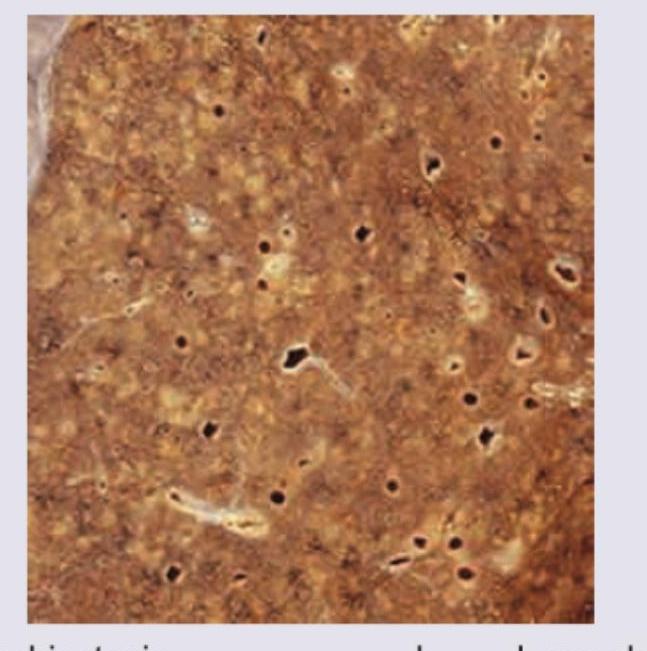
Secondary pulmonary tuberculosis usually involves which part of the lungs?
Uremic lung most often results due to what?
In small cell carcinoma of the lung, which of the following is not typically seen?
What is true about small cell lung cancer?
Which of the following statements is NOT related to the pathogenesis of idiopathic pulmonary fibrosis?
Hyaline membrane is seen in all of the following conditions, EXCEPT:
A patient with long-standing, progressive congestive heart failure dies in respiratory distress. The lungs at autopsy are 3 times their normal weight. Histologically, the alveoli show a proteinaceous granular precipitate, enlarged alveolar capillaries, and hemosiderin-laden macrophages. Other inflammatory cells are inapparent. Which of the following is the most likely diagnosis?
Which of the following does not occur with asbestosis?
What are heart failure cells seen in?
Which of the following is NOT seen with uremic lung?
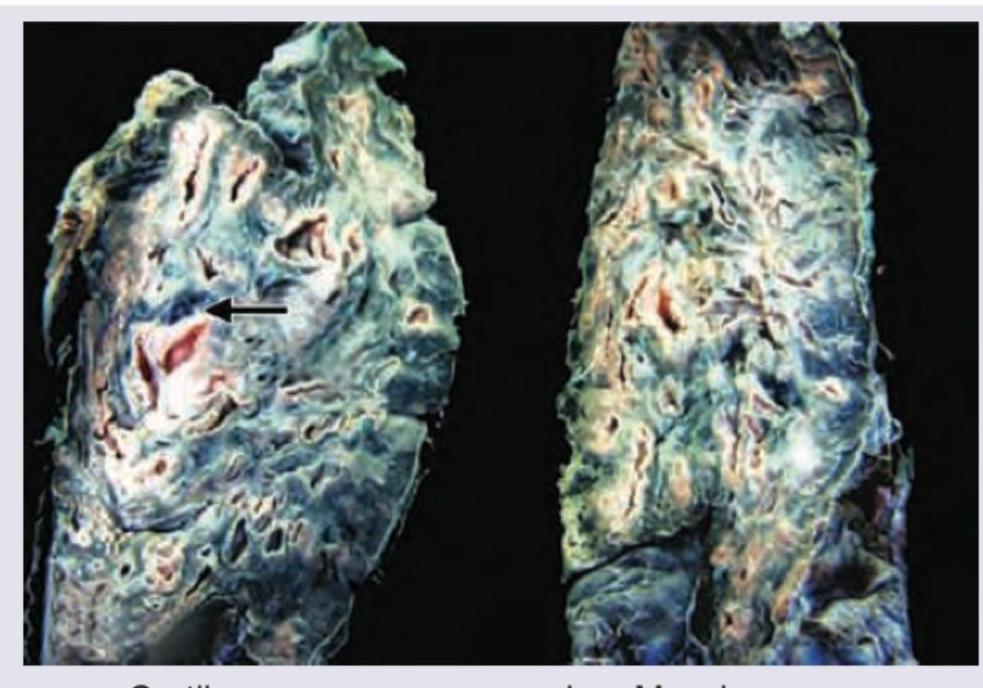
Explanation: **Explanation:** Secondary (reactivation) pulmonary tuberculosis typically involves the **apex of the lungs** (specifically the apical and posterior segments of the upper lobes) [1]. **Why the Apex?** The primary reason is the **high oxygen tension ($PO_2$)** found in the lung apices. *Mycobacterium tuberculosis* is an obligate aerobe that thrives in oxygen-rich environments. Due to the effects of gravity on pulmonary blood flow, the ventilation-perfusion ($V/Q$) ratio is highest at the apex, leading to higher alveolar oxygen concentrations compared to the bases. Additionally, lymphatic drainage is less efficient in the apices, allowing the bacilli to proliferate more easily. **Analysis of Incorrect Options:** * **Base of lungs & Lower lobes (Options A & D):** These areas are the characteristic sites for **Primary Tuberculosis**. Primary TB typically presents as a subpleural lesion in the lower part of the upper lobe or upper part of the lower lobe (the **Ghon focus**). * **Middle lobes (Option C):** While TB can spread anywhere, the middle lobe is not the classic site for secondary reactivation. Isolated middle lobe involvement is more commonly associated with "Middle Lobe Syndrome" due to extrinsic compression of the bronchus by enlarged lymph nodes. **High-Yield Clinical Pearls for NEET-PG:** * **Ghon Complex:** Consists of a parenchymal lesion (Ghon focus) + lymphangitis + hilar lymphadenopathy. * **Ranke Complex:** A healed, calcified Ghon complex visible on X-ray. * **Assmann Focus:** The specific infraclavicular lesion seen in secondary TB. * **Pathology:** Secondary TB is characterized by **caseous necrosis** and **cavitation** [1], which can lead to erosion into airways (causing hemoptysis) or blood vessels (leading to miliary TB). **References:** [1] Cross SS. Underwood's Pathology: A Clinical Approach. 6th ed. Common Clinical Problems From Respiratory Tract Disease, pp. 320-321.
Explanation: **Explanation:** **Uremic Lung** (also known as Uremic Pneumonitis) is a clinical and radiological term used to describe the pulmonary manifestations of chronic renal failure. **1. Why Pulmonary Edema is the correct answer:** The primary underlying pathology of uremic lung is **pulmonary edema**. This occurs due to two main mechanisms: * **Increased Hydrostatic Pressure:** Fluid overload resulting from renal failure leads to systemic and pulmonary venous congestion [2]. * **Increased Capillary Permeability:** Uremic toxins circulating in the blood damage the alveolar-capillary membrane, leading to "leaky" capillaries (non-cardiogenic edema) [1]. Radiologically, this presents as the classic **"Bat’s wing" or "Butterfly" opacities**, where there is central (perihilar) congestion with peripheral sparing. **2. Why other options are incorrect:** * **Fibrosis:** While chronic inflammation can occasionally lead to scarring, fibrosis is not the primary or acute feature of uremic lung. * **Alveolar injury:** While uremia causes some endothelial damage, the term "Alveolar injury" usually refers to Diffuse Alveolar Damage (DAD) seen in ARDS [1]. In uremia, the predominant feature is the accumulation of proteinaceous edema fluid. * **CVC Liver:** Chronic Venous Congestion (CVC) of the liver is a feature of Right-sided Heart Failure, not a direct cause or feature of uremic lung. **3. NEET-PG High-Yield Pearls:** * **Microscopy:** Shows intra-alveolar proteinaceous fluid, sometimes with "hyaline membranes" (due to high protein content), but without significant inflammatory cells. * **Radiology:** Perihilar distribution of edema is the hallmark. * **Treatment:** Unlike cardiac edema, uremic lung often responds rapidly to **hemodialysis** rather than just diuretics. **References:** [1] Kumar V, Abbas AK, et al.. Robbins and Cotran Pathologic Basis of Disease. 9th ed. The Lung, p. 679. [2] Cross SS. Underwood's Pathology: A Clinical Approach. 6th ed. (Basic Pathology) introduces the student to key general principles of pathology, both as a medical science and as a clinical activity with a vital role in patient care. Part 2 (Disease Mechanisms) provides fundamental knowledge about the cellular and molecular processes involved in diseases, providing the rationale for their treatment. Part 3 (Systematic Pathology) deals in detail with specific diseases, with emphasis on the clinically important aspects., pp. 124-125.
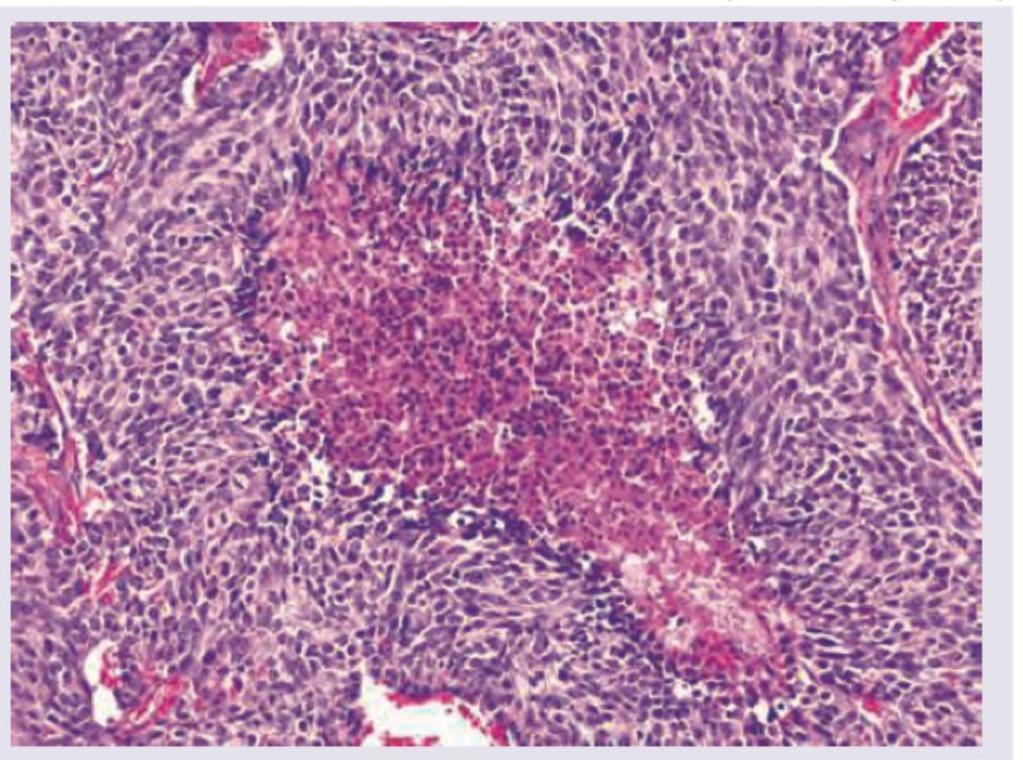
Explanation: **Explanation:** Small cell carcinoma (SCLC) of the lung is a neuroendocrine tumor known for its strong association with various **Paraneoplastic Syndromes** [1]. **Why "Watery Diarrhea" is the correct answer:** Watery diarrhea (specifically WDHA syndrome: Watery Diarrhea, Hypokalemia, and Achlorhydria) is caused by the ectopic secretion of **Vasoactive Intestinal Peptide (VIP)**. While VIPoma is a neuroendocrine tumor, it is typically associated with **pancreatic islet cell tumors**, not SCLC. Therefore, it is not a typical feature of lung cancer. **Analysis of Incorrect Options:** * **Hyponatremia (Option B):** This is the most common paraneoplastic manifestation of SCLC, caused by the ectopic secretion of **Antidiuretic Hormone (SIADH)** [3]. It leads to water retention and dilutional hyponatremia. * **Hypokalemia (Option D):** SCLC can ectopically produce **ACTH**, leading to Cushing Syndrome [3]. High levels of cortisol exert mineralocorticoid effects, causing potassium excretion (hypokalemia) and metabolic alkalosis. * **Hypercalcemia (Option A):** While hypercalcemia is most classically associated with **Squamous Cell Carcinoma** (due to PTHrP) [3], it can occasionally occur in SCLC due to extensive **bony metastasis** (osteolytic lesions), making it a possible, though less specific, finding. **High-Yield Clinical Pearls for NEET-PG:** * **SCLC Associations:** SIADH (Hyponatremia), Ectopic ACTH (Cushing/Hypokalemia), and Lambert-Eaton Myasthenic Syndrome [3]. * **Squamous Cell Carcinoma:** PTHrP (Hypercalcemia) [3]. * **Adenocarcinoma:** Hypertrophic Osteoarthropathy (Clubbing) and Trousseau Sign (Migratory thrombophlebitis). * **Rule of Thumb:** If a lung cancer question mentions "Neuroendocrine" or "Central location in a smoker," think SCLC [2]. If it mentions "Peripheral" or "Non-smoker," think Adenocarcinoma [4]. **References:** [1] Kumar V, Abbas AK, et al.. Robbins and Cotran Pathologic Basis of Disease. 9th ed. The Lung, pp. 725-727. [2] Cross SS. Underwood's Pathology: A Clinical Approach. 6th ed. Common Clinical Problems From Respiratory Tract Disease, pp. 337-338. [3] Kumar V, Abbas AK, et al.. Robbins and Cotran Pathologic Basis of Disease. 9th ed. Neoplasia, pp. 338-339. [4] Cross SS. Underwood's Pathology: A Clinical Approach. 6th ed. Common Clinical Problems From Respiratory Tract Disease, pp. 336-337.
Explanation: Small Cell Lung Cancer (SCLC) is a highly aggressive neuroendocrine tumor strongly associated with cigarette smoking. [1] **Explanation of the Correct Answer:** **Option B (Destruction of alveolar cells occurs)** is correct because SCLC is characterized by an extremely rapid doubling time and high growth fraction. As the tumor cells proliferate and infiltrate the lung parenchyma, they cause extensive local destruction of the normal lung architecture, including the alveolar cells. Histologically, these cells show a "molding" pattern due to scant cytoplasm and fragile chromatin, often leading to the **Azzopardi effect** (DNA staining of vessel walls due to necrotic tumor cells). [1] **Analysis of Incorrect Options:** * **Option A:** Bone marrow involvement is actually **very common** in SCLC. It is considered a systemic disease from the outset; approximately 60-70% of patients have metastatic disease (including bone marrow, liver, and brain) at the time of diagnosis. [2] * **Option C:** SCLC is **typically central** in location, arising from the major bronchi. [1] It often presents as a large perihilar mass with prominent mediastinal lymphadenopathy, unlike Adenocarcinoma, which is typically peripheral. **High-Yield NEET-PG Pearls:** * **Origin:** Derived from **Kulchitsky cells** (neuroendocrine cells). * **Markers:** Positive for Chromogranin A, Synaptophysin, and CD56. [1] * **Paraneoplastic Syndromes:** Most commonly associated with **SIADH** and **ACTH production** (Cushing syndrome). [2] It is also linked to **Lambert-Eaton Myasthenic Syndrome**. * **Genetics:** Nearly 100% show **TP53** and **RB1** mutations. * **Treatment:** Primarily chemotherapy and radiation; surgery is rarely an option due to early metastasis. [2] **References:** [1] Cross SS. Underwood's Pathology: A Clinical Approach. 6th ed. Common Clinical Problems From Respiratory Tract Disease, pp. 337-338. [2] Kumar V, Abbas AK, et al.. Robbins and Cotran Pathologic Basis of Disease. 9th ed. The Lung, pp. 725-727.
Explanation: Idiopathic Pulmonary Fibrosis (IPF) is a chronic, progressive fibrosing interstitial pneumonia of unknown etiology [1]. The pathogenesis is currently understood as a result of **repeated epithelial injury** and abnormal repair in genetically susceptible individuals, rather than primary inflammation [1]. **Why "Age less than 20 years" is the correct answer:** IPF is strictly a disease of the elderly. It rarely occurs before the age of 50, with most patients presenting in their 60s or 70s [2]. A diagnosis of diffuse interstitial fibrosis in a patient under 20 would suggest other pathologies, such as surfactant protein deficiencies or systemic connective tissue diseases, rather than classic IPF. **Analysis of other options:** * **Smoking (Option A):** Smoking is the most significant environmental risk factor, increasing the risk of IPF by approximately two-fold. It acts as a chronic irritant to the alveolar epithelium. * **TERT and TERC Mutations (Option C):** These genes encode components of **telomerase**. Mutations lead to telomere shortening and premature cellular senescence, which are hallmarks of IPF pathogenesis. * **Surfactant Gene Mutations (Option D):** Mutations in genes like **SFTPC** (Surfactant Protein C) and **SFTPA2** lead to the accumulation of misfolded proteins in Type II pneumocytes, triggering endoplasmic reticulum (ER) stress and apoptosis. **High-Yield Clinical Pearls for NEET-PG:** * **Radiological/Histological Pattern:** Characterized by **UIP (Usual Interstitial Pneumonia)**, showing subpleural/basal predominance, honeycombing, and fibroblast foci [2]. * **Genetic Predisposition:** The most common genetic risk factor associated with sporadic IPF is a polymorphism in the promoter region of the **MUC5B** gene (mucus production). * **Key Growth Factor:** **TGF-β1** is the most important profibrogenic cytokine involved in the transition of fibroblasts to myofibroblasts [1]. **References:** [1] Kumar V, Abbas AK, et al.. Robbins and Cotran Pathologic Basis of Disease. 9th ed. The Lung, pp. 692-693. [2] Kumar V, Abbas AK, et al.. Robbins and Cotran Pathologic Basis of Disease. 9th ed. The Lung, pp. 691-692.
Explanation: **Explanation:** The formation of **hyaline membranes** is the hallmark of **Diffuse Alveolar Damage (DAD)**. It occurs when there is severe injury to Type I pneumocytes and endothelial cells, leading to increased capillary permeability [1]. This results in the leakage of fibrin-rich fluid into the alveoli, which then condenses with necrotic cell debris to form waxy, eosinophilic membranes lining the alveolar walls. **Why Staphylococcal bronchopneumonia is the correct answer:** * **Staphylococcal bronchopneumonia** is characterized by **suppurative (purulent) inflammation**. The primary pathology involves the infiltration of neutrophils and the formation of abscesses. It does not typically cause the diffuse alveolar capillary membrane damage required to form hyaline membranes. **Why the other options are incorrect:** * **Radiation pneumonitis:** High-dose thoracic radiation causes direct toxic injury to the alveolar epithelium and endothelium, leading to DAD and hyaline membrane formation. * **Viral pneumonitis:** Viruses (e.g., Influenza, SARS-CoV-2, CMV) are classic triggers for DAD. They cause interstitial inflammation and epithelial necrosis, resulting in hyaline membranes. * **Uremic pneumonitis:** Severe renal failure leads to metabolic toxins in the blood that increase alveolar-capillary permeability, causing "uremic edema" and subsequent hyaline membrane formation. **High-Yield Pearls for NEET-PG:** 1. **ARDS (Acute Respiratory Distress Syndrome):** The clinical manifestation of DAD; hyaline membranes are the characteristic histological finding in the acute phase [1]. 2. **Infant Respiratory Distress Syndrome (IRDS):** Caused by **surfactant deficiency**, leading to alveolar collapse and hyaline membrane formation (historically called Hyaline Membrane Disease) [2]. 3. **Common Causes of DAD:** Shock, Sepsis, Diffuse infections, Aspiration, and Oxygen toxicity. 4. **Histology Tip:** Hyaline membranes are composed of **fibrin** and **cytoplasmic remnants** of necrotic Type I pneumocytes [1]. **References:** [1] Kumar V, Abbas AK, et al.. Robbins and Cotran Pathologic Basis of Disease. 9th ed. The Lung, pp. 679-681. [2] Cross SS. Underwood's Pathology: A Clinical Approach. 6th ed. Common Clinical Problems From Respiratory Tract Disease, pp. 313-314.
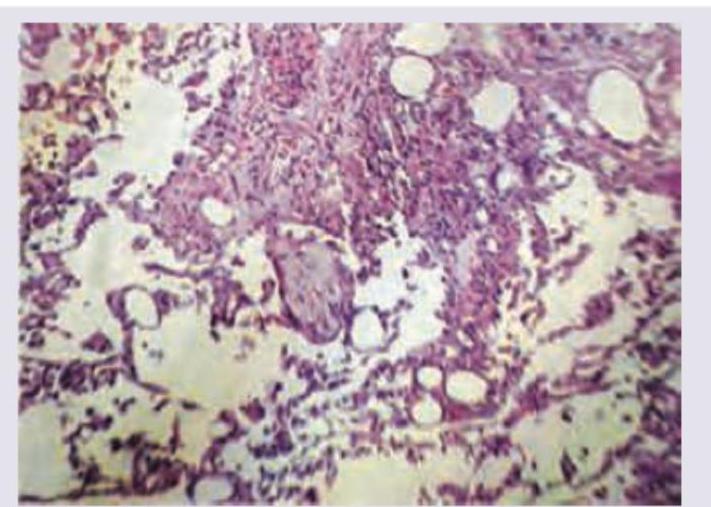
Explanation: **Explanation:** The clinical presentation and histopathology point directly to **Pulmonary Edema** secondary to chronic congestive heart failure (CHF). 1. **Why Pulmonary Edema is correct:** * **Pathophysiology:** In left-sided heart failure, increased hydrostatic pressure in the pulmonary veins leads to fluid leakage into alveolar spaces [1]. * **Gross Findings:** Lungs become heavy and "soggy" (often 2–3 times normal weight). * **Microscopic Findings:** The "proteinaceous granular precipitate" represents the intra-alveolar edema fluid. Enlarged capillaries indicate congestion. The presence of **hemosiderin-laden macrophages** (known as **"Heart Failure Cells"**) is a hallmark of chronic congestion, resulting from the breakdown of extravasated red blood cells. The absence of inflammatory cells rules out acute infection. 2. **Why other options are incorrect:** * **Candida/Pneumococcal Pneumonia:** These are infectious processes characterized by a dense inflammatory infiltrate (primarily neutrophils). Pneumococcal pneumonia would show "hepatization" stages (red/gray) and fibrinopurulent exudate [2]. * **Pneumocystis pneumonia (PCP):** While PCP shows a "foamy/cotton candy" intra-alveolar exudate, it is typically associated with immunosuppression (HIV) and would not explain the presence of heart failure cells or the specific context of CHF. **NEET-PG High-Yield Pearls:** * **Heart Failure Cells:** Alveolar macrophages containing golden-brown hemosiderin pigment; a classic marker for chronic pulmonary congestion. * **Brown Induration:** Long-standing pulmonary congestion leads to fibrosis and hemosiderin deposition, giving the lungs a firm, brown appearance. * **Starling’s Law:** Edema occurs when hydrostatic pressure exceeds oncotic pressure or when capillary permeability increases [3]. **References:** [1] Kumar V, Abbas AK, et al.. Robbins and Cotran Pathologic Basis of Disease. 9th ed. The Heart, pp. 536-538. [2] Cross SS. Underwood's Pathology: A Clinical Approach. 6th ed. Common Clinical Problems From Respiratory Tract Disease, pp. 317-318. [3] Kumar V, Abbas AK, et al.. Robbins and Cotran Pathologic Basis of Disease. 9th ed. Hemodynamic Disorders, Thromboembolic Disease, and Shock, pp. 124-126.
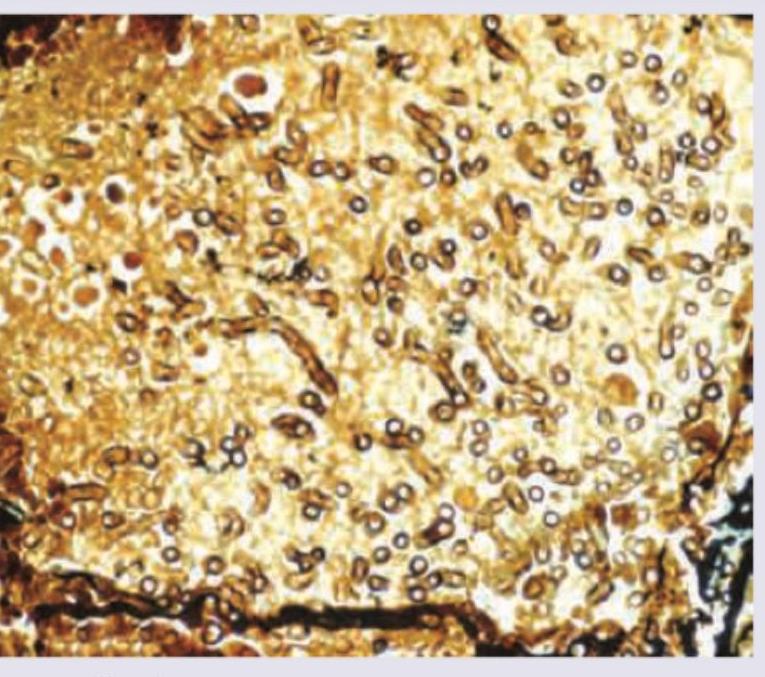
Explanation: **Explanation:** The correct answer is **A. Methaemoglobinemia**. **Why Methaemoglobinemia is the correct answer:** Methaemoglobinemia is a hematological condition where iron in hemoglobin is oxidized from the ferrous ($Fe^{2+}$) to the ferric ($Fe^{3+}$) state, impairing oxygen delivery. It is typically caused by exposure to certain drugs (e.g., nitrates, sulfonamides, benzocaine) or congenital enzyme deficiencies. It has **no pathophysiological link** to asbestos exposure, which primarily affects the respiratory system through the inhalation of mineral fibers. **Analysis of other options:** * **B. Pneumoconiosis:** Asbestosis is, by definition, a type of fibrotic pneumoconiosis caused by the inhalation of asbestos fibers [1]. It characterized by diffuse interstitial fibrosis, particularly in the lower lobes [2]. * **C. Pleural Mesothelioma:** Asbestos exposure is the primary risk factor for malignant mesothelioma, a rare tumor of the mesothelial cells lining the pleura [1], [3]. It is highly specific to asbestos, though bronchogenic carcinoma is actually more common in asbestos-exposed individuals. * **D. Pleural Calcification:** This is a hallmark of asbestos exposure [1]. It typically manifests as "pleural plaques"—dense, calcified collagenous masses usually found on the parietal pleura, particularly over the domes of the diaphragm [2]. **NEET-PG High-Yield Pearls:** 1. **Asbestos Bodies (Ferruginous Bodies):** Golden-brown, fusiform or beaded rods with a translucent center, coated with iron-containing protein. 2. **Location:** Unlike most pneumoconioses (Silicosis, CWP) which affect upper lobes, Asbestosis starts in the **lower lobes** [2]. 3. **Synergy:** Smoking does not increase the risk of mesothelioma, but it **multiplies the risk of bronchogenic carcinoma** in asbestos workers by approximately 55-fold. 4. **Indicator:** Pleural plaques are the **most common** manifestation of asbestos exposure, but they do not contain asbestos bodies [2]. **References:** [1] Kumar V, Abbas AK, et al.. Robbins and Cotran Pathologic Basis of Disease. 9th ed. The Lung, p. 695. [2] Kumar V, Abbas AK, et al.. Robbins and Cotran Pathologic Basis of Disease. 9th ed. The Lung, pp. 698-699. [3] Cross SS. Underwood's Pathology: A Clinical Approach. 6th ed. Common Clinical Problems From Respiratory Tract Disease, pp. 339-340.
Explanation: **Explanation:** **Heart failure cells** are hemosiderin-laden alveolar macrophages. They are a hallmark of **chronic pulmonary congestion**, which is most commonly seen in **Left-sided Heart Failure** [1] leading to **Pulmonary Edema** [1]. **Pathophysiology:** In left-sided heart failure, the weakened left ventricle cannot pump blood efficiently, leading to increased pressure in the pulmonary capillaries [1]. This causes red blood cells (RBCs) to leak into the alveolar spaces (micro-hemorrhages). Alveolar macrophages phagocytose these RBCs and break down the hemoglobin into **hemosiderin**, a golden-brown pigment. These pigment-filled macrophages are termed "heart failure cells." **Analysis of Options:** * **B. Pulmonary Edema (Correct):** Chronic congestion leads to the extravasation of RBCs into alveoli, providing the substrate for these cells [1]. * **A. Pulmonary Infarction:** While hemorrhage occurs, it is usually an acute, localized necrotic event rather than the chronic, diffuse congestive process that characterizes heart failure cells. * **C. Pneumonia:** This is characterized by an inflammatory exudate (neutrophils in bacterial pneumonia) rather than chronic RBC extravasation. * **D. Pulmonary Embolism:** This causes a sudden blockage of blood flow (ischemia) rather than the retrograde congestion required to form hemosiderin-laden macrophages. **NEET-PG High-Yield Pearls:** * **Stain:** Heart failure cells are best visualized using **Prussian Blue (Perl’s stain)**, which stains the iron in hemosiderin blue. * **Brown Induration:** Chronic passive congestion of the lungs leads to a firm, brown-colored lung parenchyma known as "Brown Induration" (due to fibrosis and hemosiderin). * **Clinical Correlation:** Their presence in sputum or bronchoalveolar lavage (BAL) is a diagnostic clue for chronic left heart failure [1]. **References:** [1] Kumar V, Abbas AK, et al.. Robbins and Cotran Pathologic Basis of Disease. 9th ed. The Heart, pp. 536-538.
Explanation: **Explanation:** **Uremic Lung** (also known as Uremic Pneumonitis) is a form of pulmonary edema occurring in patients with acute or chronic renal failure. The primary pathophysiology involves increased **alveolar-capillary permeability** due to circulating uremic toxins, rather than simple hydrostatic pressure changes [1]. **1. Why Interstitial Fibrosis is the Correct Answer:** Uremic lung is characterized by **acute** changes. While chronic uremia can lead to various systemic complications, **interstitial fibrosis** is not a characteristic feature of uremic lung itself. Fibrosis typically results from chronic inflammatory processes or specific occupational/environmental exposures (like silicosis or asbestosis), whereas uremic lung is essentially a manifestation of **Diffuse Alveolar Damage (DAD)** [1]. **2. Analysis of Incorrect Options:** * **Pulmonary Edema (Option B):** This is the hallmark of uremic lung [1]. It is typically protein-rich due to increased vascular permeability. * **Alveolar Injury (Option A):** The uremic toxins cause direct injury to the alveolar-capillary membrane, leading to the leakage of fluid and proteins [1]. * **Fibrinous Exudate (Option D):** As the edema fluid is protein-rich, it often clots within the alveolar spaces, forming a "fibrinous" or "gelatinous" exudate [1]. This can eventually organize into hyaline membranes, similar to ARDS. **NEET-PG High-Yield Pearls:** * **Radiology:** Classically presents as a **"Butterfly" or "Bat-wing" opacity** on chest X-ray (central perihilar opacities with peripheral clearing). * **Morphology:** Grossly, the lungs are heavy, firm, and rubbery. Microscopically, it shows intra-alveolar granular proteinaceous precipitate and hyaline membranes [1]. * **Key Concept:** Uremic lung is a **permeability edema**, not necessarily a volume-overload edema, though both can coexist in renal failure [1]. **References:** [1] Kumar V, Abbas AK, et al.. Robbins and Cotran Pathologic Basis of Disease. 9th ed. The Lung, pp. 679-681.
Congenital Anomalies
Practice Questions
Atelectasis and Acute Lung Injury
Practice Questions
Obstructive Pulmonary Diseases
Practice Questions
Restrictive Pulmonary Diseases
Practice Questions
Lung Infections
Practice Questions
Pulmonary Vascular Diseases
Practice Questions
Lung Tumors
Practice Questions
Pleural Diseases
Practice Questions
Interstitial Lung Diseases
Practice Questions
Occupational Lung Diseases
Practice Questions
Get full access to all questions, explanations, and performance tracking.
Start For Free