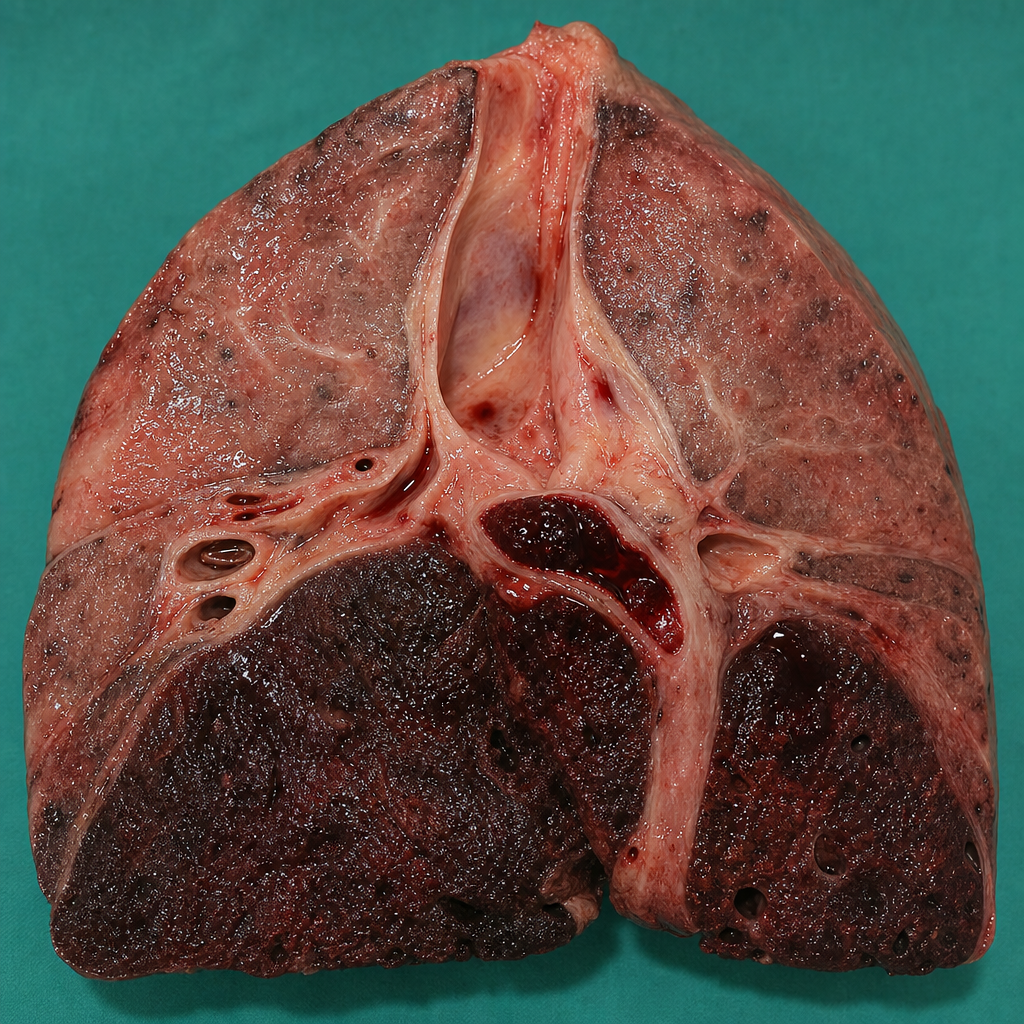
A 50-year-old man with a 30-year history of smoking reports copious sputum production for approximately 6 months per year for the preceding 5 years. This sputum production is most likely closely related to increased numbers of which of the following cell types in his bronchioles and small (<3 mm) bronchi?
Which of the following occupational lung diseases can develop into lung cancer?
Which of the following cells play a crucial role in the pathogenesis of alveolar-capillary damage in adult respiratory distress syndrome (ARDS)?
Which of the following is NOT a cancer caused by asbestosis?
What is the characteristic feature of viral pneumonias?
Which of the following sites is the most frequent site of metastasis for lung carcinomas?
Which of the following is NOT a pathological feature of Idiopathic pulmonary Hemosiderosis?
A 22-year-old man with AIDS complains of persistent cough, night sweats, low-grade fever, and general malaise. A chest X-ray reveals an area of consolidation in the periphery of the left upper lobe, as well as hilar lymphadenopathy. Sputum cultures show acid-fast bacilli. Which of the following is the most likely diagnosis?
Shock lung is better known as?
Which type of lung cancer commonly exhibits lung-to-lung metastasis?
Explanation: **Explanation:** The clinical presentation of a chronic smoker with productive cough for at least 3 months in 2 consecutive years (in this case, 6 months for 5 years) is the classic definition of **Chronic Bronchitis**, a component of Chronic Obstructive Pulmonary Disease (COPD). **Why Goblet Cells are correct:** The hallmark of chronic bronchitis is **mucus hypersecretion**. This occurs due to two primary pathological changes: 1. **Hyperplasia of mucous glands** in the submucosa of large airways (measured by the Reid Index). 2. **Goblet cell metaplasia** in the smaller airways (bronchioles and small bronchi) [1]. Normally, bronchioles contain few to no goblet cells. In response to chronic irritation from tobacco smoke, the epithelium undergoes metaplasia, increasing the number of goblet cells to produce protective mucus, which ultimately leads to airway obstruction and "blue bloater" symptoms [1]. **Why the other options are incorrect:** * **B. Smooth muscle cells:** While smooth muscle hypertrophy can occur in asthma (airway remodeling), it is not the primary driver of the "copious sputum" described here. * **C. Squamous cells:** Chronic smoking causes **Squamous Metaplasia** (replacement of columnar epithelium with stratified squamous epithelium). While this increases the risk of squamous cell carcinoma, it actually *decreases* mucus clearance because squamous cells lack cilia and do not secrete mucus [1]. * **D. Type I pneumocytes:** These are thin cells involved in gas exchange in the alveoli, not sputum production in the bronchioles. **NEET-PG High-Yield Pearls:** * **Reid Index:** Ratio of the thickness of the mucous gland layer to the thickness of the wall between the epithelium and the cartilage. An index **>0.4** is diagnostic of chronic bronchitis. * **Small Airway Disease:** The earliest morphological change in smokers is often respiratory bronchiolitis, characterized by pigmented macrophages [1]. * **Clinical Definition:** Chronic bronchitis is a **clinical** diagnosis, whereas emphysema is a **pathological** diagnosis. **References:** [1] Kumar V, Abbas AK, et al.. Robbins and Cotran Pathologic Basis of Disease. 9th ed. The Lung, pp. 685-686.
Explanation: **Explanation:** **Asbestosis (Option B)** is the correct answer because asbestos fibers are well-established human carcinogens. Exposure to asbestos significantly increases the risk of developing **Bronchogenic Carcinoma** (the most common cancer associated with asbestos) and **Malignant Mesothelioma** (the most specific cancer) [1]. The pathogenesis involves the generation of reactive oxygen species and direct physical interference with the mitotic spindle by asbestos fibers, leading to DNA damage and malignant transformation. **Why other options are incorrect:** * **Silicosis (Option A):** While chronic silicosis is associated with an increased risk of lung cancer (classified as a Group 1 carcinogen by IARC) [2], in the context of standard medical examinations like NEET-PG, **Asbestosis** is the classic and most high-yield answer for occupational malignancy. Silicosis is primarily characterized by "eggshell calcification" of hilar nodes and fibrotic nodules. * **Byssinosis (Option C):** Caused by cotton dust exposure ("Monday morning chest tightness"), it leads to reactive airway disease but is not associated with an increased risk of malignancy [1]. * **Anthracosis (Option D):** This is the asymptomatic accumulation of carbon pigment in the lungs of city dwellers or smokers [1]. It does not progress to cancer. **High-Yield Clinical Pearls for NEET-PG:** * **Most common cancer in Asbestosis:** Bronchogenic Carcinoma (NOT Mesothelioma) [1]. * **Synergy:** Smoking + Asbestos exposure increases the risk of lung cancer by ~55-fold. * **Pathognomonic finding:** **Ferruginous bodies** (asbestos bodies)—golden-brown, fusiform/beaded rods coated with iron-protein complexes (Prussian blue positive). * **Pleural Plaques:** The most common manifestation of asbestos exposure, usually involving the parietal pleura [1]. **References:** [1] Kumar V, Abbas AK, et al.. Robbins and Cotran Pathologic Basis of Disease. 9th ed. The Lung, p. 695. [2] Kumar V, Abbas AK, et al.. Robbins and Cotran Pathologic Basis of Disease. 9th ed. The Lung, p. 697.
Explanation: ### Explanation **Correct Answer: D. Neutrophils** **Pathogenesis of ARDS:** The hallmark of Adult Respiratory Distress Syndrome (ARDS) is **diffuse alveolar damage (DAD)** [1]. Neutrophils are the central players in this process. Following an inciting event (e.g., sepsis, pneumonia, or trauma), resident alveolar macrophages release potent cytokines like **IL-8, TNF, and IL-1**. These cytokines act as chemoattractants, sequestering neutrophils within the pulmonary capillaries. Once activated, neutrophils migrate into the alveolar space and release a cocktail of effector molecules, including **reactive oxygen species (ROS)**, **proteases (elastase)**, and **leukotrienes** [2]. These substances cause extensive damage to the alveolar epithelium and vascular endothelium, leading to increased capillary permeability, protein-rich edema, and the formation of characteristic **hyaline membranes** [1], [3]. **Why other options are incorrect:** * **A & B (CD4 and CD8 Lymphocytes):** While lymphocytes are involved in chronic inflammatory lung diseases and certain hypersensitivity reactions (like hypersensitivity pneumonitis), they do not play a primary role in the acute, explosive inflammatory response seen in ARDS. * **C (Eosinophils):** These are primarily associated with Type I hypersensitivity reactions, asthma, and tropical pulmonary eosinophilia, rather than the acute diffuse alveolar damage of ARDS. **High-Yield Clinical Pearls for NEET-PG:** * **Morphological Hallmark:** The presence of **Hyaline Membranes** lining the alveolar walls is the pathognomonic histological feature of the exudative phase of ARDS [1]. * **Key Cytokine:** **IL-8** is the most important cytokine for neutrophil recruitment in the lungs. * **Clinical Definition:** ARDS is characterized by acute onset, bilateral lung opacities (white-out lung) on imaging, and a **PaO2/FiO2 ratio ≤ 300 mmHg**, in the absence of left-sided heart failure [3]. **References:** [1] Kumar V, Abbas AK, et al.. Robbins and Cotran Pathologic Basis of Disease. 9th ed. The Lung, pp. 679-681. [2] Kumar V, Abbas AK, et al.. Robbins and Cotran Pathologic Basis of Disease. 9th ed. Inflammation and Repair, pp. 91-92. [3] Kumar V, Abbas AK, et al.. Robbins and Cotran Pathologic Basis of Disease. 9th ed. The Lung, p. 679.
Explanation: **Explanation:** Asbestos exposure is a well-documented occupational hazard linked to several malignancies [1]. The correct answer is **Pancreatic Ca**, as there is currently no strong or consistent epidemiological evidence linking asbestos exposure to the development of pancreatic cancer [4]. **Why the other options are incorrect:** * **Adenocarcinoma of lung (Option A):** This is the **most common** cancer associated with asbestos exposure [1]. While asbestos is a potent carcinogen, its effect is synergistic with smoking, exponentially increasing the risk of bronchogenic carcinoma (most frequently adenocarcinoma or squamous cell carcinoma) [2]. * **Mesothelioma (Option B):** This is the **most specific** cancer associated with asbestos [1]. Unlike lung cancer, mesothelioma has a very strong causal link to asbestos (especially crocidolite fibers) and is not related to smoking [3]. It has a long latent period of 25–40 years [3]. * **Gastric Ca (Option C):** Asbestos fibers can be swallowed after being cleared from the respiratory tract via the mucociliary escalator. Studies have shown an increased incidence of gastrointestinal tract cancers, including esophageal, gastric, and colon cancer, in workers heavily exposed to asbestos. **NEET-PG High-Yield Pearls:** 1. **Most common malignancy in asbestosis:** Bronchogenic Carcinoma (Adenocarcinoma) [2]. 2. **Most characteristic malignancy:** Malignant Mesothelioma [1]. 3. **Synergy:** Asbestos + Smoking = ~55x increased risk of lung cancer [1]. 4. **Marker:** Ferruginous bodies (asbestos bodies) – golden-brown, fusiform/beaded rods coated with iron-containing protein (Prussian blue positive). 5. **Pleural Plaques:** The most common manifestation of asbestos exposure, typically involving the parietal pleura [2]. **References:** [1] Cross SS. Underwood's Pathology: A Clinical Approach. 6th ed. (Basic Pathology) introduces the student to key general principles of pathology, both as a medical science and as a clinical activity with a vital role in patient care. Part 2 (Disease Mechanisms) provides fundamental knowledge about the cellular and molecular processes involved in diseases, providing the rationale for their treatment. Part 3 (Systematic Pathology) deals in detail with specific diseases, with emphasis on the clinically important aspects., pp. 221-222. [2] Kumar V, Abbas AK, et al.. Robbins and Cotran Pathologic Basis of Disease. 9th ed. The Lung, p. 699. [3] Cross SS. Underwood's Pathology: A Clinical Approach. 6th ed. Common Clinical Problems From Respiratory Tract Disease, pp. 339-340. [4] Cross SS. Underwood's Pathology: A Clinical Approach. 6th ed. Common Clinical Problems From Liver And Biliary System Disease, pp. 407-408.
Explanation: **Explanation:** Viral pneumonias (and *Mycoplasma* infections) are characterized by **interstitial inflammation** rather than the intra-alveolar exudate seen in bacterial pneumonias. In viral infections, the inflammatory response is primarily localized within the **alveolar septa (interstitium)** [1]. This leads to widened, edematous septa infiltrated by **mononuclear cells** (lymphocytes, monocytes, and plasma cells) [1]. **Analysis of Options:** * **A (Correct):** The hallmark of viral pneumonia is an interstitial mononuclear infiltrate [1]. This creates a "reticular" pattern on X-ray, distinct from the "lobar" consolidation of bacterial pneumonia [3], [4]. * **B (Incorrect):** Intra-alveolar proteinaceous exudate (with neutrophils) is the characteristic feature of **acute bacterial pneumonia**, leading to consolidation [3], [4]. * **C (Incorrect):** While hyaline membranes can form in severe viral infections (like COVID-19 or Influenza) causing **Diffuse Alveolar Damage (DAD/ARDS)**, they are a complication of severe injury rather than the defining diagnostic feature of viral pneumonia itself. * **D (Incorrect):** Fibrotic septa are a feature of **chronic interstitial lung diseases** (e.g., Idiopathic Pulmonary Fibrosis) or the late organizing stage of pneumonia, not the acute viral phase [2]. **NEET-PG High-Yield Pearls:** * **Atypical Pneumonia:** Viral and *Mycoplasma* pneumonias are termed "atypical" because they lack signs of consolidation and present with a non-productive cough. * **Cytopathic Effects:** Look for specific viral inclusions (e.g., **"Owl’s eye"** intranuclear inclusions in CMV; **Cowdry Type A** in Herpes; **Warthin-Finkeldey** giant cells in Measles) [1]. * **Radiology:** Viral pneumonia typically presents as bilateral, diffuse interstitial infiltrates [2]. **References:** [1] Kumar V, Abbas AK, et al.. Robbins and Cotran Pathologic Basis of Disease. 9th ed. Infectious Diseases, p. 360. [2] Kumar V, Abbas AK, et al.. Robbins and Cotran Pathologic Basis of Disease. 9th ed. The Lung, pp. 693-695. [3] Cross SS. Underwood's Pathology: A Clinical Approach. 6th ed. Common Clinical Problems From Respiratory Tract Disease, pp. 317-318. [4] Kumar V, Abbas AK, et al.. Robbins and Cotran Pathologic Basis of Disease. 9th ed. The Lung, pp. 711-712.
Explanation: **Explanation:** Lung carcinoma is notorious for its early and widespread hematogenous dissemination. While lung cancer can spread to various organs, the **Brain** is considered the most frequent site of distant metastasis, particularly in Small Cell Lung Carcinoma (SCLC) and Adenocarcinoma [2]. Approximately 20–40% of patients with lung cancer will develop brain metastases during the course of their disease. **Analysis of Options:** * **A. Brain (Correct):** It is the most common site. In SCLC, the risk is so high that prophylactic cranial irradiation (PCI) is often considered [3]. * **B. Liver:** This is a very common site for metastasis from many visceral organs (especially GI tract), and while frequently involved in lung cancer, it ranks below the brain in frequency for primary lung malignancies. * **C. Adrenal:** The adrenal glands are a classic site for lung cancer spread (often bilateral) [1]. While highly characteristic of lung cancer, it occurs less frequently than brain involvement. * **D. Bone:** Lung cancer frequently causes osteolytic metastases (especially to the vertebrae), but it is statistically less common than intracranial spread. **High-Yield Clinical Pearls for NEET-PG:** * **Most common site of metastasis TO the lung:** Breast cancer (followed by GI tract and kidneys) [3]. * **Adrenal incidentaloma:** If a patient has a lung mass and an adrenal mass, it is highly suggestive of metastatic disease [1]. * **Pancoast Tumor:** A superior sulcus tumor (usually Squamous Cell) that can cause Horner’s Syndrome. * **Small Cell Carcinoma:** Most strongly associated with paraneoplastic syndromes (SIADH, ACTH) and early metastasis. **References:** [1] Kumar V, Abbas AK, et al.. Robbins and Cotran Pathologic Basis of Disease. 9th ed. The Lung, pp. 724-725. [2] Kumar V, Abbas AK, et al.. Robbins and Cotran Pathologic Basis of Disease. 9th ed. The Central Nervous System, pp. 1317-1318. [3] Cross SS. Underwood's Pathology: A Clinical Approach. 6th ed. Common Clinical Problems From Respiratory Tract Disease, pp. 338-339.
Explanation: **Explanation:** **Idiopathic Pulmonary Hemosiderosis (IPH)** is a rare cause of diffuse alveolar hemorrhage, primarily seen in children. It is characterized by repeated episodes of intra-alveolar bleeding without an identifiable underlying systemic cause (like vasculitis or anti-GBM antibodies). **Why Option C is the Correct Answer:** **Diffuse Alveolar Proteinosis (DAP)** is a distinct pathological entity characterized by the accumulation of surfactant-like, PAS-positive proteinaceous material within the alveoli due to defective clearance by alveolar macrophages [1]. It is not a feature of IPH. While both conditions involve the alveolar spaces, the "filling" material in IPH is blood/hemosiderin, whereas in DAP, it is lipoproteinaceous material [1]. **Analysis of Incorrect Options:** * **Option A (Hyperplasia of type II pneumocytes):** Chronic alveolar injury and hemorrhage lead to reactive changes in the alveolar lining. Type II pneumocytes proliferate as a reparative response to replace damaged Type I cells. * **Option B (Alveolar capillary dilatation):** During acute episodes of IPH, there is significant congestion and dilatation of the alveolar capillaries, which facilitates the leakage of RBCs into the alveolar spaces. * **Option D (Hemosiderin-laden macrophages):** This is the **hallmark** histological feature. After alveolar hemorrhage, macrophages ingest the extravasated red blood cells, converting the iron into hemosiderin. These are often called "siderophages" or "heart failure cells" (though the latter term is usually reserved for chronic pulmonary congestion). **High-Yield Clinical Pearls for NEET-PG:** * **Triad of IPH:** Hemoptysis, iron deficiency anemia, and diffuse parenchines infiltrates on chest X-ray. * **Diagnosis:** Confirmed by finding hemosiderin-laden macrophages in **Bronchoalveolar Lavage (BAL)** or gastric aspirates (in children). * **Prussian Blue Stain:** Used to highlight the iron (hemosiderin) within macrophages as blue granules. * **Differentiation:** Unlike Goodpasture Syndrome, IPH shows **no** renal involvement and **no** linear IgG deposits on immunofluorescence. **References:** [1] Kumar V, Abbas AK, et al.. Robbins and Cotran Pathologic Basis of Disease. 9th ed. The Lung, pp. 703-705.
Explanation: **Explanation:** The clinical presentation and radiographic findings are classic for **Primary Tuberculosis (TB)** [1]. In a young adult or immunocompromised patient (AIDS), the combination of constitutional symptoms (night sweats, low-grade fever, weight loss), peripheral consolidation, and hilar lymphadenopathy is highly suggestive of the **Ghon Complex**. 1. **Why Tuberculosis is Correct:** The presence of **Acid-Fast Bacilli (AFB)** in sputum is the gold standard diagnostic clue for *Mycobacterium tuberculosis* [1]. The "Ghon Complex" (a subpleural parenchymal lesion + involved draining hilar lymph node) typically occurs during primary infection. While secondary (reactivation) TB usually involves the lung apices, primary TB can present with lower or mid-zone consolidation, especially in HIV-positive individuals who may lack the robust immune response needed to form classic cavitary lesions [1]. 2. **Why Incorrect Options are Wrong:** * **Bronchopneumonia:** Typically presents with acute high fever and productive cough. Histology shows neutrophilic exudates in bronchioles and alveoli, not acid-fast bacilli. * **Pulmonary Abscess:** Characterized by a fluid-filled cavity with an air-fluid level on X-ray, usually caused by anaerobic bacteria or *S. aureus*, not AFB. * **Sarcoidosis:** While it presents with hilar lymphadenopathy, it is a diagnosis of exclusion characterized by **non-caseating granulomas** and would be negative for acid-fast bacilli. **NEET-PG High-Yield Pearls:** * **Ghon Focus:** The initial site of parenchymal infection (usually subpleural). * **Ranke Complex:** A radiologically detectable Ghon complex that has undergone fibrosis and calcification. * **HIV & TB:** TB is the most common opportunistic infection in AIDS patients [1]. In advanced AIDS (low CD4 count), TB may lack classic cavitary lesions and present with atypical patterns or miliary spread [1]. * **Stain:** Ziehl-Neelsen (ZN) stain is used to identify AFB (Mycolic acid in the cell wall) [1]. **References:** [1] Kumar V, Abbas AK, et al.. Robbins and Cotran Pathologic Basis of Disease. 9th ed. Infectious Diseases, pp. 379-384.
Explanation: **Explanation:** **Shock Lung** is a historical and clinical synonym for **Acute Respiratory Distress Syndrome (ARDS)** [2]. The term originated because ARDS frequently develops as a severe complication of septic or hypovolemic shock. **Why ARDS is the correct answer:** ARDS is characterized by **diffuse alveolar damage (DAD)** [2]. The pathophysiology involves injury to the alveolar endothelium and epithelium, leading to increased vascular permeability, fibrin-rich exudate formation, and the characteristic development of **hyaline membranes** lining the alveolar walls [1]. This results in severe hypoxemia and multi-organ failure, often triggered by systemic insults like sepsis, trauma, or shock [3]. **Why other options are incorrect:** * **Alveolar Proteinosis:** This is a rare condition characterized by the accumulation of surfactant-derived lipoproteinaceous material in alveoli due to defective macrophage clearance (often involving anti-GM-CSF antibodies) [4]. It is not typically triggered by acute shock. * **Alveolar Hemorrhage:** This refers to bleeding into the alveolar spaces, commonly seen in Goodpasture syndrome or Vasculitis (e.g., GPA). While it causes respiratory distress, it is a distinct pathological entity from "shock lung." * **Pulmonary Edema:** While ARDS involves edema, "Pulmonary Edema" usually refers to **hemodynamic (cardiogenic)** edema caused by increased hydrostatic pressure (e.g., Heart Failure). ARDS is specifically a **non-cardiogenic** pulmonary edema [2]. **High-Yield Clinical Pearls for NEET-PG:** * **Pathological Hallmark:** Hyaline membranes (composed of fibrin and necrotic type I pneumocytes) [1]. * **Key Cells:** Neutrophils play a central role in the pathogenesis by releasing ROS and proteases. * **Stages of ARDS:** 1. Exudative (first 7 days), 2. Proliferative (7–21 days), 3. Fibrotic (after 3 weeks) [1]. * **Radiology:** Characterized by bilateral "white-out" or diffuse infiltrates on chest X-ray with a normal PCWP (Pulmonary Capillary Wedge Pressure <18 mmHg) [2]. **References:** [1] Kumar V, Abbas AK, et al.. Robbins and Cotran Pathologic Basis of Disease. 9th ed. The Lung, pp. 679-681. [2] Kumar V, Abbas AK, et al.. Robbins and Cotran Pathologic Basis of Disease. 9th ed. The Lung, p. 679. [3] Kumar V, Abbas AK, et al.. Robbins and Cotran Pathologic Basis of Disease. 9th ed. Hemodynamic Disorders, Thromboembolic Disease, and Shock, p. 144. [4] Kumar V, Abbas AK, et al.. Robbins and Cotran Pathologic Basis of Disease. 9th ed. The Lung, pp. 703-705.
Explanation: **Explanation:** **1. Why Adenocarcinoma is the Correct Answer:** Adenocarcinoma is the most common histological subtype of lung cancer and is characterized by its **peripheral location** [1] and early **hematogenous spread**. A unique feature of Adenocarcinoma, particularly the subtype formerly known as Bronchioloalveolar Carcinoma (now classified under Adenocarcinoma in situ/Lepidic growth patterns), is its tendency for **aerogenous (airway) spread** and multifocal presentation [1]. This leads to the characteristic "lung-to-lung" metastasis, where multiple nodules appear in the same or contralateral lung, often mimicking pneumonia on imaging. **2. Analysis of Incorrect Options:** * **Squamous Cell Carcinoma:** Typically arises **centrally** [1] in the larger bronchi. It is characterized by local invasion and late metastasis. It is more likely to cause cavitary lesions [2] rather than diffuse lung-to-lung spread. * **Small Cell Carcinoma:** This is a highly aggressive neuroendocrine tumor that presents with early, widespread **systemic metastasis** (brain, liver, bone) and bulky hilar lymphadenopathy rather than isolated lung-to-lung seeding [3]. * **Neuroendocrine Tumors (e.g., Carcinoid):** These are generally slow-growing tumors. While they can metastasize, they do not typically exhibit the multifocal, intra-pulmonary seeding pattern seen in Adenocarcinoma. **3. NEET-PG High-Yield Pearls:** * **Most common lung cancer:** Adenocarcinoma (overall, in females, and in non-smokers). * **Driver Mutations:** Adenocarcinoma is associated with **EGFR** (common in Asian non-smoking females), **ALK**, and **KRAS** [1] mutations. * **Scar Carcinoma:** Adenocarcinoma is the subtype most frequently associated with peripheral lung scars [1] (e.g., old TB foci). * **Hypercalcemia:** Most commonly associated with Squamous Cell Carcinoma (due to PTHrP). * **SIADH/ACTH:** Most commonly associated with Small Cell Carcinoma. **References:** [1] Cross SS. Underwood's Pathology: A Clinical Approach. 6th ed. Common Clinical Problems From Respiratory Tract Disease, pp. 335-336. [2] Kumar V, Abbas AK, et al.. Robbins and Cotran Pathologic Basis of Disease. 9th ed. The Lung, pp. 723-724. [3] Cross SS. Underwood's Pathology: A Clinical Approach. 6th ed. Common Clinical Problems From Respiratory Tract Disease, pp. 337-338.
Congenital Anomalies
Practice Questions
Atelectasis and Acute Lung Injury
Practice Questions
Obstructive Pulmonary Diseases
Practice Questions
Restrictive Pulmonary Diseases
Practice Questions
Lung Infections
Practice Questions
Pulmonary Vascular Diseases
Practice Questions
Lung Tumors
Practice Questions
Pleural Diseases
Practice Questions
Interstitial Lung Diseases
Practice Questions
Occupational Lung Diseases
Practice Questions
Get full access to all questions, explanations, and performance tracking.
Start For Free