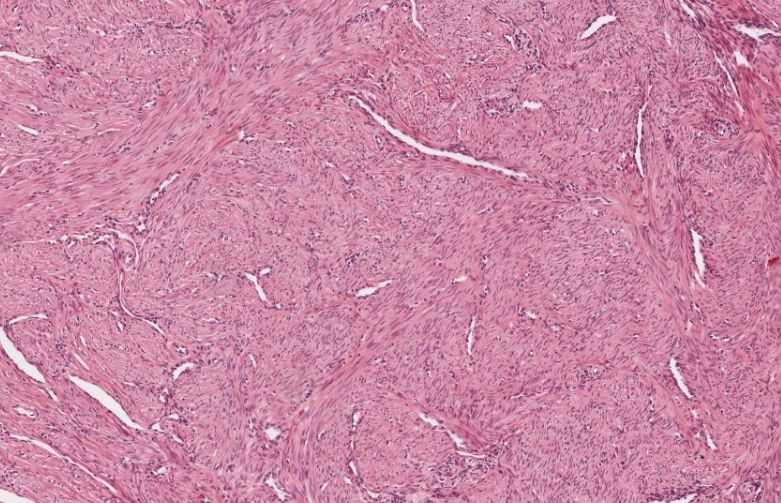
A 25-year-old man presents 1 week after discovering that his left testicle is twice the normal size. Physical examination reveals a nontender, testicular mass that cannot be transilluminated. Serum levels of alpha-fetoprotein and human chorionic gonadotropin are normal. A hemiorchiectomy is performed, and histologic examination of the surgical specimen shows neoplastic cells with an epithelial appearance, growing in alveolar or tubular patterns, exhibiting hyperchromatic nuclei with prominent nucleoli. Compared to normal adult somatic cells, this germ cell neoplasm would most likely show high levels of expression of which of the following proteins?
A 25-year-old man undergoes orchiectomy for a testicular tumor. Microscopically, the tumor shows a variety of patterns, including lobules containing large cells with watery cytoplasm, structures resembling primitive glomeruli, syncytiotrophoblast, and shafts of undifferentiated cells with focal glandular differentiation. Which of the following terms most accurately describes this tumor?
The parents of a 2-year-old boy with hypospadias (urethra opens on the ventral aspect of the penis) visit a genetic counselor to discuss the chances that a similar birth defect will occur in their future offspring. This birth defect shows which of the following patterns of inheritance?
A Krukenberg tumor is most commonly associated with which primary cancer?
According to WHO, what is given to prevent postpartum hemorrhage (PPH) by active management of the third stage of labor?
Which of the following conditions is diagnosed using Ca 125?
Serous papillary cystadenocarcinomas of the ovaries express which of the following tumor markers?
In which of the following types of carcinoma of the breast is a comedo growth pattern seen?
A 23-year-old woman presents with a rubbery, freely movable 2-cm mass in the upper outer quadrant of the left breast. A biopsy of this lesion would most likely histologically reveal?
A 25-year-old woman presents with lower abdominal discomfort. The surgical image is given below. What is the most likely diagnosis?
Explanation: **Explanation:** The clinical presentation describes a young male with a painless, solid testicular mass (non-transilluminating) and normal serum markers (AFP/hCG). The histology—epithelial cells in alveolar or tubular patterns with prominent nucleoli—is characteristic of an **Embryonal Carcinoma**, a type of Non-Seminomatous Germ Cell Tumor (NSGCT) [1]. **Why Telomerase is the Correct Answer:** Germ cell tumors, like most malignant neoplasms, achieve **replicative immortality** by maintaining their chromosomal length. **Telomerase** is a ribonucleoprotein enzyme that adds TTAGGG repeats to the 3' end of DNA strands (telomeres). While telomerase is active in normal germ cells and stem cells, it is absent in most differentiated somatic cells. In cancer cells, telomerase is upregulated to prevent telomere shortening, thereby avoiding senescence and allowing for unlimited cell division. **Analysis of Incorrect Options:** * **A. Desmin:** An intermediate filament found in muscle cells (skeletal, smooth, and cardiac). It would be a marker for Rhabdomyosarcoma, not a germ cell tumor. * **B. Dystrophin:** A structural protein that links the cytoskeleton of a muscle fiber to the surrounding extracellular matrix. Mutations lead to Duchenne/Becker muscular dystrophy; it has no role in oncogenesis. * **C. Cytochrome c:** A component of the mitochondrial electron transport chain. While it plays a role in apoptosis when released into the cytosol, it is not specifically overexpressed as a driver of germ cell malignancy. **NEET-PG High-Yield Pearls:** * **Embryonal Carcinoma:** Often presents as a painful mass (due to hemorrhage/necrosis) but can be painless. It is more aggressive than seminoma [1]. * **Markers:** Pure embryonal carcinoma may show mildly elevated hCG/AFP, but "normal" levels (as in this question) point toward a specific histological subtype or a very small focus [2]. * **Telomerase Components:** Consists of **hTR** (RNA template) and **hTERT** (reverse transcriptase). TERT promoter mutations are among the most common mutations in many human cancers. **References:** [1] Kumar V, Abbas AK, et al.. Robbins and Cotran Pathologic Basis of Disease. 9th ed. The Lower Urinary Tract and Male Genital System, pp. 979-980. [2] Cross SS. Underwood's Pathology: A Clinical Approach. 6th ed. Common Clinical Problems From Diseases Of The Urinary And Male Genital Tracts, pp. 512-513.
Explanation: **Explanation:** The correct answer is **Mixed Germ Cell Tumor (GCT)**. This diagnosis is based on the presence of multiple distinct histological patterns within a single testicular mass [1]. In adults, approximately 60% of testicular germ cell tumors are "mixed," containing more than one germ cell component [1]. **Why the correct answer is right:** The microscopic description identifies four distinct components: 1. **Large cells with watery cytoplasm:** Classic description of **Seminoma**. 2. **Primitive glomeruli (Schiller-Duval bodies):** Pathognomonic for **Yolk Sac Tumor**. 3. **Syncytiotrophoblasts:** Characteristic of **Choriocarcinoma** [5]. 4. **Undifferentiated cells with glandular differentiation:** Typical of **Embryonal Carcinoma** [1]. The coexistence of these diverse elements confirms a Mixed GCT [3]. **Why other options are wrong:** * **Choriocarcinoma (A):** While syncytiotrophoblasts are present, pure choriocarcinoma is rare and would not contain seminomatous or yolk sac elements [5]. * **Embryonal Carcinoma (B):** This is characterized by pleomorphic cells in sheets or glands, but it does not account for the "watery cytoplasm" (Seminoma) or "primitive glomeruli" (Yolk Sac) described [1]. * **Seminoma (D):** Pure seminoma consists only of uniform cells with clear cytoplasm and fibrous septa containing lymphocytes; it lacks the primitive glandular or trophoblastic structures mentioned [3]. **NEET-PG High-Yield Pearls:** * **Most common mixed component:** Embryonal carcinoma + Teratoma + Yolk sac tumor. * **Tumor Markers:** Mixed tumors often show elevations in both **AFP** (from Yolk sac component) and **β-hCG** (from Syncytiotrophoblasts) [2]. * **Prognosis:** The prognosis of a mixed tumor is generally determined by its most aggressive component (usually Choriocarcinoma or Embryonal carcinoma) [4]. * **Schiller-Duval bodies:** Always associate these "glomeruloid" structures with Yolk Sac Tumor (Endodermal Sinus Tumor). **References:** [1] Kumar V, Abbas AK, et al.. Robbins and Cotran Pathologic Basis of Disease. 9th ed. The Lower Urinary Tract and Male Genital System, pp. 979-980. [2] Kumar V, Abbas AK, et al.. Robbins and Cotran Pathologic Basis of Disease. 9th ed. The Lower Urinary Tract and Male Genital System, pp. 980-982. [3] Cross SS. Underwood's Pathology: A Clinical Approach. 6th ed. Common Clinical Problems From Diseases Of The Urinary And Male Genital Tracts, pp. 512-513. [4] Kumar V, Abbas AK, et al.. Robbins and Cotran Pathologic Basis of Disease. 9th ed. The Lower Urinary Tract and Male Genital System, pp. 983-984. [5] Kumar V, Abbas AK, et al.. Robbins and Cotran Pathologic Basis of Disease. 9th ed. The Lower Urinary Tract and Male Genital System, p. 982.
Explanation: ### Explanation **1. Why Multifactorial is Correct:** Hypospadias is one of the most common congenital anomalies of the male reproductive tract, characterized by the failure of the urethral folds to fuse, leading to the urethral opening on the **ventral** surface of the penis. The inheritance pattern is **multifactorial**, meaning it results from a complex interaction between **multiple susceptibility genes** (polygenic) and **environmental triggers** (e.g., maternal exposure to endocrine disruptors like estrogens or progestins during pregnancy) [2]. Unlike Mendelian disorders, multifactorial traits do not follow a predictable pedigree pattern but show a higher recurrence risk among first-degree relatives compared to the general population. **2. Why Incorrect Options are Wrong:** * **Autosomal Recessive (A):** This would require both parents to be carriers and would result in a 25% recurrence risk [3]. Hypospadias does not follow this rigid mathematical probability. * **Autosomal Dominant (B):** This would typically show a vertical transmission pattern (parent to child) in every generation, which is not the standard clinical presentation for isolated hypospadias [3]. * **X-linked Dominant (D):** In this pattern, an affected father would pass the trait to all of his daughters and none of his sons. This does not correlate with the epidemiology of hypospadias [3]. **3. High-Yield Clinical Pearls for NEET-PG:** * **Embryology:** Hypospadias is due to failure of **urethral folds** to fuse; **Epispadias** (opening on the dorsal aspect) is due to abnormal positioning of the **genital tubercle** and is often associated with bladder exstrophy. * **Recurrence Risk:** For multifactorial traits like hypospadias, cleft lip/palate, and neural tube defects, the risk of recurrence increases with the number of affected family members [1]. * **Associated Findings:** While usually isolated, it can be part of "Testicular Dysgenesis Syndrome" (along with cryptorchidism and poor semen quality). **References:** [1] Cross SS. Underwood's Pathology: A Clinical Approach. 6th ed. (Basic Pathology) introduces the student to key general principles of pathology, both as a medical science and as a clinical activity with a vital role in patient care. Part 2 (Disease Mechanisms) provides fundamental knowledge about the cellular and molecular processes involved in diseases, providing the rationale for their treatment. Part 3 (Systematic Pathology) deals in detail with specific diseases, with emphasis on the clinically important aspects., pp. 95-96. [2] Kumar V, Abbas AK, et al.. Robbins and Cotran Pathologic Basis of Disease. 9th ed. Genetic Disorders, p. 167. [3] Cross SS. Underwood's Pathology: A Clinical Approach. 6th ed. (Basic Pathology) introduces the student to key general principles of pathology, both as a medical science and as a clinical activity with a vital role in patient care. Part 2 (Disease Mechanisms) provides fundamental knowledge about the cellular and molecular processes involved in diseases, providing the rationale for their treatment. Part 3 (Systematic Pathology) deals in detail with specific diseases, with emphasis on the clinically important aspects., pp. 53-54.
Explanation: **Explanation:** A **Krukenberg tumor** is a metastatic signet-ring cell carcinoma of the ovary, characterized by bilateral involvement and a dense stromal reaction (desmoplasia) [1]. **Why Stomach is Correct:** The most common primary site for a Krukenberg tumor is the **Stomach (Gastric Adenocarcinoma)**, specifically the diffuse type (Linitis Plastica). The tumor cells, which contain large amounts of mucin that displace the nucleus to the periphery (signet-ring appearance), typically spread to the ovaries via **retrograde lymphatic dissemination** rather than direct peritoneal seeding [2]. **Why Other Options are Incorrect:** * **Breast:** While breast cancer (specifically invasive lobular carcinoma) is the second most common cause of metastatic ovarian tumors, it is less frequent than gastric primaries in the context of classic Krukenberg morphology. * **Pancreas & Liver:** These organs can metastasize to the ovary, but they are significantly rarer causes. Pancreatic primaries usually present as standard metastatic adenocarcinomas rather than the classic signet-ring Krukenberg pattern. **High-Yield Clinical Pearls for NEET-PG:** * **Bilateralism:** 80% of Krukenberg tumors are bilateral [1]. * **Microscopy:** Look for **Signet-ring cells** (mucin-filled cytoplasm) [2] and a sarcomatoid stroma [1]. * **Histochemistry:** Positive for **PAS (Periodic Acid-Schiff)** and **Mucicarmine** stains, highlighting the intracellular mucin. * **Differential:** If the primary is from the Colon, it is often unilateral and lacks the classic signet-ring morphology (often called a "pseudo-Krukenberg"). * **Route of Spread:** Retrograde lymphatics (most accepted theory) vs. Surface seeding. **References:** [1] Kumar V, Abbas AK, et al.. Robbins and Cotran Pathologic Basis of Disease. 9th ed. The Female Genital Tract, pp. 1026-1028. [2] Kumar V, Abbas AK, et al.. Robbins and Cotran Pathologic Basis of Disease. 9th ed. The Gastrointestinal Tract, p. 779.
Explanation: **Explanation:** The **Active Management of the Third Stage of Labor (AMTSL)** is a globally recognized strategy to reduce the incidence of Postpartum Hemorrhage (PPH), the leading cause of maternal mortality. **Why Option B is Correct:** According to the **WHO recommendations**, **Oxytocin (10 IU, IM or IV)** is the preferred uterotonic agent for preventing PPH. It is the gold standard because it is highly effective, acts within 2–3 minutes, has minimal side effects, and is relatively inexpensive [1]. Intramuscular (IM) administration is often preferred in resource-limited settings as it does not require intravenous access. **Analysis of Incorrect Options:** * **Option A (PGF2 alpha):** Carboprost (a PGF2α analog) is a second-line agent used for *refractory* PPH. It is not used for routine prophylaxis due to significant side effects like bronchospasm and hypertension. * **Option C (IV Ergometrine):** While effective, ergometrine is not the first choice because it can cause severe vasoconstriction and dangerous elevations in blood pressure. It is contraindicated in patients with pre-eclampsia or heart disease. * **Option D (Perorectal Prostaglandins):** Misoprostol (PGE1) is used only when oxytocin is unavailable. While it can be given rectally, the WHO prioritizes injectable oxytocin for its superior efficacy. **High-Yield NEET-PG Pearls:** 1. **Components of AMTSL:** 1) Administration of a uterotonic (Oxytocin is #1), 2) Controlled Cord Traction (CCT), and 3) Uterine massage after delivery of the placenta. 2. **Storage:** Oxytocin requires a cold chain (2–8°C), whereas Misoprostol is heat-stable. 3. **Dose:** 10 IU IM is the standard prophylactic dose immediately after the delivery of the fetus [1]. **References:** [1] Kumar V, Abbas AK, et al.. Robbins and Cotran Pathologic Basis of Disease. 9th ed. The Endocrine System, pp. 1077-1079.
Explanation: **Explanation:** **CA-125 (Cancer Antigen 125)** is a high-molecular-weight glycoprotein produced by derivatives of the **coelomic epithelium** (including the endometrium, fallopian tubes, and peritoneum). It is the most widely used tumor marker for **Ovarian Cancer**, specifically **Surface Epithelial Tumors** (e.g., Serous Cystadenocarcinoma) [1]. While not specific enough for primary screening due to elevations in benign conditions like endometriosis or PID, it is the gold standard for **monitoring treatment response** and detecting **recurrence** of ovarian malignancy. **Analysis of Incorrect Options:** * **B. Gallbladder Cancer:** The primary tumor markers associated with biliary tract cancers are **CA 19-9** and CEA. * **C. Carcinoids:** The classic marker for neuroendocrine tumors like carcinoids is **Chromogranin A** (serum) or **5-HIAA** (24-hour urine metabolite of serotonin). * **D. Bronchogenic Cancer:** While markers like CEA or NSE (Small Cell) may be elevated, CA-125 is not a diagnostic or monitoring tool for lung cancer. **High-Yield Clinical Pearls for NEET-PG:** * **Germ Cell Tumors:** Dysgerminoma (**LDH**), Yolk Sac Tumor (**AFP**), Choriocarcinoma (**hCG**). * **Granulosa Cell Tumor:** Associated with **Inhibin** (useful for follow-up). * **Meigs Syndrome:** Triad of ovarian fibroma, ascites, and pleural effusion; notably, CA-125 can be elevated here despite being a benign condition. * **Struma Ovarii:** A specialized teratoma that can cause hyperthyroidism. **References:** [1] Kumar V, Abbas AK, et al.. Robbins and Cotran Pathologic Basis of Disease. 9th ed. The Female Genital Tract, pp. 1032-1033.
Explanation: **Explanation:** **Serous papillary cystadenocarcinoma** is the most common malignant ovarian tumor [1]. The correct answer is **CA-125** (Cancer Antigen 125), a high-molecular-weight glycoprotein. It is expressed by the coelomic epithelium (pericardium, pleura, peritoneum) and its derivatives, including the fallopian tubes, endometrium, and endocervix. In ovarian cancer, CA-125 is used primarily for **monitoring treatment response** and detecting recurrence, rather than as a primary screening tool, due to its low specificity in premenopausal women. **Analysis of Incorrect Options:** * **CA 19-9:** This is the primary tumor marker for **pancreatic adenocarcinoma** and is also elevated in cholangiocarcinoma and some gastric cancers. * **CEA (Carcinoembryonic Antigen):** This is a non-specific marker primarily associated with **colorectal carcinoma**. In the ovary, it may be elevated in mucinous cystadenocarcinomas [2], but not typically in serous types. * **AFP (Alpha-fetoprotein):** This is the hallmark marker for **Yolk Sac Tumors** (Endodermal Sinus Tumors) and Hepatocellular Carcinoma (HCC). **High-Yield Clinical Pearls for NEET-PG:** * **Psammoma bodies:** These are characteristic concentric calcifications frequently seen on histopathology in serous papillary tumors [3]. * **Risk Factors:** BRCA1 and BRCA2 mutations significantly increase the risk of serous ovarian carcinoma. * **Other Markers:** * **Inhibin:** Marker for Granulosa cell tumors. * **LDH:** Marker for Dysgerminoma. * **hCG:** Marker for Choriocarcinoma [4]. * **HE4 (Human Epididymis Protein 4):** A newer marker often used alongside CA-125 (ROMA score) to improve diagnostic sensitivity. **References:** [1] Kumar V, Abbas AK, et al.. Robbins and Cotran Pathologic Basis of Disease. 9th ed. The Female Genital Tract, pp. 1030-1033. [2] Cross SS. Underwood's Pathology: A Clinical Approach. 6th ed. Common Clinical Problems From Female Genital Tract Disease, pp. 478-480. [3] Kumar V, Abbas AK, et al.. Robbins and Cotran Pathologic Basis of Disease. 9th ed. The Female Genital Tract, p. 1030. [4] Cross SS. Underwood's Pathology: A Clinical Approach. 6th ed. Common Clinical Problems From Female Genital Tract Disease, pp. 480-481.
Explanation: **Explanation** **Ductal Carcinoma In Situ (DCIS)** is the correct answer because the "comedo" pattern is a specific high-grade subtype of DCIS [1], [2]. It is characterized by large, pleomorphic cells growing within the breast ducts, showing prominent **central necrosis** [1], [2]. This necrotic debris often undergoes calcification (visible on mammography) and can be extruded from the ducts like toothpaste when the tissue is squeezed, resembling a "comedone" (skin blackhead) [1]. **Analysis of Incorrect Options:** * **Medullary Carcinoma:** Characterized by a well-circumscribed mass, "pushing" borders, and a dense lymphoplasmacytic infiltrate [3]. It lacks the central ductal necrosis seen in comedo-DCIS. * **Lobular Carcinoma In Situ (LCIS):** Typically involves a proliferation of small, uniform, discohesive cells (due to loss of E-cadherin) that fill and distend the acini. It does not exhibit the central necrosis or the architectural pattern of comedo-DCIS [4]. * **Infiltrating Lobular Carcinoma:** Known for the "Indian file" pattern where cells invade the stroma in single-cell rows [4]. It is an invasive cancer, whereas the comedo pattern is a feature of a pre-invasive (in situ) lesion. **High-Yield Pearls for NEET-PG:** * **Comedo DCIS** is the most aggressive subtype of DCIS and is frequently associated with **HER2/neu** overexpression. * **Mammography:** DCIS is most commonly detected as **microcalcifications** (linear or branching) [2]. * **E-cadherin:** This is the most important marker to differentiate Ductal (E-cadherin positive) from Lobular (E-cadherin negative) lesions. * **Paget Disease of the Nipple:** Almost always associated with an underlying DCIS (often of the comedo type) or invasive ductal carcinoma [5]. **References:** [1] Cross SS. Underwood's Pathology: A Clinical Approach. 6th ed. Common Clinical Problems From Liver And Biliary System Disease, pp. 452-453. [2] Kumar V, Abbas AK, et al.. Robbins and Cotran Pathologic Basis of Disease. 9th ed. The Breast, p. 1062. [3] Cross SS. Underwood's Pathology: A Clinical Approach. 6th ed. Common Clinical Problems From Liver And Biliary System Disease, pp. 455-456. [4] Cross SS. Underwood's Pathology: A Clinical Approach. 6th ed. Common Clinical Problems From Liver And Biliary System Disease, pp. 454-455. [5] Kumar V, Abbas AK, et al.. Robbins and Cotran Pathologic Basis of Disease. 9th ed. The Breast, pp. 1061-1062.
Explanation: The clinical presentation of a **rubbery, freely movable, well-circumscribed mass** in a young woman (23 years old) is the classic description of a **Fibroadenoma**. Often referred to as a "breast mouse" due to its high mobility, it is the most common benign tumor of the female breast, typically occurring in the 20–35 age group [1]. **Why the Correct Answer is Right:** Histologically, a fibroadenoma is a fibroepithelial tumor characterized by a **mixture of proliferating glandular (ductal) elements and fibrous stroma**. Depending on the growth pattern, it can be *intracanalicular* (stroma compresses ducts into slits) or *pericanalicular* (ducts maintain a round patency) [1]. **Analysis of Incorrect Options:** * **Option A (Neutrophils):** Suggests **Acute Mastitis**, usually seen during lactation (cracks in the nipple) and associated with *Staphylococcus aureus* infection. It presents with pain, erythema, and fever. * **Option C (Plasma cells):** Suggests **Plasma Cell Mastitis (Mammary Duct Ectasia)**. This typically affects older, multiparous women and presents with nipple retraction and thick, creamy nipple discharge. * **Option D (Necrotic fat/Lipid-laden macrophages):** Suggests **Fat Necrosis**. This usually follows trauma or surgery. While it can present as a painless mass, it is typically firm and fixed, not "rubbery and freely movable." **NEET-PG High-Yield Pearls:** * **Estrogen Sensitivity:** Fibroadenomas are hormone-sensitive; they may enlarge during pregnancy and typically regress/calcify after menopause [1]. * **Most Common Benign Tumor:** Fibroadenoma. * **Most Common Breast Lump (Overall):** Fibrocystic changes [3]. * **Phyllodes Tumor:** A related fibroepithelial tumor seen in older women (40s-50s) characterized by "leaf-like" projections and increased stromal cellularity [2]. **References:** [1] Cross SS. Underwood's Pathology: A Clinical Approach. 6th ed. Common Clinical Problems From Liver And Biliary System Disease, pp. 448-449. [2] Kumar V, Abbas AK, et al.. Robbins and Cotran Pathologic Basis of Disease. 9th ed. The Breast, p. 1074. [3] Cross SS. Underwood's Pathology: A Clinical Approach. 6th ed. Common Clinical Problems From Liver And Biliary System Disease, pp. 443-444.
Explanation: ***Mature cystic teratoma*** - The image shows a cystic mass containing various well-differentiated tissues, including **hair** and a **tooth-like structure** [1], which is the classic gross appearance of a mature cystic teratoma, also known as a **dermoid cyst** [2]. - These are the most common **germ cell tumors** of the ovary [2], typically occurring in women of reproductive age [4]. They contain mature tissues derived from two or more germ layers (e.g., ectoderm, mesoderm, endoderm) [2]. *Serous cystadenoma* - A **serous cystadenoma** is a benign epithelial tumor characterized by a thin-walled cyst filled with clear, watery (**serous**) fluid, which is inconsistent with the image's contents. - These tumors lack the solid, multi-tissue components like hair, skin, or teeth [2] that are pathognomonic for a teratoma. *Immature teratoma* - An **immature teratoma** is a malignant germ cell tumor containing immature or embryonal tissues, particularly **primitive neuroectoderm**, which is not seen here. - These tumors are typically more solid and heterogeneous, often with areas of **necrosis** and **hemorrhage**, differing from the well-differentiated structures in the image [3]. *Endometrioma* - An **endometrioma**, or "**chocolate cyst**," is filled with old, dark brown, hemolyzed blood from ectopic endometrial tissue within the ovary. - It does not contain organized tissues from different germ layers such as hair, teeth, or sebaceous material [2]. **References:** [1] Kumar V, Abbas AK, et al.. Robbins and Cotran Pathologic Basis of Disease. 9th ed. The Female Genital Tract, p. 1034. [2] Cross SS. Underwood's Pathology: A Clinical Approach. 6th ed. Common Clinical Problems From Female Genital Tract Disease, pp. 480-481. [3] Kumar V, Abbas AK, et al.. Robbins and Cotran Pathologic Basis of Disease. 9th ed. The Female Genital Tract, pp. 1033-1034. [4] Kumar V, Abbas AK, et al.. Robbins and Cotran Pathologic Basis of Disease. 9th ed. The Female Genital Tract, pp. 1035-1036.
Diseases of Male Genital Tract
Practice Questions
Testicular Tumors
Practice Questions
Prostate Pathology
Practice Questions
Diseases of Female Genital Tract
Practice Questions
Cervical Pathology and Neoplasia
Practice Questions
Endometrial Pathology
Practice Questions
Ovarian Diseases and Tumors
Practice Questions
Gestational Trophoblastic Disease
Practice Questions
Placental Pathology
Practice Questions
Sexually Transmitted Infections
Practice Questions
Get full access to all questions, explanations, and performance tracking.
Start For Free