
Urinary Tract Obstruction and Stones — MCQs

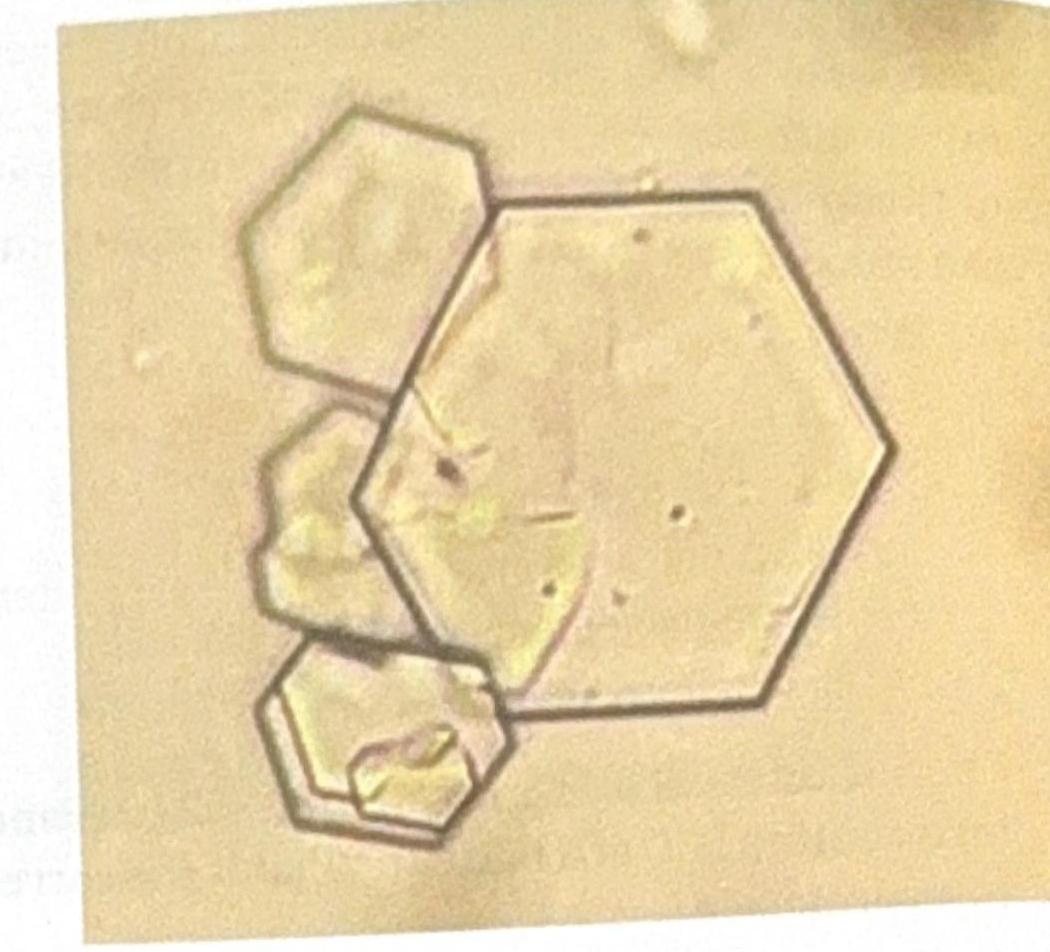
A young patient presents to the OPD with recurrent colicky abdominal pain. Urine examination shows the presence of red blood cells (RBCs) and the following crystal shape in the figure. What is the most likely diagnosis?
A patient presented with complaints of pain in the flank region with hematuria. On investigation, X-ray shows multiple calcification (stones) in both kidneys. What is the probable diagnosis?
Which of the following is typically seen on ultrasound in acute pyelonephritis?
Investigation of choice in small renal calculi is:
A 45-year-old Caucasian male with a history of chronic myeloid leukemia for which he is receiving chemotherapy presents to the emergency room with oliguria and colicky left flank pain. His serum creatinine is 3.0 mg/dL and his urine pH is 5.0. You diagnose nephrolithiasis. His kidney stones, however, are not visible on abdominal x-ray. His stone is most likely composed of which of the following?
Which of the following types of kidney stones are commonly associated with urinary tract infections?
Causes of retention of urine in reproductive age group: a) Cervical fibroid b) Retroverted gravid uterus c) Unilateral hydronephrosis d) Severe UTI e) Posterior urethral valve
Struvite stones are primarily composed of which metal?
All of the following are true about xanthogranulomatous pyelonephritis except which of the following?
Ectopic ureter may be frequently associated with which of the following conditions?
Want unlimited practice?
Get full access to all questions, explanations, and performance tracking.
Scan to download app