Laminin is present in?
Which of the following is a part of secondary granules in neutrophils?
Anticipation is seen in which of the following genetic phenomena?
What is the most common site of liquefactive necrosis?
A 25-year-old man presents with headaches, visual disturbances, and hypertension. MRI brain shows a cerebellar hemangioblastoma, and abdominal imaging reveals multiple cysts in the kidneys along with a solid renal mass suggestive of renal cell carcinoma. His father had similar findings and died from a brain tumor in his 40s. Which of the following chromosomal abnormalities is most likely associated with his condition?
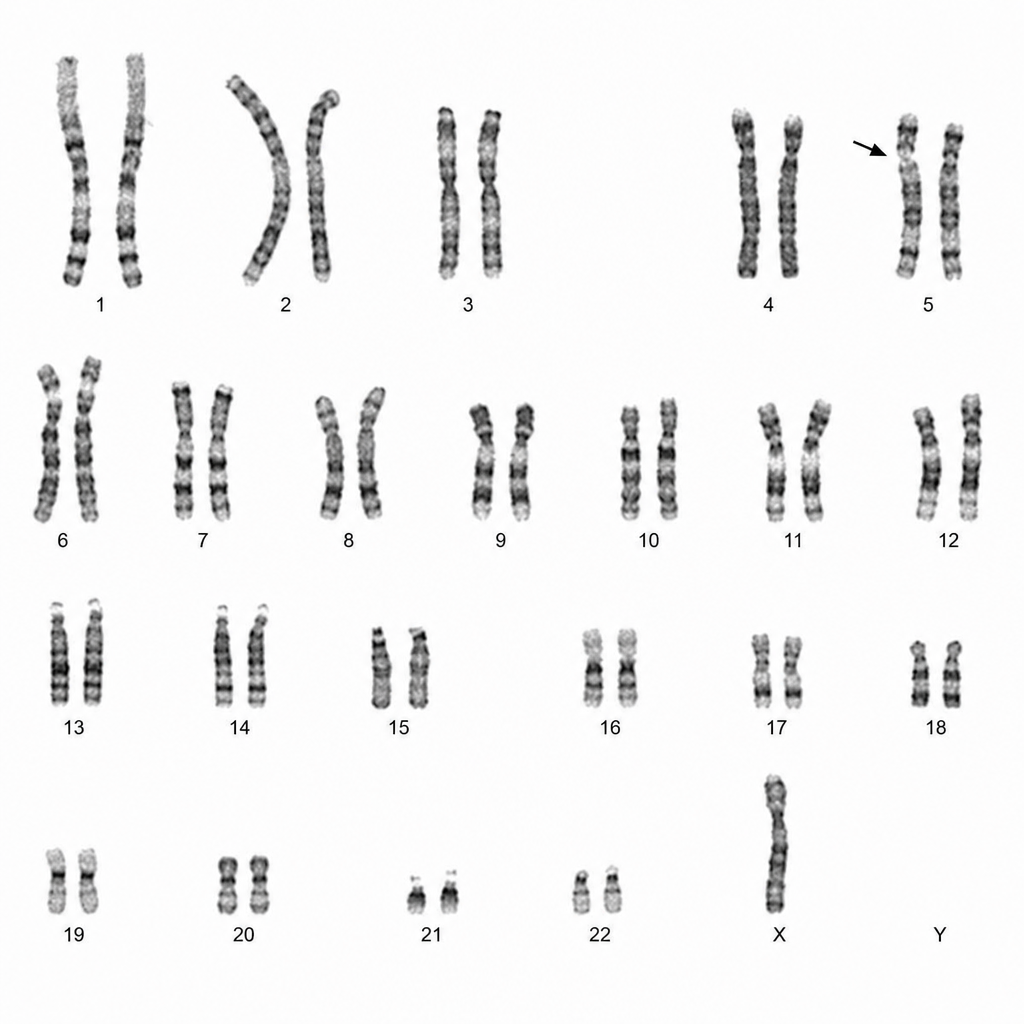
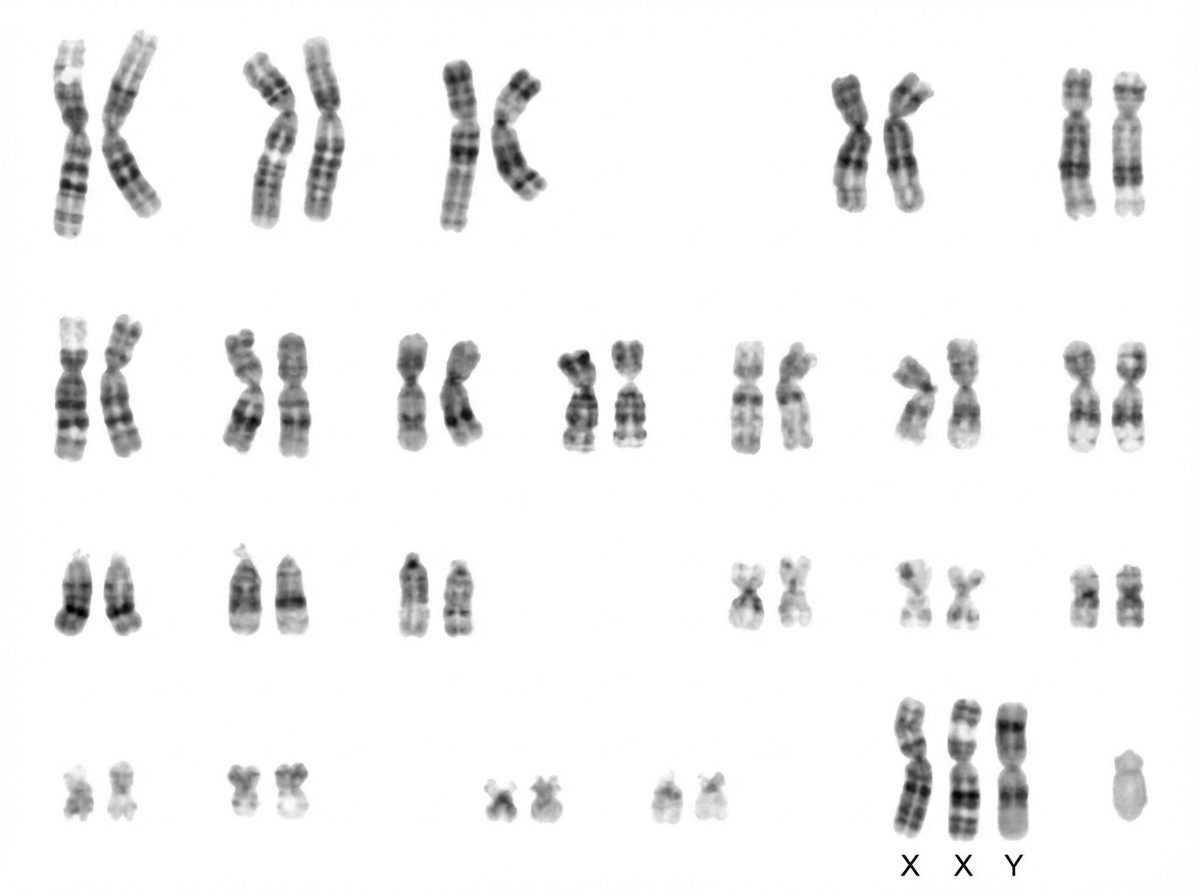
Which of the following is not an aneuploidy?
A 15-year-old tall boy with long limbs presents to the OPD. On ocular examination, bilateral ectopia lentis is noted. Which gene is most likely affected in this inherited disorder?
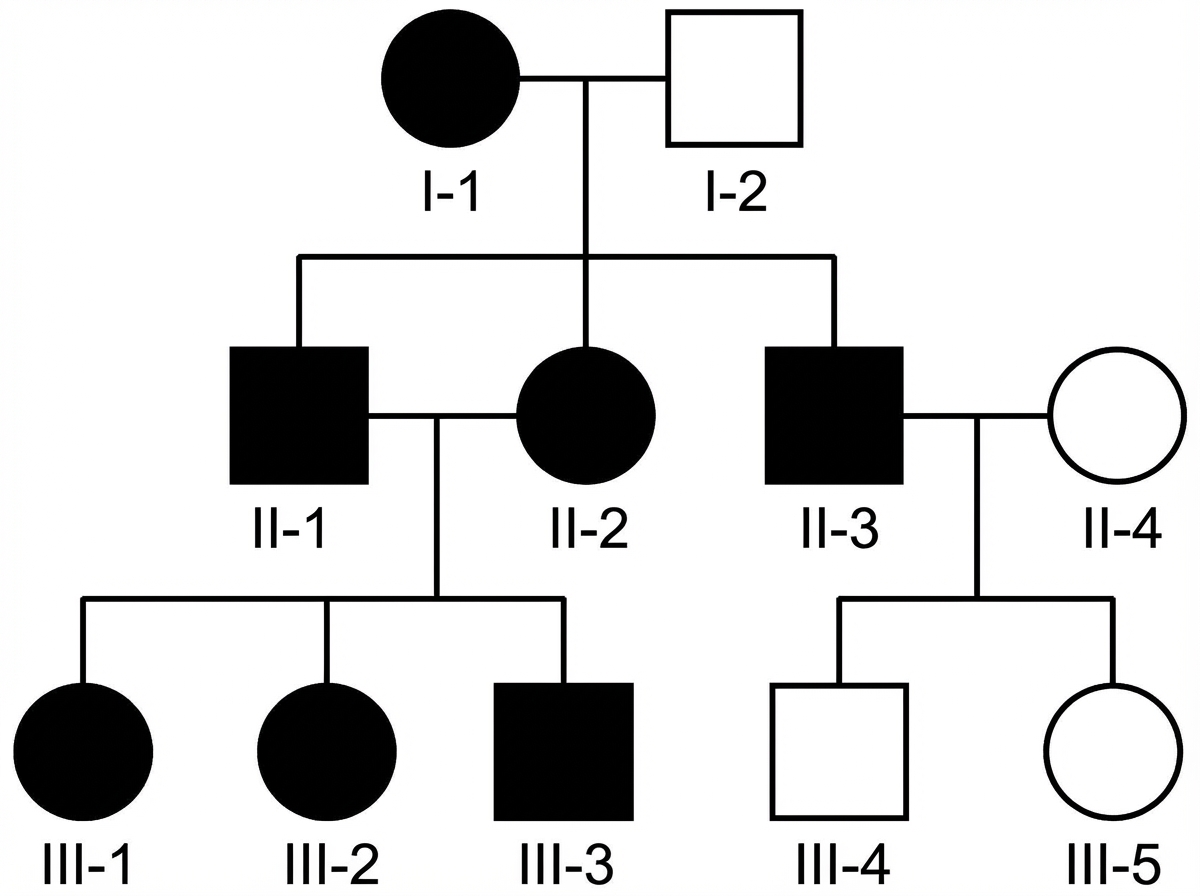
The pedigree chart shown in the image demonstrates a specific pattern of inheritance. Which of the following conditions is most likely to follow this pattern of inheritance?
A 22-year-old tall male presents with long limbs, increased arm span, hypermobile joints, and high-arched palate. On examination, he has lens subluxation and a diastolic murmur suggestive of aortic root dilation. Which of the following genes is most likely mutated in this condition?
Which of the following is an incorrect gene-disease association?
Explanation: **Explanation:** **Laminin** is a large, cross-shaped heterotrimeric glycoprotein that serves as a primary structural component of the **basement membrane (BM)** [2]. It is the most abundant glycoprotein in the BM and plays a crucial role in mediating cell-to-matrix interactions by binding to cell surface receptors (integrins) and other matrix components like Type IV collagen and heparan sulfate [2]. * **Why Option B is Correct:** The basement membrane is composed of Type IV collagen, laminin, entactin (nidogen), and proteoglycans [1]. Laminin specifically anchors the overlying epithelial or endothelial cells to the underlying connective tissue, providing structural scaffolding and influencing cell differentiation and migration [2]. * **Why Options A, C, and D are Incorrect:** While the lens (capsule), liver (sinusoids), and lungs (alveolar walls) all contain basement membranes, the question asks for the specific structural site where laminin is a defining constituent [3]. Laminin is not a parenchymal component of the liver or lungs, nor is it the primary bulk material of the lens; it is specifically localized to the **basement membrane layer** within these organs [1]. **High-Yield Clinical Pearls for NEET-PG:** * **Structure:** Laminin is a heterotrimer consisting of $\alpha$, $\beta$, and $\gamma$ chains. * **Junctional Epidermolysis Bullosa:** This condition is caused by a genetic deficiency in **Laminin-5**, leading to severe skin blistering. * **Congenital Muscular Dystrophy:** Mutations in the **Laminin $\alpha$2-chain** (merosin) are a known cause. * **Cancer Metastasis:** Tumor cells often utilize surface receptors to bind to laminin in the basement membrane as a prerequisite for invasion and distant spread. **References:** [1] Kumar V, Abbas AK, et al.. Robbins and Cotran Pathologic Basis of Disease. 9th ed. The Kidney, p. 907. [2] Kumar V, Abbas AK, et al.. Robbins and Cotran Pathologic Basis of Disease. 9th ed. With Illustrations By, pp. 32-34. [3] Cross SS. Underwood's Pathology: A Clinical Approach. 6th ed. (Basic Pathology) introduces the student to key general principles of pathology, both as a medical science and as a clinical activity with a vital role in patient care. Part 2 (Disease Mechanisms) provides fundamental knowledge about the cellular and molecular processes involved in diseases, providing the rationale for their treatment. Part 3 (Systematic Pathology) deals in detail with specific diseases, with emphasis on the clinically important aspects., pp. 104-105.
Explanation: **Explanation:** Neutrophils contain two main types of granules that play a crucial role in the inflammatory response and microbial killing: **Primary (Azurophilic)** and **Secondary (Specific)** granules. **Why Lactoferrin is Correct:** **Lactoferrin** is a hallmark component of **Secondary (Specific) granules**. These granules are smaller, more numerous, and are released earlier during the inflammatory process. Lactoferrin functions as a bacteriostatic agent by sequestering free iron, which is essential for bacterial growth. Other components of secondary granules include Lysozyme, Collagenase, Gelatinase, Vitamin B12-binding protein, and Alkaline Phosphatase. **Analysis of Incorrect Options:** * **Cathepsin G (Option A):** This is a neutral protease found in **Primary (Azurophilic) granules** [1]. It aids in the degradation of bacterial proteins. * **Defensin (Option C):** These are cationic antimicrobial peptides found in **Primary granules** [1]. They create pores in bacterial membranes, leading to lysis. * **Myeloperoxidase (Option D):** MPO is the most characteristic enzyme of **Primary granules** [1]. It is essential for the "Respiratory Burst," converting hydrogen peroxide ($H_2O_2$) and chloride ions into hypochlorous acid (HOCl), the most potent bactericidal system in neutrophils. **High-Yield Clinical Pearls for NEET-PG:** * **Primary Granules:** Contain MPO, Defensins, Cathepsin G, Elastase, and Acid Hydrolases [1]. * **Secondary Granules:** Contain Lactoferrin, Lysozyme, Collagenase, and **NAP (Neutrophil Alkaline Phosphatase)**. * **NAP Score:** Used to differentiate Leukemoid Reaction (High NAP) from Chronic Myeloid Leukemia (Low NAP). * **Chediak-Higashi Syndrome:** Characterized by the formation of **giant granules** due to a defect in lysosomal trafficking (LYST gene). **References:** [1] Kumar V, Abbas AK, et al.. Robbins and Cotran Pathologic Basis of Disease. 9th ed. Inflammation and Repair, pp. 91-92.
Explanation: **Explanation:** **Trinucleotide repeat expansion** [1] is the correct answer because it is the molecular basis for the phenomenon of **anticipation**. Anticipation refers to a genetic condition where the disease becomes more severe or has an earlier age of onset in successive generations [1]. This occurs because the unstable repeats (e.g., CGG, CAG, GAA) tend to expand further during gametogenesis (meiosis) [1]. Once the number of repeats crosses a specific threshold, it leads to gene silencing or toxic gain-of-function, manifesting as clinical disease. **Analysis of Options:** * **A. Translocation:** This involves the exchange of genetic material between non-homologous chromosomes (e.g., t(9;22) in CML). While it causes disease, it does not typically worsen in severity across generations. * **B. Chromosome breaking:** This is characteristic of DNA repair defect syndromes (e.g., Fanconi anemia, Bloom syndrome). It leads to genomic instability and cancer predisposition but not anticipation. * **D. Mitochondrial mutation:** These exhibit **maternal inheritance** and **heteroplasmy** [1]. While the severity can vary among siblings due to the proportion of mutant mitochondria inherited, it does not follow the predictable generational worsening seen in anticipation. **High-Yield Clinical Pearls for NEET-PG:** * **Fragile X Syndrome (CGG):** Most common cause of inherited intellectual disability; shows anticipation during **oogenesis** (maternal transmission) [1]. * **Huntington Disease (CAG):** Shows anticipation primarily during **spermatogenesis** (paternal transmission). * **Myotonic Dystrophy (CTG):** Shows the most dramatic examples of anticipation (congenital form). * **Friedreich Ataxia (GAA):** The only common trinucleotide repeat disorder with an **Autosomal Recessive** inheritance pattern. **References:** [1] Kumar V, Abbas AK, et al.. Robbins and Cotran Pathologic Basis of Disease. 9th ed. Genetic Disorders, pp. 177-181.
Explanation: **Explanation:** **Liquefactive necrosis** is characterized by the transformation of the tissue into a liquid, viscous mass. This occurs due to the digestion of dead cells by hydrolytic enzymes. **Why the Brain is the Correct Answer:** In the Central Nervous System (CNS), ischemic injury (infarct) uniquely results in liquefactive necrosis rather than coagulative necrosis [1]. This is primarily because the brain has a **high lipid content** and **low protein framework**. Additionally, the brain is rich in lysosomal enzymes (hydrolases) and lacks a strong supporting connective tissue stroma. When cells die, these enzymes quickly digest the tissue, and the area is eventually cleared by microglia (macrophages), leaving a cystic cavity. From 10 days to 3 weeks, the tissue liquefies, eventually leaving a fluid-filled cavity [1]. **Why Other Options are Incorrect:** * **Kidney, Liver, and Spleen:** These are solid visceral organs. Ischemic injury (infarct) in these organs typically leads to **Coagulative Necrosis**. In coagulative necrosis, the basic structural outline of the tissue is preserved for several days because the injury denatures not only structural proteins but also the enzymes responsible for proteolysis. **NEET-PG High-Yield Pearls:** 1. **Two Main Scenarios for Liquefactive Necrosis:** * Ischemic injury/Infarction in the **Brain**. * **Abscess formation** (focal bacterial or fungal infections), where inflammatory cells (neutrophils) release potent enzymes that liquefy the surrounding tissue. 2. **Coagulative Necrosis** is the most common pattern of necrosis overall (except in the brain). 3. **Key Histology:** In liquefactive necrosis, the tissue architecture is completely lost [1]; in coagulative necrosis, "tombstone" appearances (preserved outlines without nuclei) are seen. **References:** [1] Kumar V, Abbas AK, et al.. Robbins and Cotran Pathologic Basis of Disease. 9th ed. The Central Nervous System, pp. 1268-1269.
Explanation: ***Deletion on chromosome 3p*** - This clinical presentation of **cerebellar hemangioblastoma**, **renal cell carcinoma (clear cell type)**, and multiple renal and pancreatic cysts in a familial context is highly characteristic of **Von Hippel-Lindau (VHL) disease**. [1] - VHL disease is caused by an inherited or sporadic inactivation (deletion or mutation) of the **VHL tumor suppressor gene** located on the short arm of chromosome 3 (**3p25.3**). [2] *Deletion on chromosome 13q* - Deletion of the **RB1 gene** on chromosome 13q is associated with **retinoblastoma** and an increased risk of **osteosarcoma**, not VHL disease. - The clinical picture of headaches, cerebellar mass, and renal cell carcinoma is distinct from the typical presentation of RB1-associated disorders. *Deletion on chromosome 17p* - Deletion or mutation of the **TP53 gene** on chromosome 17p is primarily associated with **Li-Fraumeni syndrome**, which increases the risk for a variety of cancers, including sarcomas, breast cancer, and adrenocortical carcinoma, but less commonly VHL-related tumors. - This deletion is not the genetic locus for the VHL tumor suppressor gene. *Trisomy of chromosome 12* - Trisomy 12 is a common chromosomal anomaly found in B-cell chronic lymphocytic leukemia (**CLL**) and some benign tumors like **uterine leiomyomas**. - It is an inappropriate anomaly for a familial syndrome presenting with hemangioblastoma and renal cell carcinoma. **References:** [1] Cross SS. Underwood's Pathology: A Clinical Approach. 6th ed. Common Clinical Manifestations Of Central And Peripheral Nervous System Disease, pp. 724-725. [2] Kumar V, Abbas AK, et al.. Robbins and Cotran Pathologic Basis of Disease. 9th ed. The Kidney, pp. 958-959.
Explanation: ***Bloom Syndrome*** - **Bloom syndrome** is a **rare autosomal recessive disorder** caused by a mutation in the *BLM* gene, leading to excessive sister chromatid exchange and chromosomal breakage (a form of **chromosomal instability syndrome**). - It is a **syndrome of gene mutation** and **chromosomal instability**, not an abnormal number of chromosomes (aneuploidy). ***Trisomy 21*** - This refers to having three copies of chromosome 21 (47, XX or XY, +21), which is the definition of a common **aneuploidy** known as **Down Syndrome** [1]. - Aneuploidy is the condition of having an abnormal number of chromosomes in a haploid set [3]. ***Trisomy 13*** - This involves having three copies of chromosome 13 (47, XX or XY, +13), which is a lethal **aneuploidy** known as **Patau Syndrome** [2]. - It results from meiotic non-disjunction, leading to severe developmental defects [1]. ***Klinefelter Syndrome*** - The genotype is typically 47, XXY, meaning there is an extra X chromosome [2]. - This is a form of sex chromosome **aneuploidy**, characterized by small testes, infertility, and gynecomastia [4]. **References:** [1] Kumar V, Abbas AK, et al.. Robbins and Cotran Pathologic Basis of Disease. 9th ed. Genetic Disorders, pp. 170-171. [2] Cross SS. Underwood's Pathology: A Clinical Approach. 6th ed. (Basic Pathology) introduces the student to key general principles of pathology, both as a medical science and as a clinical activity with a vital role in patient care. Part 2 (Disease Mechanisms) provides fundamental knowledge about the cellular and molecular processes involved in diseases, providing the rationale for their treatment. Part 3 (Systematic Pathology) deals in detail with specific diseases, with emphasis on the clinically important aspects., pp. 92-93. [3] Kumar V, Abbas AK, et al.. Robbins and Cotran Pathologic Basis of Disease. 9th ed. Genetic Disorders, pp. 168-169. [4] Kumar V, Abbas AK, et al.. Robbins and Cotran Pathologic Basis of Disease. 9th ed. Genetic Disorders, pp. 191-192.
Explanation: ***FBN1 (Fibrillin-1)*** - The clinical triad of tall stature/long limbs (**Marfanoid habitus**) and **ectopia lentis** (lens dislocation) is characteristic of **Marfan syndrome** [1]. - Marfan syndrome is caused by an autosomal dominant mutation in the **FBN1 gene** on chromosome 15, which codes for the connective tissue protein **Fibrillin-1** [1]. *COL5A* - Mutations in **COL5A** (Type V collagen) are typically associated with the Classical type of **Ehlers-Danlos syndrome (EDS)**. - Clinical features of EDS primarily include **skin hyperextensibility** and **joint hypermobility**, which are not the most prominent features in this presentation. *PAX6* - The **PAX6 gene** is a master gene for eye development, and its mutation primarily causes **Aniridia** (absence of the iris) or other widespread ocular developmental defects. - Although ophthalmological findings are present, aniridia is not the key ocular finding, making PAX6 mutation an incorrect association. *TGF-β R2* - Mutations in **TGF-β R2** are linked to **Loeys-Dietz syndrome**, which involves severe **aortic root dilation** and craniocervical instability [1]. - While Loeys-Dietz syndrome presents with Marfanoid skeletal features, **ectopia lentis** is rare or absent, differentiating it from Marfan syndrome (FBN1) [1]. **References:** [1] Kumar V, Abbas AK, et al.. Robbins and Cotran Pathologic Basis of Disease. 9th ed. Genetic Disorders, pp. 153-154.
Explanation: ***Kearns-Sayre syndrome*** - This condition is caused by large-scale deletions in **mitochondrial DNA (mtDNA)**, leading to a pattern of **maternal inheritance** (non-Mendelian) [1]. - Mitochondrial disorders are passed exclusively from the mother, affecting all offspring, which defines this specific inheritance pattern [1]. *Duchenne muscular dystrophy* - This follows an **X-linked recessive** pattern of inheritance, where the defective gene is located on the X chromosome [2]. - It primarily affects males, with mothers typically being asymptomatic carriers, clearly distinguishing it from mitochondrial inheritance [2]. *Huntington's disease* - This is an **autosomal dominant** disorder, meaning it is caused by a mutation on a non-sex chromosome and can be passed from either parent [3]. - It affects both males and females equally, with a 50% chance of transmission regardless of the child's sex [3]. *Marfan syndrome* - This is an **autosomal dominant** condition resulting from a mutation in the **FBN1 gene** (nuclear DNA) [3]. - The inheritance does not rely exclusively on the maternal line, as expected in an autosomal dominant Mendelian disorder [3]. **References:** [1] Kumar V, Abbas AK, et al.. Robbins and Cotran Pathologic Basis of Disease. 9th ed. Genetic Disorders, p. 181. [2] Kumar V, Abbas AK, et al.. Robbins and Cotran Pathologic Basis of Disease. 9th ed. Genetic Disorders, p. 151. [3] Kumar V, Abbas AK, et al.. Robbins and Cotran Pathologic Basis of Disease. 9th ed. Genetic Disorders, pp. 149-150.
Explanation: ***Fibrillin-1 (FBN1)*** - The clinical presentation (tall stature, long limbs, increased arm span, aortic root dilation, and lens subluxation/ectopia lentis) is characteristic of **Marfan Syndrome** [1]. - Marfan syndrome is caused by an autosomal dominant mutation in the **FBN1 gene** on chromosome 15, which codes for the microfibrillar protein **fibrillin-1** [1]. *COL4A5* - Mutations in **COL4A5** (Type IV collagen) are associated with **Alport Syndrome**. - Alport syndrome primarily presents with **progressive sensorineural hearing loss**, ocular abnormalities (not typically lens subluxation), and **nephropathy** (hematuria/proteinuria). *COL1A1* - Mutations in **COL1A1** (Type I collagen) are most commonly associated with **Osteogenesis Imperfecta (OI)**. - OI is characterized by **recurrent fractures**, often with blue sclerae, hearing loss, and joint laxity, but not the specific cardiovascular and ocular features seen here. *Elastin* - Mutations in the **Elastin gene (ELN)** are responsible for **Supravalvular Aortic Stenosis (SVAS)**, often seen in **Williams Syndrome**. - Williams syndrome also involves intellectual disability and a characteristic 'elfin' facies, which are not mentioned in this patient's presentation. **References:** [1] Kumar V, Abbas AK, et al.. Robbins and Cotran Pathologic Basis of Disease. 9th ed. Genetic Disorders, pp. 153-154.
Explanation: ***TP53 - Mucosal Neuroma*** - This is an **incorrect association**. Mucosal neuromas are a hallmark feature of **Multiple Endocrine Neoplasia type 2B (MEN 2B)** [2]. - MEN 2B is caused by a germline gain-of-function mutation in the **RET proto-oncogene**, not the TP53 tumor suppressor gene (which is associated with **Li-Fraumeni syndrome**). *STK11 - Breast Cancer* - This is a **correct association**. Mutations in the **STK11** gene cause **Peutz-Jeghers syndrome (PJS)**. - Patients with PJS have a significantly increased risk of developing several malignancies, including gastrointestinal cancers and non-GI cancers like **breast cancer**. *PTEN - Thyroid Carcinoma* - This is a **correct association**. Germline mutations in the **PTEN** gene are responsible for **Cowden Syndrome**. - Cowden Syndrome is characterized by hamartomas and a high lifetime risk of developing cancers, most notably **follicular thyroid carcinoma** and breast cancer. *BRCA2 - Prostate Carcinoma* - This is a **correct association**. Germline mutations in **BRCA2** are strongly linked to hereditary breast and ovarian cancer syndromes [1]. - Men with **BRCA2** mutations have a substantially elevated risk of developing **prostate carcinoma**, often presenting with high-grade, aggressive disease. **References:** [1] Kumar V, Abbas AK, et al.. Robbins and Cotran Pathologic Basis of Disease. 9th ed. The Pancreas, pp. 898-899. [2] Kumar V, Abbas AK, et al.. Robbins and Cotran Pathologic Basis of Disease. 9th ed. The Endocrine System, pp. 1139-1140.
Principles of Molecular Pathology
Practice Questions
DNA and RNA Analysis Techniques
Practice Questions
Cytogenetics
Practice Questions
Polymerase Chain Reaction Applications
Practice Questions
Next-Generation Sequencing
Practice Questions
Molecular Diagnosis of Infectious Diseases
Practice Questions
Molecular Oncology
Practice Questions
Pharmacogenomics
Practice Questions
Genetic Counseling and Risk Assessment
Practice Questions
Molecular Diagnostics Quality Control
Practice Questions
Get full access to all questions, explanations, and performance tracking.
Start For Free